- Market Value (2025): USD 13.9 Bn
- Estimated Value (2026): USD 15.0 Bn
- Forecast Value (2036): USD 33.1 Bn
- CAGR (2026-2036): 8.2%
What is the Non-Hodgkin Lymphoma Market forecast to be worth by 2036?
USD 15.0 billion in 2026 to USD 33.1 billion by 2036 at 8.2% CAGR.
- Fact.MR estimates that the Non-Hodgkin Lymphoma Market reached USD 13.9 billion in 2025, driven by demand for effective lymphoma treatments.
- Revenue is set to climb from USD 15.0 billion in 2026 to USD 33.1 billion by 2036 as targeted therapies and immunotherapies expand treatment options.
- An 8.2% CAGR will carry the market from 2026 to 2036, supported by advances in cancer treatment and rising demand for innovative therapies.
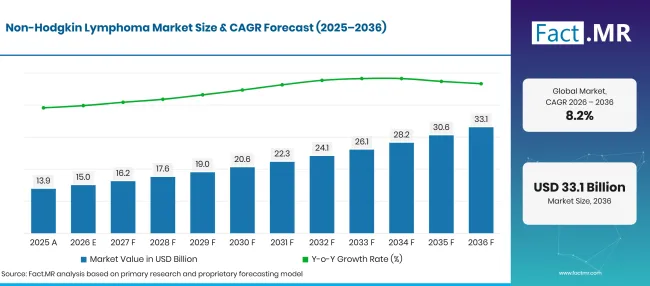
Factmr Non Hodgkin Lymphoma Market Forecast Global | Source: Fact.MR
| Year | Basis | Market Value (USD billion) |
|---|---|---|
| 2025 | Actual | 13.7 |
| 2026 | Estimate | 15.0 |
| 2036 | Forecast | 33.1 |
| CAGR 2026 to 2036 | Forecast period | 8.2% |
Source: Fact.MR analysis. Updated Oct 21, 2026
What are the defining numbers behind Non-Hodgkin Lymphoma Market growth?
USD 18.1 billion in fresh revenue will be added between 2026 and 2036, driven by advances in immunotherapy, targeted treatments, and rising demand for effective lymphoma care.
- Demand Drivers in the Market
- Advances in immunotherapy are expanding treatment options for patients with non-Hodgkin lymphoma. In May 2026, U.S. FDA-approved CAR T-cell therapies, including Breyanzi, support treatment of eligible patients with selected non-Hodgkin lymphoma subtypes [1].
- Rising demand for targeted therapies is supporting market expansion as pharmaceutical companies develop treatments directed at specific molecular pathways and cancer-cell markers. On May 13, 2026, the FDA granted accelerated approval to sonrotoclax for adults with relapsed or refractory mantle cell lymphoma after at least two systemic treatment lines, including a BTK inhibitor. The supporting 103-patient trial reported a 52% overall response rate [2]. [2]
- Increasing focus on aggressive and indolent lymphoma subtypes is sustaining demand for diverse treatment regimens. Diffuse large B-cell lymphoma (DLBCL), follicular lymphoma, mantle cell lymphoma, and other subtypes require different therapeutic approaches based on disease characteristics and patient response. The U.S. SEER program estimates 79,320 new non-Hodgkin lymphoma cases in 2026, supporting the need for diverse treatment options [3]
- Growing pharmaceutical investment and clinical research are strengthening the treatment pipeline. Companies such as Roche, Gilead Sciences (Kite Pharma), Bristol Myers Squibb, Novartis, and AstraZeneca contribute to the broader oncology treatment landscape through research and development, targeted medicines, and cellular therapies [4].
- Key Segments Analyzed
- By Disease Type: MALT lymphoma is projected to account for 60.6% share in 2026, alongside aggressive lymphomas, including diffuse large B-cell lymphoma (DLBCL), lymphoblastic lymphoma, and mantle cell lymphoma, as well as indolent lymphomas, including follicular lymphoma and cutaneous T-cell lymphoma.
- By Treatment: Immunotherapy is projected to account for 42.3% share in 2026, supported by the growing use of advanced treatment approaches. Other key treatment segments include targeted therapy and chemotherapy.
- Analyst Opinion at Fact.MR
- Shambhu Nath Jha, Principal Consultant at Fact.MR, states, “The non-Hodgkin lymphoma market is advancing as immunotherapy and targeted treatments expand options for patients with specific lymphoma subtypes. Pharmaceutical companies investing in innovative therapies and clinical research will be better positioned to address unmet treatment needs. Continued development of personalized treatment approaches will remain important to market growth.”
- Strategic Implications
- Pharmaceutical companies must prioritize research into targeted therapies and immunotherapies to address unmet needs across aggressive and indolent lymphoma subtypes.
- Treatment developers can expand clinical research into therapies for relapsed or refractory disease to improve outcomes for patients who do not respond adequately to existing treatments
- Healthcare providers need to strengthen subtype-specific diagnosis and treatment selection to support appropriate therapeutic decisions.
- Research organizations can pursue clinical collaborations and biomarker research to advance precision medicine and improve treatment response.
Japan leads the country growth outlook at 9.5% CAGR, followed by the United Kingdom at 8.3%, reflecting the supplied forecast estimates for the 2026–2036 period. The United States follows at 7.1%, while Brazil is projected to grow at 6.8% and Germany at 6.0%.
How does the Non-Hodgkin Lymphoma Market break down by segment?
MALT Lymphoma will account for 60.6% of Disease Type; Immunotherapy will lead Treatment at 42.3%.
Which Disease Type leads?
Fact.MR projects a 60.6% share of 2026 sales for MALT lymphoma in this segmentation. This proprietary market-revenue estimate requires validation against the underlying segment model and must not be interpreted as a share of lymphoma diagnoses.
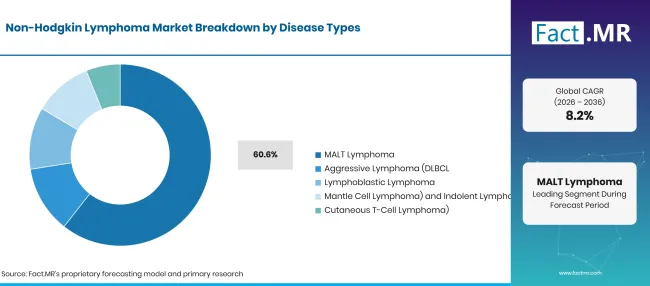
Factmr Non Hodgkin Lymphoma Market Breakdown Disease Types | Source: Fact.MR
| Disease Type | Share (2026) |
|---|---|
| MALT Lymphoma (Leading segment) | 60.6% |
| Other disease types combined | 39.4%* |
| Total | 100.0% |
Source: Fact.MR analysis. Updated Oct 21, 2026
MALT lymphoma is a subtype of marginal zone lymphoma that typically develops in mucosa-associated lymphoid tissue. Its generally indolent course means some patients can undergo active surveillance, while others receive radiotherapy, immunotherapy or other systemic treatments depending on disease location and progression. Treatment requirements vary across aggressive and indolent NHL subtypes, supporting demand for differentiated therapeutic approaches.
What supports Immunotherapy within Treatment?
Immunotherapy will make up 42.3% of 2026 sales.
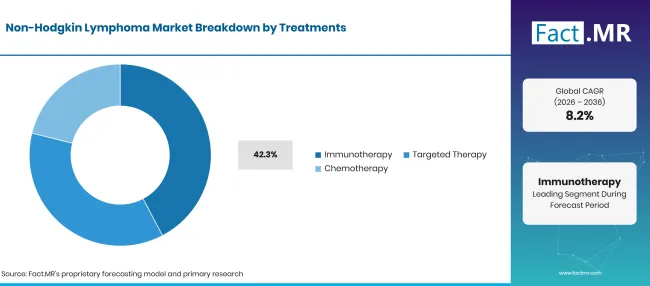
Factmr Non Hodgkin Lymphoma Market Breakdown Treatments | Source: Fact.MR
| Treatment | Share (2026) |
|---|---|
| Immunotherapy (Leading segment) | 42.3% |
| Other treatments combined | 57.7%* |
| Total | 100.0% |
Source: Fact.MR analysis. Updated Oct 21, 2026
Immunotherapy offers treatment options through monoclonal antibodies, bispecific antibodies and CAR T-cell therapies for eligible patients. These approaches are particularly relevant for certain relapsed or refractory lymphomas. Targeted therapies act on specific molecular pathways, while chemotherapy remains an established option across multiple NHL subtypes. Treatment selection depends on lymphoma subtype, disease stage and previous treatment response.
What is accelerating Non-Hodgkin Lymphoma Market adoption, and what is holding it back?
Growing demand for targeted therapies and immunotherapies is expanding treatment options for non-Hodgkin lymphoma patients. Advances in CAR T-cell therapies and antibody-based treatments support market growth, while high treatment costs, potential adverse effects and unequal access to advanced therapies remain key challenges.
Drivers Impact Analysis
| DRIVER | (~) % IMPACT ON CAGR | GEOGRAPHIC RELEVANCE | IMPACT TIMELINE |
|---|---|---|---|
| Rising incidence of non-Hodgkin lymphoma | +1.9% | Global | Short term (≤ 2 years) |
| Growing adoption of targeted therapies and immunotherapies | +1.5% | North America, Western Europe | Medium term (2–4 years) |
| Increasing demand for personalized cancer treatment | +0.9% | Global | Short term (≤ 2 years) |
| Advances in diagnostic techniques and early disease detection | +0.7% | Global | Medium term (2–4 years) |
Source: Fact.MR analysis. Updated Oct 21, 2026
Opportunity Impact Analysis
| OPPORTUNITY | (~) % IMPACT ON CAGR | GEOGRAPHIC RELEVANCE | IMPACT TIMELINE |
|---|---|---|---|
| Development of novel CAR T-cell therapies and bispecific antibodies | +0.9% | North America, Western Europe | Medium term (2–4 years) |
| Expanding access to oncology care in emerging markets | +0.7% | Asia Pacific, Latin America | Long term (≥ 4 years) |
| Increasing clinical trials for new lymphoma treatment candidates | +0.6% | North America, Western Europe | Medium term (2–4 years) |
| Growing adoption of precision medicine and biomarker-based therapies | +0.3% | North America, East Asia | Short term (≤ 2 years) |
Source: Fact.MR analysis. Updated Oct 21, 2026
Restraints Impact Analysis
| RESTRAINT | (~) % IMPACT ON CAGR | GEOGRAPHIC RELEVANCE | IMPACT TIMELINE |
|---|---|---|---|
| High costs of advanced lymphoma treatments | -0.7% | Global | Short term (≤ 2 years) |
| Adverse effects and treatment-related complications | -0.3% | Global | Medium term (2–4 years) |
| Limited access to specialized oncology care and advanced therapies | -0.2% | Emerging markets, parts of Asia Pacific | Long term (≥ 4 years) |
Source: Fact.MR analysis. Updated Oct 21, 2026
Which countries are scaling the Non-Hodgkin Lymphoma Market through 2036?
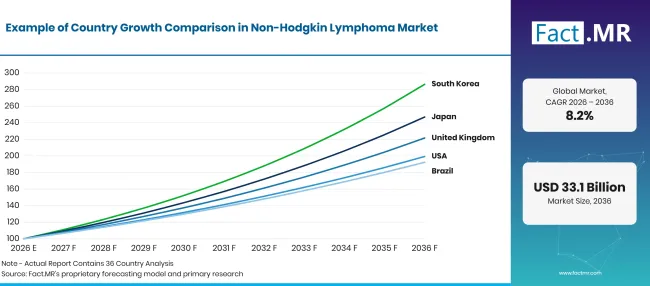
Factmr Non Hodgkin Lymphoma Market Growth Index | Source: Fact.MR
| Country | CAGR (2026–2036) |
|---|---|
| Germany | 6.0% |
| Brazil | 6.8% |
| USA | 7.1% |
| UK | 8.3% |
| Japan | 9.5% |
Source: Fact.MR analysis. Updated Oct 21, 2026
What supports Brazil’s adoption?
6.8% CAGR, supported by rising lymphoma awareness and expanding access to cancer treatment.
Brazil’s non-Hodgkin lymphoma market is supported by the need for improved diagnosis and access to effective cancer therapies. Public oncology services and private healthcare providers contribute to treatment delivery, while advances in targeted therapies and immunotherapy create additional options for eligible patients.
Fact.MR analysis indicates that expanding diagnostic capacity and access to specialized oncology care could support market growth over the forecast period. In July 2026, Brazilian Health Regulatory Agency (ANVISA), ANVISA registered Columvi (glofitamab) in combination with gemcitabine and oxaliplatin for adults with relapsed or refractory diffuse large B-cell lymphoma who are ineligible for autologous stem-cell transplantation. This approval expands the country's available treatment options for a major non-Hodgkin lymphoma subtype [6].
How is Japan developing demand?
9.5% CAGR, driven by advanced oncology care and growing adoption of innovative therapies.
Japan’s established healthcare infrastructure supports access to specialized cancer diagnosis and treatment. The availability of targeted therapies, immunotherapies and newer treatment approaches creates opportunities for the Non-Hodgkin Lymphoma Market.
Fact.MR analysis indicates that continued advances in precision medicine, clinical research and treatment selection could support adoption as healthcare providers seek more effective options for patients. On May 25, 2026, Japan’s Ministry of Health, Labour and Welfare (MHLW) Pharmaceutical Affairs Council reviewed tafasitamab (Minjuvi) in combination with lenalidomide for adults with relapsed or refractory diffuse large B-cell lymphoma (DLBCL) and concluded that approval was acceptable. MHLW subsequently approved the treatment, with the approval announced by Incyte on June 19, 2026 [5].
What is supporting Germany’s adoption?
6.0% CAGR, reflecting established oncology services and access to advanced treatment options.
Germany’s developed healthcare system supports lymphoma diagnosis, specialist consultations and access to cancer treatment. Hospitals and oncology centers use established treatment protocols, while targeted therapies and immunotherapies expand the options available for eligible patients.
Fact.MR analysis indicates that continued treatment innovation and demand for effective disease management will support market growth, although the country’s relatively mature healthcare infrastructure may moderate expansion.
How does the United Kingdom perform?
8.3% CAGR, supported by specialized cancer services and the adoption of newer therapies.
The United Kingdom’s non-Hodgkin lymphoma market benefits from established cancer care services and ongoing efforts to improve diagnosis and treatment. The National Health Service provides a framework for oncology assessment and treatment, while advances in targeted medicines and immunotherapies offer additional options for eligible patients. Fact.MR analysis indicates that continued improvements in treatment pathways and access to innovative therapies could support market expansion.
What supports adoption in the United States?
7.1% CAGR, as treatment innovation and demand for advanced lymphoma therapies sustain market growth.
The United States has an established oncology research and treatment ecosystem, supported by specialized cancer centers, clinical trials and access to innovative medicines. Targeted therapies, CAR T-cell treatments and bispecific antibodies are expanding options for selected patients with Non-Hodgkin lymphoma. Fact.MR analysis indicates that continued research investment, treatment development and demand for personalized approaches will support market growth over the forecast period.
Who leads the Non-Hodgkin Lymphoma Market?
Several pharmaceutical companies compete in the non-Hodgkin lymphoma market through immunotherapy, targeted medicines, and cellular therapies. Roche develops oncology treatments, including antibody-based therapies used in selected lymphoma indications. Gilead Sciences, through Kite Pharma, is a major participant in CAR T-cell therapy, including Yescarta. Bristol Myers Squibb competes through cellular immunotherapies such as Breyanzi and targeted oncology medicines.
Novartis participates in oncology through targeted treatments and cellular therapy research, while AstraZeneca contributes through its broader hematology and oncology portfolio. Competitive positioning depends on regulatory approvals, clinical outcomes, treatment indications, and the development of new therapies for aggressive and indolent lymphoma subtypes. In June 2026, Roche reported FDA acceptance of a supplemental application for its Lunsumio VELO and Polivy combination for relapsed or refractory large B-cell lymphoma, while Gilead’s Kite Pharma reported a February 2026 FDA label update for Yescarta in relapsed or refractory primary central nervous system lymphoma. These developments highlight continued investment in expanding treatment options for difficult-to-treat lymphoma subtypes [7] [8].
Which companies are the key providers?
Key companies in the Non-Hodgkin Lymphoma Market include Roche, Gilead Sciences (Kite Pharma), Bristol Myers Squibb, Novartis, and AstraZeneca.
- Roche
- Gilead Sciences (Kite Pharma)
- Bristol Myers Squibb
- Novartis
- AstraZeneca
Bibliography
- [1] U.S. Food and Drug Administration. (2026, February 20). Breyanzi (lisocabtagene maraleucel). https://www.fda.gov/vaccines-blood-biologics/cellular-gene-therapy-products/breyanzi-lisocabtagene-maraleucel
- [2] U.S. Food and Drug Administration. (2026, May 13). FDA grants accelerated approval to sonrotoclax for relapsed or refractory mantle cell lymphoma.
- [3] National Cancer Institute. (n.d.). Cancer stat facts: Non-Hodgkin lymphoma. Surveillance, Epidemiology, and End Results Program. Retrieved October 19, 2026, from
- [4] National Cancer Institute. (2026, September 23). Drugs approved for non-Hodgkin lymphoma.
- [5] Ministry of Health, Labour and Welfare. (2026, May 25). 2026[Pharmaceutical Affairs Council, Second Committee on Drugs: Meeting minutes].
- [6] Agência Nacional de Vigilância Sanitária. (2026, July 20). Columvi (glofitamabe).
- [7] Roche. (2026, June 18). FDA accepts supplemental Biologics License Application for Roche’s Lunsumio and Polivy combination for people with relapsed or refractory large B-cell lymphoma.
- [8] Gilead Sciences, Inc. (2026, February 6). FDA approves label update for Kite’s Yescarta for relapsed/refractory primary central nervous system lymphoma.
This Report Answers
- Non-Hodgkin Lymphoma Market revenue is segmented by disease type and treatment, including MALT lymphoma, aggressive lymphoma, indolent lymphomas, immunotherapy, targeted therapy and chemotherapy.
- For each segment, the leading subsegment is identified alongside the clinical and treatment factors influencing demand.
- Disease burden, treatment adoption and healthcare access frame the comparison of Germany, Brazil, the USA, the UK and Japan.
- Company profiles cover major pharmaceutical manufacturers developing and commercializing lymphoma treatments, including targeted therapies, immunotherapies and CAR T-cell therapies.
- Drivers, opportunities and restraints are assessed for their influence on market growth through 2036.
What does the Non-Hodgkin Lymphoma Market cover?
The Non-Hodgkin Lymphoma Market covers medicines and therapeutic approaches used to treat cancers originating in the lymphatic system other than Hodgkin lymphoma. The market includes treatments for B-cell and T-cell lymphomas, spanning aggressive and indolent disease subtypes.
The assessment covers immunotherapy, targeted therapy and chemotherapy, including relevant monoclonal antibodies, bispecific antibodies, targeted medicines and cellular therapies. Market demand is influenced by treatment effectiveness, disease recurrence, clinical eligibility and access to specialized oncology care.
What is included in the scope?
The market includes treatments used for MALT lymphoma, diffuse large B-cell lymphoma (DLBCL), lymphoblastic lymphoma, mantle cell lymphoma, follicular lymphoma and cutaneous T-cell lymphoma. It covers established and newer therapeutic approaches used across different stages of treatment, including first-line and relapsed or refractory disease settings.
Immunotherapies such as antibody-based treatments and CAR T-cell therapies are included where approved for relevant NHL indications. Targeted medicines and chemotherapy regimens are also counted when used to manage eligible lymphoma patients.
What is excluded from the scope?
Hodgkin lymphoma treatments are excluded, as are therapies used exclusively for unrelated cancers or hematological disorders without a relevant non-Hodgkin lymphoma indication.
Diagnostic tests, imaging equipment, biopsy instruments and general hospital services are not included in the therapeutic market valuation. Supportive-care medicines and procedures unrelated to direct lymphoma treatment are also excluded unless explicitly included in the market definition.
How Was the Analysis Built?
The analysis draws on market estimates, company information, public statistical publications, regulatory information, and industry evidence to assess market developments and forecasts.
- Primary Research: Primary research includes discussions with manufacturers, service providers, technology developers, distributors, end users, and subject-matter experts. These conversations examine purchasing priorities, product adoption, operational challenges, approval requirements, competitive positioning, and the factors that influence wider market acceptance.
- Desk Research: Desk research covers government statistics, regulatory publications, company filings, trade data, technical studies, industry associations, standards, public policy, and other authoritative sources. Every source used in the analysis is documented in the bibliography.
- Market Sizing and Forecasting: Market estimates combine historical performance, demand indicators, pricing and volume trends, segment shares, company participation, country-level growth, adoption patterns, investment activity, and barriers to market expansion.
- Data Validation and Update Cycle: Findings are validated by comparing primary interviews with public data, company activity, regulatory changes, trade patterns, and industry developments. Regular updates review new product launches, capacity changes, partnerships, approvals, and shifts in commercial adoption.
Segmentation
What is the report’s scope and coverage?
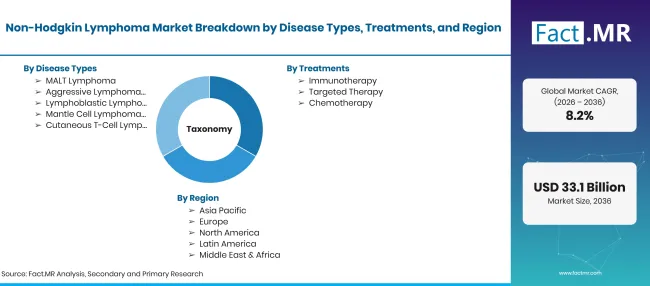
Factmr Non Hodgkin Lymphoma Market Taxonomy | Source: Fact.MR
| Attribute | Details |
|---|---|
| Quantitative Units | USD billion in 2026 to USD billion by 2036 at a CAGR |
| Market Definition | The Non-Hodgkin Lymphoma Market covers therapies used to treat non-Hodgkin lymphomas, a diverse group of cancers affecting lymphocytes. The scope includes immunotherapy, targeted therapy and chemotherapy across different lymphoma subtypes. |
| Disease Types | MALT Lymphoma; Aggressive Lymphomas, including Diffuse Large B-Cell Lymphoma (DLBCL), Lymphoblastic Lymphoma and Mantle Cell Lymphoma; Indolent Lymphomas, including Follicular Lymphoma and Cutaneous T-Cell Lymphoma |
| Treatment | Immunotherapy; Targeted Therapy; Chemotherapy |
| Regions Covered | North America; Latin America; Western Europe; Eastern Europe; East Asia; South Asia & Pacific; Middle East & Africa |
| Countries Covered | Germany; Brazil; United States; United Kingdom; Japan |
| Companies Profiled | Roche; Gilead Sciences (Kite Pharma); Bristol Myers Squibb; Novartis; AstraZeneca. |
| Forecast Period | 2026 to 2036 |
| Approach | Hybrid top-down and bottom-up approach using disease prevalence and incidence, treatment adoption, clinical trial activity, therapy pricing, healthcare expenditure, country-level growth indicators and supplier portfolio analysis. |
Source: Fact.MR analysis. Updated Oct 21, 2026
How is the market segmented?
-
By Disease Type
- MALT Lymphoma
- Aggressive Lymphoma (DLBCL
- Lymphoblastic Lymphoma
- Mantle Cell Lymphoma) and Indolent Lymphomas (Follicular Lymphoma
- Cutaneous T-Cell Lymphoma)
-
By Treatment
- Immunotherapy
- Targeted Therapy
- Chemotherapy
-
By Region
- North America
- Latin America
- Western Europe
- Eastern Europe
- East Asia
- South Asia & Pacific
- Middle East & Africa
Frequently Asked Questions
How big is the Non-Hodgkin Lymphoma Market in 2026?
What is the CAGR of the Non-Hodgkin Lymphoma Market from 2026 to 2036?
Which disease type leads the Non-Hodgkin Lymphoma Market?
Which treatment segment leads the Non-Hodgkin Lymphoma Market?
Which country will grow the most in the Non-Hodgkin Lymphoma Market?
Who are the main companies in the Non-Hodgkin Lymphoma Market?
Who worked on this report


Preview the report firsthand - request a free sample
Free SampleGet the brochure for pricing and purchase details
Download PDF