Prefabricated Panels Market
Prefabricated Panels Market Size and Share Forecast Outlook 2026 to 2036
Prefabricated panels market is projected to grow from USD 89.2 billion in 2026 to USD 165.4 billion by 2036, at a CAGR of 6.4%. Concrete Prefabricated Panels will dominate with a 42.8% market share, while residential construction will lead the application sector segment with a 38.6% share.
Prefabricated Panels Market Forecast and Outlook 2026 to 2036
The global prefabricated panels market is valued at USD 89.2 billion in 2026 and is set to reach USD 165.4 billion by 2036, recording a compound annual growth rate (CAGR) of 6.3% between 2026 and 2036. In 2026, the concrete prefabricated panels segment is projected to hold a 42.8% share, while residential construction applications account for 38.6% of the total demand.
Key Takeaways from Prefabricated Panels Market
- Prefabricated Panels Market Value (2026): USD 89.2 billion
- Prefabricated Panels Market Forecast Value (2036): USD 165.4 billion
- Prefabricated Panels Market Forecast CAGR: 6.4%
- Leading Panel Type in Prefabricated Panels Market: Concrete Prefabricated Panels (42.8%)
- Key Growth Regions in Prefabricated Panels Market: North America, Europe, Asia Pacific
- Key Players in Prefabricated Panels Market: Precast/Prestressed Concrete Institute, Tindall Corporation, Gate Precast Company, Coreslab Structures, Wells Concrete
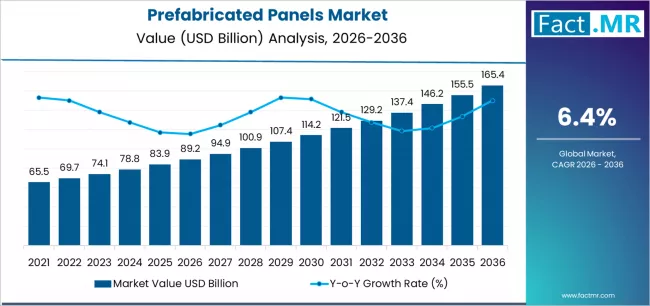
Market expansion is fundamentally driven by the growing global emphasis on construction efficiency, speed, and sustainability. The need for energy-efficient building solutions and stricter building performance regulations is accelerating the shift towards off-site manufacturing. Prefabricated panels offer significant advantages by reducing construction timelines, minimizing waste, and enabling higher quality control compared to traditional on-site methods.
Technological innovation in materials and manufacturing will define growth over the forecast period. Advances in panel engineering such as the integration of advanced composites, improved insulation properties, and automated production lines are enhancing structural performance and environmental adaptability. The rise of modular construction and smart building initiatives is expanding the application of prefabricated systems across residential, commercial, and industrial infrastructure projects.
Prefabricated Panels Market
| Metric | Value |
|---|---|
| Estimated Value in (2026E) | USD 89.2 billion |
| Forecast Value in (2036F) | USD 165.4 billion |
| Forecast CAGR (2026 to 2036) | 6.4% |
Category
| Category | Segments |
|---|---|
| Panel Type | Concrete Panels, Steel Panels, Wood Panels, Composite Panels, Others |
| Application Sector | Residential Construction, Commercial Construction, Industrial Construction, Infrastructure, Others |
| Construction Method | On-Site Assembly, Modular Construction, Hybrid Assembly, Others |
| Region | North America, Europe, Asia Pacific, Latin America, MEA |
Segmental Analysis
By Panel Type, Which Segment of the Prefabricated Panels Market Commands the Leading Share?
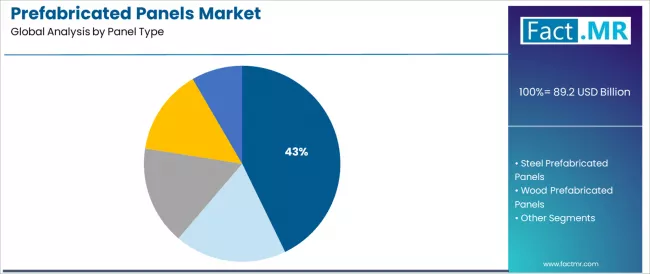
The concrete prefabricated panels segment will command a 42.8% market share in 2026, as it represents the most established, durable, and versatile building solution. Concrete panels offer advantages such as superior structural strength, fire resistance, thermal mass, and sound insulation. Their dominance is reinforced by their application across a wide spectrum, from high-rise residential and commercial buildings to industrial facilities and infrastructure projects, driving high adoption in both developed and developing markets.
- The ongoing global urbanization and need for rapid, cost-effective construction of durable structures are concentrating R&D and investment on improving the efficiency and sustainability of concrete panel systems.
- The development of lightweight and high-performance concrete mixes is expanding the architectural possibilities and ease of handling for prefabricated concrete panels.
Which Application Sector Segment Generates Maximum Demand for Prefabricated Panels?
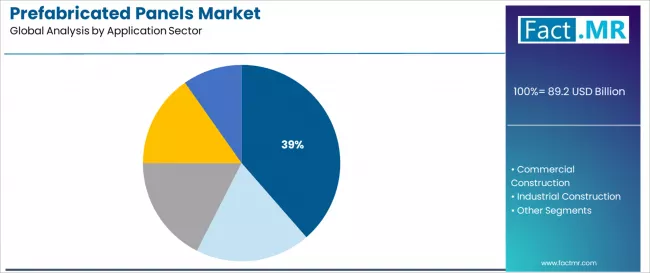
Residential construction applications are projected to hold a 38.6% share in 2026. The urgent need for affordable, quality housing and the demand for faster project completion are primary drivers in this sector. Prefabricated panels enable rapid enclosure and consistent quality in multi-unit apartments, single-family homes, and social housing projects. This direct application to addressing housing shortages ensures a sustained, high-volume demand.
- The rising cost of labor and the skilled labor shortage in many regions are making prefabricated panels an increasingly economical and reliable alternative to traditional stick-built construction.
- The growing consumer and regulatory focus on energy-efficient homes is driving demand for prefabricated wall systems with high levels of integrated insulation and airtightness.
What are the Drivers, Restraints, and Key Trends of the Prefabricated Panels Market?
The market is primarily driven by the critical need for faster, more efficient construction methodologies to meet global housing and infrastructure demands. Secondary drivers include stringent government regulations promoting energy-efficient and sustainable building practices, cost savings from reduced labor and waste, and advancements in manufacturing automation. Key restraints include high initial capital investment for manufacturing facilities, logistical challenges in transporting large panels, and resistance to change within the traditional construction industry.
The market is trending towards the increased adoption of modular and volumetric construction, where entire rooms or units are fabricated off-site. Another key trend is the integration of Building Information Modeling and Digital Twin technology to optimize the design, manufacturing, and assembly process, improving precision and reducing errors.
Analysis of the Prefabricated Panels Market by Key Countries
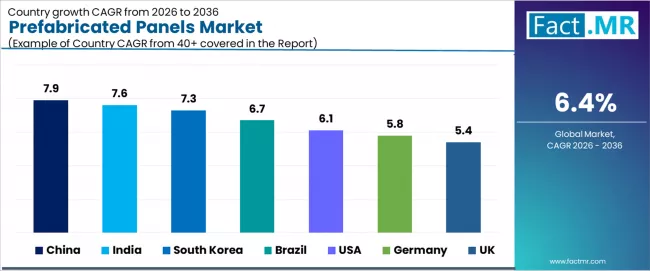
| Country | CAGR (2026-2036) |
|---|---|
| China | 7.9% |
| India | 7.6% |
| Germany | 5.8% |
| Brazil | 6.7% |
| USA | 6.1% |
| UK | 5.4% |
| South Korea | 7.3% |
What is Propelling China's Leadership in Market Growth?
The market in China is projected to grow at a leading CAGR of 7.9% through 2035. Massive urbanization projects, government initiatives promoting industrialized building (such as "assembled construction"), and ambitious infrastructure development plans drive this growth. China's focus on construction quality, speed, and environmental sustainability is creating enormous demand for advanced prefabricated building systems.
How is India's Infrastructure Push Driving Adoption?
The market in India is forecast to grow at a CAGR of 7.6%. Government flagship programs such as Housing for All (Pradhan Mantri Awas Yojana) and massive investments in urban infrastructure and industrial corridors are key growth drivers. The need to build quickly at scale is pushing both public and private developers towards prefabricated and modular construction technologies.
How does South Korea's Technological Advancement Influence the Market?
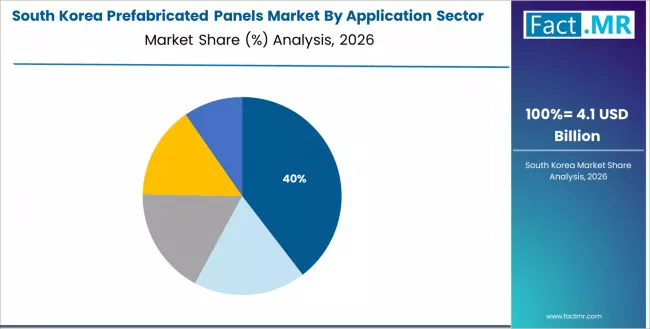
The market in South Korea is projected to grow at a CAGR of 7.3%. The country's advanced manufacturing base, high labor costs, and focus on quality and innovation create a natural fit for prefabricated construction. South Korea is a leader in applying automation and smart technology to the panelized and modular building process.
Why is Brazil a Key Growth Market in Latin America?
The market in Brazil is set to grow at a CAGR of 6.7%. Demand is driven by the need for efficient construction methods in large-scale residential and commercial projects, particularly in urban centers. The country's growing focus on modernizing its construction sector to improve productivity and quality supports market expansion.
What Underpins the Steady Growth in the Mature US Market?
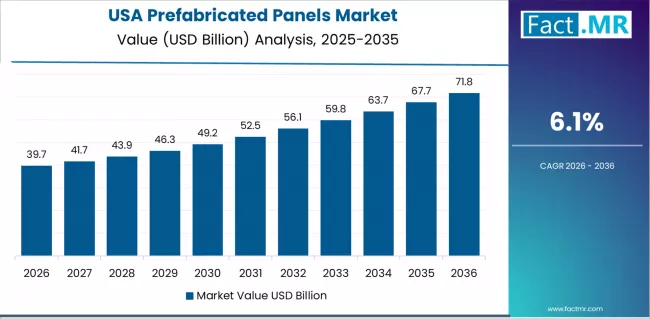
The market in the USA is expected to grow at a CAGR of 6.1%. Growth is driven by chronic skilled labor shortages in construction, the need for faster project delivery to reduce financing costs, and a rising interest in sustainable building practices. Adoption is strong in the multi-family residential, hospitality, and institutional sectors.
How does Germany's Engineering Excellence Shape its Market?
The market in Germany is forecast to grow at a CAGR of 5.8%. Germany's strong tradition of engineering precision, high building performance standards (EnEV), and focus on energy efficiency (Passivhaus) drive demand for high-quality, precision-manufactured prefabricated panels, particularly in the residential and commercial sectors.
What Supports the UK's Focus on Modern Methods of Construction (MMC)?
The market in the UK is projected to grow at a CAGR of 5.4%. Government support for Modern Methods of Construction to address the housing crisis and improve build quality is a primary driver. The UK market is also characterized by significant activity in the private rented sector and student accommodation, which benefit from the speed of off-site construction.
Competitive Landscape of the Prefabricated Panels Market
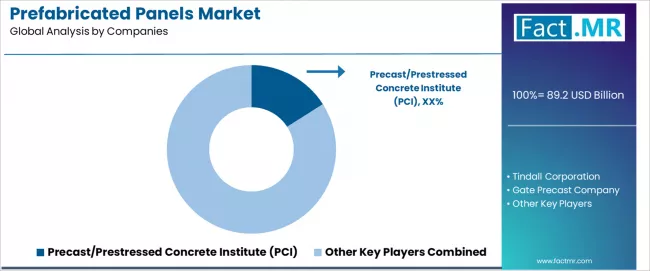
The competitive landscape includes specialized prefabricated panel manufacturers, large construction material conglomerates, and diversified construction firms. Competition centers on technological innovation in panel systems, production capacity, cost efficiency, and the ability to provide integrated design and assembly services. Leading players are investing in automated plants, R&D for new materials (like carbon-neutral concrete), and expanding their geographical reach through partnerships.
Success increasingly depends on offering complete solutions, from design support and manufacturing to logistics and on-site technical assistance rather than just products. Establishing a strong reputation for quality, reliability, and the ability to meet complex project specifications is a key differentiator in this market.
Key Players in the Prefabricated Panels Market
- Precast/Prestressed Concrete Institute (PCI)
- Tindall Corporation
- Gate Precast Company
- Coreslab Structures
- Wells Concrete
- Skanska AB
- Bouygues Construction
- PERI Group
- Doka GmbH
- MEVA Formwork Systems
- Lafarge Holcim Ltd.
- CRH plc
- HeidelbergCement AG
- Cemex SAB de CV
Scope of the Report
| Items | Values |
|---|---|
| Quantitative Units (2026) | USD 89.2 Billion |
| Panel Type | Concrete Prefabricated Panels, Steel Prefabricated Panels, Wood Prefabricated Panels, Composite Prefabricated Panels, Other Panel Configurations |
| Application Sector | Residential Construction, Commercial Construction, Industrial Construction, Infrastructure Development, Others |
| Material Composition | Reinforced Concrete, Structural Steel, Engineered Wood, Fiber Composites, Other Material Platforms |
| Construction Method | On-Site Assembly, Modular Construction, Hybrid Assembly, Other Construction Services |
| Regions Covered | North America, Europe, Asia Pacific, Latin America, MEA, Other Regions |
| Countries Covered | China, India, Germany, Brazil, USA, UK, South Korea, and 40+ countries |
| Key Companies Profiled | Precast/Prestressed Concrete Institute, Tindall Corporation, Gate Precast Company, Coreslab Structures, Wells Concrete, and other leading prefabricated panel companies |
| Additional Attributes | Dollar sales by panel type, application sector, material composition, construction method, and region; regional demand trends, competitive landscape, technological advancements in panel engineering, construction performance optimization initiatives, assembly enhancement programs, and premium product development strategies |
Prefabricated Panels Market by Segments
-
Panel Type :
- Concrete Prefabricated Panels
- Steel Prefabricated Panels
- Wood Prefabricated Panels
- Composite Prefabricated Panels
- Other Panel Configurations
-
Application Sector :
- Residential Construction
- Commercial Construction
- Industrial Construction
- Infrastructure Development
- Others
-
Material Composition :
- Reinforced Concrete
- Structural Steel
- Engineered Wood
- Fiber Composites
- Other Material Platforms
-
Construction Method :
- On-Site Assembly
- Modular Construction
- Hybrid Assembly
- Other Construction Services
-
Region :
-
North America
- USA
- Canada
- Mexico
-
Europe
- Germany
- UK
- France
- Italy
- Spain
- Nordic Countries
- BENELUX
- Rest of Europe
-
Asia Pacific
- China
- India
- Japan
- South Korea
- Australia
- Rest of Asia Pacific
-
Latin America
- Brazil
- Argentina
- Rest of Latin America
-
MEA
- Saudi Arabia
- UAE
- South Africa
- Rest of MEA
-
Table of Content
- Executive Summary
- Global Market Outlook
- Demand to side Trends
- Supply to side Trends
- Technology Roadmap Analysis
- Analysis and Recommendations
- Market Overview
- Market Coverage / Taxonomy
- Market Definition / Scope / Limitations
- Market Background
- Market Dynamics
- Drivers
- Restraints
- Opportunity
- Trends
- Scenario Forecast
- Demand in Optimistic Scenario
- Demand in Likely Scenario
- Demand in Conservative Scenario
- Opportunity Map Analysis
- Product Life Cycle Analysis
- Supply Chain Analysis
- Investment Feasibility Matrix
- Value Chain Analysis
- PESTLE and Porter’s Analysis
- Regulatory Landscape
- Regional Parent Market Outlook
- Production and Consumption Statistics
- Import and Export Statistics
- Market Dynamics
- Global Market Analysis 2021 to 2025 and Forecast, 2026 to 2036
- Historical Market Size Value (USD Million) Analysis, 2021 to 2025
- Current and Future Market Size Value (USD Million) Projections, 2026 to 2036
- Y to o to Y Growth Trend Analysis
- Absolute $ Opportunity Analysis
- Global Market Pricing Analysis 2021 to 2025 and Forecast 2026 to 2036
- Global Market Analysis 2021 to 2025 and Forecast 2026 to 2036, By Panel Type
- Introduction / Key Findings
- Historical Market Size Value (USD Million) Analysis By Panel Type, 2021 to 2025
- Current and Future Market Size Value (USD Million) Analysis and Forecast By Panel Type, 2026 to 2036
- Concrete Prefabricated Panels
- Steel Prefabricated Panels
- Wood Prefabricated Panels
- Composite Prefabricated Panels
- Other Panel Configurations
- Y to o to Y Growth Trend Analysis By Panel Type, 2021 to 2025
- Absolute $ Opportunity Analysis By Panel Type, 2026 to 2036
- Global Market Analysis 2021 to 2025 and Forecast 2026 to 2036, By Application Sector
- Introduction / Key Findings
- Historical Market Size Value (USD Million) Analysis By Application Sector, 2021 to 2025
- Current and Future Market Size Value (USD Million) Analysis and Forecast By Application Sector, 2026 to 2036
- Residential Construction
- Commercial Construction
- Industrial Construction
- Infrastructure Development
- Others
- Y to o to Y Growth Trend Analysis By Application Sector, 2021 to 2025
- Absolute $ Opportunity Analysis By Application Sector, 2026 to 2036
- Global Market Analysis 2021 to 2025 and Forecast 2026 to 2036, By Region
- Introduction
- Historical Market Size Value (USD Million) Analysis By Region, 2021 to 2025
- Current Market Size Value (USD Million) Analysis and Forecast By Region, 2026 to 2036
- North America
- Latin America
- Western Europe
- Eastern Europe
- East Asia
- South Asia and Pacific
- Middle East & Africa
- Market Attractiveness Analysis By Region
- North America Market Analysis 2021 to 2025 and Forecast 2026 to 2036, By Country
- Historical Market Size Value (USD Million) Trend Analysis By Market Taxonomy, 2021 to 2025
- Market Size Value (USD Million) Forecast By Market Taxonomy, 2026 to 2036
- By Country
- USA
- Canada
- Mexico
- By Panel Type
- By Application Sector
- By Country
- Market Attractiveness Analysis
- By Country
- By Panel Type
- By Application Sector
- Key Takeaways
- Latin America Market Analysis 2021 to 2025 and Forecast 2026 to 2036, By Country
- Historical Market Size Value (USD Million) Trend Analysis By Market Taxonomy, 2021 to 2025
- Market Size Value (USD Million) Forecast By Market Taxonomy, 2026 to 2036
- By Country
- Brazil
- Chile
- Rest of Latin America
- By Panel Type
- By Application Sector
- By Country
- Market Attractiveness Analysis
- By Country
- By Panel Type
- By Application Sector
- Key Takeaways
- Western Europe Market Analysis 2021 to 2025 and Forecast 2026 to 2036, By Country
- Historical Market Size Value (USD Million) Trend Analysis By Market Taxonomy, 2021 to 2025
- Market Size Value (USD Million) Forecast By Market Taxonomy, 2026 to 2036
- By Country
- Germany
- UK
- Italy
- Spain
- France
- Nordic
- BENELUX
- Rest of Western Europe
- By Panel Type
- By Application Sector
- By Country
- Market Attractiveness Analysis
- By Country
- By Panel Type
- By Application Sector
- Key Takeaways
- Eastern Europe Market Analysis 2021 to 2025 and Forecast 2026 to 2036, By Country
- Historical Market Size Value (USD Million) Trend Analysis By Market Taxonomy, 2021 to 2025
- Market Size Value (USD Million) Forecast By Market Taxonomy, 2026 to 2036
- By Country
- Russia
- Poland
- Hungary
- Balkan & Baltic
- Rest of Eastern Europe
- By Panel Type
- By Application Sector
- By Country
- Market Attractiveness Analysis
- By Country
- By Panel Type
- By Application Sector
- Key Takeaways
- East Asia Market Analysis 2021 to 2025 and Forecast 2026 to 2036, By Country
- Historical Market Size Value (USD Million) Trend Analysis By Market Taxonomy, 2021 to 2025
- Market Size Value (USD Million) Forecast By Market Taxonomy, 2026 to 2036
- By Country
- China
- Japan
- South Korea
- By Panel Type
- By Application Sector
- By Country
- Market Attractiveness Analysis
- By Country
- By Panel Type
- By Application Sector
- Key Takeaways
- South Asia and Pacific Market Analysis 2021 to 2025 and Forecast 2026 to 2036, By Country
- Historical Market Size Value (USD Million) Trend Analysis By Market Taxonomy, 2021 to 2025
- Market Size Value (USD Million) Forecast By Market Taxonomy, 2026 to 2036
- By Country
- India
- ASEAN
- Australia & New Zealand
- Rest of South Asia and Pacific
- By Panel Type
- By Application Sector
- By Country
- Market Attractiveness Analysis
- By Country
- By Panel Type
- By Application Sector
- Key Takeaways
- Middle East & Africa Market Analysis 2021 to 2025 and Forecast 2026 to 2036, By Country
- Historical Market Size Value (USD Million) Trend Analysis By Market Taxonomy, 2021 to 2025
- Market Size Value (USD Million) Forecast By Market Taxonomy, 2026 to 2036
- By Country
- Kingdom of Saudi Arabia
- Other GCC Countries
- Turkiye
- South Africa
- Other African Union
- Rest of Middle East & Africa
- By Panel Type
- By Application Sector
- By Country
- Market Attractiveness Analysis
- By Country
- By Panel Type
- By Application Sector
- Key Takeaways
- Key Countries Market Analysis
- USA
- Pricing Analysis
- Market Share Analysis, 2025
- By Panel Type
- By Application Sector
- Canada
- Pricing Analysis
- Market Share Analysis, 2025
- By Panel Type
- By Application Sector
- Mexico
- Pricing Analysis
- Market Share Analysis, 2025
- By Panel Type
- By Application Sector
- Brazil
- Pricing Analysis
- Market Share Analysis, 2025
- By Panel Type
- By Application Sector
- Chile
- Pricing Analysis
- Market Share Analysis, 2025
- By Panel Type
- By Application Sector
- Germany
- Pricing Analysis
- Market Share Analysis, 2025
- By Panel Type
- By Application Sector
- UK
- Pricing Analysis
- Market Share Analysis, 2025
- By Panel Type
- By Application Sector
- Italy
- Pricing Analysis
- Market Share Analysis, 2025
- By Panel Type
- By Application Sector
- Spain
- Pricing Analysis
- Market Share Analysis, 2025
- By Panel Type
- By Application Sector
- France
- Pricing Analysis
- Market Share Analysis, 2025
- By Panel Type
- By Application Sector
- India
- Pricing Analysis
- Market Share Analysis, 2025
- By Panel Type
- By Application Sector
- ASEAN
- Pricing Analysis
- Market Share Analysis, 2025
- By Panel Type
- By Application Sector
- Australia & New Zealand
- Pricing Analysis
- Market Share Analysis, 2025
- By Panel Type
- By Application Sector
- China
- Pricing Analysis
- Market Share Analysis, 2025
- By Panel Type
- By Application Sector
- Japan
- Pricing Analysis
- Market Share Analysis, 2025
- By Panel Type
- By Application Sector
- South Korea
- Pricing Analysis
- Market Share Analysis, 2025
- By Panel Type
- By Application Sector
- Russia
- Pricing Analysis
- Market Share Analysis, 2025
- By Panel Type
- By Application Sector
- Poland
- Pricing Analysis
- Market Share Analysis, 2025
- By Panel Type
- By Application Sector
- Hungary
- Pricing Analysis
- Market Share Analysis, 2025
- By Panel Type
- By Application Sector
- Kingdom of Saudi Arabia
- Pricing Analysis
- Market Share Analysis, 2025
- By Panel Type
- By Application Sector
- Turkiye
- Pricing Analysis
- Market Share Analysis, 2025
- By Panel Type
- By Application Sector
- South Africa
- Pricing Analysis
- Market Share Analysis, 2025
- By Panel Type
- By Application Sector
- USA
- Market Structure Analysis
- Competition Dashboard
- Competition Benchmarking
- Market Share Analysis of Top Players
- By Regional
- By Panel Type
- By Application Sector
- Competition Analysis
- Competition Deep Dive
- Precast/Prestressed Concrete Institute (PCI)
- Overview
- Product Portfolio
- Profitability by Market Segments (Product/Age /Sales Channel/Region)
- Sales Footprint
- Strategy Overview
- Marketing Strategy
- Product Strategy
- Channel Strategy
- Tindall Corporation
- Gate Precast Company
- Coreslab Structures
- Wells Concrete
- Skanska AB
- Bouygues Construction
- PERI Group
- Doka GmbH
- MEVA Formwork Systems
- Lafarge Holcim Ltd.
- CRH plc
- HeidelbergCement AG
- Cemex SAB de CV
- Precast/Prestressed Concrete Institute (PCI)
- Competition Deep Dive
- Assumptions & Acronyms Used
- Research Methodology
List Of Table
- Table 1: Global Market Value (USD Million) Forecast by Region, 2021 to 2036
- Table 2: Global Market Value (USD Million) Forecast by Panel Type, 2021 to 2036
- Table 3: Global Market Value (USD Million) Forecast by Application Sector, 2021 to 2036
- Table 4: North America Market Value (USD Million) Forecast by Country, 2021 to 2036
- Table 5: North America Market Value (USD Million) Forecast by Panel Type, 2021 to 2036
- Table 6: North America Market Value (USD Million) Forecast by Application Sector, 2021 to 2036
- Table 7: Latin America Market Value (USD Million) Forecast by Country, 2021 to 2036
- Table 8: Latin America Market Value (USD Million) Forecast by Panel Type, 2021 to 2036
- Table 9: Latin America Market Value (USD Million) Forecast by Application Sector, 2021 to 2036
- Table 10: Western Europe Market Value (USD Million) Forecast by Country, 2021 to 2036
- Table 11: Western Europe Market Value (USD Million) Forecast by Panel Type, 2021 to 2036
- Table 12: Western Europe Market Value (USD Million) Forecast by Application Sector, 2021 to 2036
- Table 13: Eastern Europe Market Value (USD Million) Forecast by Country, 2021 to 2036
- Table 14: Eastern Europe Market Value (USD Million) Forecast by Panel Type, 2021 to 2036
- Table 15: Eastern Europe Market Value (USD Million) Forecast by Application Sector, 2021 to 2036
- Table 16: East Asia Market Value (USD Million) Forecast by Country, 2021 to 2036
- Table 17: East Asia Market Value (USD Million) Forecast by Panel Type, 2021 to 2036
- Table 18: East Asia Market Value (USD Million) Forecast by Application Sector, 2021 to 2036
- Table 19: South Asia and Pacific Market Value (USD Million) Forecast by Country, 2021 to 2036
- Table 20: South Asia and Pacific Market Value (USD Million) Forecast by Panel Type, 2021 to 2036
- Table 21: South Asia and Pacific Market Value (USD Million) Forecast by Application Sector, 2021 to 2036
- Table 22: Middle East & Africa Market Value (USD Million) Forecast by Country, 2021 to 2036
- Table 23: Middle East & Africa Market Value (USD Million) Forecast by Panel Type, 2021 to 2036
- Table 24: Middle East & Africa Market Value (USD Million) Forecast by Application Sector, 2021 to 2036
List Of Figures
- Figure 1: Global Market Pricing Analysis
- Figure 2: Global Market Value (USD Million) Forecast 2021 to 2036
- Figure 3: Global Market Value Share and BPS Analysis by Panel Type, 2026 and 2036
- Figure 4: Global Market Y to o to Y Growth Comparison by Panel Type, 2026 to 2036
- Figure 5: Global Market Attractiveness Analysis by Panel Type
- Figure 6: Global Market Value Share and BPS Analysis by Application Sector, 2026 and 2036
- Figure 7: Global Market Y to o to Y Growth Comparison by Application Sector, 2026 to 2036
- Figure 8: Global Market Attractiveness Analysis by Application Sector
- Figure 9: Global Market Value (USD Million) Share and BPS Analysis by Region, 2026 and 2036
- Figure 10: Global Market Y to o to Y Growth Comparison by Region, 2026 to 2036
- Figure 11: Global Market Attractiveness Analysis by Region
- Figure 12: North America Market Incremental Dollar Opportunity, 2026 to 2036
- Figure 13: Latin America Market Incremental Dollar Opportunity, 2026 to 2036
- Figure 14: Western Europe Market Incremental Dollar Opportunity, 2026 to 2036
- Figure 15: Eastern Europe Market Incremental Dollar Opportunity, 2026 to 2036
- Figure 16: East Asia Market Incremental Dollar Opportunity, 2026 to 2036
- Figure 17: South Asia and Pacific Market Incremental Dollar Opportunity, 2026 to 2036
- Figure 18: Middle East & Africa Market Incremental Dollar Opportunity, 2026 to 2036
- Figure 19: North America Market Value Share and BPS Analysis by Country, 2026 and 2036
- Figure 20: North America Market Value Share and BPS Analysis by Panel Type, 2026 and 2036
- Figure 21: North America Market Y to o to Y Growth Comparison by Panel Type, 2026 to 2036
- Figure 22: North America Market Attractiveness Analysis by Panel Type
- Figure 23: North America Market Value Share and BPS Analysis by Application Sector, 2026 and 2036
- Figure 24: North America Market Y to o to Y Growth Comparison by Application Sector, 2026 to 2036
- Figure 25: North America Market Attractiveness Analysis by Application Sector
- Figure 26: Latin America Market Value Share and BPS Analysis by Country, 2026 and 2036
- Figure 27: Latin America Market Value Share and BPS Analysis by Panel Type, 2026 and 2036
- Figure 28: Latin America Market Y to o to Y Growth Comparison by Panel Type, 2026 to 2036
- Figure 29: Latin America Market Attractiveness Analysis by Panel Type
- Figure 30: Latin America Market Value Share and BPS Analysis by Application Sector, 2026 and 2036
- Figure 31: Latin America Market Y to o to Y Growth Comparison by Application Sector, 2026 to 2036
- Figure 32: Latin America Market Attractiveness Analysis by Application Sector
- Figure 33: Western Europe Market Value Share and BPS Analysis by Country, 2026 and 2036
- Figure 34: Western Europe Market Value Share and BPS Analysis by Panel Type, 2026 and 2036
- Figure 35: Western Europe Market Y to o to Y Growth Comparison by Panel Type, 2026 to 2036
- Figure 36: Western Europe Market Attractiveness Analysis by Panel Type
- Figure 37: Western Europe Market Value Share and BPS Analysis by Application Sector, 2026 and 2036
- Figure 38: Western Europe Market Y to o to Y Growth Comparison by Application Sector, 2026 to 2036
- Figure 39: Western Europe Market Attractiveness Analysis by Application Sector
- Figure 40: Eastern Europe Market Value Share and BPS Analysis by Country, 2026 and 2036
- Figure 41: Eastern Europe Market Value Share and BPS Analysis by Panel Type, 2026 and 2036
- Figure 42: Eastern Europe Market Y to o to Y Growth Comparison by Panel Type, 2026 to 2036
- Figure 43: Eastern Europe Market Attractiveness Analysis by Panel Type
- Figure 44: Eastern Europe Market Value Share and BPS Analysis by Application Sector, 2026 and 2036
- Figure 45: Eastern Europe Market Y to o to Y Growth Comparison by Application Sector, 2026 to 2036
- Figure 46: Eastern Europe Market Attractiveness Analysis by Application Sector
- Figure 47: East Asia Market Value Share and BPS Analysis by Country, 2026 and 2036
- Figure 48: East Asia Market Value Share and BPS Analysis by Panel Type, 2026 and 2036
- Figure 49: East Asia Market Y to o to Y Growth Comparison by Panel Type, 2026 to 2036
- Figure 50: East Asia Market Attractiveness Analysis by Panel Type
- Figure 51: East Asia Market Value Share and BPS Analysis by Application Sector, 2026 and 2036
- Figure 52: East Asia Market Y to o to Y Growth Comparison by Application Sector, 2026 to 2036
- Figure 53: East Asia Market Attractiveness Analysis by Application Sector
- Figure 54: South Asia and Pacific Market Value Share and BPS Analysis by Country, 2026 and 2036
- Figure 55: South Asia and Pacific Market Value Share and BPS Analysis by Panel Type, 2026 and 2036
- Figure 56: South Asia and Pacific Market Y to o to Y Growth Comparison by Panel Type, 2026 to 2036
- Figure 57: South Asia and Pacific Market Attractiveness Analysis by Panel Type
- Figure 58: South Asia and Pacific Market Value Share and BPS Analysis by Application Sector, 2026 and 2036
- Figure 59: South Asia and Pacific Market Y to o to Y Growth Comparison by Application Sector, 2026 to 2036
- Figure 60: South Asia and Pacific Market Attractiveness Analysis by Application Sector
- Figure 61: Middle East & Africa Market Value Share and BPS Analysis by Country, 2026 and 2036
- Figure 62: Middle East & Africa Market Value Share and BPS Analysis by Panel Type, 2026 and 2036
- Figure 63: Middle East & Africa Market Y to o to Y Growth Comparison by Panel Type, 2026 to 2036
- Figure 64: Middle East & Africa Market Attractiveness Analysis by Panel Type
- Figure 65: Middle East & Africa Market Value Share and BPS Analysis by Application Sector, 2026 and 2036
- Figure 66: Middle East & Africa Market Y to o to Y Growth Comparison by Application Sector, 2026 to 2036
- Figure 67: Middle East & Africa Market Attractiveness Analysis by Application Sector
- Figure 68: Global Market - Tier Structure Analysis
- Figure 69: Global Market - Company Share Analysis
- FAQs -
How big is the prefabricated panels market in 2026?
The global prefabricated panels market is estimated to be valued at USD 89.2 billion in 2026.
What will be the size of prefabricated panels market in 2036?
The market size for the prefabricated panels market is projected to reach USD 165.4 billion by 2036.
How much will be the prefabricated panels market growth between 2026 and 2036?
The prefabricated panels market is expected to grow at a 6.4% CAGR between 2026 and 2036.
What are the key product types in the prefabricated panels market?
The key product types in prefabricated panels market are concrete prefabricated panels, steel prefabricated panels, wood prefabricated panels, composite prefabricated panels and other panel configurations.
Which application sector segment to contribute significant share in the prefabricated panels market in 2026?
In terms of application sector, residential construction segment to command 38.6% share in the prefabricated panels market in 2026.