Prosthetic Heart Valve Market

Prosthetic Heart Valve Market Size and Share Forecast Outlook 2025 to 2035

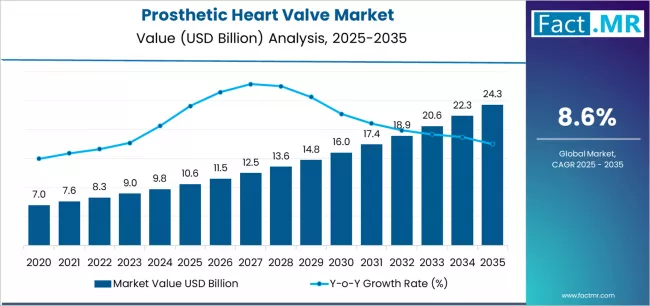
Prosthetic heart valve market is projected to grow from USD 10.6 billion in 2025 to USD 24.3 billion by 2035, at a CAGR of 8.6%. Transcatheter Heart Valves will dominate with a 47.5% market share, while biological tissue will lead the material segment with a 34.7% share.

Prosthetic Heart Valve Market Forecast and Outlook 2025 to 2035

The global prosthetic heart valve market is projected to reach USD 24.28 billion by 2035, recording an absolute increase of USD 13.68 billion over the forecast period. The market is valued at USD 10.60 billion in 2025 and is set to rise at a CAGR of 8.6% during the assessment period. The market for prosthetic heart valves is expected to grow by 2.3 times during the same period, supported by increasing demand from transcatheter aortic valve replacement procedures and expanding applications in minimally invasive cardiac interventions across both developed and emerging healthcare markets.

Growing application diversity in structural heart disease treatment, valve-in-valve procedures, and hybrid surgical approaches creates expanding opportunities for prosthetic heart valve innovations and specialized device configurations. Rising cardiovascular disease prevalence in aging populations, coupled with expanding interventional cardiology capacity through advanced catheterization laboratories and modern cardiac surgery infrastructure, further accelerate market penetration across diverse patient segments.

Quick Stats for Prosthetic Heart Valve Market

  • Prosthetic Heart Valve Market Value (2025): USD 10.60 billion
  • Prosthetic Heart Valve Market Forecast Value (2035): USD 24.28 billion
  • Prosthetic Heart Valve Market Forecast CAGR: 8.6%
  • Leading Valve Type in Prosthetic Heart Valve Market: Transcatheter Heart Valves (47.5%)
  • Key Growth Regions in Prosthetic Heart Valve Market: Asia Pacific, North America, and Europe
  • Top Players in Prosthetic Heart Valve Market: Edwards Lifesciences, Medtronic plc, Abbott Laboratories, Boston Scientific Corp., CryoLife Inc., MicroPort Scientific Corp., Lepu Medical Technology (Beijing) Co. Ltd., Venus Medtech (Hangzhou) Inc., Foldax Inc., Meril Life Sciences, TTK Healthcare Limited

Prosthetic Heart Valve Market Market Value Analysis

The growing global burden of valvular heart disease, particularly aortic stenosis in elderly populations and rheumatic heart disease in developing regions, generates sustained requirements for high-performance prosthetic valves and minimally invasive delivery systems.

Technical advancements in transcatheter heart valve technologies demonstrating measurable improvements in hemodynamic performance, durability profiles, and procedural safety reinforce physician confidence in valve replacement economics, while cardiovascular sector trends toward patient-specific device sizing expand addressable market opportunities beyond traditional open surgical approaches into catheter-based transcatheter and hybrid procedure supply chains.

Hospitals and ambulatory surgical centers increasingly incorporate advanced prosthetic heart valve technologies into cardiac treatment protocols, achieving superior patient outcomes, reduced recovery times, and enhanced procedural success rates, creating mainstream adoption channels that extend beyond specialized cardiac centers into comprehensive cardiovascular service environments.

Fluctuating reimbursement policies for transcatheter procedures and stringent regulatory requirements for novel valve designs may pose challenges to market expansion. Technical complexity in treating challenging anatomies including bicuspid valves and valve-in-valve scenarios in certain patient populations also influence device selection, requiring physicians to develop specialized procedural expertise catering to specific anatomical requirements across different geographical markets.

Supply chain complexity during specialized device procurement and the technical requirements for advanced imaging guidance and operator training may limit accessibility among smaller healthcare facilities in developing regions with limited infrastructure for complex cardiac procedures and comprehensive structural heart programs.

Prosthetic Heart Valve Market Year-over-Year Forecast 2025 to 2035

Between 2025 and 2030, the prosthetic heart valve market is projected to expand from USD 10.60 billion to USD 16.20 billion, resulting in a value increase of USD 5.60 billion, which represents 40.9% of the total forecast growth for the decade. This phase of development will be shaped by rising demand for transcatheter valve replacement procedures and minimally invasive cardiac interventions, product innovation in next-generation transcatheter delivery systems and durable tissue valve designs, as well as expanding integration with structural heart disease programs and hybrid cardiac surgery platforms. Companies are establishing competitive positions through investment in clinical trial programs, regulatory approval pathways, and strategic market expansion across hospital cardiac centers, ambulatory surgical facilities, and specialized structural heart institutes.

From 2030 to 2035, the market is forecast to grow from USD 16.20 billion to USD 24.28 billion, adding another USD 8.08 billion, which constitutes 59.1% of the overall ten-year expansion. This period is expected to be characterized by the expansion of specialized prosthetic valve technologies, including patient-specific valves and transcatheter mitral and tricuspid systems tailored for complex anatomies and multi-valve disease, strategic collaborations between device manufacturers and leading cardiac centers, and an enhanced focus on long-term durability data and real-world evidence generation. The growing emphasis on lifetime management of valvular heart disease and comprehensive structural heart interventions will drive demand for advanced prosthetic heart valve solutions across diverse clinical scenarios.

Prosthetic Heart Valve Market Key Takeaways

Metric Value
Market Value (2025) USD 10.60 billion
Market Forecast Value (2035) USD 24.28 billion
Forecast CAGR (2025-2035) 8.6%

Why is the Prosthetic Heart Valve Market Experiencing Steady Growth?

The prosthetic heart valve market grows by enabling cardiac surgeons, interventional cardiologists, and cardiovascular centers to access advanced valve replacement technologies that support patient outcomes while meeting clinical demand for effective valvular disease treatment with reduced surgical risk.

Cardiovascular specialists are aiming to develop minimally invasive treatment approaches with proven durability and safety profiles, with transcatheter and tissue valve systems typically providing superior perioperative outcomes essential for high-risk patient populations and elderly demographics with multiple comorbidities. These technologies are essential for competitive clinical positioning in structural heart disease management, cardiovascular surgery, and interventional cardiology categories.

The cardiovascular specialty's need for versatile treatment options and consistent device performance creates demand for diverse prosthetic valve solutions that can provide reliable hemodynamic function, maintain predictable durability characteristics across different patient conditions, and ensure procedural safety without compromising long-term outcomes or quality of life.

Government initiatives promoting cardiovascular disease management infrastructure and advanced medical technology adoption drive utilization in hospital cardiac centers, hybrid operating rooms, and specialized structural heart facilities, where valve selection has a direct impact on patient survival outcomes and healthcare resource utilization.

The healthcare industry's growing focus on transcatheter approaches and faster patient recovery further expands market opportunities, with clinical evidence demonstrating measurable outcome advantages from minimally invasive valve replacement, including reduced mortality rates and shorter hospital stays.

Supply chain complexity during specialized device procurement and the technical requirements for advanced imaging integration and operator expertise may limit accessibility among smaller hospitals and developing regions with limited infrastructure for complex structural heart procedures and comprehensive cardiac surgery capabilities.

Segmental Analysis

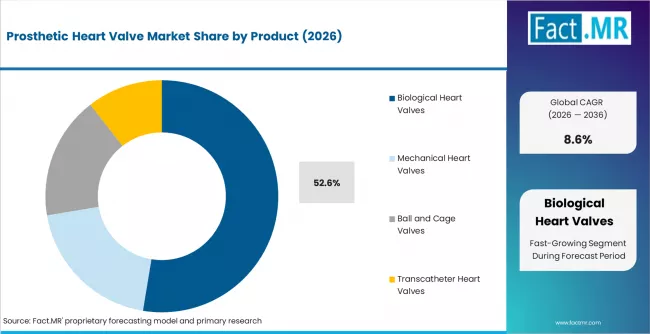
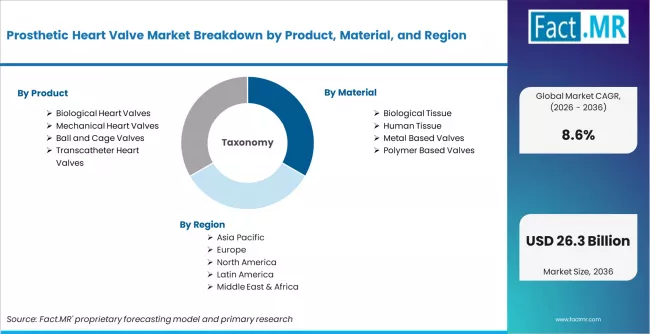
The market is segmented by valve, material, end use, and region. By valve, the market includes transcatheter heart valves, bioprosthetic (tissue) valves, and mechanical valves. Bioprosthetic valves are further segmented into stented, heterografts, stentless, and homografts. Mechanical valves include tilting disc valves and ball cage valves.

By material, the market encompasses biological tissue, pyrolytic carbon, metal alloys, and polymers. By end use, the market is divided into hospitals, ambulatory surgical centers (ASCs), and others. Regionally, the market is divided into Asia Pacific, North America, Europe, Latin America, and Middle East & Africa.

Which Prosthetic Heart Valve is the Most Preferred?

Prosthetic Heart Valve Market Analysis By Valve

Transcatheter heart valves represent the dominant force in the prosthetic heart valve market, capturing 47.5% of the total market share in 2025. This established valve category encompasses minimally invasive catheter-delivered systems for aortic valve replacement, expanding transcatheter mitral procedures, and emerging tricuspid interventions, including balloon-expandable and self-expanding valve platforms that enable percutaneous or transfemoral access, reduced surgical trauma, and accelerated patient recovery across all structural heart disease presentations.

Transcatheter heart valves play an essential role in contemporary valvular disease management, with transcatheter approaches capable of meeting diverse anatomical requirements while maintaining superior perioperative safety profiles and expanded patient eligibility across all interventional cardiology and cardiac surgery practice environments. Within this segment, aortic valve replacement applications account for the largest procedure volume share, driven by established clinical evidence and proven long-term durability across global cardiac centers.

Key advantages driving the transcatheter heart valves segment include:

  • Established clinical evidence infrastructure with extensive procedural experience that reduces adoption barriers and ensures consistent technique availability
  • Critical patient safety advantages allowing reduced perioperative morbidity across different risk profiles without significant outcome compromises
  • Proven procedural success, delivering reliable valve function while maintaining competitiveness against traditional surgical approaches
  • Broad physician acceptance enabling straightforward treatment planning and multidisciplinary heart team coordination across multiple cardiovascular specialties

What is the Outlook for Bioprosthetic (Tissue) Heart Valves?

Bioprosthetic (tissue) valves maintain a 33.2% market share, serving patients requiring surgical valve replacement with tissue valves offering hemodynamic advantages and eliminating long-term anticoagulation requirements. These valves include stented tissue valves representing 15.1% of the overall market, providing structural support and proven performance, while heterografts account for 5.3%, stentless valves 7.8%, and homografts 5.0%.

Bioprosthetic valves offer preferred solutions for elderly patients and those with contraindications to anticoagulation while providing excellent hemodynamic profiles suitable for active lifestyles. The mechanical valves segment holds 19.3% market share, with tilting disc valves representing 10.2% and ball cage valves 9.1%, addressing patients requiring lifetime durability and accepting long-term anticoagulation therapy.

By Material, Which Category of Prosthetic Heart Valves Dominate?

Prosthetic Heart Valve Market Analysis By Material

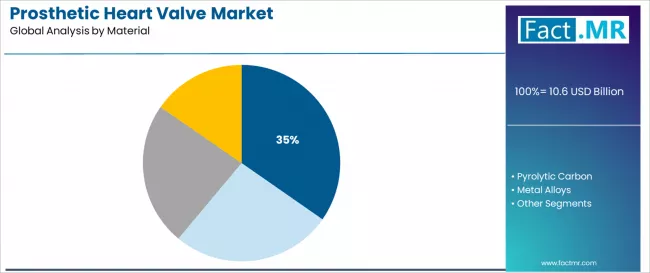
Biological tissue material-based prosthetic heart valves capture 34.7% of the market share in 2025. Growth is driven by tissue valve predominance in both transcatheter and surgical bioprosthetic applications requiring natural hemodynamic performance and biocompatibility.

Biological tissue demonstrates comprehensive utility across porcine pericardial valves, bovine pericardial tissue, and human homografts, enabling physiologic valve function and optimal blood flow characteristics across diverse patient anatomies. Healthcare facilities implementing biological tissue valves benefit from established clinical pathways and extensive durability documentation across global cardiac centers.

Pyrolytic carbon material maintains a substantial 25.4% market share, serving mechanical valve applications requiring exceptional durability, thromboresistance, and lifetime structural integrity for patients accepting anticoagulation management. Pyrolytic carbon offers proven performance for mechanical valve leaflets and housing components with decades of clinical experience and established reliability profiles.

Metal alloys account for 20.1% of the market share, encompassing titanium and cobalt-chromium components for valve frames, stents, and structural elements. Polymers represent 19.8% of the market, addressing delivery system components, sealing materials, and emerging polymeric valve designs.

Which End Use Category Dominates in the Global Prosthetic Heart Valve Market?

Prosthetic Heart Valve Market Analysis By End Use

Hospitals represent the largest treatment setting, capturing 42.1% of the total market share in 2025. This category encompasses tertiary care centers with comprehensive cardiac surgery programs, academic medical centers with advanced structural heart services, community hospitals with established cardiac catheterization laboratories, and specialized cardiac hospitals providing full-spectrum valvular disease management.

Hospitals play an essential role in supporting complex valve procedures, offering critical resources including hybrid operating rooms, advanced imaging systems, cardiac intensive care capabilities, and multidisciplinary heart teams essential for optimal patient outcomes. Within this segment, tertiary referral centers account for substantial procedure volumes, supported by complex case concentrations and established centers of excellence implementing advanced transcatheter technologies.

Ambulatory surgical centers (ASCs) maintain a 31.5% market share, driven by selected transcatheter procedures in appropriate anatomies, pre-procedural evaluation programs, and post-discharge surveillance services for lower-risk patients suitable for same-day or short-stay management in ASC settings. The others segment represents 26.4% of the market, serving specialized cardiac facilities, outpatient diagnostic centers, and rehabilitation facilities providing comprehensive valvular disease management across the care continuum.

What are the Drivers, Restraints, and Key Trends of the Prosthetic Heart Valve Market?

Increasing aging population prevalence and valvular heart disease incidence creates growing demand for valve replacement solutions, with global cardiovascular disease burden expanding by 3-5% annually in developed healthcare markets worldwide, requiring comprehensive cardiac intervention infrastructure.

Expanding transcatheter procedure adoption and minimally invasive technique refinement drives increased utilization of prosthetic valve technologies, with many cardiovascular centers implementing comprehensive structural heart programs and transcatheter capabilities by 2030. Technological advancements in valve design and delivery system engineering enable more effective and efficient procedures that expand treatable anatomies while improving deployment precision and long-term device performance capabilities.

Market restraints include high device acquisition costs for advanced transcatheter systems that can limit procedure accessibility, particularly in regions where healthcare reimbursement remains constrained or cost-effectiveness thresholds favor conservative management strategies.

Device-related complications and structural valve deterioration requiring reintervention pose another significant challenge, as prosthetic valves have finite durability requiring lifelong surveillance and potential valve-in-valve procedures, potentially causing increased healthcare utilization and patient burden. Anatomical limitations and challenging valve morphologies create additional treatment challenges for comprehensive disease coverage, demanding ongoing innovation in device design and procedural technique development.

Key trends indicate accelerated market penetration in Asia Pacific healthcare systems, particularly China and India, where cardiovascular infrastructure development and specialty care expansion drive comprehensive valvular disease management adoption.

Technology integration trends toward patient-specific valve sizing with computational modeling, repositionable and retrievable transcatheter systems enabling procedural optimization, and durable tissue engineering approaches incorporating novel anti-calcification treatments enable optimized treatment approaches that address anatomical complexity and improve long-term outcomes.

The market could face disruption if significant advances in pharmacological valve stabilization or major breakthroughs in tissue engineering enable regenerative valve therapies that eliminate prosthetic device requirements.

Analysis of the Prosthetic Heart Valve Market by Key Countries

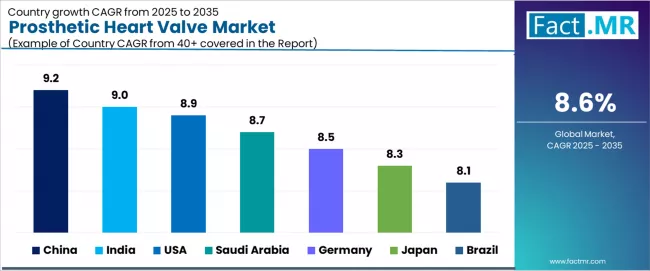
Prosthetic Heart Valve Market Cagr Analysis By Country

Country CAGR (2025 to 2035)
China 9.2%
India 9.0%
USA 8.9%
Saudi Arabia 8.7%
Germany 8.5%
Japan 8.3%
Brazil 8.1%

The prosthetic heart valve market is expanding steadily, with China leading at a 9.2% CAGR through 2035, driven by expanding minimally invasive procedures and healthcare investments. India follows at 9.0%, supported by increasing CVD cases and domestic R&D expansion. USA records 8.9%, reflecting high adoption of TAVR and advanced valve technologies. Saudi Arabia posts 8.7%, anchored by government support and early adoption of advanced valves.

Germany grows at 8.5%, with strong healthcare infrastructure and early valve intervention programs. Japan advances at 8.3%, representing aging population and strategic initiatives for transcatheter valve adoption, while Brazil grows at 8.1%, focusing on rising cardiovascular disease and shift toward TAVR.

China Leads Global Market Expansion

China demonstrates the strongest growth potential in the prosthetic heart valve market with a CAGR of 9.2% through 2035. The country's leadership position stems from expanding minimally invasive procedures and healthcare investments, growing structural heart disease programs, and increasing transcatheter valve adoption enabling mainstream prosthetic valve utilization. Growth is concentrated in major healthcare regions, including Beijing, Shanghai, Guangzhou, and Chengdu, where tertiary cardiac centers and specialized cardiovascular hospitals are implementing advanced valve replacement programs for enhanced patient outcomes.

Distribution channels through hospital cardiac departments, national procurement programs, and medical device distributors expand access across urban cardiovascular facilities and emerging regional cardiac centers. The country's expanding healthcare insurance coverage provides financial support for advanced procedures, including reimbursement frameworks for transcatheter interventions and surgical valve replacement.

Key market factors:

  • Clinical demand concentrated in metropolitan tertiary centers and specialized cardiac hospitals with comprehensive structural heart programs
  • Infrastructure development through national cardiovascular center initiatives and cardiac surgery capacity expansion
  • Comprehensive cardiovascular ecosystem, including growing interventional expertise with international training partnerships
  • Technology integration featuring hybrid operating rooms, advanced imaging systems, and procedural training programs

India Emerges as High-Growth Market

In major healthcare regions including Delhi NCR, Mumbai, Bangalore, and Chennai, the deployment and utilization of prosthetic heart valves is accelerating across tertiary hospitals and specialized cardiac centers, driven by increasing CVD cases and domestic R&D expansion. The market demonstrates strong growth momentum with a CAGR of 9.0% through 2035, linked to rising cardiovascular disease burden, integrated cardiac care development, and sustained investment in structural heart capabilities.

Indian hospitals are implementing advanced valve technologies and comprehensive cardiac programs to enhance treatment outcomes while meeting growing patient demand in expanding urban healthcare markets and aging population demographics. The country's medical technology development initiatives create persistent demand for cardiac interventions, while increasing emphasis on domestic manufacturing drives adoption of locally produced valve technologies.

Key development areas:

  • Tertiary hospitals and specialty cardiac centers leading prosthetic valve adoption with comprehensive program development
  • Integrated healthcare networks providing coordinated cardiac care delivery with extensive referral infrastructure
  • Strategic partnerships between Indian hospitals and international device manufacturers are expanding technology access
  • Integration of domestic manufacturing capabilities and comprehensive clinical validation protocols

USA shows Clinical Excellence

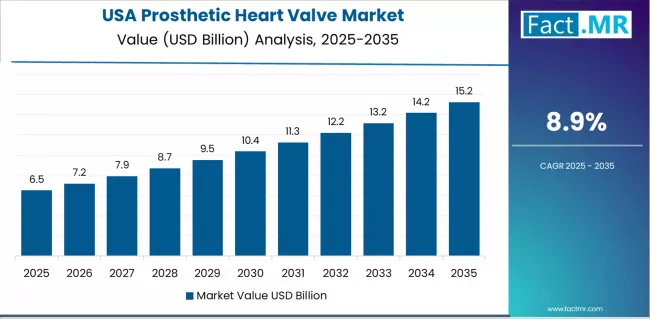
Prosthetic Heart Valve Market Country Value Analysis

USA's market expansion is driven by high adoption of TAVR and advanced valve technologies, including next-generation transcatheter systems and tissue-engineered valves, and continuous innovation in structural heart interventions across academic medical centers. The country demonstrates strong growth potential with a CAGR of 8.9% through 2035, supported by established cardiovascular infrastructure, comprehensive insurance reimbursement, and ongoing clinical research advancing treatment paradigms.

American healthcare facilities face implementation challenges related to value-based care transitions and competitive market dynamics, requiring demonstration of cost-effectiveness and outcomes optimization. However, robust clinical evidence generation and strong physician expertise create compelling adoption pathways for advanced prosthetic valve technologies, particularly in academic centers where innovation and clinical research have direct impacts on practice evolution and guideline development.

Key market characteristics:

  • Academic medical centers and high-volume cardiac programs showing leadership in advanced techniques and device innovation
  • Regional expansion trends focused on community hospital capability development and structural heart access improvement
  • Future projections indicate continued emphasis on durability assessment and real-world outcomes validation
  • Growing focus on lifetime valve management strategies and comprehensive patient care pathways

Saudi Arabia demonstrates Healthcare Transformation

The Saudi Arabian market shows robust development based on government support and early adoption of advanced valves for enhanced cardiovascular care capabilities. The country demonstrates strong potential with a CAGR of 8.7% through 2035, driven by Vision 2030 healthcare objectives, expanding specialty hospital infrastructure, and development of comprehensive cardiac programs in major healthcare cities, including Riyadh, Jeddah, Dammam, and Medina.

Facilities are adopting advanced prosthetic valve technologies for cardiovascular disease management and specialty care enhancement, particularly in regions with new specialty hospitals and medical cities demanding comprehensive cardiac surgery and interventional cardiology capabilities. Technology deployment channels through Ministry of Health facilities, private healthcare networks, and international hospital partnerships expand coverage across comprehensive cardiovascular service platforms.

Leading market segments:

  • Specialty cardiac centers and tertiary hospitals implementing comprehensive structural heart disease programs
  • Strategic partnerships with international healthcare providers, achieving technology transfer and expertise development
  • Collaborative programs between Saudi institutions and global centers of excellence are expanding clinical capabilities
  • Focus on medical tourism development and regional center of excellence positioning

Germany demonstrates Technology Leadership

The German market leads in clinical innovation and evidence generation based on integration with strong healthcare infrastructure and early valve intervention programs for enhanced patient care. The country shows strong potential with a CAGR of 8.5% through 2035, driven by world-class cardiovascular medicine capabilities, robust clinical research infrastructure, and the expansion of specialized valve centers in major university hospitals, including centers in North Rhine-Westphalia, Bavaria, Baden-Württemberg, and Berlin.

German hospitals are adopting advanced prosthetic valve approaches including complex transcatheter procedures and minimally invasive surgical techniques, particularly in academic centers with sophisticated cardiovascular programs and research missions demanding comprehensive technology evaluation. Technology deployment channels through university hospitals and specialized cardiac centers expand coverage across academic medicine and community practice networks.

Leading market segments:

  • University hospitals and specialized cardiac centers implementing comprehensive research and clinical programs
  • Strategic partnerships between device manufacturers and clinical investigators, achieving innovation and evidence generation
  • Collaborative research networks between German institutions and international partners are expanding knowledge development
  • Focus on long-term durability research and patient-reported outcomes assessment methodologies

Japan Emphasizes Aging Population Care

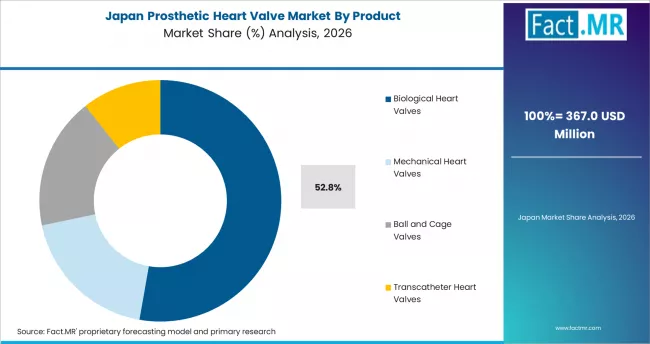
Prosthetic Heart Valve Market Japan Market Share Analysis By Valve

The market in Japan demonstrates sophisticated healthcare delivery characterized by aging population and strategic initiatives for transcatheter valve adoption for enhanced cardiovascular care. The country shows steady growth momentum with a CAGR of 8.3% through 2035, driven by advanced healthcare infrastructure and comprehensive cardiovascular specialist networks in established medical centers.

Japan's emphasis on quality care and patient safety creates requirements for proven prosthetic valve technologies that support comprehensive outcomes optimization and long-term patient management. The market benefits from strong relationships between medical device companies and clinical specialists, creating comprehensive care ecosystems that prioritize patient outcomes and technical excellence. Cardiovascular centers in major metropolitan regions showcase advanced valve replacement programs where multidisciplinary care achieves superior outcomes through integrated clinical protocols.

Key market characteristics:

  • University hospitals and specialized cardiovascular centers driving advanced treatment adoption with emphasis on clinical excellence
  • National health insurance coverage enabling comprehensive valve therapy access with established reimbursement frameworks
  • Technology collaboration between Japanese physicians and international device developers is expanding innovation pathways
  • Emphasis on patient safety optimization and long-term surveillance program development

Brazil demonstrates Access Expansion

The market in Brazil shows developing momentum based on rising cardiovascular disease and shift toward TAVR for enhanced treatment accessibility. The country demonstrates steady potential with a CAGR of 8.1% through 2035, driven by cardiovascular disease burden growth, expanding private healthcare sector, and development of specialty cardiovascular services in major urban centers, including São Paulo, Rio de Janeiro, Brasília, and Belo Horizonte.

Brazilian facilities are adopting transcatheter technologies for valve replacement and cardiovascular care improvement, particularly in regions with expanding tertiary care infrastructure and specialty hospital development demanding comprehensive cardiac intervention capabilities. Technology deployment channels through private hospital networks, academic medical centers, and specialty cardiac institutes expand coverage across urban cardiovascular care platforms.

Leading market segments:

  • Private tertiary hospitals and cardiac specialty centers implementing advanced cardiovascular programs
  • Strategic partnerships with international device suppliers, achieving technology access and clinical training support
  • Collaborative development between Brazilian institutions and global centers are expanding local expertise
  • Focus on access improvement initiatives and specialty care network development

Europe Market Split by Country

Prosthetic Heart Valve Market Europe Country Market Share Analysis, 2025 & 2035

The prosthetic heart valve market in Europe is projected to expand steadily from its 2025 base through 2035. Germany is expected to lead in 2025 with an estimated 29.6% share, supported by advanced cardiovascular medicine infrastructure, established structural heart programs, and strong clinical research capabilities across major university hospitals.

France follows with an estimated 23.1% share in 2025, reflecting its mature cardiac surgery networks and academic medical center expertise. The UK holds an estimated 18.2% share through NHS cardiac surgery programs and expanding transcatheter valve adoption. Italy records an estimated 15.0% share, supported by its established position in cardiovascular interventions. The rest of Europe accounts for 14.1% in 2025 as structural heart therapies gain broader acceptance across diverse hospital systems.

By 2035, Germany is projected to retain a strong 28.8% share. France is expected at 22.7%, supported by sustained academic leadership in cardiac care. The UK is anticipated to hold 18.9% as national structural heart programs expand. Italy is projected at 15.4%, while the Rest of Europe increases to 14.2%, reflecting rising adoption of prosthetic heart valves across varied hospital settings implementing advanced cardiac surgery and structural heart programs.

Competitive Landscape of the Prosthetic Heart Valve Market

Prosthetic Heart Valve Market Analysis By Company
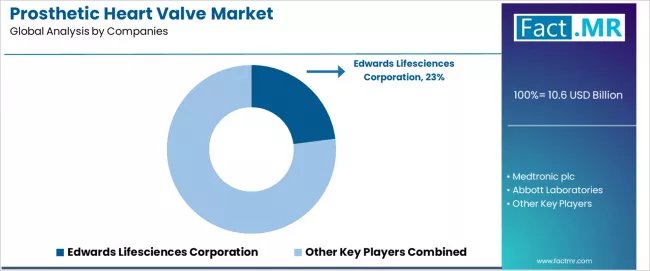
The prosthetic heart valve market features approximately 15-20 meaningful players with moderate to high concentration, where the leading companies control substantial market presence through established device portfolios and extensive clinical evidence across cardiovascular and cardiac surgery sectors.

Market leaders include Edwards Lifesciences, which maintains competitive advantages through comprehensive transcatheter and surgical valve portfolios, pioneering TAVR technology, and deep expertise in the structural heart and cardiac surgery sectors, creating strong physician relationships among cardiac surgeons and interventional cardiologists. Edwards Lifesciences Corporationcommands a 23.0% market share through innovative product offerings and strategic positioning in global cardiovascular markets.

Challengers encompass Medtronic plc, Abbott Laboratories, and Boston Scientific Corp., which compete through diversified valve platforms and strong clinical evidence in key cardiac markets. Established cardiovascular device manufacturers, including CryoLife Inc. (now Artivion), MicroPort Scientific Corp., and Lepu Medical Technology (Beijing) Co. Ltd., focus on specific valve types or regional markets, offering differentiated capabilities in tissue preservation, transcatheter delivery, and surgical valve systems.

Additional meaningful players include Venus Medtech (Hangzhou) Inc., Foldax Inc., Meril Life Sciences, and TTK Healthcare Limited, which compete through regional market presence and specialized valve technologies.

Regional players and emerging device developers create competitive pressure through innovative valve designs and next-generation materials, particularly in high-growth markets including China and India, where local presence provides advantages in market access and clinical collaboration.

Market dynamics favor companies that combine proven valve technologies with comprehensive clinical evidence that addresses the complete treatment pathway from preoperative planning through long-term surveillance and potential reintervention. Strategic investments in transcatheter mitral and tricuspid valve development and novel tissue engineering approaches enable market differentiation and clinical adoption across diverse anatomical presentations.

Global Prosthetic Heart Valve Market - Stakeholder Contribution Framework

Prosthetic heart valve technologies represent a life-saving innovation that enables cardiac surgeons, interventional cardiologists, and cardiovascular centers to achieve effective valvular disease treatment with various surgical and minimally invasive approaches without extensive open procedures in many cases, typically providing reliable valve function and patient survival while supporting diverse clinical presentations.

With the market projected to grow from USD 10.60 billion in 2025 to USD 24.28 billion by 2035 at an 8.6% CAGR, these technologies offer compelling advantages - minimally invasive access options, proven clinical outcomes, and diverse valve platforms - making them essential for transcatheter procedures (dominant technology), hospital-based cardiovascular programs (largest setting), and diverse patient populations seeking proven valvular disease management. Scaling clinical adoption and market development requires coordinated action across healthcare policy, clinical guidelines, medical device manufacturers, physician training organizations, and clinical research institutions.

How Governments Could Spur Local Production and Adoption?

  • Cardiovascular Infrastructure Programs: Include advanced structural heart capabilities in national health strategies, providing targeted funding for hybrid operating rooms in regions with cardiac surgery programs and supporting specialty center development through infrastructure investment and technology grants.
  • Reimbursement Policy Development: Implement evidence-based coverage frameworks for transcatheter and surgical valve procedures, provide appropriate reimbursement for device costs and procedural complexity, and establish quality metrics that recognize centers of excellence and optimal patient outcomes.
  • Clinical Registry & Surveillance Systems: Create comprehensive national registries for valve replacement tracking, provide funding for long-term outcomes surveillance, and establish data infrastructure that supports quality improvement and comparative effectiveness research.
  • Skills Development & Training: Fund fellowship training programs for interventional cardiology and cardiac surgery specialists. Invest in simulation facilities and international training partnerships that build expertise in transcatheter techniques and structural heart disease management.

How Industry Bodies Could Support Market Development?

  • Clinical Guidelines & Standards: Define evidence-based treatment algorithms for valvular heart disease management across different anatomical presentations, establish quality standards for procedural performance and outcomes, and create credentialing programs for operator expertise that healthcare systems can implement.
  • Market Education & Evidence Dissemination: Lead professional education initiatives that demonstrate prosthetic valve capabilities, emphasizing clinical outcomes, patient selection criteria, and technical considerations compared to medical management and alternative surgical approaches.
  • Registry Development & Outcomes Research: Develop comprehensive clinical databases documenting real-world device performance, establish benchmarking protocols for outcome comparison across institutions, and create collaborative research networks that advance evidence generation and clinical knowledge.

How Manufacturers and Technology Players Could Strengthen the Ecosystem?

  • Device Technology Development: Develop next-generation prosthetic valves with enhanced hemodynamic performance, improved durability profiles, and patient-specific features that optimize anatomical fit while improving procedural success and long-term outcomes.
  • Clinical Support Platforms: Provide comprehensive physician education programs that integrate procedural training, case planning support, advanced imaging analysis, and proctoring services, enabling physicians to optimize technique and maximize patient outcomes.
  • Evidence Generation Partnerships: Offer collaborative research programs with leading cardiovascular centers, including post-market surveillance studies, long-term durability assessments, and comparative effectiveness evaluations that support evidence-based practice and informed decision-making across diverse clinical scenarios.

Key Players in the Prosthetic Heart Valve Market

  • Edwards Lifesciences Corporation
  • Medtronic plc
  • Abbott Laboratories
  • Boston Scientific Corporation
  • Artivion Inc.
  • MicroPort Scientific Corp.
  • Lepu Medical Technology (Beijing) Co., Ltd.
  • Venus Medtech (Hangzhou) Inc.
  • Foldax, Inc.
  • Meril Life Sciences Pvt. Ltd.
  • TTK Healthcare Limited

Scope of the Report

Items Values
Quantitative Units USD 10.60 Billion
Valve Transcatheter Heart Valves, Bioprosthetic (Tissue) Valves, Mechanical Valves
Material Biological Tissue, Pyrolytic Carbon, Metal Alloys, Polymers
End Use Hospitals, Ambulatory Surgical Centers (ASCs), Others
Regions Covered Asia Pacific, North America, Europe, Latin America, Middle East & Africa
Country Covered China, India, USA, Saudi Arabia, Germany, Japan, Brazil, and 40+ countries
Key Companies Profiled Edwards Lifesciences, Medtronic plc, Abbott Laboratories, Boston Scientific Corp., CryoLife Inc., MicroPort Scientific Corp., Lepu Medical Technology (Beijing) Co. Ltd., Venus Medtech (Hangzhou) Inc., Foldax Inc., Meril Life Sciences, TTK Healthcare Limited
Additional Attributes Dollar sales by valve, material, and end use categories, regional clinical adoption trends across Asia Pacific, North America, and Europe, competitive landscape with medical device manufacturers and cardiovascular companies, clinical performance specifications and procedural requirements, integration with hospital cardiovascular programs and specialty cardiac surgery centers.

Prosthetic Heart Valve Market by Segments

  • Valve :

    • Transcatheter Heart Valves
    • Bioprosthetic (Tissue) Valves
      • Stented
      • Heterografts
      • Stentless
      • Homografts
    • Mechanical Valves
      • Tilting Disc Valves
      • Ball Cage Valves
  • Material :

    • Biological Tissue
    • Pyrolytic Carbon
    • Metal Alloys
    • Polymers
  • End Use :

    • Hospitals
    • Ambulatory Surgical Centers (ASCs)
    • Others
  • Region :

    • Asia Pacific
      • China
      • Japan
      • South Korea
      • India
      • Australia & New Zealand
      • ASEAN
      • Rest of Asia Pacific
    • North America
      • USA
      • Canada
      • Mexico
    • Europe
      • Germany
      • France
      • UK
      • Italy
      • Spain
      • Rest of Europe
    • Latin America
      • Brazil
      • Rest of Latin America
    • Middle East & Africa
      • Kingdom of Saudi Arabia
      • Other GCC Countries
      • Turkey
      • South Africa
      • Rest of Middle East & Africa

Table of Content

  1. Executive Summary
    • Global Market Outlook
    • Demand to side Trends
    • Supply to side Trends
    • Technology Roadmap Analysis
    • Analysis and Recommendations
  2. Market Overview
    • Market Coverage / Taxonomy
    • Market Definition / Scope / Limitations
  3. Market Background
    • Market Dynamics
      • Drivers
      • Restraints
      • Opportunity
      • Trends
    • Scenario Forecast
      • Demand in Optimistic Scenario
      • Demand in Likely Scenario
      • Demand in Conservative Scenario
    • Opportunity Map Analysis
    • Product Life Cycle Analysis
    • Supply Chain Analysis
    • Investment Feasibility Matrix
    • Value Chain Analysis
    • PESTLE and Porter’s Analysis
    • Regulatory Landscape
    • Regional Parent Market Outlook
    • Production and Consumption Statistics
    • Import and Export Statistics
  4. Global Market Analysis 2020 to 2024 and Forecast, 2025 to 2035
    • Historical Market Size Value (USD Million) Analysis, 2020 to 2024
    • Current and Future Market Size Value (USD Million) Projections, 2025 to 2035
      • Y to o to Y Growth Trend Analysis
      • Absolute $ Opportunity Analysis
  5. Global Market Pricing Analysis 2020 to 2024 and Forecast 2025 to 2035
  6. Global Market Analysis 2020 to 2024 and Forecast 2025 to 2035, By Valve
    • Introduction / Key Findings
    • Historical Market Size Value (USD Million) Analysis By Valve, 2020 to 2024
    • Current and Future Market Size Value (USD Million) Analysis and Forecast By Valve, 2025 to 2035
      • Transcatheter Heart Valves
      • Bioprosthetic (Tissue) Valves
      • Mechanical Valves
    • Y to o to Y Growth Trend Analysis By Valve, 2020 to 2024
    • Absolute $ Opportunity Analysis By Valve, 2025 to 2035
  7. Global Market Analysis 2020 to 2024 and Forecast 2025 to 2035, By Material
    • Introduction / Key Findings
    • Historical Market Size Value (USD Million) Analysis By Material, 2020 to 2024
    • Current and Future Market Size Value (USD Million) Analysis and Forecast By Material, 2025 to 2035
      • Biological Tissue
      • Pyrolytic Carbon
      • Metal Alloys
      • Polymers
    • Y to o to Y Growth Trend Analysis By Material, 2020 to 2024
    • Absolute $ Opportunity Analysis By Material, 2025 to 2035
  8. Global Market Analysis 2020 to 2024 and Forecast 2025 to 2035, By End Use
    • Introduction / Key Findings
    • Historical Market Size Value (USD Million) Analysis By End Use, 2020 to 2024
    • Current and Future Market Size Value (USD Million) Analysis and Forecast By End Use, 2025 to 2035
      • Hospitals
      • Ambulatory Surgical Centers (ASCs)
      • Others
    • Y to o to Y Growth Trend Analysis By End Use, 2020 to 2024
    • Absolute $ Opportunity Analysis By End Use, 2025 to 2035
  9. Global Market Analysis 2020 to 2024 and Forecast 2025 to 2035, By Region
    • Introduction
    • Historical Market Size Value (USD Million) Analysis By Region, 2020 to 2024
    • Current Market Size Value (USD Million) Analysis and Forecast By Region, 2025 to 2035
      • North America
      • Latin America
      • Western Europe
      • Eastern Europe
      • East Asia
      • South Asia and Pacific
      • Middle East & Africa
    • Market Attractiveness Analysis By Region
  10. North America Market Analysis 2020 to 2024 and Forecast 2025 to 2035, By Country
    • Historical Market Size Value (USD Million) Trend Analysis By Market Taxonomy, 2020 to 2024
    • Market Size Value (USD Million) Forecast By Market Taxonomy, 2025 to 2035
      • By Country
        • USA
        • Canada
        • Mexico
      • By Valve
      • By Material
      • By End Use
    • Market Attractiveness Analysis
      • By Country
      • By Valve
      • By Material
      • By End Use
    • Key Takeaways
  11. Latin America Market Analysis 2020 to 2024 and Forecast 2025 to 2035, By Country
    • Historical Market Size Value (USD Million) Trend Analysis By Market Taxonomy, 2020 to 2024
    • Market Size Value (USD Million) Forecast By Market Taxonomy, 2025 to 2035
      • By Country
        • Brazil
        • Chile
        • Rest of Latin America
      • By Valve
      • By Material
      • By End Use
    • Market Attractiveness Analysis
      • By Country
      • By Valve
      • By Material
      • By End Use
    • Key Takeaways
  12. Western Europe Market Analysis 2020 to 2024 and Forecast 2025 to 2035, By Country
    • Historical Market Size Value (USD Million) Trend Analysis By Market Taxonomy, 2020 to 2024
    • Market Size Value (USD Million) Forecast By Market Taxonomy, 2025 to 2035
      • By Country
        • Germany
        • UK
        • Italy
        • Spain
        • France
        • Nordic
        • BENELUX
        • Rest of Western Europe
      • By Valve
      • By Material
      • By End Use
    • Market Attractiveness Analysis
      • By Country
      • By Valve
      • By Material
      • By End Use
    • Key Takeaways
  13. Eastern Europe Market Analysis 2020 to 2024 and Forecast 2025 to 2035, By Country
    • Historical Market Size Value (USD Million) Trend Analysis By Market Taxonomy, 2020 to 2024
    • Market Size Value (USD Million) Forecast By Market Taxonomy, 2025 to 2035
      • By Country
        • Russia
        • Poland
        • Hungary
        • Balkan & Baltic
        • Rest of Eastern Europe
      • By Valve
      • By Material
      • By End Use
    • Market Attractiveness Analysis
      • By Country
      • By Valve
      • By Material
      • By End Use
    • Key Takeaways
  14. East Asia Market Analysis 2020 to 2024 and Forecast 2025 to 2035, By Country
    • Historical Market Size Value (USD Million) Trend Analysis By Market Taxonomy, 2020 to 2024
    • Market Size Value (USD Million) Forecast By Market Taxonomy, 2025 to 2035
      • By Country
        • China
        • Japan
        • South Korea
      • By Valve
      • By Material
      • By End Use
    • Market Attractiveness Analysis
      • By Country
      • By Valve
      • By Material
      • By End Use
    • Key Takeaways
  15. South Asia and Pacific Market Analysis 2020 to 2024 and Forecast 2025 to 2035, By Country
    • Historical Market Size Value (USD Million) Trend Analysis By Market Taxonomy, 2020 to 2024
    • Market Size Value (USD Million) Forecast By Market Taxonomy, 2025 to 2035
      • By Country
        • India
        • ASEAN
        • Australia & New Zealand
        • Rest of South Asia and Pacific
      • By Valve
      • By Material
      • By End Use
    • Market Attractiveness Analysis
      • By Country
      • By Valve
      • By Material
      • By End Use
    • Key Takeaways
  16. Middle East & Africa Market Analysis 2020 to 2024 and Forecast 2025 to 2035, By Country
    • Historical Market Size Value (USD Million) Trend Analysis By Market Taxonomy, 2020 to 2024
    • Market Size Value (USD Million) Forecast By Market Taxonomy, 2025 to 2035
      • By Country
        • Kingdom of Saudi Arabia
        • Other GCC Countries
        • Turkiye
        • South Africa
        • Other African Union
        • Rest of Middle East & Africa
      • By Valve
      • By Material
      • By End Use
    • Market Attractiveness Analysis
      • By Country
      • By Valve
      • By Material
      • By End Use
    • Key Takeaways
  17. Key Countries Market Analysis
    • USA
      • Pricing Analysis
      • Market Share Analysis, 2024
        • By Valve
        • By Material
        • By End Use
    • Canada
      • Pricing Analysis
      • Market Share Analysis, 2024
        • By Valve
        • By Material
        • By End Use
    • Mexico
      • Pricing Analysis
      • Market Share Analysis, 2024
        • By Valve
        • By Material
        • By End Use
    • Brazil
      • Pricing Analysis
      • Market Share Analysis, 2024
        • By Valve
        • By Material
        • By End Use
    • Chile
      • Pricing Analysis
      • Market Share Analysis, 2024
        • By Valve
        • By Material
        • By End Use
    • Germany
      • Pricing Analysis
      • Market Share Analysis, 2024
        • By Valve
        • By Material
        • By End Use
    • UK
      • Pricing Analysis
      • Market Share Analysis, 2024
        • By Valve
        • By Material
        • By End Use
    • Italy
      • Pricing Analysis
      • Market Share Analysis, 2024
        • By Valve
        • By Material
        • By End Use
    • Spain
      • Pricing Analysis
      • Market Share Analysis, 2024
        • By Valve
        • By Material
        • By End Use
    • France
      • Pricing Analysis
      • Market Share Analysis, 2024
        • By Valve
        • By Material
        • By End Use
    • India
      • Pricing Analysis
      • Market Share Analysis, 2024
        • By Valve
        • By Material
        • By End Use
    • ASEAN
      • Pricing Analysis
      • Market Share Analysis, 2024
        • By Valve
        • By Material
        • By End Use
    • Australia & New Zealand
      • Pricing Analysis
      • Market Share Analysis, 2024
        • By Valve
        • By Material
        • By End Use
    • China
      • Pricing Analysis
      • Market Share Analysis, 2024
        • By Valve
        • By Material
        • By End Use
    • Japan
      • Pricing Analysis
      • Market Share Analysis, 2024
        • By Valve
        • By Material
        • By End Use
    • South Korea
      • Pricing Analysis
      • Market Share Analysis, 2024
        • By Valve
        • By Material
        • By End Use
    • Russia
      • Pricing Analysis
      • Market Share Analysis, 2024
        • By Valve
        • By Material
        • By End Use
    • Poland
      • Pricing Analysis
      • Market Share Analysis, 2024
        • By Valve
        • By Material
        • By End Use
    • Hungary
      • Pricing Analysis
      • Market Share Analysis, 2024
        • By Valve
        • By Material
        • By End Use
    • Kingdom of Saudi Arabia
      • Pricing Analysis
      • Market Share Analysis, 2024
        • By Valve
        • By Material
        • By End Use
    • Turkiye
      • Pricing Analysis
      • Market Share Analysis, 2024
        • By Valve
        • By Material
        • By End Use
    • South Africa
      • Pricing Analysis
      • Market Share Analysis, 2024
        • By Valve
        • By Material
        • By End Use
  18. Market Structure Analysis
    • Competition Dashboard
    • Competition Benchmarking
    • Market Share Analysis of Top Players
      • By Regional
      • By Valve
      • By Material
      • By End Use
  19. Competition Analysis
    • Competition Deep Dive
      • Edwards Lifesciences Corporation
        • Overview
        • Product Portfolio
        • Profitability by Market Segments (Product/Age /Sales Channel/Region)
        • Sales Footprint
        • Strategy Overview
          • Marketing Strategy
          • Product Strategy
          • Channel Strategy
      • Medtronic plc
      • Abbott Laboratories
      • Boston Scientific Corporation
      • Artivion Inc.
      • MicroPort Scientific Corp.
      • Lepu Medical Technology (Beijing) Co., Ltd.
      • Venus Medtech (Hangzhou) Inc.
      • Foldax, Inc.
      • Meril Life Sciences Pvt. Ltd.
      • TTK Healthcare Limited
  20. Assumptions & Acronyms Used
  21. Research Methodology

List Of Table

  • Table 1: Global Market Value (USD Million) Forecast by Region, 2020 to 2035
  • Table 2: Global Market Value (USD Million) Forecast by Valve, 2020 to 2035
  • Table 3: Global Market Value (USD Million) Forecast by Material, 2020 to 2035
  • Table 4: Global Market Value (USD Million) Forecast by End Use, 2020 to 2035
  • Table 5: North America Market Value (USD Million) Forecast by Country, 2020 to 2035
  • Table 6: North America Market Value (USD Million) Forecast by Valve, 2020 to 2035
  • Table 7: North America Market Value (USD Million) Forecast by Material, 2020 to 2035
  • Table 8: North America Market Value (USD Million) Forecast by End Use, 2020 to 2035
  • Table 9: Latin America Market Value (USD Million) Forecast by Country, 2020 to 2035
  • Table 10: Latin America Market Value (USD Million) Forecast by Valve, 2020 to 2035
  • Table 11: Latin America Market Value (USD Million) Forecast by Material, 2020 to 2035
  • Table 12: Latin America Market Value (USD Million) Forecast by End Use, 2020 to 2035
  • Table 13: Western Europe Market Value (USD Million) Forecast by Country, 2020 to 2035
  • Table 14: Western Europe Market Value (USD Million) Forecast by Valve, 2020 to 2035
  • Table 15: Western Europe Market Value (USD Million) Forecast by Material, 2020 to 2035
  • Table 16: Western Europe Market Value (USD Million) Forecast by End Use, 2020 to 2035
  • Table 17: Eastern Europe Market Value (USD Million) Forecast by Country, 2020 to 2035
  • Table 18: Eastern Europe Market Value (USD Million) Forecast by Valve, 2020 to 2035
  • Table 19: Eastern Europe Market Value (USD Million) Forecast by Material, 2020 to 2035
  • Table 20: Eastern Europe Market Value (USD Million) Forecast by End Use, 2020 to 2035
  • Table 21: East Asia Market Value (USD Million) Forecast by Country, 2020 to 2035
  • Table 22: East Asia Market Value (USD Million) Forecast by Valve, 2020 to 2035
  • Table 23: East Asia Market Value (USD Million) Forecast by Material, 2020 to 2035
  • Table 24: East Asia Market Value (USD Million) Forecast by End Use, 2020 to 2035
  • Table 25: South Asia and Pacific Market Value (USD Million) Forecast by Country, 2020 to 2035
  • Table 26: South Asia and Pacific Market Value (USD Million) Forecast by Valve, 2020 to 2035
  • Table 27: South Asia and Pacific Market Value (USD Million) Forecast by Material, 2020 to 2035
  • Table 28: South Asia and Pacific Market Value (USD Million) Forecast by End Use, 2020 to 2035
  • Table 29: Middle East & Africa Market Value (USD Million) Forecast by Country, 2020 to 2035
  • Table 30: Middle East & Africa Market Value (USD Million) Forecast by Valve, 2020 to 2035
  • Table 31: Middle East & Africa Market Value (USD Million) Forecast by Material, 2020 to 2035
  • Table 32: Middle East & Africa Market Value (USD Million) Forecast by End Use, 2020 to 2035

List Of Figures

  • Figure 1: Global Market Pricing Analysis
  • Figure 2: Global Market Value (USD Million) Forecast 2020 to 2035
  • Figure 3: Global Market Value Share and BPS Analysis by Valve, 2025 and 2035
  • Figure 4: Global Market Y to o to Y Growth Comparison by Valve, 2025 to 2035
  • Figure 5: Global Market Attractiveness Analysis by Valve
  • Figure 6: Global Market Value Share and BPS Analysis by Material, 2025 and 2035
  • Figure 7: Global Market Y to o to Y Growth Comparison by Material, 2025 to 2035
  • Figure 8: Global Market Attractiveness Analysis by Material
  • Figure 9: Global Market Value Share and BPS Analysis by End Use, 2025 and 2035
  • Figure 10: Global Market Y to o to Y Growth Comparison by End Use, 2025 to 2035
  • Figure 11: Global Market Attractiveness Analysis by End Use
  • Figure 12: Global Market Value (USD Million) Share and BPS Analysis by Region, 2025 and 2035
  • Figure 13: Global Market Y to o to Y Growth Comparison by Region, 2025 to 2035
  • Figure 14: Global Market Attractiveness Analysis by Region
  • Figure 15: North America Market Incremental Dollar Opportunity, 2025 to 2035
  • Figure 16: Latin America Market Incremental Dollar Opportunity, 2025 to 2035
  • Figure 17: Western Europe Market Incremental Dollar Opportunity, 2025 to 2035
  • Figure 18: Eastern Europe Market Incremental Dollar Opportunity, 2025 to 2035
  • Figure 19: East Asia Market Incremental Dollar Opportunity, 2025 to 2035
  • Figure 20: South Asia and Pacific Market Incremental Dollar Opportunity, 2025 to 2035
  • Figure 21: Middle East & Africa Market Incremental Dollar Opportunity, 2025 to 2035
  • Figure 22: North America Market Value Share and BPS Analysis by Country, 2025 and 2035
  • Figure 23: North America Market Value Share and BPS Analysis by Valve, 2025 and 2035
  • Figure 24: North America Market Y to o to Y Growth Comparison by Valve, 2025 to 2035
  • Figure 25: North America Market Attractiveness Analysis by Valve
  • Figure 26: North America Market Value Share and BPS Analysis by Material, 2025 and 2035
  • Figure 27: North America Market Y to o to Y Growth Comparison by Material, 2025 to 2035
  • Figure 28: North America Market Attractiveness Analysis by Material
  • Figure 29: North America Market Value Share and BPS Analysis by End Use, 2025 and 2035
  • Figure 30: North America Market Y to o to Y Growth Comparison by End Use, 2025 to 2035
  • Figure 31: North America Market Attractiveness Analysis by End Use
  • Figure 32: Latin America Market Value Share and BPS Analysis by Country, 2025 and 2035
  • Figure 33: Latin America Market Value Share and BPS Analysis by Valve, 2025 and 2035
  • Figure 34: Latin America Market Y to o to Y Growth Comparison by Valve, 2025 to 2035
  • Figure 35: Latin America Market Attractiveness Analysis by Valve
  • Figure 36: Latin America Market Value Share and BPS Analysis by Material, 2025 and 2035
  • Figure 37: Latin America Market Y to o to Y Growth Comparison by Material, 2025 to 2035
  • Figure 38: Latin America Market Attractiveness Analysis by Material
  • Figure 39: Latin America Market Value Share and BPS Analysis by End Use, 2025 and 2035
  • Figure 40: Latin America Market Y to o to Y Growth Comparison by End Use, 2025 to 2035
  • Figure 41: Latin America Market Attractiveness Analysis by End Use
  • Figure 42: Western Europe Market Value Share and BPS Analysis by Country, 2025 and 2035
  • Figure 43: Western Europe Market Value Share and BPS Analysis by Valve, 2025 and 2035
  • Figure 44: Western Europe Market Y to o to Y Growth Comparison by Valve, 2025 to 2035
  • Figure 45: Western Europe Market Attractiveness Analysis by Valve
  • Figure 46: Western Europe Market Value Share and BPS Analysis by Material, 2025 and 2035
  • Figure 47: Western Europe Market Y to o to Y Growth Comparison by Material, 2025 to 2035
  • Figure 48: Western Europe Market Attractiveness Analysis by Material
  • Figure 49: Western Europe Market Value Share and BPS Analysis by End Use, 2025 and 2035
  • Figure 50: Western Europe Market Y to o to Y Growth Comparison by End Use, 2025 to 2035
  • Figure 51: Western Europe Market Attractiveness Analysis by End Use
  • Figure 52: Eastern Europe Market Value Share and BPS Analysis by Country, 2025 and 2035
  • Figure 53: Eastern Europe Market Value Share and BPS Analysis by Valve, 2025 and 2035
  • Figure 54: Eastern Europe Market Y to o to Y Growth Comparison by Valve, 2025 to 2035
  • Figure 55: Eastern Europe Market Attractiveness Analysis by Valve
  • Figure 56: Eastern Europe Market Value Share and BPS Analysis by Material, 2025 and 2035
  • Figure 57: Eastern Europe Market Y to o to Y Growth Comparison by Material, 2025 to 2035
  • Figure 58: Eastern Europe Market Attractiveness Analysis by Material
  • Figure 59: Eastern Europe Market Value Share and BPS Analysis by End Use, 2025 and 2035
  • Figure 60: Eastern Europe Market Y to o to Y Growth Comparison by End Use, 2025 to 2035
  • Figure 61: Eastern Europe Market Attractiveness Analysis by End Use
  • Figure 62: East Asia Market Value Share and BPS Analysis by Country, 2025 and 2035
  • Figure 63: East Asia Market Value Share and BPS Analysis by Valve, 2025 and 2035
  • Figure 64: East Asia Market Y to o to Y Growth Comparison by Valve, 2025 to 2035
  • Figure 65: East Asia Market Attractiveness Analysis by Valve
  • Figure 66: East Asia Market Value Share and BPS Analysis by Material, 2025 and 2035
  • Figure 67: East Asia Market Y to o to Y Growth Comparison by Material, 2025 to 2035
  • Figure 68: East Asia Market Attractiveness Analysis by Material
  • Figure 69: East Asia Market Value Share and BPS Analysis by End Use, 2025 and 2035
  • Figure 70: East Asia Market Y to o to Y Growth Comparison by End Use, 2025 to 2035
  • Figure 71: East Asia Market Attractiveness Analysis by End Use
  • Figure 72: South Asia and Pacific Market Value Share and BPS Analysis by Country, 2025 and 2035
  • Figure 73: South Asia and Pacific Market Value Share and BPS Analysis by Valve, 2025 and 2035
  • Figure 74: South Asia and Pacific Market Y to o to Y Growth Comparison by Valve, 2025 to 2035
  • Figure 75: South Asia and Pacific Market Attractiveness Analysis by Valve
  • Figure 76: South Asia and Pacific Market Value Share and BPS Analysis by Material, 2025 and 2035
  • Figure 77: South Asia and Pacific Market Y to o to Y Growth Comparison by Material, 2025 to 2035
  • Figure 78: South Asia and Pacific Market Attractiveness Analysis by Material
  • Figure 79: South Asia and Pacific Market Value Share and BPS Analysis by End Use, 2025 and 2035
  • Figure 80: South Asia and Pacific Market Y to o to Y Growth Comparison by End Use, 2025 to 2035
  • Figure 81: South Asia and Pacific Market Attractiveness Analysis by End Use
  • Figure 82: Middle East & Africa Market Value Share and BPS Analysis by Country, 2025 and 2035
  • Figure 83: Middle East & Africa Market Value Share and BPS Analysis by Valve, 2025 and 2035
  • Figure 84: Middle East & Africa Market Y to o to Y Growth Comparison by Valve, 2025 to 2035
  • Figure 85: Middle East & Africa Market Attractiveness Analysis by Valve
  • Figure 86: Middle East & Africa Market Value Share and BPS Analysis by Material, 2025 and 2035
  • Figure 87: Middle East & Africa Market Y to o to Y Growth Comparison by Material, 2025 to 2035
  • Figure 88: Middle East & Africa Market Attractiveness Analysis by Material
  • Figure 89: Middle East & Africa Market Value Share and BPS Analysis by End Use, 2025 and 2035
  • Figure 90: Middle East & Africa Market Y to o to Y Growth Comparison by End Use, 2025 to 2035
  • Figure 91: Middle East & Africa Market Attractiveness Analysis by End Use
  • Figure 92: Global Market - Tier Structure Analysis
  • Figure 93: Global Market - Company Share Analysis

- FAQs -

How big is the prosthetic heart valve market in 2025?

The global prosthetic heart valve market is estimated to be valued at USD 10.6 billion in 2025.

What will be the size of prosthetic heart valve market in 2035?

The market size for the prosthetic heart valve market is projected to reach USD 24.3 billion by 2035.

How much will be the prosthetic heart valve market growth between 2025 and 2035?

The prosthetic heart valve market is expected to grow at a 8.6% CAGR between 2025 and 2035.

What are the key product types in the prosthetic heart valve market?

The key product types in prosthetic heart valve market are transcatheter heart valves, bioprosthetic (tissue) valves and mechanical valves .

Which material segment to contribute significant share in the prosthetic heart valve market in 2025?

In terms of material, biological tissue segment to command 34.7% share in the prosthetic heart valve market in 2025.

Prosthetic Heart Valve Market