Subsea Cable & Critical Infrastructure Protection Services Market Size, Share, Growth and Forecast (2026 - 2036)

The Subsea Cable & Critical Infrastructure Protection Services Market is segmented by Service Type, by Asset Type, by Customer Type, by Delivery Model, by Monitoring Technology, and Region. Forecast for 2026 to 2036.

What is the subsea cable and critical infrastructure protection services market forecast to be worth by 2036?

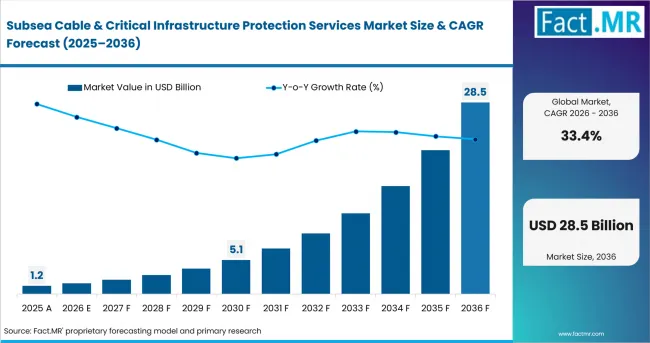
USD 1.60 billion in 2026 to USD 28.50 billion by 2036, at 33.4% CAGR.

  • The subsea cable and critical infrastructure protection services market crossed a valuation of USD 1.20 billion in 2025. Demand is expected to increase from USD 1.60 billion in 2026 to USD 28.50 billion by 2036.
  • The market is forecast to record 33.4% CAGR during 2026 to 2036 as cable owners, navies and offshore energy operators move protection budgets from incident response to permanent monitoring.
  • Surveillance and monitoring services form the core of this market. Buyers need vessel tracking and route risk mapping. They also need seabed inspection and repair readiness before outages become national security events.
  • The service scope differs from cable installation because it protects live assets and shortens the time needed to restore service.

Subsea Cable & Critical Infrastructure Protection Services Market Value Analysis

What are the defining numbers behind subsea infrastructure protection services growth?

USD 26.90 billion absolute opportunity by 2036, led by Norway and the United Kingdom.

  • Demand Drivers in the Market
    • Cable owners need surveillance and repair readiness because outages now carry national security risk beyond telecom service loss.
    • Government buyers are moving from post-incident response to standing seabed monitoring contracts after Baltic and Red Sea disruptions.
    • Offshore energy operators require cable corridor protection as export cables, interconnectors and pipelines share busier seabed routes.
    • Route-diversity planning is gaining budget priority as cloud buyers ask for redundancy evidence before capacity commitments.
  • Key Segments Analyzed
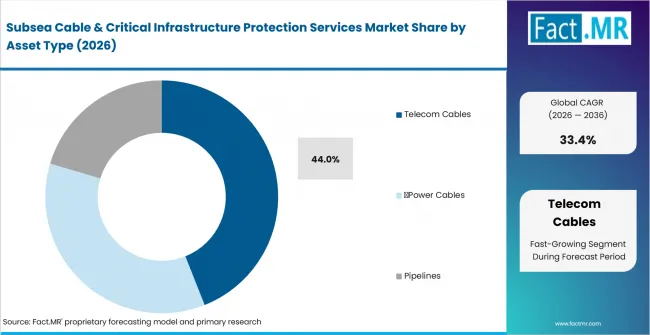
    • By Asset Type: Telecom Cables are expected to hold 44.0% share in 2026 because intercontinental data traffic depends on fiber routes.
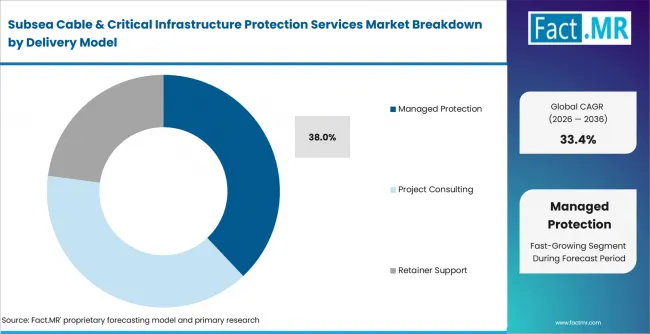
    • By Delivery Model: Managed Protection is projected to hold 38.0% share in 2026 where buyers prefer recurring coverage instead of one-off reports.
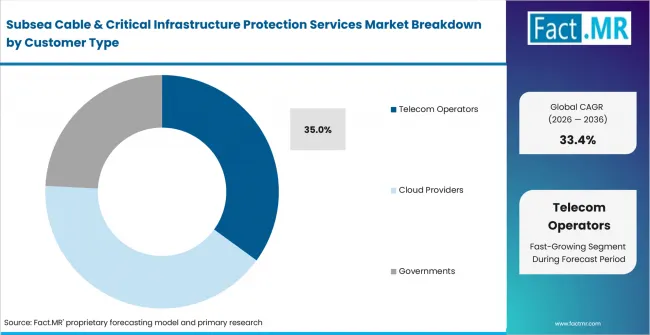
    • By Customer Type: Telecom Operators are likely to account for 35.0% share in 2026 as service continuity duties increase.
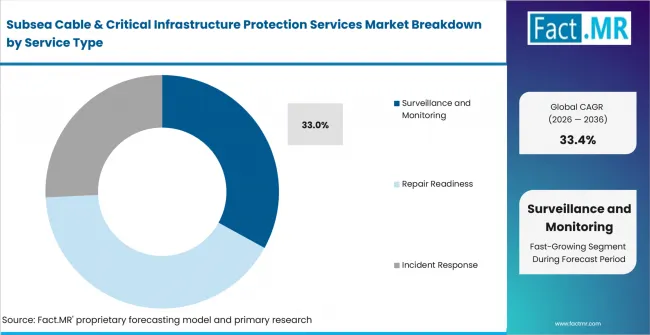
    • By Service Type: Surveillance and Monitoring is expected to hold 33.0% share in 2026 as buyers seek warning near live routes.
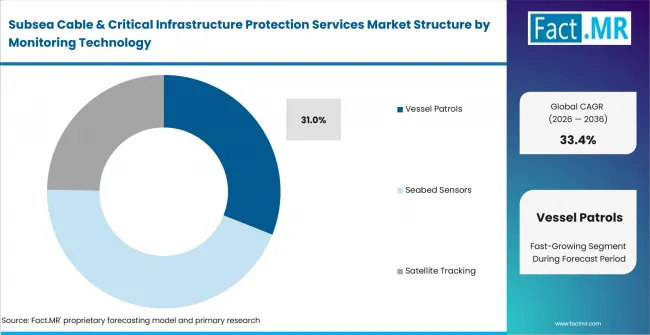
    • By Monitoring Technology: Vessel Patrols are forecast to hold 31.0% share in 2026 as suspicious ship behavior remains a direct risk signal.
    • By Geography: Norway is projected to record 38.0% CAGR through 2036 as NATO coordination and North Sea exposure support spending.
  • Analyst Opinion at Fact.MR
    • Shambhu Nath Jha at Fact.MR states, “I do not see this as a cable repair market with a security label added. I see a new operating layer around the seabed. Buyers now ask who can prove the route is watched, mapped and recoverable before a break occurs. Providers with repair access, route intelligence and cross-border permissions are likely to shape the next decade.”
  • Strategic Implications
    • Cable owners should map route exposure before new capacity contracts are signed.
    • Governments need standing repair protocols with operators rather than emergency coordination after a fault.
    • Survey providers should combine seabed data with vessel behavior analytics for repeatable threat screening.
    • Repair fleet owners can gain recurring revenue through readiness retainers and joint drills.

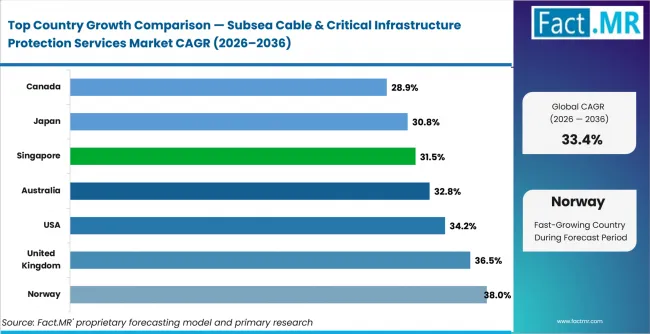
Norway is projected to record 38.0% CAGR through 2036 as North Sea energy routes keep seabed security inside public budgets. The United Kingdom is expected to expand at 36.5% CAGR because subsea cables and pipelines now sit inside national security planning. The United States is forecast to grow at 34.2% CAGR as landing license scrutiny raises compliance work. Australia is expected to advance at 32.8% CAGR as protection zones gain attention. Singapore is projected to rise at 31.5% CAGR as ASEAN cable coordination improves. Japan is forecast at 30.8% CAGR as Pacific cable redundancy receives public funding. Canada is expected to post 28.9% CAGR through 2036 as Arctic and coastal cable projects add route review needs.

How does the subsea cable and critical infrastructure protection services market break down by segment?

Telecom cables lead at 44.0%; managed protection leads at 38.0%.

Which asset type dominates?

Telecom Cables hold 44.0% share in 2026.

Subsea Cable & Critical Infrastructure Protection Services Market Analysis By Asset Type

Telecom Cables lead because international data routes face the clearest outage exposure. The International Cable Protection Committee says submarine cables provide more than 99% of intercontinental data connectivity. Protection buyers focus first on high-traffic fiber routes because service loss can affect banks, cloud platforms and public communications at the same time.

Which delivery model dominates?

Managed Protection holds 38.0% share in 2026.

Subsea Cable & Critical Infrastructure Protection Services Market Analysis By Delivery Model

Managed Protection leads because buyers want contracted monitoring, response planning and route review in one service. This connects with cable maintenance services because repair planning carries more value when spare cable, permits and vessel readiness are reviewed before a fault. The segment gains share as governments prefer standing arrangements over emergency sourcing.

Which customer type dominates?

Telecom Operators hold 35.0% share in 2026.

Subsea Cable & Critical Infrastructure Protection Services Market Analysis By Customer Type

Telecom Operators are likely to account for 35.0% share in 2026 because they carry landing license duties and outage accountability. Buyer screening now covers route exposure, repair contracts and redundancy evidence. New submarine optical fiber cables also need protection planning before traffic is committed.

Which service type dominates?

Surveillance and Monitoring holds 33.0% share in 2026.

Subsea Cable & Critical Infrastructure Protection Services Market Analysis By Service Type

Surveillance and Monitoring leads because buyers want warning before damage occurs. Vessel patrols and automatic identification system review help owners decide when to escalate. Seabed scans and anomaly checks add route-level evidence. Governments also value these services because they create evidence for response teams after suspicious vessel activity.

Which monitoring technology dominates?

Vessel Patrols hold 31.0% share in 2026.

Subsea Cable & Critical Infrastructure Protection Services Market Analysis By Monitoring Technology

Vessel Patrols lead because anchors and fishing gear remain direct damage sources. Patrol work is also easier to fund than permanent seabed sensor networks in many routes. Offshore survey capability linked to offshore fibre optic cable lay helps providers understand route conditions before protection contracts begin.

What is accelerating subsea infrastructure protection demand, and what is holding it back?

Seabed security procurement drives it; repair capacity and jurisdiction gaps restrain it.

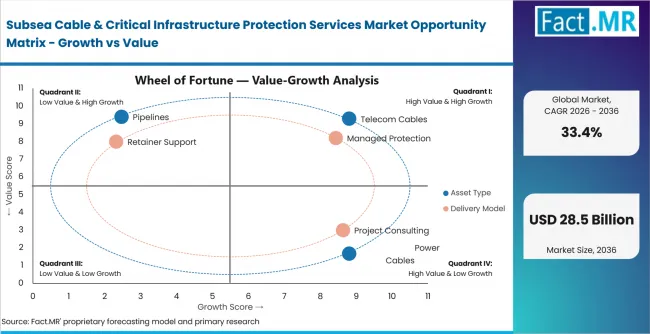
Subsea Cable & Critical Infrastructure Protection Services Market Opportunity Matrix Growth Vs Value

A significant driver is the shift from telecom continuity planning to national security procurement. The U.S. Department of Homeland Security published subsea cable security priorities in December 2024, and NATO convened its first Critical Undersea Infrastructure Network meeting in May 2024. These actions changed buyer behavior because governments now fund monitoring and coordination around live cable routes. Energy buyers add another layer because HVDC cables and offshore export routes share crowded seabed corridors with telecom assets.

The main restraint is repair and jurisdiction complexity. A repair still depends on permits, vessel availability and weather windows. Protection plans linked to inter array offshore wind cable can also face slower approvals because power, telecom and defense agencies may oversee different parts of the same seabed area.

Where do the biggest subsea infrastructure protection opportunities sit?

Seabed monitoring, repair-readiness retainers and cable security compliance.

  • Seabed Monitoring: Providers can combine vessel tracking and seabed inspection near routes with high outage exposure.
  • Repair-Readiness Retainers: Cable owners can pay for standby planning, spare cable review and incident exercises before a fault occurs.
  • Cable Security Compliance: Governments and operators can use third-party reviews to document route exposure and response protocols.

Which countries are scaling subsea cable and critical infrastructure protection services fastest?

Norway 38.0%. United Kingdom 36.5%. United States 34.2%. Australia 32.8%. Singapore 31.5%. Japan 30.8%. Canada 28.9%.

Based on regional analysis, the subsea cable and critical infrastructure protection services market covers Europe, North America, Asia Pacific, South Asia and Pacific, Latin America, and the Middle East and Africa.

Top Country Growth Comparison Subsea Cable & Critical Infrastructure Protection Services Market Cagr (2026 2036)

Country CAGR
Norway 38.0%
United Kingdom 36.5%
United States 34.2%
Australia 32.8%
Singapore 31.5%
Japan 30.8%
Canada 28.9%

What is powering Norway’s lead?

38.0% CAGR, supported by North Sea infrastructure exposure and NATO coordination.

Subsea Cable & Critical Infrastructure Protection Services Market Cagr Analysis By Country

Norway’s subsea infrastructure base places telecom cables, gas pipelines and offshore power routes in the same protection conversation. The Norwegian government stated in January 2025 that it would ensure a safer seabed after recent damage events. Norway is projected to record 38.0% CAGR through 2036 as buyers convert route exposure into recurring surveillance and repair-readiness budgets. Suppliers with North Sea operating permissions and survey fleets have the clearest route to contracts.

Why is the United Kingdom an important protection market?

36.5% CAGR, supported by national security planning and cable resilience review.

The United Kingdom treats subsea telecom cables as a resilience issue because its economy depends on international data routes. A September 2025 parliamentary report on subsea telecommunications cables reinforced the need for crisis preparedness. The United Kingdom is expected to expand at 36.5% CAGR through 2036 because buyers prefer providers that can connect route monitoring, repair planning and public-sector coordination. Procurement favors firms with cable experience and security clearance discipline.

What supports the United States outlook?

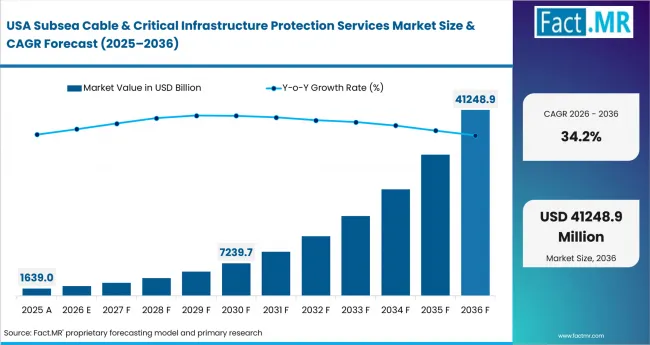
34.2% CAGR, supported by landing license scrutiny and security review.

Subsea Cable & Critical Infrastructure Protection Services Market Country Value Analysis

The United States is a high-value buyer because cable landing decisions now include foreign policy, security and service continuity review. The Federal Communications Commission opened a review of submarine cable landing license rules in July 2025. The United States is forecast to grow at 34.2% CAGR through 2036 as operators need more documentation before routes receive approval. Providers that combine legal readiness with route intelligence can shorten buyer review cycles.

How is Australia scaling protection demand?

32.8% CAGR, supported by cable protection zones and Pacific connectivity.

Australia’s geography makes international cable reliability a national connectivity issue. The Australian Communications and Media Authority explains that operators may apply to protect and secure submarine cables through protection zones. Australia is expected to advance at 32.8% CAGR through 2036 as Pacific routes and protection-zone compliance require survey and monitoring support. Demand also connects with export offshore wind cable because grid links and data routes increasingly share marine planning processes.

What makes Singapore a regional coordination hub?

31.5% CAGR, supported by ASEAN connectivity infrastructure coordination.

Singapore acts as a regional landing and coordination point because cable disruptions affect cross-border online services. The Ministry of Digital Development and Information discussed submarine cable disruption risk at the ASEAN Digital Ministers Meeting in January 2025. Singapore is projected to rise at 31.5% CAGR through 2036 as regional operators place more value on incident playbooks and repair coordination. Buyers favor providers that can work across multiple Southeast Asian jurisdictions.

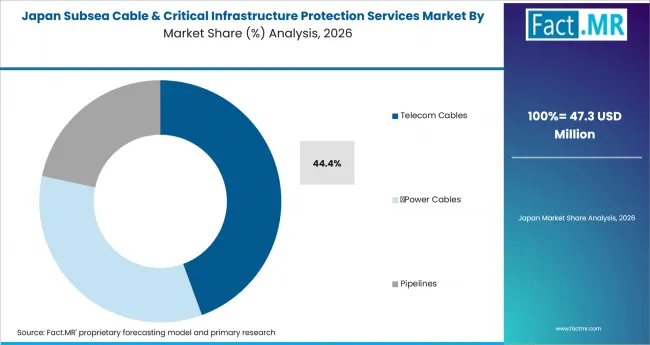
Why does Japan remain strategically important?

30.8% CAGR, supported by Pacific route redundancy and public funding.

Subsea Cable & Critical Infrastructure Protection Services Market Japan Market Share Analysis By Asset Type

Japan is important because its Pacific position makes cable redundancy part of regional security policy. The Ministry of Foreign Affairs of Japan announced grant assistance for Micronesia in March 2025 that included cable connectivity support. Japan is forecast at 30.8% CAGR through 2036 as cable diversity and trusted route planning stay in focus. Adjacent offshore wind energy projects add further demand for seabed risk review in coastal areas.

What supports Canada’s route review needs?

28.9% CAGR, supported by coastal connectivity and Arctic route exposure.

Canada’s demand is lower than Norway or the United Kingdom because commercial cable density is more concentrated by region. Coastal and northern projects still require route review because permits, weather and community connectivity shape project execution. Canada is expected to post 28.9% CAGR through 2036 as domestic submarine fiber projects and Arctic connectivity add planning needs. Providers with cold-water survey experience can serve routes that are harder for standard repair teams to access.

Who leads the subsea cable and critical infrastructure protection services landscape?

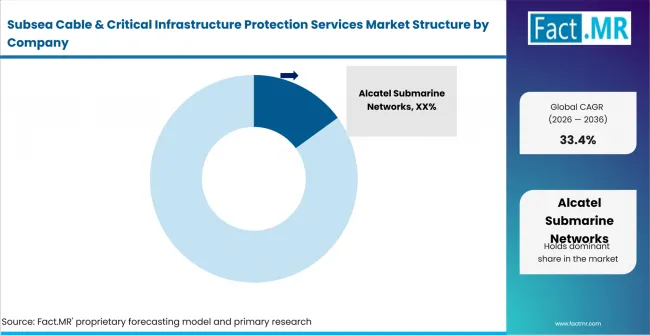
Alcatel Submarine Networks, SubCom and Global Marine Group lead through cable systems and repair access. Marine service depth supports their position.

Subsea Cable & Critical Infrastructure Protection Services Market Analysis By Company

Subsea cable protection services are used by telecom operators and governments. Cloud providers and offshore energy owners also need proof of route resilience. Alcatel Submarine Networks and SubCom bring cable-system knowledge and repair experience. Global Marine Group adds cable maintenance depth and was acquired by Keppel Infrastructure Fund in 2025. Providers that also understand industrial cybersecurity can support buyers that connect physical and network resilience reviews.

Orange Marine is strengthening fleet coverage through new cable ships for Europe, Africa and the Middle East. Fugro supports marine security and surveillance work through survey capability. Ocean Infinity brings lean-crewed offshore survey vessels that can support seabed inspection. Security teams also compare physical surveillance with security operation centre services when they build incident workflows for cable operators.

Providers that combine repair access, seabed mapping and vessel behavior analysis are better placed. Cable-system firms can win operator contracts through maintenance history. Survey and maritime surveillance suppliers can win government work when they provide evidence that is useful during incident response.

Which companies are the key players?

Alcatel Submarine Networks, SubCom and Global Marine Group. Orange Marine and Fugro. Ocean Infinity and Saab.

  • Alcatel Submarine Networks
  • SubCom
  • Global Marine Group
  • Orange Marine
  • Fugro
  • Ocean Infinity
  • Saab

Bibliography

  • [1] U.S. Department of Homeland Security. (2024, December 18). Priorities for DHS engagement on subsea cable security & resilience.
  • [2] North Atlantic Treaty Organization. (2024, May 23). NATO holds first meeting of Critical Undersea Infrastructure Network.
  • [3] European Commission, & High Representative of the Union for Foreign Affairs and Security Policy. (2025, February 21). Joint communication to the European Parliament and the Council: EU Action Plan on Cable Security.
  • [4] European Commission. (2026, February 5). Submarine cable security toolbox and cable projects of European interest.
  • [5] International Cable Protection Committee. (2026, May 20). Media enquiries & frequently asked questions.
  • [6] International Cable Protection Committee. (2025, June 25). Charting submarine cables is critical for maritime safety & infrastructure protection.
  • [7] Federal Communications Commission. (2025, July 17). FCC fact sheet: Review of submarine cable landing license rules and procedures to assess evolving national security, law enforcement, foreign policy, and trade policy risks.
  • [8] Cabinet Office. (2025, June 24). National Security Strategy 2025: Security for the British people in a dangerous world.
  • [9] Ministry of Foreign Affairs. (2025, January 16). Will ensure a safer seabed. Norwegian Government.
  • [10] Australian Communications and Media Authority. (2025, August 8). Apply to protect a submarine cable.
  • [11] Ministry of Digital Development and Information. (2025, January 16). Opening remarks by Minister Josephine Teo at the 5th ASEAN Digital Ministers’ Meeting.
  • [12] Ministry of Foreign Affairs of Japan. (2025, March 18). Grant assistance to the Federated States of Micronesia: Signing and exchange of notes on “The Economic and Social Development Programme (Cable Landing Station)”.
  • [13] SubCom. (2025, May 15). SubCom becomes first to deploy one million kilometers of subsea cable systems.
  • [14] Orange. (2025, November 3). Orange Marine modernizes its fleet of cable ships to secure digital infrastructure in Europe, Africa and the Middle East.
  • [15] Fugro. (2025, April 17). Fugro and Damen partner to support the Royal Netherlands Navy with marine security and surveillance vessel.
  • [16] Ocean Infinity. (2025, December 15). Ocean Infinity completes Armada fleet milestone with delivery of final vessel.
  • [17] Keppel. (2025, March 10). Keppel’s flagship infrastructure fund leads acquisition of subsea cable specialist Global Marine Group.
  • [18] Saab. (2025, September 19). Saab to lead NATO’s new underwater battlespace project.

This Report Addresses

  • Strategic intelligence on subsea cable and critical infrastructure protection services across service type, asset type and customer type.
  • Segment analysis covering Surveillance and Monitoring, Telecom Cables, Managed Protection, Telecom Operators and Vessel Patrols.
  • Regional outlook covering Norway, United Kingdom, United States, Australia, Singapore, Japan and Canada.
  • Competitive analysis of Alcatel Submarine Networks, SubCom and Global Marine Group. Orange Marine and Fugro. Ocean Infinity and Saab.
  • Service assessment covering surveillance, repair readiness, route risk mapping and incident response.
  • Security assessment covering NATO coordination, EU cable security planning and cable landing license review.
  • Primary interviews, provider checks, official source review and route exposure validation support the forecast.

What does the subsea cable and critical infrastructure protection services market cover?

Protection services for submarine cables, pipelines and offshore energy assets.

The market covers services that help owners and governments protect infrastructure on or below the seabed. It includes surveillance and route review. It also includes repair planning, seabed risk mapping and incident response support. It excludes new cable manufacturing unless protection or repair readiness is contracted as a service.

What is included in the scope?

Seabed monitoring, route-diversity planning and repair-readiness services.

The scope includes vessel activity monitoring near cable corridors. It covers route risk studies and emergency repair playbooks. It also covers spare cable planning and incident exercises. It also includes inspection by remotely operated vehicles and uncrewed surface vessels when the work is tied to asset protection.

What is excluded from the scope?

New cable manufacturing, cable ownership and general maritime patrols without infrastructure protection work.

The scope excludes standard cable supply and cable-laying revenue. It excludes offshore wind construction surveys unless they protect active cables or pipelines. It also excludes general naval operations that are not contracted around infrastructure surveillance, repair readiness or route risk reduction.

How was the analysis built?

85+ official sources and 45+ provider portfolios. The model covers 26 countries and structured buyer validation logic.

  • Primary Research Framework:
    • The model is designed for cable operator and marine survey interviews. It also uses repair fleet and government security buyer checks.
  • Desk Research:
    • The research reviews government cable security plans and regulator filings. It also reviews NATO statements, official company disclosures and cable protection association updates.
  • Market-Sizing and Forecasting:
    • Forecasting uses asset counts and route exposure. Repair readiness spend and service intensity by customer group support the model.
  • Data Validation and Update Cycle:
    • Estimates were reconciled against cable maintenance capacity, official incident signals and provider fleet expansion.

What is the report’s scope and coverage?

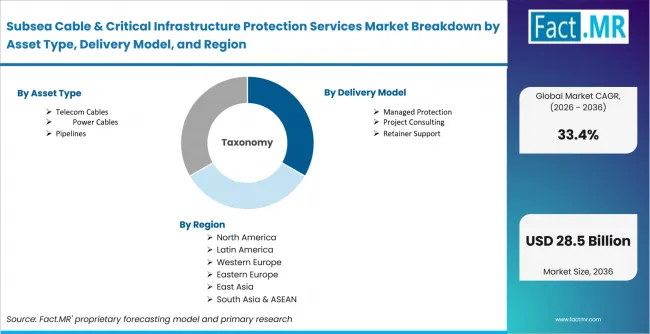
Subsea Cable & Critical Infrastructure Protection Services Market Breakdown By Asset Type, Delivery Model, And Region

Attribute Details
Quantitative Units USD Billion in 2026 to USD Billion by 2036 at CAGR
Market Definition Protection services for submarine cables, pipelines and offshore energy assets
Service Type Surveillance and Monitoring, Repair Readiness, Route Risk Mapping, Incident Response, Compliance Review
Asset Type Telecom Cables, Power Cables, Pipelines, Offshore Wind Links, Landing Stations
Customer Type Telecom Operators, Cloud Providers, Governments, Offshore Energy Owners, Defense Agencies
Delivery Model Managed Protection, Project Consulting, Retainer Support, Emergency Response, Compliance Advisory
Monitoring Technology Vessel Patrols, Seabed Sensors, Remote Vehicles, Satellite Tracking, Data Fusion
Regions Covered North America, Latin America, Europe, Asia Pacific, South Asia and Pacific, Middle East and Africa
Countries Covered Norway, United Kingdom, United States, Australia, Singapore, Japan and Canada
Key Companies Profiled Alcatel Submarine Networks, SubCom, Global Marine Group, Orange Marine, Fugro, Ocean Infinity and Saab
Forecast Period 2026 to 2036
Approach Hybrid top-down and bottom-up approach using cable asset counts, route exposure, repair intensity, policy signals and provider validation

How is the market segmented?

  • By Service Type:

    • Surveillance and Monitoring
    • Repair Readiness
    • Route Risk Mapping
    • Incident Response
    • Compliance Review
  • By Asset Type:

    • Telecom Cables
    • Power Cables
    • Pipelines
    • Offshore Wind Links
    • Landing Stations
  • By Customer Type:

    • Telecom Operators
    • Cloud Providers
    • Governments
    • Offshore Energy Owners
    • Defense Agencies
  • By Delivery Model:

    • Managed Protection
    • Project Consulting
    • Retainer Support
    • Emergency Response
    • Compliance Advisory
  • By Monitoring Technology:

    • Vessel Patrols
    • Seabed Sensors
    • Remote Vehicles
    • Satellite Tracking
    • Data Fusion
  • By Region:

    • North America
      • United States
      • Canada
      • Mexico
    • Latin America
      • Brazil
      • Argentina
      • Rest of Latin America
    • Europe
      • Norway
      • United Kingdom
      • Germany
      • France
      • Rest of Europe
    • Asia Pacific
      • China
      • Japan
      • South Korea
      • Australia
      • Singapore
    • South Asia and Pacific
      • India
      • ASEAN
      • Rest of South Asia and Pacific
    • Middle East & Africa
      • GCC Countries
      • South Africa
      • UAE
      • Rest of Middle East & Africa

- Frequently Asked Questions -

How should buyers understand the current position of the Subsea Cable & Critical Infrastructure Protection Services Market?

The market is estimated to be an active protection category as cable owners and governments move from incident response to permanent monitoring.

How is the Subsea Cable & Critical Infrastructure Protection Services Market expected to develop through the forecast period?

The market is projected to expand as telecom, energy and public-sector buyers require stronger seabed visibility.

What growth pattern is expected for subsea infrastructure protection services?

The market is forecast to advance faster than conventional cable maintenance because protection work now connects with national security planning.

Which asset type has the clearest early lead?

Telecom Cables lead because international data routes carry high outage risk and require constant route protection.

Which delivery model is most important for buyers?

Managed Protection leads because buyers prefer recurring coverage over one-time route studies or emergency sourcing.

Which customer group creates the strongest service pull?

Telecom Operators create the strongest service pull because they carry continuity duties and landing-license obligations.

Which service type is most active in early deployments?

Surveillance and Monitoring is most active because buyers want warning signals before damage interrupts live routes.

Which monitoring technology remains widely used?

Vessel Patrols remain widely used because ship behavior remains a direct indicator of cable-damage risk.

Which country shows the strongest pull for protection services?

Norway shows the strongest pull because North Sea infrastructure exposure keeps seabed security inside public budgets.

How does the United Kingdom support demand in this market?

The United Kingdom supports demand because cable resilience is now treated as part of national security planning.

How does the United States shape the service outlook?

The United States shapes the outlook through cable landing-license review and stronger documentation needs.

Table of Content

  1. Executive Summary
    • Global Market Outlook
    • Demand to side Trends
    • Supply to side Trends
    • Technology Roadmap Analysis
    • Analysis and Recommendations
  2. Market Overview
    • Market Coverage / Taxonomy
    • Market Definition / Scope / Limitations
  3. Research Methodology
    • Chapter Orientation
    • Analytical Lens and Working Hypotheses
      • Market Structure, Signals, and Trend Drivers
      • Benchmarking and Cross-market Comparability
      • Market Sizing, Forecasting, and Opportunity Mapping
    • Research Design and Evidence Framework
      • Desk Research Programme (Secondary Evidence)
        • Company Annual and Sustainability Reports
        • Peer-reviewed Journals and Academic Literature
        • Corporate Websites, Product Literature, and Technical Notes
        • Earnings Decks and Investor Briefings
        • Statutory Filings and Regulatory Disclosures
        • Technical White Papers and Standards Notes
        • Trade Journals, Industry Magazines, and Analyst Briefs
        • Conference Proceedings, Webinars, and Seminar Materials
        • Government Statistics Portals and Public Data Releases
        • Press Releases and Reputable Media Coverage
        • Specialist Newsletters and Curated Briefings
        • Sector Databases and Reference Repositories
        • Fact.MR Internal Proprietary Databases and Historical Market Datasets
        • Subscription Datasets and Paid Sources
        • Social Channels, Communities, and Digital Listening Inputs
        • Additional Desk Sources
      • Expert Input and Fieldwork (Primary Evidence)
        • Primary Modes
          • Qualitative Interviews and Expert Elicitation
          • Quantitative Surveys and Structured Data Capture
          • Blended Approach
        • Why Primary Evidence is Used
        • Field Techniques
          • Interviews
          • Surveys
          • Focus Groups
          • Observational and In-context Research
          • Social and Community Interactions
        • Stakeholder Universe Engaged
          • C-suite Leaders
          • Board Members
          • Presidents and Vice Presidents
          • R&D and Innovation Heads
          • Technical Specialists
          • Domain Subject-matter Experts
          • Scientists
          • Physicians and Other Healthcare Professionals
        • Governance, Ethics, and Data Stewardship
          • Research Ethics
          • Data Integrity and Handling
      • Tooling, Models, and Reference Databases
    • Data Engineering and Model Build
      • Data Acquisition and Ingestion
      • Cleaning, Normalisation, and Verification
      • Synthesis, Triangulation, and Analysis
    • Quality Assurance and Audit Trail
  4. Market Background
    • Market Dynamics
      • Drivers
      • Restraints
      • Opportunity
      • Trends
    • Scenario Forecast
      • Demand in Optimistic Scenario
      • Demand in Likely Scenario
      • Demand in Conservative Scenario
    • Opportunity Map Analysis
    • Product Life Cycle Analysis
    • Supply Chain Analysis
    • Investment Feasibility Matrix
    • Value Chain Analysis
    • PESTLE and Porter’s Analysis
    • Regulatory Landscape
    • Regional Parent Market Outlook
    • Production and Consumption Statistics
    • Import and Export Statistics
  5. Global Market Analysis 2021 to 2025 and Forecast, 2026 to 2036
    • Historical Market Size Value (USD Million) Analysis, 2021 to 2025
    • Current and Future Market Size Value (USD Million) Projections, 2026 to 2036
      • Y to o to Y Growth Trend Analysis
      • Absolute $ Opportunity Analysis
  6. Global Market Pricing Analysis 2021 to 2025 and Forecast 2026 to 2036
  7. Global Market Analysis 2021 to 2025 and Forecast 2026 to 2036, By Asset Type
    • Introduction / Key Findings
    • Historical Market Size Value (USD Million) Analysis By Asset Type , 2021 to 2025
    • Current and Future Market Size Value (USD Million) Analysis and Forecast By Asset Type , 2026 to 2036
      • Telecom Cables
      • Power Cables
      • Pipelines
    • Y to o to Y Growth Trend Analysis By Asset Type , 2021 to 2025
    • Absolute $ Opportunity Analysis By Asset Type , 2026 to 2036
  8. Global Market Analysis 2021 to 2025 and Forecast 2026 to 2036, By Delivery Model
    • Introduction / Key Findings
    • Historical Market Size Value (USD Million) Analysis By Delivery Model, 2021 to 2025
    • Current and Future Market Size Value (USD Million) Analysis and Forecast By Delivery Model, 2026 to 2036
      • Managed Protection
      • Project Consulting
      • Retainer Support
    • Y to o to Y Growth Trend Analysis By Delivery Model, 2021 to 2025
    • Absolute $ Opportunity Analysis By Delivery Model, 2026 to 2036
  9. Global Market Analysis 2021 to 2025 and Forecast 2026 to 2036, By Customer Type
    • Introduction / Key Findings
    • Historical Market Size Value (USD Million) Analysis By Customer Type, 2021 to 2025
    • Current and Future Market Size Value (USD Million) Analysis and Forecast By Customer Type, 2026 to 2036
      • Telecom Operators
      • Cloud Providers
      • Governments
    • Y to o to Y Growth Trend Analysis By Customer Type, 2021 to 2025
    • Absolute $ Opportunity Analysis By Customer Type, 2026 to 2036
  10. Global Market Analysis 2021 to 2025 and Forecast 2026 to 2036, By Service Type
    • Introduction / Key Findings
    • Historical Market Size Value (USD Million) Analysis By Service Type, 2021 to 2025
    • Current and Future Market Size Value (USD Million) Analysis and Forecast By Service Type, 2026 to 2036
      • Surveillance and Monitoring
      • Repair Readiness
      • Incident Response
    • Y to o to Y Growth Trend Analysis By Service Type, 2021 to 2025
    • Absolute $ Opportunity Analysis By Service Type, 2026 to 2036
  11. Global Market Analysis 2021 to 2025 and Forecast 2026 to 2036, By Monitoring Technology
    • Introduction / Key Findings
    • Historical Market Size Value (USD Million) Analysis By Monitoring Technology, 2021 to 2025
    • Current and Future Market Size Value (USD Million) Analysis and Forecast By Monitoring Technology, 2026 to 2036
      • Vessel Patrols
      • Seabed Sensors
      • Satellite Tracking
    • Y to o to Y Growth Trend Analysis By Monitoring Technology, 2021 to 2025
    • Absolute $ Opportunity Analysis By Monitoring Technology, 2026 to 2036
  12. Global Market Analysis 2021 to 2025 and Forecast 2026 to 2036, By Region
    • Introduction
    • Historical Market Size Value (USD Million) Analysis By Region, 2021 to 2025
    • Current Market Size Value (USD Million) Analysis and Forecast By Region, 2026 to 2036
      • North America
      • Latin America
      • Western Europe
      • Eastern Europe
      • East Asia
      • South Asia and Pacific
      • Middle East & Africa
    • Market Attractiveness Analysis By Region
  13. North America Market Analysis 2021 to 2025 and Forecast 2026 to 2036, By Country
    • Historical Market Size Value (USD Million) Trend Analysis By Market Taxonomy, 2021 to 2025
    • Market Size Value (USD Million) Forecast By Market Taxonomy, 2026 to 2036
      • By Country
        • USA
        • Canada
        • Mexico
      • By Asset Type
      • By Delivery Model
      • By Customer Type
      • By Service Type
      • By Monitoring Technology
    • Market Attractiveness Analysis
      • By Country
      • By Asset Type
      • By Delivery Model
      • By Customer Type
      • By Service Type
      • By Monitoring Technology
    • Key Takeaways
  14. Latin America Market Analysis 2021 to 2025 and Forecast 2026 to 2036, By Country
    • Historical Market Size Value (USD Million) Trend Analysis By Market Taxonomy, 2021 to 2025
    • Market Size Value (USD Million) Forecast By Market Taxonomy, 2026 to 2036
      • By Country
        • Brazil
        • Chile
        • Rest of Latin America
      • By Asset Type
      • By Delivery Model
      • By Customer Type
      • By Service Type
      • By Monitoring Technology
    • Market Attractiveness Analysis
      • By Country
      • By Asset Type
      • By Delivery Model
      • By Customer Type
      • By Service Type
      • By Monitoring Technology
    • Key Takeaways
  15. Western Europe Market Analysis 2021 to 2025 and Forecast 2026 to 2036, By Country
    • Historical Market Size Value (USD Million) Trend Analysis By Market Taxonomy, 2021 to 2025
    • Market Size Value (USD Million) Forecast By Market Taxonomy, 2026 to 2036
      • By Country
        • Germany
        • UK
        • Italy
        • Spain
        • France
        • Nordic
        • BENELUX
        • Rest of Western Europe
      • By Asset Type
      • By Delivery Model
      • By Customer Type
      • By Service Type
      • By Monitoring Technology
    • Market Attractiveness Analysis
      • By Country
      • By Asset Type
      • By Delivery Model
      • By Customer Type
      • By Service Type
      • By Monitoring Technology
    • Key Takeaways
  16. Eastern Europe Market Analysis 2021 to 2025 and Forecast 2026 to 2036, By Country
    • Historical Market Size Value (USD Million) Trend Analysis By Market Taxonomy, 2021 to 2025
    • Market Size Value (USD Million) Forecast By Market Taxonomy, 2026 to 2036
      • By Country
        • Russia
        • Poland
        • Hungary
        • Balkan & Baltic
        • Rest of Eastern Europe
      • By Asset Type
      • By Delivery Model
      • By Customer Type
      • By Service Type
      • By Monitoring Technology
    • Market Attractiveness Analysis
      • By Country
      • By Asset Type
      • By Delivery Model
      • By Customer Type
      • By Service Type
      • By Monitoring Technology
    • Key Takeaways
  17. East Asia Market Analysis 2021 to 2025 and Forecast 2026 to 2036, By Country
    • Historical Market Size Value (USD Million) Trend Analysis By Market Taxonomy, 2021 to 2025
    • Market Size Value (USD Million) Forecast By Market Taxonomy, 2026 to 2036
      • By Country
        • China
        • Japan
        • South Korea
      • By Asset Type
      • By Delivery Model
      • By Customer Type
      • By Service Type
      • By Monitoring Technology
    • Market Attractiveness Analysis
      • By Country
      • By Asset Type
      • By Delivery Model
      • By Customer Type
      • By Service Type
      • By Monitoring Technology
    • Key Takeaways
  18. South Asia and Pacific Market Analysis 2021 to 2025 and Forecast 2026 to 2036, By Country
    • Historical Market Size Value (USD Million) Trend Analysis By Market Taxonomy, 2021 to 2025
    • Market Size Value (USD Million) Forecast By Market Taxonomy, 2026 to 2036
      • By Country
        • India
        • ASEAN
        • Australia & New Zealand
        • Rest of South Asia and Pacific
      • By Asset Type
      • By Delivery Model
      • By Customer Type
      • By Service Type
      • By Monitoring Technology
    • Market Attractiveness Analysis
      • By Country
      • By Asset Type
      • By Delivery Model
      • By Customer Type
      • By Service Type
      • By Monitoring Technology
    • Key Takeaways
  19. Middle East & Africa Market Analysis 2021 to 2025 and Forecast 2026 to 2036, By Country
    • Historical Market Size Value (USD Million) Trend Analysis By Market Taxonomy, 2021 to 2025
    • Market Size Value (USD Million) Forecast By Market Taxonomy, 2026 to 2036
      • By Country
        • Kingdom of Saudi Arabia
        • Other GCC Countries
        • Turkiye
        • South Africa
        • Other African Union
        • Rest of Middle East & Africa
      • By Asset Type
      • By Delivery Model
      • By Customer Type
      • By Service Type
      • By Monitoring Technology
    • Market Attractiveness Analysis
      • By Country
      • By Asset Type
      • By Delivery Model
      • By Customer Type
      • By Service Type
      • By Monitoring Technology
    • Key Takeaways
  20. Key Countries Market Analysis
    • USA
      • Pricing Analysis
      • Market Share Analysis, 2025
        • By Asset Type
        • By Delivery Model
        • By Customer Type
        • By Service Type
        • By Monitoring Technology
    • Canada
      • Pricing Analysis
      • Market Share Analysis, 2025
        • By Asset Type
        • By Delivery Model
        • By Customer Type
        • By Service Type
        • By Monitoring Technology
    • Mexico
      • Pricing Analysis
      • Market Share Analysis, 2025
        • By Asset Type
        • By Delivery Model
        • By Customer Type
        • By Service Type
        • By Monitoring Technology
    • Brazil
      • Pricing Analysis
      • Market Share Analysis, 2025
        • By Asset Type
        • By Delivery Model
        • By Customer Type
        • By Service Type
        • By Monitoring Technology
    • Chile
      • Pricing Analysis
      • Market Share Analysis, 2025
        • By Asset Type
        • By Delivery Model
        • By Customer Type
        • By Service Type
        • By Monitoring Technology
    • Germany
      • Pricing Analysis
      • Market Share Analysis, 2025
        • By Asset Type
        • By Delivery Model
        • By Customer Type
        • By Service Type
        • By Monitoring Technology
    • UK
      • Pricing Analysis
      • Market Share Analysis, 2025
        • By Asset Type
        • By Delivery Model
        • By Customer Type
        • By Service Type
        • By Monitoring Technology
    • Italy
      • Pricing Analysis
      • Market Share Analysis, 2025
        • By Asset Type
        • By Delivery Model
        • By Customer Type
        • By Service Type
        • By Monitoring Technology
    • Spain
      • Pricing Analysis
      • Market Share Analysis, 2025
        • By Asset Type
        • By Delivery Model
        • By Customer Type
        • By Service Type
        • By Monitoring Technology
    • France
      • Pricing Analysis
      • Market Share Analysis, 2025
        • By Asset Type
        • By Delivery Model
        • By Customer Type
        • By Service Type
        • By Monitoring Technology
    • India
      • Pricing Analysis
      • Market Share Analysis, 2025
        • By Asset Type
        • By Delivery Model
        • By Customer Type
        • By Service Type
        • By Monitoring Technology
    • ASEAN
      • Pricing Analysis
      • Market Share Analysis, 2025
        • By Asset Type
        • By Delivery Model
        • By Customer Type
        • By Service Type
        • By Monitoring Technology
    • Australia & New Zealand
      • Pricing Analysis
      • Market Share Analysis, 2025
        • By Asset Type
        • By Delivery Model
        • By Customer Type
        • By Service Type
        • By Monitoring Technology
    • China
      • Pricing Analysis
      • Market Share Analysis, 2025
        • By Asset Type
        • By Delivery Model
        • By Customer Type
        • By Service Type
        • By Monitoring Technology
    • Japan
      • Pricing Analysis
      • Market Share Analysis, 2025
        • By Asset Type
        • By Delivery Model
        • By Customer Type
        • By Service Type
        • By Monitoring Technology
    • South Korea
      • Pricing Analysis
      • Market Share Analysis, 2025
        • By Asset Type
        • By Delivery Model
        • By Customer Type
        • By Service Type
        • By Monitoring Technology
    • Russia
      • Pricing Analysis
      • Market Share Analysis, 2025
        • By Asset Type
        • By Delivery Model
        • By Customer Type
        • By Service Type
        • By Monitoring Technology
    • Poland
      • Pricing Analysis
      • Market Share Analysis, 2025
        • By Asset Type
        • By Delivery Model
        • By Customer Type
        • By Service Type
        • By Monitoring Technology
    • Hungary
      • Pricing Analysis
      • Market Share Analysis, 2025
        • By Asset Type
        • By Delivery Model
        • By Customer Type
        • By Service Type
        • By Monitoring Technology
    • Kingdom of Saudi Arabia
      • Pricing Analysis
      • Market Share Analysis, 2025
        • By Asset Type
        • By Delivery Model
        • By Customer Type
        • By Service Type
        • By Monitoring Technology
    • Turkiye
      • Pricing Analysis
      • Market Share Analysis, 2025
        • By Asset Type
        • By Delivery Model
        • By Customer Type
        • By Service Type
        • By Monitoring Technology
    • South Africa
      • Pricing Analysis
      • Market Share Analysis, 2025
        • By Asset Type
        • By Delivery Model
        • By Customer Type
        • By Service Type
        • By Monitoring Technology
  21. Market Structure Analysis
    • Competition Dashboard
    • Competition Benchmarking
    • Market Share Analysis of Top Players
      • By Regional
      • By Asset Type
      • By Delivery Model
      • By Customer Type
      • By Service Type
      • By Monitoring Technology
  22. Competition Analysis
    • Competition Deep Dive
      • Alcatel Submarine Networks
        • Overview
        • Product Portfolio
        • Profitability by Market Segments (Product/Age /Sales Channel/Region)
        • Sales Footprint
        • Strategy Overview
          • Marketing Strategy
          • Product Strategy
          • Channel Strategy
      • SubCom
      • Global Marine Group
      • Orange Marine
      • Fugro
      • Ocean Infinity
  23. Assumptions & Acronyms Used

List Of Table

  • Table 1: Global Market Value (USD Million) Forecast by Region, 2021 to 2036
  • Table 2: Global Market Value (USD Million) Forecast by Asset Type , 2021 to 2036
  • Table 3: Global Market Value (USD Million) Forecast by Delivery Model, 2021 to 2036
  • Table 4: Global Market Value (USD Million) Forecast by Customer Type, 2021 to 2036
  • Table 5: Global Market Value (USD Million) Forecast by Service Type, 2021 to 2036
  • Table 6: Global Market Value (USD Million) Forecast by Monitoring Technology, 2021 to 2036
  • Table 7: North America Market Value (USD Million) Forecast by Country, 2021 to 2036
  • Table 8: North America Market Value (USD Million) Forecast by Asset Type , 2021 to 2036
  • Table 9: North America Market Value (USD Million) Forecast by Delivery Model, 2021 to 2036
  • Table 10: North America Market Value (USD Million) Forecast by Customer Type, 2021 to 2036
  • Table 11: North America Market Value (USD Million) Forecast by Service Type, 2021 to 2036
  • Table 12: North America Market Value (USD Million) Forecast by Monitoring Technology, 2021 to 2036
  • Table 13: Latin America Market Value (USD Million) Forecast by Country, 2021 to 2036
  • Table 14: Latin America Market Value (USD Million) Forecast by Asset Type , 2021 to 2036
  • Table 15: Latin America Market Value (USD Million) Forecast by Delivery Model, 2021 to 2036
  • Table 16: Latin America Market Value (USD Million) Forecast by Customer Type, 2021 to 2036
  • Table 17: Latin America Market Value (USD Million) Forecast by Service Type, 2021 to 2036
  • Table 18: Latin America Market Value (USD Million) Forecast by Monitoring Technology, 2021 to 2036
  • Table 19: Western Europe Market Value (USD Million) Forecast by Country, 2021 to 2036
  • Table 20: Western Europe Market Value (USD Million) Forecast by Asset Type , 2021 to 2036
  • Table 21: Western Europe Market Value (USD Million) Forecast by Delivery Model, 2021 to 2036
  • Table 22: Western Europe Market Value (USD Million) Forecast by Customer Type, 2021 to 2036
  • Table 23: Western Europe Market Value (USD Million) Forecast by Service Type, 2021 to 2036
  • Table 24: Western Europe Market Value (USD Million) Forecast by Monitoring Technology, 2021 to 2036
  • Table 25: Eastern Europe Market Value (USD Million) Forecast by Country, 2021 to 2036
  • Table 26: Eastern Europe Market Value (USD Million) Forecast by Asset Type , 2021 to 2036
  • Table 27: Eastern Europe Market Value (USD Million) Forecast by Delivery Model, 2021 to 2036
  • Table 28: Eastern Europe Market Value (USD Million) Forecast by Customer Type, 2021 to 2036
  • Table 29: Eastern Europe Market Value (USD Million) Forecast by Service Type, 2021 to 2036
  • Table 30: Eastern Europe Market Value (USD Million) Forecast by Monitoring Technology, 2021 to 2036
  • Table 31: East Asia Market Value (USD Million) Forecast by Country, 2021 to 2036
  • Table 32: East Asia Market Value (USD Million) Forecast by Asset Type , 2021 to 2036
  • Table 33: East Asia Market Value (USD Million) Forecast by Delivery Model, 2021 to 2036
  • Table 34: East Asia Market Value (USD Million) Forecast by Customer Type, 2021 to 2036
  • Table 35: East Asia Market Value (USD Million) Forecast by Service Type, 2021 to 2036
  • Table 36: East Asia Market Value (USD Million) Forecast by Monitoring Technology, 2021 to 2036
  • Table 37: South Asia and Pacific Market Value (USD Million) Forecast by Country, 2021 to 2036
  • Table 38: South Asia and Pacific Market Value (USD Million) Forecast by Asset Type , 2021 to 2036
  • Table 39: South Asia and Pacific Market Value (USD Million) Forecast by Delivery Model, 2021 to 2036
  • Table 40: South Asia and Pacific Market Value (USD Million) Forecast by Customer Type, 2021 to 2036
  • Table 41: South Asia and Pacific Market Value (USD Million) Forecast by Service Type, 2021 to 2036
  • Table 42: South Asia and Pacific Market Value (USD Million) Forecast by Monitoring Technology, 2021 to 2036
  • Table 43: Middle East & Africa Market Value (USD Million) Forecast by Country, 2021 to 2036
  • Table 44: Middle East & Africa Market Value (USD Million) Forecast by Asset Type , 2021 to 2036
  • Table 45: Middle East & Africa Market Value (USD Million) Forecast by Delivery Model, 2021 to 2036
  • Table 46: Middle East & Africa Market Value (USD Million) Forecast by Customer Type, 2021 to 2036
  • Table 47: Middle East & Africa Market Value (USD Million) Forecast by Service Type, 2021 to 2036
  • Table 48: Middle East & Africa Market Value (USD Million) Forecast by Monitoring Technology, 2021 to 2036

List Of Figures

  • Figure 1: Global Market Pricing Analysis
  • Figure 2: Global Market Value (USD Million) Forecast 2021-2036
  • Figure 3: Global Market Value Share and BPS Analysis by Asset Type , 2026 and 2036
  • Figure 4: Global Market Y-o-Y Growth Comparison by Asset Type ,2026 to 2036
  • Figure 5: Global Market Attractiveness Analysis by Asset Type
  • Figure 6: Global Market Value Share and BPS Analysis by Delivery Model, 2026 and 2036
  • Figure 7: Global Market Y-o-Y Growth Comparison by Delivery Model,2026 to 2036
  • Figure 8: Global Market Attractiveness Analysis by Delivery Model
  • Figure 9: Global Market Value Share and BPS Analysis by Customer Type, 2026 and 2036
  • Figure 10: Global Market Y-o-Y Growth Comparison by Customer Type,2026 to 2036
  • Figure 11: Global Market Attractiveness Analysis by Customer Type
  • Figure 12: Global Market Value Share and BPS Analysis by Service Type, 2026 and 2036
  • Figure 13: Global Market Y-o-Y Growth Comparison by Service Type,2026 to 2036
  • Figure 14: Global Market Attractiveness Analysis by Service Type
  • Figure 15: Global Market Value Share and BPS Analysis by Monitoring Technology, 2026 and 2036
  • Figure 16: Global Market Y-o-Y Growth Comparison by Monitoring Technology,2026 to 2036
  • Figure 17: Global Market Attractiveness Analysis by Monitoring Technology
  • Figure 18: Global Market Value (USD Million) Share and BPS Analysis by Region, 2026 and 2036
  • Figure 19: Global Market Y-o-Y Growth Comparison by Region,2026 to 2036
  • Figure 20: Global Market Attractiveness Analysis by Region
  • Figure 21: North America Market Incremental Dollar Opportunity,2026 to 2036
  • Figure 22: Latin America Market Incremental Dollar Opportunity,2026 to 2036
  • Figure 23: Western Europe Market Incremental Dollar Opportunity,2026 to 2036
  • Figure 24: Eastern Europe Market Incremental Dollar Opportunity,2026 to 2036
  • Figure 25: East Asia Market Incremental Dollar Opportunity,2026 to 2036
  • Figure 26: South Asia and Pacific Market Incremental Dollar Opportunity,2026 to 2036
  • Figure 27: Middle East & Africa Market Incremental Dollar Opportunity,2026 to 2036
  • Figure 28: North America Market Value Share and BPS Analysis by Country, 2026 and 2036
  • Figure 29: North America Market Value Share and BPS Analysis by Asset Type , 2026 and 2036
  • Figure 30: North America Market Y-o-Y Growth Comparison by Asset Type ,2026 to 2036
  • Figure 31: North America Market Attractiveness Analysis by Asset Type
  • Figure 32: North America Market Value Share and BPS Analysis by Delivery Model, 2026 and 2036
  • Figure 33: North America Market Y-o-Y Growth Comparison by Delivery Model,2026 to 2036
  • Figure 34: North America Market Attractiveness Analysis by Delivery Model
  • Figure 35: North America Market Value Share and BPS Analysis by Customer Type, 2026 and 2036
  • Figure 36: North America Market Y-o-Y Growth Comparison by Customer Type,2026 to 2036
  • Figure 37: North America Market Attractiveness Analysis by Customer Type
  • Figure 38: North America Market Value Share and BPS Analysis by Service Type, 2026 and 2036
  • Figure 39: North America Market Y-o-Y Growth Comparison by Service Type,2026 to 2036
  • Figure 40: North America Market Attractiveness Analysis by Service Type
  • Figure 41: North America Market Value Share and BPS Analysis by Monitoring Technology, 2026 and 2036
  • Figure 42: North America Market Y-o-Y Growth Comparison by Monitoring Technology,2026 to 2036
  • Figure 43: North America Market Attractiveness Analysis by Monitoring Technology
  • Figure 44: Latin America Market Value Share and BPS Analysis by Country, 2026 and 2036
  • Figure 45: Latin America Market Value Share and BPS Analysis by Asset Type , 2026 and 2036
  • Figure 46: Latin America Market Y-o-Y Growth Comparison by Asset Type ,2026 to 2036
  • Figure 47: Latin America Market Attractiveness Analysis by Asset Type
  • Figure 48: Latin America Market Value Share and BPS Analysis by Delivery Model, 2026 and 2036
  • Figure 49: Latin America Market Y-o-Y Growth Comparison by Delivery Model,2026 to 2036
  • Figure 50: Latin America Market Attractiveness Analysis by Delivery Model
  • Figure 51: Latin America Market Value Share and BPS Analysis by Customer Type, 2026 and 2036
  • Figure 52: Latin America Market Y-o-Y Growth Comparison by Customer Type,2026 to 2036
  • Figure 53: Latin America Market Attractiveness Analysis by Customer Type
  • Figure 54: Latin America Market Value Share and BPS Analysis by Service Type, 2026 and 2036
  • Figure 55: Latin America Market Y-o-Y Growth Comparison by Service Type,2026 to 2036
  • Figure 56: Latin America Market Attractiveness Analysis by Service Type
  • Figure 57: Latin America Market Value Share and BPS Analysis by Monitoring Technology, 2026 and 2036
  • Figure 58: Latin America Market Y-o-Y Growth Comparison by Monitoring Technology,2026 to 2036
  • Figure 59: Latin America Market Attractiveness Analysis by Monitoring Technology
  • Figure 60: Western Europe Market Value Share and BPS Analysis by Country, 2026 and 2036
  • Figure 61: Western Europe Market Value Share and BPS Analysis by Asset Type , 2026 and 2036
  • Figure 62: Western Europe Market Y-o-Y Growth Comparison by Asset Type ,2026 to 2036
  • Figure 63: Western Europe Market Attractiveness Analysis by Asset Type
  • Figure 64: Western Europe Market Value Share and BPS Analysis by Delivery Model, 2026 and 2036
  • Figure 65: Western Europe Market Y-o-Y Growth Comparison by Delivery Model,2026 to 2036
  • Figure 66: Western Europe Market Attractiveness Analysis by Delivery Model
  • Figure 67: Western Europe Market Value Share and BPS Analysis by Customer Type, 2026 and 2036
  • Figure 68: Western Europe Market Y-o-Y Growth Comparison by Customer Type,2026 to 2036
  • Figure 69: Western Europe Market Attractiveness Analysis by Customer Type
  • Figure 70: Western Europe Market Value Share and BPS Analysis by Service Type, 2026 and 2036
  • Figure 71: Western Europe Market Y-o-Y Growth Comparison by Service Type,2026 to 2036
  • Figure 72: Western Europe Market Attractiveness Analysis by Service Type
  • Figure 73: Western Europe Market Value Share and BPS Analysis by Monitoring Technology, 2026 and 2036
  • Figure 74: Western Europe Market Y-o-Y Growth Comparison by Monitoring Technology,2026 to 2036
  • Figure 75: Western Europe Market Attractiveness Analysis by Monitoring Technology
  • Figure 76: Eastern Europe Market Value Share and BPS Analysis by Country, 2026 and 2036
  • Figure 77: Eastern Europe Market Value Share and BPS Analysis by Asset Type , 2026 and 2036
  • Figure 78: Eastern Europe Market Y-o-Y Growth Comparison by Asset Type ,2026 to 2036
  • Figure 79: Eastern Europe Market Attractiveness Analysis by Asset Type
  • Figure 80: Eastern Europe Market Value Share and BPS Analysis by Delivery Model, 2026 and 2036
  • Figure 81: Eastern Europe Market Y-o-Y Growth Comparison by Delivery Model,2026 to 2036
  • Figure 82: Eastern Europe Market Attractiveness Analysis by Delivery Model
  • Figure 83: Eastern Europe Market Value Share and BPS Analysis by Customer Type, 2026 and 2036
  • Figure 84: Eastern Europe Market Y-o-Y Growth Comparison by Customer Type,2026 to 2036
  • Figure 85: Eastern Europe Market Attractiveness Analysis by Customer Type
  • Figure 86: Eastern Europe Market Value Share and BPS Analysis by Service Type, 2026 and 2036
  • Figure 87: Eastern Europe Market Y-o-Y Growth Comparison by Service Type,2026 to 2036
  • Figure 88: Eastern Europe Market Attractiveness Analysis by Service Type
  • Figure 89: Eastern Europe Market Value Share and BPS Analysis by Monitoring Technology, 2026 and 2036
  • Figure 90: Eastern Europe Market Y-o-Y Growth Comparison by Monitoring Technology,2026 to 2036
  • Figure 91: Eastern Europe Market Attractiveness Analysis by Monitoring Technology
  • Figure 92: East Asia Market Value Share and BPS Analysis by Country, 2026 and 2036
  • Figure 93: East Asia Market Value Share and BPS Analysis by Asset Type , 2026 and 2036
  • Figure 94: East Asia Market Y-o-Y Growth Comparison by Asset Type ,2026 to 2036
  • Figure 95: East Asia Market Attractiveness Analysis by Asset Type
  • Figure 96: East Asia Market Value Share and BPS Analysis by Delivery Model, 2026 and 2036
  • Figure 97: East Asia Market Y-o-Y Growth Comparison by Delivery Model,2026 to 2036
  • Figure 98: East Asia Market Attractiveness Analysis by Delivery Model
  • Figure 99: East Asia Market Value Share and BPS Analysis by Customer Type, 2026 and 2036
  • Figure 100: East Asia Market Y-o-Y Growth Comparison by Customer Type,2026 to 2036
  • Figure 101: East Asia Market Attractiveness Analysis by Customer Type
  • Figure 102: East Asia Market Value Share and BPS Analysis by Service Type, 2026 and 2036
  • Figure 103: East Asia Market Y-o-Y Growth Comparison by Service Type,2026 to 2036
  • Figure 104: East Asia Market Attractiveness Analysis by Service Type
  • Figure 105: East Asia Market Value Share and BPS Analysis by Monitoring Technology, 2026 and 2036
  • Figure 106: East Asia Market Y-o-Y Growth Comparison by Monitoring Technology,2026 to 2036
  • Figure 107: East Asia Market Attractiveness Analysis by Monitoring Technology
  • Figure 108: South Asia and Pacific Market Value Share and BPS Analysis by Country, 2026 and 2036
  • Figure 109: South Asia and Pacific Market Value Share and BPS Analysis by Asset Type , 2026 and 2036
  • Figure 110: South Asia and Pacific Market Y-o-Y Growth Comparison by Asset Type ,2026 to 2036
  • Figure 111: South Asia and Pacific Market Attractiveness Analysis by Asset Type
  • Figure 112: South Asia and Pacific Market Value Share and BPS Analysis by Delivery Model, 2026 and 2036
  • Figure 113: South Asia and Pacific Market Y-o-Y Growth Comparison by Delivery Model,2026 to 2036
  • Figure 114: South Asia and Pacific Market Attractiveness Analysis by Delivery Model
  • Figure 115: South Asia and Pacific Market Value Share and BPS Analysis by Customer Type, 2026 and 2036
  • Figure 116: South Asia and Pacific Market Y-o-Y Growth Comparison by Customer Type,2026 to 2036
  • Figure 117: South Asia and Pacific Market Attractiveness Analysis by Customer Type
  • Figure 118: South Asia and Pacific Market Value Share and BPS Analysis by Service Type, 2026 and 2036
  • Figure 119: South Asia and Pacific Market Y-o-Y Growth Comparison by Service Type,2026 to 2036
  • Figure 120: South Asia and Pacific Market Attractiveness Analysis by Service Type
  • Figure 121: South Asia and Pacific Market Value Share and BPS Analysis by Monitoring Technology, 2026 and 2036
  • Figure 122: South Asia and Pacific Market Y-o-Y Growth Comparison by Monitoring Technology,2026 to 2036
  • Figure 123: South Asia and Pacific Market Attractiveness Analysis by Monitoring Technology
  • Figure 124: Middle East & Africa Market Value Share and BPS Analysis by Country, 2026 and 2036
  • Figure 125: Middle East & Africa Market Value Share and BPS Analysis by Asset Type , 2026 and 2036
  • Figure 126: Middle East & Africa Market Y-o-Y Growth Comparison by Asset Type ,2026 to 2036
  • Figure 127: Middle East & Africa Market Attractiveness Analysis by Asset Type
  • Figure 128: Middle East & Africa Market Value Share and BPS Analysis by Delivery Model, 2026 and 2036
  • Figure 129: Middle East & Africa Market Y-o-Y Growth Comparison by Delivery Model,2026 to 2036
  • Figure 130: Middle East & Africa Market Attractiveness Analysis by Delivery Model
  • Figure 131: Middle East & Africa Market Value Share and BPS Analysis by Customer Type, 2026 and 2036
  • Figure 132: Middle East & Africa Market Y-o-Y Growth Comparison by Customer Type,2026 to 2036
  • Figure 133: Middle East & Africa Market Attractiveness Analysis by Customer Type
  • Figure 134: Middle East & Africa Market Value Share and BPS Analysis by Service Type, 2026 and 2036
  • Figure 135: Middle East & Africa Market Y-o-Y Growth Comparison by Service Type,2026 to 2036
  • Figure 136: Middle East & Africa Market Attractiveness Analysis by Service Type
  • Figure 137: Middle East & Africa Market Value Share and BPS Analysis by Monitoring Technology, 2026 and 2036
  • Figure 138: Middle East & Africa Market Y-o-Y Growth Comparison by Monitoring Technology,2026 to 2036
  • Figure 139: Middle East & Africa Market Attractiveness Analysis by Monitoring Technology
  • Figure 140: Global Market - Tier Structure Analysis
  • Figure 141: Global Market - Company Share Analysis

Subsea Cable & Critical Infrastructure Protection Services Market

Buy Report Now