Sulfate and Sulfide Control in Tailings Ponds Market

Sulfate and Sulfide Control in Tailings Ponds Market Size and Share Forecast Outlook 2026 to 2036

Sulfate and sulfide control in tailings ponds market is projected to grow from USD 0.5 billion in 2026 to USD 1.0 billion by 2036, at a CAGR of 8.4%. Alkaline pH adjusters will dominate with a 32.0% market share, while active pond chemical dosing (continuous feed) will lead the process segment with a 42.0% share.

Sulfate and Sulfide Control in Tailings Ponds Market Forecast and Outlook 2026 to 2036

The global sulfate and sulfide control in tailings ponds market is projected to reach USD 1.04 billion by 2036. The market is valued at USD 0.46 billion in 2026 and is set to rise at a CAGR of 8.4% during the assessment period.

By chemical reagent type, alkaline pH adjusters hold a leading 32% share. Active pond chemical dosing (continuous feed) represents the dominant process at 42%, while sulfate concentration control is the primary contaminant focus, accounting for 35.00% market share.

Key Takeaways from the Sulfate and Sulfide Control in Tailings Ponds Market

  • Market Value for 2026: USD 0.46 Billion
  • Market Value for 2036: USD 1.04 Billion
  • Forecast CAGR (2026-2036): 8.4%
  • Leading Chemical Reagent Type Share (2026): Alkaline pH Adjusters (32%)
  • Leading Process Share (2026): Active Pond Chemical Dosing (42%)
  • Leading Contaminant Focus Share (2026): Sulfate Concentration Control (35.00%)
  • Key Players in the Market: Ecolab, Kemira, Veolia Water Technologies, Solenis, Clariant, BASF, Solvay, Nalco Water
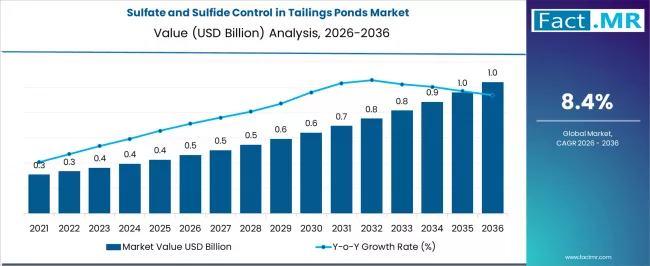
Sulfate And Sulfide Control In Tailings Ponds Market Market Value Analysis

Defining trends involve the shift from reactive treatment to proactive, chemistry-based management strategies that prevent the generation and release of sulfates and sulfides at the source within tailings storage facilities (TSFs). Innovation is rapidly advancing in combined chemical and biological additives that promote in-situ sulfate reduction and metal sulfide precipitation, stabilizing tailings and improving water quality. Integration of these reagent systems with real-time pore water monitoring and predictive modeling is becoming critical for long-term geochemical stability and closure planning.

Regulatory frameworks imposing stricter limits on sulfate and total dissolved solids (TDS) in mine effluent, alongside regulations targeting acid generation and metal leaching from tailings, are the primary market drivers. Policies emphasizing the prevention of catastrophic TSF failures and protecting downstream water resources act as significant catalysts, positioning these control chemicals as essential for risk mitigation and sustainable mine waste management.

Sulfate and Sulfide Control in Tailings Ponds Market

Metric Value
Market Value (2026) USD 0.46 Billion
Market Forecast Value (2036) USD 1.04 Billion
Forecast CAGR (2026-2036) 8.4%

Category

Category Segments
Chemical Reagent Type Alkaline pH adjusters, Sulfide precipitating reagents, Sulfate reduction & control additives, Oxidation inhibitors & passivating agents, Biochemical & microbial enhancers for sulfate reduction, Coagulants & flocculants for sulfide/sulfate bound solids, Specialty hybrid reagent blends
Process Active pond chemical dosing (continuous feed), Passive/semi-passive bioreactor systems, Tailings circulation & mixing additions, Sulfide oxidation control at tailings water surface, Effluent polishing & conditioning prior to discharge
Contaminant Focus Sulfate concentration control, Dissolved sulfide control & odor mitigation, Metal–sulfide precipitation (e.g., Fe, Cu, Zn), pH stabilization to reduce oxidation, Sediment & bound solids reduction
Region North America, Latin America, Western Europe, Eastern Europe, East Asia, South Asia & Pacific, MEA

Segmental Analysis

By Chemical Reagent Type, Which Foundational Chemistry is Critical for Preventing Acid Generation?
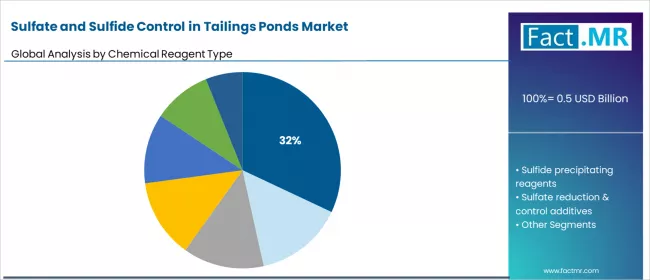
Sulfate And Sulfide Control In Tailings Ponds Market Analysis By Chemical Reagent Type

Alkaline pH adjusters lead the segment with a 32% share. This dominance is due to their primary role in maintaining a neutral to alkaline pH in tailings pore water, which is the single most important factor in suppressing the oxidation of sulfide minerals (e.g., pyrite) that generates acid, sulfate, and mobilizes metals. Continuous or intermittent addition of lime, caustic, or other alkalis directly into the TSF is a fundamental control strategy, driving consistent, high-volume demand.

By Process, Which Method Provides the Most Direct and Controllable Intervention?
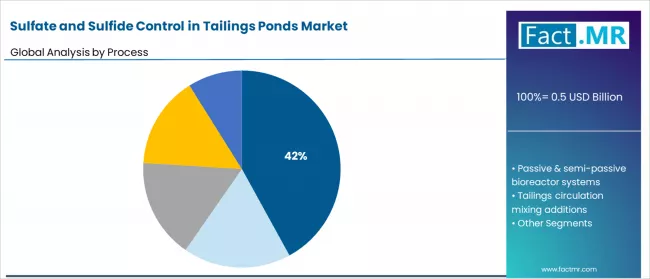
Sulfate And Sulfide Control In Tailings Ponds Market Analysis By Process

Active pond chemical dosing (continuous feed) commands the largest process share at 42%. This involves the direct, often automated, addition of reagents (alkalis, precipitants) into the tailings slurry during deposition or into the pond water. It allows for precise control over pond chemistry, enabling real-time response to changing conditions and ensuring regulatory compliance for supernatant water quality. It represents the most direct and intensive use of control chemicals.

By Contaminant Focus, Which Parameter is Most Tightly Regulated in Discharge Water?
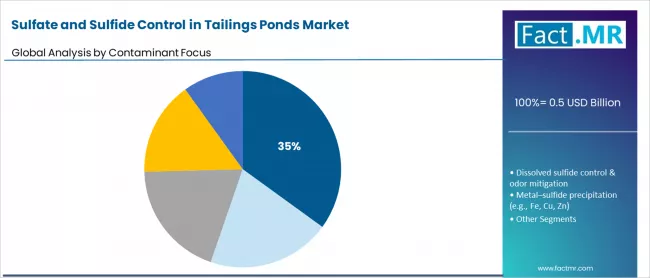
Sulfate And Sulfide Control In Tailings Ponds Market Analysis By Contaminant Focus

Sulfate concentration control represents the leading contaminant focus at 35.00%. Sulfate is a primary, conservative indicator of mining influence in water and is subject to increasingly stringent discharge limits globally due to its role in salinization and ecosystem impact. Controlling sulfate often requires comprehensive strategies combining oxidation prevention, precipitation, or biological reduction, making it a complex and high-priority driver for chemical treatment programs.

What are the Drivers, Restraints, and Key Trends of the Sulfate and Sulfide Control in Tailings Ponds Market?

Market growth is driven by the global implementation of stricter water quality standards for sulfate, conductivity, and metals in mining effluent. The increasing focus on tailings facility safety and the need to prevent acid rock drainage (ARD) as part of closure and post-closure plans mandates proactive chemical management. Rising investor and insurer scrutiny of long-term environmental liabilities associated with tailings is pushing for best-available control technologies. The expansion of mining in water-sensitive areas also amplifies the need for superior water treatment.

A significant restraint is the immense scale of tailings ponds, making comprehensive chemical treatment extremely costly. The long-term, perpetual nature of the liability requires financially sustainable solutions, which can be a barrier for advanced reagent systems. Uncertainties in predicting long-term geochemical behavior make it challenging to design optimal treatment strategies. Furthermore, physical challenges in effectively distributing reagents throughout a large, stratified TSF can limit treatment efficacy.

Key trends include the development of multi-functional reagent blends that simultaneously adjust pH, precipitate sulfides, and flocculate solids. There is growing interest in in-situ biological sulfate reduction using specialized microbial consortia and nutrient packages. The use of sensor networks and AI to create "digital twins" of TSFs for optimized chemical dosing is emerging. Additionally, there is a shift towards designing tailings with chemical additives from the outset (e.g., co-disposal with alkaline waste) to create chemically stable deposits.

Analysis of the Sulfate and Sulfide Control in Tailings Ponds Market by Key Countries
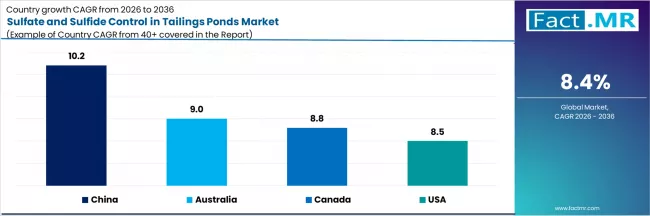
Sulfate And Sulfide Control In Tailings Ponds Market Cagr Analysis By Country

Country CAGR (2026-2036)
China 10.20%
Australia 9.00%
Canada 8.80%
USA 8.50%

How does China's Mining Scale and Evolving Environmental Standards Drive Market Leadership?

China leads with a 10.20% CAGR, driven by the vast number of active and legacy tailings facilities associated with its world-leading mining sector. New regulations targeting comprehensive tailings management and water pollution control, particularly for sulfate and heavy metals, are forcing operators to adopt chemical treatment and stabilization technologies. Domestic production of a wide range of industrial chemicals supports large-scale implementation.

Why is Australia's Focus on Tailings Stewardship and Arid Conditions a Key Driver?

Australia's 9.00% growth is fueled by a strong industry and regulatory focus on leading-practice tailings management following recent high-profile failures. Operations in arid regions often require water recycling from tailings facilities, necessitating control of sulfate and salinity to maintain circuit stability. The high level of technical innovation in the Australian mining sector drives adoption of advanced chemical and biogeochemical control strategies.

What Role does Canada's Sulfide-Rich Geology and Stringent Closure Requirements Play?

Canada's 8.80% growth is underpinned by its prevalence of sulfide-bearing ore bodies, making ARD and metal leaching a primary concern for tailings. Rigorous provincial and federal requirements for mine closure plans, which must demonstrate long-term geochemical stability, mandate proactive chemical control strategies from the operational phase onward, creating a sustained market for reagents.

How does the USA's Regulatory Framework and Legacy Site Liability Influence Adoption?
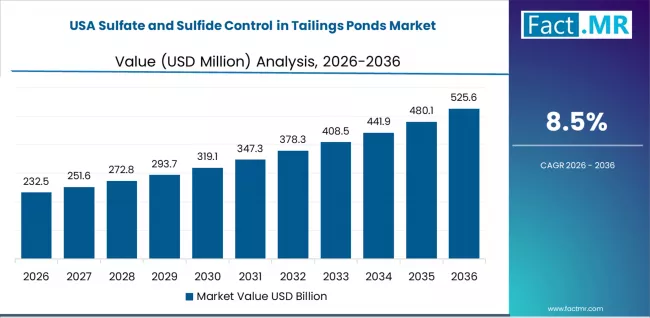
Sulfate And Sulfide Control In Tailings Ponds Market Country Value Analysis

The USA's 8.50% growth is driven by a combination of strict effluent guidelines (ELGs) under the Clean Water Act and significant liability for legacy mine sites under CERCLA (Superfund). This creates demand for both active chemical treatment systems at operating mines and remedial chemical stabilization technologies for abandoned sites, spanning a wide range of reagent types and applications.

What Factors Underpin Chile's Copper Industry and Water Balance Challenges?

Chile's 8.00% growth is anchored in its massive copper tailings facilities, where water conservation and recycling are critical in the Atacama Desert. Controlling sulfate buildup in recycled water is essential to maintain metallurgical efficiency and prevent scaling. This, combined with the need to manage the sulfide content in fresh tailings, drives investment in chemical treatment for both process and environmental objectives.

Competitive Landscape of the Sulfate and Sulfide Control in Tailings Ponds Market
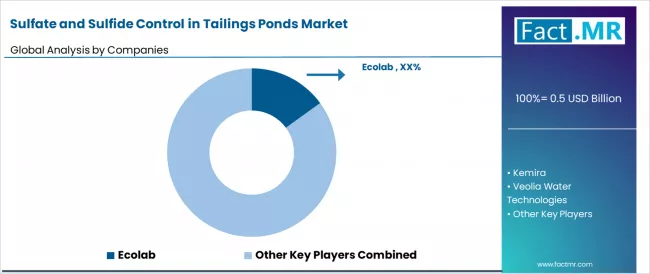
Sulfate And Sulfide Control In Tailings Ponds Market Analysis By Company

Global water treatment and specialty chemical companies offering integrated chemical management programs dominate the competitive landscape. Leaders like Ecolab (Nalco Water), Kemira, and Solenis compete by providing comprehensive portfolios of coagulants, flocculants, pH adjusters, and specialty precipitants, backed by sophisticated dosing control systems and on-site technical service.

Engineering and water technology firms like Veolia Water Technologies compete with broader system design and build capabilities, incorporating chemical treatment into larger water management solutions. Chemical giants like BASF and Solvay leverage their raw material and synthesis strengths. Clariant competes with specialty additive expertise. Competition intensifies around long-term service contracts, demonstrating reduced lifecycle costs and liability through predictive treatment models, and forming partnerships with mining majors for site-wide water and tailings management.

Key Players in the Sulfate and Sulfide Control in Tailings Ponds Market

  • Ecolab
  • Kemira
  • Veolia Water Technologies
  • Solenis
  • Clariant
  • BASF
  • Solvay
  • Nalco Water

Scope of Report

Items Values
Quantitative Units USD Billion
Chemical Reagent Type Alkaline pH adjusters, Sulfide precipitants, Sulfate reduction additives, Oxidation inhibitors, Biochemical enhancers, Coagulants & flocculants, Specialty blends
Process Active dosing, Passive/semi-passive systems, Tailings circulation, Oxidation control, Effluent polishing
Contaminant Focus Sulfate control, Sulfide & odor control, Metal-sulfide precipitation, pH stabilization, Solids reduction
Key Countries China, Australia, Canada, USA, Chile
Key Companies Ecolab, Kemira, Veolia, Solenis, Clariant, BASF, Solvay, Nalco
Additional Analysis Analysis of reagent efficiency per kg of sulfate/sulfide controlled, impact on sludge volume and dewaterability, long-term stability of precipitated phases, compatibility with tailings rheology, and cost-benefit analysis for passive vs. active treatment scenarios.

Sulfate and Sulfide Control in Tailings Ponds Market by Segments

  • Chemical Reagent Type :

    • Alkaline pH adjusters
    • Sulfide precipitating reagents
    • Sulfate reduction & control additives
    • Oxidation inhibitors & passivating agents
    • Biochemical & microbial enhancers for sulfate reduction
    • Coagulants & flocculants for sulfide/sulfate bound solids
    • Specialty hybrid reagent blends
  • Process :

    • Active pond chemical dosing (continuous feed)
    • Passive & semi-passive bioreactor systems
    • Tailings circulation & mixing additions
    • Sulfide oxidation control at tailings water surface
    • Effluent polishing & conditioning prior to discharge
  • Contaminant Focus :

    • Sulfate concentration control
    • Dissolved sulfide control & odor mitigation
    • Metal–sulfide precipitation (e.g., Fe, Cu, Zn)
    • pH stabilization to reduce oxidation
    • Sediment & bound solids reduction
  • Region :

    • North America

      • USA
      • Canada
    • Latin America

      • Chile
      • Peru
      • Brazil
      • Argentina
      • Mexico
      • Rest of Latin America
    • Western Europe

      • Germany
      • UK
      • France
      • Italy
      • Spain
      • BENELUX
      • Rest of Western Europe
    • Eastern Europe

      • Russia
      • Poland
      • Czech Republic
      • Rest of Eastern Europe
    • East Asia

      • China
      • Japan
      • South Korea
      • Rest of East Asia
    • South Asia & Pacific

      • Australia
      • Indonesia
      • India
      • Rest of South Asia & Pacific
    • MEA

      • South Africa
      • Saudi Arabia
      • GCC Countries
      • Rest of MEA

Table of Content

  1. Executive Summary
    • Global Market Outlook
    • Demand to side Trends
    • Supply to side Trends
    • Technology Roadmap Analysis
    • Analysis and Recommendations
  2. Market Overview
    • Market Coverage / Taxonomy
    • Market Definition / Scope / Limitations
  3. Market Background
    • Market Dynamics
      • Drivers
      • Restraints
      • Opportunity
      • Trends
    • Scenario Forecast
      • Demand in Optimistic Scenario
      • Demand in Likely Scenario
      • Demand in Conservative Scenario
    • Opportunity Map Analysis
    • Product Life Cycle Analysis
    • Supply Chain Analysis
    • Investment Feasibility Matrix
    • Value Chain Analysis
    • PESTLE and Porter’s Analysis
    • Regulatory Landscape
    • Regional Parent Market Outlook
    • Production and Consumption Statistics
    • Import and Export Statistics
  4. Global Market Analysis 2021 to 2025 and Forecast, 2026 to 2036
    • Historical Market Size Value (USD Million) Analysis, 2021 to 2025
    • Current and Future Market Size Value (USD Million) Projections, 2026 to 2036
      • Y to o to Y Growth Trend Analysis
      • Absolute $ Opportunity Analysis
  5. Global Market Pricing Analysis 2021 to 2025 and Forecast 2026 to 2036
  6. Global Market Analysis 2021 to 2025 and Forecast 2026 to 2036, By Chemical Reagent Type
    • Introduction / Key Findings
    • Historical Market Size Value (USD Million) Analysis By Chemical Reagent Type, 2021 to 2025
    • Current and Future Market Size Value (USD Million) Analysis and Forecast By Chemical Reagent Type, 2026 to 2036
      • Alkaline pH adjusters
      • Sulfide precipitating reagents
      • Sulfate reduction & control additives
      • Oxidation inhibitors & passivating agents
      • Biochemical & microbial enhancers for sulfate reduction
      • Coagulants & flocculants for sulfidesulfate bound solids
      • Specialty hybrid reagent blends
    • Y to o to Y Growth Trend Analysis By Chemical Reagent Type, 2021 to 2025
    • Absolute $ Opportunity Analysis By Chemical Reagent Type, 2026 to 2036
  7. Global Market Analysis 2021 to 2025 and Forecast 2026 to 2036, By Process
    • Introduction / Key Findings
    • Historical Market Size Value (USD Million) Analysis By Process, 2021 to 2025
    • Current and Future Market Size Value (USD Million) Analysis and Forecast By Process, 2026 to 2036
      • Active pond chemical dosing (continuous feed)
      • Passive & semi-passive bioreactor systems
      • Tailings circulation mixing additions
      • Sulfide oxidation control at tailings water surface
      • Effluent polishing & conditioning prior to discharge
    • Y to o to Y Growth Trend Analysis By Process, 2021 to 2025
    • Absolute $ Opportunity Analysis By Process, 2026 to 2036
  8. Global Market Analysis 2021 to 2025 and Forecast 2026 to 2036, By Contaminant Focus
    • Introduction / Key Findings
    • Historical Market Size Value (USD Million) Analysis By Contaminant Focus, 2021 to 2025
    • Current and Future Market Size Value (USD Million) Analysis and Forecast By Contaminant Focus, 2026 to 2036
      • Sulfate concentration control
      • Dissolved sulfide control & odor mitigation
      • Metal–sulfide precipitation (e.g., Fe, Cu, Zn)
      • pH stabilization to reduce oxidation
      • Sediment & bound solids reduction
    • Y to o to Y Growth Trend Analysis By Contaminant Focus, 2021 to 2025
    • Absolute $ Opportunity Analysis By Contaminant Focus, 2026 to 2036
  9. Global Market Analysis 2021 to 2025 and Forecast 2026 to 2036, By Region
    • Introduction
    • Historical Market Size Value (USD Million) Analysis By Region, 2021 to 2025
    • Current Market Size Value (USD Million) Analysis and Forecast By Region, 2026 to 2036
      • North America
      • Latin America
      • Western Europe
      • Eastern Europe
      • East Asia
      • South Asia and Pacific
      • Middle East & Africa
    • Market Attractiveness Analysis By Region
  10. North America Market Analysis 2021 to 2025 and Forecast 2026 to 2036, By Country
    • Historical Market Size Value (USD Million) Trend Analysis By Market Taxonomy, 2021 to 2025
    • Market Size Value (USD Million) Forecast By Market Taxonomy, 2026 to 2036
      • By Country
        • USA
        • Canada
        • Mexico
      • By Chemical Reagent Type
      • By Process
      • By Contaminant Focus
    • Market Attractiveness Analysis
      • By Country
      • By Chemical Reagent Type
      • By Process
      • By Contaminant Focus
    • Key Takeaways
  11. Latin America Market Analysis 2021 to 2025 and Forecast 2026 to 2036, By Country
    • Historical Market Size Value (USD Million) Trend Analysis By Market Taxonomy, 2021 to 2025
    • Market Size Value (USD Million) Forecast By Market Taxonomy, 2026 to 2036
      • By Country
        • Brazil
        • Chile
        • Rest of Latin America
      • By Chemical Reagent Type
      • By Process
      • By Contaminant Focus
    • Market Attractiveness Analysis
      • By Country
      • By Chemical Reagent Type
      • By Process
      • By Contaminant Focus
    • Key Takeaways
  12. Western Europe Market Analysis 2021 to 2025 and Forecast 2026 to 2036, By Country
    • Historical Market Size Value (USD Million) Trend Analysis By Market Taxonomy, 2021 to 2025
    • Market Size Value (USD Million) Forecast By Market Taxonomy, 2026 to 2036
      • By Country
        • Germany
        • UK
        • Italy
        • Spain
        • France
        • Nordic
        • BENELUX
        • Rest of Western Europe
      • By Chemical Reagent Type
      • By Process
      • By Contaminant Focus
    • Market Attractiveness Analysis
      • By Country
      • By Chemical Reagent Type
      • By Process
      • By Contaminant Focus
    • Key Takeaways
  13. Eastern Europe Market Analysis 2021 to 2025 and Forecast 2026 to 2036, By Country
    • Historical Market Size Value (USD Million) Trend Analysis By Market Taxonomy, 2021 to 2025
    • Market Size Value (USD Million) Forecast By Market Taxonomy, 2026 to 2036
      • By Country
        • Russia
        • Poland
        • Hungary
        • Balkan & Baltic
        • Rest of Eastern Europe
      • By Chemical Reagent Type
      • By Process
      • By Contaminant Focus
    • Market Attractiveness Analysis
      • By Country
      • By Chemical Reagent Type
      • By Process
      • By Contaminant Focus
    • Key Takeaways
  14. East Asia Market Analysis 2021 to 2025 and Forecast 2026 to 2036, By Country
    • Historical Market Size Value (USD Million) Trend Analysis By Market Taxonomy, 2021 to 2025
    • Market Size Value (USD Million) Forecast By Market Taxonomy, 2026 to 2036
      • By Country
        • China
        • Japan
        • South Korea
      • By Chemical Reagent Type
      • By Process
      • By Contaminant Focus
    • Market Attractiveness Analysis
      • By Country
      • By Chemical Reagent Type
      • By Process
      • By Contaminant Focus
    • Key Takeaways
  15. South Asia and Pacific Market Analysis 2021 to 2025 and Forecast 2026 to 2036, By Country
    • Historical Market Size Value (USD Million) Trend Analysis By Market Taxonomy, 2021 to 2025
    • Market Size Value (USD Million) Forecast By Market Taxonomy, 2026 to 2036
      • By Country
        • India
        • ASEAN
        • Australia & New Zealand
        • Rest of South Asia and Pacific
      • By Chemical Reagent Type
      • By Process
      • By Contaminant Focus
    • Market Attractiveness Analysis
      • By Country
      • By Chemical Reagent Type
      • By Process
      • By Contaminant Focus
    • Key Takeaways
  16. Middle East & Africa Market Analysis 2021 to 2025 and Forecast 2026 to 2036, By Country
    • Historical Market Size Value (USD Million) Trend Analysis By Market Taxonomy, 2021 to 2025
    • Market Size Value (USD Million) Forecast By Market Taxonomy, 2026 to 2036
      • By Country
        • Kingdom of Saudi Arabia
        • Other GCC Countries
        • Turkiye
        • South Africa
        • Other African Union
        • Rest of Middle East & Africa
      • By Chemical Reagent Type
      • By Process
      • By Contaminant Focus
    • Market Attractiveness Analysis
      • By Country
      • By Chemical Reagent Type
      • By Process
      • By Contaminant Focus
    • Key Takeaways
  17. Key Countries Market Analysis
    • USA
      • Pricing Analysis
      • Market Share Analysis, 2025
        • By Chemical Reagent Type
        • By Process
        • By Contaminant Focus
    • Canada
      • Pricing Analysis
      • Market Share Analysis, 2025
        • By Chemical Reagent Type
        • By Process
        • By Contaminant Focus
    • Mexico
      • Pricing Analysis
      • Market Share Analysis, 2025
        • By Chemical Reagent Type
        • By Process
        • By Contaminant Focus
    • Brazil
      • Pricing Analysis
      • Market Share Analysis, 2025
        • By Chemical Reagent Type
        • By Process
        • By Contaminant Focus
    • Chile
      • Pricing Analysis
      • Market Share Analysis, 2025
        • By Chemical Reagent Type
        • By Process
        • By Contaminant Focus
    • Germany
      • Pricing Analysis
      • Market Share Analysis, 2025
        • By Chemical Reagent Type
        • By Process
        • By Contaminant Focus
    • UK
      • Pricing Analysis
      • Market Share Analysis, 2025
        • By Chemical Reagent Type
        • By Process
        • By Contaminant Focus
    • Italy
      • Pricing Analysis
      • Market Share Analysis, 2025
        • By Chemical Reagent Type
        • By Process
        • By Contaminant Focus
    • Spain
      • Pricing Analysis
      • Market Share Analysis, 2025
        • By Chemical Reagent Type
        • By Process
        • By Contaminant Focus
    • France
      • Pricing Analysis
      • Market Share Analysis, 2025
        • By Chemical Reagent Type
        • By Process
        • By Contaminant Focus
    • India
      • Pricing Analysis
      • Market Share Analysis, 2025
        • By Chemical Reagent Type
        • By Process
        • By Contaminant Focus
    • ASEAN
      • Pricing Analysis
      • Market Share Analysis, 2025
        • By Chemical Reagent Type
        • By Process
        • By Contaminant Focus
    • Australia & New Zealand
      • Pricing Analysis
      • Market Share Analysis, 2025
        • By Chemical Reagent Type
        • By Process
        • By Contaminant Focus
    • China
      • Pricing Analysis
      • Market Share Analysis, 2025
        • By Chemical Reagent Type
        • By Process
        • By Contaminant Focus
    • Japan
      • Pricing Analysis
      • Market Share Analysis, 2025
        • By Chemical Reagent Type
        • By Process
        • By Contaminant Focus
    • South Korea
      • Pricing Analysis
      • Market Share Analysis, 2025
        • By Chemical Reagent Type
        • By Process
        • By Contaminant Focus
    • Russia
      • Pricing Analysis
      • Market Share Analysis, 2025
        • By Chemical Reagent Type
        • By Process
        • By Contaminant Focus
    • Poland
      • Pricing Analysis
      • Market Share Analysis, 2025
        • By Chemical Reagent Type
        • By Process
        • By Contaminant Focus
    • Hungary
      • Pricing Analysis
      • Market Share Analysis, 2025
        • By Chemical Reagent Type
        • By Process
        • By Contaminant Focus
    • Kingdom of Saudi Arabia
      • Pricing Analysis
      • Market Share Analysis, 2025
        • By Chemical Reagent Type
        • By Process
        • By Contaminant Focus
    • Turkiye
      • Pricing Analysis
      • Market Share Analysis, 2025
        • By Chemical Reagent Type
        • By Process
        • By Contaminant Focus
    • South Africa
      • Pricing Analysis
      • Market Share Analysis, 2025
        • By Chemical Reagent Type
        • By Process
        • By Contaminant Focus
  18. Market Structure Analysis
    • Competition Dashboard
    • Competition Benchmarking
    • Market Share Analysis of Top Players
      • By Regional
      • By Chemical Reagent Type
      • By Process
      • By Contaminant Focus
  19. Competition Analysis
    • Competition Deep Dive
      • Ecolab
        • Overview
        • Product Portfolio
        • Profitability by Market Segments (Product/Age /Sales Channel/Region)
        • Sales Footprint
        • Strategy Overview
          • Marketing Strategy
          • Product Strategy
          • Channel Strategy
      • Kemira
      • Veolia Water Technologies
      • Solenis
      • Clariant
      • BASF
      • Solvay
      • Nalco Water
  20. Assumptions & Acronyms Used
  21. Research Methodology

List Of Table

  • Table 1: Global Market Value (USD Million) Forecast by Region, 2021 to 2036
  • Table 2: Global Market Value (USD Million) Forecast by Chemical Reagent Type, 2021 to 2036
  • Table 3: Global Market Value (USD Million) Forecast by Process, 2021 to 2036
  • Table 4: Global Market Value (USD Million) Forecast by Contaminant Focus, 2021 to 2036
  • Table 5: North America Market Value (USD Million) Forecast by Country, 2021 to 2036
  • Table 6: North America Market Value (USD Million) Forecast by Chemical Reagent Type, 2021 to 2036
  • Table 7: North America Market Value (USD Million) Forecast by Process, 2021 to 2036
  • Table 8: North America Market Value (USD Million) Forecast by Contaminant Focus, 2021 to 2036
  • Table 9: Latin America Market Value (USD Million) Forecast by Country, 2021 to 2036
  • Table 10: Latin America Market Value (USD Million) Forecast by Chemical Reagent Type, 2021 to 2036
  • Table 11: Latin America Market Value (USD Million) Forecast by Process, 2021 to 2036
  • Table 12: Latin America Market Value (USD Million) Forecast by Contaminant Focus, 2021 to 2036
  • Table 13: Western Europe Market Value (USD Million) Forecast by Country, 2021 to 2036
  • Table 14: Western Europe Market Value (USD Million) Forecast by Chemical Reagent Type, 2021 to 2036
  • Table 15: Western Europe Market Value (USD Million) Forecast by Process, 2021 to 2036
  • Table 16: Western Europe Market Value (USD Million) Forecast by Contaminant Focus, 2021 to 2036
  • Table 17: Eastern Europe Market Value (USD Million) Forecast by Country, 2021 to 2036
  • Table 18: Eastern Europe Market Value (USD Million) Forecast by Chemical Reagent Type, 2021 to 2036
  • Table 19: Eastern Europe Market Value (USD Million) Forecast by Process, 2021 to 2036
  • Table 20: Eastern Europe Market Value (USD Million) Forecast by Contaminant Focus, 2021 to 2036
  • Table 21: East Asia Market Value (USD Million) Forecast by Country, 2021 to 2036
  • Table 22: East Asia Market Value (USD Million) Forecast by Chemical Reagent Type, 2021 to 2036
  • Table 23: East Asia Market Value (USD Million) Forecast by Process, 2021 to 2036
  • Table 24: East Asia Market Value (USD Million) Forecast by Contaminant Focus, 2021 to 2036
  • Table 25: South Asia and Pacific Market Value (USD Million) Forecast by Country, 2021 to 2036
  • Table 26: South Asia and Pacific Market Value (USD Million) Forecast by Chemical Reagent Type, 2021 to 2036
  • Table 27: South Asia and Pacific Market Value (USD Million) Forecast by Process, 2021 to 2036
  • Table 28: South Asia and Pacific Market Value (USD Million) Forecast by Contaminant Focus, 2021 to 2036
  • Table 29: Middle East & Africa Market Value (USD Million) Forecast by Country, 2021 to 2036
  • Table 30: Middle East & Africa Market Value (USD Million) Forecast by Chemical Reagent Type, 2021 to 2036
  • Table 31: Middle East & Africa Market Value (USD Million) Forecast by Process, 2021 to 2036
  • Table 32: Middle East & Africa Market Value (USD Million) Forecast by Contaminant Focus, 2021 to 2036

List Of Figures

  • Figure 1: Global Market Pricing Analysis
  • Figure 2: Global Market Value (USD Million) Forecast 2021 to 2036
  • Figure 3: Global Market Value Share and BPS Analysis by Chemical Reagent Type, 2026 and 2036
  • Figure 4: Global Market Y to o to Y Growth Comparison by Chemical Reagent Type, 2026 to 2036
  • Figure 5: Global Market Attractiveness Analysis by Chemical Reagent Type
  • Figure 6: Global Market Value Share and BPS Analysis by Process, 2026 and 2036
  • Figure 7: Global Market Y to o to Y Growth Comparison by Process, 2026 to 2036
  • Figure 8: Global Market Attractiveness Analysis by Process
  • Figure 9: Global Market Value Share and BPS Analysis by Contaminant Focus, 2026 and 2036
  • Figure 10: Global Market Y to o to Y Growth Comparison by Contaminant Focus, 2026 to 2036
  • Figure 11: Global Market Attractiveness Analysis by Contaminant Focus
  • Figure 12: Global Market Value (USD Million) Share and BPS Analysis by Region, 2026 and 2036
  • Figure 13: Global Market Y to o to Y Growth Comparison by Region, 2026 to 2036
  • Figure 14: Global Market Attractiveness Analysis by Region
  • Figure 15: North America Market Incremental Dollar Opportunity, 2026 to 2036
  • Figure 16: Latin America Market Incremental Dollar Opportunity, 2026 to 2036
  • Figure 17: Western Europe Market Incremental Dollar Opportunity, 2026 to 2036
  • Figure 18: Eastern Europe Market Incremental Dollar Opportunity, 2026 to 2036
  • Figure 19: East Asia Market Incremental Dollar Opportunity, 2026 to 2036
  • Figure 20: South Asia and Pacific Market Incremental Dollar Opportunity, 2026 to 2036
  • Figure 21: Middle East & Africa Market Incremental Dollar Opportunity, 2026 to 2036
  • Figure 22: North America Market Value Share and BPS Analysis by Country, 2026 and 2036
  • Figure 23: North America Market Value Share and BPS Analysis by Chemical Reagent Type, 2026 and 2036
  • Figure 24: North America Market Y to o to Y Growth Comparison by Chemical Reagent Type, 2026 to 2036
  • Figure 25: North America Market Attractiveness Analysis by Chemical Reagent Type
  • Figure 26: North America Market Value Share and BPS Analysis by Process, 2026 and 2036
  • Figure 27: North America Market Y to o to Y Growth Comparison by Process, 2026 to 2036
  • Figure 28: North America Market Attractiveness Analysis by Process
  • Figure 29: North America Market Value Share and BPS Analysis by Contaminant Focus, 2026 and 2036
  • Figure 30: North America Market Y to o to Y Growth Comparison by Contaminant Focus, 2026 to 2036
  • Figure 31: North America Market Attractiveness Analysis by Contaminant Focus
  • Figure 32: Latin America Market Value Share and BPS Analysis by Country, 2026 and 2036
  • Figure 33: Latin America Market Value Share and BPS Analysis by Chemical Reagent Type, 2026 and 2036
  • Figure 34: Latin America Market Y to o to Y Growth Comparison by Chemical Reagent Type, 2026 to 2036
  • Figure 35: Latin America Market Attractiveness Analysis by Chemical Reagent Type
  • Figure 36: Latin America Market Value Share and BPS Analysis by Process, 2026 and 2036
  • Figure 37: Latin America Market Y to o to Y Growth Comparison by Process, 2026 to 2036
  • Figure 38: Latin America Market Attractiveness Analysis by Process
  • Figure 39: Latin America Market Value Share and BPS Analysis by Contaminant Focus, 2026 and 2036
  • Figure 40: Latin America Market Y to o to Y Growth Comparison by Contaminant Focus, 2026 to 2036
  • Figure 41: Latin America Market Attractiveness Analysis by Contaminant Focus
  • Figure 42: Western Europe Market Value Share and BPS Analysis by Country, 2026 and 2036
  • Figure 43: Western Europe Market Value Share and BPS Analysis by Chemical Reagent Type, 2026 and 2036
  • Figure 44: Western Europe Market Y to o to Y Growth Comparison by Chemical Reagent Type, 2026 to 2036
  • Figure 45: Western Europe Market Attractiveness Analysis by Chemical Reagent Type
  • Figure 46: Western Europe Market Value Share and BPS Analysis by Process, 2026 and 2036
  • Figure 47: Western Europe Market Y to o to Y Growth Comparison by Process, 2026 to 2036
  • Figure 48: Western Europe Market Attractiveness Analysis by Process
  • Figure 49: Western Europe Market Value Share and BPS Analysis by Contaminant Focus, 2026 and 2036
  • Figure 50: Western Europe Market Y to o to Y Growth Comparison by Contaminant Focus, 2026 to 2036
  • Figure 51: Western Europe Market Attractiveness Analysis by Contaminant Focus
  • Figure 52: Eastern Europe Market Value Share and BPS Analysis by Country, 2026 and 2036
  • Figure 53: Eastern Europe Market Value Share and BPS Analysis by Chemical Reagent Type, 2026 and 2036
  • Figure 54: Eastern Europe Market Y to o to Y Growth Comparison by Chemical Reagent Type, 2026 to 2036
  • Figure 55: Eastern Europe Market Attractiveness Analysis by Chemical Reagent Type
  • Figure 56: Eastern Europe Market Value Share and BPS Analysis by Process, 2026 and 2036
  • Figure 57: Eastern Europe Market Y to o to Y Growth Comparison by Process, 2026 to 2036
  • Figure 58: Eastern Europe Market Attractiveness Analysis by Process
  • Figure 59: Eastern Europe Market Value Share and BPS Analysis by Contaminant Focus, 2026 and 2036
  • Figure 60: Eastern Europe Market Y to o to Y Growth Comparison by Contaminant Focus, 2026 to 2036
  • Figure 61: Eastern Europe Market Attractiveness Analysis by Contaminant Focus
  • Figure 62: East Asia Market Value Share and BPS Analysis by Country, 2026 and 2036
  • Figure 63: East Asia Market Value Share and BPS Analysis by Chemical Reagent Type, 2026 and 2036
  • Figure 64: East Asia Market Y to o to Y Growth Comparison by Chemical Reagent Type, 2026 to 2036
  • Figure 65: East Asia Market Attractiveness Analysis by Chemical Reagent Type
  • Figure 66: East Asia Market Value Share and BPS Analysis by Process, 2026 and 2036
  • Figure 67: East Asia Market Y to o to Y Growth Comparison by Process, 2026 to 2036
  • Figure 68: East Asia Market Attractiveness Analysis by Process
  • Figure 69: East Asia Market Value Share and BPS Analysis by Contaminant Focus, 2026 and 2036
  • Figure 70: East Asia Market Y to o to Y Growth Comparison by Contaminant Focus, 2026 to 2036
  • Figure 71: East Asia Market Attractiveness Analysis by Contaminant Focus
  • Figure 72: South Asia and Pacific Market Value Share and BPS Analysis by Country, 2026 and 2036
  • Figure 73: South Asia and Pacific Market Value Share and BPS Analysis by Chemical Reagent Type, 2026 and 2036
  • Figure 74: South Asia and Pacific Market Y to o to Y Growth Comparison by Chemical Reagent Type, 2026 to 2036
  • Figure 75: South Asia and Pacific Market Attractiveness Analysis by Chemical Reagent Type
  • Figure 76: South Asia and Pacific Market Value Share and BPS Analysis by Process, 2026 and 2036
  • Figure 77: South Asia and Pacific Market Y to o to Y Growth Comparison by Process, 2026 to 2036
  • Figure 78: South Asia and Pacific Market Attractiveness Analysis by Process
  • Figure 79: South Asia and Pacific Market Value Share and BPS Analysis by Contaminant Focus, 2026 and 2036
  • Figure 80: South Asia and Pacific Market Y to o to Y Growth Comparison by Contaminant Focus, 2026 to 2036
  • Figure 81: South Asia and Pacific Market Attractiveness Analysis by Contaminant Focus
  • Figure 82: Middle East & Africa Market Value Share and BPS Analysis by Country, 2026 and 2036
  • Figure 83: Middle East & Africa Market Value Share and BPS Analysis by Chemical Reagent Type, 2026 and 2036
  • Figure 84: Middle East & Africa Market Y to o to Y Growth Comparison by Chemical Reagent Type, 2026 to 2036
  • Figure 85: Middle East & Africa Market Attractiveness Analysis by Chemical Reagent Type
  • Figure 86: Middle East & Africa Market Value Share and BPS Analysis by Process, 2026 and 2036
  • Figure 87: Middle East & Africa Market Y to o to Y Growth Comparison by Process, 2026 to 2036
  • Figure 88: Middle East & Africa Market Attractiveness Analysis by Process
  • Figure 89: Middle East & Africa Market Value Share and BPS Analysis by Contaminant Focus, 2026 and 2036
  • Figure 90: Middle East & Africa Market Y to o to Y Growth Comparison by Contaminant Focus, 2026 to 2036
  • Figure 91: Middle East & Africa Market Attractiveness Analysis by Contaminant Focus
  • Figure 92: Global Market - Tier Structure Analysis
  • Figure 93: Global Market - Company Share Analysis

- FAQs -

How big is the sulfate and sulfide control in tailings ponds market in 2026?

The global sulfate and sulfide control in tailings ponds market is estimated to be valued at USD 0.5 billion in 2026.

What will be the size of sulfate and sulfide control in tailings ponds market in 2036?

The market size for the sulfate and sulfide control in tailings ponds market is projected to reach USD 1.0 billion by 2036.

How much will be the sulfate and sulfide control in tailings ponds market growth between 2026 and 2036?

The sulfate and sulfide control in tailings ponds market is expected to grow at a 8.4% CAGR between 2026 and 2036.

What are the key product types in the sulfate and sulfide control in tailings ponds market?

The key product types in sulfate and sulfide control in tailings ponds market are alkaline ph adjusters, sulfide precipitating reagents, sulfate reduction & control additives, oxidation inhibitors & passivating agents, biochemical & microbial enhancers for sulfate reduction, coagulants & flocculants for sulfidesulfate bound solids and specialty hybrid reagent blends.

Which process segment to contribute significant share in the sulfate and sulfide control in tailings ponds market in 2026?

In terms of process, active pond chemical dosing (continuous feed) segment to command 42.0% share in the sulfate and sulfide control in tailings ponds market in 2026.

Sulfate and Sulfide Control in Tailings Ponds Market