Hand Tools and Accessories Market Size, Share, Growth and Forecast (2026 - 2036)

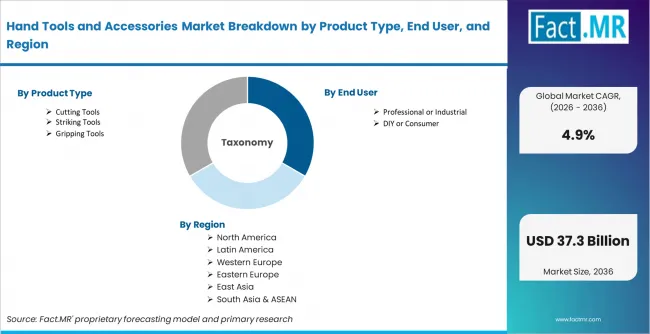
The Hand Tools and Accessories Market is segmented by Product Type (Cutting Tools, Striking Tools, Gripping Tools, Measuring and Marking Tools, Drilling and Fastening Tools); by End User (Professional or Industrial, DIY or Consumer); by Application (Construction, Woodworking, Automotive, Gardening and Landscaping, General Household Use); by Distribution Channel (Online Retailers, Hardware Stores, Home Improvement Centers, Direct Sales); by Material (Steel, Alloy Steel, Composite Handles, Plastic and Resin Components, Other Materials). Forecast for 2026 to 2036.

Fact.MR states that hand tools and accessories demand is shifting toward job-specific tools. Contractors need durable tools that stay accurate during repeated use. Home improvement stores need product ranges that support repairs and weekend renovation work. Industrial maintenance staff need tools that help reduce downtime during plant repairs.

Hand Tools and Accessories Market Size, Market Forecast and Outlook by Fact.MR

  • The hand tools and accessories market valuation stood at USD 22.0 billion in 2025.
  • Demand is estimated to reach USD 23.1 billion in 2026 and is projected to rise to USD 37.3 billion by 2036.
  • The market is forecast to record 4.9% CAGR from 2026 to 2036 as construction repair work and professional maintenance demand support steady tool replacement.
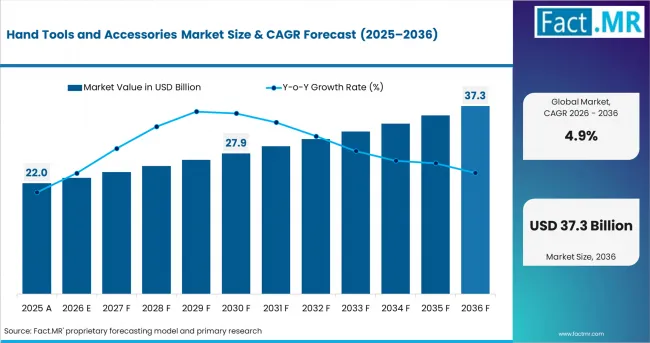
Hand Tools And Accessories Market Value Analysis

Metric Details
Industry Size (2026) USD 23.1 billion
Industry Value (2036) USD 37.3 billion
CAGR (2026 to 2036) 4.9%

Summary of Hand Tools and Accessories Market

  • Demand Drivers in the Market
    • Construction crews need durable tools that support cutting and fastening work across repeated jobs.
    • Industrial maintenance supervisors use hand tools for quick repair tasks inside factories and service bays.
    • Home improvement retailers benefit as households keep small repair kits for routine fixing work.
  • Key Segments Analyzed
    • By Product Type: Cutting tools are projected to record 31.8% share in 2026 as construction and workshop users need saws and knives for daily material work.
    • By End User: Professional or industrial users are expected to hold 61.5% share in 2026 because trade users replace tools more often after wear.
    • By Application: Construction is estimated to account for 42.5% share in 2026 as jobsite work needs cutting, striking and fastening tools through each project stage.
    • By Distribution Channel: Home improvement centers are projected to hold 35.5% share in 2026 as contractors and households prefer tool comparison with immediate stock access.
    • By Material: Steel is anticipated to represent 57.0% share in 2026 because cutting edges, wrench jaws and striking heads need wear resistance.
    • By Geography: India hand tools and accessories demand is forecast to grow at 7.2% CAGR from 2026 to 2036 as construction repair and trade work expand.
  • Analyst Opinion at Fact.MR
    • Shambhu Nath Jha of Fact.MR states, “Hand tools look simple from outside the industry. Tool choice is often decided after a jobsite failure. A contractor remembers the wrench that rounded a nut or the blade that dulled too quickly. Suppliers that prove durability at the task level will defend price better than suppliers that rely on a wide shelf range.”
  • Strategic Implications
    • Tool suppliers need product claims that match real jobsite use. Trade users judge tools by grip comfort and service life during daily cutting or fastening work. Better testing can reduce returns and improve contractor trust.
    • Retail managers should separate basic repair kits from trade-grade tools. Home users need simple kits for small repairs. Contractors need stronger tools that last longer. Clear shelf grouping helps each group choose faster.
    • Industrial distributors need faster restocking for high-use tools. Workshops need steady access to wrenches and replacement blades. Stock gaps can delay service jobs. Better inventory planning can support repeat orders.

Manual tools remain useful because each repair job needs proper grip and control on the work surface. Construction crews need cutting and fastening tools that can handle repeated site use. Vehicle workshops need wrenches and pliers that keep torque control steady. Homeowners buy small tool kits for repairs that do not need power tools.

Tool suppliers are now focusing more on durability and trade-specific use. A hammer or wrench is no longer competes only by price. Handle comfort and clear packaging also affect purchase decision. Premium tools benefit because professional users replace weak tools quickly after jobsite delays.

India is forecast to grow at 7.2% CAGR from 2026 to 2036 as construction repair activity and local trade work expand. China is projected to record 6.4% CAGR as factory maintenance and construction activity support repeated tool use. Mexico is likely to post 5.8% CAGR through industrial repair and nearshoring-linked workshop demand. United States demand is set to rise at 5.4% CAGR as renovation work and replacement buying continue. Germany follows at 4.8% CAGR through skilled trade demand and manufacturing repair. Canada is estimated to grow at 4.6% CAGR by 2036 as home improvement and contractor purchases remain steady.

Segmental Analysis

Hand Tools and Accessories Market Analysis by Product Type
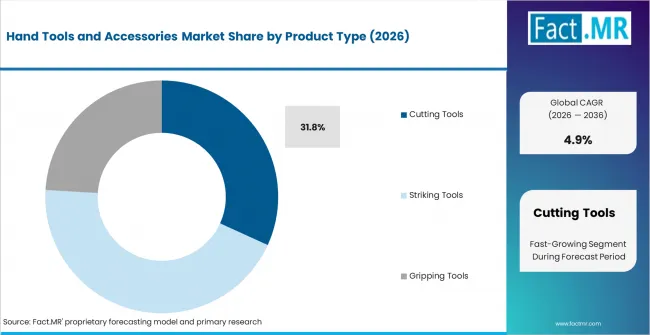
Hand Tools And Accessories Market Analysis By Product Type

Cutting tools are projected to hold 31.8% share in 2026 because saws and utility knives are used early in many construction and repair jobs. Product administrators need cutting tools with durable edges and easy blade replacement.

  • Edge Retention: Cutting tools need durable edges because repeat cuts expose weak steel quickly. Contractors avoids brands that dull during daily work.
  • Blade Access: Replacement blades support repeat sales after the handle is sold. Retail category managers gain value from stocking compatible accessories beside the tool.
  • Task Fit: Saws and knives must match material type. Poor tool choice can slow work and create extra finishing.

Hand Tools and Accessories Market Analysis by End User
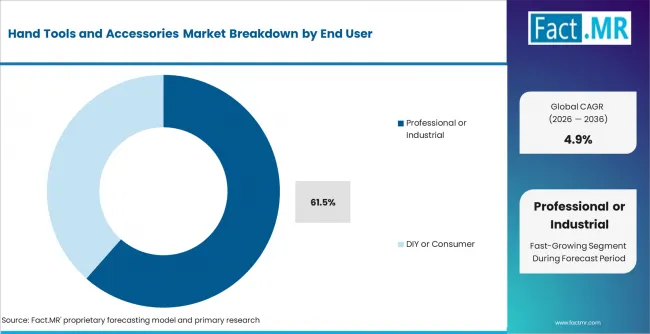
Hand Tools And Accessories Market Analysis By End User

Tool replacement matters more in trade work because a broken tool can reduce billable time. Professional or industrial users are projected to hold 61.5% share in 2026 as contractors and mechanics use hand tools every day. DIY users add volume through basic kits and seasonal repair purchases. Professional users still set the quality standard because daily use exposes weak grips and short blade life faster. Brand trust matters most when tool failure delays a customer job.

  • Trade Frequency: Professional use tools more often than households. Higher use turns durability into a purchasing rule.
  • Service Speed: Industrial maintenance crews need tools available near the repair area. Missing or broken tools can increase downtime.
  • Kit Separation: Consumer kits support light repairs. Trade kits need stronger materials and clear replacement options.

Hand Tools and Accessories Market Analysis by Application
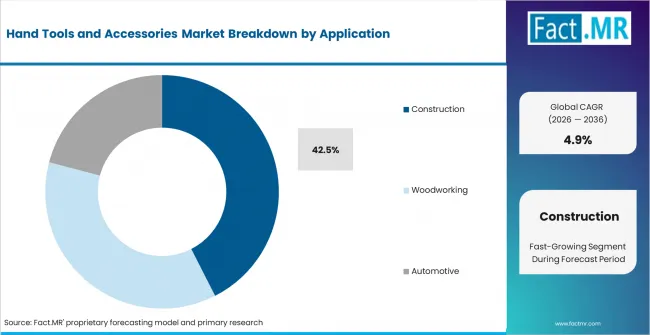
Hand Tools And Accessories Market Analysis By Application

Construction work keeps hand tool demand high because each project needs tools at different stages. Construction is estimated to account for 42.5% share in 2026 because cutting and fastening tasks appear across framing and finishing work. A tape or utility knife is often used before a power tool are used. Construction Products Association forecast material gives broader context on construction output cycles, but tool demand itself is tied to the daily sequence of jobs. [1]

  • Site Sequence: Construction tasks moves from measuring to fastening. Each stage needs a manual tool near the worker.
  • Repair Demand: Renovation work keeps hand tools useful in finished spaces. Smaller tools support adjustments that power equipment cannot handle easily.
  • Safety Check: Contractors need tools that feel stable during repetitive work. Poor grip or weak construction can turn basic tasks into injury risk.

Hand Tools and Accessories Market Analysis by Distribution Channel
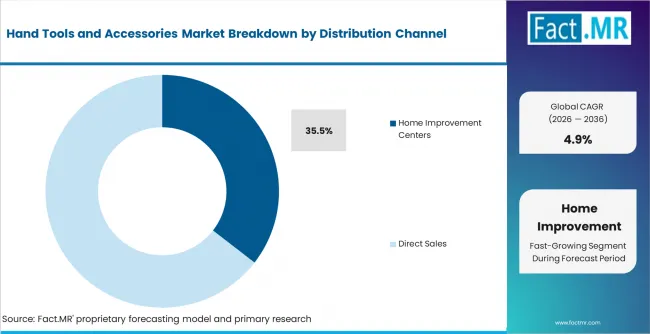
Hand Tools And Accessories Market Analysis By Distribution Channel

Channel leadership comes from easy product comparison because tool feel still matters before purchase. Home improvement centers are projected to hold 35.5% share in 2026 as contractors and households compare grip, weight and kit options before buying. Online retailers keep gaining repeat purchases after users know the exact product. Hardware stores remain useful for urgent replacement and advice. Direct sales support industrial accounts that need standardized tool kits. Home improvement centers lead because they offer physical trial with wider stock. HIRI’s home improvement research supports the importance of product purchasing patterns across homeowner and contractor behavior. [2] Channel strategy works best when stores separate trade-grade racks from light household ranges.

  • Shelf Trial: Users often test grip and weight before buying. Physical comparison keeps store channels important.
  • Urgent Replacement: Hardware stores support contractors who need tools the same day. This keeps local stores useful.
  • Repeat Orders: Online retail works better after users know the product. Familiar SKUs can sell online with less support.

Hand Tools and Accessories Market Analysis by Material
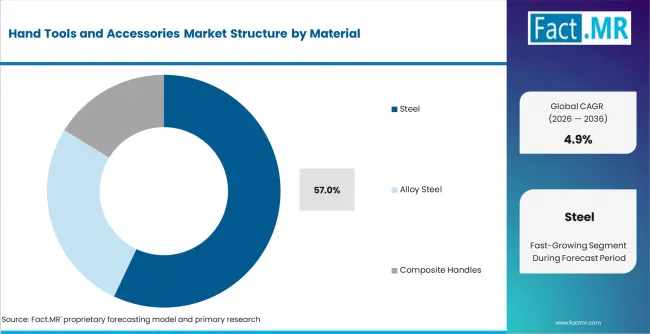
Hand Tools And Accessories Market Analysis By Material

Steel is anticipated to represent 57.0% share in 2026 because cutting edges and striking heads need resistance to wear and deformation. Alloy steel supports premium tools that need extra strength. Composite handles and plastic or resin parts improve comfort and reduce weight. Steel leads because most hand tools still need hard working surfaces that hold their shape. Better material pairing helps suppliers improve comfort without weakening the tool.

  • Working Surfaces: Steel keeps cutting and gripping surfaces stable under repeated use. Weak material choice damages trust quickly.
  • Handle Comfort: Composite handles help reduce strain during longer tasks. Comfort matters most for professional users.
  • Premium Range: Alloy steel supports higher-duty products. Longer service life gives these tools their value.

Hand Tools and Accessories Market Drivers, Restraints, and Opportunities
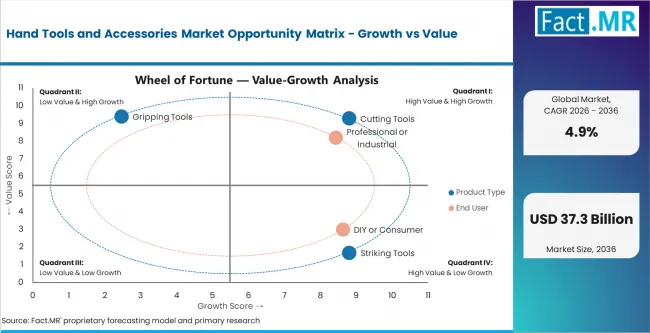
Hand Tools And Accessories Market Opportunity Matrix Growth Vs Value

Construction and repair work support demand. Hand tools remain necessary because many tasks need control and quick adjustment. Contractors use manual tools for layout and finishing. Factory maintenance staff need reliable tools during urgent repairs. Households keep basic kits because repair cost and convenience affect project choices.

Material cost and quality variation can limit demand. Steel and alloy prices affect tool cost and durability. Low-cost tools may gain shelf space, but weak edges or poor grips reduce repeat orders. Channel confusion can also affect selection. Shoppers often see similar tools at different prices, which makes quality harder to judge without brand experience or staff guidance.

Opportunities in the Hand Tools and Accessories Market

  • Trade-Grade Kits: Contractors need grouped tools for common job steps. Suppliers can build premium kits for framing and finishing work.
  • Ergonomic Handles: Professional users value tools that reduce hand strain during repeated tasks. Suppliers can improve comfort while keeping steel working parts.
  • Accessory Refill: Replacement blades and tool-specific add-ons support repeat sales. Retailers can place refills beside high-use cutting tools to reduce missed sales.

Regional Analysis

Based on regional analysis, the hand tools and accessories market is segmented into North America, Latin America, Europe, East Asia, South Asia and Oceania, Middle East and Africa.

Top Country Growth Comparison Hand Tools And Accessories Market Cagr (2026 2036)

Country CAGR (2026 to 2036)
India 7.2%
China 6.4%
Mexico 5.8%
United States 5.4%
Germany 4.8%
Canada 4.6%

Source: Fact.MR analysis based on forecast model and primary research.
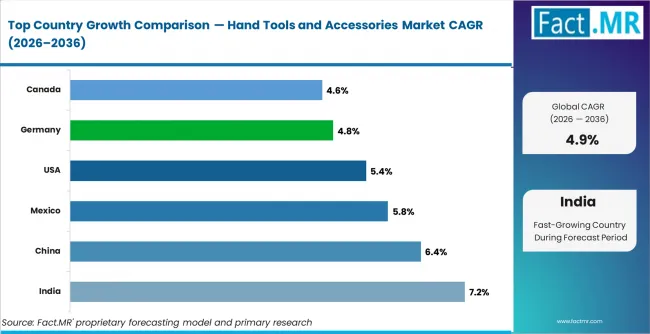
Hand Tools And Accessories Market Cagr Analysis By Country

South Asia and Oceania Hand Tools and Accessories Market Analysis

South Asia and Oceania demand is supported by construction repair and local trade activity. India leads because manual tools is the first purchase for small contractors and service technicians. Tool demand improves when jobsite users need products that can be carried and replaced without complex charging or calibration requirements.

  • India: India construction repair base and small contractor network support frequent tool replacement. Demand for hand tools and accessories in India is forecast to grow at 7.2% CAGR from 2026 to 2036 as trade users purchase cutting tools and fastening tools for daily work. MoSPI reported in April 2026 that 98.54 lakh households undertook own-account construction and 10.27 lakh unincorporated construction agencies were active in the sector. [3] Local hardware stores and home improvement outlets benefit because professional users need quick availability.

East Asia Hand Tools and Accessories Market Analysis

East Asia demand comes from manufacturing activity and repair discipline. China supports higher-volume tool use across factories and construction sites. Japan offers a smaller opportunity, with demand linked to precision maintenance and automotive repair. Regional demand differs because China rewards scale and channel coverage. Japan rewards product finish and stable tool performance.

  • China: Factory maintenance and construction repair keep China important to regional tool demand. Hand tools and accessories sales in China are projected to rise at 6.4% CAGR by 2036 as workshops and construction trades need reliable manual tools near power equipment. Domestic distribution helps suppliers reach industrial users and consumer repair channels. Competitive advantage depends on wider product ranges and dependable mid-priced tools.

North America Hand Tools and Accessories Market Analysis
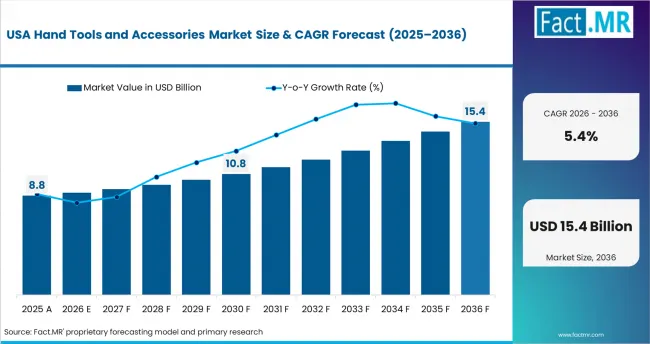
Hand Tools And Accessories Market Country Value Analysis

North America demand is supported by renovation activity and retail channel depth. The United States leads the region because home centers and hardware stores influence how consumers compare tools. Canada shows steady replacement demand from contractors and household repair. Mexico adds demand as workshop and assembly ecosystems expand.

  • United States: Home improvement activity and contractor replacement cycles support the United States outlook. The U.S. hand tools and accessories market is set to expand at 5.4% CAGR by 2036 as professional users replace worn tools and households keep small repair kits. Harvard Joint Center for Housing Studies reported in 2025 that the U.S. remodeling market stayed above USD 600.0 billion after the pandemic and remained 50.0% above pre-pandemic levels. [4]
  • Canada: Canada demand comes from repair needs across housing and field service work. Hand tools and accessories in Canada are estimated to grow at 4.6% CAGR during the forecast period as contractors and homeowners purchases durable tools for routine work. Seasonal repair work support demand for tool kits and replacements. Suppliers gain value by offering tools that handle cold storage and repeated transport between job sites.
  • Mexico: Mexico industrial repair base and construction activity are improving the need for reliable manual tools. Demand for hand tools and accessories in Mexico is likely to post 5.8% CAGR from 2026 to 2036 as service workshops and trade contractors purchase tools for maintenance and installation work. Nearshoring raises demand for industrial tools. Distributors can win repeat workshop accounts by offering durable mid-priced tools without premium import costs.

Europe Hand Tools and Accessories Market Analysis
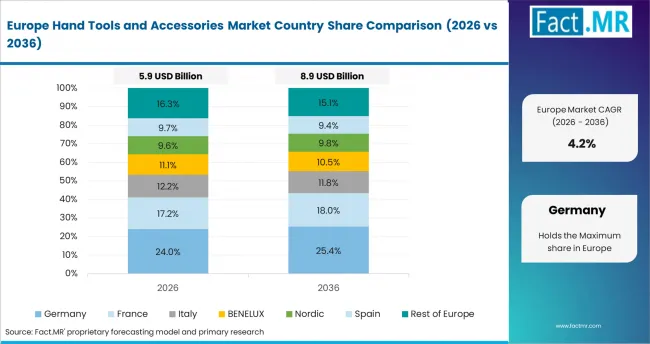
Hand Tools And Accessories Market Europe Country Market Share Analysis, 2026 & 2036

European demand is guided by skilled trade behavior and product quality expectations. Germany leads because its manufacturing and automotive service base uses hand tools across repair and maintenance routines. European customers often compare durability and brand trust before price. This keeps premium suppliers relevant even as value brands expand.

  • Germany: Germany’s skilled trade base supports demand for tools that keep accuracy under repeated use. Hand tools and accessories demand in Germany is forecast to register 4.8% CAGR through 2036 as automotive service and construction trades keep manual tools in regular use. Users are less likely to accept poor jaw fit or weak handle design. Suppliers with recognized quality positioning can defend share through replacement trust.

Competitive Aligners for Market Players
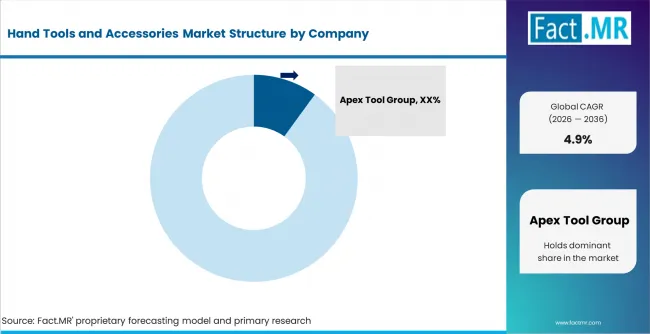
Hand Tools And Accessories Market Analysis By Company

The hand tools and accessories market includes global tool manufacturers and specialist hand tool brands. Industrial distributors complete the supplier base. Stanley Black & Decker competes through broad hand tool and storage ranges. Apex Tool Group offers mechanic and trade tools. Snap-on remains important in professional vehicle service and industrial repair. TTI supports hand tool demand through Milwaukee trade-focused product ranges. Bosch and Makita bring adjacent power tool relationships. Hilti adds construction channel depth that help them serve professional construction channels.

Competitive position depends on proven durability and strong channel reach. Suppliers must show that their tools can handle repeated use. A wide product range alone is not enough. Stanley Black & Decker’s filing shows the importance of tools and outdoor products in its business. Apex Tool Group’s coverage across industrial, construction and vehicle repair users supports its role in professional channels.

Supplier strength through 2036 will rely on product tier clarity. Entry tools are needed for household repair. Trade-grade tools need stronger materials and better grip design. Industrial tool programs need repeat supply and standardization. Companies that match product tiers with the right channel will avoid price dilution and protect replacement demand.

Key Players in Hand Tools and Accessories Market

  • Apex Tool Group
  • CHANNELLOCK, Inc.
  • Klein Tools, Inc.
  • Makita Corporation
  • Snap-on Incorporated
  • Stanley Black & Decker, Inc.

Bibliography

  • [1] Construction Products Association. (2025, October 27). Construction industry forecasts - Autumn 2025.
  • [2] Home Improvement Research Institute. (2024, April 10). Updated home improvement market size and outlook for 2024 through 2028.
  • [3] Press Information Bureau. (2026, April 10). MoSPI breaks new ground: First-ever deep dive into unincorporated construction sector in decades.
  • [4] Joint Center for Housing Studies of Harvard University. (2025). Improving America’s housing 2025.

This Report Addresses

  • Strategic intelligence on hand tools and accessories demand across professional and household users.
  • Growth opportunity mapping across India, China, Mexico and the United States.
  • Segment analysis covers product type and end user. Application, distribution channel and material complete the scope.
  • Regional outlook covering construction repair, factory maintenance and household tool replacement.
  • Competitive analysis of Apex Tool Group, Snap-on Incorporated, Stanley Black & Decker and TTI.
  • Product assessment covering cutting tools, gripping tools, fastening tools and measuring tools.
  • Report delivered through PDF, Excel datasets and presentation formats.
  • Primary interviews, supplier checks and channel validation support the forecast model.

Hand Tools and Accessories Market Definition

The hand tools and accessories market covers non-powered tools used for manual cutting and fastening. It includes tools used by tradespeople and households. Striking tools, gripping tools and measuring tools form the core scope. The market differs from power tools because use depends on manual force and task control. Accessories are included only if they support hand tool use or storage.

Hand Tools and Accessories Market Inclusions

The scope includes saws and utility knives. Chisels are covered for manual shaping work. Hammers and mallets are included. Pliers, wrenches and screwdrivers are covered under core hand tools. Measuring and marking tools are included because they guide manual work. Tool accessories are covered only if they support hand tool use, storage or task-specific work.

Hand Tools and Accessories Market Exclusions

The scope excludes electric drills, cordless saws and powered fastening systems. Large workshop machines are outside scope because they are not manually operated hand tools. Standalone power tool batteries are excluded. Construction equipment attachments are excluded because they connect to machines. Generic storage furniture is excluded unless sold as tool-specific storage.

Hand Tools and Accessories Market Research Methodology

  • Primary Research
    • Primary research includes interviews with tool distributors and industrial maintenance supervisors. Home improvement category managers were reviewed for retail replacement demand. Automotive workshop owners were checked for wrench and gripping tool use.
  • Desk Research
    • Desk research reviewed company filings, product catalogues and workplace safety guidance. Supplier product pages supported validation of product type coverage. Retail and distributor evidence helped review channel assumptions.
  • Market-Sizing and Forecasting
    • Forecasting uses product type demand and end-user replacement behavior. Construction application demand is linked to manual task frequency. Distribution channel estimates reflect professional purchasing and DIY replenishment.
  • Data Validation and Update Cycle
    • Forecasts were cross-checked through supplier listings, trade channel review and company portfolio evidence. Regional assumptions were reviewed through construction demand, home improvement activity and industrial maintenance logic.

Scope of the Report

Hand Tools And Accessories Market Breakdown By Product Type, End User, And Region

Attribute Details
Quantitative Units USD 23.1 billion in 2026 to USD 37.3 billion by 2036 at 4.9% CAGR
Market Definition Non-powered hand tools and accessories used for manual cutting, fastening, gripping, striking, measuring and marking work.
Product Type Cutting Tools, Striking Tools, Gripping Tools, Measuring and Marking Tools, Drilling and Fastening Tools
End User Professional or Industrial, DIY or Consumer
Application Construction, Woodworking, Automotive, Gardening and Landscaping, General Household Use
Distribution Channel Online Retailers, Hardware Stores, Home Improvement Centers, Direct Sales
Material Steel, Alloy Steel, Composite Handles, Plastic and Resin Components, Other Materials
Regions Covered North America, Latin America, Europe, East Asia, South Asia and Oceania, Middle East and Africa
Countries Covered United States, Canada, Mexico, Brazil, Argentina, Germany, United Kingdom, France, Italy, Spain, China, Japan, South Korea, India, Australia, ASEAN, GCC Countries, South Africa
Key Companies Profiled Apex Tool Group, CHANNELLOCK, Inc., Klein Tools, Inc., Makita Corporation, Snap-on Incorporated, Stanley Black & Decker, Inc.
Forecast Period 2026 to 2036
Approach Hybrid top-down and bottom-up model using product type demand, application use and channel validation.

Hand Tools and Accessories Market Analysis by Segments

  • By Product Type:

    • Cutting Tools
    • Striking Tools
    • Gripping Tools
    • Measuring and Marking Tools
    • Drilling and Fastening Tools
  • By End User:

    • Professional or Industrial
    • DIY or Consumer
  • By Application:

    • Construction
    • Woodworking
    • Automotive
    • Gardening and Landscaping
    • General Household Use
  • By Distribution Channel:

    • Online Retailers
    • Hardware Stores
    • Home Improvement Centers
    • Direct Sales
  • By Material:

    • Steel
    • Alloy Steel
    • Composite Handles
    • Plastic and Resin Components
    • Other Materials
  • Region:

    • North America
      • United States
      • Canada
      • Mexico
    • Latin America
      • Brazil
      • Argentina
    • Europe
      • Germany
      • United Kingdom
      • France
      • Italy
      • Spain
    • East Asia
      • China
      • Japan
      • South Korea
    • South Asia and Oceania
      • India
      • Australia
      • ASEAN
    • Middle East and Africa
      • GCC Countries
      • South Africa

- Frequently Asked Questions -

What was the global hand tools and accessories market size reported by Fact.MR for 2023?

The global hand tools and accessories market was valued at US$ 20.1 billion in 2023.

Who are the major players operating in the hand tools and accessories market?

Major players in the market are Stanley Black & Decker, Inc, Snap-on Incorporated, Robert Bosch GmbH, Hilti Corporation, Makita Corporation, Klein Tools, Inc and Techtronic Industries Co. Ltd. (TTI)

What is the estimated valuation of the hand tools and accessories market in 2034?

The market is expected to reach a valuation of US$ 31.4 billion in 2034.

What value CAGR did the hand tools and accessories market exhibit over the last five years?

The historic growth rate of the Hand Tools and Accessories market was 3.7% from 2019-2023.

Table of Content

  1. Executive Summary
    • Global Market Outlook
    • Demand to side Trends
    • Supply to side Trends
    • Technology Roadmap Analysis
    • Analysis and Recommendations
  2. Market Overview
    • Market Coverage / Taxonomy
    • Market Definition / Scope / Limitations
  3. Research Methodology
    • Chapter Orientation
    • Analytical Lens and Working Hypotheses
      • Market Structure, Signals, and Trend Drivers
      • Benchmarking and Cross-market Comparability
      • Market Sizing, Forecasting, and Opportunity Mapping
    • Research Design and Evidence Framework
      • Desk Research Programme (Secondary Evidence)
        • Company Annual and Sustainability Reports
        • Peer-reviewed Journals and Academic Literature
        • Corporate Websites, Product Literature, and Technical Notes
        • Earnings Decks and Investor Briefings
        • Statutory Filings and Regulatory Disclosures
        • Technical White Papers and Standards Notes
        • Trade Journals, Industry Magazines, and Analyst Briefs
        • Conference Proceedings, Webinars, and Seminar Materials
        • Government Statistics Portals and Public Data Releases
        • Press Releases and Reputable Media Coverage
        • Specialist Newsletters and Curated Briefings
        • Sector Databases and Reference Repositories
        • Fact.MR Internal Proprietary Databases and Historical Market Datasets
        • Subscription Datasets and Paid Sources
        • Social Channels, Communities, and Digital Listening Inputs
        • Additional Desk Sources
      • Expert Input and Fieldwork (Primary Evidence)
        • Primary Modes
          • Qualitative Interviews and Expert Elicitation
          • Quantitative Surveys and Structured Data Capture
          • Blended Approach
        • Why Primary Evidence is Used
        • Field Techniques
          • Interviews
          • Surveys
          • Focus Groups
          • Observational and In-context Research
          • Social and Community Interactions
        • Stakeholder Universe Engaged
          • C-suite Leaders
          • Board Members
          • Presidents and Vice Presidents
          • R&D and Innovation Heads
          • Technical Specialists
          • Domain Subject-matter Experts
          • Scientists
          • Physicians and Other Healthcare Professionals
        • Governance, Ethics, and Data Stewardship
          • Research Ethics
          • Data Integrity and Handling
      • Tooling, Models, and Reference Databases
    • Data Engineering and Model Build
      • Data Acquisition and Ingestion
      • Cleaning, Normalisation, and Verification
      • Synthesis, Triangulation, and Analysis
    • Quality Assurance and Audit Trail
  4. Market Background
    • Market Dynamics
      • Drivers
      • Restraints
      • Opportunity
      • Trends
    • Scenario Forecast
      • Demand in Optimistic Scenario
      • Demand in Likely Scenario
      • Demand in Conservative Scenario
    • Opportunity Map Analysis
    • Product Life Cycle Analysis
    • Supply Chain Analysis
    • Investment Feasibility Matrix
    • Value Chain Analysis
    • PESTLE and Porter’s Analysis
    • Regulatory Landscape
    • Regional Parent Market Outlook
    • Production and Consumption Statistics
    • Import and Export Statistics
  5. Global Market Analysis 2021 to 2025 and Forecast, 2026 to 2036
    • Historical Market Size Value (USD Million) Analysis, 2021 to 2025
    • Current and Future Market Size Value (USD Million) Projections, 2026 to 2036
      • Y to o to Y Growth Trend Analysis
      • Absolute $ Opportunity Analysis
  6. Global Market Pricing Analysis 2021 to 2025 and Forecast 2026 to 2036
  7. Global Market Analysis 2021 to 2025 and Forecast 2026 to 2036, By Product Type
    • Introduction / Key Findings
    • Historical Market Size Value (USD Million) Analysis By Product Type , 2021 to 2025
    • Current and Future Market Size Value (USD Million) Analysis and Forecast By Product Type , 2026 to 2036
      • Cutting Tools
      • Striking Tools
      • Gripping Tools
    • Y to o to Y Growth Trend Analysis By Product Type , 2021 to 2025
    • Absolute $ Opportunity Analysis By Product Type , 2026 to 2036
  8. Global Market Analysis 2021 to 2025 and Forecast 2026 to 2036, By End User
    • Introduction / Key Findings
    • Historical Market Size Value (USD Million) Analysis By End User, 2021 to 2025
    • Current and Future Market Size Value (USD Million) Analysis and Forecast By End User, 2026 to 2036
      • Professional or Industrial
      • DIY or Consumer
    • Y to o to Y Growth Trend Analysis By End User, 2021 to 2025
    • Absolute $ Opportunity Analysis By End User, 2026 to 2036
  9. Global Market Analysis 2021 to 2025 and Forecast 2026 to 2036, By Application
    • Introduction / Key Findings
    • Historical Market Size Value (USD Million) Analysis By Application, 2021 to 2025
    • Current and Future Market Size Value (USD Million) Analysis and Forecast By Application, 2026 to 2036
      • Construction
      • Woodworking
      • Automotive
    • Y to o to Y Growth Trend Analysis By Application, 2021 to 2025
    • Absolute $ Opportunity Analysis By Application, 2026 to 2036
  10. Global Market Analysis 2021 to 2025 and Forecast 2026 to 2036, By Distribution Channel
    • Introduction / Key Findings
    • Historical Market Size Value (USD Million) Analysis By Distribution Channel, 2021 to 2025
    • Current and Future Market Size Value (USD Million) Analysis and Forecast By Distribution Channel, 2026 to 2036
      • Home Improvement Centers
      • Direct Sales
    • Y to o to Y Growth Trend Analysis By Distribution Channel, 2021 to 2025
    • Absolute $ Opportunity Analysis By Distribution Channel, 2026 to 2036
  11. Global Market Analysis 2021 to 2025 and Forecast 2026 to 2036, By Material
    • Introduction / Key Findings
    • Historical Market Size Value (USD Million) Analysis By Material, 2021 to 2025
    • Current and Future Market Size Value (USD Million) Analysis and Forecast By Material, 2026 to 2036
      • Steel
      • Alloy Steel
      • Composite Handles
    • Y to o to Y Growth Trend Analysis By Material, 2021 to 2025
    • Absolute $ Opportunity Analysis By Material, 2026 to 2036
  12. Global Market Analysis 2021 to 2025 and Forecast 2026 to 2036, By Region
    • Introduction
    • Historical Market Size Value (USD Million) Analysis By Region, 2021 to 2025
    • Current Market Size Value (USD Million) Analysis and Forecast By Region, 2026 to 2036
      • North America
      • Latin America
      • Western Europe
      • Eastern Europe
      • East Asia
      • South Asia and Pacific
      • Middle East & Africa
    • Market Attractiveness Analysis By Region
  13. North America Market Analysis 2021 to 2025 and Forecast 2026 to 2036, By Country
    • Historical Market Size Value (USD Million) Trend Analysis By Market Taxonomy, 2021 to 2025
    • Market Size Value (USD Million) Forecast By Market Taxonomy, 2026 to 2036
      • By Country
        • USA
        • Canada
        • Mexico
      • By Product Type
      • By End User
      • By Application
      • By Distribution Channel
      • By Material
    • Market Attractiveness Analysis
      • By Country
      • By Product Type
      • By End User
      • By Application
      • By Distribution Channel
      • By Material
    • Key Takeaways
  14. Latin America Market Analysis 2021 to 2025 and Forecast 2026 to 2036, By Country
    • Historical Market Size Value (USD Million) Trend Analysis By Market Taxonomy, 2021 to 2025
    • Market Size Value (USD Million) Forecast By Market Taxonomy, 2026 to 2036
      • By Country
        • Brazil
        • Chile
        • Rest of Latin America
      • By Product Type
      • By End User
      • By Application
      • By Distribution Channel
      • By Material
    • Market Attractiveness Analysis
      • By Country
      • By Product Type
      • By End User
      • By Application
      • By Distribution Channel
      • By Material
    • Key Takeaways
  15. Western Europe Market Analysis 2021 to 2025 and Forecast 2026 to 2036, By Country
    • Historical Market Size Value (USD Million) Trend Analysis By Market Taxonomy, 2021 to 2025
    • Market Size Value (USD Million) Forecast By Market Taxonomy, 2026 to 2036
      • By Country
        • Germany
        • UK
        • Italy
        • Spain
        • France
        • Nordic
        • BENELUX
        • Rest of Western Europe
      • By Product Type
      • By End User
      • By Application
      • By Distribution Channel
      • By Material
    • Market Attractiveness Analysis
      • By Country
      • By Product Type
      • By End User
      • By Application
      • By Distribution Channel
      • By Material
    • Key Takeaways
  16. Eastern Europe Market Analysis 2021 to 2025 and Forecast 2026 to 2036, By Country
    • Historical Market Size Value (USD Million) Trend Analysis By Market Taxonomy, 2021 to 2025
    • Market Size Value (USD Million) Forecast By Market Taxonomy, 2026 to 2036
      • By Country
        • Russia
        • Poland
        • Hungary
        • Balkan & Baltic
        • Rest of Eastern Europe
      • By Product Type
      • By End User
      • By Application
      • By Distribution Channel
      • By Material
    • Market Attractiveness Analysis
      • By Country
      • By Product Type
      • By End User
      • By Application
      • By Distribution Channel
      • By Material
    • Key Takeaways
  17. East Asia Market Analysis 2021 to 2025 and Forecast 2026 to 2036, By Country
    • Historical Market Size Value (USD Million) Trend Analysis By Market Taxonomy, 2021 to 2025
    • Market Size Value (USD Million) Forecast By Market Taxonomy, 2026 to 2036
      • By Country
        • China
        • Japan
        • South Korea
      • By Product Type
      • By End User
      • By Application
      • By Distribution Channel
      • By Material
    • Market Attractiveness Analysis
      • By Country
      • By Product Type
      • By End User
      • By Application
      • By Distribution Channel
      • By Material
    • Key Takeaways
  18. South Asia and Pacific Market Analysis 2021 to 2025 and Forecast 2026 to 2036, By Country
    • Historical Market Size Value (USD Million) Trend Analysis By Market Taxonomy, 2021 to 2025
    • Market Size Value (USD Million) Forecast By Market Taxonomy, 2026 to 2036
      • By Country
        • India
        • ASEAN
        • Australia & New Zealand
        • Rest of South Asia and Pacific
      • By Product Type
      • By End User
      • By Application
      • By Distribution Channel
      • By Material
    • Market Attractiveness Analysis
      • By Country
      • By Product Type
      • By End User
      • By Application
      • By Distribution Channel
      • By Material
    • Key Takeaways
  19. Middle East & Africa Market Analysis 2021 to 2025 and Forecast 2026 to 2036, By Country
    • Historical Market Size Value (USD Million) Trend Analysis By Market Taxonomy, 2021 to 2025
    • Market Size Value (USD Million) Forecast By Market Taxonomy, 2026 to 2036
      • By Country
        • Kingdom of Saudi Arabia
        • Other GCC Countries
        • Turkiye
        • South Africa
        • Other African Union
        • Rest of Middle East & Africa
      • By Product Type
      • By End User
      • By Application
      • By Distribution Channel
      • By Material
    • Market Attractiveness Analysis
      • By Country
      • By Product Type
      • By End User
      • By Application
      • By Distribution Channel
      • By Material
    • Key Takeaways
  20. Key Countries Market Analysis
    • USA
      • Pricing Analysis
      • Market Share Analysis, 2025
        • By Product Type
        • By End User
        • By Application
        • By Distribution Channel
        • By Material
    • Canada
      • Pricing Analysis
      • Market Share Analysis, 2025
        • By Product Type
        • By End User
        • By Application
        • By Distribution Channel
        • By Material
    • Mexico
      • Pricing Analysis
      • Market Share Analysis, 2025
        • By Product Type
        • By End User
        • By Application
        • By Distribution Channel
        • By Material
    • Brazil
      • Pricing Analysis
      • Market Share Analysis, 2025
        • By Product Type
        • By End User
        • By Application
        • By Distribution Channel
        • By Material
    • Chile
      • Pricing Analysis
      • Market Share Analysis, 2025
        • By Product Type
        • By End User
        • By Application
        • By Distribution Channel
        • By Material
    • Germany
      • Pricing Analysis
      • Market Share Analysis, 2025
        • By Product Type
        • By End User
        • By Application
        • By Distribution Channel
        • By Material
    • UK
      • Pricing Analysis
      • Market Share Analysis, 2025
        • By Product Type
        • By End User
        • By Application
        • By Distribution Channel
        • By Material
    • Italy
      • Pricing Analysis
      • Market Share Analysis, 2025
        • By Product Type
        • By End User
        • By Application
        • By Distribution Channel
        • By Material
    • Spain
      • Pricing Analysis
      • Market Share Analysis, 2025
        • By Product Type
        • By End User
        • By Application
        • By Distribution Channel
        • By Material
    • France
      • Pricing Analysis
      • Market Share Analysis, 2025
        • By Product Type
        • By End User
        • By Application
        • By Distribution Channel
        • By Material
    • India
      • Pricing Analysis
      • Market Share Analysis, 2025
        • By Product Type
        • By End User
        • By Application
        • By Distribution Channel
        • By Material
    • ASEAN
      • Pricing Analysis
      • Market Share Analysis, 2025
        • By Product Type
        • By End User
        • By Application
        • By Distribution Channel
        • By Material
    • Australia & New Zealand
      • Pricing Analysis
      • Market Share Analysis, 2025
        • By Product Type
        • By End User
        • By Application
        • By Distribution Channel
        • By Material
    • China
      • Pricing Analysis
      • Market Share Analysis, 2025
        • By Product Type
        • By End User
        • By Application
        • By Distribution Channel
        • By Material
    • Japan
      • Pricing Analysis
      • Market Share Analysis, 2025
        • By Product Type
        • By End User
        • By Application
        • By Distribution Channel
        • By Material
    • South Korea
      • Pricing Analysis
      • Market Share Analysis, 2025
        • By Product Type
        • By End User
        • By Application
        • By Distribution Channel
        • By Material
    • Russia
      • Pricing Analysis
      • Market Share Analysis, 2025
        • By Product Type
        • By End User
        • By Application
        • By Distribution Channel
        • By Material
    • Poland
      • Pricing Analysis
      • Market Share Analysis, 2025
        • By Product Type
        • By End User
        • By Application
        • By Distribution Channel
        • By Material
    • Hungary
      • Pricing Analysis
      • Market Share Analysis, 2025
        • By Product Type
        • By End User
        • By Application
        • By Distribution Channel
        • By Material
    • Kingdom of Saudi Arabia
      • Pricing Analysis
      • Market Share Analysis, 2025
        • By Product Type
        • By End User
        • By Application
        • By Distribution Channel
        • By Material
    • Turkiye
      • Pricing Analysis
      • Market Share Analysis, 2025
        • By Product Type
        • By End User
        • By Application
        • By Distribution Channel
        • By Material
    • South Africa
      • Pricing Analysis
      • Market Share Analysis, 2025
        • By Product Type
        • By End User
        • By Application
        • By Distribution Channel
        • By Material
  21. Market Structure Analysis
    • Competition Dashboard
    • Competition Benchmarking
    • Market Share Analysis of Top Players
      • By Regional
      • By Product Type
      • By End User
      • By Application
      • By Distribution Channel
      • By Material
  22. Competition Analysis
    • Competition Deep Dive
      • Apex Tool Group
        • Overview
        • Product Portfolio
        • Profitability by Market Segments (Product/Age /Sales Channel/Region)
        • Sales Footprint
        • Strategy Overview
          • Marketing Strategy
          • Product Strategy
          • Channel Strategy
      • CHANNELLOCK, Inc.
      • Klein Tools, Inc.
      • Makita Corporation
      • Snap-on Incorporated
      • Stanley Black & Decker, Inc.
  23. Assumptions & Acronyms Used

List Of Table

  • Table 1: Global Market Value (USD Million) Forecast by Region, 2021 to 2036
  • Table 2: Global Market Value (USD Million) Forecast by Product Type, 2021 to 2036
  • Table 3: Global Market Value (USD Million) Forecast by End User, 2021 to 2036
  • Table 4: Global Market Value (USD Million) Forecast by Application, 2021 to 2036
  • Table 5: Global Market Value (USD Million) Forecast by Distribution Channel, 2021 to 2036
  • Table 6: Global Market Value (USD Million) Forecast by Material, 2021 to 2036
  • Table 7: North America Market Value (USD Million) Forecast by Country, 2021 to 2036
  • Table 8: North America Market Value (USD Million) Forecast by Product Type, 2021 to 2036
  • Table 9: North America Market Value (USD Million) Forecast by End User, 2021 to 2036
  • Table 10: North America Market Value (USD Million) Forecast by Application, 2021 to 2036
  • Table 11: North America Market Value (USD Million) Forecast by Distribution Channel, 2021 to 2036
  • Table 12: North America Market Value (USD Million) Forecast by Material, 2021 to 2036
  • Table 13: Latin America Market Value (USD Million) Forecast by Country, 2021 to 2036
  • Table 14: Latin America Market Value (USD Million) Forecast by Product Type, 2021 to 2036
  • Table 15: Latin America Market Value (USD Million) Forecast by End User, 2021 to 2036
  • Table 16: Latin America Market Value (USD Million) Forecast by Application, 2021 to 2036
  • Table 17: Latin America Market Value (USD Million) Forecast by Distribution Channel, 2021 to 2036
  • Table 18: Latin America Market Value (USD Million) Forecast by Material, 2021 to 2036
  • Table 19: Western Europe Market Value (USD Million) Forecast by Country, 2021 to 2036
  • Table 20: Western Europe Market Value (USD Million) Forecast by Product Type, 2021 to 2036
  • Table 21: Western Europe Market Value (USD Million) Forecast by End User, 2021 to 2036
  • Table 22: Western Europe Market Value (USD Million) Forecast by Application, 2021 to 2036
  • Table 23: Western Europe Market Value (USD Million) Forecast by Distribution Channel, 2021 to 2036
  • Table 24: Western Europe Market Value (USD Million) Forecast by Material, 2021 to 2036
  • Table 25: Eastern Europe Market Value (USD Million) Forecast by Country, 2021 to 2036
  • Table 26: Eastern Europe Market Value (USD Million) Forecast by Product Type, 2021 to 2036
  • Table 27: Eastern Europe Market Value (USD Million) Forecast by End User, 2021 to 2036
  • Table 28: Eastern Europe Market Value (USD Million) Forecast by Application, 2021 to 2036
  • Table 29: Eastern Europe Market Value (USD Million) Forecast by Distribution Channel, 2021 to 2036
  • Table 30: Eastern Europe Market Value (USD Million) Forecast by Material, 2021 to 2036
  • Table 31: East Asia Market Value (USD Million) Forecast by Country, 2021 to 2036
  • Table 32: East Asia Market Value (USD Million) Forecast by Product Type, 2021 to 2036
  • Table 33: East Asia Market Value (USD Million) Forecast by End User, 2021 to 2036
  • Table 34: East Asia Market Value (USD Million) Forecast by Application, 2021 to 2036
  • Table 35: East Asia Market Value (USD Million) Forecast by Distribution Channel, 2021 to 2036
  • Table 36: East Asia Market Value (USD Million) Forecast by Material, 2021 to 2036
  • Table 37: South Asia and Pacific Market Value (USD Million) Forecast by Country, 2021 to 2036
  • Table 38: South Asia and Pacific Market Value (USD Million) Forecast by Product Type, 2021 to 2036
  • Table 39: South Asia and Pacific Market Value (USD Million) Forecast by End User, 2021 to 2036
  • Table 40: South Asia and Pacific Market Value (USD Million) Forecast by Application, 2021 to 2036
  • Table 41: South Asia and Pacific Market Value (USD Million) Forecast by Distribution Channel, 2021 to 2036
  • Table 42: South Asia and Pacific Market Value (USD Million) Forecast by Material, 2021 to 2036
  • Table 43: Middle East & Africa Market Value (USD Million) Forecast by Country, 2021 to 2036
  • Table 44: Middle East & Africa Market Value (USD Million) Forecast by Product Type, 2021 to 2036
  • Table 45: Middle East & Africa Market Value (USD Million) Forecast by End User, 2021 to 2036
  • Table 46: Middle East & Africa Market Value (USD Million) Forecast by Application, 2021 to 2036
  • Table 47: Middle East & Africa Market Value (USD Million) Forecast by Distribution Channel, 2021 to 2036
  • Table 48: Middle East & Africa Market Value (USD Million) Forecast by Material, 2021 to 2036

List Of Figures

  • Figure 1: Global Market Pricing Analysis
  • Figure 2: Global Market Value (USD Million) Forecast 2021-2036
  • Figure 3: Global Market Value Share and BPS Analysis by Product Type, 2026 and 2036
  • Figure 4: Global Market Y-o-Y Growth Comparison by Product Type, 2026 to 2036
  • Figure 5: Global Market Attractiveness Analysis by Product Type
  • Figure 6: Global Market Value Share and BPS Analysis by End User, 2026 and 2036
  • Figure 7: Global Market Y-o-Y Growth Comparison by End User, 2026 to 2036
  • Figure 8: Global Market Attractiveness Analysis by End User
  • Figure 9: Global Market Value Share and BPS Analysis by Application, 2026 and 2036
  • Figure 10: Global Market Y-o-Y Growth Comparison by Application, 2026 to 2036
  • Figure 11: Global Market Attractiveness Analysis by Application
  • Figure 12: Global Market Value Share and BPS Analysis by Distribution Channel, 2026 and 2036
  • Figure 13: Global Market Y-o-Y Growth Comparison by Distribution Channel, 2026 to 2036
  • Figure 14: Global Market Attractiveness Analysis by Distribution Channel
  • Figure 15: Global Market Value Share and BPS Analysis by Material, 2026 and 2036
  • Figure 16: Global Market Y-o-Y Growth Comparison by Material, 2026 to 2036
  • Figure 17: Global Market Attractiveness Analysis by Material
  • Figure 18: Global Market Value (USD Million) Share and BPS Analysis by Region, 2026 and 2036
  • Figure 19: Global Market Y-o-Y Growth Comparison by Region, 2026 to 2036
  • Figure 20: Global Market Attractiveness Analysis by Region
  • Figure 21: North America Market Incremental Dollar Opportunity, 2026 to 2036
  • Figure 22: Latin America Market Incremental Dollar Opportunity, 2026 to 2036
  • Figure 23: Western Europe Market Incremental Dollar Opportunity, 2026 to 2036
  • Figure 24: Eastern Europe Market Incremental Dollar Opportunity, 2026 to 2036
  • Figure 25: East Asia Market Incremental Dollar Opportunity, 2026 to 2036
  • Figure 26: South Asia and Pacific Market Incremental Dollar Opportunity, 2026 to 2036
  • Figure 27: Middle East & Africa Market Incremental Dollar Opportunity, 2026 to 2036
  • Figure 28: North America Market Value Share and BPS Analysis by Country, 2026 and 2036
  • Figure 29: North America Market Value Share and BPS Analysis by Product Type, 2026 and 2036
  • Figure 30: North America Market Y-o-Y Growth Comparison by Product Type, 2026 to 2036
  • Figure 31: North America Market Attractiveness Analysis by Product Type
  • Figure 32: North America Market Value Share and BPS Analysis by End User, 2026 and 2036
  • Figure 33: North America Market Y-o-Y Growth Comparison by End User, 2026 to 2036
  • Figure 34: North America Market Attractiveness Analysis by End User
  • Figure 35: North America Market Value Share and BPS Analysis by Application, 2026 and 2036
  • Figure 36: North America Market Y-o-Y Growth Comparison by Application, 2026 to 2036
  • Figure 37: North America Market Attractiveness Analysis by Application
  • Figure 38: North America Market Value Share and BPS Analysis by Distribution Channel, 2026 and 2036
  • Figure 39: North America Market Y-o-Y Growth Comparison by Distribution Channel, 2026 to 2036
  • Figure 40: North America Market Attractiveness Analysis by Distribution Channel
  • Figure 41: North America Market Value Share and BPS Analysis by Material, 2026 and 2036
  • Figure 42: North America Market Y-o-Y Growth Comparison by Material, 2026 to 2036
  • Figure 43: North America Market Attractiveness Analysis by Material
  • Figure 44: Latin America Market Value Share and BPS Analysis by Country, 2026 and 2036
  • Figure 45: Latin America Market Value Share and BPS Analysis by Product Type, 2026 and 2036
  • Figure 46: Latin America Market Y-o-Y Growth Comparison by Product Type, 2026 to 2036
  • Figure 47: Latin America Market Attractiveness Analysis by Product Type
  • Figure 48: Latin America Market Value Share and BPS Analysis by End User, 2026 and 2036
  • Figure 49: Latin America Market Y-o-Y Growth Comparison by End User, 2026 to 2036
  • Figure 50: Latin America Market Attractiveness Analysis by End User
  • Figure 51: Latin America Market Value Share and BPS Analysis by Application, 2026 and 2036
  • Figure 52: Latin America Market Y-o-Y Growth Comparison by Application, 2026 to 2036
  • Figure 53: Latin America Market Attractiveness Analysis by Application
  • Figure 54: Latin America Market Value Share and BPS Analysis by Distribution Channel, 2026 and 2036
  • Figure 55: Latin America Market Y-o-Y Growth Comparison by Distribution Channel, 2026 to 2036
  • Figure 56: Latin America Market Attractiveness Analysis by Distribution Channel
  • Figure 57: Latin America Market Value Share and BPS Analysis by Material, 2026 and 2036
  • Figure 58: Latin America Market Y-o-Y Growth Comparison by Material, 2026 to 2036
  • Figure 59: Latin America Market Attractiveness Analysis by Material
  • Figure 60: Western Europe Market Value Share and BPS Analysis by Country, 2026 and 2036
  • Figure 61: Western Europe Market Value Share and BPS Analysis by Product Type, 2026 and 2036
  • Figure 62: Western Europe Market Y-o-Y Growth Comparison by Product Type, 2026 to 2036
  • Figure 63: Western Europe Market Attractiveness Analysis by Product Type
  • Figure 64: Western Europe Market Value Share and BPS Analysis by End User, 2026 and 2036
  • Figure 65: Western Europe Market Y-o-Y Growth Comparison by End User, 2026 to 2036
  • Figure 66: Western Europe Market Attractiveness Analysis by End User
  • Figure 67: Western Europe Market Value Share and BPS Analysis by Application, 2026 and 2036
  • Figure 68: Western Europe Market Y-o-Y Growth Comparison by Application, 2026 to 2036
  • Figure 69: Western Europe Market Attractiveness Analysis by Application
  • Figure 70: Western Europe Market Value Share and BPS Analysis by Distribution Channel, 2026 and 2036
  • Figure 71: Western Europe Market Y-o-Y Growth Comparison by Distribution Channel, 2026 to 2036
  • Figure 72: Western Europe Market Attractiveness Analysis by Distribution Channel
  • Figure 73: Western Europe Market Value Share and BPS Analysis by Material, 2026 and 2036
  • Figure 74: Western Europe Market Y-o-Y Growth Comparison by Material, 2026 to 2036
  • Figure 75: Western Europe Market Attractiveness Analysis by Material
  • Figure 76: Eastern Europe Market Value Share and BPS Analysis by Country, 2026 and 2036
  • Figure 77: Eastern Europe Market Value Share and BPS Analysis by Product Type, 2026 and 2036
  • Figure 78: Eastern Europe Market Y-o-Y Growth Comparison by Product Type, 2026 to 2036
  • Figure 79: Eastern Europe Market Attractiveness Analysis by Product Type
  • Figure 80: Eastern Europe Market Value Share and BPS Analysis by End User, 2026 and 2036
  • Figure 81: Eastern Europe Market Y-o-Y Growth Comparison by End User, 2026 to 2036
  • Figure 82: Eastern Europe Market Attractiveness Analysis by End User
  • Figure 83: Eastern Europe Market Value Share and BPS Analysis by Application, 2026 and 2036
  • Figure 84: Eastern Europe Market Y-o-Y Growth Comparison by Application, 2026 to 2036
  • Figure 85: Eastern Europe Market Attractiveness Analysis by Application
  • Figure 86: Eastern Europe Market Value Share and BPS Analysis by Distribution Channel, 2026 and 2036
  • Figure 87: Eastern Europe Market Y-o-Y Growth Comparison by Distribution Channel, 2026 to 2036
  • Figure 88: Eastern Europe Market Attractiveness Analysis by Distribution Channel
  • Figure 89: Eastern Europe Market Value Share and BPS Analysis by Material, 2026 and 2036
  • Figure 90: Eastern Europe Market Y-o-Y Growth Comparison by Material, 2026 to 2036
  • Figure 91: Eastern Europe Market Attractiveness Analysis by Material
  • Figure 92: East Asia Market Value Share and BPS Analysis by Country, 2026 and 2036
  • Figure 93: East Asia Market Value Share and BPS Analysis by Product Type, 2026 and 2036
  • Figure 94: East Asia Market Y-o-Y Growth Comparison by Product Type, 2026 to 2036
  • Figure 95: East Asia Market Attractiveness Analysis by Product Type
  • Figure 96: East Asia Market Value Share and BPS Analysis by End User, 2026 and 2036
  • Figure 97: East Asia Market Y-o-Y Growth Comparison by End User, 2026 to 2036
  • Figure 98: East Asia Market Attractiveness Analysis by End User
  • Figure 99: East Asia Market Value Share and BPS Analysis by Application, 2026 and 2036
  • Figure 100: East Asia Market Y-o-Y Growth Comparison by Application, 2026 to 2036
  • Figure 101: East Asia Market Attractiveness Analysis by Application
  • Figure 102: East Asia Market Value Share and BPS Analysis by Distribution Channel, 2026 and 2036
  • Figure 103: East Asia Market Y-o-Y Growth Comparison by Distribution Channel, 2026 to 2036
  • Figure 104: East Asia Market Attractiveness Analysis by Distribution Channel
  • Figure 105: East Asia Market Value Share and BPS Analysis by Material, 2026 and 2036
  • Figure 106: East Asia Market Y-o-Y Growth Comparison by Material, 2026 to 2036
  • Figure 107: East Asia Market Attractiveness Analysis by Material
  • Figure 108: South Asia and Pacific Market Value Share and BPS Analysis by Country, 2026 and 2036
  • Figure 109: South Asia and Pacific Market Value Share and BPS Analysis by Product Type, 2026 and 2036
  • Figure 110: South Asia and Pacific Market Y-o-Y Growth Comparison by Product Type, 2026 to 2036
  • Figure 111: South Asia and Pacific Market Attractiveness Analysis by Product Type
  • Figure 112: South Asia and Pacific Market Value Share and BPS Analysis by End User, 2026 and 2036
  • Figure 113: South Asia and Pacific Market Y-o-Y Growth Comparison by End User, 2026 to 2036
  • Figure 114: South Asia and Pacific Market Attractiveness Analysis by End User
  • Figure 115: South Asia and Pacific Market Value Share and BPS Analysis by Application, 2026 and 2036
  • Figure 116: South Asia and Pacific Market Y-o-Y Growth Comparison by Application, 2026 to 2036
  • Figure 117: South Asia and Pacific Market Attractiveness Analysis by Application
  • Figure 118: South Asia and Pacific Market Value Share and BPS Analysis by Distribution Channel, 2026 and 2036
  • Figure 119: South Asia and Pacific Market Y-o-Y Growth Comparison by Distribution Channel, 2026 to 2036
  • Figure 120: South Asia and Pacific Market Attractiveness Analysis by Distribution Channel
  • Figure 121: South Asia and Pacific Market Value Share and BPS Analysis by Material, 2026 and 2036
  • Figure 122: South Asia and Pacific Market Y-o-Y Growth Comparison by Material, 2026 to 2036
  • Figure 123: South Asia and Pacific Market Attractiveness Analysis by Material
  • Figure 124: Middle East & Africa Market Value Share and BPS Analysis by Country, 2026 and 2036
  • Figure 125: Middle East & Africa Market Value Share and BPS Analysis by Product Type, 2026 and 2036
  • Figure 126: Middle East & Africa Market Y-o-Y Growth Comparison by Product Type, 2026 to 2036
  • Figure 127: Middle East & Africa Market Attractiveness Analysis by Product Type
  • Figure 128: Middle East & Africa Market Value Share and BPS Analysis by End User, 2026 and 2036
  • Figure 129: Middle East & Africa Market Y-o-Y Growth Comparison by End User, 2026 to 2036
  • Figure 130: Middle East & Africa Market Attractiveness Analysis by End User
  • Figure 131: Middle East & Africa Market Value Share and BPS Analysis by Application, 2026 and 2036
  • Figure 132: Middle East & Africa Market Y-o-Y Growth Comparison by Application, 2026 to 2036
  • Figure 133: Middle East & Africa Market Attractiveness Analysis by Application
  • Figure 134: Middle East & Africa Market Value Share and BPS Analysis by Distribution Channel, 2026 and 2036
  • Figure 135: Middle East & Africa Market Y-o-Y Growth Comparison by Distribution Channel, 2026 to 2036
  • Figure 136: Middle East & Africa Market Attractiveness Analysis by Distribution Channel
  • Figure 137: Middle East & Africa Market Value Share and BPS Analysis by Material, 2026 and 2036
  • Figure 138: Middle East & Africa Market Y-o-Y Growth Comparison by Material, 2026 to 2036
  • Figure 139: Middle East & Africa Market Attractiveness Analysis by Material
  • Figure 140: Global Market - Tier Structure Analysis
  • Figure 141: Global Market - Company Share Analysis

Hand Tools and Accessories Market