- Market Value (2025): USD 296.9 Mn
- Estimated Value (2026): USD 320.0 Mn
- Forecast Value (2036): USD 678.2 Mn
- CAGR (2026-2036): 7.8%
Targeted Cognitive Nutrient Blends Market Forecast and Outlook 2026 to 2036
The targeted cognitive nutrient blends market is projected to grow from USD 320.0 million in 2026 to USD 678.2 million by 2036. Demand for targeted cognitive nutrient blends is forecast to record a CAGR of 7.8% over the forecast period.
Demand is increasing as older adults worried about memory, patients recovering from stroke or illness, students and working adults seek nutrition designed for the brain, combining choline sources, omega-3 DHA, B vitamins, amino acids and plant extracts at studied doses. Nutrition suppliers are offering premixes and finished medical nutrition products for memory, focus and mental energy. For example, in October 2026, Darling Ingredients' Rousselot brand launched Nextida NxCogni, described as the first targeted collagen peptide designed to support clarity and cognitive resilience. The launch represents a new ingredient offering; human clinical trials were scheduled to begin in December 2026.
Market Highlights for the Targeted Cognitive Nutrient Blends Market
- Sales of targeted cognitive nutrient blends stood at USD 296.9 million in 2025
- Targeted Cognitive Nutrient Blends Market Value (2026): USD 320.0 million
- Targeted Cognitive Nutrient Blends Market Forecast Value (2036): USD 678.2 million
- Targeted Cognitive Nutrient Blends Market Forecast CAGR (2026-2036): 7.8%
- Leading Product Type: Choline-based cognition (31.1%)
- Key Market Participants: DSM-Firmenich, Balchem, Kemin Industries, Glanbia Nutritionals, Nestlé Health Science
- Key Growth Regions: France, Denmark, Germany, Japan, United Kingdom
In September 2026, Japan's internal affairs ministry reported that 29.6% of the population was aged 65 or older, a record, with one in four seniors still in work. Customer interest is increasing as longer working lives and fear of dementia make brain health a daily concern. Ingredient developers are designing products for healthy aging as well as for clinical use.
Targeted Cognitive Nutrient Blends Market
| Metric | Value |
|---|---|
| Estimated Value in (2026) | USD 320.0 million |
| Forecast Value in (2036) | USD 678.2 million |
| Forecast CAGR (2026 to 2036) | 7.8% |
Source: Fact.MR analysis. Updated Nov 23, 2026
Source: Fact.MR analysis.
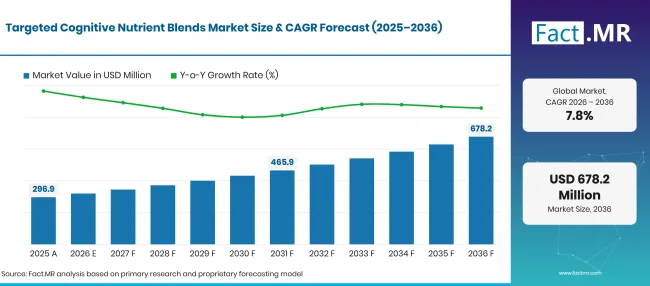
Targeted Cognitive Nutrient Blends Forecast Global | Source: Fact.MR
Category
| Category | Segments |
|---|---|
| Product Type | Choline-based cognition, Botanical nootropic blend, Omega-3 DHA blend, B-vitamin cognition blend, Amino-acid cognitive blend |
| Delivery Form | Medical device and system, Powder, Tablet and capsule, Specialty controlled-release, Liquid |
| Clinical Use | Nutrition support, Acute care, Preventive care, Specialty and rare condition, Long-term management |
| Purchasing Channel | Hospital, Home and community, Medical nutrition OEM, Pharmacy, Specialty clinic |
| Region | France; Denmark; Germany; Japan; United Kingdom |
Source: Fact.MR analysis. Updated Nov 23, 2026
Source: Fact.MR analysis.
Segmental Analysis
Why choline-based cognition do blends lead product demand in the Targeted Cognitive Nutrient Blends Market?
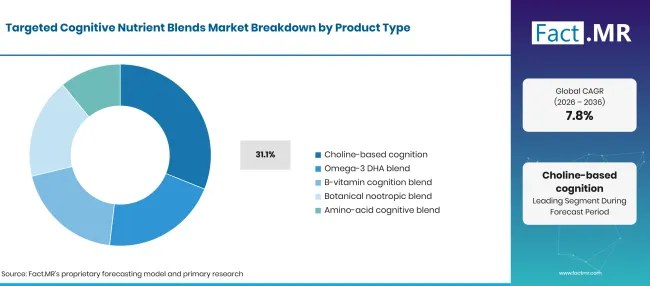
Targeted Cognitive Nutrient Blends Breakdown Product Type | Source: Fact.MR
Choline-based cognition blends hold 31.1% of the targeted cognitive nutrient blends market in 2026, valued at USD 99.5 million, because choline contributes to acetylcholine production and supports normal brain cell membrane function. In May 2026, the European Food Safety Authority published a safety assessment of L-alpha-GPC derived from soy phospholipids, addressing its proposed use as a novel food ingredient. Citicoline and alpha-GPC remain important ingredients in cognitive nutrition research. Formulation specialists are combining choline sources with supporting nutrients while assessing ingredient safety, dosage and permitted health claims.
How are medical devices and systems leading form demand in the Targeted Cognitive Nutrient Blends Market?
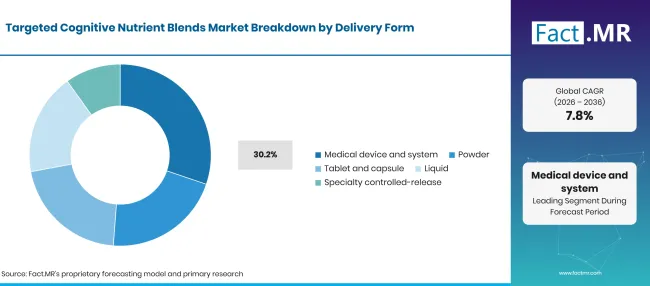
Targeted Cognitive Nutrient Blends Breakdown Delivery Form | Source: Fact.MR
Medical device and system delivery formats represent a reported 30.2% of targeted cognitive nutrient blends revenue in 2026. This category concerns nutrient formulations administered through compatible clinical nutrition delivery systems, subject to confirmation of the market's revenue classification. The American Heart Association and American Stroke Association's 2026 stroke management guideline addresses swallowing assessment and enteral nutrition for patients requiring feeding support.
Why does nutrition support lead clinical demand in the Targeted Cognitive Nutrient Blends Market?
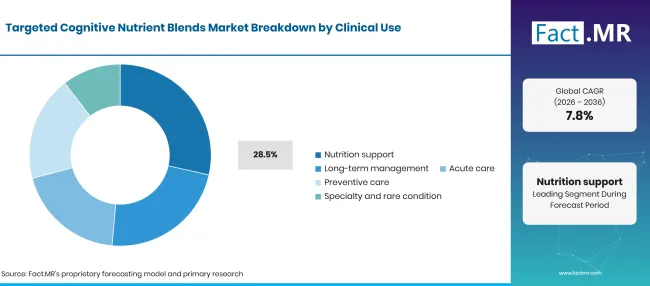
Targeted Cognitive Nutrient Blends Breakdown Clinical Use | Source: Fact.MR
Nutrition support represents 28.5% of targeted cognitive nutrient blends revenue in 2026, equivalent to USD 91.2 million, because patients with neurological conditions or inadequate dietary intake may require individually planned nutritional support. A December 2025 systematic review compared choline alphoscerate and citicoline in patients with dementia disorders, examining their effects on cognitive and clinical outcomes. The research reflects continued interest in choline-based compounds for cognitive health. Nutrition specialists are assessing combinations of DHA, B vitamins and choline according to individual nutritional needs and the available clinical evidence.
How are hospitals leading channel demand in the Targeted Cognitive Nutrient Blends Market?
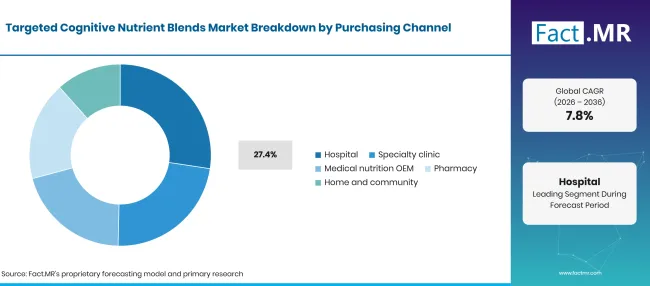
Targeted Cognitive Nutrient Blends Breakdown Purchasing Channel | Source: Fact.MR
Hospitals contribute 27.4% of targeted cognitive nutrient blends revenue in 2026, worth USD 87.7 million, as neurology, stroke and geriatric departments assess nutritional requirements during treatment and recovery. The American Heart Association and American Stroke Association published updated acute ischemic stroke management guidance in 2026, addressing swallowing difficulties and nutritional care. Hospital dietitians help determine appropriate oral supplements and enteral feeding arrangements for patients requiring additional support.
Targeted Cognitive Nutrient Blends Market-Drivers, Restraints & Trends
Drivers
Demand is increasing as ingredient suppliers report growth and new science. For example, Balchem reported in October 2026 that Human Nutrition and Health sales rose 8.1% to USD 188 million and cited new science supporting its VitaCholine ingredient. Ingredient developers are drawing on such branded actives.
Restraints
Demand for targeted cognitive nutrient blends is constrained by strict limits on cognitive health claims, uneven clinical evidence and cautious consumers. For example, dsm-firmenich noted ongoing cautious consumer behavior in North America in its third-quarter 2026 update, and EU-wide maximum levels for vitamins and minerals are being prepared.
Trend
Brain Health Across the Life Course Demand for cognitive blends for children, students, gamers and older adults is rising. Suppliers are tailoring doses and formats by age. dsm-firmenich reported strong momentum in Early Life Nutrition in November 2026, an area where DHA and choline support brain development.
Trend
Botanicals and Novel Peptides In October 2026, Rousselot introduced a collagen peptide aimed at cognitive clarity. Demand for blends that add botanical extracts and peptides to core nutrients is rising. Darling Ingredients stated that human clinical studies of Nextida NxCogni would begin in December 2026, so its October launch does not establish clinical effectiveness.
Targeted Cognitive Nutrient Blends Market by Analysis by Key Country
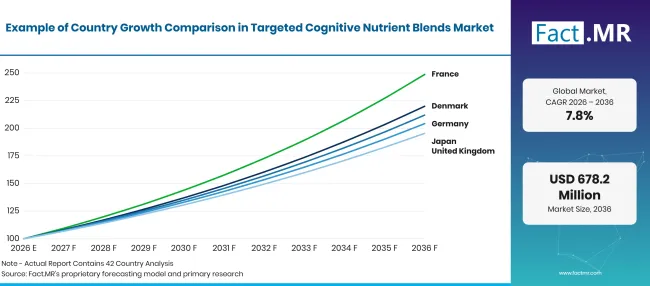
Targeted Cognitive Nutrient Blends Growth Index | Source: Fact.MR
| Country | CAGR (2026-2036) |
|---|---|
| France | 9.5% |
| Denmark | 8.2% |
| Germany | 7.8% |
| Japan | 7.4% |
| United Kingdom | 6.9% |
Source: Fact.MR analysis. Updated Nov 23, 2026
Source: Fact.MR analysis.
What is driving targeted cognitive nutrient blends demand in France?
In November 2026, Le Monde reported that France's supplement market had tripled in fifteen years to about EUR 3 billion, with stress and anxiety among the main reasons for use.
Demand for targeted cognitive nutrient blends in France is projected to grow at a 9.5% CAGR, the fastest among the five key countries, as pharmacies sell memory, focus and stress formulas and French hospitals use medical nutrition in geriatric care.
How is biosolutions expertise supporting targeted cognitive nutrient blends sales in Denmark?
Sales of targeted cognitive nutrient blends in Denmark are projected to grow at an 8.2% CAGR as Danish life science companies develop nutrition for healthy aging.
Novonesis reported 7% organic sales growth for the first nine months of 2026, with Food & Health Biosolutions up 9%. Specialty ingredient companies are working with Danish producers of medical nutrition and dietary supplements.
What is shaping targeted cognitive nutrient blends demand in Germany?
Demand for targeted cognitive nutrient blends in Germany is projected to grow at a 7.8% CAGR as an aging population buys brain health products through pharmacies.
Germany hosted Fi Europe in Frankfurt in November 2026, where health ingredients had a dedicated zone. Nutrition suppliers are supplying German pharmacy and medical nutrition brands.
How is a record elderly share shaping targeted cognitive nutrient blends sales in Japan?
Sales of targeted cognitive nutrient blends in Japan are projected to grow at a 7.4% CAGR as 36.24 million people are now aged 65 or over.
Japan's foods with function claims market, where memory support is a leading claim, grew 4% according to an August 2026 analysis. Ingredient developers are providing DHA, citicoline and plant extracts to Japanese makers.
Why is growth slower for targeted cognitive nutrient blends in the United Kingdom?
Demand for targeted cognitive nutrient blends in the United Kingdom is projected to grow at a 6.9% CAGR, the slowest among the five countries, as authorized claims for cognitive function are few and NHS bodies restrict prescribing of nutrition products.
The Food Standards Agency issued consumer guidance on supplements in June 2026. Blend formulators are selling mainly through retail and online channels.
Competitive Landscape for Targeted Cognitive Nutrient Blends Market
Ingredient research and formulation expertise are shaping competition in the targeted cognitive nutrient blends market. DSM-Firmenich offers DHA, vitamins and customized nutrient premixes, while Balchem supplies VitaCholine and specialized mineral ingredients. Kemin Industries focuses on plant-derived cognitive ingredients such as Neumentix. Glanbia Nutritionals supports customized premix development, whereas Nestlé Health Science serves clinical nutrition through its finished products.
Research into brain health and specialized nutrient combinations has gained attention since 2025. In 2026, Balchem highlighted new VitaCholine research examining brain network efficiency in postmenopausal women. The company also reported further scientific work on its branded nutrition ingredients in October. DSM-Firmenich increased its 2026 like-for-like sales growth outlook to around 5% in November, reflecting broader business performance. These developments indicate continued commercial interest in scientifically supported nutrition ingredients.
Recent Developments
- In July 2026, DSM-Firmenich partnered with Nous to commercialize Koncentra, a botanical ingredient developed for energy, focus, and mood support, while planning clinical research to evaluate its cognitive and physical performance benefits.
Key Players in Targeted Cognitive Nutrient Blends Market
Key companies operating in the market include DSM-Firmenich, Balchem, Kemin Industries, Glanbia Nutritionals, and Nestlé Health Science.
- DSM-Firmenich
- Balchem
- Kemin Industries
- Glanbia Nutritionals
- Nestlé Health Science
Bibliography
- Agence nationale de sécurité sanitaire de l’alimentation, de l’environnement et du travail. (2026, November 9). Avis relatif à « l’évaluation d’une quantité journalière maximale de 5 g de créatine dans les compléments alimentaires ».
- Balchem Corporation. (2026, October 23). Balchem reports third quarter 2026 financial results.
- Darling Ingredients Inc. (2026, October 20). Darling Ingredients introduces Nextida® NxCogni™, the first targeted collagen peptide designed to support clarity and cognitive resilience.
- DSM-Firmenich. (2026, July 15). dsm-firmenich and Nous partner to bring novel functional ingredient, Koncentra to market for energy, focus, and mood support.
- dsm-firmenich. (2026, November 4). dsm-firmenich reports Q3 2026 trading update.
- International Osteoporosis Foundation. (2026, October 20). World Osteoporosis Day 2026.
- Novonesis. (2026, November 5). Interim report for the first nine months of 2026.
- Statistics Bureau of Japan. (2026, September 20). Statistical topics No. 149: Older people in Japan, based on statistics.
- Synadiet. (2026, February 12). Santé mentale, numérique, pouvoir d’achat, compléments alimentaires : la santé du quotidien devient une priorité pour les Français.
- U.S. Food and Drug Administration. (2026, October 19). FDA issues guidance on identity and safety information for new dietary ingredient notifications.
- U.S. Food and Drug Administration. (2026, November 16). FDA issues proposed rule on NAC products as dietary supplements.
Segmentation
Scope of Report
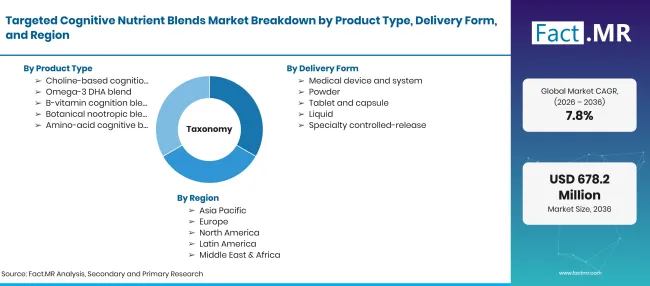
Targeted Cognitive Nutrient Blends Taxonomy | Source: Fact.MR
| Items | Values |
|---|---|
| Quantitative Units (2026) | USD 320.0 Million |
| Product Type | Choline-based cognition, Botanical nootropic blend, Omega-3 DHA blend, B-vitamin cognition blend, Amino-acid cognitive blend |
| Delivery Form | Medical device and system, Powder, Tablet and capsule, Specialty controlled-release, Liquid |
| Clinical Use | Nutrition support, Acute care, Preventive care, Specialty and rare condition, Long-term management |
| Purchasing Channel | Hospital, Home and community, Medical nutrition OEM, Pharmacy, Specialty clinic |
| Regions Covered | North America, Latin America, Europe, East Asia, South Asia and Pacific, Middle East & Africa |
| Countries Covered | France, Denmark, Germany, Japan, United Kingdom, and other countries |
| Key Companies Profiled | DSM-Firmenich, Balchem, Kemin Industries, Glanbia Nutritionals, Nestlé Health Science |
| Additional Attributes | Dollar revenue in the Targeted Cognitive Nutrient Blends Market is segmented by product type (choline-based, botanical nootropic, omega-3 DHA, B-vitamin, amino-acid cognitive blend), delivery form, clinical use, purchasing channel and region. |
Source: Fact.MR analysis. Updated Nov 23, 2026
Targeted Cognitive Nutrient Blends Market by Segments
-
Product Type
- Choline-based cognition
- Botanical nootropic blend
- Omega-3 DHA blend
- B-vitamin cognition blend
- Amino-acid cognitive blend
-
Delivery Form
- Medical device and system
- Powder
- Tablet and capsule
- Specialty controlled-release
- Liquid
-
Clinical Use
- Nutrition support
- Acute care
- Preventive care
- Specialty and rare condition
- Long-term management
-
Purchasing Channel
- Hospital
- Home and community
- Medical nutrition OEM
- Pharmacy
- Specialty clinic
-
Region:
- North America
- United States
- Canada
- Mexico
- Europe
- Germany
- United Kingdom
- France
- Italy
- Spain
- Rest of Europe
- Asia Pacific
- China
- India
- Japan
- South Korea
- Australia
- Rest of Asia Pacific
- Latin America
- Brazil
- Mexico
- Argentina
- Rest of Latin America
- Middle East & Africa
- GCC Countries
- South Africa
- Rest of Middle East & Africa
- North America
Frequently Asked Questions
How big is the global Targeted Cognitive Nutrient Blends Market in 2026?
What will be the size of the Targeted Cognitive Nutrient Blends Market by 2036?
How fast will the Targeted Cognitive Nutrient Blends Market grow during the forecast period?
Which product type segment holds the largest share of the Targeted Cognitive Nutrient Blends Market?
Who worked on this report


Preview the report firsthand - request a free sample
Free SampleGet the brochure for pricing and purchase details
Download PDF