Urban Air Autonomous eVTOLs Market

Urban Air Autonomous eVTOLs Market Size and Share Forecast Outlook 2026 to 2036

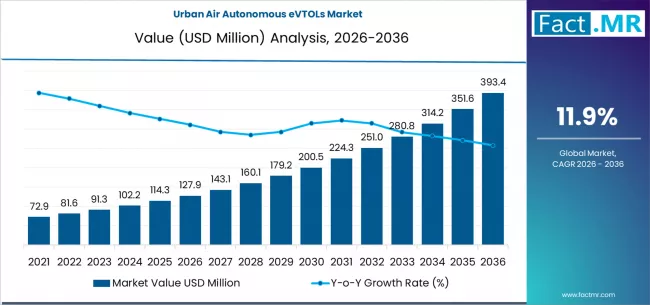
Urban air autonomous evtols market is projected to grow from USD 127.9 million in 2026 to USD 393.4 million by 2036, at a CAGR of 11.9%. Cargo logistics will dominate with a 34.0% market share, while piloted will lead the autonomy segment with a 58.0% share.

Urban Air Autonomous eVTOLs Market Forecast and Outlook 2026 to 2036

The global market for urban air autonomous eVTOLs is projected for exponential growth, rising from USD 127.90 million in 2026 to USD 393.41 million by 2036, achieving a remarkable CAGR of 11.9%. This surge is propelled by the convergence of urban mobility challenges, advancements in electric propulsion, and sophisticated autonomy software.The vision of on-demand, point-to-point aerial transit within and between cities is moving from concept to reality, driven by the need to decongest ground infrastructure and reduce urban commute times.

Key Takeaways from the Urban Air Autonomous eVTOLs Market

  • Market Value for 2026: USD 127.90 Million
  • Market Value for 2036: USD 393.41 Million
  • Forecast CAGR (2026 to 2036): 11.9%
  • Leading Use Case Segment (2026): Cargo Logistics (34%)
  • Leading Autonomy Segment (2026): Piloted (58%)
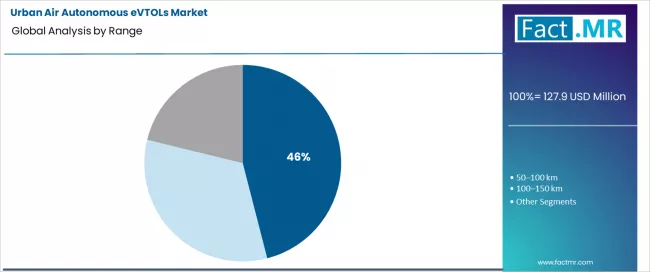
  • Leading Range Segment (2026): <50 km (46%)
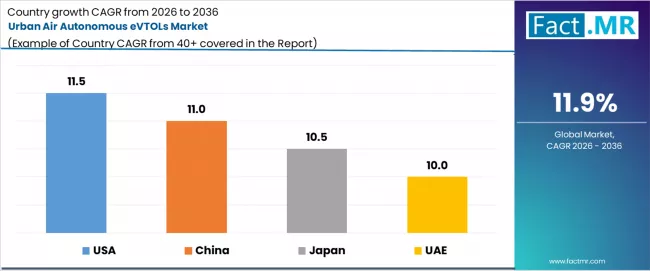
  • Key Growth Countries: USA (11.50% CAGR), China (11.00% CAGR), Japan (10.50% CAGR), UAE (10.00% CAGR)
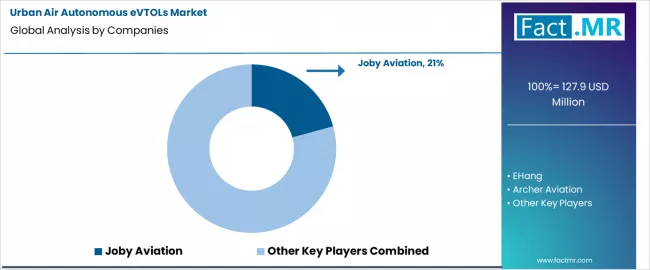
  • Key Players in the Market: Joby Aviation, EHang, Archer Aviation, Volocopter, Lilium, AutoFlight

Urban Air Autonomous Evtols Market Market Value Analysis

Initial deployments will focus on niche applications, paving the way for broader passenger mobility as regulatory frameworks mature and public acceptance grows. This market represents a foundational shift in transportation, merging aerospace, automotive, and tech industries to create a new three-dimensional layer of urban mobility.

Critical to this evolution is the parallel development of supporting infrastructure and ecosystem services. The market's scalability hinges on establishing networks of vertiports with integrated charging systems and their seamless incorporation into next-generation, digital air traffic management frameworks.

The creation of viable business models, robust maintenance networks, and comprehensive pilot training programs for initial operations are essential to transition from demonstrator projects to sustained commercial service. Strategic partnerships between eVTOL manufacturers, cities, energy providers, and regulatory bodies will be the defining factor in achieving operational scale and economic viability within the forecast period.

Metric

Metric Value
Market Value (2026) USD 127.90 Million
Market Forecast Value (2036) USD 393.41 Million
Forecast CAGR (2026 to 2036) 11.9%

Category

Category Segments
Use Case Cargo Logistics, Emergency/Medical, Public Safety, Passenger Shuttle, Government Mobility
Autonomy Piloted, Pilot-Assist, Semi-Autonomous
Range <50 km, 50-100 km, 100-150 km
Region North America, Latin America, Western Europe, Eastern Europe, East Asia, South Asia & Pacific, MEA

Segmental Analysis

By Use Case, Which Application Provides the Earhest Path to Revenue?

Urban Air Autonomous Evtols Market Analysis By Use Case

Cargo logistics leads the use case segment with a 34% share. This application faces fewer regulatory hurdles related to passenger safety and is driven by an immediate need for rapid, middle-mile delivery of high-value goods and medical supplies in congested urban and remote areas.

The business case is clear, focusing on reducing delivery times and operational costs for logistics companies, making it a pragmatic first step for eVTOL commercialization and proving operational reliability.

By Autonomy, What is the Initial Stance on Piloting?

Urban Air Autonomous Evtols Market Analysis By Autonomy

Piolted urban air autonomous eVTOLs dominate with a 58% share, indicating that regulatory authorities and the industry are prioritizing safety through human oversight in initial operations.

Early eVTOL services will require licensed pilots to build public trust, manage complex urban airspace, and handle anomalous situations. This approach allows for the gradual introduction and validation of autonomous systems while ensuring compliance with stringent aviation safety standards.

By Range, What is the Focus for Initial Urban Operations?

Urban Air Autonomous Evtols Market Analysis By Range

The <50 km range segment holds the largest share at 46%. This aligns perfectly with the core urban and suburban use case, covering intracity routes, airport shuttles, and connections between urban centers and outlying hubs.

Shorter ranges allow for optimized, lighter aircraft designs with smaller battery packs, supporting more frequent take-offs and landings and aligning with the initial deployment of vertiport infrastructure in dense metropolitan areas.

What the Drivers, Restraints, Challenges, and Opportunities associated with the Urban Air Autonomous eVTOLs Market?

Urban air mobility development is being shaped by a mix of structural pressures, technical readiness, and institutional constraints. Severe and worsening ground congestion in large cities is creating measurable economic losses and social strain, which is accelerating interest in alternative aerial transit layers. This pressure is being reinforced by the maturation of enabling technologies such as high density batteries, quiet electric propulsion systems, and lightweight composite airframes that make short range urban flight operationally viable. At the same time, progress is being constrained by protracted and uncertain regulatory certification pathways for novel aircraft categories and autonomous flight operations in dense urban airspace.

High upfront capital requirements for vertiport networks and integrated air traffic management systems also remain a limiting factor. Clear opportunity areas are being identified in the integration of air mobility services into multimodal transit applications, enabling seamless journey planning. High urgency use cases such as medical logistics and organ transport are also expected to act as early adoption anchors. Operationally, the sector is moving gradually from piloted to assist based and ultimately autonomous models, while aircraft agnostic centralized traffic management platforms gain prominence.

Analysis of the Urban Air Autonomous eVTOLs Market by Key Countries

Urban Air Autonomous Evtols Market Cagr Analysis By Country

Country CAGR (2026-2036)
USA 11.50%
China 11.00%
Japan 10.50%
UAE 10.00%

How does the USA's Regulatory and Investment Leadership Shape Its Market?

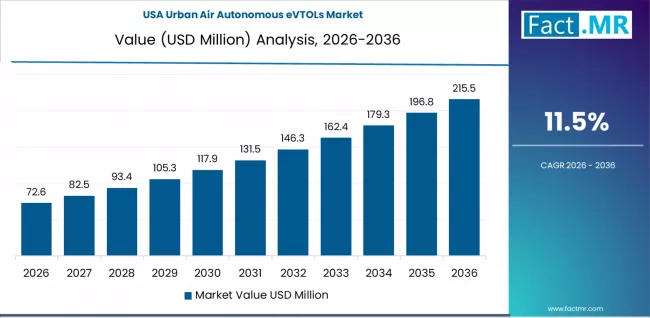
Urban Air Autonomous Evtols Market Country Value Analysis

The USA's leading 11.50% CAGR is driven by proactive FAA rulemaking for novel aircraft (Part 23) and air carrier operations (Part 135), creating a clear, albeit rigorous, certification pathway. Significant venture capital and corporate investment fuel a competitive ecosystem of developers like Joby and Archer.

These companies collaborate closely with regulators on validation campaigns, while NASA contributes critical research on air traffic management for dense urban environments. This synergy between capital, innovation, and structured regulation across ideal early-adopter metropolitan corridors creates a comprehensive ecosystem for testing, certification, and the foundation for scaled commercial deployment.

What drives China's Integrated and Rapid Development Approach?

China's 11.00% growth is fueled by top-down government support that strategically integrates eVTOLs into national smart city and transportation master plans. Companies like EHang benefit from a regulatory environment that can streamline specifications and accelerate trial approvals in designated zones.

The market strategy is dual-focused: addressing domestic mass mobility in megacities while developing export-ready, turnkey eVTOL solutions for global markets. This ambition is underpinned by the country's unparalleled manufacturing scale and supply chain dominance in batteries and electronics, enabling rapid prototyping and cost-competitive production.

Why is Japan a Key Market for High-Density Urban Solutions?

Japan's 10.50% CAGR is linked to its pressing demographic and geographic challenges, including dense megacities, an aging population in remote areas, and mountainous terrain. The Flight Revolution initiative actively funds and promotes eVTOLs as a solution for regional revitalization, emergency medical services, and connecting islands.

Japanese industry consortia, involving both aerospace giants and tech firms, are prioritizing extreme safety, ultra-low noise profiles for community acceptance, and seamless digital integration with the nation's extensive and punctual public transit networks, creating a model for high-density urban integration.

How does the UAE's Vision as an Early Adopter Influence Growth?

The UAE's 10.00% growth stems from a deliberate national strategy to be a global first-mover, leveraging its centralized governance, controlled airspace, and modern infrastructure. Dubai's Road and Transport Authority (RTA) has set explicit targets for initial air taxi services, using the city as a controlled living laboratory.

This flagship-event driven approach, combined with partnerships with leading OEMs, aims not only to launch a domestic service but to establish operational, regulatory, and public acceptance benchmarks for the wider Middle East region, attracting further investment and technology deployment.

Competitive Landscape of the Urban Air Autonomous eVTOLs Market

Urban Air Autonomous Evtols Market Analysis By Company

The competitive landscape is a dynamic mix of well-funded startups and established aerospace players. Competition centers on achieving full type certification first, demonstrating safe and reliable flight operations, and securing partnerships with cities, airlines, and infrastructure developers.

Success hinges not just on aircraft technology, but on building a viable ecosystem, including partnerships for maintenance, charging, and public acceptance. The race is to transition from successful demonstration to certified, commercial operation.

Key Players in the Urban Air Autonomous eVTOLs Market

  • Joby Aviation
  • EHang
  • Archer Aviation
  • Volocopter
  • Lilium
  • AutoFlight

Scope of Report

Items Values
Quantitative Units USD Million
Use Case Cargo Logistics, Emergency/Medical, Public Safety, Passenger Shuttle, Govt Mobility
Autonomy Piloted, Pilot-Assist, Semi-Autonomous
Range <50 km, 50-100 km, 100-150 km
Key Countries USA, China, Japan, UAE
Key Companies Joby Aviation, EHang, Archer Aviation, Volocopter, Lilium, AutoFlight
Additional Analysis Noise pollution impact studies and community acceptance modeling; battery swap vs. fast-charge infrastructure analysis; insurance and liability models for autonomous passenger operations; cybersecurity assessment for connected eVTOLs and ground control; comparative analysis of lift-plus-cruise vs. vectored thrust vs. multi-rotor vehicle architectures.

Market by Segments

  • Use Case :

    • Cargo Logistics
    • Emergency/Medical
    • Public Safety
    • Passenger Shuttle
    • Government Mobility
  • Autonomy :

    • Piloted
    • Pilot-Assist
    • Semi-Autonomous
  • Range :

    • <50 km
    • 50-100 km
    • 100-150 km
  • Region :

    • North America
      • USA
      • Canada
    • Latin America
      • Brazil
      • Mexico
      • Argentina
      • Rest of Latin America
    • Western Europe
      • Germany
      • France
      • Italy
      • Spain
      • UK
      • BENELUX
      • Rest of Western Europe
    • Eastern Europe
      • Russia
      • Poland
      • Czech Republic
      • Rest of Eastern Europe
    • East Asia
      • China
      • Japan
      • South Korea
      • Rest of East Asia
    • South Asia & Pacific
      • India
      • ASEAN
      • Australia
      • Rest of South Asia & Pacific
    • MEA
      • GCC Countries
      • South Africa
      • Turkiye
      • Rest of MEA

References

  • Federal Aviation Administration (FAA). (2024). Innovative Air Mobility (IAM) Implementation Plan. U.S. Department of Transportation.
  • Goyal, R., & Smith, J. R. (2023). The Urban Sky: The Promise and Challenge of eVTOLs. MIT Press.
  • International Civil Aviation Organization (ICAO). (2024). Unified Framework for the Certification of eVTOL Aircraft. ICAO Publications.
  • Joby Aviation. (2024). Pre-Type Certification Flight Test Report. Company Publication.
  • McKinsey & Company. (2024). Advanced Air Mobility: Market Evolution and Consumer Adoption Scenarios.
  • Vertical Flight Society. (2024). World eVTOL Aircraft Directory: Project Profiles and Technology Assessment.

Table of Content

  1. Executive Summary
    • Global Market Outlook
    • Demand to side Trends
    • Supply to side Trends
    • Technology Roadmap Analysis
    • Analysis and Recommendations
  2. Market Overview
    • Market Coverage / Taxonomy
    • Market Definition / Scope / Limitations
  3. Market Background
    • Market Dynamics
      • Drivers
      • Restraints
      • Opportunity
      • Trends
    • Scenario Forecast
      • Demand in Optimistic Scenario
      • Demand in Likely Scenario
      • Demand in Conservative Scenario
    • Opportunity Map Analysis
    • Product Life Cycle Analysis
    • Supply Chain Analysis
    • Investment Feasibility Matrix
    • Value Chain Analysis
    • PESTLE and Porter’s Analysis
    • Regulatory Landscape
    • Regional Parent Market Outlook
    • Production and Consumption Statistics
    • Import and Export Statistics
  4. Global Market Analysis 2021 to 2025 and Forecast, 2026 to 2036
    • Historical Market Size Value (USD Million) Analysis, 2021 to 2025
    • Current and Future Market Size Value (USD Million) Projections, 2026 to 2036
      • Y to o to Y Growth Trend Analysis
      • Absolute $ Opportunity Analysis
  5. Global Market Pricing Analysis 2021 to 2025 and Forecast 2026 to 2036
  6. Global Market Analysis 2021 to 2025 and Forecast 2026 to 2036, By Use Case
    • Introduction / Key Findings
    • Historical Market Size Value (USD Million) Analysis By Use Case, 2021 to 2025
    • Current and Future Market Size Value (USD Million) Analysis and Forecast By Use Case, 2026 to 2036
      • Cargo logistics
      • Emergency / medical
      • Public safety
      • Passenger shuttle
      • Govt mobility
    • Y to o to Y Growth Trend Analysis By Use Case, 2021 to 2025
    • Absolute $ Opportunity Analysis By Use Case, 2026 to 2036
  7. Global Market Analysis 2021 to 2025 and Forecast 2026 to 2036, By Autonomy
    • Introduction / Key Findings
    • Historical Market Size Value (USD Million) Analysis By Autonomy, 2021 to 2025
    • Current and Future Market Size Value (USD Million) Analysis and Forecast By Autonomy, 2026 to 2036
      • Piloted
      • Pilot-assist
      • Semi-autonomous
    • Y to o to Y Growth Trend Analysis By Autonomy, 2021 to 2025
    • Absolute $ Opportunity Analysis By Autonomy, 2026 to 2036
  8. Global Market Analysis 2021 to 2025 and Forecast 2026 to 2036, By Range
    • Introduction / Key Findings
    • Historical Market Size Value (USD Million) Analysis By Range, 2021 to 2025
    • Current and Future Market Size Value (USD Million) Analysis and Forecast By Range, 2026 to 2036
      • <50 km
      • 50-100 km
      • 100-150 km
    • Y to o to Y Growth Trend Analysis By Range, 2021 to 2025
    • Absolute $ Opportunity Analysis By Range, 2026 to 2036
  9. Global Market Analysis 2021 to 2025 and Forecast 2026 to 2036, By Region
    • Introduction
    • Historical Market Size Value (USD Million) Analysis By Region, 2021 to 2025
    • Current Market Size Value (USD Million) Analysis and Forecast By Region, 2026 to 2036
      • North America
      • Latin America
      • Western Europe
      • Eastern Europe
      • East Asia
      • South Asia and Pacific
      • Middle East & Africa
    • Market Attractiveness Analysis By Region
  10. North America Market Analysis 2021 to 2025 and Forecast 2026 to 2036, By Country
    • Historical Market Size Value (USD Million) Trend Analysis By Market Taxonomy, 2021 to 2025
    • Market Size Value (USD Million) Forecast By Market Taxonomy, 2026 to 2036
      • By Country
        • USA
        • Canada
        • Mexico
      • By Use Case
      • By Autonomy
      • By Range
    • Market Attractiveness Analysis
      • By Country
      • By Use Case
      • By Autonomy
      • By Range
    • Key Takeaways
  11. Latin America Market Analysis 2021 to 2025 and Forecast 2026 to 2036, By Country
    • Historical Market Size Value (USD Million) Trend Analysis By Market Taxonomy, 2021 to 2025
    • Market Size Value (USD Million) Forecast By Market Taxonomy, 2026 to 2036
      • By Country
        • Brazil
        • Chile
        • Rest of Latin America
      • By Use Case
      • By Autonomy
      • By Range
    • Market Attractiveness Analysis
      • By Country
      • By Use Case
      • By Autonomy
      • By Range
    • Key Takeaways
  12. Western Europe Market Analysis 2021 to 2025 and Forecast 2026 to 2036, By Country
    • Historical Market Size Value (USD Million) Trend Analysis By Market Taxonomy, 2021 to 2025
    • Market Size Value (USD Million) Forecast By Market Taxonomy, 2026 to 2036
      • By Country
        • Germany
        • UK
        • Italy
        • Spain
        • France
        • Nordic
        • BENELUX
        • Rest of Western Europe
      • By Use Case
      • By Autonomy
      • By Range
    • Market Attractiveness Analysis
      • By Country
      • By Use Case
      • By Autonomy
      • By Range
    • Key Takeaways
  13. Eastern Europe Market Analysis 2021 to 2025 and Forecast 2026 to 2036, By Country
    • Historical Market Size Value (USD Million) Trend Analysis By Market Taxonomy, 2021 to 2025
    • Market Size Value (USD Million) Forecast By Market Taxonomy, 2026 to 2036
      • By Country
        • Russia
        • Poland
        • Hungary
        • Balkan & Baltic
        • Rest of Eastern Europe
      • By Use Case
      • By Autonomy
      • By Range
    • Market Attractiveness Analysis
      • By Country
      • By Use Case
      • By Autonomy
      • By Range
    • Key Takeaways
  14. East Asia Market Analysis 2021 to 2025 and Forecast 2026 to 2036, By Country
    • Historical Market Size Value (USD Million) Trend Analysis By Market Taxonomy, 2021 to 2025
    • Market Size Value (USD Million) Forecast By Market Taxonomy, 2026 to 2036
      • By Country
        • China
        • Japan
        • South Korea
      • By Use Case
      • By Autonomy
      • By Range
    • Market Attractiveness Analysis
      • By Country
      • By Use Case
      • By Autonomy
      • By Range
    • Key Takeaways
  15. South Asia and Pacific Market Analysis 2021 to 2025 and Forecast 2026 to 2036, By Country
    • Historical Market Size Value (USD Million) Trend Analysis By Market Taxonomy, 2021 to 2025
    • Market Size Value (USD Million) Forecast By Market Taxonomy, 2026 to 2036
      • By Country
        • India
        • ASEAN
        • Australia & New Zealand
        • Rest of South Asia and Pacific
      • By Use Case
      • By Autonomy
      • By Range
    • Market Attractiveness Analysis
      • By Country
      • By Use Case
      • By Autonomy
      • By Range
    • Key Takeaways
  16. Middle East & Africa Market Analysis 2021 to 2025 and Forecast 2026 to 2036, By Country
    • Historical Market Size Value (USD Million) Trend Analysis By Market Taxonomy, 2021 to 2025
    • Market Size Value (USD Million) Forecast By Market Taxonomy, 2026 to 2036
      • By Country
        • Kingdom of Saudi Arabia
        • Other GCC Countries
        • Turkiye
        • South Africa
        • Other African Union
        • Rest of Middle East & Africa
      • By Use Case
      • By Autonomy
      • By Range
    • Market Attractiveness Analysis
      • By Country
      • By Use Case
      • By Autonomy
      • By Range
    • Key Takeaways
  17. Key Countries Market Analysis
    • USA
      • Pricing Analysis
      • Market Share Analysis, 2025
        • By Use Case
        • By Autonomy
        • By Range
    • Canada
      • Pricing Analysis
      • Market Share Analysis, 2025
        • By Use Case
        • By Autonomy
        • By Range
    • Mexico
      • Pricing Analysis
      • Market Share Analysis, 2025
        • By Use Case
        • By Autonomy
        • By Range
    • Brazil
      • Pricing Analysis
      • Market Share Analysis, 2025
        • By Use Case
        • By Autonomy
        • By Range
    • Chile
      • Pricing Analysis
      • Market Share Analysis, 2025
        • By Use Case
        • By Autonomy
        • By Range
    • Germany
      • Pricing Analysis
      • Market Share Analysis, 2025
        • By Use Case
        • By Autonomy
        • By Range
    • UK
      • Pricing Analysis
      • Market Share Analysis, 2025
        • By Use Case
        • By Autonomy
        • By Range
    • Italy
      • Pricing Analysis
      • Market Share Analysis, 2025
        • By Use Case
        • By Autonomy
        • By Range
    • Spain
      • Pricing Analysis
      • Market Share Analysis, 2025
        • By Use Case
        • By Autonomy
        • By Range
    • France
      • Pricing Analysis
      • Market Share Analysis, 2025
        • By Use Case
        • By Autonomy
        • By Range
    • India
      • Pricing Analysis
      • Market Share Analysis, 2025
        • By Use Case
        • By Autonomy
        • By Range
    • ASEAN
      • Pricing Analysis
      • Market Share Analysis, 2025
        • By Use Case
        • By Autonomy
        • By Range
    • Australia & New Zealand
      • Pricing Analysis
      • Market Share Analysis, 2025
        • By Use Case
        • By Autonomy
        • By Range
    • China
      • Pricing Analysis
      • Market Share Analysis, 2025
        • By Use Case
        • By Autonomy
        • By Range
    • Japan
      • Pricing Analysis
      • Market Share Analysis, 2025
        • By Use Case
        • By Autonomy
        • By Range
    • South Korea
      • Pricing Analysis
      • Market Share Analysis, 2025
        • By Use Case
        • By Autonomy
        • By Range
    • Russia
      • Pricing Analysis
      • Market Share Analysis, 2025
        • By Use Case
        • By Autonomy
        • By Range
    • Poland
      • Pricing Analysis
      • Market Share Analysis, 2025
        • By Use Case
        • By Autonomy
        • By Range
    • Hungary
      • Pricing Analysis
      • Market Share Analysis, 2025
        • By Use Case
        • By Autonomy
        • By Range
    • Kingdom of Saudi Arabia
      • Pricing Analysis
      • Market Share Analysis, 2025
        • By Use Case
        • By Autonomy
        • By Range
    • Turkiye
      • Pricing Analysis
      • Market Share Analysis, 2025
        • By Use Case
        • By Autonomy
        • By Range
    • South Africa
      • Pricing Analysis
      • Market Share Analysis, 2025
        • By Use Case
        • By Autonomy
        • By Range
  18. Market Structure Analysis
    • Competition Dashboard
    • Competition Benchmarking
    • Market Share Analysis of Top Players
      • By Regional
      • By Use Case
      • By Autonomy
      • By Range
  19. Competition Analysis
    • Competition Deep Dive
      • Joby Aviation
        • Overview
        • Product Portfolio
        • Profitability by Market Segments (Product/Age /Sales Channel/Region)
        • Sales Footprint
        • Strategy Overview
          • Marketing Strategy
          • Product Strategy
          • Channel Strategy
      • EHang
      • Archer Aviation
      • Volocopter
      • Lilium
      • AutoFlight
  20. Assumptions & Acronyms Used
  21. Research Methodology

List Of Table

  • Table 1: Global Market Value (USD Million) Forecast by Region, 2021 to 2036
  • Table 2: Global Market Value (USD Million) Forecast by Use Case, 2021 to 2036
  • Table 3: Global Market Value (USD Million) Forecast by Autonomy, 2021 to 2036
  • Table 4: Global Market Value (USD Million) Forecast by Range, 2021 to 2036
  • Table 5: North America Market Value (USD Million) Forecast by Country, 2021 to 2036
  • Table 6: North America Market Value (USD Million) Forecast by Use Case, 2021 to 2036
  • Table 7: North America Market Value (USD Million) Forecast by Autonomy, 2021 to 2036
  • Table 8: North America Market Value (USD Million) Forecast by Range, 2021 to 2036
  • Table 9: Latin America Market Value (USD Million) Forecast by Country, 2021 to 2036
  • Table 10: Latin America Market Value (USD Million) Forecast by Use Case, 2021 to 2036
  • Table 11: Latin America Market Value (USD Million) Forecast by Autonomy, 2021 to 2036
  • Table 12: Latin America Market Value (USD Million) Forecast by Range, 2021 to 2036
  • Table 13: Western Europe Market Value (USD Million) Forecast by Country, 2021 to 2036
  • Table 14: Western Europe Market Value (USD Million) Forecast by Use Case, 2021 to 2036
  • Table 15: Western Europe Market Value (USD Million) Forecast by Autonomy, 2021 to 2036
  • Table 16: Western Europe Market Value (USD Million) Forecast by Range, 2021 to 2036
  • Table 17: Eastern Europe Market Value (USD Million) Forecast by Country, 2021 to 2036
  • Table 18: Eastern Europe Market Value (USD Million) Forecast by Use Case, 2021 to 2036
  • Table 19: Eastern Europe Market Value (USD Million) Forecast by Autonomy, 2021 to 2036
  • Table 20: Eastern Europe Market Value (USD Million) Forecast by Range, 2021 to 2036
  • Table 21: East Asia Market Value (USD Million) Forecast by Country, 2021 to 2036
  • Table 22: East Asia Market Value (USD Million) Forecast by Use Case, 2021 to 2036
  • Table 23: East Asia Market Value (USD Million) Forecast by Autonomy, 2021 to 2036
  • Table 24: East Asia Market Value (USD Million) Forecast by Range, 2021 to 2036
  • Table 25: South Asia and Pacific Market Value (USD Million) Forecast by Country, 2021 to 2036
  • Table 26: South Asia and Pacific Market Value (USD Million) Forecast by Use Case, 2021 to 2036
  • Table 27: South Asia and Pacific Market Value (USD Million) Forecast by Autonomy, 2021 to 2036
  • Table 28: South Asia and Pacific Market Value (USD Million) Forecast by Range, 2021 to 2036
  • Table 29: Middle East & Africa Market Value (USD Million) Forecast by Country, 2021 to 2036
  • Table 30: Middle East & Africa Market Value (USD Million) Forecast by Use Case, 2021 to 2036
  • Table 31: Middle East & Africa Market Value (USD Million) Forecast by Autonomy, 2021 to 2036
  • Table 32: Middle East & Africa Market Value (USD Million) Forecast by Range, 2021 to 2036

List Of Figures

  • Figure 1: Global Market Pricing Analysis
  • Figure 2: Global Market Value (USD Million) Forecast 2021 to 2036
  • Figure 3: Global Market Value Share and BPS Analysis by Use Case, 2026 and 2036
  • Figure 4: Global Market Y to o to Y Growth Comparison by Use Case, 2026 to 2036
  • Figure 5: Global Market Attractiveness Analysis by Use Case
  • Figure 6: Global Market Value Share and BPS Analysis by Autonomy, 2026 and 2036
  • Figure 7: Global Market Y to o to Y Growth Comparison by Autonomy, 2026 to 2036
  • Figure 8: Global Market Attractiveness Analysis by Autonomy
  • Figure 9: Global Market Value Share and BPS Analysis by Range, 2026 and 2036
  • Figure 10: Global Market Y to o to Y Growth Comparison by Range, 2026 to 2036
  • Figure 11: Global Market Attractiveness Analysis by Range
  • Figure 12: Global Market Value (USD Million) Share and BPS Analysis by Region, 2026 and 2036
  • Figure 13: Global Market Y to o to Y Growth Comparison by Region, 2026 to 2036
  • Figure 14: Global Market Attractiveness Analysis by Region
  • Figure 15: North America Market Incremental Dollar Opportunity, 2026 to 2036
  • Figure 16: Latin America Market Incremental Dollar Opportunity, 2026 to 2036
  • Figure 17: Western Europe Market Incremental Dollar Opportunity, 2026 to 2036
  • Figure 18: Eastern Europe Market Incremental Dollar Opportunity, 2026 to 2036
  • Figure 19: East Asia Market Incremental Dollar Opportunity, 2026 to 2036
  • Figure 20: South Asia and Pacific Market Incremental Dollar Opportunity, 2026 to 2036
  • Figure 21: Middle East & Africa Market Incremental Dollar Opportunity, 2026 to 2036
  • Figure 22: North America Market Value Share and BPS Analysis by Country, 2026 and 2036
  • Figure 23: North America Market Value Share and BPS Analysis by Use Case, 2026 and 2036
  • Figure 24: North America Market Y to o to Y Growth Comparison by Use Case, 2026 to 2036
  • Figure 25: North America Market Attractiveness Analysis by Use Case
  • Figure 26: North America Market Value Share and BPS Analysis by Autonomy, 2026 and 2036
  • Figure 27: North America Market Y to o to Y Growth Comparison by Autonomy, 2026 to 2036
  • Figure 28: North America Market Attractiveness Analysis by Autonomy
  • Figure 29: North America Market Value Share and BPS Analysis by Range, 2026 and 2036
  • Figure 30: North America Market Y to o to Y Growth Comparison by Range, 2026 to 2036
  • Figure 31: North America Market Attractiveness Analysis by Range
  • Figure 32: Latin America Market Value Share and BPS Analysis by Country, 2026 and 2036
  • Figure 33: Latin America Market Value Share and BPS Analysis by Use Case, 2026 and 2036
  • Figure 34: Latin America Market Y to o to Y Growth Comparison by Use Case, 2026 to 2036
  • Figure 35: Latin America Market Attractiveness Analysis by Use Case
  • Figure 36: Latin America Market Value Share and BPS Analysis by Autonomy, 2026 and 2036
  • Figure 37: Latin America Market Y to o to Y Growth Comparison by Autonomy, 2026 to 2036
  • Figure 38: Latin America Market Attractiveness Analysis by Autonomy
  • Figure 39: Latin America Market Value Share and BPS Analysis by Range, 2026 and 2036
  • Figure 40: Latin America Market Y to o to Y Growth Comparison by Range, 2026 to 2036
  • Figure 41: Latin America Market Attractiveness Analysis by Range
  • Figure 42: Western Europe Market Value Share and BPS Analysis by Country, 2026 and 2036
  • Figure 43: Western Europe Market Value Share and BPS Analysis by Use Case, 2026 and 2036
  • Figure 44: Western Europe Market Y to o to Y Growth Comparison by Use Case, 2026 to 2036
  • Figure 45: Western Europe Market Attractiveness Analysis by Use Case
  • Figure 46: Western Europe Market Value Share and BPS Analysis by Autonomy, 2026 and 2036
  • Figure 47: Western Europe Market Y to o to Y Growth Comparison by Autonomy, 2026 to 2036
  • Figure 48: Western Europe Market Attractiveness Analysis by Autonomy
  • Figure 49: Western Europe Market Value Share and BPS Analysis by Range, 2026 and 2036
  • Figure 50: Western Europe Market Y to o to Y Growth Comparison by Range, 2026 to 2036
  • Figure 51: Western Europe Market Attractiveness Analysis by Range
  • Figure 52: Eastern Europe Market Value Share and BPS Analysis by Country, 2026 and 2036
  • Figure 53: Eastern Europe Market Value Share and BPS Analysis by Use Case, 2026 and 2036
  • Figure 54: Eastern Europe Market Y to o to Y Growth Comparison by Use Case, 2026 to 2036
  • Figure 55: Eastern Europe Market Attractiveness Analysis by Use Case
  • Figure 56: Eastern Europe Market Value Share and BPS Analysis by Autonomy, 2026 and 2036
  • Figure 57: Eastern Europe Market Y to o to Y Growth Comparison by Autonomy, 2026 to 2036
  • Figure 58: Eastern Europe Market Attractiveness Analysis by Autonomy
  • Figure 59: Eastern Europe Market Value Share and BPS Analysis by Range, 2026 and 2036
  • Figure 60: Eastern Europe Market Y to o to Y Growth Comparison by Range, 2026 to 2036
  • Figure 61: Eastern Europe Market Attractiveness Analysis by Range
  • Figure 62: East Asia Market Value Share and BPS Analysis by Country, 2026 and 2036
  • Figure 63: East Asia Market Value Share and BPS Analysis by Use Case, 2026 and 2036
  • Figure 64: East Asia Market Y to o to Y Growth Comparison by Use Case, 2026 to 2036
  • Figure 65: East Asia Market Attractiveness Analysis by Use Case
  • Figure 66: East Asia Market Value Share and BPS Analysis by Autonomy, 2026 and 2036
  • Figure 67: East Asia Market Y to o to Y Growth Comparison by Autonomy, 2026 to 2036
  • Figure 68: East Asia Market Attractiveness Analysis by Autonomy
  • Figure 69: East Asia Market Value Share and BPS Analysis by Range, 2026 and 2036
  • Figure 70: East Asia Market Y to o to Y Growth Comparison by Range, 2026 to 2036
  • Figure 71: East Asia Market Attractiveness Analysis by Range
  • Figure 72: South Asia and Pacific Market Value Share and BPS Analysis by Country, 2026 and 2036
  • Figure 73: South Asia and Pacific Market Value Share and BPS Analysis by Use Case, 2026 and 2036
  • Figure 74: South Asia and Pacific Market Y to o to Y Growth Comparison by Use Case, 2026 to 2036
  • Figure 75: South Asia and Pacific Market Attractiveness Analysis by Use Case
  • Figure 76: South Asia and Pacific Market Value Share and BPS Analysis by Autonomy, 2026 and 2036
  • Figure 77: South Asia and Pacific Market Y to o to Y Growth Comparison by Autonomy, 2026 to 2036
  • Figure 78: South Asia and Pacific Market Attractiveness Analysis by Autonomy
  • Figure 79: South Asia and Pacific Market Value Share and BPS Analysis by Range, 2026 and 2036
  • Figure 80: South Asia and Pacific Market Y to o to Y Growth Comparison by Range, 2026 to 2036
  • Figure 81: South Asia and Pacific Market Attractiveness Analysis by Range
  • Figure 82: Middle East & Africa Market Value Share and BPS Analysis by Country, 2026 and 2036
  • Figure 83: Middle East & Africa Market Value Share and BPS Analysis by Use Case, 2026 and 2036
  • Figure 84: Middle East & Africa Market Y to o to Y Growth Comparison by Use Case, 2026 to 2036
  • Figure 85: Middle East & Africa Market Attractiveness Analysis by Use Case
  • Figure 86: Middle East & Africa Market Value Share and BPS Analysis by Autonomy, 2026 and 2036
  • Figure 87: Middle East & Africa Market Y to o to Y Growth Comparison by Autonomy, 2026 to 2036
  • Figure 88: Middle East & Africa Market Attractiveness Analysis by Autonomy
  • Figure 89: Middle East & Africa Market Value Share and BPS Analysis by Range, 2026 and 2036
  • Figure 90: Middle East & Africa Market Y to o to Y Growth Comparison by Range, 2026 to 2036
  • Figure 91: Middle East & Africa Market Attractiveness Analysis by Range
  • Figure 92: Global Market - Tier Structure Analysis
  • Figure 93: Global Market - Company Share Analysis

- FAQs -

How big is the urban air autonomous evtols market in 2026?

The global urban air autonomous evtols market is estimated to be valued at USD 127.9 million in 2026.

What will be the size of urban air autonomous evtols market in 2036?

The market size for the urban air autonomous evtols market is projected to reach USD 393.4 million by 2036.

How much will be the urban air autonomous evtols market growth between 2026 and 2036?

The urban air autonomous evtols market is expected to grow at a 11.9% CAGR between 2026 and 2036.

What are the key product types in the urban air autonomous evtols market?

The key product types in urban air autonomous evtols market are cargo logistics, emergency / medical, public safety, passenger shuttle and govt mobility.

Which autonomy segment to contribute significant share in the urban air autonomous evtols market in 2026?

In terms of autonomy, piloted segment to command 58.0% share in the urban air autonomous evtols market in 2026.
Urban Air Autonomous eVTOLs Market