Venipuncture Procedure Market Size, Share, Growth and Forecast (2026 - 2036)

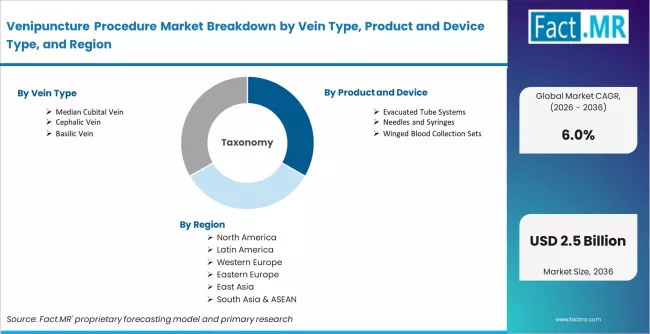
The Venipuncture Procedure Market is segmented by Vein Type (Median Cubital Vein, Cephalic Vein, Basilic Vein, Dorsal Hand Vein, and Other Peripheral Veins), Product and Device Type (Needles and Syringes, Evacuated Tube Systems, Winged Blood Collection Sets, Vein Visualization Devices, and Safety Blood Collection Devices), Procedure Type (Diagnostic Blood Collection, Therapeutic Blood Draw, Blood Donation, Intravenous Cannulation Support, and Pediatric Venipuncture), End User (Hospitals, Diagnostic Laboratories, Blood Donation Centers, Clinics, and Home Healthcare Providers), Sales Channel (Direct Institutional Sales, Distributor Sales, Group Contract Sales, Online Medical Supply, and Procedure-Based Supply), and Region. Forecast for 2026 to 2036.

Fact.MR analysis indicates that the venipuncture procedure market is moving through a procedure-safety and sample-quality phase. Hospitals, laboratories, and blood collection centers are evaluating venipuncture through first-attempt success, specimen integrity, needle-stick injury prevention, and patient comfort. Demand is gaining depth where routine blood testing, chronic disease monitoring, and blood donation programs require reliable vascular access.

Venipuncture Procedure Market Forecast and Outlook By Fact.MR

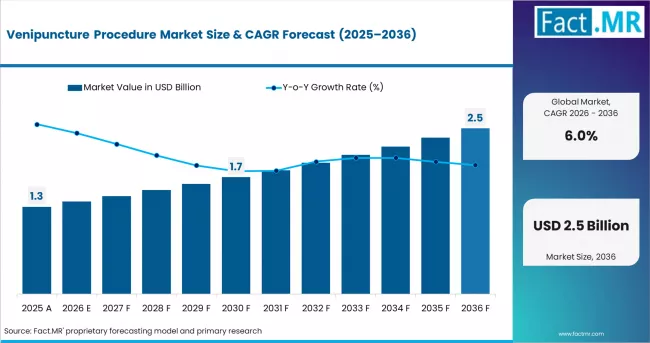
  • In 2025, the venipuncture procedure market was valued at USD 1.2 billion.
  • Based on revised Fact.MR analysis, demand for venipuncture procedures is estimated to grow to USD 1.3 billion in 2026 and USD 2.3 billion by 2036.
  • Fact.MR projects a CAGR of 6.00% during the forecast period.
Venipuncture Procedure Market Market Value Analysis

Metric Value
Estimated Value in 2026 USD 1.3 billion
Forecast Value in 2036 USD 2.3 billion
Forecast CAGR (2026 to 2036) 6.0%

Summary of Venipuncture Procedure Market

  • Market Definition
    • The market includes peripheral venous blood collection procedures and related devices used for diagnostic testing, blood donation, therapeutic blood draw, and clinical monitoring.
  • Demand Drivers
    • Diagnostic laboratories are increasing venipuncture demand as routine blood testing remains central to disease detection and treatment monitoring.
    • Hospitals need safer blood collection systems because needle-stick injury prevention is a core healthcare worker safety requirement.
    • Blood donation centers rely on trained venipuncture practice where donor comfort and collection efficiency affect program performance.
  • Key Segments Analyzed
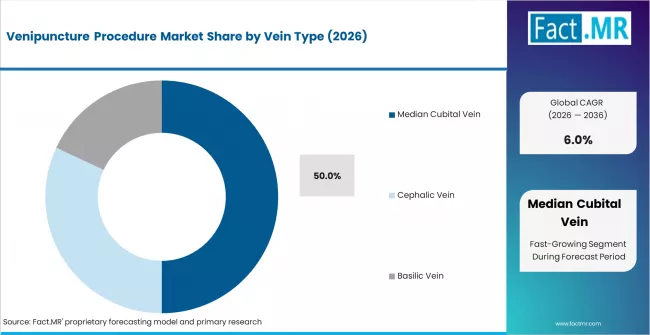
    • By Vein Type: Median cubital vein is expected to hold approximately 50.0% share in 2026, supported by easier access and higher first-attempt success.
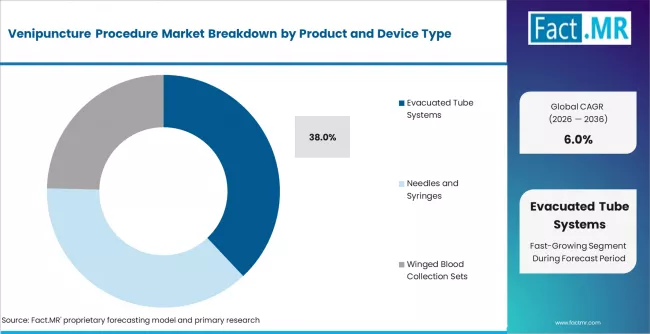
    • By Product and Device Type: Evacuated tube systems lead in 2026 with about 38.0% share, due to standardized blood collection and specimen handling.
    • By Procedure Type: Diagnostic blood collection accounts for around 57.0% share in 2026, driven by routine laboratory testing.
    • By End User: Hospitals hold nearly 46.0% share in 2026, since inpatient and outpatient care both require frequent blood draws.
    • By Sales Channel: Distributor sales are projected to lead with 42.0% share in 2026, as laboratories and clinics rely on broad medical supply networks.
    • By Geography: China leads growth through 2036 at 8.2% CAGR, supported by hospital expansion and wider diagnostic testing access.
  • Analyst Opinion at Fact.MR
    • Shambhu Nath Jha, Senior Analyst at Fact.MR, opines, “Venipuncture procedure demand is no longer measured only by the number of blood draws. The stronger shift is toward first-attempt success, safety-engineered devices, and reliable specimen quality. Suppliers that can support training, reduce needle-stick risk, and improve patient comfort will hold a better position than companies competing only on device availability.”
  • Strategic Implications
    • Manufacturers should improve safety-engineered device design because hospitals evaluate venipuncture products through staff safety and procedure reliability.
    • Laboratories need standardized collection systems to reduce specimen rejection and improve diagnostic workflow.
    • Distributors should prioritize consistent supply and training support because blood collection products are used daily across high-volume care points.
  • Methodology
    • Market sizing uses venipuncture procedure demand, blood collection device consumption, diagnostic testing activity, and replacement patterns.
    • Analysis includes OSHA guidance, CDC safe practice resources, WHO blood collection guidance, product catalogues, and supplier information.
    • Forecasts account for chronic disease testing, blood donation activity, safety device adoption, laboratory expansion, and regional healthcare access.

The market is projected to generate USD 1.0 billion in absolute opportunity between 2026 and 2036. Growth is supported by diagnostic blood testing, chronic disease monitoring, blood donation activity, and safer vascular access practices. OSHA’s bloodborne pathogens standard keeps needle-stick prevention central to healthcare worker safety. CDC guidance also reinforces safe injection and blood collection practices across clinical settings.

China leads with a projected CAGR of 8.2% through 2036, supported by hospital expansion and higher diagnostic testing access. India follows at 7.8%, helped by private laboratory growth and wider routine testing. The United States records 6.2%, with demand anchored in hospitals, diagnostic laboratories, and blood donation systems. Germany grows at 5.7%, supported by structured laboratory networks and patient safety standards. Brazil advances at 5.4%, backed by private diagnostic center growth and hospital testing demand. Japan posts 4.8%, supported by aging-related testing needs and established clinical laboratory systems.

Segmental Analysis

Venipuncture Procedure Market Analysis by Vein Type
Venipuncture Procedure Market Analysis By Vein Type

Median cubital vein is expected to hold 50.0% share in 2026 as it is commonly preferred for routine venipuncture due to easier access and stable positioning in the antecubital area. Phlebotomists often select this vein when it is visible or palpable because it can support faster collection and better first-attempt success. CDC and WHO safe blood collection resources emphasize trained technique, appropriate site selection, and infection prevention during blood collection. Cephalic and basilic veins remain important alternatives when the median cubital vein is difficult to access. Median cubital use stays dominant because it supports routine workflow in hospitals and laboratories. Poor vein selection can increase patient discomfort and repeat puncture risk.

  • Access Reliability: Median cubital vein selection supports routine collection where quick and stable venous access is needed.
  • Patient Comfort: Better first-attempt success reduces repeat needle insertion and procedure anxiety.
  • Staff Workflow: Familiar vein selection helps phlebotomy staff maintain faster throughput in high-volume settings.

Venipuncture Procedure Market Analysis by Product and Device Type
Venipuncture Procedure Market Analysis By Product And Device Type

Standardized tube handling keeps evacuated tube systems ahead in blood collection workflows. Evacuated tube systems are projected to account for 38.0% share in 2026. Hospitals and laboratories use these systems because they support closed collection, controlled draw volume, and compatibility with common laboratory workflows. CLSI blood collection standards guide venous specimen collection practices and reinforce the need for correct tube use and specimen handling [3]. Needles and syringes remain relevant in selected care settings, while winged sets are preferred for difficult veins and pediatric cases. Evacuated systems retain leadership because they align with routine laboratory testing. Poor device selection can affect specimen quality and increase redraw needs.

  • Specimen Control: Evacuated tubes help standardize draw volume and reduce handling variation.
  • Laboratory Fit: Tube-based systems align with common testing workflows and specimen processing.
  • Safety Design: Closed collection reduces exposure risk when used with proper technique.

Venipuncture Procedure Market Analysis by Procedure Type
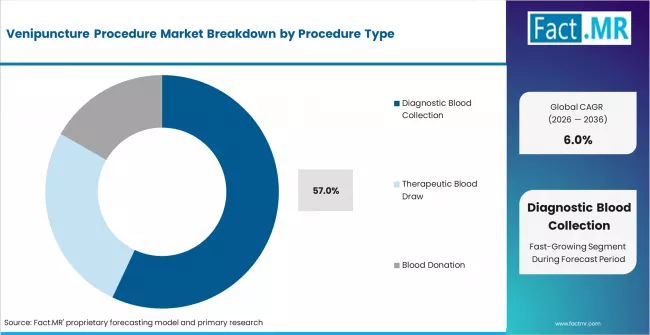
Venipuncture Procedure Market Analysis By Procedure Type

Diagnostic blood collection forms the largest procedure base because blood testing is used across screening, diagnosis, treatment monitoring, and inpatient care. This procedure type is estimated to account for 57.0% share in 2026. Hospitals, laboratories, and clinics depend on venipuncture for chemistry, hematology, infectious disease, and chronic disease tests. CDC laboratory guidance and public health testing resources reflect the central role of laboratory testing in healthcare decision-making [4]. Blood donation and therapeutic blood draw remain important, but diagnostic collection leads because it occurs daily across many care pathways. Facilities with weak collection practice may face specimen rejection and delayed clinical decisions.

  • Testing Dependence: Diagnostic care depends on venous blood samples for many routine and specialized tests.
  • Monitoring Need: Chronic disease management creates repeated blood collection demand.
  • Specimen Quality: Correct collection technique reduces hemolysis, redraws, and delayed results.

Venipuncture Procedure Market Analysis by End User
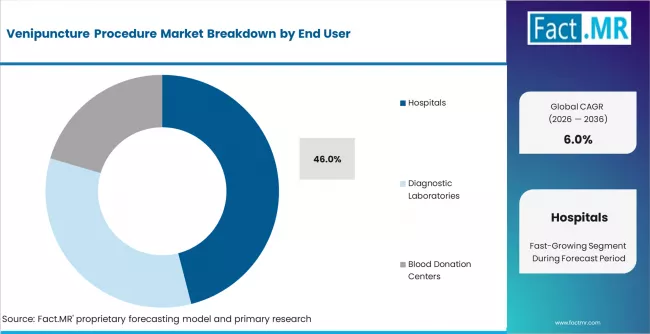
Venipuncture Procedure Market Analysis By End User

Hospitals lead demand because inpatient care, emergency departments, outpatient clinics, and surgical departments all require frequent blood collection. The end-user base is expected to be led by hospitals with 46.0% share in 2026. Hospitals manage both urgent and routine venipuncture needs, which creates sustained demand for needles, tubes, winged sets, and safety devices. OSHA’s bloodborne pathogens standard makes safety practice important in hospital blood collection workflows [1]. Diagnostic laboratories are growing quickly because outpatient testing volume is increasing. Hospitals retain the largest base because blood collection is embedded across many clinical pathways. Poor supply coordination can delay tests and affect patient management.

  • Clinical Breadth: Hospitals use venipuncture across emergency, inpatient, outpatient, and surgical care pathways.
  • Safety Pressure: Worker protection rules push hospitals toward safer blood collection devices.
  • High Volume: Repeated daily blood draws create steady product demand across departments.

Venipuncture Procedure Market Analysis by Sales Channel
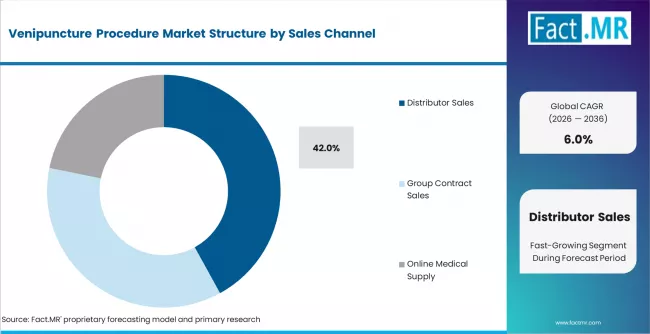
Venipuncture Procedure Market Analysis By Sales Channel

Broad product availability keeps distributor sales strong because laboratories, clinics, and blood centers need routine supply of needles, tubes, safety devices, and accessories. Distributor sales are expected to account for 42.0% share in 2026. This channel leads where buyers need frequent replenishment across multiple product types and brands. Direct institutional sales remain important for large hospital systems that negotiate pricing and supply contracts. Online medical supply channels serve smaller buyers with standardized items. FDA medical device reporting guidance reinforces traceability and performance monitoring for devices used in clinical procedures [6]. Weak distribution reliability can disrupt blood collection schedules and increase stockout risk.

  • Supply Continuity: Distributor networks help maintain recurring availability of blood collection products.
  • Product Range: Laboratories rely on distributors for tubes, needles, safety devices, and accessories.
  • Contract Flexibility: Smaller care providers use distributors when direct supplier agreements are not practical.

Drivers, Restraints, and Opportunities
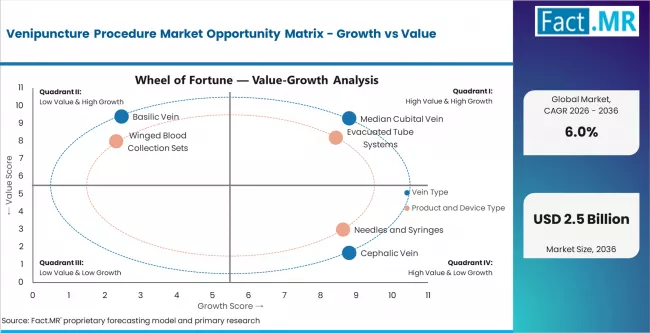
Venipuncture Procedure Market Opportunity Matrix Growth Vs Value

Routine diagnostics, chronic disease care, and preventive health screening are increasing the need for reliable blood collection. Venipuncture remains a core procedure because many tests require venous blood samples with correct volume and specimen quality. CDC laboratory resources show how clinical testing supports healthcare decisions and public health monitoring. Hospitals and laboratories are placing more value on safety-engineered devices, standardized tube systems, and trained phlebotomy practice. Demand improves where care providers connect venipuncture quality with faster diagnosis, fewer redraws, and safer staff workflow.

Staff training gaps and patient vein-access difficulty restrain procedure efficiency. Poor technique can cause hemolysis, repeat punctures, patient discomfort, and specimen rejection. Safety devices can raise product cost for smaller facilities. Vein visualization tools improve difficult access, but capital cost can slow adoption. Pediatric and elderly patients often require more careful technique, which increases procedure time. Suppliers must prove practical workflow value and training support before premium products gain wider adoption.

  • Vein Visualization Devices: Imaging-assisted access creates opportunity where difficult veins raise repeat puncture rates.
  • Safety Blood Collection Systems: Safety-engineered devices can gain share where hospitals prioritize needle-stick injury prevention.
  • Home Blood Collection: Home healthcare and mobile diagnostics create demand for portable venipuncture kits and trained collection services.

Regional Analysis

The venipuncture procedure market is assessed across North America, Europe, Asia Pacific, Latin America, and Middle East and Africa, covering 40+ countries with demand profiles shaped by diagnostic testing access, hospital capacity, laboratory networks, blood donation systems, safety regulations, and trained phlebotomy availability.

Top Country Growth Comparison Venipuncture Procedure Market Cagr (2026 2036)

Country CAGR (2026 to 2036)
China 8.2%
India 7.8%
USA 6.2%
Germany 5.7%
Brazil 5.4%
Japan 4.8%

Source: Fact.MR analysis, based on proprietary forecasting model and primary research
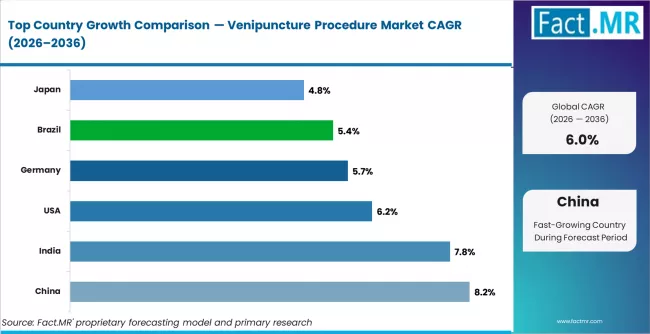
Venipuncture Procedure Market Cagr Analysis By Country

Asia Pacific Venipuncture Procedure Market Analysis

Asia Pacific records the strongest growth because diagnostic testing access, hospital expansion, and private laboratory networks are improving together. China and India are adding laboratory capacity across urban and semi-urban healthcare systems. Japan adds a stable demand base through aging-related testing and established laboratory practice. WHO blood collection guidance emphasizes safe and effective blood sampling practice, which supports structured venipuncture training and device use [5]. The region includes high-volume hospitals and price-sensitive clinics. Suppliers need product portfolios that balance safety features with affordability. Growth depends on trained staff, laboratory expansion, and reliable supply of tubes, needles, and safety devices.

  • China: China leads the country outlook as hospital expansion and diagnostic testing access strengthen venipuncture demand. The country is projected to grow at 8.2% CAGR through 2036. Large hospitals and laboratories use venipuncture products for routine testing, chronic disease monitoring, and emergency care. Local suppliers compete in standard blood collection devices, while premium safety products gain attention in urban hospitals. Buyers weigh cost, supply reliability, and safety features before selecting vendors.
  • India: Private diagnostic laboratories and hospital networks support venipuncture procedure growth in India. Routine testing is increasing across metro and tier-one cities. India is forecast to grow at 7.8% CAGR from 2026 to 2036. Cost sensitivity remains important, but laboratories still need reliable evacuated tubes and safety needles to reduce redraws. Suppliers that combine accessible pricing with training support can improve adoption.
  • Japan: Aging-related testing needs and established laboratory networks support venipuncture demand in Japan. Hospitals and clinics focus on reliable collection systems that reduce patient discomfort and specimen errors. Japan is projected to post 4.8% CAGR by 2036. Growth is moderate because diagnostic access is already mature. Suppliers with safety-engineered devices and consistent distribution can maintain demand.

North America Venipuncture Procedure Market Analysis
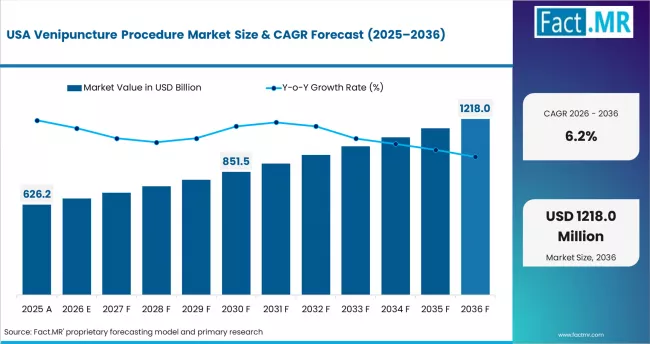
Venipuncture Procedure Market Country Value Analysis

North America remains a high-value region because hospitals, independent laboratories, and blood donation systems maintain high procedure volumes. The United States anchors regional demand through routine diagnostics, chronic disease monitoring, and safety device adoption. OSHA worker safety requirements keep needle-stick prevention central to purchasing decisions. Hospitals often evaluate venipuncture products through safety design, tube compatibility, and specimen quality. The region has strong demand for evacuated tube systems and safety needles, but cost control affects supplier selection. Vendors must prove workflow reliability and training value to defend pricing.

  1. USA: The United States has a large diagnostic testing base across hospitals, laboratories, clinics, and blood centers. Venipuncture demand is anchored in routine blood work, chronic disease monitoring, and donor collection. The country is projected to record 6.2% CAGR over the study period. Safety-engineered needles and closed collection systems gain attention where hospitals focus on worker protection. Purchasers examine device cost, contract reliability, and compatibility with laboratory workflows.

Europe Venipuncture Procedure Market Analysis
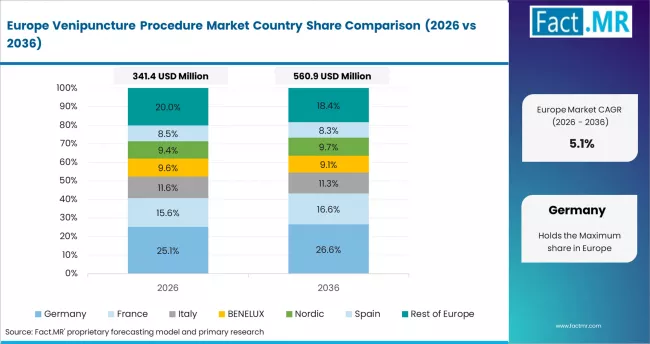
Venipuncture Procedure Market Europe Country Market Share Analysis, 2026 & 2036

Europe shows steady demand because laboratory networks, patient safety standards, and healthcare worker protection practices are well structured. Germany leads the region through strong diagnostic laboratory capacity and hospital-based testing demand. European medical device regulation emphasizes safety and performance, which shapes evaluation of blood collection devices. Hospitals and laboratories prioritize specimen quality, traceability, and staff safety. Demand growth is moderate because many markets already have developed diagnostic infrastructure. Suppliers compete through safety features, tube system compatibility, and distribution reliability.

  • Germany: Germany benefits from structured laboratory networks and disciplined hospital purchasing. Demand is linked to routine testing, inpatient monitoring, blood donation, and chronic disease care. Germany is forecast to grow at 5.7% CAGR by 2036. Hospitals tend to favor suppliers with reliable safety devices and consistent tube supply. Laboratory compatibility and staff familiarity influence purchasing more than broad catalogue range alone.

Latin America Venipuncture Procedure Market Analysis

Latin America shows selective growth where private diagnostic centers and hospital networks are expanding routine testing access. Brazil leads regional demand through urban laboratories, hospital care, and blood donation systems. Price sensitivity remains a key restraint, especially for premium safety and vein visualization products. Suppliers need strong distributor support and practical pricing models. Demand improves when laboratories can maintain steady product supply and reduce specimen rejection. Growth remains uneven because public healthcare budgets and testing access vary across countries.

  • Brazil: Private diagnostic centers and hospital testing needs support venipuncture procedure demand in Brazil. Routine blood work and chronic disease monitoring are important demand areas in urban healthcare centers. Brazil is projected to expand at 5.4% CAGR over the foreseen period. Laboratories often compare affordability with product reliability before selecting collection systems. Distributors play a major role in product availability, training support, and replenishment. Suppliers that offer dependable products at accessible price points can strengthen adoption.

Fact.MR analysis of regional demand covers Asia Pacific, North America, Europe, Latin America, and Middle East and Africa. The study assesses diagnostic testing access, laboratory infrastructure, blood donation activity, safety regulation, and supplier support across major markets.

Competitive Aligners for Market Players
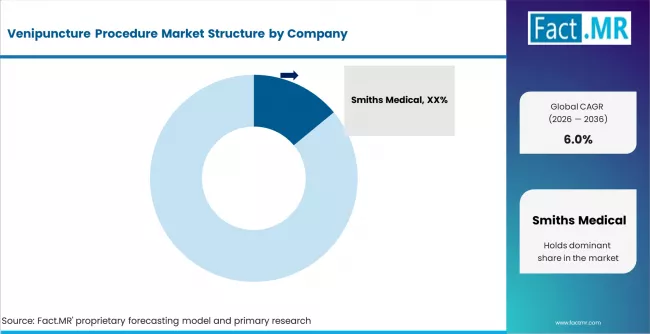
Venipuncture Procedure Market Analysis By Company

The venipuncture procedure market is moderately fragmented in basic collection devices and more concentrated in safety-engineered systems and vein visualization technology. Large global suppliers hold advantages because product quality, regulatory documentation, and laboratory contracts create switching barriers. Smaller suppliers often compete in standard needles, syringes, and regional distribution channels.

Competitive advantage depends on device safety, specimen quality, tube compatibility, training support, and supply continuity. Smiths Medical, B. Braun, AccuVein, TransLite, Christie Medical, Kyoto Kagaku, CorVascular Diagnostics, and Adam, Rouilly represent supplier groups where device reliability and training relevance matter. Hospitals and laboratories are less likely to switch suppliers when staff are trained on specific systems and tube compatibility is already established.

The market is divided between high-volume standard blood collection products and premium devices used for safety or difficult venous access. Suppliers that combine reliable product performance with training and distribution support can protect institutional demand. Regional companies can gain ground where affordability and fast replenishment matter most.

Key Players

  • Smiths Medical
  • Sunphoria Co. Ltd.
  • TransLite LLC
  • AccuVein Inc.
  • B. Braun Melsungen AG
  • Adam, Rouilly Limited
  • CorVascular Diagnostics, LLC
  • Kyoto Kagaku Co., Ltd.
  • Christie Medical Holdings, Inc.
  • Becton, Dickinson and Company
  • Greiner Bio-One International GmbH
  • Terumo Corporation

Bibliography

  • [1] Occupational Safety and Health Administration. (2024). Bloodborne Pathogens and Needlestick Prevention. OSHA.
  • [2] Centers for Disease Control and Prevention. (2024). Injection Safety. CDC.
  • [3] Clinical and Laboratory Standards Institute. (2024). GP41: Collection of Diagnostic Venous Blood Specimens. CLSI.
  • [4] Centers for Disease Control and Prevention. (2024). Laboratory Quality. CDC.
  • [5] World Health Organization. (2024). WHO Guidelines on Drawing Blood: Best Practices in Phlebotomy. WHO.
  • [6] United States Food and Drug Administration. (2025, March 27). Medical Device Reporting (MDR): How to Report Medical Device Problems. FDA.

This Report Addresses

  • Strategic intelligence on venipuncture procedure demand across diagnostic blood collection, therapeutic blood draw, blood donation, intravenous cannulation support, and pediatric venipuncture globally.
  • Market forecast from USD 1.3 billion in 2026 to USD 2.3 billion by 2036 at a CAGR of 6.0%.
  • Growth opportunity mapping across China hospital expansion, India laboratory growth, U.S. safety device adoption, Germany laboratory networks, and Brazil private diagnostic center demand.
  • Segment analysis by vein type, product and device type, procedure type, end user, sales channel, and region.
  • Regional outlook covering Asia Pacific diagnostic access growth, North America safety-engineered device adoption, and Europe specimen-quality controlled practice.
  • Competitive analysis of Smiths Medical, Sunphoria, TransLite, AccuVein, B. Braun, Adam Rouilly, CorVascular Diagnostics, Kyoto Kagaku, Christie Medical, BD, Greiner Bio-One, and Terumo.
  • Procedure adoption analysis covering first-attempt success, specimen quality, needle-stick prevention, patient comfort, vein visualization, and training needs.
  • Report delivered with market sizing, segment outlook, regional analysis, company profiling, and forecast assumptions.

Scope of Report

Venipuncture Procedure Market Breakdown By Vein Type, Product And Device Type, And Region

Attribute Details
Quantitative Units USD 1.3 billion (2026) to USD 2.3 billion (2036), at a CAGR of 6.0%
Market Definition Peripheral venous blood collection procedures and related devices used for diagnostic testing, blood donation, therapeutic blood draw, and clinical monitoring
Forecast Period 2026 to 2036
Historical Reference 2025
Vein Type Covered Median cubital vein, cephalic vein, basilic vein, dorsal hand vein, other peripheral veins
Product and Device Type Covered Needles and syringes, evacuated tube systems, winged blood collection sets, vein visualization devices, safety blood collection devices
Procedure Type Covered Diagnostic blood collection, therapeutic blood draw, blood donation, intravenous cannulation support, pediatric venipuncture
End User Covered Hospitals, diagnostic laboratories, blood donation centers, clinics, home healthcare providers
Sales Channel Covered Direct institutional sales, distributor sales, group contract sales, online medical supply, procedure-based supply
Regions Covered North America, Europe, Asia Pacific, Latin America, Middle East and Africa
Countries Covered USA, Canada, Mexico, Germany, UK, France, Italy, Spain, Nordic, BENELUX, China, Japan, India, ASEAN, Australia and New Zealand, Brazil, Argentina, Chile, Saudi Arabia, GCC, Turkey, South Africa, and Rest of MEA
Key Companies Profiled Smiths Medical, Sunphoria, TransLite, AccuVein, B. Braun, Adam Rouilly, CorVascular Diagnostics, Kyoto Kagaku, Christie Medical, BD, Greiner Bio-One, Terumo
Approach Hybrid top-down and bottom-up model using diagnostic testing demand, blood collection procedure volumes, safety device adoption, product pricing, and primary interviews with phlebotomy and laboratory leaders

Venipuncture Procedure Market by Segments

  • By Vein Type:

    • Median Cubital Vein
    • Cephalic Vein
    • Basilic Vein
    • Dorsal Hand Vein
    • Other Peripheral Veins
  • By Product and Device Type:

    • Needles and Syringes
    • Evacuated Tube Systems
    • Winged Blood Collection Sets
    • Vein Visualization Devices
    • Safety Blood Collection Devices
  • By Procedure Type:

    • Diagnostic Blood Collection
    • Therapeutic Blood Draw
    • Blood Donation
    • Intravenous Cannulation Support
    • Pediatric Venipuncture
  • By End User:

    • Hospitals
    • Diagnostic Laboratories
    • Blood Donation Centers
    • Clinics
    • Home Healthcare Providers
  • By Sales Channel:

    • Direct Institutional Sales
    • Distributor Sales
    • Group Contract Sales
    • Online Medical Supply
    • Procedure-Based Supply
  • By Region:

    • North America
      • United States
      • Canada
      • Mexico
    • Latin America
      • Brazil
      • Argentina
      • Chile
      • Rest of Latin America
    • Western Europe
      • Germany
      • France
      • United Kingdom
      • Italy
      • Spain
      • Nordic Countries
      • BENELUX
      • Rest of Western Europe
    • Eastern Europe
      • Russia
      • Poland
      • Hungary
      • Balkan and Baltic
      • Rest of Eastern Europe
    • East Asia
      • China
      • Japan
    • South Korea
      • South Asia and Pacific
      • India
      • ASEAN
      • Australia and New Zealand
      • Rest of South Asia and Pacific
    • Middle East and Africa
      • Kingdom of Saudi Arabia
      • Other GCC Countries
      • Turkey
      • South Africa
      • Rest of Middle East and Africa

- Frequently Asked Questions -

How large is the global venipuncture procedure market in 2025?

The global venipuncture procedure market was valued at USD 1.2 billion in 2025.

What will the market size be in 2026?

Based on revised Fact.MR analysis, demand for venipuncture procedures is estimated to grow to USD 1.3 billion in 2026.

What is the projected market size by 2036?

The market is projected to reach USD 2.3 billion by 2036, generating USD 1.0 billion in absolute dollar opportunity.

What is the expected CAGR from 2026 to 2036?

Fact.MR projects a CAGR of 6.00% for the global venipuncture procedure market during the forecast period.

Which vein type is poised to lead the market?

Median cubital vein leads with approximately 50.0% share in 2026 due to easier access and higher first-attempt success.

Which product and device type holds the highest share?

Evacuated tube systems lead with about 38.0% share in 2026 due to standardized blood collection and specimen handling.

Which procedure type accounts for the largest demand?

Diagnostic blood collection accounts for around 57.0% share in 2026 due to routine laboratory testing demand.

Which end user leads the market?

Hospitals account for nearly 46.0% share in 2026 because inpatient and outpatient care both require frequent blood draws.

Which sales channel leads demand?

Distributor sales hold around 42.0% share in 2026 because laboratories and clinics rely on broad medical supply networks.

Which country shows the fastest growth?

China leads at 8.2% CAGR through 2036, supported by hospital expansion and wider diagnostic testing access.

What is driving demand for venipuncture procedures?

Demand is driven by routine diagnostics, chronic disease monitoring, blood donation activity, and safer blood collection practices.

What is the key challenge in this market?

Training gaps, difficult vein access, specimen rejection, and safety device cost limit faster adoption across several care settings.

Table of Content

  1. Executive Summary
    • Global Market Outlook
    • Demand to side Trends
    • Supply to side Trends
    • Technology Roadmap Analysis
    • Analysis and Recommendations
  2. Market Overview
    • Market Coverage / Taxonomy
    • Market Definition / Scope / Limitations
  3. Research Methodology
    • Chapter Orientation
    • Analytical Lens and Working Hypotheses
      • Market Structure, Signals, and Trend Drivers
      • Benchmarking and Cross-market Comparability
      • Market Sizing, Forecasting, and Opportunity Mapping
    • Research Design and Evidence Framework
      • Desk Research Programme (Secondary Evidence)
        • Company Annual and Sustainability Reports
        • Peer-reviewed Journals and Academic Literature
        • Corporate Websites, Product Literature, and Technical Notes
        • Earnings Decks and Investor Briefings
        • Statutory Filings and Regulatory Disclosures
        • Technical White Papers and Standards Notes
        • Trade Journals, Industry Magazines, and Analyst Briefs
        • Conference Proceedings, Webinars, and Seminar Materials
        • Government Statistics Portals and Public Data Releases
        • Press Releases and Reputable Media Coverage
        • Specialist Newsletters and Curated Briefings
        • Sector Databases and Reference Repositories
        • Fact.MR Internal Proprietary Databases and Historical Market Datasets
        • Subscription Datasets and Paid Sources
        • Social Channels, Communities, and Digital Listening Inputs
        • Additional Desk Sources
      • Expert Input and Fieldwork (Primary Evidence)
        • Primary Modes
          • Qualitative Interviews and Expert Elicitation
          • Quantitative Surveys and Structured Data Capture
          • Blended Approach
        • Why Primary Evidence is Used
        • Field Techniques
          • Interviews
          • Surveys
          • Focus Groups
          • Observational and In-context Research
          • Social and Community Interactions
        • Stakeholder Universe Engaged
          • C-suite Leaders
          • Board Members
          • Presidents and Vice Presidents
          • R&D and Innovation Heads
          • Technical Specialists
          • Domain Subject-matter Experts
          • Scientists
          • Physicians and Other Healthcare Professionals
        • Governance, Ethics, and Data Stewardship
          • Research Ethics
          • Data Integrity and Handling
      • Tooling, Models, and Reference Databases
    • Data Engineering and Model Build
      • Data Acquisition and Ingestion
      • Cleaning, Normalisation, and Verification
      • Synthesis, Triangulation, and Analysis
    • Quality Assurance and Audit Trail
  4. Market Background
    • Market Dynamics
      • Drivers
      • Restraints
      • Opportunity
      • Trends
    • Scenario Forecast
      • Demand in Optimistic Scenario
      • Demand in Likely Scenario
      • Demand in Conservative Scenario
    • Opportunity Map Analysis
    • Product Life Cycle Analysis
    • Supply Chain Analysis
    • Investment Feasibility Matrix
    • Value Chain Analysis
    • PESTLE and Porter’s Analysis
    • Regulatory Landscape
    • Regional Parent Market Outlook
    • Production and Consumption Statistics
    • Import and Export Statistics
  5. Global Market Analysis 2021 to 2025 and Forecast, 2026 to 2036
    • Historical Market Size Value (USD Million) Analysis, 2021 to 2025
    • Current and Future Market Size Value (USD Million) Projections, 2026 to 2036
      • Y to o to Y Growth Trend Analysis
      • Absolute $ Opportunity Analysis
  6. Global Market Pricing Analysis 2021 to 2025 and Forecast 2026 to 2036
  7. Global Market Analysis 2021 to 2025 and Forecast 2026 to 2036, By Factor Type
    • Introduction / Key Findings
    • Historical Market Size Value (USD Million) Analysis By Factor Type , 2021 to 2025
    • Current and Future Market Size Value (USD Million) Analysis and Forecast By Factor Type , 2026 to 2036
      • Factor VII
      • Factor I
      • Factor V
    • Y to o to Y Growth Trend Analysis By Factor Type , 2021 to 2025
    • Absolute $ Opportunity Analysis By Factor Type , 2026 to 2036
  8. Global Market Analysis 2021 to 2025 and Forecast 2026 to 2036, By Application
    • Introduction / Key Findings
    • Historical Market Size Value (USD Million) Analysis By Application, 2021 to 2025
    • Current and Future Market Size Value (USD Million) Analysis and Forecast By Application, 2026 to 2036
      • Fresh Frozen Plasma
      • Factor Concentrates
      • Cryoprecipitate
    • Y to o to Y Growth Trend Analysis By Application, 2021 to 2025
    • Absolute $ Opportunity Analysis By Application, 2026 to 2036
  9. Global Market Analysis 2021 to 2025 and Forecast 2026 to 2036, By Treatment Approach
    • Introduction / Key Findings
    • Historical Market Size Value (USD Million) Analysis By Treatment Approach, 2021 to 2025
    • Current and Future Market Size Value (USD Million) Analysis and Forecast By Treatment Approach, 2026 to 2036
      • On-Demand Treatment
      • Prophylaxis
      • Perioperative Bleeding Management
    • Y to o to Y Growth Trend Analysis By Treatment Approach, 2021 to 2025
    • Absolute $ Opportunity Analysis By Treatment Approach, 2026 to 2036
  10. Global Market Analysis 2021 to 2025 and Forecast 2026 to 2036, By End User
    • Introduction / Key Findings
    • Historical Market Size Value (USD Million) Analysis By End User, 2021 to 2025
    • Current and Future Market Size Value (USD Million) Analysis and Forecast By End User, 2026 to 2036
      • Hemophilia Treatment Centers
      • Specialty Clinics
      • Blood Banks
    • Y to o to Y Growth Trend Analysis By End User, 2021 to 2025
    • Absolute $ Opportunity Analysis By End User, 2026 to 2036
  11. Global Market Analysis 2021 to 2025 and Forecast 2026 to 2036, By Sales Channel
    • Introduction / Key Findings
    • Historical Market Size Value (USD Million) Analysis By Sales Channel, 2021 to 2025
    • Current and Future Market Size Value (USD Million) Analysis and Forecast By Sales Channel, 2026 to 2036
      • Specialty Pharmacy Distribution
      • Hospital Pharmacy
      • Government Supply Programs
    • Y to o to Y Growth Trend Analysis By Sales Channel, 2021 to 2025
    • Absolute $ Opportunity Analysis By Sales Channel, 2026 to 2036
  12. Global Market Analysis 2021 to 2025 and Forecast 2026 to 2036, By Region
    • Introduction
    • Historical Market Size Value (USD Million) Analysis By Region, 2021 to 2025
    • Current Market Size Value (USD Million) Analysis and Forecast By Region, 2026 to 2036
      • North America
      • Latin America
      • Western Europe
      • Eastern Europe
      • East Asia
      • South Asia and Pacific
      • Middle East & Africa
    • Market Attractiveness Analysis By Region
  13. North America Market Analysis 2021 to 2025 and Forecast 2026 to 2036, By Country
    • Historical Market Size Value (USD Million) Trend Analysis By Market Taxonomy, 2021 to 2025
    • Market Size Value (USD Million) Forecast By Market Taxonomy, 2026 to 2036
      • By Country
        • USA
        • Canada
        • Mexico
      • By Factor Type
      • By Application
      • By Treatment Approach
      • By End User
      • By Sales Channel
    • Market Attractiveness Analysis
      • By Country
      • By Factor Type
      • By Application
      • By Treatment Approach
      • By End User
      • By Sales Channel
    • Key Takeaways
  14. Latin America Market Analysis 2021 to 2025 and Forecast 2026 to 2036, By Country
    • Historical Market Size Value (USD Million) Trend Analysis By Market Taxonomy, 2021 to 2025
    • Market Size Value (USD Million) Forecast By Market Taxonomy, 2026 to 2036
      • By Country
        • Brazil
        • Chile
        • Rest of Latin America
      • By Factor Type
      • By Application
      • By Treatment Approach
      • By End User
      • By Sales Channel
    • Market Attractiveness Analysis
      • By Country
      • By Factor Type
      • By Application
      • By Treatment Approach
      • By End User
      • By Sales Channel
    • Key Takeaways
  15. Western Europe Market Analysis 2021 to 2025 and Forecast 2026 to 2036, By Country
    • Historical Market Size Value (USD Million) Trend Analysis By Market Taxonomy, 2021 to 2025
    • Market Size Value (USD Million) Forecast By Market Taxonomy, 2026 to 2036
      • By Country
        • Germany
        • UK
        • Italy
        • Spain
        • France
        • Nordic
        • BENELUX
        • Rest of Western Europe
      • By Factor Type
      • By Application
      • By Treatment Approach
      • By End User
      • By Sales Channel
    • Market Attractiveness Analysis
      • By Country
      • By Factor Type
      • By Application
      • By Treatment Approach
      • By End User
      • By Sales Channel
    • Key Takeaways
  16. Eastern Europe Market Analysis 2021 to 2025 and Forecast 2026 to 2036, By Country
    • Historical Market Size Value (USD Million) Trend Analysis By Market Taxonomy, 2021 to 2025
    • Market Size Value (USD Million) Forecast By Market Taxonomy, 2026 to 2036
      • By Country
        • Russia
        • Poland
        • Hungary
        • Balkan & Baltic
        • Rest of Eastern Europe
      • By Factor Type
      • By Application
      • By Treatment Approach
      • By End User
      • By Sales Channel
    • Market Attractiveness Analysis
      • By Country
      • By Factor Type
      • By Application
      • By Treatment Approach
      • By End User
      • By Sales Channel
    • Key Takeaways
  17. East Asia Market Analysis 2021 to 2025 and Forecast 2026 to 2036, By Country
    • Historical Market Size Value (USD Million) Trend Analysis By Market Taxonomy, 2021 to 2025
    • Market Size Value (USD Million) Forecast By Market Taxonomy, 2026 to 2036
      • By Country
        • China
        • Japan
        • South Korea
      • By Factor Type
      • By Application
      • By Treatment Approach
      • By End User
      • By Sales Channel
    • Market Attractiveness Analysis
      • By Country
      • By Factor Type
      • By Application
      • By Treatment Approach
      • By End User
      • By Sales Channel
    • Key Takeaways
  18. South Asia and Pacific Market Analysis 2021 to 2025 and Forecast 2026 to 2036, By Country
    • Historical Market Size Value (USD Million) Trend Analysis By Market Taxonomy, 2021 to 2025
    • Market Size Value (USD Million) Forecast By Market Taxonomy, 2026 to 2036
      • By Country
        • India
        • ASEAN
        • Australia & New Zealand
        • Rest of South Asia and Pacific
      • By Factor Type
      • By Application
      • By Treatment Approach
      • By End User
      • By Sales Channel
    • Market Attractiveness Analysis
      • By Country
      • By Factor Type
      • By Application
      • By Treatment Approach
      • By End User
      • By Sales Channel
    • Key Takeaways
  19. Middle East & Africa Market Analysis 2021 to 2025 and Forecast 2026 to 2036, By Country
    • Historical Market Size Value (USD Million) Trend Analysis By Market Taxonomy, 2021 to 2025
    • Market Size Value (USD Million) Forecast By Market Taxonomy, 2026 to 2036
      • By Country
        • Kingdom of Saudi Arabia
        • Other GCC Countries
        • Turkiye
        • South Africa
        • Other African Union
        • Rest of Middle East & Africa
      • By Factor Type
      • By Application
      • By Treatment Approach
      • By End User
      • By Sales Channel
    • Market Attractiveness Analysis
      • By Country
      • By Factor Type
      • By Application
      • By Treatment Approach
      • By End User
      • By Sales Channel
    • Key Takeaways
  20. Key Countries Market Analysis
    • USA
      • Pricing Analysis
      • Market Share Analysis, 2025
        • By Factor Type
        • By Application
        • By Treatment Approach
        • By End User
        • By Sales Channel
    • Canada
      • Pricing Analysis
      • Market Share Analysis, 2025
        • By Factor Type
        • By Application
        • By Treatment Approach
        • By End User
        • By Sales Channel
    • Mexico
      • Pricing Analysis
      • Market Share Analysis, 2025
        • By Factor Type
        • By Application
        • By Treatment Approach
        • By End User
        • By Sales Channel
    • Brazil
      • Pricing Analysis
      • Market Share Analysis, 2025
        • By Factor Type
        • By Application
        • By Treatment Approach
        • By End User
        • By Sales Channel
    • Chile
      • Pricing Analysis
      • Market Share Analysis, 2025
        • By Factor Type
        • By Application
        • By Treatment Approach
        • By End User
        • By Sales Channel
    • Germany
      • Pricing Analysis
      • Market Share Analysis, 2025
        • By Factor Type
        • By Application
        • By Treatment Approach
        • By End User
        • By Sales Channel
    • UK
      • Pricing Analysis
      • Market Share Analysis, 2025
        • By Factor Type
        • By Application
        • By Treatment Approach
        • By End User
        • By Sales Channel
    • Italy
      • Pricing Analysis
      • Market Share Analysis, 2025
        • By Factor Type
        • By Application
        • By Treatment Approach
        • By End User
        • By Sales Channel
    • Spain
      • Pricing Analysis
      • Market Share Analysis, 2025
        • By Factor Type
        • By Application
        • By Treatment Approach
        • By End User
        • By Sales Channel
    • France
      • Pricing Analysis
      • Market Share Analysis, 2025
        • By Factor Type
        • By Application
        • By Treatment Approach
        • By End User
        • By Sales Channel
    • India
      • Pricing Analysis
      • Market Share Analysis, 2025
        • By Factor Type
        • By Application
        • By Treatment Approach
        • By End User
        • By Sales Channel
    • ASEAN
      • Pricing Analysis
      • Market Share Analysis, 2025
        • By Factor Type
        • By Application
        • By Treatment Approach
        • By End User
        • By Sales Channel
    • Australia & New Zealand
      • Pricing Analysis
      • Market Share Analysis, 2025
        • By Factor Type
        • By Application
        • By Treatment Approach
        • By End User
        • By Sales Channel
    • China
      • Pricing Analysis
      • Market Share Analysis, 2025
        • By Factor Type
        • By Application
        • By Treatment Approach
        • By End User
        • By Sales Channel
    • Japan
      • Pricing Analysis
      • Market Share Analysis, 2025
        • By Factor Type
        • By Application
        • By Treatment Approach
        • By End User
        • By Sales Channel
    • South Korea
      • Pricing Analysis
      • Market Share Analysis, 2025
        • By Factor Type
        • By Application
        • By Treatment Approach
        • By End User
        • By Sales Channel
    • Russia
      • Pricing Analysis
      • Market Share Analysis, 2025
        • By Factor Type
        • By Application
        • By Treatment Approach
        • By End User
        • By Sales Channel
    • Poland
      • Pricing Analysis
      • Market Share Analysis, 2025
        • By Factor Type
        • By Application
        • By Treatment Approach
        • By End User
        • By Sales Channel
    • Hungary
      • Pricing Analysis
      • Market Share Analysis, 2025
        • By Factor Type
        • By Application
        • By Treatment Approach
        • By End User
        • By Sales Channel
    • Kingdom of Saudi Arabia
      • Pricing Analysis
      • Market Share Analysis, 2025
        • By Factor Type
        • By Application
        • By Treatment Approach
        • By End User
        • By Sales Channel
    • Turkiye
      • Pricing Analysis
      • Market Share Analysis, 2025
        • By Factor Type
        • By Application
        • By Treatment Approach
        • By End User
        • By Sales Channel
    • South Africa
      • Pricing Analysis
      • Market Share Analysis, 2025
        • By Factor Type
        • By Application
        • By Treatment Approach
        • By End User
        • By Sales Channel
  21. Market Structure Analysis
    • Competition Dashboard
    • Competition Benchmarking
    • Market Share Analysis of Top Players
      • By Regional
      • By Factor Type
      • By Application
      • By Treatment Approach
      • By End User
      • By Sales Channel
  22. Competition Analysis
    • Competition Deep Dive
      • Amgen Inc.
        • Overview
        • Product Portfolio
        • Profitability by Market Segments (Product/Age /Sales Channel/Region)
        • Sales Footprint
        • Strategy Overview
          • Marketing Strategy
          • Product Strategy
          • Channel Strategy
      • BioMarin Pharmaceutical Inc.
      • Bio Products Laboratory Ltd.
      • Biogen Inc.
      • CSL Behring
      • Baxter International Inc.
      • Bayer AG
      • Novo Nordisk A/S
  23. Assumptions & Acronyms Used

List Of Table

  • Table 1: Global Market Value (USD Million) Forecast by Region, 2021 to 2036
  • Table 2: Global Market Value (USD Million) Forecast by Factor Type, 2021 to 2036
  • Table 3: Global Market Value (USD Million) Forecast by Application, 2021 to 2036
  • Table 4: Global Market Value (USD Million) Forecast by Treatment Approach, 2021 to 2036
  • Table 5: Global Market Value (USD Million) Forecast by End User, 2021 to 2036
  • Table 6: Global Market Value (USD Million) Forecast by Sales Channel, 2021 to 2036
  • Table 7: North America Market Value (USD Million) Forecast by Country, 2021 to 2036
  • Table 8: North America Market Value (USD Million) Forecast by Factor Type, 2021 to 2036
  • Table 9: North America Market Value (USD Million) Forecast by Application, 2021 to 2036
  • Table 10: North America Market Value (USD Million) Forecast by Treatment Approach, 2021 to 2036
  • Table 11: North America Market Value (USD Million) Forecast by End User, 2021 to 2036
  • Table 12: North America Market Value (USD Million) Forecast by Sales Channel, 2021 to 2036
  • Table 13: Latin America Market Value (USD Million) Forecast by Country, 2021 to 2036
  • Table 14: Latin America Market Value (USD Million) Forecast by Factor Type, 2021 to 2036
  • Table 15: Latin America Market Value (USD Million) Forecast by Application, 2021 to 2036
  • Table 16: Latin America Market Value (USD Million) Forecast by Treatment Approach, 2021 to 2036
  • Table 17: Latin America Market Value (USD Million) Forecast by End User, 2021 to 2036
  • Table 18: Latin America Market Value (USD Million) Forecast by Sales Channel, 2021 to 2036
  • Table 19: Western Europe Market Value (USD Million) Forecast by Country, 2021 to 2036
  • Table 20: Western Europe Market Value (USD Million) Forecast by Factor Type, 2021 to 2036
  • Table 21: Western Europe Market Value (USD Million) Forecast by Application, 2021 to 2036
  • Table 22: Western Europe Market Value (USD Million) Forecast by Treatment Approach, 2021 to 2036
  • Table 23: Western Europe Market Value (USD Million) Forecast by End User, 2021 to 2036
  • Table 24: Western Europe Market Value (USD Million) Forecast by Sales Channel, 2021 to 2036
  • Table 25: Eastern Europe Market Value (USD Million) Forecast by Country, 2021 to 2036
  • Table 26: Eastern Europe Market Value (USD Million) Forecast by Factor Type, 2021 to 2036
  • Table 27: Eastern Europe Market Value (USD Million) Forecast by Application, 2021 to 2036
  • Table 28: Eastern Europe Market Value (USD Million) Forecast by Treatment Approach, 2021 to 2036
  • Table 29: Eastern Europe Market Value (USD Million) Forecast by End User, 2021 to 2036
  • Table 30: Eastern Europe Market Value (USD Million) Forecast by Sales Channel, 2021 to 2036
  • Table 31: East Asia Market Value (USD Million) Forecast by Country, 2021 to 2036
  • Table 32: East Asia Market Value (USD Million) Forecast by Factor Type, 2021 to 2036
  • Table 33: East Asia Market Value (USD Million) Forecast by Application, 2021 to 2036
  • Table 34: East Asia Market Value (USD Million) Forecast by Treatment Approach, 2021 to 2036
  • Table 35: East Asia Market Value (USD Million) Forecast by End User, 2021 to 2036
  • Table 36: East Asia Market Value (USD Million) Forecast by Sales Channel, 2021 to 2036
  • Table 37: South Asia and Pacific Market Value (USD Million) Forecast by Country, 2021 to 2036
  • Table 38: South Asia and Pacific Market Value (USD Million) Forecast by Factor Type, 2021 to 2036
  • Table 39: South Asia and Pacific Market Value (USD Million) Forecast by Application, 2021 to 2036
  • Table 40: South Asia and Pacific Market Value (USD Million) Forecast by Treatment Approach, 2021 to 2036
  • Table 41: South Asia and Pacific Market Value (USD Million) Forecast by End User, 2021 to 2036
  • Table 42: South Asia and Pacific Market Value (USD Million) Forecast by Sales Channel, 2021 to 2036
  • Table 43: Middle East & Africa Market Value (USD Million) Forecast by Country, 2021 to 2036
  • Table 44: Middle East & Africa Market Value (USD Million) Forecast by Factor Type, 2021 to 2036
  • Table 45: Middle East & Africa Market Value (USD Million) Forecast by Application, 2021 to 2036
  • Table 46: Middle East & Africa Market Value (USD Million) Forecast by Treatment Approach, 2021 to 2036
  • Table 47: Middle East & Africa Market Value (USD Million) Forecast by End User, 2021 to 2036
  • Table 48: Middle East & Africa Market Value (USD Million) Forecast by Sales Channel, 2021 to 2036

List Of Figures

  • Figure 1: Global Market Pricing Analysis
  • Figure 2: Global Market Value (USD Million) Forecast 2021-2036
  • Figure 3: Global Market Value Share and BPS Analysis by Factor Type, 2026 and 2036
  • Figure 4: Global Market Y-o-Y Growth Comparison by Factor Type, 2026 to 2036
  • Figure 5: Global Market Attractiveness Analysis by Factor Type
  • Figure 6: Global Market Value Share and BPS Analysis by Application, 2026 and 2036
  • Figure 7: Global Market Y-o-Y Growth Comparison by Application, 2026 to 2036
  • Figure 8: Global Market Attractiveness Analysis by Application
  • Figure 9: Global Market Value Share and BPS Analysis by Treatment Approach, 2026 and 2036
  • Figure 10: Global Market Y-o-Y Growth Comparison by Treatment Approach, 2026 to 2036
  • Figure 11: Global Market Attractiveness Analysis by Treatment Approach
  • Figure 12: Global Market Value Share and BPS Analysis by End User, 2026 and 2036
  • Figure 13: Global Market Y-o-Y Growth Comparison by End User, 2026 to 2036
  • Figure 14: Global Market Attractiveness Analysis by End User
  • Figure 15: Global Market Value Share and BPS Analysis by Sales Channel, 2026 and 2036
  • Figure 16: Global Market Y-o-Y Growth Comparison by Sales Channel, 2026 to 2036
  • Figure 17: Global Market Attractiveness Analysis by Sales Channel
  • Figure 18: Global Market Value (USD Million) Share and BPS Analysis by Region, 2026 and 2036
  • Figure 19: Global Market Y-o-Y Growth Comparison by Region, 2026 to 2036
  • Figure 20: Global Market Attractiveness Analysis by Region
  • Figure 21: North America Market Incremental Dollar Opportunity, 2026 to 2036
  • Figure 22: Latin America Market Incremental Dollar Opportunity, 2026 to 2036
  • Figure 23: Western Europe Market Incremental Dollar Opportunity, 2026 to 2036
  • Figure 24: Eastern Europe Market Incremental Dollar Opportunity, 2026 to 2036
  • Figure 25: East Asia Market Incremental Dollar Opportunity, 2026 to 2036
  • Figure 26: South Asia and Pacific Market Incremental Dollar Opportunity, 2026 to 2036
  • Figure 27: Middle East & Africa Market Incremental Dollar Opportunity, 2026 to 2036
  • Figure 28: North America Market Value Share and BPS Analysis by Country, 2026 and 2036
  • Figure 29: North America Market Value Share and BPS Analysis by Factor Type, 2026 and 2036
  • Figure 30: North America Market Y-o-Y Growth Comparison by Factor Type, 2026 to 2036
  • Figure 31: North America Market Attractiveness Analysis by Factor Type
  • Figure 32: North America Market Value Share and BPS Analysis by Application, 2026 and 2036
  • Figure 33: North America Market Y-o-Y Growth Comparison by Application, 2026 to 2036
  • Figure 34: North America Market Attractiveness Analysis by Application
  • Figure 35: North America Market Value Share and BPS Analysis by Treatment Approach, 2026 and 2036
  • Figure 36: North America Market Y-o-Y Growth Comparison by Treatment Approach, 2026 to 2036
  • Figure 37: North America Market Attractiveness Analysis by Treatment Approach
  • Figure 38: North America Market Value Share and BPS Analysis by End User, 2026 and 2036
  • Figure 39: North America Market Y-o-Y Growth Comparison by End User, 2026 to 2036
  • Figure 40: North America Market Attractiveness Analysis by End User
  • Figure 41: North America Market Value Share and BPS Analysis by Sales Channel, 2026 and 2036
  • Figure 42: North America Market Y-o-Y Growth Comparison by Sales Channel, 2026 to 2036
  • Figure 43: North America Market Attractiveness Analysis by Sales Channel
  • Figure 44: Latin America Market Value Share and BPS Analysis by Country, 2026 and 2036
  • Figure 45: Latin America Market Value Share and BPS Analysis by Factor Type, 2026 and 2036
  • Figure 46: Latin America Market Y-o-Y Growth Comparison by Factor Type, 2026 to 2036
  • Figure 47: Latin America Market Attractiveness Analysis by Factor Type
  • Figure 48: Latin America Market Value Share and BPS Analysis by Application, 2026 and 2036
  • Figure 49: Latin America Market Y-o-Y Growth Comparison by Application, 2026 to 2036
  • Figure 50: Latin America Market Attractiveness Analysis by Application
  • Figure 51: Latin America Market Value Share and BPS Analysis by Treatment Approach, 2026 and 2036
  • Figure 52: Latin America Market Y-o-Y Growth Comparison by Treatment Approach, 2026 to 2036
  • Figure 53: Latin America Market Attractiveness Analysis by Treatment Approach
  • Figure 54: Latin America Market Value Share and BPS Analysis by End User, 2026 and 2036
  • Figure 55: Latin America Market Y-o-Y Growth Comparison by End User, 2026 to 2036
  • Figure 56: Latin America Market Attractiveness Analysis by End User
  • Figure 57: Latin America Market Value Share and BPS Analysis by Sales Channel, 2026 and 2036
  • Figure 58: Latin America Market Y-o-Y Growth Comparison by Sales Channel, 2026 to 2036
  • Figure 59: Latin America Market Attractiveness Analysis by Sales Channel
  • Figure 60: Western Europe Market Value Share and BPS Analysis by Country, 2026 and 2036
  • Figure 61: Western Europe Market Value Share and BPS Analysis by Factor Type, 2026 and 2036
  • Figure 62: Western Europe Market Y-o-Y Growth Comparison by Factor Type, 2026 to 2036
  • Figure 63: Western Europe Market Attractiveness Analysis by Factor Type
  • Figure 64: Western Europe Market Value Share and BPS Analysis by Application, 2026 and 2036
  • Figure 65: Western Europe Market Y-o-Y Growth Comparison by Application, 2026 to 2036
  • Figure 66: Western Europe Market Attractiveness Analysis by Application
  • Figure 67: Western Europe Market Value Share and BPS Analysis by Treatment Approach, 2026 and 2036
  • Figure 68: Western Europe Market Y-o-Y Growth Comparison by Treatment Approach, 2026 to 2036
  • Figure 69: Western Europe Market Attractiveness Analysis by Treatment Approach
  • Figure 70: Western Europe Market Value Share and BPS Analysis by End User, 2026 and 2036
  • Figure 71: Western Europe Market Y-o-Y Growth Comparison by End User, 2026 to 2036
  • Figure 72: Western Europe Market Attractiveness Analysis by End User
  • Figure 73: Western Europe Market Value Share and BPS Analysis by Sales Channel, 2026 and 2036
  • Figure 74: Western Europe Market Y-o-Y Growth Comparison by Sales Channel, 2026 to 2036
  • Figure 75: Western Europe Market Attractiveness Analysis by Sales Channel
  • Figure 76: Eastern Europe Market Value Share and BPS Analysis by Country, 2026 and 2036
  • Figure 77: Eastern Europe Market Value Share and BPS Analysis by Factor Type, 2026 and 2036
  • Figure 78: Eastern Europe Market Y-o-Y Growth Comparison by Factor Type, 2026 to 2036
  • Figure 79: Eastern Europe Market Attractiveness Analysis by Factor Type
  • Figure 80: Eastern Europe Market Value Share and BPS Analysis by Application, 2026 and 2036
  • Figure 81: Eastern Europe Market Y-o-Y Growth Comparison by Application, 2026 to 2036
  • Figure 82: Eastern Europe Market Attractiveness Analysis by Application
  • Figure 83: Eastern Europe Market Value Share and BPS Analysis by Treatment Approach, 2026 and 2036
  • Figure 84: Eastern Europe Market Y-o-Y Growth Comparison by Treatment Approach, 2026 to 2036
  • Figure 85: Eastern Europe Market Attractiveness Analysis by Treatment Approach
  • Figure 86: Eastern Europe Market Value Share and BPS Analysis by End User, 2026 and 2036
  • Figure 87: Eastern Europe Market Y-o-Y Growth Comparison by End User, 2026 to 2036
  • Figure 88: Eastern Europe Market Attractiveness Analysis by End User
  • Figure 89: Eastern Europe Market Value Share and BPS Analysis by Sales Channel, 2026 and 2036
  • Figure 90: Eastern Europe Market Y-o-Y Growth Comparison by Sales Channel, 2026 to 2036
  • Figure 91: Eastern Europe Market Attractiveness Analysis by Sales Channel
  • Figure 92: East Asia Market Value Share and BPS Analysis by Country, 2026 and 2036
  • Figure 93: East Asia Market Value Share and BPS Analysis by Factor Type, 2026 and 2036
  • Figure 94: East Asia Market Y-o-Y Growth Comparison by Factor Type, 2026 to 2036
  • Figure 95: East Asia Market Attractiveness Analysis by Factor Type
  • Figure 96: East Asia Market Value Share and BPS Analysis by Application, 2026 and 2036
  • Figure 97: East Asia Market Y-o-Y Growth Comparison by Application, 2026 to 2036
  • Figure 98: East Asia Market Attractiveness Analysis by Application
  • Figure 99: East Asia Market Value Share and BPS Analysis by Treatment Approach, 2026 and 2036
  • Figure 100: East Asia Market Y-o-Y Growth Comparison by Treatment Approach, 2026 to 2036
  • Figure 101: East Asia Market Attractiveness Analysis by Treatment Approach
  • Figure 102: East Asia Market Value Share and BPS Analysis by End User, 2026 and 2036
  • Figure 103: East Asia Market Y-o-Y Growth Comparison by End User, 2026 to 2036
  • Figure 104: East Asia Market Attractiveness Analysis by End User
  • Figure 105: East Asia Market Value Share and BPS Analysis by Sales Channel, 2026 and 2036
  • Figure 106: East Asia Market Y-o-Y Growth Comparison by Sales Channel, 2026 to 2036
  • Figure 107: East Asia Market Attractiveness Analysis by Sales Channel
  • Figure 108: South Asia and Pacific Market Value Share and BPS Analysis by Country, 2026 and 2036
  • Figure 109: South Asia and Pacific Market Value Share and BPS Analysis by Factor Type, 2026 and 2036
  • Figure 110: South Asia and Pacific Market Y-o-Y Growth Comparison by Factor Type, 2026 to 2036
  • Figure 111: South Asia and Pacific Market Attractiveness Analysis by Factor Type
  • Figure 112: South Asia and Pacific Market Value Share and BPS Analysis by Application, 2026 and 2036
  • Figure 113: South Asia and Pacific Market Y-o-Y Growth Comparison by Application, 2026 to 2036
  • Figure 114: South Asia and Pacific Market Attractiveness Analysis by Application
  • Figure 115: South Asia and Pacific Market Value Share and BPS Analysis by Treatment Approach, 2026 and 2036
  • Figure 116: South Asia and Pacific Market Y-o-Y Growth Comparison by Treatment Approach, 2026 to 2036
  • Figure 117: South Asia and Pacific Market Attractiveness Analysis by Treatment Approach
  • Figure 118: South Asia and Pacific Market Value Share and BPS Analysis by End User, 2026 and 2036
  • Figure 119: South Asia and Pacific Market Y-o-Y Growth Comparison by End User, 2026 to 2036
  • Figure 120: South Asia and Pacific Market Attractiveness Analysis by End User
  • Figure 121: South Asia and Pacific Market Value Share and BPS Analysis by Sales Channel, 2026 and 2036
  • Figure 122: South Asia and Pacific Market Y-o-Y Growth Comparison by Sales Channel, 2026 to 2036
  • Figure 123: South Asia and Pacific Market Attractiveness Analysis by Sales Channel
  • Figure 124: Middle East & Africa Market Value Share and BPS Analysis by Country, 2026 and 2036
  • Figure 125: Middle East & Africa Market Value Share and BPS Analysis by Factor Type, 2026 and 2036
  • Figure 126: Middle East & Africa Market Y-o-Y Growth Comparison by Factor Type, 2026 to 2036
  • Figure 127: Middle East & Africa Market Attractiveness Analysis by Factor Type
  • Figure 128: Middle East & Africa Market Value Share and BPS Analysis by Application, 2026 and 2036
  • Figure 129: Middle East & Africa Market Y-o-Y Growth Comparison by Application, 2026 to 2036
  • Figure 130: Middle East & Africa Market Attractiveness Analysis by Application
  • Figure 131: Middle East & Africa Market Value Share and BPS Analysis by Treatment Approach, 2026 and 2036
  • Figure 132: Middle East & Africa Market Y-o-Y Growth Comparison by Treatment Approach, 2026 to 2036
  • Figure 133: Middle East & Africa Market Attractiveness Analysis by Treatment Approach
  • Figure 134: Middle East & Africa Market Value Share and BPS Analysis by End User, 2026 and 2036
  • Figure 135: Middle East & Africa Market Y-o-Y Growth Comparison by End User, 2026 to 2036
  • Figure 136: Middle East & Africa Market Attractiveness Analysis by End User
  • Figure 137: Middle East & Africa Market Value Share and BPS Analysis by Sales Channel, 2026 and 2036
  • Figure 138: Middle East & Africa Market Y-o-Y Growth Comparison by Sales Channel, 2026 to 2036
  • Figure 139: Middle East & Africa Market Attractiveness Analysis by Sales Channel
  • Figure 140: Global Market - Tier Structure Analysis
  • Figure 141: Global Market - Company Share Analysis

Venipuncture Procedure Market