- Base Value(2025): 8.7 Bn
- Estimated Value(2025): 8.7 Bn
- Forecast Value (2035): 16.6 Bn
- CAGR (2025 - 2035): 6.7%
Veterinary Anti-Infective Market Forecast and Outlook 2025 to 2035
The global veterinary anti-infective market is projected to reach USD 16.6 billion by 2035, recording an absolute increase of USD 7.9 billion over the forecast period. The market is valued at USD 8.7 billion in 2025 and is set to rise at a CAGR of 6.7% during the assessment period.
Quick Stats for Veterinary Anti-infective Market
- Veterinary Anti-infective Market Value (2025): USD 8.7 billion
- Veterinary Anti-infective Market Forecast Value (2035): USD 16.6 billion
- Veterinary Anti-infective Market Forecast CAGR: 6.7%
- Leading Animal Type in Veterinary Anti-infective Market: Livestock (63.6%)
- Key Growth Regions in Veterinary Anti-infective Market: Asia Pacific, North America, Europe, and Latin America
- Top Players in Veterinary Anti-infective Market: Zoetis, Boehringer Ingelheim, Merck & Co. Inc., Dechra Pharmaceuticals Plc., Elanco Animal Health, Ceva Sante Animale, Virbac, Biogénesis Bagó, Vetoquinol, Norbrook Laboratories
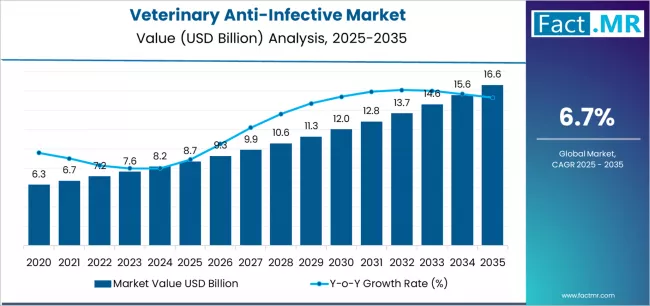
Veterinary Anti Infective Market Market Value Analysis | Source: Fact.MR
The overall market size is expected to grow by 1.9 times during the same period, supported by increasing demand from livestock production operations and expanding applications in companion animal healthcare across both developed and emerging agricultural markets.
Growing application diversity in aquaculture disease management, intensive animal farming systems, and specialized veterinary therapeutic protocols creates expanding opportunities for veterinary anti-infective innovation and specialized product developments.
Rising animal protein consumption in Asia Pacific nations, coupled with expanding livestock production capacity through intensive farming facilities and modern animal husbandry infrastructure, further accelerate market penetration across diverse agricultural segments.
The growing global demand for disease prevention in food-producing animals, particularly in poultry and swine operations, generates sustained requirements for effective antimicrobial therapies and infection control solutions.
Technical advancements in veterinary pharmaceutical technologies demonstrating measurable improvements in drug efficacy, reduced resistance development risks, and safety optimization reinforce veterinarian confidence in anti-infective treatment economics, while agricultural sector trends toward biosecurity enhancement and animal welfare standards expand addressable market opportunities beyond traditional therapeutic applications into preventive medicine and comprehensive herd health management supply chains.
Livestock producers and veterinary practitioners increasingly incorporate anti-infective products into disease management protocols, production efficiency programs, and animal health strategies, creating mainstream adoption channels that extend beyond emergency treatment applications into routine healthcare environments.
However, increasing regulatory restrictions on antimicrobial use in food-producing animals and growing concerns regarding antimicrobial resistance development may pose challenges to market expansion. Stricter veterinary prescription requirements and antibiotic stewardship programs in certain regions also influence usage patterns, requiring manufacturers to develop responsible use strategies catering to specific regulatory requirements across different geographical markets.
Supply chain complexity during active pharmaceutical ingredient procurement and the technical requirements for veterinary drug manufacturing and quality control may limit accessibility among smaller veterinary pharmaceutical companies in developing regions with limited infrastructure for advanced drug production and regulatory compliance systems.
Veterinary Anti-infective Market Year-over-Year Forecast 2025 to 2035
Between 2025 and 2030, the veterinary anti-infective market is projected to expand from USD 8.7 billion to USD 11.8 billion, resulting in a value increase of USD 3.1 billion, which represents 39.2% of the total forecast growth for the decade. This phase of development will be shaped by rising demand for livestock disease management products and companion animal therapeutic solutions, product innovation in targeted antimicrobial formulations and narrow-spectrum antibiotics, as well as expanding integration with antimicrobial stewardship programs and responsible use initiatives. Companies are establishing competitive positions through investment in novel drug discovery, formulation technology development capabilities, and strategic market expansion across livestock production facilities, veterinary clinic networks, and aquaculture operations.
From 2030 to 2035, the market is forecast to grow from USD 11.8 billion to USD 16.6 billion, adding another USD 4.8 billion, which constitutes 60.8% of the overall ten-year expansion. This period is expected to be characterized by the expansion of specialized veterinary anti-infective solutions, including targeted pathogen-specific therapies and customized treatment protocols tailored for specific animal species and production systems, strategic collaborations between pharmaceutical manufacturers and veterinary organizations, and an enhanced focus on antimicrobial resistance mitigation and sustainable livestock production practices. The growing emphasis on One Health initiatives and prudent antimicrobial use will drive demand for responsible veterinary anti-infective solutions across diverse animal health applications.
Veterinary Anti-infective Market Key Takeaways
| Metric | Value |
|---|---|
| Market Value (2025) | USD 8.7 billion |
| Market Forecast Value (2035) | USD 16.6 billion |
| Forecast CAGR (2025-2035) | 6.7% |
Source: Fact.MR analysis. Updated Dec 2, 2025
Why is the Veterinary Anti-infective Market Experiencing Steady Growth?
The veterinary anti-infective market grows by enabling livestock producers, veterinarians, and animal health professionals to access effective antimicrobial therapies that support animal health while meeting agricultural demand for consistent productivity and disease control.
Livestock operators and veterinary practitioners face mounting pressure to manage bacterial infections with proven therapeutic efficacy and safety profiles, with veterinary anti-infective products typically providing rapid pathogen elimination, reduced mortality rates, and improved production efficiency essential for animal welfare and economic viability, making these medications indispensable for competitive livestock operations in poultry production, swine farming, and cattle management categories.
The animal agriculture industry's need for reliable disease control options and consistent therapeutic performance creates demand for diverse antimicrobial classes that can provide effective bacterial treatment, maintain appropriate safety margins across different animal species, and ensure regulatory compliance without compromising production economics or food safety standards.
Government initiatives promoting animal disease surveillance and livestock health improvement drive adoption in commercial farms, veterinary practices, and aquaculture facilities, where anti-infective usage has a direct impact on animal welfare outcomes and production efficiency.
The companion animal sector's growing focus on advanced veterinary care and pet health insurance further expands market opportunities, with clinical research demonstrating therapeutic advantages from appropriate antimicrobial therapy, including reduced treatment duration and improved recovery rates.
However, regulatory complexity surrounding veterinary drug approvals and the technical requirements for prudent antimicrobial use protocols may limit accessibility among smaller veterinary practitioners and developing regions with limited infrastructure for advanced veterinary pharmaceutical distribution and professional education systems.
Segmental Analysis
The market is segmented by animal type, product, route of administration, type, distribution channel, and region. By animal type, the market is divided into livestock (including poultry, swine, cattle, sheep and goats, fish, and others) and companion animals. By product, the market includes antimicrobials (tetracyclines, penicillin, cephalosporins, macrolides, quinolones, and others), antifungals, and antivirals. By route of administration, the market comprises oral, injectable, topical, and others.
By type, the market is segmented into OTC and prescription. By distribution channel, the market includes retail pharmacies, hospital/clinic pharmacy, and e-commerce. Regionally, the market is divided into North America, Europe, Asia Pacific, Latin America, and Middle East & Africa.
Which Animal Type Captures the Maximum Share in the Veterinary Ant-Infective Market?
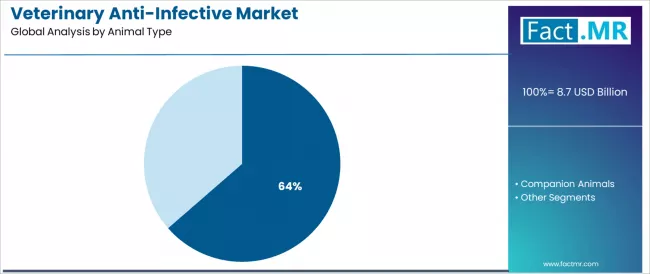
Veterinary Anti Infective Market Analysis By Animal Type | Source: Fact.MR
The livestock segment represents the dominant force in the veterinary anti-infective market, capturing 63.6% of the total market share in 2025. This established animal category encompasses solutions for food-producing animals including poultry, swine, cattle, sheep, goats, and fish, featuring critical disease management functionality for intensive production systems, commercial farming operations, and aquaculture facilities where bacterial infections impact animal welfare and production efficiency across all livestock operations.
The livestock segment's market leadership stems from its essential role in commercial animal agriculture, with anti-infective therapies capable of addressing diverse bacterial pathogens while maintaining regulatory compliance and operational reliability across all production environments. Within the livestock segment, poultry applications account for 18.0% of market share, driven by intensive production systems and high animal density requiring comprehensive disease management programs.
Swine operations represent 16.0% of livestock anti-infective consumption, serving pig production facilities requiring respiratory disease management and enteric pathogen control. Cattle account for 15.5% of the segment, encompassing beef and dairy operations where respiratory infections and mastitis treatment drive antimicrobial usage. Sheep and goats capture 7.5% of livestock applications, while aquaculture fish production represents 4.5%, serving expanding fish farming operations requiring bacterial disease management in intensive production systems.
Key advantages driving the livestock segment include:
- Established agricultural infrastructure with integrated veterinary service delivery that reduces treatment complexity and ensures consistent medication availability
- Critical disease control functionality allowing effective bacterial infection management across different livestock species without significant production disruptions
- Proven therapeutic efficacy, delivering reliable treatment outcomes while maintaining competitiveness against alternative disease management strategies
- Broad agricultural acceptance enabling straightforward veterinary prescribing and regulatory compliance across multiple livestock production sectors
Which Product Category Commands Market Leadership?

Veterinary Anti Infective Market Analysis By Product | Source: Fact.MR
The antimicrobials segment dominates the veterinary anti-infective market with a 51.0% share in 2025, driven by extensive adoption in bacterial infection treatment, respiratory disease management, and enteric pathogen control across livestock and companion animal applications. This product category benefits from established therapeutic protocols, proven clinical efficacy across bacterial pathogens, and comprehensive regulatory approval frameworks supporting veterinary use. Within antimicrobials, tetracyclines represent 18.0% of market share, reflecting broad-spectrum activity and established usage patterns in livestock production systems.
Penicillin products capture 10.5% of antimicrobial consumption, serving bacterial infections requiring beta-lactam therapy across multiple animal species. Cephalosporins account for 9.0% of the segment, providing advanced spectrum activity for resistant infections and critically important medical uses. Macrolides represent 7.5% of antimicrobial applications, while quinolones capture 3.0%, serving specialized therapeutic requirements and resistant pathogen management.
Which Route of Administration Accounts for the Dominant Share in the Market?
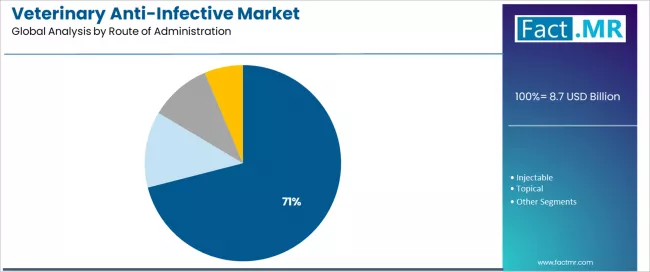
Veterinary Anti Infective Market Analysis By Route Of Administration | Source: Fact.MR
The oral route of administration commands 71.0% of the veterinary anti-infective market in 2025, reflecting the dominant delivery method for livestock production systems and companion animal home treatment. This administration route encompasses medicated feed, water-soluble formulations, and tablet medications where convenience and mass treatment capabilities support large-scale disease management. Commercial livestock operations account for the majority of oral administration consumption, supported by feed medication programs and water treatment systems enabling population-level therapy.
Injectable administration captures 19.0% market share, serving individual animal treatment, acute infection management, and therapeutic applications requiring rapid drug absorption and precise dosing. This route addresses cattle respiratory disease treatment, companion animal bacterial infections, and high-value animal individual therapy where injectable formulations provide optimal therapeutic outcomes. Topical administration represents 7.0% of the market, encompassing skin infection treatment, wound management, and localized therapeutic applications.
Which Product Type Facilitates Market Access?

Veterinary Anti Infective Market Analysis By Type | Source: Fact.MR
The OTC segment commands 55.0% of the veterinary anti-infective market, reflecting accessibility for livestock producers and companion animal owners requiring direct product access without veterinary prescription requirements. This product category encompasses approved antimicrobials for routine disease management, preventive treatments, and established therapeutic protocols where regulatory frameworks permit non-prescription availability. Feed additives and water-soluble medications represent primary OTC product formats, supported by agricultural supply chain distribution and farm store availability.
Prescription products capture 45.0% market share, serving critically important antimicrobials, advanced therapeutic agents, and controlled medications requiring veterinary professional oversight. This category addresses companion animal infections, high-value livestock individual treatment, and restricted antimicrobials where regulatory frameworks mandate veterinary prescription for appropriate use and antimicrobial stewardship compliance.
How do Distribution Channels Enable Product Delivery?

Veterinary Anti Infective Market Analysis By Distribution Channel | Source: Fact.MR
Retail pharmacies command 58.0% of veterinary anti-infective market distribution, reflecting traditional agricultural supply chains and veterinary pharmacy networks serving livestock producers and pet owners. This channel encompasses farm supply stores, agricultural cooperatives, and veterinary retail outlets where product availability and technical support facilitate medication access. Rural agricultural regions account for substantial retail distribution, supported by established supply relationships and local availability requirements.
Hospital and clinic pharmacies capture 28.0% distribution share, serving veterinary practice dispensing, companion animal treatment programs, and professional medication distribution where clinical guidance supports appropriate prescribing. E-commerce represents 14.0% of distribution channels, encompassing online veterinary pharmacies, direct-to-consumer platforms, and digital agricultural supply networks enabling convenient product access and competitive pricing.
What are the Drivers, Restraints, and Key Trends of the Veterinary Anti-infective Market?
The market is driven by three concrete demand factors tied to livestock production growth and animal health awareness. First, increasing global meat consumption and intensive livestock production create growing demand for disease management solutions, with worldwide animal protein production expanding by 5-7% annually in major agricultural regions, requiring comprehensive veterinary pharmaceutical infrastructure. Second, expanding companion animal ownership and pet healthcare spending drive increased adoption of veterinary therapeutics, with pet medication expenditures growing substantially as owners seek advanced medical care comparable to human healthcare standards by 2030. Third, emerging infectious diseases and pathogen evolution challenges necessitate ongoing antimicrobial development that addresses resistance patterns while maintaining therapeutic efficacy and regulatory compliance capabilities.
Market restraints include increasing regulatory restrictions on antimicrobial use in food-producing animals that limit product availability among livestock producers, particularly in regions where veterinary feed directive requirements and prescription mandates restrict traditional usage patterns. Growing antimicrobial resistance concerns and public health advocacy pose another significant challenge, as human health organizations promote reduced agricultural antimicrobial consumption, potentially causing regulatory tightening and usage restrictions. Competition from alternative disease management strategies including vaccination programs and biosecurity enhancement creates additional market dynamics for antimicrobial consumption, demanding ongoing investment in stewardship programs and responsible use education.
Key trends indicate accelerated development of narrow-spectrum antimicrobials in research pipelines, particularly targeting specific pathogens with reduced resistance selection pressure driving innovation toward precision veterinary therapeutics. Regulatory harmonization trends toward international veterinary drug approval streamlining, antimicrobial stewardship guideline implementation, and critically important antimicrobial designation enable balanced approaches protecting human health while maintaining animal welfare capabilities. However, the market thesis could face disruption if significant regulatory prohibitions emerge or major shifts in livestock production systems reduce reliance on therapeutic antimicrobial interventions.
Analysis of the Veterinary Anti-infective Market by Key Countries
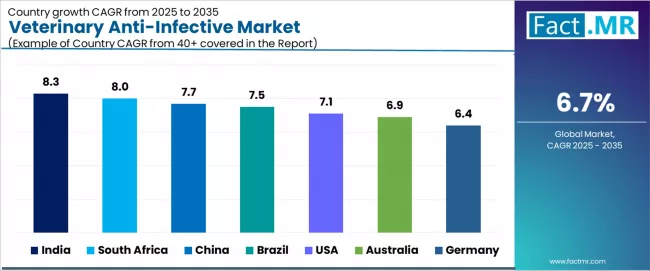
Veterinary Anti Infective Market Cagr Analysis By Country | Source: Fact.MR
| Country | CAGR (2025-2035) |
|---|---|
| India | 8.3% |
| South Africa | 8.0% |
| China | 7.7% |
| Brazil | 7.5% |
| USA | 7.1% |
| Australia | 6.9% |
| Germany | 6.4% |
Source: Fact.MR analysis. Updated Dec 2, 2025
The veterinary anti-infective market is expanding steadily, with India leading at an 8.3% CAGR through 2035, driven by rapid livestock sector modernization, expanding dairy production capacity, and growing poultry farming operations. South Africa follows at 8.0%, supported by developing livestock infrastructure, emerging commercial farming systems, and increasing animal health awareness. China records 7.7%, reflecting massive livestock production volumes, intensive farming system adoption, and comprehensive disease management requirements.
Brazil posts 7.5%, anchored by extensive cattle ranching operations and expanding poultry export production. USA grows at 7.1%, with advanced companion animal care markets and established livestock pharmaceutical usage. Australia advances at 6.9%, emphasizing extensive livestock systems and stringent biosecurity requirements, while Germany grows at 6.4%, focusing on regulated antimicrobial stewardship and advanced veterinary care standards.
India Leads Global Market Expansion
India demonstrates the strongest growth potential in the veterinary anti-infective market with a CAGR of 8.3% through 2035. The country's leadership position stems from rapid dairy sector expansion, growing poultry production for domestic consumption, and modernizing livestock farming practices enabling increased veterinary pharmaceutical adoption.
Growth is concentrated in major agricultural regions, including Punjab, Haryana, Gujarat, and Tamil Nadu, where intensive livestock operations and expanding commercial farms are implementing systematic disease management programs and veterinary healthcare protocols.
Distribution channels through veterinary dispensaries, agricultural cooperatives, and rural pharmacy networks expand medication access across livestock producers and dairy farmers. The country's National Livestock Mission provides policy support for animal health improvement, including veterinary infrastructure development initiatives.
Key market factors:
- Agricultural demand concentrated in dairy belts and poultry production zones with comprehensive animal health programs
- Infrastructure development through veterinary colleges, diagnostic facilities, and pharmaceutical distribution networks
- Comprehensive livestock sector ecosystem, including established dairy cooperatives with proven animal husbandry adoption
- Regulatory evolution featuring veterinary drug licensing frameworks and antimicrobial stewardship guideline development
South Africa Shows Agricultural Development
In major agricultural provinces including Eastern Cape, KwaZulu-Natal, Free State, and Western Cape, the adoption of veterinary anti-infective is accelerating across commercial livestock operations and emerging smallholder farming systems, driven by animal health awareness programs and veterinary service expansion. The market demonstrates strong growth momentum with a CAGR of 8.0% through 2035, linked to developing livestock infrastructure, commercial farming modernization, and sustained agricultural development initiatives.
South African livestock producers are implementing veterinary healthcare protocols and disease management systems to enhance productivity while meeting growing domestic and export market requirements for animal protein products. The country's veterinary regulatory framework creates structured pathways for pharmaceutical registration, while agricultural extension services support knowledge dissemination regarding appropriate antimicrobial use practices.
Key development areas:
- Commercial livestock and emerging smallholder sectors leading anti-infective adoption with comprehensive development programs
- Veterinary infrastructure providing professional services with expanding rural clinic networks
- Technology partnerships between pharmaceutical companies and agricultural cooperatives are expanding market access
- Integration of animal health education and responsible antimicrobial use protocols
China Shows Production Scale Leadership
China's market expansion is driven by massive livestock production volumes, including concentrated poultry operations in Shandong and Henan provinces and intensive swine production systems across major agricultural regions. The country demonstrates solid growth potential with a CAGR of 7.7% through 2035, supported by enormous animal population scales, intensive farming system prevalence, and comprehensive disease management requirements.
Chinese livestock producers face significant infectious disease challenges requiring effective antimicrobial interventions, necessitating substantial pharmaceutical consumption and veterinary service deployment supported by government agricultural policies. However, expanding production efficiency goals and regulatory frameworks addressing antimicrobial resistance create evolving market dynamics for responsible product usage, particularly in regions where export-oriented production demands international standards compliance and residue monitoring programs.
Key market characteristics:
- Intensive livestock production systems showing sustained demand with substantial pharmaceutical consumption volumes
- Regional production trends focused on specialized farming zones and integrated agricultural complexes
- Regulatory evolution toward antimicrobial stewardship and residue control programs
- Growing emphasis on food safety compliance and veterinary drug withdrawal period adherence
Brazil Demonstrates Livestock Export Focus
The Brazilian market shows promising growth based on integration with extensive cattle ranching and expanding poultry export production sectors serving global markets. The country demonstrates solid potential with a CAGR of 7.5% through 2035, driven by massive beef cattle herds, leading poultry production capacity, and strategic positioning as agricultural commodity exporter across major production regions including Mato Grosso, Paraná, São Paulo, and Rio Grande do Sul.
Brazilian livestock producers are adopting veterinary anti-infective for disease management and production optimization, particularly in export-oriented operations where international market access demands comprehensive animal health certification and residue compliance. Technology deployment channels through agricultural cooperatives, veterinary distributors, and integrated production companies expand coverage across commercial farms and ranching operations.
Leading market segments:
- Cattle ranching and poultry production operations in major agricultural centers implementing comprehensive health programs
- Export market compliance requirements driving veterinary pharmaceutical standards and withdrawal period adherence
- Collaborative initiatives between livestock producers and veterinary professionals are expanding best practices
- Focus on production efficiency and animal welfare enhancement initiatives
USA Emphasizes Companion Animal Care
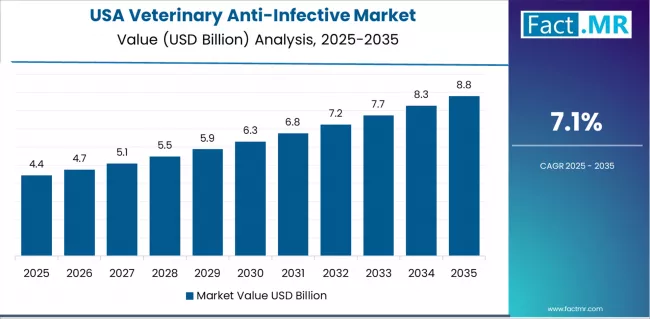
Veterinary Anti Infective Market Country Value Analysis | Source: Fact.MR
In major metropolitan regions and rural agricultural areas nationwide, veterinary practitioners and livestock producers are implementing comprehensive anti-infective protocols balancing therapeutic needs with antimicrobial stewardship requirements, with documented regulatory compliance through FDA Veterinary Feed Directive implementation and veterinary prescription frameworks governing antimicrobial access. The market shows solid growth potential with a CAGR of 7.1% through 2035, linked to advanced companion animal healthcare spending, established livestock pharmaceutical markets, and stringent regulatory frameworks governing veterinary drug usage.
American veterinarians are adopting evidence-based antimicrobial prescribing and stewardship protocols to optimize therapeutic outcomes while maintaining regulatory compliance demanded by FDA oversight and professional responsibility standards. The country's mature veterinary pharmaceutical market creates sophisticated demand for innovative products and responsible use solutions that integrate with professional practice standards.
Market development factors:
- Companion animal practices and livestock veterinary services leading anti-infective consumption across USA
- Regulatory frameworks through FDA Center for Veterinary Medicine establishing prescription requirements and stewardship expectations
- Professional veterinary organizations promoting antimicrobial stewardship guidelines and continuing education programs
- Emphasis on therapeutic appropriateness and antimicrobial resistance mitigation across veterinary applications
Australia Emphasizes Biosecurity Excellence
The Australian market leads in livestock biosecurity integration based on extensive grazing systems and stringent disease control frameworks supporting animal health protection. The country shows steady potential with a CAGR of 6.9% through 2035, driven by extensive cattle and sheep production systems, export market quality requirements, and comprehensive biosecurity regulations across major agricultural regions including Queensland, New South Wales, Victoria, and Western Australia.
Australian livestock producers are adopting targeted antimicrobial interventions within integrated biosecurity frameworks, particularly in export-certified operations where international market access demands rigorous animal health standards and pharmaceutical residue compliance. Technology deployment channels through rural veterinary practices and agricultural supply networks expand coverage across extensive production systems and remote farming operations.
Leading market segments:
- Cattle and sheep production operations in extensive grazing systems implementing targeted disease intervention strategies
- Export certification requirements enabling premium market access with comprehensive traceability programs
- Collaborative research between veterinary authorities and livestock industries are expanding evidence-based protocols
- Focus on biosecurity enhancement and minimal antimicrobial intervention philosophies
Germany Emphasizes Regulatory Compliance
Germany's veterinary anti-infective market demonstrates mature regulatory landscape, characterized by strict prescription requirements and comprehensive antimicrobial stewardship programs across livestock and companion animal sectors. The country shows steady growth momentum with a CAGR of 6.4% through 2035, driven by regulated pharmaceutical dispensing frameworks, veterinary professional oversight, and stringent antimicrobial usage monitoring across major agricultural regions.
Germany's emphasis on responsible antimicrobial use and One Health principles creates structured veterinary prescribing practices that support therapeutic appropriateness and resistance mitigation objectives. The market benefits from established veterinary-client relationships and professional standards prioritizing judicious antimicrobial usage. Livestock operations and companion animal practices showcase responsible anti-infective utilization where professional oversight achieves therapeutic goals through evidence-based protocols.
Key market characteristics:
- Veterinary practitioners and livestock producers implementing regulated antimicrobial usage with emphasis on professional responsibility
- Regulatory monitoring systems tracking veterinary pharmaceutical consumption with comprehensive surveillance programs
- Professional collaboration between veterinary organizations and agricultural sectors promoting stewardship guidelines
- Emphasis on therapeutic alternatives and preventive health strategies minimizing antimicrobial dependency
Europe Market Split by Country
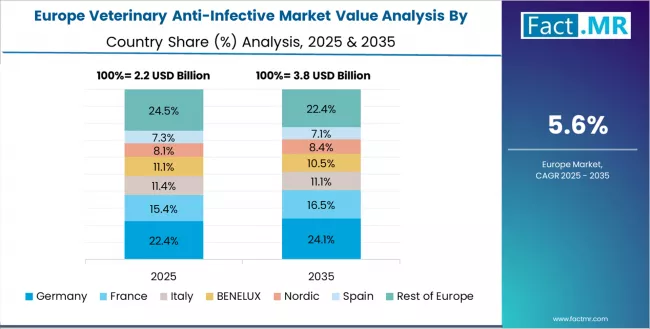
Veterinary Anti Infective Market Europe Country Market Share Analysis, 2025 & 2035 | Source: Fact.MR
The veterinary anti-infective market in Europe is projected to grow from USD 1.74 billion in 2025 to USD 3.31 billion by 2035, registering a CAGR of 6.7% over the forecast period. Germany is expected to maintain its leadership position with a 28.3% market share in 2025, supported by its advanced veterinary healthcare infrastructure, comprehensive livestock production systems, and stringent pharmaceutical regulatory framework across major agricultural centers.
France follows with a 24.6% share in 2025, driven by extensive livestock farming operations and established veterinary pharmaceutical market. UK holds a 19.8% share in 2025 through its companion animal care emphasis and regulated livestock antimicrobial stewardship. Spain commands a 14.7% share, while Rest of Europe accounts for 12.6% in 2025.
By 2035, Germany is projected to hold 27.9% share, France 24.9%, UK 20.1%, Spain 14.9%, and Rest of Europe 12.2%, reflecting sustained growth momentum across all major European markets and increasing veterinary anti-infective adoption in diversified livestock, companion animal, and aquaculture applications implementing comprehensive antimicrobial stewardship and responsible use programs.
Competitive Landscape of the Veterinary Anti-infective Market
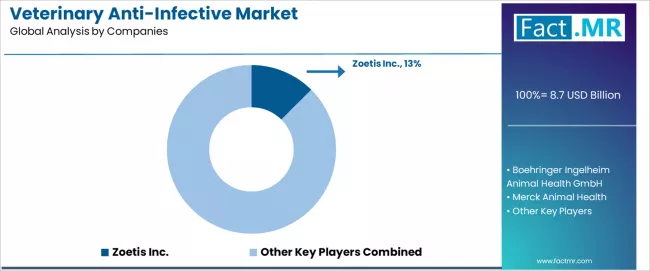
Veterinary Anti Infective Market Analysis By Company | Source: Fact.MR
The veterinary anti-infective market features approximately 15-20 meaningful players with moderate concentration, where the top three companies control roughly 30-40% of global market share through established product portfolios and extensive distribution networks across animal health sectors.
Market leaders include Zoetis, Boehringer Ingelheim, and Elanco Animal Health, which maintain competitive advantages through comprehensive veterinary pharmaceutical portfolios, global manufacturing capabilities, and deep expertise in animal health and livestock production sectors, creating strong relationships among veterinarians and livestock producers.
These companies leverage established research and development infrastructure and ongoing product innovation initiatives to defend market positions while developing next-generation antimicrobials and alternative disease management solutions. Zoetis Inc. commands a 12.5% market share through diversified product offerings and strategic positioning across companion animal and livestock markets.
Challengers encompass Merck & Co. Inc., Dechra Pharmaceuticals Plc., and Ceva Sante Animale, which compete through specialized product portfolios and strong regional presence in key agricultural markets. Specialty producers, including Virbac, Biogénesis Bagó, and Vetoquinol, focus on specific geographical regions or therapeutic categories, offering differentiated capabilities in regional distribution networks, specialized formulations, and technical veterinary support services.
Regional players and generic manufacturers create competitive pressure through cost-advantaged production capabilities and strategic market positioning, particularly in high-growth markets including India and China, where local presence provides advantages in regulatory navigation and distribution optimization.
Market dynamics favor companies that combine therapeutic innovation with comprehensive stewardship programs addressing antimicrobial resistance concerns while maintaining animal health effectiveness. Strategic investments in novel drug discovery and formulation technology initiatives enable differentiation and sustainable market positioning across evolving regulatory environments.
Global Veterinary Anti-infective Market - Stakeholder Contribution Framework
Veterinary anti-infective products represent a critical animal health solution that enables livestock producers, veterinarians, and animal health professionals to manage bacterial infections and maintain production efficiency without compromising animal welfare, typically providing essential therapeutic functionality and disease control capabilities while supporting sustainable livestock production.
With the market projected to grow from USD 8.7 billion in 2025 to USD 16.6 billion by 2035 at a 6.7% CAGR, these products offer compelling advantages - proven therapeutic efficacy, established safety profiles, and comprehensive disease management - making them essential for livestock production (largest segment), companion animal care (expanding adoption), and diverse agricultural systems seeking effective disease control solutions. Scaling responsible use and global access requires coordinated action across regulatory frameworks, veterinary professional standards, pharmaceutical manufacturers, livestock industries, and public health organizations.
How Governments Could Spur Responsible Use and Access?
- Antimicrobial Stewardship Regulations: Implement balanced regulatory frameworks governing veterinary antimicrobial usage, establishing prescription requirements supporting professional veterinary oversight while maintaining animal welfare capabilities and disease management effectiveness across livestock production systems.
- Veterinary Infrastructure & Education: Fund veterinary service expansion in underserved agricultural regions, provide professional education supporting responsible antimicrobial prescribing practices, and establish diagnostic laboratory networks enabling pathogen identification and susceptibility testing for targeted therapy.
- Surveillance & Monitoring Systems: Create comprehensive antimicrobial usage monitoring tracking consumption patterns across animal species, establish resistance surveillance programs identifying emerging threats, and develop integrated One Health frameworks connecting veterinary, human, and environmental health data.
- Research & Innovation Support: Invest in novel antimicrobial discovery targeting veterinary-specific pathogens, support alternative disease management technology development including vaccines and probiotics, and fund stewardship research evaluating optimal usage strategies balancing animal health with resistance mitigation.
How Industry Bodies Could Support Market Development?
- Professional Practice Guidelines: Define evidence-based antimicrobial prescribing recommendations across animal species and disease conditions, establish professional standards supporting judicious usage and therapeutic appropriateness, and create continuing education programs maintaining veterinary knowledge regarding resistance management.
- Stewardship Education & Training: Lead veterinarian and livestock producer education initiatives demonstrating responsible antimicrobial usage, emphasizing appropriate therapeutic selection and disease prevention strategies compared to routine prophylactic usage and inappropriate prescribing practices.
- Quality Standards & Pharmacovigilance: Develop veterinary pharmaceutical quality specifications ensuring product effectiveness and safety, establish adverse event reporting systems monitoring therapeutic outcomes and unexpected reactions, and create product stewardship programs supporting responsible manufacturer engagement with veterinary professionals.
How Manufacturers and Veterinary Professionals Could Strengthen the Ecosystem?
- Therapeutic Innovation & Development: Develop narrow-spectrum antimicrobials targeting specific pathogens with reduced resistance selection pressure, create novel delivery systems improving therapeutic convenience and compliance, and invest in diagnostic tools enabling rapid pathogen identification supporting targeted therapy selection.
- Stewardship Programs & Education: Provide comprehensive veterinary professional education supporting evidence-based prescribing, establish producer training programs demonstrating disease prevention strategies reducing antimicrobial dependency, and develop decision support tools guiding appropriate therapeutic selection and usage protocols.
- Access & Affordability Initiatives: Offer tiered pricing strategies supporting developing country access to essential veterinary medicines, establish distribution partnerships reaching remote agricultural regions and smallholder farmers, and develop generic product programs providing affordable therapeutic options while maintaining quality standards and regulatory compliance.
Key Players in the Veterinary Anti-infective Market
- Zoetis Inc.
- Boehringer Ingelheim Animal Health GmbH
- Merck Animal Health
- Dechra Pharmaceuticals PLC
- Elanco Animal Health Incorporated
- Ceva Santé Animale
- Virbac S.A.
- Biogénesis Bagó S.A.
- Vetoquinol S.A.
- Norbrook Laboratories Ltd.
Segmentation
Scope of the Report
| Items | Values |
|---|---|
| Quantitative Units | USD 8.7 Billion |
| Animal Type | Livestock (Poultry, Swine, Cattle, Sheep & Goats, Fish, Others), Companion Animals |
| Product | Antimicrobials (Tetracyclines, Penicillin, Cephalosporins, Macrolides, Quinolones, Others), Antifungals, Antivirals |
| Route of Administration | Oral, Injectable, Topical, Others |
| Type | OTC, Prescription |
| Distribution Channel | Retail Pharmacies, Hospital/Clinic Pharmacy, E-commerce |
| Regions Covered | North America, Europe, Asia Pacific, Latin America, Middle East & Africa |
| Country Covered | USA, India, China, Germany, Brazil, Australia, South Africa, and 40+ countries |
| Key Companies Profiled | Zoetis, Boehringer Ingelheim, Merck & Co. Inc., Dechra Pharmaceuticals Plc., Elanco Animal Health, Ceva Sante Animale, Virbac, Biogénesis Bagó, Vetoquinol, Norbrook Laboratories |
| Additional Attributes | Dollar sales by animal type categories, product analysis across antimicrobial classes, route of administration patterns in livestock and companion animals, distribution channel trends with retail pharmacies and veterinary clinics, competitive landscape with animal health pharmaceutical companies, therapeutic protocols and stewardship guidelines, integration with livestock production systems and veterinary practice networks. |
Source: Fact.MR analysis. Updated Dec 2, 2025
Veterinary Anti-infective Market by Segments
-
Animal Type :
- Livestock
- Poultry
- Swine
- Cattle
- Sheep & Goats
- Fish
- Others
- Companion Animals
- Livestock
-
Product :
- Antimicrobials
- Tetracyclines
- Penicillin
- Cephalosporins
- Macrolides
- Quinolones
- Others
- Antifungals
- Antivirals
- Antimicrobials
-
Route of Administration :
- Oral
- Injectable
- Topical
- Others
-
Type :
- OTC
- Prescription
-
Distribution Channel :
- Retail Pharmacies
- Hospital/Clinic Pharmacy
- E-commerce
-
Region :
- North America
- USA
- Canada
- Mexico
- Europe
- Germany
- France
- UK
- Spain
- Rest of Europe
- Asia Pacific
- China
- Japan
- India
- South Korea
- Australia & New Zealand
- ASEAN
- Rest of Asia Pacific
- Latin America
- Brazil
- Rest of Latin America
- Middle East & Africa
- South Africa
- Kingdom of Saudi Arabia
- Other GCC Countries
- Turkey
- Rest of Middle East & Africa
- North America
Frequently Asked Questions
How big is the veterinary anti-infectives market in 2025?
What will be the size of veterinary anti-infectives market in 2035?
How much will be the veterinary anti-infectives market growth between 2025 and 2035?
What are the key product types in the veterinary anti-infectives market?
Which product segment to contribute significant share in the veterinary anti-infectives market in 2025?
Who worked on this report


Preview the report firsthand - request a free sample
Free SampleGet the brochure for pricing and purchase details
Download PDF