Patient Lateral Transfer Devices Market Size, Share, Growth and Forecast (2026 - 2036)
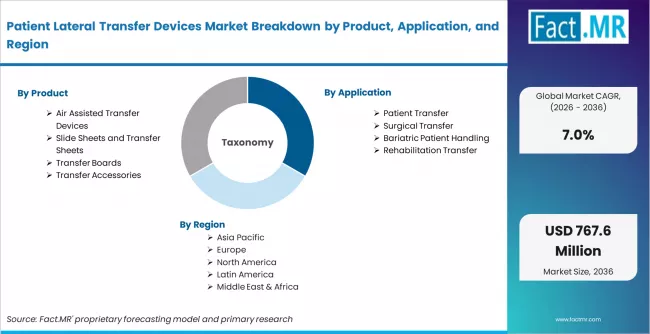
Patient Lateral Transfer Devices Market is segmented by Product (Air Assisted Transfer Devices, Slide Sheets and Transfer Sheets, Transfer Boards, Transfer Accessories), Application (Patient Transfer, Surgical Transfer, Bariatric Patient Handling, Rehabilitation Transfer), End Use (Hospitals, Long Term Care Centers, Ambulatory Surgical Centers, Home Care Settings), and Region, with forecasts covering the period from 2026 to 2036.
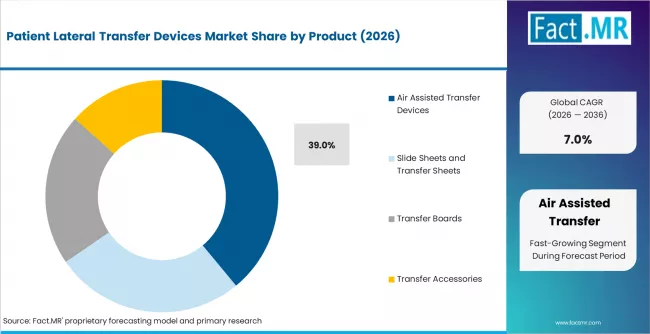
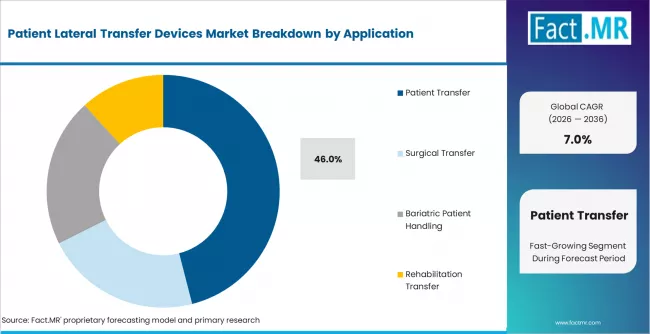
According to Fact.MR estimates, the global patient lateral transfer devices market market was valued at USD 364.7 million in 2025. The market is projected to reach USD 390.2 million in 2026 and is expected to grow to USD 767.6 million by 2036, expanding at a CAGR of 7.0%. Air Assisted Transfer Devices is anticipated to account for 39.0% of the product segment in 2026, while Patient Transfer is expected to remain the leading application with around 46.0% share.
Patient Lateral Transfer Devices Market Analysis and Forecast by Fact.MR
According to Fact.MR estimates, the global patient lateral transfer devices market market was valued at USD 364.7 million in 2025. The market is projected to reach USD 390.2 million in 2026 and is expected to grow to USD 767.6 million by 2036, expanding at a CAGR of 7.0%. Air Assisted Transfer Devices is anticipated to account for 39.0% of the product segment in 2026, while Patient Transfer is expected to remain the leading application with around 46.0% share.

Summary of Patient Lateral Transfer Devices Market
- Market Snapshot
- The patient lateral transfer devices market was valued at USD 364.66 million in 2025.
- By 2036, the Patient Lateral Transfer Devices Market is expected to be worth USD 767.56 million.
- From 2026 to 2036, the market is projected to expand at a CAGR of 7.0%.
- The market is projected to create an incremental opportunity of USD 377.37 million between 2026 and 2036.
- In 2026, air assisted transfer devices are expected to account for 39% of the product segment, driven by ergonomic benefits and caregiver injury prevention protocols.
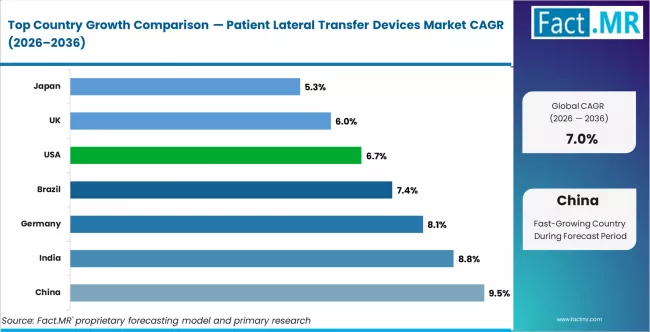
- China (9.45%) and India (8.75%) are two of the fastest growing markets in the world.
- Demand and Growth Drivers
- Demand is shaped by rising caregiver injury rates from patient handling, which drive hospital and long-term care adoption of mechanical transfer aids.
- Growth reflects expanding safe patient handling regulations and OSHA enforcement that mandate ergonomic transfer equipment in healthcare facilities.
- Adoption is increasing due to rising bariatric patient populations requiring specialized transfer equipment and aging population growth supporting long-term care demand.
- Product and Segment View
- Air assisted transfer devices lead the product segment with a 39% share in 2026, supported by ergonomic benefits and caregiver injury prevention protocols.
- Patient transfer holds 46% of the application segment, anchored by routine bed-to-bed and bed-to-wheelchair transfer workflows.
- Hospitals account for 42% of end-use demand, while long term care centers, ambulatory surgical centers, and home care settings form secondary channels.
- Geography and Competitive Outlook
- North America remains the largest regional market, supported by strict OSHA safe patient handling enforcement, rising bariatric populations, and established long-term care infrastructure.
- Asia Pacific is the fastest-growing region, led by China where expanding hospital capacity, aging population growth, and rising caregiver safety awareness are all supporting demand.
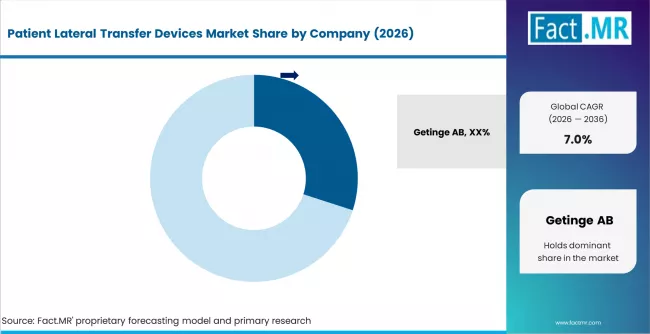
- The competitive field is led by Getinge AB with an estimated 30% share, followed by Airpal Inc., Stryker Corporation, Medline Industries Inc., and Hill-Rom Holdings Inc.
- Analyst Opinion
- Patient lateral transfer devices represent a healthcare category where regulatory enforcement and caregiver injury economics together drive sustained demand, and the commercial positioning reflects this dual driver. The category is structurally attractive because safe patient handling regulations create mandated demand while bariatric patient population growth expands the addressable use case base. The commercial lever that matters most is channel breadth across acute care, long-term care, and ambulatory settings because patient transfer needs span the full care continuum. Players that combine air assisted and slide sheet portfolio breadth with strong direct sales and distributor relationships will capture premium positioning, while single-format competitors face pressure as healthcare providers consolidate transfer equipment purchases with broader medical device suppliers.
Why is Patient Lateral Transfer Devices Market Growing?
- Growth reflects rising caregiver injury rates and expanding safe patient handling regulations across healthcare facilities.
- Demand is shaped by rising bariatric patient populations requiring specialized transfer equipment across care settings.
- Adoption is increasing due to aging population growth supporting long-term care demand and workers' compensation cost pressures on healthcare employers.
The demand base rests on rising caregiver injury rates from manual patient handling, which drive healthcare facility investment in mechanical transfer aids. Nursing and direct care staff have among the highest rates of musculoskeletal injuries in the US workforce, with patient handling accounting for the majority of these injuries. Workers' compensation claims, lost work time, and turnover costs all create direct financial incentive for healthcare employers to invest in transfer equipment and safe patient handling programs.
The second structural driver is safe patient handling regulatory expansion. OSHA enforcement guidance, state-level safe patient handling laws in California, Washington, and other states, and Joint Commission patient safety goals all support mandatory and recommended transfer equipment adoption. These regulatory frameworks create sustained demand across acute care, long-term care, and specialty healthcare settings.
The third driver is bariatric patient population growth and aging population demographics. Obesity prevalence continues rising in developed and emerging markets, which increases the number of patients requiring specialized bariatric transfer equipment. Aging populations also drive long-term care demand across developed markets, with care facility expansion supporting sustained transfer device procurement. Home healthcare is also expanding, which creates incremental demand for transfer equipment outside traditional institutional settings.
Segment-wise Analysis of Patient Lateral Transfer Devices Market
- Air assisted transfer devices lead the product segment with 39% share in 2026, anchored by ergonomic benefits and caregiver injury prevention.
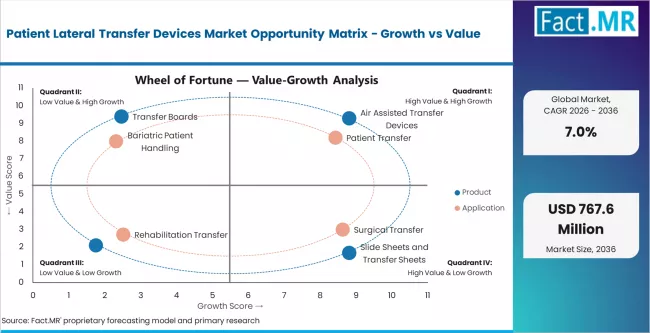
- Disposable slide sheets represent the fastest-growing sub-segment, driven by infection control preferences and workflow simplification.
- Patient transfer holds 46% of the application segment, followed by surgical transfer and bariatric patient handling as secondary use cases.
The segmentation view shows a category where air assisted systems dominate premium volume while disposable slide sheets drive fastest growth. Competitive advantage rests on air assisted technology capability, slide sheet portfolio breadth across reusable and disposable formats, and broad channel distribution relationships. Growth over the forecast period is expected to tilt toward disposable single-use sheets and specialty bariatric handling equipment.
Why Do Air Assisted Transfer Devices Lead the Product Segment?

Air assisted transfer devices lead the product segment because they reduce patient handling friction to near-zero levels, which enables single-caregiver transfers of most patient weights without strain injury risk. Air mattress transfer systems use pressurized air to lift patients slightly above the transfer surface, which reduces required manual force by 80 to 90 percent. This ergonomic benefit directly addresses the primary pain point driving patient transfer device adoption, which supports premium segment leadership.
The segment leadership is reinforced by bariatric handling capability. Air assisted systems can safely transfer obese patients who exceed safe weight limits for manual transfer or slide sheet alternatives. As bariatric patient populations continue growing, air assisted device demand expands in parallel. The category leader Getinge AB has built its leadership position in part on established air assisted platforms marketed across hospital, surgical, and specialty care settings.
Why are Disposable Slide Sheets the Fastest-Growing Sub-Segment?

Disposable slide sheets are the fastest-growing sub-segment because they eliminate laundering and infection transmission risk while delivering sufficient friction reduction for routine patient transfers. Reusable slide sheets require cleaning and laundering protocols that create operational overhead, while disposable sheets support workflow simplification and infection control. Single patient use sheets also align with Joint Commission infection prevention guidance for high-risk patient populations.
Growth within disposable slide sheets is being lifted by infection control priorities following pandemic-era hospital experience. Hospitals and long-term care facilities have sustained elevated infection control protocols after the pandemic, which supports continued single-use sheet adoption. Cost-per-transfer economics for disposable sheets can be competitive with reusable alternatives when laundering overhead and infection transmission risk are fully considered.
Key Growth Drivers, Constraints, and Market Scope

- Caregiver injury rates and safe patient handling regulations are the structural demand foundations.
- Bariatric patient population growth and disposable slide sheet adoption are the key compositional shifts driving premium growth.
- Equipment capital costs, training requirements, and workflow integration challenges remain the leading constraints.
The market scope is shaped by the combination of regulatory-driven demand and specialty bariatric handling equipment growth. Competitive advantage sits in air assisted technology capability, slide sheet portfolio breadth across reusable and disposable formats, and broad channel distribution relationships.
Growth Drivers
The primary driver is rising caregiver injury rates and workers' compensation cost pressures that create financial incentive for transfer equipment investment. A second driver is safe patient handling regulatory expansion through OSHA guidance, state-level laws, and Joint Commission patient safety goals. A third driver is bariatric patient population growth and aging population demographics, which expand the addressable use case base across acute and long-term care settings. These three forces combine to deliver a steady mid to high single-digit growth trajectory with premium uplift from bariatric handling and disposable sheet segments.
Constraints
The leading constraint is equipment capital costs. Air assisted transfer systems can cost USD 3,000 to USD 10,000 per unit plus ongoing sheet and accessory costs, which creates budget barriers particularly in long-term care and emerging market settings. A second constraint is training requirements. Effective use of transfer equipment requires caregiver training that is not universally delivered, which limits the pace of equipment deployment and sometimes creates workflow integration challenges. A third constraint is workflow integration. Patient transfer equipment needs to fit within established nursing workflows and physical space constraints, which can limit adoption in older facility designs.
Opportunities
The strongest opportunity lies in bariatric handling equipment portfolio expansion, where specialized products can capture premium pricing as bariatric patient populations continue growing. A second opportunity is disposable slide sheet segment expansion, where infection control preferences and workflow simplification support sustained growth. A third opportunity is emerging market penetration, particularly in China and India, where expanding hospital capacity, aging population growth, and rising caregiver safety awareness all support category demand.
Regional Outlook Across Key Markets
.webp)
- China leads country-level growth at 9.45% CAGR, supported by expanding hospital capacity, aging population growth, and rising caregiver safety awareness.
- India follows at 8.75%, driven by private hospital expansion, growing bariatric patient populations, and rising awareness of safe patient handling protocols.
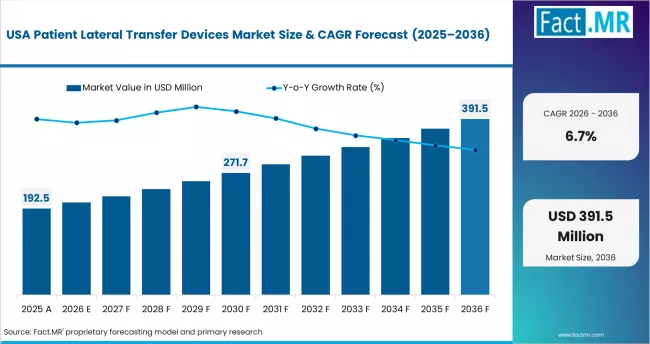
- North America remains the largest regional pool by absolute value, with the USA at 6.65% supported by strict OSHA enforcement and rising bariatric populations.
- European demand is led by Germany at 8.05% and the UK at 5.95%, with both countries showing mature safe patient handling infrastructure.
Country CAGR Table
| Country | CAGR (%) |
|---|---|
| China | 9.45% |
| India | 8.75% |
| Germany | 8.05% |
| Brazil | 7.35% |
| USA | 6.65% |
| UK | 5.95% |
| Japan | 5.25% |
Source: Fact.MR analysis, based on proprietary forecasting model and primary research.

Regional dynamics split into three profiles. Asia Pacific leads on growth rate, pulled by hospital capacity expansion and aging population growth. Europe grows at mid to high single-digit rates driven by mature safe patient handling infrastructure and aging population dynamics. North America remains the largest dollar market, anchored by strict OSHA enforcement, rising bariatric populations, and established long-term care infrastructure.
United States
The United States anchors global demand through its strict OSHA safe patient handling enforcement, rising bariatric patient populations, and established long-term care infrastructure. Getinge AB, Stryker Corporation, Hill-Rom Holdings Inc., and Medline Industries Inc. lead the clinical channel, while specialty providers such as Airpal Inc., EZ Way Inc., and Sizewise Rentals LLC compete across specific product segments. State-level safe patient handling laws in California, Washington, New York, and other states drive concentrated device procurement.
- Strict OSHA enforcement drives sustained transfer equipment adoption across healthcare settings.
- Rising bariatric populations support specialty bariatric handling equipment demand.
- Established long-term care infrastructure sustains slide sheet and air assisted device demand.
Canada
Canada represents a steady growth market shaped by provincial safe patient handling regulations, provincial health system procurement patterns, and cross-border distribution relationships with US manufacturers. Provincial occupational health and safety regulations support safe patient handling equipment adoption, while provincial long-term care networks drive concentrated device procurement. Bariatric population growth supports specialty equipment demand.
- Provincial safe patient handling regulations support transfer equipment adoption.
- Provincial long-term care networks drive concentrated device procurement.
- Cross-border distribution supports device availability across Canadian markets.
United Kingdom
The United Kingdom market is shaped by NHS England's safe patient handling protocols, HSE enforcement, and the mix of NHS and private healthcare channels. NHS trusts deploy transfer devices across acute care and specialty settings, while private healthcare providers and care home networks support additional demand. HSE enforcement of manual handling regulations drives sustained transfer equipment procurement.
- NHS safe patient handling protocols support transfer equipment deployment.
- HSE enforcement drives sustained compliance-related procurement.
- Private healthcare and care home networks expand demand beyond NHS channels.
Germany
Germany leads European growth on the strength of mature safe patient handling infrastructure, statutory insurance coverage supporting healthcare facility investment, and established long-term care network presence. Getinge AB, Stryker Corporation, and Hill-Rom Holdings Inc. all compete actively in the German market. German long-term care network expansion driven by aging population growth supports sustained transfer device demand.
- Mature safe patient handling infrastructure supports broad device adoption.
- Statutory insurance coverage supports healthcare facility equipment investment.
- Long-term care network expansion driven by aging populations sustains demand.
China
China is the fastest-growing country in the forecast, driven by expanding hospital capacity, aging population growth, and rising caregiver safety awareness. Tier-1 and tier-2 hospital systems across Chinese metropolitan markets are adopting modern patient handling equipment as part of infrastructure investment. Aging population growth supports sustained long-term care facility expansion, while bariatric patient populations are also growing with rising obesity rates.
- Hospital capacity expansion drives transfer equipment adoption.
- Aging population growth supports long-term care facility expansion.
- Rising caregiver safety awareness drives sustained equipment procurement.
India
India represents a strong growth market driven by private hospital expansion, growing bariatric patient populations, and rising awareness of safe patient handling protocols. Apollo Hospitals, Fortis Healthcare, and other corporate hospital chains are adopting modern patient handling equipment across their metropolitan market networks. Bariatric patient populations are expanding with rising urban obesity rates, which supports specialty equipment demand.
- Private hospital expansion drives transfer equipment procurement.
- Growing bariatric populations support specialty handling equipment demand.
- Rising awareness of safe patient handling protocols supports sustained adoption.
Competitive Benchmarking and Company Positioning

- Getinge AB leads with an estimated 30% share, supported by its air assisted transfer platform and strong hospital channel relationships.
- Airpal Inc., Stryker Corporation, Medline Industries Inc., and Hill-Rom Holdings Inc. compete through differentiated product portfolios and channel strength.
- Specialty players such as McAuley Medical Inc., Sizewise Rentals LLC, EZ Way Inc., Alimed Inc., and Blue Chip Medical Products Inc. hold focused positions across specific market segments.
The competitive field is moderately concentrated, with Getinge AB commanding a strong share position through its air assisted transfer platform, broader hospital equipment portfolio, and established hospital channel relationships. Getinge's scale reach, portfolio depth spanning air assisted systems and slide sheets, and global presence create meaningful competitive advantages across acute care and specialty customer segments.
Airpal Inc. holds strong positions in air assisted transfer devices particularly in US hospital channels. Stryker Corporation competes through its broader medical device portfolio extended into patient handling. Medline Industries Inc. leverages its broad medical supplies distribution to drive slide sheet and consumable category presence. Hill-Rom Holdings Inc. (now part of Baxter) holds positions through its hospital bed and patient handling portfolio. McAuley Medical Inc., Sizewise Rentals LLC, EZ Way Inc., Alimed Inc., and Blue Chip Medical Products Inc. all compete through focused product portfolios and specialty channel strength.
Strategic priorities across the field include expanding bariatric handling equipment portfolios, deepening disposable slide sheet portfolios, and strengthening long-term care channel relationships. Scaled manufacturers with broad portfolios and strong channel coverage will capture the bulk of forecast period growth, while single-format competitors face pressure as healthcare providers consolidate transfer equipment purchases with broader medical device suppliers.
Competitive Analysis
Competitive positioning rests on three dimensions: air assisted technology capability, slide sheet portfolio breadth across reusable and disposable formats, and broad channel distribution relationships. Getinge AB leads across all three dimensions. Airpal Inc. leads specifically on air assisted device heritage. Medline Industries Inc. leads on slide sheet distribution reach. Stryker Corporation and Hill-Rom Holdings Inc. compete broadly through diversified medical device portfolios.
Second-tier competitors maintain relevance through specialized product designs, focused channel strategies, or regional market concentration. Chinese manufacturers are building positions in value-tier segments for domestic markets. The gap between integrated platform manufacturers with broad portfolios and specialty producers focused on single product categories continues to influence healthcare provider purchasing decisions.
Benchmarking Table
| Company | Scale Reach | Air Assisted | Slide Sheets | Hospital Channel |
|---|---|---|---|---|
| Getinge AB | Global | Strong | Medium-Strong | Strong |
| Airpal Inc. | Regional | Strong | Medium | Medium-Strong |
| Stryker Corporation | Global | Medium | Medium | Strong |
| Medline Industries Inc. | Global | Low | Strong | Strong |
| Hill-Rom Holdings Inc. | Global | Medium-Strong | Medium | Strong |
| McAuley Medical Inc. | Regional | Medium | Low | Medium |
| EZ Way Inc. | Regional | Low | Medium | Medium |
Recent Developments
- In 2025, Getinge AB continued expanding its patient transfer equipment portfolio through platform updates targeting bariatric handling and workflow efficiency.
- In 2025, Hill-Rom Holdings Inc. advanced its patient handling product line through integration with Baxter's broader hospital equipment portfolio.
- In 2026, Medline Industries Inc. strengthened its slide sheet portfolio through expanded disposable product lines targeting infection control applications.
Leading Companies Shaping Patient Lateral Transfer Devices Market
-
Major Players
- Getinge AB
- Airpal Inc.
- Stryker Corporation
- Medline Industries Inc.
- Hill-Rom Holdings Inc.
- McAuley Medical Inc.
- Sizewise Rentals LLC
- EZ Way Inc.
-
Emerging Players
- Alimed Inc.
- Blue Chip Medical Products Inc.
- Handicare
- Arjo
- Prism Medical
- Etac
- Molnlycke Health Care
- Joerns Healthcare
Sources and Research References
- Occupational Safety and Health Administration (OSHA) - Safe Patient Handling Guidance Publications
- American Nurses Association (ANA) - Safe Patient Handling Position Statements
- World Health Organization (WHO) - Occupational Health Publications
- Centers for Disease Control and Prevention (CDC) - NIOSH Musculoskeletal Injury Surveillance
- Getinge AB - Annual Report and Patient Handling Segment Disclosures
- Hill-Rom Holdings Inc. - Patient Handling Portfolio Publications
- Primary interviews with hospital ergonomics coordinators, nursing leadership, occupational therapists, long-term care administrators, and transfer device manufacturers
This bibliography is provided for reader reference and is not exhaustive. The full report contains the complete reference list and detailed citations.
Key Questions This Report Addresses
- What is the current and future size of the patient lateral transfer devices market?
- How fast is the market expected to grow between 2026 and 2036?
- Which product segment is likely to lead the market by 2026?
- Which application segment will account for the highest demand by 2026?
- How are safe patient handling regulations reshaping demand patterns?
- Why are China and India emerging as the fastest-growing markets?
- Which countries are projected to show the fastest growth through 2036?
- Who are the key companies active in the patient lateral transfer devices market?
- How is bariatric patient population growth changing the competitive dynamics?
Patient Lateral Transfer Devices Market Definition
The patient lateral transfer devices market covers equipment designed to assist healthcare workers in safely moving patients between beds, stretchers, wheelchairs, and operating tables with reduced physical strain and injury risk. This includes air assisted transfer devices including air mattress transfer systems and portable air transfer devices, slide sheets and transfer sheets including reusable and disposable variants, and transfer boards including rigid, plastic, and composite boards. The market spans hospitals, public hospitals, tertiary care hospitals, general hospitals, long term care centers, nursing homes, elderly care facilities, ambulatory surgical centers, outpatient surgical facilities, day care surgery units, and home care settings across primary use cases including patient transfer, surgical transfer, and bariatric patient handling.
Patient Lateral Transfer Devices Market Inclusions
The scope includes air assisted transfer devices across air mattress transfer systems including reusable air assisted systems, and portable air transfer devices, slide sheets and transfer sheets including reusable slide sheets, multi-use fabric sheets, low friction sheets, and disposable slide sheets including single patient use sheets and infection control sheets, and transfer boards including rigid transfer boards, plastic transfer boards, and composite transfer boards. It covers applications across patient transfer, bed to bed transfer, inpatient movement, emergency transfers, bed to wheelchair transfer, routine mobility assistance, post operative transfers, surgical transfer, operating room transfers, pre surgical positioning, post surgical recovery, and bariatric patient handling including obese patient transfer. Coverage spans hospitals, long term care centers, nursing homes, elderly care facilities, assisted living centers, ambulatory surgical centers, outpatient surgical facilities, day care surgery units, and home care settings from 2026 to 2036.
Patient Lateral Transfer Devices Market Exclusions
The scope excludes general hospital beds, stretchers, and wheelchairs, which are separate durable medical equipment categories. It also excludes patient lifts such as ceiling lifts and floor-based mobile lifts used for vertical transfer, which form a separate patient handling category. Pressure redistribution mattresses and overlays used primarily for pressure injury prevention are outside the scope, as are automated bed systems with integrated positioning features. Patient restraint devices, positioners for surgical procedures, and general healthcare textiles not specifically designed for patient transfer are also excluded.
Patient Lateral Transfer Devices Market Research Methodology
- Primary Research: Interviews with hospital ergonomics coordinators, nursing leadership, occupational therapists, long-term care facility administrators, and transfer device manufacturers to validate adoption patterns and pricing dynamics.
- Desk Research: Review of OSHA safe patient handling guidance, state-level safe patient handling laws, ANA position statements on safe patient handling, and published research on caregiver musculoskeletal injury rates.
- Market Sizing: Demand-side model built on hospital and long-term care bed counts, patient transfer frequencies, bariatric patient population projections, per-unit pricing across air assisted, slide sheet, and board categories, and replacement cycles for reusable devices.
- Data Validation: Cross-validation across primary interviews, OSHA injury surveillance data, nursing workforce publications, and distributor sales channel data, with sensitivity analysis on bariatric population growth and single-use sheet adoption rates.
Scope of Analysis

| Parameter | Details |
|---|---|
| Quantitative Units | USD 390.19 million to USD 767.56 million, at a CAGR of 7.0% |
| Market Definition | The patient lateral transfer devices market covers equipment designed to assist healthcare workers in safely moving patients between beds, stretchers, wheelchairs, and operating tables with reduced physical strain and injury risk, spanning air assisted transfer devices, slide sheets and transfer sheets, and transfer boards. |
| Regions Covered | North America, Latin America, Europe, East Asia, South Asia and Pacific, Middle East and Africa |
| Countries Covered | USA, Canada, UK, Germany, China, India, Brazil, Japan, 30 plus countries |
| Key Companies | Getinge AB, Airpal Inc., Stryker Corporation, Medline Industries Inc., Hill-Rom Holdings Inc., McAuley Medical Inc., Sizewise Rentals LLC, EZ Way Inc. |
| Forecast Period | 2026 to 2036 |
| Approach | Hybrid demand-side and top-down methodology built on hospital and long-term care bed counts, patient transfer frequencies, bariatric patient population projections, per-unit pricing across air assisted, slide sheet, and board categories, replacement cycles for reusable devices, and primary interviews across hospital ergonomics coordinators, nursing leadership, occupational therapists, and long-term care administrators |
Market Segmentation Analysis
-
Patient Lateral Transfer Devices Market Market Segmented by Product:
- Air Assisted Transfer Devices
- Air Mattress Transfer Systems
- Reusable Air Assisted Systems
- Portable Air Transfer Devices
- Air Mattress Transfer Systems
- Slide Sheets and Transfer Sheets
- Reusable Slide Sheets
- Multi Use Fabric Sheets
- Low Friction Sheets
- Disposable Slide Sheets
- Single Patient Use Sheets
- Infection Control Sheets
- Reusable Slide Sheets
- Transfer Boards
- Rigid Transfer Boards
- Plastic Transfer Boards
- Composite Transfer Boards
- Rigid Transfer Boards
- Transfer Accessories
- Transfer Belts and Aids
- Patient Positioning Aids
- Handling Accessories
- Transfer Belts and Aids
- Air Assisted Transfer Devices
-
Patient Lateral Transfer Devices Market Market Segmented by Application:
- Patient Transfer
- Bed to Bed Transfer
- Inpatient Movement
- Emergency Transfers
- Bed to Wheelchair Transfer
- Routine Mobility Assistance
- Post Operative Transfers
- Bed to Bed Transfer
- Surgical Transfer
- Operating Room Transfers
- Pre Surgical Positioning
- Post Surgical Recovery
- Operating Room Transfers
- Bariatric Patient Handling
- Obese Patient Transfer
- Heavy Weight Support Systems
- Specialized Handling Devices
- Obese Patient Transfer
- Rehabilitation Transfer
- Mobility Assistance Programs
- Physiotherapy Transfers
- Long Term Care Movement
- Mobility Assistance Programs
- Patient Transfer
-
Patient Lateral Transfer Devices Market Market Segmented by End Use:
- Hospitals
- Public Hospitals
- Tertiary Care Hospitals
- General Hospitals
- Public Hospitals
- Long Term Care Centers
- Nursing Homes
- Elderly Care Facilities
- Assisted Living Centers
- Nursing Homes
- Ambulatory Surgical Centers
- Outpatient Surgical Facilities
- Day Care Surgery Units
- Outpatient Surgical Facilities
- Home Care Settings
- Home Healthcare
- Patient Assisted Transfer Use
- Caregiver Assisted Transfers
- Home Healthcare
- Hospitals
-
Patient Lateral Transfer Devices Market Market Segmented by Technology:
- Air Assisted Technology
- Inflatable Transfer Systems
- Powered Air Flow Systems
- Pressure Controlled Systems
- Inflatable Transfer Systems
- Non Powered Transfer Devices
- Manual Slide Systems
- Low Friction Materials
- Fabric Based Transfer Devices
- Manual Slide Systems
- Motorized Transfer Systems
- Powered Transfer Boards
- Automated Patient Movement
- Electric Assist Devices
- Powered Transfer Boards
- Ergonomic Design Technology
- Injury Prevention Design
- Caregiver Safety Features
- Patient Comfort Design
- Injury Prevention Design
- Air Assisted Technology
-
Patient Lateral Transfer Devices Market Market Segmented by Distribution Channel:
- Direct Sales
- Hospital Procurement
- Bulk Equipment Contracts
- Institutional Purchasing
- Hospital Procurement
- Distributors
- Medical Equipment Distributors
- Regional Supply Networks
- Specialized Mobility Suppliers
- Medical Equipment Distributors
- Online Sales
- E Commerce Platforms
- Direct Manufacturer Platforms
- Third Party Marketplaces
- E Commerce Platforms
- Direct Sales
-
Patient Lateral Transfer Devices Market Market Segmented by Material:
- Fabric Based Materials
- Polyester and Nylon
- Reusable Fabric Materials
- Washable Transfer Sheets
- Polyester and Nylon
- Plastic Materials
- Polyethylene Boards
- Rigid Plastic Devices
- Lightweight Transfer Boards
- Polyethylene Boards
- Composite Materials
- Reinforced Composite Boards
- High Strength Lightweight
- Durable Medical Grade Materials
- Reinforced Composite Boards
- Fabric Based Materials
-
Patient Lateral Transfer Devices Market Market by Region:
- North America
- USA
- Canada
- Mexico
- Latin America
- Brazil
- Chile
- Rest of Latin America
- Western Europe
- Germany
- UK
- Italy
- Spain
- France
- Nordic
- BENELUX
- Rest of Western Europe
- Eastern Europe
- Russia
- Poland
- Hungary
- Balkan & Baltic
- Rest of Eastern Europe
- East Asia
- China
- Japan
- South Korea
- South Asia and Pacific
- India
- ASEAN
- Australia & New Zealand
- Rest of South Asia and Pacific
- Middle East & Africa
- Kingdom of Saudi Arabia
- Other GCC Countries
- Turkiye
- South Africa
- Other African Union
- Rest of Middle East & Africa
- North America
- Frequently Asked Questions -
How big is the patient lateral transfer devices market in 2026?
The global patient lateral transfer devices market is estimated to be valued at USD 390.19 million in 2026.
What will be the size of the patient lateral transfer devices market in 2036?
The market size is projected to reach USD 767.56 million by 2036.
How much will the patient lateral transfer devices market grow between 2026 and 2036?
The market is expected to grow at a 7.0% CAGR between 2026 and 2036.
Which product segment is expected to lead the market in 2026?
Air assisted transfer devices are expected to lead the product segment with a 39% share in 2026.
Which country is the fastest-growing market?
China is the fastest-growing country in the forecast, projected to grow at a 9.45% CAGR through 2036.
Why is India a key growth market?
India is projected to grow at an 8.75% CAGR, driven by private hospital expansion, growing bariatric patient populations, and rising awareness of safe patient handling protocols.
What does the patient lateral transfer devices market cover?
The market covers equipment designed to assist healthcare workers in safely moving patients between beds, stretchers, wheelchairs, and operating tables with reduced physical strain and injury risk, spanning air assisted transfer devices, slide sheets and transfer sheets, and transfer boards.
How is the market forecast estimated and validated?
The forecast is built on a hybrid demand-side and top-down model using hospital and long-term care bed counts, patient transfer frequencies, bariatric patient population projections, per-unit pricing across air assisted, slide sheet, and board categories, replacement cycles for reusable devices, and primary interviews across hospital ergonomics coordinators, nursing leadership, occupational therapists, and long-term care administrators.
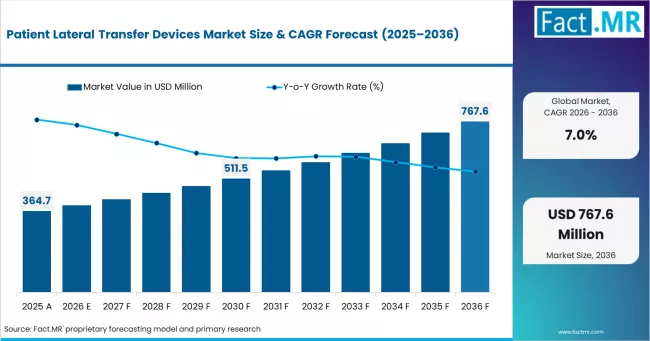
Table of Content
- Executive Summary
- Global Market Outlook
- Demand to side Trends
- Supply to side Trends
- Technology Roadmap Analysis
- Analysis and Recommendations
- Market Overview
- Market Coverage / Taxonomy
- Market Definition / Scope / Limitations
- Research Methodology
- Chapter Orientation
- Analytical Lens and Working Hypotheses
- Market Structure, Signals, and Trend Drivers
- Benchmarking and Cross-market Comparability
- Market Sizing, Forecasting, and Opportunity Mapping
- Research Design and Evidence Framework
- Desk Research Programme (Secondary Evidence)
- Company Annual and Sustainability Reports
- Peer-reviewed Journals and Academic Literature
- Corporate Websites, Product Literature, and Technical Notes
- Earnings Decks and Investor Briefings
- Statutory Filings and Regulatory Disclosures
- Technical White Papers and Standards Notes
- Trade Journals, Industry Magazines, and Analyst Briefs
- Conference Proceedings, Webinars, and Seminar Materials
- Government Statistics Portals and Public Data Releases
- Press Releases and Reputable Media Coverage
- Specialist Newsletters and Curated Briefings
- Sector Databases and Reference Repositories
- Fact.MR Internal Proprietary Databases and Historical Market Datasets
- Subscription Datasets and Paid Sources
- Social Channels, Communities, and Digital Listening Inputs
- Additional Desk Sources
- Expert Input and Fieldwork (Primary Evidence)
- Primary Modes
- Qualitative Interviews and Expert Elicitation
- Quantitative Surveys and Structured Data Capture
- Blended Approach
- Why Primary Evidence is Used
- Field Techniques
- Interviews
- Surveys
- Focus Groups
- Observational and In-context Research
- Social and Community Interactions
- Stakeholder Universe Engaged
- C-suite Leaders
- Board Members
- Presidents and Vice Presidents
- R&D and Innovation Heads
- Technical Specialists
- Domain Subject-matter Experts
- Scientists
- Physicians and Other Healthcare Professionals
- Governance, Ethics, and Data Stewardship
- Research Ethics
- Data Integrity and Handling
- Primary Modes
- Tooling, Models, and Reference Databases
- Desk Research Programme (Secondary Evidence)
- Data Engineering and Model Build
- Data Acquisition and Ingestion
- Cleaning, Normalisation, and Verification
- Synthesis, Triangulation, and Analysis
- Quality Assurance and Audit Trail
- Market Background
- Market Dynamics
- Drivers
- Restraints
- Opportunity
- Trends
- Scenario Forecast
- Demand in Optimistic Scenario
- Demand in Likely Scenario
- Demand in Conservative Scenario
- Opportunity Map Analysis
- Product Life Cycle Analysis
- Supply Chain Analysis
- Investment Feasibility Matrix
- Value Chain Analysis
- PESTLE and Porter’s Analysis
- Regulatory Landscape
- Regional Parent Market Outlook
- Production and Consumption Statistics
- Import and Export Statistics
- Market Dynamics
- Global Market Analysis 2021 to 2025 and Forecast, 2026 to 2036
- Historical Market Size Value (USD Million) Analysis, 2021 to 2025
- Current and Future Market Size Value (USD Million) Projections, 2026 to 2036
- Y to o to Y Growth Trend Analysis
- Absolute $ Opportunity Analysis
- Global Market Pricing Analysis 2021 to 2025 and Forecast 2026 to 2036
- Global Market Analysis 2021 to 2025 and Forecast 2026 to 2036, By Product
- Introduction / Key Findings
- Historical Market Size Value (USD Million) Analysis By Product , 2021 to 2025
- Current and Future Market Size Value (USD Million) Analysis and Forecast By Product , 2026 to 2036
- Air Assisted Transfer Devices
- Air Mattress Transfer Systems
- _Reusable Air Assisted Systems
- _Portable Air Transfer Devices
- Slide Sheets and Transfer Sheets
- Reusable Slide Sheets
- _Multi Use Fabric Sheets
- _Low Friction Sheets
- Disposable Slide Sheets
- _Single Patient Use Sheets
- Transfer Boards
- Rigid Transfer Boards
- _Plastic Transfer Boards
- _Composite Transfer Boards
- Transfer Accessories
- Transfer Belts and Aids
- _Patient Positioning Aids
- _Handling Accessories
- Air Assisted Transfer Devices
- Y to o to Y Growth Trend Analysis By Product , 2021 to 2025
- Absolute $ Opportunity Analysis By Product , 2026 to 2036
- Global Market Analysis 2021 to 2025 and Forecast 2026 to 2036, By Application
- Introduction / Key Findings
- Historical Market Size Value (USD Million) Analysis By Application, 2021 to 2025
- Current and Future Market Size Value (USD Million) Analysis and Forecast By Application, 2026 to 2036
- Patient Transfer
- Bed to Bed Transfer
- _Inpatient Movement
- _Emergency Transfers
- Bed to Wheelchair Transfer
- _Routine Mobility Assistance
- _Post Operative Transfers
- Surgical Transfer
- Operating Room Transfers
- _Pre Surgical Positioning
- _Post Surgical Recovery
- Bariatric Patient Handling
- Obese Patient Transfer
- _Heavy Weight Support Systems
- _Specialized Handling Devices
- Rehabilitation Transfer
- Mobility Assistance Programs
- _Physiotherapy Transfers
- _Long Term Care Movement
- Patient Transfer
- Y to o to Y Growth Trend Analysis By Application, 2021 to 2025
- Absolute $ Opportunity Analysis By Application, 2026 to 2036
- Global Market Analysis 2021 to 2025 and Forecast 2026 to 2036, By End Use
- Introduction / Key Findings
- Historical Market Size Value (USD Million) Analysis By End Use, 2021 to 2025
- Current and Future Market Size Value (USD Million) Analysis and Forecast By End Use, 2026 to 2036
- Hospitals
- Public Hospitals
- _Tertiary Care Hospitals
- _General Hospitals
- Long Term Care Centers
- Nursing Homes
- _Elderly Care Facilities
- _Assisted Living Centers
- Ambulatory Surgical Centers
- Outpatient Surgical Facilities
- _Day Care Surgery Value (USD Million)s
- Home Care Settings
- Home Healthcare
- _Patient Assisted Transfer Use
- _Caregiver Assisted Transfers
- Hospitals
- Y to o to Y Growth Trend Analysis By End Use, 2021 to 2025
- Absolute $ Opportunity Analysis By End Use, 2026 to 2036
- Global Market Analysis 2021 to 2025 and Forecast 2026 to 2036, By Technology
- Introduction / Key Findings
- Historical Market Size Value (USD Million) Analysis By Technology, 2021 to 2025
- Current and Future Market Size Value (USD Million) Analysis and Forecast By Technology, 2026 to 2036
- Air Assisted Technology
- Inflatable Transfer Systems
- _Powered Air Flow Systems
- _Pressure Controlled Systems
- Non Powered Transfer Devices
- Manual Slide Systems
- _Low Friction Materials
- _Fabric Based Transfer Devices
- Motorized Transfer Systems
- Powered Transfer Boards
- _Automated Patient Movement
- _Electric Assist Devices
- Ergonomic Design Technology
- Injury Prevention Design
- _Caregiver Safety Features
- _Patient Comfort Design
- Air Assisted Technology
- Y to o to Y Growth Trend Analysis By Technology, 2021 to 2025
- Absolute $ Opportunity Analysis By Technology, 2026 to 2036
- Global Market Analysis 2021 to 2025 and Forecast 2026 to 2036, By Distribution Channel
- Introduction / Key Findings
- Historical Market Size Value (USD Million) Analysis By Distribution Channel, 2021 to 2025
- Current and Future Market Size Value (USD Million) Analysis and Forecast By Distribution Channel, 2026 to 2036
- Direct Sales
- Hospital Procurement
- _Bulk Equipment Contracts
- _Institutional Purchasing
- Distributors
- Medical Equipment Distributors
- _Regional Supply Networks
- _Specialized Mobility Suppliers
- Online Sales
- E Commerce Platforms
- _Direct Manufacturer Platforms
- _Third Party Marketplaces
- Direct Sales
- Y to o to Y Growth Trend Analysis By Distribution Channel, 2021 to 2025
- Absolute $ Opportunity Analysis By Distribution Channel, 2026 to 2036
- Global Market Analysis 2021 to 2025 and Forecast 2026 to 2036, By Material
- Introduction / Key Findings
- Historical Market Size Value (USD Million) Analysis By Material, 2021 to 2025
- Current and Future Market Size Value (USD Million) Analysis and Forecast By Material, 2026 to 2036
- Fabric Based Materials
- Polyester and Nylon
- _Reusable Fabric Materials
- _Washable Transfer Sheets
- Plastic Materials
- Polyethylene Boards
- _Rigid Plastic Devices
- _Lightweight Transfer Boards
- Composite Materials
- Reinforced Composite Boards
- _High Strength Lightweight
- _Durable Medical Grade Materials
- Fabric Based Materials
- Y to o to Y Growth Trend Analysis By Material, 2021 to 2025
- Absolute $ Opportunity Analysis By Material, 2026 to 2036
- Global Market Analysis 2021 to 2025 and Forecast 2026 to 2036, By Region
- Introduction
- Historical Market Size Value (USD Million) Analysis By Region, 2021 to 2025
- Current Market Size Value (USD Million) Analysis and Forecast By Region, 2026 to 2036
- North America
- Latin America
- Western Europe
- Eastern Europe
- East Asia
- South Asia and Pacific
- Middle East & Africa
- Market Attractiveness Analysis By Region
- North America Market Analysis 2021 to 2025 and Forecast 2026 to 2036, By Country
- Historical Market Size Value (USD Million) Trend Analysis By Market Taxonomy, 2021 to 2025
- Market Size Value (USD Million) Forecast By Market Taxonomy, 2026 to 2036
- By Country
- USA
- Canada
- Mexico
- By Product
- By Application
- By End Use
- By Technology
- By Distribution Channel
- By Material
- By Country
- Market Attractiveness Analysis
- By Country
- By Product
- By Application
- By End Use
- By Technology
- By Distribution Channel
- By Material
- Key Takeaways
- Latin America Market Analysis 2021 to 2025 and Forecast 2026 to 2036, By Country
- Historical Market Size Value (USD Million) Trend Analysis By Market Taxonomy, 2021 to 2025
- Market Size Value (USD Million) Forecast By Market Taxonomy, 2026 to 2036
- By Country
- Brazil
- Chile
- Rest of Latin America
- By Product
- By Application
- By End Use
- By Technology
- By Distribution Channel
- By Material
- By Country
- Market Attractiveness Analysis
- By Country
- By Product
- By Application
- By End Use
- By Technology
- By Distribution Channel
- By Material
- Key Takeaways
- Western Europe Market Analysis 2021 to 2025 and Forecast 2026 to 2036, By Country
- Historical Market Size Value (USD Million) Trend Analysis By Market Taxonomy, 2021 to 2025
- Market Size Value (USD Million) Forecast By Market Taxonomy, 2026 to 2036
- By Country
- Germany
- UK
- Italy
- Spain
- France
- Nordic
- BENELUX
- Rest of Western Europe
- By Product
- By Application
- By End Use
- By Technology
- By Distribution Channel
- By Material
- By Country
- Market Attractiveness Analysis
- By Country
- By Product
- By Application
- By End Use
- By Technology
- By Distribution Channel
- By Material
- Key Takeaways
- Eastern Europe Market Analysis 2021 to 2025 and Forecast 2026 to 2036, By Country
- Historical Market Size Value (USD Million) Trend Analysis By Market Taxonomy, 2021 to 2025
- Market Size Value (USD Million) Forecast By Market Taxonomy, 2026 to 2036
- By Country
- Russia
- Poland
- Hungary
- Balkan & Baltic
- Rest of Eastern Europe
- By Product
- By Application
- By End Use
- By Technology
- By Distribution Channel
- By Material
- By Country
- Market Attractiveness Analysis
- By Country
- By Product
- By Application
- By End Use
- By Technology
- By Distribution Channel
- By Material
- Key Takeaways
- East Asia Market Analysis 2021 to 2025 and Forecast 2026 to 2036, By Country
- Historical Market Size Value (USD Million) Trend Analysis By Market Taxonomy, 2021 to 2025
- Market Size Value (USD Million) Forecast By Market Taxonomy, 2026 to 2036
- By Country
- China
- Japan
- South Korea
- By Product
- By Application
- By End Use
- By Technology
- By Distribution Channel
- By Material
- By Country
- Market Attractiveness Analysis
- By Country
- By Product
- By Application
- By End Use
- By Technology
- By Distribution Channel
- By Material
- Key Takeaways
- South Asia and Pacific Market Analysis 2021 to 2025 and Forecast 2026 to 2036, By Country
- Historical Market Size Value (USD Million) Trend Analysis By Market Taxonomy, 2021 to 2025
- Market Size Value (USD Million) Forecast By Market Taxonomy, 2026 to 2036
- By Country
- India
- ASEAN
- Australia & New Zealand
- Rest of South Asia and Pacific
- By Product
- By Application
- By End Use
- By Technology
- By Distribution Channel
- By Material
- By Country
- Market Attractiveness Analysis
- By Country
- By Product
- By Application
- By End Use
- By Technology
- By Distribution Channel
- By Material
- Key Takeaways
- Middle East & Africa Market Analysis 2021 to 2025 and Forecast 2026 to 2036, By Country
- Historical Market Size Value (USD Million) Trend Analysis By Market Taxonomy, 2021 to 2025
- Market Size Value (USD Million) Forecast By Market Taxonomy, 2026 to 2036
- By Country
- Kingdom of Saudi Arabia
- Other GCC Countries
- Turkiye
- South Africa
- Other African Union
- Rest of Middle East & Africa
- By Product
- By Application
- By End Use
- By Technology
- By Distribution Channel
- By Material
- By Country
- Market Attractiveness Analysis
- By Country
- By Product
- By Application
- By End Use
- By Technology
- By Distribution Channel
- By Material
- Key Takeaways
- Key Countries Market Analysis
- USA
- Pricing Analysis
- Market Share Analysis, 2025
- By Product
- By Application
- By End Use
- By Technology
- By Distribution Channel
- By Material
- Canada
- Pricing Analysis
- Market Share Analysis, 2025
- By Product
- By Application
- By End Use
- By Technology
- By Distribution Channel
- By Material
- Mexico
- Pricing Analysis
- Market Share Analysis, 2025
- By Product
- By Application
- By End Use
- By Technology
- By Distribution Channel
- By Material
- Brazil
- Pricing Analysis
- Market Share Analysis, 2025
- By Product
- By Application
- By End Use
- By Technology
- By Distribution Channel
- By Material
- Chile
- Pricing Analysis
- Market Share Analysis, 2025
- By Product
- By Application
- By End Use
- By Technology
- By Distribution Channel
- By Material
- Germany
- Pricing Analysis
- Market Share Analysis, 2025
- By Product
- By Application
- By End Use
- By Technology
- By Distribution Channel
- By Material
- UK
- Pricing Analysis
- Market Share Analysis, 2025
- By Product
- By Application
- By End Use
- By Technology
- By Distribution Channel
- By Material
- Italy
- Pricing Analysis
- Market Share Analysis, 2025
- By Product
- By Application
- By End Use
- By Technology
- By Distribution Channel
- By Material
- Spain
- Pricing Analysis
- Market Share Analysis, 2025
- By Product
- By Application
- By End Use
- By Technology
- By Distribution Channel
- By Material
- France
- Pricing Analysis
- Market Share Analysis, 2025
- By Product
- By Application
- By End Use
- By Technology
- By Distribution Channel
- By Material
- India
- Pricing Analysis
- Market Share Analysis, 2025
- By Product
- By Application
- By End Use
- By Technology
- By Distribution Channel
- By Material
- ASEAN
- Pricing Analysis
- Market Share Analysis, 2025
- By Product
- By Application
- By End Use
- By Technology
- By Distribution Channel
- By Material
- Australia & New Zealand
- Pricing Analysis
- Market Share Analysis, 2025
- By Product
- By Application
- By End Use
- By Technology
- By Distribution Channel
- By Material
- China
- Pricing Analysis
- Market Share Analysis, 2025
- By Product
- By Application
- By End Use
- By Technology
- By Distribution Channel
- By Material
- Japan
- Pricing Analysis
- Market Share Analysis, 2025
- By Product
- By Application
- By End Use
- By Technology
- By Distribution Channel
- By Material
- South Korea
- Pricing Analysis
- Market Share Analysis, 2025
- By Product
- By Application
- By End Use
- By Technology
- By Distribution Channel
- By Material
- Russia
- Pricing Analysis
- Market Share Analysis, 2025
- By Product
- By Application
- By End Use
- By Technology
- By Distribution Channel
- By Material
- Poland
- Pricing Analysis
- Market Share Analysis, 2025
- By Product
- By Application
- By End Use
- By Technology
- By Distribution Channel
- By Material
- Hungary
- Pricing Analysis
- Market Share Analysis, 2025
- By Product
- By Application
- By End Use
- By Technology
- By Distribution Channel
- By Material
- Kingdom of Saudi Arabia
- Pricing Analysis
- Market Share Analysis, 2025
- By Product
- By Application
- By End Use
- By Technology
- By Distribution Channel
- By Material
- Turkiye
- Pricing Analysis
- Market Share Analysis, 2025
- By Product
- By Application
- By End Use
- By Technology
- By Distribution Channel
- By Material
- South Africa
- Pricing Analysis
- Market Share Analysis, 2025
- By Product
- By Application
- By End Use
- By Technology
- By Distribution Channel
- By Material
- USA
- Market Structure Analysis
- Competition Dashboard
- Competition Benchmarking
- Market Share Analysis of Top Players
- By Regional
- By Product
- By Application
- By End Use
- By Technology
- By Distribution Channel
- By Material
- Competition Analysis
- Competition Deep Dive
- Getinge AB
- Overview
- Product Portfolio
- Profitability by Market Segments (Product/Age /Sales Channel/Region)
- Sales Footprint
- Strategy Overview
- Marketing Strategy
- Product Strategy
- Channel Strategy
- Airpal Inc.
- Stryker Corporation
- Medline Industries Inc.
- McAuley Medical Inc.
- Sizewise Rentals LLC
- EZ Way Inc.
- Alimed Inc.
- Hill-Rom Holdings Inc.
- Blue Chip Medical Products Inc.
- Getinge AB
- Competition Deep Dive
- Assumptions & Acronyms Used
List Of Table
- Table 1: Global Market Value (USD Million) Forecast by Region, 2021 to 2036
- Table 2: Global Market Value (USD Million) Forecast by Product , 2021 to 2036
- Table 3: Global Market Value (USD Million) Forecast by Application, 2021 to 2036
- Table 4: Global Market Value (USD Million) Forecast by End Use, 2021 to 2036
- Table 5: Global Market Value (USD Million) Forecast by Technology, 2021 to 2036
- Table 6: Global Market Value (USD Million) Forecast by Distribution Channel, 2021 to 2036
- Table 7: Global Market Value (USD Million) Forecast by Material, 2021 to 2036
- Table 8: North America Market Value (USD Million) Forecast by Country, 2021 to 2036
- Table 9: North America Market Value (USD Million) Forecast by Product , 2021 to 2036
- Table 10: North America Market Value (USD Million) Forecast by Application, 2021 to 2036
- Table 11: North America Market Value (USD Million) Forecast by End Use, 2021 to 2036
- Table 12: North America Market Value (USD Million) Forecast by Technology, 2021 to 2036
- Table 13: North America Market Value (USD Million) Forecast by Distribution Channel, 2021 to 2036
- Table 14: North America Market Value (USD Million) Forecast by Material, 2021 to 2036
- Table 15: Latin America Market Value (USD Million) Forecast by Country, 2021 to 2036
- Table 16: Latin America Market Value (USD Million) Forecast by Product , 2021 to 2036
- Table 17: Latin America Market Value (USD Million) Forecast by Application, 2021 to 2036
- Table 18: Latin America Market Value (USD Million) Forecast by End Use, 2021 to 2036
- Table 19: Latin America Market Value (USD Million) Forecast by Technology, 2021 to 2036
- Table 20: Latin America Market Value (USD Million) Forecast by Distribution Channel, 2021 to 2036
- Table 21: Latin America Market Value (USD Million) Forecast by Material, 2021 to 2036
- Table 22: Western Europe Market Value (USD Million) Forecast by Country, 2021 to 2036
- Table 23: Western Europe Market Value (USD Million) Forecast by Product , 2021 to 2036
- Table 24: Western Europe Market Value (USD Million) Forecast by Application, 2021 to 2036
- Table 25: Western Europe Market Value (USD Million) Forecast by End Use, 2021 to 2036
- Table 26: Western Europe Market Value (USD Million) Forecast by Technology, 2021 to 2036
- Table 27: Western Europe Market Value (USD Million) Forecast by Distribution Channel, 2021 to 2036
- Table 28: Western Europe Market Value (USD Million) Forecast by Material, 2021 to 2036
- Table 29: Eastern Europe Market Value (USD Million) Forecast by Country, 2021 to 2036
- Table 30: Eastern Europe Market Value (USD Million) Forecast by Product , 2021 to 2036
- Table 31: Eastern Europe Market Value (USD Million) Forecast by Application, 2021 to 2036
- Table 32: Eastern Europe Market Value (USD Million) Forecast by End Use, 2021 to 2036
- Table 33: Eastern Europe Market Value (USD Million) Forecast by Technology, 2021 to 2036
- Table 34: Eastern Europe Market Value (USD Million) Forecast by Distribution Channel, 2021 to 2036
- Table 35: Eastern Europe Market Value (USD Million) Forecast by Material, 2021 to 2036
- Table 36: East Asia Market Value (USD Million) Forecast by Country, 2021 to 2036
- Table 37: East Asia Market Value (USD Million) Forecast by Product , 2021 to 2036
- Table 38: East Asia Market Value (USD Million) Forecast by Application, 2021 to 2036
- Table 39: East Asia Market Value (USD Million) Forecast by End Use, 2021 to 2036
- Table 40: East Asia Market Value (USD Million) Forecast by Technology, 2021 to 2036
- Table 41: East Asia Market Value (USD Million) Forecast by Distribution Channel, 2021 to 2036
- Table 42: East Asia Market Value (USD Million) Forecast by Material, 2021 to 2036
- Table 43: South Asia and Pacific Market Value (USD Million) Forecast by Country, 2021 to 2036
- Table 44: South Asia and Pacific Market Value (USD Million) Forecast by Product , 2021 to 2036
- Table 45: South Asia and Pacific Market Value (USD Million) Forecast by Application, 2021 to 2036
- Table 46: South Asia and Pacific Market Value (USD Million) Forecast by End Use, 2021 to 2036
- Table 47: South Asia and Pacific Market Value (USD Million) Forecast by Technology, 2021 to 2036
- Table 48: South Asia and Pacific Market Value (USD Million) Forecast by Distribution Channel, 2021 to 2036
- Table 49: South Asia and Pacific Market Value (USD Million) Forecast by Material, 2021 to 2036
- Table 50: Middle East & Africa Market Value (USD Million) Forecast by Country, 2021 to 2036
- Table 51: Middle East & Africa Market Value (USD Million) Forecast by Product , 2021 to 2036
- Table 52: Middle East & Africa Market Value (USD Million) Forecast by Application, 2021 to 2036
- Table 53: Middle East & Africa Market Value (USD Million) Forecast by End Use, 2021 to 2036
- Table 54: Middle East & Africa Market Value (USD Million) Forecast by Technology, 2021 to 2036
- Table 55: Middle East & Africa Market Value (USD Million) Forecast by Distribution Channel, 2021 to 2036
- Table 56: Middle East & Africa Market Value (USD Million) Forecast by Material, 2021 to 2036
List Of Figures
- Figure 1: Global Market Pricing Analysis
- Figure 2: Global Market Value (USD Million) Forecast 2021-2036
- Figure 3: Global Market Value Share and BPS Analysis by Product, 2026 and 2036
- Figure 4: Global Market Y-o-Y Growth Comparison by Product, 2026 to 2036
- Figure 5: Global Market Attractiveness Analysis by Product
- Figure 6: Global Market Value Share and BPS Analysis by Application, 2026 and 2036
- Figure 7: Global Market Y-o-Y Growth Comparison by Application, 2026 to 2036
- Figure 8: Global Market Attractiveness Analysis by Application
- Figure 9: Global Market Value Share and BPS Analysis by End Use, 2026 and 2036
- Figure 10: Global Market Y-o-Y Growth Comparison by End Use, 2026 to 2036
- Figure 11: Global Market Attractiveness Analysis by End Use
- Figure 12: Global Market Value Share and BPS Analysis by Technology, 2026 and 2036
- Figure 13: Global Market Y-o-Y Growth Comparison by Technology, 2026 to 2036
- Figure 14: Global Market Attractiveness Analysis by Technology
- Figure 15: Global Market Value Share and BPS Analysis by Distribution Channel, 2026 and 2036
- Figure 16: Global Market Y-o-Y Growth Comparison by Distribution Channel, 2026 to 2036
- Figure 17: Global Market Attractiveness Analysis by Distribution Channel
- Figure 18: Global Market Value Share and BPS Analysis by Material, 2026 and 2036
- Figure 19: Global Market Y-o-Y Growth Comparison by Material, 2026 to 2036
- Figure 20: Global Market Attractiveness Analysis by Material
- Figure 21: Global Market Value (USD Million) Share and BPS Analysis by Region, 2026 and 2036
- Figure 22: Global Market Y-o-Y Growth Comparison by Region, 2026 to 2036
- Figure 23: Global Market Attractiveness Analysis by Region
- Figure 24: North America Market Incremental Dollar Opportunity, 2026 to 2036
- Figure 25: Latin America Market Incremental Dollar Opportunity, 2026 to 2036
- Figure 26: Western Europe Market Incremental Dollar Opportunity, 2026 to 2036
- Figure 27: Eastern Europe Market Incremental Dollar Opportunity, 2026 to 2036
- Figure 28: East Asia Market Incremental Dollar Opportunity, 2026 to 2036
- Figure 29: South Asia and Pacific Market Incremental Dollar Opportunity, 2026 to 2036
- Figure 30: Middle East & Africa Market Incremental Dollar Opportunity, 2026 to 2036
- Figure 31: North America Market Value Share and BPS Analysis by Country, 2026 and 2036
- Figure 32: North America Market Value Share and BPS Analysis by Product, 2026 and 2036
- Figure 33: North America Market Y-o-Y Growth Comparison by Product, 2026 to 2036
- Figure 34: North America Market Attractiveness Analysis by Product
- Figure 35: North America Market Value Share and BPS Analysis by Application, 2026 and 2036
- Figure 36: North America Market Y-o-Y Growth Comparison by Application, 2026 to 2036
- Figure 37: North America Market Attractiveness Analysis by Application
- Figure 38: North America Market Value Share and BPS Analysis by End Use, 2026 and 2036
- Figure 39: North America Market Y-o-Y Growth Comparison by End Use, 2026 to 2036
- Figure 40: North America Market Attractiveness Analysis by End Use
- Figure 41: North America Market Value Share and BPS Analysis by Technology, 2026 and 2036
- Figure 42: North America Market Y-o-Y Growth Comparison by Technology, 2026 to 2036
- Figure 43: North America Market Attractiveness Analysis by Technology
- Figure 44: North America Market Value Share and BPS Analysis by Distribution Channel, 2026 and 2036
- Figure 45: North America Market Y-o-Y Growth Comparison by Distribution Channel, 2026 to 2036
- Figure 46: North America Market Attractiveness Analysis by Distribution Channel
- Figure 47: North America Market Value Share and BPS Analysis by Material, 2026 and 2036
- Figure 48: North America Market Y-o-Y Growth Comparison by Material, 2026 to 2036
- Figure 49: North America Market Attractiveness Analysis by Material
- Figure 50: Latin America Market Value Share and BPS Analysis by Country, 2026 and 2036
- Figure 51: Latin America Market Value Share and BPS Analysis by Product, 2026 and 2036
- Figure 52: Latin America Market Y-o-Y Growth Comparison by Product, 2026 to 2036
- Figure 53: Latin America Market Attractiveness Analysis by Product
- Figure 54: Latin America Market Value Share and BPS Analysis by Application, 2026 and 2036
- Figure 55: Latin America Market Y-o-Y Growth Comparison by Application, 2026 to 2036
- Figure 56: Latin America Market Attractiveness Analysis by Application
- Figure 57: Latin America Market Value Share and BPS Analysis by End Use, 2026 and 2036
- Figure 58: Latin America Market Y-o-Y Growth Comparison by End Use, 2026 to 2036
- Figure 59: Latin America Market Attractiveness Analysis by End Use
- Figure 60: Latin America Market Value Share and BPS Analysis by Technology, 2026 and 2036
- Figure 61: Latin America Market Y-o-Y Growth Comparison by Technology, 2026 to 2036
- Figure 62: Latin America Market Attractiveness Analysis by Technology
- Figure 63: Latin America Market Value Share and BPS Analysis by Distribution Channel, 2026 and 2036
- Figure 64: Latin America Market Y-o-Y Growth Comparison by Distribution Channel, 2026 to 2036
- Figure 65: Latin America Market Attractiveness Analysis by Distribution Channel
- Figure 66: Latin America Market Value Share and BPS Analysis by Material, 2026 and 2036
- Figure 67: Latin America Market Y-o-Y Growth Comparison by Material, 2026 to 2036
- Figure 68: Latin America Market Attractiveness Analysis by Material
- Figure 69: Western Europe Market Value Share and BPS Analysis by Country, 2026 and 2036
- Figure 70: Western Europe Market Value Share and BPS Analysis by Product, 2026 and 2036
- Figure 71: Western Europe Market Y-o-Y Growth Comparison by Product, 2026 to 2036
- Figure 72: Western Europe Market Attractiveness Analysis by Product
- Figure 73: Western Europe Market Value Share and BPS Analysis by Application, 2026 and 2036
- Figure 74: Western Europe Market Y-o-Y Growth Comparison by Application, 2026 to 2036
- Figure 75: Western Europe Market Attractiveness Analysis by Application
- Figure 76: Western Europe Market Value Share and BPS Analysis by End Use, 2026 and 2036
- Figure 77: Western Europe Market Y-o-Y Growth Comparison by End Use, 2026 to 2036
- Figure 78: Western Europe Market Attractiveness Analysis by End Use
- Figure 79: Western Europe Market Value Share and BPS Analysis by Technology, 2026 and 2036
- Figure 80: Western Europe Market Y-o-Y Growth Comparison by Technology, 2026 to 2036
- Figure 81: Western Europe Market Attractiveness Analysis by Technology
- Figure 82: Western Europe Market Value Share and BPS Analysis by Distribution Channel, 2026 and 2036
- Figure 83: Western Europe Market Y-o-Y Growth Comparison by Distribution Channel, 2026 to 2036
- Figure 84: Western Europe Market Attractiveness Analysis by Distribution Channel
- Figure 85: Western Europe Market Value Share and BPS Analysis by Material, 2026 and 2036
- Figure 86: Western Europe Market Y-o-Y Growth Comparison by Material, 2026 to 2036
- Figure 87: Western Europe Market Attractiveness Analysis by Material
- Figure 88: Eastern Europe Market Value Share and BPS Analysis by Country, 2026 and 2036
- Figure 89: Eastern Europe Market Value Share and BPS Analysis by Product, 2026 and 2036
- Figure 90: Eastern Europe Market Y-o-Y Growth Comparison by Product, 2026 to 2036
- Figure 91: Eastern Europe Market Attractiveness Analysis by Product
- Figure 92: Eastern Europe Market Value Share and BPS Analysis by Application, 2026 and 2036
- Figure 93: Eastern Europe Market Y-o-Y Growth Comparison by Application, 2026 to 2036
- Figure 94: Eastern Europe Market Attractiveness Analysis by Application
- Figure 95: Eastern Europe Market Value Share and BPS Analysis by End Use, 2026 and 2036
- Figure 96: Eastern Europe Market Y-o-Y Growth Comparison by End Use, 2026 to 2036
- Figure 97: Eastern Europe Market Attractiveness Analysis by End Use
- Figure 98: Eastern Europe Market Value Share and BPS Analysis by Technology, 2026 and 2036
- Figure 99: Eastern Europe Market Y-o-Y Growth Comparison by Technology, 2026 to 2036
- Figure 100: Eastern Europe Market Attractiveness Analysis by Technology
- Figure 101: Eastern Europe Market Value Share and BPS Analysis by Distribution Channel, 2026 and 2036
- Figure 102: Eastern Europe Market Y-o-Y Growth Comparison by Distribution Channel, 2026 to 2036
- Figure 103: Eastern Europe Market Attractiveness Analysis by Distribution Channel
- Figure 104: Eastern Europe Market Value Share and BPS Analysis by Material, 2026 and 2036
- Figure 105: Eastern Europe Market Y-o-Y Growth Comparison by Material, 2026 to 2036
- Figure 106: Eastern Europe Market Attractiveness Analysis by Material
- Figure 107: East Asia Market Value Share and BPS Analysis by Country, 2026 and 2036
- Figure 108: East Asia Market Value Share and BPS Analysis by Product, 2026 and 2036
- Figure 109: East Asia Market Y-o-Y Growth Comparison by Product, 2026 to 2036
- Figure 110: East Asia Market Attractiveness Analysis by Product
- Figure 111: East Asia Market Value Share and BPS Analysis by Application, 2026 and 2036
- Figure 112: East Asia Market Y-o-Y Growth Comparison by Application, 2026 to 2036
- Figure 113: East Asia Market Attractiveness Analysis by Application
- Figure 114: East Asia Market Value Share and BPS Analysis by End Use, 2026 and 2036
- Figure 115: East Asia Market Y-o-Y Growth Comparison by End Use, 2026 to 2036
- Figure 116: East Asia Market Attractiveness Analysis by End Use
- Figure 117: East Asia Market Value Share and BPS Analysis by Technology, 2026 and 2036
- Figure 118: East Asia Market Y-o-Y Growth Comparison by Technology, 2026 to 2036
- Figure 119: East Asia Market Attractiveness Analysis by Technology
- Figure 120: East Asia Market Value Share and BPS Analysis by Distribution Channel, 2026 and 2036
- Figure 121: East Asia Market Y-o-Y Growth Comparison by Distribution Channel, 2026 to 2036
- Figure 122: East Asia Market Attractiveness Analysis by Distribution Channel
- Figure 123: East Asia Market Value Share and BPS Analysis by Material, 2026 and 2036
- Figure 124: East Asia Market Y-o-Y Growth Comparison by Material, 2026 to 2036
- Figure 125: East Asia Market Attractiveness Analysis by Material
- Figure 126: South Asia and Pacific Market Value Share and BPS Analysis by Country, 2026 and 2036
- Figure 127: South Asia and Pacific Market Value Share and BPS Analysis by Product, 2026 and 2036
- Figure 128: South Asia and Pacific Market Y-o-Y Growth Comparison by Product, 2026 to 2036
- Figure 129: South Asia and Pacific Market Attractiveness Analysis by Product
- Figure 130: South Asia and Pacific Market Value Share and BPS Analysis by Application, 2026 and 2036
- Figure 131: South Asia and Pacific Market Y-o-Y Growth Comparison by Application, 2026 to 2036
- Figure 132: South Asia and Pacific Market Attractiveness Analysis by Application
- Figure 133: South Asia and Pacific Market Value Share and BPS Analysis by End Use, 2026 and 2036
- Figure 134: South Asia and Pacific Market Y-o-Y Growth Comparison by End Use, 2026 to 2036
- Figure 135: South Asia and Pacific Market Attractiveness Analysis by End Use
- Figure 136: South Asia and Pacific Market Value Share and BPS Analysis by Technology, 2026 and 2036
- Figure 137: South Asia and Pacific Market Y-o-Y Growth Comparison by Technology, 2026 to 2036
- Figure 138: South Asia and Pacific Market Attractiveness Analysis by Technology
- Figure 139: South Asia and Pacific Market Value Share and BPS Analysis by Distribution Channel, 2026 and 2036
- Figure 140: South Asia and Pacific Market Y-o-Y Growth Comparison by Distribution Channel, 2026 to 2036
- Figure 141: South Asia and Pacific Market Attractiveness Analysis by Distribution Channel
- Figure 142: South Asia and Pacific Market Value Share and BPS Analysis by Material, 2026 and 2036
- Figure 143: South Asia and Pacific Market Y-o-Y Growth Comparison by Material, 2026 to 2036
- Figure 144: South Asia and Pacific Market Attractiveness Analysis by Material
- Figure 145: Middle East & Africa Market Value Share and BPS Analysis by Country, 2026 and 2036
- Figure 146: Middle East & Africa Market Value Share and BPS Analysis by Product, 2026 and 2036
- Figure 147: Middle East & Africa Market Y-o-Y Growth Comparison by Product, 2026 to 2036
- Figure 148: Middle East & Africa Market Attractiveness Analysis by Product
- Figure 149: Middle East & Africa Market Value Share and BPS Analysis by Application, 2026 and 2036
- Figure 150: Middle East & Africa Market Y-o-Y Growth Comparison by Application, 2026 to 2036
- Figure 151: Middle East & Africa Market Attractiveness Analysis by Application
- Figure 152: Middle East & Africa Market Value Share and BPS Analysis by End Use, 2026 and 2036
- Figure 153: Middle East & Africa Market Y-o-Y Growth Comparison by End Use, 2026 to 2036
- Figure 154: Middle East & Africa Market Attractiveness Analysis by End Use
- Figure 155: Middle East & Africa Market Value Share and BPS Analysis by Technology, 2026 and 2036
- Figure 156: Middle East & Africa Market Y-o-Y Growth Comparison by Technology, 2026 to 2036
- Figure 157: Middle East & Africa Market Attractiveness Analysis by Technology
- Figure 158: Middle East & Africa Market Value Share and BPS Analysis by Distribution Channel, 2026 and 2036
- Figure 159: Middle East & Africa Market Y-o-Y Growth Comparison by Distribution Channel, 2026 to 2036
- Figure 160: Middle East & Africa Market Attractiveness Analysis by Distribution Channel
- Figure 161: Middle East & Africa Market Value Share and BPS Analysis by Material, 2026 and 2036
- Figure 162: Middle East & Africa Market Y-o-Y Growth Comparison by Material, 2026 to 2036
- Figure 163: Middle East & Africa Market Attractiveness Analysis by Material
- Figure 164: Global Market - Tier Structure Analysis
- Figure 165: Global Market - Company Share Analysis