Advanced Oxidation Chemicals for Emerging Contaminants Market

Advanced Oxidation Chemicals for Emerging Contaminants Market Size and Share Forecast Outlook 2026 to 2036

Advanced oxidation chemicals for emerging contaminants market is projected to grow from USD 0.6 billion in 2026 to USD 1.6 billion by 2036, at a CAGR of 9.6%. Ozone & Ozonated Blends will dominate with a 30.0% market share, while pfas & pharmaceuticals will lead the contaminant type segment with a 28.0% share.

Advanced Oxidation Chemicals for Emerging Contaminants Market Forecast and Outlook 2026 to 2036

The global market for advanced oxidation chemicals targeting emerging contaminants is entering a critical growth phase, driven by the urgent need to address persistent and hazardous pollutants that evade conventional treatment. Projected to expand from USD 0.62 billion in 2026 to USD 1.55 billion by 2036, the market is set to rise at a CAGR of 9.6% over the forecast decade.

Key Takeaways from the Advanced Oxidation Chemicals for Emerging Contaminants Market

  • Market Value for 2026: USD 0.62 Billion
  • Market Value for 2036: USD 1.55 Billion
  • Forecast CAGR (2026-2036): 9.6%
  • Leading Oxidation Chemical Type Share (2026): Ozone & Ozonated Blends (30%)
  • Leading Contaminant Type Share (2026): PFAS & Pharmaceuticals (28%)
  • Leading Application Sector Share (2026): Municipal Water & Wastewater (32%)
  • Key Players in the Market: Solvay S.A., Evonik Industries AG, Kemira Oyj., SUEZ Water Technologies, Veolia Water Technologies
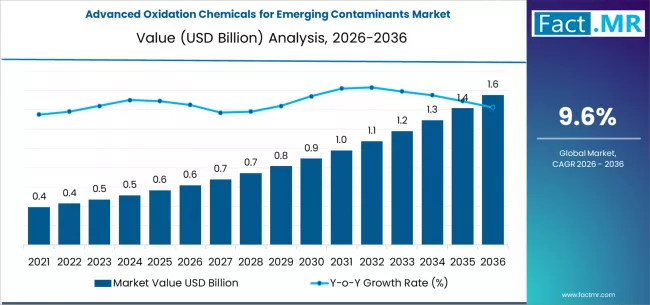
Advanced Oxidation Chemicals For Emerging Contaminants Market Market Value Analysis

Ozone and ozonated chemical blends represent the leading oxidation technology, capturing a 30% market share. PFAS and pharmaceutical residues constitute the primary contaminant target, accounting for 28% of demand. The municipal water and wastewater sector is the largest application area, with a 32% share, as public utilities are on the front line of addressing these pervasive contaminants in the water cycle.

Convergence of heightened scientific understanding, public concern, and tightening regulations surrounding micropollutants are expected to act as primary growth accelerators. Advanced oxidation processes utilize powerful chemical oxidants, often activated by UV light or catalysts, to mineralize complex organic molecules into less harmful substances. These technologies are essential for degrading recalcitrant compounds like PFAS, endocrine disruptors, and pharmaceuticals, which pose significant risks to human health and ecosystems due to their persistence and bioaccumulation potential.

Innovation is focused on improving the selectivity, energy efficiency, and cost-effectiveness of AOP chemistries for diverse water matrices. The development of these advanced solutions is critical for enabling water managers and industries to close the contaminant loop, protect water resources, and meet future-proof regulatory standards.

Metric

Metric Value
Market Value (2026) USD 0.62 Billion
Market Forecast Value (2036) USD 1.55 Billion
Forecast CAGR (2026-2036) 9.6%

Category

Category Segments
Oxidation Chemical Type Ozone & Ozonated Blends, Hydrogen Peroxide, UV-Activated Oxidation Agents, Fenton & Modified Fenton Reagents, Other AOP Chemical Formulations
Contaminant Type PFAS & Pharmaceuticals, Micropollutants & Pesticides, Endocrine Disrupting Chemicals (EDCs), Industrial Solvents & VOCs, Other Emerging Organics
Application Sector Municipal Water & Wastewater, Industrial Effluent Treatment, Groundwater & Aquifer Remediation, Drinking Water Purification, Advanced Treatment & Pilot Systems
Region North America, Latin America, Western Europe, Eastern Europe, East Asia, South Asia & Pacific, MEA

Segmental Analysis

By Oxidation Chemical Type, Which Technology Offers a Versatile and Established Platform?
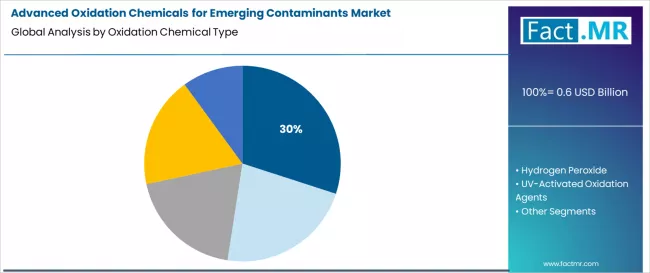
Advanced Oxidation Chemicals For Emerging Contaminants Market Analysis By Oxidation Chemical Type

Ozone and ozonated blends lead the market with a 30% share. Their prominence is due to ozone's powerful oxidation potential and its established use in water treatment for disinfection and taste & odor control.

For emerging contaminants, ozone can directly oxidize many compounds and, when combined with hydrogen peroxide or UV light, generates highly reactive hydroxyl radicals for broader destruction. The ability to retrofit existing ozone systems in municipal plants for this new purpose provides a significant adoption advantage, making it a foundational AOP technology.

By Contaminant Type, Which Class is the Primary Regulatory and Public Health Focus?
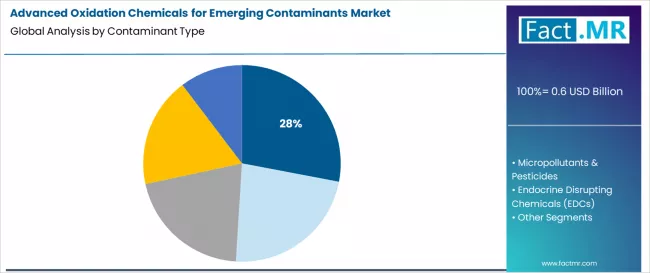
Advanced Oxidation Chemicals For Emerging Contaminants Market Analysis By Contaminant Type

PFAS and pharmaceutical residues represent the largest contaminant segment, holding a 28% share. These "forever chemicals" and bioactive drug compounds are ubiquitous, highly persistent, and linked to serious health concerns. Their resistance to conventional treatment has made them a top priority for regulators worldwide.

AOPs, particularly those utilizing UV/peroxide or plasma-based ozone, are among the few technologies capable of breaking the strong carbon-fluorine bonds in PFAS and degrading complex pharmaceutical molecules, driving intense research and pilot-scale deployment.

By Application Sector, Which Area Faces the Most Immediate Mandate to Act?
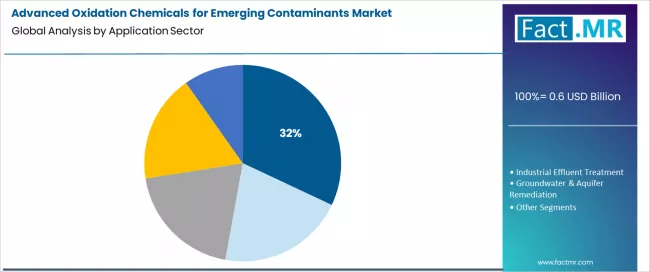
Advanced Oxidation Chemicals For Emerging Contaminants Market Analysis By Application Sector

The municipal water and wastewater sector is the leading application area, accounting for a 32% share. Municipal treatment plants are convergence points for emerging contaminants from households, hospitals, and industries. Regulatory pressure is mounting for these facilities to monitor and control micropollutant discharge.

Upgrading with AOPs, often as a tertiary treatment step, allows municipalities to proactively address this issue, safeguard receiving waters, and prepare for future reuse requirements, creating a large and urgent market for advanced oxidation chemicals.

What are the Drivers, Restraints, and Key Trends of the Advanced Oxidation Chemicals Market?

The primary market driver is the rapid evolution of global regulatory frameworks mandating monitoring and control of specific emerging contaminants, such as PFAS under the U.S. EPA's PFAS Strategic Roadmap and the EU's watch list under the Water Framework Directive. Increasing scientific evidence of ecological and health impacts at trace concentrations is translating into actionable policy. The growing imperative for direct potable reuse and water recycling in water-stressed regions also demands the robust contaminant destruction that AOPs provide, moving beyond mere separation.

A significant market restraint is the high capital and operational energy cost associated with some AOP systems, particularly those relying on intensive UV irradiation or ozone generation. The complex and variable chemistry of real-world water matrices can lead to competitive reactions, reducing treatment efficiency for target contaminants and forming unknown transformation products. The need for highly skilled personnel to design, operate, and optimize these systems can also be a barrier to widespread adoption, especially in smaller utilities.

Key trends include the development of catalytically enhanced AOPs that use engineered nanomaterials or doped metal oxides to lower energy requirements and improve reaction selectivity. There is a move toward hybrid treatment trains where AOPs are strategically coupled with membrane concentration or biological pretreatment to improve overall economics. The market is also progressing with electrochemical advanced oxidation processes that generate oxidants on-site from water and electricity, offering a more compact and chemical-free alternative for decentralized applications.

Analysis of the Advanced Oxidation Chemicals Market by Key Countries
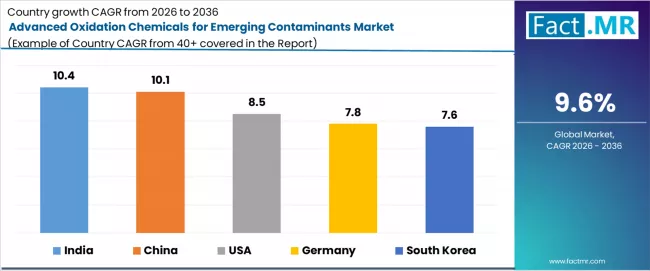
Advanced Oxidation Chemicals For Emerging Contaminants Market Cagr Analysis By Country

Country CAGR (2026-2036)
India 10.40%
China 10.10%
USA 8.50%
Germany 7.80%
South Korea 7.60%

How do India’s Water Pollution Crisis and New Environmental Codes Drive Demand?

industrial and pharmaceutical waste. New environmental standards and a national mission to clean major river systems are creating a pressing need for advanced treatment solutions. Pilot projects for pharmaceutical effluent treatment and river remediation are translating into demand for AOP chemicals. The scale of the challenge and government-led cleanup initiatives position India as a high-growth market for oxidation technologies capable of tackling complex contaminant mixtures.

What is the Impact of China’s Focus on High-Tech Remediation and Pollution Control?

China’s 10.10% growth is tied to its Beautiful China ecological goals and its focus on upgrading industrial wastewater treatment, particularly in sectors like pharmaceuticals and chemicals. National research programs and investments in advanced environmental technologies foster domestic innovation in AOP systems.

The large-scale remediation of contaminated sites and stringent new discharge limits for industries are driving procurement of advanced oxidation chemicals and integrated system solutions.

How does the USA’s Regulatory Leadership and PFAS Focus Shape the Market?
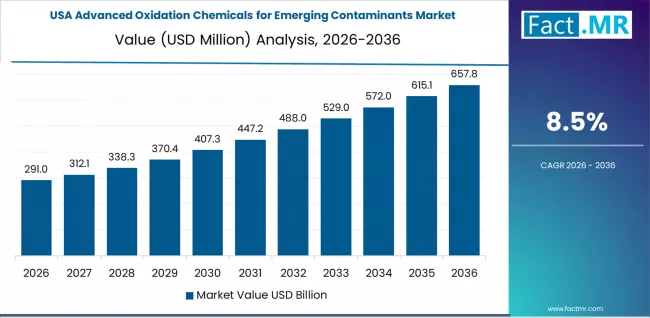
Advanced Oxidation Chemicals For Emerging Contaminants Market Country Value Analysis

Regulatory leadership, especially on PFAS, and significant federal funding for remediation research, underpins the USA’s 8.50% CAGR. States with stringent standards are pushing for AOP implementation at contaminated sites and in water supplies.

The strong presence of technology providers and a robust ecosystem for pilot testing and commercialization accelerate the deployment of next-generation oxidation chemistries, particularly for groundwater remediation and drinking water treatment.

Why is Germany a Center for Precision Engineering and Advanced Water Technology?

Germany’s 7.80% growth reflects its stringent adherence to EU water quality directives and its leadership in environmental engineering. German research institutes and companies are pioneers in developing efficient, low-energy AOP configurations.

The market demand is for highly engineered, reliable systems and specialty chemical formulations that can be integrated into existing infrastructure to meet the country’s exacting standards for surface and drinking water quality.

What Role does South Korea’s Industrial Innovation and Water Scarcity Play?

South Korea’s 7.60% growth is anchored in its advanced industrial base and policies promoting water reuse. The country’s high-tech industries generate complex wastewater requiring advanced treatment.

Government support for innovative water technologies and the need to maximize every drop of water in a resource-constrained environment drive the adoption of AOPs for industrial water recycling and for treating micropollutants in urban water cycles, creating a sophisticated market for tailored oxidation solutions.

Competitive Landscape of the Advanced Oxidation Chemicals Market
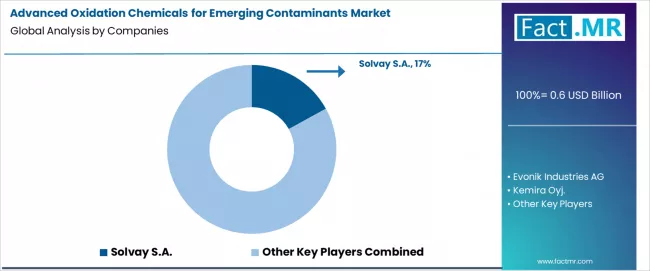
Advanced Oxidation Chemicals For Emerging Contaminants Market Analysis By Company

Global chemical and water technology corporations with deep expertise in oxidant production and process engineering characterize the competitive landscape. Leaders like Solvay and Evonik compete based on their integrated supply of key oxidant precursors such as hydrogen peroxide, ozone generators, proprietary catalyst technologies, and comprehensive AOP process designs.

Competition centers on demonstrating full-scale performance data for specific contaminant classes, providing techno-economic analyses for client projects, and offering robust service and maintenance packages. A key differentiator is the ability to deliver a complete, guaranteed treatment solution—from chemical supply to reactor design and process control—rather than just selling chemicals.

Key Players in the Advanced Oxidation Chemicals for Emerging Contaminants Market

  • Solvay S.A.
  • Evonik Industries AG
  • Kemira Oyj.
  • SUEZ Water Technologies
  • Veolia Water Technologies

Scope of Report

Items Values
Quantitative Units USD Billion
Oxidation Chemical Type Ozone/Ozonated Blends, Hydrogen Peroxide, UV-Activated Agents, Fenton Reagents, Other AOP Formulations
Contaminant Type PFAS & Pharmaceuticals, Micropollutants/Pesticides, EDCs, Industrial Solvents/VOCs, Other Organics
Application Sector Municipal Water/Wastewater, Industrial Effluent, Groundwater Remediation, Drinking Water, Advanced Treatment Systems
Key Countries India, China, USA, Germany, South Korea
Key Companies Solvay S.A., Evonik Industries AG, Kemira Oyj., SUEZ Water Technologies, Veolia Water Technologies
Additional Analysis Analysis of hydroxyl radical generation and reaction kinetics; identification of transformation products and pathways; impact of water matrix (NOM, alkalinity, pH) on AOP efficiency; energy consumption benchmarking; lifecycle assessment of AOP compared to alternative technologies.

Market by Segments

  • Oxidation Chemical Type :

    • Ozone & Ozonated Blends
    • Hydrogen Peroxide
    • UV-Activated Oxidation Agents
    • Fenton & Modified Fenton Reagents
    • Other AOP Chemical Formulations
  • Contaminant Type :

    • PFAS & Pharmaceuticals
    • Micropollutants & Pesticides
    • Endocrine Disrupting Chemicals (EDCs)
    • Industrial Solvents & VOCs
    • Other Emerging Organics
  • Application Sector :

    • Municipal Water & Wastewater
    • Industrial Effluent Treatment
    • Groundwater & Aquifer Remediation
    • Drinking Water Purification
    • Advanced Treatment & Pilot Systems
  • Region :

    • North America

      • USA
      • Canada
    • Latin America

      • Brazil
      • Mexico
      • Argentina
      • Rest of Latin America
    • Western Europe

      • Germany
      • UK
      • France
      • Spain
      • Italy
      • BENELUX
      • Rest of Western Europe
    • Eastern Europe

      • Russia
      • Poland
      • Czech Republic
      • Rest of Eastern Europe
    • East Asia

      • China
      • Japan
      • South Korea
      • Rest of East Asia
    • South Asia & Pacific

      • India
      • ASEAN
      • Australia
      • Rest of South Asia & Pacific
    • MEA

      • Saudi Arabia
      • UAE
      • Turkiye
      • Rest of MEA

Table of Content

  1. Executive Summary
    • Global Market Outlook
    • Demand to side Trends
    • Supply to side Trends
    • Technology Roadmap Analysis
    • Analysis and Recommendations
  2. Market Overview
    • Market Coverage / Taxonomy
    • Market Definition / Scope / Limitations
  3. Market Background
    • Market Dynamics
      • Drivers
      • Restraints
      • Opportunity
      • Trends
    • Scenario Forecast
      • Demand in Optimistic Scenario
      • Demand in Likely Scenario
      • Demand in Conservative Scenario
    • Opportunity Map Analysis
    • Product Life Cycle Analysis
    • Supply Chain Analysis
    • Investment Feasibility Matrix
    • Value Chain Analysis
    • PESTLE and Porter’s Analysis
    • Regulatory Landscape
    • Regional Parent Market Outlook
    • Production and Consumption Statistics
    • Import and Export Statistics
  4. Global Market Analysis 2021 to 2025 and Forecast, 2026 to 2036
    • Historical Market Size Value (USD Million) Analysis, 2021 to 2025
    • Current and Future Market Size Value (USD Million) Projections, 2026 to 2036
      • Y to o to Y Growth Trend Analysis
      • Absolute $ Opportunity Analysis
  5. Global Market Pricing Analysis 2021 to 2025 and Forecast 2026 to 2036
  6. Global Market Analysis 2021 to 2025 and Forecast 2026 to 2036, By Oxidation Chemical Type
    • Introduction / Key Findings
    • Historical Market Size Value (USD Million) Analysis By Oxidation Chemical Type, 2021 to 2025
    • Current and Future Market Size Value (USD Million) Analysis and Forecast By Oxidation Chemical Type, 2026 to 2036
      • Ozone & Ozonated Blends
      • Hydrogen Peroxide
      • UV-Activated Oxidation Agents
      • Fenton & Modified Fenton Reagents
      • Other AOP Chemical Formulations
    • Y to o to Y Growth Trend Analysis By Oxidation Chemical Type, 2021 to 2025
    • Absolute $ Opportunity Analysis By Oxidation Chemical Type, 2026 to 2036
  7. Global Market Analysis 2021 to 2025 and Forecast 2026 to 2036, By Contaminant Type
    • Introduction / Key Findings
    • Historical Market Size Value (USD Million) Analysis By Contaminant Type, 2021 to 2025
    • Current and Future Market Size Value (USD Million) Analysis and Forecast By Contaminant Type, 2026 to 2036
      • PFAS & Pharmaceuticals
      • Micropollutants & Pesticides
      • Endocrine Disrupting Chemicals (EDCs)
      • Industrial Solvents & VOCs
      • Other Emerging Organics
    • Y to o to Y Growth Trend Analysis By Contaminant Type, 2021 to 2025
    • Absolute $ Opportunity Analysis By Contaminant Type, 2026 to 2036
  8. Global Market Analysis 2021 to 2025 and Forecast 2026 to 2036, By Application Sector
    • Introduction / Key Findings
    • Historical Market Size Value (USD Million) Analysis By Application Sector, 2021 to 2025
    • Current and Future Market Size Value (USD Million) Analysis and Forecast By Application Sector, 2026 to 2036
      • Municipal Water & Wastewater
      • Industrial Effluent Treatment
      • Groundwater & Aquifer Remediation
      • Drinking Water Purification
      • Advanced Treatment & Pilot Systems
    • Y to o to Y Growth Trend Analysis By Application Sector, 2021 to 2025
    • Absolute $ Opportunity Analysis By Application Sector, 2026 to 2036
  9. Global Market Analysis 2021 to 2025 and Forecast 2026 to 2036, By Region
    • Introduction
    • Historical Market Size Value (USD Million) Analysis By Region, 2021 to 2025
    • Current Market Size Value (USD Million) Analysis and Forecast By Region, 2026 to 2036
      • North America
      • Latin America
      • Western Europe
      • Eastern Europe
      • East Asia
      • South Asia and Pacific
      • Middle East & Africa
    • Market Attractiveness Analysis By Region
  10. North America Market Analysis 2021 to 2025 and Forecast 2026 to 2036, By Country
    • Historical Market Size Value (USD Million) Trend Analysis By Market Taxonomy, 2021 to 2025
    • Market Size Value (USD Million) Forecast By Market Taxonomy, 2026 to 2036
      • By Country
        • USA
        • Canada
        • Mexico
      • By Oxidation Chemical Type
      • By Contaminant Type
      • By Application Sector
    • Market Attractiveness Analysis
      • By Country
      • By Oxidation Chemical Type
      • By Contaminant Type
      • By Application Sector
    • Key Takeaways
  11. Latin America Market Analysis 2021 to 2025 and Forecast 2026 to 2036, By Country
    • Historical Market Size Value (USD Million) Trend Analysis By Market Taxonomy, 2021 to 2025
    • Market Size Value (USD Million) Forecast By Market Taxonomy, 2026 to 2036
      • By Country
        • Brazil
        • Chile
        • Rest of Latin America
      • By Oxidation Chemical Type
      • By Contaminant Type
      • By Application Sector
    • Market Attractiveness Analysis
      • By Country
      • By Oxidation Chemical Type
      • By Contaminant Type
      • By Application Sector
    • Key Takeaways
  12. Western Europe Market Analysis 2021 to 2025 and Forecast 2026 to 2036, By Country
    • Historical Market Size Value (USD Million) Trend Analysis By Market Taxonomy, 2021 to 2025
    • Market Size Value (USD Million) Forecast By Market Taxonomy, 2026 to 2036
      • By Country
        • Germany
        • UK
        • Italy
        • Spain
        • France
        • Nordic
        • BENELUX
        • Rest of Western Europe
      • By Oxidation Chemical Type
      • By Contaminant Type
      • By Application Sector
    • Market Attractiveness Analysis
      • By Country
      • By Oxidation Chemical Type
      • By Contaminant Type
      • By Application Sector
    • Key Takeaways
  13. Eastern Europe Market Analysis 2021 to 2025 and Forecast 2026 to 2036, By Country
    • Historical Market Size Value (USD Million) Trend Analysis By Market Taxonomy, 2021 to 2025
    • Market Size Value (USD Million) Forecast By Market Taxonomy, 2026 to 2036
      • By Country
        • Russia
        • Poland
        • Hungary
        • Balkan & Baltic
        • Rest of Eastern Europe
      • By Oxidation Chemical Type
      • By Contaminant Type
      • By Application Sector
    • Market Attractiveness Analysis
      • By Country
      • By Oxidation Chemical Type
      • By Contaminant Type
      • By Application Sector
    • Key Takeaways
  14. East Asia Market Analysis 2021 to 2025 and Forecast 2026 to 2036, By Country
    • Historical Market Size Value (USD Million) Trend Analysis By Market Taxonomy, 2021 to 2025
    • Market Size Value (USD Million) Forecast By Market Taxonomy, 2026 to 2036
      • By Country
        • China
        • Japan
        • South Korea
      • By Oxidation Chemical Type
      • By Contaminant Type
      • By Application Sector
    • Market Attractiveness Analysis
      • By Country
      • By Oxidation Chemical Type
      • By Contaminant Type
      • By Application Sector
    • Key Takeaways
  15. South Asia and Pacific Market Analysis 2021 to 2025 and Forecast 2026 to 2036, By Country
    • Historical Market Size Value (USD Million) Trend Analysis By Market Taxonomy, 2021 to 2025
    • Market Size Value (USD Million) Forecast By Market Taxonomy, 2026 to 2036
      • By Country
        • India
        • ASEAN
        • Australia & New Zealand
        • Rest of South Asia and Pacific
      • By Oxidation Chemical Type
      • By Contaminant Type
      • By Application Sector
    • Market Attractiveness Analysis
      • By Country
      • By Oxidation Chemical Type
      • By Contaminant Type
      • By Application Sector
    • Key Takeaways
  16. Middle East & Africa Market Analysis 2021 to 2025 and Forecast 2026 to 2036, By Country
    • Historical Market Size Value (USD Million) Trend Analysis By Market Taxonomy, 2021 to 2025
    • Market Size Value (USD Million) Forecast By Market Taxonomy, 2026 to 2036
      • By Country
        • Kingdom of Saudi Arabia
        • Other GCC Countries
        • Turkiye
        • South Africa
        • Other African Union
        • Rest of Middle East & Africa
      • By Oxidation Chemical Type
      • By Contaminant Type
      • By Application Sector
    • Market Attractiveness Analysis
      • By Country
      • By Oxidation Chemical Type
      • By Contaminant Type
      • By Application Sector
    • Key Takeaways
  17. Key Countries Market Analysis
    • USA
      • Pricing Analysis
      • Market Share Analysis, 2025
        • By Oxidation Chemical Type
        • By Contaminant Type
        • By Application Sector
    • Canada
      • Pricing Analysis
      • Market Share Analysis, 2025
        • By Oxidation Chemical Type
        • By Contaminant Type
        • By Application Sector
    • Mexico
      • Pricing Analysis
      • Market Share Analysis, 2025
        • By Oxidation Chemical Type
        • By Contaminant Type
        • By Application Sector
    • Brazil
      • Pricing Analysis
      • Market Share Analysis, 2025
        • By Oxidation Chemical Type
        • By Contaminant Type
        • By Application Sector
    • Chile
      • Pricing Analysis
      • Market Share Analysis, 2025
        • By Oxidation Chemical Type
        • By Contaminant Type
        • By Application Sector
    • Germany
      • Pricing Analysis
      • Market Share Analysis, 2025
        • By Oxidation Chemical Type
        • By Contaminant Type
        • By Application Sector
    • UK
      • Pricing Analysis
      • Market Share Analysis, 2025
        • By Oxidation Chemical Type
        • By Contaminant Type
        • By Application Sector
    • Italy
      • Pricing Analysis
      • Market Share Analysis, 2025
        • By Oxidation Chemical Type
        • By Contaminant Type
        • By Application Sector
    • Spain
      • Pricing Analysis
      • Market Share Analysis, 2025
        • By Oxidation Chemical Type
        • By Contaminant Type
        • By Application Sector
    • France
      • Pricing Analysis
      • Market Share Analysis, 2025
        • By Oxidation Chemical Type
        • By Contaminant Type
        • By Application Sector
    • India
      • Pricing Analysis
      • Market Share Analysis, 2025
        • By Oxidation Chemical Type
        • By Contaminant Type
        • By Application Sector
    • ASEAN
      • Pricing Analysis
      • Market Share Analysis, 2025
        • By Oxidation Chemical Type
        • By Contaminant Type
        • By Application Sector
    • Australia & New Zealand
      • Pricing Analysis
      • Market Share Analysis, 2025
        • By Oxidation Chemical Type
        • By Contaminant Type
        • By Application Sector
    • China
      • Pricing Analysis
      • Market Share Analysis, 2025
        • By Oxidation Chemical Type
        • By Contaminant Type
        • By Application Sector
    • Japan
      • Pricing Analysis
      • Market Share Analysis, 2025
        • By Oxidation Chemical Type
        • By Contaminant Type
        • By Application Sector
    • South Korea
      • Pricing Analysis
      • Market Share Analysis, 2025
        • By Oxidation Chemical Type
        • By Contaminant Type
        • By Application Sector
    • Russia
      • Pricing Analysis
      • Market Share Analysis, 2025
        • By Oxidation Chemical Type
        • By Contaminant Type
        • By Application Sector
    • Poland
      • Pricing Analysis
      • Market Share Analysis, 2025
        • By Oxidation Chemical Type
        • By Contaminant Type
        • By Application Sector
    • Hungary
      • Pricing Analysis
      • Market Share Analysis, 2025
        • By Oxidation Chemical Type
        • By Contaminant Type
        • By Application Sector
    • Kingdom of Saudi Arabia
      • Pricing Analysis
      • Market Share Analysis, 2025
        • By Oxidation Chemical Type
        • By Contaminant Type
        • By Application Sector
    • Turkiye
      • Pricing Analysis
      • Market Share Analysis, 2025
        • By Oxidation Chemical Type
        • By Contaminant Type
        • By Application Sector
    • South Africa
      • Pricing Analysis
      • Market Share Analysis, 2025
        • By Oxidation Chemical Type
        • By Contaminant Type
        • By Application Sector
  18. Market Structure Analysis
    • Competition Dashboard
    • Competition Benchmarking
    • Market Share Analysis of Top Players
      • By Regional
      • By Oxidation Chemical Type
      • By Contaminant Type
      • By Application Sector
  19. Competition Analysis
    • Competition Deep Dive
      • Solvay S.A.
        • Overview
        • Product Portfolio
        • Profitability by Market Segments (Product/Age /Sales Channel/Region)
        • Sales Footprint
        • Strategy Overview
          • Marketing Strategy
          • Product Strategy
          • Channel Strategy
      • Evonik Industries AG
      • Kemira Oyj.
      • SUEZ Water Technologies
      • Veolia Water Technologies
  20. Assumptions & Acronyms Used
  21. Research Methodology

List Of Table

  • Table 1: Global Market Value (USD Million) Forecast by Region, 2021 to 2036
  • Table 2: Global Market Value (USD Million) Forecast by Oxidation Chemical Type, 2021 to 2036
  • Table 3: Global Market Value (USD Million) Forecast by Contaminant Type, 2021 to 2036
  • Table 4: Global Market Value (USD Million) Forecast by Application Sector, 2021 to 2036
  • Table 5: North America Market Value (USD Million) Forecast by Country, 2021 to 2036
  • Table 6: North America Market Value (USD Million) Forecast by Oxidation Chemical Type, 2021 to 2036
  • Table 7: North America Market Value (USD Million) Forecast by Contaminant Type, 2021 to 2036
  • Table 8: North America Market Value (USD Million) Forecast by Application Sector, 2021 to 2036
  • Table 9: Latin America Market Value (USD Million) Forecast by Country, 2021 to 2036
  • Table 10: Latin America Market Value (USD Million) Forecast by Oxidation Chemical Type, 2021 to 2036
  • Table 11: Latin America Market Value (USD Million) Forecast by Contaminant Type, 2021 to 2036
  • Table 12: Latin America Market Value (USD Million) Forecast by Application Sector, 2021 to 2036
  • Table 13: Western Europe Market Value (USD Million) Forecast by Country, 2021 to 2036
  • Table 14: Western Europe Market Value (USD Million) Forecast by Oxidation Chemical Type, 2021 to 2036
  • Table 15: Western Europe Market Value (USD Million) Forecast by Contaminant Type, 2021 to 2036
  • Table 16: Western Europe Market Value (USD Million) Forecast by Application Sector, 2021 to 2036
  • Table 17: Eastern Europe Market Value (USD Million) Forecast by Country, 2021 to 2036
  • Table 18: Eastern Europe Market Value (USD Million) Forecast by Oxidation Chemical Type, 2021 to 2036
  • Table 19: Eastern Europe Market Value (USD Million) Forecast by Contaminant Type, 2021 to 2036
  • Table 20: Eastern Europe Market Value (USD Million) Forecast by Application Sector, 2021 to 2036
  • Table 21: East Asia Market Value (USD Million) Forecast by Country, 2021 to 2036
  • Table 22: East Asia Market Value (USD Million) Forecast by Oxidation Chemical Type, 2021 to 2036
  • Table 23: East Asia Market Value (USD Million) Forecast by Contaminant Type, 2021 to 2036
  • Table 24: East Asia Market Value (USD Million) Forecast by Application Sector, 2021 to 2036
  • Table 25: South Asia and Pacific Market Value (USD Million) Forecast by Country, 2021 to 2036
  • Table 26: South Asia and Pacific Market Value (USD Million) Forecast by Oxidation Chemical Type, 2021 to 2036
  • Table 27: South Asia and Pacific Market Value (USD Million) Forecast by Contaminant Type, 2021 to 2036
  • Table 28: South Asia and Pacific Market Value (USD Million) Forecast by Application Sector, 2021 to 2036
  • Table 29: Middle East & Africa Market Value (USD Million) Forecast by Country, 2021 to 2036
  • Table 30: Middle East & Africa Market Value (USD Million) Forecast by Oxidation Chemical Type, 2021 to 2036
  • Table 31: Middle East & Africa Market Value (USD Million) Forecast by Contaminant Type, 2021 to 2036
  • Table 32: Middle East & Africa Market Value (USD Million) Forecast by Application Sector, 2021 to 2036

List Of Figures

  • Figure 1: Global Market Pricing Analysis
  • Figure 2: Global Market Value (USD Million) Forecast 2021 to 2036
  • Figure 3: Global Market Value Share and BPS Analysis by Oxidation Chemical Type, 2026 and 2036
  • Figure 4: Global Market Y to o to Y Growth Comparison by Oxidation Chemical Type, 2026 to 2036
  • Figure 5: Global Market Attractiveness Analysis by Oxidation Chemical Type
  • Figure 6: Global Market Value Share and BPS Analysis by Contaminant Type, 2026 and 2036
  • Figure 7: Global Market Y to o to Y Growth Comparison by Contaminant Type, 2026 to 2036
  • Figure 8: Global Market Attractiveness Analysis by Contaminant Type
  • Figure 9: Global Market Value Share and BPS Analysis by Application Sector, 2026 and 2036
  • Figure 10: Global Market Y to o to Y Growth Comparison by Application Sector, 2026 to 2036
  • Figure 11: Global Market Attractiveness Analysis by Application Sector
  • Figure 12: Global Market Value (USD Million) Share and BPS Analysis by Region, 2026 and 2036
  • Figure 13: Global Market Y to o to Y Growth Comparison by Region, 2026 to 2036
  • Figure 14: Global Market Attractiveness Analysis by Region
  • Figure 15: North America Market Incremental Dollar Opportunity, 2026 to 2036
  • Figure 16: Latin America Market Incremental Dollar Opportunity, 2026 to 2036
  • Figure 17: Western Europe Market Incremental Dollar Opportunity, 2026 to 2036
  • Figure 18: Eastern Europe Market Incremental Dollar Opportunity, 2026 to 2036
  • Figure 19: East Asia Market Incremental Dollar Opportunity, 2026 to 2036
  • Figure 20: South Asia and Pacific Market Incremental Dollar Opportunity, 2026 to 2036
  • Figure 21: Middle East & Africa Market Incremental Dollar Opportunity, 2026 to 2036
  • Figure 22: North America Market Value Share and BPS Analysis by Country, 2026 and 2036
  • Figure 23: North America Market Value Share and BPS Analysis by Oxidation Chemical Type, 2026 and 2036
  • Figure 24: North America Market Y to o to Y Growth Comparison by Oxidation Chemical Type, 2026 to 2036
  • Figure 25: North America Market Attractiveness Analysis by Oxidation Chemical Type
  • Figure 26: North America Market Value Share and BPS Analysis by Contaminant Type, 2026 and 2036
  • Figure 27: North America Market Y to o to Y Growth Comparison by Contaminant Type, 2026 to 2036
  • Figure 28: North America Market Attractiveness Analysis by Contaminant Type
  • Figure 29: North America Market Value Share and BPS Analysis by Application Sector, 2026 and 2036
  • Figure 30: North America Market Y to o to Y Growth Comparison by Application Sector, 2026 to 2036
  • Figure 31: North America Market Attractiveness Analysis by Application Sector
  • Figure 32: Latin America Market Value Share and BPS Analysis by Country, 2026 and 2036
  • Figure 33: Latin America Market Value Share and BPS Analysis by Oxidation Chemical Type, 2026 and 2036
  • Figure 34: Latin America Market Y to o to Y Growth Comparison by Oxidation Chemical Type, 2026 to 2036
  • Figure 35: Latin America Market Attractiveness Analysis by Oxidation Chemical Type
  • Figure 36: Latin America Market Value Share and BPS Analysis by Contaminant Type, 2026 and 2036
  • Figure 37: Latin America Market Y to o to Y Growth Comparison by Contaminant Type, 2026 to 2036
  • Figure 38: Latin America Market Attractiveness Analysis by Contaminant Type
  • Figure 39: Latin America Market Value Share and BPS Analysis by Application Sector, 2026 and 2036
  • Figure 40: Latin America Market Y to o to Y Growth Comparison by Application Sector, 2026 to 2036
  • Figure 41: Latin America Market Attractiveness Analysis by Application Sector
  • Figure 42: Western Europe Market Value Share and BPS Analysis by Country, 2026 and 2036
  • Figure 43: Western Europe Market Value Share and BPS Analysis by Oxidation Chemical Type, 2026 and 2036
  • Figure 44: Western Europe Market Y to o to Y Growth Comparison by Oxidation Chemical Type, 2026 to 2036
  • Figure 45: Western Europe Market Attractiveness Analysis by Oxidation Chemical Type
  • Figure 46: Western Europe Market Value Share and BPS Analysis by Contaminant Type, 2026 and 2036
  • Figure 47: Western Europe Market Y to o to Y Growth Comparison by Contaminant Type, 2026 to 2036
  • Figure 48: Western Europe Market Attractiveness Analysis by Contaminant Type
  • Figure 49: Western Europe Market Value Share and BPS Analysis by Application Sector, 2026 and 2036
  • Figure 50: Western Europe Market Y to o to Y Growth Comparison by Application Sector, 2026 to 2036
  • Figure 51: Western Europe Market Attractiveness Analysis by Application Sector
  • Figure 52: Eastern Europe Market Value Share and BPS Analysis by Country, 2026 and 2036
  • Figure 53: Eastern Europe Market Value Share and BPS Analysis by Oxidation Chemical Type, 2026 and 2036
  • Figure 54: Eastern Europe Market Y to o to Y Growth Comparison by Oxidation Chemical Type, 2026 to 2036
  • Figure 55: Eastern Europe Market Attractiveness Analysis by Oxidation Chemical Type
  • Figure 56: Eastern Europe Market Value Share and BPS Analysis by Contaminant Type, 2026 and 2036
  • Figure 57: Eastern Europe Market Y to o to Y Growth Comparison by Contaminant Type, 2026 to 2036
  • Figure 58: Eastern Europe Market Attractiveness Analysis by Contaminant Type
  • Figure 59: Eastern Europe Market Value Share and BPS Analysis by Application Sector, 2026 and 2036
  • Figure 60: Eastern Europe Market Y to o to Y Growth Comparison by Application Sector, 2026 to 2036
  • Figure 61: Eastern Europe Market Attractiveness Analysis by Application Sector
  • Figure 62: East Asia Market Value Share and BPS Analysis by Country, 2026 and 2036
  • Figure 63: East Asia Market Value Share and BPS Analysis by Oxidation Chemical Type, 2026 and 2036
  • Figure 64: East Asia Market Y to o to Y Growth Comparison by Oxidation Chemical Type, 2026 to 2036
  • Figure 65: East Asia Market Attractiveness Analysis by Oxidation Chemical Type
  • Figure 66: East Asia Market Value Share and BPS Analysis by Contaminant Type, 2026 and 2036
  • Figure 67: East Asia Market Y to o to Y Growth Comparison by Contaminant Type, 2026 to 2036
  • Figure 68: East Asia Market Attractiveness Analysis by Contaminant Type
  • Figure 69: East Asia Market Value Share and BPS Analysis by Application Sector, 2026 and 2036
  • Figure 70: East Asia Market Y to o to Y Growth Comparison by Application Sector, 2026 to 2036
  • Figure 71: East Asia Market Attractiveness Analysis by Application Sector
  • Figure 72: South Asia and Pacific Market Value Share and BPS Analysis by Country, 2026 and 2036
  • Figure 73: South Asia and Pacific Market Value Share and BPS Analysis by Oxidation Chemical Type, 2026 and 2036
  • Figure 74: South Asia and Pacific Market Y to o to Y Growth Comparison by Oxidation Chemical Type, 2026 to 2036
  • Figure 75: South Asia and Pacific Market Attractiveness Analysis by Oxidation Chemical Type
  • Figure 76: South Asia and Pacific Market Value Share and BPS Analysis by Contaminant Type, 2026 and 2036
  • Figure 77: South Asia and Pacific Market Y to o to Y Growth Comparison by Contaminant Type, 2026 to 2036
  • Figure 78: South Asia and Pacific Market Attractiveness Analysis by Contaminant Type
  • Figure 79: South Asia and Pacific Market Value Share and BPS Analysis by Application Sector, 2026 and 2036
  • Figure 80: South Asia and Pacific Market Y to o to Y Growth Comparison by Application Sector, 2026 to 2036
  • Figure 81: South Asia and Pacific Market Attractiveness Analysis by Application Sector
  • Figure 82: Middle East & Africa Market Value Share and BPS Analysis by Country, 2026 and 2036
  • Figure 83: Middle East & Africa Market Value Share and BPS Analysis by Oxidation Chemical Type, 2026 and 2036
  • Figure 84: Middle East & Africa Market Y to o to Y Growth Comparison by Oxidation Chemical Type, 2026 to 2036
  • Figure 85: Middle East & Africa Market Attractiveness Analysis by Oxidation Chemical Type
  • Figure 86: Middle East & Africa Market Value Share and BPS Analysis by Contaminant Type, 2026 and 2036
  • Figure 87: Middle East & Africa Market Y to o to Y Growth Comparison by Contaminant Type, 2026 to 2036
  • Figure 88: Middle East & Africa Market Attractiveness Analysis by Contaminant Type
  • Figure 89: Middle East & Africa Market Value Share and BPS Analysis by Application Sector, 2026 and 2036
  • Figure 90: Middle East & Africa Market Y to o to Y Growth Comparison by Application Sector, 2026 to 2036
  • Figure 91: Middle East & Africa Market Attractiveness Analysis by Application Sector
  • Figure 92: Global Market - Tier Structure Analysis
  • Figure 93: Global Market - Company Share Analysis

- FAQs -

How big is the advanced oxidation chemicals for emerging contaminants market in 2026?

The global advanced oxidation chemicals for emerging contaminants market is estimated to be valued at USD 0.6 billion in 2026.

What will be the size of advanced oxidation chemicals for emerging contaminants market in 2036?

The market size for the advanced oxidation chemicals for emerging contaminants market is projected to reach USD 1.6 billion by 2036.

How much will be the advanced oxidation chemicals for emerging contaminants market growth between 2026 and 2036?

The advanced oxidation chemicals for emerging contaminants market is expected to grow at a 9.6% CAGR between 2026 and 2036.

What are the key product types in the advanced oxidation chemicals for emerging contaminants market?

The key product types in advanced oxidation chemicals for emerging contaminants market are ozone & ozonated blends, hydrogen peroxide, uv-activated oxidation agents, fenton & modified fenton reagents and other aop chemical formulations.

Which contaminant type segment to contribute significant share in the advanced oxidation chemicals for emerging contaminants market in 2026?

In terms of contaminant type, pfas & pharmaceuticals segment to command 28.0% share in the advanced oxidation chemicals for emerging contaminants market in 2026.

Advanced Oxidation Chemicals for Emerging Contaminants Market