Aquablation Therapy Market

Aquablation Therapy Market Size and Share Forecast Outlook 2026 to 2036

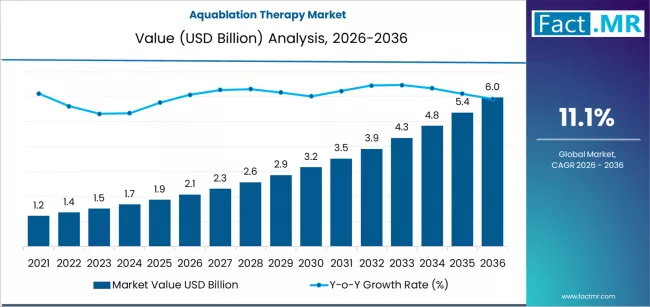
Aquablation therapy market is projected to grow from USD 2.1 billion in 2026 to USD 6.0 billion by 2036, at a CAGR of 11.1%. Aquablation consoles will dominate with a 34.2% market share, while benign prostatic hyperplasia (bph) will lead the therapeutic application segment with a 68.4% share.

Aquablation Therapy Market Forecast and Outlook 2026 to 2036

The global aquablation therapy market is projected to total USD 2.08 billion in 2026, advancing to USD 5.96 billion by 2036, progressing at an 11.1% CAGR. This high-growth trajectory is propelled by the clinical and commercial adoption of this robotic, image-guided waterjet ablation technology as a differentiated standard for treating benign prostatic hyperplasia.

Key Takeaways from the Aquablation Therapy Market

  • Market Value for 2026: USD 2.08 Billion
  • Market Value for 2036: USD 5.96 Billion
  • Forecast CAGR 2026 to 2036: 11.1%
  • Leading System Type Segment (2026): Aquablation Consoles (34.2%)
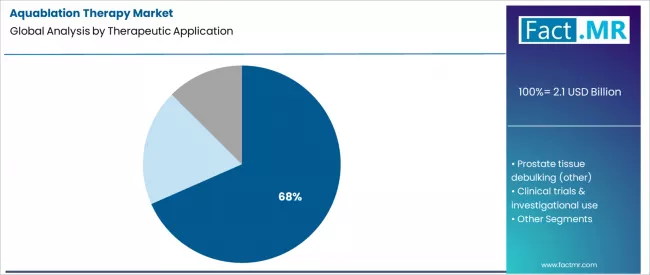
  • Leading Therapeutic Application Segment (2026): Benign Prostatic Hyperplasia (BPH) (68.4%)
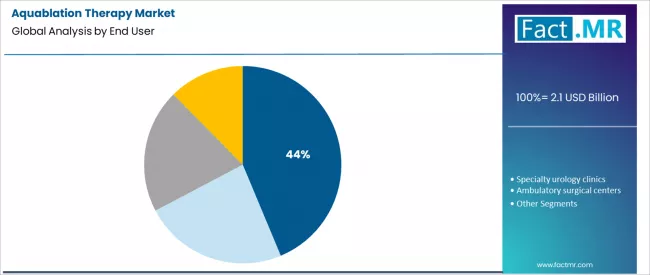
  • Leading End User Segment (2026): Hospitals (43.7%)
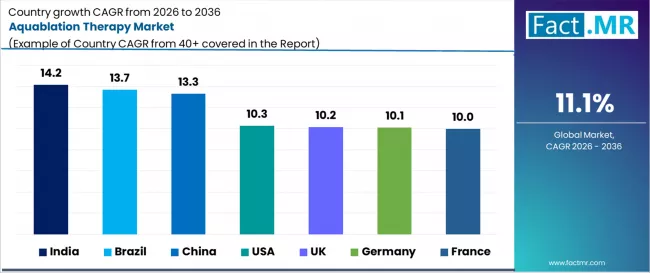
  • Key Growth Countries: India (14.2% CAGR), Brazil (13.7% CAGR), China (13.3% CAGR), USA (10.3% CAGR), Europe (10.5% CAGR), UK (10.2% CAGR), Germany (10.1% CAGR), France (10.0% CAGR)
  • Key Players: PROCEPT BioRobotics Corporation, Medtronic plc, Olympus Corporation, Boston Scientific Corporation, KARL STORZ SE & Co. KG

Aquablation Therapy Market Market Value Analysis

The procedure's ability to combine consistent tissue removal with the preservation of critical anatomical structures addresses a core limitation of earlier BPH therapies, driving its integration into urological practice. Aquablation consoles and single-use handpieces form the capital and consumable foundation of this market. The overwhelming application focus on BPH reflects the technology's primary indication and the vast, underpenetrated patient population seeking durable, minimally invasive solutions.

Hospital-based adoption leads end-user demand, supported by the need for specialized imaging and procedural support. The establishment of advanced urology centers and the rising medical demand from aging male populations fuels exceptional growth rates in emerging economies.

Aquablation Therapy Market

Metric Value
Market Value (2026) USD 2.08 Billion
Market Forecast Value (2036) USD 5.96 Billion
Forecast CAGR 2026 to 2036 11.1%

Category

Category Segments
System Type Aquablation Consoles, Single-Use Handpieces, Imaging & Planning Software, Procedure-Specific Disposables, Service & Maintenance Contracts
Therapeutic Application Benign Prostatic Hyperplasia (BPH), Prostate Tissue Debulking (Other), Clinical Trials & Investigational Use
End User Hospitals, Specialty Urology Clinics, Ambulatory Surgical Centers, Academic Medical Centers
Region North America, Latin America, Western Europe, Eastern Europe, East Asia, South Asia & Pacific, Middle East & Africa

What Clinical and Demographic Trends are Accelerating Adoption of Robotic Ablation?

The aging global male population is directly increasing the prevalence of symptomatic BPH, creating a larger addressable patient pool seeking definitive treatment beyond medication. Rising patient awareness and demand for procedures that minimize risks to sexual and urinary function are aligning perfectly with Aquablation's clinical profile, which demonstrates low rates of retrograde ejaculation compared to thermal ablation.

The broader healthcare shift toward outpatient and short-stay surgical models favors Aquablation's potential for rapid recovery, enhancing hospital throughput and economic viability. This convergence of demographic inevitability, patient preference for functional preservation, and economic efficiency is creating a powerful adoption cycle for this technology.

Segmental Analysis

By System Type, Which Capital Equipment Enables the Core Robotic Procedure?

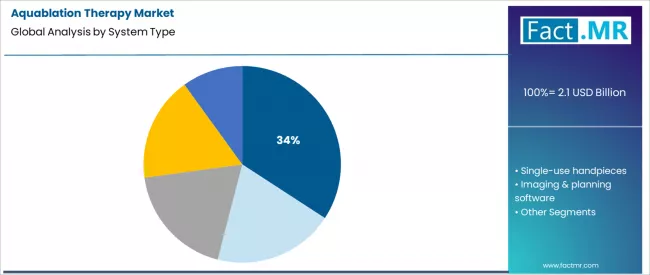
Aquablation Therapy Market Analysis By System Type

Aquablation consoles command a leading 34.2% share. This segment represents the high-value, durable capital equipment at the heart of the procedure. These robotic consoles integrate advanced imaging software with precise robotic control of the waterjet ablator.

Their sale or lease to hospitals and large urology clinics represents the initial market entry point and a significant revenue driver, establishing the installed base that generates recurring revenue from single-use handpieces and software upgrades.

By Therapeutic Application, Which Condition Represents the Primary Clinical Indication?

Aquablation Therapy Market Analysis By Therapeutic Application

Benign Prostatic Hyperplasia treatment constitutes the dominant application segment at 68.4%. Aquablation is specifically designed and clinically validated for BPH, representing its flagship and most reimbursed indication.

The procedure’s efficacy in treating a wide range of prostate anatomies, including large glands, without imposing a size limitation common to some other minimally invasive therapies, positions it as a versatile solution for a highly prevalent condition, securing its overwhelming market share.

By End User, Which Setting Combines Surgical Infrastructure with Patient Volume?

Aquablation Therapy Market Analysis By End User

Hospitals hold a leading 43.7% share. These institutions possess the necessary surgical infrastructure, imaging capabilities, and multidisciplinary support required for introducing a new robotic surgical platform. They also manage the high volume of referred BPH patients unsuitable for office-based therapies.

The capital investment and procedural volume are most aligned with hospital-based urology departments, which serve as the primary centers for training, procedure standardization, and complex case management.

What Forces will Influence the Commercial and Clinical Trajectory of the Aquablation Therapy Landscape?

The definitive clinical outcomes from long-term studies demonstrating Aquablation's durable efficacy and favorable functional preservation profile are overcoming initial physician skepticism, driving procedural adoption beyond early adopters.

The substantial capital investment required for the robotic console and the recurring cost of single-use handpieces present a significant economic barrier, particularly in cost-sensitive healthcare systems and smaller urology practices, potentially slowing widespread penetration.

Expansion into emerging geographic markets with growing medical tourism and private healthcare sectors offers substantial volume growth. Success in these regions depends on developing flexible capital equipment models and demonstrating cost-effectiveness through reduced operative time and length of stay.

Ongoing clinical research is actively exploring the technology's application for prostate tissue debulking in localized prostate cancer and other urological conditions, which could significantly expand the addressable market beyond BPH and attract new clinical specialties.

Analysis of the Aquablation Therapy Market by Key Countries

Aquablation Therapy Market Cagr Analysis By Country

Country CAGR 2026 to 2036
USA 10.3%
China 13.3%
India 14.2%
Brazil 13.7%
Germany 10.1%
France 10.0%

How does the USA's Reimbursement and Specialist Landscape Foster Adoption?

A 10.3% CAGR is underpinned by favorable Medicare reimbursement establishing a payment model, a culture of early technology adoption among urologists, and direct-to-patient marketing raising awareness.

Growth is concentrated in high-volume urology centers and hospitals competing to offer the latest minimally invasive BPH treatments, with adoption fueled by robust clinical data and specialist training programs.

What Characterizes the European Market's Regulatory and Evaluation Pathway?

Europe's 10.5% CAGR reflects a region where centralized CE marking facilitates market entry, but national health technology assessment bodies and hospital procurement committees then govern adoption.

Uptake is strong in countries with advanced healthcare systems, driven by clinical evidence and the technology’s alignment with goals of reducing surgical complications and improving patient quality of life.

Which dynamics are Central to China's Rapid Uptake in Advanced Urology?

China's 13.3% CAGR is propelled by targeted investments in upgrading urology departments in major tertiary hospitals. The technology’s robotic and image-guided nature aligns with national priorities in high-tech medicine. Growth is fueled by partnerships between global medtech firms and domestic distributors, alongside training programs for a new generation of urologists.

Why does India's Private Healthcare Sector Represent a High-Growth Frontier?

India's leading 14.2% CAGR is driven by its large, expanding private hospital sector catering to a growing middle class. These institutions compete on offering cutting-edge, minimally invasive treatments. Aquablation's appeal lies in its potential for short hospital stays and strong clinical outcomes, meeting demand for high-quality, efficient surgical care.

How is Brazil's Demographic and Healthcare Shift Influencing Market Entry?

Brazil's 13.7% CAGR is linked to its aging population and the expansion of private insurance coverage. Major urban private hospitals are key early adopters, introducing the technology to serve affluent and insured patients seeking advanced BPH care. Market development focuses on establishing training centers and proving cost-effectiveness within the private system.

What Drives Steady Adoption within Germany's Precision Medicine Framework?

Germany's 10.1% CAGR is supported by its robust healthcare infrastructure and physician affinity for engineered, precise medical technology. Adoption is evidence-based and methodical, following positive assessments from urological societies. The market values the technology’s reproducibility and data-driven planning component.

How does France's Centralized Health Technology Assessment Guide Implementation?

France's 10.0% CAGR operates within a system where the Haute Autorité de Santé assesses clinical and economic value. Positive evaluation leads to structured adoption within university hospital urology departments, which then disseminate the technique. Growth is steady and protocol-driven, following national guidance.

What Role does the UK's NHS and Specialist Commissioning Play?

NHS commissioning pathways for specialist procedures influences the UK’s 10.2% CAGR. Adoption may be concentrated in selected high-volume regional centers tasked with providing specialized BPH services. Uptake depends on demonstrating superior patient-reported outcomes and potential savings from reduced re-operation rates compared to standard therapies.

Competitive Landscape of the Aquablation Therapy Market

A technology pioneer facing encroachment from large medtech conglomerates currently defines the competitive landscape. PROCEPT BioRobotics, as the innovator, competes through deep clinical expertise, continuous software enhancement, and a focused commercial strategy.

Established players like Medtronic and Boston Scientific are developing or acquiring competing minimally invasive BPH platforms, leveraging their extensive urology sales channels and surgeon relationships. Competition centers on demonstrating superior long-term clinical data, building efficient surgeon training programs to overcome the learning curve, and creating sustainable capital equipment and consumable business models that appeal to hospital financial decision-makers.

Key Players in the Aquablation Therapy Market

  • PROCEPT BioRobotics Corporation
  • Medtronic plc
  • Olympus Corporation
  • Boston Scientific Corporation
  • KARL STORZ SE & Co. KG
  • Others

Scope of Report

Items Metrics
Quantitative Units USD Billion
System Type Consoles, Single-Use Handpieces, Software, Disposables, Service Contracts
Therapeutic Application BPH, Prostate Tissue Debulking, Clinical Trials
End User Hospitals, Specialty Urology Clinics, ASCs, Academic Centers
Key Countries/Regions India, Brazil, China, USA, Europe, UK, Germany, France
Key Companies PROCEPT BioRobotics Corporation, Medtronic plc, Olympus Corporation, Boston Scientific Corporation, KARL STORZ SE & Co. KG
Additional Analysis Comparative analysis of Aquablation versus laser and mechanical resection procedures; total cost of care models including retreatment rates; learning curve analysis and impact on surgeon adoption; review of real-time imaging integration and future AI applications for surgical planning.

Market by Segments

  • System Type :

    • Aquablation Consoles
    • Single-Use Handpieces
    • Imaging & Planning Software
    • Procedure-Specific Disposables
    • Service & Maintenance Contracts
  • Therapeutic Application :

    • Benign Prostatic Hyperplasia (BPH)
    • Prostate Tissue Debulking (Other)
    • Clinical Trials & Investigational Use
  • End User :

    • Hospitals
    • Specialty Urology Clinics
    • Ambulatory Surgical Centers
    • Academic Medical Centers
  • Region :

    • North America

      • USA
      • Canada
    • Latin America

      • Brazil
      • Mexico
      • Argentina
      • Rest of Latin America
    • Western Europe

      • Germany
      • France
      • UK
      • Italy
      • Spain
      • BENELUX
      • Rest of Western Europe
    • Eastern Europe

      • Poland
      • Russia
      • Czech Republic
      • Rest of Eastern Europe
    • East Asia

      • China
      • Japan
      • South Korea
      • Rest of East Asia
    • South Asia & Pacific

      • India
      • ASEAN
      • Australia & New Zealand
      • Rest of South Asia & Pacific
    • MEA

      • GCC Countries
      • South Africa
      • Turkiye
      • Rest of MEA

Bibliography

  • American Urological Association (AUA). (2025). Guideline on the Surgical Management of Benign Prostatic Hyperplasia.
  • European Association of Urology (EAU). (2024). Guidelines on Non-neurogenic Male Lower Urinary Tract Symptoms.
  • Gilling, P., & Barber, N. (2023). Aquablation: A Novel Robotic Waterjet Ablation Therapy for BPH. Current Urology Reports.
  • PROCEPT BioRobotics Corporation. (2025). Five-Year WATER Study Clinical Data Report.
  • U.S. Food and Drug Administration. (2024). Summary of Safety and Effectiveness Data (SSED): AquaBeam Robotic System.
  • World Health Organization. (2024). Global Burden of Urological Disease.

Table of Content

  1. Executive Summary
    • Global Market Outlook
    • Demand to side Trends
    • Supply to side Trends
    • Technology Roadmap Analysis
    • Analysis and Recommendations
  2. Market Overview
    • Market Coverage / Taxonomy
    • Market Definition / Scope / Limitations
  3. Market Background
    • Market Dynamics
      • Drivers
      • Restraints
      • Opportunity
      • Trends
    • Scenario Forecast
      • Demand in Optimistic Scenario
      • Demand in Likely Scenario
      • Demand in Conservative Scenario
    • Opportunity Map Analysis
    • Product Life Cycle Analysis
    • Supply Chain Analysis
    • Investment Feasibility Matrix
    • Value Chain Analysis
    • PESTLE and Porter’s Analysis
    • Regulatory Landscape
    • Regional Parent Market Outlook
    • Production and Consumption Statistics
    • Import and Export Statistics
  4. Global Market Analysis 2021 to 2025 and Forecast, 2026 to 2036
    • Historical Market Size Value (USD Million) Analysis, 2021 to 2025
    • Current and Future Market Size Value (USD Million) Projections, 2026 to 2036
      • Y to o to Y Growth Trend Analysis
      • Absolute $ Opportunity Analysis
  5. Global Market Pricing Analysis 2021 to 2025 and Forecast 2026 to 2036
  6. Global Market Analysis 2021 to 2025 and Forecast 2026 to 2036, By System Type
    • Introduction / Key Findings
    • Historical Market Size Value (USD Million) Analysis By System Type, 2021 to 2025
    • Current and Future Market Size Value (USD Million) Analysis and Forecast By System Type, 2026 to 2036
      • Aquablation consoles
      • Single-use handpieces
      • Imaging & planning software
      • Procedure-specific disposables
      • Service & maintenance contracts
    • Y to o to Y Growth Trend Analysis By System Type, 2021 to 2025
    • Absolute $ Opportunity Analysis By System Type, 2026 to 2036
  7. Global Market Analysis 2021 to 2025 and Forecast 2026 to 2036, By Therapeutic Application
    • Introduction / Key Findings
    • Historical Market Size Value (USD Million) Analysis By Therapeutic Application, 2021 to 2025
    • Current and Future Market Size Value (USD Million) Analysis and Forecast By Therapeutic Application, 2026 to 2036
      • Benign prostatic hyperplasia (BPH)
      • Prostate tissue debulking (other)
      • Clinical trials & investigational use
    • Y to o to Y Growth Trend Analysis By Therapeutic Application, 2021 to 2025
    • Absolute $ Opportunity Analysis By Therapeutic Application, 2026 to 2036
  8. Global Market Analysis 2021 to 2025 and Forecast 2026 to 2036, By End User
    • Introduction / Key Findings
    • Historical Market Size Value (USD Million) Analysis By End User, 2021 to 2025
    • Current and Future Market Size Value (USD Million) Analysis and Forecast By End User, 2026 to 2036
      • Hospitals
      • Specialty urology clinics
      • Ambulatory surgical centers
      • Academic medical centers
    • Y to o to Y Growth Trend Analysis By End User, 2021 to 2025
    • Absolute $ Opportunity Analysis By End User, 2026 to 2036
  9. Global Market Analysis 2021 to 2025 and Forecast 2026 to 2036, By Region
    • Introduction
    • Historical Market Size Value (USD Million) Analysis By Region, 2021 to 2025
    • Current Market Size Value (USD Million) Analysis and Forecast By Region, 2026 to 2036
      • North America
      • Latin America
      • Western Europe
      • Eastern Europe
      • East Asia
      • South Asia and Pacific
      • Middle East & Africa
    • Market Attractiveness Analysis By Region
  10. North America Market Analysis 2021 to 2025 and Forecast 2026 to 2036, By Country
    • Historical Market Size Value (USD Million) Trend Analysis By Market Taxonomy, 2021 to 2025
    • Market Size Value (USD Million) Forecast By Market Taxonomy, 2026 to 2036
      • By Country
        • USA
        • Canada
        • Mexico
      • By System Type
      • By Therapeutic Application
      • By End User
    • Market Attractiveness Analysis
      • By Country
      • By System Type
      • By Therapeutic Application
      • By End User
    • Key Takeaways
  11. Latin America Market Analysis 2021 to 2025 and Forecast 2026 to 2036, By Country
    • Historical Market Size Value (USD Million) Trend Analysis By Market Taxonomy, 2021 to 2025
    • Market Size Value (USD Million) Forecast By Market Taxonomy, 2026 to 2036
      • By Country
        • Brazil
        • Chile
        • Rest of Latin America
      • By System Type
      • By Therapeutic Application
      • By End User
    • Market Attractiveness Analysis
      • By Country
      • By System Type
      • By Therapeutic Application
      • By End User
    • Key Takeaways
  12. Western Europe Market Analysis 2021 to 2025 and Forecast 2026 to 2036, By Country
    • Historical Market Size Value (USD Million) Trend Analysis By Market Taxonomy, 2021 to 2025
    • Market Size Value (USD Million) Forecast By Market Taxonomy, 2026 to 2036
      • By Country
        • Germany
        • UK
        • Italy
        • Spain
        • France
        • Nordic
        • BENELUX
        • Rest of Western Europe
      • By System Type
      • By Therapeutic Application
      • By End User
    • Market Attractiveness Analysis
      • By Country
      • By System Type
      • By Therapeutic Application
      • By End User
    • Key Takeaways
  13. Eastern Europe Market Analysis 2021 to 2025 and Forecast 2026 to 2036, By Country
    • Historical Market Size Value (USD Million) Trend Analysis By Market Taxonomy, 2021 to 2025
    • Market Size Value (USD Million) Forecast By Market Taxonomy, 2026 to 2036
      • By Country
        • Russia
        • Poland
        • Hungary
        • Balkan & Baltic
        • Rest of Eastern Europe
      • By System Type
      • By Therapeutic Application
      • By End User
    • Market Attractiveness Analysis
      • By Country
      • By System Type
      • By Therapeutic Application
      • By End User
    • Key Takeaways
  14. East Asia Market Analysis 2021 to 2025 and Forecast 2026 to 2036, By Country
    • Historical Market Size Value (USD Million) Trend Analysis By Market Taxonomy, 2021 to 2025
    • Market Size Value (USD Million) Forecast By Market Taxonomy, 2026 to 2036
      • By Country
        • China
        • Japan
        • South Korea
      • By System Type
      • By Therapeutic Application
      • By End User
    • Market Attractiveness Analysis
      • By Country
      • By System Type
      • By Therapeutic Application
      • By End User
    • Key Takeaways
  15. South Asia and Pacific Market Analysis 2021 to 2025 and Forecast 2026 to 2036, By Country
    • Historical Market Size Value (USD Million) Trend Analysis By Market Taxonomy, 2021 to 2025
    • Market Size Value (USD Million) Forecast By Market Taxonomy, 2026 to 2036
      • By Country
        • India
        • ASEAN
        • Australia & New Zealand
        • Rest of South Asia and Pacific
      • By System Type
      • By Therapeutic Application
      • By End User
    • Market Attractiveness Analysis
      • By Country
      • By System Type
      • By Therapeutic Application
      • By End User
    • Key Takeaways
  16. Middle East & Africa Market Analysis 2021 to 2025 and Forecast 2026 to 2036, By Country
    • Historical Market Size Value (USD Million) Trend Analysis By Market Taxonomy, 2021 to 2025
    • Market Size Value (USD Million) Forecast By Market Taxonomy, 2026 to 2036
      • By Country
        • Kingdom of Saudi Arabia
        • Other GCC Countries
        • Turkiye
        • South Africa
        • Other African Union
        • Rest of Middle East & Africa
      • By System Type
      • By Therapeutic Application
      • By End User
    • Market Attractiveness Analysis
      • By Country
      • By System Type
      • By Therapeutic Application
      • By End User
    • Key Takeaways
  17. Key Countries Market Analysis
    • USA
      • Pricing Analysis
      • Market Share Analysis, 2025
        • By System Type
        • By Therapeutic Application
        • By End User
    • Canada
      • Pricing Analysis
      • Market Share Analysis, 2025
        • By System Type
        • By Therapeutic Application
        • By End User
    • Mexico
      • Pricing Analysis
      • Market Share Analysis, 2025
        • By System Type
        • By Therapeutic Application
        • By End User
    • Brazil
      • Pricing Analysis
      • Market Share Analysis, 2025
        • By System Type
        • By Therapeutic Application
        • By End User
    • Chile
      • Pricing Analysis
      • Market Share Analysis, 2025
        • By System Type
        • By Therapeutic Application
        • By End User
    • Germany
      • Pricing Analysis
      • Market Share Analysis, 2025
        • By System Type
        • By Therapeutic Application
        • By End User
    • UK
      • Pricing Analysis
      • Market Share Analysis, 2025
        • By System Type
        • By Therapeutic Application
        • By End User
    • Italy
      • Pricing Analysis
      • Market Share Analysis, 2025
        • By System Type
        • By Therapeutic Application
        • By End User
    • Spain
      • Pricing Analysis
      • Market Share Analysis, 2025
        • By System Type
        • By Therapeutic Application
        • By End User
    • France
      • Pricing Analysis
      • Market Share Analysis, 2025
        • By System Type
        • By Therapeutic Application
        • By End User
    • India
      • Pricing Analysis
      • Market Share Analysis, 2025
        • By System Type
        • By Therapeutic Application
        • By End User
    • ASEAN
      • Pricing Analysis
      • Market Share Analysis, 2025
        • By System Type
        • By Therapeutic Application
        • By End User
    • Australia & New Zealand
      • Pricing Analysis
      • Market Share Analysis, 2025
        • By System Type
        • By Therapeutic Application
        • By End User
    • China
      • Pricing Analysis
      • Market Share Analysis, 2025
        • By System Type
        • By Therapeutic Application
        • By End User
    • Japan
      • Pricing Analysis
      • Market Share Analysis, 2025
        • By System Type
        • By Therapeutic Application
        • By End User
    • South Korea
      • Pricing Analysis
      • Market Share Analysis, 2025
        • By System Type
        • By Therapeutic Application
        • By End User
    • Russia
      • Pricing Analysis
      • Market Share Analysis, 2025
        • By System Type
        • By Therapeutic Application
        • By End User
    • Poland
      • Pricing Analysis
      • Market Share Analysis, 2025
        • By System Type
        • By Therapeutic Application
        • By End User
    • Hungary
      • Pricing Analysis
      • Market Share Analysis, 2025
        • By System Type
        • By Therapeutic Application
        • By End User
    • Kingdom of Saudi Arabia
      • Pricing Analysis
      • Market Share Analysis, 2025
        • By System Type
        • By Therapeutic Application
        • By End User
    • Turkiye
      • Pricing Analysis
      • Market Share Analysis, 2025
        • By System Type
        • By Therapeutic Application
        • By End User
    • South Africa
      • Pricing Analysis
      • Market Share Analysis, 2025
        • By System Type
        • By Therapeutic Application
        • By End User
  18. Market Structure Analysis
    • Competition Dashboard
    • Competition Benchmarking
    • Market Share Analysis of Top Players
      • By Regional
      • By System Type
      • By Therapeutic Application
      • By End User
  19. Competition Analysis
    • Competition Deep Dive
      • PROCEPT BioRobotics Corporation
        • Overview
        • Product Portfolio
        • Profitability by Market Segments (Product/Age /Sales Channel/Region)
        • Sales Footprint
        • Strategy Overview
          • Marketing Strategy
          • Product Strategy
          • Channel Strategy
      • Medtronic plc
      • Olympus Corporation
      • Boston Scientific Corporation
      • KARL STORZ SE & Co. KG
      • Others
  20. Assumptions & Acronyms Used
  21. Research Methodology

List Of Table

  • Table 1: Global Market Value (USD Million) Forecast by Region, 2021 to 2036
  • Table 2: Global Market Value (USD Million) Forecast by System Type, 2021 to 2036
  • Table 3: Global Market Value (USD Million) Forecast by Therapeutic Application, 2021 to 2036
  • Table 4: Global Market Value (USD Million) Forecast by End User, 2021 to 2036
  • Table 5: North America Market Value (USD Million) Forecast by Country, 2021 to 2036
  • Table 6: North America Market Value (USD Million) Forecast by System Type, 2021 to 2036
  • Table 7: North America Market Value (USD Million) Forecast by Therapeutic Application, 2021 to 2036
  • Table 8: North America Market Value (USD Million) Forecast by End User, 2021 to 2036
  • Table 9: Latin America Market Value (USD Million) Forecast by Country, 2021 to 2036
  • Table 10: Latin America Market Value (USD Million) Forecast by System Type, 2021 to 2036
  • Table 11: Latin America Market Value (USD Million) Forecast by Therapeutic Application, 2021 to 2036
  • Table 12: Latin America Market Value (USD Million) Forecast by End User, 2021 to 2036
  • Table 13: Western Europe Market Value (USD Million) Forecast by Country, 2021 to 2036
  • Table 14: Western Europe Market Value (USD Million) Forecast by System Type, 2021 to 2036
  • Table 15: Western Europe Market Value (USD Million) Forecast by Therapeutic Application, 2021 to 2036
  • Table 16: Western Europe Market Value (USD Million) Forecast by End User, 2021 to 2036
  • Table 17: Eastern Europe Market Value (USD Million) Forecast by Country, 2021 to 2036
  • Table 18: Eastern Europe Market Value (USD Million) Forecast by System Type, 2021 to 2036
  • Table 19: Eastern Europe Market Value (USD Million) Forecast by Therapeutic Application, 2021 to 2036
  • Table 20: Eastern Europe Market Value (USD Million) Forecast by End User, 2021 to 2036
  • Table 21: East Asia Market Value (USD Million) Forecast by Country, 2021 to 2036
  • Table 22: East Asia Market Value (USD Million) Forecast by System Type, 2021 to 2036
  • Table 23: East Asia Market Value (USD Million) Forecast by Therapeutic Application, 2021 to 2036
  • Table 24: East Asia Market Value (USD Million) Forecast by End User, 2021 to 2036
  • Table 25: South Asia and Pacific Market Value (USD Million) Forecast by Country, 2021 to 2036
  • Table 26: South Asia and Pacific Market Value (USD Million) Forecast by System Type, 2021 to 2036
  • Table 27: South Asia and Pacific Market Value (USD Million) Forecast by Therapeutic Application, 2021 to 2036
  • Table 28: South Asia and Pacific Market Value (USD Million) Forecast by End User, 2021 to 2036
  • Table 29: Middle East & Africa Market Value (USD Million) Forecast by Country, 2021 to 2036
  • Table 30: Middle East & Africa Market Value (USD Million) Forecast by System Type, 2021 to 2036
  • Table 31: Middle East & Africa Market Value (USD Million) Forecast by Therapeutic Application, 2021 to 2036
  • Table 32: Middle East & Africa Market Value (USD Million) Forecast by End User, 2021 to 2036

List Of Figures

  • Figure 1: Global Market Pricing Analysis
  • Figure 2: Global Market Value (USD Million) Forecast 2021 to 2036
  • Figure 3: Global Market Value Share and BPS Analysis by System Type, 2026 and 2036
  • Figure 4: Global Market Y to o to Y Growth Comparison by System Type, 2026 to 2036
  • Figure 5: Global Market Attractiveness Analysis by System Type
  • Figure 6: Global Market Value Share and BPS Analysis by Therapeutic Application, 2026 and 2036
  • Figure 7: Global Market Y to o to Y Growth Comparison by Therapeutic Application, 2026 to 2036
  • Figure 8: Global Market Attractiveness Analysis by Therapeutic Application
  • Figure 9: Global Market Value Share and BPS Analysis by End User, 2026 and 2036
  • Figure 10: Global Market Y to o to Y Growth Comparison by End User, 2026 to 2036
  • Figure 11: Global Market Attractiveness Analysis by End User
  • Figure 12: Global Market Value (USD Million) Share and BPS Analysis by Region, 2026 and 2036
  • Figure 13: Global Market Y to o to Y Growth Comparison by Region, 2026 to 2036
  • Figure 14: Global Market Attractiveness Analysis by Region
  • Figure 15: North America Market Incremental Dollar Opportunity, 2026 to 2036
  • Figure 16: Latin America Market Incremental Dollar Opportunity, 2026 to 2036
  • Figure 17: Western Europe Market Incremental Dollar Opportunity, 2026 to 2036
  • Figure 18: Eastern Europe Market Incremental Dollar Opportunity, 2026 to 2036
  • Figure 19: East Asia Market Incremental Dollar Opportunity, 2026 to 2036
  • Figure 20: South Asia and Pacific Market Incremental Dollar Opportunity, 2026 to 2036
  • Figure 21: Middle East & Africa Market Incremental Dollar Opportunity, 2026 to 2036
  • Figure 22: North America Market Value Share and BPS Analysis by Country, 2026 and 2036
  • Figure 23: North America Market Value Share and BPS Analysis by System Type, 2026 and 2036
  • Figure 24: North America Market Y to o to Y Growth Comparison by System Type, 2026 to 2036
  • Figure 25: North America Market Attractiveness Analysis by System Type
  • Figure 26: North America Market Value Share and BPS Analysis by Therapeutic Application, 2026 and 2036
  • Figure 27: North America Market Y to o to Y Growth Comparison by Therapeutic Application, 2026 to 2036
  • Figure 28: North America Market Attractiveness Analysis by Therapeutic Application
  • Figure 29: North America Market Value Share and BPS Analysis by End User, 2026 and 2036
  • Figure 30: North America Market Y to o to Y Growth Comparison by End User, 2026 to 2036
  • Figure 31: North America Market Attractiveness Analysis by End User
  • Figure 32: Latin America Market Value Share and BPS Analysis by Country, 2026 and 2036
  • Figure 33: Latin America Market Value Share and BPS Analysis by System Type, 2026 and 2036
  • Figure 34: Latin America Market Y to o to Y Growth Comparison by System Type, 2026 to 2036
  • Figure 35: Latin America Market Attractiveness Analysis by System Type
  • Figure 36: Latin America Market Value Share and BPS Analysis by Therapeutic Application, 2026 and 2036
  • Figure 37: Latin America Market Y to o to Y Growth Comparison by Therapeutic Application, 2026 to 2036
  • Figure 38: Latin America Market Attractiveness Analysis by Therapeutic Application
  • Figure 39: Latin America Market Value Share and BPS Analysis by End User, 2026 and 2036
  • Figure 40: Latin America Market Y to o to Y Growth Comparison by End User, 2026 to 2036
  • Figure 41: Latin America Market Attractiveness Analysis by End User
  • Figure 42: Western Europe Market Value Share and BPS Analysis by Country, 2026 and 2036
  • Figure 43: Western Europe Market Value Share and BPS Analysis by System Type, 2026 and 2036
  • Figure 44: Western Europe Market Y to o to Y Growth Comparison by System Type, 2026 to 2036
  • Figure 45: Western Europe Market Attractiveness Analysis by System Type
  • Figure 46: Western Europe Market Value Share and BPS Analysis by Therapeutic Application, 2026 and 2036
  • Figure 47: Western Europe Market Y to o to Y Growth Comparison by Therapeutic Application, 2026 to 2036
  • Figure 48: Western Europe Market Attractiveness Analysis by Therapeutic Application
  • Figure 49: Western Europe Market Value Share and BPS Analysis by End User, 2026 and 2036
  • Figure 50: Western Europe Market Y to o to Y Growth Comparison by End User, 2026 to 2036
  • Figure 51: Western Europe Market Attractiveness Analysis by End User
  • Figure 52: Eastern Europe Market Value Share and BPS Analysis by Country, 2026 and 2036
  • Figure 53: Eastern Europe Market Value Share and BPS Analysis by System Type, 2026 and 2036
  • Figure 54: Eastern Europe Market Y to o to Y Growth Comparison by System Type, 2026 to 2036
  • Figure 55: Eastern Europe Market Attractiveness Analysis by System Type
  • Figure 56: Eastern Europe Market Value Share and BPS Analysis by Therapeutic Application, 2026 and 2036
  • Figure 57: Eastern Europe Market Y to o to Y Growth Comparison by Therapeutic Application, 2026 to 2036
  • Figure 58: Eastern Europe Market Attractiveness Analysis by Therapeutic Application
  • Figure 59: Eastern Europe Market Value Share and BPS Analysis by End User, 2026 and 2036
  • Figure 60: Eastern Europe Market Y to o to Y Growth Comparison by End User, 2026 to 2036
  • Figure 61: Eastern Europe Market Attractiveness Analysis by End User
  • Figure 62: East Asia Market Value Share and BPS Analysis by Country, 2026 and 2036
  • Figure 63: East Asia Market Value Share and BPS Analysis by System Type, 2026 and 2036
  • Figure 64: East Asia Market Y to o to Y Growth Comparison by System Type, 2026 to 2036
  • Figure 65: East Asia Market Attractiveness Analysis by System Type
  • Figure 66: East Asia Market Value Share and BPS Analysis by Therapeutic Application, 2026 and 2036
  • Figure 67: East Asia Market Y to o to Y Growth Comparison by Therapeutic Application, 2026 to 2036
  • Figure 68: East Asia Market Attractiveness Analysis by Therapeutic Application
  • Figure 69: East Asia Market Value Share and BPS Analysis by End User, 2026 and 2036
  • Figure 70: East Asia Market Y to o to Y Growth Comparison by End User, 2026 to 2036
  • Figure 71: East Asia Market Attractiveness Analysis by End User
  • Figure 72: South Asia and Pacific Market Value Share and BPS Analysis by Country, 2026 and 2036
  • Figure 73: South Asia and Pacific Market Value Share and BPS Analysis by System Type, 2026 and 2036
  • Figure 74: South Asia and Pacific Market Y to o to Y Growth Comparison by System Type, 2026 to 2036
  • Figure 75: South Asia and Pacific Market Attractiveness Analysis by System Type
  • Figure 76: South Asia and Pacific Market Value Share and BPS Analysis by Therapeutic Application, 2026 and 2036
  • Figure 77: South Asia and Pacific Market Y to o to Y Growth Comparison by Therapeutic Application, 2026 to 2036
  • Figure 78: South Asia and Pacific Market Attractiveness Analysis by Therapeutic Application
  • Figure 79: South Asia and Pacific Market Value Share and BPS Analysis by End User, 2026 and 2036
  • Figure 80: South Asia and Pacific Market Y to o to Y Growth Comparison by End User, 2026 to 2036
  • Figure 81: South Asia and Pacific Market Attractiveness Analysis by End User
  • Figure 82: Middle East & Africa Market Value Share and BPS Analysis by Country, 2026 and 2036
  • Figure 83: Middle East & Africa Market Value Share and BPS Analysis by System Type, 2026 and 2036
  • Figure 84: Middle East & Africa Market Y to o to Y Growth Comparison by System Type, 2026 to 2036
  • Figure 85: Middle East & Africa Market Attractiveness Analysis by System Type
  • Figure 86: Middle East & Africa Market Value Share and BPS Analysis by Therapeutic Application, 2026 and 2036
  • Figure 87: Middle East & Africa Market Y to o to Y Growth Comparison by Therapeutic Application, 2026 to 2036
  • Figure 88: Middle East & Africa Market Attractiveness Analysis by Therapeutic Application
  • Figure 89: Middle East & Africa Market Value Share and BPS Analysis by End User, 2026 and 2036
  • Figure 90: Middle East & Africa Market Y to o to Y Growth Comparison by End User, 2026 to 2036
  • Figure 91: Middle East & Africa Market Attractiveness Analysis by End User
  • Figure 92: Global Market - Tier Structure Analysis
  • Figure 93: Global Market - Company Share Analysis

- FAQs -

How big is the aquablation therapy market in 2026?

The global aquablation therapy market is estimated to be valued at USD 2.1 billion in 2026.

What will be the size of aquablation therapy market in 2036?

The market size for the aquablation therapy market is projected to reach USD 6.0 billion by 2036.

How much will be the aquablation therapy market growth between 2026 and 2036?

The aquablation therapy market is expected to grow at a 11.1% CAGR between 2026 and 2036.

What are the key product types in the aquablation therapy market?

The key product types in aquablation therapy market are aquablation consoles, single-use handpieces, imaging & planning software, procedure-specific disposables and service & maintenance contracts.

Which therapeutic application segment to contribute significant share in the aquablation therapy market in 2026?

In terms of therapeutic application, benign prostatic hyperplasia (bph) segment to command 68.4% share in the aquablation therapy market in 2026.
Aquablation Therapy Market