Art Supplies Packaging Market (2026 - 2036)
Art Supplies Packaging Market Size and Share Forecast Outlook 2026 to 2036
Core Findings
Art Supplies Packaging Market Forecast and Outlook 2026 to 2036
The art supplies packaging market opens the period at USD 1.7 billion in 2026 and moves toward USD 5.1 billion by 2036, which corresponds to an 11.70% CAGR. This segment serves products that are bought for regular use in schools, studios, and hobby channels rather than for one time occasions. Packaging must protect contents from leakage, drying, and breakage while staying easy to open and reseal.
Art Supplies Packaging Market Key Takeaways
- Art Supplies Packaging Market Value (2026): USD 1.7 billion
- Art Supplies Packaging Market Forecast Value (2036): USD 5.1 billion
- Art Supplies Packaging Market Forecast CAGR 2026 to 2036: 11.7%
- Leading Product Category in Art Supplies Packaging Market: Paints and liquids
- Key Growth Regions in Art Supplies Packaging Market: Asia Pacific, North America, Europe, Latin America, Middle East & Africa
- Top Players in Art Supplies Packaging Market: Nefab Group, Pregis LLC, Berry Global Group, Inc., Bio Pappel, S.A.B. de C.V.
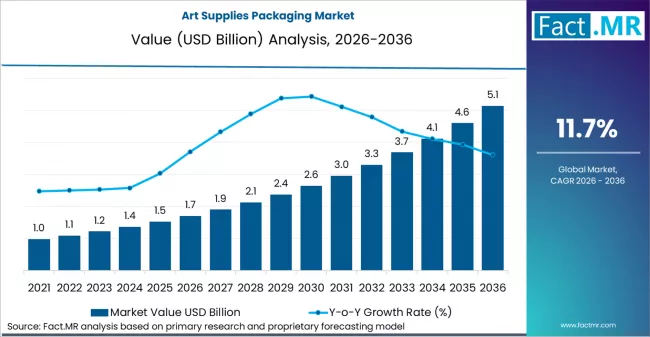
Buyers prefer formats that stack well, travel without damage, and present a clean appearance on shelves. Brand owners often keep the same pack shapes for long periods, since changes affect filling lines, shelf layout, and product instructions. Once a format is accepted, it usually stays in place to avoid disruption. Suppliers compete on consistency, print quality, and dependable delivery rather than frequent design changes.
Art Supplies Packaging Market
| Metric | Value |
|---|---|
| Market Value (2026) | USD 1.7 billion |
| Forecast Value (2036) | USD 5.1 billion |
| Forecast CAGR 2026 to 2036 | 11.7% |
Category
| Category | Segments |
|---|---|
| Product Category | Paints and liquids; Brushes and tools; Art kits; Premium stationery; School supplies |
| Pack Type | Window cartons; Blister cards; Kit boxes; Rigid boxes |
| Material | Paperboard; PET; Coated paper; Specialty board |
| Region | North America; Europe; Asia Pacific; Latin America; Middle East & Africa |
Segmental Analysis
Why Do Paints and Liquids Drive the Largest Share of Art Supplies Packaging Demand?
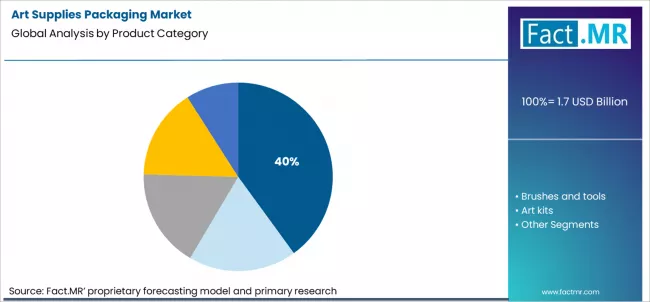
Paints and liquids account for 40% of product category volume in the art supplies packaging market. This group moves in steady cycles tied to classroom use, hobby activity, and studio replenishment rather than one time purchases. Packaging teams handle leak control, visibility, and shelf stability for bottles, tubes, and jars that travel through long distribution chains. Retailers also prefer formats that allow quick visual inspection without opening packs. Stock rotation remains frequent in this category, which keeps reorder volumes high across seasons. Brushes, kits, and stationery contribute meaningful demand, yet they do not match the refill rhythm of consumable liquids. The repeat purchase nature of paints keeps this category as the main anchor for packaging volume.
What Is the Most Common Pack Type Used Across Art Supply Retail Displays?
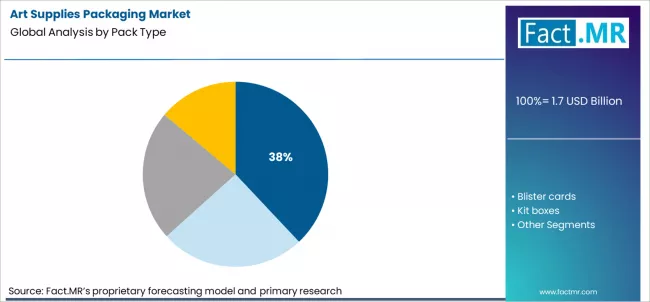
Window cartons represent 38% of pack type usage in the art supplies packaging market. This format allows customers to see color, quantity, or tool shape while keeping the product protected during transport and stacking. Retail planograms often rely on front facing visibility to reduce handling and returns. Converters use window cartons to combine printed information with direct product viewing in a single structure. Shelf presentation remains consistent across different price tiers using this approach. Blister cards, kit boxes, and rigid boxes serve defined roles for tools and premium sets. Most high turnover items still enter stores in window cartons due to their balance of display and protection needs.
What are the Drivers, Restraints, and Key Trends of the Art Supplies Packaging Market?
- Drivers: Demand from educational institutions, hobbyists, and professional artists for protective and display-ready packaging supports use of tailored solutions that secure delicate components such as brushes, paints, and drawing tools while enhancing shelf presence.
- Restraint: Cost sensitivity among mass-market retailers and independent art stores limits uptake of premium packaging options and presses manufacturers to balance protection with affordability.
- Trend 1: Increased specification of compartmentalized inserts and protective coatings designed to prevent damage and keep multi-component sets organized.
- Trend 2: Expanded use of transparent and graphic-enhanced packaging that showcases product attributes and supports retail merchandising strategies.
Analysis of the Art Supplies Packaging Market by Key Country
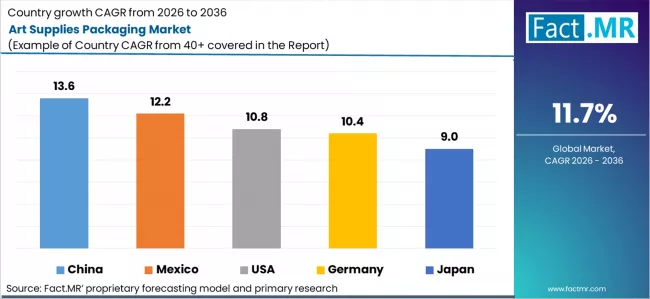
| Country | CAGR 2026 to 2036 |
|---|---|
| Germany | 10.4% |
| USA | 10.8% |
| China | 13.6% |
| Japan | 9.0% |
| Mexico | 12.2% |
The report covers an in-depth analysis of 30+ countries; top-performing countries are highlighted below.
How Are Specialty Retail and Education Channels in Germany Shaping Art Supplies Packaging?
Growth in Germany runs at about 10.4% per year through 2036. Demand follows sales of hobby materials, school art programs, and specialist craft retail. Buyers focus on protection, shelf presentation, and ease of storage rather than decorative complexity. Packaging choices emphasize durability, compartment separation, and clear labeling. Purchasing decisions sit with brand product managers and retail category teams. Conversions usually align with product line refresh cycles. Distribution remains concentrated among established packaging suppliers serving stationery and hobby brands. Volume growth tracks expansion of creative hobby participation and structured education programs rather than short term promotional spikes.
Why Do Mass Retail and E-commerce Channels in USA Influence Art Supplies Packaging?
Growth in USA runs at about 10.8% per year through 2036. Demand is shaped by large retail chains, online marketplaces, and back to school programs. Buyers emphasize stackability, damage resistance, and visual clarity for shelf and screen display. Packaging formats favor boxes, blister packs, and kits that simplify assortment management. Purchasing decisions balance cost, supply continuity, and retail compliance. Conversions often happen during range resets. Distribution relies on national packaging suppliers and contract packers. Volume growth follows expansion of hobby categories and private label assortments rather than limited edition product launches.
What Is Driving Faster Adoption of Structured Art Supplies Packaging in China?
Growth in China runs at about 13.6% per year through 2036. Demand rises from education focused consumption, hobby markets, and gifting. Buyers prioritize scale, production speed, and consistency across large product ranges. Packaging formats favor boxed sets, organized trays, and protective wraps. Purchasing aligns with seasonal school and gifting calendars. Local manufacturing capacity influences supplier choice. Volume increases follow platform sales campaigns and retail expansion. Inventory builds occur before major sales periods. Market development remains tied to organized retail and education spending rather than individual artist purchasing behavior.
How Are Quality and Presentation Standards in Japan Shaping Art Supplies Packaging?
Growth in Japan runs at about 9.0% per year through 2036. Demand follows strong focus on presentation, neatness, and long term storage. Buyers emphasize precise fit, clean design, and material quality. Packaging decisions prioritize reliability and consistency across product lines. Conversions proceed carefully because presentation standards remain strict. Distribution stays concentrated among approved packaging partners. Volume increases track portfolio refresh cycles and seasonal gift programs. Inventory remains conservative due to space constraints. Market development stays tied to disciplined product planning rather than aggressive assortment expansion or rapid trend cycles.
What Is Supporting Expansion of Art Supplies Packaging in Mexico?
Growth in Mexico runs at about 12.2% per year through 2036. Demand rises from school supply programs, hobby retail growth, and organized stationery chains. Buyers focus on cost control, protection, and basic presentation. Packaging formats favor boxes and bundled kits. Purchasing decisions emphasize availability and regional supply support. Conversions often start with higher volume education products. Distribution relies on local converters and importers. Volume growth follows expansion of formal retail and education spending. Market development remains tied to category growth and channel formalization rather than premium presentation trends.
How Do Channel Mix and Product Protection Standards Shape Competition in the Art Supplies Packaging Market?
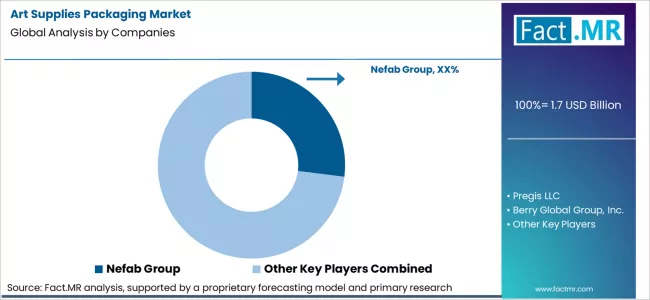
Merchandising formats and damage tolerance levels usually define packaging requirements before any supplier is evaluated. Retailers and distributors set pack sizes, stacking rules, and return thresholds based on store handling and e commerce shipment profiles. Nefab and Pregis compete by aligning cushioning systems and kitted packs to mixed SKU shipments that include fragile and liquid items.
Berry Global participates where molded and flexible formats are required at scale. Bio Pappel serves programs that emphasize paper based structures and regional supply coverage. Buyers compare suppliers using drop test results, pack consistency, and changeover speed on packing lines. Once a format is approved, volumes follow seasonal demand and channel expansion. Supplier changes tend to occur after assortment resets or distribution model changes.
Key Players in Art Supplies Packaging Market
- Nefab Group
- Pregis LLC
- Berry Global Group, Inc.
- Bio Pappel, S.A.B. de C.V.
Scope of the Report
| Items | Values |
|---|---|
| Quantitative Units (2026) | USD million |
| Product Category | Paints and liquids, brushes and tools, art kits, premium stationery, school supplies |
| Pack Type | Window cartons, blister cards, kit boxes, rigid boxes |
| Material | Paperboard, PET, coated paper, specialty board |
| Regions Covered | Asia Pacific, Europe, North America, Latin America, Middle East & Africa |
| Countries Covered | United States, Canada, Mexico, Germany, United Kingdom, France, Italy, Spain, Nordics, BENELUX, China, Japan, South Korea, India, Australia & New Zealand, ASEAN, Brazil, Chile, Saudi Arabia, Turkey, South Africa, and other regional markets |
| Key Companies Profiled | Nefab Group, Pregis LLC, Berry Global Group, Bio Pappel, S.A.B. de C.V. |
| Additional Attributes | Dollar sales by product category, pack type, and material; leak protection, breakage resistance, stackability, and shelf presentation; demand driven by education programs, hobby channels, and professional art supply retail |
Art Supplies Packaging Market Segmentation
-
Product Category :
- Paints & liquids
- Brushes & tools
- Art kits
- Premium stationery
- School supplies
-
Pack Type :
- Window cartons
- Blister cards
- Kit boxes
- Rigid boxes
-
Material :
- Paperboard
- PET
- Coated paper
- Specialty board
-
Region :
- Asia Pacific
- China
- Japan
- South Korea
- India
- Australia & New Zealand
- ASEAN
- Rest of Asia Pacific
- Europe
- Germany
- United Kingdom
- France
- Italy
- Spain
- Nordic
- BENELUX
- Rest of Europe
- North America
- United States
- Canada
- Mexico
- Latin America
- Brazil
- Chile
- Rest of Latin America
- Middle East & Africa
- Kingdom of Saudi Arabia
- Other GCC Countries
- Turkey
- South Africa
- Other African Union
- Rest of Middle East & Africa
- Asia Pacific
References
- European Commission. (2024). Proposal for a regulation of the European Parliament and of the Council on packaging and packaging waste and repealing Directive 94/62/EC. European Commission.
- European Commission, Joint Research Centre. (2023). The future of packaging in a circular economy: Material use, reuse systems and waste prevention. Publications Office of the European Union.
- Organisation for Economic Co-operation and Development. (2023). Global plastics outlook: Policy scenarios to 2060. OECD Publishing.
- United Nations Environment Programme. (2023). Turning off the tap: How the world can end plastic pollution and create a circular economy. UNEP.
- International Organization for Standardization. (2023). ISO 17088: Specifications for compostable plastics. ISO.
Table of Content
- Executive Summary
- Global Market Outlook
- Demand to side Trends
- Supply to side Trends
- Technology Roadmap Analysis
- Analysis and Recommendations
- Market Overview
- Market Coverage / Taxonomy
- Market Definition / Scope / Limitations
- Market Background
- Market Dynamics
- Drivers
- Restraints
- Opportunity
- Trends
- Scenario Forecast
- Demand in Optimistic Scenario
- Demand in Likely Scenario
- Demand in Conservative Scenario
- Opportunity Map Analysis
- Product Life Cycle Analysis
- Supply Chain Analysis
- Investment Feasibility Matrix
- Value Chain Analysis
- PESTLE and Porter’s Analysis
- Regulatory Landscape
- Regional Parent Market Outlook
- Production and Consumption Statistics
- Import and Export Statistics
- Market Dynamics
- Global Market Analysis 2021 to 2025 and Forecast, 2026 to 2036
- Historical Market Size Value (USD Million) Analysis, 2021 to 2025
- Current and Future Market Size Value (USD Million) Projections, 2026 to 2036
- Y to o to Y Growth Trend Analysis
- Absolute $ Opportunity Analysis
- Global Market Pricing Analysis 2021 to 2025 and Forecast 2026 to 2036
- Global Market Analysis 2021 to 2025 and Forecast 2026 to 2036, By Product Category
- Introduction / Key Findings
- Historical Market Size Value (USD Million) Analysis By Product Category, 2021 to 2025
- Current and Future Market Size Value (USD Million) Analysis and Forecast By Product Category, 2026 to 2036
- Paints and liquids
- Brushes and tools
- Art kits
- Premium stationery
- School supplies
- Paints and liquids
- Y to o to Y Growth Trend Analysis By Product Category, 2021 to 2025
- Absolute $ Opportunity Analysis By Product Category, 2026 to 2036
- Global Market Analysis 2021 to 2025 and Forecast 2026 to 2036, By Pack Type
- Introduction / Key Findings
- Historical Market Size Value (USD Million) Analysis By Pack Type, 2021 to 2025
- Current and Future Market Size Value (USD Million) Analysis and Forecast By Pack Type, 2026 to 2036
- Window cartons
- Blister cards
- Kit boxes
- Rigid boxes
- Window cartons
- Y to o to Y Growth Trend Analysis By Pack Type, 2021 to 2025
- Absolute $ Opportunity Analysis By Pack Type, 2026 to 2036
- Global Market Analysis 2021 to 2025 and Forecast 2026 to 2036, By Material
- Introduction / Key Findings
- Historical Market Size Value (USD Million) Analysis By Material, 2021 to 2025
- Current and Future Market Size Value (USD Million) Analysis and Forecast By Material, 2026 to 2036
- Paperboard
- PET
- Coated paper
- Specialty board
- Paperboard
- Y to o to Y Growth Trend Analysis By Material, 2021 to 2025
- Absolute $ Opportunity Analysis By Material, 2026 to 2036
- Global Market Analysis 2021 to 2025 and Forecast 2026 to 2036, By Region
- Introduction
- Historical Market Size Value (USD Million) Analysis By Region, 2021 to 2025
- Current Market Size Value (USD Million) Analysis and Forecast By Region, 2026 to 2036
- North America
- Latin America
- Western Europe
- Eastern Europe
- East Asia
- South Asia and Pacific
- Middle East & Africa
- Market Attractiveness Analysis By Region
- North America Market Analysis 2021 to 2025 and Forecast 2026 to 2036, By Country
- Historical Market Size Value (USD Million) Trend Analysis By Market Taxonomy, 2021 to 2025
- Market Size Value (USD Million) Forecast By Market Taxonomy, 2026 to 2036
- By Country
- USA
- Canada
- Mexico
- By Product Category
- By Pack Type
- By Material
- By Country
- Market Attractiveness Analysis
- By Country
- By Product Category
- By Pack Type
- By Material
- Key Takeaways
- Latin America Market Analysis 2021 to 2025 and Forecast 2026 to 2036, By Country
- Historical Market Size Value (USD Million) Trend Analysis By Market Taxonomy, 2021 to 2025
- Market Size Value (USD Million) Forecast By Market Taxonomy, 2026 to 2036
- By Country
- Brazil
- Chile
- Rest of Latin America
- By Product Category
- By Pack Type
- By Material
- By Country
- Market Attractiveness Analysis
- By Country
- By Product Category
- By Pack Type
- By Material
- Key Takeaways
- Western Europe Market Analysis 2021 to 2025 and Forecast 2026 to 2036, By Country
- Historical Market Size Value (USD Million) Trend Analysis By Market Taxonomy, 2021 to 2025
- Market Size Value (USD Million) Forecast By Market Taxonomy, 2026 to 2036
- By Country
- Germany
- UK
- Italy
- Spain
- France
- Nordic
- BENELUX
- Rest of Western Europe
- By Product Category
- By Pack Type
- By Material
- By Country
- Market Attractiveness Analysis
- By Country
- By Product Category
- By Pack Type
- By Material
- Key Takeaways
- Eastern Europe Market Analysis 2021 to 2025 and Forecast 2026 to 2036, By Country
- Historical Market Size Value (USD Million) Trend Analysis By Market Taxonomy, 2021 to 2025
- Market Size Value (USD Million) Forecast By Market Taxonomy, 2026 to 2036
- By Country
- Russia
- Poland
- Hungary
- Balkan & Baltic
- Rest of Eastern Europe
- By Product Category
- By Pack Type
- By Material
- By Country
- Market Attractiveness Analysis
- By Country
- By Product Category
- By Pack Type
- By Material
- Key Takeaways
- East Asia Market Analysis 2021 to 2025 and Forecast 2026 to 2036, By Country
- Historical Market Size Value (USD Million) Trend Analysis By Market Taxonomy, 2021 to 2025
- Market Size Value (USD Million) Forecast By Market Taxonomy, 2026 to 2036
- By Country
- China
- Japan
- South Korea
- By Product Category
- By Pack Type
- By Material
- By Country
- Market Attractiveness Analysis
- By Country
- By Product Category
- By Pack Type
- By Material
- Key Takeaways
- South Asia and Pacific Market Analysis 2021 to 2025 and Forecast 2026 to 2036, By Country
- Historical Market Size Value (USD Million) Trend Analysis By Market Taxonomy, 2021 to 2025
- Market Size Value (USD Million) Forecast By Market Taxonomy, 2026 to 2036
- By Country
- India
- ASEAN
- Australia & New Zealand
- Rest of South Asia and Pacific
- By Product Category
- By Pack Type
- By Material
- By Country
- Market Attractiveness Analysis
- By Country
- By Product Category
- By Pack Type
- By Material
- Key Takeaways
- Middle East & Africa Market Analysis 2021 to 2025 and Forecast 2026 to 2036, By Country
- Historical Market Size Value (USD Million) Trend Analysis By Market Taxonomy, 2021 to 2025
- Market Size Value (USD Million) Forecast By Market Taxonomy, 2026 to 2036
- By Country
- Kingdom of Saudi Arabia
- Other GCC Countries
- Turkiye
- South Africa
- Other African Union
- Rest of Middle East & Africa
- By Product Category
- By Pack Type
- By Material
- By Country
- Market Attractiveness Analysis
- By Country
- By Product Category
- By Pack Type
- By Material
- Key Takeaways
- Key Countries Market Analysis
- USA
- Pricing Analysis
- Market Share Analysis, 2025
- By Product Category
- By Pack Type
- By Material
- Canada
- Pricing Analysis
- Market Share Analysis, 2025
- By Product Category
- By Pack Type
- By Material
- Mexico
- Pricing Analysis
- Market Share Analysis, 2025
- By Product Category
- By Pack Type
- By Material
- Brazil
- Pricing Analysis
- Market Share Analysis, 2025
- By Product Category
- By Pack Type
- By Material
- Chile
- Pricing Analysis
- Market Share Analysis, 2025
- By Product Category
- By Pack Type
- By Material
- Germany
- Pricing Analysis
- Market Share Analysis, 2025
- By Product Category
- By Pack Type
- By Material
- UK
- Pricing Analysis
- Market Share Analysis, 2025
- By Product Category
- By Pack Type
- By Material
- Italy
- Pricing Analysis
- Market Share Analysis, 2025
- By Product Category
- By Pack Type
- By Material
- Spain
- Pricing Analysis
- Market Share Analysis, 2025
- By Product Category
- By Pack Type
- By Material
- France
- Pricing Analysis
- Market Share Analysis, 2025
- By Product Category
- By Pack Type
- By Material
- India
- Pricing Analysis
- Market Share Analysis, 2025
- By Product Category
- By Pack Type
- By Material
- ASEAN
- Pricing Analysis
- Market Share Analysis, 2025
- By Product Category
- By Pack Type
- By Material
- Australia & New Zealand
- Pricing Analysis
- Market Share Analysis, 2025
- By Product Category
- By Pack Type
- By Material
- China
- Pricing Analysis
- Market Share Analysis, 2025
- By Product Category
- By Pack Type
- By Material
- Japan
- Pricing Analysis
- Market Share Analysis, 2025
- By Product Category
- By Pack Type
- By Material
- South Korea
- Pricing Analysis
- Market Share Analysis, 2025
- By Product Category
- By Pack Type
- By Material
- Russia
- Pricing Analysis
- Market Share Analysis, 2025
- By Product Category
- By Pack Type
- By Material
- Poland
- Pricing Analysis
- Market Share Analysis, 2025
- By Product Category
- By Pack Type
- By Material
- Hungary
- Pricing Analysis
- Market Share Analysis, 2025
- By Product Category
- By Pack Type
- By Material
- Kingdom of Saudi Arabia
- Pricing Analysis
- Market Share Analysis, 2025
- By Product Category
- By Pack Type
- By Material
- Turkiye
- Pricing Analysis
- Market Share Analysis, 2025
- By Product Category
- By Pack Type
- By Material
- South Africa
- Pricing Analysis
- Market Share Analysis, 2025
- By Product Category
- By Pack Type
- By Material
- USA
- Market Structure Analysis
- Competition Dashboard
- Competition Benchmarking
- Market Share Analysis of Top Players
- By Regional
- By Product Category
- By Pack Type
- By Material
- Competition Analysis
- Competition Deep Dive
- Nefab Group
- Overview
- Product Portfolio
- Profitability by Market Segments (Product/Age /Sales Channel/Region)
- Sales Footprint
- Strategy Overview
- Marketing Strategy
- Product Strategy
- Channel Strategy
- Pregis LLC
- Berry Global Group, Inc.
- Bio Pappel, S.A.B. de C.V.
- Nefab Group
- Competition Deep Dive
- Assumptions & Acronyms Used
- Research Methodology
List Of Table
- Table 1: Global Market Value (USD Million) Forecast by Region, 2021 to 2036
- Table 2: Global Market Value (USD Million) Forecast by Product Category, 2021 to 2036
- Table 3: Global Market Value (USD Million) Forecast by Pack Type, 2021 to 2036
- Table 4: Global Market Value (USD Million) Forecast by Material, 2021 to 2036
- Table 5: North America Market Value (USD Million) Forecast by Country, 2021 to 2036
- Table 6: North America Market Value (USD Million) Forecast by Product Category, 2021 to 2036
- Table 7: North America Market Value (USD Million) Forecast by Pack Type, 2021 to 2036
- Table 8: North America Market Value (USD Million) Forecast by Material, 2021 to 2036
- Table 9: Latin America Market Value (USD Million) Forecast by Country, 2021 to 2036
- Table 10: Latin America Market Value (USD Million) Forecast by Product Category, 2021 to 2036
- Table 11: Latin America Market Value (USD Million) Forecast by Pack Type, 2021 to 2036
- Table 12: Latin America Market Value (USD Million) Forecast by Material, 2021 to 2036
- Table 13: Western Europe Market Value (USD Million) Forecast by Country, 2021 to 2036
- Table 14: Western Europe Market Value (USD Million) Forecast by Product Category, 2021 to 2036
- Table 15: Western Europe Market Value (USD Million) Forecast by Pack Type, 2021 to 2036
- Table 16: Western Europe Market Value (USD Million) Forecast by Material, 2021 to 2036
- Table 17: Eastern Europe Market Value (USD Million) Forecast by Country, 2021 to 2036
- Table 18: Eastern Europe Market Value (USD Million) Forecast by Product Category, 2021 to 2036
- Table 19: Eastern Europe Market Value (USD Million) Forecast by Pack Type, 2021 to 2036
- Table 20: Eastern Europe Market Value (USD Million) Forecast by Material, 2021 to 2036
- Table 21: East Asia Market Value (USD Million) Forecast by Country, 2021 to 2036
- Table 22: East Asia Market Value (USD Million) Forecast by Product Category, 2021 to 2036
- Table 23: East Asia Market Value (USD Million) Forecast by Pack Type, 2021 to 2036
- Table 24: East Asia Market Value (USD Million) Forecast by Material, 2021 to 2036
- Table 25: South Asia and Pacific Market Value (USD Million) Forecast by Country, 2021 to 2036
- Table 26: South Asia and Pacific Market Value (USD Million) Forecast by Product Category, 2021 to 2036
- Table 27: South Asia and Pacific Market Value (USD Million) Forecast by Pack Type, 2021 to 2036
- Table 28: South Asia and Pacific Market Value (USD Million) Forecast by Material, 2021 to 2036
- Table 29: Middle East & Africa Market Value (USD Million) Forecast by Country, 2021 to 2036
- Table 30: Middle East & Africa Market Value (USD Million) Forecast by Product Category, 2021 to 2036
- Table 31: Middle East & Africa Market Value (USD Million) Forecast by Pack Type, 2021 to 2036
- Table 32: Middle East & Africa Market Value (USD Million) Forecast by Material, 2021 to 2036
List Of Figures
- Figure 1: Global Market Pricing Analysis
- Figure 2: Global Market Value (USD Million) Forecast 2021 to 2036
- Figure 3: Global Market Value Share and BPS Analysis by Product Category, 2026 and 2036
- Figure 4: Global Market Y to o to Y Growth Comparison by Product Category, 2026 to 2036
- Figure 5: Global Market Attractiveness Analysis by Product Category
- Figure 6: Global Market Value Share and BPS Analysis by Pack Type, 2026 and 2036
- Figure 7: Global Market Y to o to Y Growth Comparison by Pack Type, 2026 to 2036
- Figure 8: Global Market Attractiveness Analysis by Pack Type
- Figure 9: Global Market Value Share and BPS Analysis by Material, 2026 and 2036
- Figure 10: Global Market Y to o to Y Growth Comparison by Material, 2026 to 2036
- Figure 11: Global Market Attractiveness Analysis by Material
- Figure 12: Global Market Value (USD Million) Share and BPS Analysis by Region, 2026 and 2036
- Figure 13: Global Market Y to o to Y Growth Comparison by Region, 2026 to 2036
- Figure 14: Global Market Attractiveness Analysis by Region
- Figure 15: North America Market Incremental Dollar Opportunity, 2026 to 2036
- Figure 16: Latin America Market Incremental Dollar Opportunity, 2026 to 2036
- Figure 17: Western Europe Market Incremental Dollar Opportunity, 2026 to 2036
- Figure 18: Eastern Europe Market Incremental Dollar Opportunity, 2026 to 2036
- Figure 19: East Asia Market Incremental Dollar Opportunity, 2026 to 2036
- Figure 20: South Asia and Pacific Market Incremental Dollar Opportunity, 2026 to 2036
- Figure 21: Middle East & Africa Market Incremental Dollar Opportunity, 2026 to 2036
- Figure 22: North America Market Value Share and BPS Analysis by Country, 2026 and 2036
- Figure 23: North America Market Value Share and BPS Analysis by Product Category, 2026 and 2036
- Figure 24: North America Market Y to o to Y Growth Comparison by Product Category, 2026 to 2036
- Figure 25: North America Market Attractiveness Analysis by Product Category
- Figure 26: North America Market Value Share and BPS Analysis by Pack Type, 2026 and 2036
- Figure 27: North America Market Y to o to Y Growth Comparison by Pack Type, 2026 to 2036
- Figure 28: North America Market Attractiveness Analysis by Pack Type
- Figure 29: North America Market Value Share and BPS Analysis by Material, 2026 and 2036
- Figure 30: North America Market Y to o to Y Growth Comparison by Material, 2026 to 2036
- Figure 31: North America Market Attractiveness Analysis by Material
- Figure 32: Latin America Market Value Share and BPS Analysis by Country, 2026 and 2036
- Figure 33: Latin America Market Value Share and BPS Analysis by Product Category, 2026 and 2036
- Figure 34: Latin America Market Y to o to Y Growth Comparison by Product Category, 2026 to 2036
- Figure 35: Latin America Market Attractiveness Analysis by Product Category
- Figure 36: Latin America Market Value Share and BPS Analysis by Pack Type, 2026 and 2036
- Figure 37: Latin America Market Y to o to Y Growth Comparison by Pack Type, 2026 to 2036
- Figure 38: Latin America Market Attractiveness Analysis by Pack Type
- Figure 39: Latin America Market Value Share and BPS Analysis by Material, 2026 and 2036
- Figure 40: Latin America Market Y to o to Y Growth Comparison by Material, 2026 to 2036
- Figure 41: Latin America Market Attractiveness Analysis by Material
- Figure 42: Western Europe Market Value Share and BPS Analysis by Country, 2026 and 2036
- Figure 43: Western Europe Market Value Share and BPS Analysis by Product Category, 2026 and 2036
- Figure 44: Western Europe Market Y to o to Y Growth Comparison by Product Category, 2026 to 2036
- Figure 45: Western Europe Market Attractiveness Analysis by Product Category
- Figure 46: Western Europe Market Value Share and BPS Analysis by Pack Type, 2026 and 2036
- Figure 47: Western Europe Market Y to o to Y Growth Comparison by Pack Type, 2026 to 2036
- Figure 48: Western Europe Market Attractiveness Analysis by Pack Type
- Figure 49: Western Europe Market Value Share and BPS Analysis by Material, 2026 and 2036
- Figure 50: Western Europe Market Y to o to Y Growth Comparison by Material, 2026 to 2036
- Figure 51: Western Europe Market Attractiveness Analysis by Material
- Figure 52: Eastern Europe Market Value Share and BPS Analysis by Country, 2026 and 2036
- Figure 53: Eastern Europe Market Value Share and BPS Analysis by Product Category, 2026 and 2036
- Figure 54: Eastern Europe Market Y to o to Y Growth Comparison by Product Category, 2026 to 2036
- Figure 55: Eastern Europe Market Attractiveness Analysis by Product Category
- Figure 56: Eastern Europe Market Value Share and BPS Analysis by Pack Type, 2026 and 2036
- Figure 57: Eastern Europe Market Y to o to Y Growth Comparison by Pack Type, 2026 to 2036
- Figure 58: Eastern Europe Market Attractiveness Analysis by Pack Type
- Figure 59: Eastern Europe Market Value Share and BPS Analysis by Material, 2026 and 2036
- Figure 60: Eastern Europe Market Y to o to Y Growth Comparison by Material, 2026 to 2036
- Figure 61: Eastern Europe Market Attractiveness Analysis by Material
- Figure 62: East Asia Market Value Share and BPS Analysis by Country, 2026 and 2036
- Figure 63: East Asia Market Value Share and BPS Analysis by Product Category, 2026 and 2036
- Figure 64: East Asia Market Y to o to Y Growth Comparison by Product Category, 2026 to 2036
- Figure 65: East Asia Market Attractiveness Analysis by Product Category
- Figure 66: East Asia Market Value Share and BPS Analysis by Pack Type, 2026 and 2036
- Figure 67: East Asia Market Y to o to Y Growth Comparison by Pack Type, 2026 to 2036
- Figure 68: East Asia Market Attractiveness Analysis by Pack Type
- Figure 69: East Asia Market Value Share and BPS Analysis by Material, 2026 and 2036
- Figure 70: East Asia Market Y to o to Y Growth Comparison by Material, 2026 to 2036
- Figure 71: East Asia Market Attractiveness Analysis by Material
- Figure 72: South Asia and Pacific Market Value Share and BPS Analysis by Country, 2026 and 2036
- Figure 73: South Asia and Pacific Market Value Share and BPS Analysis by Product Category, 2026 and 2036
- Figure 74: South Asia and Pacific Market Y to o to Y Growth Comparison by Product Category, 2026 to 2036
- Figure 75: South Asia and Pacific Market Attractiveness Analysis by Product Category
- Figure 76: South Asia and Pacific Market Value Share and BPS Analysis by Pack Type, 2026 and 2036
- Figure 77: South Asia and Pacific Market Y to o to Y Growth Comparison by Pack Type, 2026 to 2036
- Figure 78: South Asia and Pacific Market Attractiveness Analysis by Pack Type
- Figure 79: South Asia and Pacific Market Value Share and BPS Analysis by Material, 2026 and 2036
- Figure 80: South Asia and Pacific Market Y to o to Y Growth Comparison by Material, 2026 to 2036
- Figure 81: South Asia and Pacific Market Attractiveness Analysis by Material
- Figure 82: Middle East & Africa Market Value Share and BPS Analysis by Country, 2026 and 2036
- Figure 83: Middle East & Africa Market Value Share and BPS Analysis by Product Category, 2026 and 2036
- Figure 84: Middle East & Africa Market Y to o to Y Growth Comparison by Product Category, 2026 to 2036
- Figure 85: Middle East & Africa Market Attractiveness Analysis by Product Category
- Figure 86: Middle East & Africa Market Value Share and BPS Analysis by Pack Type, 2026 and 2036
- Figure 87: Middle East & Africa Market Y to o to Y Growth Comparison by Pack Type, 2026 to 2036
- Figure 88: Middle East & Africa Market Attractiveness Analysis by Pack Type
- Figure 89: Middle East & Africa Market Value Share and BPS Analysis by Material, 2026 and 2036
- Figure 90: Middle East & Africa Market Y to o to Y Growth Comparison by Material, 2026 to 2036
- Figure 91: Middle East & Africa Market Attractiveness Analysis by Material
- Figure 92: Global Market - Tier Structure Analysis
- Figure 93: Global Market - Company Share Analysis
- FAQs -
How big is the art supplies packaging market in 2026?
The global art supplies packaging market is estimated to be valued at USD 1.7 billion in 2026.
What will be the size of art supplies packaging market in 2036?
The market size for the art supplies packaging market is projected to reach USD 5.1 billion by 2036.
How much will be the art supplies packaging market growth between 2026 and 2036?
The art supplies packaging market is expected to grow at a 11.7% CAGR between 2026 and 2036.
What are the key product types in the art supplies packaging market?
The key product types in art supplies packaging market are paints and liquids, brushes and tools, art kits, premium stationery and school supplies.
Which pack type segment to contribute significant share in the art supplies packaging market in 2026?
In terms of pack type, window cartons segment to command 38.0% share in the art supplies packaging market in 2026.