- Base Value(2024): Mn
- Estimated Value(2025): 120.0 Mn
- Forecast Value (2035): 346.9 Mn
- CAGR (2025 - 2035): 11.2%
Breadfruit Flour Market Forecast and Outlook 2025 to 2035
The global breadfruit flour market is projected to grow from USD 120.0 million in 2025 to approximately USD 346.9 million by 2035, recording an absolute increase of USD 224.0 million over the forecast period. This translates into a total growth of 186.7%, with the market forecast to expand at a compound annual growth rate (CAGR) of 11.2% between 2025 and 2035. The overall market size is expected to grow by nearly 2.87X during the same period, supported by increasing demand for gluten-free alternatives, rising awareness of breadfruit's nutritional benefits, and growing focus on sustainable and climate-resilient food sources.
Quick Stats for Breadfruit Flour Market
- Breadfruit Flour Market Value (2025): USD 120.0 million
- Breadfruit Flour Market Forecast Value (2035): USD 346.9 million
- Breadfruit Flour Market Forecast CAGR: 11.2%
- Leading Application in Breadfruit Flour Market: Bakery and Snacks (40.0%)
- Key Growth Regions in Breadfruit Flour Market: North America, Asia Pacific, and Caribbean
- Top Key Players in Breadfruit Flour Market: TreeHouse Foods Inc., Agricultural Corporation of Tobago, CF Industries, Dole Food Company, Jamaica Breadfruit Co., Blue Ridge Mountain Products, Fresh Breadfruit Co., Caribbean Breadfruit Foundation, Hapi
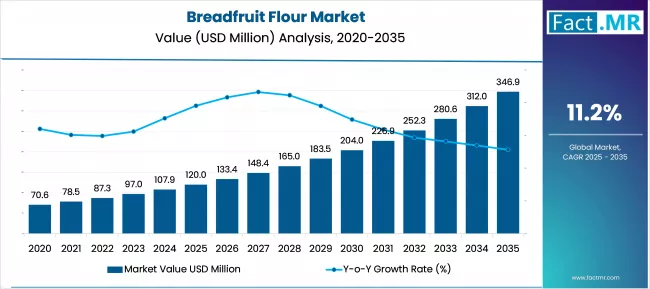
Breadfruit Flour Market Market Value Analysis | Source: Fact.MR
Between 2025 and 2030, the breadfruit flour market is projected to expand from USD 120.0 million to USD 205.8 million, resulting in a value increase of USD 85.8 million, which represents 38.3% of the total forecast growth for the decade. This phase of growth will be shaped by rising consumer awareness about gluten-free nutrition, increasing demand for alternative flour options in developed markets, and growing penetration of breadfruit flour in mainstream food manufacturing. Food processors and bakery manufacturers are expanding their product portfolios to incorporate breadfruit flour as a nutritious and sustainable ingredient alternative.
Breadfruit Flour Market Key Takeaways
| Metric | Value |
|---|---|
| Estimated Value in (2025E) | USD 120.0 million |
| Forecast Value in (2035F) | USD 346.9 million |
| Forecast CAGR (2025 to 2035) | 11.2% |
Source: Fact.MR analysis. Updated Sep 30, 2025
From 2030 to 2035, the market is forecast to grow from USD 205.8 million to USD 346.9 million, adding another USD 138.2 million, which constitutes 61.7% of the overall ten-year expansion. This period is expected to be characterized by expansion of global distribution networks, integration of breadfruit flour in mainstream food products, and development of specialized applications in functional foods and nutraceuticals. The growing adoption of sustainable agriculture practices and climate-adaptive crops will drive demand for breadfruit flour as a resilient and nutritious food ingredient.
Between 2020 and 2025, the breadfruit flour market experienced steady expansion from USD 72.0 million to USD 120.0 million, driven by increasing consumer focus on plant-based nutrition and growing awareness of breadfruit's environmental sustainability. The market developed as food manufacturers recognized the potential of breadfruit flour as a versatile, gluten-free alternative with superior nutritional properties. Health-conscious consumers and dietary restriction trends began emphasizing the importance of alternative flours in maintaining diverse and nutritious diets.
Why is the Breadfruit Flour Market Growing?
Market expansion is being supported by the increasing global demand for gluten-free and allergen-free food products, with breadfruit flour emerging as a superior alternative to conventional wheat flour. Modern consumers are increasingly seeking nutritious alternatives that provide complete protein profiles, essential minerals, and complex carbohydrates without common allergens. Breadfruit flour's exceptional nutritional composition, including high fiber content, essential amino acids, and low glycemic index, makes it particularly attractive for health-conscious consumers and those managing dietary restrictions.
The growing emphasis on food security and climate resilience is driving interest in breadfruit as a sustainable crop that thrives in tropical regions with minimal agricultural inputs. Breadfruit trees are highly productive, drought-resistant, and capable of sequestering significant amounts of carbon, aligning with global sustainability goals. The rising influence of traditional food revival movements and indigenous ingredient valorization is contributing to increased adoption of breadfruit flour in both traditional and innovative culinary applications across diverse geographic markets.
Segmental Analysis
The market is segmented by application, type, distribution channel, end-use, processing method, and region. By application, the market is divided into bakery and snacks, baby food, beverages, and others. Based on type, the market is categorized into organic and conventional breadfruit flour. In terms of distribution channel, the market is segmented into retail stores, online platforms, and food service.
By end-use, the market is classified into household, commercial bakeries, food manufacturers, and nutritional supplement producers. By processing method, the market is divided into sun-dried, freeze-dried, and mechanically dried. Regionally, the market is divided into North America, Europe, Asia Pacific, Caribbean, Latin America, and Middle East & Africa.
By Application, Bakery and Snacks Segment Accounts for 40.0% Market Share
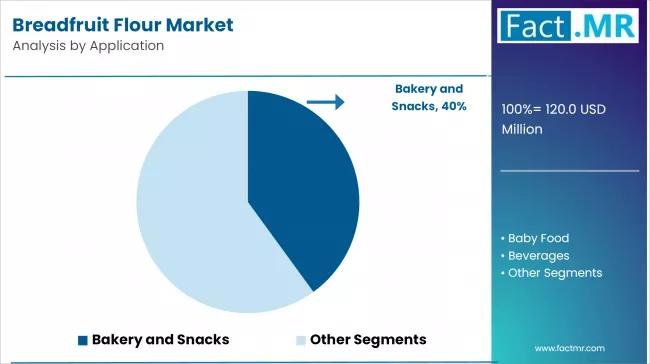
Breadfruit Flour Market Analysis By Application | Source: Fact.MR
The bakery and snacks application is projected to account for 40.0% of the breadfruit flour market in 2025, establishing its position as the primary consumption category. Bakery manufacturers increasingly recognize breadfruit flour's functional properties, including excellent binding capacity, neutral flavor profile, and ability to enhance product texture while maintaining gluten-free status. The flour's versatility enables its use in various bakery products, from bread and muffins to cookies and crackers, without compromising taste or texture quality.
This application benefits from the growing consumer demand for nutritious snack options and clean-label bakery products. Breadfruit flour's natural sweetness reduces the need for added sugars, while its protein and fiber content enhance the nutritional profile of baked goods. With the global gluten-free bakery market expanding rapidly, breadfruit flour positions itself as a premium ingredient that delivers both functional and nutritional benefits. The segment's growth is further supported by product innovation in artisanal bakeries and the increasing availability of breadfruit flour-based premixes for home baking enthusiasts.
By Type, Organic Segment Accounts for 50.0% Market Share
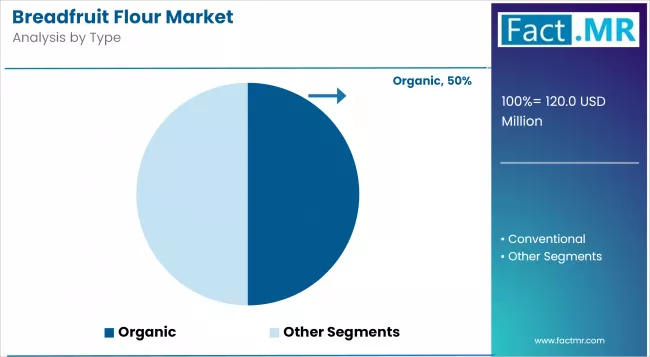
Breadfruit Flour Market Analysis By Type | Source: Fact.MR
Organic breadfruit flour is projected to represent 50.0% of market demand in 2025, reflecting the convergence of health consciousness and environmental sustainability in consumer purchasing decisions. Organic certification provides assurance of pesticide-free cultivation, natural processing methods, and adherence to strict agricultural standards, appealing to premium market segments. Consumers associate organic breadfruit flour with superior quality, enhanced nutritional value, and minimal environmental impact.
The segment benefits from the growing organic food movement and increasing consumer willingness to pay premium prices for certified organic products. Organic breadfruit flour commands higher margins, incentivizing farmers to adopt organic cultivation practices and processors to invest in organic certification. As retailers expand their organic product offerings and e-commerce platforms facilitate access to specialty ingredients, organic breadfruit flour continues to gain market share, particularly in developed markets where organic food consumption is well-established.
By Distribution Channel, Retail Segment Accounts for 60.0% Market Share
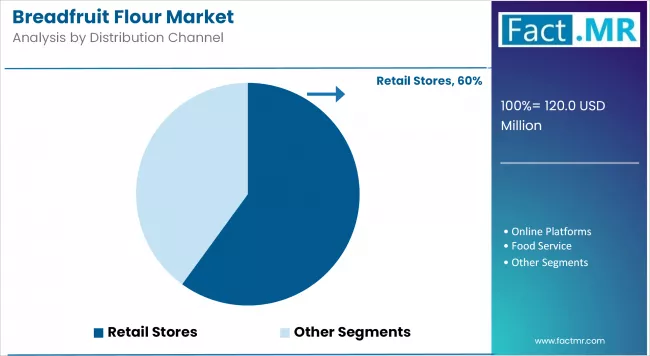
Breadfruit Flour Market Analysis By Distribution Channel | Source: Fact.MR
The retail distribution channel is forecasted to contribute 60.0% of the breadfruit flour market in 2025, encompassing specialty health food stores, supermarkets, and gourmet food retailers. Physical retail locations provide consumers with the opportunity to discover breadfruit flour through in-store promotions, product demonstrations, and knowledgeable staff recommendations. The segment benefits from the increasing shelf space allocation for gluten-free and alternative flour products in mainstream grocery stores.
Specialty health food stores play a crucial role in educating consumers about breadfruit flour's benefits and applications, while supermarket chains drive volume sales through competitive pricing and convenient accessibility. The retail segment's dominance is reinforced by the growing trend of retailers developing private label breadfruit flour products, improving margins while offering consumers affordable options. Strategic product placement alongside other gluten-free flours and prominent labeling of nutritional benefits continue to drive retail channel growth.
What are the Drivers, Restraints, and Key Trends of the Breadfruit Flour Market?
The breadfruit flour market is advancing rapidly due to increasing demand for gluten-free alternatives and growing awareness of breadfruit's nutritional superiority. However, the market faces challenges including limited supply chain infrastructure, seasonal availability constraints, and consumer unfamiliarity with breadfruit flour applications. Innovation in processing technologies and sustainable cultivation practices continue to influence product development and market expansion patterns.
Expansion of Gluten-Free and Alternative Flour Categories
The proliferation of gluten-free diets, whether for medical necessity or lifestyle choice, is creating substantial opportunities for breadfruit flour adoption. Celiac disease awareness, gluten sensitivity recognition, and the broader wellness movement are driving consumers to seek nutritious flour alternatives. Breadfruit flour's superior nutritional profile compared to many gluten-free options, including higher protein content and complete amino acid profiles, positions it favorably in this expanding market segment.
Integration of Sustainable Agriculture and Climate-Smart Farming
Breadfruit cultivation represents a climate-adaptive agricultural solution, particularly relevant as global food systems face environmental pressures. The crop's resilience to extreme weather events, minimal water requirements, and high yield per tree make it attractive for sustainable agriculture initiatives. Development organizations and agricultural agencies are promoting breadfruit cultivation as a food security solution, particularly in tropical regions vulnerable to climate change impacts.
Breadfruit Flour Market by Key Country
Europe Market Split by Country
The breadfruit flour market in Europe demonstrates mature development across major economies with Germany showing strong presence through its robust health food sector and consumer preference for innovative gluten-free alternatives, supported by established organic food distribution networks and sophisticated retail infrastructure that enables premium positioning of breadfruit flour as a functional superfood ingredient for health-conscious consumers seeking nutritious flour alternatives. France represents a significant market driven by its culinary innovation culture and growing interest in exotic ingredients, with artisanal bakeries and gourmet food manufacturers pioneering breadfruit flour applications in traditional French pastries and breads while maintaining authentic taste profiles and premium quality standards.
The UK exhibits considerable growth through its diverse multicultural population and established specialty food market, with retailers like Whole Foods and Planet Organic leading the introduction of breadfruit flour products while food manufacturers develop innovative applications targeting the expanding free-from category. Italy and Spain show expanding interest in alternative flours for traditional Mediterranean cuisine adaptations, particularly in gluten-free pasta and bakery products that maintain authentic textures while enhancing nutritional profiles. Netherlands and Belgium contribute through their role as European distribution hubs and growing demand for sustainable ingredients, while Nordic countries display increasing adoption driven by health-conscious consumers and strong organic food movements. Eastern European markets, including Poland and Czech Republic, show emerging potential as awareness of gluten-free nutrition grows and modern retail channels expand access to specialty ingredients across diverse consumer segments.
Analysis of Breadfruit Flour Market
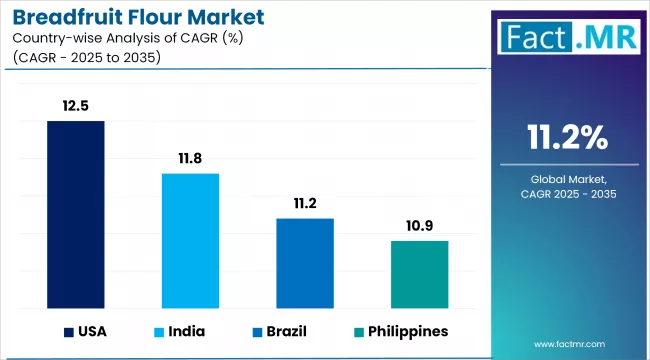
Breadfruit Flour Market Cagr Analysis By Country | Source: Fact.MR
| Country | CAGR (2025-2035) |
|---|---|
| USA | 12.5% |
| India | 11.8% |
| Brazil | 11.2% |
| Philippines | 10.9% |
| Jamaica | 10.6% |
| Australia | 9.8% |
| UK | 8.7% |
Source: Fact.MR analysis. Updated Sep 30, 2025
The breadfruit flour market is experiencing robust growth globally, with the USA leading at a 12.5% CAGR through 2035, driven by increasing gluten-free product demand, health-conscious consumer base growth, and rising alternative flour adoption rates. India follows at 11.8%, supported by growing nutritional awareness campaigns, traditional food modernization trends, and export market expansion initiatives.
Brazil shows steady growth at 11.2%, emphasizing tropical fruit processing advancement and regional dietary diversification needs. The Philippines records 10.9%, focusing on local breadfruit cultivation expansion and food security improvement programs. Jamaica demonstrates 10.6% growth, prioritizing Caribbean agricultural development and export diversification strategies.
The report covers an in-depth analysis of 40+ countries; seven top-performing countries are highlighted below.
United States Leads Global Market with Health-Conscious Innovation
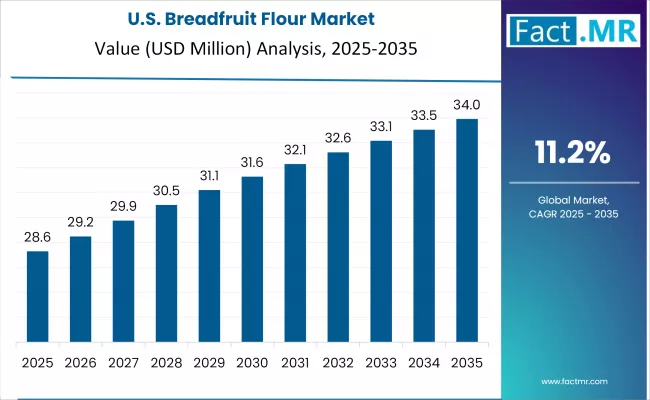
Breadfruit Flour Market Country Value Analysis | Source: Fact.MR
Revenue from breadfruit flour in the United States is projected to exhibit strong growth with a CAGR of 12.5% through 2035, driven by the expanding gluten-free market and increasing consumer demand for nutrient-dense flour alternatives. The country's sophisticated health food retail infrastructure and consumer willingness to adopt novel ingredients are creating significant opportunities for breadfruit flour penetration. Major food manufacturers and specialty bakeries are incorporating breadfruit flour into premium product lines targeting health-conscious and allergen-sensitive consumers.
- Government support for agricultural diversification and sustainable food systems is encouraging investment in alternative ingredient supply chains throughout major distribution networks.
- E-commerce platform growth and direct-to-consumer models are facilitating market entry for specialty breadfruit flour brands and enabling consumer education about product benefits.
India Demonstrates Exceptional Growth with Agricultural Innovation
Revenue from breadfruit flour in India is expanding at a CAGR of 11.8%, supported by government initiatives promoting crop diversification, increasing nutritional awareness, and growing demand for gluten-free products. The country's tropical climate zones provide ideal conditions for breadfruit cultivation, while rising health consciousness among urban consumers drives demand for alternative flour options. Traditional food manufacturers and modern bakeries are exploring breadfruit flour applications in both ethnic and contemporary products.
- Rising awareness about lifestyle diseases and dietary management is creating opportunities for functional food ingredients like breadfruit flour across urban and semi-urban markets.
- Growing export potential and value-addition initiatives in the agricultural sector are encouraging farmers and processors to invest in breadfruit cultivation and processing infrastructure.
Brazil Capitalizes on Tropical Agriculture Advantages
Demand for breadfruit flour in Brazil is projected to grow at a CAGR of 11.2%, supported by the country's extensive tropical agriculture zones and growing focus on nutritional food security. Brazilian consumers are increasingly embracing alternative flours as part of dietary diversification efforts, while food manufacturers recognize breadfruit flour's potential in addressing malnutrition and supporting sustainable agriculture. The market benefits from established tropical fruit processing infrastructure and growing investment in value-added agricultural products.
- Agricultural sustainability programs and climate adaptation initiatives are promoting breadfruit as a resilient crop option for smallholder farmers throughout tropical regions.
- Growing domestic demand for gluten-free and functional food products is driving product innovation and market expansion in major urban centers.
Philippines Leverages Traditional Knowledge for Commercial Success
Revenue from breadfruit flour in the Philippines is projected to grow at a CAGR of 10.9% through 2035, driven by abundant local breadfruit resources and increasing commercialization of traditional ingredients. The government's food security programs and agricultural modernization initiatives support breadfruit cultivation and processing development. Local entrepreneurs and cooperatives are establishing processing facilities to convert traditional breadfruit harvests into commercial flour products.
- Ongoing investment in rural development and agricultural value chains is supporting breadfruit flour production capacity and quality improvement throughout island provinces.
- Export market development initiatives and international trade agreements are creating opportunities for Philippine breadfruit flour in global specialty food markets.
Jamaica Strengthens Position as Caribbean Market Leader
Revenue from breadfruit flour in Jamaica is projected to grow at a CAGR of 10.6% through 2035, supported by the country's agricultural heritage and strategic focus on breadfruit commercialization. The Jamaican government's breadfruit initiative and partnerships with international development organizations are establishing processing infrastructure and market linkages. Tourism sector demand for authentic Caribbean ingredients further supports market development.
- National breadfruit programs and farmer training initiatives are improving cultivation practices and post-harvest handling throughout agricultural communities.
- Growing recognition of breadfruit's cultural significance and nutritional value is driving domestic consumption and export market development.
Australia Embraces Alternative Flours in Premium Markets
Revenue from breadfruit flour in Australia is projected to grow at a CAGR of 9.8% through 2035, driven by sophisticated health food markets and multicultural culinary influences. Australian consumers' focus on sustainability, nutrition, and food innovation creates receptive conditions for breadfruit flour adoption. The market benefits from established distribution channels for specialty ingredients and strong consumer purchasing power.
- Growth in specialty bakeries and health food retail is increasing accessibility of breadfruit flour products across major metropolitan areas.
- Rising interest in indigenous and tropical ingredients is encouraging food manufacturers to incorporate breadfruit flour into innovative product formulations.
United Kingdom Drives European Market Development
Revenue from breadfruit flour in the UK is projected to grow at a CAGR of 8.7% through 2035, supported by the country's diverse food culture and growing demand for sustainable ingredients. British consumers value nutritional transparency, ethical sourcing, and innovative food products, positioning breadfruit flour as an attractive alternative flour option. The market benefits from established specialty food distribution networks and consumer openness to international ingredients.
- Premium health food segments and artisanal bakeries are driving adoption of breadfruit flour in high-value applications throughout urban markets.
- Sustainable ingredient sourcing initiatives and carbon footprint reduction goals are encouraging retailers to expand alternative flour offerings including breadfruit flour.
Competitive Landscape of Breadfruit Flour Market
The breadfruit flour market is characterized by competition among agricultural cooperatives, specialty food processors, and emerging sustainable food companies. Companies are investing in supply chain development, processing technology optimization, quality standardization, and market education strategies to deliver consistent, high-quality breadfruit flour products. Geographic sourcing advantages, organic certification, and product innovation are central to strengthening market positions and building brand recognition.
TreeHouse Foods Inc. leads the market with 16.0% global value share, leveraging its extensive distribution network and food processing expertise to commercialize breadfruit flour across multiple market segments. Agricultural Corporation of Tobago focuses on Caribbean sourcing and authentic processing methods to serve regional and export markets. CF Industries provides agricultural inputs and processing support to breadfruit cultivation operations. Dole Food Company utilizes its tropical fruit expertise and global supply chain to develop breadfruit flour products.
Jamaica Breadfruit Co. specializes in premium Jamaican breadfruit flour with emphasis on traditional processing and cultural authenticity. Blue Ridge Mountain Products focuses on organic and sustainably-sourced breadfruit flour for health food markets. Fresh Breadfruit Co. emphasizes freshness and minimal processing in its product offerings. Caribbean Breadfruit Foundation combines social impact with commercial operations, supporting smallholder farmers while developing market opportunities. Hapi targets the snack food segment with innovative breadfruit flour applications.
Key Players in the Breadfruit Flour Market
- TreeHouse Foods Inc.
- Agricultural Corporation of Tobago
- CF Industries
- Dole Food Company
- Jamaica Breadfruit Co.
- Blue Ridge Mountain Products
- Fresh Breadfruit Co.
- Caribbean Breadfruit Foundation
- Hapi
Segmentation
Scope of the Report
| Items | Values |
|---|---|
| Quantitative Units (2025) | USD 120.0 Million |
| Application | Bakery and Snacks, Baby Food, Beverages, Others |
| Type | Organic, Conventional |
| Distribution Channel | Retail Stores, Online Platforms, Food Service |
| End-Use | Household, Commercial Bakeries, Food Manufacturers, Nutritional Supplement Producers |
| Processing Method | Sun-dried, Freeze-dried, Mechanically Dried |
| Regions Covered | North America, Europe, Asia Pacific, Caribbean, Latin America, Middle East & Africa |
| Countries Covered | United States, Canada, United Kingdom, Germany, France, India, Philippines, Jamaica, Brazil, Australia and 40+ countries |
| Key Companies Profiled | TreeHouse Foods Inc., Agricultural Corporation of Tobago, CF Industries, Dole Food Company, Jamaica Breadfruit Co., Blue Ridge Mountain Products, Fresh Breadfruit Co., Caribbean Breadfruit Foundation, Hapi |
| Additional Attributes | Dollar sales by organic certification status, regional production capacities, competitive landscape analysis, consumer preferences for flour applications, integration with gluten-free positioning, innovations in processing technologies, sustainable sourcing practices, and nutritional enhancement strategies |
Source: Fact.MR analysis. Updated Sep 30, 2025
Breadfruit Flour Market by Segments
-
Application :
- Bakery and Snacks
- Baby Food
- Beverages
- Others (Soups, Sauces, Nutritional Supplements)
-
Type :
- Organic
- Conventional
-
Distribution Channel :
- Retail Stores
- Specialty Health Food Stores
- Supermarkets/Hypermarkets
- Convenience Stores
- Online Platforms
- Food Service
- Retail Stores
-
End-Use :
- Household
- Commercial Bakeries
- Food Manufacturers
- Nutritional Supplement Producers
-
Processing Method :
- Sun-dried
- Freeze-dried
- Mechanically Dried
-
Region :
- North America
- United States
- Canada
- Mexico
- Europe
- Germany
- United Kingdom
- France
- Italy
- Spain
- Nordic Countries
- BENELUX
- Rest of Europe
- Asia Pacific
- India
- Philippines
- Indonesia
- Thailand
- Australia
- New Zealand
- Pacific Islands
- Rest of Asia Pacific
- Caribbean
- Jamaica
- Trinidad and Tobago
- Barbados
- Haiti
- Dominican Republic
- Other Caribbean Islands
- Latin America
- Brazil
- Colombia
- Venezuela
- Central America
- Rest of Latin America
- Middle East & Africa
- Nigeria
- Ghana
- Kenya
- South Africa
- GCC Countries
- Rest of Middle East & Africa
- North America
Frequently Asked Questions
What is the value for the Breadfruit Flour Market in 2025?
Who are the major players operating in the Global Breadfruit Flour Market?
What is the estimated valuation of the Breadfruit Flour Market in 2035?
What CAGR did the Breadfruit Flour Market exhibit over the last five years?
Who worked on this report


Preview the report firsthand - request a free sample
Free SampleGet the brochure for pricing and purchase details
Download PDF