Brushless Fuel Pumps Market (2026 - 2036)
Brushless Fuel Pumps Market Size and Share Forecast Outlook 2026 to 2036
Core Findings
Brushless Fuel Pumps Market Forecast Outlook 2026 to 2036
The brushless fuel pumps market is projected to reach USD 1.6 billion in 2026 and grow to USD 3.3 billion by 2036, reflecting a CAGR of 7.9%.
Summary of Brushless Fuel Pumps Market - Key Takeaways
-
The brushless fuel pumps market includes advanced pumps used in fuel systems for modern vehicles, offering improved efficiency, longer lifespan, and quieter operation, especially in electric and hybrid vehicle applications.
- The market is projected to grow at a CAGR of 7.9% from 2026 to 2036, expanding from USD 1.6 billion in 2026 to USD 3.3 billion by 2036, based on Fact.MR forecasting and rising demand for energy-efficient fuel delivery solutions in the automotive and industrial sectors.
- Passenger vehicles lead the vehicle segment with a 61% share in 2026, driven by the adoption of brushless DC (BLDC) fuel pumps for better fuel delivery and compliance with emissions regulations in modern internal combustion engine (ICE) and hybrid models.
- 12V BLDC pumps account for 49% of the voltage class segment in 2026, favored for their compatibility with standard 12V electrical systems in most vehicles, offering energy efficiency and durability with low maintenance.
- China is projected to experience the fastest growth in the market at a 9.2% CAGR, fueled by the country’s growing automotive sector, adoption of hybrid and electric vehicles, and government initiatives to reduce emissions.
- Key players in the market include DENSO CORPORATION, Robert Bosch GmbH, and Continental AG, with a focus on technological advancements in fuel pump efficiency, reliability, and integration into hybrid and electric vehicle powertrains.
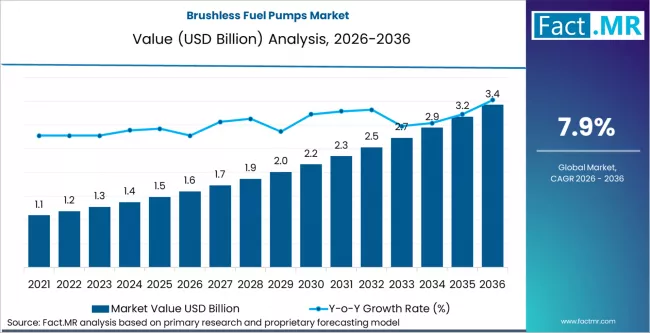
Regional concentration will significantly influence market dynamics, with the highest demand anticipated in North America, Europe, and parts of Asia, where the automotive and industrial sectors are rapidly adopting more energy-efficient technologies.
However, adoption patterns are uneven, with developing regions facing slower uptake due to higher initial costs and less developed infrastructure. Geographic cost advantages are evident, as manufacturers in low-cost regions, such as Southeast Asia, can offer competitive pricing, driving demand in price-sensitive markets. These regions, however, may face challenges in meeting the stringent performance and quality standards demanded by more mature markets. As the market grows, manufacturers must adapt to regional demands, leveraging local advantages while addressing the specific requirements of diverse geographical markets.
Brushless Fuel Pumps Market
| Metric | Value |
|---|---|
| Estimated Value in (2026E) | USD 1.6 billion |
| Forecast Value in (2036F) | USD 3.3 billion |
| Forecast CAGR 2026 to 2036 | 7.9% |
Category
| Category | Sub-Segment |
|---|---|
| By Voltage Class | 12V BLDC Pumps; 48V Pumps; High-Voltage (Hybrid); Other |
| By End Use | ICE Fuel Pumps; Hybrid Fuel Pumps; Hydrogen Balance-of-Plant; Other |
| By Vehicle Segment | Passenger Vehicles; LCV; Heavy-Duty; Other |
| By Sales Channel | OEM Line-Fit; Aftermarket; Dealer/OES; Other |
| Region | North America; Europe; Asia Pacific; Latin America; Middle East & Africa |
Segmental Analysis
What is Driving the Dominance of Passenger Vehicles in the Brushless Fuel Pumps Market?
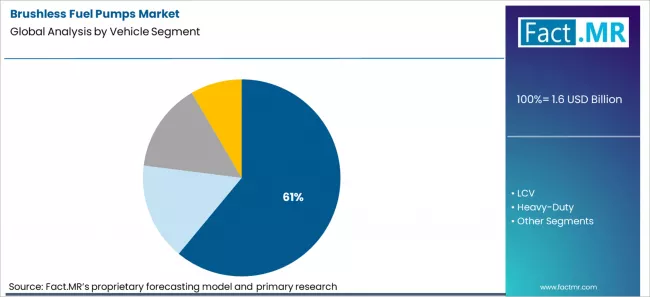
Passenger vehicles lead the brushless fuel pumps market with 61% of the market share in 2026. This dominance is attributed to the growing adoption of brushless DC (BLDC) fuel pumps in modern passenger vehicles, where efficiency, reliability, and quieter operation are crucial. BLDC pumps offer improved fuel delivery and longer lifespan compared to traditional fuel pumps, making them ideal for meeting the performance and efficiency demands of today's vehicles, including both internal combustion engine (ICE) and hybrid models.
What is the Role of 12V BLDC Pumps in the Brushless Fuel Pumps Market?
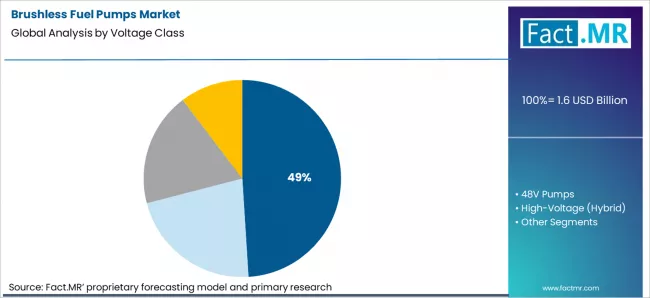
12V BLDC pumps account for 49% of the market share in 2026. These pumps are widely used in passenger vehicles due to their compatibility with standard 12V electrical systems in most modern cars. The 12V brushless fuel pumps are preferred for their energy efficiency, durability, and low maintenance needs. They provide consistent fuel delivery while minimizing energy consumption, making them a suitable choice for a wide range of vehicles, from compact cars to higher-end models, where fuel efficiency and performance are key considerations.
What are the Principal Drivers, Constraints, and Evolving Dynamics of the Brushless Fuel Pumps Market?
Demand in the brushless fuel pumps market is driven by the shift toward electronically controlled powertrains and stringent fuel efficiency standards. Brushless pumps offer higher electrical efficiency and longer service life than brushed designs, making them suitable for modern engines and electrified vehicles. OEMs increasingly adopt these pumps in passenger cars and light commercial vehicles.
A constraint stems from cost and system integration challenges compared with legacy fuel delivery solutions. Precision manufacturing and electronic control requirements raise production expenses. Market dynamics reflect advances in pump motor control and materials that improve thermal performance and reduce energy loss. Aftermarket replacement demand persists as vehicles age. Focus on durability under varied operating conditions shapes ongoing product refinement.
Analysis of the Brushless Fuel Pumps Market by Key Country
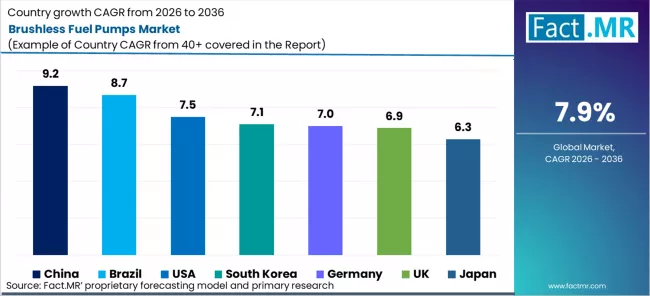
| Country | CAGR 2026 to 2036 |
|---|---|
| USA | 7.5% |
| Japan | 6.3% |
| South Korea | 7.1% |
| Germany | 7.0% |
| China | 9.2% |
| UK | 6.9% |
| Brazil | 8.7% |
The report covers an in-depth analysis of 40+ countries; top-performing countries are highlighted below.
What is Driving the Growth of the Brushless Fuel Pumps Market in the USA?
The USA’s Brushless Fuel Pumps market is projected to grow at 7.5%, driven by the increasing demand for more efficient and durable fuel pumps in the automotive and industrial sectors. Brushless fuel pumps offer several advantages, including improved energy efficiency, longer lifespan, and reduced noise, making them a popular choice for modern vehicles, particularly in the electric and hybrid vehicle segments. As the U.S. automotive industry continues to prioritize fuel efficiency and sustainability, the adoption of brushless fuel pumps is expected to rise. The growing trend towards electric vehicles (EVs) and stricter emissions standards also support market growth in the USA.
How is the Brushless Fuel Pumps Market Expanding in Japan?
Japan’s Brushless Fuel Pumps market is growing at 6.3%, supported by the country’s strong automotive and industrial sectors. Japan is a leader in automotive technology, and as electric vehicles (EVs) and hybrid vehicles gain market share, the demand for efficient, high-performance fuel pumps increases. Brushless fuel pumps, with their improved efficiency and reliability, are increasingly being used in modern automotive engines. Additionally, Japan’s focus on reducing fuel consumption and carbon emissions is driving the adoption of advanced fuel delivery technologies, ensuring steady growth in the brushless fuel pumps market.
What Factors Are Fueling the Growth of the Brushless Fuel Pumps Market in South Korea?
South Korea’s Brushless Fuel Pumps market is projected to grow at 7.1%, driven by the country’s robust automotive industry and technological advancements in vehicle fuel systems. South Korean automakers are increasingly adopting brushless fuel pumps in their vehicles to meet fuel efficiency and performance standards. The adoption of hybrid and electric vehicles in South Korea is further propelling the demand for advanced fuel delivery systems, including brushless fuel pumps. As the government continues to emphasize green technologies and sustainability, the use of brushless fuel pumps in the country’s automotive sector is expected to increase, ensuring continued market growth.
How is the Brushless Fuel Pumps Market Evolving in Germany?
Germany’s Brushless Fuel Pumps market is growing at 7.0%, driven by the country’s leadership in the automotive and industrial sectors. As Germany continues to focus on reducing emissions and improving vehicle fuel efficiency, the demand for high-performance fuel delivery systems, such as brushless fuel pumps, is on the rise. These pumps offer better energy efficiency, longer lifespans, and quieter operation, making them ideal for use in modern engines. Germany’s strong emphasis on innovation and sustainable technologies, particularly in the automotive sector, contributes to the growing adoption of brushless fuel pumps in the country.
What is Contributing to the Growth of the Brushless Fuel Pumps Market in China?
China’s Brushless Fuel Pumps market is expanding at 9.2%, driven by the country’s growing automotive industry and the increasing demand for fuel-efficient and environmentally friendly vehicle technologies. As China’s automotive market evolves, the adoption of hybrid and electric vehicles is on the rise, which increases the demand for high-performance, energy-efficient fuel pumps. Brushless fuel pumps are seen as a key solution to improve fuel efficiency and reduce emissions. Additionally, China’s ongoing investments in automotive technology and green technologies ensure strong growth in the brushless fuel pumps market, particularly in the electric vehicle segment.
What is Driving the Growth of the Brushless Fuel Pumps Market in the UK?
The UK’s Brushless Fuel Pumps market is growing at 6.9%, supported by the country’s shift towards greener and more efficient transportation technologies. As the UK works toward its carbon reduction goals, there is a growing demand for more energy-efficient fuel delivery systems in both traditional and hybrid vehicles. Brushless fuel pumps, known for their improved energy efficiency, reduced maintenance, and longer lifespan, are increasingly being adopted in the UK’s automotive sector. Government incentives for clean technologies and the rising adoption of electric and hybrid vehicles further support the growth of the brushless fuel pumps market in the UK.
What is Contributing to the Growth of the Brushless Fuel Pumps Market in Brazil?
Brazil’s Brushless Fuel Pumps market is expanding at 8.7%, driven by the growing automotive and industrial sectors. As Brazil continues to modernize its vehicle fleet and expand its adoption of cleaner technologies, the demand for efficient fuel delivery systems is increasing. Brushless fuel pumps offer several benefits, including improved fuel efficiency, reduced emissions, and lower maintenance costs, making them a preferred choice for both traditional internal combustion engines and hybrid vehicles. Brazil’s commitment to reducing environmental impact and adopting more sustainable technologies is expected to continue driving growth in the brushless fuel pumps market across various sectors.
How Are Key Players Competing in the Brushless Fuel Pumps Market?
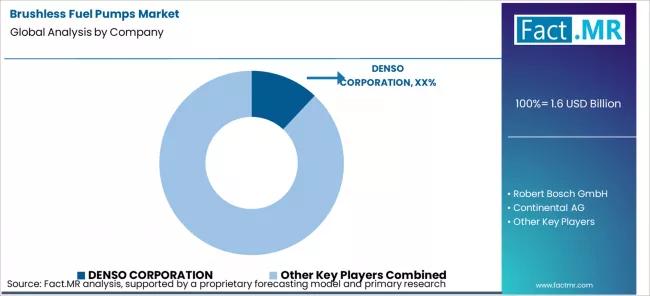
The brushless fuel pumps market is increasingly competitive as key players focus on technological advancements and efficiency improvements. Companies like DENSO, Bosch, and Continental are leading the charge with high-performance brushless fuel pumps designed to enhance fuel delivery and reduce power consumption. DENSO, for example, has developed innovative brushless pump solutions that contribute to improved vehicle fuel efficiency and reduced emissions. Meanwhile, BorgWarner and Magna are focusing on integrating brushless technology into hybrid and electric vehicles, optimizing energy use. Regional expansions and partnerships, such as those from TI Fluid Systems and Weifu High-Technology, further bolster the market's competitive dynamics, addressing global demand for sustainable and efficient fuel pump technologies.
Recent Industry Developments
- Product Launch - TI Automotive Aftermarket BKS1002 Brushless Fuel Pump Kit for High-Pressure In-Tank Applications (Published Sep 10-11, 2024) TI Automotive Aftermarket launched the BKS1002 brushless fuel pump kit engineered for high-pressure, in-tank use (PWM control, gas/flex compatibility, and stated horsepower support on the official listing). (TI Automotive) ????
- Product Launch - DeatschWerks DW810 Brushless Fuel Pump (Published Dec 18, 2023) DeatschWerks announced the DW810 brushless fuel pump as part of its 2023 new product release, positioning it for high-flow applications and explicitly calling out brushless motor durability benefits. (DeatschWerks) ????
- Corporate Development - PHINIA Spin-Off Completed (Fuel Systems & Aftermarket separated from BorgWarner) (Completed Jul 3, 2023; announced Jul 3-4, 2023) BorgWarner completed the spin-off of its Fuel Systems and Aftermarket segments into PHINIA, creating a standalone fuel-systems-focused company-material to the competitive landscape for fuel delivery modules and electrified/brushless pump architectures. (BorgWarner) ????
Key Players of the Brushless Fuel Pumps Market
- DENSO CORPORATION
- Robert Bosch GmbH
- Continental AG
- Astemo, Ltd.
- Aisan Industry Co., Ltd.
- BorgWarner Inc.
- Magna International Inc.
- TI Fluid Systems plc
- Weifu High-Technology Group Co., Ltd.
- Rheinmetall AG
Scope of the Report
| Items | Values |
|---|---|
| Quantitative Units (2026) | USD 1.6 Billion |
| By Voltage Class | 12V BLDC Pumps, 48V Pumps, High-Voltage (Hybrid), Other |
| By End Use | ICE Fuel Pumps, Hybrid Fuel Pumps, Hydrogen Balance-of-Plant, Other |
| By Vehicle Segment | Passenger Vehicles, LCV, Heavy-Duty, Other |
| By Sales Channel | OEM Line-Fit, Aftermarket, Dealer/OES, Other |
| Regions Covered | North America, Europe, Asia Pacific, Latin America, Middle East & Africa |
| Countries Covered | United States, Canada, Mexico, Germany, United Kingdom, France, Japan, South Korea, China, India, Brazil, and other countries |
| Key Companies Profiled | DENSO CORPORATION, Robert Bosch GmbH, Continental AG, Astemo, Ltd., Aisan Industry Co., Ltd., BorgWarner Inc., Magna International Inc., TI Fluid Systems plc, Weifu High-Technology Group Co., Ltd., Rheinmetall AG |
| Additional Attributes | Market trends by voltage class, end use, vehicle segment, and sales channel; regional demand trends; competitive landscape; technological advancements in brushless fuel pumps; operational performance optimization initiatives; and product development strategies |
Brushless Fuel Pumps Market Key Segments
-
By Voltage Class :
- 12V BLDC Pumps
- 48V Pumps
- High-Voltage (Hybrid)
- Other
-
By End Use :
- ICE Fuel Pumps
- Hybrid Fuel Pumps
- Hydrogen Balance-of-Plant
- Other
-
By Vehicle Segment :
- Passenger Vehicles
- LCV
- Heavy-Duty
- Other
-
By Sales Channel :
- OEM Line-Fit
- Aftermarket
- Dealer/OES
- Other
-
Region :
- North America
- USA
- Canada
- Mexico
- Europe
- Germany
- UK
- France
- Italy
- Spain
- Nordic Countries
- BENELUX
- Rest of Europe
- Asia Pacific
- China
- Japan
- South Korea
- India
- Australia
- Rest of Asia Pacific
- Latin America
- Brazil
- Argentina
- Rest of Latin America
- Middle East and Africa
- Kingdom of Saudi Arabia
- United Arab Emirates
- South Africa
- Rest of Middle East and Africa
- Other Regions
- Oceania
- Central Asia
- Other Markets
- North America
Bibliographies
- National Institute of Standards and Technology (NIST). (2024). Performance measurement standards for brushless DC motor-driven pumps. NIST.
- Society of Automotive Engineers (SAE International). (2024). Technical papers on brushless motor integration in automotive pump systems. SAE MOBILUS.
- European Commission Joint Research Centre (JRC). (2024). Energy efficiency assessment of electric motor-driven vehicle subsystems. European Union.
- International Energy Agency (IEA). (2023). Electric motor systems and efficiency improvements in transport applications. IEA Publications.
- United Nations Economic Commission for Europe (UNECE). (2024). Vehicle electrical subsystem efficiency and emissions implications. UNECE.
Table of Content
- Executive Summary
- Global Market Outlook
- Demand to side Trends
- Supply to side Trends
- Technology Roadmap Analysis
- Analysis and Recommendations
- Market Overview
- Market Coverage / Taxonomy
- Market Definition / Scope / Limitations
- Research Methodology
- Chapter Orientation
- Analytical Lens and Working Hypotheses
- Market Structure, Signals, and Trend Drivers
- Benchmarking and Cross-market Comparability
- Market Sizing, Forecasting, and Opportunity Mapping
- Research Design and Evidence Framework
- Desk Research Programme (Secondary Evidence)
- Company Annual and Sustainability Reports
- Peer-reviewed Journals and Academic Literature
- Corporate Websites, Product Literature, and Technical Notes
- Earnings Decks and Investor Briefings
- Statutory Filings and Regulatory Disclosures
- Technical White Papers and Standards Notes
- Trade Journals, Industry Magazines, and Analyst Briefs
- Conference Proceedings, Webinars, and Seminar Materials
- Government Statistics Portals and Public Data Releases
- Press Releases and Reputable Media Coverage
- Specialist Newsletters and Curated Briefings
- Sector Databases and Reference Repositories
- FMR Internal Proprietary Databases and Historical Market Datasets
- Subscription Datasets and Paid Sources
- Social Channels, Communities, and Digital Listening Inputs
- Additional Desk Sources
- Expert Input and Fieldwork (Primary Evidence)
- Primary Modes
- Qualitative Interviews and Expert Elicitation
- Quantitative Surveys and Structured Data Capture
- Blended Approach
- Why Primary Evidence is Used
- Field Techniques
- Interviews
- Surveys
- Focus Groups
- Observational and In-context Research
- Social and Community Interactions
- Stakeholder Universe Engaged
- C-suite Leaders
- Board Members
- Presidents and Vice Presidents
- R&D and Innovation Heads
- Technical Specialists
- Domain Subject-matter Experts
- Scientists
- Physicians and Other Healthcare Professionals
- Governance, Ethics, and Data Stewardship
- Research Ethics
- Data Integrity and Handling
- Primary Modes
- Tooling, Models, and Reference Databases
- Desk Research Programme (Secondary Evidence)
- Data Engineering and Model Build
- Data Acquisition and Ingestion
- Cleaning, Normalisation, and Verification
- Synthesis, Triangulation, and Analysis
- Quality Assurance and Audit Trail
- Market Background
- Market Dynamics
- Drivers
- Restraints
- Opportunity
- Trends
- Scenario Forecast
- Demand in Optimistic Scenario
- Demand in Likely Scenario
- Demand in Conservative Scenario
- Opportunity Map Analysis
- Product Life Cycle Analysis
- Supply Chain Analysis
- Investment Feasibility Matrix
- Value Chain Analysis
- PESTLE and Porter’s Analysis
- Regulatory Landscape
- Regional Parent Market Outlook
- Production and Consumption Statistics
- Import and Export Statistics
- Market Dynamics
- Global Market Analysis 2021 to 2025 and Forecast, 2026 to 2036
- Historical Market Size Value (USD Million) Analysis, 2021 to 2025
- Current and Future Market Size Value (USD Million) Projections, 2026 to 2036
- Y to o to Y Growth Trend Analysis
- Absolute $ Opportunity Analysis
- Global Market Pricing Analysis 2021 to 2025 and Forecast 2026 to 2036
- Global Market Analysis 2021 to 2025 and Forecast 2026 to 2036, By Voltage Class
- Introduction / Key Findings
- Historical Market Size Value (USD Million) Analysis By Voltage Class, 2021 to 2025
- Current and Future Market Size Value (USD Million) Analysis and Forecast By Voltage Class, 2026 to 2036
- 12V BLDC Pumps
- 48V Pumps
- High-Voltage (Hybrid)
- Other
- 12V BLDC Pumps
- Y to o to Y Growth Trend Analysis By Voltage Class, 2021 to 2025
- Absolute $ Opportunity Analysis By Voltage Class, 2026 to 2036
- Global Market Analysis 2021 to 2025 and Forecast 2026 to 2036, By Vehicle Segment
- Introduction / Key Findings
- Historical Market Size Value (USD Million) Analysis By Vehicle Segment, 2021 to 2025
- Current and Future Market Size Value (USD Million) Analysis and Forecast By Vehicle Segment, 2026 to 2036
- Passenger Vehicles
- LCV
- Heavy-Duty
- Other
- Passenger Vehicles
- Y to o to Y Growth Trend Analysis By Vehicle Segment, 2021 to 2025
- Absolute $ Opportunity Analysis By Vehicle Segment, 2026 to 2036
- Global Market Analysis 2021 to 2025 and Forecast 2026 to 2036, By Region
- Introduction
- Historical Market Size Value (USD Million) Analysis By Region, 2021 to 2025
- Current Market Size Value (USD Million) Analysis and Forecast By Region, 2026 to 2036
- North America
- Latin America
- Western Europe
- Eastern Europe
- East Asia
- South Asia and Pacific
- Middle East & Africa
- Market Attractiveness Analysis By Region
- North America Market Analysis 2021 to 2025 and Forecast 2026 to 2036, By Country
- Historical Market Size Value (USD Million) Trend Analysis By Market Taxonomy, 2021 to 2025
- Market Size Value (USD Million) Forecast By Market Taxonomy, 2026 to 2036
- By Country
- USA
- Canada
- Mexico
- By Voltage Class
- By Vehicle Segment
- By Country
- Market Attractiveness Analysis
- By Country
- By Voltage Class
- By Vehicle Segment
- Key Takeaways
- Latin America Market Analysis 2021 to 2025 and Forecast 2026 to 2036, By Country
- Historical Market Size Value (USD Million) Trend Analysis By Market Taxonomy, 2021 to 2025
- Market Size Value (USD Million) Forecast By Market Taxonomy, 2026 to 2036
- By Country
- Brazil
- Chile
- Rest of Latin America
- By Voltage Class
- By Vehicle Segment
- By Country
- Market Attractiveness Analysis
- By Country
- By Voltage Class
- By Vehicle Segment
- Key Takeaways
- Western Europe Market Analysis 2021 to 2025 and Forecast 2026 to 2036, By Country
- Historical Market Size Value (USD Million) Trend Analysis By Market Taxonomy, 2021 to 2025
- Market Size Value (USD Million) Forecast By Market Taxonomy, 2026 to 2036
- By Country
- Germany
- UK
- Italy
- Spain
- France
- Nordic
- BENELUX
- Rest of Western Europe
- By Voltage Class
- By Vehicle Segment
- By Country
- Market Attractiveness Analysis
- By Country
- By Voltage Class
- By Vehicle Segment
- Key Takeaways
- Eastern Europe Market Analysis 2021 to 2025 and Forecast 2026 to 2036, By Country
- Historical Market Size Value (USD Million) Trend Analysis By Market Taxonomy, 2021 to 2025
- Market Size Value (USD Million) Forecast By Market Taxonomy, 2026 to 2036
- By Country
- Russia
- Poland
- Hungary
- Balkan & Baltic
- Rest of Eastern Europe
- By Voltage Class
- By Vehicle Segment
- By Country
- Market Attractiveness Analysis
- By Country
- By Voltage Class
- By Vehicle Segment
- Key Takeaways
- East Asia Market Analysis 2021 to 2025 and Forecast 2026 to 2036, By Country
- Historical Market Size Value (USD Million) Trend Analysis By Market Taxonomy, 2021 to 2025
- Market Size Value (USD Million) Forecast By Market Taxonomy, 2026 to 2036
- By Country
- China
- Japan
- South Korea
- By Voltage Class
- By Vehicle Segment
- By Country
- Market Attractiveness Analysis
- By Country
- By Voltage Class
- By Vehicle Segment
- Key Takeaways
- South Asia and Pacific Market Analysis 2021 to 2025 and Forecast 2026 to 2036, By Country
- Historical Market Size Value (USD Million) Trend Analysis By Market Taxonomy, 2021 to 2025
- Market Size Value (USD Million) Forecast By Market Taxonomy, 2026 to 2036
- By Country
- India
- ASEAN
- Australia & New Zealand
- Rest of South Asia and Pacific
- By Voltage Class
- By Vehicle Segment
- By Country
- Market Attractiveness Analysis
- By Country
- By Voltage Class
- By Vehicle Segment
- Key Takeaways
- Middle East & Africa Market Analysis 2021 to 2025 and Forecast 2026 to 2036, By Country
- Historical Market Size Value (USD Million) Trend Analysis By Market Taxonomy, 2021 to 2025
- Market Size Value (USD Million) Forecast By Market Taxonomy, 2026 to 2036
- By Country
- Kingdom of Saudi Arabia
- Other GCC Countries
- Turkiye
- South Africa
- Other African Union
- Rest of Middle East & Africa
- By Voltage Class
- By Vehicle Segment
- By Country
- Market Attractiveness Analysis
- By Country
- By Voltage Class
- By Vehicle Segment
- Key Takeaways
- Key Countries Market Analysis
- USA
- Pricing Analysis
- Market Share Analysis, 2025
- By Voltage Class
- By Vehicle Segment
- Canada
- Pricing Analysis
- Market Share Analysis, 2025
- By Voltage Class
- By Vehicle Segment
- Mexico
- Pricing Analysis
- Market Share Analysis, 2025
- By Voltage Class
- By Vehicle Segment
- Brazil
- Pricing Analysis
- Market Share Analysis, 2025
- By Voltage Class
- By Vehicle Segment
- Chile
- Pricing Analysis
- Market Share Analysis, 2025
- By Voltage Class
- By Vehicle Segment
- Germany
- Pricing Analysis
- Market Share Analysis, 2025
- By Voltage Class
- By Vehicle Segment
- UK
- Pricing Analysis
- Market Share Analysis, 2025
- By Voltage Class
- By Vehicle Segment
- Italy
- Pricing Analysis
- Market Share Analysis, 2025
- By Voltage Class
- By Vehicle Segment
- Spain
- Pricing Analysis
- Market Share Analysis, 2025
- By Voltage Class
- By Vehicle Segment
- France
- Pricing Analysis
- Market Share Analysis, 2025
- By Voltage Class
- By Vehicle Segment
- India
- Pricing Analysis
- Market Share Analysis, 2025
- By Voltage Class
- By Vehicle Segment
- ASEAN
- Pricing Analysis
- Market Share Analysis, 2025
- By Voltage Class
- By Vehicle Segment
- Australia & New Zealand
- Pricing Analysis
- Market Share Analysis, 2025
- By Voltage Class
- By Vehicle Segment
- China
- Pricing Analysis
- Market Share Analysis, 2025
- By Voltage Class
- By Vehicle Segment
- Japan
- Pricing Analysis
- Market Share Analysis, 2025
- By Voltage Class
- By Vehicle Segment
- South Korea
- Pricing Analysis
- Market Share Analysis, 2025
- By Voltage Class
- By Vehicle Segment
- Russia
- Pricing Analysis
- Market Share Analysis, 2025
- By Voltage Class
- By Vehicle Segment
- Poland
- Pricing Analysis
- Market Share Analysis, 2025
- By Voltage Class
- By Vehicle Segment
- Hungary
- Pricing Analysis
- Market Share Analysis, 2025
- By Voltage Class
- By Vehicle Segment
- Kingdom of Saudi Arabia
- Pricing Analysis
- Market Share Analysis, 2025
- By Voltage Class
- By Vehicle Segment
- Turkiye
- Pricing Analysis
- Market Share Analysis, 2025
- By Voltage Class
- By Vehicle Segment
- South Africa
- Pricing Analysis
- Market Share Analysis, 2025
- By Voltage Class
- By Vehicle Segment
- USA
- Market Structure Analysis
- Competition Dashboard
- Competition Benchmarking
- Market Share Analysis of Top Players
- By Regional
- By Voltage Class
- By Vehicle Segment
- Competition Analysis
- Competition Deep Dive
- DENSO CORPORATION
- Overview
- Product Portfolio
- Profitability by Market Segments (Product/Age /Sales Channel/Region)
- Sales Footprint
- Strategy Overview
- Marketing Strategy
- Product Strategy
- Channel Strategy
- Robert Bosch GmbH
- Continental AG
- Astemo, Ltd.
- Aisan Industry Co., Ltd.
- BorgWarner Inc.
- Magna International Inc.
- TI Fluid Systems plc
- Weifu High-Technology Group Co., Ltd.
- Rheinmetall AG
- DENSO CORPORATION
- Competition Deep Dive
- Assumptions & Acronyms Used
List Of Table
- Table 1: Global Market Value (USD Million) Forecast by Region, 2021 to 2036
- Table 2: Global Market Value (USD Million) Forecast by Voltage Class, 2021 to 2036
- Table 3: Global Market Value (USD Million) Forecast by Vehicle Segment, 2021 to 2036
- Table 4: North America Market Value (USD Million) Forecast by Country, 2021 to 2036
- Table 5: North America Market Value (USD Million) Forecast by Voltage Class, 2021 to 2036
- Table 6: North America Market Value (USD Million) Forecast by Vehicle Segment, 2021 to 2036
- Table 7: Latin America Market Value (USD Million) Forecast by Country, 2021 to 2036
- Table 8: Latin America Market Value (USD Million) Forecast by Voltage Class, 2021 to 2036
- Table 9: Latin America Market Value (USD Million) Forecast by Vehicle Segment, 2021 to 2036
- Table 10: Western Europe Market Value (USD Million) Forecast by Country, 2021 to 2036
- Table 11: Western Europe Market Value (USD Million) Forecast by Voltage Class, 2021 to 2036
- Table 12: Western Europe Market Value (USD Million) Forecast by Vehicle Segment, 2021 to 2036
- Table 13: Eastern Europe Market Value (USD Million) Forecast by Country, 2021 to 2036
- Table 14: Eastern Europe Market Value (USD Million) Forecast by Voltage Class, 2021 to 2036
- Table 15: Eastern Europe Market Value (USD Million) Forecast by Vehicle Segment, 2021 to 2036
- Table 16: East Asia Market Value (USD Million) Forecast by Country, 2021 to 2036
- Table 17: East Asia Market Value (USD Million) Forecast by Voltage Class, 2021 to 2036
- Table 18: East Asia Market Value (USD Million) Forecast by Vehicle Segment, 2021 to 2036
- Table 19: South Asia and Pacific Market Value (USD Million) Forecast by Country, 2021 to 2036
- Table 20: South Asia and Pacific Market Value (USD Million) Forecast by Voltage Class, 2021 to 2036
- Table 21: South Asia and Pacific Market Value (USD Million) Forecast by Vehicle Segment, 2021 to 2036
- Table 22: Middle East & Africa Market Value (USD Million) Forecast by Country, 2021 to 2036
- Table 23: Middle East & Africa Market Value (USD Million) Forecast by Voltage Class, 2021 to 2036
- Table 24: Middle East & Africa Market Value (USD Million) Forecast by Vehicle Segment, 2021 to 2036
List Of Figures
- Figure 1: Global Market Pricing Analysis
- Figure 2: Global Market Value (USD Million) Forecast 2021 to 2036
- Figure 3: Global Market Value Share and BPS Analysis by Voltage Class, 2026 and 2036
- Figure 4: Global Market Y to o to Y Growth Comparison by Voltage Class, 2026 to 2036
- Figure 5: Global Market Attractiveness Analysis by Voltage Class
- Figure 6: Global Market Value Share and BPS Analysis by Vehicle Segment, 2026 and 2036
- Figure 7: Global Market Y to o to Y Growth Comparison by Vehicle Segment, 2026 to 2036
- Figure 8: Global Market Attractiveness Analysis by Vehicle Segment
- Figure 9: Global Market Value (USD Million) Share and BPS Analysis by Region, 2026 and 2036
- Figure 10: Global Market Y to o to Y Growth Comparison by Region, 2026 to 2036
- Figure 11: Global Market Attractiveness Analysis by Region
- Figure 12: North America Market Incremental Dollar Opportunity, 2026 to 2036
- Figure 13: Latin America Market Incremental Dollar Opportunity, 2026 to 2036
- Figure 14: Western Europe Market Incremental Dollar Opportunity, 2026 to 2036
- Figure 15: Eastern Europe Market Incremental Dollar Opportunity, 2026 to 2036
- Figure 16: East Asia Market Incremental Dollar Opportunity, 2026 to 2036
- Figure 17: South Asia and Pacific Market Incremental Dollar Opportunity, 2026 to 2036
- Figure 18: Middle East & Africa Market Incremental Dollar Opportunity, 2026 to 2036
- Figure 19: North America Market Value Share and BPS Analysis by Country, 2026 and 2036
- Figure 20: North America Market Value Share and BPS Analysis by Voltage Class, 2026 and 2036
- Figure 21: North America Market Y to o to Y Growth Comparison by Voltage Class, 2026 to 2036
- Figure 22: North America Market Attractiveness Analysis by Voltage Class
- Figure 23: North America Market Value Share and BPS Analysis by Vehicle Segment, 2026 and 2036
- Figure 24: North America Market Y to o to Y Growth Comparison by Vehicle Segment, 2026 to 2036
- Figure 25: North America Market Attractiveness Analysis by Vehicle Segment
- Figure 26: Latin America Market Value Share and BPS Analysis by Country, 2026 and 2036
- Figure 27: Latin America Market Value Share and BPS Analysis by Voltage Class, 2026 and 2036
- Figure 28: Latin America Market Y to o to Y Growth Comparison by Voltage Class, 2026 to 2036
- Figure 29: Latin America Market Attractiveness Analysis by Voltage Class
- Figure 30: Latin America Market Value Share and BPS Analysis by Vehicle Segment, 2026 and 2036
- Figure 31: Latin America Market Y to o to Y Growth Comparison by Vehicle Segment, 2026 to 2036
- Figure 32: Latin America Market Attractiveness Analysis by Vehicle Segment
- Figure 33: Western Europe Market Value Share and BPS Analysis by Country, 2026 and 2036
- Figure 34: Western Europe Market Value Share and BPS Analysis by Voltage Class, 2026 and 2036
- Figure 35: Western Europe Market Y to o to Y Growth Comparison by Voltage Class, 2026 to 2036
- Figure 36: Western Europe Market Attractiveness Analysis by Voltage Class
- Figure 37: Western Europe Market Value Share and BPS Analysis by Vehicle Segment, 2026 and 2036
- Figure 38: Western Europe Market Y to o to Y Growth Comparison by Vehicle Segment, 2026 to 2036
- Figure 39: Western Europe Market Attractiveness Analysis by Vehicle Segment
- Figure 40: Eastern Europe Market Value Share and BPS Analysis by Country, 2026 and 2036
- Figure 41: Eastern Europe Market Value Share and BPS Analysis by Voltage Class, 2026 and 2036
- Figure 42: Eastern Europe Market Y to o to Y Growth Comparison by Voltage Class, 2026 to 2036
- Figure 43: Eastern Europe Market Attractiveness Analysis by Voltage Class
- Figure 44: Eastern Europe Market Value Share and BPS Analysis by Vehicle Segment, 2026 and 2036
- Figure 45: Eastern Europe Market Y to o to Y Growth Comparison by Vehicle Segment, 2026 to 2036
- Figure 46: Eastern Europe Market Attractiveness Analysis by Vehicle Segment
- Figure 47: East Asia Market Value Share and BPS Analysis by Country, 2026 and 2036
- Figure 48: East Asia Market Value Share and BPS Analysis by Voltage Class, 2026 and 2036
- Figure 49: East Asia Market Y to o to Y Growth Comparison by Voltage Class, 2026 to 2036
- Figure 50: East Asia Market Attractiveness Analysis by Voltage Class
- Figure 51: East Asia Market Value Share and BPS Analysis by Vehicle Segment, 2026 and 2036
- Figure 52: East Asia Market Y to o to Y Growth Comparison by Vehicle Segment, 2026 to 2036
- Figure 53: East Asia Market Attractiveness Analysis by Vehicle Segment
- Figure 54: South Asia and Pacific Market Value Share and BPS Analysis by Country, 2026 and 2036
- Figure 55: South Asia and Pacific Market Value Share and BPS Analysis by Voltage Class, 2026 and 2036
- Figure 56: South Asia and Pacific Market Y to o to Y Growth Comparison by Voltage Class, 2026 to 2036
- Figure 57: South Asia and Pacific Market Attractiveness Analysis by Voltage Class
- Figure 58: South Asia and Pacific Market Value Share and BPS Analysis by Vehicle Segment, 2026 and 2036
- Figure 59: South Asia and Pacific Market Y to o to Y Growth Comparison by Vehicle Segment, 2026 to 2036
- Figure 60: South Asia and Pacific Market Attractiveness Analysis by Vehicle Segment
- Figure 61: Middle East & Africa Market Value Share and BPS Analysis by Country, 2026 and 2036
- Figure 62: Middle East & Africa Market Value Share and BPS Analysis by Voltage Class, 2026 and 2036
- Figure 63: Middle East & Africa Market Y to o to Y Growth Comparison by Voltage Class, 2026 to 2036
- Figure 64: Middle East & Africa Market Attractiveness Analysis by Voltage Class
- Figure 65: Middle East & Africa Market Value Share and BPS Analysis by Vehicle Segment, 2026 and 2036
- Figure 66: Middle East & Africa Market Y to o to Y Growth Comparison by Vehicle Segment, 2026 to 2036
- Figure 67: Middle East & Africa Market Attractiveness Analysis by Vehicle Segment
- Figure 68: Global Market - Tier Structure Analysis
- Figure 69: Global Market - Company Share Analysis
- FAQs -
How big is the brushless fuel pumps market in 2026?
The global brushless fuel pumps market is estimated to be valued at USD 1.6 billion in 2026.
What will be the size of brushless fuel pumps market in 2036?
The market size for the brushless fuel pumps market is projected to reach USD 3.4 billion by 2036.
How much will be the brushless fuel pumps market growth between 2026 and 2036?
The brushless fuel pumps market is expected to grow at a 7.9% CAGR between 2026 and 2036.
What are the key product types in the brushless fuel pumps market?
The key product types in brushless fuel pumps market are 12v bldc pumps, 48v pumps, high-voltage (hybrid) and other.
Which vehicle segment segment to contribute significant share in the brushless fuel pumps market in 2026?
In terms of vehicle segment, passenger vehicles segment to command 61.0% share in the brushless fuel pumps market in 2026.