Canine Pyoderma Treatment Market
Canine Pyoderma Treatment Market Size and Share Forecast Outlook 2026 to 2036
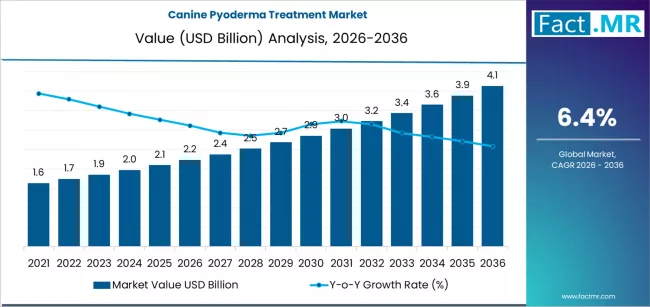
Canine pyoderma treatment market is projected to grow from USD 2.2 billion in 2026 to USD 4.1 billion by 2036, at a CAGR of 6.4%. Systemic antibiotics will dominate with a 39.9% market share, while superficial pyoderma will lead the application segment with a 50.4% share.
Canine Pyoderma Treatment Market Forecast and Outlook 2026 to 2036
The global market for canine pyoderma treatment is projected to total USD 2.23 billion in 2026, advancing to USD 4.13 billion by 2036, progressing at a 6.4% compound annual growth rate. This growth is primarily driven by the high prevalence of this bacterial skin infection, which is one of the most common reasons for veterinary dermatology visits.
Key Takeaways from the Canine Pyoderma Treatment Market
- Market Value for 2026: USD 2.23 Billion
- Market Value for 2036: USD 4.13 Billion
- Forecast CAGR 2026 to 2036: 6.4%
- Leading Product Segment (2026): Systemic Antibiotics (39.9%)
- Leading Application Segment (2026): Superficial Pyoderma (50.4%)
- Leading Distribution Channel Segment (2026): Veterinary Clinics (69.3%)
- Key Growth Countries: India (8.9% CAGR), China (8.7% CAGR), Brazil (8.3% CAGR), USA (7.0% CAGR), France (6.9% CAGR), Germany (6.8% CAGR), UK (6.7% CAGR)
- Key Players: Zoetis Inc., Elanco Animal Health Incorporated, Boehringer Ingelheim International GmbH, Virbac S.A., Ceva Santé Animale S.A.
Pyoderma often occurs secondary to underlying conditions like allergies, endocrine disorders, or parasitic infestations, creating a recurring patient population requiring management of both the infection and its primary cause. The market is segmented between first-line systemic antibiotics for deeper infections and a wide array of topical products including antiseptics and medicated shampoos for superficial cases.
Increasing pet owner awareness of skin health and willingness to pursue diagnostic workups for chronic conditions supports market expansion. The critical challenge of antimicrobial resistance is shaping treatment paradigms, promoting more targeted use of antibiotics guided by culture and sensitivity testing, and boosting the role of topical therapeutics and adjunct immunomodulators. This dynamic positions the market at the intersection of routine veterinary care, advanced dermatology, and the global imperative for antimicrobial stewardship in veterinary medicine.
Canine Pyoderma Treatment Market
| Metric | Value |
|---|---|
| Market Value (2026) | USD 2.23 Billion |
| Market Forecast Value (2036) | USD 4.13 Billion |
| Forecast CAGR 2026 to 2036 | 6.4% |
Category
| Category | Segments |
|---|---|
| Product | Systemic Antibiotics, Topical Antiseptics, Medicated Shampoos, Adjunct Immunomodulators |
| Application | Superficial Pyoderma, Deep Pyoderma, Recurrent Pyoderma |
| Distribution Channel | Veterinary Clinics, Animal Hospitals, Online Pharmacies |
| Region | North America, Latin America, Western Europe, Eastern Europe, East Asia, South Asia & Pacific, Middle East & Africa |
How are Veterinary Practice and Antibiotic Stewardship Reshaping Treatment Protocols?
| Industry Development | Impact |
|---|---|
| Heightened Focus on Antimicrobial Stewardship | Drives demand for cytology and culture services, promoting more precise antibiotic selection and increasing the use of topical first-line therapies for mild cases. |
| Growth of Veterinary Dermatology Specialization | Leads to better identification of underlying causes and more sophisticated management of recurrent pyoderma, utilizing long-term immunomodulators and novel topicals. |
| Increasing Pet Insurance Coverage | Reduces financial barriers to comprehensive diagnostic workups and appropriate extended courses of treatment for deep or recurrent infections. |
| Rising Demand for Pet-Specific Topical Formulations | Spurs innovation in shampoos, mousses, and sprays with residual activity, improving owner compliance and treatment efficacy over traditional products. |
Segmental Analysis
By Product, Which Remains the Therapeutic Mainstay for Moderate to Severe Infections?
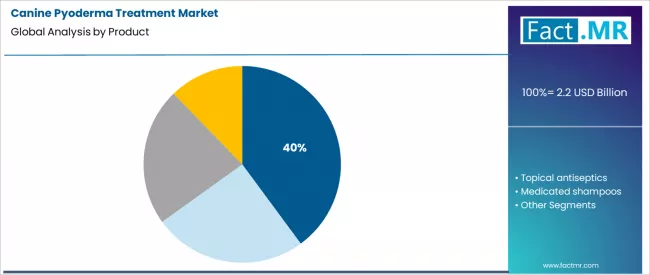
Systemic antibiotics command a leading 39.9% share. This dominance persists because oral or injectable antibiotics are necessary to resolve deep pyoderma and widespread superficial infections. Despite stewardship pressures, their clinical efficacy in treating the bacterial component is unmatched for non-surface-level cases.
The segment includes first-line options like cephalexin and more advanced molecules for resistant cases. The critical need to control infection and provide patient relief ensures this category’s central role, though its use is becoming more targeted and diagnosis-driven.
By Application, Which Form Represents the Most Frequent Clinical Presentation?
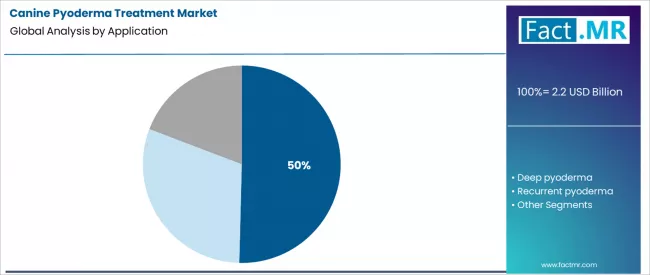
Superficial pyoderma constitutes the dominant application segment at 50.4%. This form of infection, involving the epidermis and superficial hair follicles, is extremely common in general practice. It frequently manifests as a secondary complication of allergic skin disease.
The high volume of these cases, often managed with topical therapy or short courses of oral antibiotics, drives consistent demand. Its management is a cornerstone of small animal dermatology, creating a large, recurring addressable patient population.
By Distribution Channel, Where are Diagnosis and Initial Prescription Centralized?
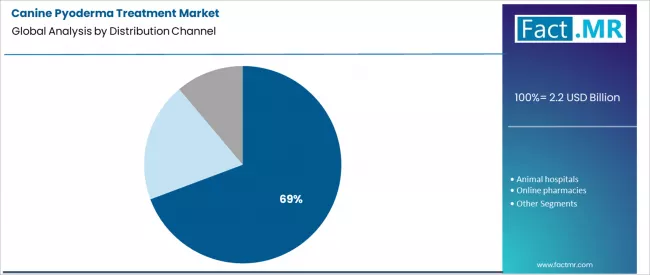
Veterinary clinics hold a decisive 69.3% share. Accurate diagnosis of pyoderma type and depth requires veterinary expertise, often involving cytology. This diagnostic step is inseparable from the prescription of both systemic antibiotics and specific topical therapeutics.
The need for professional demonstration of topical therapy techniques and follow-up assessments to monitor response and adjust treatment solidifies the veterinary clinic as the indispensable hub for product distribution and treatment oversight.
What Drivers, Restraints, Opportunities, and Trends Effect Change in the Canine Pyoderma Treatment Landscape?
| Attribute | Impact |
|---|---|
| Driver | High and often recurrent incidence of pyoderma secondary to prevalent underlying conditions like atopic dermatitis and flea allergies. |
| Restraint | Growing prevalence of antimicrobial-resistant bacterial strains, complicating treatment and necessitating costly culture and sensitivity testing. |
| Opportunity | Development of novel topical delivery systems with prolonged antimicrobial activity and easier application to improve owner compliance. |
| Trend | Increased use of combination therapy protocols integrating systemic antibiotics, topical antiseptics, and immunomodulators to address infection and underlying cause simultaneously. |
Analysis of the Canine Pyoderma Treatment Market by Key Countries
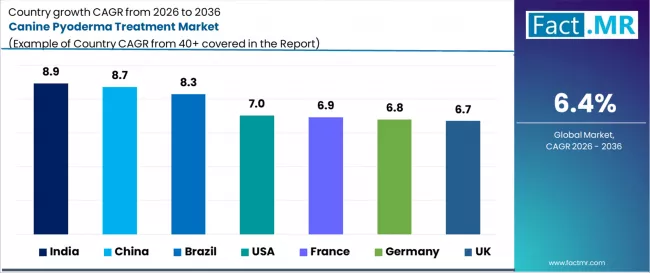
| Country | CAGR 2026 to 2036 |
|---|---|
| USA | 7.0% |
| Germany | 6.8% |
| China | 8.7% |
| India | 8.9% |
| Brazil | 8.3% |
| France | 6.9% |
| UK | 6.7% |
How is USA’s Leadership in Advanced Dermatology Care determining the Course of it’s Canine Pyoderma Treatment Market?
A 7.0% CAGR is underpinned by high standards of veterinary care, significant spending on pet health, and a strong focus on specialty dermatology. Awareness of antimicrobial resistance drives diagnostic testing prior to antibiotic prescription, supporting sales of both laboratory services and targeted therapeutics. The market features demand for a full product spectrum, from first-line antibiotics to premium topical shampoos and adjunctive allergy medications to prevent recurrence.
How does Germany's Emphasis on Diagnostics and Stewardship Guide the Market?
Germany's 6.8% CAGR reflects a disciplined approach to antibiotic use, with cytology being a standard diagnostic step. This practice supports the appropriate use of both systemic and topical products.
The major reason for this domain’s expansion is a well-informed pet owner base and veterinary profession that prioritizes correct diagnosis and management of underlying allergies, ensuring comprehensive treatment approaches for pyoderma cases.
Which Factors Underpin China's Rapid Growth in Pet Healthcare Services?
China's 8.7% CAGR is fueled by the expansion of veterinary services and growing pet owner education. Previously untreated skin conditions are now being diagnosed and managed. The large population of dogs with undiagnosed allergies contributes to a high incidence of secondary pyoderma. Growth concentrates in urban animal hospitals that offer dermatology consultations and stock advanced topical and systemic treatments.
Why is India's Expanding Veterinary Infrastructure a Key Catalyst?
The establishment of modern veterinary clinics equipped to diagnose and treat skin diseases propels India’s leading 8.9% CAGR. The warm, humid climate can contribute to skin infections. Increasing diagnosis of primary allergic skin disease is revealing a large secondary pyoderma patient pool. Market growth is tied to the availability of both effective antibiotics and affordable, high-quality topical management products.
How is Brazil's Endemic Parasite and Allergy Burden Influencing Demand?
Brazil's 8.3% CAGR is linked to high rates of flea allergy dermatitis and atopy, which are primary drivers of secondary pyoderma. The climate supports year-round allergen and parasite exposure.
Demand is robust for both the antibiotics to treat active infection and the parasiticides and immunomodulators needed to manage the underlying cause. The market demands products effective in tropical conditions.
What Specific Characteristics Define France's Integrated Dermatology Approach?
France's 6.9% CAGR benefits from a veterinary sector with good access to dermatology specialists and diagnostic tools. Treatment protocols often emphasize a combination of systemic therapy for immediate control and topical maintenance to prevent recurrence. There is a notable focus on identifying and managing the primary cause, supporting sales of both antibiotic and non-antibiotic products within integrated treatment plans.
How does the UK's Antibiotic Stewardship Focus Shape Prescribing Practices?
The UK’s 6.7% CAGR operates under strong antibiotic stewardship guidelines promoted by the veterinary profession. This encourages the use of topical antiseptic therapies as first-line intervention for superficial cases and mandates cytology for deeper infections.
Demand is consequently balanced between prescription antibiotics for justified cases and a growing market for veterinary-prescribed topical shampoos, mousses, and wipes for long-term management and prevention.
Competitive Landscape of the Canine Pyoderma Treatment Market
The competitive environment features global animal health pharmaceutical companies with broad dermatology portfolios. Leaders like Zoetis, Elanco, and Boehringer Ingelheim compete by offering integrated solutions that may include antibiotics, topical shampoos, and products for managing underlying allergies.
Success requires providing robust veterinary support, including diagnostic guidance and treatment protocol resources, to promote responsible use. Companies also compete through innovation in topical formulation technology to improve ease of use and efficacy, addressing the key challenge of owner compliance in long-term management.
Key Players in the Canine Pyoderma Treatment Market
- Zoetis Inc.
- Elanco Animal Health Incorporated
- Boehringer Ingelheim International GmbH
- Virbac S.A.
- Ceva Santé Animale S.A.
- Others
Scope of Report
| Items | Metrics |
|---|---|
| Quantitative Units | USD Billion |
| Product | Systemic Antibiotics, Topical Antiseptics, Medicated Shampoos, Adjunct Immunomodulators |
| Application | Superficial Pyoderma, Deep Pyoderma, Recurrent Pyoderma |
| Distribution Channel | Veterinary Clinics, Animal Hospitals, Online Pharmacies |
| Key Countries | India, China, Brazil, USA, France, Germany, UK |
| Key Companies | Zoetis Inc., Elanco Animal Health Incorporated, Boehringer Ingelheim International GmbH, Virbac S.A., Ceva Santé Animale S.A. |
| Additional Analysis | Comparative analysis of topical versus systemic treatment efficacy and cost; impact of cytology use on antibiotic selection patterns; review of bacterial resistance trends in canine skin pathogens; economic burden of recurrent pyoderma; analysis of compliance drivers for long-term topical therapy. |
Market by Segments
-
Product :
- Systemic Antibiotics
- Topical Antiseptics
- Medicated Shampoos
- Adjunct Immunomodulators
-
Application :
- Superficial Pyoderma
- Deep Pyoderma
- Recurrent Pyoderma
-
Distribution Channel :
- Veterinary Clinics
- Animal Hospitals
- Online Pharmacies
-
Region :
-
North America
- USA
- Canada
-
Latin America
- Brazil
- Mexico
- Argentina
- Rest of Latin America
-
Western Europe
- Germany
- France
- UK
- Italy
- Spain
- BENELUX
- Rest of Western Europe
-
Eastern Europe
- Poland
- Russia
- Czech Republic
- Rest of Eastern Europe
-
East Asia
- China
- Japan
- South Korea
- Rest of East Asia
-
South Asia & Pacific
- India
- ASEAN
- Australia & New Zealand
- Rest of South Asia & Pacific
-
MEA
- GCC Countries
- South Africa
- Turkiye
- Rest of MEA
-
Bibliography
- Hill, P. B., & Lo, A. (2024). Small Animal Dermatology for Technicians and Nurses. Wiley-Blackwell.
- International Society of Companion Animal Infectious Diseases. (2025). ISCAID guidelines for the diagnosis and management of canine superficial pyoderma.
- Loeffler, A., & Lloyd, D. H. (2023). What has changed in canine pyoderma? An update on diagnosis and treatment. Veterinary Dermatology.
- Morris, D. O. (2025). Medical Management of Canine Superficial Pyoderma. Veterinary Clinics of North America: Small Animal Practice.
- World Small Animal Veterinary Association. (2024). WSAVA Global Guidelines on Antimicrobial Use.
- Zoetis Inc. (2025). Dermatology Resource Center: Pyoderma Management Pathways.
Table of Content
- Executive Summary
- Global Market Outlook
- Demand to side Trends
- Supply to side Trends
- Technology Roadmap Analysis
- Analysis and Recommendations
- Market Overview
- Market Coverage / Taxonomy
- Market Definition / Scope / Limitations
- Market Background
- Market Dynamics
- Drivers
- Restraints
- Opportunity
- Trends
- Scenario Forecast
- Demand in Optimistic Scenario
- Demand in Likely Scenario
- Demand in Conservative Scenario
- Opportunity Map Analysis
- Product Life Cycle Analysis
- Supply Chain Analysis
- Investment Feasibility Matrix
- Value Chain Analysis
- PESTLE and Porter’s Analysis
- Regulatory Landscape
- Regional Parent Market Outlook
- Production and Consumption Statistics
- Import and Export Statistics
- Market Dynamics
- Global Market Analysis 2021 to 2025 and Forecast, 2026 to 2036
- Historical Market Size Value (USD Million) Analysis, 2021 to 2025
- Current and Future Market Size Value (USD Million) Projections, 2026 to 2036
- Y to o to Y Growth Trend Analysis
- Absolute $ Opportunity Analysis
- Global Market Pricing Analysis 2021 to 2025 and Forecast 2026 to 2036
- Global Market Analysis 2021 to 2025 and Forecast 2026 to 2036, By Product
- Introduction / Key Findings
- Historical Market Size Value (USD Million) Analysis By Product, 2021 to 2025
- Current and Future Market Size Value (USD Million) Analysis and Forecast By Product, 2026 to 2036
- Systemic antibiotics
- Topical antiseptics
- Medicated shampoos
- Adjunct immunomodulators
- Systemic antibiotics
- Y to o to Y Growth Trend Analysis By Product, 2021 to 2025
- Absolute $ Opportunity Analysis By Product, 2026 to 2036
- Global Market Analysis 2021 to 2025 and Forecast 2026 to 2036, By Application
- Introduction / Key Findings
- Historical Market Size Value (USD Million) Analysis By Application, 2021 to 2025
- Current and Future Market Size Value (USD Million) Analysis and Forecast By Application, 2026 to 2036
- Superficial pyoderma
- Deep pyoderma
- Recurrent pyoderma
- Superficial pyoderma
- Y to o to Y Growth Trend Analysis By Application, 2021 to 2025
- Absolute $ Opportunity Analysis By Application, 2026 to 2036
- Global Market Analysis 2021 to 2025 and Forecast 2026 to 2036, By Distribution Channel
- Introduction / Key Findings
- Historical Market Size Value (USD Million) Analysis By Distribution Channel, 2021 to 2025
- Current and Future Market Size Value (USD Million) Analysis and Forecast By Distribution Channel, 2026 to 2036
- Veterinary clinics
- Animal hospitals
- Online pharmacies
- Veterinary clinics
- Y to o to Y Growth Trend Analysis By Distribution Channel, 2021 to 2025
- Absolute $ Opportunity Analysis By Distribution Channel, 2026 to 2036
- Global Market Analysis 2021 to 2025 and Forecast 2026 to 2036, By Region
- Introduction
- Historical Market Size Value (USD Million) Analysis By Region, 2021 to 2025
- Current Market Size Value (USD Million) Analysis and Forecast By Region, 2026 to 2036
- North America
- Latin America
- Western Europe
- Eastern Europe
- East Asia
- South Asia and Pacific
- Middle East & Africa
- Market Attractiveness Analysis By Region
- North America Market Analysis 2021 to 2025 and Forecast 2026 to 2036, By Country
- Historical Market Size Value (USD Million) Trend Analysis By Market Taxonomy, 2021 to 2025
- Market Size Value (USD Million) Forecast By Market Taxonomy, 2026 to 2036
- By Country
- USA
- Canada
- Mexico
- By Product
- By Application
- By Distribution Channel
- By Country
- Market Attractiveness Analysis
- By Country
- By Product
- By Application
- By Distribution Channel
- Key Takeaways
- Latin America Market Analysis 2021 to 2025 and Forecast 2026 to 2036, By Country
- Historical Market Size Value (USD Million) Trend Analysis By Market Taxonomy, 2021 to 2025
- Market Size Value (USD Million) Forecast By Market Taxonomy, 2026 to 2036
- By Country
- Brazil
- Chile
- Rest of Latin America
- By Product
- By Application
- By Distribution Channel
- By Country
- Market Attractiveness Analysis
- By Country
- By Product
- By Application
- By Distribution Channel
- Key Takeaways
- Western Europe Market Analysis 2021 to 2025 and Forecast 2026 to 2036, By Country
- Historical Market Size Value (USD Million) Trend Analysis By Market Taxonomy, 2021 to 2025
- Market Size Value (USD Million) Forecast By Market Taxonomy, 2026 to 2036
- By Country
- Germany
- UK
- Italy
- Spain
- France
- Nordic
- BENELUX
- Rest of Western Europe
- By Product
- By Application
- By Distribution Channel
- By Country
- Market Attractiveness Analysis
- By Country
- By Product
- By Application
- By Distribution Channel
- Key Takeaways
- Eastern Europe Market Analysis 2021 to 2025 and Forecast 2026 to 2036, By Country
- Historical Market Size Value (USD Million) Trend Analysis By Market Taxonomy, 2021 to 2025
- Market Size Value (USD Million) Forecast By Market Taxonomy, 2026 to 2036
- By Country
- Russia
- Poland
- Hungary
- Balkan & Baltic
- Rest of Eastern Europe
- By Product
- By Application
- By Distribution Channel
- By Country
- Market Attractiveness Analysis
- By Country
- By Product
- By Application
- By Distribution Channel
- Key Takeaways
- East Asia Market Analysis 2021 to 2025 and Forecast 2026 to 2036, By Country
- Historical Market Size Value (USD Million) Trend Analysis By Market Taxonomy, 2021 to 2025
- Market Size Value (USD Million) Forecast By Market Taxonomy, 2026 to 2036
- By Country
- China
- Japan
- South Korea
- By Product
- By Application
- By Distribution Channel
- By Country
- Market Attractiveness Analysis
- By Country
- By Product
- By Application
- By Distribution Channel
- Key Takeaways
- South Asia and Pacific Market Analysis 2021 to 2025 and Forecast 2026 to 2036, By Country
- Historical Market Size Value (USD Million) Trend Analysis By Market Taxonomy, 2021 to 2025
- Market Size Value (USD Million) Forecast By Market Taxonomy, 2026 to 2036
- By Country
- India
- ASEAN
- Australia & New Zealand
- Rest of South Asia and Pacific
- By Product
- By Application
- By Distribution Channel
- By Country
- Market Attractiveness Analysis
- By Country
- By Product
- By Application
- By Distribution Channel
- Key Takeaways
- Middle East & Africa Market Analysis 2021 to 2025 and Forecast 2026 to 2036, By Country
- Historical Market Size Value (USD Million) Trend Analysis By Market Taxonomy, 2021 to 2025
- Market Size Value (USD Million) Forecast By Market Taxonomy, 2026 to 2036
- By Country
- Kingdom of Saudi Arabia
- Other GCC Countries
- Turkiye
- South Africa
- Other African Union
- Rest of Middle East & Africa
- By Product
- By Application
- By Distribution Channel
- By Country
- Market Attractiveness Analysis
- By Country
- By Product
- By Application
- By Distribution Channel
- Key Takeaways
- Key Countries Market Analysis
- USA
- Pricing Analysis
- Market Share Analysis, 2025
- By Product
- By Application
- By Distribution Channel
- Canada
- Pricing Analysis
- Market Share Analysis, 2025
- By Product
- By Application
- By Distribution Channel
- Mexico
- Pricing Analysis
- Market Share Analysis, 2025
- By Product
- By Application
- By Distribution Channel
- Brazil
- Pricing Analysis
- Market Share Analysis, 2025
- By Product
- By Application
- By Distribution Channel
- Chile
- Pricing Analysis
- Market Share Analysis, 2025
- By Product
- By Application
- By Distribution Channel
- Germany
- Pricing Analysis
- Market Share Analysis, 2025
- By Product
- By Application
- By Distribution Channel
- UK
- Pricing Analysis
- Market Share Analysis, 2025
- By Product
- By Application
- By Distribution Channel
- Italy
- Pricing Analysis
- Market Share Analysis, 2025
- By Product
- By Application
- By Distribution Channel
- Spain
- Pricing Analysis
- Market Share Analysis, 2025
- By Product
- By Application
- By Distribution Channel
- France
- Pricing Analysis
- Market Share Analysis, 2025
- By Product
- By Application
- By Distribution Channel
- India
- Pricing Analysis
- Market Share Analysis, 2025
- By Product
- By Application
- By Distribution Channel
- ASEAN
- Pricing Analysis
- Market Share Analysis, 2025
- By Product
- By Application
- By Distribution Channel
- Australia & New Zealand
- Pricing Analysis
- Market Share Analysis, 2025
- By Product
- By Application
- By Distribution Channel
- China
- Pricing Analysis
- Market Share Analysis, 2025
- By Product
- By Application
- By Distribution Channel
- Japan
- Pricing Analysis
- Market Share Analysis, 2025
- By Product
- By Application
- By Distribution Channel
- South Korea
- Pricing Analysis
- Market Share Analysis, 2025
- By Product
- By Application
- By Distribution Channel
- Russia
- Pricing Analysis
- Market Share Analysis, 2025
- By Product
- By Application
- By Distribution Channel
- Poland
- Pricing Analysis
- Market Share Analysis, 2025
- By Product
- By Application
- By Distribution Channel
- Hungary
- Pricing Analysis
- Market Share Analysis, 2025
- By Product
- By Application
- By Distribution Channel
- Kingdom of Saudi Arabia
- Pricing Analysis
- Market Share Analysis, 2025
- By Product
- By Application
- By Distribution Channel
- Turkiye
- Pricing Analysis
- Market Share Analysis, 2025
- By Product
- By Application
- By Distribution Channel
- South Africa
- Pricing Analysis
- Market Share Analysis, 2025
- By Product
- By Application
- By Distribution Channel
- USA
- Market Structure Analysis
- Competition Dashboard
- Competition Benchmarking
- Market Share Analysis of Top Players
- By Regional
- By Product
- By Application
- By Distribution Channel
- Competition Analysis
- Competition Deep Dive
- Zoetis Inc.
- Overview
- Product Portfolio
- Profitability by Market Segments (Product/Age /Sales Channel/Region)
- Sales Footprint
- Strategy Overview
- Marketing Strategy
- Product Strategy
- Channel Strategy
- Elanco Animal Health Incorporated
- Boehringer Ingelheim International GmbH
- Virbac S.A.
- Ceva Santé Animale S.A.
- Others
- Zoetis Inc.
- Competition Deep Dive
- Assumptions & Acronyms Used
- Research Methodology
List Of Table
- Table 1: Global Market Value (USD Million) Forecast by Region, 2021 to 2036
- Table 2: Global Market Value (USD Million) Forecast by Product, 2021 to 2036
- Table 3: Global Market Value (USD Million) Forecast by Application, 2021 to 2036
- Table 4: Global Market Value (USD Million) Forecast by Distribution Channel, 2021 to 2036
- Table 5: North America Market Value (USD Million) Forecast by Country, 2021 to 2036
- Table 6: North America Market Value (USD Million) Forecast by Product, 2021 to 2036
- Table 7: North America Market Value (USD Million) Forecast by Application, 2021 to 2036
- Table 8: North America Market Value (USD Million) Forecast by Distribution Channel, 2021 to 2036
- Table 9: Latin America Market Value (USD Million) Forecast by Country, 2021 to 2036
- Table 10: Latin America Market Value (USD Million) Forecast by Product, 2021 to 2036
- Table 11: Latin America Market Value (USD Million) Forecast by Application, 2021 to 2036
- Table 12: Latin America Market Value (USD Million) Forecast by Distribution Channel, 2021 to 2036
- Table 13: Western Europe Market Value (USD Million) Forecast by Country, 2021 to 2036
- Table 14: Western Europe Market Value (USD Million) Forecast by Product, 2021 to 2036
- Table 15: Western Europe Market Value (USD Million) Forecast by Application, 2021 to 2036
- Table 16: Western Europe Market Value (USD Million) Forecast by Distribution Channel, 2021 to 2036
- Table 17: Eastern Europe Market Value (USD Million) Forecast by Country, 2021 to 2036
- Table 18: Eastern Europe Market Value (USD Million) Forecast by Product, 2021 to 2036
- Table 19: Eastern Europe Market Value (USD Million) Forecast by Application, 2021 to 2036
- Table 20: Eastern Europe Market Value (USD Million) Forecast by Distribution Channel, 2021 to 2036
- Table 21: East Asia Market Value (USD Million) Forecast by Country, 2021 to 2036
- Table 22: East Asia Market Value (USD Million) Forecast by Product, 2021 to 2036
- Table 23: East Asia Market Value (USD Million) Forecast by Application, 2021 to 2036
- Table 24: East Asia Market Value (USD Million) Forecast by Distribution Channel, 2021 to 2036
- Table 25: South Asia and Pacific Market Value (USD Million) Forecast by Country, 2021 to 2036
- Table 26: South Asia and Pacific Market Value (USD Million) Forecast by Product, 2021 to 2036
- Table 27: South Asia and Pacific Market Value (USD Million) Forecast by Application, 2021 to 2036
- Table 28: South Asia and Pacific Market Value (USD Million) Forecast by Distribution Channel, 2021 to 2036
- Table 29: Middle East & Africa Market Value (USD Million) Forecast by Country, 2021 to 2036
- Table 30: Middle East & Africa Market Value (USD Million) Forecast by Product, 2021 to 2036
- Table 31: Middle East & Africa Market Value (USD Million) Forecast by Application, 2021 to 2036
- Table 32: Middle East & Africa Market Value (USD Million) Forecast by Distribution Channel, 2021 to 2036
List Of Figures
- Figure 1: Global Market Pricing Analysis
- Figure 2: Global Market Value (USD Million) Forecast 2021 to 2036
- Figure 3: Global Market Value Share and BPS Analysis by Product, 2026 and 2036
- Figure 4: Global Market Y to o to Y Growth Comparison by Product, 2026 to 2036
- Figure 5: Global Market Attractiveness Analysis by Product
- Figure 6: Global Market Value Share and BPS Analysis by Application, 2026 and 2036
- Figure 7: Global Market Y to o to Y Growth Comparison by Application, 2026 to 2036
- Figure 8: Global Market Attractiveness Analysis by Application
- Figure 9: Global Market Value Share and BPS Analysis by Distribution Channel, 2026 and 2036
- Figure 10: Global Market Y to o to Y Growth Comparison by Distribution Channel, 2026 to 2036
- Figure 11: Global Market Attractiveness Analysis by Distribution Channel
- Figure 12: Global Market Value (USD Million) Share and BPS Analysis by Region, 2026 and 2036
- Figure 13: Global Market Y to o to Y Growth Comparison by Region, 2026 to 2036
- Figure 14: Global Market Attractiveness Analysis by Region
- Figure 15: North America Market Incremental Dollar Opportunity, 2026 to 2036
- Figure 16: Latin America Market Incremental Dollar Opportunity, 2026 to 2036
- Figure 17: Western Europe Market Incremental Dollar Opportunity, 2026 to 2036
- Figure 18: Eastern Europe Market Incremental Dollar Opportunity, 2026 to 2036
- Figure 19: East Asia Market Incremental Dollar Opportunity, 2026 to 2036
- Figure 20: South Asia and Pacific Market Incremental Dollar Opportunity, 2026 to 2036
- Figure 21: Middle East & Africa Market Incremental Dollar Opportunity, 2026 to 2036
- Figure 22: North America Market Value Share and BPS Analysis by Country, 2026 and 2036
- Figure 23: North America Market Value Share and BPS Analysis by Product, 2026 and 2036
- Figure 24: North America Market Y to o to Y Growth Comparison by Product, 2026 to 2036
- Figure 25: North America Market Attractiveness Analysis by Product
- Figure 26: North America Market Value Share and BPS Analysis by Application, 2026 and 2036
- Figure 27: North America Market Y to o to Y Growth Comparison by Application, 2026 to 2036
- Figure 28: North America Market Attractiveness Analysis by Application
- Figure 29: North America Market Value Share and BPS Analysis by Distribution Channel, 2026 and 2036
- Figure 30: North America Market Y to o to Y Growth Comparison by Distribution Channel, 2026 to 2036
- Figure 31: North America Market Attractiveness Analysis by Distribution Channel
- Figure 32: Latin America Market Value Share and BPS Analysis by Country, 2026 and 2036
- Figure 33: Latin America Market Value Share and BPS Analysis by Product, 2026 and 2036
- Figure 34: Latin America Market Y to o to Y Growth Comparison by Product, 2026 to 2036
- Figure 35: Latin America Market Attractiveness Analysis by Product
- Figure 36: Latin America Market Value Share and BPS Analysis by Application, 2026 and 2036
- Figure 37: Latin America Market Y to o to Y Growth Comparison by Application, 2026 to 2036
- Figure 38: Latin America Market Attractiveness Analysis by Application
- Figure 39: Latin America Market Value Share and BPS Analysis by Distribution Channel, 2026 and 2036
- Figure 40: Latin America Market Y to o to Y Growth Comparison by Distribution Channel, 2026 to 2036
- Figure 41: Latin America Market Attractiveness Analysis by Distribution Channel
- Figure 42: Western Europe Market Value Share and BPS Analysis by Country, 2026 and 2036
- Figure 43: Western Europe Market Value Share and BPS Analysis by Product, 2026 and 2036
- Figure 44: Western Europe Market Y to o to Y Growth Comparison by Product, 2026 to 2036
- Figure 45: Western Europe Market Attractiveness Analysis by Product
- Figure 46: Western Europe Market Value Share and BPS Analysis by Application, 2026 and 2036
- Figure 47: Western Europe Market Y to o to Y Growth Comparison by Application, 2026 to 2036
- Figure 48: Western Europe Market Attractiveness Analysis by Application
- Figure 49: Western Europe Market Value Share and BPS Analysis by Distribution Channel, 2026 and 2036
- Figure 50: Western Europe Market Y to o to Y Growth Comparison by Distribution Channel, 2026 to 2036
- Figure 51: Western Europe Market Attractiveness Analysis by Distribution Channel
- Figure 52: Eastern Europe Market Value Share and BPS Analysis by Country, 2026 and 2036
- Figure 53: Eastern Europe Market Value Share and BPS Analysis by Product, 2026 and 2036
- Figure 54: Eastern Europe Market Y to o to Y Growth Comparison by Product, 2026 to 2036
- Figure 55: Eastern Europe Market Attractiveness Analysis by Product
- Figure 56: Eastern Europe Market Value Share and BPS Analysis by Application, 2026 and 2036
- Figure 57: Eastern Europe Market Y to o to Y Growth Comparison by Application, 2026 to 2036
- Figure 58: Eastern Europe Market Attractiveness Analysis by Application
- Figure 59: Eastern Europe Market Value Share and BPS Analysis by Distribution Channel, 2026 and 2036
- Figure 60: Eastern Europe Market Y to o to Y Growth Comparison by Distribution Channel, 2026 to 2036
- Figure 61: Eastern Europe Market Attractiveness Analysis by Distribution Channel
- Figure 62: East Asia Market Value Share and BPS Analysis by Country, 2026 and 2036
- Figure 63: East Asia Market Value Share and BPS Analysis by Product, 2026 and 2036
- Figure 64: East Asia Market Y to o to Y Growth Comparison by Product, 2026 to 2036
- Figure 65: East Asia Market Attractiveness Analysis by Product
- Figure 66: East Asia Market Value Share and BPS Analysis by Application, 2026 and 2036
- Figure 67: East Asia Market Y to o to Y Growth Comparison by Application, 2026 to 2036
- Figure 68: East Asia Market Attractiveness Analysis by Application
- Figure 69: East Asia Market Value Share and BPS Analysis by Distribution Channel, 2026 and 2036
- Figure 70: East Asia Market Y to o to Y Growth Comparison by Distribution Channel, 2026 to 2036
- Figure 71: East Asia Market Attractiveness Analysis by Distribution Channel
- Figure 72: South Asia and Pacific Market Value Share and BPS Analysis by Country, 2026 and 2036
- Figure 73: South Asia and Pacific Market Value Share and BPS Analysis by Product, 2026 and 2036
- Figure 74: South Asia and Pacific Market Y to o to Y Growth Comparison by Product, 2026 to 2036
- Figure 75: South Asia and Pacific Market Attractiveness Analysis by Product
- Figure 76: South Asia and Pacific Market Value Share and BPS Analysis by Application, 2026 and 2036
- Figure 77: South Asia and Pacific Market Y to o to Y Growth Comparison by Application, 2026 to 2036
- Figure 78: South Asia and Pacific Market Attractiveness Analysis by Application
- Figure 79: South Asia and Pacific Market Value Share and BPS Analysis by Distribution Channel, 2026 and 2036
- Figure 80: South Asia and Pacific Market Y to o to Y Growth Comparison by Distribution Channel, 2026 to 2036
- Figure 81: South Asia and Pacific Market Attractiveness Analysis by Distribution Channel
- Figure 82: Middle East & Africa Market Value Share and BPS Analysis by Country, 2026 and 2036
- Figure 83: Middle East & Africa Market Value Share and BPS Analysis by Product, 2026 and 2036
- Figure 84: Middle East & Africa Market Y to o to Y Growth Comparison by Product, 2026 to 2036
- Figure 85: Middle East & Africa Market Attractiveness Analysis by Product
- Figure 86: Middle East & Africa Market Value Share and BPS Analysis by Application, 2026 and 2036
- Figure 87: Middle East & Africa Market Y to o to Y Growth Comparison by Application, 2026 to 2036
- Figure 88: Middle East & Africa Market Attractiveness Analysis by Application
- Figure 89: Middle East & Africa Market Value Share and BPS Analysis by Distribution Channel, 2026 and 2036
- Figure 90: Middle East & Africa Market Y to o to Y Growth Comparison by Distribution Channel, 2026 to 2036
- Figure 91: Middle East & Africa Market Attractiveness Analysis by Distribution Channel
- Figure 92: Global Market - Tier Structure Analysis
- Figure 93: Global Market - Company Share Analysis
- FAQs -
How big is the canine pyoderma treatment market in 2026?
The global canine pyoderma treatment market is estimated to be valued at USD 2.2 billion in 2026.
What will be the size of canine pyoderma treatment market in 2036?
The market size for the canine pyoderma treatment market is projected to reach USD 4.1 billion by 2036.
How much will be the canine pyoderma treatment market growth between 2026 and 2036?
The canine pyoderma treatment market is expected to grow at a 6.4% CAGR between 2026 and 2036.
What are the key product types in the canine pyoderma treatment market?
The key product types in canine pyoderma treatment market are systemic antibiotics, topical antiseptics, medicated shampoos and adjunct immunomodulators.
Which application segment to contribute significant share in the canine pyoderma treatment market in 2026?
In terms of application, superficial pyoderma segment to command 50.4% share in the canine pyoderma treatment market in 2026.