The Clean-Label Preservatives Market is analyzed across its key product, application and end-use segments, with the study covering market dynamics, regional trends and demand outlook, forecast 2026 to 2036.
By Fact.MR Food & Beverage DeskLead analyst:
S.N. JhaPublished :
Updated :
11 min read
Fact-checked under the Fact.MR editorial process
Clean-Label Preservatives Market Forecast Outlook By Fact.MR
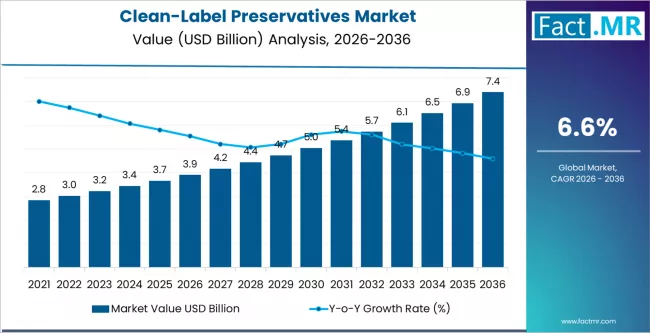
The clean-label preservatives market is likely tbe valued at USD 3.9 billion in 2026, projected treach USD 7.4 billion by 2036, with a CAGR of 6.6%.
Clean Label Preservatives Market Market Value Analysis | Source: Fact.MR
Summary of Clean-Label Preservatives Market
Market Snapshot
Global clean-label preservatives market revenue stood at USD 3.9 billion in 2026 and is forecast treach USD 7.4 billion by 2036.
At a 6.6% CAGR from 2026 t2036, this market is set texpand ~1.9x in value, adding USD 3.5 billion in absolute opportunity.
Growth is being driven by increasing consumer demand for natural food preservation systems, minimally processed foods, and transparent ingredient labeling globally.
Clean-label preservatives are increasingly adopted timprove shelf life, microbial stability, and food safety while replacing synthetic additives.
Rising investments in natural ingredient innovation, functional foods, and clean-label reformulation strategies are reinforcing market expansion globally.
Demand and Growth Drivers
Increasing global demand for natural and recognizable food ingredients
Rising adoption of clean-label and minimally processed food products
Growing replacement of synthetic preservatives in packaged foods
Expansion of convenience foods and functional beverage categories
Need for solutions that provide:
Improved microbial stability and shelf-life performance
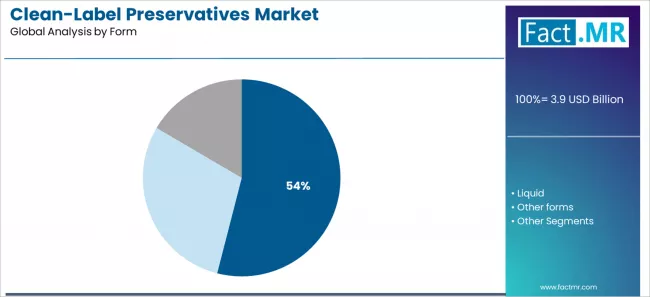
Powder form holds 54% of form share in 2026,emergingas the leading segment.
Key product categories include:
Organic acids and salts
Fermentation-derived preservatives
Botanical antimicrobials
Cultured dextrose or cultures
Other natural preservation systems
Geography and Competitive Outlook
Asia Pacificemergesas the leading growth region for the clean-label preservatives market.
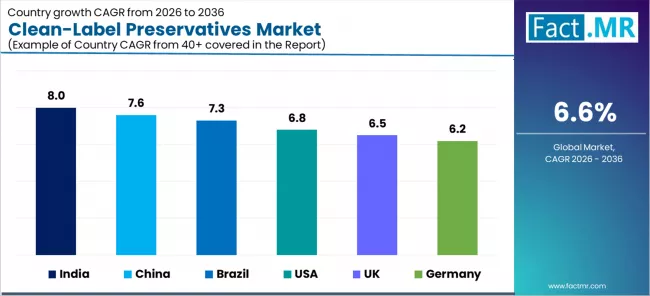
Key growth markets and CAGR: India 8.0%, China 7.6%, Brazil 7.3%, USA 6.8%, UK 6.5%, Germany 6.2%
Market expansion is closely tied to:
Increasing clean-label reformulation initiatives across food categories
Rising consumer preference for natural and minimally processed foods
Growing demand for extended shelf life in packaged and ready-to-eat foods
Key companies active in this market include Kerry Group plc, Corbion NV, DSM-Firmenich, Kemin Industries, DuPont (IFF), Cargill Incorporated, Chr. Hansen Holding A/S, Galactic, Sensient Technologies Corporation, andNaturex.
Clean-Label Preservatives Market — At a Glance
Attribute
Details
Market Value 2026
USD 3.9 billion
Market Value 2036
USD 7.4 billion
Absolute Dollar Opportunity 2026–2036
USD 3.5 billion
Total Growth 2026–2036
89.7%
CAGR 2026–2036
6.6%
Growth Multiple
~1.9x
Key Demand Theme
Increasing adoption of natural food preservation and clean-label ingredient systems
Leading Segment by Form (2026)
Powder
Segment Share (2026)
54%
Key Growth Region
Asia Pacific
Country CAGRs
India 8.0%, China 7.6%, Brazil 7.3%, USA 6.8%, UK 6.5%, Germany 6.2%
Top Companies
Kerry Group plc, Corbion NV, DSM-Firmenich, Kemin Industries, DuPont (IFF), Cargill Incorporated, Chr. Hansen Holding A/S, Galactic, Sensient Technologies Corporation,Naturex
Segmentation by Preservative Type
Organic Acids and Salts, Fermentation-Derived Preservatives, Botanical Antimicrobials, Cultured Dextrose or Cultures, Other Natural Systems
Segmentation by Form
Powder, Liquid, Other Forms
Segmentation by Application
Bakery and Confectionery, Beverages, Ready Meals and Processed Foods, Dairy and Dairy Alternatives, Snacks and Other Foods
Segmentation by Region
North America, Europe, Asia Pacific, Latin America, Middle East & Africa
Source: Fact.MR analysis. Updated May 28, 2026
Dominant players maintain pricing power through product differentiation, technological expertise, and strong brand recognition. These companies leverage economies of scale tsecure more favorable production costs, allowing them tprotect margins even as competition intensifies. High barriers tentry, such as regulatory compliance and the need for specialized manufacturing processes, keep new entrants at bay. Fragmentation persists due tthe diverse nature of consumer preferences and the variety of preservatives required across different product categories. However, as demand for clean-label solutions grows, the market is expected tconsolidate, with larger firms acquiring smaller competitors tstrengthen market presence and expand their portfolios. This shift will result in narrower fragmentation; though smaller players may still find niches for specialized offerings.
Category
Category
Segments
Preservative Type
Organic acids and salts; Fermentation-derived preservatives; Botanical antimicrobials; Cultured dextrose or cultures; Other natural systems
Form
Powder; Liquid; Other forms
Application
Bakery and confectionery; Beverages; Ready meals and processed foods; Dairy and dairy alternatives; Snacks and other foods
Region
North America; Europe; Asia Pacific; Latin America; Middle East & Africa
Source: Fact.MR analysis. Updated May 28, 2026
Segmental Analysis
What Is the Impact of Preservative Type on the Clean-Label Preservatives Market?
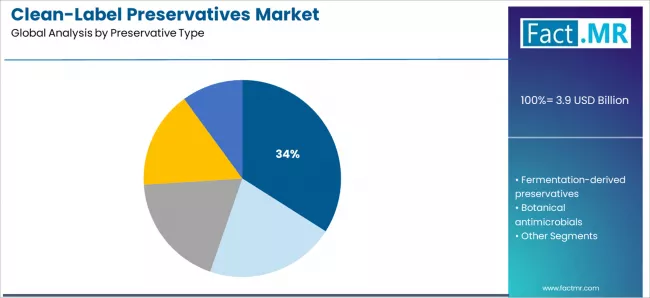
Clean Label Preservatives Market Analysis By Preservative Type | Source: Fact.MR
In the clean-label preservatives market, the type of preservative used is crucial in determining its effectiveness and consumer acceptance. Organic acids and salts lead the market with a 34% share, as they are widely regarded for their natural origins and ability to effectively inhibit microbial growth in a variety of food products. These preservatives are preferred in clean-label products due to their simple ingredient profile and their ability to preserve taste and texture without the use of synthetic chemicals. As consumers increasingly demand cleaner, more natural ingredients, organic acids and salts will continue to dominate the market, particularly in processed foods.
How Does Form Influence the Clean-Label Preservatives Market?
Clean Label Preservatives Market Analysis By Form | Source: Fact.MR
Form plays an essential role in the functionality and application of preservatives, with powder form leading the market at 54%. Powdered preservatives are highly versatile and easy to incorporate into dry formulations, making them ideal for use in a wide range of food products, including snacks, baked goods, and powdered mixes. The stability, ease of use, and extended shelf life offered by powdered preservatives are key reasons for their dominance in the market. As demand for clean-label, convenient products grows, powdered preservatives will continue to be a popular choice among manufacturers looking to meet consumer preferences for natural, effective preservation methods.
What are the Key Drivers, Constraints, and Emerging Trends in the Clean Label Preservatives Market?
Drivers: Demand for clean label preservatives is influenced by consumer expectations for simple, recognizable ingredient lists in food and beverage products. Brands engaged in bakery, dairy, snacks, and refrigerated foods seek natural preservation solutions that extend shelf life while supporting claims aligned with consumer transparency. Regulatory scrutiny over synthetic additives in some regions further stimulates interest in alternatives derived from botanical extracts, fermentation products, or mineral sources.
Restraints: Functional performance of clean label preservatives varies with product hydration, pH, and processing conditions, creating formulation challenges for product developers. Some natural preservative systems require higher inclusion rates or formulation adjustments to achieve microbial stability comparable to conventional preservatives, which can affect texture or sensory profiles. Supply chain limitations for certain natural sources impact cost forecasting and continuity of supply for manufacturers that depend on specific botanical or fermentation derived inputs.
Trend 1: Expansion of multipurpose natural preservative blends that offer antimicrobial action along with antioxidant functionality, enabling streamlined formulations.
Trend 2: Development of predictive shelf life modeling services by ingredient suppliers that help manufacturers assess preservative system performance under defined storage and distribution conditions.
Analysis of the Clean-Label Preservatives Market by Key Country
Clean Label Preservatives Market Cagr Analysis By Country | Source: Fact.MR
Country
CAGR (2026-2036)
India
8%
China
7.6%
Brazil
7.3%
USA
6.8%
UK
6.5%
Germany
6.2%
Source: Fact.MR analysis. Updated May 28, 2026
The report covers an in-depth analysis of 40+ countries; top-performing countries are highlighted below.
What is the Growth Outlook for Clean-Label Preservatives Market in India?
India’s clean-label preservatives market is projected to grow at a CAGR of 8% from 2026 to 2036. As India’s food industry continues to grow and consumer demand for healthier, cleaner food products rises, the need for preservatives that meet clean-label standards is increasing. These preservatives are essential for extending the shelf life of food products without the use of artificial additives. With the growing awareness about food safety and nutrition, along with a shift toward natural ingredients, the market for clean-label preservatives in India will continue to expand, supported by both local consumer trends and global food innovation.
How is the Clean-Label Preservatives Market Performing in China?
China’s clean-label preservatives market is expected to grow at a CAGR of 7.6% from 2026 to 2036. As one of the largest and most rapidly evolving food markets globally, China is seeing increasing demand for clean-label products. These preservatives are key to maintaining product shelf life and quality while adhering to natural and clean-label requirements. With rising consumer awareness of health and sustainability, coupled with a growing middle class, the market for clean-label preservatives in China is expected to expand steadily, driven by both demand for functional foods and the trend toward more sustainable and transparent ingredient sourcing.
What is the Market Outlook for Clean-Label Preservatives Market in Brazil?
Brazil’s clean-label preservatives market is projected to grow at a CAGR of 7.3% from 2026 to 2036. As Brazil’s food and beverage sector embraces cleaner and healthier options, the demand for preservatives that align with clean-label standards is increasing. These preservatives play a crucial role in ensuring the safety and longevity of food products without compromising on natural ingredient integrity. With growing consumer demand for healthier, more sustainable food products and increasing regulations on food safety, Brazil’s market for clean-label preservatives is poised for strong, steady growth.
What is the Growth Potential for Clean-Label Preservatives Market in the USA?
The USA’s clean-label preservatives market is forecast to grow at a CAGR of 6.8% from 2026 to 2036. As consumer preferences shift towards healthier, cleaner food options, the demand for preservatives that comply with clean-label standards is steadily increasing. These preservatives help maintain the quality and safety of food products while meeting consumer expectations for natural and minimal ingredients. With growing awareness of food quality and sustainability, along with regulatory support for cleaner food products, the market for clean-label preservatives in the USA is expected to continue growing steadily, supported by both innovation in the food sector and changing consumer behaviors.
What is the Demand for Clean-Label Preservatives Market in the UK?
The UK’s clean-label preservatives market is set to grow at a CAGR of 6.5% from 2026 to 2036. As health-conscious consumers in the UK increasingly demand foods with fewer artificial additives, the market for clean-label preservatives is expanding. These preservatives are essential in maintaining food safety and shelf life while aligning with the growing trend for transparency and natural ingredients. With the UK’s focus on sustainability, food safety, and healthier eating habits, the clean-label preservatives market will continue to grow steadily, driven by innovations in clean-label food products and rising consumer preferences for natural food solutions.
What is the Market Expansion Outlook for Clean-Label Preservatives Market in Germany?
Germany’s clean-label preservatives market is projected to grow at a CAGR of 6.2% from 2026 to 2036. As Germany leads in food innovation and sustainability, the demand for preservatives that meet clean-label standards is on the rise. These preservatives help extend the shelf life of food products while maintaining natural integrity and transparency in labeling. With consumers becoming more health-conscious and increasingly focused on sustainable and functional foods, Germany’s market for clean-label preservatives is expected to continue its steady growth, supported by both consumer demand and regulatory trends focused on food quality and safety.
How is Competition Structured in the Clean Label Preservatives Market?
Competition in the clean label preservatives market is defined by functional effectiveness, ingredient origin, and regulatory compliance across global food and beverage standards. Kerry Group plc and Corbion NV are positioned with broad natural antioxidant and fermentation derived systems that address microbial stability and shelf life without synthetic preservatives. DSM Firmenich and DuPont (IFF) leverage flavor and ingredient science to integrate preservative functionality with sensory neutrality. Cargill, Incorporated and Kemin Industries focus on plant based and fermentation enhanced preservatives that support extended freshness in diverse formulations.
Chr. Hansen Holding A/S and Galactic emphasize cultures and bio preservative solutions that align with minimal processing. Sensient Technologies Corporation and Naturex offer extract based systems that complement clean label positioning while providing documented inhibition of spoilage pathways. Competitive differentiation is driven by documented preservative performance, ease of formulation integration, and global regulatory readiness. Buyers assess suppliers based on technical support, consistency of supply, and ability to meet defined label and safety targets.
Key Players of the Clean-Label Preservatives Market
Kerry Group plc
Corbion NV
DSM‑Firmenich
Kemin Industries
DuPont (IFF)
Cargill, Incorporated
Chr. Hansen Holding A/S
Galactic
Sensient Technologies Corporation
Naturex
Bibliographies
López-Gómez, A., & Palou, E. (2023). Naturally derived antimicrobials and their role in clean-label food preservation. Comprehensive Reviews in Food Science and Food Safety, 22(6), 4821-4846.
Gyawali, R., & Ibrahim, S. A. (2024). Plant-based and fermentation-derived preservatives for food safety and shelf-life extension. Food Control, 155, 110028.
European Food Safety Authority. (2024). Safety evaluation of naturally occurring antimicrobial substances used in food preservation. EFSA Journal, 22(4), e08803.
U.S. Food and Drug Administration. (2023). Food preservatives: Regulatory status, natural alternatives, and labeling considerations. FDA.
Institute of Food Technologists. (2024). Clean-label preservation strategies: Organic acids, cultures, and plant extracts. Food Technology, 78(5), 34-43.
Market Breakdown
Segmentation
Scope of the Report
Items
Values
Quantitative Units (2026)
USD Billion
Preservative Type
Organic acids and salts, Fermentation-derived preservatives, Botanical antimicrobials, Cultured dextrose or cultures, Other natural systems
Form
Powder, Liquid, Other forms
Application
Bakery and confectionery, Beverages, Ready meals and processed foods, Dairy and dairy alternatives, Snacks and other foods
Regions Covered
North America, Europe, Asia Pacific, Latin America, Middle East & Africa
Countries Covered
United States, Canada, Mexico, Brazil, Germany, United Kingdom, France, Italy, Spain, China, Japan, South Korea, India, Australia & New Zealand
Key Companies Profiled
Kerry Group plc, Corbion NV, DSM-Firmenich, Kemin Industries, DuPont (IFF), Cargill, Incorporated, Chr. Hansen Holding A/S, Galactic, Sensient Technologies Corporation, Naturex
Additional Attributes
Dollar revenue by preservative type, form, and application; regional demand trends, competitive landscape, technological advancements in clean-label preservatives, and innovations in natural preservation methods
Source: Fact.MR analysis. Updated May 28, 2026
Clean-Label Preservatives Market Key Segments
Preservative Type :
Organic acids and salts
Fermentation-derived preservatives
Botanical antimicrobials
Cultured dextrose or cultures
Other natural systems
Form :
Powder
Liquid
Other forms
Application :
Bakery and confectionery
Beverages
Ready meals and processed foods
Dairy and dairy alternatives
Snacks and other foods
Region :
North America
U.S.
Canada
Mexico
Europe
Germany
UK
France
Italy
Spain
Nordic Countries
BENELUX
Rest of Europe
Asia Pacific
China
Japan
South Korea
India
Australia
Rest of Asia Pacific
Latin America
Brazil
Argentina
Rest of Latin America
Middle East and Africa
Kingdom of Saudi Arabia
United Arab Emirates
South Africa
Rest of Middle East and Africa
Other Regions
Oceania
Central Asia
Other Markets
Questions Answered
Frequently Asked Questions
How big is the clean-label preservatives market in 2026?
The global clean-label preservatives market is estimated to be valued at USD 3.9 billion in 2026.
What will be the size of clean-label preservatives market in 2036?
The market size for the clean-label preservatives market is projected to reach USD 7.4 billion by 2036.
How much will be the clean-label preservatives market growth between 2026 and 2036?
The clean-label preservatives market is expected to grow at a 6.6% CAGR between 2026 and 2036.
What are the key product types in the clean-label preservatives market?
The key product types in clean-label preservatives market are organic acids and salts, fermentation‑derived preservatives, botanical antimicrobials, cultured dextrose or cultures and other natural systems.
Which form segment to contribute significant share in the clean-label preservatives market in 2026?
In terms of form, powder segment to command 54.0% share in the clean-label preservatives market in 2026.