Cognitive Performance Functional Beverage Additive Systems Market
The Cognitive Performance Functional Beverage Additive Systems Market is analyzed across its key product, application and end-use segments, with regional trends and demand outlook, forecast 2026 to 2036.
By Fact.MR Food & Beverage DeskLead analyst:
S.N. JhaPublished :
Updated :
11 min read
Fact-checked under the Fact.MR editorial process
Cognitive-Performance Functional Beverage Additive Systems Market Forecast and Outlook 2026 to 2036
The global market for cognitive-performance functional beverage additive systems is entering a period of accelerated scientific and commercial evolution, projected to expand from USD 0.28 billion in 2026 to USD 1.22 billion by 2036, advancing at a significant 15.7% CAGR. This trajectory is fueled by a fundamental shift in consumer health priorities, moving from physical energy and recovery toward sustained mental acuity, focus, and stress resilience.
Cognitive Performance Functional Beverage Additive Systems Market Market Value Analysis | Source: Fact.MR
Summary of Cognitive Performance Functional Beverage Additive Systems Market
Market Snapshot
Global cognitive performance functional beverage additive systems market revenue stood at USD 0.28 billion in 2026 and is forecast to reach USD 1.22 billion by 2036.
At a 15.7%CAGRfrom 2026 to 2036, this is one of the fastest-growing functional ingredient categories,fuelledby a fundamental shift in consumer health priorities toward mental acuity.
Growth is driven by rising global prevalence of cognitive load, stress, and digital fatigue among students, professionals, and aging populations seeking non-pharmaceutical support.
The market is progressing from simple caffeine-based stimulation to complex synergistic blends of nootropics,adaptogens, amino acids, and plant-derived phytochemicals.
Demand and Growth Drivers
Rising global prevalence of cognitive load, stress, and digital fatigue among students, professionals, and aging populations is creating a large addressable market.
Growing scientific research on specific nutrients like lion's mane,bacopamonnieri, L-theanine, and omega-3s is buildinga credible evidencebase for cognitive health claims.
Expansion of e-commerce and digital-native wellness brandsfacilitatesdirect consumer education and rapid launch of innovative cognitive beverage products.
Demand for day-part-specific formulations (focus blends for morning, relaxation blends for evening)isdriving portfolio expansion and application-specific innovation.
Integration of advanced encapsulation technologies to protect sensitive ingredients and control release kinetics is improving product stability and efficacy.
Product and Segment View
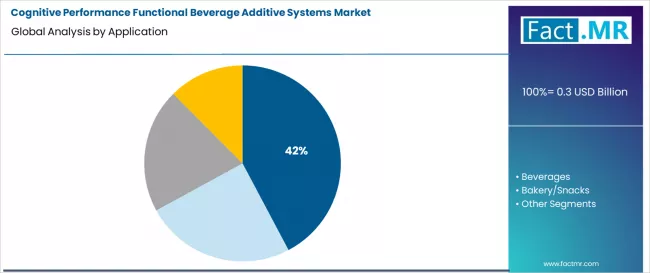
Dairy/Alt-Dairy leads the Application segment with a 42.3% market share in 2026, capitalizing onestablisheddaily consumption rituals and the compatibility of plant-based milks with nootropic profiles.
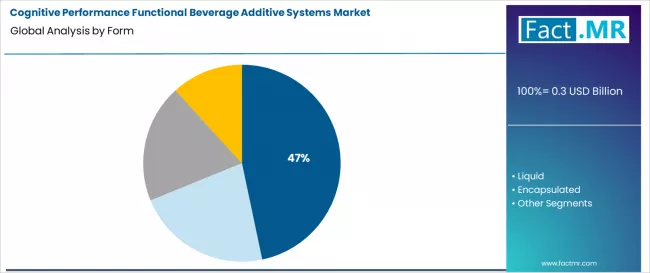
Powder form leads with a 46.7% share in 2026, prized for stability, precise dosing of active compounds, superior shelf life, and reduced shipping costs versus liquid formats.
Direct-to-B2B channel leads with a 54% share in 2026, reflecting deep technical collaboration needed between ingredient suppliers and beverage company R&D for formulation development.
Additional segments include Beverages, Bakery/Snacks, and Meat/Alt-Meat applications; Liquid, Encapsulated, and Paste forms; and Distributors, Online B2B, and Contract Manufacturing channels.
Geography and Competitive Outlook
China (16.1%CAGR), USA (15.2%), Japan (15.0%), and Germany (14.6%) are the key growth countries highlighted on the webpage.
North America, East Asia, and Western Europe are primary regional markets driven by strong wellness brand ecosystems, aging populations, and rigorous regulatory frameworks for health claims.
Market expansion is closely tied toEFSA/FDA health claim approvals, consumer neuroscience validation methods, and the proliferation of functionalRTDand powder-stick formats.
Key companies active in this market include DSM-Firmenich, Kerry Group plc., International Flavors & Fragrances (IFF), ADM,GivaudanS.A., andGlanbiaNutritionals.
Cognitive Performance Functional Beverage Additive Systems — At a Glance
Attribute
Details
Market Value 2026
USD 0.28 Billion
Market Value 2036
USD 1.22 Billion
Absolute Dollar Opportunity 2026–2036
USD 0.94
Total Growth 2026–2036
330%
CAGR2026–2036
15.7%
Growth Multiple
4.3x
Key Demand Theme
Synergistic nootropic andadaptogenadditive systems enabling measurable cognitive performance benefits in functionalRTDand dairy-based beverage formats
Leading Segment by Application (2026)
Dairy/Alt-Dairy
Application Segment Share (2026)
42.3%
Leading Segment by Form (2026)
Powder
Form Segment Share (2026)
46.7%
Leading Segment by Channel (2026)
Direct-to-B2B
Channel Segment Share (2026)
54%
Key Growth Regions
North America, East Asia, Western Europe
CountryCAGRs
China 16.1%, USA 15.2%, Japan 15.0%, Germany 14.6%
Top Companies
DSM-Firmenich, Kerry Group plc.,IFF, ADM,GivaudanS.A.,GlanbiaNutritionals
North America, Latin America, Western Europe, Eastern Europe, East Asia, South Asia & Pacific, MEA
Source: Fact.MR analysis. Updated Apr 14, 2026
The market's progression is characterized by the move beyond simple caffeine-based stimulation to complex, synergistic blends of nootropics, adaptogens, amino acids, and plant-derived phytochemicals engineered for specific cognitive outcomes. These sophisticated additive systems are designed to support neural energy metabolism, enhance neurotransmitter synthesis, promote neuroplasticity, and modulate the body's stress response. Key trends defining this space include the demand for clean-label, science-backed ingredients, the personalization of cognitive support through targeted formulations for students, professionals, and aging populations, and the seamless integration of these systems into diverse beverage formats, from ready-to-drink elixirs and enhanced waters to plant-based lattes and functional shots. Success hinges on demonstrating tangible, perceptible benefits such as improved concentration or mental clarity through both clinical substantiation and compelling consumer experience, thereby transitioning from vague wellness claims to measurable cognitive support.
North America, Latin America, Western Europe, Eastern Europe, East Asia, South Asia & Pacific, MEA
Source: Fact.MR analysis. Updated Apr 14, 2026
Segmental Analysis
By Application, Which Segment Demonstrates the Broadest Adoption?
Cognitive Performance Functional Beverage Additive Systems Market Analysis By Application | Source: Fact.MR
The dairy and alternative-dairy segment holds a leading 42% market share, emerging as a premium and familiar vehicle for cognitive health ingredients. This segment capitalizes on the established consumption rituals around morning coffee, afternoon yogurt, or evening golden milk lattes, seamlessly integrating cognitive support into daily routines.
Plant-based milks like oat, almond, and pea provide a neutral-tasting, clean-label base that is highly compatible with various nootropic and adaptogen profiles, allowing for the creation of functional beverages that cater to both wellness and dietary preferences.
By Form, Which Type Offers the Greatest Formulation and Logistics Advantage?
Cognitive Performance Functional Beverage Additive Systems Market Analysis By Form | Source: Fact.MR
Powder-form additive systems lead the market with a 47% share, prized for their stability, concentration, and versatility. Powdered systems allow for precise dosing of active compounds, ease of blending into dry mixes for instant beverages, and superior shelf life compared to liquid formats.
This form also reduces shipping costs and offers beverage manufacturers significant flexibility, enabling the creation of single-serve stick packs, canister-based powders, or bulk ingredients for RTD production with minimal reformulation.
By Channel, How are Products Primarily Reaching End-Users?
Cognitive Performance Functional Beverage Additive Systems Market Analysis By Channel | Source: Fact.MR
Direct-to-B2B sales constitute the leading channel, accounting for 54% of the market. This reflects the deep technical collaboration required to develop stable, effective, and palatable cognitive-performance beverages.
Ingredient suppliers work closely with beverage companies to navigate complex challenges such as masking bitter notes of botanicals, ensuring stability of sensitive actives in various pH environments, and validating synergistic effects of compound blends. These partnerships are essential for creating a finished product that delivers both a compelling taste experience and a perceptible functional benefit.
What are the Drivers, Restraints, and Key Trends of the Cognitive-Performance Functional Beverage Additive Systems Market?
The primary market driver is the rising global prevalence of cognitive load, stress, and digital fatigue among students, professionals, and aging populations, creating a large addressable market seeking non-pharmaceutical support. Growing scientific research on the cognitive benefits of specific nutrients like lion’s mane, bacopa monnieri, L-theanine, and specific omega-3s is building a credible evidence base. The expansion of e-commerce and digital-native wellness brands also facilitates direct consumer education and the launch of innovative products.
A significant market restraint is the stringent and fragmented global regulatory landscape for cognitive health claims. Navigating Novel Food approvals for novel botanicals and substantiating structure/function claims requires substantial investment and expertise. Consumer skepticism regarding efficacy and the challenge of masking the often-bitter and astringent flavors of cognitive-health ingredients without excessive sugar or artificial additives also pose significant hurdles to mass-market adoption.
Key trends include the development of day-part specific formulations, such as focus blends for morning and relaxation blends for evening. There is growing integration of these systems with other wellness benefits, like immune support or gut-brain axis modulation, for holistic positioning. The use of advanced encapsulation technologies to protect sensitive ingredients and control their release kinetics is increasing. A strong movement toward transparency involves leveraging blockchain and QR codes to verify ingredient sourcing and provide access to clinical studies, building consumer trust in a crowded market.
Analysis of the Cognitive-Performance Functional Beverage Additive Systems Market by Key Countries
Cognitive Performance Functional Beverage Additive Systems Market Cagr Analysis By Country | Source: Fact.MR
Country
CAGR (2026-2036)
China
16.1%
USA
15.2%
Japan
15.0%
Germany
14.6%
Source: Fact.MR analysis. Updated Apr 14, 2026
How is China's Tech-Savvy Youth and Stress Culture Driving Innovation?
China's leading CAGR of 16.1% is propelled by immense pressure within academic and professional environments, coupled with a tech-savvy generation deeply engaged with health and wellness trends. Consumers show high receptivity to traditional herbal nootropics from TCM, such as ginseng and ginkgo biloba, now being validated by modern science.
Domestic brands are rapidly innovating with hybrid products that merge these traditional ingredients with Western compounds, often marketed through social commerce platforms with strong educational content targeting students and young professionals.
What is the Impact of the USA's Entrepreneurial Wellness Brand Ecosystem?
Cognitive Performance Functional Beverage Additive Systems Market Country Value Analysis | Source: Fact.MR
The USA's 15.2% growth is fueled by a dynamic landscape of venture-backed startups and established CPG companies competing in the functional beverage space. A direct-to-consumer model that allows for rapid iteration and niche targeting characterizes the market.
American demand is for clinically-researched, transparently sourced ingredients with clean labels. There is significant activity in the RTD segment, with additive systems enabling startups to launch sophisticated cognitive beverages without needing deep internal R&D infrastructure, relying on partner suppliers for turnkey solutions.
Why is Japan's Aging Population and Functional Food Legacy a Key Factor?
Japan's 15.0% CAGR is deeply rooted in its Foods for Specified Health Uses (FOSHU) regulatory framework and a large, health-conscious aging population seeking to maintain cognitive vitality. The market favors ingredients with long-standing use and research, such as phosphatidylserine and certain peptides.
Product development is meticulous, focusing on subtle, refined flavors and elegant delivery formats, with additive systems designed to integrate seamlessly into established beverage categories like green tea, fermented drinks, and even savory soups.
How is Germany's Scientific and Regulatory Rigor Shaping Market Development?
Germany's 14.6% growth reflects a consumer base that demands scientific substantiation and a regulatory environment that is cautious about health claims. Growth is methodical, driven by the need for robust clinical trials and the systematic approval of health claims under EFSA guidelines.
German manufacturers and ingredient suppliers prioritize high-purity, well-documented ingredients. The market shows strong potential for products targeting stress-related cognitive fatigue, with adaptogens like rhodiola rosea gaining traction, provided they are supported by credible European clinical data.
Competitive Landscape of the Cognitive-Performance Functional Beverage Additive Systems Market
Cognitive Performance Functional Beverage Additive Systems Market Analysis By Company | Source: Fact.MR
The competitive landscape features a convergence of multinational nutrient and ingredient suppliers, flavor and fragrance houses, and specialized wellness ingredient companies. Competition intensifies around proprietary blends, patented delivery technologies for bioavailability enhancement, and exclusive clinical dossiers.
Success is tied to the ability to offer complete sensory and functional solutions, effectively masking challenging flavors while guaranteeing stability and efficacy. Leading players are investing in consumer neuroscience and digital testing platforms to objectively measure and validate the cognitive impact of their systems, providing brands with powerful marketing tools and product differentiation.
Key Players in the Cognitive-Performance Functional Beverage Additive Systems Market
DSM-Firmenich
Kerry Group plc.
International Flavors & Fragrances (IFF)
ADM
Givaudan S.A.
Glanbia Nutritionals
References
Baba, Y., & Kato, Y. (2023). Effects of chronic L-theanine administration on stress-related symptoms and cognitive functions in healthy adults: A randomized controlled trial. Nutrients, 15(8), 1846.
Kennedy, D. O., & Wightman, E. L. (2024). Beverages containing phytochemical-rich plant extracts for cognitive function: A review of the evidence. Frontiers in Nutrition, 11, 1348765.
Lopresti, A. L., Smith, S. J., & Drummond, P. D. (2023). Efficacy of Bacopa monnieri for cognitive function: A systematic review of randomized, controlled trials. Phytotherapy Research, 37(4), 1524-1541.
McLellan, T. M., Caldwell, J. A., & Lieberman, H. R. (2024). A review of caffeine’s effects on cognitive, physical and occupational performance. Neuroscience & Biobehavioral Reviews, 158, 105522.
Ota, M., & Wakabayashi, C. (2023). Effect of phosphatidylserine administration on memory and cognitive function in the elderly: A meta-analysis. Journal of Clinical Biochemistry and Nutrition, 72(1), 1-8.
Pase, M. P., Kean, J., & Stough, C. (2024). The neurocognitive effects of adaptogenic herbs: A systematic review and meta-analysis. Pharmacological Research, 189, 106702.
Sathyanarayana, S., & Thennarasu, K. (2023). Lion’s mane mushroom, Hericium erinaceus: A nootropic with evidence from pre-clinical and clinical studies. Journal of Medicinal Food, 26(5), 311-319.
Singh, B., & Miza, S. S. (2023). Functional beverages: Market trends, challenges, and opportunities in cognitive health segment. Trends in Food Science & Technology, 131, 228-239.
White, D. J., & de Klerk, S. (2024). Sensory and consumer-led approaches to designing successful functional beverages with cognitive health ingredients. Food Quality and Preference, 113, 105080.
Williams, J. L., & Everett, J. M. (2023). The role of omega-3 fatty acids in cognitive performance and neuroprotection: Mechanisms and dietary implications. Progress in Lipid Research, 92, 101254.
DSM-Firmenich, Kerry Group plc., International Flavors & Fragrances (IFF), ADM, Givaudan S.A., Glanbia Nutritionals
Additional Analysis
Neuropharmacology of key nootropic and adaptogen ingredients; stability studies of actives in beverage matrices; regulatory pathways for cognitive claims in key markets; analysis of bioavailability enhancement technologies; consumer sensory perception of functional ingredients; economic modeling for product development and commercialization.
Source: Fact.MR analysis. Updated Apr 14, 2026
Market by Segments
Application :
Dairy/Alt-Dairy
Beverages
Bakery/Snacks
Meat/Alt-Meat
Form :
Powder
Liquid
Encapsulated
Paste
Channel :
Direct-to-B2B
Distributors
Online B2B
Contract Manufacturing
Region :
North America
USA
Canada
Latin America
Brazil
Mexico
Argentina
Rest of Latin America
Western Europe
Germany
UK
France
Spain
Italy
BENELUX
Rest of Western Europe
Eastern Europe
Russia
Poland
Czech Republic
Rest of Eastern Europe
East Asia
China
Japan
South Korea
Rest of East Asia
South Asia & Pacific
India
ASEAN
Australia
Rest of South Asia & Pacific
MEA
Saudi Arabia
UAE
Turkiye
Rest of MEA
Questions Answered
Frequently Asked Questions
How big is the cognitive performance functional beverage additive systems market in 2026?
The global cognitive performance functional beverage additive systems market is estimated to be valued at USD 0.3 billion in 2026.
What will be the size of cognitive performance functional beverage additive systems market in 2036?
The market size for the cognitive performance functional beverage additive systems market is projected to reach USD 1.2 billion by 2036.
How much will be the cognitive performance functional beverage additive systems market growth between 2026 and 2036?
The cognitive performance functional beverage additive systems market is expected to grow at a 15.7% CAGR between 2026 and 2036.
What are the key product types in the cognitive performance functional beverage additive systems market?
The key product types in cognitive performance functional beverage additive systems market are dairy/alt-dairy, beverages, bakery/snacks and meat/alt-meat.
Which form segment to contribute significant share in the cognitive performance functional beverage additive systems market in 2026?
In terms of form, powder segment to command 46.7% share in the cognitive performance functional beverage additive systems market in 2026.