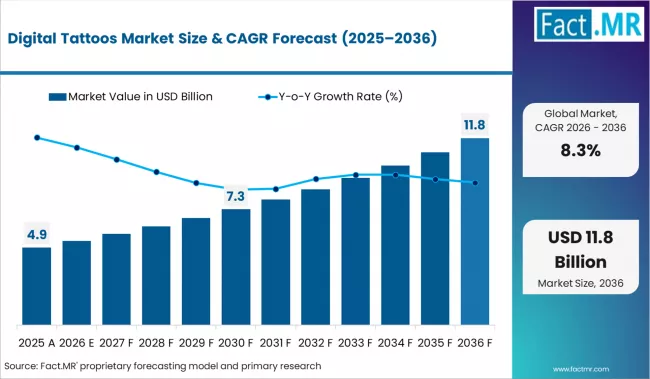
- Base Value(2025): 4.9 Bn
- Estimated Value(2026): 5.3 Bn
- Forecast Value (2036): 11.8 Bn
- CAGR (2026 - 2036): 8.3%
Digital Tattoos Market Forecast By Fact.MR
In 2025, the digital tattoos market was valued at USD 4.9 billion. Based on Fact MR analysis, demand for digital tattoos is estimated to grow to USD 5.3 billion in 2026 and USD 11.8 billion by 2036. FMR projects a CAGR of 8.3% during the forecast period.
The absolute dollar growth from 2026 to 2036 is USD 6.2 billion. This increase reflects gradual expansion in wearable electronics rather than a structural shift in the broader medical device and consumer electronics sectors. Digital tattoos are thin electronic sensors applied to the skin to monitor physiological signals such as heart rate, body temperature, and hydration levels. Adoption continues across healthcare monitoring, sports performance tracking, and biometric identification applications. Growth pace remains moderated by device durability limitations, regulatory approval requirements for medical monitoring systems, and manufacturing complexity for flexible electronic materials.
South Korea leads with a projected CAGR of 10.3%, supported by strong investment in wearable electronics and advanced semiconductor fabrication capabilities. The United Kingdom follows with a CAGR of 9.8%, reflecting research activity in biomedical monitoring technologies and wearable health devices. The United States records a CAGR of 7.9%, driven by demand for health monitoring wearables and biometric identification systems. Japan shows the slowest growth at 6.2%, reflecting a mature electronics sector where adoption of emerging wearable formats progresses gradually. Mature technology markets generate a significant share of replacement demand as wearable monitoring devices evolve across healthcare and consumer electronics applications.
Digital Tattoos Market Market Value Analysis | Source: Fact.MR
Digital Tattoos Market
| Metric | Details |
|---|---|
| Industry Size (2026E) | USD 5.3 billion |
| Industry Value (2036F) | USD 11.8 billion |
| CAGR (2026 to 2036) | 8.3% |
Source: Fact.MR analysis. Updated Mar 23, 2026
Digital Tattoos Market Definition
The Digital Tattoos Market includes wearable electronic devices designed as thin, flexible patches that attach directly to the skin to monitor physiological signals or enable digital interaction. These devices use sensors, conductive materials, and wireless communication technologies to collect biometric data such as heart rate, temperature, hydration levels, or muscle activity. Digital tattoos are commonly used in healthcare monitoring, sports performance tracking, and research applications. The primary function of digital tattoos is to provide continuous biometric measurement and data transmission through lightweight wearable sensors placed on the skin.
Digital Tattoos Market Inclusions
This report covers global and regional market sizes for digital tattoos with forecast analysis for the study period. The market is segmented by technology type including biometric monitoring patches, electronic skin sensors, and medical diagnostic wearable patches. Application segments include healthcare monitoring, sports and fitness tracking, and biomedical research. End users include hospitals, research institutions, sports organizations, and healthcare technology developers. The report also evaluates pricing structures, production patterns, and selected trade flow analysis across major wearable electronics markets.
Digital Tattoos Market Exclusions
The report excludes traditional wearable devices such as smartwatches, fitness bands, and chest strap monitors that are not attached directly to the skin. Cosmetic temporary tattoos without electronic components are not included. Implantable medical devices and internal biosensors are also outside the defined market scope. The analysis does not include general wearable health monitoring equipment unless designed as thin electronic patches that function as digital tattoos.
Digital Tattoos Research Methodology
- Primary Research: Interviews were conducted with wearable technology developers, biomedical engineers, healthcare device manufacturers, and research specialists.
- Desk Research: Public information was collected from medical technology publications, company reports, regulatory agency data, and research journals.
- Market-Sizing and Forecasting: A hybrid model combining bottom up production analysis with top down demand assessment across healthcare and wearable technology sectors was applied.
- Data Validation and Update Cycle: Findings were cross verified using multiple industry data sources and expert inputs, with periodic updates conducted as new market information becomes available.
Summary of the Digital Tattoos Market
- Market Definition
- The market comprises ultra thin wearable electronic devices designed to adhere directly to the skin for monitoring physiological signals and enabling digital interaction. Digital tattoos incorporate flexible sensors, conductive materials, and wireless communication technologies to measure biometric data such as heart rate, body temperature, hydration levels, and muscle activity. These devices are used in healthcare monitoring, sports performance analysis, and research applications where continuous physiological measurement is required.
- Demand Drivers
- Increasing adoption of wearable biosensors used for continuous monitoring of physiological signals in healthcare environments.
- Rising demand for noninvasive monitoring technologies used in medical research and patient health tracking.
- Expansion of wearable electronics applications in sports performance monitoring and biometric measurement.
- Growing research activity in flexible electronics and skin mounted biosensor technologies.
- Key Segments Analyzed
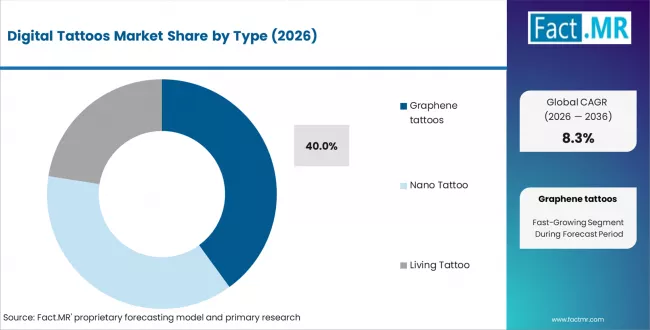
- Type: Graphene tattoos account for about 40% share due to strong electrical conductivity and flexibility for skin mounted sensors.
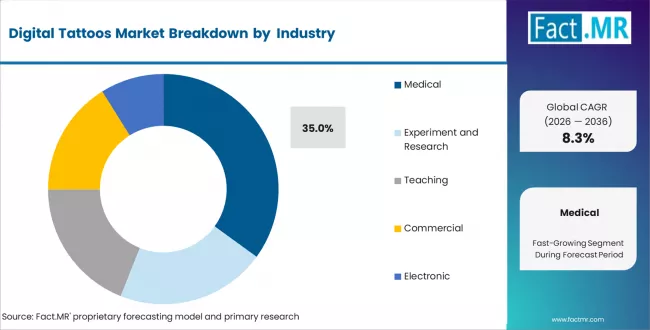
- Application: Medical applications represent roughly 35% share supported by demand for continuous patient monitoring technologies.
- Technology Usage: Digital tattoos are used for physiological signal monitoring, biometric data collection, and wearable electronics interaction.
- Geography: South Korea records the fastest expansion supported by strong investment in wearable electronics and semiconductor technologies.
- Analyst Opinion at Fact MR
- Shambhu Nath Jha, Principal Consultant, Fact MR, opines, "In this updated edition of the Digital Tattoos Market report, industry participants will observe that wearable biosensor technologies continue to expand across healthcare monitoring and biomedical research environments. Digital tattoos enable continuous physiological monitoring through ultra thin sensors that adhere directly to the skin. Companies developing advanced materials and flexible electronic sensors will maintain stronger positions in the evolving wearable health technology market."
- Strategic Implications or Executive Takeaways
- Invest in research and development of flexible electronic materials used in skin mounted biosensor technologies.
- Strengthen collaboration between wearable technology developers and healthcare device manufacturers.
- Maintain regulatory compliance for wearable medical devices used in patient monitoring and clinical applications.
- Expand production capabilities for advanced biosensors used in healthcare monitoring and wearable electronics systems.
- Methodology
- Primary interviews conducted with wearable technology developers, biomedical engineers, healthcare device manufacturers, and research specialists.
- Desk research based on medical technology publications, company financial reports, regulatory agency data, and scientific research journals.
- Market sizing developed through a hybrid approach combining bottom up production analysis and top down demand assessment across healthcare and wearable electronics sectors.
- Findings validated through multiple industry sources and expert consultations following Fact MR internal modeling standards.
Segmental Analysis
Digital Tattoos Market Analysis by Type
Digital Tattoos Market Analysis By Type | Source: Fact.MR
- Market Overview: Graphene tattoos are projected to account for around 40% share of the digital tattoos market by 2026. Graphene based electronic tattoos are ultra thin wearable devices designed to adhere to the skin and monitor physiological signals. These devices incorporate conductive graphene layers that allow accurate detection of bioelectrical signals such as heart rate, muscle activity, and skin temperature. Researchers and medical technology developers utilize graphene tattoos due to their flexibility, lightweight structure, and electrical conductivity. The material properties of graphene enable the development of wearable sensors that maintain close contact with the skin for continuous physiological monitoring.
- Demand Drivers:
- Flexible Sensor Technology: Graphene tattoos provide conductive properties that allow reliable monitoring of physiological signals through skin mounted sensors.
- Wearable Health Monitoring: Healthcare researchers and medical device developers deploy graphene tattoos to track biological signals in real time.
- Advanced Material Properties: Graphene based devices maintain flexibility and conductivity while conforming closely to the skin surface.
Digital Tattoos Market Analysis by Application
Digital Tattoos Market Analysis By Application | Source: Fact.MR
- Market Overview: Medical applications are expected to represent approximately 35% share of the digital tattoos market in 2026. Digital tattoo technology is used in healthcare environments for continuous monitoring of patient vital signs and physiological parameters. These devices can track heart rate, hydration levels, muscle activity, and other biological signals through skin mounted electronic sensors. Medical professionals and researchers utilize digital tattoos to support patient monitoring in hospitals, clinical trials, and remote healthcare environments. The ability of digital tattoos to provide non invasive and continuous data collection supports their use in healthcare monitoring systems.
- Demand Drivers:
- Continuous Patient Monitoring: Digital tattoos allow healthcare providers to track patient physiological signals without bulky monitoring equipment.
- Remote Healthcare Applications: Medical monitoring systems use wearable sensors to collect patient health data outside traditional hospital environments.
- Clinical Research Deployment: Research institutions deploy digital tattoos in studies focused on physiological monitoring and wearable medical technologies.
Digital Tattoos Market Drivers, Restraints, and Opportunities
Digital Tattoos Market Opportunity Matrix Growth Vs Value | Source: Fact.MR
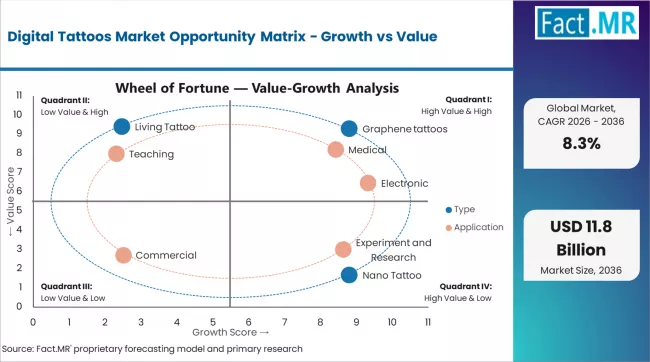
Fact MR analysis indicates that the digital tattoos market developed from research in wearable electronics and flexible sensor technologies designed for continuous physiological monitoring. Early experimental systems used thin electronic patches placed on the skin to record temperature, muscle signals, and biometric activity without bulky medical equipment. The current market valuation reflects the integration of ultra-thin electronic sensors into skin-applied devices used in medical diagnostics, fitness monitoring, and human-machine interface research. Demand persists because digital tattoos enable noninvasive, continuous monitoring of physiological signals in clinical and wearable health applications.
A structural shift is occurring as conventional wearable devices such as wristbands and chest straps face limitations in precision physiological monitoring. Traditional wearables remain widely used for general activity tracking where noninvasive convenience and consumer affordability remain priorities. Digital tattoos incorporate stretchable electronics, biosensors, and wireless communication modules that adhere directly to the skin to capture more accurate biological signals. These devices involve specialized materials, microelectronics fabrication, and biomedical validation processes that increase development and manufacturing costs. Higher technology costs support gradual market value growth even while production volumes remain limited to specialized healthcare and research applications.
- Biomedical Monitoring Systems: Healthcare researchers use digital tattoos to monitor vital signals such as temperature, hydration levels, and electrophysiological activity.
- Medical Device Regulation: Regulatory frameworks such as U.S. Food and Drug Administration wearable medical device approval procedures and European Union Medical Device Regulation (EU MDR 2017/745) influence product validation and clinical deployment.
- North America Research Ecosystem: Universities, medical research institutes, and technology companies in the United States lead research in flexible electronics and skin-based biosensor technologies.
Regional Analysis
The market analysis covers key global regions, including North America, Western Europe, and East Asia. It is segmented geographically, with specific market dynamics for each region. The full report provides a detailed market attractiveness analysis.
.webp "Top Country Growth Comparison Digital Tattoos Market Cagr (2026 2036)")
Top Country Growth Comparison Digital Tattoos Market Cagr (2026 2036) | Source: Fact.MR
| Country | CAGR (2026-2036) |
|---|---|
| USA | 7.9% |
| United Kingdom | 9.8% |
| Japan | 6.2% |
| South Korea | 10.3% |
Source: Fact.MR analysis. Updated Mar 23, 2026
Source: Fact MR (FMR) analysis, based on proprietary forecasting model and primary research
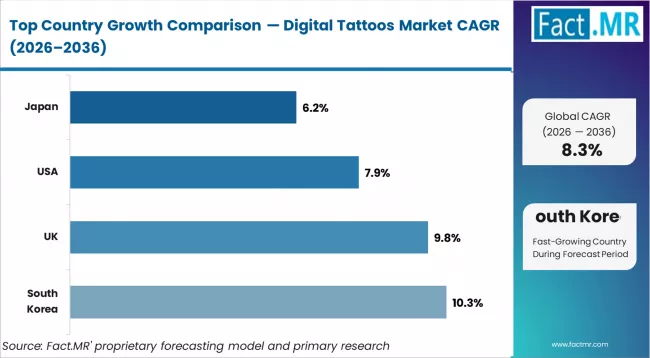
Digital Tattoos Market Cagr Analysis By Country | Source: Fact.MR
North America
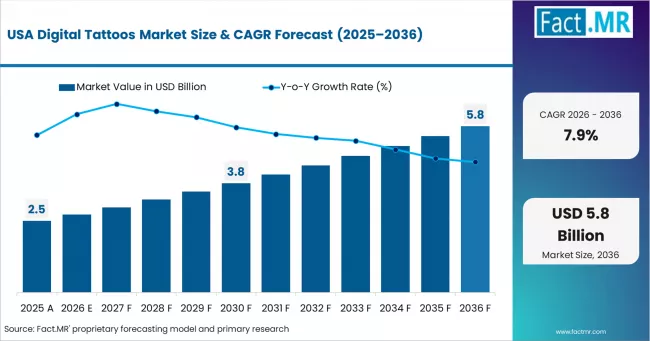
Digital Tattoos Market Country Value Analysis | Source: Fact.MR
The USA represents a major market supported by wearable health monitoring technologies, biomedical research, and adoption of flexible electronic devices. Key companies include MC10, VivaLNK, and Texas Instruments.
USA: Demand for digital tattoos in the U.S. is projected to rise at 7.9% CAGR through 2036. Growth is supported by biomedical wearable technology research programs promoted by the National Institutes of Health (04-2025) and development of flexible biosensor platforms by MC10 (08-2025).
Western Europe
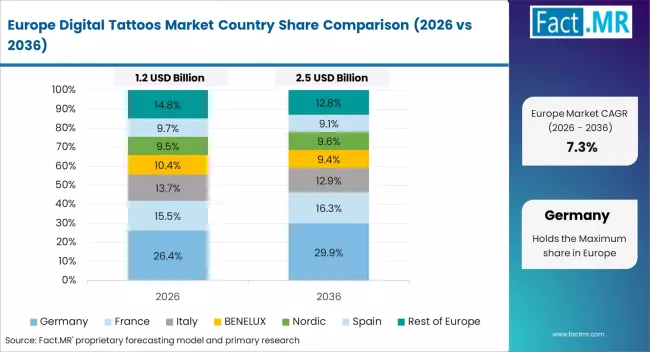
Digital Tattoos Market Europe Country Market Share Analysis, 2026 & 2036 | Source: Fact.MR
The United Kingdom represents an important market supported by digital health technologies, medical monitoring systems, and wearable electronics research.
- United Kingdom: Demand for digital tattoos in the UK is projected to rise at 9.8% CAGR through 2036. Growth is supported by digital health innovation programs promoted by the National Health Service (03-2025) and development of biosensor technologies by VivaLNK (07-2025).
East Asia
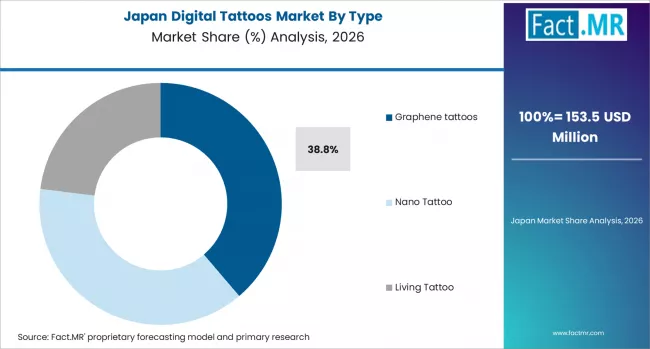
Digital Tattoos Market Japan Market Share Analysis By Type | Source: Fact.MR
Japan and South Korea represent key markets supported by electronics manufacturing, wearable sensor technologies, and medical device research.
- Japan: Demand for digital tattoos in Japan is projected to rise at 6.2% CAGR through 2036. Growth is supported by wearable electronics research initiatives promoted by the Ministry of Economy, Trade and Industry (04-2025) and development of flexible electronics technologies by Panasonic Corporation (08-2025).
- South Korea: Demand for digital tattoos in South Korea is projected to rise at 10.3% CAGR through 2036. Growth is supported by wearable healthcare technology initiatives promoted by the Ministry of Science and ICT (02-2025) and biosensor technology development by Samsung Electronics (06-2025).
Fact MR's analysis of the digital tattoos market in North America, Western Europe, and East Asia consists of country-wise assessments that include the USA, the United Kingdom, Japan, and South Korea. Readers can find detailed trends, regulatory updates, and company-specific investments shaping market growth in these countries.
Competitive Structure and Buyer Dynamics in the Digital Tattoos Market
Digital Tattoos Market Analysis By Company | Source: Fact.MR
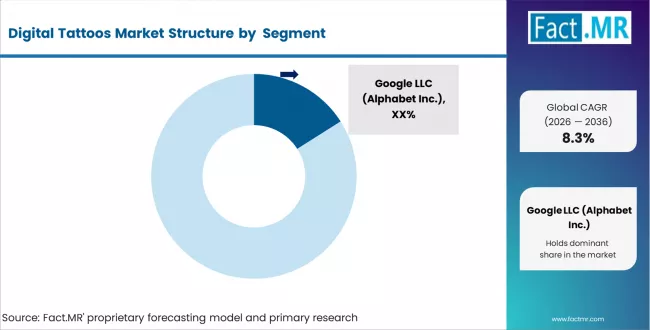
The competitive structure of the Digital Tattoos Market is moderately fragmented, with technology developers, wearable electronics companies, and biomedical research firms participating in product development. Companies such as Google LLC (Alphabet Inc.), VivaLNK, Inc., Rogers Corporation, and Xsensio SA maintain notable positions through advanced sensor technologies and wearable health monitoring platforms. These firms develop flexible electronic sensors designed to be applied directly on the skin for monitoring physiological signals such as heart rate, hydration levels, and body temperature. Additional participants including Wearable X, Inc., Chaotic Moon Studios, Tattoos Alive LLC, and iSkin Technologies Inc. contribute through experimental wearable technologies, interactive electronics, and early stage digital tattoo prototypes. Competition in the market is primarily influenced by sensor accuracy, material flexibility, durability on skin surfaces, and compatibility with mobile health monitoring platforms.
Several companies maintain structural advantages through expertise in flexible electronics, biosensor development, and advanced materials engineering. Firms such as Rogers Corporation and Xsensio SA benefit from strong capabilities in microelectronics materials and sensor fabrication technologies used in wearable devices. Google LLC leverages its broader research capabilities in health technology and connected device ecosystems to support digital health monitoring platforms. Healthcare providers, technology developers, and research institutions often collaborate with multiple sensor technology suppliers to reduce reliance on a single provider. Procurement decisions typically evaluate device accuracy, regulatory compliance, and long term reliability in medical monitoring environments. This purchasing behavior moderates supplier pricing leverage. Companies with patented sensor technologies and advanced wearable materials retain moderate negotiating influence in emerging digital health applications.
Key Players of the Digital Tattoos Market
- Google LLC (Alphabet Inc.)
- VivaLNK, Inc.
- Wearable X, Inc.
- Chaotic Moon Studios
- Xsensio SA
- Rogers Corporation
- Tattoos Alive LLC
- iSkin Technologies Inc.
Report Scope
Digital Tattoos Market Breakdown By Type, Application, And Region | Source: Fact.MR
| Metric | Value |
|---|---|
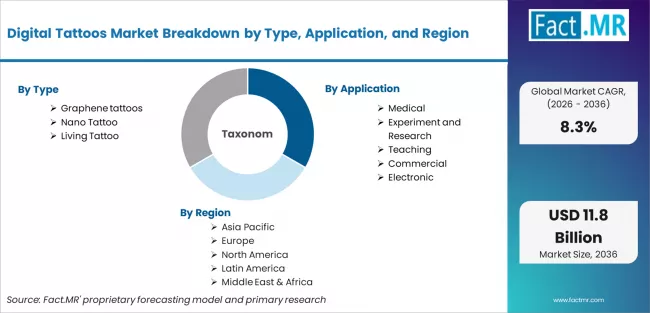
| Market Definition | The digital tattoos market includes electronic skin patches and ultra thin wearable devices designed to adhere to human skin for monitoring physiological signals, biometric identification, and interactive electronic functions in healthcare, research, and consumer electronics applications. |
| Type Segmentation | Nano Tattoo, Graphene Tattoo, Living Tattoo |
| Application Segmentation | Experiment and Research, Teaching, Commercial, Medical, Electronic |
| Regions Covered | North America, Latin America, Europe, East Asia, South Asia, Oceania, Middle East and Africa |
| Countries Covered | United States, Canada, Mexico, Brazil, Germany, United Kingdom, France, Italy, Spain, China, India, Japan, South Korea, Australia, and 40+ countries |
| Key Companies Profiled | Google LLC (Alphabet Inc.), VivaLNK, Inc., Wearable X, Inc., Chaotic Moon Studios, Xsensio SA, Rogers Corporation, Tattoos Alive LLC, iSkin Technologies Inc. |
| Forecast Period | 2026 to 2036 |
| Approach | Hybrid top-down and bottom-up market modeling supported by wearable device shipment analysis, biomedical sensor production benchmarking, research commercialization tracking, and validation through interviews with wearable technology developers, medical device researchers, and electronic component suppliers. |
Source: Fact.MR analysis. Updated Mar 23, 2026
Bibliographies
- [1] National Institutes of Health, USA. (2025). Biomedical wearable technology research programs.
- [2] National Health Service, UK. (2025). Digital health innovation programs.
- [3] Ministry of Economy, Trade and Industry, Japan. (2025). Wearable electronics research initiatives.
- [4] Ministry of Science and ICT, South Korea. (2025). Wearable healthcare technology initiatives.
- [5] MC10. (2025). Flexible biosensor platform development.
- [6] VivaLNK, Inc. (2025). Biosensor technology development.
- [7] Samsung Electronics. (2025). Biosensor technology development.
- [8] Panasonic Corporation. (2025). Flexible electronics technology development.
- [9] European Union. (2017). Medical Device Regulation (EU MDR 2017/745).
This Report Addresses
- Market size estimation and revenue forecasts for the Digital Tattoos Market from 2026 to 2036, supported by wearable biosensor production benchmarks and biomedical monitoring technology adoption indicators.
- Growth opportunity analysis across nano tattoos, graphene tattoos, and living tattoo technologies used in skin mounted biosensor devices and flexible electronic monitoring systems.
- Segment and regional revenue forecasts covering medical, experiment and research, teaching, commercial, and electronic applications using digital tattoos for physiological monitoring, biometric identification, and wearable device interaction.
- Competitive strategy assessment including flexible electronics manufacturing capability, biosensor technology development, and wearable health platform integration benchmarking among technology developers and biomedical device companies.
- Regulatory and compliance evaluation covering frameworks such as United States Food and Drug Administration wearable medical device approval procedures and the European Union Medical Device Regulation affecting clinical deployment of digital tattoo monitoring systems.
- Market report delivery in PDF, Excel, PPT, and interactive dashboard formats designed for wearable technology investment evaluation, biomedical sensor development planning, and digital health monitoring market assessment.
- Supply chain and operational risk analysis identifying flexible electronic material sourcing, device durability limitations, and regulatory approval requirements affecting commercialization of digital tattoo biosensor technologies.
Segmentation
Digital Tattoos Market Key Segments
-
Type
- Nano Tattoo
- Graphene Tattoo
- Living Tattoo
-
Application
- Experiment and Research
- Teaching
- Commercial
- Medical
- Electronic
-
Region
- North America
- USA
- Canada
- Mexico
- Europe
- Germany
- UK
- France
- Italy
- Spain
- Nordic Countries
- BENELUX
- Rest of Europe
- Asia Pacific
- China
- Japan
- South Korea
- India
- Australia
- Rest of Asia Pacific
- Latin America
- Brazil
- Argentina
- Rest of Latin America
- Middle East and Africa
- Kingdom of Saudi Arabia
- United Arab Emirates
- South Africa
- Rest of Middle East and Africa
- Other Regions
- Oceania
- Central Asia
- Other Markets
- North America
Frequently Asked Questions
How large is the demand for Digital Tattoos in the global market in 2026?
What will be the market size of Digital Tattoos in the global market by 2036?
What is the expected demand growth for Digital Tattoos in the global market between 2026 and 2036?
Which Type Segment is poised to lead global demand by 2026?
Which Company is Identified as a Leading Participant in the Digital Tattoos Market?
What is Driving Digital Tattoos Demand in the United States?
What is the United States Growth Outlook in this Report?
What Factors Support Digital Tattoos Adoption in the United Kingdom?
What is the United Kingdom Growth Outlook in this Report?
Why is Japan an Important Market for Digital Tattoos?
What is the Japan Growth Outlook in this Report?
Why is South Korea Considered a Key Market for Digital Tattoos?
What is the South Korea Growth Outlook in this Report?
What are Digital Tattoos and What are They Mainly Used For?
What does Digital Tattoos Market Mean in this Report?
What is Included in the Scope of this Digital Tattoos Market Report?
What is Excluded from the Scope of this Report?
What does Market Forecast Mean on this Page?
How is the Digital Tattoos Market Forecast Developed in this Report?
Who worked on this report


Preview the report firsthand - request a free sample
Free SampleGet the brochure for pricing and purchase details
Download PDF