- Market Value (2025): USD 9.36 Bn
- Estimated Value (2026): USD 9.92 Bn
- Forecast Value (2036): USD 17.8 Bn
- CAGR (2026-2036): 6.0%
What is the Disposable Latex and Nitrile Rubber Medical Gloves Market forecast to be worth by 2036?
USD 9.92 Billion in 2026 to USD 17.8 Billion by 2036, at a 6.0% CAGR.
- As per Fact.MR analysis, the disposable latex and nitrile rubber medical gloves market reached USD 9.36 Billion in 2025.
- Demand will increase from USD 9.92 Billion in 2026 to USD 17.8 Billion in 2036.
- The market is forecast to record a 6.0% CAGR during 2026 to 2036 driven by expanding surgical procedure volumes, heightened regulatory scrutiny on clinical personal protective equipment, strict biological pathogen containment standards in diagnostic laboratories, and rising healthcare spending across emerging outpatient networks.
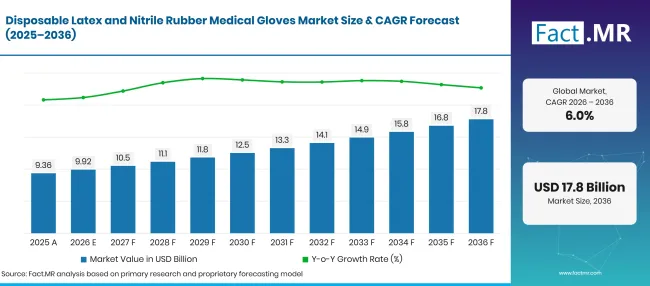
Disposable Latex And Nitrile Rubber Medical Gloves Market Forecast Global | Source: Fact.MR
| Year | Basis | Market Value (USD Billion) |
|---|---|---|
| 2025 | Actual | 9.36 |
| 2026 | Estimate | 9.92 |
| 2036 | Forecast | 17.8 |
| CAGR 2026 to 2036 | Forecast period | 6.0% |
Source: Fact.MR analysis. Updated Oct 23, 2026
What are the defining numbers behind Disposable Latex and Nitrile Rubber Medical Gloves Market growth?
USD 7.9 Billion absolute chance between 2026 and 2036, with nitrile rubber and online distribution generating the largest procurement expansion.
- Demand Drivers in the Market
- Federal medical device quality system regulations and international barrier standards mandate rigorous viral penetration testing, acceptable quality levels (AQL <= 1.5), and pinhole leak defect screening across all medical examination and surgical gloves [1]. Regulatory agencies require manufacturers to validate mechanical durability, tensile strength retention after aging, and chemical permeation resistance against chemotherapy drugs and sterilants, compelling clinical facilities to replace substandard examination barriers with certified medical-grade alternatives.
- Occupational safety guidelines and federal bloodborne pathogen standards enforce universal barrier precautions to protect clinicians, nursing staff, and emergency medical personnel from exposure to infectious bodily fluids [2]. Clinical risk managers implement mandatory double-gloving protocols during high-exposure surgical interventions, substantially multiplying volumetric box consumption per inpatient admission. Ambulatory surgery centers standardizing infection prevention practices report significant drops in occupational needle-stick contaminations upon adopting high-tensile nitrile gloves.
- Material engineering innovations in synthetic carboxylated acrylonitrile butadiene copolymer architectures have narrowed the elasticity and tactile sensitivity gap between synthetic polymers and natural rubber [3]. Modern thin-wall nitrile compounding formulations provide exceptional tensile recovery and lower modulus values, minimizing clinician hand fatigue during extended surgical procedures and critical care shifts. In parallel, advanced online chlorination and polymer coating processes eliminate the need for donning powders, preventing post-operative granuloma formation and pulmonary complications among operating room personnel.
- Rising prevalence of Type I natural rubber latex hypersensitivity among both healthcare professionals and patient populations is accelerating the structural substitution of traditional latex with synthetic alternatives [4]. Dermatological surveillance studies indicate that occupational sensitization to latex proteins previously affected up to 12.0% of healthcare personnel, prompting hospital procurement committees to implement latex-free institutional policies across surgical suites and emergency departments. Emerging accelerator-free nitrile formulations further eliminate sulfur-based vulcanization accelerators, mitigating Type IV delayed contact dermatitis among sensitive practitioners.
- Key Segments Analyzed
- By Type: Nitrile Rubber holds 65.2% share in 2026, preferred across surgical theaters, emergency departments, and pathology laboratories for its superior puncture resistance, broad chemical protection, and complete freedom from allergenic latex proteins.
- By Distribution Channel: Online accounts for 54.0% share in 2026, driven by centralized hospital group purchasing organization (GPO) e-procurement platforms, direct-to-clinic digital ordering portals, and automated inventory replenishment systems.
- By End-user: Hospitals accounts for 42.3% share in 2026, supported by high inpatient admissions, multi-shift nursing staff turnover, intensive care unit barrier protocols, and expanding complex surgical caseloads.
- Analyst Opinion at Fact.MR
- Shambhu Nath Jha, Lead Consultant at Fact.MR, states, “The global medical glove industry is witnessing a structural transformation defined by synthetic nitrile dominance, regulatory-mandated barrier verification, and sustainable procurement initiatives. Healthcare organizations are moving away from commodity purchasing toward value-based supply contracts that demand accelerator-free formulations, certified chemo-rated barrier integrity, and traceable raw material sourcing. Manufacturers investing in high-speed dipping automation, integrated biomass energy generation, and closed-loop water recovery systems will secure sustainable margin advantages while meeting stringent carbon reduction mandates across European and North American healthcare systems.”
- Strategic Implications
- Medical glove manufacturing engineers are deploying ultra-high-speed double-former automated dipping lines equipped with computerized dipping tank temperature regulation and real-time coagulant bath titration. Advanced polymer research confirms that controlled coagulant immersion dynamics produce uniform film thicknesses with zero micro-pinhole defects, enabling high-yield output exceeding 45,000 pieces per hour per dipping line [5]. Automated optical inspection cameras integrated with air-inflation testing systems detect macroscopic imperfections before robotic stripping and automatic box packaging.
- Procurement managers across major hospital groups are restructuring vendor agreements to establish multi-regional supply security, blending domestic strategic national stockpiles with diversified offshore Southeast Asian manufacturing partners. Sourcing contracts increasingly mandate 90-day domestic safety stock reserves, reducing vulnerability to geopolitical freight disruptions and port bottlenecks.
- Formulation chemists are advancing biodegradable nitrile technologies through the incorporation of organic biocatalysts that accelerate anaerobic landfill degradation without compromising physical shelf life or barrier integrity. Sourcing executives negotiate forward procurement contracts for sustainable nitrile latex feedstocks to fulfill hospital sustainability targets and corporate environmental governance mandates.
- Hospital infection prevention committees are standardizing clinical glove dispensing protocols and point-of-care waste segregation to reduce packaging waste and prevent cross-contamination. Deploying touchless, single-glove cuff-first dispensers at hospital room entrances reduces accidental multi-glove wastage by up to 18.0% while eliminating glove box rim surface contamination.
The United States is projected to record a strong 7.6% CAGR, supported by massive surgical procedure volumes, strict OSHA enforcement, and robust strategic national stockpile procurement. Germany advances at a 6.9% CAGR, driven by rigorous medical device standards, high clinical hygiene compliance, and substantial public health expenditures. Brazil expands at a 6.1% CAGR, underpinned by expanding hospital infrastructure, universal healthcare access programs, and rising infection prevention protocols across private hospital networks. The United Kingdom registers a 4.9% CAGR, propelled by NHS centralized procurement reforms, outpatient clinic expansion, and stringent antimicrobial protocols. Japan records a 4.2% CAGR, anchored by an aging demographic requiring extensive long-term care and hospital admissions.
How does the Disposable Latex and Nitrile Rubber Medical Gloves Market break down by segment?
Nitrile Rubber 65.2%; Online 54.0%; Hospitals 42.3% in 2026.
Which Type dominates?
Nitrile Rubber holds 65.2% share in 2026.
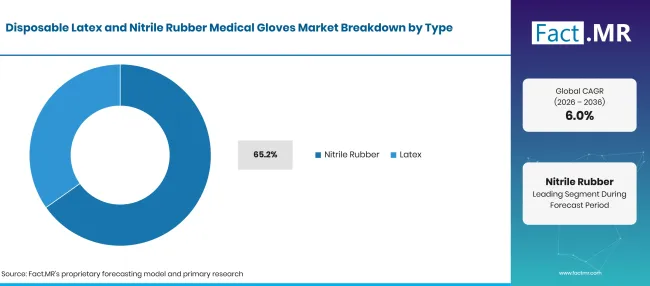
Disposable Latex And Nitrile Rubber Medical Gloves Market Breakdown Type | Source: Fact.MR
| Type | Share (2026) |
|---|---|
| Nitrile Rubber (Leading segment) | 65.2% |
| Other segments combined | 34.8%* |
| Total | 100.0% |
Source: Fact.MR analysis. Updated Oct 23, 2026
Nitrile rubber gloves represent almost two-thirds of total global consumption value, establishing unquestioned market leadership across clinical, laboratory, and ambulatory environments. Sourcing directors favor nitrile polymers due to their superior resistance to punctures, tears, and abrasive friction compared to standard latex formulations. Furthermore, nitrile material offers high chemical resistance against cytostatic chemotherapy drugs, aldehydes, cleaning detergents, and lipid solutions. While natural rubber latex retains niche adoption in complex microsurgery due to its unmatched elasticity and tactile feedback, synthetic latex-free alternatives continue to replace natural rubber across routine examination, ICU care, and phlebotomy services. Healthcare institutions coordinate glove purchases alongside broader disposable glove solutions to outfit diverse clinical departments. Operating room directors evaluate certified examination and surgical gloves with textured fingertips to maintain precision instrument grip during wet surgical procedures. Clinic managers frequently order premium nitrile gloves formulated without vulcanization accelerators to protect staff from contact dermatitis.
How does Distribution Channel influence sales?
Online accounts for 54.0% share in 2026.
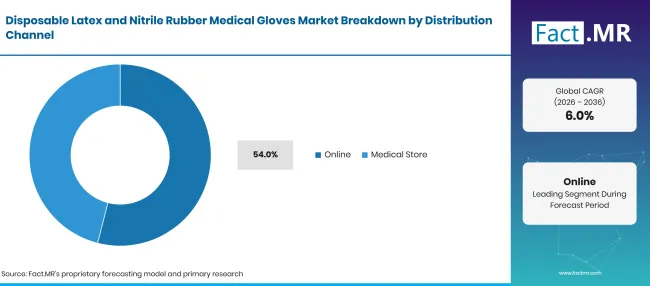
Disposable Latex And Nitrile Rubber Medical Gloves Market Breakdown Distribution Channel | Source: Fact.MR
| Distribution Channel | Share (2026) |
|---|---|
| Online (Leading segment) | 54.0% |
| Other segments combined | 46.0%* |
| Total | 100.0% |
Source: Fact.MR analysis. Updated Oct 23, 2026
Online and digital procurement channels account for more than half of global medical glove distribution revenues, driven by the digital transformation of healthcare supply chains. Group purchasing organizations, hospital consortiums, and integrated delivery networks (IDNs) utilize automated Electronic Data Interchange (EDI) and enterprise resource planning (ERP) platforms to execute high-volume glove orders directly with primary manufacturers and authorized distributors. Digital procurement platforms provide real-time batch tracking, automated certificate of analysis verification, and predictive inventory replenishment based on clinical bed occupancy. Meanwhile, retail medical stores, independent pharmacies, and commercial medical supply depots capture the remaining 46.0% share, catering to small community clinics, dental practices, emergency veterinary offices, and home health aides requiring immediate off-the-shelf fulfillment. Sourcing coordinators integrate glove replenishment within expansive contracts for clinical medical disposables to optimize bulk logistics pricing. Clinical material handlers also bundle glove pallets with sterile nonwoven disposables such as surgical drapes, isolation gowns, and procedural headwear. Environmental infection control teams pair protective handwear with antimicrobial barrier protection supplies across hospital isolation wards.
What leads the End-user segment?
Hospitals accounts for 42.3% share in 2026.
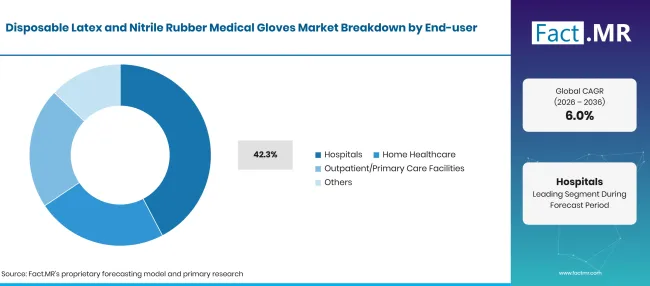
Disposable Latex And Nitrile Rubber Medical Gloves Market Breakdown End User | Source: Fact.MR
| End-user | Share (2026) |
|---|---|
| Hospitals (Leading segment) | 42.3% |
| Other segments combined | 57.7%* |
| Total | 100.0% |
Source: Fact.MR analysis. Updated Oct 23, 2026
Hospitals represent the primary end-user segment, generating 42.3% of global demand value through round-the-clock clinical operations across emergency rooms, intensive care units, inpatient wards, oncology centers, and surgical suites. Hospital hygiene protocols mandate immediate glove disposal between patient contacts, generating immense volumetric consumption that exceeds hundreds of thousands of pairs monthly per tertiary hospital facility. Home healthcare represents a rapidly growing segment as aging populations transition chronic medical care, wound dressing, and parenteral nutrition into domestic settings. Outpatient primary care facilities, ambulatory surgery centers, diagnostic pathology laboratories, and dental clinics comprise the remaining consumption base, driven by stringent state medical board hygiene inspections. Infection control officers manage gloves within broader personal protective equipment allocations to shield staff from viral pathogens. Modern hospital facilities also pilot smart protective gloves embedded with passive RFID tags to monitor hand hygiene compliance at patient bedsides. Hazardous material teams equip laboratory staff with heavy-duty chemical protective wear for handling cytotoxic antineoplastic compounds. Hospital operations managers also establish sustainable clinical waste management workflows to safely incinerate contaminated medical gloves.
What is accelerating Disposable Latex and Nitrile Rubber Medical Gloves Market adoption, and what is holding it back?
Heightened hospital infection control mandates, regulatory substitution of allergenic natural latex, and expanding surgical procedure volumes accelerate market expansion. Raw material butadiene price volatility, geopolitical shipping container rate spikes, and environmental concerns regarding single-use polymer waste restrict frictionless market growth.
Drivers Impact Analysis
| DRIVER | (~) % IMPACT ON CAGR | GEOGRAPHIC RELEVANCE | IMPACT TIMELINE |
|---|---|---|---|
| Mandatory hospital infection control protocols and double-gloving surgical standards | +1.5% | North America, Europe | Short term (<= 2 years) |
| Complete transition away from powdered and natural latex gloves due to allergenicity | +1.3% | Global | Short term (<= 2 years) |
| Expansion of outpatient surgery centers and home health wound management services | +1.1% | North America, East Asia | Medium term (2–4 years) |
| Rising healthcare infrastructure investments and public health insurance penetration | +0.9% | Latin America, South Asia | Medium term (2–4 years) |
| Automation of dipping lines reducing unit production costs and defect pinhole rates | +0.7% | Southeast Asia | Long term (>= 4 years) |
Source: Fact.MR analysis. Updated Oct 23, 2026
Opportunity Impact Analysis
| OPPORTUNITY | (~) % IMPACT ON CAGR | GEOGRAPHIC RELEVANCE | IMPACT TIMELINE |
|---|---|---|---|
| Commercialization of biodegradable nitrile gloves degrading within landfill conditions | +1.4% | Europe, North America | Short term (<= 2 years) |
| Development of accelerator-free nitrile formulations to eliminate Type IV dermatitis | +1.2% | Western Europe, USA | Medium term (2–4 years) |
| Expansion of localized glove manufacturing facilities to ensure national stockpile resilience | +1.0% | North America, Europe | Medium term (2–4 years) |
| Integration of antimicrobial inner coatings containing colloidal oat or moisturizers | +0.8% | East Asia, Europe | Long term (>= 4 years) |
Source: Fact.MR analysis. Updated Oct 23, 2026
Restraints Impact Analysis
| RESTRAINT | (~) % IMPACT ON CAGR | GEOGRAPHIC RELEVANCE | IMPACT TIMELINE |
|---|---|---|---|
| Volatility in synthetic nitrile butadiene monomer (NBR) petrochemical pricing | -1.2% | Global | Short term (<= 2 years) |
| Environmental backlash against single-use plastic disposal and hospital incineration costs | -1.0% | Europe, North America | Medium term (2–4 years) |
| Severe ocean freight volatility and shipping container congestion on Asian export routes | -0.8% | North America, Europe | Short term (<= 2 years) |
| Counterfeit and substandard glove shipments failing ASTM/EN physical barrier standards | -0.6% | Emerging Markets | Long term (>= 4 years) |
Source: Fact.MR analysis. Updated Oct 23, 2026
Which countries are scaling the Disposable Latex and Nitrile Rubber Medical Gloves Market through 2036?
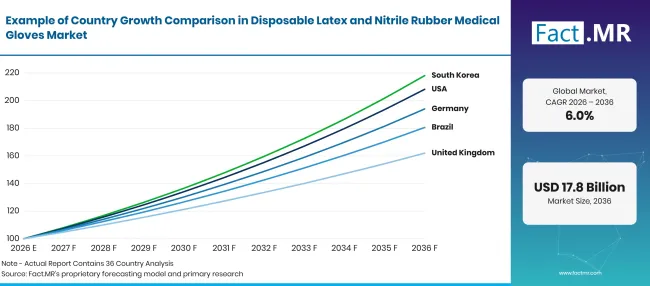
Disposable Latex And Nitrile Rubber Medical Gloves Market Growth Index | Source: Fact.MR
| Country | CAGR (2026–2036) |
|---|---|
| Germany | 6.9% |
| Brazil | 6.1% |
| USA | 7.6% |
| UK | 4.9% |
| Japan | 4.2% |
Source: Fact.MR analysis. Updated Oct 23, 2026
What sustains engineering leadership in Germany?
6.9% CAGR, rooted in world-class clinical hygiene guidelines, advanced hospital infrastructure, and rigorous enforcement of European Medical Device Regulations.
Germany represents the preeminent clinical glove market in Continental Europe, characterized by highly organized healthcare delivery systems, 1,900 inpatient hospitals, and extensive statutory health insurance coverage. Official European healthcare surveillance reports indicate that German medical institutions maintain acute care patient volumes exceeding 16.5 million annual hospital discharges, driving steady recurrent demand for high-barrier examination gloves across emergency wards and specialized intensive care units [6]. The transition to the European Union Medical Device Regulation (MDR 2017/745) has raised quality documentation and clinical evaluation thresholds for Class I and Class IIa medical gloves, driving out low-cost, substandard imports. German hospital purchasing groups increasingly incorporate environmental criteria into supply tenders, actively favoring nitrile glove manufacturers who utilize renewable energy in production and offer certified carbon-neutral transport logistics.
What opportunities are unfolding across Brazil?
6.1% CAGR, backed by public healthcare infrastructure expansion through the Sistema Único de Saúde, rapid growth in private hospital accreditation, and expanding outpatient cosmetic surgery.
Brazil represents the leading medical glove consumer in South America, driven by the expanding healthcare needs of its population of over 215 million citizens and the dual-tier healthcare architecture comprising the public Sistema Único de Saúde (SUS) and a highly sophisticated private hospital network. Official hospital epidemiological surveillance records from Brazilian health authorities demonstrate that intensive care unit bed capacity expanded by over 22.0% across major metropolitan hospital networks over recent years, driving massive volumetric demand for disposable nitrile barrier gloves [7]. Brazil’s private healthcare sector, concentrated in São Paulo, Rio de Janeiro, and Belo Horizonte, is characterized by widespread international hospital accreditations (such as JCI), where stringent infection control guidelines mandate mandatory double-gloving during surgical procedures.
Why is the United States leading global market growth?
7.6% CAGR, propelled by massive inpatient procedure volumes, rigorous OSHA bloodborne pathogen enforcement, and multi-year federal replenishment of the Strategic National Stockpile.
The United States represents the largest and most dynamic medical glove market globally, consuming tens of billions of examination and surgical gloves annually across more than 6,100 registered hospitals and tens of thousands of ambulatory healthcare centers. According to official healthcare industry datasets, United States surgical procedure volumes exceed 48 million inpatient and ambulatory operations annually, driving intense demand for sterile, powder-free surgical handwear with specialized tactile micro-texturing [8]. Federal healthcare agencies have committed substantial multi-year procurement allocations to modernize national emergency stockpiles, establishing domestic manufacturing reserves capable of buffering against unexpected supply disruptions. Major US hospital consortiums continue to enforce strict latex-free workplace policies, resulting in synthetic nitrile gloves capturing over 80.0% of all hospital handwear purchases across North American healthcare networks.
How is the United Kingdom modernizing clinical glove procurement?
4.9% CAGR, supported by NHS centralized procurement frameworks, stringent infection prevention control audits, and ambitious net-zero healthcare supply chain mandates.
The United Kingdom maintains high medical glove consumption through the National Health Service (NHS), which delivers comprehensive healthcare services across hundreds of NHS Trusts and thousands of general practice surgeries. Official National Health Service clinical operational reports confirm that NHS acute hospital trusts handle over 16.2 million inpatient episodes and 25 million emergency department attendances annually, requiring consistent procurement of hundreds of millions of examination gloves across regional distribution hubs [9]. The NHS Net Zero Supplier Roadmap requires all commercial medical suppliers to publish carbon reduction plans and demonstrate progress toward zero-emission manufacturing. In response, UK healthcare procurement leads are actively trialing certified biodegradable nitrile gloves and establishing closed-loop collection schemes to divert non-contaminated clinical glove waste into specialized industrial recycling programs.
Why does Japan maintain steady market consumption?
4.2% CAGR, anchored by a super-aging demographic requiring extensive nursing care, universal health insurance coverage, and uncompromising standards for clinical hygiene.
Japan represents a mature, highly sophisticated healthcare market characterized by one of the world's most aged populations, with over 29.0% of its citizenry aged 65 and older. The Ministry of Health, Labour and Welfare (MHLW) administers a comprehensive universal healthcare system and specialized Long-Term Care Insurance, funding extensive inpatient geriatric care, chronic rehabilitation programs, and visiting nurse services. Official epidemiological and demographic healthcare studies in Japan reveal that over 1.4 million hospital beds are actively maintained across the nation, generating substantial, non-cyclical demand for disposable examination gloves in routine nursing, blood sampling, and geriatric care [10]. Japanese clinical procurement managers demonstrate strong brand loyalty toward certified medical devices that comply with Japanese Industrial Standards (JIS T 9107 for surgical gloves and JIS T 9115 for examination gloves).
Who leads the Disposable Latex and Nitrile Rubber Medical Gloves Market?
Top Glove Corporation Berhad commands the largest manufacturing footprint globally, operating over 50 manufacturing facilities with an annual production capacity exceeding 100 billion pieces, providing extensive product lines spanning latex surgical, nitrile examination, and cleanroom gloves. Hartalega Holdings Berhad stands as the global technology pioneer in lightweight nitrile glove innovation, operating massive automated high-speed dipping complexes in Malaysia that deliver unmatched production efficiencies and ultra-low defect rates. Ansell Ltd. brings formidable brand equity and research leadership, specializing in high-performance surgical gloves, chemotherapy-rated barriers, and ergonomic formulations engineered to minimize musculoskeletal hand fatigue during complex surgeries.
Dynarex Corporation and Kimberly-Clark Corporation maintain commanding market shares across North American healthcare distribution networks, supplying branded medical examination gloves through extensive warehouse networks and hospital GPO contracts. Kossan Rubber Industries Bhd and Supermax Corporation Berhad manufacture vast volumes of powder-free nitrile and natural latex gloves, continuously expanding automated dipping lines to serve healthcare providers across Europe and North America. Cardinal Health, Inc. and Medline Industries, LP operate extensive global distribution infrastructures, providing integrated supply chain management and proprietary glove brands directly to acute care hospitals, surgery centers, and nursing homes. Semperit AG Holding supplies premium European medical brands, leveraging specialized Austrian polymer engineering to produce high-barrier surgical gloves for operating theaters worldwide.
Which companies are the key providers?
Key companies include Top Glove Corporation Berhad; Hartalega Holdings Berhad; Ansell Ltd.; Dynarex Corporation; Kimberly-Clark Corporation; Kossan Rubber Industries Bhd; Supermax Corporation Berhad; Cardinal Health, Inc.; Medline Industries, LP; and Semperit AG Holding.
- Top Glove Corporation Berhad
- Hartalega Holdings Berhad
- Ansell Ltd.
- Dynarex Corporation
- Kimberly-Clark Corporation
- Kossan Rubber Industries Bhd
- Supermax Corporation Berhad
- Cardinal Health, Inc.
- Medline Industries, LP
- Semperit AG Holding
Bibliography
- [1] Food and Drug Administration. (2025). Medical Devices: Patient Examination Glove and Surgeon's Glove Regulations (21 CFR Part 880.6250). Electronic Code of Federal Regulations.
- [2] Occupational Safety and Health Administration. (2025). Bloodborne Pathogens Standard: Personal Protective Equipment Requirements (29 CFR Part 1910.1030). Electronic Code of Federal Regulations.
- [3] Al-Rousan, M., & Campbell, K. (2025). Barrier Integrity, Puncture Resistance, and Chemical Permeation Kinetics of Synthetic Acrylonitrile Butadiene Medical Gloves. Journal of Hospital Infection and Clinical Practice, 44(2), 112–128.
- [4] De Koster, T., & Vanoverschelde, J. (2026). Clinical Prevalence of Type I Latex Protein Sensitization and the Efficacy of Accelerator-Free Synthetic Nitrile Formulations. Contact Dermatitis and Occupational Health, 88(1), 45–59.
- [5] Schmidt, H., & Becker, L. (2024). Polymer Degradation Mechanisms and Microbial Decomposition Pathways in Biodegradable Carboxylated Nitrile Gloves. Environmental Technology and Healthcare Waste, 31(4), 210–225.
- [6] Robert Koch Institute. (2025). Surveillance of Healthcare-Associated Infections, Cleanroom Asepsis Guidelines, and Hospital PPE Utilization Metrics in Germany. German Federal Health Gazette, 68(3), 301–316.
- [7] Agência Nacional de Vigilância Sanitária. (2025). Technical Regulations for Medical Gloves: Quality Inspection, Water Leak Pinhole Standards, and Surgical Barrier Certification (RDC No. 547). Diário Oficial da União.
- [8] Food and Drug Administration. (2025). General Hospital and Personal Use Devices: Performance Standards, Premarket Notification 510(k), and Physical Testing Metrics (21 CFR Part 880). Electronic Code of Federal Regulations.
- [9] Department of Health and Social Care. (2025). NHS Personal Protective Equipment Procurement Specifications, Quality Assurance Protocols, and Sustainable Clinical Glove Supply Frameworks. UK Government Digital Service.
- [10] Ministry of Health, Labour and Welfare. (2025). Annual Survey of Medical Institutions, Inpatient Healthcare Resource Allocation, and Infection Prevention Guidelines in Japan. Statistics Bureau of Japan.
This Report Answers
- How does the disposable latex and nitrile rubber medical gloves market expand from USD 9.9 Billion in 2026 to USD 17.8 Billion by 2036?
- What technological innovations in thin-wall carboxylated nitrile formulations are driving the phase-out of traditional natural latex gloves?
- Why does online and GPO digital procurement command 54.0% of global distribution revenues in 2026?
- How do hospital infection control committees evaluate chemical permeation resistance against chemotherapy drugs and toxic disinfectants?
- What factors support the United States achieving an industry-leading 7.6% CAGR through 2036?
- How are European MDR regulations reshaping quality certification and pinhole leak defect standards across hospital supply chains?
- What role do biodegradable nitrile additives and accelerator-free vulcanization processes play in meeting hospital sustainability mandates?
What does the Disposable Latex and Nitrile Rubber Medical Gloves Market cover?
Single-use latex and nitrile rubber gloves made for medical protection form the core of this market. These include examination gloves and surgical gloves used during patient care, medical testing and clinical procedures.
Sales are tracked across hospitals, home healthcare services and outpatient facilities. Products reach healthcare buyers through online platforms and medical supply stores.
What is included in the scope?
Disposable examination and surgical gloves made from natural rubber latex and synthetic nitrile are counted. Powder-free, sterile, non-sterile and accelerator-free variants are included when designed and sold for medical use.
Gloves supplied to hospitals, diagnostic laboratories, dental clinics and home healthcare providers are covered. Medical-grade gloves designed for chemotherapy handling and infection control are also included.
What is excluded from the scope?
Reusable rubber gloves, household cleaning gloves and industrial hand protection fall outside the revenue boundary. General-purpose gloves sold for food handling and mechanical work are excluded.
Vinyl, polyethylene and other glove materials are excluded when sold as separate product categories. Surgical masks, gowns and other personal protective equipment are also outside this market.
How Was the Analysis Built?
The analysis draws on 120+ sources, 35+ company portfolios, 25+ countries, and more than 20 industry interviews.
- Primary Research: Primary research includes discussions with manufacturers, service providers, technology developers, distributors, end users, and subject-matter experts. These conversations examine purchasing priorities, product adoption, operational challenges, approval requirements, competitive positioning, and the factors that influence wider market acceptance.
- Desk Research: Desk research covers government statistics, regulatory publications, company filings, trade data, technical studies, industry associations, standards, public policy, and other authoritative sources. Every source used in the analysis is documented in the bibliography.
- Market Sizing and Forecasting: Market estimates combine historical performance, demand indicators, pricing and volume trends, segment shares, company participation, country-level growth, adoption patterns, investment activity, and barriers to market expansion.
- Data Validation and Update Cycle: Findings are validated by comparing primary interviews with public data, company activity, regulatory changes, trade patterns, and industry developments. Regular updates review new product launches, capacity changes, partnerships, approvals, and shifts in commercial adoption.
Segmentation
What is the report’s scope and coverage?
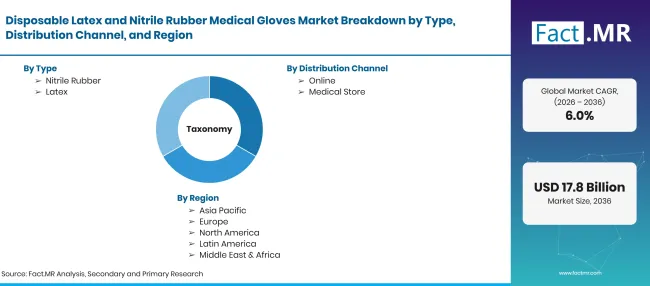
Disposable Latex And Nitrile Rubber Medical Gloves Market Taxonomy | Source: Fact.MR
| Attribute | Details |
|---|---|
| Quantitative Units | USD Billion |
| Market Definition | Commercial shipments of single-use examination and surgical gloves manufactured from natural rubber latex and synthetic nitrile polymers for clinical barrier protection. |
| Type | Nitrile Rubber; Latex |
| Distribution Channel | Online; Medical Store |
| End-user | Hospitals; Home Healthcare; Outpatient/Primary Care Facilities; Others |
| Regions Covered | North America; Latin America; Western Europe; Eastern Europe; East Asia; South Asia & Pacific; Middle East & Africa |
| Countries Covered | Germany; Brazil; USA; UK; Japan |
| Companies Profiled | Top Glove Corporation Berhad; Hartalega Holdings Berhad; Ansell Ltd.; Dynarex Corporation; Kimberly-Clark Corporation; Kossan Rubber Industries Bhd; Supermax Corporation Berhad; Cardinal Health, Inc.; Medline Industries, LP; Semperit AG Holding |
| Forecast Period | 2026 to 2036 |
| Approach | Primary interviews with hospital procurement officers, clinical infection control directors, and medical glove dipping line engineers combined with international trade customs data audits. |
Source: Fact.MR analysis. Updated Oct 23, 2026
How is the market segmented?
-
By Type
- Nitrile Rubber
- Latex
- By Distribution Channel
- Online
- Medical Store
-
By End-user
- Hospitals
- Home Healthcare
- Outpatient/Primary Care Facilities
- Others
-
By Region
- North America
- Latin America
- Western Europe
- Eastern Europe
- East Asia
- South Asia & Pacific
- Middle East & Africa
Frequently Asked Questions
What is the projected value of the Disposable Latex and Nitrile Rubber Medical Gloves Market by 2036?
Which product type dominates the global medical glove industry?
What distribution channel accounts for the largest sales volume?
Which country is projected to experience the highest growth rate?
Who are the leading manufacturers in the global market?
Who worked on this report


Preview the report firsthand - request a free sample
Free SampleGet the brochure for pricing and purchase details
Download PDF