Eco Fee-Preferred Paper and Fibre-Based Packaging Substrates Market
Eco Fee-Preferred Paper and Fibre-Based Packaging Substrates Market Size and Share Forecast Outlook 2026 to 2036
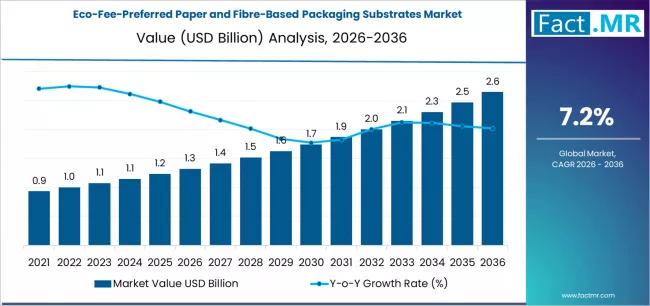
Eco fee-preferred paper and fibre-based packaging substrates market is projected to grow from USD 1.3 billion in 2026 to USD 2.6 billion by 2036, at a CAGR of 7.2%. E-commerce & Retail will dominate with a 40.0% market share, while corrugated & folding cartons will lead the packaging format segment with a 45.0% share.
Eco Fee-Preferred Paper and Fibre-Based Packaging Substrate Market Forecast and Outlook 2026 to 2036
The global Eco Fee-Preferred Paper and Fibre-Based Packaging Substrate market is valued at USD 1.32 billion in 2026 and is projected to reach USD 2.64 billion by 2036, expanding at a compound annual growth rate (CAGR) of 7.2% over the decade. In 2026, the E-commerce & Retail application segment is estimated to hold a 40% share, while Corrugated & Folding Cartons constitute 45% by packaging format and Recycled Paperboard & Kraft leads material adoption with a 50% share.
Key Takeaways from the Eco Fee-Preferred Paper and Fibre-Based Packaging Substrate Market Report
- Market Value (2026): USD 1.32 Billion
- Market Forecast Value (2036): USD 2.64 Billion
- Forecast CAGR (2026-2036): 7.2%
- Leading Application Segment: E-commerce & Retail (40%)
- Leading Packaging Format: Corrugated & Folding Cartons (45%)
- Leading Material: Recycled Paperboard & Kraft (50%)
- Leading Technology: Repulpable Barrier Coatings (45%)
- Key Growth Regions: North America, Europe, Asia Pacific, Latin America, MEA
- Key Players: Smurfit Westrock, Mondi, Nine Dragons, Ballarpur Industries,, International Paper, Lee & Man, Stora Enso
Stringent regulatory pressures against single-use plastics and escalating consumer demand for sustainable packaging solutions propel market growth. Legislative frameworks, particularly in Europe and North America, are instituting extended producer responsibility (EPR) fees, making eco-fee-preferred substrates a financially and ethically compelling alternative for brands. This shift is not merely regulatory compliance but a strategic realignment of packaging value chains toward circular economy principles.
Advancements in substrate performance are critical to market expansion. Innovation in barrier coatings, such as repulpable and compostable variants, is overcoming historical limitations of fibre-based packaging concerning moisture, grease, and oxygen resistance. These technological enhancements enable viable application in demanding sectors like foodservice and premium retail, moving beyond traditional dry goods. Concurrently, investments in scalable production of alternative fibres, including bagasse and bamboo, are diversifying material sourcing and reducing reliance on virgin wood pulp, aligning with biodiversity and deforestation commitments.
Eco Fee-Preferred Paper and Fibre-Based Packaging Substrate Market
| Metric | Value |
|---|---|
| Estimated Value in (2026E) | USD 1.32 Billion |
| Forecast Value in (2036F) | USD 2.64 Billion |
| Forecast CAGR (2026 to 2036) | 7.2% |
Category
| Category | Segments |
|---|---|
| End-use/Application | E-commerce & Retail, Foodservice & Takeaway, Retail Packaging, Agriculture & Bulk Packaging, Food & Beverage, Others |
| Packaging Format/Type | Corrugated & Folding Cartons, Food Trays & Cups, Paperboard Wraps & Tubes, Multi-wall Kraft Sacks, Others |
| Material | Recycled Paperboard & Kraft, Virgin/Recycled Fibre Blends, Bagasse & Bamboo Fibre Mix, Kraft Papers, Others |
| Technology | Repulpable Barrier Coatings, Compostable & Dispersion Barrier Coatings, Dry-strength Additives, Bio-based Strengthening Agents, Others |
| Region | North America, Europe, Asia Pacific, Latin America, MEA |
Segmental Analysis
Why does E-commerce & Retail drive the leading Application Segment?
E-commerce & retail will command a 40% share, fueled by the sector's urgent need to reconcile massive packaging volume with sustainability pledges. E-commerce giants and retailers face direct consumer scrutiny over packaging waste, making eco-fee-preferred substrates a critical tool for brand image and compliance with plastic tax regulations. The inherent strength, lightness, and excellent printability of corrugated and folding cartons make them the default choice for shipping and shelf-ready packaging.
- The exponential growth of online shopping generates relentless demand for protective, yet sustainable, shipping solutions that can minimize damage and environmental fees.
- Brands utilize these substrates for premium unboxing experiences, integrating seeded papers or clearly labelled recyclable materials to enhance consumer perception and align with circular economy messaging.
What establishes Corrugated & Folding Cartons as the dominant Packaging Format?
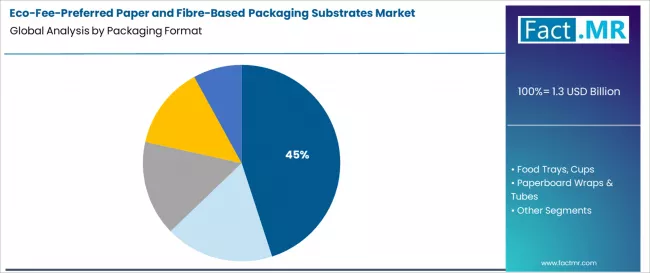
Corrugated & Folding Cartons hold a 45% share due to their unmatched versatility and established recycling infrastructure. They provide a proven balance of protective performance, cost-efficiency, and design flexibility, suitable for everything from bulk shipping to high-end retail presentation. Their modular nature allows for optimal space utilization in logistics, reducing transportation emissions and aligning with broader supply chain sustainability goals.
- Continuous design innovation, such as easy-open features and reduced material use through engineering, enhances functionality while minimizing waste.
- The format seamlessly integrates with advanced barrier coatings, extending its use to a wider range of products in e-commerce and retail, including those with moderate moisture protection needs.
What solidifies Recycled Paperboard & Kraft as the preferred Material choice?
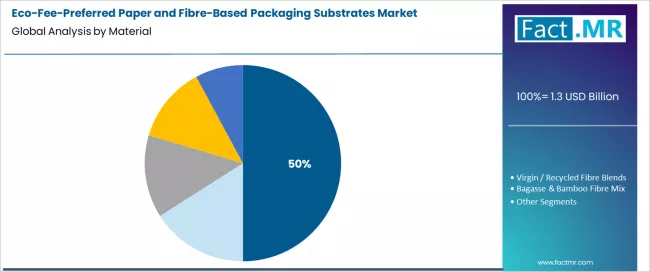
Recycled Paperboard & Kraft leads with a 50% share, directly benefiting from robust waste collection systems and consumer recognition of recycled content logos. Using recycled fibre significantly reduces water and energy consumption compared to virgin pulp, offering a lower carbon footprint that is quantifiable for ESG reporting. Its performance has been refined to meet high standards for whiteness, stiffness, and print surface, dispelling earlier perceptions of inferior quality.
- The material is central to closed-loop systems promoted by major brands, where post-consumer waste is fed back into production cycles.
- Kraft paper, known for its natural strength and biodegradability, remains essential for applications requiring durability, such as multi-wall sacks for agriculture and bulk goods.
What are the Drivers, Restraints, and Key Trends in the Eco Fee-Preferred Paper and Fiber-Based Packaging Substrates Market?
Brands are navigating a complex landscape of environmental fees, consumer activism, and corporate net-zero targets. This triad drives investment in fibre-based solutions that avoid plastic penalties.
A primary challenge is the higher upfront cost of advanced bio-based barriers compared to conventional plastic laminates, requiring clear total cost analysis that incorporates EPR fee savings. The market is trending towards hybrid solutions that combine different sustainable technologies, like repulpable coatings with dry-strength additives, to achieve performance parity with traditional materials across more applications.
Analysis of the Eco Fee-Preferred Paper and Fiber-Based Packaging Substrates Market by Key Countries

| Country | CAGR (2026-2036) |
|---|---|
| USA | 7.00% |
| Germany | 6.50% |
| China | 10.00% |
| India | 11.50% |
| Brazil | 8.00% |
| Japan | 4.00% |
What underpins steady adoption in the USA's mature packaging landscape?
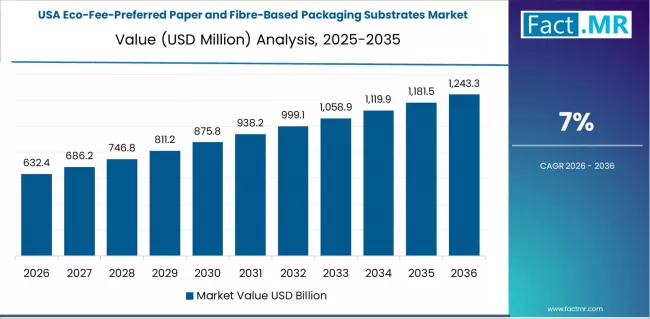
Growth in the USA at a 7.00% CAGR is anchored in a dual driver model: sub-national regulatory mandates and corporate sustainability commitments. States like California and New York are implementing stringent extended producer responsibility (EPR) laws and plastic taxes, making fee-preferred fibre substrates a direct financial imperative. Major retailers and e-commerce platforms simultaneously mandate sustainable packaging from vendors, creating top-down pressure across supply chains.
- Investment focuses on scaling domestic recycling infrastructure to ensure a high-quality, cost-effective supply of recycled paperboard.
- Innovation targets lightweight, high-performance corrugated solutions for e-commerce to reduce shipping costs and material use simultaneously.
How does Germany's regulatory framework shape its precision-driven market?
Germany’s 6.50% CAGR reflects a market where growth is engineered through regulation and efficiency. The EU’s Packaging and Packaging Waste Directive (PPWD) and Germany’s own VerpackG laws establish rigorous recycling quotas and EPR fees, privileging easily recyclable paper solutions. German brands and converters respond with a focus on technical precision, optimizing substrate grammage and integrating repulpable barrier coatings for complex food applications.
- The Pfand (deposit) system mentality extends to packaging, valuing designs that ensure clean material streams for recycling.
- Collaboration between chemical firms and paper mills is intense to develop next-generation bio-barriers that meet both functional and end-of-life criteria.
What factors propel China's rapid expansion as a production and consumption hub?
China’s standout 10.00% CAGR is fueled by its dual role as the world’s manufacturing centre and a vast domestic consumer market. National “dual carbon” goals and plastic reduction policies accelerate the conversion of packaging lines to fibre-based alternatives. The sheer scale of the food delivery, e-commerce, and retail sectors generates unmatched volume demand, driving massive investments in paper packaging capacity and alternative fibre sourcing.
- Government support makes domestic giants like Nine Dragons and Lee & Man pivotal in scaling recycled paperboard production.
- Innovation is geared towards cost-competitive, high-speed manufacturing of items like coated food trays and kraft mailers for both local use and export.
Why does India exhibit the highest growth trajectory in the Global Market?
India leads with an 11.50% CAGR, a direct result of catalytic policy action meeting explosive market demand. The national ban on identified single-use plastics creates an immediate, vast market void for affordable alternatives. This intersects with the rapid growth of online shopping, packaged foods, and quick-commerce grocery delivery, all requiring massive quantities of compliant packaging.
- Localized production using agricultural residues like bagasse and wheat straw is key to meeting price points and reducing import dependence.
- Start-ups and traditional paper mills are innovating in molded pulp and coated paperboard for diverse applications from street food containers to premium FMCG packaging.
How does Brazil leverage its agricultural base to fuel Market Growth?
Brazil’s 8.00% CAGR is uniquely tied to its agro-industrial strength. As a global sugar cane leader, it possesses abundant bagasse, a fibrous by-product transformed into a primary raw material for molded pulp packaging. This positions Brazil as a cost-effective producer of sustainable foodservice items like clamshells and trays, serving both domestic demand and export markets, particularly where plastic restrictions are tightening.
- Growth is closely linked to the circular bio-economy, turning agricultural waste into high-value packaging.
- Domestic brands in cosmetics and beverages use these locally sourced, biodegradable materials to bolster their green credentials.
What Characterizes Japan's Niche-oriented and Mature Market Approach?
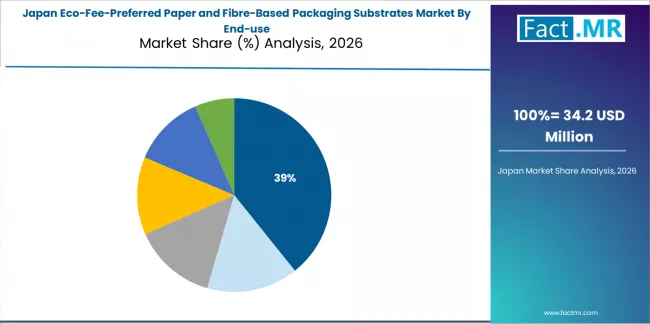
Japan’s mature market grows at a measured 4.00% CAGR, prioritizing premium quality and niche applications over mass volume. High consumer awareness and willingness to pay for sustainability support the use of high-grade, often virgin, fibre substrates in luxury goods, fine foods, and precision electronics packaging. The focus is on exquisite craftsmanship, functional barriers for product protection, and clear, sophisticated recycling communication.
- Innovation centers on ultra-thin, high-strength papers and specialty coatings that minimize material use while maximizing performance and aesthetic appeal.
- Adoption is deliberate, with a strong emphasis on life cycle assessment and certified sustainable forestry practices.
Competitive Landscape

The competitive environment features integration across the value chain. Global paper and packaging giants like International Paper, Smurfit Kappa, and Mondi leverage their integrated forestry, recycling, and production networks to ensure consistent supply of recycled and virgin fibres. They compete on the breadth of sustainable substrate offerings and the performance of proprietary barrier technologies.
Specialized players and regional leaders like Nine Dragons in Asia or Klabin in South America compete on cost-optimization, local fibre sourcing, and agility in serving fast-growing domestic markets. Competition increasingly hinges on transparency, third-party certifications (FSC, PEFC), and the ability to provide carbon footprint data to brand clients.
Key Players Profiled in the Eco Fee-Preferred Paper and Fiber-Based Packaging Substrates Market
- Smurfit Westrock
- Mondi plc
- Nine Dragons Paper Limited
- Ballarpur Industries Limited
- The International Paper Company
- Lee & Man Paper Manufacturing Limited
- Stora Enso Oyj
Scope of the Report
| Items | Values |
|---|---|
| Quantitative Units (2026) | USD 1.32 Billion |
| End-use/Application | E-commerce & Retail, Foodservice & Takeaway, Retail Packaging, Agriculture & Bulk Packaging, Food & Beverage, Others |
| Packaging Format/Type | Corrugated & Folding Cartons, Food Trays & Cups, Paperboard Wraps & Tubes, Multi-wall Kraft Sacks, Others |
| Material | Recycled Paperboard & Kraft, Virgin / Recycled Fibre Blends, Bagasse & Bamboo Fibre Mix, Kraft Papers, Others |
| Technology | Repulpable Barrier Coatings, Compostable & Dispersion Barrier Coatings, Dry-strength Additives, Bio-based Strengthening Agents, Others |
| Regions Covered | North America, Europe, Asia Pacific, Latin America, MEA |
| Key Companies Profiled | Smurfit Kappa, Mondi, Nine Dragons, Ballarpur Industries, WestRock, International Paper, Lee & Man, Stora Enso |
| Additional Attributes | Pricing analysis, cost breakdown of barrier technologies, regulatory impact analysis, insights into collection and recycling infrastructure gaps. |
Eco Fee-Preferred Paper and Fibre-Based Packaging Substrate Market by Segments
-
By End-use/Application :
- E-commerce & Retail
- Foodservice & Takeaway
- Retail Packaging
- Agriculture & Bulk Packaging
- Food & Beverage
- Others
-
By Packaging Format/Type :
- Corrugated & Folding Cartons
- Food Trays & Cups
- Paperboard Wraps & Tubes
- Multi-wall Kraft Sacks
- Others
-
By Material :
- Recycled Paperboard & Kraft
- Virgin/Recycled Fibre Blends
- Bagasse & Bamboo Fibre Mix
- Kraft Papers
- Others
-
By Technology :
- Repulpable Barrier Coatings
- Compostable & Dispersion Barrier Coatings
- Dry-strength Additives
- Bio-based Strengthening Agents
- Others
-
By Region :
-
North America
- USA
- Canada
- Mexico
-
Europe
- Germany
- UK
- France
- Italy
- Spain
- Nordic Countries
- BENELUX
- Rest of Europe
-
Asia Pacific
- China
- India
- Japan
- South Korea
- Australia
- Rest of Asia Pacific
-
Latin America
- Brazil
- Argentina
- Rest of Latin America
-
MEA
- Saudi Arabia
- UAE
- South Africa
- Rest of MEA
-
Table of Content
- Executive Summary
- Global Market Outlook
- Demand to side Trends
- Supply to side Trends
- Technology Roadmap Analysis
- Analysis and Recommendations
- Market Overview
- Market Coverage / Taxonomy
- Market Definition / Scope / Limitations
- Market Background
- Market Dynamics
- Drivers
- Restraints
- Opportunity
- Trends
- Scenario Forecast
- Demand in Optimistic Scenario
- Demand in Likely Scenario
- Demand in Conservative Scenario
- Opportunity Map Analysis
- Product Life Cycle Analysis
- Supply Chain Analysis
- Investment Feasibility Matrix
- Value Chain Analysis
- PESTLE and Porter’s Analysis
- Regulatory Landscape
- Regional Parent Market Outlook
- Production and Consumption Statistics
- Import and Export Statistics
- Market Dynamics
- Global Market Analysis 2021 to 2025 and Forecast, 2026 to 2036
- Historical Market Size Value (USD Million) Analysis, 2021 to 2025
- Current and Future Market Size Value (USD Million) Projections, 2026 to 2036
- Y to o to Y Growth Trend Analysis
- Absolute $ Opportunity Analysis
- Global Market Pricing Analysis 2021 to 2025 and Forecast 2026 to 2036
- Global Market Analysis 2021 to 2025 and Forecast 2026 to 2036, By End-use
- Introduction / Key Findings
- Historical Market Size Value (USD Million) Analysis By End-use, 2021 to 2025
- Current and Future Market Size Value (USD Million) Analysis and Forecast By End-use, 2026 to 2036
- E-commerce & Retail
- Foodservice & Takeaway
- Retail Packaging
- Agriculture & Bulk Packaging
- Food & Beverage
- Others
- Y to o to Y Growth Trend Analysis By End-use, 2021 to 2025
- Absolute $ Opportunity Analysis By End-use, 2026 to 2036
- Global Market Analysis 2021 to 2025 and Forecast 2026 to 2036, By Packaging Format
- Introduction / Key Findings
- Historical Market Size Value (USD Million) Analysis By Packaging Format, 2021 to 2025
- Current and Future Market Size Value (USD Million) Analysis and Forecast By Packaging Format, 2026 to 2036
- Corrugated & Folding Cartons
- Food Trays, Cups
- Paperboard Wraps & Tubes
- Multi-wall Kraft Sacks
- Others
- Y to o to Y Growth Trend Analysis By Packaging Format, 2021 to 2025
- Absolute $ Opportunity Analysis By Packaging Format, 2026 to 2036
- Global Market Analysis 2021 to 2025 and Forecast 2026 to 2036, By Material
- Introduction / Key Findings
- Historical Market Size Value (USD Million) Analysis By Material, 2021 to 2025
- Current and Future Market Size Value (USD Million) Analysis and Forecast By Material, 2026 to 2036
- Recycled Paperboard & Kraft
- Virgin / Recycled Fibre Blends
- Bagasse & Bamboo Fibre Mix
- Kraft Papers
- Others
- Y to o to Y Growth Trend Analysis By Material, 2021 to 2025
- Absolute $ Opportunity Analysis By Material, 2026 to 2036
- Global Market Analysis 2021 to 2025 and Forecast 2026 to 2036, By Technology
- Introduction / Key Findings
- Historical Market Size Value (USD Million) Analysis By Technology, 2021 to 2025
- Current and Future Market Size Value (USD Million) Analysis and Forecast By Technology, 2026 to 2036
- Repulpable Barrier Coatings
- Compostable & Dispersion Barrier Coatings
- Dry-strength Additives
- Bio-based Strengthening Agents
- Others
- Y to o to Y Growth Trend Analysis By Technology, 2021 to 2025
- Absolute $ Opportunity Analysis By Technology, 2026 to 2036
- Global Market Analysis 2021 to 2025 and Forecast 2026 to 2036, By Region
- Introduction
- Historical Market Size Value (USD Million) Analysis By Region, 2021 to 2025
- Current Market Size Value (USD Million) Analysis and Forecast By Region, 2026 to 2036
- North America
- Latin America
- Western Europe
- Eastern Europe
- East Asia
- South Asia and Pacific
- Middle East & Africa
- Market Attractiveness Analysis By Region
- North America Market Analysis 2021 to 2025 and Forecast 2026 to 2036, By Country
- Historical Market Size Value (USD Million) Trend Analysis By Market Taxonomy, 2021 to 2025
- Market Size Value (USD Million) Forecast By Market Taxonomy, 2026 to 2036
- By Country
- USA
- Canada
- Mexico
- By End-use
- By Packaging Format
- By Material
- By Technology
- By Country
- Market Attractiveness Analysis
- By Country
- By End-use
- By Packaging Format
- By Material
- By Technology
- Key Takeaways
- Latin America Market Analysis 2021 to 2025 and Forecast 2026 to 2036, By Country
- Historical Market Size Value (USD Million) Trend Analysis By Market Taxonomy, 2021 to 2025
- Market Size Value (USD Million) Forecast By Market Taxonomy, 2026 to 2036
- By Country
- Brazil
- Chile
- Rest of Latin America
- By End-use
- By Packaging Format
- By Material
- By Technology
- By Country
- Market Attractiveness Analysis
- By Country
- By End-use
- By Packaging Format
- By Material
- By Technology
- Key Takeaways
- Western Europe Market Analysis 2021 to 2025 and Forecast 2026 to 2036, By Country
- Historical Market Size Value (USD Million) Trend Analysis By Market Taxonomy, 2021 to 2025
- Market Size Value (USD Million) Forecast By Market Taxonomy, 2026 to 2036
- By Country
- Germany
- UK
- Italy
- Spain
- France
- Nordic
- BENELUX
- Rest of Western Europe
- By End-use
- By Packaging Format
- By Material
- By Technology
- By Country
- Market Attractiveness Analysis
- By Country
- By End-use
- By Packaging Format
- By Material
- By Technology
- Key Takeaways
- Eastern Europe Market Analysis 2021 to 2025 and Forecast 2026 to 2036, By Country
- Historical Market Size Value (USD Million) Trend Analysis By Market Taxonomy, 2021 to 2025
- Market Size Value (USD Million) Forecast By Market Taxonomy, 2026 to 2036
- By Country
- Russia
- Poland
- Hungary
- Balkan & Baltic
- Rest of Eastern Europe
- By End-use
- By Packaging Format
- By Material
- By Technology
- By Country
- Market Attractiveness Analysis
- By Country
- By End-use
- By Packaging Format
- By Material
- By Technology
- Key Takeaways
- East Asia Market Analysis 2021 to 2025 and Forecast 2026 to 2036, By Country
- Historical Market Size Value (USD Million) Trend Analysis By Market Taxonomy, 2021 to 2025
- Market Size Value (USD Million) Forecast By Market Taxonomy, 2026 to 2036
- By Country
- China
- Japan
- South Korea
- By End-use
- By Packaging Format
- By Material
- By Technology
- By Country
- Market Attractiveness Analysis
- By Country
- By End-use
- By Packaging Format
- By Material
- By Technology
- Key Takeaways
- South Asia and Pacific Market Analysis 2021 to 2025 and Forecast 2026 to 2036, By Country
- Historical Market Size Value (USD Million) Trend Analysis By Market Taxonomy, 2021 to 2025
- Market Size Value (USD Million) Forecast By Market Taxonomy, 2026 to 2036
- By Country
- India
- ASEAN
- Australia & New Zealand
- Rest of South Asia and Pacific
- By End-use
- By Packaging Format
- By Material
- By Technology
- By Country
- Market Attractiveness Analysis
- By Country
- By End-use
- By Packaging Format
- By Material
- By Technology
- Key Takeaways
- Middle East & Africa Market Analysis 2021 to 2025 and Forecast 2026 to 2036, By Country
- Historical Market Size Value (USD Million) Trend Analysis By Market Taxonomy, 2021 to 2025
- Market Size Value (USD Million) Forecast By Market Taxonomy, 2026 to 2036
- By Country
- Kingdom of Saudi Arabia
- Other GCC Countries
- Turkiye
- South Africa
- Other African Union
- Rest of Middle East & Africa
- By End-use
- By Packaging Format
- By Material
- By Technology
- By Country
- Market Attractiveness Analysis
- By Country
- By End-use
- By Packaging Format
- By Material
- By Technology
- Key Takeaways
- Key Countries Market Analysis
- USA
- Pricing Analysis
- Market Share Analysis, 2025
- By End-use
- By Packaging Format
- By Material
- By Technology
- Canada
- Pricing Analysis
- Market Share Analysis, 2025
- By End-use
- By Packaging Format
- By Material
- By Technology
- Mexico
- Pricing Analysis
- Market Share Analysis, 2025
- By End-use
- By Packaging Format
- By Material
- By Technology
- Brazil
- Pricing Analysis
- Market Share Analysis, 2025
- By End-use
- By Packaging Format
- By Material
- By Technology
- Chile
- Pricing Analysis
- Market Share Analysis, 2025
- By End-use
- By Packaging Format
- By Material
- By Technology
- Germany
- Pricing Analysis
- Market Share Analysis, 2025
- By End-use
- By Packaging Format
- By Material
- By Technology
- UK
- Pricing Analysis
- Market Share Analysis, 2025
- By End-use
- By Packaging Format
- By Material
- By Technology
- Italy
- Pricing Analysis
- Market Share Analysis, 2025
- By End-use
- By Packaging Format
- By Material
- By Technology
- Spain
- Pricing Analysis
- Market Share Analysis, 2025
- By End-use
- By Packaging Format
- By Material
- By Technology
- France
- Pricing Analysis
- Market Share Analysis, 2025
- By End-use
- By Packaging Format
- By Material
- By Technology
- India
- Pricing Analysis
- Market Share Analysis, 2025
- By End-use
- By Packaging Format
- By Material
- By Technology
- ASEAN
- Pricing Analysis
- Market Share Analysis, 2025
- By End-use
- By Packaging Format
- By Material
- By Technology
- Australia & New Zealand
- Pricing Analysis
- Market Share Analysis, 2025
- By End-use
- By Packaging Format
- By Material
- By Technology
- China
- Pricing Analysis
- Market Share Analysis, 2025
- By End-use
- By Packaging Format
- By Material
- By Technology
- Japan
- Pricing Analysis
- Market Share Analysis, 2025
- By End-use
- By Packaging Format
- By Material
- By Technology
- South Korea
- Pricing Analysis
- Market Share Analysis, 2025
- By End-use
- By Packaging Format
- By Material
- By Technology
- Russia
- Pricing Analysis
- Market Share Analysis, 2025
- By End-use
- By Packaging Format
- By Material
- By Technology
- Poland
- Pricing Analysis
- Market Share Analysis, 2025
- By End-use
- By Packaging Format
- By Material
- By Technology
- Hungary
- Pricing Analysis
- Market Share Analysis, 2025
- By End-use
- By Packaging Format
- By Material
- By Technology
- Kingdom of Saudi Arabia
- Pricing Analysis
- Market Share Analysis, 2025
- By End-use
- By Packaging Format
- By Material
- By Technology
- Turkiye
- Pricing Analysis
- Market Share Analysis, 2025
- By End-use
- By Packaging Format
- By Material
- By Technology
- South Africa
- Pricing Analysis
- Market Share Analysis, 2025
- By End-use
- By Packaging Format
- By Material
- By Technology
- USA
- Market Structure Analysis
- Competition Dashboard
- Competition Benchmarking
- Market Share Analysis of Top Players
- By Regional
- By End-use
- By Packaging Format
- By Material
- By Technology
- Competition Analysis
- Competition Deep Dive
- Smurfit Westrock
- Overview
- Product Portfolio
- Profitability by Market Segments (Product/Age /Sales Channel/Region)
- Sales Footprint
- Strategy Overview
- Marketing Strategy
- Product Strategy
- Channel Strategy
- Mondi plc
- Nine Dragons Paper Limited
- Ballarpur Industries Limited
- The International Paper Company
- Lee & Man Paper Manufacturing Limited
- Stora Enso Oyj
- Smurfit Westrock
- Competition Deep Dive
- Assumptions & Acronyms Used
- Research Methodology
List Of Table
- Table 1: Global Market Value (USD Million) Forecast by Region, 2021 to 2036
- Table 2: Global Market Value (USD Million) Forecast by End-use , 2021 to 2036
- Table 3: Global Market Value (USD Million) Forecast by Packaging Format, 2021 to 2036
- Table 4: Global Market Value (USD Million) Forecast by Material, 2021 to 2036
- Table 5: Global Market Value (USD Million) Forecast by Technology, 2021 to 2036
- Table 6: North America Market Value (USD Million) Forecast by Country, 2021 to 2036
- Table 7: North America Market Value (USD Million) Forecast by End-use , 2021 to 2036
- Table 8: North America Market Value (USD Million) Forecast by Packaging Format, 2021 to 2036
- Table 9: North America Market Value (USD Million) Forecast by Material, 2021 to 2036
- Table 10: North America Market Value (USD Million) Forecast by Technology, 2021 to 2036
- Table 11: Latin America Market Value (USD Million) Forecast by Country, 2021 to 2036
- Table 12: Latin America Market Value (USD Million) Forecast by End-use , 2021 to 2036
- Table 13: Latin America Market Value (USD Million) Forecast by Packaging Format, 2021 to 2036
- Table 14: Latin America Market Value (USD Million) Forecast by Material, 2021 to 2036
- Table 15: Latin America Market Value (USD Million) Forecast by Technology, 2021 to 2036
- Table 16: Western Europe Market Value (USD Million) Forecast by Country, 2021 to 2036
- Table 17: Western Europe Market Value (USD Million) Forecast by End-use , 2021 to 2036
- Table 18: Western Europe Market Value (USD Million) Forecast by Packaging Format, 2021 to 2036
- Table 19: Western Europe Market Value (USD Million) Forecast by Material, 2021 to 2036
- Table 20: Western Europe Market Value (USD Million) Forecast by Technology, 2021 to 2036
- Table 21: Eastern Europe Market Value (USD Million) Forecast by Country, 2021 to 2036
- Table 22: Eastern Europe Market Value (USD Million) Forecast by End-use , 2021 to 2036
- Table 23: Eastern Europe Market Value (USD Million) Forecast by Packaging Format, 2021 to 2036
- Table 24: Eastern Europe Market Value (USD Million) Forecast by Material, 2021 to 2036
- Table 25: Eastern Europe Market Value (USD Million) Forecast by Technology, 2021 to 2036
- Table 26: East Asia Market Value (USD Million) Forecast by Country, 2021 to 2036
- Table 27: East Asia Market Value (USD Million) Forecast by End-use , 2021 to 2036
- Table 28: East Asia Market Value (USD Million) Forecast by Packaging Format, 2021 to 2036
- Table 29: East Asia Market Value (USD Million) Forecast by Material, 2021 to 2036
- Table 30: East Asia Market Value (USD Million) Forecast by Technology, 2021 to 2036
- Table 31: South Asia and Pacific Market Value (USD Million) Forecast by Country, 2021 to 2036
- Table 32: South Asia and Pacific Market Value (USD Million) Forecast by End-use , 2021 to 2036
- Table 33: South Asia and Pacific Market Value (USD Million) Forecast by Packaging Format, 2021 to 2036
- Table 34: South Asia and Pacific Market Value (USD Million) Forecast by Material, 2021 to 2036
- Table 35: South Asia and Pacific Market Value (USD Million) Forecast by Technology, 2021 to 2036
- Table 36: Middle East & Africa Market Value (USD Million) Forecast by Country, 2021 to 2036
- Table 37: Middle East & Africa Market Value (USD Million) Forecast by End-use , 2021 to 2036
- Table 38: Middle East & Africa Market Value (USD Million) Forecast by Packaging Format, 2021 to 2036
- Table 39: Middle East & Africa Market Value (USD Million) Forecast by Material, 2021 to 2036
- Table 40: Middle East & Africa Market Value (USD Million) Forecast by Technology, 2021 to 2036
List Of Figures
- Figure 1: Global Market Pricing Analysis
- Figure 2: Global Market Value (USD Million) Forecast 2021 to 2036
- Figure 3: Global Market Value Share and BPS Analysis by End-use, 2026 and 2036
- Figure 4: Global Market Y to o to Y Growth Comparison by End-use, 2026 to 2036
- Figure 5: Global Market Attractiveness Analysis by End-use
- Figure 6: Global Market Value Share and BPS Analysis by Packaging Format, 2026 and 2036
- Figure 7: Global Market Y to o to Y Growth Comparison by Packaging Format, 2026 to 2036
- Figure 8: Global Market Attractiveness Analysis by Packaging Format
- Figure 9: Global Market Value Share and BPS Analysis by Material, 2026 and 2036
- Figure 10: Global Market Y to o to Y Growth Comparison by Material, 2026 to 2036
- Figure 11: Global Market Attractiveness Analysis by Material
- Figure 12: Global Market Value Share and BPS Analysis by Technology, 2026 and 2036
- Figure 13: Global Market Y to o to Y Growth Comparison by Technology, 2026 to 2036
- Figure 14: Global Market Attractiveness Analysis by Technology
- Figure 15: Global Market Value (USD Million) Share and BPS Analysis by Region, 2026 and 2036
- Figure 16: Global Market Y to o to Y Growth Comparison by Region, 2026 to 2036
- Figure 17: Global Market Attractiveness Analysis by Region
- Figure 18: North America Market Incremental Dollar Opportunity, 2026 to 2036
- Figure 19: Latin America Market Incremental Dollar Opportunity, 2026 to 2036
- Figure 20: Western Europe Market Incremental Dollar Opportunity, 2026 to 2036
- Figure 21: Eastern Europe Market Incremental Dollar Opportunity, 2026 to 2036
- Figure 22: East Asia Market Incremental Dollar Opportunity, 2026 to 2036
- Figure 23: South Asia and Pacific Market Incremental Dollar Opportunity, 2026 to 2036
- Figure 24: Middle East & Africa Market Incremental Dollar Opportunity, 2026 to 2036
- Figure 25: North America Market Value Share and BPS Analysis by Country, 2026 and 2036
- Figure 26: North America Market Value Share and BPS Analysis by End-use, 2026 and 2036
- Figure 27: North America Market Y to o to Y Growth Comparison by End-use, 2026 to 2036
- Figure 28: North America Market Attractiveness Analysis by End-use
- Figure 29: North America Market Value Share and BPS Analysis by Packaging Format, 2026 and 2036
- Figure 30: North America Market Y to o to Y Growth Comparison by Packaging Format, 2026 to 2036
- Figure 31: North America Market Attractiveness Analysis by Packaging Format
- Figure 32: North America Market Value Share and BPS Analysis by Material, 2026 and 2036
- Figure 33: North America Market Y to o to Y Growth Comparison by Material, 2026 to 2036
- Figure 34: North America Market Attractiveness Analysis by Material
- Figure 35: North America Market Value Share and BPS Analysis by Technology, 2026 and 2036
- Figure 36: North America Market Y to o to Y Growth Comparison by Technology, 2026 to 2036
- Figure 37: North America Market Attractiveness Analysis by Technology
- Figure 38: Latin America Market Value Share and BPS Analysis by Country, 2026 and 2036
- Figure 39: Latin America Market Value Share and BPS Analysis by End-use, 2026 and 2036
- Figure 40: Latin America Market Y to o to Y Growth Comparison by End-use, 2026 to 2036
- Figure 41: Latin America Market Attractiveness Analysis by End-use
- Figure 42: Latin America Market Value Share and BPS Analysis by Packaging Format, 2026 and 2036
- Figure 43: Latin America Market Y to o to Y Growth Comparison by Packaging Format, 2026 to 2036
- Figure 44: Latin America Market Attractiveness Analysis by Packaging Format
- Figure 45: Latin America Market Value Share and BPS Analysis by Material, 2026 and 2036
- Figure 46: Latin America Market Y to o to Y Growth Comparison by Material, 2026 to 2036
- Figure 47: Latin America Market Attractiveness Analysis by Material
- Figure 48: Latin America Market Value Share and BPS Analysis by Technology, 2026 and 2036
- Figure 49: Latin America Market Y to o to Y Growth Comparison by Technology, 2026 to 2036
- Figure 50: Latin America Market Attractiveness Analysis by Technology
- Figure 51: Western Europe Market Value Share and BPS Analysis by Country, 2026 and 2036
- Figure 52: Western Europe Market Value Share and BPS Analysis by End-use, 2026 and 2036
- Figure 53: Western Europe Market Y to o to Y Growth Comparison by End-use, 2026 to 2036
- Figure 54: Western Europe Market Attractiveness Analysis by End-use
- Figure 55: Western Europe Market Value Share and BPS Analysis by Packaging Format, 2026 and 2036
- Figure 56: Western Europe Market Y to o to Y Growth Comparison by Packaging Format, 2026 to 2036
- Figure 57: Western Europe Market Attractiveness Analysis by Packaging Format
- Figure 58: Western Europe Market Value Share and BPS Analysis by Material, 2026 and 2036
- Figure 59: Western Europe Market Y to o to Y Growth Comparison by Material, 2026 to 2036
- Figure 60: Western Europe Market Attractiveness Analysis by Material
- Figure 61: Western Europe Market Value Share and BPS Analysis by Technology, 2026 and 2036
- Figure 62: Western Europe Market Y to o to Y Growth Comparison by Technology, 2026 to 2036
- Figure 63: Western Europe Market Attractiveness Analysis by Technology
- Figure 64: Eastern Europe Market Value Share and BPS Analysis by Country, 2026 and 2036
- Figure 65: Eastern Europe Market Value Share and BPS Analysis by End-use, 2026 and 2036
- Figure 66: Eastern Europe Market Y to o to Y Growth Comparison by End-use, 2026 to 2036
- Figure 67: Eastern Europe Market Attractiveness Analysis by End-use
- Figure 68: Eastern Europe Market Value Share and BPS Analysis by Packaging Format, 2026 and 2036
- Figure 69: Eastern Europe Market Y to o to Y Growth Comparison by Packaging Format, 2026 to 2036
- Figure 70: Eastern Europe Market Attractiveness Analysis by Packaging Format
- Figure 71: Eastern Europe Market Value Share and BPS Analysis by Material, 2026 and 2036
- Figure 72: Eastern Europe Market Y to o to Y Growth Comparison by Material, 2026 to 2036
- Figure 73: Eastern Europe Market Attractiveness Analysis by Material
- Figure 74: Eastern Europe Market Value Share and BPS Analysis by Technology, 2026 and 2036
- Figure 75: Eastern Europe Market Y to o to Y Growth Comparison by Technology, 2026 to 2036
- Figure 76: Eastern Europe Market Attractiveness Analysis by Technology
- Figure 77: East Asia Market Value Share and BPS Analysis by Country, 2026 and 2036
- Figure 78: East Asia Market Value Share and BPS Analysis by End-use, 2026 and 2036
- Figure 79: East Asia Market Y to o to Y Growth Comparison by End-use, 2026 to 2036
- Figure 80: East Asia Market Attractiveness Analysis by End-use
- Figure 81: East Asia Market Value Share and BPS Analysis by Packaging Format, 2026 and 2036
- Figure 82: East Asia Market Y to o to Y Growth Comparison by Packaging Format, 2026 to 2036
- Figure 83: East Asia Market Attractiveness Analysis by Packaging Format
- Figure 84: East Asia Market Value Share and BPS Analysis by Material, 2026 and 2036
- Figure 85: East Asia Market Y to o to Y Growth Comparison by Material, 2026 to 2036
- Figure 86: East Asia Market Attractiveness Analysis by Material
- Figure 87: East Asia Market Value Share and BPS Analysis by Technology, 2026 and 2036
- Figure 88: East Asia Market Y to o to Y Growth Comparison by Technology, 2026 to 2036
- Figure 89: East Asia Market Attractiveness Analysis by Technology
- Figure 90: South Asia and Pacific Market Value Share and BPS Analysis by Country, 2026 and 2036
- Figure 91: South Asia and Pacific Market Value Share and BPS Analysis by End-use, 2026 and 2036
- Figure 92: South Asia and Pacific Market Y to o to Y Growth Comparison by End-use, 2026 to 2036
- Figure 93: South Asia and Pacific Market Attractiveness Analysis by End-use
- Figure 94: South Asia and Pacific Market Value Share and BPS Analysis by Packaging Format, 2026 and 2036
- Figure 95: South Asia and Pacific Market Y to o to Y Growth Comparison by Packaging Format, 2026 to 2036
- Figure 96: South Asia and Pacific Market Attractiveness Analysis by Packaging Format
- Figure 97: South Asia and Pacific Market Value Share and BPS Analysis by Material, 2026 and 2036
- Figure 98: South Asia and Pacific Market Y to o to Y Growth Comparison by Material, 2026 to 2036
- Figure 99: South Asia and Pacific Market Attractiveness Analysis by Material
- Figure 100: South Asia and Pacific Market Value Share and BPS Analysis by Technology, 2026 and 2036
- Figure 101: South Asia and Pacific Market Y to o to Y Growth Comparison by Technology, 2026 to 2036
- Figure 102: South Asia and Pacific Market Attractiveness Analysis by Technology
- Figure 103: Middle East & Africa Market Value Share and BPS Analysis by Country, 2026 and 2036
- Figure 104: Middle East & Africa Market Value Share and BPS Analysis by End-use, 2026 and 2036
- Figure 105: Middle East & Africa Market Y to o to Y Growth Comparison by End-use, 2026 to 2036
- Figure 106: Middle East & Africa Market Attractiveness Analysis by End-use
- Figure 107: Middle East & Africa Market Value Share and BPS Analysis by Packaging Format, 2026 and 2036
- Figure 108: Middle East & Africa Market Y to o to Y Growth Comparison by Packaging Format, 2026 to 2036
- Figure 109: Middle East & Africa Market Attractiveness Analysis by Packaging Format
- Figure 110: Middle East & Africa Market Value Share and BPS Analysis by Material, 2026 and 2036
- Figure 111: Middle East & Africa Market Y to o to Y Growth Comparison by Material, 2026 to 2036
- Figure 112: Middle East & Africa Market Attractiveness Analysis by Material
- Figure 113: Middle East & Africa Market Value Share and BPS Analysis by Technology, 2026 and 2036
- Figure 114: Middle East & Africa Market Y to o to Y Growth Comparison by Technology, 2026 to 2036
- Figure 115: Middle East & Africa Market Attractiveness Analysis by Technology
- Figure 116: Global Market - Tier Structure Analysis
- Figure 117: Global Market - Company Share Analysis
- FAQs -
How big is the eco fee-preferred paper and fibre-based packaging substrates market in 2026?
The global eco fee-preferred paper and fibre-based packaging substrates market is estimated to be valued at USD 1.3 billion in 2026.
What will be the size of eco fee-preferred paper and fibre-based packaging substrates market in 2036?
The market size for the eco fee-preferred paper and fibre-based packaging substrates market is projected to reach USD 2.6 billion by 2036.
How much will be the eco fee-preferred paper and fibre-based packaging substrates market growth between 2026 and 2036?
The eco fee-preferred paper and fibre-based packaging substrates market is expected to grow at a 7.2% CAGR between 2026 and 2036.
What are the key product types in the eco fee-preferred paper and fibre-based packaging substrates market?
The key product types in eco fee-preferred paper and fibre-based packaging substrates market are e-commerce & retail, foodservice & takeaway, retail packaging, agriculture & bulk packaging, food & beverage and others.
Which packaging format segment to contribute significant share in the eco fee-preferred paper and fibre-based packaging substrates market in 2026?
In terms of packaging format, corrugated & folding cartons segment to command 45.0% share in the eco fee-preferred paper and fibre-based packaging substrates market in 2026.