Electrically Insulating Sealants for High-Voltage Power Electronics Enclosures Market
Electrically Insulating Sealants for High-Voltage Power Electronics Enclosures Market Size and Share Forecast Outlook 2026 to 2036
Electrically insulating sealants for high-voltage power electronics enclosures market is projected to grow from USD 0.5 billion in 2026 to USD 1.4 billion by 2036, at a CAGR of 11.5%. Silicone-based Insulating Sealants / Potting Compounds will dominate with a 42.0% market share, while ev / automotive power electronics enclosures will lead the enclosure type segment with a 35.0% share.
Electrically Insulating Sealants for High-Voltage Power Electronics Enclosures Market Forecast and Outlook 2026 to 2036
The global market for electrically insulating sealants used in high-voltage power electronics enclosures is projected to reach USD 1.43 billion by 2036. Starting from a value of USD 0.48 billion in 2026, the market is expected to advance at a CAGR of 11.5% throughout the forecast period.
Key Takeaways from the Electrically Insulating Sealants for High-Voltage Power Electronics Enclosures Market
- Market Value for 2026: USD 0.48 Billion
- Market Value for 2036: USD 1.43 Billion
- Forecast CAGR (2026-2036): 11.5%
- Leading Requirement Share (2026): High-Temperature + High Voltage (40%)
- Leading Enclosure Type Share (2026): EV/Automotive Power Electronics Enclosures (35%)
- Leading Sealant Type Share (2026): Silicone-based Insulating Sealants/Potting Compounds (42%)
- Key Players in the Market: Henkel AG & Co. KGaA, Dow Inc., 3M Company, Elkem ASA, H.B. Fuller Company
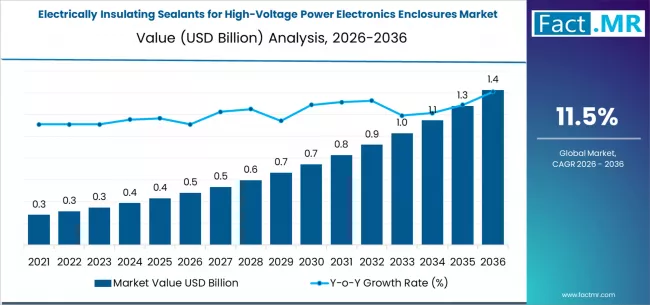
The requirement for sealants capable of withstanding both high temperature and high voltage conditions leads the segmentation with a 40% share. By enclosure type, electric vehicle and automotive power electronics enclosures dominate with a 35% share. This robust growth is fundamentally driven by the electrification of transportation and energy systems. The proliferation of high-voltage batteries, power converters, and renewable energy infrastructure demands reliable encapsulation and sealing solutions that ensure electrical safety, component longevity, and operational reliability under strenuous conditions.
Electrically insulating sealants, which prevent tracking, corona discharge, and short circuits, are engineered to provide robust dielectric strength while also managing environmental challenges like moisture, thermal cycling, and mechanical stress. Their performance is critical for protecting sensitive and expensive power electronics, enabling the safe and efficient function of next-generation electric vehicles, industrial drives, and grid-tied energy storage systems.
Electrically Insulating Sealants for High-Voltage Power Electronics Enclosures Market
| Metric | Value |
|---|---|
| Market Value (2026) | USD 0.48 Billion |
| Market Forecast Value (2036) | USD 1.43 Billion |
| Forecast CAGR (2026-2036) | 11.5% |
Category
| Category | Segments |
|---|---|
| Sealant Type | Silicone-based Insulating Sealants/Potting Compounds, Epoxy-based High-Voltage Sealants/Encapsulation Resins, Polyurethane/PU-based Insulating Sealants, Other Elastomeric/Hybrid Insulating Sealants |
| Enclosure Type | EV/Automotive Power Electronics Enclosures, Industrial Power Converters & Inverters, Renewable Energy / Energy Storage Power Modules, Telecommunications & Data Center Power Modules/HV Electronics, Aerospace/Defense & High-Reliability HV Electronics Enclosures |
| Requirement | High-Temperature + High Voltage, Moisture Humidity + Outdoor/Harsh Environment HV Enclosures, Vibratio /Shock Resistant HV Modules, Chemical/Oil/Coolant Resistant Sealants, Other Requirements |
| Region | North America, Latin America, Western Europe, Eastern Europe, East Asia, South Asia & Pacific, MEA |
Segmental Analysis
By Sealant Type, Which Chemistry is Preferred for High-Voltage Reliability?
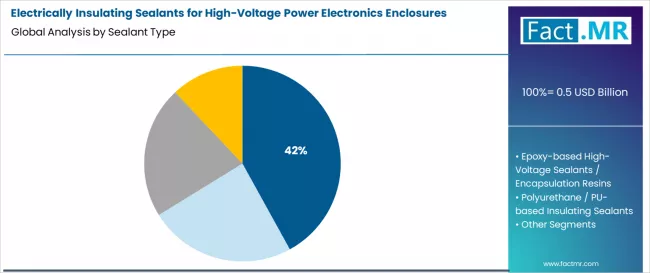
Silicone-based insulating sealants and potting compounds command a dominant 42% market share. Their leadership stems from an unparalleled combination of properties: consistent dielectric strength across a wide temperature range, inherent flexibility that accommodates thermal expansion, and excellent long-term resistance to environmental aging.
For power electronics operating at 400V, 800V, and beyond, silicones provide reliable electrical isolation and protection against partial discharge, making them the material of choice for the most demanding automotive and industrial applications.
By Enclosure Type, Which Application Drives the Most Significant Volume Demand?
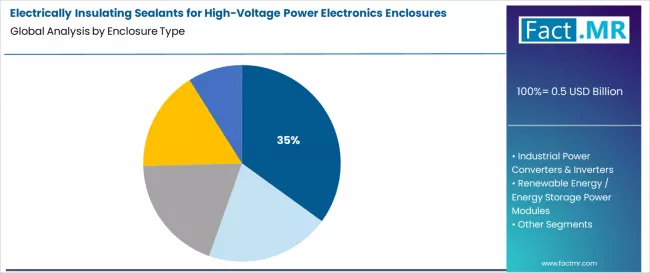
Electric vehicle and automotive power electronics enclosures represent the largest segment at 35%. The automotive industry's rapid transition to electrification creates immense demand for battery management systems, onboard chargers, and traction inverters.
Each of these assemblies requires potting or gasketing to manage heat, prevent ingress, and meet stringent automotive safety standards for electrical isolation. The scale of global EV production makes this segment the primary volume driver for advanced insulating sealants.
By Requirement, What is the Most Critical Performance Combination?
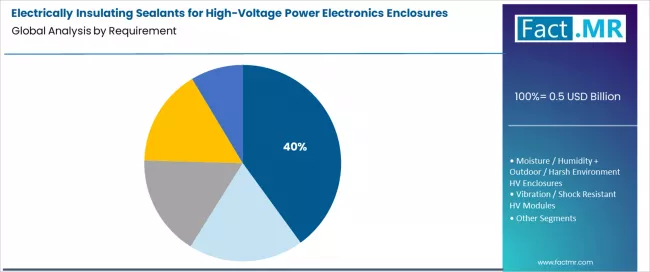
The need for sealants that simultaneously withstand high temperature and high voltage conditions leads the requirements with a 40% share. Power electronics generate significant heat, and operational voltages are continually increasing.
A sealant must maintain its insulating properties and physical integrity at junction temperatures exceeding 125°C to 150°C while preventing any electrical breakdown. This dual challenge is central to product development and specification across virtually all application segments.
What are the Drivers, Restraints, and Key Trends of the Electrically Insulating Sealants for High-Voltage Power Electronics Enclosures Market?
The primary market driver is the global megatrend of electrification across transportation, industry, and energy. The rollout of electric vehicles, fast-charging infrastructure, and renewable energy installations directly increases the installed base of high-voltage power electronics. Stricter international safety standards and reliability requirements for these systems further mandate the use of certified, high-performance insulating materials.
A significant market restraint is the complexity of material selection and qualification. Sealants must be compatible with diverse components like busbars, sensors, and PCB substrates, and their long-term performance under electrical stress must be validated through extensive testing. The high cost of premium silicone and specialty hybrid formulations can also challenge adoption in highly cost-competitive segments of the consumer electronics and some industrial markets.
Key trends include the development of thermally conductive but electrically insulating sealants that manage heat buildup more effectively. There is strong innovation in fast-curing and reworkable formulations to accommodate high-speed manufacturing processes in automotive and consumer electronics. The market is also moving toward materials with higher CTI ratings for increased safety margins and the integration of functional fillers to provide additional properties like flame retardancy or EMI shielding within the sealing material itself.
Analysis of the Market by Key Countries
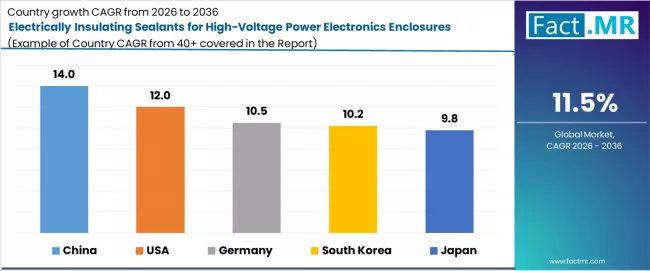
| Country | CAGR (2026-2036) |
|---|---|
| China | 14.00% |
| USA | 12.00% |
| Germany | 10.50% |
| South Korea | 10.20% |
| Japan | 9.80% |
How is China's Dominance in EV and Electronics Manufacturing Shaping the Market?
China's leading CAGR of 14.00% is fueled by its position as the world's largest producer of electric vehicles, lithium-ion batteries, and power electronics. National policies aggressively promoting new energy vehicles and renewables create a massive, integrated demand for upstream components like high-performance insulating materials. The scale and vertical integration of China's manufacturing ecosystem make it the most significant volume market for these sealants.
What Role does the USA's Focus on Tech Innovation and Energy Transition Play?
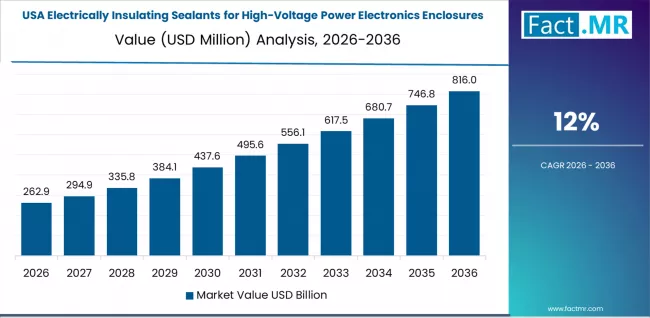
The USA's 12.00% growth is underpinned by strong innovation in semiconductor technology, automotive electrification, and grid modernization. Leading EV manufacturers, tech companies, and defense contractors based in the U.S. drive demand for cutting-edge, high-reliability insulating solutions. Investments in domestic battery and renewable energy manufacturing further amplify demand for specialized sealants and potting compounds.
How does Germany's Engineering Excellence in Automotive and Industry Influence Demand?
Germany's 10.50% CAGR reflects its leadership in premium automotive engineering and high-end industrial equipment. German automotive OEMs and suppliers, transitioning to electric mobility, set extremely rigorous standards for material performance and longevity. This focus on engineering excellence and validation creates a high-value market for the most advanced and reliably tested insulating sealant technologies.
Why is South Korea a Key Growth Market for Insulating Sealants?
Global leadership in battery cell manufacturing, consumer electronics, and display technologies drives South Korea’s 10.20% growth. These industries are at the forefront of developing compact, high-power-density devices that require sophisticated thermal and electrical management. The concentration of major battery makers and electronics conglomerates in South Korea generates concentrated, innovation-led demand for specialized encapsulation materials.
How does Japan's Tradition of High-Reliability Electronics Impact the Market?
Japan's 9.80% growth is anchored in its world-renowned expertise in high-reliability electronics for automotive, industrial, and consumer applications. Japanese manufacturers prioritize extreme quality, longevity, and safety, leading to a demanding market for insulating materials with proven long-term stability under electrical stress. This focus makes Japan a critical market for leading-edge, high-specification products.
Competitive Landscape of the Electrically Insulating Sealants for High-Voltage Power Electronics Enclosures Market
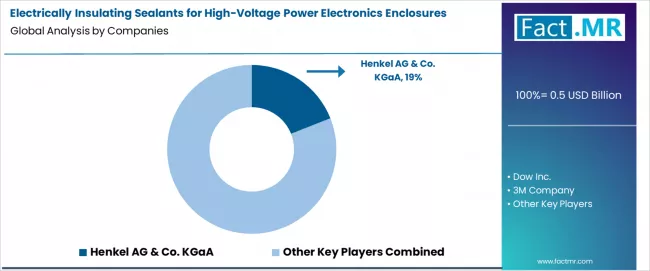
Global specialty chemical and material science giants competing on formulation technology, application expertise, and deep customer partnerships characterize the competitive landscape. Leaders like Henkel, Dow, and 3M leverage their historical strengths in electronics materials to develop next-generation solutions for high-voltage challenges. Competition centers on providing comprehensive material systems including adhesives, gap fillers, and potting compounds backed by extensive electrical and environmental testing data. A key differentiator is the ability to offer co-engineering support to customers designing new power modules, helping to navigate complex thermal, electrical, and mechanical design constraints from the prototype phase.
Key Players in the Electrically Insulating Sealants for High-Voltage Power Electronics Enclosures Market
- Henkel AG & Co. KGaA
- Dow Inc.
- 3M Company
- Elkem ASA
- H.B. Fuller Company
Scope of Report
| Items | Values |
|---|---|
| Quantitative Units | USD Billion |
| Sealant Type | Silicone-based, Epoxy-based, Polyurethane-based, Other Elastomeric/Hybrid |
| Enclosure Type | EV/Automotive, Industrial Converters, Renewable Energy/Storage, Telecom/Data Center, Aerospace/Defense |
| Requirement | High-Temp + HV, Moisture/Harsh Environment, Vibration/Shock Resistant, Chemical Resistant, Other |
| Key Countries | China, USA, Germany, South Korea, Japan |
| Key Companies | Henkel AG & Co. KGaA, Dow Inc., 3M Company, Elkem ASA, H.B. Fuller Company |
| Additional Analysis | Analysis of key dielectric performance standards (e.g., IEC 60664, UL 746); thermal conductivity vs. dielectric strength trade-offs; testing for partial discharge inception voltage (PDIV); material compatibility with coolants and new dielectric fluids; supply chain analysis for high-purity silicone and specialty polymer feedstocks. |
Market by Segments
-
Sealant Type :
- Silicone-based Insulating Sealants/Potting Compounds
- Epoxy-based High-Voltage Sealants/Encapsulation Resins
- Polyurethane/PU-based Insulating Sealants
- Other Elastomeric/Hybrid Insulating Sealants (e.g., hybrid silicone-polymer, FKM-based)
-
Enclosure Type :
- EV / Automotive Power Electronics Enclosures
- Industrial Power Converters & Inverters
- Renewable Energy / Energy Storage Power Modules
- Telecommunications & Data Center Power Modules / HV Electronics
- Aerospace / Defense & High-Reliability HV Electronics Enclosures
-
Requirement :
- High-Temperature + High Voltage
- Moisture / Humidity + Outdoor / Harsh Environment HV Enclosures
- Vibration / Shock Resistant HV Modules
- Chemical / Oil / Coolant Resistant Sealants
- Other Requirements (flame retardant, fire-barrier, EMI shielding sealants)
-
Region :
-
North America
- USA
- Canada
-
Latin America
- Brazil
- Mexico
- Argentina
- Rest of Latin America
-
Western Europe
- Germany
- UK
- France
- Spain
- Italy
- BENELUX
- Rest of Western Europe
-
Eastern Europe
- Russia
- Poland
- Czech Republic
- Rest of Eastern Europe
-
East Asia
- China
- Japan
- South Korea
- Rest of East Asia
-
South Asia & Pacific
- India
- ASEAN
- Australia
- Rest of South Asia & Pacific
-
MEA
- Saudi Arabia
- UAE
- Turkiye
- Rest of MEA
-
Table of Content
- Executive Summary
- Global Market Outlook
- Demand to side Trends
- Supply to side Trends
- Technology Roadmap Analysis
- Analysis and Recommendations
- Market Overview
- Market Coverage / Taxonomy
- Market Definition / Scope / Limitations
- Market Background
- Market Dynamics
- Drivers
- Restraints
- Opportunity
- Trends
- Scenario Forecast
- Demand in Optimistic Scenario
- Demand in Likely Scenario
- Demand in Conservative Scenario
- Opportunity Map Analysis
- Product Life Cycle Analysis
- Supply Chain Analysis
- Investment Feasibility Matrix
- Value Chain Analysis
- PESTLE and Porter’s Analysis
- Regulatory Landscape
- Regional Parent Market Outlook
- Production and Consumption Statistics
- Import and Export Statistics
- Market Dynamics
- Global Market Analysis 2021 to 2025 and Forecast, 2026 to 2036
- Historical Market Size Value (USD Million) Analysis, 2021 to 2025
- Current and Future Market Size Value (USD Million) Projections, 2026 to 2036
- Y to o to Y Growth Trend Analysis
- Absolute $ Opportunity Analysis
- Global Market Pricing Analysis 2021 to 2025 and Forecast 2026 to 2036
- Global Market Analysis 2021 to 2025 and Forecast 2026 to 2036, By Sealant Type
- Introduction / Key Findings
- Historical Market Size Value (USD Million) Analysis By Sealant Type, 2021 to 2025
- Current and Future Market Size Value (USD Million) Analysis and Forecast By Sealant Type, 2026 to 2036
- Silicone-based Insulating Sealants / Potting Compounds
- Epoxy-based High-Voltage Sealants / Encapsulation Resins
- Polyurethane / PU-based Insulating Sealants
- Other Elastomeric / Hybrid Insulating Sealants (e.g. hybrid silicone-polymer, FKM-based)
- Silicone-based Insulating Sealants / Potting Compounds
- Y to o to Y Growth Trend Analysis By Sealant Type, 2021 to 2025
- Absolute $ Opportunity Analysis By Sealant Type, 2026 to 2036
- Global Market Analysis 2021 to 2025 and Forecast 2026 to 2036, By Enclosure Type
- Introduction / Key Findings
- Historical Market Size Value (USD Million) Analysis By Enclosure Type, 2021 to 2025
- Current and Future Market Size Value (USD Million) Analysis and Forecast By Enclosure Type, 2026 to 2036
- EV / Automotive Power Electronics Enclosures
- Industrial Power Converters & Inverters
- Renewable Energy / Energy Storage Power Modules
- Telecommunications & Data Center Power Modules / HV Electronics
- Aerospace / Defense & High-Reliability HV Electronics Enclosures
- EV / Automotive Power Electronics Enclosures
- Y to o to Y Growth Trend Analysis By Enclosure Type, 2021 to 2025
- Absolute $ Opportunity Analysis By Enclosure Type, 2026 to 2036
- Global Market Analysis 2021 to 2025 and Forecast 2026 to 2036, By Requirement
- Introduction / Key Findings
- Historical Market Size Value (USD Million) Analysis By Requirement, 2021 to 2025
- Current and Future Market Size Value (USD Million) Analysis and Forecast By Requirement, 2026 to 2036
- High-Temperature + High Voltage
- Moisture / Humidity + Outdoor / Harsh Environment HV Enclosures
- Vibration / Shock Resistant HV Modules
- Chemical / Oil / Coolant Resistant Sealants
- Other Requirements (flame retardant, fire-barrier, EMI shielding sealants)
- High-Temperature + High Voltage
- Y to o to Y Growth Trend Analysis By Requirement, 2021 to 2025
- Absolute $ Opportunity Analysis By Requirement, 2026 to 2036
- Global Market Analysis 2021 to 2025 and Forecast 2026 to 2036, By Region
- Introduction
- Historical Market Size Value (USD Million) Analysis By Region, 2021 to 2025
- Current Market Size Value (USD Million) Analysis and Forecast By Region, 2026 to 2036
- North America
- Latin America
- Western Europe
- Eastern Europe
- East Asia
- South Asia and Pacific
- Middle East & Africa
- Market Attractiveness Analysis By Region
- North America Market Analysis 2021 to 2025 and Forecast 2026 to 2036, By Country
- Historical Market Size Value (USD Million) Trend Analysis By Market Taxonomy, 2021 to 2025
- Market Size Value (USD Million) Forecast By Market Taxonomy, 2026 to 2036
- By Country
- USA
- Canada
- Mexico
- By Sealant Type
- By Enclosure Type
- By Requirement
- By Country
- Market Attractiveness Analysis
- By Country
- By Sealant Type
- By Enclosure Type
- By Requirement
- Key Takeaways
- Latin America Market Analysis 2021 to 2025 and Forecast 2026 to 2036, By Country
- Historical Market Size Value (USD Million) Trend Analysis By Market Taxonomy, 2021 to 2025
- Market Size Value (USD Million) Forecast By Market Taxonomy, 2026 to 2036
- By Country
- Brazil
- Chile
- Rest of Latin America
- By Sealant Type
- By Enclosure Type
- By Requirement
- By Country
- Market Attractiveness Analysis
- By Country
- By Sealant Type
- By Enclosure Type
- By Requirement
- Key Takeaways
- Western Europe Market Analysis 2021 to 2025 and Forecast 2026 to 2036, By Country
- Historical Market Size Value (USD Million) Trend Analysis By Market Taxonomy, 2021 to 2025
- Market Size Value (USD Million) Forecast By Market Taxonomy, 2026 to 2036
- By Country
- Germany
- UK
- Italy
- Spain
- France
- Nordic
- BENELUX
- Rest of Western Europe
- By Sealant Type
- By Enclosure Type
- By Requirement
- By Country
- Market Attractiveness Analysis
- By Country
- By Sealant Type
- By Enclosure Type
- By Requirement
- Key Takeaways
- Eastern Europe Market Analysis 2021 to 2025 and Forecast 2026 to 2036, By Country
- Historical Market Size Value (USD Million) Trend Analysis By Market Taxonomy, 2021 to 2025
- Market Size Value (USD Million) Forecast By Market Taxonomy, 2026 to 2036
- By Country
- Russia
- Poland
- Hungary
- Balkan & Baltic
- Rest of Eastern Europe
- By Sealant Type
- By Enclosure Type
- By Requirement
- By Country
- Market Attractiveness Analysis
- By Country
- By Sealant Type
- By Enclosure Type
- By Requirement
- Key Takeaways
- East Asia Market Analysis 2021 to 2025 and Forecast 2026 to 2036, By Country
- Historical Market Size Value (USD Million) Trend Analysis By Market Taxonomy, 2021 to 2025
- Market Size Value (USD Million) Forecast By Market Taxonomy, 2026 to 2036
- By Country
- China
- Japan
- South Korea
- By Sealant Type
- By Enclosure Type
- By Requirement
- By Country
- Market Attractiveness Analysis
- By Country
- By Sealant Type
- By Enclosure Type
- By Requirement
- Key Takeaways
- South Asia and Pacific Market Analysis 2021 to 2025 and Forecast 2026 to 2036, By Country
- Historical Market Size Value (USD Million) Trend Analysis By Market Taxonomy, 2021 to 2025
- Market Size Value (USD Million) Forecast By Market Taxonomy, 2026 to 2036
- By Country
- India
- ASEAN
- Australia & New Zealand
- Rest of South Asia and Pacific
- By Sealant Type
- By Enclosure Type
- By Requirement
- By Country
- Market Attractiveness Analysis
- By Country
- By Sealant Type
- By Enclosure Type
- By Requirement
- Key Takeaways
- Middle East & Africa Market Analysis 2021 to 2025 and Forecast 2026 to 2036, By Country
- Historical Market Size Value (USD Million) Trend Analysis By Market Taxonomy, 2021 to 2025
- Market Size Value (USD Million) Forecast By Market Taxonomy, 2026 to 2036
- By Country
- Kingdom of Saudi Arabia
- Other GCC Countries
- Turkiye
- South Africa
- Other African Union
- Rest of Middle East & Africa
- By Sealant Type
- By Enclosure Type
- By Requirement
- By Country
- Market Attractiveness Analysis
- By Country
- By Sealant Type
- By Enclosure Type
- By Requirement
- Key Takeaways
- Key Countries Market Analysis
- USA
- Pricing Analysis
- Market Share Analysis, 2025
- By Sealant Type
- By Enclosure Type
- By Requirement
- Canada
- Pricing Analysis
- Market Share Analysis, 2025
- By Sealant Type
- By Enclosure Type
- By Requirement
- Mexico
- Pricing Analysis
- Market Share Analysis, 2025
- By Sealant Type
- By Enclosure Type
- By Requirement
- Brazil
- Pricing Analysis
- Market Share Analysis, 2025
- By Sealant Type
- By Enclosure Type
- By Requirement
- Chile
- Pricing Analysis
- Market Share Analysis, 2025
- By Sealant Type
- By Enclosure Type
- By Requirement
- Germany
- Pricing Analysis
- Market Share Analysis, 2025
- By Sealant Type
- By Enclosure Type
- By Requirement
- UK
- Pricing Analysis
- Market Share Analysis, 2025
- By Sealant Type
- By Enclosure Type
- By Requirement
- Italy
- Pricing Analysis
- Market Share Analysis, 2025
- By Sealant Type
- By Enclosure Type
- By Requirement
- Spain
- Pricing Analysis
- Market Share Analysis, 2025
- By Sealant Type
- By Enclosure Type
- By Requirement
- France
- Pricing Analysis
- Market Share Analysis, 2025
- By Sealant Type
- By Enclosure Type
- By Requirement
- India
- Pricing Analysis
- Market Share Analysis, 2025
- By Sealant Type
- By Enclosure Type
- By Requirement
- ASEAN
- Pricing Analysis
- Market Share Analysis, 2025
- By Sealant Type
- By Enclosure Type
- By Requirement
- Australia & New Zealand
- Pricing Analysis
- Market Share Analysis, 2025
- By Sealant Type
- By Enclosure Type
- By Requirement
- China
- Pricing Analysis
- Market Share Analysis, 2025
- By Sealant Type
- By Enclosure Type
- By Requirement
- Japan
- Pricing Analysis
- Market Share Analysis, 2025
- By Sealant Type
- By Enclosure Type
- By Requirement
- South Korea
- Pricing Analysis
- Market Share Analysis, 2025
- By Sealant Type
- By Enclosure Type
- By Requirement
- Russia
- Pricing Analysis
- Market Share Analysis, 2025
- By Sealant Type
- By Enclosure Type
- By Requirement
- Poland
- Pricing Analysis
- Market Share Analysis, 2025
- By Sealant Type
- By Enclosure Type
- By Requirement
- Hungary
- Pricing Analysis
- Market Share Analysis, 2025
- By Sealant Type
- By Enclosure Type
- By Requirement
- Kingdom of Saudi Arabia
- Pricing Analysis
- Market Share Analysis, 2025
- By Sealant Type
- By Enclosure Type
- By Requirement
- Turkiye
- Pricing Analysis
- Market Share Analysis, 2025
- By Sealant Type
- By Enclosure Type
- By Requirement
- South Africa
- Pricing Analysis
- Market Share Analysis, 2025
- By Sealant Type
- By Enclosure Type
- By Requirement
- USA
- Market Structure Analysis
- Competition Dashboard
- Competition Benchmarking
- Market Share Analysis of Top Players
- By Regional
- By Sealant Type
- By Enclosure Type
- By Requirement
- Competition Analysis
- Competition Deep Dive
- Henkel AG & Co. KGaA
- Overview
- Product Portfolio
- Profitability by Market Segments (Product/Age /Sales Channel/Region)
- Sales Footprint
- Strategy Overview
- Marketing Strategy
- Product Strategy
- Channel Strategy
- Dow Inc.
- 3M Company
- Elkem ASA
- H.B. Fuller Company
- Henkel AG & Co. KGaA
- Competition Deep Dive
- Assumptions & Acronyms Used
- Research Methodology
List Of Table
- Table 1: Global Market Value (USD Million) Forecast by Region, 2021 to 2036
- Table 2: Global Market Value (USD Million) Forecast by Sealant Type, 2021 to 2036
- Table 3: Global Market Value (USD Million) Forecast by Enclosure Type, 2021 to 2036
- Table 4: Global Market Value (USD Million) Forecast by Requirement, 2021 to 2036
- Table 5: North America Market Value (USD Million) Forecast by Country, 2021 to 2036
- Table 6: North America Market Value (USD Million) Forecast by Sealant Type, 2021 to 2036
- Table 7: North America Market Value (USD Million) Forecast by Enclosure Type, 2021 to 2036
- Table 8: North America Market Value (USD Million) Forecast by Requirement, 2021 to 2036
- Table 9: Latin America Market Value (USD Million) Forecast by Country, 2021 to 2036
- Table 10: Latin America Market Value (USD Million) Forecast by Sealant Type, 2021 to 2036
- Table 11: Latin America Market Value (USD Million) Forecast by Enclosure Type, 2021 to 2036
- Table 12: Latin America Market Value (USD Million) Forecast by Requirement, 2021 to 2036
- Table 13: Western Europe Market Value (USD Million) Forecast by Country, 2021 to 2036
- Table 14: Western Europe Market Value (USD Million) Forecast by Sealant Type, 2021 to 2036
- Table 15: Western Europe Market Value (USD Million) Forecast by Enclosure Type, 2021 to 2036
- Table 16: Western Europe Market Value (USD Million) Forecast by Requirement, 2021 to 2036
- Table 17: Eastern Europe Market Value (USD Million) Forecast by Country, 2021 to 2036
- Table 18: Eastern Europe Market Value (USD Million) Forecast by Sealant Type, 2021 to 2036
- Table 19: Eastern Europe Market Value (USD Million) Forecast by Enclosure Type, 2021 to 2036
- Table 20: Eastern Europe Market Value (USD Million) Forecast by Requirement, 2021 to 2036
- Table 21: East Asia Market Value (USD Million) Forecast by Country, 2021 to 2036
- Table 22: East Asia Market Value (USD Million) Forecast by Sealant Type, 2021 to 2036
- Table 23: East Asia Market Value (USD Million) Forecast by Enclosure Type, 2021 to 2036
- Table 24: East Asia Market Value (USD Million) Forecast by Requirement, 2021 to 2036
- Table 25: South Asia and Pacific Market Value (USD Million) Forecast by Country, 2021 to 2036
- Table 26: South Asia and Pacific Market Value (USD Million) Forecast by Sealant Type, 2021 to 2036
- Table 27: South Asia and Pacific Market Value (USD Million) Forecast by Enclosure Type, 2021 to 2036
- Table 28: South Asia and Pacific Market Value (USD Million) Forecast by Requirement, 2021 to 2036
- Table 29: Middle East & Africa Market Value (USD Million) Forecast by Country, 2021 to 2036
- Table 30: Middle East & Africa Market Value (USD Million) Forecast by Sealant Type, 2021 to 2036
- Table 31: Middle East & Africa Market Value (USD Million) Forecast by Enclosure Type, 2021 to 2036
- Table 32: Middle East & Africa Market Value (USD Million) Forecast by Requirement, 2021 to 2036
List Of Figures
- Figure 1: Global Market Pricing Analysis
- Figure 2: Global Market Value (USD Million) Forecast 2021 to 2036
- Figure 3: Global Market Value Share and BPS Analysis by Sealant Type, 2026 and 2036
- Figure 4: Global Market Y to o to Y Growth Comparison by Sealant Type, 2026 to 2036
- Figure 5: Global Market Attractiveness Analysis by Sealant Type
- Figure 6: Global Market Value Share and BPS Analysis by Enclosure Type, 2026 and 2036
- Figure 7: Global Market Y to o to Y Growth Comparison by Enclosure Type, 2026 to 2036
- Figure 8: Global Market Attractiveness Analysis by Enclosure Type
- Figure 9: Global Market Value Share and BPS Analysis by Requirement, 2026 and 2036
- Figure 10: Global Market Y to o to Y Growth Comparison by Requirement, 2026 to 2036
- Figure 11: Global Market Attractiveness Analysis by Requirement
- Figure 12: Global Market Value (USD Million) Share and BPS Analysis by Region, 2026 and 2036
- Figure 13: Global Market Y to o to Y Growth Comparison by Region, 2026 to 2036
- Figure 14: Global Market Attractiveness Analysis by Region
- Figure 15: North America Market Incremental Dollar Opportunity, 2026 to 2036
- Figure 16: Latin America Market Incremental Dollar Opportunity, 2026 to 2036
- Figure 17: Western Europe Market Incremental Dollar Opportunity, 2026 to 2036
- Figure 18: Eastern Europe Market Incremental Dollar Opportunity, 2026 to 2036
- Figure 19: East Asia Market Incremental Dollar Opportunity, 2026 to 2036
- Figure 20: South Asia and Pacific Market Incremental Dollar Opportunity, 2026 to 2036
- Figure 21: Middle East & Africa Market Incremental Dollar Opportunity, 2026 to 2036
- Figure 22: North America Market Value Share and BPS Analysis by Country, 2026 and 2036
- Figure 23: North America Market Value Share and BPS Analysis by Sealant Type, 2026 and 2036
- Figure 24: North America Market Y to o to Y Growth Comparison by Sealant Type, 2026 to 2036
- Figure 25: North America Market Attractiveness Analysis by Sealant Type
- Figure 26: North America Market Value Share and BPS Analysis by Enclosure Type, 2026 and 2036
- Figure 27: North America Market Y to o to Y Growth Comparison by Enclosure Type, 2026 to 2036
- Figure 28: North America Market Attractiveness Analysis by Enclosure Type
- Figure 29: North America Market Value Share and BPS Analysis by Requirement, 2026 and 2036
- Figure 30: North America Market Y to o to Y Growth Comparison by Requirement, 2026 to 2036
- Figure 31: North America Market Attractiveness Analysis by Requirement
- Figure 32: Latin America Market Value Share and BPS Analysis by Country, 2026 and 2036
- Figure 33: Latin America Market Value Share and BPS Analysis by Sealant Type, 2026 and 2036
- Figure 34: Latin America Market Y to o to Y Growth Comparison by Sealant Type, 2026 to 2036
- Figure 35: Latin America Market Attractiveness Analysis by Sealant Type
- Figure 36: Latin America Market Value Share and BPS Analysis by Enclosure Type, 2026 and 2036
- Figure 37: Latin America Market Y to o to Y Growth Comparison by Enclosure Type, 2026 to 2036
- Figure 38: Latin America Market Attractiveness Analysis by Enclosure Type
- Figure 39: Latin America Market Value Share and BPS Analysis by Requirement, 2026 and 2036
- Figure 40: Latin America Market Y to o to Y Growth Comparison by Requirement, 2026 to 2036
- Figure 41: Latin America Market Attractiveness Analysis by Requirement
- Figure 42: Western Europe Market Value Share and BPS Analysis by Country, 2026 and 2036
- Figure 43: Western Europe Market Value Share and BPS Analysis by Sealant Type, 2026 and 2036
- Figure 44: Western Europe Market Y to o to Y Growth Comparison by Sealant Type, 2026 to 2036
- Figure 45: Western Europe Market Attractiveness Analysis by Sealant Type
- Figure 46: Western Europe Market Value Share and BPS Analysis by Enclosure Type, 2026 and 2036
- Figure 47: Western Europe Market Y to o to Y Growth Comparison by Enclosure Type, 2026 to 2036
- Figure 48: Western Europe Market Attractiveness Analysis by Enclosure Type
- Figure 49: Western Europe Market Value Share and BPS Analysis by Requirement, 2026 and 2036
- Figure 50: Western Europe Market Y to o to Y Growth Comparison by Requirement, 2026 to 2036
- Figure 51: Western Europe Market Attractiveness Analysis by Requirement
- Figure 52: Eastern Europe Market Value Share and BPS Analysis by Country, 2026 and 2036
- Figure 53: Eastern Europe Market Value Share and BPS Analysis by Sealant Type, 2026 and 2036
- Figure 54: Eastern Europe Market Y to o to Y Growth Comparison by Sealant Type, 2026 to 2036
- Figure 55: Eastern Europe Market Attractiveness Analysis by Sealant Type
- Figure 56: Eastern Europe Market Value Share and BPS Analysis by Enclosure Type, 2026 and 2036
- Figure 57: Eastern Europe Market Y to o to Y Growth Comparison by Enclosure Type, 2026 to 2036
- Figure 58: Eastern Europe Market Attractiveness Analysis by Enclosure Type
- Figure 59: Eastern Europe Market Value Share and BPS Analysis by Requirement, 2026 and 2036
- Figure 60: Eastern Europe Market Y to o to Y Growth Comparison by Requirement, 2026 to 2036
- Figure 61: Eastern Europe Market Attractiveness Analysis by Requirement
- Figure 62: East Asia Market Value Share and BPS Analysis by Country, 2026 and 2036
- Figure 63: East Asia Market Value Share and BPS Analysis by Sealant Type, 2026 and 2036
- Figure 64: East Asia Market Y to o to Y Growth Comparison by Sealant Type, 2026 to 2036
- Figure 65: East Asia Market Attractiveness Analysis by Sealant Type
- Figure 66: East Asia Market Value Share and BPS Analysis by Enclosure Type, 2026 and 2036
- Figure 67: East Asia Market Y to o to Y Growth Comparison by Enclosure Type, 2026 to 2036
- Figure 68: East Asia Market Attractiveness Analysis by Enclosure Type
- Figure 69: East Asia Market Value Share and BPS Analysis by Requirement, 2026 and 2036
- Figure 70: East Asia Market Y to o to Y Growth Comparison by Requirement, 2026 to 2036
- Figure 71: East Asia Market Attractiveness Analysis by Requirement
- Figure 72: South Asia and Pacific Market Value Share and BPS Analysis by Country, 2026 and 2036
- Figure 73: South Asia and Pacific Market Value Share and BPS Analysis by Sealant Type, 2026 and 2036
- Figure 74: South Asia and Pacific Market Y to o to Y Growth Comparison by Sealant Type, 2026 to 2036
- Figure 75: South Asia and Pacific Market Attractiveness Analysis by Sealant Type
- Figure 76: South Asia and Pacific Market Value Share and BPS Analysis by Enclosure Type, 2026 and 2036
- Figure 77: South Asia and Pacific Market Y to o to Y Growth Comparison by Enclosure Type, 2026 to 2036
- Figure 78: South Asia and Pacific Market Attractiveness Analysis by Enclosure Type
- Figure 79: South Asia and Pacific Market Value Share and BPS Analysis by Requirement, 2026 and 2036
- Figure 80: South Asia and Pacific Market Y to o to Y Growth Comparison by Requirement, 2026 to 2036
- Figure 81: South Asia and Pacific Market Attractiveness Analysis by Requirement
- Figure 82: Middle East & Africa Market Value Share and BPS Analysis by Country, 2026 and 2036
- Figure 83: Middle East & Africa Market Value Share and BPS Analysis by Sealant Type, 2026 and 2036
- Figure 84: Middle East & Africa Market Y to o to Y Growth Comparison by Sealant Type, 2026 to 2036
- Figure 85: Middle East & Africa Market Attractiveness Analysis by Sealant Type
- Figure 86: Middle East & Africa Market Value Share and BPS Analysis by Enclosure Type, 2026 and 2036
- Figure 87: Middle East & Africa Market Y to o to Y Growth Comparison by Enclosure Type, 2026 to 2036
- Figure 88: Middle East & Africa Market Attractiveness Analysis by Enclosure Type
- Figure 89: Middle East & Africa Market Value Share and BPS Analysis by Requirement, 2026 and 2036
- Figure 90: Middle East & Africa Market Y to o to Y Growth Comparison by Requirement, 2026 to 2036
- Figure 91: Middle East & Africa Market Attractiveness Analysis by Requirement
- Figure 92: Global Market - Tier Structure Analysis
- Figure 93: Global Market - Company Share Analysis
- FAQs -
How big is the electrically insulating sealants for high-voltage power electronics enclosures market in 2026?
The global electrically insulating sealants for high-voltage power electronics enclosures market is estimated to be valued at USD 0.5 billion in 2026.
What will be the size of electrically insulating sealants for high-voltage power electronics enclosures market in 2036?
The market size for the electrically insulating sealants for high-voltage power electronics enclosures market is projected to reach USD 1.4 billion by 2036.
How much will be the electrically insulating sealants for high-voltage power electronics enclosures market growth between 2026 and 2036?
The electrically insulating sealants for high-voltage power electronics enclosures market is expected to grow at a 11.5% CAGR between 2026 and 2036.
What are the key product types in the electrically insulating sealants for high-voltage power electronics enclosures market?
The key product types in electrically insulating sealants for high-voltage power electronics enclosures market are silicone-based insulating sealants / potting compounds, epoxy-based high-voltage sealants / encapsulation resins, polyurethane / pu-based insulating sealants and other elastomeric / hybrid insulating sealants (e.g. hybrid silicone-polymer, fkm-based).
Which enclosure type segment to contribute significant share in the electrically insulating sealants for high-voltage power electronics enclosures market in 2026?
In terms of enclosure type, ev / automotive power electronics enclosures segment to command 35.0% share in the electrically insulating sealants for high-voltage power electronics enclosures market in 2026.