Esoteric Testing Market
Esoteric Testing Market Size and Share Forecast Outlook 2025 to 2035
Esoteric testing market is projected to grow from USD 27.4 billion in 2025 to USD 85.0 billion by 2035, at a CAGR of 12.0%. Oncology Testing will dominate with a 28.0% market share, while chemiluminescence immunoassay will lead the technology segment with a 30.0% share.
Esoteric Testing Market Forecast and Outlook 2025 to 2035
The global esoteric testing market is projected to reach USD 85.0 billion by 2035, recording an absolute increase of USD 57.6 billion over the forecast period. The market is valued at USD 27.4 billion in 2025 and is set to rise at a CAGR of 12.0% during the assessment period.
The overall market size is expected to grow by approximately 3.1 times during the same period, supported by increasing demand for advanced diagnostic testing across oncology and rare disease applications worldwide, driving need for specialized laboratory services and rising investments in precision medicine with proven clinical utility across diverse healthcare systems globally.
Quick Stats for Esoteric Testing Market
- Esoteric Testing Market Value (2025): USD 27.4 billion
- Esoteric Testing Market Forecast Value (2035): USD 85.0 billion
- Esoteric Testing Market Forecast CAGR: 12.0%
- Leading Type in Esoteric Testing Market: Oncology Testing (28.0%)
- Key Growth Regions in Esoteric Testing Market: Asia Pacific, North America, and Europe
- Top Players in Esoteric Testing Market: Labcorp, OPKO Health, Inc., Quest Diagnostics Incorporated, Sonic Healthcare Limited, H.U. Group Holdings, Inc., Kindstar Globalgene Technology, Inc., Stanford Health Care, Mayo Foundation for Medical Education and Research, ARUP Laboratories, Athena Esoterix, ACM Global Laboratories

Physicians and patients requiring specialized diagnostic insights face mounting pressure to access sophisticated testing capabilities and obtain accurate disease characterization while addressing complex diagnostic challenges and treatment selection decisions, with modern esoteric testing services providing documented clinical benefits including precise biomarker identification, comprehensive genetic profiling, and specialized immunological assessments compared to conventional laboratory testing alone.
Rising awareness about personalized medicine and expanding capabilities of reference laboratories create substantial opportunities for diagnostic service providers and healthcare systems. However, high testing costs and reimbursement challenges may pose obstacles to widespread adoption across cost-sensitive healthcare markets and underinsured patient populations.
The oncology testing segment dominates market activity, driven by extensive utilization in cancer diagnosis, treatment selection, and monitoring applications addressing comprehensive tumor characterization needs across diverse cancer types worldwide. Healthcare providers increasingly recognize the clinical value of specialized oncology diagnostics, with typical test offerings providing actionable genomic insights and biomarker information at specialized reference laboratories through established physician ordering networks. The infectious disease testing segment demonstrates robust growth potential, supported by rising demand for complex pathogen identification and antimicrobial resistance testing integrating molecular diagnostics for comprehensive infectious disease management.
Chemiluminescence immunoassay emerges as the dominant technology platform, reflecting widespread adoption for hormone testing, tumor marker detection, and specialized protein analysis in automated laboratory systems. Independent and reference laboratories represent the leading end-user category, driven by specialized testing capabilities and comprehensive test menus enabling complex diagnostic services beyond hospital laboratory capabilities.
Regional dynamics show North America maintaining market leadership, supported by advanced reference laboratory infrastructure and strong adoption of precision diagnostics across healthcare systems. Asia Pacific demonstrates the fastest growth trajectory driven by expanding molecular testing capacity and rising healthcare expenditure, while Europe emphasizes specialized laboratory automation and quality standards. India leads country-level growth through rising test volumes and expanding private laboratory networks, followed by China supported by rapid expansion of molecular testing infrastructure and government healthcare initiatives.
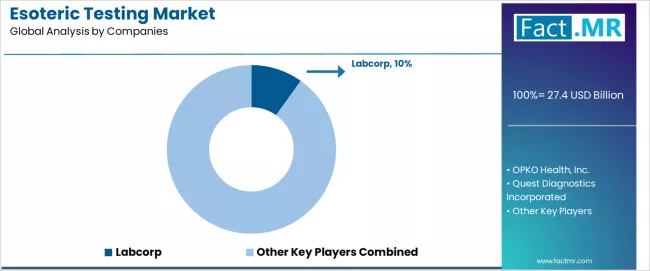
The competitive landscape features moderate concentration with Labcorp maintaining market leadership position, while specialized players including OPKO Health, Inc., Quest Diagnostics Incorporated, Sonic Healthcare Limited, and H.U. Group Holdings, Inc. compete through comprehensive test menus and geographic coverage across diverse specialized diagnostic applications.
Esoteric Testing Market Year-over-Year Forecast 2025 to 2035
Between 2025 and 2029, the esoteric testing market is projected to expand from USD 27.4 billion to USD 43.0 billion, resulting in a value increase of USD 15.6 billion, which represents 27.1% of the total forecast growth for the period. This phase of development will be shaped by rising demand for oncology biomarker testing addressing targeted therapy selection and immunotherapy patient identification, product innovation in next-generation sequencing panels with expanded gene coverage and improved turnaround times, as well as expanding integration with electronic health records and clinical decision support systems enabling seamless test ordering and result interpretation. Companies are establishing competitive positions through investment in laboratory automation technologies, advanced mass spectrometry platforms, and strategic market expansion across physician networks, hospital partnerships, and direct-to-consumer testing channels.
From 2029 to 2035, the market is forecast to grow from USD 43.0 billion to USD 85.0 billion, adding another USD 42.0 billion, which constitutes 72.9% of the overall expansion. This period is expected to be characterized by the expansion of specialized testing categories, including liquid biopsy applications and multi-cancer early detection assays tailored for screening and minimal residual disease monitoring, strategic collaborations between diagnostic laboratories and pharmaceutical companies, and an enhanced focus on artificial intelligence integration and data analytics supporting test interpretation and clinical correlation. The growing emphasis on preventive healthcare and rising adoption of comprehensive genetic screening will drive demand for expanded esoteric testing services across diverse patient populations requiring sophisticated diagnostic insights for disease risk assessment, early detection, and personalized treatment optimization.
Esoteric Testing Market Key Takeaways
| Metric | Value |
|---|---|
| Market Value (2025) | USD 27.4 billion |
| Market Forecast Value (2035) | USD 85.0 billion |
| Forecast CAGR (2025-2035) | 12.0% |
Why is the Esoteric Testing Market Growing?
The esoteric testing market grows by enabling physicians to access specialized diagnostic capabilities that support complex disease diagnosis, precise treatment selection, and comprehensive patient management while addressing limitations of routine laboratory testing and standard diagnostic approaches.
Physicians managing complex patients face mounting pressure to identify rare conditions, characterize disease mechanisms, and select targeted therapies while navigating diagnostic uncertainty and treatment optimization challenges, with modern esoteric testing services typically providing advanced genetic analysis, specialized immunological assessments, and comprehensive biomarker profiling compared to conventional laboratory panels alone, making specialized diagnostic testing essential for precision medicine implementation and personalized healthcare delivery.
The healthcare system's need for actionable diagnostic information and growing emphasis on targeted therapies create strong demand for esoteric testing solutions that can provide definitive disease characterization, support treatment decisions, and enable monitoring of therapeutic response without relying exclusively on clinical judgment or empirical treatment approaches.
Precision medicine adoption and targeted therapy development supporting esoteric test utilization drive market growth in oncology practices, genetic counseling programs, and specialty medical centers, where diagnostic insights have direct impact on treatment selection and patient outcomes.
The increasing complexity of modern therapeutics and companion diagnostic requirements create expanding test volumes for biomarker assessment and molecular profiling. Rising physician awareness about available esoteric testing options enables more appropriate test selection and utilization. However, high testing costs and insurance coverage limitations may restrict access among certain patient populations and create financial barriers for uninsured or underinsured individuals requiring specialized diagnostic services.
Segmental Analysis
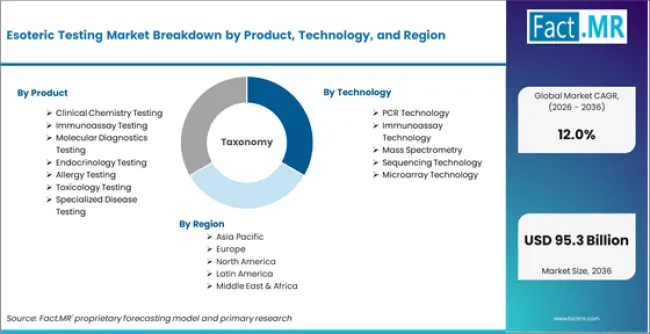
The market is segmented by type, technology, end-use, and region. By type, the market is divided into oncology testing, infectious disease testing, genetic testing, endocrinology testing, toxicology testing, neurology testing, and others.
Based on technology, the market is categorized into chemiluminescence immunoassay, enzyme-linked immunosorbent assay, mass spectrometry, real time polymerase chain reaction, flow cytometry, and others. By end-use, the market includes hospital-based laboratories, independent and reference laboratories, and others. Regionally, the market is divided into Asia Pacific, Europe, North America, Latin America, and Middle East & Africa.
By Type, Which Segment Accounts for the Dominant Market Share?

The oncology testing segment represents the dominant force in the esoteric testing market, capturing approximately 28.0% of total market share in 2025. This established testing category encompasses solutions featuring comprehensive tumor profiling and cancer biomarker analysis, including advanced genomic sequencing panels, immunohistochemistry assays, and liquid biopsy technologies that enable superior treatment selection and disease monitoring across solid tumors and hematologic malignancies worldwide.
The oncology testing segment's market leadership stems from its critical role in precision oncology, with tests capable of identifying actionable mutations, predicting therapy response, and monitoring minimal residual disease while maintaining regulatory compliance and quality standards across diverse cancer types and clinical scenarios.
Within the oncology testing category, next-generation sequencing panels represent a primary growth driver, addressing comprehensive tumor profiling needs where multi-gene analysis identifies targetable alterations guiding therapy selection for lung cancer, colorectal cancer, breast cancer, and other malignancies requiring personalized treatment approaches.
Immunohistochemistry testing maintains substantial presence through protein expression analysis supporting diagnostic classification, prognostic assessment, and predictive biomarker evaluation. These assays benefit from established clinical utility and guideline recommendations supporting their utilization in routine oncology practice.
Liquid biopsy applications demonstrate rapid adoption for non-invasive tumor monitoring where circulating tumor DNA analysis enables treatment response assessment and resistance mechanism identification without tissue biopsy requirements.
The infectious disease testing segment maintains a substantial market share at approximately 22.0%, serving healthcare providers who require complex pathogen identification, antimicrobial susceptibility testing, and specialized serological assays addressing difficult-to-diagnose infections and emerging pathogens.
These solutions offer comprehensive microbial characterization for patients with atypical presentations while providing sufficient sensitivity to detect low-level infections and unusual organisms. The infectious disease testing segment demonstrates solid growth potential, driven by emerging infectious threats and increasing emphasis on antimicrobial stewardship programs.
Within the infectious disease category, molecular testing for viral pathogens accounts for substantial volume through HIV viral load monitoring, hepatitis C quantification, and specialized viral identification where nucleic acid amplification provides superior sensitivity compared to conventional methods.
Serological testing for rare and tropical diseases serves specialized diagnostic needs including parasitic infections, unusual bacterial pathogens, and travel-related illnesses requiring reference laboratory expertise and specialized reagent systems.
Within the type category, genetic testing demonstrates growing adoption through hereditary disease screening, pharmacogenomic assessment, and carrier testing applications. Endocrinology testing serves specialized hormone analysis including rare endocrine disorders, while toxicology testing addresses therapeutic drug monitoring and specialized toxin identification. Neurology testing includes autoimmune encephalitis panels, paraneoplastic antibody testing, and specialized cerebrospinal fluid analysis.
Key type advantages driving the oncology testing segment include:
- Advanced genomic profiling capabilities with demonstrated ability to identify actionable mutations guiding targeted therapy selection across multiple cancer types
- Established clinical utility evidence supporting reimbursement and guideline recommendations for tumor biomarker testing in treatment algorithms
- Enhanced monitoring capabilities enabling minimal residual disease detection and early resistance identification through serial testing
- Superior multiplexing efficiency providing comprehensive molecular characterization from limited tissue samples or blood specimens
By Technology, Which Segment Accounts for the Largest Market Share?

Chemiluminescence immunoassay dominates the esoteric testing technology landscape with approximately 30.0% market share in 2025, reflecting the critical role of automated immunoassay platforms in supporting high-throughput hormone testing, tumor marker analysis, and specialized protein quantification across reference laboratory operations worldwide. The chemiluminescence immunoassay segment's market leadership is reinforced by superior sensitivity characteristics, broad test menu availability, and compatibility with automated laboratory systems enabling efficient workflow integration and quality assurance.
Within this segment, hormone testing represents a primary application area through thyroid function assessment, reproductive hormone analysis, and specialized endocrine panels where automated immunoassay platforms provide precise quantification supporting clinical decision-making.
Tumor marker testing accounts for substantial volume through PSA monitoring, CEA quantification, and specialized cancer antigen measurement where serial testing supports treatment response assessment and recurrence detection across oncology patient populations.
Specialty protein analysis serves diverse applications including cardiac biomarkers, autoimmune markers, and infectious disease antibodies where chemiluminescence technology provides superior analytical performance compared to alternative immunoassay formats.
The enzyme-linked immunosorbent assay segment represents an important technology category at approximately 20.0% market share, demonstrating continued utilization through specialized applications requiring specific antibody reagents and research-use testing where ELISA methodology provides validated performance characteristics.
Within ELISA technology, autoimmune antibody testing accounts for concentrated utilization through specialized panels identifying antibodies associated with systemic autoimmune diseases, neurological disorders, and paraneoplastic syndromes requiring reference laboratory expertise.
Infectious disease serology serves specialized pathogen antibody detection where ELISA provides established methodology for rare and tropical disease diagnosis complementing molecular testing approaches.
The mass spectrometry segment maintains meaningful presence through small molecule quantification including therapeutic drug monitoring, steroid hormone analysis, and metabolic disorder screening. Real-time PCR technology serves molecular diagnostic applications, while flow cytometry supports immunophenotyping and cellular analysis requirements.
Key market dynamics supporting technology growth include:
- Chemiluminescence platform expansion driven by automation capabilities and comprehensive test menu development requiring advanced instrument systems
- Mass spectrometry adoption trends requiring specialized technical expertise and capital investment supporting specialized metabolite analysis
- Integration of artificial intelligence and machine learning enabling automated result interpretation and quality control optimization
- Growing emphasis on multiplexed testing panels and comprehensive diagnostic algorithms requiring coordinated technology platforms
What are the Drivers, Restraints, and Key Trends of the Esoteric Testing Market?
The market is driven by three concrete demand factors tied to precision medicine adoption and diagnostic complexity. First, rising prevalence of cancer and increasing utilization of targeted therapies create expanding demand for companion diagnostic testing and tumor profiling, with esoteric oncology tests representing critical tools for treatment selection, requiring specialized laboratory capabilities and expertise. Second, growing emphasis on personalized medicine and pharmacogenomic testing drives adoption of genetic analysis and biomarker assessment, with healthcare systems demonstrating significant investment in precision diagnostic infrastructure and molecular testing capabilities by 2030. Third, increasing recognition of rare diseases and complex conditions enables greater utilization of specialized diagnostic testing that improves diagnostic accuracy while reducing time to diagnosis and supporting appropriate treatment initiation through definitive disease characterization.
Market restraints include high testing costs and reimbursement challenges that can limit patient access and create financial barriers, particularly for novel testing methodologies and comprehensive genetic panels where insurance coverage remains inconsistent and out-of-pocket costs prove prohibitive for many patients. Technical complexity and result interpretation challenges pose another significant obstacle, as esoteric test results require specialized medical expertise and genetic counseling support, potentially affecting clinical utility when ordering physicians lack sufficient training or access to interpretive resources. Regulatory oversight variations and laboratory quality standards create additional complexity for test development and commercialization, demanding extensive validation studies and compliance efforts across different regulatory jurisdictions.
Key trends indicate accelerated liquid biopsy adoption in developed markets, particularly North America and Europe, where oncologists demonstrate increasing willingness to utilize circulating tumor DNA testing for treatment monitoring, minimal residual disease assessment, and early cancer detection applications. Artificial intelligence integration trends toward automated result interpretation, pattern recognition in complex datasets, and clinical decision support systems enable enhanced diagnostic accuracy that optimizes test utilization and clinical correlation. However, the market thesis could face disruption if major advances in point-of-care testing technologies or significant improvements in routine laboratory capabilities reduce the need for specialized reference laboratory services in certain diagnostic applications.
Analysis of the Esoteric Testing Market by Key Countries

| Country | CAGR (2025 to 2035) |
|---|---|
| India | 14.1% |
| China | 13.4% |
| USA | 12.8% |
| Brazil | 12.3% |
| UK | 11.8% |
| Germany | 11.5% |
| Japan | 10.9% |
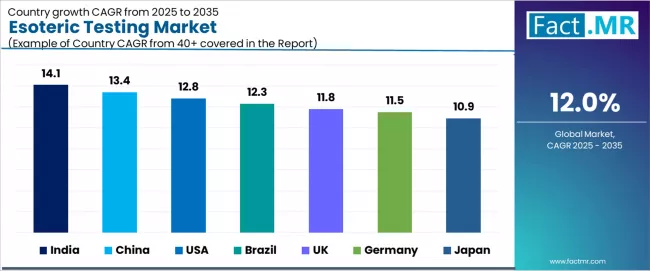
The global esoteric testing market is expanding rapidly, with India leading at a 14.1% CAGR through 2035, driven by rising test volumes and expanding private laboratory networks supporting specialized diagnostic capabilities. China follows at 13.4%, supported by rapid expansion of molecular testing capacity and government healthcare initiatives. USA records 12.8%, reflecting strong adoption of precision diagnostics and advanced reference laboratory infrastructure.
Brazil advances at 12.3%, leveraging increased access to specialized diagnostics and expanding healthcare coverage. UK posts 11.8%, focusing on growth in genetic and oncology testing demand, while Germany grows at 11.5%, emphasizing high investment in specialized laboratory automation. Japan demonstrates 10.9% growth, anchored by steady adoption of advanced immunoassays and mature diagnostic infrastructure.
How is India Leading Global Market Expansion?
India demonstrates the strongest growth potential in the esoteric testing market with a CAGR of 14.1% through 2035. The country's leadership position stems from rapidly expanding private laboratory networks, increasing physician awareness about specialized testing capabilities, and rising patient volumes seeking advanced diagnostic services for cancer diagnosis and rare disease evaluation.
Growth is concentrated in major metropolitan areas and tier-1 cities, including Mumbai, Delhi, Bangalore, Hyderabad, and Chennai, where private laboratory chains are establishing comprehensive reference laboratory capabilities and expanding test menus beyond routine diagnostics.
Distribution systems through hospital partnerships, physician networks, and direct patient access programs expand service availability across urban populations and specialty medical practices. The country's growing medical tourism sector provides additional momentum for esoteric testing adoption, including extensive utilization across oncology centers and specialty hospitals serving domestic and international patient populations requiring comprehensive diagnostic services.
Key market factors:
- Private laboratory sector expansion with major chains including Metropolis Healthcare and Dr. Lal PathLabs investing in specialized testing capabilities
- Oncology testing growth driven by rising cancer incidence and increasing adoption of targeted therapy protocols requiring biomarker assessment
- Comprehensive technology adoption ecosystem, including next-generation sequencing platforms and advanced mass spectrometry systems supporting test menu expansion
- Healthcare professional education initiatives supporting awareness about available esoteric testing options and appropriate utilization
Why is China Emerging as a High-Growth Market?
In major urban centers including Beijing, Shanghai, Guangzhou, Shenzhen, and Chengdu, the adoption of esoteric testing services is accelerating across tertiary hospitals and independent laboratories, driven by government healthcare reform initiatives and increasing emphasis on precision medicine implementation. The market demonstrates strong growth momentum with a CAGR of 13.4% through 2035, linked to comprehensive molecular testing infrastructure development and increasing healthcare expenditure supporting advanced diagnostic capabilities.
Chinese healthcare providers are implementing specialized testing protocols integrated with clinical pathways to enhance diagnostic accuracy while meeting growing expectations for personalized medicine approaches in oncology and genetic disease management. The country's expanding biopharmaceutical sector creates ongoing demand for companion diagnostic development and clinical trial testing services supporting drug development programs.
Key development areas:
- Government policy support driving precision medicine initiatives and molecular diagnostic infrastructure investment
- Hospital laboratory modernization enabling advanced testing capabilities through equipment upgrades and technical training programs
- Independent laboratory sector growth providing opportunities for specialized reference laboratory services complementing hospital capabilities
- Growing emphasis on domestic test development and regulatory approval supporting local innovation in diagnostic technologies
What Drives USA’s Market Leadership?

USA’s market expansion is driven by mature reference laboratory infrastructure and strong adoption of precision diagnostics across oncology, genetic counseling, and specialty medical practices. The country demonstrates robust growth potential with a CAGR of 12.8% through 2035, supported by continuous innovation in testing methodologies and comprehensive insurance coverage supporting test reimbursement.
American healthcare providers face evolving challenges related to appropriate test utilization and result interpretation, requiring ongoing medical education and clinical decision support tools ensuring optimal diagnostic stewardship. However, established precision medicine programs and strong pharmaceutical-diagnostic collaboration create stable baseline demand for esoteric testing services, particularly in oncology applications where genomic profiling guides treatment selection and monitoring strategies driving primary test volumes.
Market characteristics:
- Reference laboratory duopoly with Labcorp and Quest Diagnostics maintaining dominant positions serving physician offices and hospitals
- Regional variation in specialty laboratory presence including academic medical centers offering specialized testing services
- Future projections indicate continued growth in liquid biopsy applications and multi-cancer early detection screening programs
- Growing emphasis on value-based care models and appropriate utilization protocols supporting diagnostic stewardship initiatives
How does Brazil Demonstrate Access Expansion Leadership?
Brazil's esoteric testing market demonstrates significant growth opportunities focused on expanding healthcare coverage and increasing access to specialized diagnostic services, with documented adoption of molecular diagnostics achieving substantial momentum through private laboratory investments and technology transfer initiatives across major metropolitan areas.
The country maintains solid growth momentum with a CAGR of 12.3% through 2035, driven by rising middle-class healthcare consumption emphasizing quality diagnostic services and specialty medical care. Major cities including São Paulo, Rio de Janeiro, Brasília, and Belo Horizonte showcase growing esoteric testing availability where private laboratories and hospital systems integrate advanced testing capabilities for oncology applications and genetic disease diagnosis.
Key market characteristics:
- Private laboratory sector leading market development with investments in molecular testing platforms and specialized assay capabilities
- Oncology testing adoption driving demand growth through expanding cancer treatment programs and targeted therapy utilization
- Healthcare coverage expansion supporting improved test reimbursement and patient access to specialized diagnostics
- Emphasis on laboratory accreditation and quality standards enhancing credibility and supporting physician confidence
What Positions UK for Genomic Medicine Leadership?
In London, Manchester, Birmingham, and other major cities, healthcare providers are implementing esoteric testing services through National Health Service laboratories and private sector partnerships, with documented utilization showing substantial growth in genetic testing and oncology diagnostics supporting precision medicine initiatives. The market shows strong growth potential with a CAGR of 11.8% through 2035, linked to NHS Genomic Medicine Service implementation, comprehensive cancer diagnostics programs, and specialized rare disease testing initiatives in major regions.
Healthcare providers are adopting advanced molecular diagnostics with clinical oversight to enhance treatment selection while maintaining standards demanded by NICE guidelines and quality assurance requirements. The country's coordinated genomic medicine strategy creates ongoing opportunities for esoteric testing expansion through systematic integration of genetic testing into clinical care pathways.
Market development factors:
-
NHS Genomic Medicine Service driving systematic implementation of whole genome sequencing and comprehensive genetic testing
- Cancer diagnostics expansion providing growth opportunities through molecular tumor boards and precision oncology programs
- Strategic partnerships between NHS laboratories and commercial providers expanding testing capacity and technological capabilities
- Emphasis on data sharing and clinical research supporting evidence generation for novel testing applications
How does Germany Demonstrate Laboratory Automation Leadership?
The market in Germany leads in specialized laboratory automation based on high investment in advanced instrumentation and comprehensive quality management systems supporting esoteric testing operations. The country shows strong potential with a CAGR of 11.5% through 2035, driven by sophisticated laboratory infrastructure and emphasis on quality assurance in major regions including North Rhine-Westphalia, Bavaria, Baden-Württemberg, and Hesse.
German laboratories are adopting advanced testing platforms through capital investment programs and technology partnerships for diagnostic capability enhancement, particularly in university hospital laboratories and specialized reference centers implementing state-of-the-art analytical systems. Distribution systems through medical laboratory networks and hospital laboratory services expand coverage across physician practices and clinical specialists requiring comprehensive testing options.
Leading market segments:
- University hospital laboratories implementing comprehensive esoteric testing menus with emphasis on rare disease diagnosis and specialized oncology testing
- Laboratory automation investments driving efficiency improvements and test menu expansion through high-throughput platforms
- Strategic emphasis on quality assurance and proficiency testing programs ensuring analytical accuracy and result reliability
- Focus on laboratory accreditation and regulatory compliance supporting international quality standards
What Characterizes Japan's Market Maturity?

In major urban centers including Tokyo, Osaka, Nagoya, and Fukuoka, the adoption of esoteric testing services demonstrates established capabilities and consistent utilization patterns, driven by advanced immunoassay adoption and comprehensive laboratory infrastructure supporting specialized diagnostic needs.
The market demonstrates steady growth potential with a CAGR of 10.9% through 2035, linked to mature healthcare system with universal coverage and gradual expansion of molecular testing applications. Japanese laboratories are maintaining quality esoteric testing services through advanced technology platforms and utilizing stringent quality control protocols ensuring analytical precision while addressing aging population healthcare needs and chronic disease management requirements. The country's emphasis on diagnostic quality creates stable demand for esoteric testing services with focus on established methodologies and proven clinical utility.
Key development areas:
- Hospital-based laboratories managing substantial esoteric testing volumes with emphasis on automated immunoassay platforms and routine specialty testing
- Gradual adoption of genomic testing applications including pharmacogenomic assessment and hereditary disease screening
- Healthcare system integration featuring coordinated ordering systems and standardized result reporting supporting clinical utilization
- Emphasis on cost-effectiveness and appropriate utilization balancing access with healthcare system sustainability
Europe Market Split by Country

The esoteric testing market in Europe is projected to grow from USD 6.85 billion in 2025 to USD 21.2 billion by 2035, registering a CAGR of 12.0% over the forecast period. Germany is expected to maintain its leadership position with a 28.0% market share in 2025, adjusting to 27.5% by 2035, supported by its extensive laboratory automation infrastructure, comprehensive quality standards, and advanced hospital laboratory capabilities serving major European markets.
UK follows with a 24.5% share in 2025, projected to reach 25.0% by 2035, driven by NHS Genomic Medicine Service implementation and comprehensive cancer diagnostics expansion programs. France holds a 21.0% share in 2025, expected to maintain 21.3% by 2035 through academic medical center testing capabilities and specialized reference laboratory services. Italy commands a 15.5% share, while Spain accounts for 9.0% in 2025.
The rest of Europe region is anticipated to gain momentum, expanding its collective share from 2.0% to 2.2% by 2035, attributed to increasing esoteric testing adoption in Nordic countries implementing precision medicine programs and Eastern European markets modernizing laboratory infrastructure and expanding specialized testing capabilities.
Competitive Landscape of the Esoteric Testing Market

The esoteric testing market features approximately 15-25 meaningful players with moderate concentration, where the top three companies control roughly 30-40% of global market share through established reference laboratory networks, comprehensive test menus, and national service coverage. Competition centers on test menu breadth, turnaround time performance, and clinical service quality rather than price competition alone.
Market leaders include Labcorp, Quest Diagnostics Incorporated, and Sonic Healthcare Limited, which maintain competitive advantages through comprehensive testing portfolios spanning multiple specialties, national logistics networks, and deep expertise in laboratory operations and clinical pathology, creating high physician confidence among ordering providers seeking reliable diagnostic partners. These companies leverage extensive sales forces and ongoing test development programs to defend market positions while expanding into emerging diagnostic categories including liquid biopsy and multi-cancer detection applications.
Challengers encompass specialized reference laboratories including Mayo Foundation for Medical Education and Research, ARUP Laboratories, and Stanford Health Care, which compete through academic medical center affiliation, specialized test development capabilities, and reputation for diagnostic excellence in complex cases.
International laboratory groups including H.U. Group Holdings, Inc. and regional specialists including Kindstar Globalgene Technology, Inc. focus on specific geographic markets or therapeutic areas, offering differentiated capabilities in molecular oncology, genetic testing, or infectious disease diagnostics.
Emerging specialty laboratories and focused diagnostic companies create competitive pressure through innovative test offerings and targeted market positioning, particularly in high-growth segments including oncology genomics and genetic screening where novel methodologies and clinical validation studies provide competitive advantages.
Market dynamics favor companies that combine operational scale with scientific expertise and clinical service quality that address physician requirements from test ordering through result interpretation and clinical consultation. Strategic emphasis on technology investment, medical affairs support, and evidence generation enables differentiation in increasingly competitive specialty diagnostic markets across developed and emerging regions.
Global Esoteric Testing Market - Stakeholder Contribution Framework
Esoteric testing represents a critical healthcare service category that enables physicians to access specialized diagnostic capabilities supporting complex disease diagnosis, precise treatment selection, and comprehensive patient management without reliance on routine laboratory testing alone, typically providing advanced genetic analysis, specialized immunological assessments, and comprehensive biomarker profiling compared to conventional diagnostic panels while ensuring actionable clinical insights and evidence-based decision support.
With the market projected to grow from USD 27.4 billion in 2025 to USD 85.0 billion by 2035 at a 12.0% CAGR, these services offer compelling advantages for oncology applications, precision medicine programs, and diverse clinical specialties requiring sophisticated diagnostic solutions. Optimizing test utilization and patient outcomes requires coordinated action across regulatory policies, clinical guidelines, laboratory operators, healthcare providers, and reimbursement systems.
How Could Governments Spur Local Development and Adoption?
- Precision Medicine Programs: Include esoteric testing in national precision medicine strategies, providing funding for molecular diagnostic infrastructure and supporting clinical implementation through demonstration projects and pilot programs.
- Reimbursement Policy Development: Establish appropriate payment rates for specialized testing services, provide coverage for evidence-based diagnostic applications, and create pathways for novel test reimbursement supporting innovation.
- Regulatory Framework Enhancement: Develop streamlined approval processes for laboratory-developed tests, establish quality standards and proficiency testing programs, and harmonize regulatory requirements across jurisdictions.
- Healthcare Workforce Development: Fund genetic counseling training programs, support laboratory professional education in molecular diagnostics, and establish continuing education requirements for ordering physicians.
- Research & Evidence Generation: Support clinical utility studies demonstrating test impact on outcomes, fund comparative effectiveness research evaluating diagnostic strategies, and establish registries tracking test utilization and clinical correlation.
How Could Industry Bodies Support Market Development?
- Clinical Guidelines & Standards: Define evidence-based testing indications across clinical scenarios, establish quality metrics for laboratory performance, and create interpretation guidelines supporting result utilization.
- Professional Education: Lead continuing medical education on appropriate test selection, result interpretation, and genetic counseling, supporting physician competency and optimal test utilization.
- Quality Assurance Programs: Develop proficiency testing materials for specialized assays, establish laboratory accreditation standards, and create certification programs for laboratory professionals.
- Test Evaluation Frameworks: Promote systematic assessment of analytical validity, clinical validity, and clinical utility supporting evidence-based adoption decisions.
How Could Laboratory Operators and Diagnostic Companies Strengthen the Ecosystem?
- Test Menu Innovation: Develop comprehensive testing panels addressing unmet clinical needs, validate novel biomarkers and technologies, and establish rapid test development capabilities responding to emerging diagnostic requirements.
- Clinical Service Excellence: Provide medical consultation supporting test selection and interpretation, establish genetic counseling services, and deliver comprehensive diagnostic reports with clinical context.
- Quality System Investment: Maintain rigorous quality control and assurance programs, pursue laboratory accreditation and certification, and implement continuous improvement methodologies.
- Evidence Generation: Fund clinical utility studies demonstrating test impact, publish peer-reviewed research validating testing approaches, and collaborate with academic partners advancing diagnostic science.
How Could Healthcare Providers Navigate the Market?
- Appropriate Test Utilization: Implement evidence-based ordering protocols, establish multidisciplinary tumor boards reviewing testing strategies, and utilize clinical decision support tools guiding test selection.
- Result Interpretation Excellence: Develop expertise in genomic result interpretation, establish genetic counseling pathways for patients, and create systems for translating test results into treatment decisions.
- Quality Laboratory Partnerships: Select reference laboratories based on quality metrics, turnaround time performance, and clinical service capabilities rather than cost alone.
- Patient Education & Counseling: Provide informed consent processes explaining testing purposes, discuss result implications and limitations, and offer genetic counseling for hereditary disease testing.
How Could Investors and Financial Enablers Unlock Value?
- Test Development Financing: Provide capital for companies developing novel diagnostic technologies, support clinical validation studies demonstrating test utility, and enable regulatory approval processes.
- Laboratory Infrastructure Investment: Finance reference laboratory expansion in underserved markets, support technology platform investments, and enable laboratory acquisition and consolidation strategies.
- Technology Innovation: Back companies developing artificial intelligence platforms for result interpretation, support digital pathology and image analysis technologies, and enable laboratory information system modernization.
- Access Programs: Support patient assistance initiatives reducing financial barriers to testing, finance innovative payment models supporting appropriate utilization, and enable value-based contracts linking payment to outcomes.
Key Players in the Esoteric Testing Market
- Labcorp
- OPKO Health, Inc.
- Quest Diagnostics Incorporated
- Sonic Healthcare Limited
- H.U. Group Holdings, Inc.
- Kindstar Globalgene Technology, Inc.
- Stanford Health Care
- Mayo Foundation for Medical Education and Research
- ARUP Laboratories
- Athena Esoterix
- ACM Global Laboratories
Scope of the Report
| Items | Values |
|---|---|
| Quantitative Units | USD 27.4 Billion |
| Type | Oncology Testing, Infectious Disease Testing, Genetic Testing, Endocrinology Testing, Toxicology Testing, Neurology Testing, Others |
| Technology | Chemiluminescence Immunoassay, Enzyme-linked Immunosorbent Assay, Mass Spectrometry, Real Time Polymerase Chain Reaction, Flow Cytometry, Others |
| End-Use | Hospital-based Laboratories, Independent and Reference Laboratories, Others |
| Regions Covered | Asia Pacific, Europe, North America, Latin America, Middle East & Africa |
| Country Covered | India, China, USA, Brazil, UK, Germany, Japan, and 40+ countries |
| Key Companies Profiled | Labcorp, OPKO Health, Inc., Quest Diagnostics Incorporated, Sonic Healthcare Limited, H.U. Group Holdings, Inc., Kindstar Globalgene Technology, Inc., Stanford Health Care, Mayo Foundation for Medical Education and Research, ARUP Laboratories, Athena Esoterix, ACM Global Laboratories |
| Additional Attributes | Dollar sales by type and technology categories, regional adoption trends across Asia Pacific, Europe, and North America, competitive landscape with reference laboratories and diagnostic service providers, test specifications and clinical utility evidence, integration with precision medicine programs and clinical decision support systems, innovations in molecular diagnostic technologies and liquid biopsy applications, and development of specialized testing capabilities with quality assurance and result interpretation support. |
Esoteric Testing Market by Segments
-
Type :
- Oncology Testing
- Infectious Disease Testing
- Genetic Testing
- Endocrinology Testing
- Toxicology Testing
- Neurology Testing
- Others
-
Technology :
- Chemiluminescence Immunoassay
- Enzyme-linked Immunosorbent Assay
- Mass Spectrometry
- Real Time Polymerase Chain Reaction
- Flow Cytometry
- Others
-
End-Use :
- Hospital-based Laboratories
- Independent and Reference Laboratories
- Others
-
Region :
- Asia Pacific
- China
- Japan
- India
- Australia
- Thailand
- Rest of Asia Pacific
- Europe
- Germany
- UK
- France
- Italy
- Spain
- Denmark
- Sweden
- Norway
- Rest of Europe
- North America
- USA
- Canada
- Mexico
- Latin America
- Brazil
- Argentina
- Rest of Latin America
- Middle East & Africa
- South Africa
- Saudi Arabia
- UAE
- Kuwait
- Rest of Middle East & Africa
- Asia Pacific
Table of Content
- Executive Summary
- Global Market Outlook
- Demand to side Trends
- Supply to side Trends
- Technology Roadmap Analysis
- Analysis and Recommendations
- Market Overview
- Market Coverage / Taxonomy
- Market Definition / Scope / Limitations
- Market Background
- Market Dynamics
- Drivers
- Restraints
- Opportunity
- Trends
- Scenario Forecast
- Demand in Optimistic Scenario
- Demand in Likely Scenario
- Demand in Conservative Scenario
- Opportunity Map Analysis
- Product Life Cycle Analysis
- Supply Chain Analysis
- Investment Feasibility Matrix
- Value Chain Analysis
- PESTLE and Porter’s Analysis
- Regulatory Landscape
- Regional Parent Market Outlook
- Production and Consumption Statistics
- Import and Export Statistics
- Market Dynamics
- Global Market Analysis 2020 to 2024 and Forecast, 2025 to 2035
- Historical Market Size Value (USD Million) Analysis, 2020 to 2024
- Current and Future Market Size Value (USD Million) Projections, 2025 to 2035
- Y to o to Y Growth Trend Analysis
- Absolute $ Opportunity Analysis
- Global Market Pricing Analysis 2020 to 2024 and Forecast 2025 to 2035
- Global Market Analysis 2020 to 2024 and Forecast 2025 to 2035, By Type
- Introduction / Key Findings
- Historical Market Size Value (USD Million) Analysis By Type, 2020 to 2024
- Current and Future Market Size Value (USD Million) Analysis and Forecast By Type, 2025 to 2035
- Oncology Testing
- Infectious Disease Testing
- Genetic Testing
- Endocrinology Testing
- Toxicology Testing
- Neurology Testing
- Others
- Y to o to Y Growth Trend Analysis By Type, 2020 to 2024
- Absolute $ Opportunity Analysis By Type, 2025 to 2035
- Global Market Analysis 2020 to 2024 and Forecast 2025 to 2035, By Technology
- Introduction / Key Findings
- Historical Market Size Value (USD Million) Analysis By Technology, 2020 to 2024
- Current and Future Market Size Value (USD Million) Analysis and Forecast By Technology, 2025 to 2035
- Chemiluminescence Immunoassay
- Enzyme-linked Immunosorbent Assay
- Mass Spectrometry
- Real Time Polymerase Chain Reaction
- Flow Cytometry
- Others
- Y to o to Y Growth Trend Analysis By Technology, 2020 to 2024
- Absolute $ Opportunity Analysis By Technology, 2025 to 2035
- Global Market Analysis 2020 to 2024 and Forecast 2025 to 2035, By Region
- Introduction
- Historical Market Size Value (USD Million) Analysis By Region, 2020 to 2024
- Current Market Size Value (USD Million) Analysis and Forecast By Region, 2025 to 2035
- North America
- Latin America
- Western Europe
- Eastern Europe
- East Asia
- South Asia and Pacific
- Middle East & Africa
- Market Attractiveness Analysis By Region
- North America Market Analysis 2020 to 2024 and Forecast 2025 to 2035, By Country
- Historical Market Size Value (USD Million) Trend Analysis By Market Taxonomy, 2020 to 2024
- Market Size Value (USD Million) Forecast By Market Taxonomy, 2025 to 2035
- By Country
- USA
- Canada
- Mexico
- By Type
- By Technology
- By Country
- Market Attractiveness Analysis
- By Country
- By Type
- By Technology
- Key Takeaways
- Latin America Market Analysis 2020 to 2024 and Forecast 2025 to 2035, By Country
- Historical Market Size Value (USD Million) Trend Analysis By Market Taxonomy, 2020 to 2024
- Market Size Value (USD Million) Forecast By Market Taxonomy, 2025 to 2035
- By Country
- Brazil
- Chile
- Rest of Latin America
- By Type
- By Technology
- By Country
- Market Attractiveness Analysis
- By Country
- By Type
- By Technology
- Key Takeaways
- Western Europe Market Analysis 2020 to 2024 and Forecast 2025 to 2035, By Country
- Historical Market Size Value (USD Million) Trend Analysis By Market Taxonomy, 2020 to 2024
- Market Size Value (USD Million) Forecast By Market Taxonomy, 2025 to 2035
- By Country
- Germany
- UK
- Italy
- Spain
- France
- Nordic
- BENELUX
- Rest of Western Europe
- By Type
- By Technology
- By Country
- Market Attractiveness Analysis
- By Country
- By Type
- By Technology
- Key Takeaways
- Eastern Europe Market Analysis 2020 to 2024 and Forecast 2025 to 2035, By Country
- Historical Market Size Value (USD Million) Trend Analysis By Market Taxonomy, 2020 to 2024
- Market Size Value (USD Million) Forecast By Market Taxonomy, 2025 to 2035
- By Country
- Russia
- Poland
- Hungary
- Balkan & Baltic
- Rest of Eastern Europe
- By Type
- By Technology
- By Country
- Market Attractiveness Analysis
- By Country
- By Type
- By Technology
- Key Takeaways
- East Asia Market Analysis 2020 to 2024 and Forecast 2025 to 2035, By Country
- Historical Market Size Value (USD Million) Trend Analysis By Market Taxonomy, 2020 to 2024
- Market Size Value (USD Million) Forecast By Market Taxonomy, 2025 to 2035
- By Country
- China
- Japan
- South Korea
- By Type
- By Technology
- By Country
- Market Attractiveness Analysis
- By Country
- By Type
- By Technology
- Key Takeaways
- South Asia and Pacific Market Analysis 2020 to 2024 and Forecast 2025 to 2035, By Country
- Historical Market Size Value (USD Million) Trend Analysis By Market Taxonomy, 2020 to 2024
- Market Size Value (USD Million) Forecast By Market Taxonomy, 2025 to 2035
- By Country
- India
- ASEAN
- Australia & New Zealand
- Rest of South Asia and Pacific
- By Type
- By Technology
- By Country
- Market Attractiveness Analysis
- By Country
- By Type
- By Technology
- Key Takeaways
- Middle East & Africa Market Analysis 2020 to 2024 and Forecast 2025 to 2035, By Country
- Historical Market Size Value (USD Million) Trend Analysis By Market Taxonomy, 2020 to 2024
- Market Size Value (USD Million) Forecast By Market Taxonomy, 2025 to 2035
- By Country
- Kingdom of Saudi Arabia
- Other GCC Countries
- Turkiye
- South Africa
- Other African Union
- Rest of Middle East & Africa
- By Type
- By Technology
- By Country
- Market Attractiveness Analysis
- By Country
- By Type
- By Technology
- Key Takeaways
- Key Countries Market Analysis
- USA
- Pricing Analysis
- Market Share Analysis, 2024
- By Type
- By Technology
- Canada
- Pricing Analysis
- Market Share Analysis, 2024
- By Type
- By Technology
- Mexico
- Pricing Analysis
- Market Share Analysis, 2024
- By Type
- By Technology
- Brazil
- Pricing Analysis
- Market Share Analysis, 2024
- By Type
- By Technology
- Chile
- Pricing Analysis
- Market Share Analysis, 2024
- By Type
- By Technology
- Germany
- Pricing Analysis
- Market Share Analysis, 2024
- By Type
- By Technology
- UK
- Pricing Analysis
- Market Share Analysis, 2024
- By Type
- By Technology
- Italy
- Pricing Analysis
- Market Share Analysis, 2024
- By Type
- By Technology
- Spain
- Pricing Analysis
- Market Share Analysis, 2024
- By Type
- By Technology
- France
- Pricing Analysis
- Market Share Analysis, 2024
- By Type
- By Technology
- India
- Pricing Analysis
- Market Share Analysis, 2024
- By Type
- By Technology
- ASEAN
- Pricing Analysis
- Market Share Analysis, 2024
- By Type
- By Technology
- Australia & New Zealand
- Pricing Analysis
- Market Share Analysis, 2024
- By Type
- By Technology
- China
- Pricing Analysis
- Market Share Analysis, 2024
- By Type
- By Technology
- Japan
- Pricing Analysis
- Market Share Analysis, 2024
- By Type
- By Technology
- South Korea
- Pricing Analysis
- Market Share Analysis, 2024
- By Type
- By Technology
- Russia
- Pricing Analysis
- Market Share Analysis, 2024
- By Type
- By Technology
- Poland
- Pricing Analysis
- Market Share Analysis, 2024
- By Type
- By Technology
- Hungary
- Pricing Analysis
- Market Share Analysis, 2024
- By Type
- By Technology
- Kingdom of Saudi Arabia
- Pricing Analysis
- Market Share Analysis, 2024
- By Type
- By Technology
- Turkiye
- Pricing Analysis
- Market Share Analysis, 2024
- By Type
- By Technology
- South Africa
- Pricing Analysis
- Market Share Analysis, 2024
- By Type
- By Technology
- USA
- Market Structure Analysis
- Competition Dashboard
- Competition Benchmarking
- Market Share Analysis of Top Players
- By Regional
- By Type
- By Technology
- Competition Analysis
- Competition Deep Dive
- Labcorp
- Overview
- Product Portfolio
- Profitability by Market Segments (Product/Age /Sales Channel/Region)
- Sales Footprint
- Strategy Overview
- Marketing Strategy
- Product Strategy
- Channel Strategy
- OPKO Health, Inc.
- Quest Diagnostics Incorporated
- Sonic Healthcare Limited
- H.U. Group Holdings, Inc.
- Kindstar Globalgene Technology, Inc.
- Stanford Health Care
- Mayo Foundation for Medical Education and Research
- ARUP Laboratories
- Athena Esoterix
- ACM Global Laboratories
- Labcorp
- Competition Deep Dive
- Assumptions & Acronyms Used
- Research Methodology
List Of Table
- Table 1: Global Market Value (USD Million) Forecast by Region, 2020 to 2035
- Table 2: Global Market Value (USD Million) Forecast by Type, 2020 to 2035
- Table 3: Global Market Value (USD Million) Forecast by Technology, 2020 to 2035
- Table 4: North America Market Value (USD Million) Forecast by Country, 2020 to 2035
- Table 5: North America Market Value (USD Million) Forecast by Type, 2020 to 2035
- Table 6: North America Market Value (USD Million) Forecast by Technology, 2020 to 2035
- Table 7: Latin America Market Value (USD Million) Forecast by Country, 2020 to 2035
- Table 8: Latin America Market Value (USD Million) Forecast by Type, 2020 to 2035
- Table 9: Latin America Market Value (USD Million) Forecast by Technology, 2020 to 2035
- Table 10: Western Europe Market Value (USD Million) Forecast by Country, 2020 to 2035
- Table 11: Western Europe Market Value (USD Million) Forecast by Type, 2020 to 2035
- Table 12: Western Europe Market Value (USD Million) Forecast by Technology, 2020 to 2035
- Table 13: Eastern Europe Market Value (USD Million) Forecast by Country, 2020 to 2035
- Table 14: Eastern Europe Market Value (USD Million) Forecast by Type, 2020 to 2035
- Table 15: Eastern Europe Market Value (USD Million) Forecast by Technology, 2020 to 2035
- Table 16: East Asia Market Value (USD Million) Forecast by Country, 2020 to 2035
- Table 17: East Asia Market Value (USD Million) Forecast by Type, 2020 to 2035
- Table 18: East Asia Market Value (USD Million) Forecast by Technology, 2020 to 2035
- Table 19: South Asia and Pacific Market Value (USD Million) Forecast by Country, 2020 to 2035
- Table 20: South Asia and Pacific Market Value (USD Million) Forecast by Type, 2020 to 2035
- Table 21: South Asia and Pacific Market Value (USD Million) Forecast by Technology, 2020 to 2035
- Table 22: Middle East & Africa Market Value (USD Million) Forecast by Country, 2020 to 2035
- Table 23: Middle East & Africa Market Value (USD Million) Forecast by Type, 2020 to 2035
- Table 24: Middle East & Africa Market Value (USD Million) Forecast by Technology, 2020 to 2035
List Of Figures
- Figure 1: Global Market Pricing Analysis
- Figure 2: Global Market Value (USD Million) Forecast 2020 to 2035
- Figure 3: Global Market Value Share and BPS Analysis by Type, 2025 and 2035
- Figure 4: Global Market Y to o to Y Growth Comparison by Type, 2025 to 2035
- Figure 5: Global Market Attractiveness Analysis by Type
- Figure 6: Global Market Value Share and BPS Analysis by Technology, 2025 and 2035
- Figure 7: Global Market Y to o to Y Growth Comparison by Technology, 2025 to 2035
- Figure 8: Global Market Attractiveness Analysis by Technology
- Figure 9: Global Market Value (USD Million) Share and BPS Analysis by Region, 2025 and 2035
- Figure 10: Global Market Y to o to Y Growth Comparison by Region, 2025 to 2035
- Figure 11: Global Market Attractiveness Analysis by Region
- Figure 12: North America Market Incremental Dollar Opportunity, 2025 to 2035
- Figure 13: Latin America Market Incremental Dollar Opportunity, 2025 to 2035
- Figure 14: Western Europe Market Incremental Dollar Opportunity, 2025 to 2035
- Figure 15: Eastern Europe Market Incremental Dollar Opportunity, 2025 to 2035
- Figure 16: East Asia Market Incremental Dollar Opportunity, 2025 to 2035
- Figure 17: South Asia and Pacific Market Incremental Dollar Opportunity, 2025 to 2035
- Figure 18: Middle East & Africa Market Incremental Dollar Opportunity, 2025 to 2035
- Figure 19: North America Market Value Share and BPS Analysis by Country, 2025 and 2035
- Figure 20: North America Market Value Share and BPS Analysis by Type, 2025 and 2035
- Figure 21: North America Market Y to o to Y Growth Comparison by Type, 2025 to 2035
- Figure 22: North America Market Attractiveness Analysis by Type
- Figure 23: North America Market Value Share and BPS Analysis by Technology, 2025 and 2035
- Figure 24: North America Market Y to o to Y Growth Comparison by Technology, 2025 to 2035
- Figure 25: North America Market Attractiveness Analysis by Technology
- Figure 26: Latin America Market Value Share and BPS Analysis by Country, 2025 and 2035
- Figure 27: Latin America Market Value Share and BPS Analysis by Type, 2025 and 2035
- Figure 28: Latin America Market Y to o to Y Growth Comparison by Type, 2025 to 2035
- Figure 29: Latin America Market Attractiveness Analysis by Type
- Figure 30: Latin America Market Value Share and BPS Analysis by Technology, 2025 and 2035
- Figure 31: Latin America Market Y to o to Y Growth Comparison by Technology, 2025 to 2035
- Figure 32: Latin America Market Attractiveness Analysis by Technology
- Figure 33: Western Europe Market Value Share and BPS Analysis by Country, 2025 and 2035
- Figure 34: Western Europe Market Value Share and BPS Analysis by Type, 2025 and 2035
- Figure 35: Western Europe Market Y to o to Y Growth Comparison by Type, 2025 to 2035
- Figure 36: Western Europe Market Attractiveness Analysis by Type
- Figure 37: Western Europe Market Value Share and BPS Analysis by Technology, 2025 and 2035
- Figure 38: Western Europe Market Y to o to Y Growth Comparison by Technology, 2025 to 2035
- Figure 39: Western Europe Market Attractiveness Analysis by Technology
- Figure 40: Eastern Europe Market Value Share and BPS Analysis by Country, 2025 and 2035
- Figure 41: Eastern Europe Market Value Share and BPS Analysis by Type, 2025 and 2035
- Figure 42: Eastern Europe Market Y to o to Y Growth Comparison by Type, 2025 to 2035
- Figure 43: Eastern Europe Market Attractiveness Analysis by Type
- Figure 44: Eastern Europe Market Value Share and BPS Analysis by Technology, 2025 and 2035
- Figure 45: Eastern Europe Market Y to o to Y Growth Comparison by Technology, 2025 to 2035
- Figure 46: Eastern Europe Market Attractiveness Analysis by Technology
- Figure 47: East Asia Market Value Share and BPS Analysis by Country, 2025 and 2035
- Figure 48: East Asia Market Value Share and BPS Analysis by Type, 2025 and 2035
- Figure 49: East Asia Market Y to o to Y Growth Comparison by Type, 2025 to 2035
- Figure 50: East Asia Market Attractiveness Analysis by Type
- Figure 51: East Asia Market Value Share and BPS Analysis by Technology, 2025 and 2035
- Figure 52: East Asia Market Y to o to Y Growth Comparison by Technology, 2025 to 2035
- Figure 53: East Asia Market Attractiveness Analysis by Technology
- Figure 54: South Asia and Pacific Market Value Share and BPS Analysis by Country, 2025 and 2035
- Figure 55: South Asia and Pacific Market Value Share and BPS Analysis by Type, 2025 and 2035
- Figure 56: South Asia and Pacific Market Y to o to Y Growth Comparison by Type, 2025 to 2035
- Figure 57: South Asia and Pacific Market Attractiveness Analysis by Type
- Figure 58: South Asia and Pacific Market Value Share and BPS Analysis by Technology, 2025 and 2035
- Figure 59: South Asia and Pacific Market Y to o to Y Growth Comparison by Technology, 2025 to 2035
- Figure 60: South Asia and Pacific Market Attractiveness Analysis by Technology
- Figure 61: Middle East & Africa Market Value Share and BPS Analysis by Country, 2025 and 2035
- Figure 62: Middle East & Africa Market Value Share and BPS Analysis by Type, 2025 and 2035
- Figure 63: Middle East & Africa Market Y to o to Y Growth Comparison by Type, 2025 to 2035
- Figure 64: Middle East & Africa Market Attractiveness Analysis by Type
- Figure 65: Middle East & Africa Market Value Share and BPS Analysis by Technology, 2025 and 2035
- Figure 66: Middle East & Africa Market Y to o to Y Growth Comparison by Technology, 2025 to 2035
- Figure 67: Middle East & Africa Market Attractiveness Analysis by Technology
- Figure 68: Global Market - Tier Structure Analysis
- Figure 69: Global Market - Company Share Analysis
- FAQs -
How big is the esoteric testing market in 2025?
The global esoteric testing market is estimated to be valued at USD 27.4 billion in 2025.
What will be the size of esoteric testing market in 2035?
The market size for the esoteric testing market is projected to reach USD 85.0 billion by 2035.
How much will be the esoteric testing market growth between 2025 and 2035?
The esoteric testing market is expected to grow at a 12.0% CAGR between 2025 and 2035.
What are the key product types in the esoteric testing market?
The key product types in esoteric testing market are oncology testing, infectious disease testing, genetic testing, endocrinology testing, toxicology testing, neurology testing and others.
Which technology segment to contribute significant share in the esoteric testing market in 2025?
In terms of technology, chemiluminescence immunoassay segment to command 30.0% share in the esoteric testing market in 2025.