Gear Shift Sleeves Market (2026 - 2036)
Gear Shift Sleeves Market Size and Share Forecast Outlook 2026 to 2036
Core Findings
Gear Shift Sleeves Market Forecast and Outlook 2026 to 2036
The global gear shift sleeve market is expected to be valued at USD 2,472.0 million in 2026, projected to grow to USD 3,589.4 million by 2036, the market will rise at a CAGR of 3.8% driven by the rise of multi-speed EVs and hybrid drivetrains. The shift from traditional manual transmissions to high-precision, electrified drivetrain components has redefined the role of gear shift sleeves.
Gear Shift Sleeves Market Key Takeaways
- Gear Shift Sleeves Market Value (2026): USD 2,472.0 million
- Gear Shift Sleeves Market Forecast Value (2036): USD 3,589.4 million
- Gear Shift Sleeves Market Forecast CAGR (2026-2036): 3.8%
- Leading Transmission Type in the Market: Manual (32.0%)
- Key Growth Region in the Market: Asia Pacific
- Key Players: Aisin, ZF Friedrichshafen, Magna Powertrain, BorgWarner, Tremec, Schaeffler, Eaton
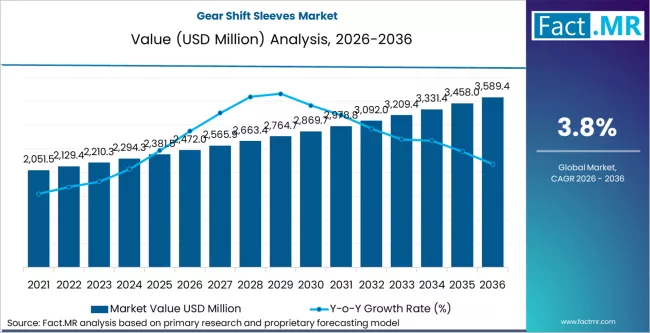
As Schaeffler and ZF restructure their portfolios to focus on electrification, they are de-prioritizing legacy components like shift sleeves for internal combustion engine (ICE) vehicles. However, companies such as Aisin and Magna are successfully transitioning, leveraging high-durability synchronizer sleeves for hybrid and EV applications.
"Electric vehicles demand more precise and seamless torque handover, which is where the shift sleeve’s role is evolving," says an executive at Magna International, emphasizing the precision needed for multi-speed transmissions. Regional market growth is being driven by Asia-Pacific and North America, where the demand for e-axles and hybrid drivetrains is accelerating. Green manufacturing has also become a key driver, with companies like Aisin achieving 100% renewable energy usage in their European production bases, setting a new standard for the industry. This evolution reflects the increasing integration of high-performance shifting solutions into the electric powertrain.
Gear Shift Sleeves Market
| Metric | Value |
|---|---|
| Estimated Value in (2026E) | USD 2,472.0 million |
| Forecast Value in (2036F) | USD 3,589.4 million |
| Forecast CAGR 2026 to 2036 | 3.8% |
Category
| Category | Segments |
|---|---|
| Transmission Type | Manual; AMT; DCT; Automatic |
| Material | Case-Hardened Steel; Sintered Metal; Composites; Others |
| Vehicle | Passenger Cars; LCV; M&HCV; Off-highway |
| Sales Channel | OEM; Aftermarket; Remanufactured; Tier-2 / Other |
| Region | North America; Europe; Asia Pacific; Latin America; Middle East & Africa |
Segmental Analysis
What Is the Impact of Transmission Type on the Gear Shift Sleeves Market?
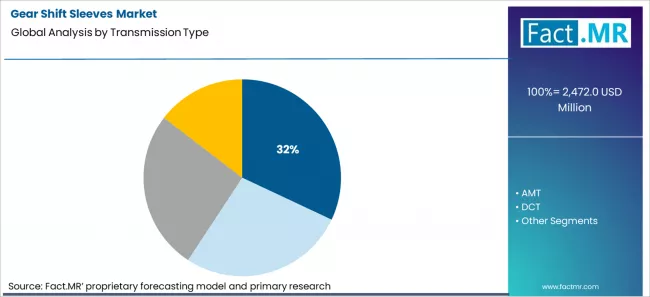
In the gear shift sleeves market, transmission type directly impacts the choice of gear shift sleeve designs due to their differing demands on torque handling, engagement precision, and durability. Manual transmissions lead with a 32.0% market share, driven by their continued use in a variety of vehicle segments, particularly in regions where manual transmission is still preferred for driving engagement, lower cost, and fuel efficiency. Despite the global shift towards automatic transmissions, manual gearboxes remain essential in performance cars and entry-level vehicles, where the driver’s control over the gear shift is highly valued. Furthermore, the manual transmission market is sustained by cost-conscious consumers in certain regions, who prefer the affordability of manual vehicles. The reliability and lower maintenance costs of gear shift sleeves designed for manual transmissions are key factors driving their demand.
How Does Material Influence Demand in the Gear Shift Sleeves Market?
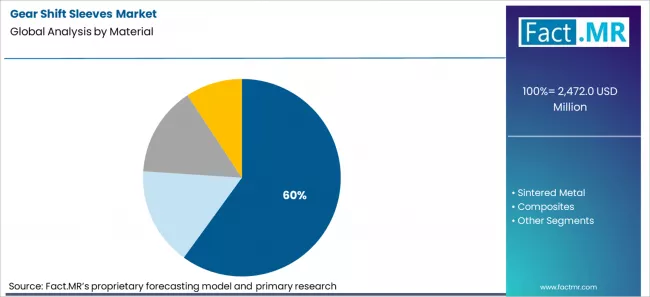
Case-hardened steel holds the leading position in the market with a 60.0% share due to its exceptional ability to withstand the high-stress conditions typical of automotive gearboxes. In particular, case-hardened steel offers the required combination of surface hardness and core toughness, essential for manual and automatic transmissions, where frequent engagement and disengagement are common. This material is favored for heavy-duty applications, where durability and long-lasting performance are paramount. Its dominance is reinforced by its ability to maintain dimensional stability under high torque conditions, making it suitable for use in high-performance vehicles, including luxury cars and commercial vehicles. The growing need for reliable, low-maintenance gear shift components in both manual and automatic transmission systems further propels the demand for case-hardened steel.
What are the Drivers, Restraints, and Key Trends in the Gear Shift Sleeves Market?
- Drivers: Demand for gear shift sleeves is primarily driven by shifts in global transmission architectures and the performance demands of specific vehicle segments. In 2025-26, manual transmissions remain significant in light commercial vehicles and entry level passenger cars in India, Southeast Asia and parts of Latin America, keeping demand for precision shift sleeves active. Truck and bus OEMs in North America and Europe specify sleeves with hardened surfaces to maintain synchronization precision under high torque and thermal cycling associated with stop start urban operations.
- Restraints: Market growth is uneven because the rise of direct drive electric vehicles (EVs) erodes demand for multi gear transmissions in many developed markets. EVs from leading manufacturers in Europe and China require only single speed gearsets, which eliminate shift sleeve requirements entirely. In regions with high adoption of AMTs (automated manual transmissions) rather than traditional manuals, demand patterns shift to sleeves designed for automation actuation forces rather than purely human shift loads, which fragment specifications and increase engineering effort per series.
- Trend 1: Gear shift sleeve producers are increasingly specializing in material specific grade families tailored to transmission type and control logic.
- Trend 2: Major transmission tier suppliers are integrating in line optical and contactless measurement systems directly into sleeve machining workflows.
Analysis of the Gear Shift Sleeves Market by Key Country
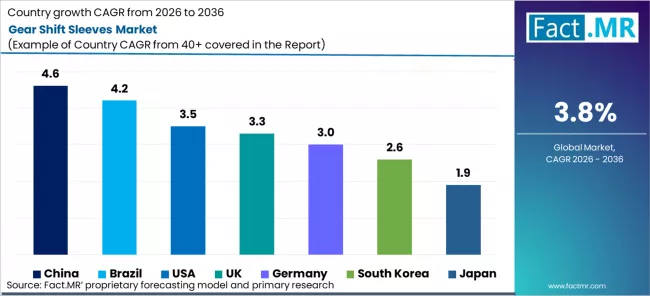
| Country | CAGR (%) |
|---|---|
| China | 4.6% |
| Brazil | 4.2% |
| USA | 3.5% |
| UK | 3.3% |
| Germany | 3.0% |
| South Korea | 2.6% |
| Japan | 1.9% |
The report covers an in-depth analysis of 40+ countries; top-performing countries are highlighted below.
What drives growth in China for gear shift sleeves?
China is projected to grow at 4.6% CAGR, underpinned by its enormous automotive production and burgeoning domestic market. China remains the world’s largest vehicle manufacturer, producing over 20 million units annually prior to 2024, with a significant percentage involving automatic and dual clutch transmissions that require high precision gear shift sleeves. According to China Association of Automobile Manufacturers (CAAM) data, demand for transmission components is supported by robust local production and the expansion of domestic automakers into global markets.
“We are seeing continuous demand for precision transmission parts as automakers optimize shift quality and transmission lifespan,” states Li Wei, Director of Components at a major Chinese supplier.
What fuels the rapid rise in Brazil?
Brazil’s gear shift sleeves market is expected to grow at 4.2% CAGR, driven by sustained production of passenger and commercial vehicles and a large installed base that sustains replacement demand. Brazil’s automotive sector remains a key industrial pillar, with local manufacturers producing millions of vehicles annually and strong regional export ties across South America. The Automotive Manufacturers Association (ANFAVEA) reports that transmissions with manual and automated manual configurations remain prevalent in regional fleets, particularly in cost sensitive segments where durability and serviceability are priorities.
“Durable transmission components are essential for fleets operating in diverse Brazilian terrains, and precision sleeves contribute directly to reliability,” explains Carlos Souza, Head of Powertrain Engineering at a regional OEM.
How is the USA market evolving in the Gear Shift Sleeves sector?
The USA market is forecast to grow at 3.5%, a pace that reflects a stable automotive manufacturing and aftermarket landscape where transmission systems remain a focal point of drivetrain refinement. Demand for gear shift sleeves in the United States continues despite electrification because automatic, manual, and dual clutch transmissions still account for a significant portion of light vehicle sales and aftermarket rebuilds. According to the Motor & Equipment Manufacturers Association (MEMA), North America’s transmission parts segment, including synchronizers and shift mechanisms, remains resilient due to ongoing vehicle maintenance and replacement activity.
“Precision in transmission components directly impacts shift feel and durability, and that continues to drive investment in high quality sleeves,” says James Putnam, Senior Engineer at a U.S. transmission supplier.
Although electrified powertrains reduce the number of traditional shift components, hybrid systems and performance vehicles still depend on advanced gear shift sleeves, underpinning steady demand.
Why is the UK market critical for gear shift sleeves?
The UK market is expanding at 3.3%, driven by both domestic vehicle production and the strength of its automotive engineering sector, particularly in performance and specialty vehicles. The UK’s automotive ecosystem, including suppliers serving brands such as Jaguar Land Rover and niche sports car manufacturers, places a premium on transmission reliability and responsiveness. Gear shift sleeves are integral to achieving precise engagement in manual, automated manual, and dual clutch transmissions widely used in these segments.Professor David Crolla, Head of Automotive Engineering at Loughborough University, comments.
“Transmission refinement defines vehicle dynamics, and components like gear shift sleeves remain crucial even as electrification progresses.”
The UK’s aftermarket for European imports also bolsters demand, as high vehicle parc age supports continuous replacement activity.
What is driving expansion in Germany?
Germany is projected to grow at 3.0% CAGR, anchored in its reputation as an automotive engineering and technology leader. German manufacturers emphasize transmission refinement to balance performance and efficiency, driving demand for high precision gear shift sleeves. The VDA (German Association of the Automotive Industry) highlights that even as EV adoption accelerates, hybrid and high performance segments still represent a meaningful share of production that relies on refined transmission mechanics.
“In precision engineering, every component must meet exacting standards, and transmission sleeves are no exception,” says Dr. Katrin Müller, Senior Powertrain Specialist at a German automotive firm.
Germany’s aftermarket for premium European vehicles also supports ongoing replacement demand for transmission components.
How is South Korea shaping demand for gear shift sleeves?
South Korea’s market is growing at 2.6% CAGR, supported by strong automotive production and export performance. Major Korean OEMs produce millions of vehicles annually, with a substantial portion featuring automatic and dual clutch gearbox systems where gear shift sleeves play a critical role. As Korean manufacturers push into higher transmission efficiencies and refinement, demand continues for precision engineered sleeves that withstand rigorous operational profiles.
“In competitive global markets, transmission component quality is a differentiator, and we continue to invest in durable sleeves for both OEM and service applications,” notes Ji Ho Kong, Transmission Systems Manager at a leading Korean Tier 1 supplier.
What fuels the gradual rise in Japan?
Japan’s gear shift sleeves market is forecast to grow at 1.9% CAGR, reflecting a more conservative growth environment influenced by slower vehicle production expansion and earlier electrification adoption compared with peers. Japanese automakers are global leaders in reliability, and transmission design continues to emphasize durability and refined shift quality, especially in hybrid models that still depend on complex gearbox systems. According to Japan Automobile Manufacturers Association (JAMA) data, even with electrification trends, significant production volumes of automatic and hybrid transmissions sustain stable demand for gear shift sleeves.
“Transmission components in Japanese vehicles have always been engineered for longevity, and this continues to sustain replacement markets,” explains Yoshihiko Tanaka, Senior Powertrain Engineer.
The domestic aftermarket also supports consistent replacement activity due to the large existing vehicle fleet.
What Strategic Moves Are Defining Competitive Landscape?
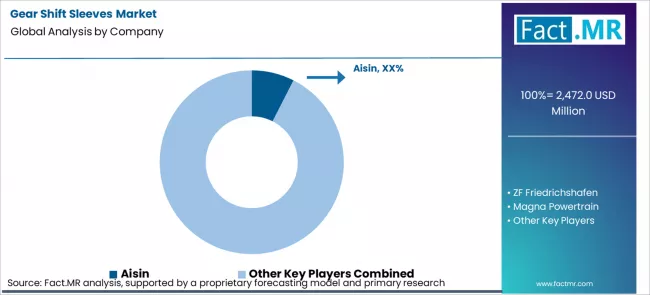
The gear shift sleeves market is navigating a transition where the ability to integrate digital precision into heavy-duty mechanical components determines long-term profitability. Fact.MR analysis indicates that the competitive landscape is being reshaped by a move toward shift-by-wire and modular powertrain architectures that prioritize both weight reduction and electronic response. The industry is focusing on the synergy between software-defined control and structural integrity which represents the next frontier of value creation in the automotive supply chain. Klaus Rosenfeld, CEO of Schaeffler, noted this shift toward a more intelligent approach to motion technology.
'As a pioneer in motion technology we are demonstrating how our advanced solutions are accelerating the digital transformation of key industries by seamlessly combining mechanical excellence with digital intelligence.' - Klaus Rosenfeld, CEO of Schaeffler
Companies like ZF Friedrichshafen and BorgWarner are leveraging their leadership in electrification to establish the next generation of drivetrain standards. The competitors like Magna and Eaton are optimizing their portfolios to support a resilient mix of hybrid and electric applications. This strategic pivot ensures they remain indispensable as the global market moves away from simple gear engagement toward fully automated and highly efficient power delivery systems.
Key Players in the Gear Shift Sleeves Market
- Aisin
- ZF Friedrichshafen
- Magna Powertrain
- BorgWarner
- Tremec
- Schaeffler
- Eaton
- Hyundai Transys
- Linamar
- Musashi Seimitsu
Scope of the Report
| Items | Values |
|---|---|
| Quantitative Units | USD million |
| Transmission Type | Manual; AMT; DCT; Automatic |
| Material | Case-Hardened Steel; Sintered Metal; Composites; Others |
| Vehicle | Passenger Cars; LCV; M&HCV; Off-highway |
| Sales Channel | OEM; Aftermarket; Remanufactured; Tier-2 / Other |
| Regions Covered | Asia Pacific, Europe, North America, Latin America, Middle East & Africa |
| Countries Covered | China; Brazil; USA; UK; Germany; South Korea; Japan |
| Key Companies Profiled | Aisin; ZF Friedrichshafen; Magna Powertrain; BorgWarner; Tremec; Schaeffler; Eaton; Hyundai Transys; Linamar; Musashi Seimitsu |
| Additional Attributes | Dollar sales by transmission type, material, and vehicle segment; market trends in AMT and DCT systems; impact of electric vehicles on demand for gear shift components; regional market differences driven by consumer preferences and regulations; growth in commercial vehicle applications and their specific requirements for durability. |
Gear Shift Sleeves Market Key Segment
-
Transmission Type :
- Manual
- AMT
- DCT
- Automatic
-
Material :
- Case-Hardened Steel
- Sintered Metal
- Composites
- Others
-
Vehicle :
- Passenger Cars
- LCV
- M&HCV
- Off-highway
-
Sales Channel :
- OEM
- Aftermarket
- Remanufactured
- Tier-2 / Other
-
Region :
- North America
- USA
- Canada
- Mexico
- Europe
- Germany
- UK
- France
- Italy
- Spain
- Nordic Countries
- BENELUX
- Rest of Europe
- Asia Pacific
- China
- Japan
- South Korea
- India
- Australia
- Rest of Asia Pacific
- Latin America
- Brazil
- Argentina
- Rest of Latin America
- Middle East and Africa
- Kingdom of Saudi Arabia
- United Arab Emirates
- South Africa
- Rest of Middle East and Africa
- Other Regions
- Oceania
- Central Asia
- Other Markets
- North America
Bibliographies
- International Organization for Standardization. (2023). ISO 6336-1: Calculation of load capacity of spur and helical gears-Basic principles. ISO.
- SAE International. (2024). SAE J3067: Synchronizer and shift system performance in manual and automated transmissions. SAE International.
- European Automobile Manufacturers’ Association. (2024). Powertrain technology outlook: Manual, hybrid, and automatic transmission persistence. ACEA.
- China Association of Automobile Manufacturers. (2024). Automotive transmission production and component demand report. CAAM.
Table of Content
- Executive Summary
- Global Market Outlook
- Demand to side Trends
- Supply to side Trends
- Technology Roadmap Analysis
- Analysis and Recommendations
- Market Overview
- Market Coverage / Taxonomy
- Market Definition / Scope / Limitations
- Research Methodology
- Chapter Orientation
- Analytical Lens and Working Hypotheses
- Market Structure, Signals, and Trend Drivers
- Benchmarking and Cross-market Comparability
- Market Sizing, Forecasting, and Opportunity Mapping
- Research Design and Evidence Framework
- Desk Research Programme (Secondary Evidence)
- Company Annual and Sustainability Reports
- Peer-reviewed Journals and Academic Literature
- Corporate Websites, Product Literature, and Technical Notes
- Earnings Decks and Investor Briefings
- Statutory Filings and Regulatory Disclosures
- Technical White Papers and Standards Notes
- Trade Journals, Industry Magazines, and Analyst Briefs
- Conference Proceedings, Webinars, and Seminar Materials
- Government Statistics Portals and Public Data Releases
- Press Releases and Reputable Media Coverage
- Specialist Newsletters and Curated Briefings
- Sector Databases and Reference Repositories
- FMR Internal Proprietary Databases and Historical Market Datasets
- Subscription Datasets and Paid Sources
- Social Channels, Communities, and Digital Listening Inputs
- Additional Desk Sources
- Expert Input and Fieldwork (Primary Evidence)
- Primary Modes
- Qualitative Interviews and Expert Elicitation
- Quantitative Surveys and Structured Data Capture
- Blended Approach
- Why Primary Evidence is Used
- Field Techniques
- Interviews
- Surveys
- Focus Groups
- Observational and In-context Research
- Social and Community Interactions
- Stakeholder Universe Engaged
- C-suite Leaders
- Board Members
- Presidents and Vice Presidents
- R&D and Innovation Heads
- Technical Specialists
- Domain Subject-matter Experts
- Scientists
- Physicians and Other Healthcare Professionals
- Governance, Ethics, and Data Stewardship
- Research Ethics
- Data Integrity and Handling
- Primary Modes
- Tooling, Models, and Reference Databases
- Desk Research Programme (Secondary Evidence)
- Data Engineering and Model Build
- Data Acquisition and Ingestion
- Cleaning, Normalisation, and Verification
- Synthesis, Triangulation, and Analysis
- Quality Assurance and Audit Trail
- Market Background
- Market Dynamics
- Drivers
- Restraints
- Opportunity
- Trends
- Scenario Forecast
- Demand in Optimistic Scenario
- Demand in Likely Scenario
- Demand in Conservative Scenario
- Opportunity Map Analysis
- Product Life Cycle Analysis
- Supply Chain Analysis
- Investment Feasibility Matrix
- Value Chain Analysis
- PESTLE and Porter’s Analysis
- Regulatory Landscape
- Regional Parent Market Outlook
- Production and Consumption Statistics
- Import and Export Statistics
- Market Dynamics
- Global Market Analysis 2021 to 2025 and Forecast, 2026 to 2036
- Historical Market Size Value (USD Million) Analysis, 2021 to 2025
- Current and Future Market Size Value (USD Million) Projections, 2026 to 2036
- Y to o to Y Growth Trend Analysis
- Absolute $ Opportunity Analysis
- Global Market Pricing Analysis 2021 to 2025 and Forecast 2026 to 2036
- Global Market Analysis 2021 to 2025 and Forecast 2026 to 2036, By Transmission Type
- Introduction / Key Findings
- Historical Market Size Value (USD Million) Analysis By Transmission Type, 2021 to 2025
- Current and Future Market Size Value (USD Million) Analysis and Forecast By Transmission Type, 2026 to 2036
- Manual
- AMT
- DCT
- Automatic
- Manual
- Y to o to Y Growth Trend Analysis By Transmission Type, 2021 to 2025
- Absolute $ Opportunity Analysis By Transmission Type, 2026 to 2036
- Global Market Analysis 2021 to 2025 and Forecast 2026 to 2036, By Material
- Introduction / Key Findings
- Historical Market Size Value (USD Million) Analysis By Material, 2021 to 2025
- Current and Future Market Size Value (USD Million) Analysis and Forecast By Material, 2026 to 2036
- Case-Hardened Steel
- Sintered Metal
- Composites
- Others
- Case-Hardened Steel
- Y to o to Y Growth Trend Analysis By Material, 2021 to 2025
- Absolute $ Opportunity Analysis By Material, 2026 to 2036
- Global Market Analysis 2021 to 2025 and Forecast 2026 to 2036, By Vehicle
- Introduction / Key Findings
- Historical Market Size Value (USD Million) Analysis By Vehicle, 2021 to 2025
- Current and Future Market Size Value (USD Million) Analysis and Forecast By Vehicle, 2026 to 2036
- Passenger Cars
- LCV
- M&HCV
- Off-highway
- Passenger Cars
- Y to o to Y Growth Trend Analysis By Vehicle, 2021 to 2025
- Absolute $ Opportunity Analysis By Vehicle, 2026 to 2036
- Global Market Analysis 2021 to 2025 and Forecast 2026 to 2036, By Sales Channel
- Introduction / Key Findings
- Historical Market Size Value (USD Million) Analysis By Sales Channel, 2021 to 2025
- Current and Future Market Size Value (USD Million) Analysis and Forecast By Sales Channel, 2026 to 2036
- OEM
- Aftermarket
- Remanufactured
- Tier-2 / Other
- OEM
- Y to o to Y Growth Trend Analysis By Sales Channel, 2021 to 2025
- Absolute $ Opportunity Analysis By Sales Channel, 2026 to 2036
- Global Market Analysis 2021 to 2025 and Forecast 2026 to 2036, By Region
- Introduction
- Historical Market Size Value (USD Million) Analysis By Region, 2021 to 2025
- Current Market Size Value (USD Million) Analysis and Forecast By Region, 2026 to 2036
- North America
- Latin America
- Western Europe
- Eastern Europe
- East Asia
- South Asia and Pacific
- Middle East & Africa
- Market Attractiveness Analysis By Region
- North America Market Analysis 2021 to 2025 and Forecast 2026 to 2036, By Country
- Historical Market Size Value (USD Million) Trend Analysis By Market Taxonomy, 2021 to 2025
- Market Size Value (USD Million) Forecast By Market Taxonomy, 2026 to 2036
- By Country
- USA
- Canada
- Mexico
- By Transmission Type
- By Material
- By Vehicle
- By Sales Channel
- By Country
- Market Attractiveness Analysis
- By Country
- By Transmission Type
- By Material
- By Vehicle
- By Sales Channel
- Key Takeaways
- Latin America Market Analysis 2021 to 2025 and Forecast 2026 to 2036, By Country
- Historical Market Size Value (USD Million) Trend Analysis By Market Taxonomy, 2021 to 2025
- Market Size Value (USD Million) Forecast By Market Taxonomy, 2026 to 2036
- By Country
- Brazil
- Chile
- Rest of Latin America
- By Transmission Type
- By Material
- By Vehicle
- By Sales Channel
- By Country
- Market Attractiveness Analysis
- By Country
- By Transmission Type
- By Material
- By Vehicle
- By Sales Channel
- Key Takeaways
- Western Europe Market Analysis 2021 to 2025 and Forecast 2026 to 2036, By Country
- Historical Market Size Value (USD Million) Trend Analysis By Market Taxonomy, 2021 to 2025
- Market Size Value (USD Million) Forecast By Market Taxonomy, 2026 to 2036
- By Country
- Germany
- UK
- Italy
- Spain
- France
- Nordic
- BENELUX
- Rest of Western Europe
- By Transmission Type
- By Material
- By Vehicle
- By Sales Channel
- By Country
- Market Attractiveness Analysis
- By Country
- By Transmission Type
- By Material
- By Vehicle
- By Sales Channel
- Key Takeaways
- Eastern Europe Market Analysis 2021 to 2025 and Forecast 2026 to 2036, By Country
- Historical Market Size Value (USD Million) Trend Analysis By Market Taxonomy, 2021 to 2025
- Market Size Value (USD Million) Forecast By Market Taxonomy, 2026 to 2036
- By Country
- Russia
- Poland
- Hungary
- Balkan & Baltic
- Rest of Eastern Europe
- By Transmission Type
- By Material
- By Vehicle
- By Sales Channel
- By Country
- Market Attractiveness Analysis
- By Country
- By Transmission Type
- By Material
- By Vehicle
- By Sales Channel
- Key Takeaways
- East Asia Market Analysis 2021 to 2025 and Forecast 2026 to 2036, By Country
- Historical Market Size Value (USD Million) Trend Analysis By Market Taxonomy, 2021 to 2025
- Market Size Value (USD Million) Forecast By Market Taxonomy, 2026 to 2036
- By Country
- China
- Japan
- South Korea
- By Transmission Type
- By Material
- By Vehicle
- By Sales Channel
- By Country
- Market Attractiveness Analysis
- By Country
- By Transmission Type
- By Material
- By Vehicle
- By Sales Channel
- Key Takeaways
- South Asia and Pacific Market Analysis 2021 to 2025 and Forecast 2026 to 2036, By Country
- Historical Market Size Value (USD Million) Trend Analysis By Market Taxonomy, 2021 to 2025
- Market Size Value (USD Million) Forecast By Market Taxonomy, 2026 to 2036
- By Country
- India
- ASEAN
- Australia & New Zealand
- Rest of South Asia and Pacific
- By Transmission Type
- By Material
- By Vehicle
- By Sales Channel
- By Country
- Market Attractiveness Analysis
- By Country
- By Transmission Type
- By Material
- By Vehicle
- By Sales Channel
- Key Takeaways
- Middle East & Africa Market Analysis 2021 to 2025 and Forecast 2026 to 2036, By Country
- Historical Market Size Value (USD Million) Trend Analysis By Market Taxonomy, 2021 to 2025
- Market Size Value (USD Million) Forecast By Market Taxonomy, 2026 to 2036
- By Country
- Kingdom of Saudi Arabia
- Other GCC Countries
- Turkiye
- South Africa
- Other African Union
- Rest of Middle East & Africa
- By Transmission Type
- By Material
- By Vehicle
- By Sales Channel
- By Country
- Market Attractiveness Analysis
- By Country
- By Transmission Type
- By Material
- By Vehicle
- By Sales Channel
- Key Takeaways
- Key Countries Market Analysis
- USA
- Pricing Analysis
- Market Share Analysis, 2025
- By Transmission Type
- By Material
- By Vehicle
- By Sales Channel
- Canada
- Pricing Analysis
- Market Share Analysis, 2025
- By Transmission Type
- By Material
- By Vehicle
- By Sales Channel
- Mexico
- Pricing Analysis
- Market Share Analysis, 2025
- By Transmission Type
- By Material
- By Vehicle
- By Sales Channel
- Brazil
- Pricing Analysis
- Market Share Analysis, 2025
- By Transmission Type
- By Material
- By Vehicle
- By Sales Channel
- Chile
- Pricing Analysis
- Market Share Analysis, 2025
- By Transmission Type
- By Material
- By Vehicle
- By Sales Channel
- Germany
- Pricing Analysis
- Market Share Analysis, 2025
- By Transmission Type
- By Material
- By Vehicle
- By Sales Channel
- UK
- Pricing Analysis
- Market Share Analysis, 2025
- By Transmission Type
- By Material
- By Vehicle
- By Sales Channel
- Italy
- Pricing Analysis
- Market Share Analysis, 2025
- By Transmission Type
- By Material
- By Vehicle
- By Sales Channel
- Spain
- Pricing Analysis
- Market Share Analysis, 2025
- By Transmission Type
- By Material
- By Vehicle
- By Sales Channel
- France
- Pricing Analysis
- Market Share Analysis, 2025
- By Transmission Type
- By Material
- By Vehicle
- By Sales Channel
- India
- Pricing Analysis
- Market Share Analysis, 2025
- By Transmission Type
- By Material
- By Vehicle
- By Sales Channel
- ASEAN
- Pricing Analysis
- Market Share Analysis, 2025
- By Transmission Type
- By Material
- By Vehicle
- By Sales Channel
- Australia & New Zealand
- Pricing Analysis
- Market Share Analysis, 2025
- By Transmission Type
- By Material
- By Vehicle
- By Sales Channel
- China
- Pricing Analysis
- Market Share Analysis, 2025
- By Transmission Type
- By Material
- By Vehicle
- By Sales Channel
- Japan
- Pricing Analysis
- Market Share Analysis, 2025
- By Transmission Type
- By Material
- By Vehicle
- By Sales Channel
- South Korea
- Pricing Analysis
- Market Share Analysis, 2025
- By Transmission Type
- By Material
- By Vehicle
- By Sales Channel
- Russia
- Pricing Analysis
- Market Share Analysis, 2025
- By Transmission Type
- By Material
- By Vehicle
- By Sales Channel
- Poland
- Pricing Analysis
- Market Share Analysis, 2025
- By Transmission Type
- By Material
- By Vehicle
- By Sales Channel
- Hungary
- Pricing Analysis
- Market Share Analysis, 2025
- By Transmission Type
- By Material
- By Vehicle
- By Sales Channel
- Kingdom of Saudi Arabia
- Pricing Analysis
- Market Share Analysis, 2025
- By Transmission Type
- By Material
- By Vehicle
- By Sales Channel
- Turkiye
- Pricing Analysis
- Market Share Analysis, 2025
- By Transmission Type
- By Material
- By Vehicle
- By Sales Channel
- South Africa
- Pricing Analysis
- Market Share Analysis, 2025
- By Transmission Type
- By Material
- By Vehicle
- By Sales Channel
- USA
- Market Structure Analysis
- Competition Dashboard
- Competition Benchmarking
- Market Share Analysis of Top Players
- By Regional
- By Transmission Type
- By Material
- By Vehicle
- By Sales Channel
- Competition Analysis
- Competition Deep Dive
- Aisin
- Overview
- Product Portfolio
- Profitability by Market Segments (Product/Age /Sales Channel/Region)
- Sales Footprint
- Strategy Overview
- Marketing Strategy
- Product Strategy
- Channel Strategy
- ZF Friedrichshafen
- Magna Powertrain
- BorgWarner
- Tremec
- Schaeffler
- Eaton
- Hyundai Transys
- Linamar
- Musashi Seimitsu
- Aisin
- Competition Deep Dive
- Assumptions & Acronyms Used
List Of Table
- Table 1: Global Market Value (USD Million) Forecast by Region, 2021 to 2036
- Table 2: Global Market Value (USD Million) Forecast by Transmission Type, 2021 to 2036
- Table 3: Global Market Value (USD Million) Forecast by Material, 2021 to 2036
- Table 4: Global Market Value (USD Million) Forecast by Vehicle, 2021 to 2036
- Table 5: Global Market Value (USD Million) Forecast by Sales Channel, 2021 to 2036
- Table 6: North America Market Value (USD Million) Forecast by Country, 2021 to 2036
- Table 7: North America Market Value (USD Million) Forecast by Transmission Type, 2021 to 2036
- Table 8: North America Market Value (USD Million) Forecast by Material, 2021 to 2036
- Table 9: North America Market Value (USD Million) Forecast by Vehicle, 2021 to 2036
- Table 10: North America Market Value (USD Million) Forecast by Sales Channel, 2021 to 2036
- Table 11: Latin America Market Value (USD Million) Forecast by Country, 2021 to 2036
- Table 12: Latin America Market Value (USD Million) Forecast by Transmission Type, 2021 to 2036
- Table 13: Latin America Market Value (USD Million) Forecast by Material, 2021 to 2036
- Table 14: Latin America Market Value (USD Million) Forecast by Vehicle, 2021 to 2036
- Table 15: Latin America Market Value (USD Million) Forecast by Sales Channel, 2021 to 2036
- Table 16: Western Europe Market Value (USD Million) Forecast by Country, 2021 to 2036
- Table 17: Western Europe Market Value (USD Million) Forecast by Transmission Type, 2021 to 2036
- Table 18: Western Europe Market Value (USD Million) Forecast by Material, 2021 to 2036
- Table 19: Western Europe Market Value (USD Million) Forecast by Vehicle, 2021 to 2036
- Table 20: Western Europe Market Value (USD Million) Forecast by Sales Channel, 2021 to 2036
- Table 21: Eastern Europe Market Value (USD Million) Forecast by Country, 2021 to 2036
- Table 22: Eastern Europe Market Value (USD Million) Forecast by Transmission Type, 2021 to 2036
- Table 23: Eastern Europe Market Value (USD Million) Forecast by Material, 2021 to 2036
- Table 24: Eastern Europe Market Value (USD Million) Forecast by Vehicle, 2021 to 2036
- Table 25: Eastern Europe Market Value (USD Million) Forecast by Sales Channel, 2021 to 2036
- Table 26: East Asia Market Value (USD Million) Forecast by Country, 2021 to 2036
- Table 27: East Asia Market Value (USD Million) Forecast by Transmission Type, 2021 to 2036
- Table 28: East Asia Market Value (USD Million) Forecast by Material, 2021 to 2036
- Table 29: East Asia Market Value (USD Million) Forecast by Vehicle, 2021 to 2036
- Table 30: East Asia Market Value (USD Million) Forecast by Sales Channel, 2021 to 2036
- Table 31: South Asia and Pacific Market Value (USD Million) Forecast by Country, 2021 to 2036
- Table 32: South Asia and Pacific Market Value (USD Million) Forecast by Transmission Type, 2021 to 2036
- Table 33: South Asia and Pacific Market Value (USD Million) Forecast by Material, 2021 to 2036
- Table 34: South Asia and Pacific Market Value (USD Million) Forecast by Vehicle, 2021 to 2036
- Table 35: South Asia and Pacific Market Value (USD Million) Forecast by Sales Channel, 2021 to 2036
- Table 36: Middle East & Africa Market Value (USD Million) Forecast by Country, 2021 to 2036
- Table 37: Middle East & Africa Market Value (USD Million) Forecast by Transmission Type, 2021 to 2036
- Table 38: Middle East & Africa Market Value (USD Million) Forecast by Material, 2021 to 2036
- Table 39: Middle East & Africa Market Value (USD Million) Forecast by Vehicle, 2021 to 2036
- Table 40: Middle East & Africa Market Value (USD Million) Forecast by Sales Channel, 2021 to 2036
List Of Figures
- Figure 1: Global Market Pricing Analysis
- Figure 2: Global Market Value (USD Million) Forecast 2021 to 2036
- Figure 3: Global Market Value Share and BPS Analysis by Transmission Type, 2026 and 2036
- Figure 4: Global Market Y to o to Y Growth Comparison by Transmission Type, 2026 to 2036
- Figure 5: Global Market Attractiveness Analysis by Transmission Type
- Figure 6: Global Market Value Share and BPS Analysis by Material, 2026 and 2036
- Figure 7: Global Market Y to o to Y Growth Comparison by Material, 2026 to 2036
- Figure 8: Global Market Attractiveness Analysis by Material
- Figure 9: Global Market Value Share and BPS Analysis by Vehicle, 2026 and 2036
- Figure 10: Global Market Y to o to Y Growth Comparison by Vehicle, 2026 to 2036
- Figure 11: Global Market Attractiveness Analysis by Vehicle
- Figure 12: Global Market Value Share and BPS Analysis by Sales Channel, 2026 and 2036
- Figure 13: Global Market Y to o to Y Growth Comparison by Sales Channel, 2026 to 2036
- Figure 14: Global Market Attractiveness Analysis by Sales Channel
- Figure 15: Global Market Value (USD Million) Share and BPS Analysis by Region, 2026 and 2036
- Figure 16: Global Market Y to o to Y Growth Comparison by Region, 2026 to 2036
- Figure 17: Global Market Attractiveness Analysis by Region
- Figure 18: North America Market Incremental Dollar Opportunity, 2026 to 2036
- Figure 19: Latin America Market Incremental Dollar Opportunity, 2026 to 2036
- Figure 20: Western Europe Market Incremental Dollar Opportunity, 2026 to 2036
- Figure 21: Eastern Europe Market Incremental Dollar Opportunity, 2026 to 2036
- Figure 22: East Asia Market Incremental Dollar Opportunity, 2026 to 2036
- Figure 23: South Asia and Pacific Market Incremental Dollar Opportunity, 2026 to 2036
- Figure 24: Middle East & Africa Market Incremental Dollar Opportunity, 2026 to 2036
- Figure 25: North America Market Value Share and BPS Analysis by Country, 2026 and 2036
- Figure 26: North America Market Value Share and BPS Analysis by Transmission Type, 2026 and 2036
- Figure 27: North America Market Y to o to Y Growth Comparison by Transmission Type, 2026 to 2036
- Figure 28: North America Market Attractiveness Analysis by Transmission Type
- Figure 29: North America Market Value Share and BPS Analysis by Material, 2026 and 2036
- Figure 30: North America Market Y to o to Y Growth Comparison by Material, 2026 to 2036
- Figure 31: North America Market Attractiveness Analysis by Material
- Figure 32: North America Market Value Share and BPS Analysis by Vehicle, 2026 and 2036
- Figure 33: North America Market Y to o to Y Growth Comparison by Vehicle, 2026 to 2036
- Figure 34: North America Market Attractiveness Analysis by Vehicle
- Figure 35: North America Market Value Share and BPS Analysis by Sales Channel, 2026 and 2036
- Figure 36: North America Market Y to o to Y Growth Comparison by Sales Channel, 2026 to 2036
- Figure 37: North America Market Attractiveness Analysis by Sales Channel
- Figure 38: Latin America Market Value Share and BPS Analysis by Country, 2026 and 2036
- Figure 39: Latin America Market Value Share and BPS Analysis by Transmission Type, 2026 and 2036
- Figure 40: Latin America Market Y to o to Y Growth Comparison by Transmission Type, 2026 to 2036
- Figure 41: Latin America Market Attractiveness Analysis by Transmission Type
- Figure 42: Latin America Market Value Share and BPS Analysis by Material, 2026 and 2036
- Figure 43: Latin America Market Y to o to Y Growth Comparison by Material, 2026 to 2036
- Figure 44: Latin America Market Attractiveness Analysis by Material
- Figure 45: Latin America Market Value Share and BPS Analysis by Vehicle, 2026 and 2036
- Figure 46: Latin America Market Y to o to Y Growth Comparison by Vehicle, 2026 to 2036
- Figure 47: Latin America Market Attractiveness Analysis by Vehicle
- Figure 48: Latin America Market Value Share and BPS Analysis by Sales Channel, 2026 and 2036
- Figure 49: Latin America Market Y to o to Y Growth Comparison by Sales Channel, 2026 to 2036
- Figure 50: Latin America Market Attractiveness Analysis by Sales Channel
- Figure 51: Western Europe Market Value Share and BPS Analysis by Country, 2026 and 2036
- Figure 52: Western Europe Market Value Share and BPS Analysis by Transmission Type, 2026 and 2036
- Figure 53: Western Europe Market Y to o to Y Growth Comparison by Transmission Type, 2026 to 2036
- Figure 54: Western Europe Market Attractiveness Analysis by Transmission Type
- Figure 55: Western Europe Market Value Share and BPS Analysis by Material, 2026 and 2036
- Figure 56: Western Europe Market Y to o to Y Growth Comparison by Material, 2026 to 2036
- Figure 57: Western Europe Market Attractiveness Analysis by Material
- Figure 58: Western Europe Market Value Share and BPS Analysis by Vehicle, 2026 and 2036
- Figure 59: Western Europe Market Y to o to Y Growth Comparison by Vehicle, 2026 to 2036
- Figure 60: Western Europe Market Attractiveness Analysis by Vehicle
- Figure 61: Western Europe Market Value Share and BPS Analysis by Sales Channel, 2026 and 2036
- Figure 62: Western Europe Market Y to o to Y Growth Comparison by Sales Channel, 2026 to 2036
- Figure 63: Western Europe Market Attractiveness Analysis by Sales Channel
- Figure 64: Eastern Europe Market Value Share and BPS Analysis by Country, 2026 and 2036
- Figure 65: Eastern Europe Market Value Share and BPS Analysis by Transmission Type, 2026 and 2036
- Figure 66: Eastern Europe Market Y to o to Y Growth Comparison by Transmission Type, 2026 to 2036
- Figure 67: Eastern Europe Market Attractiveness Analysis by Transmission Type
- Figure 68: Eastern Europe Market Value Share and BPS Analysis by Material, 2026 and 2036
- Figure 69: Eastern Europe Market Y to o to Y Growth Comparison by Material, 2026 to 2036
- Figure 70: Eastern Europe Market Attractiveness Analysis by Material
- Figure 71: Eastern Europe Market Value Share and BPS Analysis by Vehicle, 2026 and 2036
- Figure 72: Eastern Europe Market Y to o to Y Growth Comparison by Vehicle, 2026 to 2036
- Figure 73: Eastern Europe Market Attractiveness Analysis by Vehicle
- Figure 74: Eastern Europe Market Value Share and BPS Analysis by Sales Channel, 2026 and 2036
- Figure 75: Eastern Europe Market Y to o to Y Growth Comparison by Sales Channel, 2026 to 2036
- Figure 76: Eastern Europe Market Attractiveness Analysis by Sales Channel
- Figure 77: East Asia Market Value Share and BPS Analysis by Country, 2026 and 2036
- Figure 78: East Asia Market Value Share and BPS Analysis by Transmission Type, 2026 and 2036
- Figure 79: East Asia Market Y to o to Y Growth Comparison by Transmission Type, 2026 to 2036
- Figure 80: East Asia Market Attractiveness Analysis by Transmission Type
- Figure 81: East Asia Market Value Share and BPS Analysis by Material, 2026 and 2036
- Figure 82: East Asia Market Y to o to Y Growth Comparison by Material, 2026 to 2036
- Figure 83: East Asia Market Attractiveness Analysis by Material
- Figure 84: East Asia Market Value Share and BPS Analysis by Vehicle, 2026 and 2036
- Figure 85: East Asia Market Y to o to Y Growth Comparison by Vehicle, 2026 to 2036
- Figure 86: East Asia Market Attractiveness Analysis by Vehicle
- Figure 87: East Asia Market Value Share and BPS Analysis by Sales Channel, 2026 and 2036
- Figure 88: East Asia Market Y to o to Y Growth Comparison by Sales Channel, 2026 to 2036
- Figure 89: East Asia Market Attractiveness Analysis by Sales Channel
- Figure 90: South Asia and Pacific Market Value Share and BPS Analysis by Country, 2026 and 2036
- Figure 91: South Asia and Pacific Market Value Share and BPS Analysis by Transmission Type, 2026 and 2036
- Figure 92: South Asia and Pacific Market Y to o to Y Growth Comparison by Transmission Type, 2026 to 2036
- Figure 93: South Asia and Pacific Market Attractiveness Analysis by Transmission Type
- Figure 94: South Asia and Pacific Market Value Share and BPS Analysis by Material, 2026 and 2036
- Figure 95: South Asia and Pacific Market Y to o to Y Growth Comparison by Material, 2026 to 2036
- Figure 96: South Asia and Pacific Market Attractiveness Analysis by Material
- Figure 97: South Asia and Pacific Market Value Share and BPS Analysis by Vehicle, 2026 and 2036
- Figure 98: South Asia and Pacific Market Y to o to Y Growth Comparison by Vehicle, 2026 to 2036
- Figure 99: South Asia and Pacific Market Attractiveness Analysis by Vehicle
- Figure 100: South Asia and Pacific Market Value Share and BPS Analysis by Sales Channel, 2026 and 2036
- Figure 101: South Asia and Pacific Market Y to o to Y Growth Comparison by Sales Channel, 2026 to 2036
- Figure 102: South Asia and Pacific Market Attractiveness Analysis by Sales Channel
- Figure 103: Middle East & Africa Market Value Share and BPS Analysis by Country, 2026 and 2036
- Figure 104: Middle East & Africa Market Value Share and BPS Analysis by Transmission Type, 2026 and 2036
- Figure 105: Middle East & Africa Market Y to o to Y Growth Comparison by Transmission Type, 2026 to 2036
- Figure 106: Middle East & Africa Market Attractiveness Analysis by Transmission Type
- Figure 107: Middle East & Africa Market Value Share and BPS Analysis by Material, 2026 and 2036
- Figure 108: Middle East & Africa Market Y to o to Y Growth Comparison by Material, 2026 to 2036
- Figure 109: Middle East & Africa Market Attractiveness Analysis by Material
- Figure 110: Middle East & Africa Market Value Share and BPS Analysis by Vehicle, 2026 and 2036
- Figure 111: Middle East & Africa Market Y to o to Y Growth Comparison by Vehicle, 2026 to 2036
- Figure 112: Middle East & Africa Market Attractiveness Analysis by Vehicle
- Figure 113: Middle East & Africa Market Value Share and BPS Analysis by Sales Channel, 2026 and 2036
- Figure 114: Middle East & Africa Market Y to o to Y Growth Comparison by Sales Channel, 2026 to 2036
- Figure 115: Middle East & Africa Market Attractiveness Analysis by Sales Channel
- Figure 116: Global Market - Tier Structure Analysis
- Figure 117: Global Market - Company Share Analysis
- FAQs -
How big is the gear shift sleeves market in 2026?
The global gear shift sleeves market is estimated to be valued at USD 2,472.0 million in 2026.
What will be the size of gear shift sleeves market in 2036?
The market size for the gear shift sleeves market is projected to reach USD 3,589.4 million by 2036.
How much will be the gear shift sleeves market growth between 2026 and 2036?
The gear shift sleeves market is expected to grow at a 3.8% CAGR between 2026 and 2036.
What are the key product types in the gear shift sleeves market?
The key product types in gear shift sleeves market are manual, amt, dct and automatic.
Which material segment to contribute significant share in the gear shift sleeves market in 2026?
In terms of material, case-hardened steel segment to command 60.0% share in the gear shift sleeves market in 2026.