Heat Stable Plant Protein Texturizing Agents Market
Heat Stable Plant Protein Texturizing Agents Market Size and Share Forecast Outlook 2026 to 2036
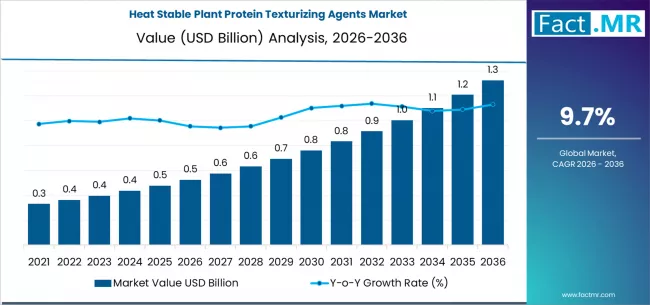
Heat stable plant protein texturizing agents market is projected to grow from USD 0.5 billion in 2026 to USD 1.3 billion by 2036, at a CAGR of 9.7%. Dairy/Alt-Dairy will dominate with a 46.7% market share, while pea will lead the source segment with a 45.2% share.
Heat Stable Plant Protein Texturizing Agents Market Forecast and Outlook 2026 to 2036
The global market for heat stable plant protein texturizing agents is projected to grow from USD 0.53 billion in 2026 to USD 1.33 billion by 2036, advancing at a CAGR of 9.7%.
This market addresses a critical technical need within the booming plant-based food industry, supplying specialized protein ingredients that maintain structural integrity, viscosity, and mouthfeel under high-temperature processing conditions such as retorting, ultra-high-temperature treatment, baking, and extrusion.
Key Takeaways from the Heat Stable Plant Protein Texturizing Agents Market (Last Updated on 31 December 2025)
- Market Value for 2026: USD 0.53 Billion
- Market Value for 2036: USD 1.33 Billion
- Forecast CAGR (2026-2036): 9.7%
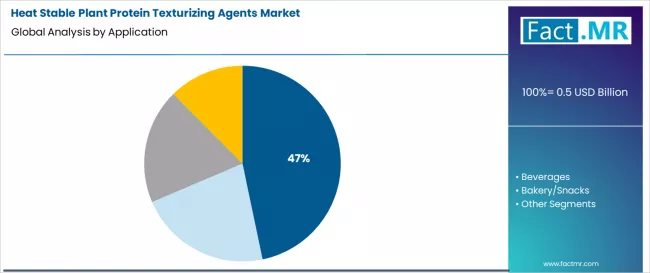
- Leading Application Segment (2026): Dairy/Alt-Dairy (47%)
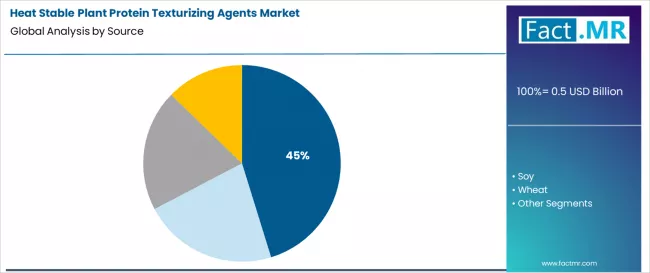
- Leading Source Segment (2026): Pea (45%)
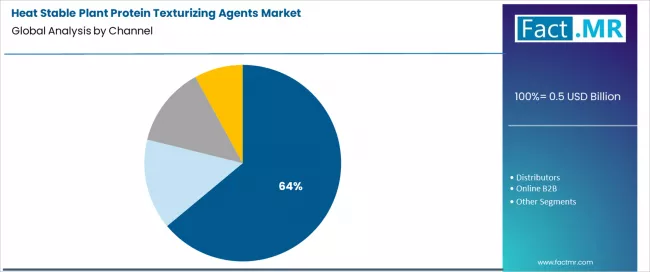
- Leading Channel Segment (2026): Direct-to-B2B (64%)
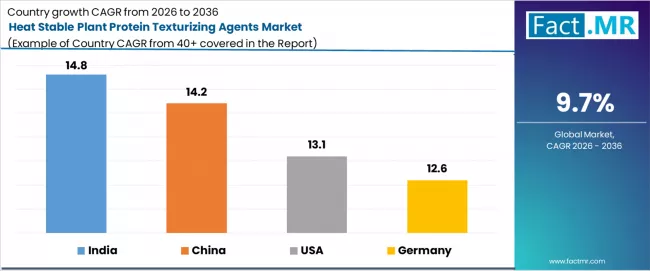
- Key Growth Countries: India (14.8% CAGR), China (14.2% CAGR), USA (13.1% CAGR), Germany (12.6% CAGR)
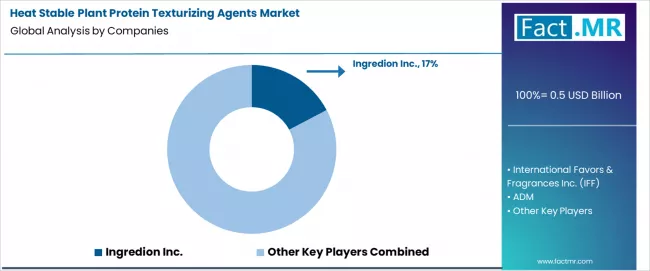
- Key Players in the Market: Ingredion Inc., International Flavors & Fragrances Inc. (IFF), ADM, Kerry Group, Tate & Lyle Public Limited Company, Cargill Incorporated

These agents are essential for replicating the sensory and functional qualities of animal-derived proteins in a wide array of applications, enabling the production of shelf-stable, clean-label, and high-quality plant-based products.
Growth is fueled by the accelerating mainstream adoption of plant-based diets and the corresponding demand for sophisticated meat, dairy, and seafood alternatives that do not compromise on texture or convenience. Heat stability is a non-negotiable requirement for products sold in ambient shelves, ready-meals, and hot-serving formats.
The market’s expansion reflects the progression from simple protein fortification to advanced food structuring, where plant proteins are engineered to provide gelling, emulsification, water-binding, and fibrous texture even after thermal stress, directly impacting consumer acceptance and product success.
The evolution of this market centers on protein modification and blending technologies that enhance thermal resilience without relying on synthetic additives. Success depends on overcoming the innate sensitivity of many plant proteins to heat-induced denaturation and aggregation. Innovation is focused on creating label-friendly solutions that deliver consistent performance, allowing food manufacturers to scale production of heat-processed plant-based foods with reliable quality.
Metric
| Metric | Value |
|---|---|
| Market Value (2026) | USD 0.53 Billion |
| Market Forecast Value (2036) | USD 1.33 Billion |
| Forecast CAGR (2026-2036) | 9.7% |
Category
| Category | Segments |
|---|---|
| Application | Dairy/Alt-Dairy, Beverages, Bakery/Snacks, Meat/Alt-Meat |
| Source | Pea, Soy, Wheat, Fava/Chickpea |
| Channel | Direct-to-B2B, Distributors, Online B2B, Contract Manufacturing |
| Region | North America, Latin America, Western Europe, Eastern Europe, East Asia, South Asia & Pacific, MEA |
Segmental Analysis
By Application, Which Sector Demands the Most Advanced Functionality?

The dairy/alt-dairy segment leads with a 47% share. This application includes plant-based milks, yogurts, creamers, and cheeses that often undergo UHT processing or hot-fill packaging to ensure shelf stability.
Heat-stable texturizing agents are critical here to prevent protein sedimentation, phase separation, and undesirable graininess after thermal treatment, directly influencing product aesthetics, mouthfeel, and consumer perception in a highly competitive category.
By Source, Which Protein Offers a Balance of Function and Clean-Label Appeal?

Pea protein is the dominant source, holding a 45% share. Its leadership is attributed to a favorable combination of a neutral flavor profile, high protein content, non-GMO and allergen-friendly positioning, and improving functional properties.
Through isolation and modification, pea protein can be engineered to exhibit excellent heat-induced gelling and water-binding, making it a versatile foundation for texturizing blends in everything from alt-meats to nutritional beverages.
By Channel, How are Heat Stable Plant Protein Texturizing Agents Distributed?

Direct-to-B2B sales are the predominant channel at 64%. Developing successful heat-stable formulations requires deep technical collaboration and co-development between ingredient suppliers and food manufacturers.
Direct relationships facilitate this necessary exchange, allowing for customization of agents to specific processing lines and final product requirements, ensuring seamless integration into complex manufacturing processes.
What are the Drivers, Restraints, and Key Trends of the Heat Stable Plant Protein Texturizing Agents Market?
The primary driver is the sustained global growth of the plant-based food sector and the parallel need for ambient-stable, convenient formats. Consumer rejection of products with poor or unstable texture creates a clear demand for high-performance ingredients. The clean-label movement pushes manufacturers to find plant-based, recognizable alternatives to traditional synthetic texturizers like phosphates or carrageenan, further propelling innovation in native and modified plant proteins.
A significant restraint is the higher cost of advanced, functionally optimized plant protein isolates compared to commodity concentrates or animal proteins. The technical complexity of achieving consistent heat stability across different production scales and equipment can also be a barrier. Furthermore, some plant proteins can impart off-flavors or colors after severe heat treatment, requiring additional masking or purification steps that increase cost and complexity.
Key trends include the development of blended protein systems that combine complementary plant sources to achieve superior thermal functionality and a more complete amino acid profile. Enzymatic and physical modification techniques are being refined to naturally improve protein functionality without chemical additives. There is also a growing focus on upcycled protein sources from agricultural side-streams, offering sustainability benefits alongside potential texturizing properties.
Analysis of the Heat Stable Plant Protein Texturizing Agents Market by Key Countries

| Country | CAGR (2026-2036) |
|---|---|
| India | 14.8% |
| China | 14.2% |
| USA | 13.1% |
| Germany | 12.6% |
How is India's Vegetarian Heritage and Rapid Urbanization Driving Growth?
India’s leading CAGR of 14.8% is rooted in its large vegetarian population, growing middle class, and increasing demand for convenient, packaged foods. The market for heat-stable plant proteins is expanding beyond traditional foods into packaged ready-to-eat meals, soups, and beverages.
Local innovation focuses on leveraging native pulses like chickpea and mung bean to create texturizing agents suited to Indian cuisine and processing methods, creating a unique and fast-growing market segment.
What is the Impact of China's Massive Food Processing Industry and Health Trends?
The vast scale of food manufacturing and a national dietary shift towards reduced meat consumption and increased protein intake drive China’s 14.2% growth. The demand for shelf-stable, plant-based meat alternatives and dairy replacements in retail and food service is soaring.
Chinese ingredient firms and multinationals are investing heavily in R&D to produce cost-effective, heat-stable texturizing solutions tailored to local tastes and large-scale production needs.
Why is the USA's Mature Plant-Based Market a Key Innovation Hub?

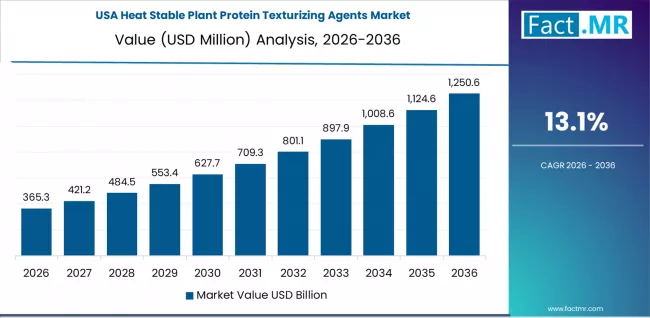
The USA’s 13.1% growth occurs within the world's most developed and competitive plant-based landscape. Success here depends on superior product quality. Food startups and major CPG companies push ingredient suppliers for ever-better texturizing agents to improve the melt, stretch, and bite of alt-cheeses or the juiciness and fiber of alt-meats that can be cooked at high temperatures, making it a high-innovation, performance-driven market.
How is Germany's Engineering and Clean-Label Focus Influencing the Market?
Germany’s 12.6% CAGR reflects its strong engineering capabilities in food processing and a consumer base with high demand for clean-label, organic products. German manufacturers seek precise, scientifically-backed texturizing agents that perform reliably in automated production lines for products like plant-based sausages and ready meals. The emphasis is on functional purity and sustainable sourcing, driving demand for advanced, label-friendly solutions.
Competitive Landscape of the Heat Stable Plant Protein Texturizing Agents Market

Global ingredient conglomerates with extensive R&D and application capabilities characterize the competitive landscape. Competition is intense around proprietary protein modification technologies, the breadth of application-specific solutions, and the strength of technical customer support.
Success depends on forming strategic partnerships with leading plant-based food brands for co-development and on continuously expanding portfolios to include novel, sustainable protein sources with inherent thermal stability.
Key Players in the Heat Stable Plant Protein Texturizing Agents Market
- Ingredion Inc.
- International Flavors & Fragrances Inc. (IFF)
- ADM
- Kerry Group
- Tate & Lyle Public Limited Company
- Cargill Incorporated
Scope of Report
| Items | Values |
|---|---|
| Quantitative Units | USD Billion |
| Application | Dairy/Alt-Dairy, Beverages, Bakery/Snacks, Meat/Alt-Meat |
| Source | Pea, Soy, Wheat, Fava/Chickpea |
| Channel | Direct-to-B2B, Distributors, Online B2B, Contract Manufacturing |
| Key Countries | USA, Germany, China, India |
| Key Companies | Ingredion Inc., International Flavors & Fragrances Inc. (IFF), ADM, Kerry Group, Tate & Lyle Public Limited Company, Cargill Incorporated |
| Additional Analysis | Comparative analysis of thermal gelation properties of major plant proteins; impact of processing parameters (pH, ionic strength) on heat stability; clean-label formulation challenges and solutions; regulatory landscape for novel plant protein ingredients; sustainability assessment of different protein sources and processing methods. |
Market by Segments
-
Application :
- Dairy/Alt-Dairy
- Beverages
- Bakery/Snacks
- Meat/Alt-Meat
-
Source :
- Pea
- Soy
- Wheat
- Fava/Chickpea
-
Channel :
- Direct-to-B2B
- Distributors
- Online B2B
- Contract Manufacturing
-
Region :
-
North America
- USA
- Canada
-
Latin America
- Brazil
- Mexico
- Argentina
- Rest of Latin America
-
Western Europe
- Germany
- UK
- France
- Spain
- Italy
- BENELUX
- Rest of Western Europe
-
Eastern Europe
- Russia
- Poland
- Czech Republic
- Rest of Eastern Europe
-
East Asia
- China
- Japan
- South Korea
- Rest of East Asia
-
South Asia & Pacific
- India
- ASEAN
- Australia
- Rest of South Asia & Pacific
-
MEA
- Saudi Arabia
- UAE
- Turkiye
- Rest of MEA
-
Table of Content
- Executive Summary
- Global Market Outlook
- Demand to side Trends
- Supply to side Trends
- Technology Roadmap Analysis
- Analysis and Recommendations
- Market Overview
- Market Coverage / Taxonomy
- Market Definition / Scope / Limitations
- Market Background
- Market Dynamics
- Drivers
- Restraints
- Opportunity
- Trends
- Scenario Forecast
- Demand in Optimistic Scenario
- Demand in Likely Scenario
- Demand in Conservative Scenario
- Opportunity Map Analysis
- Product Life Cycle Analysis
- Supply Chain Analysis
- Investment Feasibility Matrix
- Value Chain Analysis
- PESTLE and Porter’s Analysis
- Regulatory Landscape
- Regional Parent Market Outlook
- Production and Consumption Statistics
- Import and Export Statistics
- Market Dynamics
- Global Market Analysis 2021 to 2025 and Forecast, 2026 to 2036
- Historical Market Size Value (USD Million) Analysis, 2021 to 2025
- Current and Future Market Size Value (USD Million) Projections, 2026 to 2036
- Y to o to Y Growth Trend Analysis
- Absolute $ Opportunity Analysis
- Global Market Pricing Analysis 2021 to 2025 and Forecast 2026 to 2036
- Global Market Analysis 2021 to 2025 and Forecast 2026 to 2036, By Application
- Introduction / Key Findings
- Historical Market Size Value (USD Million) Analysis By Application, 2021 to 2025
- Current and Future Market Size Value (USD Million) Analysis and Forecast By Application, 2026 to 2036
- Dairy/Alt-Dairy
- Beverages
- Bakery/Snacks
- Meat/Alt-Meat
- Dairy/Alt-Dairy
- Y to o to Y Growth Trend Analysis By Application, 2021 to 2025
- Absolute $ Opportunity Analysis By Application, 2026 to 2036
- Global Market Analysis 2021 to 2025 and Forecast 2026 to 2036, By Source
- Introduction / Key Findings
- Historical Market Size Value (USD Million) Analysis By Source, 2021 to 2025
- Current and Future Market Size Value (USD Million) Analysis and Forecast By Source, 2026 to 2036
- Pea
- Soy
- Wheat
- Fava/Chickpea
- Pea
- Y to o to Y Growth Trend Analysis By Source, 2021 to 2025
- Absolute $ Opportunity Analysis By Source, 2026 to 2036
- Global Market Analysis 2021 to 2025 and Forecast 2026 to 2036, By Channel
- Introduction / Key Findings
- Historical Market Size Value (USD Million) Analysis By Channel, 2021 to 2025
- Current and Future Market Size Value (USD Million) Analysis and Forecast By Channel, 2026 to 2036
- Direct-to-B2B
- Distributors
- Online B2B
- Contract Manufacturing
- Direct-to-B2B
- Y to o to Y Growth Trend Analysis By Channel, 2021 to 2025
- Absolute $ Opportunity Analysis By Channel, 2026 to 2036
- Global Market Analysis 2021 to 2025 and Forecast 2026 to 2036, By Region
- Introduction
- Historical Market Size Value (USD Million) Analysis By Region, 2021 to 2025
- Current Market Size Value (USD Million) Analysis and Forecast By Region, 2026 to 2036
- North America
- Latin America
- Western Europe
- Eastern Europe
- East Asia
- South Asia and Pacific
- Middle East & Africa
- Market Attractiveness Analysis By Region
- North America Market Analysis 2021 to 2025 and Forecast 2026 to 2036, By Country
- Historical Market Size Value (USD Million) Trend Analysis By Market Taxonomy, 2021 to 2025
- Market Size Value (USD Million) Forecast By Market Taxonomy, 2026 to 2036
- By Country
- USA
- Canada
- Mexico
- By Application
- By Source
- By Channel
- By Country
- Market Attractiveness Analysis
- By Country
- By Application
- By Source
- By Channel
- Key Takeaways
- Latin America Market Analysis 2021 to 2025 and Forecast 2026 to 2036, By Country
- Historical Market Size Value (USD Million) Trend Analysis By Market Taxonomy, 2021 to 2025
- Market Size Value (USD Million) Forecast By Market Taxonomy, 2026 to 2036
- By Country
- Brazil
- Chile
- Rest of Latin America
- By Application
- By Source
- By Channel
- By Country
- Market Attractiveness Analysis
- By Country
- By Application
- By Source
- By Channel
- Key Takeaways
- Western Europe Market Analysis 2021 to 2025 and Forecast 2026 to 2036, By Country
- Historical Market Size Value (USD Million) Trend Analysis By Market Taxonomy, 2021 to 2025
- Market Size Value (USD Million) Forecast By Market Taxonomy, 2026 to 2036
- By Country
- Germany
- UK
- Italy
- Spain
- France
- Nordic
- BENELUX
- Rest of Western Europe
- By Application
- By Source
- By Channel
- By Country
- Market Attractiveness Analysis
- By Country
- By Application
- By Source
- By Channel
- Key Takeaways
- Eastern Europe Market Analysis 2021 to 2025 and Forecast 2026 to 2036, By Country
- Historical Market Size Value (USD Million) Trend Analysis By Market Taxonomy, 2021 to 2025
- Market Size Value (USD Million) Forecast By Market Taxonomy, 2026 to 2036
- By Country
- Russia
- Poland
- Hungary
- Balkan & Baltic
- Rest of Eastern Europe
- By Application
- By Source
- By Channel
- By Country
- Market Attractiveness Analysis
- By Country
- By Application
- By Source
- By Channel
- Key Takeaways
- East Asia Market Analysis 2021 to 2025 and Forecast 2026 to 2036, By Country
- Historical Market Size Value (USD Million) Trend Analysis By Market Taxonomy, 2021 to 2025
- Market Size Value (USD Million) Forecast By Market Taxonomy, 2026 to 2036
- By Country
- China
- Japan
- South Korea
- By Application
- By Source
- By Channel
- By Country
- Market Attractiveness Analysis
- By Country
- By Application
- By Source
- By Channel
- Key Takeaways
- South Asia and Pacific Market Analysis 2021 to 2025 and Forecast 2026 to 2036, By Country
- Historical Market Size Value (USD Million) Trend Analysis By Market Taxonomy, 2021 to 2025
- Market Size Value (USD Million) Forecast By Market Taxonomy, 2026 to 2036
- By Country
- India
- ASEAN
- Australia & New Zealand
- Rest of South Asia and Pacific
- By Application
- By Source
- By Channel
- By Country
- Market Attractiveness Analysis
- By Country
- By Application
- By Source
- By Channel
- Key Takeaways
- Middle East & Africa Market Analysis 2021 to 2025 and Forecast 2026 to 2036, By Country
- Historical Market Size Value (USD Million) Trend Analysis By Market Taxonomy, 2021 to 2025
- Market Size Value (USD Million) Forecast By Market Taxonomy, 2026 to 2036
- By Country
- Kingdom of Saudi Arabia
- Other GCC Countries
- Turkiye
- South Africa
- Other African Union
- Rest of Middle East & Africa
- By Application
- By Source
- By Channel
- By Country
- Market Attractiveness Analysis
- By Country
- By Application
- By Source
- By Channel
- Key Takeaways
- Key Countries Market Analysis
- USA
- Pricing Analysis
- Market Share Analysis, 2025
- By Application
- By Source
- By Channel
- Canada
- Pricing Analysis
- Market Share Analysis, 2025
- By Application
- By Source
- By Channel
- Mexico
- Pricing Analysis
- Market Share Analysis, 2025
- By Application
- By Source
- By Channel
- Brazil
- Pricing Analysis
- Market Share Analysis, 2025
- By Application
- By Source
- By Channel
- Chile
- Pricing Analysis
- Market Share Analysis, 2025
- By Application
- By Source
- By Channel
- Germany
- Pricing Analysis
- Market Share Analysis, 2025
- By Application
- By Source
- By Channel
- UK
- Pricing Analysis
- Market Share Analysis, 2025
- By Application
- By Source
- By Channel
- Italy
- Pricing Analysis
- Market Share Analysis, 2025
- By Application
- By Source
- By Channel
- Spain
- Pricing Analysis
- Market Share Analysis, 2025
- By Application
- By Source
- By Channel
- France
- Pricing Analysis
- Market Share Analysis, 2025
- By Application
- By Source
- By Channel
- India
- Pricing Analysis
- Market Share Analysis, 2025
- By Application
- By Source
- By Channel
- ASEAN
- Pricing Analysis
- Market Share Analysis, 2025
- By Application
- By Source
- By Channel
- Australia & New Zealand
- Pricing Analysis
- Market Share Analysis, 2025
- By Application
- By Source
- By Channel
- China
- Pricing Analysis
- Market Share Analysis, 2025
- By Application
- By Source
- By Channel
- Japan
- Pricing Analysis
- Market Share Analysis, 2025
- By Application
- By Source
- By Channel
- South Korea
- Pricing Analysis
- Market Share Analysis, 2025
- By Application
- By Source
- By Channel
- Russia
- Pricing Analysis
- Market Share Analysis, 2025
- By Application
- By Source
- By Channel
- Poland
- Pricing Analysis
- Market Share Analysis, 2025
- By Application
- By Source
- By Channel
- Hungary
- Pricing Analysis
- Market Share Analysis, 2025
- By Application
- By Source
- By Channel
- Kingdom of Saudi Arabia
- Pricing Analysis
- Market Share Analysis, 2025
- By Application
- By Source
- By Channel
- Turkiye
- Pricing Analysis
- Market Share Analysis, 2025
- By Application
- By Source
- By Channel
- South Africa
- Pricing Analysis
- Market Share Analysis, 2025
- By Application
- By Source
- By Channel
- USA
- Market Structure Analysis
- Competition Dashboard
- Competition Benchmarking
- Market Share Analysis of Top Players
- By Regional
- By Application
- By Source
- By Channel
- Competition Analysis
- Competition Deep Dive
- Ingredion Inc.
- Overview
- Product Portfolio
- Profitability by Market Segments (Product/Age /Sales Channel/Region)
- Sales Footprint
- Strategy Overview
- Marketing Strategy
- Product Strategy
- Channel Strategy
- International Favors & Fragrances Inc. (IFF)
- ADM
- Kerry Group
- Tate & Lyle Public Limited Company
- Cargill Incorporated
- Ingredion Inc.
- Competition Deep Dive
- Assumptions & Acronyms Used
- Research Methodology
List Of Table
- Table 1: Global Market Value (USD Million) Forecast by Region, 2021 to 2036
- Table 2: Global Market Value (USD Million) Forecast by Application, 2021 to 2036
- Table 3: Global Market Value (USD Million) Forecast by Source, 2021 to 2036
- Table 4: Global Market Value (USD Million) Forecast by Channel, 2021 to 2036
- Table 5: North America Market Value (USD Million) Forecast by Country, 2021 to 2036
- Table 6: North America Market Value (USD Million) Forecast by Application, 2021 to 2036
- Table 7: North America Market Value (USD Million) Forecast by Source, 2021 to 2036
- Table 8: North America Market Value (USD Million) Forecast by Channel, 2021 to 2036
- Table 9: Latin America Market Value (USD Million) Forecast by Country, 2021 to 2036
- Table 10: Latin America Market Value (USD Million) Forecast by Application, 2021 to 2036
- Table 11: Latin America Market Value (USD Million) Forecast by Source, 2021 to 2036
- Table 12: Latin America Market Value (USD Million) Forecast by Channel, 2021 to 2036
- Table 13: Western Europe Market Value (USD Million) Forecast by Country, 2021 to 2036
- Table 14: Western Europe Market Value (USD Million) Forecast by Application, 2021 to 2036
- Table 15: Western Europe Market Value (USD Million) Forecast by Source, 2021 to 2036
- Table 16: Western Europe Market Value (USD Million) Forecast by Channel, 2021 to 2036
- Table 17: Eastern Europe Market Value (USD Million) Forecast by Country, 2021 to 2036
- Table 18: Eastern Europe Market Value (USD Million) Forecast by Application, 2021 to 2036
- Table 19: Eastern Europe Market Value (USD Million) Forecast by Source, 2021 to 2036
- Table 20: Eastern Europe Market Value (USD Million) Forecast by Channel, 2021 to 2036
- Table 21: East Asia Market Value (USD Million) Forecast by Country, 2021 to 2036
- Table 22: East Asia Market Value (USD Million) Forecast by Application, 2021 to 2036
- Table 23: East Asia Market Value (USD Million) Forecast by Source, 2021 to 2036
- Table 24: East Asia Market Value (USD Million) Forecast by Channel, 2021 to 2036
- Table 25: South Asia and Pacific Market Value (USD Million) Forecast by Country, 2021 to 2036
- Table 26: South Asia and Pacific Market Value (USD Million) Forecast by Application, 2021 to 2036
- Table 27: South Asia and Pacific Market Value (USD Million) Forecast by Source, 2021 to 2036
- Table 28: South Asia and Pacific Market Value (USD Million) Forecast by Channel, 2021 to 2036
- Table 29: Middle East & Africa Market Value (USD Million) Forecast by Country, 2021 to 2036
- Table 30: Middle East & Africa Market Value (USD Million) Forecast by Application, 2021 to 2036
- Table 31: Middle East & Africa Market Value (USD Million) Forecast by Source, 2021 to 2036
- Table 32: Middle East & Africa Market Value (USD Million) Forecast by Channel, 2021 to 2036
List Of Figures
- Figure 1: Global Market Pricing Analysis
- Figure 2: Global Market Value (USD Million) Forecast 2021 to 2036
- Figure 3: Global Market Value Share and BPS Analysis by Application, 2026 and 2036
- Figure 4: Global Market Y to o to Y Growth Comparison by Application, 2026 to 2036
- Figure 5: Global Market Attractiveness Analysis by Application
- Figure 6: Global Market Value Share and BPS Analysis by Source, 2026 and 2036
- Figure 7: Global Market Y to o to Y Growth Comparison by Source, 2026 to 2036
- Figure 8: Global Market Attractiveness Analysis by Source
- Figure 9: Global Market Value Share and BPS Analysis by Channel, 2026 and 2036
- Figure 10: Global Market Y to o to Y Growth Comparison by Channel, 2026 to 2036
- Figure 11: Global Market Attractiveness Analysis by Channel
- Figure 12: Global Market Value (USD Million) Share and BPS Analysis by Region, 2026 and 2036
- Figure 13: Global Market Y to o to Y Growth Comparison by Region, 2026 to 2036
- Figure 14: Global Market Attractiveness Analysis by Region
- Figure 15: North America Market Incremental Dollar Opportunity, 2026 to 2036
- Figure 16: Latin America Market Incremental Dollar Opportunity, 2026 to 2036
- Figure 17: Western Europe Market Incremental Dollar Opportunity, 2026 to 2036
- Figure 18: Eastern Europe Market Incremental Dollar Opportunity, 2026 to 2036
- Figure 19: East Asia Market Incremental Dollar Opportunity, 2026 to 2036
- Figure 20: South Asia and Pacific Market Incremental Dollar Opportunity, 2026 to 2036
- Figure 21: Middle East & Africa Market Incremental Dollar Opportunity, 2026 to 2036
- Figure 22: North America Market Value Share and BPS Analysis by Country, 2026 and 2036
- Figure 23: North America Market Value Share and BPS Analysis by Application, 2026 and 2036
- Figure 24: North America Market Y to o to Y Growth Comparison by Application, 2026 to 2036
- Figure 25: North America Market Attractiveness Analysis by Application
- Figure 26: North America Market Value Share and BPS Analysis by Source, 2026 and 2036
- Figure 27: North America Market Y to o to Y Growth Comparison by Source, 2026 to 2036
- Figure 28: North America Market Attractiveness Analysis by Source
- Figure 29: North America Market Value Share and BPS Analysis by Channel, 2026 and 2036
- Figure 30: North America Market Y to o to Y Growth Comparison by Channel, 2026 to 2036
- Figure 31: North America Market Attractiveness Analysis by Channel
- Figure 32: Latin America Market Value Share and BPS Analysis by Country, 2026 and 2036
- Figure 33: Latin America Market Value Share and BPS Analysis by Application, 2026 and 2036
- Figure 34: Latin America Market Y to o to Y Growth Comparison by Application, 2026 to 2036
- Figure 35: Latin America Market Attractiveness Analysis by Application
- Figure 36: Latin America Market Value Share and BPS Analysis by Source, 2026 and 2036
- Figure 37: Latin America Market Y to o to Y Growth Comparison by Source, 2026 to 2036
- Figure 38: Latin America Market Attractiveness Analysis by Source
- Figure 39: Latin America Market Value Share and BPS Analysis by Channel, 2026 and 2036
- Figure 40: Latin America Market Y to o to Y Growth Comparison by Channel, 2026 to 2036
- Figure 41: Latin America Market Attractiveness Analysis by Channel
- Figure 42: Western Europe Market Value Share and BPS Analysis by Country, 2026 and 2036
- Figure 43: Western Europe Market Value Share and BPS Analysis by Application, 2026 and 2036
- Figure 44: Western Europe Market Y to o to Y Growth Comparison by Application, 2026 to 2036
- Figure 45: Western Europe Market Attractiveness Analysis by Application
- Figure 46: Western Europe Market Value Share and BPS Analysis by Source, 2026 and 2036
- Figure 47: Western Europe Market Y to o to Y Growth Comparison by Source, 2026 to 2036
- Figure 48: Western Europe Market Attractiveness Analysis by Source
- Figure 49: Western Europe Market Value Share and BPS Analysis by Channel, 2026 and 2036
- Figure 50: Western Europe Market Y to o to Y Growth Comparison by Channel, 2026 to 2036
- Figure 51: Western Europe Market Attractiveness Analysis by Channel
- Figure 52: Eastern Europe Market Value Share and BPS Analysis by Country, 2026 and 2036
- Figure 53: Eastern Europe Market Value Share and BPS Analysis by Application, 2026 and 2036
- Figure 54: Eastern Europe Market Y to o to Y Growth Comparison by Application, 2026 to 2036
- Figure 55: Eastern Europe Market Attractiveness Analysis by Application
- Figure 56: Eastern Europe Market Value Share and BPS Analysis by Source, 2026 and 2036
- Figure 57: Eastern Europe Market Y to o to Y Growth Comparison by Source, 2026 to 2036
- Figure 58: Eastern Europe Market Attractiveness Analysis by Source
- Figure 59: Eastern Europe Market Value Share and BPS Analysis by Channel, 2026 and 2036
- Figure 60: Eastern Europe Market Y to o to Y Growth Comparison by Channel, 2026 to 2036
- Figure 61: Eastern Europe Market Attractiveness Analysis by Channel
- Figure 62: East Asia Market Value Share and BPS Analysis by Country, 2026 and 2036
- Figure 63: East Asia Market Value Share and BPS Analysis by Application, 2026 and 2036
- Figure 64: East Asia Market Y to o to Y Growth Comparison by Application, 2026 to 2036
- Figure 65: East Asia Market Attractiveness Analysis by Application
- Figure 66: East Asia Market Value Share and BPS Analysis by Source, 2026 and 2036
- Figure 67: East Asia Market Y to o to Y Growth Comparison by Source, 2026 to 2036
- Figure 68: East Asia Market Attractiveness Analysis by Source
- Figure 69: East Asia Market Value Share and BPS Analysis by Channel, 2026 and 2036
- Figure 70: East Asia Market Y to o to Y Growth Comparison by Channel, 2026 to 2036
- Figure 71: East Asia Market Attractiveness Analysis by Channel
- Figure 72: South Asia and Pacific Market Value Share and BPS Analysis by Country, 2026 and 2036
- Figure 73: South Asia and Pacific Market Value Share and BPS Analysis by Application, 2026 and 2036
- Figure 74: South Asia and Pacific Market Y to o to Y Growth Comparison by Application, 2026 to 2036
- Figure 75: South Asia and Pacific Market Attractiveness Analysis by Application
- Figure 76: South Asia and Pacific Market Value Share and BPS Analysis by Source, 2026 and 2036
- Figure 77: South Asia and Pacific Market Y to o to Y Growth Comparison by Source, 2026 to 2036
- Figure 78: South Asia and Pacific Market Attractiveness Analysis by Source
- Figure 79: South Asia and Pacific Market Value Share and BPS Analysis by Channel, 2026 and 2036
- Figure 80: South Asia and Pacific Market Y to o to Y Growth Comparison by Channel, 2026 to 2036
- Figure 81: South Asia and Pacific Market Attractiveness Analysis by Channel
- Figure 82: Middle East & Africa Market Value Share and BPS Analysis by Country, 2026 and 2036
- Figure 83: Middle East & Africa Market Value Share and BPS Analysis by Application, 2026 and 2036
- Figure 84: Middle East & Africa Market Y to o to Y Growth Comparison by Application, 2026 to 2036
- Figure 85: Middle East & Africa Market Attractiveness Analysis by Application
- Figure 86: Middle East & Africa Market Value Share and BPS Analysis by Source, 2026 and 2036
- Figure 87: Middle East & Africa Market Y to o to Y Growth Comparison by Source, 2026 to 2036
- Figure 88: Middle East & Africa Market Attractiveness Analysis by Source
- Figure 89: Middle East & Africa Market Value Share and BPS Analysis by Channel, 2026 and 2036
- Figure 90: Middle East & Africa Market Y to o to Y Growth Comparison by Channel, 2026 to 2036
- Figure 91: Middle East & Africa Market Attractiveness Analysis by Channel
- Figure 92: Global Market - Tier Structure Analysis
- Figure 93: Global Market - Company Share Analysis
- FAQs -
How big is the heat stable plant protein texturizing agents market in 2026?
The global heat stable plant protein texturizing agents market is estimated to be valued at USD 0.5 billion in 2026.
What will be the size of heat stable plant protein texturizing agents market in 2036?
The market size for the heat stable plant protein texturizing agents market is projected to reach USD 1.3 billion by 2036.
How much will be the heat stable plant protein texturizing agents market growth between 2026 and 2036?
The heat stable plant protein texturizing agents market is expected to grow at a 9.7% CAGR between 2026 and 2036.
What are the key product types in the heat stable plant protein texturizing agents market?
The key product types in heat stable plant protein texturizing agents market are dairy/alt-dairy, beverages, bakery/snacks and meat/alt-meat.
Which source segment to contribute significant share in the heat stable plant protein texturizing agents market in 2026?
In terms of source, pea segment to command 45.2% share in the heat stable plant protein texturizing agents market in 2026.