High-Recyclability Mono-Material Flexible Packaging Market
High-Recyclability Mono-Material Flexible Packaging Market Size and Share Forecast Outlook 2026 to 2036
High-recyclability mono-material flexible packaging market is projected to grow from USD 2.0 billion in 2026 to USD 4.2 billion by 2036, at a CAGR of 7.7%. Snacks & Confectionery will dominate with a 35.0% market share, while stand-up pouches will lead the packaging format/type segment with a 40.0% share.
High-Recyclability Mono-Material Flexible Packaging Market Forecast and Outlook 2026 to 2036
The global high-recyclability mono-material flexible packaging market is valued at USD 2.00 billion in 2026 and is set to reach USD 4.20 billion by 2036, recording a compound annual growth rate (CAGR) of 7.7% between 2026 and 2036. In 2026, the snacks & confectionery application segment is projected to hold a 35% share, while stand-up pouches account for 40% by packaging format.
Key Takeaways from the High-Recyclability Mono-Material Flexible Packaging Market Report
- Market Value (2026): USD 2.00 Billion
- Market Forecast Value (2036): USD 4.20 Billion
- Forecast CAGR (2026-2036): 7.7%
- Leading Application Segment: Snacks & Confectionery (35%)
- Leading Packaging Format: Stand-up Pouches (40%)
- Key Growth Regions: North America, Europe, Asia Pacific, Latin America, MEA
- Key Players: Amcor plc., Bischof + Klein, Huhtamaki, UFlex, Klabin, Mondi plc., Sealed Air Corporation
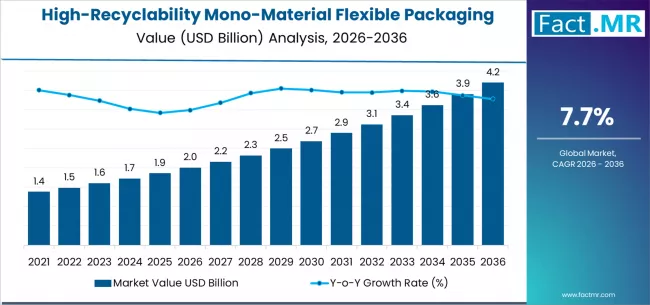
Market expansion is fundamentally driven by the urgent need to solve the recyclability crisis of traditional multi-layer flexible packaging. Mono-material designs, using single polymer families like PE or PP, are compatible with existing mechanical recycling streams. This shift is mandated by Extended Producer Responsibility (EPR) regulations that penalize hard-to-recycle structures and rewarded by consumers demanding sustainable packaging. Brands are actively reformulating to meet these dual pressures without sacrificing the critical barrier properties and shelf appeal flexible packaging provides.
Growth through the forecast period will be defined by material innovation and advanced processing technologies. Developments in high-performance mono-PE and mono-PP grades, enhanced with new barrier coatings, are closing the performance gap with complex laminates. Adoption of solvent-free lamination and advanced sealing technologies ensures these mono-material structures can run efficiently on high-speed form-fill-seal equipment. The market evolution represents a foundational redesign of flexible packaging, prioritizing end-of-life circularity from the initial design phase.
High-Recyclability Mono-Material Flexible Packaging Market
| Metric | Value |
|---|---|
| Estimated Value in (2026E) | USD 2.00 Billion |
| Forecast Value in (2036F) | USD 4.20 Billion |
| Forecast CAGR (2026 to 2036) | 7.7% |
Category
| Category | Segments |
|---|---|
| End-use/Application | Snacks & Confectionery, Pet Food, Ready Meals, Retail & FMCG, Dairy Alternatives, Others |
| Packaging Format/Type | Stand-up Pouches, Flow-wrap & Pillow Packs, Spouted Pouches, Multi-laminate Lookalikes (Mono), Sachets, Pouches, Others |
| Material | Mono-PE / Mono-PP, Mono-PE / Recyclable PE, Mono-PP Formulations, Recyclable PE Blends, Mono-polymer Systems, Others |
| Technology | Mono-material Laminates, Solvent-free Lamination, New Sealant & Barrier Coatings, High-speed FFS Adaptation, Receptacle Printing & Sealing Tech, Improved Barrier Coatings, Others |
| Region | North America, Europe, Asia Pacific, Latin America, MEA |
Segmental Analysis
Which Application Category Accounts for the Largest Market Share?
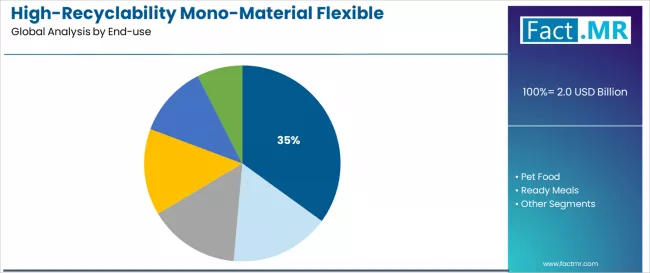
The snacks and confectionery segment commands a 35% market share in 2026. This dominance reflects the intense pressure on high-volume, impulse-buy categories to address packaging waste. Brands in this space are highly visible targets for consumer and regulatory scrutiny. Transitioning to mono-material PE or PP structures allows them to claim credible recyclability, directly supporting corporate sustainability pledges. The technical challenge lies in replicating the high-barrier, moisture-proof, and machinable characteristics required for product freshness using a single material.
Success in this segment requires collaboration across the value chain, from polymer producers developing enhanced resins to converters perfecting solvent-free lamination. The payoff is significant: protecting brand reputation, avoiding EPR penalties, and future-proofing against increasingly stringent regulations.
- The universal use of flexible packaging for chips, cookies, and candy creates a massive volume opportunity for mono-material solutions.
- First-mover brands are using mono-material packaging as a marketing advantage, explicitly communicating its recyclability to environmentally conscious consumers.
Why are Stand-up Pouches the Preferred Packaging Format?
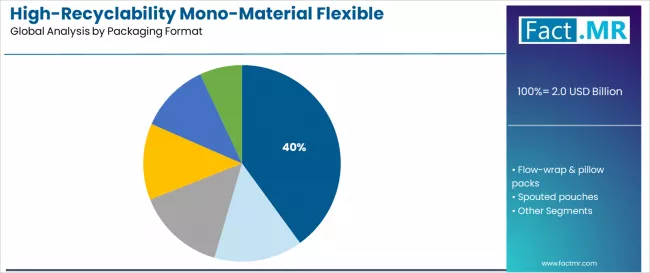
Stand-up pouches are projected to hold a 40% share by packaging format in 2026. Their popularity as a retail-ready format makes their conversion to mono-material construction a high priority. The complex structure of traditional pouches, often incorporating multiple layers of different plastics, foil, and inks, has made them a recycling nightmare. Mono-material versions, typically using advanced mono-PE or mono-PP laminates, solve this by ensuring the entire pouch is compatible with a single recycling stream.
The format drives innovation in achieving stiffness, gloss, and barrier properties from a single polymer family. Technologies like solvent-free lamination are critical here, creating strong bonds between layers without introducing contaminating adhesives. The ability to produce high-quality graphics on mono-material substrates is equally important for maintaining shelf impact.
- The spouted pouch sub-segment is a key innovation area, requiring mono-material solutions that integrate fitments without contaminating the recycle stream.
- Converter expertise in creating multi-laminate lookalikes from mono-materials is crucial for brand acceptance, ensuring no loss of visual or tactile quality.
What are the Drivers, Restraints, and Trends in the High-Recyclability Mono-Material Flexible Packaging Market?
The market is driven by global EPR legislation and plastic tax schemes that financially incentivize recyclable design. Strong brand commitments to include recyclable packaging are a secondary driver.
Key restraints include the higher cost of specialized mono-material resins, potential performance limitations for long-shelf-life products, and the inconsistent global recycling infrastructure needed to realize the environmental benefit.
The market is trending towards the development of digital watermarks on packaging to enable high-accuracy sorting of mono-materials in recycling facilities, and towards chemical recycling as a complementary pathway for processing flexible mono-material waste streams.
Analysis of the High-Recyclability Mono-Material Flexible Packaging Market by Key Countries
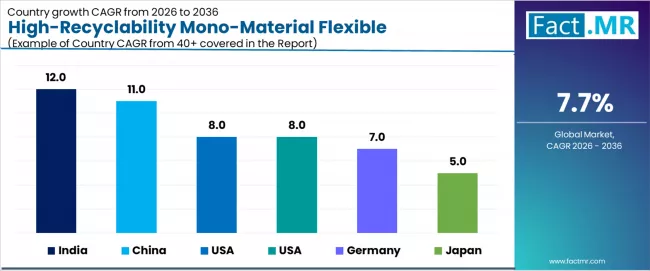
| Country | CAGR (2026-2036) |
|---|---|
| India | 12.0% |
| China | 11.0% |
| USA | 8.0% |
| Brazil | 8.0% |
| Germany | 7.0% |
| Japan | 5.0% |
How Are New EPR Laws and FMCG Growth Accelerating India's Market Leadership?
Demand for mono-material flexible packaging in India is projected to grow at a leading CAGR of 12.0% through 2036. The implementation of stringent new EPR laws is the primary catalyst, compelling the massive FMCG and ready meals sectors to urgently seek compliant solutions. The market favors high-speed form/fill/seal adaptation technologies that allow converters to modify existing machinery for mono-PP and mono-PE formats. Domestic production of recyclable PE blends is scaling to meet this surge.
- The price sensitivity of the market drives innovation in cost-optimized mono-material structures that meet both regulatory and consumer affordability thresholds.
- Large domestic brands are partnering with global material scientists to develop tailored solutions for the local climate and supply chain.
What Role Does Export Pressure and Pet Food Sector Growth Play in China?
The market in China is forecast to grow at a CAGR of 11.0%. Dual forces are at play: export-oriented manufacturers must meet the mono-material requirements of Western markets, and the booming domestic pet food sector is adopting recyclable packaging as a premium feature. Investment is focused on new sealant and barrier coating technologies that allow mono-PE structures to protect sensitive contents. China's vast converter industry is rapidly retooling to supply both domestic and international demand.
- The government's push to reduce plastic waste is creating a supportive policy environment, though focused more on collection than design for recycling.
- Domestic innovation aims to reduce reliance on imported high-barrier film technologies by developing homegrown mono-material solutions.
How do State Regulations and Corporate Commitments Shape USA’s Market?
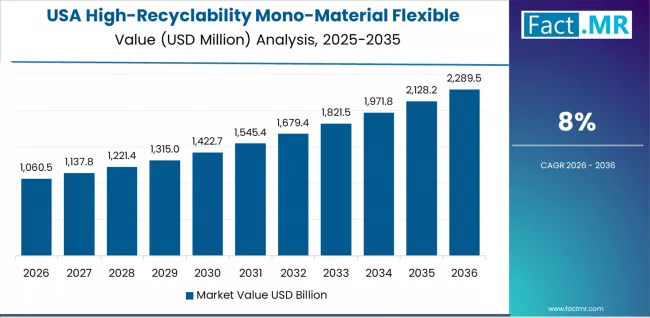
The market for mono-material flexible packaging in USA is set to grow at a CAGR of 8.0%. While federal regulation lags, state-level EPR laws and binding corporate sustainability commitments from major snack food and pet care companies are creating powerful demand. The focus is on transitioning the vast stand-up pouch and flow-wrap market to mono-PE constructions. Technological advancement centers on achieving the necessary oxygen and aroma barriers within a mono-material framework to protect product quality.
- The need for compatibility with the existing US store-drop-off recycling stream for plastic bags and wraps is a key design criterion.
- Brand owners are actively funding recycling infrastructure improvements to ensure the mono-material packages they design are actually recycled.
Why does Advanced Legislation and Retailer Pressure Define the German Market?
The market in Germany is expected to grow at a CAGR of 7.0%. Germany's position under the EU's stringent Packaging and Packaging Waste Regulation (PPWR) makes mono-material adoption a compliance imperative. German retailers enforce strict packaging guidelines on their private-label products, driving rapid change. The emphasis is on engineering excellence: perfecting solvent-free lamination processes and developing mono-material laminates that offer exceptional clarity, strength, and barrier properties, setting a high technical benchmark.
- The well-established Grüner Punkt system provides precise data on packaging recyclability, making fee modulation based on material choice a direct financial driver.
- Collaboration between chemical companies and converters is deep, focusing on creating fully circular loops for mono-PE and mono-PP films.
How is the Focus on Retail Agility and Local Innovation Influencing Brazil's Market?
Adoption in Brazil is projected to grow at a CAGR of 8.0%. Growth is fueled by the retail sector's need for agile, sustainable packaging for a vast array of FMCG products. The development of "multi-laminate lookalikes" using mono-materials is particularly popular, allowing brands to maintain shelf presence while improving recyclability. Local innovation in receptacle printing and sealing technologies for mono-PE blends supports this trend, reducing dependency on imported film solutions.
- The strong agricultural sector provides a base for developing bio-based feedstocks for mono-PE, adding a renewable element to the recyclability story.
- Regional converters play a vital role in adapting global mono-material technologies to local production costs and material availability.
What drives Japan's Pursuit of Perfection in Barrier and Clarity for Dairy Alternatives?
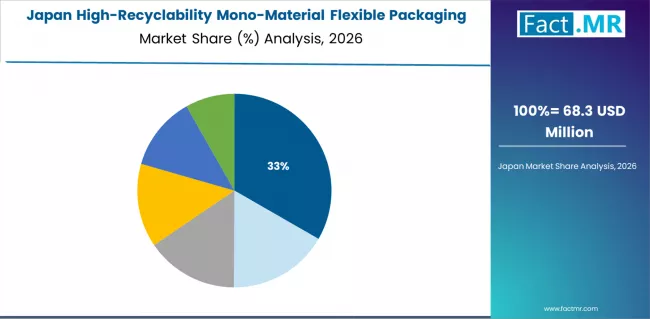
The market in Japan is projected to grow at a CAGR of 5.0%. Adoption is focused on high-value segments like dairy alternatives and premium snacks where product protection and pristine clarity are paramount. Japanese innovation targets improved barrier coatings for mono-polymer systems that can match the performance of traditional laminates. The pursuit involves ultra-precise extrusion and coating technologies to create flawless, high-barrier films that meet the country's exceptionally high quality standards for food packaging.
- The mature packaging recycling system demands extreme material purity, making the simplicity of mono-material designs inherently advantageous.
- Space-saving and lightweight attributes of high-performance mono-material flexible packs align with Japan's logistics and sustainability efficiency goals.
Competitive Landscape of the High-Recyclability Mono-Material Flexible Packaging Market
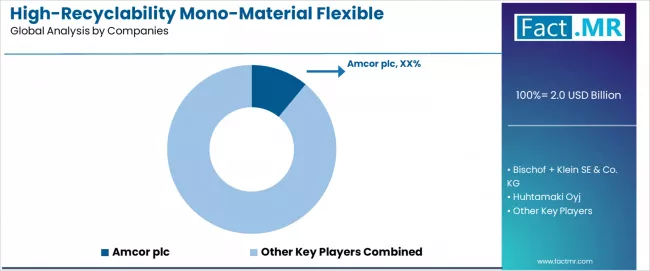
The competitive landscape is characterized by a race for technological leadership between global flexible packaging giants and specialized film innovators. Competition centers on proprietary polymer formulations, barrier coating technologies, and lamination processes that deliver performance parity with multi-layer structures. Key players are investing heavily in R&D to create drop-in mono-material solutions that require minimal adjustment on brand owners' existing packaging lines.
Strategic partnerships are forming between material scientists, packaging converters, and recycling entities to create fully integrated, circular ecosystems. Success is measured by the ability to provide brands with a certified, cost-effective mono-material alternative that meets regulatory hurdles and fulfills sustainability marketing claims.
Key Players in the High-Recyclability Mono-Material Flexible Packaging Market
- Amcor plc
- Bischof + Klein SE & Co. KG
- Huhtamaki Oyj
- UFlex Limited
- Klabin S.A.
- Mondi plc.
- Sealed Air Corporation
Scope of the Report
| Items | Values |
|---|---|
| Quantitative Units (2026) | USD 2.00 Billion |
| End-use/Application | Snacks & Confectionery, Pet Food, Ready Meals, Retail & FMCG, Dairy Alternatives, Others |
| Packaging Format/Type | Stand-up Pouches, Flow-wrap & Pillow Packs, Spouted Pouches, Multi-laminate Lookalikes (Mono), Sachets, Pouches, Others |
| Material | Mono-PE / Mono-PP, Mono-PE / Recyclable PE, Mono-PP Formulations, Recyclable PE Blends, Mono-polymer Systems, Others |
| Technology | Mono-material Laminates, Solvent-free Lamination, New Sealant & Barrier Coatings, High-speed FFS Adaptation, Receptacle Printing & Sealing Tech, Improved Barrier Coatings, Others |
| Regions Covered | North America, Europe, Asia Pacific, Latin America, MEA |
| Key Companies Profiled | Amcor, Bischof + Klein, Huhtamaki, UFlex, Klabin, Mondi, Sealed Air, and other leading players |
| Additional Attributes | Market share analysis, in-depth EPR regulation impact analysis, performance benchmarking vs. traditional laminates, insights into recycling infrastructure compatibility and sorting technology advancements. |
High-Recyclability Mono-Material Flexible Packaging Market by Segments
-
By End-use/Application :
- Snacks & Confectionery
- Pet Food
- Ready Meals
- Retail & FMCG
- Dairy Alternatives
- Others
-
By Packaging Format/Type :
- Stand-up Pouches
- Flow-wrap & Pillow Packs
- Spouted Pouches
- Multi-laminate Lookalikes (Mono)
- Sachets & Pouches
- Others
-
By Material :
- Mono-PE/Mono-PP
- Mono-PE/Recyclable PE
- Mono-PP Formulations
- Recyclable PE Blends
- Mono-polymer Systems
- Others
-
By Technology :
- Mono-material Laminates
- Solvent-free Lamination
- New Sealant & Barrier Coatings
- High-speed FFS Adaptation
- Receptacle Printing & Sealing Tech
- Improved Barrier Coatings
- Others
-
By Region :
-
North America
- USA
- Canada
- Mexico
-
Europe
- Germany
- UK
- France
- Italy
- Spain
- Nordic Countries
- BENELUX
- Rest of Europe
-
Asia Pacific
- China
- India
- Japan
- South Korea
- Australia
- Rest of Asia Pacific
-
Latin America
- Brazil
- Argentina
- Rest of Latin America
-
MEA
- Saudi Arabia
- UAE
- South Africa
- Rest of MEA
-
Table of Content
- Executive Summary
- Global Market Outlook
- Demand to side Trends
- Supply to side Trends
- Technology Roadmap Analysis
- Analysis and Recommendations
- Market Overview
- Market Coverage / Taxonomy
- Market Definition / Scope / Limitations
- Market Background
- Market Dynamics
- Drivers
- Restraints
- Opportunity
- Trends
- Scenario Forecast
- Demand in Optimistic Scenario
- Demand in Likely Scenario
- Demand in Conservative Scenario
- Opportunity Map Analysis
- Product Life Cycle Analysis
- Supply Chain Analysis
- Investment Feasibility Matrix
- Value Chain Analysis
- PESTLE and Porter’s Analysis
- Regulatory Landscape
- Regional Parent Market Outlook
- Production and Consumption Statistics
- Import and Export Statistics
- Market Dynamics
- Global Market Analysis 2021 to 2025 and Forecast, 2026 to 2036
- Historical Market Size Value (USD Million) Analysis, 2021 to 2025
- Current and Future Market Size Value (USD Million) Projections, 2026 to 2036
- Y to o to Y Growth Trend Analysis
- Absolute $ Opportunity Analysis
- Global Market Pricing Analysis 2021 to 2025 and Forecast 2026 to 2036
- Global Market Analysis 2021 to 2025 and Forecast 2026 to 2036, By End-use/Application
- Introduction / Key Findings
- Historical Market Size Value (USD Million) Analysis By End-use/Application, 2021 to 2025
- Current and Future Market Size Value (USD Million) Analysis and Forecast By End-use/Application, 2026 to 2036
- Snacks & Confectionery
- Pet Food
- Ready Meals
- Retail & FMCG
- Dairy alternatives
- Others
- Y to o to Y Growth Trend Analysis By End-use/Application, 2021 to 2025
- Absolute $ Opportunity Analysis By End-use/Application, 2026 to 2036
- Global Market Analysis 2021 to 2025 and Forecast 2026 to 2036, By Packaging Format/Type
- Introduction / Key Findings
- Historical Market Size Value (USD Million) Analysis By Packaging Format/Type, 2021 to 2025
- Current and Future Market Size Value (USD Million) Analysis and Forecast By Packaging Format/Type, 2026 to 2036
- Stand-up pouches
- Flow-wrap & pillow packs
- Spouted pouches
- Multi-laminate lookalikes (mono)
- Sachets & Pouches
- Others
- Y to o to Y Growth Trend Analysis By Packaging Format/Type, 2021 to 2025
- Absolute $ Opportunity Analysis By Packaging Format/Type, 2026 to 2036
- Global Market Analysis 2021 to 2025 and Forecast 2026 to 2036, By Material
- Introduction / Key Findings
- Historical Market Size Value (USD Million) Analysis By Material, 2021 to 2025
- Current and Future Market Size Value (USD Million) Analysis and Forecast By Material, 2026 to 2036
- Mono-PE / Mono-PP
- Mono-PE / recyclable PE
- Mono-PP formulations
- Recyclable PE blends
- Mono-polymer systems
- Others
- Y to o to Y Growth Trend Analysis By Material, 2021 to 2025
- Absolute $ Opportunity Analysis By Material, 2026 to 2036
- Global Market Analysis 2021 to 2025 and Forecast 2026 to 2036, By Technology
- Introduction / Key Findings
- Historical Market Size Value (USD Million) Analysis By Technology, 2021 to 2025
- Current and Future Market Size Value (USD Million) Analysis and Forecast By Technology, 2026 to 2036
- Mono-material laminates, solvent-free lamination
- New sealant & barrier coatings
- High-speed form/fill/seal adaptation
- Receptacle printing & sealing tech
- Improved barrier coatings
- Others
- Y to o to Y Growth Trend Analysis By Technology, 2021 to 2025
- Absolute $ Opportunity Analysis By Technology, 2026 to 2036
- Global Market Analysis 2021 to 2025 and Forecast 2026 to 2036, By Region
- Introduction
- Historical Market Size Value (USD Million) Analysis By Region, 2021 to 2025
- Current Market Size Value (USD Million) Analysis and Forecast By Region, 2026 to 2036
- North America
- Latin America
- Western Europe
- Eastern Europe
- East Asia
- South Asia and Pacific
- Middle East & Africa
- Market Attractiveness Analysis By Region
- North America Market Analysis 2021 to 2025 and Forecast 2026 to 2036, By Country
- Historical Market Size Value (USD Million) Trend Analysis By Market Taxonomy, 2021 to 2025
- Market Size Value (USD Million) Forecast By Market Taxonomy, 2026 to 2036
- By Country
- USA
- Canada
- Mexico
- By End-use/Application
- By Packaging Format/Type
- By Material
- By Technology
- By Country
- Market Attractiveness Analysis
- By Country
- By End-use/Application
- By Packaging Format/Type
- By Material
- By Technology
- Key Takeaways
- Latin America Market Analysis 2021 to 2025 and Forecast 2026 to 2036, By Country
- Historical Market Size Value (USD Million) Trend Analysis By Market Taxonomy, 2021 to 2025
- Market Size Value (USD Million) Forecast By Market Taxonomy, 2026 to 2036
- By Country
- Brazil
- Chile
- Rest of Latin America
- By End-use/Application
- By Packaging Format/Type
- By Material
- By Technology
- By Country
- Market Attractiveness Analysis
- By Country
- By End-use/Application
- By Packaging Format/Type
- By Material
- By Technology
- Key Takeaways
- Western Europe Market Analysis 2021 to 2025 and Forecast 2026 to 2036, By Country
- Historical Market Size Value (USD Million) Trend Analysis By Market Taxonomy, 2021 to 2025
- Market Size Value (USD Million) Forecast By Market Taxonomy, 2026 to 2036
- By Country
- Germany
- UK
- Italy
- Spain
- France
- Nordic
- BENELUX
- Rest of Western Europe
- By End-use/Application
- By Packaging Format/Type
- By Material
- By Technology
- By Country
- Market Attractiveness Analysis
- By Country
- By End-use/Application
- By Packaging Format/Type
- By Material
- By Technology
- Key Takeaways
- Eastern Europe Market Analysis 2021 to 2025 and Forecast 2026 to 2036, By Country
- Historical Market Size Value (USD Million) Trend Analysis By Market Taxonomy, 2021 to 2025
- Market Size Value (USD Million) Forecast By Market Taxonomy, 2026 to 2036
- By Country
- Russia
- Poland
- Hungary
- Balkan & Baltic
- Rest of Eastern Europe
- By End-use/Application
- By Packaging Format/Type
- By Material
- By Technology
- By Country
- Market Attractiveness Analysis
- By Country
- By End-use/Application
- By Packaging Format/Type
- By Material
- By Technology
- Key Takeaways
- East Asia Market Analysis 2021 to 2025 and Forecast 2026 to 2036, By Country
- Historical Market Size Value (USD Million) Trend Analysis By Market Taxonomy, 2021 to 2025
- Market Size Value (USD Million) Forecast By Market Taxonomy, 2026 to 2036
- By Country
- China
- Japan
- South Korea
- By End-use/Application
- By Packaging Format/Type
- By Material
- By Technology
- By Country
- Market Attractiveness Analysis
- By Country
- By End-use/Application
- By Packaging Format/Type
- By Material
- By Technology
- Key Takeaways
- South Asia and Pacific Market Analysis 2021 to 2025 and Forecast 2026 to 2036, By Country
- Historical Market Size Value (USD Million) Trend Analysis By Market Taxonomy, 2021 to 2025
- Market Size Value (USD Million) Forecast By Market Taxonomy, 2026 to 2036
- By Country
- India
- ASEAN
- Australia & New Zealand
- Rest of South Asia and Pacific
- By End-use/Application
- By Packaging Format/Type
- By Material
- By Technology
- By Country
- Market Attractiveness Analysis
- By Country
- By End-use/Application
- By Packaging Format/Type
- By Material
- By Technology
- Key Takeaways
- Middle East & Africa Market Analysis 2021 to 2025 and Forecast 2026 to 2036, By Country
- Historical Market Size Value (USD Million) Trend Analysis By Market Taxonomy, 2021 to 2025
- Market Size Value (USD Million) Forecast By Market Taxonomy, 2026 to 2036
- By Country
- Kingdom of Saudi Arabia
- Other GCC Countries
- Turkiye
- South Africa
- Other African Union
- Rest of Middle East & Africa
- By End-use/Application
- By Packaging Format/Type
- By Material
- By Technology
- By Country
- Market Attractiveness Analysis
- By Country
- By End-use/Application
- By Packaging Format/Type
- By Material
- By Technology
- Key Takeaways
- Key Countries Market Analysis
- USA
- Pricing Analysis
- Market Share Analysis, 2025
- By End-use/Application
- By Packaging Format/Type
- By Material
- By Technology
- Canada
- Pricing Analysis
- Market Share Analysis, 2025
- By End-use/Application
- By Packaging Format/Type
- By Material
- By Technology
- Mexico
- Pricing Analysis
- Market Share Analysis, 2025
- By End-use/Application
- By Packaging Format/Type
- By Material
- By Technology
- Brazil
- Pricing Analysis
- Market Share Analysis, 2025
- By End-use/Application
- By Packaging Format/Type
- By Material
- By Technology
- Chile
- Pricing Analysis
- Market Share Analysis, 2025
- By End-use/Application
- By Packaging Format/Type
- By Material
- By Technology
- Germany
- Pricing Analysis
- Market Share Analysis, 2025
- By End-use/Application
- By Packaging Format/Type
- By Material
- By Technology
- UK
- Pricing Analysis
- Market Share Analysis, 2025
- By End-use/Application
- By Packaging Format/Type
- By Material
- By Technology
- Italy
- Pricing Analysis
- Market Share Analysis, 2025
- By End-use/Application
- By Packaging Format/Type
- By Material
- By Technology
- Spain
- Pricing Analysis
- Market Share Analysis, 2025
- By End-use/Application
- By Packaging Format/Type
- By Material
- By Technology
- France
- Pricing Analysis
- Market Share Analysis, 2025
- By End-use/Application
- By Packaging Format/Type
- By Material
- By Technology
- India
- Pricing Analysis
- Market Share Analysis, 2025
- By End-use/Application
- By Packaging Format/Type
- By Material
- By Technology
- ASEAN
- Pricing Analysis
- Market Share Analysis, 2025
- By End-use/Application
- By Packaging Format/Type
- By Material
- By Technology
- Australia & New Zealand
- Pricing Analysis
- Market Share Analysis, 2025
- By End-use/Application
- By Packaging Format/Type
- By Material
- By Technology
- China
- Pricing Analysis
- Market Share Analysis, 2025
- By End-use/Application
- By Packaging Format/Type
- By Material
- By Technology
- Japan
- Pricing Analysis
- Market Share Analysis, 2025
- By End-use/Application
- By Packaging Format/Type
- By Material
- By Technology
- South Korea
- Pricing Analysis
- Market Share Analysis, 2025
- By End-use/Application
- By Packaging Format/Type
- By Material
- By Technology
- Russia
- Pricing Analysis
- Market Share Analysis, 2025
- By End-use/Application
- By Packaging Format/Type
- By Material
- By Technology
- Poland
- Pricing Analysis
- Market Share Analysis, 2025
- By End-use/Application
- By Packaging Format/Type
- By Material
- By Technology
- Hungary
- Pricing Analysis
- Market Share Analysis, 2025
- By End-use/Application
- By Packaging Format/Type
- By Material
- By Technology
- Kingdom of Saudi Arabia
- Pricing Analysis
- Market Share Analysis, 2025
- By End-use/Application
- By Packaging Format/Type
- By Material
- By Technology
- Turkiye
- Pricing Analysis
- Market Share Analysis, 2025
- By End-use/Application
- By Packaging Format/Type
- By Material
- By Technology
- South Africa
- Pricing Analysis
- Market Share Analysis, 2025
- By End-use/Application
- By Packaging Format/Type
- By Material
- By Technology
- USA
- Market Structure Analysis
- Competition Dashboard
- Competition Benchmarking
- Market Share Analysis of Top Players
- By Regional
- By End-use/Application
- By Packaging Format/Type
- By Material
- By Technology
- Competition Analysis
- Competition Deep Dive
- Amcor plc
- Overview
- Product Portfolio
- Profitability by Market Segments (Product/Age /Sales Channel/Region)
- Sales Footprint
- Strategy Overview
- Marketing Strategy
- Product Strategy
- Channel Strategy
- Bischof + Klein SE & Co. KG
- Huhtamaki Oyj
- UFlex Limited
- Klabin S.A.
- Mondi plc.
- Sealed Air Corporation
- Amcor plc
- Competition Deep Dive
- Assumptions & Acronyms Used
- Research Methodology
List Of Table
- Table 1: Global Market Value (USD Million) Forecast by Region, 2021 to 2036
- Table 2: Global Market Value (USD Million) Forecast by End-use/Application, 2021 to 2036
- Table 3: Global Market Value (USD Million) Forecast by Packaging Format/Type, 2021 to 2036
- Table 4: Global Market Value (USD Million) Forecast by Material, 2021 to 2036
- Table 5: Global Market Value (USD Million) Forecast by Technology, 2021 to 2036
- Table 6: North America Market Value (USD Million) Forecast by Country, 2021 to 2036
- Table 7: North America Market Value (USD Million) Forecast by End-use/Application, 2021 to 2036
- Table 8: North America Market Value (USD Million) Forecast by Packaging Format/Type, 2021 to 2036
- Table 9: North America Market Value (USD Million) Forecast by Material, 2021 to 2036
- Table 10: North America Market Value (USD Million) Forecast by Technology, 2021 to 2036
- Table 11: Latin America Market Value (USD Million) Forecast by Country, 2021 to 2036
- Table 12: Latin America Market Value (USD Million) Forecast by End-use/Application, 2021 to 2036
- Table 13: Latin America Market Value (USD Million) Forecast by Packaging Format/Type, 2021 to 2036
- Table 14: Latin America Market Value (USD Million) Forecast by Material, 2021 to 2036
- Table 15: Latin America Market Value (USD Million) Forecast by Technology, 2021 to 2036
- Table 16: Western Europe Market Value (USD Million) Forecast by Country, 2021 to 2036
- Table 17: Western Europe Market Value (USD Million) Forecast by End-use/Application, 2021 to 2036
- Table 18: Western Europe Market Value (USD Million) Forecast by Packaging Format/Type, 2021 to 2036
- Table 19: Western Europe Market Value (USD Million) Forecast by Material, 2021 to 2036
- Table 20: Western Europe Market Value (USD Million) Forecast by Technology, 2021 to 2036
- Table 21: Eastern Europe Market Value (USD Million) Forecast by Country, 2021 to 2036
- Table 22: Eastern Europe Market Value (USD Million) Forecast by End-use/Application, 2021 to 2036
- Table 23: Eastern Europe Market Value (USD Million) Forecast by Packaging Format/Type, 2021 to 2036
- Table 24: Eastern Europe Market Value (USD Million) Forecast by Material, 2021 to 2036
- Table 25: Eastern Europe Market Value (USD Million) Forecast by Technology, 2021 to 2036
- Table 26: East Asia Market Value (USD Million) Forecast by Country, 2021 to 2036
- Table 27: East Asia Market Value (USD Million) Forecast by End-use/Application, 2021 to 2036
- Table 28: East Asia Market Value (USD Million) Forecast by Packaging Format/Type, 2021 to 2036
- Table 29: East Asia Market Value (USD Million) Forecast by Material, 2021 to 2036
- Table 30: East Asia Market Value (USD Million) Forecast by Technology, 2021 to 2036
- Table 31: South Asia and Pacific Market Value (USD Million) Forecast by Country, 2021 to 2036
- Table 32: South Asia and Pacific Market Value (USD Million) Forecast by End-use/Application, 2021 to 2036
- Table 33: South Asia and Pacific Market Value (USD Million) Forecast by Packaging Format/Type, 2021 to 2036
- Table 34: South Asia and Pacific Market Value (USD Million) Forecast by Material, 2021 to 2036
- Table 35: South Asia and Pacific Market Value (USD Million) Forecast by Technology, 2021 to 2036
- Table 36: Middle East & Africa Market Value (USD Million) Forecast by Country, 2021 to 2036
- Table 37: Middle East & Africa Market Value (USD Million) Forecast by End-use/Application, 2021 to 2036
- Table 38: Middle East & Africa Market Value (USD Million) Forecast by Packaging Format/Type, 2021 to 2036
- Table 39: Middle East & Africa Market Value (USD Million) Forecast by Material, 2021 to 2036
- Table 40: Middle East & Africa Market Value (USD Million) Forecast by Technology, 2021 to 2036
List Of Figures
- Figure 1: Global Market Pricing Analysis
- Figure 2: Global Market Value (USD Million) Forecast 2021 to 2036
- Figure 3: Global Market Value Share and BPS Analysis by End-use/Application, 2026 and 2036
- Figure 4: Global Market Y to o to Y Growth Comparison by End-use/Application, 2026 to 2036
- Figure 5: Global Market Attractiveness Analysis by End-use/Application
- Figure 6: Global Market Value Share and BPS Analysis by Packaging Format/Type, 2026 and 2036
- Figure 7: Global Market Y to o to Y Growth Comparison by Packaging Format/Type, 2026 to 2036
- Figure 8: Global Market Attractiveness Analysis by Packaging Format/Type
- Figure 9: Global Market Value Share and BPS Analysis by Material, 2026 and 2036
- Figure 10: Global Market Y to o to Y Growth Comparison by Material, 2026 to 2036
- Figure 11: Global Market Attractiveness Analysis by Material
- Figure 12: Global Market Value Share and BPS Analysis by Technology, 2026 and 2036
- Figure 13: Global Market Y to o to Y Growth Comparison by Technology, 2026 to 2036
- Figure 14: Global Market Attractiveness Analysis by Technology
- Figure 15: Global Market Value (USD Million) Share and BPS Analysis by Region, 2026 and 2036
- Figure 16: Global Market Y to o to Y Growth Comparison by Region, 2026 to 2036
- Figure 17: Global Market Attractiveness Analysis by Region
- Figure 18: North America Market Incremental Dollar Opportunity, 2026 to 2036
- Figure 19: Latin America Market Incremental Dollar Opportunity, 2026 to 2036
- Figure 20: Western Europe Market Incremental Dollar Opportunity, 2026 to 2036
- Figure 21: Eastern Europe Market Incremental Dollar Opportunity, 2026 to 2036
- Figure 22: East Asia Market Incremental Dollar Opportunity, 2026 to 2036
- Figure 23: South Asia and Pacific Market Incremental Dollar Opportunity, 2026 to 2036
- Figure 24: Middle East & Africa Market Incremental Dollar Opportunity, 2026 to 2036
- Figure 25: North America Market Value Share and BPS Analysis by Country, 2026 and 2036
- Figure 26: North America Market Value Share and BPS Analysis by End-use/Application, 2026 and 2036
- Figure 27: North America Market Y to o to Y Growth Comparison by End-use/Application, 2026 to 2036
- Figure 28: North America Market Attractiveness Analysis by End-use/Application
- Figure 29: North America Market Value Share and BPS Analysis by Packaging Format/Type, 2026 and 2036
- Figure 30: North America Market Y to o to Y Growth Comparison by Packaging Format/Type, 2026 to 2036
- Figure 31: North America Market Attractiveness Analysis by Packaging Format/Type
- Figure 32: North America Market Value Share and BPS Analysis by Material, 2026 and 2036
- Figure 33: North America Market Y to o to Y Growth Comparison by Material, 2026 to 2036
- Figure 34: North America Market Attractiveness Analysis by Material
- Figure 35: North America Market Value Share and BPS Analysis by Technology, 2026 and 2036
- Figure 36: North America Market Y to o to Y Growth Comparison by Technology, 2026 to 2036
- Figure 37: North America Market Attractiveness Analysis by Technology
- Figure 38: Latin America Market Value Share and BPS Analysis by Country, 2026 and 2036
- Figure 39: Latin America Market Value Share and BPS Analysis by End-use/Application, 2026 and 2036
- Figure 40: Latin America Market Y to o to Y Growth Comparison by End-use/Application, 2026 to 2036
- Figure 41: Latin America Market Attractiveness Analysis by End-use/Application
- Figure 42: Latin America Market Value Share and BPS Analysis by Packaging Format/Type, 2026 and 2036
- Figure 43: Latin America Market Y to o to Y Growth Comparison by Packaging Format/Type, 2026 to 2036
- Figure 44: Latin America Market Attractiveness Analysis by Packaging Format/Type
- Figure 45: Latin America Market Value Share and BPS Analysis by Material, 2026 and 2036
- Figure 46: Latin America Market Y to o to Y Growth Comparison by Material, 2026 to 2036
- Figure 47: Latin America Market Attractiveness Analysis by Material
- Figure 48: Latin America Market Value Share and BPS Analysis by Technology, 2026 and 2036
- Figure 49: Latin America Market Y to o to Y Growth Comparison by Technology, 2026 to 2036
- Figure 50: Latin America Market Attractiveness Analysis by Technology
- Figure 51: Western Europe Market Value Share and BPS Analysis by Country, 2026 and 2036
- Figure 52: Western Europe Market Value Share and BPS Analysis by End-use/Application, 2026 and 2036
- Figure 53: Western Europe Market Y to o to Y Growth Comparison by End-use/Application, 2026 to 2036
- Figure 54: Western Europe Market Attractiveness Analysis by End-use/Application
- Figure 55: Western Europe Market Value Share and BPS Analysis by Packaging Format/Type, 2026 and 2036
- Figure 56: Western Europe Market Y to o to Y Growth Comparison by Packaging Format/Type, 2026 to 2036
- Figure 57: Western Europe Market Attractiveness Analysis by Packaging Format/Type
- Figure 58: Western Europe Market Value Share and BPS Analysis by Material, 2026 and 2036
- Figure 59: Western Europe Market Y to o to Y Growth Comparison by Material, 2026 to 2036
- Figure 60: Western Europe Market Attractiveness Analysis by Material
- Figure 61: Western Europe Market Value Share and BPS Analysis by Technology, 2026 and 2036
- Figure 62: Western Europe Market Y to o to Y Growth Comparison by Technology, 2026 to 2036
- Figure 63: Western Europe Market Attractiveness Analysis by Technology
- Figure 64: Eastern Europe Market Value Share and BPS Analysis by Country, 2026 and 2036
- Figure 65: Eastern Europe Market Value Share and BPS Analysis by End-use/Application, 2026 and 2036
- Figure 66: Eastern Europe Market Y to o to Y Growth Comparison by End-use/Application, 2026 to 2036
- Figure 67: Eastern Europe Market Attractiveness Analysis by End-use/Application
- Figure 68: Eastern Europe Market Value Share and BPS Analysis by Packaging Format/Type, 2026 and 2036
- Figure 69: Eastern Europe Market Y to o to Y Growth Comparison by Packaging Format/Type, 2026 to 2036
- Figure 70: Eastern Europe Market Attractiveness Analysis by Packaging Format/Type
- Figure 71: Eastern Europe Market Value Share and BPS Analysis by Material, 2026 and 2036
- Figure 72: Eastern Europe Market Y to o to Y Growth Comparison by Material, 2026 to 2036
- Figure 73: Eastern Europe Market Attractiveness Analysis by Material
- Figure 74: Eastern Europe Market Value Share and BPS Analysis by Technology, 2026 and 2036
- Figure 75: Eastern Europe Market Y to o to Y Growth Comparison by Technology, 2026 to 2036
- Figure 76: Eastern Europe Market Attractiveness Analysis by Technology
- Figure 77: East Asia Market Value Share and BPS Analysis by Country, 2026 and 2036
- Figure 78: East Asia Market Value Share and BPS Analysis by End-use/Application, 2026 and 2036
- Figure 79: East Asia Market Y to o to Y Growth Comparison by End-use/Application, 2026 to 2036
- Figure 80: East Asia Market Attractiveness Analysis by End-use/Application
- Figure 81: East Asia Market Value Share and BPS Analysis by Packaging Format/Type, 2026 and 2036
- Figure 82: East Asia Market Y to o to Y Growth Comparison by Packaging Format/Type, 2026 to 2036
- Figure 83: East Asia Market Attractiveness Analysis by Packaging Format/Type
- Figure 84: East Asia Market Value Share and BPS Analysis by Material, 2026 and 2036
- Figure 85: East Asia Market Y to o to Y Growth Comparison by Material, 2026 to 2036
- Figure 86: East Asia Market Attractiveness Analysis by Material
- Figure 87: East Asia Market Value Share and BPS Analysis by Technology, 2026 and 2036
- Figure 88: East Asia Market Y to o to Y Growth Comparison by Technology, 2026 to 2036
- Figure 89: East Asia Market Attractiveness Analysis by Technology
- Figure 90: South Asia and Pacific Market Value Share and BPS Analysis by Country, 2026 and 2036
- Figure 91: South Asia and Pacific Market Value Share and BPS Analysis by End-use/Application, 2026 and 2036
- Figure 92: South Asia and Pacific Market Y to o to Y Growth Comparison by End-use/Application, 2026 to 2036
- Figure 93: South Asia and Pacific Market Attractiveness Analysis by End-use/Application
- Figure 94: South Asia and Pacific Market Value Share and BPS Analysis by Packaging Format/Type, 2026 and 2036
- Figure 95: South Asia and Pacific Market Y to o to Y Growth Comparison by Packaging Format/Type, 2026 to 2036
- Figure 96: South Asia and Pacific Market Attractiveness Analysis by Packaging Format/Type
- Figure 97: South Asia and Pacific Market Value Share and BPS Analysis by Material, 2026 and 2036
- Figure 98: South Asia and Pacific Market Y to o to Y Growth Comparison by Material, 2026 to 2036
- Figure 99: South Asia and Pacific Market Attractiveness Analysis by Material
- Figure 100: South Asia and Pacific Market Value Share and BPS Analysis by Technology, 2026 and 2036
- Figure 101: South Asia and Pacific Market Y to o to Y Growth Comparison by Technology, 2026 to 2036
- Figure 102: South Asia and Pacific Market Attractiveness Analysis by Technology
- Figure 103: Middle East & Africa Market Value Share and BPS Analysis by Country, 2026 and 2036
- Figure 104: Middle East & Africa Market Value Share and BPS Analysis by End-use/Application, 2026 and 2036
- Figure 105: Middle East & Africa Market Y to o to Y Growth Comparison by End-use/Application, 2026 to 2036
- Figure 106: Middle East & Africa Market Attractiveness Analysis by End-use/Application
- Figure 107: Middle East & Africa Market Value Share and BPS Analysis by Packaging Format/Type, 2026 and 2036
- Figure 108: Middle East & Africa Market Y to o to Y Growth Comparison by Packaging Format/Type, 2026 to 2036
- Figure 109: Middle East & Africa Market Attractiveness Analysis by Packaging Format/Type
- Figure 110: Middle East & Africa Market Value Share and BPS Analysis by Material, 2026 and 2036
- Figure 111: Middle East & Africa Market Y to o to Y Growth Comparison by Material, 2026 to 2036
- Figure 112: Middle East & Africa Market Attractiveness Analysis by Material
- Figure 113: Middle East & Africa Market Value Share and BPS Analysis by Technology, 2026 and 2036
- Figure 114: Middle East & Africa Market Y to o to Y Growth Comparison by Technology, 2026 to 2036
- Figure 115: Middle East & Africa Market Attractiveness Analysis by Technology
- Figure 116: Global Market - Tier Structure Analysis
- Figure 117: Global Market - Company Share Analysis
- FAQs -
How big is the high-recyclability mono-material flexible packaging market in 2026?
The global high-recyclability mono-material flexible packaging market is estimated to be valued at USD 2.0 billion in 2026.
What will be the size of high-recyclability mono-material flexible packaging market in 2036?
The market size for the high-recyclability mono-material flexible packaging market is projected to reach USD 4.2 billion by 2036.
How much will be the high-recyclability mono-material flexible packaging market growth between 2026 and 2036?
The high-recyclability mono-material flexible packaging market is expected to grow at a 7.7% CAGR between 2026 and 2036.
What are the key product types in the high-recyclability mono-material flexible packaging market?
The key product types in high-recyclability mono-material flexible packaging market are snacks & confectionery, pet food, ready meals, retail & fmcg, dairy alternatives and others.
Which packaging format/type segment to contribute significant share in the high-recyclability mono-material flexible packaging market in 2026?
In terms of packaging format/type, stand-up pouches segment to command 40.0% share in the high-recyclability mono-material flexible packaging market in 2026.