- Base Value(2025): 368.6 Mn
- Estimated Value(2026): 388.1 Mn
- Forecast Value (2036): 617.7 Mn
- CAGR (2026 - 2036): 5.3%
Knee Walker Market Forecast 2026 to 2036
In 2025, the Knee Walker market was valued at USD 368.6 million. Based on Fact MR’s analysis, demand for knee walkers is estimated to grow to USD 388.1 million in 2026 and USD 617.7 million by 2036. FMR projects a CAGR of 5.3% during the forecast period.
The absolute dollar growth from 2026 to 2036 is USD 229.6 million. This growth is driven by the increasing prevalence of mobility impairments, particularly in the elderly population, and the rising adoption of knee walkers as an effective alternative to crutches for post-surgical and injury recovery. The market is further supported by growing awareness of the benefits of knee walkers in improving patient comfort and mobility. However, challenges such as the availability of low-cost alternatives and insurance coverage for these devices may affect growth in certain regions.
As Oliver Jakobi, Chief Executive Officer of Ottobock SE & Co. KGaA, noted regarding the company’s innovation and product expansion across mobility and orthopaedic solutions, ‘We continue on our profitable growth path - the combination of innovative products, targeted acquisitions and strategic investments … creates the basis for the next chapter in human‑machine interface.’
China leads with a CAGR of 6%, driven by the growing healthcare infrastructure and rising adoption of mobility aids in the aging population. India follows with 5.8%, supported by increasing healthcare access and awareness of mobility solutions. Germany grows at 5.7%, benefiting from the strong healthcare system and demand for patient comfort in recovery. Japan grows at 5.6%, with a high elderly population and steady demand for healthcare devices. The USA shows growth at 5.5%, driven by rising awareness and adoption of mobility aids in the healthcare sector.
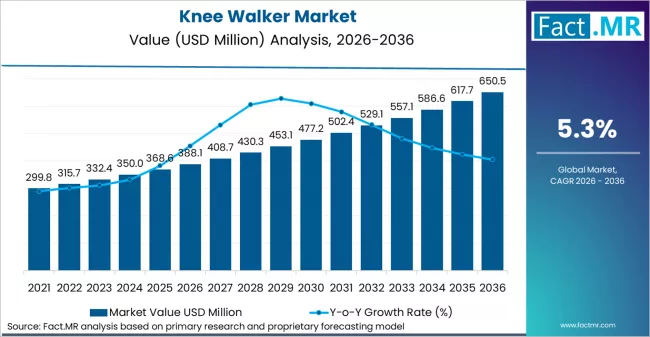
Knee Walker Market Market Value Analysis | Source: Fact.MR
Knee Walker Market
| Metric | Value |
|---|---|
| Estimated Value in (2026E) | USD 388.1 million |
| Forecast Value in (2036F) | USD 617.7 million |
| Forecast CAGR (2026 to 2036) | 5.3% |
Source: Fact.MR analysis. Updated Mar 5, 2026
Knee Walker Market Definition
The Knee Walker Market involves the manufacture and sale of wheeled mobility devices that allow users with lower‑leg injuries to rest on a padded platform and push themselves forward with their good leg as an alternative to crutches.
Market Inclusions
This report covers global and regional market sizes for knee walkers over a defined forecast period, including device types (standard, all‑terrain, adjustable), end‑use settings (hospitals, home care, rehabilitation clinics), and distribution channels (retail, e‑commerce, medical suppliers).
Market Exclusions
The scope excludes crutches, traditional scooters unrelated to medical mobility, and general orthopedic braces or supports not integral to knee walker functionality.
Research Methodology
- Primary Research: Interviews were conducted with clinicians, mobility device manufacturers, and healthcare procurement specialists.
- Desk Research: Data was sourced from industry reports, rehabilitation equipment publications, and trade association statistics.
- Market‑Sizing and Forecasting: A hybrid model combining top‑down mobility device demand forecasts with bottom‑up shipment and revenue data was used.
- Data Validation and Update Cycle: Findings were validated through expert review and aligned with recent production, adoption, and trade figures.
Summary of the Knee Walker Market
- Market Definition
- The Knee Walker Market involves the manufacture and sale of wheeled mobility devices designed for individuals with lower leg injuries, providing a stable and comfortable means of mobility during recovery. These devices are commonly used as an alternative to crutches, allowing users to rest on a padded platform and move using their good leg.
- Market Growth Drivers
- Rising Incidence of Lower Limb Injuries: The increasing prevalence of knee injuries and surgeries, such as ACL repairs and knee replacements, is driving the demand for knee walkers as an effective recovery aid.
- Aging Population: The growing elderly population, particularly in regions like North America and Europe, is contributing to the market's expansion as older adults are more prone to mobility impairments and often require assistance with recovery.
- Healthcare Awareness and Rehabilitation Focus: Increased awareness of rehabilitation products, along with the need for safer, more comfortable mobility solutions, is pushing the adoption of knee walkers over traditional crutches.
- Key Segments Analyzed
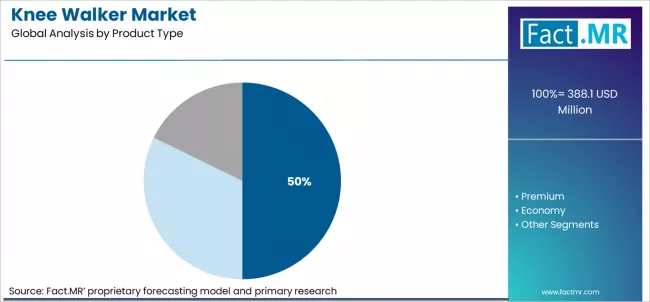
- Product Type: Standard Knee Walkers are expected to capture 50% of the market share by 2026. These knee walkers are popular due to their balance of comfort, stability, and cost-effectiveness, making them ideal for users recovering from knee-related surgeries or injuries.
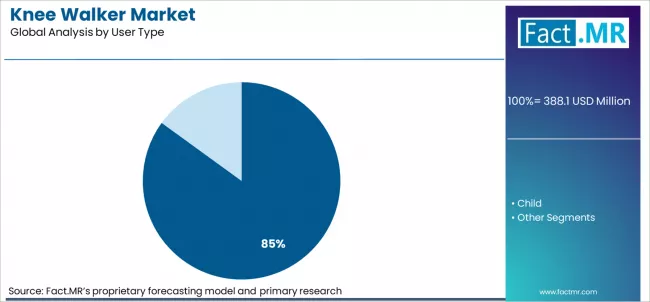
- User Type: Adults are projected to account for 85% of the market share by 2026, as knee walkers are primarily used by adults undergoing knee surgeries or experiencing mobility issues.
- Geography: China is projected to lead with a 6% CAGR due to its growing healthcare infrastructure and aging population. India follows with 5.8%, fueled by increasing healthcare access and awareness of mobility solutions.
- Strategic Implications
- Focus on Mobility and Comfort: Manufacturers should emphasize the comfort, stability, and ease of movement provided by knee walkers, especially for adults recovering from surgery.
- Regional Focus: Targeting regions with a rapidly aging population, such as North America and Europe, will be key for expanding market share. Additionally, tapping into emerging markets in Asia Pacific, such as China and India, will provide growth opportunities due to increasing healthcare access.
- Partnerships with Healthcare Providers: Collaborating with hospitals, rehabilitation centers, and outpatient clinics can help drive the adoption of knee walkers and enhance product visibility.
- Methodology
- Primary Research: Interviews with mobility device manufacturers, clinicians, and healthcare procurement specialists.
- Desk Research: Data sourced from industry reports and rehabilitation equipment publications.
- Forecasting: A hybrid model combining top-down mobility device demand forecasts with bottom-up shipment and revenue data was used to estimate market growth.
Segmental Analysis
Knee Walker Market Analysis by Product Type
Knee Walker Market Analysis By Product Type | Source: Fact.MR
- Market Overview: Standard knee walkers are expected to capture 50% of the market share by 2026. These knee walkers are widely used for providing mobility support to individuals recovering from knee surgeries or injuries. They offer a stable and comfortable alternative to crutches, allowing users to move around more freely during their recovery.
- Demand Drivers:
- Enhanced Comfort and Mobility: Standard knee walkers offer more stability and comfort than traditional crutches, which makes them more appealing for patients recovering from knee surgeries or fractures. Their design ensures that users can navigate their environment with ease while keeping weight off the injured leg.
- Growing Prevalence of Knee Injuries and Surgeries: With the increasing number of knee-related injuries and surgeries, including ACL repairs and knee replacements, the demand for knee walkers is rising. These devices help speed up recovery and improve mobility, which contributes to their growing popularity.
- Cost-Effectiveness and Accessibility: Standard knee walkers are typically more affordable compared to premium models, making them accessible to a wider range of users. This cost-effectiveness boosts their adoption in both healthcare facilities and at home.
Knee Walker Market Analysis by User Type
Knee Walker Market Analysis By User Type | Source: Fact.MR
- Market Overview: Adults are projected to account for 85% of the market share by 2026. Knee walkers are predominantly used by adults recovering from knee injuries or surgeries, as they offer greater mobility and comfort compared to crutches, which are less suitable for extended use.
- Demand Drivers:
- High Incidence of Knee Surgeries in Adults: Adults are more likely to undergo knee surgeries due to conditions like osteoarthritis, ligament injuries, and joint replacements. As the adult population ages, the need for knee walkers to aid in post-surgery recovery continues to grow.
- Preference for Mobility Devices in Adults: Knee walkers are particularly favored by adults who find crutches uncomfortable or difficult to use. The ease of maneuverability and the ability to walk naturally with a knee walker makes it the preferred choice for many adults recovering from knee procedures.
- Increased Focus on Recovery and Rehabilitation: Adults are more likely to invest in recovery tools that offer comfort, stability, and greater independence. The ability to use knee walkers for long periods without strain on the arms or upper body drives their adoption in the adult demographic.
Knee Walker Market Drivers, Restraints, and Opportunities
FMR analysts observe that the knee walker market is a growth‑aligned, mobility‑support segment driven by rising incidence of lower‑leg injuries, diabetes‑related foot complications, and an aging population needing non‑weight‑bearing ambulation aids. Historically, crutches and canes were standard for post‑injury mobility; as users and clinicians seek safer, more stable alternatives that reduce fall risk and improve independence, structural demand has shifted toward knee walkers. The 2026 valuation reflects this shift, with adoption tied to outpatient care growth, home rehabilitation trends, and broadening clinician recommendations for patient mobility.
While basic crutches remain in use, knee walkers are gaining share because they offer enhanced stability, comfort, and ease of movement especially for older adults and chronic care patients. These higher‑value devices carry premium pricing, contributing to net market value growth even as overall unit volumes grow moderately.
- Patient Mobility Demand: Users adopt knee walkers for safer, more comfortable ambulation compared with crutches or traditional walkers following foot or ankle injuries.
- Clinical Practice Adoption: Physical therapists and clinicians recommend knee walkers to support rehabilitation and reduce fall risk, supporting product uptake.
- Regional Healthcare Trends: In North America and Europe, strong home‑care and outpatient rehabilitation infrastructures drive higher knee walker adoption, while growth in Asia‑Pacific reflects expanding healthcare access.
Regional Analysis
The market analysis covers key global regions, including East Asia, South Asia, Western Europe, and North America. It is segmented geographically, with specific market dynamics for each region. The full report provides a detailed market attractiveness analysis.
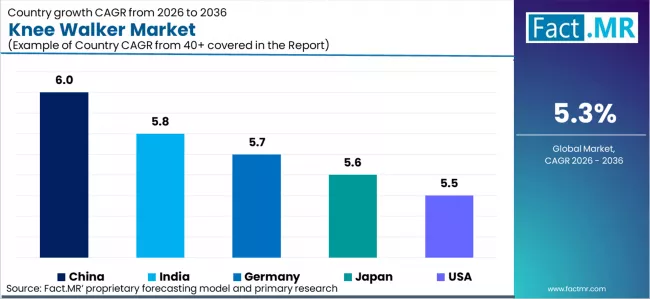
Knee Walker Market Cagr Analysis By Country | Source: Fact.MR
| Country | CAGR (2026-2036) |
|---|---|
| China | 6% |
| India | 5.8% |
| Germany | 5.7% |
| Japan | 5.6% |
| USA | 5.5% |
Source: Fact.MR analysis. Updated Mar 5, 2026
Source: Fact MR (FMR) analysis, based on proprietary forecasting model and primary research.
East Asia:
In East Asia, China is the leading market for knee walkers, driven by the increasing adoption of mobility aids, rising geriatric population, and growing demand for post-surgery rehabilitation products.
- China: Demand for knee walkers in China is projected to rise at 6% CAGR through 2036. China’s growing elderly population, increased healthcare infrastructure, and rising awareness of mobility aids continue to drive the market for knee walkers.
South Asia:
In South Asia, India is a significant market for knee walkers, supported by rising healthcare awareness, increasing incidences of knee surgeries, and growing demand for mobility aids.
- India: Demand for knee walkers in India is projected to rise at 5.8% CAGR through 2036. India’s expanding healthcare sector, increased adoption of mobility devices, and growing prevalence of knee surgeries continue to fuel market growth.
Western Europe:
In Western Europe, Germany and Japan are key markets for knee walkers, driven by an aging population, rising healthcare spending, and growing adoption of mobility aids for rehabilitation.
- Germany: Demand for knee walkers in Germany is projected to rise at 5.7% CAGR through 2036. Germany’s strong healthcare infrastructure, aging population, and increased demand for rehabilitation products continue to support market growth.
- Japan: Demand for knee walkers in Japan is projected to rise at 5.6% CAGR through 2036. Japan’s aging population and growing demand for post-surgery rehabilitation devices contribute to steady market expansion.
North America:
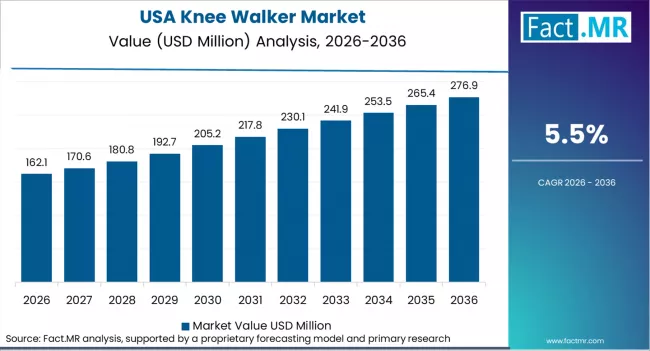
Knee Walker Market Country Value Analysis | Source: Fact.MR
In North America, the USA is a key market for knee walkers, driven by rising awareness about rehabilitation aids, increased healthcare spending, and growing demand for mobility aids following knee surgeries.
- USA: Demand for knee walkers in the U.S. is projected to rise at 5.5% CAGR through 2036. The USA’s growing demand for post-surgery rehabilitation devices, increased healthcare awareness, and rising elderly population continue to contribute to steady market growth.
Fact MR's analysis of the Knee Walker Market in East Asia, South Asia, Western Europe, North America consists of country-wise assessments that include China, India, Germany, Japan, and the USA. Readers can find detailed trends, regulatory updates, and company-specific investments shaping the market’s growth in these countries.
What is the Competitive Structure and Buyer Behavior in the Knee Walker Market?
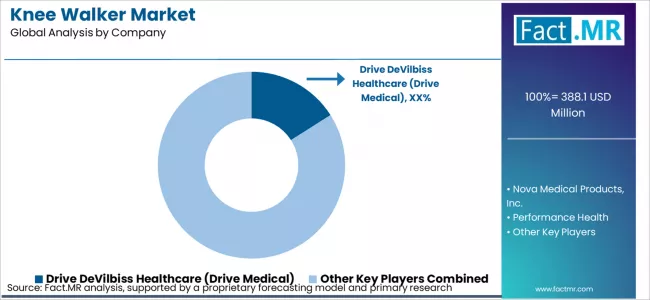
Knee Walker Market Analysis By Company | Source: Fact.MR
The knee walker market is moderately concentrated, with established manufacturers such as Drive DeVilbiss Healthcare, Nova Medical Products, Inc., Performance Health, Vitality Medical LLC and Mercy Medical Equipment Company capturing a meaningful share while smaller regional suppliers also compete. Demand is expanding as incidence of lower limb injuries and orthopedic surgeries increases, and manufacturers compete largely on product quality, durability and ergonomic design rather than just price, with premium and standard models both gaining traction. Established firms with strong distribution networks and recognized brands have structural advantages, enabling wider retail and online presence and deeper relationships with healthcare providers and distributors. Large healthcare providers and medical equipment buyers wield significant leverage by negotiating pricing and supply terms and qualifying multiple suppliers under preferred vendor frameworks, which curtails individual suppliers’ pricing power. To manage supplier dependency, these buyers often source from several manufacturers and emphasize product reliability and after‑sales support, shifting competition toward value and service rather than price alone.
Recent Industry Developments
- Launch of 4-Wheel Hybrid Steering (KneeRover Fusion): In early 2026, KneeRover released the Hybrid Fusion, a patented crutch alternative that introduces 4-wheel steering to the market. Unlike traditional models that only steer from the front axle, this system allows for a significantly tighter turning radius, solving the "hallway maneuverability" issue that has historically limited knee walker use in residential settings.
- Drive DeVilbiss "Nitro Glide" Market Entry: In February 2026, Drive DeVilbiss Healthcare expanded its "Nitro" premium mobility line with the Nitro Glide. This model is designed specifically to prevent the rapid muscle atrophy common in non-weight-bearing recovery by integrating an "active tension" frame that helps maintain thigh muscle strength while keeping the lower leg fully relaxed on an ergonomically contoured pad.
- Scaling of "Rental-Grade" Electric Knee Scooters: The 2026 market is seeing a high CAGR in the Rental Segment, specifically for electric-powered knee scooters. To meet the needs of an aging global population (now 10% aged 65+), service providers are shifting to "smart" scooters featuring shock absorbers, multifunctional electronic brakes, and adjustable seat heights that facilitate longer-range outdoor mobility without upper-body fatigue
Key Players of the Knee Walker Market
- Drive DeVilbiss Healthcare (Drive Medical)
- Nova Medical Products, Inc.
- Performance Health
- Vitality Medical LLC
- Mercy Medical Equipment Company
Report Scope
| Metric | Value |
|---|---|
| Quantitative Units | USD 388.1 million (2026) to USD 617.7 million (2036), at a CAGR of 5.3% |
| Market Definition | The Knee Walker Market includes products designed for individuals with lower leg injuries or surgeries, offering various models like premium, standard, and economy knee walkers for adults and children. |
| By Product Type | Premium Knee Walkers, Standard Knee Walkers, Economy Knee Walkers |
| By User Type | Adult, Child |
| By Distribution Channel | Online Channels, Offline Channels |
| Regions Covered | North America, Latin America, Europe, East Asia, South Asia, Oceania, Middle East and Africa |
| Countries Covered | United States, Canada, Mexico, Brazil, Argentina, Germany, France, United Kingdom, Italy, Spain, China, India, Japan, South Korea, Indonesia, Australia, and 40+ countries |
| Key Companies Profiled | Drive DeVilbiss Healthcare (Drive Medical), Nova Medical Products, Inc., Performance Health, Vitality Medical LLC, Mercy Medical Equipment Company |
| Forecast Period | 2026 to 2036 |
| Approach | Hybrid top-down and bottom-up market modeling validated through primary interviews with manufacturers and supported by trade data benchmarking and market research. |
Source: Fact.MR analysis. Updated Mar 5, 2026
Bibliographies
- Drive DeVilbiss Healthcare. (2023). Knee walkers and mobility aids for injury recovery. Drive DeVilbiss Healthcare.
- Mercy Medical Equipment Company. (2023). Knee walker technologies: Enhancing mobility during recovery. Mercy Medical Equipment Company.
- Nova Medical Products, Inc. (2023). Knee walker solutions for post-surgical rehabilitation. Nova Medical Products, Inc.
- Performance Health. (2023). Innovative knee walker designs for improved mobility. Performance Health.
- Drive DeVilbiss Healthcare. (2026, February). Nitro Glide Orthopaedic Knee Walker [Product launch]. Drive DeVilbiss Healthcare.
- Drive Medical. (2026, January). Walkers and Mobility Catalog 2026 [Product catalog]. Drive Medical.
- KneeRover. (2026, February). HYBRID FUSION Knee Scooter with 4-Wheel Steering [Product release]. KneeRover.
This report addresses:
- Market intelligence enabling comprehensive assessment of leading countries and product segments across the Knee Walker Market globally.
- Market volume (sales units) estimates and 10-year revenue forecasts from 2026 to 2036, validated through manufacturer shipment data, channel partner surveys, and country-level demand modeling.
- Growth opportunity mapping across product types (Premium Knee Walkers, Standard Knee Walkers, Economy Knee Walkers), user types (Adult, Child), and distribution channels (Online Channels, Offline Channels).
- Segment and regional revenue forecasts by product type, user type, distribution channel, and geography across 40+ countries.
- Competition strategy analysis covering dealer network structure, recent developments, product portfolio, USPs, and market share analysis.
- Product and regulatory compliance tracking aligned with healthcare standards, insurance coverage, and post-surgery rehabilitation requirements.
- Regulatory impact analysis addressing mobility aid regulations, healthcare standards, and device certifications across key markets.
- Report delivery in PDF, Excel, PowerPoint, and interactive dashboard formats for executive, procurement, and operational planning use.
Segmentation
Knee Walker Market Key Segments
-
Product Type :
- Premium Knee Walkers
- Standard Knee Walkers
- Economy Knee Walkers
-
User Type :
- Adult
- Child
-
Distribution Channel :
- Online Channels
- Offline Channels
-
Region :
- North America
- USA
- Canada
- Mexico
- Europe
- Germany
- UK
- France
- Italy
- Spain
- Nordic Countries
- BENELUX
- Rest of Europe
- Asia Pacific
- China
- Japan
- South Korea
- India
- Australia
- Rest of Asia Pacific
- Latin America
- Brazil
- Argentina
- Rest of Latin America
- Middle East and Africa
- Kingdom of Saudi Arabia
- United Arab Emirates
- South Africa
- Rest of Middle East and Africa
- Other Regions
- Oceania
- Central Asia
- Other Markets
- North America
Frequently Asked Questions
How large is the demand for Knee Walkers in the global market in 2026?
What will be the market size of Knee Walkers in the global market by 2036?
What is the expected demand growth for Knee Walkers in the global market between 2026 and 2036?
Which product type is expected to dominate the market?
Which region is expected to show the highest growth rate for Knee Walkers?
How significant is the growth outlook for India in this market?
What is the growth outlook for Germany in the Knee Walker market?
What is the growth forecast for Japan in the Knee Walker market?
What is the growth forecast for the United States in the Knee Walker market?
Which company is identified as a leading player in the Knee Walker market?
What are Knee Walkers used for?
What does the Knee Walker market include in this report?
How is the market forecast developed in this report?
What is meant by the Knee Walker market in this report?
Who worked on this report


Preview the report firsthand - request a free sample
Free SampleGet the brochure for pricing and purchase details
Download PDF