Male Incontinence Market
Male Incontinence Market Size and Share Forecast Outlook 2025 to 2035
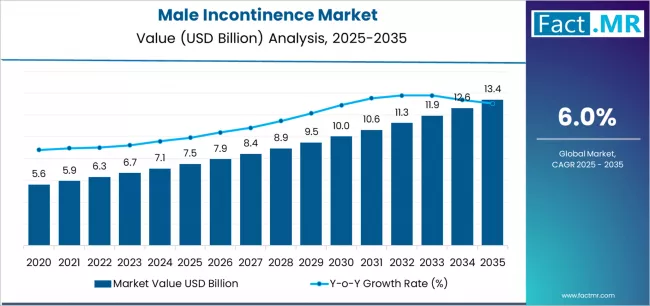
Male incontinence market is projected to grow from USD 7.5 billion in 2025 to USD 13.4 billion by 2035, at a CAGR of 6.0%. Absorbents will dominate with a 68.0% market share, while urge urinary incontinence will lead the incontinence type segment with a 56.8% share.
Male Incontinence Market Forecast and Outlook 2025 to 2035
The global male incontinence market is projected to grow from USD 7.5 billion in 2025 to approximately USD 13.4 billion by 2035, recording an extraordinary absolute increase of USD 5.9 billion over the forecast period. This translates into a total growth of 78.7%, with the market forecast to expand at a compound annual growth rate (CAGR) of 6.0% between 2025 and 2035.
The male incontinence market is expected to grow by over 1.8X during this period, supported by exponential demand for incontinence management solutions, rising adoption of advanced absorbent technology protocols, and growing emphasis on aging population care and quality of life optimization across global healthcare operations.
Quick Stats on Male Incontinence Market
- Male Incontinence Market Value (2025): USD 7.5 billion
- Male Incontinence Market Forecast Value (2035): USD 13.4 billion
- Male Incontinence Market Forecast CAGR (2025 to 2035): 6.0%
- Leading Product in Male Incontinence Market: Absorbents (68.0%)
- Leading Incontinence Type in Male Incontinence Market: Urge Urinary Incontinence (56.8%)
- Leading Usage Type in Male Incontinence Market: Disposable (72.0%)
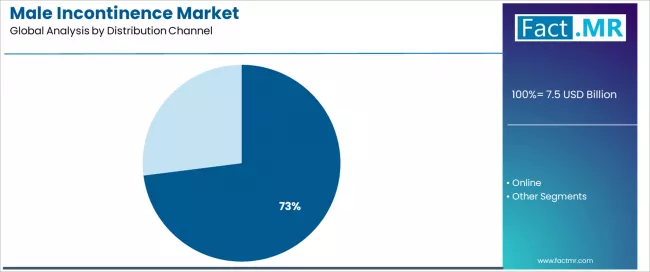
- Leading Distribution Channel in Male Incontinence Market: Offline Stores (73.0%)
- Leading End-Use in Male Incontinence Market: Hospitals & Clinics (71.2%)
- Key Growth Regions in Male Incontinence Market: North America, Europe, and Asia Pacific
- Key Players in Male Incontinence Market: Boston Scientific, Coloplast, Medtronic, Kimberly-Clark, Attindas Hygiene Partners, Essity, ConvaTec, Quanta Medical, Axonics, UroMems

The male incontinence market is positioned for substantial expansion, driven by increasing recognition of urological health importance, growing aging male population with enhanced care standards, and rising adoption of advanced absorbent product and medical device technologies across healthcare facilities globally.
The market for male incontinence products demonstrates robust fundamentals supported by expanding urology specialty networks, healthcare professionals' focus on continence management protocols, and rising recognition of male incontinence products as critical healthcare components in achieving enhanced patient dignity outcomes, symptom control capabilities, and quality of life effectiveness within modern healthcare architectures across diverse patient applications.
The male incontinence market’s growth is underpinned by product innovations in male incontinence management, particularly advanced absorbent material designs and minimally invasive device technologies, which offer enhanced comfort, improved leakage protection outcomes, and superior compatibility with comprehensive patient care protocols prevalent in contemporary urology practices.
Healthcare providers increasingly prioritize incontinence solutions that deliver optimal balance between effectiveness, user comfort, and cost-effectiveness while adhering to increasingly stringent patient safety standards and healthcare quality requirements across global medical markets.
The convergence of aging population expansion in developed economies, prostate health awareness growth in mature markets, and specialized urology care infrastructure development in emerging economies creates multifaceted growth opportunities for medical device manufacturers and incontinence product operators.
The continence care landscape is experiencing transformative changes as manufacturers develop sophisticated management solutions including advanced super-absorbent polymer materials, innovative artificial urinary sphincter systems, and discreet wearable containment products that enable enhanced patient independence and dignity preservation.
These product advancements are complemented by evolving treatment capabilities encompassing minimally invasive surgical interventions, advanced neuromodulation therapies, and innovative external collection devices that significantly improve patient outcomes and quality of life.
The integration of digital health platforms and remote monitoring capabilities further enhances care management optimization, particularly benefiting elderly patients and post-surgical populations where consistent symptom control and dignity maintenance remain critical.
Between 2025 and 2030, the male incontinence market is projected to expand from USD 7.5 billion to USD 10.1 billion, demonstrating strong foundational growth driven by global aging population expansion, increasing awareness of incontinence management options, and initial deployment of advanced absorbent product and minimally invasive device technologies across post-prostatectomy and geriatric care platforms. This growth phase establishes market infrastructure, validates specialized continence management protocols, and creates comprehensive distribution networks supporting global healthcare operations.
From 2030 to 2035, the market is forecast to reach USD 13.4 billion, driven by mature absorbent product penetration, next-generation neuromodulation devices requiring sophisticated clinical expertise, and comprehensive integration of advanced continence management systems demanding enhanced patient outcome capabilities. The growing adoption of minimally invasive treatment programs, specialized post-surgical care initiatives, and healthcare reimbursement expansion will drive demand for comprehensive male incontinence solutions with enhanced efficacy outcomes and seamless patient care integration functionality.
Male Incontinence Market Key Takeaways
| Metric | Value |
|---|---|
| Estimated Value (2025E) | USD 7.5 billion |
| Forecast Value (2035F) | USD 13.4 billion |
| Forecast CAGR (2025 to 2035) | 6.0% |
Why is the Male Incontinence Market Growing?
Market expansion is being supported by the exponential increase in aging male population and the corresponding need for sophisticated continence management solutions in patient care applications across global healthcare operations. Healthcare providers are increasingly focused on advanced male incontinence products that can improve patient quality of life, enhance symptom control, and optimize care protocols while meeting stringent safety requirements.
The proven efficacy of absorbent products and medical devices in various urological applications makes them an essential component of comprehensive continence care strategies and patient dignity preservation programs. The growing emphasis on active aging and patient-centered care integration is driving demand for advanced incontinence management products that meet stringent performance specifications and operational requirements for healthcare applications.
Healthcare providers' preference for reliable, high-performance incontinence solutions that can ensure consistent patient outcomes is creating opportunities for innovative absorbent designs and customized medical device solutions. The rising influence of prostate health awareness campaigns and post-surgical care standards is also contributing to increased adoption of premium-grade male incontinence products across different patient categories and healthcare systems requiring advanced continence technology.
Opportunity Pathways - Male Incontinence Market
The male incontinence market represents a transformative growth opportunity, expanding from USD 7.5 billion in 2025 to USD 13.4 billion by 2035 at a 6.0% CAGR. As healthcare providers prioritize patient dignity optimization, specialized symptom management, and care excellence in complex urological environments, male incontinence products have evolved from basic containment solutions to essential healthcare components enabling precise leakage control, comprehensive quality of life preservation strategies, and multi-condition management operations across post-surgical platforms and aging population applications.
The convergence of population aging acceleration, increasing prostate health awareness penetration, advanced product technology integration, and stringent patient care mandates creates momentum in demand. High-performance absorbent products offering superior leakage protection outcomes, cost-effective disposable solutions balancing functionality with economics, and specialized products for post-prostatectomy applications will capture market premiums, while geographic expansion into high-growth North American aging markets and emerging Asian healthcare ecosystems will drive volume leadership. Healthcare provider emphasis on patient dignity and quality of life provides structural support.
- Pathway A - Absorbents Product Dominance: Leading with 68.0% market share, absorbent applications drive primary demand through established healthcare workflows requiring comprehensive leakage management for patient dignity. Advanced product protocols enabling improved absorption capacity, reduced skin irritation, and enhanced discretion command premium positioning from healthcare providers requiring stringent performance specifications and patient satisfaction compliance. Expected revenue pool: USD 5.1-9.1 billion.
- Pathway B - Urge Urinary Incontinence Type Leadership: Dominating with 56.8% market share through optimal balance of condition prevalence and treatment requirements, urge incontinence applications serve most male incontinence management needs while meeting diverse patient care demands. This incontinence category addresses both overactive bladder management and neurological condition expectations, making it the preferred segment for healthcare providers and patients seeking comprehensive symptom control capabilities. Opportunity: USD 4.3-7.6 billion.
- Pathway C - North American Market Acceleration: USA (7.2% CAGR), Germany (6.6% CAGR), and UK (6.0% CAGR) lead global growth through aging population expansion, prostate health awareness development, and urology care capability advancement. Strategic partnerships with healthcare providers, product localization expertise, and distribution network optimization enable the expansion of male incontinence solutions in major healthcare markets. Geographic expansion upside: USD 0.8-1.4 billion.
- Pathway D - Disposable Usage Type Segment: Disposable products with 72.0% market share serve critical convenience applications requiring single-use containment for daily incontinence management. Optimized design protocols supporting ease of use, hygienic disposal, and proven practical application maintain significant volumes from institutional care facilities and home care users. Revenue potential: USD 5.4-9.6 billion.
- Pathway E - Advanced Absorbent Technologies & Medical Device Innovation: Companies investing in sophisticated super-absorbent polymer formulations, artificial sphincter innovations, and advanced neuromodulation systems gain competitive advantages through consistent performance delivery and patient satisfaction. Advanced capabilities enabling customized product specifications and rapid clinical validation development capture premium healthcare partnerships. Technology premium: USD 0.9-1.6 billion.
- Pathway F - Distribution Network Optimization & Healthcare Integration Excellence: Specialized medical supply distributors, strategic pharmacy channel integration, and reliable home healthcare delivery systems create competitive differentiation in patient markets requiring consistent product availability. Companies offering guaranteed quality standards, comprehensive patient education services, and reimbursement support gain preferred supplier status with quality-focused healthcare operators. Distribution network value: USD 0.8-1.3 billion.
- Pathway G - Emerging Applications & Market Development: Beyond traditional post-prostatectomy applications, male incontinence products in neurological disease management, obesity-related incontinence, and specialized active lifestyle solutions represent growth opportunities. Companies developing new product designs, supporting awareness initiatives, and expanding into adjacent continence care markets capture incremental demand while diversifying product portfolios. Emerging opportunity: USD 0.6-1.1 billion.
Segmental Analysis
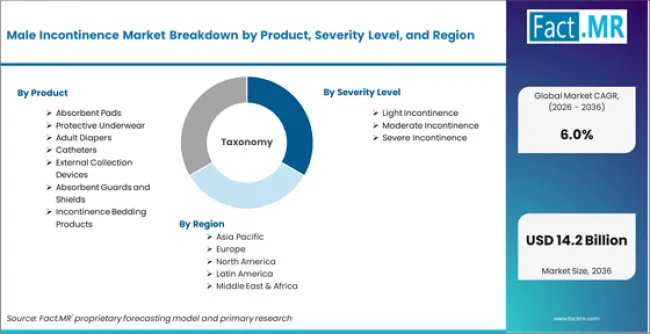
The market is segmented by product, incontinence type, usage type, distribution channel, end-use, and region. By product, the market is divided into absorbents and non-absorbents. Based on incontinence type, the market is categorized into urge urinary incontinence and stress urinary incontinence.
By usage type, the market is segmented into disposable and reusable. By distribution channel, the market is divided into offline stores and online. By end-use, the market is segmented into hospitals & clinics and homecare. Regionally, the market is divided into Asia Pacific, North America, Europe, Latin America, and Middle East & Africa.
Why do Absorbents Command Product Segment Leadership?

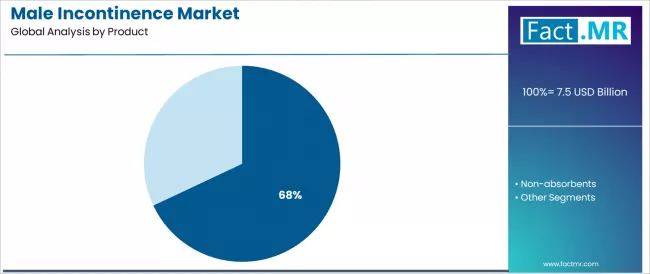
The absorbents product segment is projected to account for 68.0% of the male incontinence market in 2025, reaffirming its position as the category's dominant product specification. Healthcare providers increasingly recognize the optimal balance of effectiveness and convenience offered by absorbent products for male incontinence management, particularly in post-surgical care and geriatric patient environments. This product category addresses both moderate and severe incontinence requirements while providing practical daily management across diverse patient populations.
This segment forms the foundation of most male incontinence management protocols for post-prostatectomy care and chronic condition treatment, as it represents the most widely adopted and clinically accepted product category in the male incontinence industry. Performance validation standards and extensive patient usage continue to strengthen confidence in absorbent products among urologists and continence care specialists.
With increasing recognition of dignity preservation benefits and quality of life improvement capabilities, absorbent incontinence products align with both current patient care practices and active aging evolution goals, making them the central growth driver of comprehensive continence management strategies across multiple healthcare platforms.
Non-absorbents represent 32.0% of product applications, encompassing medical devices including artificial urinary sphincters, urethral slings, external collection devices, and neuromodulation systems serving patients requiring surgical or device-based interventions for incontinence management.
What drives Urge Urinary Incontinence Type Segment Prominence?

Urge urinary incontinence type is projected to represent 56.8% of male incontinence demand in 2025, underscoring its role as the primary condition category driving market adoption and product utilization. Healthcare professionals recognize that urge incontinence requirements, including overactive bladder symptoms, involuntary bladder contractions, and sudden urgency episodes, provide the most prevalent addressable condition that other incontinence types cannot match in patient population size and symptom frequency.
Urge incontinence management utilized in patient care offers established treatment protocols and proven symptom control essential for serving aging male populations and neurological disease patients. The segment is supported by the expanding nature of global aging population, requiring management solutions capable of addressing overactive bladder control, urgency reduction, and comprehensive symptom management, and the increasing recognition that conservative management approaches provide optimal first-line treatment.
Patients are increasingly adopting containment strategies that provide dignity preservation for optimal quality of life and social participation. As understanding of bladder dysfunction advances and treatment options become more sophisticated, urge incontinence-focused products will continue to play a crucial role in comprehensive continence care differentiation strategies.
Stress urinary incontinence represents 28.0% of incontinence types, driven by post-prostatectomy patients, pelvic floor weakness, and physical activity-related leakage requiring specialized containment and surgical intervention options.
How does Disposable Usage Type Maintain Market Dominance?

The disposable usage type segment is projected to account for 72.0% of the male incontinence market in 2025, establishing its position as the leading product format. Patients and caregivers increasingly recognize that disposable products, encompassing single-use pads, protective underwear, and absorbent guards, represent the most convenient and hygienic category for daily incontinence management due to ease of use and disposal convenience. This usage type addresses both moderate leakage protection and heavy incontinence containment while delivering practical management across diverse care settings.
The segment is supported by the practical nature of incontinence care, driven by hygiene considerations, convenience requirements, and established distribution infrastructure supporting product accessibility. Additionally, patients prioritize usage formats that minimize washing and maintenance requirements while ensuring consistent protection. As patient independence priorities advance and caregiver convenience becomes more important, disposable product applications will continue to serve the crucial role of ensuring practical incontinence management within global healthcare systems.
Reusable products represent 28.0% of usage types, serving environmentally conscious patients, cost-sensitive markets, and specialized applications requiring washable containment solutions and sustainable product alternatives.
What drives Offline Stores Distribution Channel Leadership?

Offline stores distribution channel is projected to represent 73.0% of male incontinence market distribution in 2025, establishing its position as the leading distribution method. This channel addresses traditional retail pharmacy access, medical supply store availability, and professional healthcare facility dispensing essential for incontinence product distribution and patient consultation.
Online distribution represents 27.0% of channels, driven by growing e-commerce adoption, direct-to-consumer delivery convenience, and discreet purchasing preferences among patients seeking privacy in product acquisition.
How Does Hospitals & Clinics End-Use Maintain Dominance?

Hospitals & clinics end-use is projected to represent 71.2% of male incontinence market applications in 2025, underscoring the segment's role as the primary care setting. This end-use category addresses post-surgical patient management, outpatient urology care, and professional healthcare product recommendations essential for incontinence management initiation and ongoing care.
Homecare accounts for 28.8% of end-use, serving long-term incontinence management, chronic condition care, and independent patient product usage across residential care environments.
What are the Drivers, Restraints, and Key Trends of the Male Incontinence Market?
The male incontinence market is advancing rapidly due to increasing recognition of aging population healthcare needs and growing demand for dignity-preserving continence solutions across the healthcare sector.
The market faces challenges, including social stigma barriers to product adoption, reimbursement limitations in certain healthcare systems, and price sensitivity in developing market segments. Innovation in absorbent material technologies and advanced medical device approaches continues to influence product development and market expansion patterns.
Proliferation of Advanced Absorbent Technologies and Material Innovation
The accelerating development of sophisticated absorbent platforms is enabling the creation of more effective incontinence management applications and containment protocols that can meet stringent performance and comfort requirements.
Healthcare product manufacturers demand comprehensive material research for absorbent products, including super-absorbent polymer capabilities and skin-friendly formulations that are particularly important for achieving patient satisfaction requirements in long-term usage applications.
Advanced absorbent technologies provide access to superior leakage protection that can optimize patient confidence and reduce skin complications while maintaining cost-effectiveness for diverse care environments.
Integration of Awareness Campaigns and Stigma Reduction Initiatives
Modern healthcare organizations are incorporating advanced strategies such as public education programs, healthcare provider training initiatives, and patient support communities to enhance male incontinence product acceptance and market awareness.
These programs improve treatment-seeking opportunities, enable seamless product adoption transitions, and provide better understanding of management options throughout the patient journey. Advanced education capabilities also enable earlier intervention and improved quality of life outcomes, supporting patient dignity enhancement and reduced social isolation.
Analysis of the Male Incontinence Market by Key Countries

| Country | CAGR (2025-2035) |
|---|---|
| USA | 7.2% |
| Germany | 6.6% |
| UK | 6.0% |
| Canada | 5.9% |
| Japan | 5.6% |
| China | 5.3% |
| India | 4.6% |
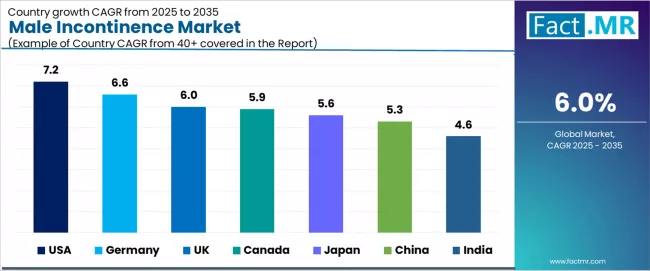
The male incontinence market is experiencing exceptional growth globally, with USA leading at a 7.2% CAGR through 2035, driven by aging male population expansion, strong reimbursement infrastructure, and advanced urology technology adoption across major healthcare centers. Germany follows at 6.6%, supported by large geriatric population, comprehensive health infrastructure, and established continence care programs. UK records 6.0% growth, benefiting from awareness campaigns and projected prostate cancer incidence rise.
Canada demonstrates 5.9% growth, emphasizing high prostate surgery prevalence and strong medical device adoption. Japan shows 5.6% growth with extreme aging population demographics and high neurological disease prevalence. China records 5.3% growth, representing rapid healthcare modernization and rising diagnosis rates, while India shows 4.6% growth, representing growing awareness and uptake of affordable absorbent solutions.
How does USA Demonstrate Market Leadership with Aging Population and Technology?

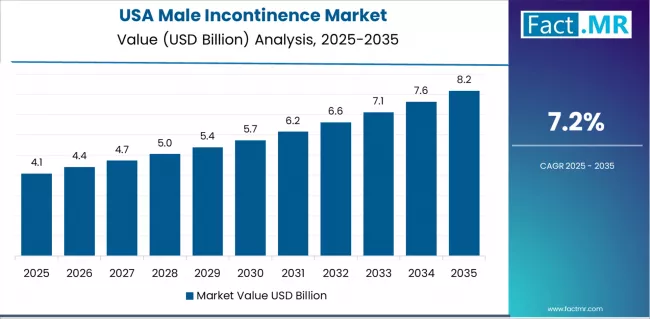
The male incontinence market in in USA is projected to exhibit exceptional growth with a CAGR of 7.2% through 2035, driven by rapidly aging baby boomer population and strategic positioning as a healthcare technology leader through comprehensive urology infrastructure and advanced medical device adoption. The country's sophisticated healthcare system and high prostate cancer treatment rates are creating significant opportunities for incontinence product deployment across both post-surgical management and chronic condition care segments.
Major medical device companies and consumer healthcare manufacturers are maintaining comprehensive distribution networks to serve the expanding population of aging men and prostate cancer survivors requiring continence management across urology clinics, hospitals, and retail pharmacy channels throughout USA's diverse healthcare regions.
The USA healthcare system's emphasis on quality-of-life preservation and comprehensive reimbursement coverage is supporting substantial adoption of advanced incontinence management solutions and medical devices. This infrastructure support, combined with the country's aging demographics and prostate health awareness, creates a favorable environment for male incontinence market development. American patients demonstrate strong acceptance of incontinence management products, with continence care representing a key component in post-surgical recovery protocols.
- Healthcare infrastructure supporting comprehensive urology care and strong reimbursement frameworks are driving demand for male incontinence products across post-surgical and chronic care segments
- Aging population expansion and prostate health awareness advancement are supporting appropriate product utilization among patients and healthcare professionals nationwide
- Patients and caregivers are increasingly recognizing dignity preservation importance in quality of life, creating sustained product demand capabilities
- Rising prostate surgery rates and growing awareness of management options are accelerating male incontinence product adoption across patient categories
What makes Germany Demonstrate European Healthcare Excellence?
The male incontinence market in in Germany is expanding at a CAGR of 6.6%, supported by Europe's largest geriatric population, advancing healthcare infrastructure integration, and comprehensive continence care standards across the country's developed urban and rural healthcare corridors. The country's sophisticated healthcare system and strong patient care culture are driving demand for incontinence management solutions in both institutional care and home healthcare applications.
International medical product companies and domestic manufacturers are maintaining market presence to serve the established demand for continence care products while supporting the country's position as a leading European healthcare market. Germany's male incontinence market continues to benefit from comprehensive health insurance coverage, established distribution infrastructure, and strong patient acceptance of continence management.
The country's focus on quality-of-life preservation is maintaining consistent demand for premium incontinence products and medical devices. This development is particularly important for male incontinence applications, as healthcare providers seek effective management solutions that maximize patient dignity while ensuring clinical effectiveness in diverse care environments.
- Rising geriatric population and comprehensive healthcare coverage are maintaining opportunities for male incontinence solutions
- Established continence care infrastructure and patient acceptance are supporting consistent utilization of absorbent and device products across care settings
- Healthcare quality standards and patient dignity emphasis are maintaining product specifications with performance characteristics and comfort optimization
- Clinical care protocols ensuring appropriate product selection and comprehensive patient support in continence management applications
Why does UK Maintain Prostate Health Awareness Leadership?
The male incontinence market in in UK is projected to exhibit strong growth with a CAGR of 6.0% through 2035, driven by comprehensive awareness campaigns and projected prostate cancer incidence increase as essential components for early detection and post-treatment care. The country's National Health Service infrastructure and comprehensive cancer care pathways are creating significant opportunities for incontinence product integration across both post-prostatectomy and aging population applications.
The healthcare providers are leveraging awareness initiatives to improve patient care while supporting the country's comprehensive healthcare delivery. The UK market benefits from established healthcare pathways supporting prostate cancer treatment, enabling optimized continence care product deployment and patient support integration. This development is particularly important for male incontinence applications, as providers seek effective management solutions that maximize patient recovery while ensuring dignity preservation in post-surgical and chronic care environments.
Strategic Market Considerations:
- Post-prostatectomy and aging population segments leading growth with focus on awareness initiatives and comprehensive continence care applications
- Healthcare pathways and patient support programs are driving product portfolios from basic containment to advanced management solutions
- Healthcare system integration and patient education supporting competitive positioning in European healthcare markets
- Awareness campaigns and clinical guidelines influencing product specifications and care protocol adoption timelines
How does Canada Maintain Post-Surgical Care Excellence?
Canada's established male incontinence market demonstrates sustained growth with a 5.9% CAGR through 2035, driven by high prostate surgery prevalence, comprehensive medical device adoption, and advanced urology care standards across major healthcare regions. The country's sophisticated healthcare infrastructure and strong surgical treatment rates are maintaining demand for incontinence management solutions across diverse post-operative and chronic care platforms.
Canadian healthcare providers maintain high-quality continence care standards that incorporate advanced products for optimal patient outcomes. Market dynamics focus on effective male incontinence products that balance clinical performance with patient comfort considerations important to Canadian healthcare standards and quality of life priorities. Strong urology expertise maintains demand for comprehensive continence management and post-surgical care programs.
Strategic Market Considerations:
- Post-surgical and medical device segments demonstrating steady growth with emphasis on treatment outcomes and patient quality of life applications
- High care standards driving product specifications with proven efficacy characteristics and patient satisfaction optimization
- Healthcare excellence supported by urology expertise and comprehensive surgical care capabilities
- Provider preferences emphasizing evidence-based approaches and comprehensive patient support in continence management applications
What drives Japan’s Market Growth with Extreme Aging Demographics?

Japan's advancing male incontinence market demonstrates sustained adoption with a 5.6% CAGR through 2035, driven by world's most aged population, high neurological disease prevalence, and comprehensive long-term care infrastructure across major urban and regional healthcare centers.
The country's demographic challenges and sophisticated healthcare system are creating continued demand for incontinence management solutions across diverse geriatric care and neurological condition platforms. Japanese healthcare providers and patients maintain high acceptance of continence care products that address aging-related health needs.
Market dynamics focus on quality male incontinence products that balance effectiveness with discretion considerations important to Japanese cultural standards and patient dignity requirements. Extreme aging demographics maintain sustained demand for continence management and long-term care products.
Strategic Market Considerations:
- Geriatric care and neurological disease segments demonstrating steady growth with emphasis on aging population management and quality care applications
- High quality standards driving premium product specifications with comfort characteristics and discretion optimization
- Healthcare infrastructure supported by long-term care expertise and comprehensive geriatric service capabilities
- Cultural preferences emphasizing product discretion and comprehensive dignity preservation in continence care applications
How does China Demonstrate Healthcare Modernization Leadership?
China's developing male incontinence market demonstrates moderate growth with a 5.3% CAGR through 2035, driven by rapid healthcare modernization, rising diagnosis rates, and increasing urology care awareness across major urban healthcare centers. The country's expanding healthcare infrastructure and growing aging population are creating emerging opportunities for incontinence product deployment in urban healthcare and retail applications.
Chinese healthcare providers are developing continence care capabilities to serve growing patient awareness while supporting the country's healthcare advancement. Market dynamics focus on accessible male incontinence products that balance effectiveness with affordability considerations important to Chinese healthcare development and patient economic requirements. Growing healthcare awareness creates opportunities for product adoption and market education programs.
Strategic Market Considerations:
- Urban healthcare and awareness segments demonstrating growth with focus on modernization and patient education applications
- Healthcare development priorities driving product adoption from limited availability to emerging retail distribution
- Urban infrastructure and awareness programs supporting positioning in Asian healthcare markets
- Patient education and healthcare provider training beginning to influence product specifications and market development patterns
What drives India’s Market Growth with Awareness Development?
India's emerging male incontinence market demonstrates developing growth with a 4.6% CAGR through 2035, driven by growing awareness initiatives, increasing uptake of affordable absorbent solutions, and healthcare access expansion across major urban centers.
The country's large population and developing healthcare infrastructure are creating opportunities for incontinence product introduction in urban retail and healthcare settings. Indian distributors are advancing market education to serve emerging patient awareness while addressing affordability requirements.
Market dynamics focus on affordable male incontinence products that balance basic functionality with cost considerations important to Indian market development and patient economic capabilities. Growing awareness creates developing opportunities for product adoption and healthcare education programs.
Strategic Market Considerations:
- Urban awareness and affordability segments demonstrating early growth with focus on accessible solutions and patient education applications
- Market development priorities driving product introduction from minimal availability to urban retail presence
- Healthcare awareness and distribution development supporting positioning in emerging Asian markets
- Education programs and affordability solutions beginning to influence product specifications and market entry strategies
Europe Market Split by Country

The male incontinence market in Europe is projected to grow from USD 2.4 billion in 2025 to USD 4.3 billion by 2035, registering a CAGR of 6.0% over the forecast period. Germany is expected to maintain its leadership position with a 32.4% market share in 2025, rising to 33.2% by 2035, supported by its dominant geriatric population, comprehensive healthcare infrastructure, and advanced continence care expertise throughout major healthcare regions and long-term care networks.
France follows with a 22.6% share in 2025, projected to reach 23.2% by 2035, driven by aging population demographics, comprehensive healthcare coverage, and established continence care programs serving both institutional and home healthcare markets. United Kingdom holds a 18.8% share in 2025, expected to increase to 19.4% by 2035, supported by NHS healthcare pathways and prostate health awareness excellence.
Italy commands a 14.2% share in 2025, projected to reach 13.6% by 2035, while Spain accounts for 9.6% in 2025, expected to reach 9.2% by 2035. The rest of Europe region, including Nordic countries with advanced elderly care systems, Eastern European emerging healthcare markets, and smaller Western European healthcare centers, is anticipated to hold 2.4% in 2025, declining slightly to 1.4% by 2035, attributed to market consolidation toward larger core markets with established healthcare infrastructure and continence care expertise.
Competitive Landscape of the Male Incontinence Market

The male incontinence market is characterized by intense competition among established medical device companies, specialized incontinence product manufacturers, and comprehensive consumer healthcare organizations focused on delivering effective, comfortable, and accessible continence management solutions.
Companies are investing in absorbent technology advancement, medical device innovation, strategic healthcare partnerships, and comprehensive patient education initiatives to deliver reliable, discreet, and effective male incontinence products that meet stringent quality standards and patient expectations. Product performance, patient comfort, and distribution access strategies are central to strengthening product portfolios and market presence.
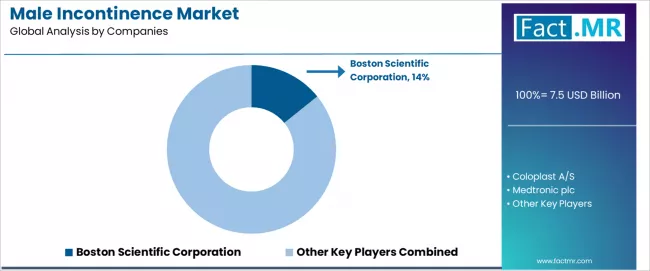
Boston Scientific Corporation leads the market with a 14.2% market share, offering comprehensive male incontinence solutions with a focus on urological device expertise and advanced artificial sphincter capabilities for surgical intervention applications. Coloplast A/S provides specialized continence care platforms with emphasis on external collection devices and comprehensive patient support across diverse care settings.
Medtronic Plc. focuses on neuromodulation technologies and advanced surgical solutions serving international urology communities. Kimberly-Clark delivers consumer healthcare expertise with strong absorbent product manufacturing capabilities and retail distribution integration.
Attindas Hygiene Partners operates with a focus on private label incontinence products and comprehensive absorbent manufacturing for institutional and retail markets. Essity AB provides global hygiene brand leadership emphasizing consumer product innovation and sustainable manufacturing practices. ConvaTec Group Plc. specializes in medical product technologies and comprehensive continence care solutions with emphasis on ostomy and continence management.
Quanta Medical Ltd. delivers specialized urological devices to enhance surgical treatment options and provide advanced intervention capabilities. Axonics Inc. and UroMems SAS focus on innovative neuromodulation technologies and MEMS-based devices, emphasizing minimally invasive approaches and comprehensive treatment alternatives through dedicated medical device strategies.
Key Players in the Male Incontinence Market
- Boston Scientific Corporation
- Coloplast A/S
- Medtronic plc
- Kimberly-Clark Corporation
- Attindas Hygiene Partners
- Essity AB
- Convatec Group Plc
- Quanta Medical Ltd.
- Axonics, Inc.
- UroMems SAS
Scope of the Report
| Items | Values |
|---|---|
| Quantitative Units (2025) | USD 7.5 Billion |
| Product | Absorbents, Non-absorbents |
| Incontinence Type | Urge Urinary Incontinence, Stress Urinary Incontinence |
| Usage Type | Disposable, Reusable |
| Distribution Channel | Offline Stores, Online |
| End-Use | Hospitals & Clinics, Homecare |
| Regions Covered | Asia Pacific, North America, Europe, Latin America, Middle East & Africa |
| Countries Covered | USA, Germany, UK, Canada, Japan, China, India and 40+ countries |
| Key Companies Profiled | Boston Scientific, Coloplast, Medtronic, Kimberly-Clark, Attindas Hygiene Partners, Essity, ConvaTec, Quanta Medical, Axonics, UroMems |
| Additional Attributes | Dollar sales by product, incontinence type, usage type, distribution channel, end-use, regional demand trends, competitive landscape, healthcare provider preferences for specific continence management solutions, integration with comprehensive patient care systems, innovations in absorbent material development, medical device advancement, and patient quality of life optimization capabilities |
Male Incontinence Market by Segments
-
Product :
- Absorbents
- Non-absorbents
-
Incontinence Type :
- Urge Urinary Incontinence
- Stress Urinary Incontinence
-
Usage Type :
- Disposable
- Reusable
-
Distribution Channel :
- Offline Stores
- Online
-
End-Use :
- Hospitals & Clinics
- Homecare
-
Region :
-
Asia Pacific
- China
- India
- Japan
- South Korea
- ASEAN
- Australia & New Zealand
- Rest of Asia Pacific
-
North America
- United States
- Canada
- Mexico
-
Europe
- Germany
- France
- United Kingdom
- Italy
- Spain
- Nordic
- BENELUX
- Rest of Europe
-
Latin America
- Brazil
- Argentina
- Chile
- Rest of Latin America
-
Middle East & Africa
- Kingdom of Saudi Arabia
- Other GCC Countries
- Turkey
- South Africa
- Other African Countries
- Rest of Middle East & Africa
-
Table of Content
- Executive Summary
- Global Market Outlook
- Demand to side Trends
- Supply to side Trends
- Technology Roadmap Analysis
- Analysis and Recommendations
- Market Overview
- Market Coverage / Taxonomy
- Market Definition / Scope / Limitations
- Market Background
- Market Dynamics
- Drivers
- Restraints
- Opportunity
- Trends
- Scenario Forecast
- Demand in Optimistic Scenario
- Demand in Likely Scenario
- Demand in Conservative Scenario
- Opportunity Map Analysis
- Product Life Cycle Analysis
- Supply Chain Analysis
- Investment Feasibility Matrix
- Value Chain Analysis
- PESTLE and Porter’s Analysis
- Regulatory Landscape
- Regional Parent Market Outlook
- Production and Consumption Statistics
- Import and Export Statistics
- Market Dynamics
- Global Market Analysis 2020 to 2024 and Forecast, 2025 to 2035
- Historical Market Size Value (USD Million) Analysis, 2020 to 2024
- Current and Future Market Size Value (USD Million) Projections, 2025 to 2035
- Y to o to Y Growth Trend Analysis
- Absolute $ Opportunity Analysis
- Global Market Pricing Analysis 2020 to 2024 and Forecast 2025 to 2035
- Global Market Analysis 2020 to 2024 and Forecast 2025 to 2035, By Product
- Introduction / Key Findings
- Historical Market Size Value (USD Million) Analysis By Product, 2020 to 2024
- Current and Future Market Size Value (USD Million) Analysis and Forecast By Product, 2025 to 2035
- Absorbents
- Non-absorbents
- Y to o to Y Growth Trend Analysis By Product, 2020 to 2024
- Absolute $ Opportunity Analysis By Product, 2025 to 2035
- Global Market Analysis 2020 to 2024 and Forecast 2025 to 2035, By Incontinence Type
- Introduction / Key Findings
- Historical Market Size Value (USD Million) Analysis By Incontinence Type, 2020 to 2024
- Current and Future Market Size Value (USD Million) Analysis and Forecast By Incontinence Type, 2025 to 2035
- Urge Urinary Incontinence
- Stress Urinary Incontinence
- Y to o to Y Growth Trend Analysis By Incontinence Type, 2020 to 2024
- Absolute $ Opportunity Analysis By Incontinence Type, 2025 to 2035
- Global Market Analysis 2020 to 2024 and Forecast 2025 to 2035, By Usage Type
- Introduction / Key Findings
- Historical Market Size Value (USD Million) Analysis By Usage Type, 2020 to 2024
- Current and Future Market Size Value (USD Million) Analysis and Forecast By Usage Type, 2025 to 2035
- Disposable
- Reusable
- Y to o to Y Growth Trend Analysis By Usage Type, 2020 to 2024
- Absolute $ Opportunity Analysis By Usage Type, 2025 to 2035
- Global Market Analysis 2020 to 2024 and Forecast 2025 to 2035, By Distribution Channel
- Introduction / Key Findings
- Historical Market Size Value (USD Million) Analysis By Distribution Channel, 2020 to 2024
- Current and Future Market Size Value (USD Million) Analysis and Forecast By Distribution Channel, 2025 to 2035
- Offline Stores
- Online
- Y to o to Y Growth Trend Analysis By Distribution Channel, 2020 to 2024
- Absolute $ Opportunity Analysis By Distribution Channel, 2025 to 2035
- Global Market Analysis 2020 to 2024 and Forecast 2025 to 2035, By End-Use
- Introduction / Key Findings
- Historical Market Size Value (USD Million) Analysis By End-Use, 2020 to 2024
- Current and Future Market Size Value (USD Million) Analysis and Forecast By End-Use, 2025 to 2035
- Hospitals & Clinics
- Homecare
- Y to o to Y Growth Trend Analysis By End-Use, 2020 to 2024
- Absolute $ Opportunity Analysis By End-Use, 2025 to 2035
- Global Market Analysis 2020 to 2024 and Forecast 2025 to 2035, By Region
- Introduction
- Historical Market Size Value (USD Million) Analysis By Region, 2020 to 2024
- Current Market Size Value (USD Million) Analysis and Forecast By Region, 2025 to 2035
- North America
- Latin America
- Western Europe
- Eastern Europe
- East Asia
- South Asia and Pacific
- Middle East & Africa
- Market Attractiveness Analysis By Region
- North America Market Analysis 2020 to 2024 and Forecast 2025 to 2035, By Country
- Historical Market Size Value (USD Million) Trend Analysis By Market Taxonomy, 2020 to 2024
- Market Size Value (USD Million) Forecast By Market Taxonomy, 2025 to 2035
- By Country
- USA
- Canada
- Mexico
- By Product
- By Incontinence Type
- By Usage Type
- By Distribution Channel
- By End-Use
- By Country
- Market Attractiveness Analysis
- By Country
- By Product
- By Incontinence Type
- By Usage Type
- By Distribution Channel
- By End-Use
- Key Takeaways
- Latin America Market Analysis 2020 to 2024 and Forecast 2025 to 2035, By Country
- Historical Market Size Value (USD Million) Trend Analysis By Market Taxonomy, 2020 to 2024
- Market Size Value (USD Million) Forecast By Market Taxonomy, 2025 to 2035
- By Country
- Brazil
- Chile
- Rest of Latin America
- By Product
- By Incontinence Type
- By Usage Type
- By Distribution Channel
- By End-Use
- By Country
- Market Attractiveness Analysis
- By Country
- By Product
- By Incontinence Type
- By Usage Type
- By Distribution Channel
- By End-Use
- Key Takeaways
- Western Europe Market Analysis 2020 to 2024 and Forecast 2025 to 2035, By Country
- Historical Market Size Value (USD Million) Trend Analysis By Market Taxonomy, 2020 to 2024
- Market Size Value (USD Million) Forecast By Market Taxonomy, 2025 to 2035
- By Country
- Germany
- UK
- Italy
- Spain
- France
- Nordic
- BENELUX
- Rest of Western Europe
- By Product
- By Incontinence Type
- By Usage Type
- By Distribution Channel
- By End-Use
- By Country
- Market Attractiveness Analysis
- By Country
- By Product
- By Incontinence Type
- By Usage Type
- By Distribution Channel
- By End-Use
- Key Takeaways
- Eastern Europe Market Analysis 2020 to 2024 and Forecast 2025 to 2035, By Country
- Historical Market Size Value (USD Million) Trend Analysis By Market Taxonomy, 2020 to 2024
- Market Size Value (USD Million) Forecast By Market Taxonomy, 2025 to 2035
- By Country
- Russia
- Poland
- Hungary
- Balkan & Baltic
- Rest of Eastern Europe
- By Product
- By Incontinence Type
- By Usage Type
- By Distribution Channel
- By End-Use
- By Country
- Market Attractiveness Analysis
- By Country
- By Product
- By Incontinence Type
- By Usage Type
- By Distribution Channel
- By End-Use
- Key Takeaways
- East Asia Market Analysis 2020 to 2024 and Forecast 2025 to 2035, By Country
- Historical Market Size Value (USD Million) Trend Analysis By Market Taxonomy, 2020 to 2024
- Market Size Value (USD Million) Forecast By Market Taxonomy, 2025 to 2035
- By Country
- China
- Japan
- South Korea
- By Product
- By Incontinence Type
- By Usage Type
- By Distribution Channel
- By End-Use
- By Country
- Market Attractiveness Analysis
- By Country
- By Product
- By Incontinence Type
- By Usage Type
- By Distribution Channel
- By End-Use
- Key Takeaways
- South Asia and Pacific Market Analysis 2020 to 2024 and Forecast 2025 to 2035, By Country
- Historical Market Size Value (USD Million) Trend Analysis By Market Taxonomy, 2020 to 2024
- Market Size Value (USD Million) Forecast By Market Taxonomy, 2025 to 2035
- By Country
- India
- ASEAN
- Australia & New Zealand
- Rest of South Asia and Pacific
- By Product
- By Incontinence Type
- By Usage Type
- By Distribution Channel
- By End-Use
- By Country
- Market Attractiveness Analysis
- By Country
- By Product
- By Incontinence Type
- By Usage Type
- By Distribution Channel
- By End-Use
- Key Takeaways
- Middle East & Africa Market Analysis 2020 to 2024 and Forecast 2025 to 2035, By Country
- Historical Market Size Value (USD Million) Trend Analysis By Market Taxonomy, 2020 to 2024
- Market Size Value (USD Million) Forecast By Market Taxonomy, 2025 to 2035
- By Country
- Kingdom of Saudi Arabia
- Other GCC Countries
- Turkiye
- South Africa
- Other African Union
- Rest of Middle East & Africa
- By Product
- By Incontinence Type
- By Usage Type
- By Distribution Channel
- By End-Use
- By Country
- Market Attractiveness Analysis
- By Country
- By Product
- By Incontinence Type
- By Usage Type
- By Distribution Channel
- By End-Use
- Key Takeaways
- Key Countries Market Analysis
- USA
- Pricing Analysis
- Market Share Analysis, 2024
- By Product
- By Incontinence Type
- By Usage Type
- By Distribution Channel
- By End-Use
- Canada
- Pricing Analysis
- Market Share Analysis, 2024
- By Product
- By Incontinence Type
- By Usage Type
- By Distribution Channel
- By End-Use
- Mexico
- Pricing Analysis
- Market Share Analysis, 2024
- By Product
- By Incontinence Type
- By Usage Type
- By Distribution Channel
- By End-Use
- Brazil
- Pricing Analysis
- Market Share Analysis, 2024
- By Product
- By Incontinence Type
- By Usage Type
- By Distribution Channel
- By End-Use
- Chile
- Pricing Analysis
- Market Share Analysis, 2024
- By Product
- By Incontinence Type
- By Usage Type
- By Distribution Channel
- By End-Use
- Germany
- Pricing Analysis
- Market Share Analysis, 2024
- By Product
- By Incontinence Type
- By Usage Type
- By Distribution Channel
- By End-Use
- UK
- Pricing Analysis
- Market Share Analysis, 2024
- By Product
- By Incontinence Type
- By Usage Type
- By Distribution Channel
- By End-Use
- Italy
- Pricing Analysis
- Market Share Analysis, 2024
- By Product
- By Incontinence Type
- By Usage Type
- By Distribution Channel
- By End-Use
- Spain
- Pricing Analysis
- Market Share Analysis, 2024
- By Product
- By Incontinence Type
- By Usage Type
- By Distribution Channel
- By End-Use
- France
- Pricing Analysis
- Market Share Analysis, 2024
- By Product
- By Incontinence Type
- By Usage Type
- By Distribution Channel
- By End-Use
- India
- Pricing Analysis
- Market Share Analysis, 2024
- By Product
- By Incontinence Type
- By Usage Type
- By Distribution Channel
- By End-Use
- ASEAN
- Pricing Analysis
- Market Share Analysis, 2024
- By Product
- By Incontinence Type
- By Usage Type
- By Distribution Channel
- By End-Use
- Australia & New Zealand
- Pricing Analysis
- Market Share Analysis, 2024
- By Product
- By Incontinence Type
- By Usage Type
- By Distribution Channel
- By End-Use
- China
- Pricing Analysis
- Market Share Analysis, 2024
- By Product
- By Incontinence Type
- By Usage Type
- By Distribution Channel
- By End-Use
- Japan
- Pricing Analysis
- Market Share Analysis, 2024
- By Product
- By Incontinence Type
- By Usage Type
- By Distribution Channel
- By End-Use
- South Korea
- Pricing Analysis
- Market Share Analysis, 2024
- By Product
- By Incontinence Type
- By Usage Type
- By Distribution Channel
- By End-Use
- Russia
- Pricing Analysis
- Market Share Analysis, 2024
- By Product
- By Incontinence Type
- By Usage Type
- By Distribution Channel
- By End-Use
- Poland
- Pricing Analysis
- Market Share Analysis, 2024
- By Product
- By Incontinence Type
- By Usage Type
- By Distribution Channel
- By End-Use
- Hungary
- Pricing Analysis
- Market Share Analysis, 2024
- By Product
- By Incontinence Type
- By Usage Type
- By Distribution Channel
- By End-Use
- Kingdom of Saudi Arabia
- Pricing Analysis
- Market Share Analysis, 2024
- By Product
- By Incontinence Type
- By Usage Type
- By Distribution Channel
- By End-Use
- Turkiye
- Pricing Analysis
- Market Share Analysis, 2024
- By Product
- By Incontinence Type
- By Usage Type
- By Distribution Channel
- By End-Use
- South Africa
- Pricing Analysis
- Market Share Analysis, 2024
- By Product
- By Incontinence Type
- By Usage Type
- By Distribution Channel
- By End-Use
- USA
- Market Structure Analysis
- Competition Dashboard
- Competition Benchmarking
- Market Share Analysis of Top Players
- By Regional
- By Product
- By Incontinence Type
- By Usage Type
- By Distribution Channel
- By End-Use
- Competition Analysis
- Competition Deep Dive
- Boston Scientific Corporation
- Overview
- Product Portfolio
- Profitability by Market Segments (Product/Age /Sales Channel/Region)
- Sales Footprint
- Strategy Overview
- Marketing Strategy
- Product Strategy
- Channel Strategy
- Coloplast A/S
- Medtronic plc
- Kimberly-Clark Corporation
- Attindas Hygiene Partners
- Essity AB
- Convatec Group Plc
- Quanta Medical Ltd.
- Axonics, Inc.
- UroMems SAS
- Boston Scientific Corporation
- Competition Deep Dive
- Assumptions & Acronyms Used
- Research Methodology
List Of Table
- Table 1: Global Market Value (USD Million) Forecast by Region, 2020 to 2035
- Table 2: Global Market Value (USD Million) Forecast by Product, 2020 to 2035
- Table 3: Global Market Value (USD Million) Forecast by Incontinence Type, 2020 to 2035
- Table 4: Global Market Value (USD Million) Forecast by Usage Type, 2020 to 2035
- Table 5: Global Market Value (USD Million) Forecast by Distribution Channel, 2020 to 2035
- Table 6: Global Market Value (USD Million) Forecast by End-Use, 2020 to 2035
- Table 7: North America Market Value (USD Million) Forecast by Country, 2020 to 2035
- Table 8: North America Market Value (USD Million) Forecast by Product, 2020 to 2035
- Table 9: North America Market Value (USD Million) Forecast by Incontinence Type, 2020 to 2035
- Table 10: North America Market Value (USD Million) Forecast by Usage Type, 2020 to 2035
- Table 11: North America Market Value (USD Million) Forecast by Distribution Channel, 2020 to 2035
- Table 12: North America Market Value (USD Million) Forecast by End-Use, 2020 to 2035
- Table 13: Latin America Market Value (USD Million) Forecast by Country, 2020 to 2035
- Table 14: Latin America Market Value (USD Million) Forecast by Product, 2020 to 2035
- Table 15: Latin America Market Value (USD Million) Forecast by Incontinence Type, 2020 to 2035
- Table 16: Latin America Market Value (USD Million) Forecast by Usage Type, 2020 to 2035
- Table 17: Latin America Market Value (USD Million) Forecast by Distribution Channel, 2020 to 2035
- Table 18: Latin America Market Value (USD Million) Forecast by End-Use, 2020 to 2035
- Table 19: Western Europe Market Value (USD Million) Forecast by Country, 2020 to 2035
- Table 20: Western Europe Market Value (USD Million) Forecast by Product, 2020 to 2035
- Table 21: Western Europe Market Value (USD Million) Forecast by Incontinence Type, 2020 to 2035
- Table 22: Western Europe Market Value (USD Million) Forecast by Usage Type, 2020 to 2035
- Table 23: Western Europe Market Value (USD Million) Forecast by Distribution Channel, 2020 to 2035
- Table 24: Western Europe Market Value (USD Million) Forecast by End-Use, 2020 to 2035
- Table 25: Eastern Europe Market Value (USD Million) Forecast by Country, 2020 to 2035
- Table 26: Eastern Europe Market Value (USD Million) Forecast by Product, 2020 to 2035
- Table 27: Eastern Europe Market Value (USD Million) Forecast by Incontinence Type, 2020 to 2035
- Table 28: Eastern Europe Market Value (USD Million) Forecast by Usage Type, 2020 to 2035
- Table 29: Eastern Europe Market Value (USD Million) Forecast by Distribution Channel, 2020 to 2035
- Table 30: Eastern Europe Market Value (USD Million) Forecast by End-Use, 2020 to 2035
- Table 31: East Asia Market Value (USD Million) Forecast by Country, 2020 to 2035
- Table 32: East Asia Market Value (USD Million) Forecast by Product, 2020 to 2035
- Table 33: East Asia Market Value (USD Million) Forecast by Incontinence Type, 2020 to 2035
- Table 34: East Asia Market Value (USD Million) Forecast by Usage Type, 2020 to 2035
- Table 35: East Asia Market Value (USD Million) Forecast by Distribution Channel, 2020 to 2035
- Table 36: East Asia Market Value (USD Million) Forecast by End-Use, 2020 to 2035
- Table 37: South Asia and Pacific Market Value (USD Million) Forecast by Country, 2020 to 2035
- Table 38: South Asia and Pacific Market Value (USD Million) Forecast by Product, 2020 to 2035
- Table 39: South Asia and Pacific Market Value (USD Million) Forecast by Incontinence Type, 2020 to 2035
- Table 40: South Asia and Pacific Market Value (USD Million) Forecast by Usage Type, 2020 to 2035
- Table 41: South Asia and Pacific Market Value (USD Million) Forecast by Distribution Channel, 2020 to 2035
- Table 42: South Asia and Pacific Market Value (USD Million) Forecast by End-Use, 2020 to 2035
- Table 43: Middle East & Africa Market Value (USD Million) Forecast by Country, 2020 to 2035
- Table 44: Middle East & Africa Market Value (USD Million) Forecast by Product, 2020 to 2035
- Table 45: Middle East & Africa Market Value (USD Million) Forecast by Incontinence Type, 2020 to 2035
- Table 46: Middle East & Africa Market Value (USD Million) Forecast by Usage Type, 2020 to 2035
- Table 47: Middle East & Africa Market Value (USD Million) Forecast by Distribution Channel, 2020 to 2035
- Table 48: Middle East & Africa Market Value (USD Million) Forecast by End-Use, 2020 to 2035
List Of Figures
- Figure 1: Global Market Pricing Analysis
- Figure 2: Global Market Value (USD Million) Forecast 2020 to 2035
- Figure 3: Global Market Value Share and BPS Analysis by Product, 2025 and 2035
- Figure 4: Global Market Y to o to Y Growth Comparison by Product, 2025 to 2035
- Figure 5: Global Market Attractiveness Analysis by Product
- Figure 6: Global Market Value Share and BPS Analysis by Incontinence Type, 2025 and 2035
- Figure 7: Global Market Y to o to Y Growth Comparison by Incontinence Type, 2025 to 2035
- Figure 8: Global Market Attractiveness Analysis by Incontinence Type
- Figure 9: Global Market Value Share and BPS Analysis by Usage Type, 2025 and 2035
- Figure 10: Global Market Y to o to Y Growth Comparison by Usage Type, 2025 to 2035
- Figure 11: Global Market Attractiveness Analysis by Usage Type
- Figure 12: Global Market Value Share and BPS Analysis by Distribution Channel, 2025 and 2035
- Figure 13: Global Market Y to o to Y Growth Comparison by Distribution Channel, 2025 to 2035
- Figure 14: Global Market Attractiveness Analysis by Distribution Channel
- Figure 15: Global Market Value Share and BPS Analysis by End-Use, 2025 and 2035
- Figure 16: Global Market Y to o to Y Growth Comparison by End-Use, 2025 to 2035
- Figure 17: Global Market Attractiveness Analysis by End-Use
- Figure 18: Global Market Value (USD Million) Share and BPS Analysis by Region, 2025 and 2035
- Figure 19: Global Market Y to o to Y Growth Comparison by Region, 2025 to 2035
- Figure 20: Global Market Attractiveness Analysis by Region
- Figure 21: North America Market Incremental Dollar Opportunity, 2025 to 2035
- Figure 22: Latin America Market Incremental Dollar Opportunity, 2025 to 2035
- Figure 23: Western Europe Market Incremental Dollar Opportunity, 2025 to 2035
- Figure 24: Eastern Europe Market Incremental Dollar Opportunity, 2025 to 2035
- Figure 25: East Asia Market Incremental Dollar Opportunity, 2025 to 2035
- Figure 26: South Asia and Pacific Market Incremental Dollar Opportunity, 2025 to 2035
- Figure 27: Middle East & Africa Market Incremental Dollar Opportunity, 2025 to 2035
- Figure 28: North America Market Value Share and BPS Analysis by Country, 2025 and 2035
- Figure 29: North America Market Value Share and BPS Analysis by Product, 2025 and 2035
- Figure 30: North America Market Y to o to Y Growth Comparison by Product, 2025 to 2035
- Figure 31: North America Market Attractiveness Analysis by Product
- Figure 32: North America Market Value Share and BPS Analysis by Incontinence Type, 2025 and 2035
- Figure 33: North America Market Y to o to Y Growth Comparison by Incontinence Type, 2025 to 2035
- Figure 34: North America Market Attractiveness Analysis by Incontinence Type
- Figure 35: North America Market Value Share and BPS Analysis by Usage Type, 2025 and 2035
- Figure 36: North America Market Y to o to Y Growth Comparison by Usage Type, 2025 to 2035
- Figure 37: North America Market Attractiveness Analysis by Usage Type
- Figure 38: North America Market Value Share and BPS Analysis by Distribution Channel, 2025 and 2035
- Figure 39: North America Market Y to o to Y Growth Comparison by Distribution Channel, 2025 to 2035
- Figure 40: North America Market Attractiveness Analysis by Distribution Channel
- Figure 41: North America Market Value Share and BPS Analysis by End-Use, 2025 and 2035
- Figure 42: North America Market Y to o to Y Growth Comparison by End-Use, 2025 to 2035
- Figure 43: North America Market Attractiveness Analysis by End-Use
- Figure 44: Latin America Market Value Share and BPS Analysis by Country, 2025 and 2035
- Figure 45: Latin America Market Value Share and BPS Analysis by Product, 2025 and 2035
- Figure 46: Latin America Market Y to o to Y Growth Comparison by Product, 2025 to 2035
- Figure 47: Latin America Market Attractiveness Analysis by Product
- Figure 48: Latin America Market Value Share and BPS Analysis by Incontinence Type, 2025 and 2035
- Figure 49: Latin America Market Y to o to Y Growth Comparison by Incontinence Type, 2025 to 2035
- Figure 50: Latin America Market Attractiveness Analysis by Incontinence Type
- Figure 51: Latin America Market Value Share and BPS Analysis by Usage Type, 2025 and 2035
- Figure 52: Latin America Market Y to o to Y Growth Comparison by Usage Type, 2025 to 2035
- Figure 53: Latin America Market Attractiveness Analysis by Usage Type
- Figure 54: Latin America Market Value Share and BPS Analysis by Distribution Channel, 2025 and 2035
- Figure 55: Latin America Market Y to o to Y Growth Comparison by Distribution Channel, 2025 to 2035
- Figure 56: Latin America Market Attractiveness Analysis by Distribution Channel
- Figure 57: Latin America Market Value Share and BPS Analysis by End-Use, 2025 and 2035
- Figure 58: Latin America Market Y to o to Y Growth Comparison by End-Use, 2025 to 2035
- Figure 59: Latin America Market Attractiveness Analysis by End-Use
- Figure 60: Western Europe Market Value Share and BPS Analysis by Country, 2025 and 2035
- Figure 61: Western Europe Market Value Share and BPS Analysis by Product, 2025 and 2035
- Figure 62: Western Europe Market Y to o to Y Growth Comparison by Product, 2025 to 2035
- Figure 63: Western Europe Market Attractiveness Analysis by Product
- Figure 64: Western Europe Market Value Share and BPS Analysis by Incontinence Type, 2025 and 2035
- Figure 65: Western Europe Market Y to o to Y Growth Comparison by Incontinence Type, 2025 to 2035
- Figure 66: Western Europe Market Attractiveness Analysis by Incontinence Type
- Figure 67: Western Europe Market Value Share and BPS Analysis by Usage Type, 2025 and 2035
- Figure 68: Western Europe Market Y to o to Y Growth Comparison by Usage Type, 2025 to 2035
- Figure 69: Western Europe Market Attractiveness Analysis by Usage Type
- Figure 70: Western Europe Market Value Share and BPS Analysis by Distribution Channel, 2025 and 2035
- Figure 71: Western Europe Market Y to o to Y Growth Comparison by Distribution Channel, 2025 to 2035
- Figure 72: Western Europe Market Attractiveness Analysis by Distribution Channel
- Figure 73: Western Europe Market Value Share and BPS Analysis by End-Use, 2025 and 2035
- Figure 74: Western Europe Market Y to o to Y Growth Comparison by End-Use, 2025 to 2035
- Figure 75: Western Europe Market Attractiveness Analysis by End-Use
- Figure 76: Eastern Europe Market Value Share and BPS Analysis by Country, 2025 and 2035
- Figure 77: Eastern Europe Market Value Share and BPS Analysis by Product, 2025 and 2035
- Figure 78: Eastern Europe Market Y to o to Y Growth Comparison by Product, 2025 to 2035
- Figure 79: Eastern Europe Market Attractiveness Analysis by Product
- Figure 80: Eastern Europe Market Value Share and BPS Analysis by Incontinence Type, 2025 and 2035
- Figure 81: Eastern Europe Market Y to o to Y Growth Comparison by Incontinence Type, 2025 to 2035
- Figure 82: Eastern Europe Market Attractiveness Analysis by Incontinence Type
- Figure 83: Eastern Europe Market Value Share and BPS Analysis by Usage Type, 2025 and 2035
- Figure 84: Eastern Europe Market Y to o to Y Growth Comparison by Usage Type, 2025 to 2035
- Figure 85: Eastern Europe Market Attractiveness Analysis by Usage Type
- Figure 86: Eastern Europe Market Value Share and BPS Analysis by Distribution Channel, 2025 and 2035
- Figure 87: Eastern Europe Market Y to o to Y Growth Comparison by Distribution Channel, 2025 to 2035
- Figure 88: Eastern Europe Market Attractiveness Analysis by Distribution Channel
- Figure 89: Eastern Europe Market Value Share and BPS Analysis by End-Use, 2025 and 2035
- Figure 90: Eastern Europe Market Y to o to Y Growth Comparison by End-Use, 2025 to 2035
- Figure 91: Eastern Europe Market Attractiveness Analysis by End-Use
- Figure 92: East Asia Market Value Share and BPS Analysis by Country, 2025 and 2035
- Figure 93: East Asia Market Value Share and BPS Analysis by Product, 2025 and 2035
- Figure 94: East Asia Market Y to o to Y Growth Comparison by Product, 2025 to 2035
- Figure 95: East Asia Market Attractiveness Analysis by Product
- Figure 96: East Asia Market Value Share and BPS Analysis by Incontinence Type, 2025 and 2035
- Figure 97: East Asia Market Y to o to Y Growth Comparison by Incontinence Type, 2025 to 2035
- Figure 98: East Asia Market Attractiveness Analysis by Incontinence Type
- Figure 99: East Asia Market Value Share and BPS Analysis by Usage Type, 2025 and 2035
- Figure 100: East Asia Market Y to o to Y Growth Comparison by Usage Type, 2025 to 2035
- Figure 101: East Asia Market Attractiveness Analysis by Usage Type
- Figure 102: East Asia Market Value Share and BPS Analysis by Distribution Channel, 2025 and 2035
- Figure 103: East Asia Market Y to o to Y Growth Comparison by Distribution Channel, 2025 to 2035
- Figure 104: East Asia Market Attractiveness Analysis by Distribution Channel
- Figure 105: East Asia Market Value Share and BPS Analysis by End-Use, 2025 and 2035
- Figure 106: East Asia Market Y to o to Y Growth Comparison by End-Use, 2025 to 2035
- Figure 107: East Asia Market Attractiveness Analysis by End-Use
- Figure 108: South Asia and Pacific Market Value Share and BPS Analysis by Country, 2025 and 2035
- Figure 109: South Asia and Pacific Market Value Share and BPS Analysis by Product, 2025 and 2035
- Figure 110: South Asia and Pacific Market Y to o to Y Growth Comparison by Product, 2025 to 2035
- Figure 111: South Asia and Pacific Market Attractiveness Analysis by Product
- Figure 112: South Asia and Pacific Market Value Share and BPS Analysis by Incontinence Type, 2025 and 2035
- Figure 113: South Asia and Pacific Market Y to o to Y Growth Comparison by Incontinence Type, 2025 to 2035
- Figure 114: South Asia and Pacific Market Attractiveness Analysis by Incontinence Type
- Figure 115: South Asia and Pacific Market Value Share and BPS Analysis by Usage Type, 2025 and 2035
- Figure 116: South Asia and Pacific Market Y to o to Y Growth Comparison by Usage Type, 2025 to 2035
- Figure 117: South Asia and Pacific Market Attractiveness Analysis by Usage Type
- Figure 118: South Asia and Pacific Market Value Share and BPS Analysis by Distribution Channel, 2025 and 2035
- Figure 119: South Asia and Pacific Market Y to o to Y Growth Comparison by Distribution Channel, 2025 to 2035
- Figure 120: South Asia and Pacific Market Attractiveness Analysis by Distribution Channel
- Figure 121: South Asia and Pacific Market Value Share and BPS Analysis by End-Use, 2025 and 2035
- Figure 122: South Asia and Pacific Market Y to o to Y Growth Comparison by End-Use, 2025 to 2035
- Figure 123: South Asia and Pacific Market Attractiveness Analysis by End-Use
- Figure 124: Middle East & Africa Market Value Share and BPS Analysis by Country, 2025 and 2035
- Figure 125: Middle East & Africa Market Value Share and BPS Analysis by Product, 2025 and 2035
- Figure 126: Middle East & Africa Market Y to o to Y Growth Comparison by Product, 2025 to 2035
- Figure 127: Middle East & Africa Market Attractiveness Analysis by Product
- Figure 128: Middle East & Africa Market Value Share and BPS Analysis by Incontinence Type, 2025 and 2035
- Figure 129: Middle East & Africa Market Y to o to Y Growth Comparison by Incontinence Type, 2025 to 2035
- Figure 130: Middle East & Africa Market Attractiveness Analysis by Incontinence Type
- Figure 131: Middle East & Africa Market Value Share and BPS Analysis by Usage Type, 2025 and 2035
- Figure 132: Middle East & Africa Market Y to o to Y Growth Comparison by Usage Type, 2025 to 2035
- Figure 133: Middle East & Africa Market Attractiveness Analysis by Usage Type
- Figure 134: Middle East & Africa Market Value Share and BPS Analysis by Distribution Channel, 2025 and 2035
- Figure 135: Middle East & Africa Market Y to o to Y Growth Comparison by Distribution Channel, 2025 to 2035
- Figure 136: Middle East & Africa Market Attractiveness Analysis by Distribution Channel
- Figure 137: Middle East & Africa Market Value Share and BPS Analysis by End-Use, 2025 and 2035
- Figure 138: Middle East & Africa Market Y to o to Y Growth Comparison by End-Use, 2025 to 2035
- Figure 139: Middle East & Africa Market Attractiveness Analysis by End-Use
- Figure 140: Global Market - Tier Structure Analysis
- Figure 141: Global Market - Company Share Analysis
- FAQs -
How big is the male incontinence market in 2025?
The global male incontinence market is estimated to be valued at USD 7.5 billion in 2025.
What will be the size of male incontinence market in 2035?
The market size for the male incontinence market is projected to reach USD 13.4 billion by 2035.
How much will be the male incontinence market growth between 2025 and 2035?
The male incontinence market is expected to grow at a 6.0% CAGR between 2025 and 2035.
What are the key product types in the male incontinence market?
The key product types in male incontinence market are absorbents and non-absorbents.
Which incontinence type segment to contribute significant share in the male incontinence market in 2025?
In terms of incontinence type, urge urinary incontinence segment to command 56.8% share in the male incontinence market in 2025.