Marine Bunker Ultra-Low Carbon Methanol Market

Marine Bunker Ultra-Low Carbon Methanol Market Size and Share Forecast Outlook 2026 to 2036

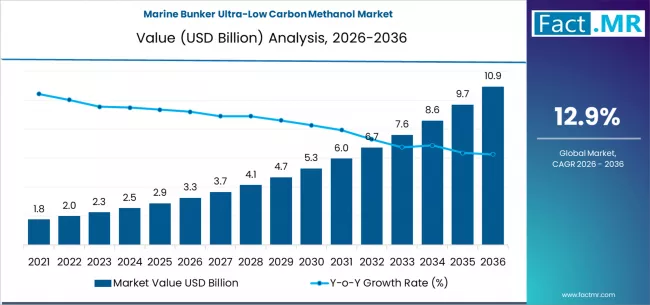
Marine bunker ultra-low carbon methanol market is projected to grow from USD 3.3 billion in 2026 to USD 10.9 billion by 2036, at a CAGR of 12.9%. Bio-Methanol will dominate with a 41.0% market share, while container ships will lead the vessel type segment with a 29.0% share.

Marine Bunker Ultra-Low Carbon Methanol Market Forecast and Outlook 2026 to 2036

The global market for marine bunker ultra-low carbon methanol is projected to expand from USD 3.25 billion in 2026 to USD 10.94 billion by 2036, accelerating at a 12.9% CAGR.

This transformative growth is driven by the maritime industry's urgent search for a viable, scalable fuel capable of meeting the International Maritime Organization's tightening decarbonization targets. Methanol has emerged as a leading transitional fuel due to its liquid state at ambient conditions, enabling storage and bunkering with minimal infrastructure overhaul compared to alternatives like ammonia or hydrogen.

Key Takeaways from the Marine Bunker Ultra-Low Carbon Methanol Market

  • Market Value for 2026: USD 3.25 Billion
  • Market Value for 2036: USD 10.94 Billion
  • Forecast CAGR (2026-2036): 12.9%
  • Leading Fuel Type Segment (2026): Bio-Methanol (41%)
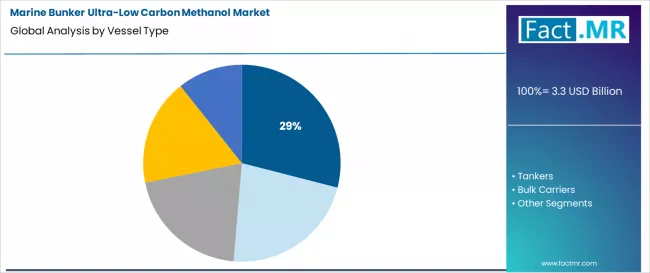
  • Leading Vessel Type Segment (2026): Container Ships (29%)
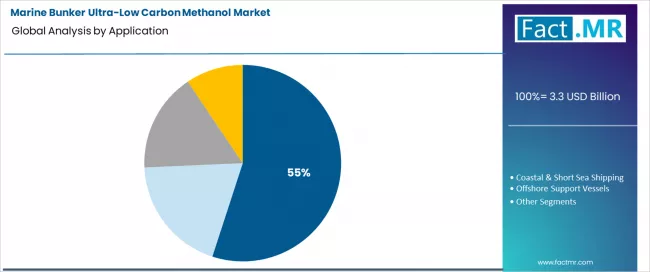
  • Leading Application Segment (2026): Deep-Sea Shipping (55%)
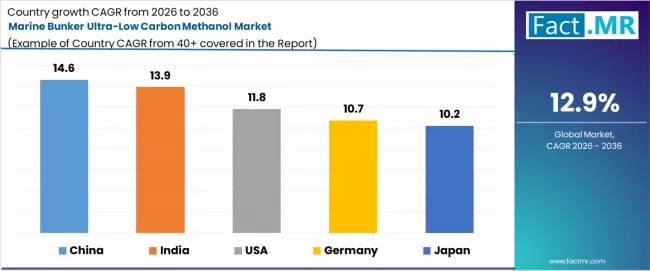
  • Key Growth Countries: China (14.60% CAGR), India (13.90% CAGR), USA (11.80% CAGR), Germany (10.70% CAGR), Japan (10.20% CAGR)
  • Key Players in the Market: Methanex Corporation, Proman AG, OCI N.V., EnerMech Methanol Partners, Haldor Topsoe A/S

Marine Bunker Ultra Low Carbon Methanol Market Market Value Analysis

The market is characterized by a dynamic competition between production pathways, bio-methanol from sustainable biomass, e-methanol from renewable hydrogen and captured CO2, and blue methanol from fossil sources with carbon capture. This race is less about fuel chemistry and more about the scalability, green premium, and lifecycle carbon intensity of the supply chain.

China's 14.60% CAGR reflects its strategic ambition to control the clean fuel value chain, leveraging its manufacturing scale in electrolyzers and methanol synthesis. The market's evolution hinges on creating a parallel global green methanol bunkering network and securing enforceable regulations that properly value well-to-wake emissions reductions, thereby transforming shipping from a fossil-dependent sector to a major driver of the renewable fuels economy.

Metric

Metric Value
Market Value (2026) USD 3.25 Billion
Market Forecast Value (2036) USD 10.94 Billion
Forecast CAGR (2026-2036) 12.9%

Category

Category Segments
Fuel Type Bio-Methanol, E-Methanol (Green Powered), Blue Methanol (with CCUS), Others
Vessel Type Container Ships, Tankers, Bulk Carriers, Passenger & Ro-Ro Vessels, Others
Application Deep-Sea Shipping, Coastal & Short Sea Shipping, Offshore Support Vessels, Harbor & Tug Services, Others
Region North America, Latin America, Western Europe, Eastern Europe, East Asia, South Asia & Pacific, MEA

Segmental Analysis

By Fuel Type, Which Pathway Currently Offers the Best Balance of Scalability and Carbon Credibility?

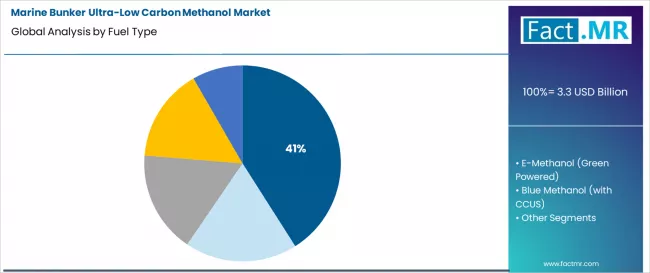
Marine Bunker Ultra Low Carbon Methanol Market Analysis By Fuel Type

Bio-methanol commands a leading 41% share, primarily due to its status as a commercially available drop-in green fuel. Produced from biogas or sustainable biomass, it offers a tangible, immediate reduction in well-to-wake emissions compared to conventional marine fuels.

Its early leadership is underpinned by existing production facilities and a clearer regulatory acceptance within frameworks like the EU's FuelEU Maritime. While e-methanol holds the promise of deeper decarbonization, bio-methanol serves as the critical bridge, proving the technical and operational feasibility of methanol bunkering at scale for the global fleet.

By Vessel Type, Which Segment is Leading the Fleet Transition Due to Commercial and Regulatory Pressure?

Marine Bunker Ultra Low Carbon Methanol Market Analysis By Vessel Type

Container ships are the leading vessel type segment at 29%. This is driven by the pressure from their major cargo owners who have set ambitious Scope 3 emissions targets for their logistics chains.

Container lines, operating on fixed schedules between major ports, can strategically invest in dual-fuel methanol vessels and secure long-term green fuel offtake agreements. Their large fuel consumption and public-facing customer base make them first movers, creating the initial demand signal that justifies investments in bunkering infrastructure.

By Application, Where is the Operational and Economic Case Strongest for Initial Adoption?

Marine Bunker Ultra Low Carbon Methanol Market Analysis By Application

Deep-sea shipping represents the dominant application, accounting for 55% of demand. The vast majority of shipping's carbon footprint originates from long-distance, international trade routes. Regulatory mechanisms like the IMO's Carbon Intensity Indicator and EU Emissions Trading System apply most directly to this segment, creating a powerful financial incentive to switch fuels.

The high annual fuel consumption on deep-sea routes makes the capital expenditure for dual-fuel engines more economically justifiable, as fuel cost savings and compliance benefits are realized over larger volumes.

What are the Drivers, Restraints, and Key Trends of the Marine Bunker Ultra-Low Carbon Methanol Market?

The primary driver is stringent decarbonization regulation, like the IMO's GHG strategy and EU ETS, which makes emissions costly. This is amplified by charterer demands and the commercial availability of methanol dual-fuel engines.

Key restraints are the fragmented bunkering infrastructure, creating a supply-demand standoff, and the substantial green premium for low-carbon methanol. Scalability is challenged by sustainable feedstock and renewable energy requirements for production.

Trends include establishing green shipping corridors and vertically integrated fuel supply projects. The market is also focusing on digital certification for fuel provenance and advancing technologies like methanol fuel cells for greater efficiency

Analysis of the Marine Bunker Ultra-Low Carbon Methanol Market by Key Countries

Marine Bunker Ultra Low Carbon Methanol Market Cagr Analysis By Country

Country CAGR (2026-2036)
China 14.60%
India 13.90%
USA 11.80%
Germany 10.70%
Japan 10.20%

How is China's Integrated Industrial Strategy and Port System Catalyzing Scale?

China's leading 14.60% CAGR is driven by a comprehensive national strategy to dominate the clean shipping value chain. State-backed companies are investing simultaneously in massive e-methanol production facilities, building the world's largest fleet of methanol-capable ships, and upgrading key hub ports like Shanghai and Ningbo to become global green methanol bunkering centers.

This vertically coordinated approach, leveraging China's scale in renewables and chemical manufacturing, aims to set de facto global standards and capture the economic value of the energy transition in maritime.

What is the Impact of India's Focus on Decarbonizing Coastal Shipping and Building Green Ports?

India's 13.90% growth is strategically focused on its extensive coastal and short-sea shipping network, a priority sector for reducing road congestion and emissions. Government policies like the Maritime Vision 2030 explicitly promote methanol as a key alternative fuel.

Initiatives are underway to establish green hydrogen and methanol production hubs near major ports, aiming to create a self-sufficient ecosystem for decarbonizing domestic shipping before scaling for international trade, positioning India as a key future supplier and consumer.

Why is the USA's Project-Based Approach and Fuel Standard Incentives a Key Factor?

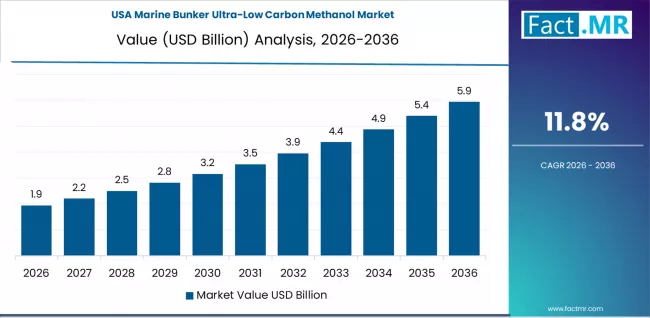
Marine Bunker Ultra Low Carbon Methanol Market Country Value Analysis

The USA's 11.80% growth is propelled by project-specific developments fueled by the Inflation Reduction Act's production tax credits for clean hydrogen and its derivatives, including e-methanol. Growth is clustered around regions with low-cost renewable energy and CO2 sources, such as the Gulf Coast and Pacific Northwest.

The U.S. approach is less about centralized planning and more about leveraging its competitive advantage in renewable resources and technology to become a major exporter of green methanol to global bunkering hubs.

How is Germany's Leadership in E-Methanol Technology and Synthetic Fuel Standards Shaping its Role?

Germany's 10.70% CAGR stems from its technological leadership in electrolysis and synthetic fuel production, coupled with its influential role in shaping EU regulations like FuelEU Maritime.

German engineering firms and energy companies are at the forefront of piloting and scaling e-methanol plants. The country's focus is on establishing rigorous, science-based sustainability certification for synthetic fuels, aiming to ensure environmental integrity and create a premium market for its high-tech e-methanol solutions.

What Role does Japan's Strategic Energy Security and Shipping Industry Play?

Japan's 10.20% growth is guided by its long-term strategy for energy security and the competitiveness of its large shipping conglomerates. Japan is actively investing in and securing offtake from overseas green methanol projects in regions like the Americas and Oceania to ensure a stable future fuel supply.

Shipbuilders are concurrently advancing methanol-fueled vessel technology, aiming to integrate secure fuel sourcing with advanced vessel design to maintain its leading position in global shipping.

Competitive Landscape of the Marine Bunker Ultra-Low Carbon Methanol Market

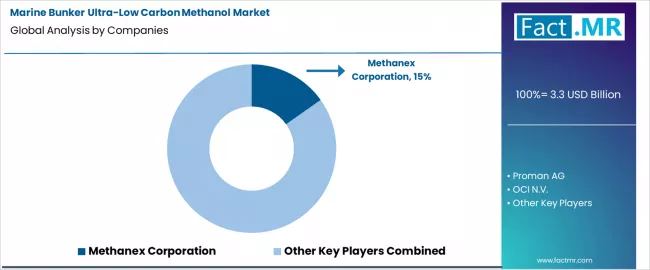
Marine Bunker Ultra Low Carbon Methanol Market Analysis By Company

The competitive landscape is bifurcated between established methanol producers pivoting their portfolios and new entrants focused exclusively on green production. Incumbents like Methanex and OCI leverage their global logistics, customer relationships, and trading expertise but face the challenge of transitioning assets.

Pure-play green methanol developers and technology licensors like Haldor Topsoe compete on the basis of lowest carbon intensity and innovative production processes. Success is increasingly determined by the ability to secure long-term offtake agreements with major shipowners, form strategic partnerships across the value chain, and navigate complex sustainability certification protocols that will determine the fuel's regulatory value.

Recommendations for Key Market Players

Stakeholder Key Recommendation
Incumbent Producers Accelerate conversion to low-carbon methanol pathways and secure partnerships for green hydrogen/feedstock access.
Green Tech Developers License standardized, modular e-methanol production technology for rapid, scalable deployment.
Shipping Companies & Cargo Owners Secure long-term fuel offtake agreements and co-invest in bunkering infrastructure via consortia.
Port Authorities & Governments Establish clear regulations, incentives, and fuel certification standards to support market growth.

Key Players in the Marine Bunker Ultra-Low Carbon Methanol Market

  • Methanex Corporation
  • Proman AG
  • OCI N.V.
  • EnerMech Methanol Partners
  • Haldor Topsoe A/S

Scope of Report

Items Values
Quantitative Units USD Billion
Fuel Type Bio-Methanol, E-Methanol (Green Powered), Blue Methanol (with CCUS), Others
Vessel Type Container Ships, Tankers, Bulk Carriers, Passenger & Ro-Ro Vessels, Others
Application Deep-Sea Shipping, Coastal & Short Sea Shipping, Offshore Support Vessels, Harbor & Tug Services, Others
Key Countries China, India, USA, Germany, Japan
Key Companies Methanex Corporation, Proman AG, OCI N.V., EnerMech Methanol Partners, Haldor Topsoe A/S
Additional Analysis Well-to-wake carbon intensity analysis of competing methanol production pathways; techno-economic assessment of bunkering infrastructure models (pipeline, barge, truck); impact of regional carbon pricing mechanisms on fuel choice; analysis of safety protocols and crew training requirements for methanol handling; supply chain risk assessment for key feedstocks (biomass, renewable power, CO2); regulatory scenario analysis for the alignment of global and regional fuel standards.

Market by Segments

  • Region :

    • North America
      • USA
      • Canada
    • Latin America
      • Brazil
      • Mexico
      • Argentina
      • Rest of Latin America
    • Western Europe
      • Germany
      • UK
      • France
      • Spain
      • Italy
      • BENELUX
      • Rest of Western Europe
    • Eastern Europe
      • Russia
      • Poland
      • Czech Republic
      • Rest of Eastern Europe
    • East Asia
      • China
      • Japan
      • South Korea
      • Rest of East Asia
    • South Asia & Pacific
      • India
      • ASEAN
      • Australia
      • Rest of South Asia & Pacific
    • MEA
      • GCC
      • South Africa
      • Turkiye
      • Rest of MEA

References

  • International Energy Agency. (2024). Net Zero by 2050: A Roadmap for the Global Energy Sector - 2024 Update. IEA.
  • International Maritime Organization. (2023). 2023 IMO Strategy on Reduction of GHG Emissions from Ships. IMO.
  • IRENA. (2024). Innovation outlook: Renewable methanol. International Renewable Energy Agency.
  • Lloyd’s Register. (2023). Zero Ready Framework: Assessment of transition pathway viability. LR Maritime Decarbonisation Hub.
  • Methanol Institute. (2024). Methanol as a marine fuel: A sustainable pathway for shipping.
  • Smith, T. W. P., & Raucci, C. (2023). Assessing the cost-effectiveness of alternative marine fuels in meeting GHG reduction targets. Transportation Research Part D: Transport and Environment.
  • U.S. Department of Energy. (2024). Clean Fuels & Products Shot™: Supporting the transition to sustainable marine fuels. DOE Office of Energy Efficiency & Renewable Energy.

Table of Content

  1. Executive Summary
    • Global Market Outlook
    • Demand to side Trends
    • Supply to side Trends
    • Technology Roadmap Analysis
    • Analysis and Recommendations
  2. Market Overview
    • Market Coverage / Taxonomy
    • Market Definition / Scope / Limitations
  3. Market Background
    • Market Dynamics
      • Drivers
      • Restraints
      • Opportunity
      • Trends
    • Scenario Forecast
      • Demand in Optimistic Scenario
      • Demand in Likely Scenario
      • Demand in Conservative Scenario
    • Opportunity Map Analysis
    • Product Life Cycle Analysis
    • Supply Chain Analysis
    • Investment Feasibility Matrix
    • Value Chain Analysis
    • PESTLE and Porter’s Analysis
    • Regulatory Landscape
    • Regional Parent Market Outlook
    • Production and Consumption Statistics
    • Import and Export Statistics
  4. Global Market Analysis 2021 to 2025 and Forecast, 2026 to 2036
    • Historical Market Size Value (USD Million) Analysis, 2021 to 2025
    • Current and Future Market Size Value (USD Million) Projections, 2026 to 2036
      • Y to o to Y Growth Trend Analysis
      • Absolute $ Opportunity Analysis
  5. Global Market Pricing Analysis 2021 to 2025 and Forecast 2026 to 2036
  6. Global Market Analysis 2021 to 2025 and Forecast 2026 to 2036, By Fuel Type
    • Introduction / Key Findings
    • Historical Market Size Value (USD Million) Analysis By Fuel Type, 2021 to 2025
    • Current and Future Market Size Value (USD Million) Analysis and Forecast By Fuel Type, 2026 to 2036
      • Bio-Methanol
      • E-Methanol (Green Powered)
      • Blue Methanol (with CCUS)
      • Others
      • Others
    • Y to o to Y Growth Trend Analysis By Fuel Type, 2021 to 2025
    • Absolute $ Opportunity Analysis By Fuel Type, 2026 to 2036
  7. Global Market Analysis 2021 to 2025 and Forecast 2026 to 2036, By Vessel Type
    • Introduction / Key Findings
    • Historical Market Size Value (USD Million) Analysis By Vessel Type, 2021 to 2025
    • Current and Future Market Size Value (USD Million) Analysis and Forecast By Vessel Type, 2026 to 2036
      • Container Ships
      • Tankers
      • Bulk Carriers
      • Passenger & Ro-Ro Vessels
      • Others
    • Y to o to Y Growth Trend Analysis By Vessel Type, 2021 to 2025
    • Absolute $ Opportunity Analysis By Vessel Type, 2026 to 2036
  8. Global Market Analysis 2021 to 2025 and Forecast 2026 to 2036, By Application
    • Introduction / Key Findings
    • Historical Market Size Value (USD Million) Analysis By Application, 2021 to 2025
    • Current and Future Market Size Value (USD Million) Analysis and Forecast By Application, 2026 to 2036
      • Deep-Sea Shipping
      • Coastal & Short Sea Shipping
      • Offshore Support Vessels
      • Harbor & Tug Services
    • Y to o to Y Growth Trend Analysis By Application, 2021 to 2025
    • Absolute $ Opportunity Analysis By Application, 2026 to 2036
  9. Global Market Analysis 2021 to 2025 and Forecast 2026 to 2036, By Region
    • Introduction
    • Historical Market Size Value (USD Million) Analysis By Region, 2021 to 2025
    • Current Market Size Value (USD Million) Analysis and Forecast By Region, 2026 to 2036
      • North America
      • Latin America
      • Western Europe
      • Eastern Europe
      • East Asia
      • South Asia and Pacific
      • Middle East & Africa
    • Market Attractiveness Analysis By Region
  10. North America Market Analysis 2021 to 2025 and Forecast 2026 to 2036, By Country
    • Historical Market Size Value (USD Million) Trend Analysis By Market Taxonomy, 2021 to 2025
    • Market Size Value (USD Million) Forecast By Market Taxonomy, 2026 to 2036
      • By Country
        • USA
        • Canada
        • Mexico
      • By Fuel Type
      • By Vessel Type
      • By Application
    • Market Attractiveness Analysis
      • By Country
      • By Fuel Type
      • By Vessel Type
      • By Application
    • Key Takeaways
  11. Latin America Market Analysis 2021 to 2025 and Forecast 2026 to 2036, By Country
    • Historical Market Size Value (USD Million) Trend Analysis By Market Taxonomy, 2021 to 2025
    • Market Size Value (USD Million) Forecast By Market Taxonomy, 2026 to 2036
      • By Country
        • Brazil
        • Chile
        • Rest of Latin America
      • By Fuel Type
      • By Vessel Type
      • By Application
    • Market Attractiveness Analysis
      • By Country
      • By Fuel Type
      • By Vessel Type
      • By Application
    • Key Takeaways
  12. Western Europe Market Analysis 2021 to 2025 and Forecast 2026 to 2036, By Country
    • Historical Market Size Value (USD Million) Trend Analysis By Market Taxonomy, 2021 to 2025
    • Market Size Value (USD Million) Forecast By Market Taxonomy, 2026 to 2036
      • By Country
        • Germany
        • UK
        • Italy
        • Spain
        • France
        • Nordic
        • BENELUX
        • Rest of Western Europe
      • By Fuel Type
      • By Vessel Type
      • By Application
    • Market Attractiveness Analysis
      • By Country
      • By Fuel Type
      • By Vessel Type
      • By Application
    • Key Takeaways
  13. Eastern Europe Market Analysis 2021 to 2025 and Forecast 2026 to 2036, By Country
    • Historical Market Size Value (USD Million) Trend Analysis By Market Taxonomy, 2021 to 2025
    • Market Size Value (USD Million) Forecast By Market Taxonomy, 2026 to 2036
      • By Country
        • Russia
        • Poland
        • Hungary
        • Balkan & Baltic
        • Rest of Eastern Europe
      • By Fuel Type
      • By Vessel Type
      • By Application
    • Market Attractiveness Analysis
      • By Country
      • By Fuel Type
      • By Vessel Type
      • By Application
    • Key Takeaways
  14. East Asia Market Analysis 2021 to 2025 and Forecast 2026 to 2036, By Country
    • Historical Market Size Value (USD Million) Trend Analysis By Market Taxonomy, 2021 to 2025
    • Market Size Value (USD Million) Forecast By Market Taxonomy, 2026 to 2036
      • By Country
        • China
        • Japan
        • South Korea
      • By Fuel Type
      • By Vessel Type
      • By Application
    • Market Attractiveness Analysis
      • By Country
      • By Fuel Type
      • By Vessel Type
      • By Application
    • Key Takeaways
  15. South Asia and Pacific Market Analysis 2021 to 2025 and Forecast 2026 to 2036, By Country
    • Historical Market Size Value (USD Million) Trend Analysis By Market Taxonomy, 2021 to 2025
    • Market Size Value (USD Million) Forecast By Market Taxonomy, 2026 to 2036
      • By Country
        • India
        • ASEAN
        • Australia & New Zealand
        • Rest of South Asia and Pacific
      • By Fuel Type
      • By Vessel Type
      • By Application
    • Market Attractiveness Analysis
      • By Country
      • By Fuel Type
      • By Vessel Type
      • By Application
    • Key Takeaways
  16. Middle East & Africa Market Analysis 2021 to 2025 and Forecast 2026 to 2036, By Country
    • Historical Market Size Value (USD Million) Trend Analysis By Market Taxonomy, 2021 to 2025
    • Market Size Value (USD Million) Forecast By Market Taxonomy, 2026 to 2036
      • By Country
        • Kingdom of Saudi Arabia
        • Other GCC Countries
        • Turkiye
        • South Africa
        • Other African Union
        • Rest of Middle East & Africa
      • By Fuel Type
      • By Vessel Type
      • By Application
    • Market Attractiveness Analysis
      • By Country
      • By Fuel Type
      • By Vessel Type
      • By Application
    • Key Takeaways
  17. Key Countries Market Analysis
    • USA
      • Pricing Analysis
      • Market Share Analysis, 2025
        • By Fuel Type
        • By Vessel Type
        • By Application
    • Canada
      • Pricing Analysis
      • Market Share Analysis, 2025
        • By Fuel Type
        • By Vessel Type
        • By Application
    • Mexico
      • Pricing Analysis
      • Market Share Analysis, 2025
        • By Fuel Type
        • By Vessel Type
        • By Application
    • Brazil
      • Pricing Analysis
      • Market Share Analysis, 2025
        • By Fuel Type
        • By Vessel Type
        • By Application
    • Chile
      • Pricing Analysis
      • Market Share Analysis, 2025
        • By Fuel Type
        • By Vessel Type
        • By Application
    • Germany
      • Pricing Analysis
      • Market Share Analysis, 2025
        • By Fuel Type
        • By Vessel Type
        • By Application
    • UK
      • Pricing Analysis
      • Market Share Analysis, 2025
        • By Fuel Type
        • By Vessel Type
        • By Application
    • Italy
      • Pricing Analysis
      • Market Share Analysis, 2025
        • By Fuel Type
        • By Vessel Type
        • By Application
    • Spain
      • Pricing Analysis
      • Market Share Analysis, 2025
        • By Fuel Type
        • By Vessel Type
        • By Application
    • France
      • Pricing Analysis
      • Market Share Analysis, 2025
        • By Fuel Type
        • By Vessel Type
        • By Application
    • India
      • Pricing Analysis
      • Market Share Analysis, 2025
        • By Fuel Type
        • By Vessel Type
        • By Application
    • ASEAN
      • Pricing Analysis
      • Market Share Analysis, 2025
        • By Fuel Type
        • By Vessel Type
        • By Application
    • Australia & New Zealand
      • Pricing Analysis
      • Market Share Analysis, 2025
        • By Fuel Type
        • By Vessel Type
        • By Application
    • China
      • Pricing Analysis
      • Market Share Analysis, 2025
        • By Fuel Type
        • By Vessel Type
        • By Application
    • Japan
      • Pricing Analysis
      • Market Share Analysis, 2025
        • By Fuel Type
        • By Vessel Type
        • By Application
    • South Korea
      • Pricing Analysis
      • Market Share Analysis, 2025
        • By Fuel Type
        • By Vessel Type
        • By Application
    • Russia
      • Pricing Analysis
      • Market Share Analysis, 2025
        • By Fuel Type
        • By Vessel Type
        • By Application
    • Poland
      • Pricing Analysis
      • Market Share Analysis, 2025
        • By Fuel Type
        • By Vessel Type
        • By Application
    • Hungary
      • Pricing Analysis
      • Market Share Analysis, 2025
        • By Fuel Type
        • By Vessel Type
        • By Application
    • Kingdom of Saudi Arabia
      • Pricing Analysis
      • Market Share Analysis, 2025
        • By Fuel Type
        • By Vessel Type
        • By Application
    • Turkiye
      • Pricing Analysis
      • Market Share Analysis, 2025
        • By Fuel Type
        • By Vessel Type
        • By Application
    • South Africa
      • Pricing Analysis
      • Market Share Analysis, 2025
        • By Fuel Type
        • By Vessel Type
        • By Application
  18. Market Structure Analysis
    • Competition Dashboard
    • Competition Benchmarking
    • Market Share Analysis of Top Players
      • By Regional
      • By Fuel Type
      • By Vessel Type
      • By Application
  19. Competition Analysis
    • Competition Deep Dive
      • Methanex Corporation
        • Overview
        • Product Portfolio
        • Profitability by Market Segments (Product/Age /Sales Channel/Region)
        • Sales Footprint
        • Strategy Overview
          • Marketing Strategy
          • Product Strategy
          • Channel Strategy
      • Proman AG
      • OCI N.V.
      • EnerMech Methanol Partners
      • Haldor Topsoe A/S (E-Methanol Tech)
      • Others
  20. Assumptions & Acronyms Used
  21. Research Methodology

List Of Table

  • Table 1: Global Market Value (USD Million) Forecast by Region, 2021 to 2036
  • Table 2: Global Market Value (USD Million) Forecast by Fuel Type, 2021 to 2036
  • Table 3: Global Market Value (USD Million) Forecast by Vessel Type, 2021 to 2036
  • Table 4: Global Market Value (USD Million) Forecast by Application, 2021 to 2036
  • Table 5: North America Market Value (USD Million) Forecast by Country, 2021 to 2036
  • Table 6: North America Market Value (USD Million) Forecast by Fuel Type, 2021 to 2036
  • Table 7: North America Market Value (USD Million) Forecast by Vessel Type, 2021 to 2036
  • Table 8: North America Market Value (USD Million) Forecast by Application, 2021 to 2036
  • Table 9: Latin America Market Value (USD Million) Forecast by Country, 2021 to 2036
  • Table 10: Latin America Market Value (USD Million) Forecast by Fuel Type, 2021 to 2036
  • Table 11: Latin America Market Value (USD Million) Forecast by Vessel Type, 2021 to 2036
  • Table 12: Latin America Market Value (USD Million) Forecast by Application, 2021 to 2036
  • Table 13: Western Europe Market Value (USD Million) Forecast by Country, 2021 to 2036
  • Table 14: Western Europe Market Value (USD Million) Forecast by Fuel Type, 2021 to 2036
  • Table 15: Western Europe Market Value (USD Million) Forecast by Vessel Type, 2021 to 2036
  • Table 16: Western Europe Market Value (USD Million) Forecast by Application, 2021 to 2036
  • Table 17: Eastern Europe Market Value (USD Million) Forecast by Country, 2021 to 2036
  • Table 18: Eastern Europe Market Value (USD Million) Forecast by Fuel Type, 2021 to 2036
  • Table 19: Eastern Europe Market Value (USD Million) Forecast by Vessel Type, 2021 to 2036
  • Table 20: Eastern Europe Market Value (USD Million) Forecast by Application, 2021 to 2036
  • Table 21: East Asia Market Value (USD Million) Forecast by Country, 2021 to 2036
  • Table 22: East Asia Market Value (USD Million) Forecast by Fuel Type, 2021 to 2036
  • Table 23: East Asia Market Value (USD Million) Forecast by Vessel Type, 2021 to 2036
  • Table 24: East Asia Market Value (USD Million) Forecast by Application, 2021 to 2036
  • Table 25: South Asia and Pacific Market Value (USD Million) Forecast by Country, 2021 to 2036
  • Table 26: South Asia and Pacific Market Value (USD Million) Forecast by Fuel Type, 2021 to 2036
  • Table 27: South Asia and Pacific Market Value (USD Million) Forecast by Vessel Type, 2021 to 2036
  • Table 28: South Asia and Pacific Market Value (USD Million) Forecast by Application, 2021 to 2036
  • Table 29: Middle East & Africa Market Value (USD Million) Forecast by Country, 2021 to 2036
  • Table 30: Middle East & Africa Market Value (USD Million) Forecast by Fuel Type, 2021 to 2036
  • Table 31: Middle East & Africa Market Value (USD Million) Forecast by Vessel Type, 2021 to 2036
  • Table 32: Middle East & Africa Market Value (USD Million) Forecast by Application, 2021 to 2036

List Of Figures

  • Figure 1: Global Market Pricing Analysis
  • Figure 2: Global Market Value (USD Million) Forecast 2021 to 2036
  • Figure 3: Global Market Value Share and BPS Analysis by Fuel Type, 2026 and 2036
  • Figure 4: Global Market Y to o to Y Growth Comparison by Fuel Type, 2026 to 2036
  • Figure 5: Global Market Attractiveness Analysis by Fuel Type
  • Figure 6: Global Market Value Share and BPS Analysis by Vessel Type, 2026 and 2036
  • Figure 7: Global Market Y to o to Y Growth Comparison by Vessel Type, 2026 to 2036
  • Figure 8: Global Market Attractiveness Analysis by Vessel Type
  • Figure 9: Global Market Value Share and BPS Analysis by Application, 2026 and 2036
  • Figure 10: Global Market Y to o to Y Growth Comparison by Application, 2026 to 2036
  • Figure 11: Global Market Attractiveness Analysis by Application
  • Figure 12: Global Market Value (USD Million) Share and BPS Analysis by Region, 2026 and 2036
  • Figure 13: Global Market Y to o to Y Growth Comparison by Region, 2026 to 2036
  • Figure 14: Global Market Attractiveness Analysis by Region
  • Figure 15: North America Market Incremental Dollar Opportunity, 2026 to 2036
  • Figure 16: Latin America Market Incremental Dollar Opportunity, 2026 to 2036
  • Figure 17: Western Europe Market Incremental Dollar Opportunity, 2026 to 2036
  • Figure 18: Eastern Europe Market Incremental Dollar Opportunity, 2026 to 2036
  • Figure 19: East Asia Market Incremental Dollar Opportunity, 2026 to 2036
  • Figure 20: South Asia and Pacific Market Incremental Dollar Opportunity, 2026 to 2036
  • Figure 21: Middle East & Africa Market Incremental Dollar Opportunity, 2026 to 2036
  • Figure 22: North America Market Value Share and BPS Analysis by Country, 2026 and 2036
  • Figure 23: North America Market Value Share and BPS Analysis by Fuel Type, 2026 and 2036
  • Figure 24: North America Market Y to o to Y Growth Comparison by Fuel Type, 2026 to 2036
  • Figure 25: North America Market Attractiveness Analysis by Fuel Type
  • Figure 26: North America Market Value Share and BPS Analysis by Vessel Type, 2026 and 2036
  • Figure 27: North America Market Y to o to Y Growth Comparison by Vessel Type, 2026 to 2036
  • Figure 28: North America Market Attractiveness Analysis by Vessel Type
  • Figure 29: North America Market Value Share and BPS Analysis by Application, 2026 and 2036
  • Figure 30: North America Market Y to o to Y Growth Comparison by Application, 2026 to 2036
  • Figure 31: North America Market Attractiveness Analysis by Application
  • Figure 32: Latin America Market Value Share and BPS Analysis by Country, 2026 and 2036
  • Figure 33: Latin America Market Value Share and BPS Analysis by Fuel Type, 2026 and 2036
  • Figure 34: Latin America Market Y to o to Y Growth Comparison by Fuel Type, 2026 to 2036
  • Figure 35: Latin America Market Attractiveness Analysis by Fuel Type
  • Figure 36: Latin America Market Value Share and BPS Analysis by Vessel Type, 2026 and 2036
  • Figure 37: Latin America Market Y to o to Y Growth Comparison by Vessel Type, 2026 to 2036
  • Figure 38: Latin America Market Attractiveness Analysis by Vessel Type
  • Figure 39: Latin America Market Value Share and BPS Analysis by Application, 2026 and 2036
  • Figure 40: Latin America Market Y to o to Y Growth Comparison by Application, 2026 to 2036
  • Figure 41: Latin America Market Attractiveness Analysis by Application
  • Figure 42: Western Europe Market Value Share and BPS Analysis by Country, 2026 and 2036
  • Figure 43: Western Europe Market Value Share and BPS Analysis by Fuel Type, 2026 and 2036
  • Figure 44: Western Europe Market Y to o to Y Growth Comparison by Fuel Type, 2026 to 2036
  • Figure 45: Western Europe Market Attractiveness Analysis by Fuel Type
  • Figure 46: Western Europe Market Value Share and BPS Analysis by Vessel Type, 2026 and 2036
  • Figure 47: Western Europe Market Y to o to Y Growth Comparison by Vessel Type, 2026 to 2036
  • Figure 48: Western Europe Market Attractiveness Analysis by Vessel Type
  • Figure 49: Western Europe Market Value Share and BPS Analysis by Application, 2026 and 2036
  • Figure 50: Western Europe Market Y to o to Y Growth Comparison by Application, 2026 to 2036
  • Figure 51: Western Europe Market Attractiveness Analysis by Application
  • Figure 52: Eastern Europe Market Value Share and BPS Analysis by Country, 2026 and 2036
  • Figure 53: Eastern Europe Market Value Share and BPS Analysis by Fuel Type, 2026 and 2036
  • Figure 54: Eastern Europe Market Y to o to Y Growth Comparison by Fuel Type, 2026 to 2036
  • Figure 55: Eastern Europe Market Attractiveness Analysis by Fuel Type
  • Figure 56: Eastern Europe Market Value Share and BPS Analysis by Vessel Type, 2026 and 2036
  • Figure 57: Eastern Europe Market Y to o to Y Growth Comparison by Vessel Type, 2026 to 2036
  • Figure 58: Eastern Europe Market Attractiveness Analysis by Vessel Type
  • Figure 59: Eastern Europe Market Value Share and BPS Analysis by Application, 2026 and 2036
  • Figure 60: Eastern Europe Market Y to o to Y Growth Comparison by Application, 2026 to 2036
  • Figure 61: Eastern Europe Market Attractiveness Analysis by Application
  • Figure 62: East Asia Market Value Share and BPS Analysis by Country, 2026 and 2036
  • Figure 63: East Asia Market Value Share and BPS Analysis by Fuel Type, 2026 and 2036
  • Figure 64: East Asia Market Y to o to Y Growth Comparison by Fuel Type, 2026 to 2036
  • Figure 65: East Asia Market Attractiveness Analysis by Fuel Type
  • Figure 66: East Asia Market Value Share and BPS Analysis by Vessel Type, 2026 and 2036
  • Figure 67: East Asia Market Y to o to Y Growth Comparison by Vessel Type, 2026 to 2036
  • Figure 68: East Asia Market Attractiveness Analysis by Vessel Type
  • Figure 69: East Asia Market Value Share and BPS Analysis by Application, 2026 and 2036
  • Figure 70: East Asia Market Y to o to Y Growth Comparison by Application, 2026 to 2036
  • Figure 71: East Asia Market Attractiveness Analysis by Application
  • Figure 72: South Asia and Pacific Market Value Share and BPS Analysis by Country, 2026 and 2036
  • Figure 73: South Asia and Pacific Market Value Share and BPS Analysis by Fuel Type, 2026 and 2036
  • Figure 74: South Asia and Pacific Market Y to o to Y Growth Comparison by Fuel Type, 2026 to 2036
  • Figure 75: South Asia and Pacific Market Attractiveness Analysis by Fuel Type
  • Figure 76: South Asia and Pacific Market Value Share and BPS Analysis by Vessel Type, 2026 and 2036
  • Figure 77: South Asia and Pacific Market Y to o to Y Growth Comparison by Vessel Type, 2026 to 2036
  • Figure 78: South Asia and Pacific Market Attractiveness Analysis by Vessel Type
  • Figure 79: South Asia and Pacific Market Value Share and BPS Analysis by Application, 2026 and 2036
  • Figure 80: South Asia and Pacific Market Y to o to Y Growth Comparison by Application, 2026 to 2036
  • Figure 81: South Asia and Pacific Market Attractiveness Analysis by Application
  • Figure 82: Middle East & Africa Market Value Share and BPS Analysis by Country, 2026 and 2036
  • Figure 83: Middle East & Africa Market Value Share and BPS Analysis by Fuel Type, 2026 and 2036
  • Figure 84: Middle East & Africa Market Y to o to Y Growth Comparison by Fuel Type, 2026 to 2036
  • Figure 85: Middle East & Africa Market Attractiveness Analysis by Fuel Type
  • Figure 86: Middle East & Africa Market Value Share and BPS Analysis by Vessel Type, 2026 and 2036
  • Figure 87: Middle East & Africa Market Y to o to Y Growth Comparison by Vessel Type, 2026 to 2036
  • Figure 88: Middle East & Africa Market Attractiveness Analysis by Vessel Type
  • Figure 89: Middle East & Africa Market Value Share and BPS Analysis by Application, 2026 and 2036
  • Figure 90: Middle East & Africa Market Y to o to Y Growth Comparison by Application, 2026 to 2036
  • Figure 91: Middle East & Africa Market Attractiveness Analysis by Application
  • Figure 92: Global Market - Tier Structure Analysis
  • Figure 93: Global Market - Company Share Analysis

- FAQs -

How big is the marine bunker ultra-low carbon methanol market in 2026?

The global marine bunker ultra-low carbon methanol market is estimated to be valued at USD 3.3 billion in 2026.

What will be the size of marine bunker ultra-low carbon methanol market in 2036?

The market size for the marine bunker ultra-low carbon methanol market is projected to reach USD 10.9 billion by 2036.

How much will be the marine bunker ultra-low carbon methanol market growth between 2026 and 2036?

The marine bunker ultra-low carbon methanol market is expected to grow at a 12.9% CAGR between 2026 and 2036.

What are the key product types in the marine bunker ultra-low carbon methanol market?

The key product types in marine bunker ultra-low carbon methanol market are bio-methanol, e-methanol (green powered), blue methanol (with ccus), others and others.

Which vessel type segment to contribute significant share in the marine bunker ultra-low carbon methanol market in 2026?

In terms of vessel type, container ships segment to command 29.0% share in the marine bunker ultra-low carbon methanol market in 2026.
Marine Bunker Ultra-Low Carbon Methanol Market