Modular Refill Pod Cartons Market
Modular Refill Pod Cartons Market Size and Share Forecast Outlook 2026 to 2036
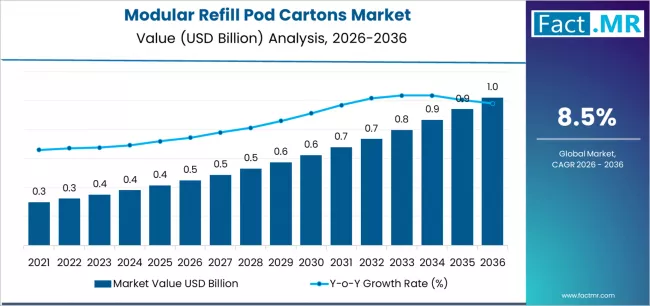
Modular refill pod cartons market is projected to grow from USD 0.5 billion in 2026 to USD 1.0 billion by 2036, at a CAGR of 8.5%. Personal Care / Homecare refill systems will dominate with a 45.0% market share, while modular carton systems (holder + pods) will lead the packaging format/type segment with a 50.0% share.
Modular Refill Pod Cartons Market Forecast and Outlook 2026 to 2036
The global modular refill pod cartons market is valued at USD 0.45 billion in 2026. The market is forecast to reach USD 1.02 billion by 2036, an increase of USD 0.57 billion. This represents total growth of 126.7%, expanding at a compound annual growth rate (CAGR) of 8.5% between 2026 and 2036.
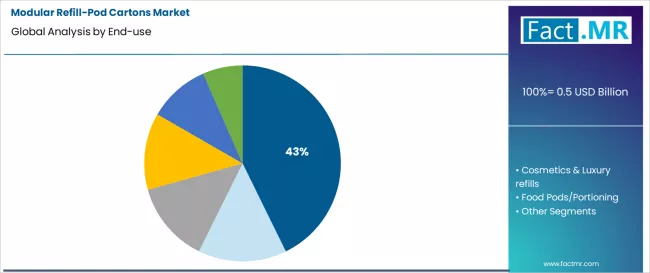
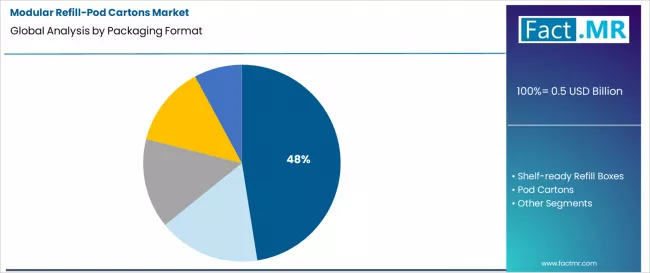
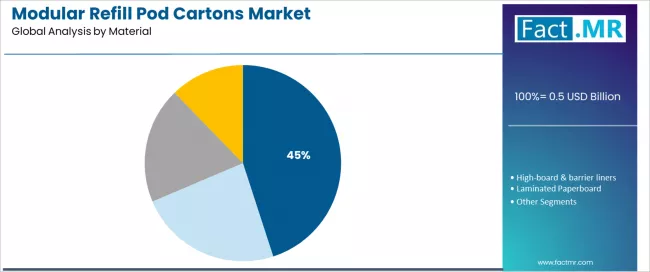
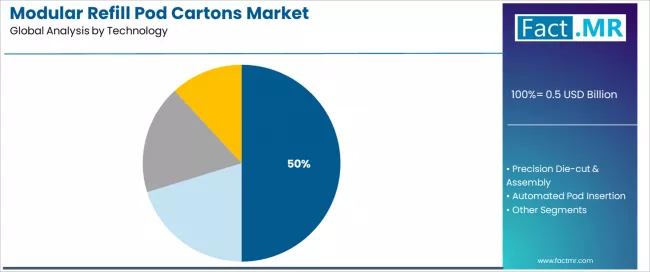
Segmentation data highlights a market engineered for circular consumption. By end-use, the personal care and homecare refill systems sector commands a leading 45.0% share in 2026. Modular carton systems combining a durable holder with disposable pods dominate the packaging format segment with a 50.0% share. Recycled board with coated inserts holds a 45.0% material share, while click-in pod and RFID-enabled recognition technology is pivotal with a 50.0% share. This points to a sophisticated market focused on systemic reuse.
Quick Stats for Modular Refill Pod Cartons Market
- Market Value (2026): USD 0.45 Billion
- Market Forecast Value (2036): USD 1.02 Billion
- Market Forecast CAGR: 8.5%
- Leading End-Use: Personal Care / Homecare Refill Systems (45.0%)
- Key Growth Regions: Asia Pacific, North America, Europe
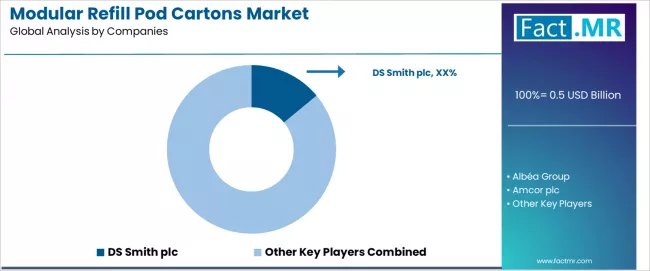
- Key Players Profiled: DS Smith plc, Albéa Group, Amcor plc, Uflex Limited, Toppan Inc.

A primary macro trend is the strategic shift by fast-moving consumer goods (FMCG) companies from selling disposable products to managing durable systems. This transforms the business model, fostering deeper customer loyalty through the recurring sale of refill pods. The modular carton serves as the physical and brand anchor for this system, requiring design excellence to ensure consumer retention. It represents a fundamental move from a linear “produce-use-dispose” model to a circular “produce-use-refill” model, with packaging as the enabling architecture.
Furthermore, the integration of smart technology is critical for user experience and system integrity. Simple refill systems can face issues with incorrect pod insertion or counterfeit refills. Technologies like RFID or mechanical coding ensure that only genuine, compatible pods work with the holder, protecting brand equity and user safety. This smart integration turns the physical packaging into an interactive touchpoint, potentially connecting to apps for automatic reordering or usage tracking, seamlessly blending sustainable behavior with digital convenience.
Key Takeaways from the Modular Refill Pod Cartons Market
| Metric | Value |
|---|---|
| Estimated Value in (2026E) | USD 0.45 Billion |
| Forecast Value in (2036F) | USD 1.02 Billion |
| Forecast CAGR (2026 to 2036) | 8.5% |
Category
| Category | Segment |
|---|---|
| End-use/Application | Personal Care/Homecare Refill Systems, Cosmetics & Luxury Refills, Food Pods/Portioning, E-commerce Refill Bundles, Household Refills, Others |
| Packaging Format/Type | Modular Carton Systems (holder + pods), Shelf-ready Refill Boxes, Pod Cartons, Small Refill Cartons, Others |
| Material | Recycled Board + Coated Inserts, High-board & Barrier Liners, Laminated Paperboard, Recycled Paperboard, Others |
| Technology | Click-in Pod Technology/RFID-enabled Refill Recognition, Precision Die-cut & Assembly, Automated Pod Insertion, Glue-less Assembly, Others |
| Region | North America, Europe, Asia Pacific, Latin America, MEA |
Segment Analysis
How are Personal Care Refill Systems Using Modular Design to Build Brand Ecosystems?
The personal care and homecare refill systems segment holds a 45.0% market share in 2026. This dominance stems from the sector's need to reduce plastic waste while locking in customer loyalty for everyday products like hand soap, detergent, and shampoo. The modular system transforms a routine purchase into a branded ritual.
Development focuses on creating holders that are aesthetically appealing for the home, functionally reliable over thousands of uses, and engineered with precise mechanisms that make refilling clean and intuitive. This approach builds a closed-loop ecosystem around the brand.
What Makes Modular Carton Systems the Structural Foundation for Refill Economics?

Modular carton systems lead the packaging format segment with a 50.0% share. Their role is dual, the carton serves as both the retail package for the refill pod and often as part of the permanent holder’s structure. This format maximizes the use of renewable, recyclable paperboard while minimizing the plastic used in the disposable refill unit.
The design challenge lies in creating a carton that is robust enough to protect the pod during shipping, interfaces perfectly with the holder, and provides clear, persuasive on-shelf communication about the refill system's benefits. It is the critical link between the durable product and the disposable consumable.
Why is Recycled Board the Material of Choice for Sustainable System Credibility?

Recycled board with coated inserts accounts for a 45.0% material share. Using high-content recycled paperboard for the carton and holder components provides immediate environmental credibility and aligns with circular economy principles. The coated inserts are crucial for creating necessary barriers to protect concentrated soap or detergent pods from moisture and for providing a sealed compartment.
The development focus is on advancing coating technologies that maintain barrier performance while not hindering the recyclability of the paperboard substrate, ensuring the entire system maintains its sustainable promise from beginning to end.
Is Smart Pod Recognition Technology the Key to System Security and User Trust?
Click-in pod and RFID-enabled recognition technology commands a 50.0% share. This technology is essential for solving critical adoption barriers: preventing mess from incorrect refills and combating counterfeit products that could damage the dispenser or pose safety risks. A smart recognition system ensures only authentic, compatible pods function, protecting the brand and the consumer.
Beyond security, this technology enables enhanced user experiences, such as automatic dosage settings for different products or connectivity to smart home systems for replenishment alerts, adding a layer of digital convenience that strengthens the value proposition of the refill system.
What are the Drivers, Restraints, and Key Trends of the Modular Refill Pod Cartons Market?
Market growth is propelled by corporate commitments to plastic waste reduction, consumer adoption of circular consumption models, and the potential for brands to increase customer lifetime value. The economic and environmental appeal of shipping concentrated refills instead of bulky, water-filled bottles is a powerful driver.
Higher upfront system costs for consumers, the complexity of managing two SKUs, and the challenge of designing pods that work flawlessly across global markets with varying humidity and handling serve as key restraints. Development concentrates on standardizing pod formats within categories to allow for cross-brand compatibility. Another focus is on creating truly water-soluble or readily recyclable pod membranes that leave no waste.
Analysis of the Modular Refill Pod Cartons Market by Key Countries

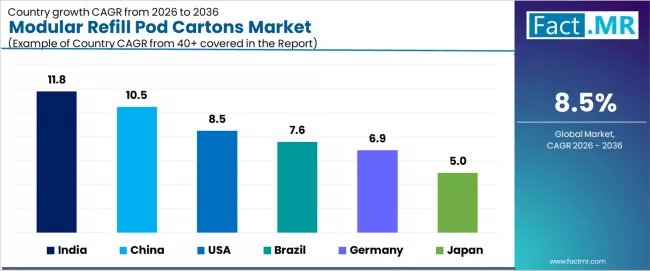
| Country | CAGR (2026 to 2036) |
|---|---|
| USA | 8.5% |
| Germany | 6.9% |
| China | 10.5% |
| India | 11.8% |
| Brazil | 7.6% |
| Japan | 5.0% |
How are USA’s Market Dynamics Shaped by Subscription Models and Retail Partnerships?

The USA’s market grows at an 8.5% CAGR, significantly influenced by the popularity of direct-to-consumer subscription services and partnerships with major big-box retailers. Brands launch refill systems online, then expand into retail where the modular carton must function as a standalone, self-explanatory sales unit.
Development focuses on creating shelf-ready cartons with high visual impact that clearly communicate the refill process. The market also sees growth in smart holders that integrate with voice assistants for automated reordering, blending sustainability with hyper-convenience.
- Retailer sustainability scorecards that reward reduced plastic weight are accelerating the adoption of pod-based refill systems for homecare products.
- Innovation targets ultra-compact pod cartons optimized for e-commerce fulfillment, reducing shipping costs and packaging volume.
How does Germany’s Market Prioritize Technical Precision and Full Circularity?
Germany’s market advances at a 6.9% CAGR, characterized by a demand for engineering precision in the holder-pod interface and a clear, certified end-of-life pathway for every component. The holder must be ultra-durable, and the pod carton must be easily separable for recycling.
Growth is steady in the premium homecare and personal care segments. The market favors systems where the paperboard carton is fully recyclable and the pod membrane is designed to dissolve completely or be compostable, leaving no residual waste for the consumer to sort.
- There is strong interest in standardizing refill pod sizes within product categories to reduce complexity for recycling systems and consumers.
- Development of holders from recycled ocean-bound plastic or bio-based polymers is used to enhance the system's overall environmental narrative.
Is China’s Growth Fueled by E-commerce Logistics and Smart Home Integration?
China’s market is projected to grow at a 10.5% CAGR, driven by the dominance of e-commerce and the rapid adoption of smart home ecosystems. Refill pod systems are ideal for online sales due to their lightweight, compact nature.
Development emphasizes integration with China’s digital payment and super-app ecosystems, allowing pod purchases to be made with a single click following an alert from the smart holder. The immense market scale favors solutions that are cost-optimized and robust enough to survive complex last-mile delivery networks.
- Partnerships between appliance manufacturers (e.g., smart dishwashers, washing machines) and detergent brands are creating integrated, automated refill systems.
- Government policies encouraging waste reduction at the household level support the adoption of concentrated refill formats.
Can India’s Market Embrace Refill Pods through Affordability and Sachet Culture?
India demonstrates the highest growth potential at an 11.8% CAGR. The key is adapting the refill model to a market familiar with single-serve sachets but sensitive to upfront costs. Development focuses on creating extremely low-cost, durable holders and pod cartons that offer significant savings per use compared to buying new bottles.
Growth is strong in food portioning such as spice mixes, beverage concentrates) and in urban households seeking to reduce plastic clutter. The system must be simple, reliable, and visually communicate value.
- The large-scale manufacturing of paperboard and laminated materials in India helps control costs for domestic pod and carton production.
- Marketing focuses on the long-term savings and space-efficiency of refill systems, appealing to urban apartment dwellers.
How is Brazil’s Market Focused on Home Care and E-commerce Bundling?
Brazil’s market is set to grow at a 7.6% CAGR, with early adoption centered on home cleaning products and personal care. The growing e-commerce sector sees opportunity in selling starter bundles as a subscription or one-time purchase. Development focuses on creating vibrant, appealing carton graphics that stand out online and on ensuring pod integrity in Brazil’s varied climate. The market favors systems that are straightforward, with easily sourced replacement pods from major retailers.
- Social media marketing by domestic influencers is effective in demonstrating the convenience and aesthetic benefits of refill systems.
- There is exploration of using refill pods for premium food products like gourmet coffee or acai powder, leveraging the model for portion control and freshness.
Does Japan’s Market Demand Space-Efficient Design and Flawless Function?
Japan’s market grows at a 5.0% CAGR, where any refill system must excel in space-saving design and flawless, leak-proof operation. Homes are small, and consumers expect perfection. Holders must be minimalist and mountable, and pod cartons must be tiny yet contain precise, high-quality concentrates.
The market values smart technology that eliminates any user error. Development focuses on ultra-compact pod designs that minimize material use and on holders with precise, dry-break connectors that prevent any drip or residue during refilling.
- Integration with popular home decluttering and minimalist lifestyle trends is a key marketing angle.
- High-value applications, such as refill pods for premium skincare serums or fabric care, are early adoption points where consumers appreciate the precision and reduced waste.
Competitive Landscape of the Modular Refill Pod Cartons Market

The competitive landscape involves carton manufacturers, dispensing system specialists, and FMCG brands co-developing integrated solutions. Competition centers on proprietary locking and recognition technologies, expertise in barrier-coated paperboard, and the ability to provide complete, scalable system engineering, from the durable holder to the single-use pod carton.
Key players differentiate through partnerships with global brands to create category-defining systems and by investing in smart technology that adds value beyond sustainability. Success requires a holistic understanding of consumer behavior, supply chain logistics for two-part systems, and sustainable material science, positioning firms that can be a one-stop innovation partner for brands transitioning to refill models.
Key Players in the Modular Refill Pod Cartons Market
- DS Smith plc
- Albéa Group
- Amcor plc
- Uflex Limited
- Toppan Inc.
Scope of the Report
| Items | Values |
|---|---|
| Quantitative Units (2026) | USD 0.45 Billion |
| End-use/Application | Personal Care/Homecare Refill Systems, Cosmetics & Luxury Refills, Food Pods / Portioning, E-commerce Refill Bundles, Household Refills, Others |
| Packaging Format/Type | Modular Carton Systems (holder + pods), Shelf-ready Refill Boxes, Pod Cartons, Small Refill Cartons, Others |
| Material | Recycled Board + Coated Inserts, High-board & Barrier Liners, Laminated Paperboard, Recycled Paperboard, Others |
| Technology | Click-in Pod Technology/RFID-enabled Refill Recognition, Precision Die-cut & Assembly, Automated Pod Insertion, Glue-less Assembly, Others |
| Regions Covered | North America, Europe, Asia Pacific, Latin America, MEA |
Modular Refill Pod Cartons Market by Segments
-
End-use/Application :
- Personal Care/Homecare Refill Systems
- Cosmetics & Luxury Refills
- Food Pods/Portioning
- E-commerce Refill Bundles
- Household Refills
- Others
-
Packaging Format/Type :
- Modular Carton Systems (holder + pods)
- Shelf-ready Refill Boxes
- Pod Cartons
- Small Refill Cartons
- Others
-
Material :
- Recycled Board + Coated Inserts
- High-board & Barrier Liners
- Laminated Paperboard
- Recycled Paperboard
- Others
-
Technology :
- Click-in Pod Technology/RFID-enabled Refill Recognition
- Precision Die-cut & Assembly
- Automated Pod Insertion
- Glue-less Assembly
- Others
-
Region :
- North America
- USA
- Canada
- Mexico
- Europe
- Germany
- UK
- France
- Italy
- Spain
- Rest of Europe
- Asia Pacific
- China
- India
- Japan
- South Korea
- Australia
- Rest of Asia Pacific
- Latin America
- Brazil
- Argentina
- Rest of Latin America
- MEA
- Saudi Arabia
- UAE
- South Africa
- Rest of MEA
- North America
Table of Content
- Executive Summary
- Global Market Outlook
- Demand to side Trends
- Supply to side Trends
- Technology Roadmap Analysis
- Analysis and Recommendations
- Market Overview
- Market Coverage / Taxonomy
- Market Definition / Scope / Limitations
- Market Background
- Market Dynamics
- Drivers
- Restraints
- Opportunity
- Trends
- Scenario Forecast
- Demand in Optimistic Scenario
- Demand in Likely Scenario
- Demand in Conservative Scenario
- Opportunity Map Analysis
- Product Life Cycle Analysis
- Supply Chain Analysis
- Investment Feasibility Matrix
- Value Chain Analysis
- PESTLE and Porter’s Analysis
- Regulatory Landscape
- Regional Parent Market Outlook
- Production and Consumption Statistics
- Import and Export Statistics
- Market Dynamics
- Global Market Analysis 2021 to 2025 and Forecast, 2026 to 2036
- Historical Market Size Value (USD Million) Analysis, 2021 to 2025
- Current and Future Market Size Value (USD Million) Projections, 2026 to 2036
- Y to o to Y Growth Trend Analysis
- Absolute $ Opportunity Analysis
- Global Market Pricing Analysis 2021 to 2025 and Forecast 2026 to 2036
- Global Market Analysis 2021 to 2025 and Forecast 2026 to 2036, By End-use/Application
- Introduction / Key Findings
- Historical Market Size Value (USD Million) Analysis By End-use/Application, 2021 to 2025
- Current and Future Market Size Value (USD Million) Analysis and Forecast By End-use/Application, 2026 to 2036
- Personal Care / Homecare refill systems
- Cosmetics & Luxury refills
- Food Pods / Portioning
- E-commerce refill bundles
- Household refills
- Others
- Y to o to Y Growth Trend Analysis By End-use/Application, 2021 to 2025
- Absolute $ Opportunity Analysis By End-use/Application, 2026 to 2036
- Global Market Analysis 2021 to 2025 and Forecast 2026 to 2036, By Packaging Format/Type
- Introduction / Key Findings
- Historical Market Size Value (USD Million) Analysis By Packaging Format/Type, 2021 to 2025
- Current and Future Market Size Value (USD Million) Analysis and Forecast By Packaging Format/Type, 2026 to 2036
- Modular Carton Systems (holder + pods)
- Shelf-ready Refill Boxes
- Pod Cartons
- Small Refill Cartons
- Others
- Y to o to Y Growth Trend Analysis By Packaging Format/Type, 2021 to 2025
- Absolute $ Opportunity Analysis By Packaging Format/Type, 2026 to 2036
- Global Market Analysis 2021 to 2025 and Forecast 2026 to 2036, By Material
- Introduction / Key Findings
- Historical Market Size Value (USD Million) Analysis By Material, 2021 to 2025
- Current and Future Market Size Value (USD Million) Analysis and Forecast By Material, 2026 to 2036
- Recycled Board + Coated Inserts
- High-board & barrier liners
- Laminated Paperboard
- Recycled Paperboard
- Y to o to Y Growth Trend Analysis By Material, 2021 to 2025
- Absolute $ Opportunity Analysis By Material, 2026 to 2036
- Global Market Analysis 2021 to 2025 and Forecast 2026 to 2036, By Technology
- Introduction / Key Findings
- Historical Market Size Value (USD Million) Analysis By Technology, 2021 to 2025
- Current and Future Market Size Value (USD Million) Analysis and Forecast By Technology, 2026 to 2036
- Click-in Pod Technology / RFID-enabled refill recognition
- Precision Die-cut & Assembly
- Automated Pod Insertion
- Glue-less Assembly
- Y to o to Y Growth Trend Analysis By Technology, 2021 to 2025
- Absolute $ Opportunity Analysis By Technology, 2026 to 2036
- Global Market Analysis 2021 to 2025 and Forecast 2026 to 2036, By Region
- Introduction
- Historical Market Size Value (USD Million) Analysis By Region, 2021 to 2025
- Current Market Size Value (USD Million) Analysis and Forecast By Region, 2026 to 2036
- North America
- Latin America
- Western Europe
- Eastern Europe
- East Asia
- South Asia and Pacific
- Middle East & Africa
- Market Attractiveness Analysis By Region
- North America Market Analysis 2021 to 2025 and Forecast 2026 to 2036, By Country
- Historical Market Size Value (USD Million) Trend Analysis By Market Taxonomy, 2021 to 2025
- Market Size Value (USD Million) Forecast By Market Taxonomy, 2026 to 2036
- By Country
- USA
- Canada
- Mexico
- By End-use/Application
- By Packaging Format/Type
- By Material
- By Technology
- By Country
- Market Attractiveness Analysis
- By Country
- By End-use/Application
- By Packaging Format/Type
- By Material
- By Technology
- Key Takeaways
- Latin America Market Analysis 2021 to 2025 and Forecast 2026 to 2036, By Country
- Historical Market Size Value (USD Million) Trend Analysis By Market Taxonomy, 2021 to 2025
- Market Size Value (USD Million) Forecast By Market Taxonomy, 2026 to 2036
- By Country
- Brazil
- Chile
- Rest of Latin America
- By End-use/Application
- By Packaging Format/Type
- By Material
- By Technology
- By Country
- Market Attractiveness Analysis
- By Country
- By End-use/Application
- By Packaging Format/Type
- By Material
- By Technology
- Key Takeaways
- Western Europe Market Analysis 2021 to 2025 and Forecast 2026 to 2036, By Country
- Historical Market Size Value (USD Million) Trend Analysis By Market Taxonomy, 2021 to 2025
- Market Size Value (USD Million) Forecast By Market Taxonomy, 2026 to 2036
- By Country
- Germany
- UK
- Italy
- Spain
- France
- Nordic
- BENELUX
- Rest of Western Europe
- By End-use/Application
- By Packaging Format/Type
- By Material
- By Technology
- By Country
- Market Attractiveness Analysis
- By Country
- By End-use/Application
- By Packaging Format/Type
- By Material
- By Technology
- Key Takeaways
- Eastern Europe Market Analysis 2021 to 2025 and Forecast 2026 to 2036, By Country
- Historical Market Size Value (USD Million) Trend Analysis By Market Taxonomy, 2021 to 2025
- Market Size Value (USD Million) Forecast By Market Taxonomy, 2026 to 2036
- By Country
- Russia
- Poland
- Hungary
- Balkan & Baltic
- Rest of Eastern Europe
- By End-use/Application
- By Packaging Format/Type
- By Material
- By Technology
- By Country
- Market Attractiveness Analysis
- By Country
- By End-use/Application
- By Packaging Format/Type
- By Material
- By Technology
- Key Takeaways
- East Asia Market Analysis 2021 to 2025 and Forecast 2026 to 2036, By Country
- Historical Market Size Value (USD Million) Trend Analysis By Market Taxonomy, 2021 to 2025
- Market Size Value (USD Million) Forecast By Market Taxonomy, 2026 to 2036
- By Country
- China
- Japan
- South Korea
- By End-use/Application
- By Packaging Format/Type
- By Material
- By Technology
- By Country
- Market Attractiveness Analysis
- By Country
- By End-use/Application
- By Packaging Format/Type
- By Material
- By Technology
- Key Takeaways
- South Asia and Pacific Market Analysis 2021 to 2025 and Forecast 2026 to 2036, By Country
- Historical Market Size Value (USD Million) Trend Analysis By Market Taxonomy, 2021 to 2025
- Market Size Value (USD Million) Forecast By Market Taxonomy, 2026 to 2036
- By Country
- India
- ASEAN
- Australia & New Zealand
- Rest of South Asia and Pacific
- By End-use/Application
- By Packaging Format/Type
- By Material
- By Technology
- By Country
- Market Attractiveness Analysis
- By Country
- By End-use/Application
- By Packaging Format/Type
- By Material
- By Technology
- Key Takeaways
- Middle East & Africa Market Analysis 2021 to 2025 and Forecast 2026 to 2036, By Country
- Historical Market Size Value (USD Million) Trend Analysis By Market Taxonomy, 2021 to 2025
- Market Size Value (USD Million) Forecast By Market Taxonomy, 2026 to 2036
- By Country
- Kingdom of Saudi Arabia
- Other GCC Countries
- Turkiye
- South Africa
- Other African Union
- Rest of Middle East & Africa
- By End-use/Application
- By Packaging Format/Type
- By Material
- By Technology
- By Country
- Market Attractiveness Analysis
- By Country
- By End-use/Application
- By Packaging Format/Type
- By Material
- By Technology
- Key Takeaways
- Key Countries Market Analysis
- USA
- Pricing Analysis
- Market Share Analysis, 2025
- By End-use/Application
- By Packaging Format/Type
- By Material
- By Technology
- Canada
- Pricing Analysis
- Market Share Analysis, 2025
- By End-use/Application
- By Packaging Format/Type
- By Material
- By Technology
- Mexico
- Pricing Analysis
- Market Share Analysis, 2025
- By End-use/Application
- By Packaging Format/Type
- By Material
- By Technology
- Brazil
- Pricing Analysis
- Market Share Analysis, 2025
- By End-use/Application
- By Packaging Format/Type
- By Material
- By Technology
- Chile
- Pricing Analysis
- Market Share Analysis, 2025
- By End-use/Application
- By Packaging Format/Type
- By Material
- By Technology
- Germany
- Pricing Analysis
- Market Share Analysis, 2025
- By End-use/Application
- By Packaging Format/Type
- By Material
- By Technology
- UK
- Pricing Analysis
- Market Share Analysis, 2025
- By End-use/Application
- By Packaging Format/Type
- By Material
- By Technology
- Italy
- Pricing Analysis
- Market Share Analysis, 2025
- By End-use/Application
- By Packaging Format/Type
- By Material
- By Technology
- Spain
- Pricing Analysis
- Market Share Analysis, 2025
- By End-use/Application
- By Packaging Format/Type
- By Material
- By Technology
- France
- Pricing Analysis
- Market Share Analysis, 2025
- By End-use/Application
- By Packaging Format/Type
- By Material
- By Technology
- India
- Pricing Analysis
- Market Share Analysis, 2025
- By End-use/Application
- By Packaging Format/Type
- By Material
- By Technology
- ASEAN
- Pricing Analysis
- Market Share Analysis, 2025
- By End-use/Application
- By Packaging Format/Type
- By Material
- By Technology
- Australia & New Zealand
- Pricing Analysis
- Market Share Analysis, 2025
- By End-use/Application
- By Packaging Format/Type
- By Material
- By Technology
- China
- Pricing Analysis
- Market Share Analysis, 2025
- By End-use/Application
- By Packaging Format/Type
- By Material
- By Technology
- Japan
- Pricing Analysis
- Market Share Analysis, 2025
- By End-use/Application
- By Packaging Format/Type
- By Material
- By Technology
- South Korea
- Pricing Analysis
- Market Share Analysis, 2025
- By End-use/Application
- By Packaging Format/Type
- By Material
- By Technology
- Russia
- Pricing Analysis
- Market Share Analysis, 2025
- By End-use/Application
- By Packaging Format/Type
- By Material
- By Technology
- Poland
- Pricing Analysis
- Market Share Analysis, 2025
- By End-use/Application
- By Packaging Format/Type
- By Material
- By Technology
- Hungary
- Pricing Analysis
- Market Share Analysis, 2025
- By End-use/Application
- By Packaging Format/Type
- By Material
- By Technology
- Kingdom of Saudi Arabia
- Pricing Analysis
- Market Share Analysis, 2025
- By End-use/Application
- By Packaging Format/Type
- By Material
- By Technology
- Turkiye
- Pricing Analysis
- Market Share Analysis, 2025
- By End-use/Application
- By Packaging Format/Type
- By Material
- By Technology
- South Africa
- Pricing Analysis
- Market Share Analysis, 2025
- By End-use/Application
- By Packaging Format/Type
- By Material
- By Technology
- USA
- Market Structure Analysis
- Competition Dashboard
- Competition Benchmarking
- Market Share Analysis of Top Players
- By Regional
- By End-use/Application
- By Packaging Format/Type
- By Material
- By Technology
- Competition Analysis
- Competition Deep Dive
- DS Smith plc
- Overview
- Product Portfolio
- Profitability by Market Segments (Product/Age /Sales Channel/Region)
- Sales Footprint
- Strategy Overview
- Marketing Strategy
- Product Strategy
- Channel Strategy
- Albéa Group
- Amcor plc
- Uflex Limited
- Toppan Inc.
- DS Smith plc
- Competition Deep Dive
- Assumptions & Acronyms Used
- Research Methodology
List Of Table
- Table 1: Global Market Value (USD Million) Forecast by Region, 2021 to 2036
- Table 2: Global Market Value (USD Million) Forecast by End-use/Application, 2021 to 2036
- Table 3: Global Market Value (USD Million) Forecast by Packaging Format/Type, 2021 to 2036
- Table 4: Global Market Value (USD Million) Forecast by Material, 2021 to 2036
- Table 5: Global Market Value (USD Million) Forecast by Technology, 2021 to 2036
- Table 6: North America Market Value (USD Million) Forecast by Country, 2021 to 2036
- Table 7: North America Market Value (USD Million) Forecast by End-use/Application, 2021 to 2036
- Table 8: North America Market Value (USD Million) Forecast by Packaging Format/Type, 2021 to 2036
- Table 9: North America Market Value (USD Million) Forecast by Material, 2021 to 2036
- Table 10: North America Market Value (USD Million) Forecast by Technology, 2021 to 2036
- Table 11: Latin America Market Value (USD Million) Forecast by Country, 2021 to 2036
- Table 12: Latin America Market Value (USD Million) Forecast by End-use/Application, 2021 to 2036
- Table 13: Latin America Market Value (USD Million) Forecast by Packaging Format/Type, 2021 to 2036
- Table 14: Latin America Market Value (USD Million) Forecast by Material, 2021 to 2036
- Table 15: Latin America Market Value (USD Million) Forecast by Technology, 2021 to 2036
- Table 16: Western Europe Market Value (USD Million) Forecast by Country, 2021 to 2036
- Table 17: Western Europe Market Value (USD Million) Forecast by End-use/Application, 2021 to 2036
- Table 18: Western Europe Market Value (USD Million) Forecast by Packaging Format/Type, 2021 to 2036
- Table 19: Western Europe Market Value (USD Million) Forecast by Material, 2021 to 2036
- Table 20: Western Europe Market Value (USD Million) Forecast by Technology, 2021 to 2036
- Table 21: Eastern Europe Market Value (USD Million) Forecast by Country, 2021 to 2036
- Table 22: Eastern Europe Market Value (USD Million) Forecast by End-use/Application, 2021 to 2036
- Table 23: Eastern Europe Market Value (USD Million) Forecast by Packaging Format/Type, 2021 to 2036
- Table 24: Eastern Europe Market Value (USD Million) Forecast by Material, 2021 to 2036
- Table 25: Eastern Europe Market Value (USD Million) Forecast by Technology, 2021 to 2036
- Table 26: East Asia Market Value (USD Million) Forecast by Country, 2021 to 2036
- Table 27: East Asia Market Value (USD Million) Forecast by End-use/Application, 2021 to 2036
- Table 28: East Asia Market Value (USD Million) Forecast by Packaging Format/Type, 2021 to 2036
- Table 29: East Asia Market Value (USD Million) Forecast by Material, 2021 to 2036
- Table 30: East Asia Market Value (USD Million) Forecast by Technology, 2021 to 2036
- Table 31: South Asia and Pacific Market Value (USD Million) Forecast by Country, 2021 to 2036
- Table 32: South Asia and Pacific Market Value (USD Million) Forecast by End-use/Application, 2021 to 2036
- Table 33: South Asia and Pacific Market Value (USD Million) Forecast by Packaging Format/Type, 2021 to 2036
- Table 34: South Asia and Pacific Market Value (USD Million) Forecast by Material, 2021 to 2036
- Table 35: South Asia and Pacific Market Value (USD Million) Forecast by Technology, 2021 to 2036
- Table 36: Middle East & Africa Market Value (USD Million) Forecast by Country, 2021 to 2036
- Table 37: Middle East & Africa Market Value (USD Million) Forecast by End-use/Application, 2021 to 2036
- Table 38: Middle East & Africa Market Value (USD Million) Forecast by Packaging Format/Type, 2021 to 2036
- Table 39: Middle East & Africa Market Value (USD Million) Forecast by Material, 2021 to 2036
- Table 40: Middle East & Africa Market Value (USD Million) Forecast by Technology, 2021 to 2036
List Of Figures
- Figure 1: Global Market Pricing Analysis
- Figure 2: Global Market Value (USD Million) Forecast 2021 to 2036
- Figure 3: Global Market Value Share and BPS Analysis by End-use/Application, 2026 and 2036
- Figure 4: Global Market Y to o to Y Growth Comparison by End-use/Application, 2026 to 2036
- Figure 5: Global Market Attractiveness Analysis by End-use/Application
- Figure 6: Global Market Value Share and BPS Analysis by Packaging Format/Type, 2026 and 2036
- Figure 7: Global Market Y to o to Y Growth Comparison by Packaging Format/Type, 2026 to 2036
- Figure 8: Global Market Attractiveness Analysis by Packaging Format/Type
- Figure 9: Global Market Value Share and BPS Analysis by Material, 2026 and 2036
- Figure 10: Global Market Y to o to Y Growth Comparison by Material, 2026 to 2036
- Figure 11: Global Market Attractiveness Analysis by Material
- Figure 12: Global Market Value Share and BPS Analysis by Technology, 2026 and 2036
- Figure 13: Global Market Y to o to Y Growth Comparison by Technology, 2026 to 2036
- Figure 14: Global Market Attractiveness Analysis by Technology
- Figure 15: Global Market Value (USD Million) Share and BPS Analysis by Region, 2026 and 2036
- Figure 16: Global Market Y to o to Y Growth Comparison by Region, 2026 to 2036
- Figure 17: Global Market Attractiveness Analysis by Region
- Figure 18: North America Market Incremental Dollar Opportunity, 2026 to 2036
- Figure 19: Latin America Market Incremental Dollar Opportunity, 2026 to 2036
- Figure 20: Western Europe Market Incremental Dollar Opportunity, 2026 to 2036
- Figure 21: Eastern Europe Market Incremental Dollar Opportunity, 2026 to 2036
- Figure 22: East Asia Market Incremental Dollar Opportunity, 2026 to 2036
- Figure 23: South Asia and Pacific Market Incremental Dollar Opportunity, 2026 to 2036
- Figure 24: Middle East & Africa Market Incremental Dollar Opportunity, 2026 to 2036
- Figure 25: North America Market Value Share and BPS Analysis by Country, 2026 and 2036
- Figure 26: North America Market Value Share and BPS Analysis by End-use/Application, 2026 and 2036
- Figure 27: North America Market Y to o to Y Growth Comparison by End-use/Application, 2026 to 2036
- Figure 28: North America Market Attractiveness Analysis by End-use/Application
- Figure 29: North America Market Value Share and BPS Analysis by Packaging Format/Type, 2026 and 2036
- Figure 30: North America Market Y to o to Y Growth Comparison by Packaging Format/Type, 2026 to 2036
- Figure 31: North America Market Attractiveness Analysis by Packaging Format/Type
- Figure 32: North America Market Value Share and BPS Analysis by Material, 2026 and 2036
- Figure 33: North America Market Y to o to Y Growth Comparison by Material, 2026 to 2036
- Figure 34: North America Market Attractiveness Analysis by Material
- Figure 35: North America Market Value Share and BPS Analysis by Technology, 2026 and 2036
- Figure 36: North America Market Y to o to Y Growth Comparison by Technology, 2026 to 2036
- Figure 37: North America Market Attractiveness Analysis by Technology
- Figure 38: Latin America Market Value Share and BPS Analysis by Country, 2026 and 2036
- Figure 39: Latin America Market Value Share and BPS Analysis by End-use/Application, 2026 and 2036
- Figure 40: Latin America Market Y to o to Y Growth Comparison by End-use/Application, 2026 to 2036
- Figure 41: Latin America Market Attractiveness Analysis by End-use/Application
- Figure 42: Latin America Market Value Share and BPS Analysis by Packaging Format/Type, 2026 and 2036
- Figure 43: Latin America Market Y to o to Y Growth Comparison by Packaging Format/Type, 2026 to 2036
- Figure 44: Latin America Market Attractiveness Analysis by Packaging Format/Type
- Figure 45: Latin America Market Value Share and BPS Analysis by Material, 2026 and 2036
- Figure 46: Latin America Market Y to o to Y Growth Comparison by Material, 2026 to 2036
- Figure 47: Latin America Market Attractiveness Analysis by Material
- Figure 48: Latin America Market Value Share and BPS Analysis by Technology, 2026 and 2036
- Figure 49: Latin America Market Y to o to Y Growth Comparison by Technology, 2026 to 2036
- Figure 50: Latin America Market Attractiveness Analysis by Technology
- Figure 51: Western Europe Market Value Share and BPS Analysis by Country, 2026 and 2036
- Figure 52: Western Europe Market Value Share and BPS Analysis by End-use/Application, 2026 and 2036
- Figure 53: Western Europe Market Y to o to Y Growth Comparison by End-use/Application, 2026 to 2036
- Figure 54: Western Europe Market Attractiveness Analysis by End-use/Application
- Figure 55: Western Europe Market Value Share and BPS Analysis by Packaging Format/Type, 2026 and 2036
- Figure 56: Western Europe Market Y to o to Y Growth Comparison by Packaging Format/Type, 2026 to 2036
- Figure 57: Western Europe Market Attractiveness Analysis by Packaging Format/Type
- Figure 58: Western Europe Market Value Share and BPS Analysis by Material, 2026 and 2036
- Figure 59: Western Europe Market Y to o to Y Growth Comparison by Material, 2026 to 2036
- Figure 60: Western Europe Market Attractiveness Analysis by Material
- Figure 61: Western Europe Market Value Share and BPS Analysis by Technology, 2026 and 2036
- Figure 62: Western Europe Market Y to o to Y Growth Comparison by Technology, 2026 to 2036
- Figure 63: Western Europe Market Attractiveness Analysis by Technology
- Figure 64: Eastern Europe Market Value Share and BPS Analysis by Country, 2026 and 2036
- Figure 65: Eastern Europe Market Value Share and BPS Analysis by End-use/Application, 2026 and 2036
- Figure 66: Eastern Europe Market Y to o to Y Growth Comparison by End-use/Application, 2026 to 2036
- Figure 67: Eastern Europe Market Attractiveness Analysis by End-use/Application
- Figure 68: Eastern Europe Market Value Share and BPS Analysis by Packaging Format/Type, 2026 and 2036
- Figure 69: Eastern Europe Market Y to o to Y Growth Comparison by Packaging Format/Type, 2026 to 2036
- Figure 70: Eastern Europe Market Attractiveness Analysis by Packaging Format/Type
- Figure 71: Eastern Europe Market Value Share and BPS Analysis by Material, 2026 and 2036
- Figure 72: Eastern Europe Market Y to o to Y Growth Comparison by Material, 2026 to 2036
- Figure 73: Eastern Europe Market Attractiveness Analysis by Material
- Figure 74: Eastern Europe Market Value Share and BPS Analysis by Technology, 2026 and 2036
- Figure 75: Eastern Europe Market Y to o to Y Growth Comparison by Technology, 2026 to 2036
- Figure 76: Eastern Europe Market Attractiveness Analysis by Technology
- Figure 77: East Asia Market Value Share and BPS Analysis by Country, 2026 and 2036
- Figure 78: East Asia Market Value Share and BPS Analysis by End-use/Application, 2026 and 2036
- Figure 79: East Asia Market Y to o to Y Growth Comparison by End-use/Application, 2026 to 2036
- Figure 80: East Asia Market Attractiveness Analysis by End-use/Application
- Figure 81: East Asia Market Value Share and BPS Analysis by Packaging Format/Type, 2026 and 2036
- Figure 82: East Asia Market Y to o to Y Growth Comparison by Packaging Format/Type, 2026 to 2036
- Figure 83: East Asia Market Attractiveness Analysis by Packaging Format/Type
- Figure 84: East Asia Market Value Share and BPS Analysis by Material, 2026 and 2036
- Figure 85: East Asia Market Y to o to Y Growth Comparison by Material, 2026 to 2036
- Figure 86: East Asia Market Attractiveness Analysis by Material
- Figure 87: East Asia Market Value Share and BPS Analysis by Technology, 2026 and 2036
- Figure 88: East Asia Market Y to o to Y Growth Comparison by Technology, 2026 to 2036
- Figure 89: East Asia Market Attractiveness Analysis by Technology
- Figure 90: South Asia and Pacific Market Value Share and BPS Analysis by Country, 2026 and 2036
- Figure 91: South Asia and Pacific Market Value Share and BPS Analysis by End-use/Application, 2026 and 2036
- Figure 92: South Asia and Pacific Market Y to o to Y Growth Comparison by End-use/Application, 2026 to 2036
- Figure 93: South Asia and Pacific Market Attractiveness Analysis by End-use/Application
- Figure 94: South Asia and Pacific Market Value Share and BPS Analysis by Packaging Format/Type, 2026 and 2036
- Figure 95: South Asia and Pacific Market Y to o to Y Growth Comparison by Packaging Format/Type, 2026 to 2036
- Figure 96: South Asia and Pacific Market Attractiveness Analysis by Packaging Format/Type
- Figure 97: South Asia and Pacific Market Value Share and BPS Analysis by Material, 2026 and 2036
- Figure 98: South Asia and Pacific Market Y to o to Y Growth Comparison by Material, 2026 to 2036
- Figure 99: South Asia and Pacific Market Attractiveness Analysis by Material
- Figure 100: South Asia and Pacific Market Value Share and BPS Analysis by Technology, 2026 and 2036
- Figure 101: South Asia and Pacific Market Y to o to Y Growth Comparison by Technology, 2026 to 2036
- Figure 102: South Asia and Pacific Market Attractiveness Analysis by Technology
- Figure 103: Middle East & Africa Market Value Share and BPS Analysis by Country, 2026 and 2036
- Figure 104: Middle East & Africa Market Value Share and BPS Analysis by End-use/Application, 2026 and 2036
- Figure 105: Middle East & Africa Market Y to o to Y Growth Comparison by End-use/Application, 2026 to 2036
- Figure 106: Middle East & Africa Market Attractiveness Analysis by End-use/Application
- Figure 107: Middle East & Africa Market Value Share and BPS Analysis by Packaging Format/Type, 2026 and 2036
- Figure 108: Middle East & Africa Market Y to o to Y Growth Comparison by Packaging Format/Type, 2026 to 2036
- Figure 109: Middle East & Africa Market Attractiveness Analysis by Packaging Format/Type
- Figure 110: Middle East & Africa Market Value Share and BPS Analysis by Material, 2026 and 2036
- Figure 111: Middle East & Africa Market Y to o to Y Growth Comparison by Material, 2026 to 2036
- Figure 112: Middle East & Africa Market Attractiveness Analysis by Material
- Figure 113: Middle East & Africa Market Value Share and BPS Analysis by Technology, 2026 and 2036
- Figure 114: Middle East & Africa Market Y to o to Y Growth Comparison by Technology, 2026 to 2036
- Figure 115: Middle East & Africa Market Attractiveness Analysis by Technology
- Figure 116: Global Market - Tier Structure Analysis
- Figure 117: Global Market - Company Share Analysis
- FAQs -
How big is the modular refill pod cartons market in 2026?
The global modular refill pod cartons market is estimated to be valued at USD 0.5 billion in 2026.
What will be the size of modular refill pod cartons market in 2036?
The market size for the modular refill pod cartons market is projected to reach USD 1.0 billion by 2036.
How much will be the modular refill pod cartons market growth between 2026 and 2036?
The modular refill pod cartons market is expected to grow at a 8.5% CAGR between 2026 and 2036.
What are the key product types in the modular refill pod cartons market?
The key product types in modular refill pod cartons market are personal care / homecare refill systems, cosmetics & luxury refills, food pods / portioning, e-commerce refill bundles, household refills and others.
Which packaging format/type segment to contribute significant share in the modular refill pod cartons market in 2026?
In terms of packaging format/type, modular carton systems (holder + pods) segment to command 50.0% share in the modular refill pod cartons market in 2026.