Refillable Cleanser Pumps Market

Refillable Cleanser Pumps Market Size and Share Forecast Outlook 2026 to 2036

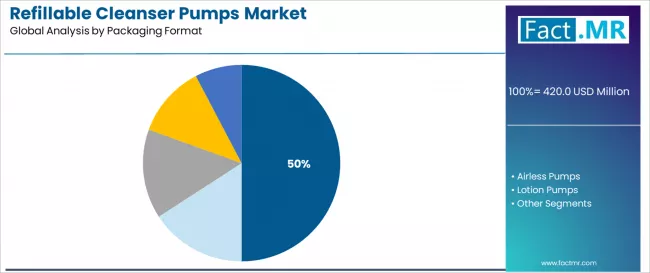
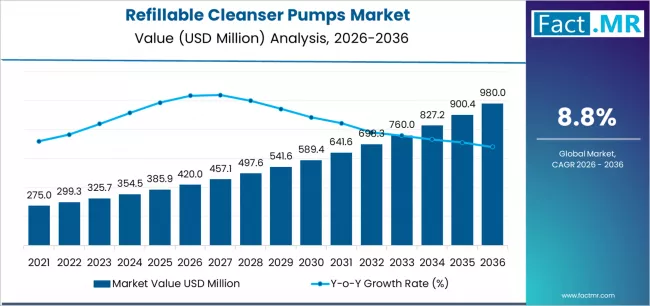
Refillable cleanser pumps market is projected to grow from USD 420.0 million in 2026 to USD 980.0 million by 2036, at a CAGR of 8.8%. Skincare will dominate with a 42.0% market share, while refillable pump bottles will lead the packaging format segment with a 50.0% share.

Refillable Cleanser Pumps Market Forecast and Outlook 2026 to 2036

The global refillable cleanser pumps market is valued at USD 420.0 million in 2026. The market is forecast to reach USD 980.0 million by 2036, an increase of USD 560.0 million. This represents total growth of 133.3%, expanding at a compound annual growth rate (CAGR) of 8.8% between 2026 and 2036.

Key Takeaways from the Refillable Cleanser Pumps Market Study

  • Market Value (2026): USD 420.0 million
  • Market Forecast Value (2036): USD 980.0 million
  • Market Forecast CAGR: 8.8%
  • Leading End-Use: Skincare (42.0%)
  • Key Growth Regions: Asia Pacific, North America, Europe
  • Key Players: AptarGroup, Inc., Albéa Group, Yonwoo Co., Ltd., HCP Packaging, Natura &Co

Refillable Cleanser Pumps Market Market Value Analysis

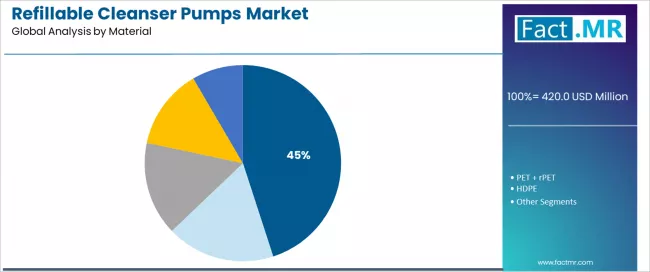
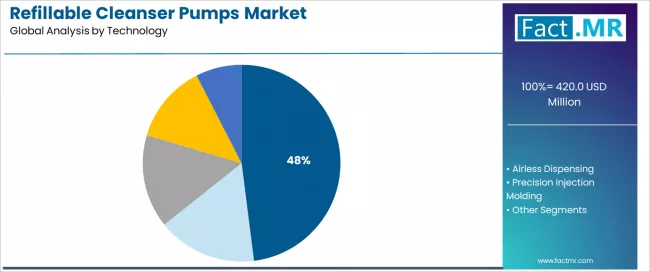
The segmentation highlights a market centered on sustainable personal and home care solutions. By end-use, the skincare sector commands a 42.0% share in 2026. Refillable pump bottles lead the packaging format segment with a 50.0% share. PP combined with PCR resin hold a 45.0% material share, while reusable pump mechanisms dominate technology with a 48.0% share. This data underscores a shift toward durable, circular dispensing systems designed for multiple lifecycles.

Demand is driven by consumer demand for reduced plastic waste, brand commitments to refill-at-home models, and regulatory pressures on single-use plastics. Manufacturers are investing in pump systems that are aesthetically premium, functionally reliable over hundreds of uses, and compatible with bulk refill pouches or bottles. The market's expansion is part of a broader move towards a circular economy in fast-moving consumer goods.

Innovation focuses on engineering pumps that prevent clogging, ensure precise dosing, and maintain hygiene for sensitive products like serums and cleansers. This transition positions the pump not as disposable packaging but as a permanent brand asset in the consumer's home, changing the fundamental relationship between product, package, and user.

Refillable Cleanser Pumps Market

Metric Value
Estimated Value in (2026E) USD 420.0 million
Forecast Value in (2036F) USD 980.0 million
Forecast CAGR (2026 to 2036) 8.8%

Category

Category Segment
End-use Skincare, Haircare, Personal Wash, Household Cleaners, Others
Packaging Format Refillable Pump Bottles, Airless Pumps, Lotion Pumps, Reusable Trigger Pumps, Others
Material PP + PCR Resin, PET + rPET, HDPE, Recycled PE, Others
Technology Reusable Pump Mechanism, Airless Dispensing, Precision Injection Molding, Trigger Mechanism, Others
Region North America, Europe, Asia Pacific, Latin America, MEA

Segment Analysis

How is the Skincare Sector Elevating Pump Design to a Luxury Experience?

Refillable Cleanser Pumps Market Analysis By End Use

The skincare end-use segment holds a 42.0% market share in 2026. This sector drives innovation by demanding pumps that align with high-end brand aesthetics while delivering precise, hygienic dispensing of often viscous or expensive formulations. Development focuses on creating a premium feel through weighted bases, metallic finishes, and ultra-smooth actuation.

Beyond aesthetics, the technical requirement is paramount: pumps must protect ingredient integrity by minimizing air exposure and preventing cross-contamination. The success of a refillable system in skincare hinges on its ability to become a desirable object on the bathroom shelf, encouraging consumer retention and repeat refill purchases. This turns functional packaging into a core part of the brand’s luxury identity.

What Makes Refillable Pump Bottles the Preferred Vessel for Brand Loyalty?

Refillable Cleanser Pumps Market Analysis By Packaging Format

Refillable pump bottles lead the packaging format segment with a 50.0% share. Their dominance is rooted in their perfect balance of familiarity and functionality. Consumers instantly understand their use, and the format is ideal for a wide range of viscosities, from hand soaps to facial cleansers.

For brands, this format offers a durable canvas for distinctive design that can be refilled countless times, transforming a single purchase into an ongoing relationship. The bottle’s durability is key; it must withstand repeated washing, refilling, and daily use without cracking or the pump failing. This format effectively bridges the gap between current consumer habits and a more sustainable consumption model, making it the cornerstone of refill systems.

Why is PP + PCR Resin Becoming the Material Standard for Circular Pumps?

Refillable Cleanser Pumps Market Analysis By Material

The PP + PCR Resin material combination accounts for a 45.0% share. This blend is critical for balancing mechanical performance with environmental goals. Polypropylene provides the chemical resistance, durability, and flexibility needed for a pump housing and mechanism that lasts. Integrating post-consumer recycled content directly into this structure reduces virgin plastic use and caters to both regulatory mandates and consumer expectations.

The challenge and focus of development lie in maintaining the high-quality finish and consistent color required for premium segments while using recycled feedstocks. This material strategy allows brands to market a physically durable product with a reduced carbon footprint, addressing the full lifecycle of the refillable system.

Are Reusable Pump Mechanisms Defining the New Economics of Dispensing?

Refillable Cleanser Pumps Market Analysis By Technology

Reusable pump mechanism technology commands a 48.0% share. This technology’s rise fundamentally changes the cost structure of packaging. Instead of a disposable single-use pump, brands invest in a more complex, higher-quality mechanism designed for thousands of actuations. The development imperative is reliability: springs that do not fatigue, valves that do not leak, and actuators that remain consistent.

This shift requires close collaboration between pump engineers and brands to customize mechanisms for specific product chemistries. The economics succeed when the cost of the durable pump is amortized over multiple refills, reducing total packaging waste and cost per use, creating a compelling value proposition for both the brand and the end consumer.

What are the Drivers, Restraints, and Key Trends of the Refillable Cleanser Pumps Market?

Growth is propelled by stringent regulations on single-use plastics, corporate sustainability targets for reusable packaging, and growing consumer participation in circular economy models. The ability to build brand loyalty and customer lifetime value through a refill ecosystem is a powerful commercial driver. Higher upfront unit costs compared to standard disposable pumps and the logistical complexity of managing refill SKUs separate from durable packages serve as key restraints.

Consumer hesitation about hygiene and cleanliness in refillable systems for certain product categories can also slow adoption. Development concentrates on creating smart pump mechanisms that can monitor usage, signal when a refill is needed, or even prevent refills with non-genuine products. Another focus is standardizing refill container necks to simplify the supply chain for brands and improve the consumer refill experience.

Analysis of the Refillable Cleanser Pumps Market by Key Countries

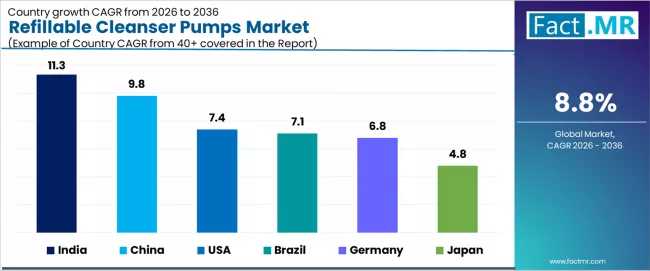
Refillable Cleanser Pumps Market Cagr Analysis By Country

Country CAGR (2026 to 2036)
USA 7.4%
Germany 6.8%
China 9.8%
India 11.3%
Brazil 7.1%
Japan 4.8%

How are USA’s Market Dynamics Shaped by Direct-to-Consumer Brands and Retailer Programs?

Refillable Cleanser Pumps Market Country Value Analysis

The USA’s market grows at a 7.4% CAGR, significantly influenced by digitally-native brands launching with refillable models and major retailers introducing in-store refill stations for household cleaners. Growth is strong in premium skincare and eco-conscious home care segments.

Development focuses on creating pump systems that are robust enough for shipping direct to consumers, aesthetically distinct for unboxing, and easy for the consumer to understand and use correctly without instruction. The market rewards solutions that simplify the refill process, such as pumps that seamlessly connect to refill pouches without spills.

  • The need for cost-effective domestic manufacturing of durable pump components is increasing to support the growing volume of refillable systems.
  • Partnerships between pump manufacturers and fulfillment specialists are emerging to manage the reverse logistics or subscription models for refill deliveries.

Does Germany Demand Engineering Precision and Full Lifecycle Accountability?

Germany’s market advances at a 6.8% CAGR, characterized by a demand for technical excellence and verifiable end-of-life solutions. Pumps must be designed for disassembly, with clear material identification to facilitate recycling after their long service life. Growth is steady in the certified natural cosmetics and premium cleaning product sectors.

The market favors mechanisms with a proven mean time between failures, often requiring extensive testing protocols. The concept of a producer’s extended responsibility for the durable pump is a key discussion point, influencing design choices.

  • There is high interest in pumps incorporating a high percentage of recycled materials without compromising the premium feel required by German brands.
  • Collaboration with waste collection schemes to establish take-back programs for durable pumps is an active area of development.

Is China’s Growth Powered by Rapid Adoption in Mass-Market Beauty and Cleanliness Focus?

China’s market is projected to grow at a 9.8% CAGR, driven by the rapid scale of its beauty industry and a cultural emphasis on product freshness and hygiene. Refillable pumps are gaining traction in mid-tier skincare and haircare, offering a sustainable upgrade.

Development prioritizes cost-optimized production of airless pump systems, which are highly valued for their ability to protect formulations from contamination. The immense manufacturing ecosystem enables rapid iteration and scaling of pump designs tailored for domestic brands and their specific product formulations.

  • Integration of smart features like usage tracking via QR codes on pumps is popular, aligning with China’s digital ecosystem.
  • Government initiatives promoting a circular economy are encouraging investment in local production of high-quality recycled plastics for pump components.

Can India’s Price Sensitive Market Embrace Refillables through Affordable Durability?

India demonstrates the highest growth potential at an 11.3% CAGR. The key to adoption lies in creating extremely cost-effective yet durable pump systems for mass-market personal wash and household products. Growth focuses on simplifying mechanism design to use fewer parts while maintaining functionality over a significant number of uses.

The value proposition centers on long-term savings for the consumer compared to repeatedly buying disposable bottled products. Scalability and resistance to hard water and varying product viscosities are critical technical requirements.

  • The surge in popular prestige personal care brands is introducing the refillable concept to a wider audience, creating aspirational demand.
  • Local manufacturing of pump components using domestic recycled materials is crucial to achieving the price points needed for mass adoption.

How is Brazil’s Market Influenced by a Strong Culture of Natural and Sustainable Brands?

Brazil’s market advances at a 7.1% CAGR, closely tied to the strength of its domestic natural beauty and cosmetics giants. These companies often champion sustainability, making refillable pumps a natural extension of their brand ethos.

Development focuses on creating visually appealing pumps that reflect a natural, vibrant aesthetic using bio-based or recycled materials. The market is particularly receptive to innovations that enhance the user experience with textures and ergonomics suited to local preferences.

  • Leveraging the country’s biomass resources for bio-based polymer components in pumps is an active area of exploration.
  • Major pharmacy chains, creating new demand channels, are piloting in-store refill programs for body lotions and shower gels.

Does Japan’s Emphasis on High Quality and Minimalism Drive Ultra-Reliable Design?

Refillable Cleanser Pumps Market Japan Market Share Analysis By End Use

Japan’s market grows at a 4.8% CAGR, where the adoption of refillables is filtered through an unwavering demand for quality, precision, and space efficiency. Pumps must operate with flawless, silent consistency for years and have a minimalist, clutter-free design.

The focus is on ultra-reliable airless pumps for high-end skincare that fully evacuate the product, leaving no waste. The refill packaging itself must be compact and easy to store, respecting the limited space in Japanese homes. Every aspect, from the tactile feedback of the actuator to the clarity of refill instructions, is scrutinized.

  • Development focuses on achieving the ultimate in product evacuation to appeal to a culture that dislikes waste.
  • There is significant value in co-designed systems where the pump and refill pouch are engineered as one integrated unit for a perfect, leak-proof connection.

Competitive Landscape of the Refillable Cleanser Pumps Market

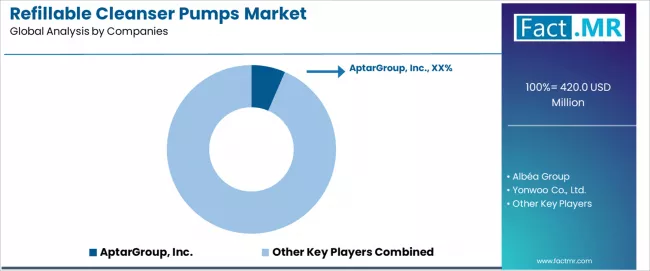
Refillable Cleanser Pumps Market Analysis By Company

Global dispensing specialists competing on innovation, sustainability, and partnership models dominate the competitive landscape. Leaders differentiate through proprietary sealing technologies, advanced recycling expertise for PCR integration, and dedicated design studios that co-create with brands.

Competition centers not just on selling a component, but on providing a full refill system solution including the durable pump, refill container, and sometimes the filling technology. Success requires deep material science knowledge to ensure compatibility with a wide range of formulations, from abrasive cleaners to sensitive serums. Building strategic alliances with major beauty and FMCG corporations to develop next-generation circular packaging platforms is a key strategic focus.

Key Players in the Refillable Cleanser Pumps Market

  • AptarGroup, Inc.
  • Albéa Group
  • Yonwoo Co., Ltd.
  • HCP Packaging
  • Natura &Co.
  • Takemoto

Scope of the Report

Items Values
Quantitative Units (2026) USD 420.0 Million
End-Use Skincare, Haircare, Personal Wash, Household Cleaners, Others
Packaging Format Refillable Pump Bottles, Airless Pumps, Lotion Pumps, Reusable Trigger Pumps, Others
Material PP + PCR Resin, PET + rPET, HDPE, Recycled PE, Others
Technology Reusable Pump Mechanism, Airless Dispensing, Precision Injection Molding, Trigger Mechanism, Others
Regions Covered North America, Europe, Asia Pacific, Latin America, MEA
Key Companies Profiled AptarGroup, Inc., Albéa Group, Yonwoo Co., Ltd., HCP Packaging, Natura &Co

Refillable Cleanser Pumps Market by Segments

  • End-use :

    • Skincare
    • Haircare
    • Personal Wash
    • Household Cleaners
    • Others
  • Packaging Format :

    • Refillable Pump Bottles
    • Airless Pumps
    • Lotion Pumps
    • Reusable Trigger Pumps
    • Others
  • Material :

    • PP + PCR Resin
    • PET + rPET
    • HDPE
    • Recycled PE
    • Others
  • Technology :

    • Reusable Pump Mechanism
    • Airless Dispensing
    • Precision Injection Molding
    • Trigger Mechanism
    • Others
  • Region :

    • North America
      • USA
      • Canada
      • Mexico
    • Europe
      • Germany
      • UK
      • France
      • Italy
      • Spain
      • Rest of Europe
    • Asia Pacific
      • China
      • India
      • Japan
      • South Korea
      • Australia
      • Rest of Asia Pacific
    • Latin America
      • Brazil
      • Argentina
      • Rest of Latin America
    • MEA
      • Saudi Arabia
      • UAE
      • South Africa
      • Rest of MEA

Table of Content

  1. Executive Summary
    • Global Market Outlook
    • Demand to side Trends
    • Supply to side Trends
    • Technology Roadmap Analysis
    • Analysis and Recommendations
  2. Market Overview
    • Market Coverage / Taxonomy
    • Market Definition / Scope / Limitations
  3. Market Background
    • Market Dynamics
      • Drivers
      • Restraints
      • Opportunity
      • Trends
    • Scenario Forecast
      • Demand in Optimistic Scenario
      • Demand in Likely Scenario
      • Demand in Conservative Scenario
    • Opportunity Map Analysis
    • Product Life Cycle Analysis
    • Supply Chain Analysis
    • Investment Feasibility Matrix
    • Value Chain Analysis
    • PESTLE and Porter’s Analysis
    • Regulatory Landscape
    • Regional Parent Market Outlook
    • Production and Consumption Statistics
    • Import and Export Statistics
  4. Global Market Analysis 2021 to 2025 and Forecast, 2026 to 2036
    • Historical Market Size Value (USD Million) Analysis, 2021 to 2025
    • Current and Future Market Size Value (USD Million) Projections, 2026 to 2036
      • Y to o to Y Growth Trend Analysis
      • Absolute $ Opportunity Analysis
  5. Global Market Pricing Analysis 2021 to 2025 and Forecast 2026 to 2036
  6. Global Market Analysis 2021 to 2025 and Forecast 2026 to 2036, By End-use
    • Introduction / Key Findings
    • Historical Market Size Value (USD Million) Analysis By End-use, 2021 to 2025
    • Current and Future Market Size Value (USD Million) Analysis and Forecast By End-use, 2026 to 2036
      • Skincare
      • Haircare
      • Personal Wash
      • Household Cleaners
      • Others
    • Y to o to Y Growth Trend Analysis By End-use, 2021 to 2025
    • Absolute $ Opportunity Analysis By End-use, 2026 to 2036
  7. Global Market Analysis 2021 to 2025 and Forecast 2026 to 2036, By Packaging Format
    • Introduction / Key Findings
    • Historical Market Size Value (USD Million) Analysis By Packaging Format, 2021 to 2025
    • Current and Future Market Size Value (USD Million) Analysis and Forecast By Packaging Format, 2026 to 2036
      • Refillable Pump Bottles
      • Airless Pumps
      • Lotion Pumps
      • Reusable Trigger Pumps
      • Others
    • Y to o to Y Growth Trend Analysis By Packaging Format, 2021 to 2025
    • Absolute $ Opportunity Analysis By Packaging Format, 2026 to 2036
  8. Global Market Analysis 2021 to 2025 and Forecast 2026 to 2036, By Material
    • Introduction / Key Findings
    • Historical Market Size Value (USD Million) Analysis By Material, 2021 to 2025
    • Current and Future Market Size Value (USD Million) Analysis and Forecast By Material, 2026 to 2036
      • PP + PCR Resin
      • PET + rPET
      • HDPE
      • Recycled PE
      • Others
    • Y to o to Y Growth Trend Analysis By Material, 2021 to 2025
    • Absolute $ Opportunity Analysis By Material, 2026 to 2036
  9. Global Market Analysis 2021 to 2025 and Forecast 2026 to 2036, By Technology
    • Introduction / Key Findings
    • Historical Market Size Value (USD Million) Analysis By Technology, 2021 to 2025
    • Current and Future Market Size Value (USD Million) Analysis and Forecast By Technology, 2026 to 2036
      • Reusable Pump Mechanism
      • Airless Dispensing
      • Precision Injection Molding
      • Trigger Mechanism
      • Others
    • Y to o to Y Growth Trend Analysis By Technology, 2021 to 2025
    • Absolute $ Opportunity Analysis By Technology, 2026 to 2036
  10. Global Market Analysis 2021 to 2025 and Forecast 2026 to 2036, By Region
    • Introduction
    • Historical Market Size Value (USD Million) Analysis By Region, 2021 to 2025
    • Current Market Size Value (USD Million) Analysis and Forecast By Region, 2026 to 2036
      • North America
      • Latin America
      • Western Europe
      • Eastern Europe
      • East Asia
      • South Asia and Pacific
      • Middle East & Africa
    • Market Attractiveness Analysis By Region
  11. North America Market Analysis 2021 to 2025 and Forecast 2026 to 2036, By Country
    • Historical Market Size Value (USD Million) Trend Analysis By Market Taxonomy, 2021 to 2025
    • Market Size Value (USD Million) Forecast By Market Taxonomy, 2026 to 2036
      • By Country
        • USA
        • Canada
        • Mexico
      • By End-use
      • By Packaging Format
      • By Material
      • By Technology
    • Market Attractiveness Analysis
      • By Country
      • By End-use
      • By Packaging Format
      • By Material
      • By Technology
    • Key Takeaways
  12. Latin America Market Analysis 2021 to 2025 and Forecast 2026 to 2036, By Country
    • Historical Market Size Value (USD Million) Trend Analysis By Market Taxonomy, 2021 to 2025
    • Market Size Value (USD Million) Forecast By Market Taxonomy, 2026 to 2036
      • By Country
        • Brazil
        • Chile
        • Rest of Latin America
      • By End-use
      • By Packaging Format
      • By Material
      • By Technology
    • Market Attractiveness Analysis
      • By Country
      • By End-use
      • By Packaging Format
      • By Material
      • By Technology
    • Key Takeaways
  13. Western Europe Market Analysis 2021 to 2025 and Forecast 2026 to 2036, By Country
    • Historical Market Size Value (USD Million) Trend Analysis By Market Taxonomy, 2021 to 2025
    • Market Size Value (USD Million) Forecast By Market Taxonomy, 2026 to 2036
      • By Country
        • Germany
        • UK
        • Italy
        • Spain
        • France
        • Nordic
        • BENELUX
        • Rest of Western Europe
      • By End-use
      • By Packaging Format
      • By Material
      • By Technology
    • Market Attractiveness Analysis
      • By Country
      • By End-use
      • By Packaging Format
      • By Material
      • By Technology
    • Key Takeaways
  14. Eastern Europe Market Analysis 2021 to 2025 and Forecast 2026 to 2036, By Country
    • Historical Market Size Value (USD Million) Trend Analysis By Market Taxonomy, 2021 to 2025
    • Market Size Value (USD Million) Forecast By Market Taxonomy, 2026 to 2036
      • By Country
        • Russia
        • Poland
        • Hungary
        • Balkan & Baltic
        • Rest of Eastern Europe
      • By End-use
      • By Packaging Format
      • By Material
      • By Technology
    • Market Attractiveness Analysis
      • By Country
      • By End-use
      • By Packaging Format
      • By Material
      • By Technology
    • Key Takeaways
  15. East Asia Market Analysis 2021 to 2025 and Forecast 2026 to 2036, By Country
    • Historical Market Size Value (USD Million) Trend Analysis By Market Taxonomy, 2021 to 2025
    • Market Size Value (USD Million) Forecast By Market Taxonomy, 2026 to 2036
      • By Country
        • China
        • Japan
        • South Korea
      • By End-use
      • By Packaging Format
      • By Material
      • By Technology
    • Market Attractiveness Analysis
      • By Country
      • By End-use
      • By Packaging Format
      • By Material
      • By Technology
    • Key Takeaways
  16. South Asia and Pacific Market Analysis 2021 to 2025 and Forecast 2026 to 2036, By Country
    • Historical Market Size Value (USD Million) Trend Analysis By Market Taxonomy, 2021 to 2025
    • Market Size Value (USD Million) Forecast By Market Taxonomy, 2026 to 2036
      • By Country
        • India
        • ASEAN
        • Australia & New Zealand
        • Rest of South Asia and Pacific
      • By End-use
      • By Packaging Format
      • By Material
      • By Technology
    • Market Attractiveness Analysis
      • By Country
      • By End-use
      • By Packaging Format
      • By Material
      • By Technology
    • Key Takeaways
  17. Middle East & Africa Market Analysis 2021 to 2025 and Forecast 2026 to 2036, By Country
    • Historical Market Size Value (USD Million) Trend Analysis By Market Taxonomy, 2021 to 2025
    • Market Size Value (USD Million) Forecast By Market Taxonomy, 2026 to 2036
      • By Country
        • Kingdom of Saudi Arabia
        • Other GCC Countries
        • Turkiye
        • South Africa
        • Other African Union
        • Rest of Middle East & Africa
      • By End-use
      • By Packaging Format
      • By Material
      • By Technology
    • Market Attractiveness Analysis
      • By Country
      • By End-use
      • By Packaging Format
      • By Material
      • By Technology
    • Key Takeaways
  18. Key Countries Market Analysis
    • USA
      • Pricing Analysis
      • Market Share Analysis, 2025
        • By End-use
        • By Packaging Format
        • By Material
        • By Technology
    • Canada
      • Pricing Analysis
      • Market Share Analysis, 2025
        • By End-use
        • By Packaging Format
        • By Material
        • By Technology
    • Mexico
      • Pricing Analysis
      • Market Share Analysis, 2025
        • By End-use
        • By Packaging Format
        • By Material
        • By Technology
    • Brazil
      • Pricing Analysis
      • Market Share Analysis, 2025
        • By End-use
        • By Packaging Format
        • By Material
        • By Technology
    • Chile
      • Pricing Analysis
      • Market Share Analysis, 2025
        • By End-use
        • By Packaging Format
        • By Material
        • By Technology
    • Germany
      • Pricing Analysis
      • Market Share Analysis, 2025
        • By End-use
        • By Packaging Format
        • By Material
        • By Technology
    • UK
      • Pricing Analysis
      • Market Share Analysis, 2025
        • By End-use
        • By Packaging Format
        • By Material
        • By Technology
    • Italy
      • Pricing Analysis
      • Market Share Analysis, 2025
        • By End-use
        • By Packaging Format
        • By Material
        • By Technology
    • Spain
      • Pricing Analysis
      • Market Share Analysis, 2025
        • By End-use
        • By Packaging Format
        • By Material
        • By Technology
    • France
      • Pricing Analysis
      • Market Share Analysis, 2025
        • By End-use
        • By Packaging Format
        • By Material
        • By Technology
    • India
      • Pricing Analysis
      • Market Share Analysis, 2025
        • By End-use
        • By Packaging Format
        • By Material
        • By Technology
    • ASEAN
      • Pricing Analysis
      • Market Share Analysis, 2025
        • By End-use
        • By Packaging Format
        • By Material
        • By Technology
    • Australia & New Zealand
      • Pricing Analysis
      • Market Share Analysis, 2025
        • By End-use
        • By Packaging Format
        • By Material
        • By Technology
    • China
      • Pricing Analysis
      • Market Share Analysis, 2025
        • By End-use
        • By Packaging Format
        • By Material
        • By Technology
    • Japan
      • Pricing Analysis
      • Market Share Analysis, 2025
        • By End-use
        • By Packaging Format
        • By Material
        • By Technology
    • South Korea
      • Pricing Analysis
      • Market Share Analysis, 2025
        • By End-use
        • By Packaging Format
        • By Material
        • By Technology
    • Russia
      • Pricing Analysis
      • Market Share Analysis, 2025
        • By End-use
        • By Packaging Format
        • By Material
        • By Technology
    • Poland
      • Pricing Analysis
      • Market Share Analysis, 2025
        • By End-use
        • By Packaging Format
        • By Material
        • By Technology
    • Hungary
      • Pricing Analysis
      • Market Share Analysis, 2025
        • By End-use
        • By Packaging Format
        • By Material
        • By Technology
    • Kingdom of Saudi Arabia
      • Pricing Analysis
      • Market Share Analysis, 2025
        • By End-use
        • By Packaging Format
        • By Material
        • By Technology
    • Turkiye
      • Pricing Analysis
      • Market Share Analysis, 2025
        • By End-use
        • By Packaging Format
        • By Material
        • By Technology
    • South Africa
      • Pricing Analysis
      • Market Share Analysis, 2025
        • By End-use
        • By Packaging Format
        • By Material
        • By Technology
  19. Market Structure Analysis
    • Competition Dashboard
    • Competition Benchmarking
    • Market Share Analysis of Top Players
      • By Regional
      • By End-use
      • By Packaging Format
      • By Material
      • By Technology
  20. Competition Analysis
    • Competition Deep Dive
      • AptarGroup, Inc.
        • Overview
        • Product Portfolio
        • Profitability by Market Segments (Product/Age /Sales Channel/Region)
        • Sales Footprint
        • Strategy Overview
          • Marketing Strategy
          • Product Strategy
          • Channel Strategy
      • Albéa Group
      • Yonwoo Co., Ltd.
      • HCP Packaging
      • Natura &Co.
      • Takemoto
  21. Assumptions & Acronyms Used
  22. Research Methodology

List Of Table

  • Table 1: Global Market Value (USD Million) Forecast by Region, 2021 to 2036
  • Table 2: Global Market Value (USD Million) Forecast by End-use, 2021 to 2036
  • Table 3: Global Market Value (USD Million) Forecast by Packaging Format, 2021 to 2036
  • Table 4: Global Market Value (USD Million) Forecast by Material, 2021 to 2036
  • Table 5: Global Market Value (USD Million) Forecast by Technology, 2021 to 2036
  • Table 6: North America Market Value (USD Million) Forecast by Country, 2021 to 2036
  • Table 7: North America Market Value (USD Million) Forecast by End-use, 2021 to 2036
  • Table 8: North America Market Value (USD Million) Forecast by Packaging Format, 2021 to 2036
  • Table 9: North America Market Value (USD Million) Forecast by Material, 2021 to 2036
  • Table 10: North America Market Value (USD Million) Forecast by Technology, 2021 to 2036
  • Table 11: Latin America Market Value (USD Million) Forecast by Country, 2021 to 2036
  • Table 12: Latin America Market Value (USD Million) Forecast by End-use, 2021 to 2036
  • Table 13: Latin America Market Value (USD Million) Forecast by Packaging Format, 2021 to 2036
  • Table 14: Latin America Market Value (USD Million) Forecast by Material, 2021 to 2036
  • Table 15: Latin America Market Value (USD Million) Forecast by Technology, 2021 to 2036
  • Table 16: Western Europe Market Value (USD Million) Forecast by Country, 2021 to 2036
  • Table 17: Western Europe Market Value (USD Million) Forecast by End-use, 2021 to 2036
  • Table 18: Western Europe Market Value (USD Million) Forecast by Packaging Format, 2021 to 2036
  • Table 19: Western Europe Market Value (USD Million) Forecast by Material, 2021 to 2036
  • Table 20: Western Europe Market Value (USD Million) Forecast by Technology, 2021 to 2036
  • Table 21: Eastern Europe Market Value (USD Million) Forecast by Country, 2021 to 2036
  • Table 22: Eastern Europe Market Value (USD Million) Forecast by End-use, 2021 to 2036
  • Table 23: Eastern Europe Market Value (USD Million) Forecast by Packaging Format, 2021 to 2036
  • Table 24: Eastern Europe Market Value (USD Million) Forecast by Material, 2021 to 2036
  • Table 25: Eastern Europe Market Value (USD Million) Forecast by Technology, 2021 to 2036
  • Table 26: East Asia Market Value (USD Million) Forecast by Country, 2021 to 2036
  • Table 27: East Asia Market Value (USD Million) Forecast by End-use, 2021 to 2036
  • Table 28: East Asia Market Value (USD Million) Forecast by Packaging Format, 2021 to 2036
  • Table 29: East Asia Market Value (USD Million) Forecast by Material, 2021 to 2036
  • Table 30: East Asia Market Value (USD Million) Forecast by Technology, 2021 to 2036
  • Table 31: South Asia and Pacific Market Value (USD Million) Forecast by Country, 2021 to 2036
  • Table 32: South Asia and Pacific Market Value (USD Million) Forecast by End-use, 2021 to 2036
  • Table 33: South Asia and Pacific Market Value (USD Million) Forecast by Packaging Format, 2021 to 2036
  • Table 34: South Asia and Pacific Market Value (USD Million) Forecast by Material, 2021 to 2036
  • Table 35: South Asia and Pacific Market Value (USD Million) Forecast by Technology, 2021 to 2036
  • Table 36: Middle East & Africa Market Value (USD Million) Forecast by Country, 2021 to 2036
  • Table 37: Middle East & Africa Market Value (USD Million) Forecast by End-use, 2021 to 2036
  • Table 38: Middle East & Africa Market Value (USD Million) Forecast by Packaging Format, 2021 to 2036
  • Table 39: Middle East & Africa Market Value (USD Million) Forecast by Material, 2021 to 2036
  • Table 40: Middle East & Africa Market Value (USD Million) Forecast by Technology, 2021 to 2036

List Of Figures

  • Figure 1: Global Market Pricing Analysis
  • Figure 2: Global Market Value (USD Million) Forecast 2021 to 2036
  • Figure 3: Global Market Value Share and BPS Analysis by End-use, 2026 and 2036
  • Figure 4: Global Market Y to o to Y Growth Comparison by End-use, 2026 to 2036
  • Figure 5: Global Market Attractiveness Analysis by End-use
  • Figure 6: Global Market Value Share and BPS Analysis by Packaging Format, 2026 and 2036
  • Figure 7: Global Market Y to o to Y Growth Comparison by Packaging Format, 2026 to 2036
  • Figure 8: Global Market Attractiveness Analysis by Packaging Format
  • Figure 9: Global Market Value Share and BPS Analysis by Material, 2026 and 2036
  • Figure 10: Global Market Y to o to Y Growth Comparison by Material, 2026 to 2036
  • Figure 11: Global Market Attractiveness Analysis by Material
  • Figure 12: Global Market Value Share and BPS Analysis by Technology, 2026 and 2036
  • Figure 13: Global Market Y to o to Y Growth Comparison by Technology, 2026 to 2036
  • Figure 14: Global Market Attractiveness Analysis by Technology
  • Figure 15: Global Market Value (USD Million) Share and BPS Analysis by Region, 2026 and 2036
  • Figure 16: Global Market Y to o to Y Growth Comparison by Region, 2026 to 2036
  • Figure 17: Global Market Attractiveness Analysis by Region
  • Figure 18: North America Market Incremental Dollar Opportunity, 2026 to 2036
  • Figure 19: Latin America Market Incremental Dollar Opportunity, 2026 to 2036
  • Figure 20: Western Europe Market Incremental Dollar Opportunity, 2026 to 2036
  • Figure 21: Eastern Europe Market Incremental Dollar Opportunity, 2026 to 2036
  • Figure 22: East Asia Market Incremental Dollar Opportunity, 2026 to 2036
  • Figure 23: South Asia and Pacific Market Incremental Dollar Opportunity, 2026 to 2036
  • Figure 24: Middle East & Africa Market Incremental Dollar Opportunity, 2026 to 2036
  • Figure 25: North America Market Value Share and BPS Analysis by Country, 2026 and 2036
  • Figure 26: North America Market Value Share and BPS Analysis by End-use, 2026 and 2036
  • Figure 27: North America Market Y to o to Y Growth Comparison by End-use, 2026 to 2036
  • Figure 28: North America Market Attractiveness Analysis by End-use
  • Figure 29: North America Market Value Share and BPS Analysis by Packaging Format, 2026 and 2036
  • Figure 30: North America Market Y to o to Y Growth Comparison by Packaging Format, 2026 to 2036
  • Figure 31: North America Market Attractiveness Analysis by Packaging Format
  • Figure 32: North America Market Value Share and BPS Analysis by Material, 2026 and 2036
  • Figure 33: North America Market Y to o to Y Growth Comparison by Material, 2026 to 2036
  • Figure 34: North America Market Attractiveness Analysis by Material
  • Figure 35: North America Market Value Share and BPS Analysis by Technology, 2026 and 2036
  • Figure 36: North America Market Y to o to Y Growth Comparison by Technology, 2026 to 2036
  • Figure 37: North America Market Attractiveness Analysis by Technology
  • Figure 38: Latin America Market Value Share and BPS Analysis by Country, 2026 and 2036
  • Figure 39: Latin America Market Value Share and BPS Analysis by End-use, 2026 and 2036
  • Figure 40: Latin America Market Y to o to Y Growth Comparison by End-use, 2026 to 2036
  • Figure 41: Latin America Market Attractiveness Analysis by End-use
  • Figure 42: Latin America Market Value Share and BPS Analysis by Packaging Format, 2026 and 2036
  • Figure 43: Latin America Market Y to o to Y Growth Comparison by Packaging Format, 2026 to 2036
  • Figure 44: Latin America Market Attractiveness Analysis by Packaging Format
  • Figure 45: Latin America Market Value Share and BPS Analysis by Material, 2026 and 2036
  • Figure 46: Latin America Market Y to o to Y Growth Comparison by Material, 2026 to 2036
  • Figure 47: Latin America Market Attractiveness Analysis by Material
  • Figure 48: Latin America Market Value Share and BPS Analysis by Technology, 2026 and 2036
  • Figure 49: Latin America Market Y to o to Y Growth Comparison by Technology, 2026 to 2036
  • Figure 50: Latin America Market Attractiveness Analysis by Technology
  • Figure 51: Western Europe Market Value Share and BPS Analysis by Country, 2026 and 2036
  • Figure 52: Western Europe Market Value Share and BPS Analysis by End-use, 2026 and 2036
  • Figure 53: Western Europe Market Y to o to Y Growth Comparison by End-use, 2026 to 2036
  • Figure 54: Western Europe Market Attractiveness Analysis by End-use
  • Figure 55: Western Europe Market Value Share and BPS Analysis by Packaging Format, 2026 and 2036
  • Figure 56: Western Europe Market Y to o to Y Growth Comparison by Packaging Format, 2026 to 2036
  • Figure 57: Western Europe Market Attractiveness Analysis by Packaging Format
  • Figure 58: Western Europe Market Value Share and BPS Analysis by Material, 2026 and 2036
  • Figure 59: Western Europe Market Y to o to Y Growth Comparison by Material, 2026 to 2036
  • Figure 60: Western Europe Market Attractiveness Analysis by Material
  • Figure 61: Western Europe Market Value Share and BPS Analysis by Technology, 2026 and 2036
  • Figure 62: Western Europe Market Y to o to Y Growth Comparison by Technology, 2026 to 2036
  • Figure 63: Western Europe Market Attractiveness Analysis by Technology
  • Figure 64: Eastern Europe Market Value Share and BPS Analysis by Country, 2026 and 2036
  • Figure 65: Eastern Europe Market Value Share and BPS Analysis by End-use, 2026 and 2036
  • Figure 66: Eastern Europe Market Y to o to Y Growth Comparison by End-use, 2026 to 2036
  • Figure 67: Eastern Europe Market Attractiveness Analysis by End-use
  • Figure 68: Eastern Europe Market Value Share and BPS Analysis by Packaging Format, 2026 and 2036
  • Figure 69: Eastern Europe Market Y to o to Y Growth Comparison by Packaging Format, 2026 to 2036
  • Figure 70: Eastern Europe Market Attractiveness Analysis by Packaging Format
  • Figure 71: Eastern Europe Market Value Share and BPS Analysis by Material, 2026 and 2036
  • Figure 72: Eastern Europe Market Y to o to Y Growth Comparison by Material, 2026 to 2036
  • Figure 73: Eastern Europe Market Attractiveness Analysis by Material
  • Figure 74: Eastern Europe Market Value Share and BPS Analysis by Technology, 2026 and 2036
  • Figure 75: Eastern Europe Market Y to o to Y Growth Comparison by Technology, 2026 to 2036
  • Figure 76: Eastern Europe Market Attractiveness Analysis by Technology
  • Figure 77: East Asia Market Value Share and BPS Analysis by Country, 2026 and 2036
  • Figure 78: East Asia Market Value Share and BPS Analysis by End-use, 2026 and 2036
  • Figure 79: East Asia Market Y to o to Y Growth Comparison by End-use, 2026 to 2036
  • Figure 80: East Asia Market Attractiveness Analysis by End-use
  • Figure 81: East Asia Market Value Share and BPS Analysis by Packaging Format, 2026 and 2036
  • Figure 82: East Asia Market Y to o to Y Growth Comparison by Packaging Format, 2026 to 2036
  • Figure 83: East Asia Market Attractiveness Analysis by Packaging Format
  • Figure 84: East Asia Market Value Share and BPS Analysis by Material, 2026 and 2036
  • Figure 85: East Asia Market Y to o to Y Growth Comparison by Material, 2026 to 2036
  • Figure 86: East Asia Market Attractiveness Analysis by Material
  • Figure 87: East Asia Market Value Share and BPS Analysis by Technology, 2026 and 2036
  • Figure 88: East Asia Market Y to o to Y Growth Comparison by Technology, 2026 to 2036
  • Figure 89: East Asia Market Attractiveness Analysis by Technology
  • Figure 90: South Asia and Pacific Market Value Share and BPS Analysis by Country, 2026 and 2036
  • Figure 91: South Asia and Pacific Market Value Share and BPS Analysis by End-use, 2026 and 2036
  • Figure 92: South Asia and Pacific Market Y to o to Y Growth Comparison by End-use, 2026 to 2036
  • Figure 93: South Asia and Pacific Market Attractiveness Analysis by End-use
  • Figure 94: South Asia and Pacific Market Value Share and BPS Analysis by Packaging Format, 2026 and 2036
  • Figure 95: South Asia and Pacific Market Y to o to Y Growth Comparison by Packaging Format, 2026 to 2036
  • Figure 96: South Asia and Pacific Market Attractiveness Analysis by Packaging Format
  • Figure 97: South Asia and Pacific Market Value Share and BPS Analysis by Material, 2026 and 2036
  • Figure 98: South Asia and Pacific Market Y to o to Y Growth Comparison by Material, 2026 to 2036
  • Figure 99: South Asia and Pacific Market Attractiveness Analysis by Material
  • Figure 100: South Asia and Pacific Market Value Share and BPS Analysis by Technology, 2026 and 2036
  • Figure 101: South Asia and Pacific Market Y to o to Y Growth Comparison by Technology, 2026 to 2036
  • Figure 102: South Asia and Pacific Market Attractiveness Analysis by Technology
  • Figure 103: Middle East & Africa Market Value Share and BPS Analysis by Country, 2026 and 2036
  • Figure 104: Middle East & Africa Market Value Share and BPS Analysis by End-use, 2026 and 2036
  • Figure 105: Middle East & Africa Market Y to o to Y Growth Comparison by End-use, 2026 to 2036
  • Figure 106: Middle East & Africa Market Attractiveness Analysis by End-use
  • Figure 107: Middle East & Africa Market Value Share and BPS Analysis by Packaging Format, 2026 and 2036
  • Figure 108: Middle East & Africa Market Y to o to Y Growth Comparison by Packaging Format, 2026 to 2036
  • Figure 109: Middle East & Africa Market Attractiveness Analysis by Packaging Format
  • Figure 110: Middle East & Africa Market Value Share and BPS Analysis by Material, 2026 and 2036
  • Figure 111: Middle East & Africa Market Y to o to Y Growth Comparison by Material, 2026 to 2036
  • Figure 112: Middle East & Africa Market Attractiveness Analysis by Material
  • Figure 113: Middle East & Africa Market Value Share and BPS Analysis by Technology, 2026 and 2036
  • Figure 114: Middle East & Africa Market Y to o to Y Growth Comparison by Technology, 2026 to 2036
  • Figure 115: Middle East & Africa Market Attractiveness Analysis by Technology
  • Figure 116: Global Market - Tier Structure Analysis
  • Figure 117: Global Market - Company Share Analysis

- FAQs -

How big is the refillable cleanser pumps market in 2026?

The global refillable cleanser pumps market is estimated to be valued at USD 420.0 million in 2026.

What will be the size of refillable cleanser pumps market in 2036?

The market size for the refillable cleanser pumps market is projected to reach USD 980.0 million by 2036.

How much will be the refillable cleanser pumps market growth between 2026 and 2036?

The refillable cleanser pumps market is expected to grow at a 8.8% CAGR between 2026 and 2036.

What are the key product types in the refillable cleanser pumps market?

The key product types in refillable cleanser pumps market are skincare, haircare, personal wash, household cleaners and others.

Which packaging format segment to contribute significant share in the refillable cleanser pumps market in 2026?

In terms of packaging format, refillable pump bottles segment to command 50.0% share in the refillable cleanser pumps market in 2026.

Refillable Cleanser Pumps Market