Reusable Retail Pod Loops Market
Reusable Retail Pod Loops Market Size and Share Forecast Outlook 2026 to 2036
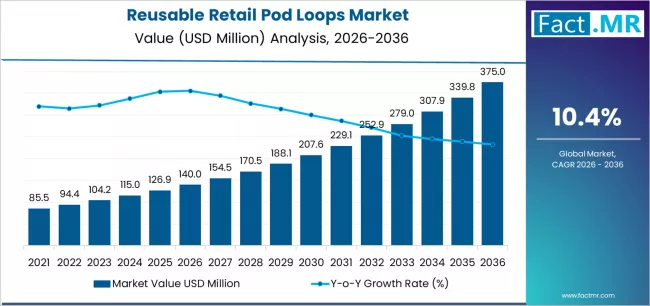
Reusable retail pod loops market is projected to grow from USD 140.0 million in 2026 to USD 375.0 million by 2036, at a CAGR of 10.4%. Personal Care Refill Systems will dominate with a 40.0% market share, while loopable pod carriers will lead the packaging format/type segment with a 45.0% share.
Reusable Retail Pod Loops Market Forecast and Outlook 2026 to 2036
The global reusable retail pod loops market is valued at USD 140.0 million in 2026. The market is forecast to reach USD 375.0 million by 2036, an increase of USD 235.0 million. This represents total growth of 167.9%, expanding at a compound annual growth rate (CAGR) of 10.4% between 2026 and 2036.
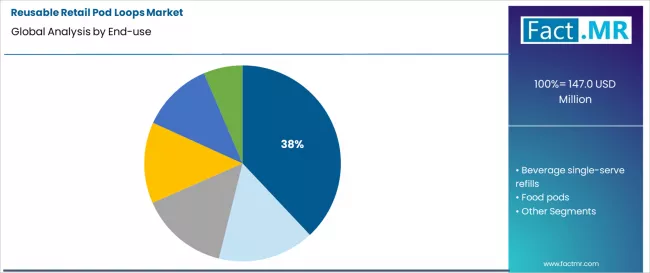
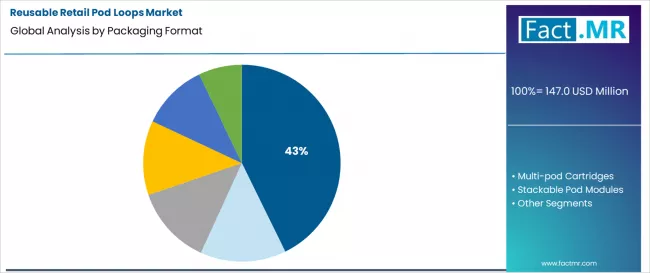
Segmentation data indicates a market optimizing for circular logistics. By end-use, personal care refill systems command a leading 40.0% share in 2026. Loopable pod carriers lead the packaging format segment with a 45.0% share. Recycled board combined with a plastic ring holds a 40.0% material share, while click-lock pod loop technology is key with a 45.0% share. This points to systems designed for multiple cycles of use and return.
Key Takeaways from the Reusable Retail Pod Loops Market Report
- Market Value (2026): USD 140.0 Million
- Market Forecast Value (2036): USD 375.0 Million
- Market Forecast CAGR: 10.4%
- Leading End-Use: Personal Care Refill Systems (40.0%)
- Key Growth Regions: Asia Pacific, North America, Europe
- Key Players: DS Smith plc, Amcor plc, Uflex Limited, Toppan Inc.

A defining macro trend is the adaptation of the reusable packaging model for fast-moving consumer goods sold through mainstream retail. Unlike subscription-based loops, these systems are built for the supermarket shelf, where consumers buy a loaded carrier, use the product, and return the empty carrier on their next visit for a discount. This model depends on ultra-durable, standardized pod loops that can withstand dozens of cleaning and refill cycles while maintaining brand appeal and functional integrity at point of sale.
The success of this retail loop model hinges on seamless backend logistics and consumer incentive structures. The technology focus extends beyond the durable carrier to include tracking systems that monitor loop location and cycle count, and integrated cleaning/refilling infrastructure for retailers. The consumer value proposition must be clear, combining environmental benefit with tangible economic reward, creating a habit-forming cycle that drives high return rates and justifies the initial investment in robust pod loop systems.
Key Takeaways from the Reusable Retail Pod Loops Market
| Metric | Value |
|---|---|
| Estimated Value in (2026E) | USD 140.0 million |
| Forecast Value in (2036F) | USD 375.0 million |
| Forecast CAGR (2026 to 2036) | 10.4% |
Category
| Category | Segment |
|---|---|
| End-use/Application | Personal Care Refill Systems, Beverage Single-serve Refills, Food Pods, E-commerce Refill Bundles, Household Refills, Others |
| Packaging Format/Type | Loopable Pod Carriers, Multi-pod Cartridges, Stackable Pod Modules, Compact Pod Loops, Retail-facing Pod Packs, Others |
| Material | Recycled Board + Plastic Ring, Recyclable PET + Board, Laminated Cardboard, Recycled Paperboard, Mixed Fibers, Others |
| Technology | Click-lock Pod Loop Tech, Magnetic/Snap-fit, Automated Dispensing, Easy-release Seals, Durable Hinges, Others |
| Region | North America, Europe, Asia Pacific, Latin America, MEA |
Segment Analysis
How are Personal Care Refill Systems Leading the Shift to In-Store Reuse Models?
The personal care refill systems segment holds a 40.0% market share in 2026. This leadership is based on the category's high repeat purchase frequency and consumer willingness to adopt new sustainable habits for daily-use items like shampoo, conditioner, and hand soap.
The retail pod loop model allows consumers to purchase a branded, pre-filled carrier and return the empty unit to a store collection point. Development focuses on creating loops that are hygienically cleanable, visually attractive enough for bathroom storage, and robust enough to survive potentially dozens of return and refill cycles without damage or significant aesthetic degradation.
What Makes Loopable Pod Carriers the Operational Core of the Reuse System?

Loopable pod carriers lead the packaging format segment with a 45.0% share. These carriers are the physical asset that circulates within the reuse system. Their design must balance several demands: retail shelf appeal, secure pod containment, ease of handling and cleaning for operators, and compatibility with automated refilling stations.
The development challenge is maximizing the number of use cycles while minimizing material weight and cost per cycle. The carrier’s design, including its locking mechanism and structural integrity, directly determines the economic and environmental viability of the entire loop system.
Why is the Hybrid Recycled Board + Plastic Ring a Pragmatic Material Choice?

Recycled board combined with a plastic ring accounts for a 40.0% material share. This hybrid approach leverages the stiffness, printability, and sustainability of paperboard for the main body, while utilizing a durable, often injection-molded plastic component for the critical locking hinge or sealing mechanism.
This ring can withstand repeated mechanical stress far better than folded paperboard alone. Development focuses on designing this hybrid for easy disassembly at end-of-life, allowing both materials to enter their respective recycling streams cleanly, and on maximizing the recycled content in both components.
Is Click-Lock Technology the Key to Ensuring Pod Security and System Trust?
Click-lock pod loop technology commands a 45.0% share. This mechanism is essential for providing a secure, audible, and tactile confirmation that a refill pod is correctly seated and sealed within the carrier.
It prevents leaks during transport and gives consumers confidence in the system's reliability. Beyond basic function, advanced click-lock designs can incorporate unique identifiers that help automated systems verify the pod type and track the carrier's cycle count. This technology underpins both the functional performance and the operational intelligence of the reusable loop.
What are the Drivers, Restraints, and Key Trends of the Reusable Retail Pod Loops Market?
Market growth is propelled by retailer-led sustainability initiatives, legislation targeting single-use plastics, and consumer demand for practical circular solutions. The potential for brand differentiation and increased customer engagement through deposit-return schemes is a powerful driver.
High initial system implementation costs, the complexity of establishing cross-brand or cross-retailer standardized loop systems, and consumer hesitation about hygiene for certain product categories serve as key restraints.
Development concentrates on creating universal carrier designs that can be used by multiple brands within a category. Another focus is integrating IoT sensors into carriers to track location, fill level, and temperature, optimizing reverse logistics and inventory management.
Analysis of the Reusable Retail Pod Loops Market by Key Countries
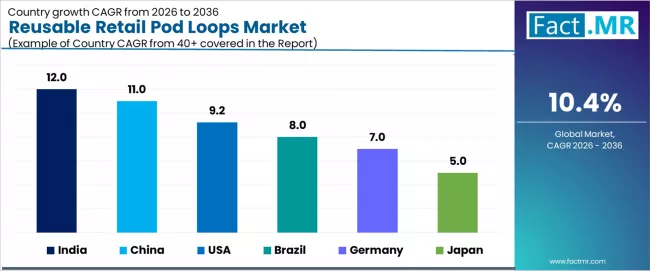
| Country | CAGR (2026 to 2036) |
|---|---|
| USA | 9.2% |
| Germany | 7.0% |
| China | 11.0% |
| India | 12.0% |
| Brazil | 8.0% |
| Japan | 5.0% |
How are USA’s Market Dynamics Shaped by Retailer Coalitions and Deposit Schemes?

The USA’s market grows at a 9.2% CAGR, driven by consortia of major grocery and big-box retailers launching pilot reuse programs. Success depends on creating a system that works across multiple store brands. Development focuses on standardized pod loop designs for high-volume categories and integrating the return process into existing retail technology, like using self-checkout stations to scan and credit returned loops. The adoption of digital deposit tokens, rather than physical cash, simplifies the consumer incentive model.
- Partnerships between major CPG brands and retailers are essential to align on loop design and share the costs of the cleaning and refill infrastructure.
- Innovation targets ultra-lightweight yet durable carrier materials to minimize shipping costs for both forward and reverse logistics.
How does Germany’s Market Prioritize System-Wide Standardization and Hygiene Certification?
Germany’s market advances at a 7.0% CAGR, where adoption requires system-wide standards for compatibility and rigorous hygiene validation for cleaning processes. Growth is supported by the country’s well-established Pfand (deposit) system culture.
The market favors loops designed for industrial washing at centralized facilities, with materials that withstand high temperatures and detergents. Clear certification for food-grade or cosmetic-grade cleaning is a prerequisite for consumer trust, especially for food and personal care applications.
- There is strong push for industry-wide standards on carrier dimensions and connector types to create a truly circular ecosystem, not just branded silos.
- Development includes embedded RFID tags in carriers to automate sorting, washing validation, and cycle counting at central facilities.
Is China’s Growth Fueled by New Retail Integration and Digital Payments?
China’s market is projected to grow at an 11.0% CAGR, leveraging its advanced "New Retail" environment where e-commerce and physical stores are fully integrated. Pod loops can be ordered online, picked up or returned at convenience stores or lockers, with digital deposits instantly credited to super-app wallets like Alipay or WeChat Pay. Development emphasizes smart, compact loop designs that fit into automated locker systems and utilize QR codes for seamless transaction processing.
- E-commerce giants are piloting loop systems for their private-label products, controlling the entire ecosystem from manufacturing to return logistics.
- The high density of urban centers makes the economics of collection and redistribution more viable than in more dispersed markets.
How can India’s Market Adapt the Loop Model for Affordability and Local Logistics?
India demonstrates the highest growth potential at a 12.0% CAGR. The key is adapting the model to a value-conscious market and fragmented retail landscape. Development focuses on ultra-low-cost, durable loops made from locally sourced materials and simple return mechanisms that work at small kirana stores. The deposit value must be meaningful but not prohibitive. Growth may start in food pods for staples like spices or detergent, where savings from refills are immediately apparent.
- Collaboration with local dairy or newspaper delivery networks, which have established daily reverse logistics, is being explored for pod loop collection.
- Simplicity and manual handling are prioritized over high automation to keep system costs accessible.
How is Brazil’s Market Focused on Community Retail and Beverage Applications?
Brazil’s market is set to grow at an 8.0% CAGR, with early applications in beverage single-serve refills such as guarana, juice concentrates and household cleaners. The community-focused nature of many neighborhoods supports return schemes at local markets.
Development prioritizes vibrant, tamper-evident designs and materials suitable for a humid climate. Partnerships with local bottlers or distributors who already have returnable crate systems provide a potential pathway to scale.
- Social and community-based marketing is effective, emphasizing local environmental benefits and collective participation.
- There is interest in loops for premium food products, like coffee or acai, where the packaging enhances the product's artisanal story.
How do Space-Saving Design and Impeccable Cleanliness Requirements Stimulate Demand in Japan?
Japan’s market grows at a 5.0% CAGR, where any reusable system must excel in compact design for small homes and meet exceptionally high standards of cleanliness and presentation.
Loops must be aesthetically minimalist, stackable, and easy to disassemble for thorough cleaning. The market values precision engineering that ensures a perfect seal and effortless operation. Development focuses on hygienic materials that resist staining and odor absorption over many cycles.
- Integration with the high-convenience culture could see pod loops offered as part of premium grocery delivery services, with pick-up of empties on the next delivery.
- Applications for single-serve premium teas, coffee, or soup bases are likely early adopters where quality and freshness are paramount.
Competitive Landscape of the Reusable Retail Pod Loops Market

The competitive landscape features packaging leaders competing to establish their designs as industry standards. DS Smith leverages its circular economy leadership and expertise in durable paperboard engineering to develop robust loopable pod carriers. Amcor focuses on high-value segments like beverages, applying its barrier material science to create refill pods that maintain product integrity within a reusable shell. UFlex brings innovation in laminated structures and automated systems critical for food pod applications.
In regional markets like Brazil, collaboration with local manufacturing partners is key for cost-effective production. Toppan contributes advanced smart packaging and miniaturization expertise for the precise Japanese market. Competition centers on forming ecosystems, forging alliances with retailers, filling companies, and logistics providers to deliver not just a packaging component, but a viable, turnkey reuse system.
Key Players in the Reusable Retail Pod Loops Market
- DS Smith plc
- Amcor plc
- Uflex Limited
- Toppan Inc.
Scope of the Report
| Items | Values |
|---|---|
| Quantitative Units (2026) | USD 140.0 Million |
| End-use/Application | Personal Care Refill Systems, Beverage Single-serve Refills, Food Pods, E-commerce Refill Bundles, Household Refills, Others |
| Packaging Format/Type | Loopable Pod Carriers, Multi-pod Cartridges, Stackable Pod Modules, Compact Pod Loops, Retail-facing Pod Packs, Others |
| Material | Recycled Board + Plastic Ring, Recyclable PET + Board, Laminated Cardboard, Recycled Paperboard, Mixed Fibers, Others |
| Technology | Click-lock Pod Loop Tech, Magnetic / Snap-fit, Automated Dispensing, Easy-release Seals, Durable Hinges, Others |
| Regions Covered | North America, Europe, Asia Pacific, Latin America, MEA |
| Key Companies Profiled | DS Smith plc, Amcor plc, Uflex Limited, Toppan Inc. |
Reusable Retail Pod Loops Market by Segments
-
End-use/Application :
- Personal Care Refill Systems
- Beverage Single-serve Refills
- Food Pods
- E-commerce Refill Bundles
- Household Refills
- Others
-
Packaging Format/Type :
- Loopable Pod Carriers
- Multi-pod Cartridges
- Stackable Pod Modules
- Compact Pod Loops
- Retail-facing Pod Packs
- Others
-
Material :
- Recycled Board + Plastic Ring
- Recyclable PET + Board
- Laminated Cardboard
- Recycled Paperboard
- Mixed Fibers
- Others
-
Technology :
- Click-lock Pod Loop Tech
- Magnetic/Snap-fit
- Automated Dispensing
- Easy-release Seals
- Durable Hinges
- Others
-
Region:
-
North America
- USA
- Canada
- Mexico
-
Europe
- Germany
- UK
- France
- Italy
- Spain
- Rest of Europe
-
Asia Pacific
- China
- India
- Japan
- South Korea
- Australia
- Rest of Asia Pacific
-
Latin America
- Brazil
- Argentina
- Rest of Latin America
-
MEA
- Saudi Arabia
- UAE
- South Africa
- Rest of MEA
-
Table of Content
- Executive Summary
- Global Market Outlook
- Demand to side Trends
- Supply to side Trends
- Technology Roadmap Analysis
- Analysis and Recommendations
- Market Overview
- Market Coverage / Taxonomy
- Market Definition / Scope / Limitations
- Market Background
- Market Dynamics
- Drivers
- Restraints
- Opportunity
- Trends
- Scenario Forecast
- Demand in Optimistic Scenario
- Demand in Likely Scenario
- Demand in Conservative Scenario
- Opportunity Map Analysis
- Product Life Cycle Analysis
- Supply Chain Analysis
- Investment Feasibility Matrix
- Value Chain Analysis
- PESTLE and Porter’s Analysis
- Regulatory Landscape
- Regional Parent Market Outlook
- Production and Consumption Statistics
- Import and Export Statistics
- Market Dynamics
- Global Market Analysis 2021 to 2025 and Forecast, 2026 to 2036
- Historical Market Size Value (USD Million) Analysis, 2021 to 2025
- Current and Future Market Size Value (USD Million) Projections, 2026 to 2036
- Y to o to Y Growth Trend Analysis
- Absolute $ Opportunity Analysis
- Global Market Pricing Analysis 2021 to 2025 and Forecast 2026 to 2036
- Global Market Analysis 2021 to 2025 and Forecast 2026 to 2036, By End-use/Application
- Introduction / Key Findings
- Historical Market Size Value (USD Million) Analysis By End-use/Application , 2021 to 2025
- Current and Future Market Size Value (USD Million) Analysis and Forecast By End-use/Application , 2026 to 2036
- Personal Care Refill Systems
- Beverage Single-serve Refills
- Food pods
- E-commerce refill bundles
- Household refills
- Others
- Y to o to Y Growth Trend Analysis By End-use/Application , 2021 to 2025
- Absolute $ Opportunity Analysis By End-use/Application , 2026 to 2036
- Global Market Analysis 2021 to 2025 and Forecast 2026 to 2036, By Packaging Format/Type
- Introduction / Key Findings
- Historical Market Size Value (USD Million) Analysis By Packaging Format/Type, 2021 to 2025
- Current and Future Market Size Value (USD Million) Analysis and Forecast By Packaging Format/Type, 2026 to 2036
- Loopable Pod Carriers
- Multi-pod Cartridges
- Stackable Pod Modules
- Compact Pod Loops
- Retail-facing Pod Packs
- Others
- Y to o to Y Growth Trend Analysis By Packaging Format/Type, 2021 to 2025
- Absolute $ Opportunity Analysis By Packaging Format/Type, 2026 to 2036
- Global Market Analysis 2021 to 2025 and Forecast 2026 to 2036, By Material
- Introduction / Key Findings
- Historical Market Size Value (USD Million) Analysis By Material, 2021 to 2025
- Current and Future Market Size Value (USD Million) Analysis and Forecast By Material, 2026 to 2036
- Recycled Board + Plastic Ring
- Recyclable PET + Board
- Laminated Cardboard
- Recycled Paperboard
- Mixed Fibers
- Others
- Y to o to Y Growth Trend Analysis By Material, 2021 to 2025
- Absolute $ Opportunity Analysis By Material, 2026 to 2036
- Global Market Analysis 2021 to 2025 and Forecast 2026 to 2036, By Technology
- Introduction / Key Findings
- Historical Market Size Value (USD Million) Analysis By Technology, 2021 to 2025
- Current and Future Market Size Value (USD Million) Analysis and Forecast By Technology, 2026 to 2036
- Click-lock Pod Loop Tech
- Magnetic / Snap-fit
- Automated Dispensing
- Easy-release Seals
- Durable Hinges
- Others
- Y to o to Y Growth Trend Analysis By Technology, 2021 to 2025
- Absolute $ Opportunity Analysis By Technology, 2026 to 2036
- Global Market Analysis 2021 to 2025 and Forecast 2026 to 2036, By Region
- Introduction
- Historical Market Size Value (USD Million) Analysis By Region, 2021 to 2025
- Current Market Size Value (USD Million) Analysis and Forecast By Region, 2026 to 2036
- North America
- Latin America
- Western Europe
- Eastern Europe
- East Asia
- South Asia and Pacific
- Middle East & Africa
- Market Attractiveness Analysis By Region
- North America Market Analysis 2021 to 2025 and Forecast 2026 to 2036, By Country
- Historical Market Size Value (USD Million) Trend Analysis By Market Taxonomy, 2021 to 2025
- Market Size Value (USD Million) Forecast By Market Taxonomy, 2026 to 2036
- By Country
- USA
- Canada
- Mexico
- By End-use/Application
- By Packaging Format/Type
- By Material
- By Technology
- By Country
- Market Attractiveness Analysis
- By Country
- By End-use/Application
- By Packaging Format/Type
- By Material
- By Technology
- Key Takeaways
- Latin America Market Analysis 2021 to 2025 and Forecast 2026 to 2036, By Country
- Historical Market Size Value (USD Million) Trend Analysis By Market Taxonomy, 2021 to 2025
- Market Size Value (USD Million) Forecast By Market Taxonomy, 2026 to 2036
- By Country
- Brazil
- Chile
- Rest of Latin America
- By End-use/Application
- By Packaging Format/Type
- By Material
- By Technology
- By Country
- Market Attractiveness Analysis
- By Country
- By End-use/Application
- By Packaging Format/Type
- By Material
- By Technology
- Key Takeaways
- Western Europe Market Analysis 2021 to 2025 and Forecast 2026 to 2036, By Country
- Historical Market Size Value (USD Million) Trend Analysis By Market Taxonomy, 2021 to 2025
- Market Size Value (USD Million) Forecast By Market Taxonomy, 2026 to 2036
- By Country
- Germany
- UK
- Italy
- Spain
- France
- Nordic
- BENELUX
- Rest of Western Europe
- By End-use/Application
- By Packaging Format/Type
- By Material
- By Technology
- By Country
- Market Attractiveness Analysis
- By Country
- By End-use/Application
- By Packaging Format/Type
- By Material
- By Technology
- Key Takeaways
- Eastern Europe Market Analysis 2021 to 2025 and Forecast 2026 to 2036, By Country
- Historical Market Size Value (USD Million) Trend Analysis By Market Taxonomy, 2021 to 2025
- Market Size Value (USD Million) Forecast By Market Taxonomy, 2026 to 2036
- By Country
- Russia
- Poland
- Hungary
- Balkan & Baltic
- Rest of Eastern Europe
- By End-use/Application
- By Packaging Format/Type
- By Material
- By Technology
- By Country
- Market Attractiveness Analysis
- By Country
- By End-use/Application
- By Packaging Format/Type
- By Material
- By Technology
- Key Takeaways
- East Asia Market Analysis 2021 to 2025 and Forecast 2026 to 2036, By Country
- Historical Market Size Value (USD Million) Trend Analysis By Market Taxonomy, 2021 to 2025
- Market Size Value (USD Million) Forecast By Market Taxonomy, 2026 to 2036
- By Country
- China
- Japan
- South Korea
- By End-use/Application
- By Packaging Format/Type
- By Material
- By Technology
- By Country
- Market Attractiveness Analysis
- By Country
- By End-use/Application
- By Packaging Format/Type
- By Material
- By Technology
- Key Takeaways
- South Asia and Pacific Market Analysis 2021 to 2025 and Forecast 2026 to 2036, By Country
- Historical Market Size Value (USD Million) Trend Analysis By Market Taxonomy, 2021 to 2025
- Market Size Value (USD Million) Forecast By Market Taxonomy, 2026 to 2036
- By Country
- India
- ASEAN
- Australia & New Zealand
- Rest of South Asia and Pacific
- By End-use/Application
- By Packaging Format/Type
- By Material
- By Technology
- By Country
- Market Attractiveness Analysis
- By Country
- By End-use/Application
- By Packaging Format/Type
- By Material
- By Technology
- Key Takeaways
- Middle East & Africa Market Analysis 2021 to 2025 and Forecast 2026 to 2036, By Country
- Historical Market Size Value (USD Million) Trend Analysis By Market Taxonomy, 2021 to 2025
- Market Size Value (USD Million) Forecast By Market Taxonomy, 2026 to 2036
- By Country
- Kingdom of Saudi Arabia
- Other GCC Countries
- Turkiye
- South Africa
- Other African Union
- Rest of Middle East & Africa
- By End-use/Application
- By Packaging Format/Type
- By Material
- By Technology
- By Country
- Market Attractiveness Analysis
- By Country
- By End-use/Application
- By Packaging Format/Type
- By Material
- By Technology
- Key Takeaways
- Key Countries Market Analysis
- USA
- Pricing Analysis
- Market Share Analysis, 2025
- By End-use/Application
- By Packaging Format/Type
- By Material
- By Technology
- Canada
- Pricing Analysis
- Market Share Analysis, 2025
- By End-use/Application
- By Packaging Format/Type
- By Material
- By Technology
- Mexico
- Pricing Analysis
- Market Share Analysis, 2025
- By End-use/Application
- By Packaging Format/Type
- By Material
- By Technology
- Brazil
- Pricing Analysis
- Market Share Analysis, 2025
- By End-use/Application
- By Packaging Format/Type
- By Material
- By Technology
- Chile
- Pricing Analysis
- Market Share Analysis, 2025
- By End-use/Application
- By Packaging Format/Type
- By Material
- By Technology
- Germany
- Pricing Analysis
- Market Share Analysis, 2025
- By End-use/Application
- By Packaging Format/Type
- By Material
- By Technology
- UK
- Pricing Analysis
- Market Share Analysis, 2025
- By End-use/Application
- By Packaging Format/Type
- By Material
- By Technology
- Italy
- Pricing Analysis
- Market Share Analysis, 2025
- By End-use/Application
- By Packaging Format/Type
- By Material
- By Technology
- Spain
- Pricing Analysis
- Market Share Analysis, 2025
- By End-use/Application
- By Packaging Format/Type
- By Material
- By Technology
- France
- Pricing Analysis
- Market Share Analysis, 2025
- By End-use/Application
- By Packaging Format/Type
- By Material
- By Technology
- India
- Pricing Analysis
- Market Share Analysis, 2025
- By End-use/Application
- By Packaging Format/Type
- By Material
- By Technology
- ASEAN
- Pricing Analysis
- Market Share Analysis, 2025
- By End-use/Application
- By Packaging Format/Type
- By Material
- By Technology
- Australia & New Zealand
- Pricing Analysis
- Market Share Analysis, 2025
- By End-use/Application
- By Packaging Format/Type
- By Material
- By Technology
- China
- Pricing Analysis
- Market Share Analysis, 2025
- By End-use/Application
- By Packaging Format/Type
- By Material
- By Technology
- Japan
- Pricing Analysis
- Market Share Analysis, 2025
- By End-use/Application
- By Packaging Format/Type
- By Material
- By Technology
- South Korea
- Pricing Analysis
- Market Share Analysis, 2025
- By End-use/Application
- By Packaging Format/Type
- By Material
- By Technology
- Russia
- Pricing Analysis
- Market Share Analysis, 2025
- By End-use/Application
- By Packaging Format/Type
- By Material
- By Technology
- Poland
- Pricing Analysis
- Market Share Analysis, 2025
- By End-use/Application
- By Packaging Format/Type
- By Material
- By Technology
- Hungary
- Pricing Analysis
- Market Share Analysis, 2025
- By End-use/Application
- By Packaging Format/Type
- By Material
- By Technology
- Kingdom of Saudi Arabia
- Pricing Analysis
- Market Share Analysis, 2025
- By End-use/Application
- By Packaging Format/Type
- By Material
- By Technology
- Turkiye
- Pricing Analysis
- Market Share Analysis, 2025
- By End-use/Application
- By Packaging Format/Type
- By Material
- By Technology
- South Africa
- Pricing Analysis
- Market Share Analysis, 2025
- By End-use/Application
- By Packaging Format/Type
- By Material
- By Technology
- USA
- Market Structure Analysis
- Competition Dashboard
- Competition Benchmarking
- Market Share Analysis of Top Players
- By Regional
- By End-use/Application
- By Packaging Format/Type
- By Material
- By Technology
- Competition Analysis
- Competition Deep Dive
- DS Smith
- Overview
- Product Portfolio
- Profitability by Market Segments (Product/Age /Sales Channel/Region)
- Sales Footprint
- Strategy Overview
- Marketing Strategy
- Product Strategy
- Channel Strategy
- Amcor
- UFlex
- Local partners
- Toppan
- DS Smith
- Competition Deep Dive
- Assumptions & Acronyms Used
- Research Methodology
List Of Table
- Table 1: Global Market Value (USD Million) Forecast by Region, 2021 to 2036
- Table 2: Global Market Value (USD Million) Forecast by End-use/Application, 2021 to 2036
- Table 3: Global Market Value (USD Million) Forecast by Packaging Format/Type, 2021 to 2036
- Table 4: Global Market Value (USD Million) Forecast by Material, 2021 to 2036
- Table 5: Global Market Value (USD Million) Forecast by Technology, 2021 to 2036
- Table 6: North America Market Value (USD Million) Forecast by Country, 2021 to 2036
- Table 7: North America Market Value (USD Million) Forecast by End-use/Application, 2021 to 2036
- Table 8: North America Market Value (USD Million) Forecast by Packaging Format/Type, 2021 to 2036
- Table 9: North America Market Value (USD Million) Forecast by Material, 2021 to 2036
- Table 10: North America Market Value (USD Million) Forecast by Technology, 2021 to 2036
- Table 11: Latin America Market Value (USD Million) Forecast by Country, 2021 to 2036
- Table 12: Latin America Market Value (USD Million) Forecast by End-use/Application, 2021 to 2036
- Table 13: Latin America Market Value (USD Million) Forecast by Packaging Format/Type, 2021 to 2036
- Table 14: Latin America Market Value (USD Million) Forecast by Material, 2021 to 2036
- Table 15: Latin America Market Value (USD Million) Forecast by Technology, 2021 to 2036
- Table 16: Western Europe Market Value (USD Million) Forecast by Country, 2021 to 2036
- Table 17: Western Europe Market Value (USD Million) Forecast by End-use/Application, 2021 to 2036
- Table 18: Western Europe Market Value (USD Million) Forecast by Packaging Format/Type, 2021 to 2036
- Table 19: Western Europe Market Value (USD Million) Forecast by Material, 2021 to 2036
- Table 20: Western Europe Market Value (USD Million) Forecast by Technology, 2021 to 2036
- Table 21: Eastern Europe Market Value (USD Million) Forecast by Country, 2021 to 2036
- Table 22: Eastern Europe Market Value (USD Million) Forecast by End-use/Application, 2021 to 2036
- Table 23: Eastern Europe Market Value (USD Million) Forecast by Packaging Format/Type, 2021 to 2036
- Table 24: Eastern Europe Market Value (USD Million) Forecast by Material, 2021 to 2036
- Table 25: Eastern Europe Market Value (USD Million) Forecast by Technology, 2021 to 2036
- Table 26: East Asia Market Value (USD Million) Forecast by Country, 2021 to 2036
- Table 27: East Asia Market Value (USD Million) Forecast by End-use/Application, 2021 to 2036
- Table 28: East Asia Market Value (USD Million) Forecast by Packaging Format/Type, 2021 to 2036
- Table 29: East Asia Market Value (USD Million) Forecast by Material, 2021 to 2036
- Table 30: East Asia Market Value (USD Million) Forecast by Technology, 2021 to 2036
- Table 31: South Asia and Pacific Market Value (USD Million) Forecast by Country, 2021 to 2036
- Table 32: South Asia and Pacific Market Value (USD Million) Forecast by End-use/Application, 2021 to 2036
- Table 33: South Asia and Pacific Market Value (USD Million) Forecast by Packaging Format/Type, 2021 to 2036
- Table 34: South Asia and Pacific Market Value (USD Million) Forecast by Material, 2021 to 2036
- Table 35: South Asia and Pacific Market Value (USD Million) Forecast by Technology, 2021 to 2036
- Table 36: Middle East & Africa Market Value (USD Million) Forecast by Country, 2021 to 2036
- Table 37: Middle East & Africa Market Value (USD Million) Forecast by End-use/Application, 2021 to 2036
- Table 38: Middle East & Africa Market Value (USD Million) Forecast by Packaging Format/Type, 2021 to 2036
- Table 39: Middle East & Africa Market Value (USD Million) Forecast by Material, 2021 to 2036
- Table 40: Middle East & Africa Market Value (USD Million) Forecast by Technology, 2021 to 2036
List Of Figures
- Figure 1: Global Market Pricing Analysis
- Figure 2: Global Market Value (USD Million) Forecast 2021 to 2036
- Figure 3: Global Market Value Share and BPS Analysis by End-use/Application, 2026 and 2036
- Figure 4: Global Market Y to o to Y Growth Comparison by End-use/Application, 2026 to 2036
- Figure 5: Global Market Attractiveness Analysis by End-use/Application
- Figure 6: Global Market Value Share and BPS Analysis by Packaging Format/Type, 2026 and 2036
- Figure 7: Global Market Y to o to Y Growth Comparison by Packaging Format/Type, 2026 to 2036
- Figure 8: Global Market Attractiveness Analysis by Packaging Format/Type
- Figure 9: Global Market Value Share and BPS Analysis by Material, 2026 and 2036
- Figure 10: Global Market Y to o to Y Growth Comparison by Material, 2026 to 2036
- Figure 11: Global Market Attractiveness Analysis by Material
- Figure 12: Global Market Value Share and BPS Analysis by Technology, 2026 and 2036
- Figure 13: Global Market Y to o to Y Growth Comparison by Technology, 2026 to 2036
- Figure 14: Global Market Attractiveness Analysis by Technology
- Figure 15: Global Market Value (USD Million) Share and BPS Analysis by Region, 2026 and 2036
- Figure 16: Global Market Y to o to Y Growth Comparison by Region, 2026 to 2036
- Figure 17: Global Market Attractiveness Analysis by Region
- Figure 18: North America Market Incremental Dollar Opportunity, 2026 to 2036
- Figure 19: Latin America Market Incremental Dollar Opportunity, 2026 to 2036
- Figure 20: Western Europe Market Incremental Dollar Opportunity, 2026 to 2036
- Figure 21: Eastern Europe Market Incremental Dollar Opportunity, 2026 to 2036
- Figure 22: East Asia Market Incremental Dollar Opportunity, 2026 to 2036
- Figure 23: South Asia and Pacific Market Incremental Dollar Opportunity, 2026 to 2036
- Figure 24: Middle East & Africa Market Incremental Dollar Opportunity, 2026 to 2036
- Figure 25: North America Market Value Share and BPS Analysis by Country, 2026 and 2036
- Figure 26: North America Market Value Share and BPS Analysis by End-use/Application, 2026 and 2036
- Figure 27: North America Market Y to o to Y Growth Comparison by End-use/Application, 2026 to 2036
- Figure 28: North America Market Attractiveness Analysis by End-use/Application
- Figure 29: North America Market Value Share and BPS Analysis by Packaging Format/Type, 2026 and 2036
- Figure 30: North America Market Y to o to Y Growth Comparison by Packaging Format/Type, 2026 to 2036
- Figure 31: North America Market Attractiveness Analysis by Packaging Format/Type
- Figure 32: North America Market Value Share and BPS Analysis by Material, 2026 and 2036
- Figure 33: North America Market Y to o to Y Growth Comparison by Material, 2026 to 2036
- Figure 34: North America Market Attractiveness Analysis by Material
- Figure 35: North America Market Value Share and BPS Analysis by Technology, 2026 and 2036
- Figure 36: North America Market Y to o to Y Growth Comparison by Technology, 2026 to 2036
- Figure 37: North America Market Attractiveness Analysis by Technology
- Figure 38: Latin America Market Value Share and BPS Analysis by Country, 2026 and 2036
- Figure 39: Latin America Market Value Share and BPS Analysis by End-use/Application, 2026 and 2036
- Figure 40: Latin America Market Y to o to Y Growth Comparison by End-use/Application, 2026 to 2036
- Figure 41: Latin America Market Attractiveness Analysis by End-use/Application
- Figure 42: Latin America Market Value Share and BPS Analysis by Packaging Format/Type, 2026 and 2036
- Figure 43: Latin America Market Y to o to Y Growth Comparison by Packaging Format/Type, 2026 to 2036
- Figure 44: Latin America Market Attractiveness Analysis by Packaging Format/Type
- Figure 45: Latin America Market Value Share and BPS Analysis by Material, 2026 and 2036
- Figure 46: Latin America Market Y to o to Y Growth Comparison by Material, 2026 to 2036
- Figure 47: Latin America Market Attractiveness Analysis by Material
- Figure 48: Latin America Market Value Share and BPS Analysis by Technology, 2026 and 2036
- Figure 49: Latin America Market Y to o to Y Growth Comparison by Technology, 2026 to 2036
- Figure 50: Latin America Market Attractiveness Analysis by Technology
- Figure 51: Western Europe Market Value Share and BPS Analysis by Country, 2026 and 2036
- Figure 52: Western Europe Market Value Share and BPS Analysis by End-use/Application, 2026 and 2036
- Figure 53: Western Europe Market Y to o to Y Growth Comparison by End-use/Application, 2026 to 2036
- Figure 54: Western Europe Market Attractiveness Analysis by End-use/Application
- Figure 55: Western Europe Market Value Share and BPS Analysis by Packaging Format/Type, 2026 and 2036
- Figure 56: Western Europe Market Y to o to Y Growth Comparison by Packaging Format/Type, 2026 to 2036
- Figure 57: Western Europe Market Attractiveness Analysis by Packaging Format/Type
- Figure 58: Western Europe Market Value Share and BPS Analysis by Material, 2026 and 2036
- Figure 59: Western Europe Market Y to o to Y Growth Comparison by Material, 2026 to 2036
- Figure 60: Western Europe Market Attractiveness Analysis by Material
- Figure 61: Western Europe Market Value Share and BPS Analysis by Technology, 2026 and 2036
- Figure 62: Western Europe Market Y to o to Y Growth Comparison by Technology, 2026 to 2036
- Figure 63: Western Europe Market Attractiveness Analysis by Technology
- Figure 64: Eastern Europe Market Value Share and BPS Analysis by Country, 2026 and 2036
- Figure 65: Eastern Europe Market Value Share and BPS Analysis by End-use/Application, 2026 and 2036
- Figure 66: Eastern Europe Market Y to o to Y Growth Comparison by End-use/Application, 2026 to 2036
- Figure 67: Eastern Europe Market Attractiveness Analysis by End-use/Application
- Figure 68: Eastern Europe Market Value Share and BPS Analysis by Packaging Format/Type, 2026 and 2036
- Figure 69: Eastern Europe Market Y to o to Y Growth Comparison by Packaging Format/Type, 2026 to 2036
- Figure 70: Eastern Europe Market Attractiveness Analysis by Packaging Format/Type
- Figure 71: Eastern Europe Market Value Share and BPS Analysis by Material, 2026 and 2036
- Figure 72: Eastern Europe Market Y to o to Y Growth Comparison by Material, 2026 to 2036
- Figure 73: Eastern Europe Market Attractiveness Analysis by Material
- Figure 74: Eastern Europe Market Value Share and BPS Analysis by Technology, 2026 and 2036
- Figure 75: Eastern Europe Market Y to o to Y Growth Comparison by Technology, 2026 to 2036
- Figure 76: Eastern Europe Market Attractiveness Analysis by Technology
- Figure 77: East Asia Market Value Share and BPS Analysis by Country, 2026 and 2036
- Figure 78: East Asia Market Value Share and BPS Analysis by End-use/Application, 2026 and 2036
- Figure 79: East Asia Market Y to o to Y Growth Comparison by End-use/Application, 2026 to 2036
- Figure 80: East Asia Market Attractiveness Analysis by End-use/Application
- Figure 81: East Asia Market Value Share and BPS Analysis by Packaging Format/Type, 2026 and 2036
- Figure 82: East Asia Market Y to o to Y Growth Comparison by Packaging Format/Type, 2026 to 2036
- Figure 83: East Asia Market Attractiveness Analysis by Packaging Format/Type
- Figure 84: East Asia Market Value Share and BPS Analysis by Material, 2026 and 2036
- Figure 85: East Asia Market Y to o to Y Growth Comparison by Material, 2026 to 2036
- Figure 86: East Asia Market Attractiveness Analysis by Material
- Figure 87: East Asia Market Value Share and BPS Analysis by Technology, 2026 and 2036
- Figure 88: East Asia Market Y to o to Y Growth Comparison by Technology, 2026 to 2036
- Figure 89: East Asia Market Attractiveness Analysis by Technology
- Figure 90: South Asia and Pacific Market Value Share and BPS Analysis by Country, 2026 and 2036
- Figure 91: South Asia and Pacific Market Value Share and BPS Analysis by End-use/Application, 2026 and 2036
- Figure 92: South Asia and Pacific Market Y to o to Y Growth Comparison by End-use/Application, 2026 to 2036
- Figure 93: South Asia and Pacific Market Attractiveness Analysis by End-use/Application
- Figure 94: South Asia and Pacific Market Value Share and BPS Analysis by Packaging Format/Type, 2026 and 2036
- Figure 95: South Asia and Pacific Market Y to o to Y Growth Comparison by Packaging Format/Type, 2026 to 2036
- Figure 96: South Asia and Pacific Market Attractiveness Analysis by Packaging Format/Type
- Figure 97: South Asia and Pacific Market Value Share and BPS Analysis by Material, 2026 and 2036
- Figure 98: South Asia and Pacific Market Y to o to Y Growth Comparison by Material, 2026 to 2036
- Figure 99: South Asia and Pacific Market Attractiveness Analysis by Material
- Figure 100: South Asia and Pacific Market Value Share and BPS Analysis by Technology, 2026 and 2036
- Figure 101: South Asia and Pacific Market Y to o to Y Growth Comparison by Technology, 2026 to 2036
- Figure 102: South Asia and Pacific Market Attractiveness Analysis by Technology
- Figure 103: Middle East & Africa Market Value Share and BPS Analysis by Country, 2026 and 2036
- Figure 104: Middle East & Africa Market Value Share and BPS Analysis by End-use/Application, 2026 and 2036
- Figure 105: Middle East & Africa Market Y to o to Y Growth Comparison by End-use/Application, 2026 to 2036
- Figure 106: Middle East & Africa Market Attractiveness Analysis by End-use/Application
- Figure 107: Middle East & Africa Market Value Share and BPS Analysis by Packaging Format/Type, 2026 and 2036
- Figure 108: Middle East & Africa Market Y to o to Y Growth Comparison by Packaging Format/Type, 2026 to 2036
- Figure 109: Middle East & Africa Market Attractiveness Analysis by Packaging Format/Type
- Figure 110: Middle East & Africa Market Value Share and BPS Analysis by Material, 2026 and 2036
- Figure 111: Middle East & Africa Market Y to o to Y Growth Comparison by Material, 2026 to 2036
- Figure 112: Middle East & Africa Market Attractiveness Analysis by Material
- Figure 113: Middle East & Africa Market Value Share and BPS Analysis by Technology, 2026 and 2036
- Figure 114: Middle East & Africa Market Y to o to Y Growth Comparison by Technology, 2026 to 2036
- Figure 115: Middle East & Africa Market Attractiveness Analysis by Technology
- Figure 116: Global Market - Tier Structure Analysis
- Figure 117: Global Market - Company Share Analysis
- FAQs -
How big is the reusable retail pod loops market in 2026?
The global reusable retail pod loops market is estimated to be valued at USD 140.0 million in 2026.
What will be the size of reusable retail pod loops market in 2036?
The market size for the reusable retail pod loops market is projected to reach USD 375.0 million by 2036.
How much will be the reusable retail pod loops market growth between 2026 and 2036?
The reusable retail pod loops market is expected to grow at a 10.4% CAGR between 2026 and 2036.
What are the key product types in the reusable retail pod loops market?
The key product types in reusable retail pod loops market are personal care refill systems, beverage single-serve refills, food pods, e-commerce refill bundles, household refills and others.
Which packaging format/type segment to contribute significant share in the reusable retail pod loops market in 2026?
In terms of packaging format/type, loopable pod carriers segment to command 45.0% share in the reusable retail pod loops market in 2026.