- Base Value(2025): 1.3 Bn
- Estimated Value(2026): 1.4 Bn
- Forecast Value (2036): 3.5 Bn
- CAGR (2026 - 2036): 9.2%
Nasal Implant Market Forecast 2026 to 2036
In 2025, the nasal implant market was valued at USD 1.3 billion. Based on Fact MR's analysis, demand for nasal implants is estimated to grow to USD 1.4 billion in 2026 and USD 3.5 billion by 2036. FMR projects a CAGR of 9.2% during the forecast period.
The absolute dollar growth from 2026 to 2036 is USD 2.1 billion. This growth is driven by increasing awareness of nasal aesthetic procedures and the rising demand for non-invasive treatments in cosmetic surgery. Nasal implants are widely used for both functional and aesthetic purposes, particularly in rhinoplasty procedures. Additionally, the growth of the medical tourism sector and advancements in implant materials are supporting market expansion. However, challenges such as high treatment costs and potential complications from surgery could limit growth in certain regions.
As Maria Palasis, President and Chief Executive Officer of Lyra Therapeutics, noted regarding clinical development of bioabsorbable nasal implants, ‘Now that we have clarity on the path forward for LYR‑210, we are focused on advancing a third clinical trial in patients without nasal polyps.’
China leads with a CAGR of 12.4%, driven by the rising popularity of cosmetic surgery and increasing disposable income. India follows with 11.5%, fueled by growing awareness and the expanding demand for affordable cosmetic procedures. Germany grows at 10.6%, benefiting from a strong aesthetic surgery market and high demand for medical innovations. France grows at 9.7%, reflecting steady demand for aesthetic treatments and advanced nasal implants. The UK shows growth at 8.7%, with a steady market for cosmetic surgery and improving awareness about nasal implant solutions.
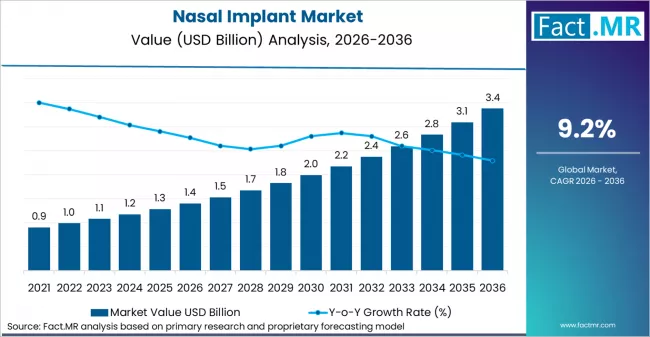
Nasal Implant Market Market Value Analysis | Source: Fact.MR
| Metric | Value |
|---|---|
| Estimated Value in (2026E) | USD 1.4 billion |
| Forecast Value in (2036F) | USD 3.5 billion |
| Forecast CAGR (2026 to 2036) | 9.2% |
Source: Fact.MR analysis. Updated Mar 5, 2026
Nasal Implant Market Definition
The Nasal Implant Market involves the manufacture and sale of implantable devices used to support, reshape, or reconstruct nasal structures in surgical procedures for functional correction or aesthetic enhancement.
Market Inclusions
This report covers global and regional market sizes for nasal implants over a defined forecast period, including implant types (silicone, porous polyethylene, titanium), surgical applications (rhinoplasty, septoplasty, trauma reconstruction), and end‑use settings (hospitals, clinics, ambulatory surgical centers).
Market Exclusions
The scope excludes non‑implantable nasal products such as external splints, sprays, and unrelated ENT devices not used for structural implantation.
Research Methodology
- Primary Research: Interviews were conducted with ENT surgeons, plastic surgeons, and device manufacturers.
- Desk Research: Data was sourced from clinical publications, regulatory filings, and industry reports.
- Market‑Sizing and Forecasting: A hybrid model combining top‑down surgical procedure forecasts with bottom‑up device sales and shipment data was used.
- Data Validation and Update Cycle: Findings were validated through expert review and aligned with recent production, clinical adoption, and trade data.
Summary of the Nasal Implant Market
- Market Definition
- The Nasal Implant Market involves the manufacture and sale of implantable devices used to support, reshape, or reconstruct nasal structures in surgical procedures for both functional correction and aesthetic enhancement. The market is driven by the increasing demand for nasal aesthetic procedures, rhinoplasty, and the rising popularity of non-invasive treatments in cosmetic surgery.
- Demand Drivers
- Rising Awareness of Aesthetic Procedures: The growing interest in cosmetic procedures like rhinoplasty is increasing the demand for nasal implants, particularly for aesthetic enhancements.
- Advancements in Implant Materials: Technological innovations in materials such as bioabsorbable implants and polymers are expanding the market, providing more options for patients and surgeons.
- Medical Tourism Growth: The growth of medical tourism is contributing to the rise in demand for nasal implant procedures, particularly in regions like India and China, where affordable treatment options are available.
- Key Segments Analyzed
- Material: Synthetic materials, including silicone and polyethylene, are projected to lead the market, holding 32.3% of the market share by 2026, due to their biocompatibility, flexibility, and affordability.
- End-User: Hospitals are expected to dominate the market, accounting for 57.3% of the market share in 2026, driven by their advanced infrastructure and comprehensive surgical and post-surgical care capabilities.
- Geography: China leads with a 12.4% CAGR, driven by the rising popularity of cosmetic surgery, growing disposable income, and increasing healthcare infrastructure.
- Analyst Opinion at Fact MR
- Shambhu Nath Jha, Principal Consultant at Fact MR, noted, "The increasing adoption of nasal implants, driven by cosmetic and functional procedures, along with advancements in implant materials, will drive steady growth in the nasal implant market."
- Strategic Implications/Executive Takeaways
- Focus on Advanced Materials: Companies should focus on developing more advanced implant materials such as bioabsorbable and hybrid implants to enhance the performance and integration of nasal implants.
- Medical Tourism Expansion: With the rise of medical tourism, companies should explore opportunities in emerging markets where nasal implant procedures are gaining popularity.
- Invest in Hospitals and Surgical Centers: As hospitals continue to dominate the market, partnerships with healthcare facilities and investments in hospital-based surgical infrastructure will be critical for market penetration.
- Methodology
- Primary Research: Interviews with ENT surgeons, plastic surgeons, and device manufacturers.
- Desk Research: Data sourced from clinical publications, regulatory filings, and industry reports.
- Market Sizing & Forecasting: A hybrid model combining top-down surgical procedure forecasts with bottom-up device sales and shipment data was used to estimate market growth.
Segmental Analysis
Nasal Implant Market Analysis by Material
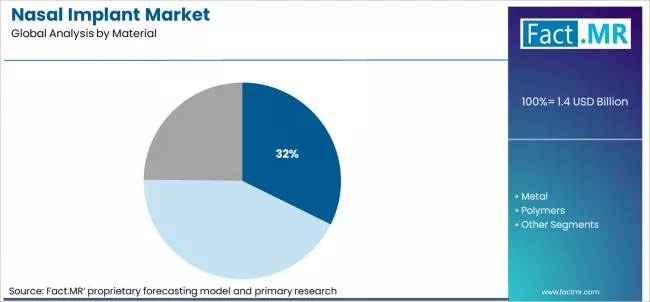
Nasal Implant Market Analysis By Material | Source: Fact.MR
- Market Overview: Synthetic materials are expected to capture 32.3% of the nasal implant market by 2026. Synthetic materials, including silicone, polyethylene, PTFE, and polyesters, are widely used in nasal implants due to their biocompatibility, durability, and flexibility, making them ideal for long-term use in reconstructive and cosmetic procedures.
- Demand Drivers:
- Biocompatibility and Durability: Synthetic materials are highly biocompatible and offer long-lasting performance without the risk of adverse reactions, making them ideal for nasal implants. Their durability ensures that the implants maintain their structure and function over time.
- Customization and Flexibility: Synthetic nasal implants can be easily customized in terms of shape and size to meet individual patient needs. This flexibility is crucial in both reconstructive and aesthetic nasal surgeries, driving the preference for synthetic materials.
- Cost-Effectiveness: Synthetic materials are generally more affordable compared to biological or metal implants, making them a cost-effective option for both patients and healthcare providers, especially in cosmetic and less complex procedures.
Nasal Implant Market Analysis by End User
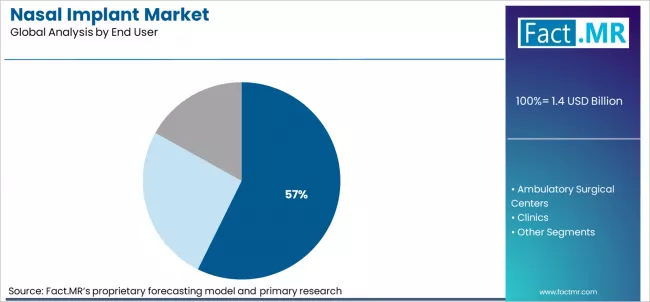
Nasal Implant Market Analysis By End User | Source: Fact.MR
- Market Overview: Hospitals are projected to hold 57.3% of the market share by 2026. Hospitals are the primary end-users of nasal implants, as they offer comprehensive surgical facilities, specialized medical staff, and advanced equipment required for both cosmetic and reconstructive nasal surgeries.
- Demand Drivers:
- Comprehensive Surgical and Post-Surgical Care: Hospitals provide the infrastructure needed for complex nasal surgeries, including access to specialized surgeons and post-operative care. This makes them the preferred setting for nasal implant procedures, particularly for patients requiring detailed follow-up care and monitoring.
- Higher Volume of Complex Procedures: Hospitals handle a higher volume of both elective (cosmetic) and reconstructive surgeries, including those involving nasal implants. Their capacity to perform these surgeries with advanced equipment and skilled staff drives the dominance of hospitals in the nasal implant market.
- Growing Demand for Reconstructive and Cosmetic Surgery: The increasing acceptance of both aesthetic and reconstructive nasal surgeries in medical and cosmetic fields, combined with advancements in implant materials and techniques, is boosting the demand for nasal implants in hospital settings.
Nasal Implant Market Drivers, Restraints, and Opportunities
FMR analysts observe that the nasal implant market is a growing segment driven by increased demand for rhinoplasty, nasal reconstruction, and functional airway improvements. Historically, implants were limited to basic silicone and cartilage grafts, but advancements in materials like biocompatible polymers and porous materials have expanded use in both cosmetic and reconstructive procedures. The 2026 market valuation reflects steady growth as aesthetic procedures and functional surgeries increase globally.
While traditional implant materials are still widely used, advanced options that offer better integration and long‑term stability are gaining share. These high‑performance implants often come at a premium price, contributing to market growth despite moderate increases in procedure volumes.
- Aesthetic & Functional Applications: Rising demand for rhinoplasty and nasal airway improvement drives growth in nasal implant procedures.
- Regulatory & Biocompatibility Standards: Safety and regulatory standards push adoption of certified nasal implants that meet specific performance and biocompatibility criteria.
- Regional Growth Trends: North America and Europe lead in advanced nasal implant adoption, while Asia‑Pacific sees rapid growth with expanding access to cosmetic and reconstructive surgery.
Regional Analysis
The market analysis covers key global regions, including East Asia, South Asia, Western Europe, and North America. It is segmented geographically, with specific market dynamics for each region. The full report provides a detailed market attractiveness analysis.
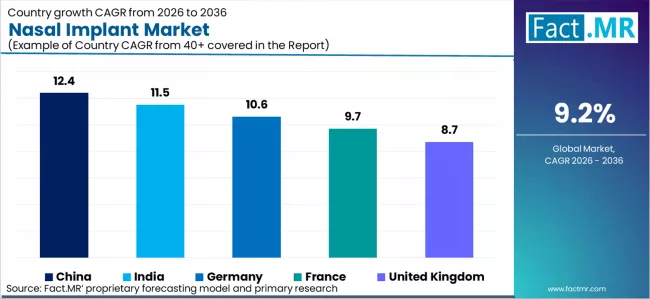
Nasal Implant Market Cagr Analysis By Country | Source: Fact.MR
| Country | CAGR (2026-2036) |
|---|---|
| China | 12.4% |
| India | 11.5% |
| Germany | 10.6% |
| France | 9.7% |
| United Kingdom | 8.7% |
Source: Fact.MR analysis. Updated Mar 5, 2026
Source: Fact MR (FMR) analysis, based on proprietary forecasting model and primary research.
East Asia
In East Asia, China leads the demand for nasal implants, supported by the growing healthcare infrastructure, increasing awareness of aesthetic and functional nasal surgeries, and rising demand for cosmetic procedures.
- China: Demand for nasal implants in China is projected to rise at 12.4% CAGR through 2036. China’s expanding healthcare infrastructure, increased focus on aesthetic procedures, and growing demand for rhinoplasty and functional nasal surgeries continue to fuel the market.
South Asia
In South Asia, India is a significant market for nasal implants, driven by the rising popularity of cosmetic surgeries, increasing disposable incomes, and expanding access to healthcare services.
- India: Demand for nasal implants in India is projected to rise at 11.5% CAGR through 2036. India’s growing medical tourism sector, increased demand for cosmetic surgeries, and rising awareness of aesthetic enhancements continue to support market growth.
Western Europe
In Western Europe, Germany, France, and the United Kingdom are key markets for nasal implants, driven by rising awareness of aesthetic procedures, an aging population, and the growing acceptance of cosmetic surgeries.
- Germany: Demand for nasal implants in Germany is projected to rise at 10.6% CAGR through 2036. Germany’s strong healthcare infrastructure, growing demand for both functional and aesthetic nasal surgeries, and advances in minimally invasive techniques continue to drive market growth.
- France: Demand for nasal implants in France is projected to rise at 9.7% CAGR through 2036. France’s growing demand for aesthetic treatments, increased focus on nasal reconstruction surgeries, and rising consumer interest in cosmetic procedures contribute to market expansion.
- United Kingdom: Demand for nasal implants in the UK is projected to rise at 8.7% CAGR through 2036. The UK’s growing awareness of cosmetic surgery and rising demand for aesthetic nasal enhancements continue to drive market growth in the region.
Fact MR's analysis of the Nasal Implant Market in East Asia, South Asia, Western Europe consists of country-wise assessments that include China, India, Germany, France, and the United Kingdom. Readers can find detailed trends, regulatory updates, and company-specific investments shaping the market’s growth in these countries.
Nasal Implant Market Overview
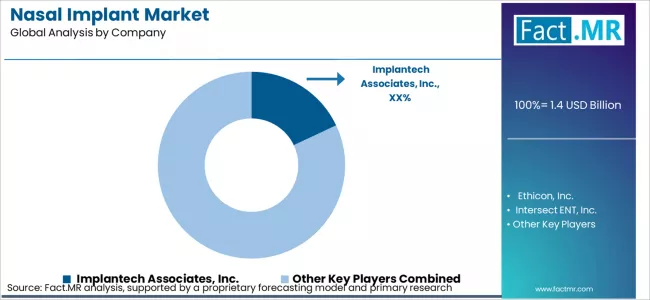
Nasal Implant Market Analysis By Company | Source: Fact.MR
The nasal implant market is led by major players such as Implantech Associates, Inc. and Ethicon, Inc., which provide a wide range of implants for nasal reconstruction and cosmetic procedures. Intersect ENT, Inc. and Stryker Corporation are known for their innovative implant solutions in sinus surgery and treatments for nasal obstructive conditions. Zimmer Biomet Holdings, Inc. and Sientra, Inc. offer advanced surgical implants designed to enhance nasal functionality and appearance. Matrix Surgical USA, Inc. and Koken Co., Ltd. specialize in providing both aesthetic and functional nasal implants, while Wanhe Plastic Material Co., Ltd. produces synthetic materials for use in nasal surgeries. The market growth is driven by rising demand for cosmetic procedures and advancements in surgical implant technologies.
Recent Industry Developments
- Bioabsorbable Polymer Dominance
- Bioabsorbable implants, such as those made from Poly-L-lactic acid (PLLA), are becoming the standard for treating nasal valve collapse. These devices, like Stryker’s LATERA, provide structural support for approximately 24 months before being naturally absorbed and replaced by a collagen construct, eliminating the need for secondary removal surgeries.
- AI-Driven Customization and 3D Printing
- In 2026, the integration of 3D printing and AI-assisted surgical planning has reduced intraoperative adjustment times by over 50%. Manufacturers like Zimmer Biomet are leveraging these technologies to create patient-specific anatomical implants that offer a superior fit compared to traditional "off-the-shelf" silicone or porous polyethylene options.
- Consolidation of Drug-Eluting Technologies
- The market for drug-eluting absorbable implants now accounts for over 60% of the absorbable segment. Following the acquisition of Intersect ENT, Medtronic has consolidated the PROPEL and SINUVA product lines, which deliver localized corticosteroids directly to the sinus mucosa to maintain patency and treat nasal polyps post-surgery.
Key Players of the Nasal Implant Market
- Implantech Associates, Inc.
- Ethicon, Inc.
- Intersect ENT, Inc.
- Stryker Corporation
- Zimmer Biomet Holdings, Inc.
- Sientra, Inc.
- Matrix Surgical USA, Inc.
- Koken Co., Ltd.
- Wanhe Plastic Material Co., Ltd.
Report Scope
| Metric | Value |
|---|---|
| Quantitative Units | USD 1.4 billion (2026) to USD 3.5 billion (2036), at a CAGR of 9.2% |
| Market Definition | The Nasal Implant Market includes implants used in nasal surgeries for both cosmetic and functional purposes, with materials ranging from synthetic to biological and autograft. |
| By Material | Synthetic, Metal (Titanium), Ceramics, Polymers (Silicone, Polyethylene, PTFE, Polyesters and Polyamides), Biological, Autograft, Xenograft, Allograft, Alloplast |
| By End-User | Hospitals, Ambulatory Surgical Centers, Clinics |
| Regions Covered | North America, Latin America, Europe, East Asia, South Asia, Oceania, Middle East and Africa |
| Countries Covered | United States, Canada, Mexico, Brazil, Argentina, Germany, France, United Kingdom, Italy, Spain, China, India, Japan, South Korea, Indonesia, Australia, and 40+ countries |
| Key Companies Profiled | Implantech Associates, Inc., Ethicon, Inc., Intersect ENT, Inc., Stryker Corporation, Zimmer Biomet Holdings, Inc., Sientra, Inc., Matrix Surgical USA, Inc., Koken Co., Ltd., Wanhe Plastic Material Co., Ltd. |
| Forecast Period | 2026 to 2036 |
| Approach | Hybrid top-down and bottom-up market modeling validated through primary interviews with manufacturers and supported by trade data benchmarking and market research. |
Source: Fact.MR analysis. Updated Mar 5, 2026
Bibliographies
- Ethicon, Inc. (2023). Advancements in nasal implant technologies for enhanced cosmetic and medical outcomes. Ethicon, Inc.
- Implantech Associates, Inc. (2023). Innovative nasal implants for aesthetic and reconstructive procedures. Implantech Associates, Inc.
- Intersect ENT, Inc. (2023). Bioabsorbable nasal implants for sinus surgery and functional nasal treatments. Intersect ENT, Inc.
- Stryker Corporation. (2023). Nasal implants for medical and reconstructive applications: Improving patient outcomes. Stryker Corporation.
- Zimmer Biomet Holdings, Inc. (2023). Enhancing nasal implant solutions for functional and aesthetic procedures. Zimmer Biomet Holdings, Inc.
- 360iResearch. (2026). Nasal implants market analysis and 3D-printing integration in customization and design. 360iResearch.
- Medtronic. (2026). PROPEL sinus implant functional mechanism and clinical benefits [Clinical analysis]. Medtronic.
- Stryker Corporation. (2026). LATERA absorbable nasal implant system: Advancements in bioabsorbable polymer technology [Product update]. Stryker Corporation.
This report addresses
- Market intelligence enabling comprehensive assessment of leading countries and product segments across the Nasal Implant Market globally.
- Market volume (sales units) estimates and 10-year revenue forecasts from 2026 to 2036, validated through manufacturer shipment data, channel partner surveys, and country-level demand modeling.
- Growth opportunity mapping across materials (Synthetic, Metal (Titanium), Ceramics, Polymers (Silicone, Polyethylene, PTFE, Polyesters and Polyamides), Biological), end-user industries (Hospitals, Ambulatory Surgical Centers, Clinics).
- Segment and regional revenue forecasts by material, end-user industry, and geography across 40+ countries.
- Competition strategy analysis covering dealer network structure, recent developments, product portfolio, USPs, and market share analysis.
- Product and regulatory compliance tracking aligned with safety standards, medical device certifications, and healthcare regulations.
- Regulatory impact analysis addressing surgical standards, biocompatibility guidelines, and post-operative care protocols across key markets.
- Report delivery in PDF, Excel, PowerPoint, and interactive dashboard formats for executive, procurement, and operational planning use.
Segmentation
Nasal Implant Market Key Segments
-
Material
- Synthetic
- Metal (Titanium)
- Ceramics
- Polymers (Silicone, Polyethylene, PTFE, Polyesters and Polyamides)
- Biological
- Autograft
- Xenograft
- Allograft
- Alloplast
-
End-Use Industry
- Hospitals
- Ambulatory Surgical Centers
- Clinics
-
Region
- North America
- USA
- Canada
- Mexico
- Europe
- Germany
- UK
- France
- Italy
- Spain
- Nordic Countries
- BENELUX
- Rest of Europe
- Asia Pacific
- China
- Japan
- South Korea
- India
- Australia
- Rest of Asia Pacific
- Latin America
- Brazil
- Argentina
- Rest of Latin America
- Middle East and Africa
- Kingdom of Saudi Arabia
- United Arab Emirates
- South Africa
- Rest of Middle East and Africa
- Other Regions
- Oceania
- Central Asia
- Other Markets
- North America
Frequently Asked Questions
How large is the demand for Nasal Implants in the global market in 2026?
What will be the market size of Nasal Implants in the global market by 2036?
What is the expected demand growth for Nasal Implants in the global market between 2026 and 2036?
Which end user is expected to dominate the market?
Which region is expected to show the highest growth rate for Nasal Implants?
How significant is the growth outlook for India in this market?
What is the growth outlook for Germany in the Nasal Implant market?
What is the growth forecast for France in the Nasal Implant market?
What is the growth forecast for the United Kingdom in the Nasal Implant market?
Which company is identified as a leading player in the Nasal Implant market?
What are Nasal Implants used for?
What does the Nasal Implant market include in this report?
How is the market forecast developed in this report?
What is meant by the Nasal Implant market in this report?
Who worked on this report


Preview the report firsthand - request a free sample
Free SampleGet the brochure for pricing and purchase details
Download PDF