Nutrient Loss Reporting Digital Fertilizer Service Market
Nutrient Loss Reporting Digital Fertilizer Service Market Size and Share Forecast Outlook 2026 to 2036
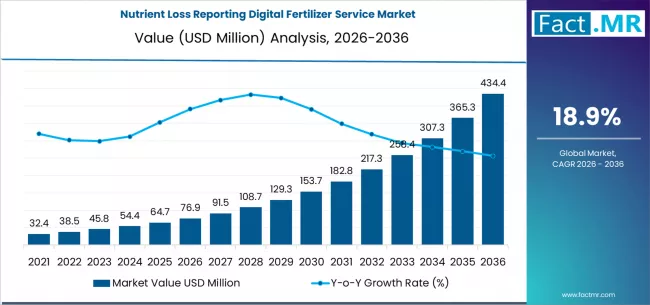
Nutrient loss reporting digital fertilizer service market is projected to grow from USD 76.9 million in 2026 to USD 434.4 million by 2036, at a CAGR of 18.9%. Mobile App will dominate with a 45.8% market share, while farmer will lead the by end user segment with a 44.1% share.
Nutrient Loss Reporting Digital Fertilizer Service Market Forecast and Outlook 2026 to 2036
The global market for nutrient loss reporting digital fertilizer services is projected for explosive growth, soaring from USD 76.92 million in 2026 to USD 434.39 million by 2036, advancing at a remarkable CAGR of 18.9%.
Key Takeaways from the Nutrient Loss Reporting Digital Fertilizer Service Market
- Market Value for 2026: USD 76.92 Million
- Market Value for 2036: USD 434.39 Million
- Forecast CAGR (2026-2036): 18.9%
- Leading Platform Segment (2026): Mobile App (46%)
- Leading End-User Segment (2026): Farmer (44%)
- Leading Sales Channel Segment (2026): Ag-Retailers (62%)
- Key Growth Countries: India (19.2% CAGR), China (18.9% CAGR), USA (18.4% CAGR), Germany (17.6% CAGR)
- Key Players in the Market: Nutrien, Bayer AG, Corteva Inc., Syngenta AG, Yara International ASA, Trimble Inc.

The market signifies the critical digital transformation of nutrient management, shifting from intuition-based practices to data-driven, regulatory-compliant, and environmentally accountable farming. These services provide integrated software platforms that track, model, and report the fate of applied nutrients, specifically quantifying potential losses via runoff, leaching, and volatilization.
Growth is propelled by an unprecedented convergence of regulatory mandates, supply chain transparency demands, and the economic necessity of input optimization. Governments worldwide are implementing strict nutrient management plans to protect water quality, compelling farmers to document their fertilizer practices.
Food processors and retailers require verified sustainability data from their growers, making digital reporting a prerequisite for market access. These services turn complex agronomic and environmental data into actionable insights and auditable reports, bridging the gap between field-level decisions and broader ESG goals.
The market’s expansion is rooted in the transition from advisory tools to compliance and verification platforms. Success depends on the accuracy of underlying biogeochemical models, the ease of data integration from field equipment, and the ability to generate reports that satisfy both government agencies and corporate sustainability auditors. This creates a vital link between precision agriculture and environmental stewardship, monetizing data to mitigate regulatory risk and enhance fertilizer investment returns.
Metric
| Metric | Value |
|---|---|
| Market Value (2026) | USD 76.92 Million |
| Market Forecast Value (2036) | USD 434.39 Million |
| Forecast CAGR (2026-2036) | 18.9% |
Category
| Category | Segments |
|---|---|
| By Platform | Mobile App, Web Dashboard, API Integration, IoT Device |
| By End User | Farmer, Agronomist, Food Processor, Regulator |
| Sales Channel | Ag-Retailers, Direct-to-Farmer, Online Marketplaces, Cooperatives |
| Region | North America, Latin America, Western Europe, Eastern Europe, East Asia, South Asia & Pacific, MEA |
Segmental Analysis
By Platform, Which Interface Drives Farmer Engagement?
Mobile applications lead the platform segment with a 46% share. Their dominance is due to unmatched accessibility and convenience for farmers in the field. Mobile apps allow for real-time data entry such as application rates, weather observations, provide instant loss estimations, and generate compliance reports from a smartphone.
This on-the-go functionality seamlessly integrates reporting into daily farm operations, making it the preferred entry point for digitizing nutrient management and ensuring consistent data capture.
By End User, Who is the Primary Data Generator and Beneficiary?
Farmers constitute the leading end-user group, holding a 44% share. They are the primary source of field data and the direct targets of both regulatory pressure and economic incentive. These digital services empower farmers to proactively manage their nutrient use efficiency, reduce unnecessary input costs, and generate the documentation needed to demonstrate regulatory compliance or participate in sustainability programs that offer premium market access or carbon credits.
By Sales Channel, Where is Trust and Adoption Built?
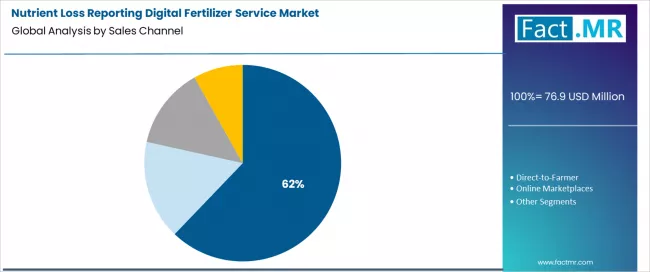
Ag-retailers are the pivotal sales channel, accounting for 62% of the market. Retailers are the trusted advisors who often help farmers interpret soil tests and plan fertilizer programs. Bundling digital reporting services with input sales creates a natural synergy.
Retailer agronomists can guide farmers in using the platform, ensuring high-quality data input and helping them understand the reports, thereby driving adoption and creating a sticky service ecosystem around the input purchase.
What are the Drivers, Restraints, and Key Trends of the Nutrient Loss Reporting Digital Fertilizer Service Market?
The strongest market driver is the rapid escalation of regulatory frameworks mandating nutrient stewardship, such as the EU’s Nitrates Directive and various US state-level nutrient management laws. The corporate push for Scope 3 emissions accounting and sustainable sourcing is an equally powerful commercial driver. Digitization of farm machinery provides the necessary data streams, while the economic benefit of optimizing expensive fertilizer inputs offers a clear return on investment for farmers, moving these services from a cost to a value-adding tool.
A significant restraint is data interoperability and the reluctance to share sensitive farm data. Many platforms operate in silos, unable to seamlessly integrate with all equipment brands or other farm management software. Farmer concerns about data ownership and potential regulatory repercussions from honest reporting can hinder adoption. The accuracy of loss modeling across diverse soil types and climates also requires local calibration, and inaccurate estimates can undermine user trust.
Key trends include the convergence with carbon accounting platforms, creating a unified dashboard for managing all environmental assets and liabilities. Automated data ingestion via APIs and IoT from planter monitors, sprayers, and soil sensors minimizes manual entry, improving accuracy and adoption. There is also a trend toward predictive analytics, using these platforms not just for reporting past actions but for simulating future scenarios to guide preseason planning and minimize loss risk proactively.
Analysis of the Nutrient Loss Reporting Digital Fertilizer Service Market by Key Countries
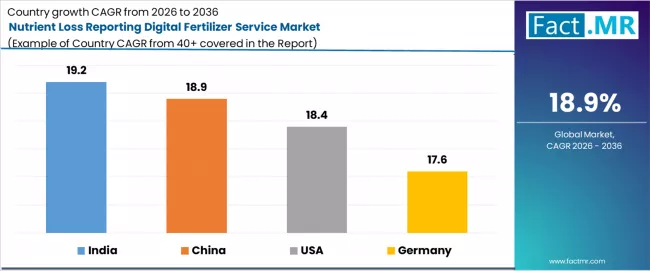
| Country | CAGR (2026-2036) |
|---|---|
| India | 19.2% |
| China | 18.9% |
| USA | 18.4% |
| Germany | 17.6% |
How is India's Policy Focus on Natural Farming and Subsidy Reform Catalyzing Growth?
India’s leading CAGR of 19.2% is linked to direct policy interventions. The government’s promotion of natural farming and the PM-PRANAM scheme, which incentivizes states to reduce chemical fertilizer use, create a need for verification.
Digital platforms are seen as essential tools to monitor the impact of these policies and to potentially administer targeted subsidies based on documented sustainable practices. The vast scale of Indian agriculture and increasing smartphone penetration provide a massive potential user base.
What is the Impact of China's Agricultural Green Development and Precision Farming Push?
China’s 18.9% growth is driven by its national Agricultural Green Development strategy, which mandates efficiency and pollution control. The government actively promotes digital agriculture through subsidies and national platforms.
Nutrient loss reporting aligns perfectly with the goals of controlling non-point source pollution from vast croplands. Integration of these services into state-promoted digital farming ecosystems ensures rapid, top-down adoption across large farm cooperatives and state-owned enterprises.
Why is the USA's Complex Regulatory and Carbon Market Landscape a Key Driver?
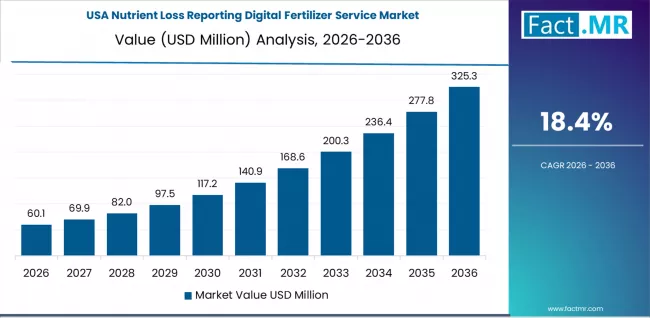
The USA’s 18.4% growth is fueled by a patchwork of state-level water quality regulations and the vibrant voluntary carbon market. Farmers need tools to comply with nutrient management plans in watersheds like the Chesapeake Bay and the Great Lakes.
Carbon program developers require robust, digital MRV to issue credits for enhanced efficiency practices. Digital reporting services meet both needs, creating demand from both regulatory and market-based mechanisms.
How is Germany's Precision and EU Compliance Shaping a Mature Market?
Germany’s 17.6% CAGR reflects its engineering precision and strict adherence to EU environmental directives. German farmers and regulators demand highly accurate, science-based modeling.
The market is characterized by sophisticated platforms that integrate seamlessly with high-precision farm machinery common in the region. The need to comply with cross-compliance rules under the EU Common Agricultural Policy makes digital record-keeping and reporting a practical necessity for accessing farm subsidies.
Competitive Landscape of the Nutrient Loss Reporting Digital Fertilizer Service Market
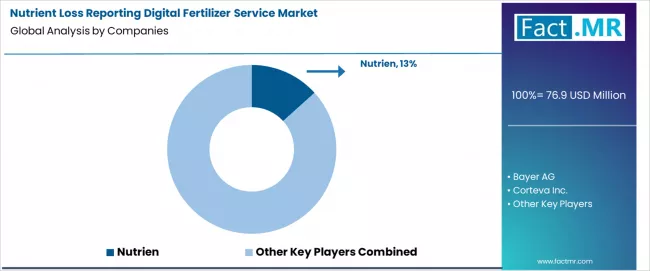
The competitive landscape is characterized by strategic competition between major agri-input corporations expanding their digital suites, independent farm management software providers, and specialized sustainability analytics startups.
Competition hinges on the scientific credibility of the nutrient loss models, the breadth and ease of connectivity with machinery and other data sources, and the ability to generate compliant reports for multiple jurisdictions.
Building a large, engaged user network is critical for refining models and creating switching costs. Strategic partnerships with retailers, food companies, and government agencies are essential for scaling distribution and embedding services into value chains.
Key Players in the Nutrient Loss Reporting Digital Fertilizer Service Market
- Nutrien
- Bayer AG
- Corteva Inc.
- Syngenta AG
- Yara International ASA
- Trimble Inc.
Scope of Report
| Items | Values |
|---|---|
| Quantitative Units | USD Million |
| By Platform | Mobile App, Web Dashboard, API Integration, IoT Device |
| By End User | Farmer, Agronomist, Food Processor, Regulator |
| Sales Channel | Ag-Retailers, Direct-to-Farmer, Online Marketplaces, Cooperatives |
| Key Countries | USA, Germany, India, China |
| Key Companies | Nutrien, Bayer AG, Corteva Inc., Syngenta AG, Yara International ASA, Trimble Inc. |
| Additional Analysis | Comparative analysis of leading nutrient loss modeling algorithms; data privacy and ownership frameworks across platforms; ROI analysis for farmers adopting digital reporting; integration capabilities with major machinery brands; review of global regulatory reporting requirements; role of blockchain in audit and verification. |
Market by Segments
-
By Platform :
- Mobile App
- Web Dashboard
- API Integration
- IoT Device
-
By End User :
- Farmer
- Agronomist
- Food Processor
- Regulator
-
Sales Channel :
- Ag-Retailers
- Direct-to-Farmer
- Online Marketplaces
- Cooperatives
-
Region :
- North America
- USA
- Canada
- Latin America
- Brazil
- Mexico
- Argentina
- Rest of Latin America
- Western Europe
- Germany
- UK
- France
- Spain
- Italy
- BENELUX
- Rest of Western Europe
- Eastern Europe
- Russia
- Poland
- Czech Republic
- Rest of Eastern Europe
- East Asia
- China
- Japan
- South Korea
- Rest of East Asia
- South Asia & Pacific
- India
- ASEAN
- Australia
- Rest of South Asia & Pacific
- MEA
- Saudi Arabia
- UAE
- Turkiye
- Rest of MEA
- North America
Table of Content
- Executive Summary
- Global Market Outlook
- Demand to side Trends
- Supply to side Trends
- Technology Roadmap Analysis
- Analysis and Recommendations
- Market Overview
- Market Coverage / Taxonomy
- Market Definition / Scope / Limitations
- Market Background
- Market Dynamics
- Drivers
- Restraints
- Opportunity
- Trends
- Scenario Forecast
- Demand in Optimistic Scenario
- Demand in Likely Scenario
- Demand in Conservative Scenario
- Opportunity Map Analysis
- Product Life Cycle Analysis
- Supply Chain Analysis
- Investment Feasibility Matrix
- Value Chain Analysis
- PESTLE and Porter’s Analysis
- Regulatory Landscape
- Regional Parent Market Outlook
- Production and Consumption Statistics
- Import and Export Statistics
- Market Dynamics
- Global Market Analysis 2021 to 2025 and Forecast, 2026 to 2036
- Historical Market Size Value (USD Million) Analysis, 2021 to 2025
- Current and Future Market Size Value (USD Million) Projections, 2026 to 2036
- Y to o to Y Growth Trend Analysis
- Absolute $ Opportunity Analysis
- Global Market Pricing Analysis 2021 to 2025 and Forecast 2026 to 2036
- Global Market Analysis 2021 to 2025 and Forecast 2026 to 2036, By Platform
- Introduction / Key Findings
- Historical Market Size Value (USD Million) Analysis By Platform, 2021 to 2025
- Current and Future Market Size Value (USD Million) Analysis and Forecast By Platform, 2026 to 2036
- Mobile App
- Web Dashboard
- API Integration
- IoT Device
- Mobile App
- Y to o to Y Growth Trend Analysis By Platform, 2021 to 2025
- Absolute $ Opportunity Analysis By Platform, 2026 to 2036
- Global Market Analysis 2021 to 2025 and Forecast 2026 to 2036, By End User
- Introduction / Key Findings
- Historical Market Size Value (USD Million) Analysis By End User, 2021 to 2025
- Current and Future Market Size Value (USD Million) Analysis and Forecast By End User, 2026 to 2036
- Farmer
- Agronomist
- Food Processor
- Regulator
- Farmer
- Y to o to Y Growth Trend Analysis By End User, 2021 to 2025
- Absolute $ Opportunity Analysis By End User, 2026 to 2036
- Global Market Analysis 2021 to 2025 and Forecast 2026 to 2036, By Sales Channel
- Introduction / Key Findings
- Historical Market Size Value (USD Million) Analysis By Sales Channel, 2021 to 2025
- Current and Future Market Size Value (USD Million) Analysis and Forecast By Sales Channel, 2026 to 2036
- Ag-Retailers
- Direct-to-Farmer
- Online Marketplaces
- Cooperatives
- Ag-Retailers
- Y to o to Y Growth Trend Analysis By Sales Channel, 2021 to 2025
- Absolute $ Opportunity Analysis By Sales Channel, 2026 to 2036
- Global Market Analysis 2021 to 2025 and Forecast 2026 to 2036, By Region
- Introduction
- Historical Market Size Value (USD Million) Analysis By Region, 2021 to 2025
- Current Market Size Value (USD Million) Analysis and Forecast By Region, 2026 to 2036
- North America
- Latin America
- Western Europe
- Eastern Europe
- East Asia
- South Asia and Pacific
- Middle East & Africa
- Market Attractiveness Analysis By Region
- North America Market Analysis 2021 to 2025 and Forecast 2026 to 2036, By Country
- Historical Market Size Value (USD Million) Trend Analysis By Market Taxonomy, 2021 to 2025
- Market Size Value (USD Million) Forecast By Market Taxonomy, 2026 to 2036
- By Country
- USA
- Canada
- Mexico
- By Platform
- By End User
- By Sales Channel
- By Country
- Market Attractiveness Analysis
- By Country
- By Platform
- By End User
- By Sales Channel
- Key Takeaways
- Latin America Market Analysis 2021 to 2025 and Forecast 2026 to 2036, By Country
- Historical Market Size Value (USD Million) Trend Analysis By Market Taxonomy, 2021 to 2025
- Market Size Value (USD Million) Forecast By Market Taxonomy, 2026 to 2036
- By Country
- Brazil
- Chile
- Rest of Latin America
- By Platform
- By End User
- By Sales Channel
- By Country
- Market Attractiveness Analysis
- By Country
- By Platform
- By End User
- By Sales Channel
- Key Takeaways
- Western Europe Market Analysis 2021 to 2025 and Forecast 2026 to 2036, By Country
- Historical Market Size Value (USD Million) Trend Analysis By Market Taxonomy, 2021 to 2025
- Market Size Value (USD Million) Forecast By Market Taxonomy, 2026 to 2036
- By Country
- Germany
- UK
- Italy
- Spain
- France
- Nordic
- BENELUX
- Rest of Western Europe
- By Platform
- By End User
- By Sales Channel
- By Country
- Market Attractiveness Analysis
- By Country
- By Platform
- By End User
- By Sales Channel
- Key Takeaways
- Eastern Europe Market Analysis 2021 to 2025 and Forecast 2026 to 2036, By Country
- Historical Market Size Value (USD Million) Trend Analysis By Market Taxonomy, 2021 to 2025
- Market Size Value (USD Million) Forecast By Market Taxonomy, 2026 to 2036
- By Country
- Russia
- Poland
- Hungary
- Balkan & Baltic
- Rest of Eastern Europe
- By Platform
- By End User
- By Sales Channel
- By Country
- Market Attractiveness Analysis
- By Country
- By Platform
- By End User
- By Sales Channel
- Key Takeaways
- East Asia Market Analysis 2021 to 2025 and Forecast 2026 to 2036, By Country
- Historical Market Size Value (USD Million) Trend Analysis By Market Taxonomy, 2021 to 2025
- Market Size Value (USD Million) Forecast By Market Taxonomy, 2026 to 2036
- By Country
- China
- Japan
- South Korea
- By Platform
- By End User
- By Sales Channel
- By Country
- Market Attractiveness Analysis
- By Country
- By Platform
- By End User
- By Sales Channel
- Key Takeaways
- South Asia and Pacific Market Analysis 2021 to 2025 and Forecast 2026 to 2036, By Country
- Historical Market Size Value (USD Million) Trend Analysis By Market Taxonomy, 2021 to 2025
- Market Size Value (USD Million) Forecast By Market Taxonomy, 2026 to 2036
- By Country
- India
- ASEAN
- Australia & New Zealand
- Rest of South Asia and Pacific
- By Platform
- By End User
- By Sales Channel
- By Country
- Market Attractiveness Analysis
- By Country
- By Platform
- By End User
- By Sales Channel
- Key Takeaways
- Middle East & Africa Market Analysis 2021 to 2025 and Forecast 2026 to 2036, By Country
- Historical Market Size Value (USD Million) Trend Analysis By Market Taxonomy, 2021 to 2025
- Market Size Value (USD Million) Forecast By Market Taxonomy, 2026 to 2036
- By Country
- Kingdom of Saudi Arabia
- Other GCC Countries
- Turkiye
- South Africa
- Other African Union
- Rest of Middle East & Africa
- By Platform
- By End User
- By Sales Channel
- By Country
- Market Attractiveness Analysis
- By Country
- By Platform
- By End User
- By Sales Channel
- Key Takeaways
- Key Countries Market Analysis
- USA
- Pricing Analysis
- Market Share Analysis, 2025
- By Platform
- By End User
- By Sales Channel
- Canada
- Pricing Analysis
- Market Share Analysis, 2025
- By Platform
- By End User
- By Sales Channel
- Mexico
- Pricing Analysis
- Market Share Analysis, 2025
- By Platform
- By End User
- By Sales Channel
- Brazil
- Pricing Analysis
- Market Share Analysis, 2025
- By Platform
- By End User
- By Sales Channel
- Chile
- Pricing Analysis
- Market Share Analysis, 2025
- By Platform
- By End User
- By Sales Channel
- Germany
- Pricing Analysis
- Market Share Analysis, 2025
- By Platform
- By End User
- By Sales Channel
- UK
- Pricing Analysis
- Market Share Analysis, 2025
- By Platform
- By End User
- By Sales Channel
- Italy
- Pricing Analysis
- Market Share Analysis, 2025
- By Platform
- By End User
- By Sales Channel
- Spain
- Pricing Analysis
- Market Share Analysis, 2025
- By Platform
- By End User
- By Sales Channel
- France
- Pricing Analysis
- Market Share Analysis, 2025
- By Platform
- By End User
- By Sales Channel
- India
- Pricing Analysis
- Market Share Analysis, 2025
- By Platform
- By End User
- By Sales Channel
- ASEAN
- Pricing Analysis
- Market Share Analysis, 2025
- By Platform
- By End User
- By Sales Channel
- Australia & New Zealand
- Pricing Analysis
- Market Share Analysis, 2025
- By Platform
- By End User
- By Sales Channel
- China
- Pricing Analysis
- Market Share Analysis, 2025
- By Platform
- By End User
- By Sales Channel
- Japan
- Pricing Analysis
- Market Share Analysis, 2025
- By Platform
- By End User
- By Sales Channel
- South Korea
- Pricing Analysis
- Market Share Analysis, 2025
- By Platform
- By End User
- By Sales Channel
- Russia
- Pricing Analysis
- Market Share Analysis, 2025
- By Platform
- By End User
- By Sales Channel
- Poland
- Pricing Analysis
- Market Share Analysis, 2025
- By Platform
- By End User
- By Sales Channel
- Hungary
- Pricing Analysis
- Market Share Analysis, 2025
- By Platform
- By End User
- By Sales Channel
- Kingdom of Saudi Arabia
- Pricing Analysis
- Market Share Analysis, 2025
- By Platform
- By End User
- By Sales Channel
- Turkiye
- Pricing Analysis
- Market Share Analysis, 2025
- By Platform
- By End User
- By Sales Channel
- South Africa
- Pricing Analysis
- Market Share Analysis, 2025
- By Platform
- By End User
- By Sales Channel
- USA
- Market Structure Analysis
- Competition Dashboard
- Competition Benchmarking
- Market Share Analysis of Top Players
- By Regional
- By Platform
- By End User
- By Sales Channel
- Competition Analysis
- Competition Deep Dive
- Nutrien
- Overview
- Product Portfolio
- Profitability by Market Segments (Product/Age /Sales Channel/Region)
- Sales Footprint
- Strategy Overview
- Marketing Strategy
- Product Strategy
- Channel Strategy
- Bayer AG
- Corteva Inc.
- Syngenta AG
- Yara International ASA
- Trimble Inc.
- Nutrien
- Competition Deep Dive
- Assumptions & Acronyms Used
- Research Methodology
List Of Table
- Table 1: Global Market Value (USD Million) Forecast by Region, 2021 to 2036
- Table 2: Global Market Value (USD Million) Forecast By Platform, 2021 to 2036
- Table 3: Global Market Value (USD Million) Forecast By End User, 2021 to 2036
- Table 4: Global Market Value (USD Million) Forecast by Sales Channel, 2021 to 2036
- Table 5: North America Market Value (USD Million) Forecast by Country, 2021 to 2036
- Table 6: North America Market Value (USD Million) Forecast By Platform, 2021 to 2036
- Table 7: North America Market Value (USD Million) Forecast By End User, 2021 to 2036
- Table 8: North America Market Value (USD Million) Forecast by Sales Channel, 2021 to 2036
- Table 9: Latin America Market Value (USD Million) Forecast by Country, 2021 to 2036
- Table 10: Latin America Market Value (USD Million) Forecast By Platform, 2021 to 2036
- Table 11: Latin America Market Value (USD Million) Forecast By End User, 2021 to 2036
- Table 12: Latin America Market Value (USD Million) Forecast by Sales Channel, 2021 to 2036
- Table 13: Western Europe Market Value (USD Million) Forecast by Country, 2021 to 2036
- Table 14: Western Europe Market Value (USD Million) Forecast By Platform, 2021 to 2036
- Table 15: Western Europe Market Value (USD Million) Forecast By End User, 2021 to 2036
- Table 16: Western Europe Market Value (USD Million) Forecast by Sales Channel, 2021 to 2036
- Table 17: Eastern Europe Market Value (USD Million) Forecast by Country, 2021 to 2036
- Table 18: Eastern Europe Market Value (USD Million) Forecast By Platform, 2021 to 2036
- Table 19: Eastern Europe Market Value (USD Million) Forecast By End User, 2021 to 2036
- Table 20: Eastern Europe Market Value (USD Million) Forecast by Sales Channel, 2021 to 2036
- Table 21: East Asia Market Value (USD Million) Forecast by Country, 2021 to 2036
- Table 22: East Asia Market Value (USD Million) Forecast By Platform, 2021 to 2036
- Table 23: East Asia Market Value (USD Million) Forecast By End User, 2021 to 2036
- Table 24: East Asia Market Value (USD Million) Forecast by Sales Channel, 2021 to 2036
- Table 25: South Asia and Pacific Market Value (USD Million) Forecast by Country, 2021 to 2036
- Table 26: South Asia and Pacific Market Value (USD Million) Forecast By Platform, 2021 to 2036
- Table 27: South Asia and Pacific Market Value (USD Million) Forecast By End User, 2021 to 2036
- Table 28: South Asia and Pacific Market Value (USD Million) Forecast by Sales Channel, 2021 to 2036
- Table 29: Middle East & Africa Market Value (USD Million) Forecast by Country, 2021 to 2036
- Table 30: Middle East & Africa Market Value (USD Million) Forecast By Platform, 2021 to 2036
- Table 31: Middle East & Africa Market Value (USD Million) Forecast By End User, 2021 to 2036
- Table 32: Middle East & Africa Market Value (USD Million) Forecast by Sales Channel, 2021 to 2036
List Of Figures
- Figure 1: Global Market Pricing Analysis
- Figure 2: Global Market Value (USD Million) Forecast 2021-2036
- Figure 3: Global Market Value Share and BPS Analysis By Platform, 2026 and 2036
- Figure 4: Global Market Y to o to Y Growth Comparison By Platform, 2026-2036
- Figure 5: Global Market Attractiveness Analysis By Platform
- Figure 6: Global Market Value Share and BPS Analysis By End User, 2026 and 2036
- Figure 7: Global Market Y to o to Y Growth Comparison By End User, 2026-2036
- Figure 8: Global Market Attractiveness Analysis By End User
- Figure 9: Global Market Value Share and BPS Analysis by Sales Channel, 2026 and 2036
- Figure 10: Global Market Y to o to Y Growth Comparison by Sales Channel, 2026-2036
- Figure 11: Global Market Attractiveness Analysis by Sales Channel
- Figure 12: Global Market Value (USD Million) Share and BPS Analysis by Region, 2026 and 2036
- Figure 13: Global Market Y to o to Y Growth Comparison by Region, 2026-2036
- Figure 14: Global Market Attractiveness Analysis by Region
- Figure 15: North America Market Incremental Dollar Opportunity, 2026-2036
- Figure 16: Latin America Market Incremental Dollar Opportunity, 2026-2036
- Figure 17: Western Europe Market Incremental Dollar Opportunity, 2026-2036
- Figure 18: Eastern Europe Market Incremental Dollar Opportunity, 2026-2036
- Figure 19: East Asia Market Incremental Dollar Opportunity, 2026-2036
- Figure 20: South Asia and Pacific Market Incremental Dollar Opportunity, 2026-2036
- Figure 21: Middle East & Africa Market Incremental Dollar Opportunity, 2026-2036
- Figure 22: North America Market Value Share and BPS Analysis by Country, 2026 and 2036
- Figure 23: North America Market Value Share and BPS Analysis By Platform, 2026 and 2036
- Figure 24: North America Market Y to o to Y Growth Comparison By Platform, 2026-2036
- Figure 25: North America Market Attractiveness Analysis By Platform
- Figure 26: North America Market Value Share and BPS Analysis By End User, 2026 and 2036
- Figure 27: North America Market Y to o to Y Growth Comparison By End User, 2026-2036
- Figure 28: North America Market Attractiveness Analysis By End User
- Figure 29: North America Market Value Share and BPS Analysis by Sales Channel, 2026 and 2036
- Figure 30: North America Market Y to o to Y Growth Comparison by Sales Channel, 2026-2036
- Figure 31: North America Market Attractiveness Analysis by Sales Channel
- Figure 32: Latin America Market Value Share and BPS Analysis by Country, 2026 and 2036
- Figure 33: Latin America Market Value Share and BPS Analysis By Platform, 2026 and 2036
- Figure 34: Latin America Market Y to o to Y Growth Comparison By Platform, 2026-2036
- Figure 35: Latin America Market Attractiveness Analysis By Platform
- Figure 36: Latin America Market Value Share and BPS Analysis By End User, 2026 and 2036
- Figure 37: Latin America Market Y to o to Y Growth Comparison By End User, 2026-2036
- Figure 38: Latin America Market Attractiveness Analysis By End User
- Figure 39: Latin America Market Value Share and BPS Analysis by Sales Channel, 2026 and 2036
- Figure 40: Latin America Market Y to o to Y Growth Comparison by Sales Channel, 2026-2036
- Figure 41: Latin America Market Attractiveness Analysis by Sales Channel
- Figure 42: Western Europe Market Value Share and BPS Analysis by Country, 2026 and 2036
- Figure 43: Western Europe Market Value Share and BPS Analysis By Platform, 2026 and 2036
- Figure 44: Western Europe Market Y to o to Y Growth Comparison By Platform, 2026-2036
- Figure 45: Western Europe Market Attractiveness Analysis By Platform
- Figure 46: Western Europe Market Value Share and BPS Analysis By End User, 2026 and 2036
- Figure 47: Western Europe Market Y to o to Y Growth Comparison By End User, 2026-2036
- Figure 48: Western Europe Market Attractiveness Analysis By End User
- Figure 49: Western Europe Market Value Share and BPS Analysis by Sales Channel, 2026 and 2036
- Figure 50: Western Europe Market Y to o to Y Growth Comparison by Sales Channel, 2026-2036
- Figure 51: Western Europe Market Attractiveness Analysis by Sales Channel
- Figure 52: Eastern Europe Market Value Share and BPS Analysis by Country, 2026 and 2036
- Figure 53: Eastern Europe Market Value Share and BPS Analysis By Platform, 2026 and 2036
- Figure 54: Eastern Europe Market Y to o to Y Growth Comparison By Platform, 2026-2036
- Figure 55: Eastern Europe Market Attractiveness Analysis By Platform
- Figure 56: Eastern Europe Market Value Share and BPS Analysis By End User, 2026 and 2036
- Figure 57: Eastern Europe Market Y to o to Y Growth Comparison By End User, 2026-2036
- Figure 58: Eastern Europe Market Attractiveness Analysis By End User
- Figure 59: Eastern Europe Market Value Share and BPS Analysis by Sales Channel, 2026 and 2036
- Figure 60: Eastern Europe Market Y to o to Y Growth Comparison by Sales Channel, 2026-2036
- Figure 61: Eastern Europe Market Attractiveness Analysis by Sales Channel
- Figure 62: East Asia Market Value Share and BPS Analysis by Country, 2026 and 2036
- Figure 63: East Asia Market Value Share and BPS Analysis By Platform, 2026 and 2036
- Figure 64: East Asia Market Y to o to Y Growth Comparison By Platform, 2026-2036
- Figure 65: East Asia Market Attractiveness Analysis By Platform
- Figure 66: East Asia Market Value Share and BPS Analysis By End User, 2026 and 2036
- Figure 67: East Asia Market Y to o to Y Growth Comparison By End User, 2026-2036
- Figure 68: East Asia Market Attractiveness Analysis By End User
- Figure 69: East Asia Market Value Share and BPS Analysis by Sales Channel, 2026 and 2036
- Figure 70: East Asia Market Y to o to Y Growth Comparison by Sales Channel, 2026-2036
- Figure 71: East Asia Market Attractiveness Analysis by Sales Channel
- Figure 72: South Asia and Pacific Market Value Share and BPS Analysis by Country, 2026 and 2036
- Figure 73: South Asia and Pacific Market Value Share and BPS Analysis By Platform, 2026 and 2036
- Figure 74: South Asia and Pacific Market Y to o to Y Growth Comparison By Platform, 2026-2036
- Figure 75: South Asia and Pacific Market Attractiveness Analysis By Platform
- Figure 76: South Asia and Pacific Market Value Share and BPS Analysis By End User, 2026 and 2036
- Figure 77: South Asia and Pacific Market Y to o to Y Growth Comparison By End User, 2026-2036
- Figure 78: South Asia and Pacific Market Attractiveness Analysis By End User
- Figure 79: South Asia and Pacific Market Value Share and BPS Analysis by Sales Channel, 2026 and 2036
- Figure 80: South Asia and Pacific Market Y to o to Y Growth Comparison by Sales Channel, 2026-2036
- Figure 81: South Asia and Pacific Market Attractiveness Analysis by Sales Channel
- Figure 82: Middle East & Africa Market Value Share and BPS Analysis by Country, 2026 and 2036
- Figure 83: Middle East & Africa Market Value Share and BPS Analysis By Platform, 2026 and 2036
- Figure 84: Middle East & Africa Market Y to o to Y Growth Comparison By Platform, 2026-2036
- Figure 85: Middle East & Africa Market Attractiveness Analysis By Platform
- Figure 86: Middle East & Africa Market Value Share and BPS Analysis By End User, 2026 and 2036
- Figure 87: Middle East & Africa Market Y to o to Y Growth Comparison By End User, 2026-2036
- Figure 88: Middle East & Africa Market Attractiveness Analysis By End User
- Figure 89: Middle East & Africa Market Value Share and BPS Analysis by Sales Channel, 2026 and 2036
- Figure 90: Middle East & Africa Market Y to o to Y Growth Comparison by Sales Channel, 2026-2036
- Figure 91: Middle East & Africa Market Attractiveness Analysis by Sales Channel
- Figure 92: Global Market - Tier Structure Analysis
- Figure 93: Global Market - Company Share Analysis
- FAQs -
How big is the nutrient loss reporting digital fertilizer service market in 2026?
The global nutrient loss reporting digital fertilizer service market is estimated to be valued at USD 76.9 million in 2026.
What will be the size of nutrient loss reporting digital fertilizer service market in 2036?
The market size for the nutrient loss reporting digital fertilizer service market is projected to reach USD 434.4 million by 2036.
How much will be the nutrient loss reporting digital fertilizer service market growth between 2026 and 2036?
The nutrient loss reporting digital fertilizer service market is expected to grow at a 18.9% CAGR between 2026 and 2036.
What are the key product types in the nutrient loss reporting digital fertilizer service market?
The key product types in nutrient loss reporting digital fertilizer service market are mobile app, web dashboard, api integration and iot device.
Which by end user segment to contribute significant share in the nutrient loss reporting digital fertilizer service market in 2026?
In terms of by end user, farmer segment to command 44.1% share in the nutrient loss reporting digital fertilizer service market in 2026.