Offshore Repurposing Repower Wind Upgrades Market
Offshore Repurposing Repower Wind Upgrades Market Size and Share Forecast Outlook 2026 to 2036
Offshore repurposing repower wind upgrades market is projected to grow from USD 0.9 billion in 2026 to USD 1.8 billion by 2036, at a CAGR of 6.8%. Nacelle Replacement will dominate with a 42.0% market share, while shallow (<30 m) will lead the water depth segment with a 64.0% share.
Offshore Repurposing Repower Wind Upgrades Market Forecast and Outlook 2026 to 2036
The global offshore repurposing repower wind upgrades market is projected to grow from USD 0.94 billion in 2026 to USD 1.82 billion by 2036, advancing at a compound annual growth rate of 6.8%.
Key Takeaways from the Offshore Repurposing Repower Wind Upgrades Market
- Market Value for 2026: USD 0.94 Billion
- Market Value for 2036: USD 1.82 Billion
- Forecast CAGR (2026-2036): 6.8%
- Leading Upgrade Type Segment (2026): Nacelle Replacement (42%)
- Leading Water Depth Segment (2026): Shallow (<30 m) (64%)
- Leading Turbine Age Segment (2026): 15-20 years (58%)
- Key Growth Countries: UK (6.50% CAGR), Germany (6.20% CAGR), Netherlands (6.00% CAGR), USA (5.80% CAGR)
- Key Players in the Market: Siemens Gamesa, Vestas, GE Vernova, Nordex, MingYang Smart Energy, Goldwind

This market addresses the critical need to modernize the world's first generation of offshore wind farms, which are now approaching or exceeding their original design life. Rather than full decommissioning, the industry is pivoting towards strategic upgrades that enhance power output, improve reliability, and extend operational life using existing foundations and grid connections. This represents a capital-efficient pathway to increase renewable energy capacity.
Nacelle replacement upgrades command a 42% share, as this allows for the integration of modern, higher-capacity generators and drivetrains. The shallow water depth segment (<30 meters) dominates with a 64% share, reflecting the location of the majority of aging offshore assets.
Turbines aged 15-20 years form the core target segment, holding a 58% share, as they reach a critical point where major component refresh or upgrade offers superior economic returns compared to ongoing intensive maintenance. Geographically, the market is concentrated in regions that pioneered offshore wind, led by the UK, Germany, the Netherlands, and the emerging opportunity in the USA.
Metric
| Metric | Value |
|---|---|
| Market Value (2026) | USD 0.94 Billion |
| Market Forecast Value (2036) | USD 1.82 Billion |
| Forecast CAGR (2026-2036) | 6.8% |
Category
| Category | Segments |
|---|---|
| Upgrade Type | Nacelle Replacement, Blade Upgrades, Power Electronics |
| Water Depth | Shallow (<30 m), Mid-depth (30-60 m) |
| Turbine Age | 15-20 years, >20 years |
| Region | North America, Latin America, Western Europe, Eastern Europe, East Asia, South Asia & Pacific, MEA |
Segmental Analysis
By Upgrade Type, Which Intervention Offers the Most Significant Capacity and Technology Leap?
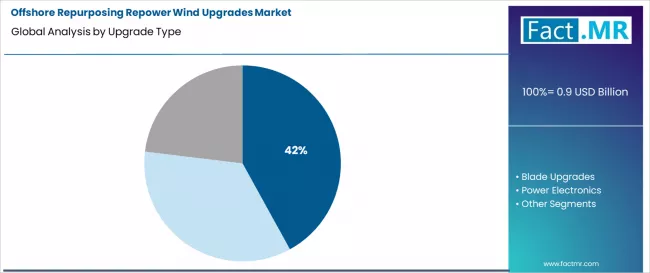
Nacelle replacement is the leading upgrade type with a 42% market share. This approach involves installing a completely new generator, drivetrain, and control system onto the existing tower and foundation.
It offers the most substantial power output increase, often doubling or tripling the original turbine's capacity, while incorporating the latest digital and reliability features. This makes it the preferred solution for projects where the structural integrity of the support structure is confirmed, and the goal is maximum return on the existing infrastructure investment.
By Water Depth, Where is the Upgrade Activity Most Concentrated and Technically Feasible?

Shallow water sites, defined as less than 30 meters depth, dominate the market with a 64% share. The vast majority of early offshore wind farms were developed in these relatively accessible waters.
Upgrading assets in shallow depths is more economically and technically feasible, as it allows for the use of conventional jack-up vessels and established installation techniques, keeping project costs and risks lower compared to operations in deeper, more challenging mid-depth sites.
By Turbine Age, Which Cohort Represents the Prime Candidate for Repowering?
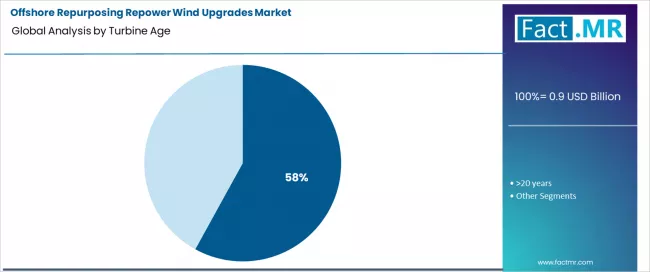
Turbines aged 15-20 years constitute the primary market segment, holding a 58% share. This age bracket represents the sweet spot where original equipment is nearing the end of its certified design life, major components require expensive refurbishment, and technological advancements in newer turbines offer compelling performance gaps. Upgrading these assets avoids the high costs of life extension through part-by-part maintenance and captures immediate gains in energy production and operational efficiency.
What are the Drivers, Restraints, Opportunities, and Trends in the Offshore Repurposing Repower Wind Upgrades Market?
The market is primarily driven by the economic imperative to maximize return on existing offshore grid infrastructure and foundations, which can represent up to 30% of a new project's cost. Supportive government policies and power purchase agreements that incentivize life extension and higher output from existing lease areas are key enablers.
A major restraint is the high initial capital expenditure and complex project finance requirements for upgrade campaigns, which must compete for capital against new-build projects. Technical challenges in mating new, heavier nacelles to older tower designs and uncertain remaining fatigue life of foundations also pose significant risks.
This creates opportunities for specialized engineering firms to offer life-assessment services and for supply chain companies to develop retrofit-specific installation systems. Current trends include the rise of partial repowering, where only the most critical components are replaced, and the integration of digital twin technology to precisely model upgrade impacts and optimize new equipment selection for each unique legacy asset.
Analysis of the Offshore Repurposing Repower Wind Upgrades Market by Key Countries
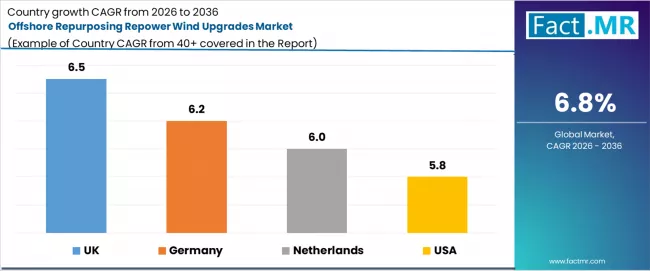
| Country | CAGR (2026-2036) |
|---|---|
| UK | 6.50% |
| Germany | 6.20% |
| Netherlands | 6.00% |
| USA | 5.80% |
How is the UK's Vast Fleet of Aging Assets and Supportive Policy Catalyzing the Market?
The UK, as the global leader in installed offshore wind capacity for over a decade, naturally hosts the largest and most mature market for repowering. Many of its pioneering wind farms in the North Sea are now over 15 years old. Supportive regulatory frameworks from the Crown Estate and specific incentives within the Contracts for Difference scheme are being tailored to encourage life extension and capacity upgrades.
The UK market is characterized by large-scale, portfolio-wide upgrade strategies from major asset owners, focusing on maximizing gigawatt-hour output from existing seabed leases. Projects often involve navigating complex consents for modifications, setting a procedural precedent for the global industry.
What is the Role of Germany's Engineering Expertise and Nuclear Phase-Out in Market Development?
Germany's market growth is driven by its world-class maritime engineering sector and the national imperative to replace lost baseload capacity from its nuclear phase-out with reliable renewable generation. German offshore wind farms in the North and Baltic Seas are key assets in this transition.
The market emphasizes meticulous engineering, with a focus on life-extension studies and component-level upgrades that ensure the highest possible reliability and grid compatibility. German engineering companies and certification bodies play a leading role in developing the technical standards and rigorous assessment protocols required for safe and bankable repower projects, influencing practices across Europe.
Why is the Netherlands' Focus on Circularity and Space Optimization a Key Factor?
The Netherlands' market is shaped by its limited maritime space and strong national commitment to the circular economy. Repowering is seen not only as an energy upgrade but as a model for sustainable asset management, minimizing waste by reusing foundations and grid connections.
Dutch innovation is focused on maximizing energy density per square kilometer of sea. This drives demand for upgrades that install the largest possible new turbines on existing footprints, as well as developing efficient methods for decommissioning and recycling old components. The market also benefits from the country's world-leading port and logistics infrastructure, ideal for staging complex offshore upgrade campaigns.
How are Early US Offshore Wind Installations and State-Level Ambitions Shaping the Opportunity?

USA, while newer, is emerging around its first generation of offshore wind projects, particularly early installations in state waters like the Block Island Wind Farm. State-level renewable energy mandates, especially in the Northeast, create a powerful driver to improve the performance of these initial assets.
The US opportunity is unique due to its nascent supply chain, which may lead to innovative approaches using specialized vessels and techniques. The regulatory process through the Bureau of Ocean Energy Management for modifying existing leases is still evolving, making early projects critical test cases that will define the regulatory and financial model for future repowering across the country's extensive lease areas.
Competitive Landscape
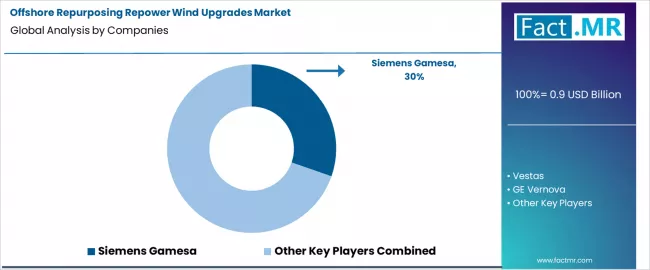
The original turbine manufacturers, who hold intrinsic advantages through their knowledge of the legacy equipment and their ownership of newer technology platforms, dominate the competitive landscape. Competition is intensifying with the entry of specialized independent service providers and engineering consultancies. Success for OEMs like Siemens Gamesa and Vestas depends on leveraging their extensive service history and data from the existing fleet to offer tailored, bankable upgrade packages.
They compete by offering technology bridges that allow older turbine models to be upgraded to their latest platforms. For newer entrants and component specialists, the strategy involves offering best in class, drop-in solutions for specific subsystems like blades, power converters, or control systems that are compatible across multiple OEM platforms.
Winning contracts increasingly requires forming consortiums that can offer full-scope engineering, procurement, construction, and installation services, coupled with performance guarantees and innovative financing models that de-risk the project for asset owners.
Key Players in the Offshore Repurposing Repower Wind Upgrades Market
- Siemens Gamesa
- Vestas
- GE Vernova
- Nordex
- MingYang Smart Energy
- Goldwind
Scope of Report
| Items | Values |
|---|---|
| Quantitative Units | USD Billion |
| Upgrade Type | Nacelle Replacement, Blade Upgrades, Power Electronics |
| Water Depth | Shallow (<30 m), Mid-depth (30-60 m) |
| Turbine Age | 15-20 years, >20 years |
| Key Countries | UK, Germany, Netherlands, USA |
| Key Companies | Siemens Gamesa, Vestas, GE Vernova, Nordex, MingYang Smart Energy, Goldwind |
| Additional Analysis | Techno-economic comparison of full vs. partial repowering; structural life assessment methodologies for foundations and towers; analysis of supply chain and vessel requirements for upgrade campaigns; regulatory and permitting landscape across key geographies; impact of digital twin and advanced monitoring on upgrade decisions; financing models and risk allocation for repower projects. |
Market by Segments
-
Upgrade Type :
- Nacelle Replacement
- Blade Upgrades
- Power Electronics
-
Water Depth :
- Shallow (<30 m)
- Mid-depth (30-60 m)
-
Turbine Age :
- 15-20 years
- 20 years
-
Region :
-
North America
- USA
- Canada
-
Latin America
- Brazil
- Mexico
- Argentina
- Rest of Latin America
-
Western Europe
- Germany
- UK
- France
- Italy
- BENLUX
- Spain
- Rest of Western Europe
-
Eastern Europe
- Poland
- Russia
- Czech Republic
- Rest of Eastern Europe
-
East Asia
- China
- Japan
- South Korea
- Rest of East Asia
-
South Asia & Pacific
- India
- ASEAN
- Australia
- Rest of South Asia & Pacific
-
MEA
- South Africa
- GCC Countries
- Turkiye
- Rest of MEA
-
References
- Carbon Trust. (2023). Offshore Wind Accelerator: Life Extension and Repowering. London.
- Det Norske Veritas (DNV). (2024). DNV-ST-0262: Life extension and reassessment of offshore wind turbine structures.
- European Commission. (2023). EU Strategy on Offshore Renewable Energy.Global Wind Energy Council (GWEC). (2024). Global Offshore Wind Report 2024.
- International Electrotechnical Commission (IEC). (2023). IEC 61400-28: Wind energy generation systems - Part 28: Repowering and life extension.
- Musial, W., & Ram, B. (2023). Offshore Wind Market Report: 2023 Edition. U.S. Department of Energy, National Renewable Energy Laboratory.
Table of Content
- Executive Summary
- Global Market Outlook
- Demand to side Trends
- Supply to side Trends
- Technology Roadmap Analysis
- Analysis and Recommendations
- Market Overview
- Market Coverage / Taxonomy
- Market Definition / Scope / Limitations
- Market Background
- Market Dynamics
- Drivers
- Restraints
- Opportunity
- Trends
- Scenario Forecast
- Demand in Optimistic Scenario
- Demand in Likely Scenario
- Demand in Conservative Scenario
- Opportunity Map Analysis
- Product Life Cycle Analysis
- Supply Chain Analysis
- Investment Feasibility Matrix
- Value Chain Analysis
- PESTLE and Porter’s Analysis
- Regulatory Landscape
- Regional Parent Market Outlook
- Production and Consumption Statistics
- Import and Export Statistics
- Market Dynamics
- Global Market Analysis 2021 to 2025 and Forecast, 2026 to 2036
- Historical Market Size Value (USD Million) Analysis, 2021 to 2025
- Current and Future Market Size Value (USD Million) Projections, 2026 to 2036
- Y to o to Y Growth Trend Analysis
- Absolute $ Opportunity Analysis
- Global Market Pricing Analysis 2021 to 2025 and Forecast 2026 to 2036
- Global Market Analysis 2021 to 2025 and Forecast 2026 to 2036, By Upgrade Type
- Introduction / Key Findings
- Historical Market Size Value (USD Million) Analysis By Upgrade Type, 2021 to 2025
- Current and Future Market Size Value (USD Million) Analysis and Forecast By Upgrade Type, 2026 to 2036
- Nacelle Replacement
- Blade Upgrades
- Power Electronics
- Nacelle Replacement
- Y to o to Y Growth Trend Analysis By Upgrade Type, 2021 to 2025
- Absolute $ Opportunity Analysis By Upgrade Type, 2026 to 2036
- Global Market Analysis 2021 to 2025 and Forecast 2026 to 2036, By Water Depth
- Introduction / Key Findings
- Historical Market Size Value (USD Million) Analysis By Water Depth, 2021 to 2025
- Current and Future Market Size Value (USD Million) Analysis and Forecast By Water Depth, 2026 to 2036
- Shallow (<30 m)
- Mid-depth
- Shallow (<30 m)
- Y to o to Y Growth Trend Analysis By Water Depth, 2021 to 2025
- Absolute $ Opportunity Analysis By Water Depth, 2026 to 2036
- Global Market Analysis 2021 to 2025 and Forecast 2026 to 2036, By Turbine Age
- Introduction / Key Findings
- Historical Market Size Value (USD Million) Analysis By Turbine Age, 2021 to 2025
- Current and Future Market Size Value (USD Million) Analysis and Forecast By Turbine Age, 2026 to 2036
- 15-20 years
- >20 years
- 15-20 years
- Y to o to Y Growth Trend Analysis By Turbine Age, 2021 to 2025
- Absolute $ Opportunity Analysis By Turbine Age, 2026 to 2036
- Global Market Analysis 2021 to 2025 and Forecast 2026 to 2036, By Region
- Introduction
- Historical Market Size Value (USD Million) Analysis By Region, 2021 to 2025
- Current Market Size Value (USD Million) Analysis and Forecast By Region, 2026 to 2036
- North America
- Latin America
- Western Europe
- Eastern Europe
- East Asia
- South Asia and Pacific
- Middle East & Africa
- Market Attractiveness Analysis By Region
- North America Market Analysis 2021 to 2025 and Forecast 2026 to 2036, By Country
- Historical Market Size Value (USD Million) Trend Analysis By Market Taxonomy, 2021 to 2025
- Market Size Value (USD Million) Forecast By Market Taxonomy, 2026 to 2036
- By Country
- USA
- Canada
- Mexico
- By Upgrade Type
- By Water Depth
- By Turbine Age
- By Country
- Market Attractiveness Analysis
- By Country
- By Upgrade Type
- By Water Depth
- By Turbine Age
- Key Takeaways
- Latin America Market Analysis 2021 to 2025 and Forecast 2026 to 2036, By Country
- Historical Market Size Value (USD Million) Trend Analysis By Market Taxonomy, 2021 to 2025
- Market Size Value (USD Million) Forecast By Market Taxonomy, 2026 to 2036
- By Country
- Brazil
- Chile
- Rest of Latin America
- By Upgrade Type
- By Water Depth
- By Turbine Age
- By Country
- Market Attractiveness Analysis
- By Country
- By Upgrade Type
- By Water Depth
- By Turbine Age
- Key Takeaways
- Western Europe Market Analysis 2021 to 2025 and Forecast 2026 to 2036, By Country
- Historical Market Size Value (USD Million) Trend Analysis By Market Taxonomy, 2021 to 2025
- Market Size Value (USD Million) Forecast By Market Taxonomy, 2026 to 2036
- By Country
- Germany
- UK
- Italy
- Spain
- France
- Nordic
- BENELUX
- Rest of Western Europe
- By Upgrade Type
- By Water Depth
- By Turbine Age
- By Country
- Market Attractiveness Analysis
- By Country
- By Upgrade Type
- By Water Depth
- By Turbine Age
- Key Takeaways
- Eastern Europe Market Analysis 2021 to 2025 and Forecast 2026 to 2036, By Country
- Historical Market Size Value (USD Million) Trend Analysis By Market Taxonomy, 2021 to 2025
- Market Size Value (USD Million) Forecast By Market Taxonomy, 2026 to 2036
- By Country
- Russia
- Poland
- Hungary
- Balkan & Baltic
- Rest of Eastern Europe
- By Upgrade Type
- By Water Depth
- By Turbine Age
- By Country
- Market Attractiveness Analysis
- By Country
- By Upgrade Type
- By Water Depth
- By Turbine Age
- Key Takeaways
- East Asia Market Analysis 2021 to 2025 and Forecast 2026 to 2036, By Country
- Historical Market Size Value (USD Million) Trend Analysis By Market Taxonomy, 2021 to 2025
- Market Size Value (USD Million) Forecast By Market Taxonomy, 2026 to 2036
- By Country
- China
- Japan
- South Korea
- By Upgrade Type
- By Water Depth
- By Turbine Age
- By Country
- Market Attractiveness Analysis
- By Country
- By Upgrade Type
- By Water Depth
- By Turbine Age
- Key Takeaways
- South Asia and Pacific Market Analysis 2021 to 2025 and Forecast 2026 to 2036, By Country
- Historical Market Size Value (USD Million) Trend Analysis By Market Taxonomy, 2021 to 2025
- Market Size Value (USD Million) Forecast By Market Taxonomy, 2026 to 2036
- By Country
- India
- ASEAN
- Australia & New Zealand
- Rest of South Asia and Pacific
- By Upgrade Type
- By Water Depth
- By Turbine Age
- By Country
- Market Attractiveness Analysis
- By Country
- By Upgrade Type
- By Water Depth
- By Turbine Age
- Key Takeaways
- Middle East & Africa Market Analysis 2021 to 2025 and Forecast 2026 to 2036, By Country
- Historical Market Size Value (USD Million) Trend Analysis By Market Taxonomy, 2021 to 2025
- Market Size Value (USD Million) Forecast By Market Taxonomy, 2026 to 2036
- By Country
- Kingdom of Saudi Arabia
- Other GCC Countries
- Turkiye
- South Africa
- Other African Union
- Rest of Middle East & Africa
- By Upgrade Type
- By Water Depth
- By Turbine Age
- By Country
- Market Attractiveness Analysis
- By Country
- By Upgrade Type
- By Water Depth
- By Turbine Age
- Key Takeaways
- Key Countries Market Analysis
- USA
- Pricing Analysis
- Market Share Analysis, 2025
- By Upgrade Type
- By Water Depth
- By Turbine Age
- Canada
- Pricing Analysis
- Market Share Analysis, 2025
- By Upgrade Type
- By Water Depth
- By Turbine Age
- Mexico
- Pricing Analysis
- Market Share Analysis, 2025
- By Upgrade Type
- By Water Depth
- By Turbine Age
- Brazil
- Pricing Analysis
- Market Share Analysis, 2025
- By Upgrade Type
- By Water Depth
- By Turbine Age
- Chile
- Pricing Analysis
- Market Share Analysis, 2025
- By Upgrade Type
- By Water Depth
- By Turbine Age
- Germany
- Pricing Analysis
- Market Share Analysis, 2025
- By Upgrade Type
- By Water Depth
- By Turbine Age
- UK
- Pricing Analysis
- Market Share Analysis, 2025
- By Upgrade Type
- By Water Depth
- By Turbine Age
- Italy
- Pricing Analysis
- Market Share Analysis, 2025
- By Upgrade Type
- By Water Depth
- By Turbine Age
- Spain
- Pricing Analysis
- Market Share Analysis, 2025
- By Upgrade Type
- By Water Depth
- By Turbine Age
- France
- Pricing Analysis
- Market Share Analysis, 2025
- By Upgrade Type
- By Water Depth
- By Turbine Age
- India
- Pricing Analysis
- Market Share Analysis, 2025
- By Upgrade Type
- By Water Depth
- By Turbine Age
- ASEAN
- Pricing Analysis
- Market Share Analysis, 2025
- By Upgrade Type
- By Water Depth
- By Turbine Age
- Australia & New Zealand
- Pricing Analysis
- Market Share Analysis, 2025
- By Upgrade Type
- By Water Depth
- By Turbine Age
- China
- Pricing Analysis
- Market Share Analysis, 2025
- By Upgrade Type
- By Water Depth
- By Turbine Age
- Japan
- Pricing Analysis
- Market Share Analysis, 2025
- By Upgrade Type
- By Water Depth
- By Turbine Age
- South Korea
- Pricing Analysis
- Market Share Analysis, 2025
- By Upgrade Type
- By Water Depth
- By Turbine Age
- Russia
- Pricing Analysis
- Market Share Analysis, 2025
- By Upgrade Type
- By Water Depth
- By Turbine Age
- Poland
- Pricing Analysis
- Market Share Analysis, 2025
- By Upgrade Type
- By Water Depth
- By Turbine Age
- Hungary
- Pricing Analysis
- Market Share Analysis, 2025
- By Upgrade Type
- By Water Depth
- By Turbine Age
- Kingdom of Saudi Arabia
- Pricing Analysis
- Market Share Analysis, 2025
- By Upgrade Type
- By Water Depth
- By Turbine Age
- Turkiye
- Pricing Analysis
- Market Share Analysis, 2025
- By Upgrade Type
- By Water Depth
- By Turbine Age
- South Africa
- Pricing Analysis
- Market Share Analysis, 2025
- By Upgrade Type
- By Water Depth
- By Turbine Age
- USA
- Market Structure Analysis
- Competition Dashboard
- Competition Benchmarking
- Market Share Analysis of Top Players
- By Regional
- By Upgrade Type
- By Water Depth
- By Turbine Age
- Competition Analysis
- Competition Deep Dive
- Siemens Gamesa
- Overview
- Product Portfolio
- Profitability by Market Segments (Product/Age /Sales Channel/Region)
- Sales Footprint
- Strategy Overview
- Marketing Strategy
- Product Strategy
- Channel Strategy
- Vestas
- GE Vernova
- Nordex
- MingYang Smart Energy
- Goldwind
- Siemens Gamesa
- Competition Deep Dive
- Assumptions & Acronyms Used
- Research Methodology
List Of Table
- Table 1: Global Market Value (USD Million) Forecast by Region, 2021 to 2036
- Table 2: Global Market Value (USD Million) Forecast by Upgrade Type, 2021 to 2036
- Table 3: Global Market Value (USD Million) Forecast by Water Depth, 2021 to 2036
- Table 4: Global Market Value (USD Million) Forecast by Turbine Age, 2021 to 2036
- Table 5: North America Market Value (USD Million) Forecast by Country, 2021 to 2036
- Table 6: North America Market Value (USD Million) Forecast by Upgrade Type, 2021 to 2036
- Table 7: North America Market Value (USD Million) Forecast by Water Depth, 2021 to 2036
- Table 8: North America Market Value (USD Million) Forecast by Turbine Age, 2021 to 2036
- Table 9: Latin America Market Value (USD Million) Forecast by Country, 2021 to 2036
- Table 10: Latin America Market Value (USD Million) Forecast by Upgrade Type, 2021 to 2036
- Table 11: Latin America Market Value (USD Million) Forecast by Water Depth, 2021 to 2036
- Table 12: Latin America Market Value (USD Million) Forecast by Turbine Age, 2021 to 2036
- Table 13: Western Europe Market Value (USD Million) Forecast by Country, 2021 to 2036
- Table 14: Western Europe Market Value (USD Million) Forecast by Upgrade Type, 2021 to 2036
- Table 15: Western Europe Market Value (USD Million) Forecast by Water Depth, 2021 to 2036
- Table 16: Western Europe Market Value (USD Million) Forecast by Turbine Age, 2021 to 2036
- Table 17: Eastern Europe Market Value (USD Million) Forecast by Country, 2021 to 2036
- Table 18: Eastern Europe Market Value (USD Million) Forecast by Upgrade Type, 2021 to 2036
- Table 19: Eastern Europe Market Value (USD Million) Forecast by Water Depth, 2021 to 2036
- Table 20: Eastern Europe Market Value (USD Million) Forecast by Turbine Age, 2021 to 2036
- Table 21: East Asia Market Value (USD Million) Forecast by Country, 2021 to 2036
- Table 22: East Asia Market Value (USD Million) Forecast by Upgrade Type, 2021 to 2036
- Table 23: East Asia Market Value (USD Million) Forecast by Water Depth, 2021 to 2036
- Table 24: East Asia Market Value (USD Million) Forecast by Turbine Age, 2021 to 2036
- Table 25: South Asia and Pacific Market Value (USD Million) Forecast by Country, 2021 to 2036
- Table 26: South Asia and Pacific Market Value (USD Million) Forecast by Upgrade Type, 2021 to 2036
- Table 27: South Asia and Pacific Market Value (USD Million) Forecast by Water Depth, 2021 to 2036
- Table 28: South Asia and Pacific Market Value (USD Million) Forecast by Turbine Age, 2021 to 2036
- Table 29: Middle East & Africa Market Value (USD Million) Forecast by Country, 2021 to 2036
- Table 30: Middle East & Africa Market Value (USD Million) Forecast by Upgrade Type, 2021 to 2036
- Table 31: Middle East & Africa Market Value (USD Million) Forecast by Water Depth, 2021 to 2036
- Table 32: Middle East & Africa Market Value (USD Million) Forecast by Turbine Age, 2021 to 2036
List Of Figures
- Figure 1: Global Market Pricing Analysis
- Figure 2: Global Market Value (USD Million) Forecast 2021 to 2036
- Figure 3: Global Market Value Share and BPS Analysis by Upgrade Type, 2026 and 2036
- Figure 4: Global Market Y to o to Y Growth Comparison by Upgrade Type, 2026 to 2036
- Figure 5: Global Market Attractiveness Analysis by Upgrade Type
- Figure 6: Global Market Value Share and BPS Analysis by Water Depth, 2026 and 2036
- Figure 7: Global Market Y to o to Y Growth Comparison by Water Depth, 2026 to 2036
- Figure 8: Global Market Attractiveness Analysis by Water Depth
- Figure 9: Global Market Value Share and BPS Analysis by Turbine Age, 2026 and 2036
- Figure 10: Global Market Y to o to Y Growth Comparison by Turbine Age, 2026 to 2036
- Figure 11: Global Market Attractiveness Analysis by Turbine Age
- Figure 12: Global Market Value (USD Million) Share and BPS Analysis by Region, 2026 and 2036
- Figure 13: Global Market Y to o to Y Growth Comparison by Region, 2026 to 2036
- Figure 14: Global Market Attractiveness Analysis by Region
- Figure 15: North America Market Incremental Dollar Opportunity, 2026 to 2036
- Figure 16: Latin America Market Incremental Dollar Opportunity, 2026 to 2036
- Figure 17: Western Europe Market Incremental Dollar Opportunity, 2026 to 2036
- Figure 18: Eastern Europe Market Incremental Dollar Opportunity, 2026 to 2036
- Figure 19: East Asia Market Incremental Dollar Opportunity, 2026 to 2036
- Figure 20: South Asia and Pacific Market Incremental Dollar Opportunity, 2026 to 2036
- Figure 21: Middle East & Africa Market Incremental Dollar Opportunity, 2026 to 2036
- Figure 22: North America Market Value Share and BPS Analysis by Country, 2026 and 2036
- Figure 23: North America Market Value Share and BPS Analysis by Upgrade Type, 2026 and 2036
- Figure 24: North America Market Y to o to Y Growth Comparison by Upgrade Type, 2026 to 2036
- Figure 25: North America Market Attractiveness Analysis by Upgrade Type
- Figure 26: North America Market Value Share and BPS Analysis by Water Depth, 2026 and 2036
- Figure 27: North America Market Y to o to Y Growth Comparison by Water Depth, 2026 to 2036
- Figure 28: North America Market Attractiveness Analysis by Water Depth
- Figure 29: North America Market Value Share and BPS Analysis by Turbine Age, 2026 and 2036
- Figure 30: North America Market Y to o to Y Growth Comparison by Turbine Age, 2026 to 2036
- Figure 31: North America Market Attractiveness Analysis by Turbine Age
- Figure 32: Latin America Market Value Share and BPS Analysis by Country, 2026 and 2036
- Figure 33: Latin America Market Value Share and BPS Analysis by Upgrade Type, 2026 and 2036
- Figure 34: Latin America Market Y to o to Y Growth Comparison by Upgrade Type, 2026 to 2036
- Figure 35: Latin America Market Attractiveness Analysis by Upgrade Type
- Figure 36: Latin America Market Value Share and BPS Analysis by Water Depth, 2026 and 2036
- Figure 37: Latin America Market Y to o to Y Growth Comparison by Water Depth, 2026 to 2036
- Figure 38: Latin America Market Attractiveness Analysis by Water Depth
- Figure 39: Latin America Market Value Share and BPS Analysis by Turbine Age, 2026 and 2036
- Figure 40: Latin America Market Y to o to Y Growth Comparison by Turbine Age, 2026 to 2036
- Figure 41: Latin America Market Attractiveness Analysis by Turbine Age
- Figure 42: Western Europe Market Value Share and BPS Analysis by Country, 2026 and 2036
- Figure 43: Western Europe Market Value Share and BPS Analysis by Upgrade Type, 2026 and 2036
- Figure 44: Western Europe Market Y to o to Y Growth Comparison by Upgrade Type, 2026 to 2036
- Figure 45: Western Europe Market Attractiveness Analysis by Upgrade Type
- Figure 46: Western Europe Market Value Share and BPS Analysis by Water Depth, 2026 and 2036
- Figure 47: Western Europe Market Y to o to Y Growth Comparison by Water Depth, 2026 to 2036
- Figure 48: Western Europe Market Attractiveness Analysis by Water Depth
- Figure 49: Western Europe Market Value Share and BPS Analysis by Turbine Age, 2026 and 2036
- Figure 50: Western Europe Market Y to o to Y Growth Comparison by Turbine Age, 2026 to 2036
- Figure 51: Western Europe Market Attractiveness Analysis by Turbine Age
- Figure 52: Eastern Europe Market Value Share and BPS Analysis by Country, 2026 and 2036
- Figure 53: Eastern Europe Market Value Share and BPS Analysis by Upgrade Type, 2026 and 2036
- Figure 54: Eastern Europe Market Y to o to Y Growth Comparison by Upgrade Type, 2026 to 2036
- Figure 55: Eastern Europe Market Attractiveness Analysis by Upgrade Type
- Figure 56: Eastern Europe Market Value Share and BPS Analysis by Water Depth, 2026 and 2036
- Figure 57: Eastern Europe Market Y to o to Y Growth Comparison by Water Depth, 2026 to 2036
- Figure 58: Eastern Europe Market Attractiveness Analysis by Water Depth
- Figure 59: Eastern Europe Market Value Share and BPS Analysis by Turbine Age, 2026 and 2036
- Figure 60: Eastern Europe Market Y to o to Y Growth Comparison by Turbine Age, 2026 to 2036
- Figure 61: Eastern Europe Market Attractiveness Analysis by Turbine Age
- Figure 62: East Asia Market Value Share and BPS Analysis by Country, 2026 and 2036
- Figure 63: East Asia Market Value Share and BPS Analysis by Upgrade Type, 2026 and 2036
- Figure 64: East Asia Market Y to o to Y Growth Comparison by Upgrade Type, 2026 to 2036
- Figure 65: East Asia Market Attractiveness Analysis by Upgrade Type
- Figure 66: East Asia Market Value Share and BPS Analysis by Water Depth, 2026 and 2036
- Figure 67: East Asia Market Y to o to Y Growth Comparison by Water Depth, 2026 to 2036
- Figure 68: East Asia Market Attractiveness Analysis by Water Depth
- Figure 69: East Asia Market Value Share and BPS Analysis by Turbine Age, 2026 and 2036
- Figure 70: East Asia Market Y to o to Y Growth Comparison by Turbine Age, 2026 to 2036
- Figure 71: East Asia Market Attractiveness Analysis by Turbine Age
- Figure 72: South Asia and Pacific Market Value Share and BPS Analysis by Country, 2026 and 2036
- Figure 73: South Asia and Pacific Market Value Share and BPS Analysis by Upgrade Type, 2026 and 2036
- Figure 74: South Asia and Pacific Market Y to o to Y Growth Comparison by Upgrade Type, 2026 to 2036
- Figure 75: South Asia and Pacific Market Attractiveness Analysis by Upgrade Type
- Figure 76: South Asia and Pacific Market Value Share and BPS Analysis by Water Depth, 2026 and 2036
- Figure 77: South Asia and Pacific Market Y to o to Y Growth Comparison by Water Depth, 2026 to 2036
- Figure 78: South Asia and Pacific Market Attractiveness Analysis by Water Depth
- Figure 79: South Asia and Pacific Market Value Share and BPS Analysis by Turbine Age, 2026 and 2036
- Figure 80: South Asia and Pacific Market Y to o to Y Growth Comparison by Turbine Age, 2026 to 2036
- Figure 81: South Asia and Pacific Market Attractiveness Analysis by Turbine Age
- Figure 82: Middle East & Africa Market Value Share and BPS Analysis by Country, 2026 and 2036
- Figure 83: Middle East & Africa Market Value Share and BPS Analysis by Upgrade Type, 2026 and 2036
- Figure 84: Middle East & Africa Market Y to o to Y Growth Comparison by Upgrade Type, 2026 to 2036
- Figure 85: Middle East & Africa Market Attractiveness Analysis by Upgrade Type
- Figure 86: Middle East & Africa Market Value Share and BPS Analysis by Water Depth, 2026 and 2036
- Figure 87: Middle East & Africa Market Y to o to Y Growth Comparison by Water Depth, 2026 to 2036
- Figure 88: Middle East & Africa Market Attractiveness Analysis by Water Depth
- Figure 89: Middle East & Africa Market Value Share and BPS Analysis by Turbine Age, 2026 and 2036
- Figure 90: Middle East & Africa Market Y to o to Y Growth Comparison by Turbine Age, 2026 to 2036
- Figure 91: Middle East & Africa Market Attractiveness Analysis by Turbine Age
- Figure 92: Global Market - Tier Structure Analysis
- Figure 93: Global Market - Company Share Analysis
- FAQs -
How big is the offshore repurposing repower wind upgrades market in 2026?
The global offshore repurposing repower wind upgrades market is estimated to be valued at USD 0.9 billion in 2026.
What will be the size of offshore repurposing repower wind upgrades market in 2036?
The market size for the offshore repurposing repower wind upgrades market is projected to reach USD 1.8 billion by 2036.
How much will be the offshore repurposing repower wind upgrades market growth between 2026 and 2036?
The offshore repurposing repower wind upgrades market is expected to grow at a 6.8% CAGR between 2026 and 2036.
What are the key product types in the offshore repurposing repower wind upgrades market?
The key product types in offshore repurposing repower wind upgrades market are nacelle replacement, blade upgrades and power electronics.
Which water depth segment to contribute significant share in the offshore repurposing repower wind upgrades market in 2026?
In terms of water depth, shallow (<30 m) segment to command 64.0% share in the offshore repurposing repower wind upgrades market in 2026.