- Base Value(2026): 620.0 Mn
- Estimated Value(2026): 620.0 Mn
- Forecast Value (2036): 2199.6 Mn
- CAGR (2026 - 2036): 13.5%
Olive Polyphenol Beauty-From-Within Ingredients Market Forecast and Outlook 2026 to 2036
Olive polyphenol beauty-from-within ingredients market is likely to be valued at USD 620.0 million in 2026 and is projected to reach USD 2,199.6 million by 2036 at a 13.5% CAGR.
Olive Polyphenol Beauty-From-Within Ingredients Market Key Takeaways
- Olive Polyphenol Beauty-From-Within Ingredients Market Value (2026): USD 620.0 million
- Olive Polyphenol Beauty-From-Within Ingredients Market Forecast Value (2036): USD 2,199.6 million
- Olive Polyphenol Beauty-From-Within Ingredients Market Forecast CAGR (2026-2036): 13.5%
- Leading Product Type in Olive Polyphenol Beauty-From-Within Ingredients Market: Olive polyphenol extract powder
- Key Growth Regions in Olive Polyphenol Beauty-From-Within Ingredients Market: Asia Pacific, Europe, North America
- Top Players in Olive Polyphenol Beauty-From-Within Ingredients Market: Indena, Givaudan, International Flavors & Fragrances, Alvinesa, Nexira, Seprox Biotech, Genosa I+D, BioPowder
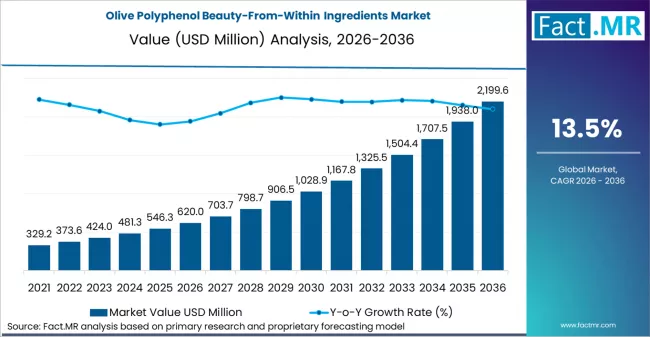
Olive Polyphenol Beauty From Within Ingredients Market Market Value Analysis | Source: Fact.MR
Spending follows formulation roadmaps set by brand owners. Product briefs define polyphenol profile, extraction route, carrier system, and stability window before sourcing begins. Entry into a hero SKU raises switching cost. Dossiers, labels, and clinical references lock the input. Grower contracts, mill traceability, and identity govern qualification. Buyers screen oleuropein ranges, sensory impact, and interaction with collagen, probiotics, and lipid matrices. Capacity planning links harvest patterns, extraction yields, aging, and launch calendars. Volume concentrates in capsules, sticks, and gummies tied to portfolio rollouts.
Program execution inside the olive polyphenol beauty-from-within ingredients market depends on audit cycles, assay bands, and packaging claim files. Contract terms fix solvent limits, pesticide screens, and batch identity rules. Toll extraction competes with in house plants across different risk profiles. Capacity enters in blocks tied to equipment trains, with output scheduled against launch calendars and shelf life windows.
Olive Polyphenol Beauty-From-Within Ingredients Market
| Metric | Value |
|---|---|
| Market Value (2026) | USD 620.0 million |
| Forecast Value (2036) | USD 2,199.6 million |
| Forecast CAGR (2026-2036) | 13.5% |
Source: Fact.MR analysis. Updated Jan 22, 2026
Category
| Category | Segments |
|---|---|
| Product Type | Olive polyphenol extract powder; Olive polyphenol liquid concentrates; Encapsulated olive polyphenol ingredients; Blended olive polyphenol complexes |
| End Use | Dietary supplements and nutricosmetics; Functional foods and beverages; Medical nutrition; Sports and active nutrition |
| Region | North America; Europe; Asia Pacific; Latin America; Middle East & Africa |
Source: Fact.MR analysis. Updated Jan 22, 2026
Segmental Analysis
Why Does Powder Remain the Reference Form for Olive Polyphenol Ingredient Formulation?
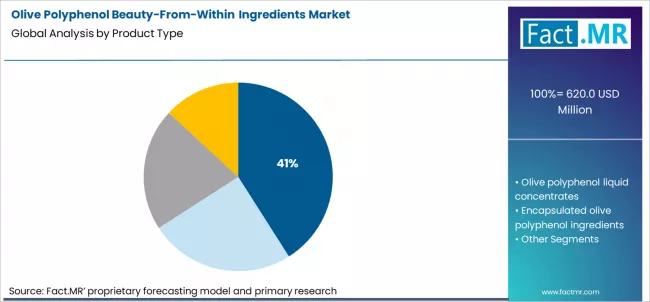
Olive Polyphenol Beauty From Within Ingredients Market Analysis By Product Type | Source: Fact.MR
Formulation planning in this category continues to center on olive polyphenol extract powder, which represents 41% of volume within the olive polyphenol beauty-from-within ingredients market. This preference reflects process control rather than novelty. Powder inputs allow manufacturers to manage oxidation, moisture exposure, and active concentration through established handling protocols. Production lines built for blending, tableting, and capsule filling already operate around dry inputs, which reduces changeover requirements. Inventory planning also benefits from predictable storage behavior and longer shelf stability under controlled conditions. Product developers use powder grades to standardize polyphenol content across multiple finished formats without altering base recipes. Liquid, encapsulated, and blended systems remain present, yet they usually address specific delivery or positioning needs.
What Explains the Central Role of Dietary Supplements and Nutricosmetics in Demand Formation?
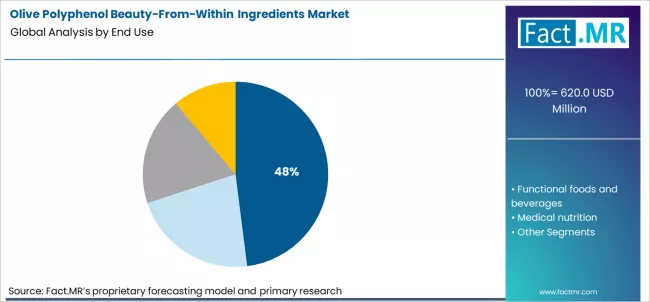
Olive Polyphenol Beauty From Within Ingredients Market Analysis By End Use | Source: Fact.MR
Consumption patterns place dietary supplements and nutricosmetics at 48% of end use demand in the olive polyphenol beauty-from-within ingredients market. This structure is shaped by portfolio design and regulatory classification rather than ingredient availability. Brands in this segment operate around defined serving sizes, labeled intake schedules, and repeat purchase cycles, which supports stable production planning. Manufacturing workflows are organized around supplement grade inputs, limiting the need to adapt formulations for food matrices or clinical nutrition protocols. Distribution channels also align with this model because replenishment timing and stock rotation follow predictable rhythms. Functional foods, medical nutrition, and sports products contribute incremental volume, yet they usually enter portfolios as extensions rather than primary demand anchors.
What are the Drivers, Restraints, and Key Trends of the Olive Polyphenol Beauty-From-Within Ingredients Market?
- Drivers: Growing use of ingestible beauty supplements and rising preference for plant-based antioxidant ingredients are increasing inclusion of olive polyphenols in skin health, anti-aging, and wellness formulations across nutraceutical and nutricosmetic portfolios.
- Restraint: Inconsistent raw material quality, limits on cosmetic and health claims, and variation in polyphenol concentration across extract types constrain product standardization and brand positioning.
- Trend 1: Wider adoption of standardized extract grades designed to deliver consistent active content across capsules, powders, and liquid formats.
- Trend 2: Increasing combination of olive polyphenols with collagen, vitamins, and carotenoids to support multi-benefit beauty formulations.
Analysis of the Olive Polyphenol Beauty-From-Within Ingredients Market by Key Country
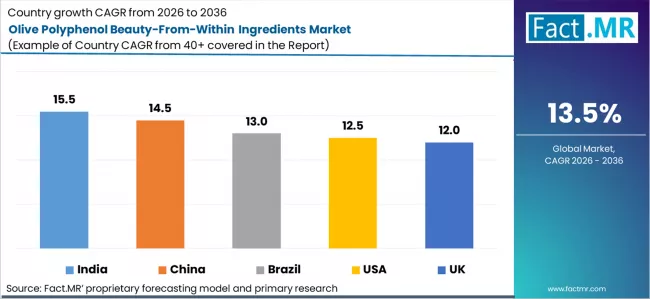
Olive Polyphenol Beauty From Within Ingredients Market Cagr Analysis By Country | Source: Fact.MR
| Country | CAGR (2026-2036) |
|---|---|
| USA | 12.5% |
| UK | 12.0% |
| China | 14.5% |
| India | 15.5% |
| Brazil | 13.0% |
Source: Fact.MR analysis. Updated Jan 22, 2026
The report covers an in-depth analysis of 40+ countries; top-performing countries are highlighted below.
How Is USA Shaping the Use of Olive Polyphenol Beauty from Within Ingredients?
Brand owners in USA place these ingredients inside structured nutricosmetic programs tied to skin health positioning. The segment follows an annual growth pace of 12.5% through 2036. Product approvals depend on documented composition and stability files reviewed during formulation sign off. Contract manufacturers integrate these extracts into capsules powders and liquid shots. Retail distribution moves through specialty nutrition chains and controlled online platforms. Marketing teams rely on compliant structure function claims cleared through legal review. Supply agreements specify batch consistency and traceability standards. Importers maintain origin documentation covering olive source and processing method. Demand patterns track product launch calendars. Procurement cycles reflect brand portfolio refresh schedules. Volume planning depends on confirmed listing slots and retail shelf allocations.
Why Do Formulation Decisions in UK Matter for Olive Polyphenol Beauty from Within Ingredients?
Formulation choices inside nutricosmetic brands in UK guide purchasing volumes for olive polyphenol ingredients. The category moves forward at roughly 12% per year through 2036. Product teams select extracts based on assay data and flavor impact tests. Regulatory review focuses on labeling compliance and claim wording. Contract packers integrate these inputs into gummies capsules and drinkable formats. Distribution passes through pharmacy chains and specialist wellness retailers. Buyers request consistent supply supported by lot level documentation. Importers manage customs files covering botanical origin and processing steps. Inventory planning follows promotional calendars set by retailers. Brand launches set short term demand spikes. Reorder volumes depend on sell through reports. Long term supply contracts link to portfolio planning cycles approved by management committees.
What Is Driving Platform Led Expansion of Olive Polyphenol Beauty from Within Ingredients in China?
Beauty nutrition brands in China drive usage of olive polyphenol inputs within skin focused ingestible products. The segment runs on a track equal to about 14.5% each year through 2036. Registration files require detailed composition and safety data. Local manufacturers blend these extracts into sachets tablets and liquid concentrates. E commerce channels account for a large share of finished product sales. Platform operators request proof of origin and quality testing. Importers maintain traceability covering olive source and extraction method. Production schedules align with online promotion events. Inventory buffers rise before major sales campaigns. Brand owners prioritize suppliers with stable delivery performance. Pricing negotiations depend on volume commitments. Market access depends on successful platform listing reviews and compliance audits.
How Are Portfolio Expansions in India Changing Demand for Olive Polyphenol Ingredients?
Nutricosmetic brands in India integrate olive polyphenol ingredients into skin support formulations targeting urban consumers. The segment progresses at a rate close to 15.5% per year through 2036. Product development teams test compatibility with local flavor systems and capsule shells. Regulatory review centers on ingredient approval status and labeling language. Contract manufacturers handle blending and filling under audited conditions. Distribution focuses on online platforms and specialty nutrition stores. Importers manage documentation covering botanical origin and processing steps. Brands request consistent assay values across shipments. Launch schedules determine short term procurement volumes. Marketing budgets shape reorder timing. Suppliers with local stock points gain preference. Long term demand links to portfolio expansion plans approved during annual strategy reviews.
What Is Setting the Commercial Pace for Olive Polyphenol Beauty from Within Ingredients in Brazil?
Beauty from within products in Brazil include olive derived actives within skin health lines across multiple brands. The segment records growth near 13% per year through 2036. Formulators evaluate extracts based on potency data and sensory impact. Regulatory checks focus on ingredient registration and claim wording. Contract packers produce capsules and drinkable formats for domestic brands. Distribution runs through pharmacy chains and wellness retailers. Importers maintain origin certificates and quality test reports. Currency movement influences pricing discussions with suppliers. Inventory planning follows retail promotion calendars. Brand owners favor partners offering stable lead times. New product launches drive trial volumes. Repeat orders depend on sell through data. Procurement decisions sit with category managers during seasonal range review meetings.
How is Competition Structured Among Suppliers in The Olive Polyphenol Beauty from Within Ingredients Market?
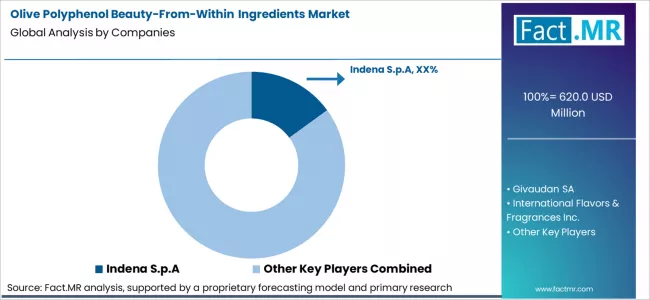
Olive Polyphenol Beauty From Within Ingredients Market Analysis By Company | Source: Fact.MR
Competition in the olive polyphenol beauty from within ingredients market is shaped by control over raw material streams, extraction know how, and validation pathways demanded by brand owners. Indena, Givaudan, and International Flavors & Fragrances anchor the upper tier through scale, formulation services, and long standing customer frameworks.
Alvinesa, Seprox Biotech, and Genosa I+D compete through tighter sourcing ties and focused polyphenol profiles. Nexira and BioPowder emphasize portfolio fit and batch level consistency for supplement and nutricosmetic programs. Buyers qualify suppliers through stability data, traceability files, and repeatability across harvest cycles. Switching costs remain moderate, yet approval cycles slow movement. Pricing power follows documented bioactive content, not brand reputation alone.
Key Players in the Olive Polyphenol Beauty-From-Within Ingredients Market
- Indena S.p.A
- Givaudan SA
- International Flavors & Fragrances Inc.
- Alvinesa Natural Ingredients S.L.
- Nexira SAS
- Seprox Biotech S.L.
- Genosa I+D S.L.
- BioPowder Natural Ingredients Ltd.
References
- European Food Safety Authority Panel on Nutrition, Novel Foods and Food Allergens (NDA). (2023). Scientific opinion on the safety of olive extract rich in hydroxytyrosol as a novel food pursuant to Regulation (EU) 2015/2283. EFSA Journal, 21(7).
- European Food Safety Authority. (2023). Compendium of botanicals and botanical preparations used in food supplements. European Food Safety Authority.
- European Commission. (2024). Nutrition and health claims: Guidance on the application of Regulation (EC) No 1924/2006. European Commission.
- International Olive Council. (2024). Trade standard applying to olive oils and olive-pomace oils (COI/T.15/NC No 3/Rev. 20). International Olive Council.
- European Union. (2023). Commission Regulation (EU) 2023/915 of 25 April 2023 on maximum levels for certain contaminants in food. Official Journal of the European Union.
Segmentation
Scope of the Report
| Items | Values |
|---|---|
| Quantitative Units (2026) | USD million |
| Product Type | Olive polyphenol extract powder, olive polyphenol liquid concentrates, encapsulated olive polyphenol ingredients, blended olive polyphenol complexes |
| End Use | Dietary supplements and nutricosmetics, functional foods and beverages, medical nutrition, sports and active nutrition |
| Regions Covered | Asia Pacific, Europe, North America, Latin America, Middle East & Africa |
| Countries Covered | United States, Canada, Mexico, Germany, United Kingdom, France, Italy, Spain, Nordics, BENELUX, China, Japan, South Korea, India, Australia & New Zealand, ASEAN, Brazil, Chile, Saudi Arabia, Turkey, South Africa, and other regional markets |
| Key Companies Profiled | Indena, Givaudan, International Flavors & Fragrances, Alvinesa Natural Ingredients, Nexira, Seprox Biotech, Genosa I+D, BioPowder Natural Ingredients |
| Additional Attributes | Dollar sales by product type and end use; assay band control, extraction route, and stability window management; batch traceability, regulatory dossiers, and harvest-linked capacity planning |
Source: Fact.MR analysis. Updated Jan 22, 2026
Olive Polyphenol Beauty-From-Within Ingredients Market Segmentation
-
Product Type :
- Olive polyphenol extract powder
- Olive polyphenol liquid concentrates
- Encapsulated olive polyphenol ingredients
- Blended olive polyphenol complexes
-
End Use :
- Dietary supplements and nutricosmetics
- Functional foods and beverages
- Medical nutrition
- Sports and active nutrition
-
Region :
- Asia Pacific
- China
- Japan
- South Korea
- India
- Australia & New Zealand
- ASEAN
- Rest of Asia Pacific
- Europe
- Germany
- United Kingdom
- France
- Italy
- Spain
- Nordic
- BENELUX
- Rest of Europe
- North America
- United States
- Canada
- Mexico
- Latin America
- Brazil
- Chile
- Rest of Latin America
- Middle East & Africa
- Kingdom of Saudi Arabia
- Other GCC Countries
- Turkey
- South Africa
- Other African Union
- Rest of Middle East & Africa
- Asia Pacific
Frequently Asked Questions
How big is the olive polyphenol beauty-from-within ingredients market in 2026?
What will be the size of olive polyphenol beauty-from-within ingredients market in 2036?
How much will be the olive polyphenol beauty-from-within ingredients market growth between 2026 and 2036?
What are the key product types in the olive polyphenol beauty-from-within ingredients market?
Which end use segment to contribute significant share in the olive polyphenol beauty-from-within ingredients market in 2026?
Who worked on this report


Preview the report firsthand - request a free sample
Free SampleGet the brochure for pricing and purchase details
Download PDF