- Base Value(2025): 83.60 Mn
- Estimated Value(2026): 88.20 Mn
- Forecast Value (2036): 150.65 Mn
- CAGR (2026 - 2036): 5.50%
Pet At-home Diagnostic Tests Market Size, Market Forecast and Outlook By Fact.MR
The pet at-home diagnostic tests market was valued at USD 83.60 million in 2025, projected to reach USD 88.20 million in 2026, and is forecast to expand to USD 150.65 million by 2036 at a 5.50% CAGR. Rising pet ownership rates and the increasing willingness of pet owners to manage routine health screening outside clinical settings are accelerating uptake of at-home diagnostic test kits globally. The convenience of rapid lateral flow assays and mail-in sample collection kits has shifted a measurable portion of first-line screening away from veterinary clinic appointments toward direct-to-consumer channels.

Pet At Home Diagnostic Tests Market Market Value Analysis | Source: Fact.MR
Summary of Pet At-home Diagnostic Tests Market
- Market Overview
- The market is valued at USD 83.60 million in 2025 and is projected to reach USD 150.65 million by 2036.
- The industry is expected to grow at a 5.50% CAGR from 2026 to 2036, creating an incremental opportunity of USD 62.45 million.
- The market functions as a consumer health diagnostics category where test sensitivity, ease of sample collection, and e-commerce distribution reach determine competitive positioning across pet owner segments.
- Demand and Growth Drivers
- Rising global pet ownership and increased willingness to invest in companion animal health screening drive baseline demand for at-home diagnostic kits.
- Expansion of test panel scope from single-analyte parasite detection to multi-analyte wellness profiles covering allergies, metabolic markers, and genetic predispositions broadens addressable applications.
- E-commerce platform penetration and direct-to-consumer logistics enable convenient distribution of rapid lateral flow assays and mail-in sample collection kits.
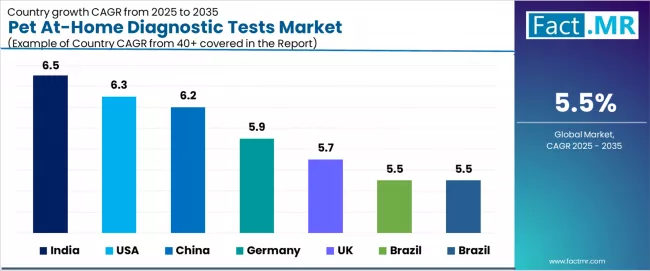
- Among key countries, India leads at 6.5% CAGR, followed by the USA at 6.3%, China at 6.2%, Germany at 5.9%, the UK at 5.7%, and Brazil and South Africa each at 5.5%.
- Product and Segment View
- Pet at-home diagnostic tests include rapid lateral flow immunoassays, mail-in sample collection kits, and portable biosensor devices designed for use by pet owners outside clinical settings.
- Dogs account for 58.8% of the Animal Type segment in 2026, reflecting the largest companion animal population base and the widest range of available screening panels.
- Parasitic Diseases testing holds 35.0% of the Application segment in 2026, driven by routine fecal and blood screening for common intestinal and tick-borne parasites.
- Blood sample type commands 45.0% share in 2026, required for heartworm, tick-borne disease, and metabolic marker panels.
- Scope includes at-home rapid test kits, mail-in diagnostic sample kits, and portable biosensor devices for dogs, cats, and other companion animals. Clinical laboratory services, in-clinic point-of-care analyzers, and livestock diagnostic products are excluded.
- Geography and Competitive Outlook
- India, the USA, and China are the fastest-growing markets, supported by expanding pet populations, rising disposable income, and established e-commerce logistics.
- Germany and the UK represent mature but steady demand bases with validated regulatory frameworks supporting companion animal diagnostic device distribution.
- Competition centers on test sensitivity, panel breadth, and e-commerce channel reach, with Affordable Pet Labs, Ring Biotechnology Co., Ltd., Forte Healthcare Ltd., Wondfo USA Co., Ltd., Vitrosens Biotechnology, and Targetvet among the principal participants.
- Analyst Opinion at Fact.MR
- Shambhu Nath Jha, Principal Consultant for Life Sciences, opines: 'In my analysis, I have observed that the primary adoption barrier in the pet at-home diagnostics category is not test availability but pet owner confidence in sample collection accuracy. Kits requiring blood micro-sampling face higher abandonment rates than fecal or urine collection formats. Manufacturers that invest in simplified collection devices and result interpretation support through mobile applications will capture the next wave of first-time at-home testers who currently default to clinic visits for routine wellness panels.'
- Strategic Implications / Executive Takeaways
- Kit manufacturers must invest in simplified sample collection mechanisms that minimize pet owner handling errors and reduce result invalidation rates.
- E-commerce platform partners should develop subscription-based wellness testing bundles that align with annual vaccination and parasite prevention schedules.
- Product development teams need to expand multi-analyte panel coverage to include allergy profiling and metabolic screening to increase per-test revenue and repeat purchase frequency.
Pet At-home Diagnostic Tests Market Key Takeaways
| Metric | Details |
|---|---|
| Industry Size (2026) | USD 88.20 million |
| Industry Value (2036) | USD 150.65 million |
| CAGR (2026 to 2036) | 5.50% |
Source: Fact.MR analysis. Updated Apr 2, 2026
Source: Future Market Insights, 2026
Between 2026 and 2036, the market is set to generate an absolute dollar opportunity of USD 62.45 million. This expansion is incremental but consistent, underpinned by the broadening scope of test panels from single-analyte parasite detection to multi-analyte wellness profiles covering allergies, metabolic markers, and genetic predispositions. Veterinary reimbursement gaps in several countries push pet owners toward self-administered screening as a cost management strategy.
India leads with a 6.5% CAGR, fueled by rapid pet population expansion and a growing urban middle class investing in companion animal health. The USA follows at 6.3%, supported by established direct-to-consumer e-commerce infrastructure and high per-capita veterinary spending. China registers 6.2%, benefiting from accelerating pet humanization trends in tier-1 and tier-2 cities. Germany advances at 5.9%, anchored by a regulatory environment that supports validated diagnostic devices for companion animals. The UK tracks at 5.7%, while Brazil and South Africa each register 5.5%.
Why is the Pet At-home Diagnostic Tests Market Growing?
The pet at-home diagnostic tests market grows by enabling pet owners to conduct convenient health screening and early disease detection while addressing veterinary access challenges and healthcare cost management without exclusive reliance on clinic-based diagnostic services.
Pet owners face mounting pressure to maintain regular health monitoring for their animals and detect diseases in early stages while managing veterinary visit expenses and appointment scheduling constraints, with modern at-home diagnostic tests typically providing rapid results, simple sample collection procedures, and actionable health insights compared to traditional veterinary diagnostic approaches alone, making home-based testing essential for proactive pet healthcare management.
The companion animal healthcare industry's need for accessible and cost-effective disease screening solutions creates demand for specialized diagnostic test kits that can provide reliable detection capabilities, support preventive care protocols, and enable timely veterinary intervention without compromising diagnostic accuracy or animal welfare.
Veterinary professional endorsements and pet insurance integration drive adoption in preventive healthcare environments, telemedicine consultation platforms, and wellness-focused pet owner communities, where early disease detection has direct impact on treatment outcomes and quality of life.
The increasing global pet ownership rates, particularly affecting approximately 67% of USA households and growing middle-class populations in emerging markets, create expanding customer bases seeking convenient healthcare monitoring solutions. Rising consumer awareness about zoonotic disease risks and parasite prevention enables informed purchasing decisions favoring regular home testing protocols.
Result interpretation challenges for non-professional users and regulatory variations across markets regarding over-the-counter diagnostic claims may limit standardization of product offerings and optimal USAge guidance among diverse pet owner populations with varying health literacy levels.
Segmental Analysis
The market is segmented by animal type, application, sample type, distribution channel, and region. By animal type, the market is divided into dogs, cats, and other animals. Based on application, the market is categorized into parasitic diseases, genetic conditions & allergies, infectious diseases, chronic & metabolic diseases, and fertility testing.
By sample type, the market includes blood, urine, fecal, and others. Based on distribution channel, the market is divided into e-commerce, veterinary hospitals/clinics, and retail pharmacies. Regionally, the market is divided into Asia Pacific, Europe, North America, Latin America, and Middle East & Africa.
By Animal Type, Which Segment Accounts for the Dominant Market Share?
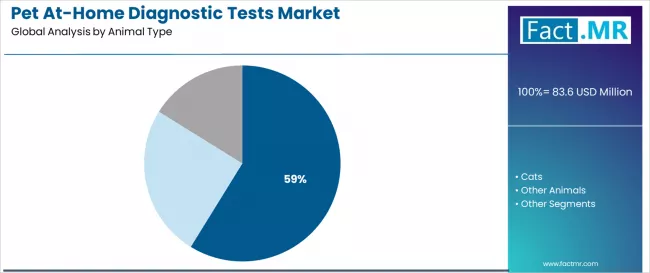
Pet At Home Diagnostic Tests Market Analysis By Animal Type | Source: Fact.MR
Dogs represent the dominant force in the pet at-home diagnostic tests market, capturing a 58.8% market share in 2025. This established animal category encompasses solutions serving diverse canine breeds requiring comprehensive health monitoring across life stages, including regular parasite screening, infectious disease detection, and chronic condition management protocols that enable preventive healthcare optimization and early intervention opportunities worldwide.
Dogs’ market leadership stems from its superior ownership prevalence, with solutions capable of addressing breed-specific health concerns, diverse disease susceptibility patterns, and comprehensive wellness monitoring requirements while maintaining acceptable cost-effectiveness and user-friendly testing procedures across varied pet owner demographics.
Cats maintain a substantial market presence in the 30-32% range, serving feline owners requiring specialized health monitoring for conditions including urinary tract infections, kidney disease, and diabetes management where home testing provides valuable health status insights.
These solutions offer practical disease detection capabilities for cats whose behavioral characteristics often delay recognition of health problems until advanced disease stages. The cats segment demonstrates steady growth potential, driven by increasing cat ownership rates in urban environments and growing awareness about feline-specific health monitoring needs.
Key advantages driving the dogs segment include:
- Advanced disease prevalence requiring regular screening protocols with clinically documented health risks including heartworm infection, tick-borne diseases, and genetic disorders across breed populations
- Established ownership patterns allowing significant market penetration and routine testing adoption without extensive consumer education complexity
- Enhanced test availability features enabling comprehensive product portfolios addressing diverse canine health concerns while maintaining diagnostic accuracy and result reliability
- Superior veterinary integration providing optimal collaboration between home testing results and professional healthcare guidance across preventive care and treatment monitoring applications
By Application, Which Segment Accounts for the Largest Market Share?
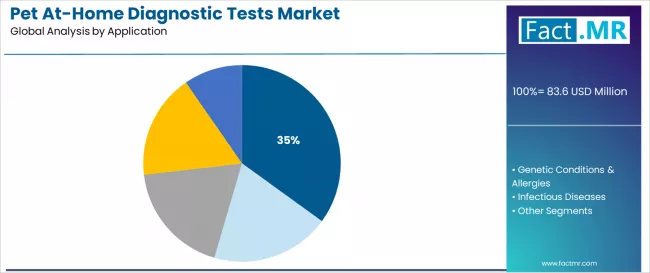
Pet At Home Diagnostic Tests Market Analysis By Application | Source: Fact.MR
Parasitic diseases dominate the pet at-home diagnostic tests application landscape with a 35.0% market share in 2025, reflecting the critical role of regular parasite screening in supporting preventive healthcare protocols and zoonotic disease prevention across pet populations worldwide. The parasitic diseases segment's market leadership is reinforced by widespread intestinal parasite prevalence, heartworm infection risks, and tick-borne disease concerns requiring routine monitoring throughout pet ownership lifecycles.
Within this segment, intestinal parasite detection tests represent the highest-volume application area, driven by common occurrence of roundworms, hookworms, and giardia infections requiring regular fecal screening. This sub-segment benefits from established testing protocols and veterinary recommendations for routine parasite monitoring regardless of symptom presence.
The genetic conditions & allergies segment emerges as an important application category with robust growth potential representing approximately 25.0% market share, driven by increasing consumer interest in breed-specific disease predisposition screening and food sensitivity identification enabling personalized nutrition planning. Pet owners pursuing preventive healthcare approaches require comprehensive genetic testing capable of identifying hereditary disease risks and optimizing wellness strategies for long-term health maintenance.
Within application categories, infectious diseases demonstrate steady demand for rapid detection of common viral and bacterial infections including parvovirus, canine influenza, and urinary tract infections. Chronic & metabolic diseases applications address diabetes monitoring, kidney function assessment, and thyroid hormone testing for aging pet populations requiring ongoing health management.
Key application dynamics include:
- Parasitic disease requirements accelerating across routine preventive care protocols with emphasis on heartworm prevention and intestinal parasite control
- Genetic testing applications driving demand for breed-specific health insights and personalized wellness planning supporting preventive healthcare strategies
- Infectious disease screening prioritizing rapid detection capabilities and treatment decision support through convenient home testing options
- Chronic disease management emphasizing ongoing monitoring protocols for aging pets requiring regular metabolic function assessment
By Sample Type, Which Segment Accounts for a Significant Market Share?
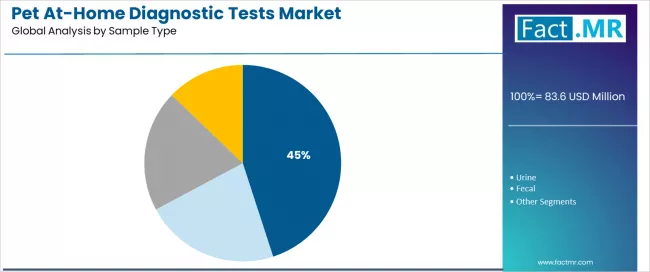
Pet At Home Diagnostic Tests Market Analysis By Sample Type | Source: Fact.MR
Blood represents a leading sample type segment in the pet at-home diagnostic tests market with approximately 45.0% market share in 2025, reflecting the comprehensive diagnostic capabilities of blood-based testing in detecting metabolic disorders, infectious diseases, and organ function abnormalities across diverse pet health applications. The blood segment demonstrates consistent demand driven by the versatility of blood sample analysis for multiple disease categories and established laboratory testing protocols.
The urine segment emerges as an important sample type category with approximately 30.0% market share, driven by convenient non-invasive collection procedures and diagnostic value for detecting urinary tract infections, kidney disease, and diabetes management monitoring. Pet owners pursuing routine health screening require accessible urine testing solutions capable of providing rapid results for common urinary system disorders without stressful veterinary clinic visits.
Within sample type applications, fecal samples demonstrate strong baseline demand representing approximately 20.0% market share as pet owners seek regular intestinal parasite screening and digestive health monitoring. Other sample types including saliva and hair demonstrate emerging adoption for genetic testing and hormone level assessment applications.
Key sample type dynamics include:
- Blood testing requirements expanding across comprehensive health panels and specialized disease screening with emphasis on metabolic function assessment
- Urine sample applications driving demand for kidney disease monitoring and urinary tract infection detection supporting early intervention protocols
- Fecal testing prioritizing intestinal parasite detection and digestive health assessment through convenient home collection procedures
- Sample collection simplification emphasizing user-friendly designs and veterinary consultation integration for result interpretation guidance
By Distribution Channel, Which Segment Accounts for the Dominant Market Share?
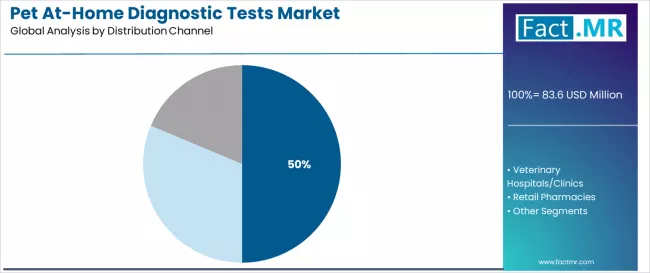
Pet At Home Diagnostic Tests Market Analysis By Distribution Channel | Source: Fact.MR
E-commerce dominates the pet at-home diagnostic tests distribution landscape with approximately 50.0% market share in 2025, reflecting the critical role of online platforms in supporting direct-to-consumer purchasing, discreet product delivery, and comprehensive product information access across pet healthcare categories worldwide. The e-commerce segment's market leadership is reinforced by consumer preferences for convenient home delivery, competitive pricing, and subscription-based replenishment models that reduce purchasing friction in routine testing protocols.
Within this segment, brand-owned e-commerce platforms represent a growing distribution approach, driven by direct customer relationships, personalized recommendation capabilities, and integrated educational content supporting informed purchasing decisions. This sub-segment benefits from superior margin structures and customer data insights that enable targeted marketing and product development strategies.
The veterinary hospitals/clinics segment represents an important distribution category demonstrating steady presence with approximately 40.0% market share through professional recommendations, immediate product access during consultation visits, and healthcare provider guidance supporting proper test selection and result interpretation. Veterinarians provide valuable counseling on appropriate testing protocols, complementary diagnostic approaches, and follow-up care recommendations that enhance patient outcomes and responsible test utilization.
The retail pharmacies segment maintains meaningful presence representing approximately 10.0% market share through mainstream consumer accessibility and integrated shopping convenience, while specialty pet stores serve dedicated wellness-focused consumer segments seeking curated product selections and expert recommendations.
Key market dynamics supporting distribution channel growth include:
- E-commerce channel expansion driven by subscription model adoption and direct-to-consumer brand strategies, requiring seamless fulfillment capabilities
- Veterinary channel modernization trends require professional education programs supporting evidence-based test recommendations
- Integration of telemedicine platforms enabling virtual consultation and home testing coordination
- Growing emphasis on omnichannel distribution strategies supporting customer convenience without traditional retail limitations
What are the Drivers, Restraints, and Key Trends of the Pet At-home Diagnostic Tests Market?
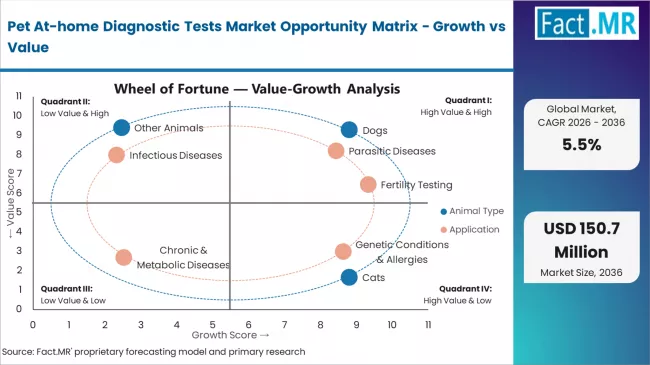
Pet At Home Diagnostic Tests Market Opportunity Matrix Growth Vs Value | Source: Fact.MR
The market is driven by three concrete demand factors tied to pet healthcare evolution and consumer behavior patterns. First, rising pet ownership rates and increasing pet humanization trends create expanding consumer bases seeking comprehensive healthcare solutions, with at-home diagnostic testing representing a convenient preventive care approach supporting early disease detection, requiring widespread product availability. Second, growing veterinary healthcare costs and access challenges drive consumer adoption of cost-effective monitoring alternatives, with at-home tests demonstrating significant price advantages compared to clinic-based diagnostic services while enabling regular health screening by 2030. Third, increasing telemedicine veterinary services and digital health platform integration enable more comprehensive remote care delivery that improves diagnostic accessibility while reducing barriers to professional consultation and treatment guidance.
Market restraints include result interpretation challenges and limited clinical validation for certain test categories that can affect diagnostic accuracy and appropriate follow-up decisions, particularly among pet owners lacking veterinary healthcare knowledge where false positive or false negative results may lead to inappropriate treatment responses or delayed professional intervention. Regulatory complexity and variable quality standards across manufacturers pose another significant obstacle, as at-home diagnostic tests face diverse regulatory frameworks and quality control requirements, potentially affecting product consistency and consumer confidence. Limited veterinary professional endorsement and concerns about diagnostic accuracy create additional barriers for mainstream acceptance, demanding extensive clinical validation and professional education initiatives.
Key trends indicate accelerated smartphone connectivity adoption in developed markets, particularly USA and Europe, where consumers demonstrate willingness to invest in connected diagnostic devices offering automated result interpretation, cloud-based health tracking, and integrated telemedicine consultation capabilities. Subscription-based testing service trends toward recurring revenue models with automated test kit delivery and veterinary consultation packages enable convenient access to ongoing health monitoring that optimizes treatment adherence and preventive care compliance. However, the market thesis could face disruption if significant advances in point-of-care veterinary diagnostic technologies or major shifts toward in-clinic rapid testing approaches reduce consumer demand for traditional at-home testing solutions in routine healthcare protocols.
Analysis of the Pet At-home Diagnostic Tests Market by Key Countries
.webp "Top Country Growth Comparison Pet At Home Diagnostic Tests Market Cagr (2026 2036)")
Top Country Growth Comparison Pet At Home Diagnostic Tests Market Cagr (2026 2036) | Source: Fact.MR
| Country | CAGR (2026 to 2036) |
|---|---|
| India | 6.5% |
| USA | 6.3% |
| China | 6.2% |
| Brazil | 5.5% |
| Germany | 5.9% |
| UK | 5.7% |
| South Africa | 5.5% |
Source: Fact.MR analysis. Updated Apr 2, 2026
Pet At Home Diagnostic Tests Market Cagr Analysis By Country | Source: Fact.MR
The global pet at-home diagnostic tests market is expanding rapidly, with India leading at a 6.5% CAGR through 2035, driven by tech-enabled diagnostics adoption, preventive care awareness growth, and rising middle-class pet ownership. USA follows at 6.3%, supported by high pet ownership rates, telemedicine integration, and established direct-to-consumer healthcare models. China records 6.2%, reflecting e-commerce platform dominance, urban pet ownership expansion, and digital health service adoption.
Brazil advances at 5.5%, leveraging large pet population and urbanization supporting preventive healthcare awareness. Germany posts 5.9%, focusing on veterinary integration emphasis and genetic testing adoption, while UK grows steadily at 5.7%, anchored by digital health advancement and cost-conscious healthcare approaches. South Africa demonstrates 5.5% growth, supported by urban middle-income households and disease prevalence awareness.
How is India Leading Global Market Expansion?
India demonstrates the strongest growth potential in the pet at-home diagnostic tests market with a CAGR of 6.5% through 2035. The country's leadership position stems from rapidly increasing middle-class pet ownership, expanding technology-enabled healthcare adoption, and growing awareness about preventive veterinary care driving demand for accessible diagnostic solutions.
Growth is concentrated in major metropolitan areas and tier-1 cities, including Mumbai, Delhi, Bangalore, and Hyderabad, where urban pet owners are increasingly seeking convenient health monitoring options supporting proactive disease prevention and cost-effective veterinary care alternatives.
Distribution channels through e-commerce platforms, veterinary clinic partnerships, and online pet healthcare marketplaces expand product accessibility across educated consumer segments and technology-adopting households. The country's growing integration of digital payment systems with smartphone penetration provides strong momentum for direct-to-consumer diagnostic test adoption, including comprehensive penetration across dog ownership segments seeking parasite prevention and health monitoring solutions.
Key market factors:
- Urban pet ownership concentration in metropolitan areas and technology hubs with rising disposable incomes supporting premium pet healthcare spending
- E-commerce growth through platforms including Amazon India, Flipkart, and specialized pet healthcare marketplaces enabling convenient product access
- Comprehensive telemedicine expansion ecosystem, including virtual veterinary consultation platforms with proven pet healthcare capabilities
- Local distribution development featuring domestic and international brands offering competitively priced diagnostic solutions and localized customer support
Why is USA Emerging as a High-Growth Market?

Pet At Home Diagnostic Tests Market Country Value Analysis | Source: Fact.MR
In major urban centers including New York, Los Angeles, Chicago, and Houston, the adoption of pet at-home diagnostic test solutions is accelerating across dog and cat owner populations, driven by established pet humanization trends and extensive telemedicine veterinary service integration supporting remote healthcare delivery. The market demonstrates strong growth momentum with a CAGR of 6.3% through 2035, linked to comprehensive pet ownership prevalence and increasing focus on preventive healthcare management approaches.
American pet owners are implementing regular at-home testing protocols integrated with veterinary telemedicine consultations to enhance early disease detection while meeting growing expectations in cost management and healthcare accessibility. The country's established e-commerce infrastructure creates ongoing demand for subscription-based testing services, while increasing pet insurance coverage integration drives adoption of preventive diagnostic protocols supporting claims documentation.
Key development areas:
- High pet ownership rates leading diagnostic test adoption with emphasis on preventive care and chronic disease management
- Distribution expansion through both e-commerce platforms and veterinary clinic partnerships providing comprehensive market coverage
- Technology integration enabling smartphone-connected devices and automated result interpretation systems
- Growing preference for subscription models addressing recurring testing needs alongside professional veterinary consultation access
What drives China’s Market Resilience?
China’s market expansion is driven by diverse consumer preferences, including urban pet owners seeking convenient healthcare solutions and e-commerce platform dominance enabling accessible product distribution across mainstream consumer segments. The country demonstrates steady growth potential with a CAGR of 6.2% through 2035, supported by continuous pet ownership expansion and rising middle-class disposable income supporting premium pet healthcare spending.
Chinese consumers face implementation scenarios related to increasing pet healthcare awareness and growing emphasis on preventive care protocols, requiring manufacturers to demonstrate clear value propositions and user-friendly testing procedures. However, established e-commerce ecosystem and expanding pet ownership trends create stable baseline demand for at-home diagnostic tests, particularly among urban dog owners actively managing pet health where convenience drives primary purchasing decisions.
Market characteristics:
- Urban pet ownership segments showing robust demand with substantial annual growth across first-tier and second-tier cities
- Regional preferences varying between comprehensive health panels in major metropolitan areas and basic parasite screening in emerging pet owner markets
- Future projections indicate continued e-commerce dominance with emphasis on platform integration and livestream commerce adoption
- Growing emphasis on genetic testing services and personalized nutrition recommendations supporting preventive healthcare approaches
How does Germany Demonstrate Veterinary Integration Leadership?
The market in Germany leads in professional veterinary integration and evidence-based diagnostic adoption based on collaboration with veterinary practitioners and emphasis on clinically validated testing protocols for enhanced healthcare reliability. The country shows strong potential with a CAGR of 5.9% through 2035, driven by established pet healthcare standards and consumer preferences for professionally endorsed solutions in major markets, including Bavaria, North Rhine-Westphalia, Baden-Württemberg, and Hesse.
German pet owners are adopting at-home diagnostic tests through veterinary recommendations and integrated care pathways for comprehensive health management, particularly in health-conscious populations and professionally guided preventive care protocols demanding rigorous validation credentials. Distribution channels through veterinary clinics and specialized pet healthcare retailers expand coverage across urban centers and quality-focused consumer communities.
Leading market segments:
- Professionally endorsed product adoption in major urban centers implementing comprehensive veterinary integration requirements
- Veterinary partnerships with diagnostic manufacturers achieving high recommendation rates
- Strategic collaborations between test developers and veterinary associations expanding professional acceptance
- Focus on genetic testing development and breed-specific health screening addressing hereditary disease prevention
What Positions UK for Digital Health Leadership?
In London, Manchester, Birmingham, and other major cities, pet owners are implementing at-home diagnostic test solutions through online purchasing channels and veterinary guidance, with documented case studies showing substantial cost savings through early disease detection and preventive healthcare protocols.
The market shows steady growth potential with a CAGR of 5.7% through 2035, linked to ongoing digital health adoption, cost-conscious healthcare approaches, and emerging telemedicine consultation models in major regions. Pet owners are adopting evidence-based diagnostic tests with professional oversight to enhance healthcare accessibility while maintaining standards demanded by quality-focused purchasing pathways. The country's established e-commerce infrastructure creates ongoing opportunities for direct-to-consumer diagnostic launches that differentiate through clinical validation and veterinary endorsement.
Market development factors:
- Cost-conscious consumers leading adoption of affordable diagnostic alternatives across UK
- Digital health platforms providing growth opportunities in telemedicine-integrated testing services
- Strategic partnerships between test manufacturers and veterinary telemedicine providers expanding professional distribution
- Emphasis on preventive care protocols and pet insurance integration supporting regular testing adoption
How Does Brazil Show Regional Leadership?
Brazil's pet at-home diagnostic tests market demonstrates significant growth opportunities focused on large pet ownership base and urbanization trends supporting preventive healthcare adoption, with documented integration of accessible diagnostic solutions achieving substantial market penetration across urban middle-class households. The country maintains solid growth momentum with a CAGR of 5.5% through 2035, driven by extensive pet population and increasing focus on animal welfare supporting healthcare spending growth that aligns with economic development patterns.
Major metropolitan areas, including São Paulo, Rio de Janeiro, Brasília, and Belo Horizonte, showcase expanding adoption of at-home testing protocols where cost-effective healthcare solutions integrate seamlessly with growing preventive care awareness and veterinary service accessibility.
Key market characteristics:
- Large pet population driving demand for affordable diagnostic solutions with emphasis on parasite prevention and disease screening
- E-commerce partnerships enabling accessible product distribution with comprehensive online marketplace presence
- Veterinary collaboration supporting professional recommendations and integrated care protocols
- Emphasis on parasite detection and infectious disease screening addressing regional disease prevalence patterns
What Characterizes South Africa's Market Development?
In major urban centers including Johannesburg, Cape Town, Pretoria, and Durban, the adoption of pet at-home diagnostic test solutions is expanding across middle-income households, driven by increasing pet ownership awareness and rising emphasis on preventive healthcare supporting animal welfare initiatives. The market demonstrates steady growth potential with a CAGR of 5.5% through 2035, linked to urbanization trends and increasing focus on companion animal health management in metropolitan regions.
South African pet owners are implementing accessible diagnostic testing and purchasing affordable monitoring products to enhance preventive care while meeting growing expectations in urban pet healthcare environments. The country's expanding retail distribution networks create ongoing demand for competitively priced diagnostic solutions, while increasing veterinary clinic partnerships drive adoption of professionally endorsed testing protocols.
Key development areas:
- Urban middle-income households leading diagnostic test adoption with emphasis on dog health monitoring
- Distribution expansion through veterinary clinics and retail pharmacies providing accessible product availability
- Regional disease prevalence awareness supporting parasite screening and tick-borne disease detection emphasis
- Integration of consumer education programs and veterinary professional training supporting appropriate test utilization
Europe Market Split by Country
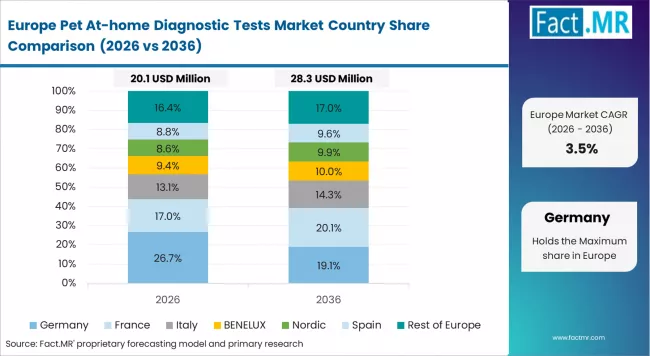
Pet At Home Diagnostic Tests Market Europe Country Market Share Analysis, 2026 & 2036 | Source: Fact.MR
The pet at-home diagnostic tests market in Europe is projected to grow from USD 21.8 million in 2025 to USD 37.3 million by 2035, registering a CAGR of 5.5% over the forecast period. Germany is expected to maintain its leadership position with a 27.2% market share in 2025, adjusting to 27.8% by 2035, supported by its extensive veterinary integration networks, professional healthcare standards, and comprehensive genetic testing emphasis serving major European pet owner populations.
UK follows with a 23.5% share in 2025, projected to reach 23.8% by 2035, driven by comprehensive digital health adoption and cost-conscious healthcare approaches in major urban regions implementing preventive care protocols. France holds a 19.8% share in 2025, expected to maintain 19.5% by 2035 through ongoing pet ownership growth and veterinary service integration. Italy commands a 14.3% share, while Spain accounts for 10.2% in 2025.
The rest of Europe region is anticipated to gain momentum, expanding its collective share from 5.0% to 5.2% by 2035, attributed to increasing at-home diagnostic test adoption in Nordic countries and emerging Eastern European markets implementing modern pet healthcare practices.
Competitive Landscape of the Pet At-home Diagnostic Tests Market

Pet At Home Diagnostic Tests Market Analysis By Company | Source: Fact.MR
The pet at-home diagnostic tests market features approximately 15-20 meaningful players with moderate concentration, where the top three companies control roughly 25-35% of global market share through established brand recognition, direct-to-consumer marketing capabilities, and comprehensive product portfolios. Competition centers on test accuracy, user-friendliness, and veterinary endorsement rather than price competition alone.
Market leaders include Affordable Pet Labs, Ring Biotechnology Co Ltd., and Forte Healthcare Ltd., which maintain competitive advantages through comprehensive diagnostic test portfolios, established e-commerce presence, and deep expertise in companion animal health monitoring, creating high credibility among pet owners seeking reliable testing solutions. These companies leverage direct-to-consumer marketing strategies and ongoing veterinary professional partnerships to defend market positions while expanding into emerging applications including genetic testing and chronic disease monitoring.
Challengers encompass specialized diagnostic manufacturers including Diagnostic Depot, Wondfo USA Co. Ltd., and Vitrosens Biotechnology, which compete through targeted product positioning and strong engagement with telemedicine platforms and veterinary clinic networks. Regional manufacturers, including Hangzhou Evegen Biotech Co., Ltd., Targetvet, and TouchBio Australia, focus on specific geographic markets or test categories, offering differentiated capabilities in rapid diagnostic platforms, species-specific solutions, and localized distribution strategies.
Emerging direct-to-consumer brands and technology-enabled diagnostic developers create competitive pressure through innovative smartphone-connected devices and subscription-based testing services, particularly in high-growth markets including USA and China, where digital health adoption provides advantages in customer engagement and recurring revenue models.
Market dynamics favor companies that combine diagnostic accuracy with user experience optimization that addresses the complete pet owner journey from product discovery through result interpretation and veterinary follow-up coordination. Strategic emphasis on veterinary professional education, clinical validation studies, and integrated telemedicine partnerships enables differentiation in increasingly competitive pet healthcare markets across developed and emerging regions.
Global Pet At-home Diagnostic Tests Market - Stakeholder Contribution Framework
Pet at-home diagnostic tests represent a critical companion animal healthcare category that enables pet owners to conduct convenient health screening and early disease detection while addressing veterinary access challenges and cost management without exclusive reliance on clinic-based diagnostic services, typically providing rapid results, simple sample collection procedures, and actionable health insights compared to traditional veterinary approaches alone while ensuring proactive healthcare monitoring and timely intervention opportunities.
With the market projected to grow from USD 83.6 million in 2025 to USD 143.2 million by 2035 at a 5.5% CAGR, these solutions offer compelling advantages for parasitic disease screening, e-commerce distribution channels, and diverse pet owner populations seeking accessible diagnostic capabilities. Scaling market penetration and professional acceptance requires coordinated action across veterinary policy frameworks, clinical validation standards, test manufacturers, veterinary partnerships, and consumer education initiatives.
How Could Governments Spur Local Development and Adoption?
- Animal Welfare Programs: Include preventive pet healthcare in national animal welfare strategies, providing targeted support for disease surveillance initiatives and supporting veterinary institutions through diagnostic technology grants and research funding.
- Tax Policy & Investment Support: Implement reduced tax rates for veterinary diagnostic products, provide tax incentives for companies investing in clinical validation studies and quality manufacturing practices, and establish favorable regulatory frameworks that encourage responsible over-the-counter diagnostic availability.
- Regulatory Framework Development: Create streamlined approval processes for companion animal diagnostic tests across preventive healthcare applications, establish clear accuracy standards and labeling requirements for consumer protection, and develop harmonization protocols that facilitate international market access.
- Veterinary Integration Support: Fund integration of home testing protocols in preventive care pathways, invest in veterinary professional education initiatives bridging clinical diagnostics with home monitoring technologies, and support telemedicine infrastructure development enabling remote diagnostic consultation.
How Could Industry Bodies Support Market Development?
- Clinical Standards & Validation: Define standardized accuracy requirements for pet diagnostic tests across disease categories, establish universal performance testing protocols and quality benchmarks, and create evidence databases that veterinary professionals can rely on for test recommendations.
- Market Education & Best Practices: Lead messaging that demonstrates at-home diagnostic benefits, emphasizing preventive care value, appropriate test utilization, and veterinary consultation integration compared to delayed disease detection approaches.
- Quality Assurance Standards: Develop guidelines for manufacturing excellence, result interpretation guidance, and veterinary professional collaboration, ensuring consumer safety across product development and distribution operations.
- Professional Development: Run training programs for veterinary professionals, pet healthcare retailers, and telemedicine providers on optimizing home testing integration, result interpretation support, and appropriate follow-up recommendations.
How Could Manufacturers and Technology Players Strengthen the Ecosystem?
- Advanced Product Development: Develop next-generation pet diagnostic tests with enhanced accuracy characteristics, simplified sample collection procedures, and smartphone connectivity features that enhance user experience while improving result reliability and veterinary integration capabilities.
- Clinical Validation Programs: Provide comprehensive accuracy studies, veterinary endorsement initiatives, and real-world performance data that support professional confidence and informed consumer purchasing decisions.
- Consumer Education Initiatives: Offer comprehensive information about disease prevention, appropriate testing frequencies, and result interpretation guidance that helps pet owners make informed healthcare decisions aligned with veterinary recommendations.
- Veterinary Partnership Networks: Build comprehensive professional collaboration programs, telemedicine platform integrations, and consultation support systems that ensure at-home tests complement veterinary care rather than replacing professional oversight.
How Could Veterinary Professionals and Retailers Navigate the Market?
- Preventive Care Protocol Integration: Incorporate validated at-home diagnostic tests into comprehensive preventive healthcare plans, with particular focus on parasite screening, chronic disease monitoring, and early detection protocols for optimal patient outcomes.
- Client Education Excellence: Establish comprehensive pet owner education programs addressing appropriate test selection, proper sample collection techniques, and integration with professional veterinary care through optimized consultation frameworks.
- Professional Endorsement Standards: Implement rigorous product evaluation criteria, accuracy verification procedures, and quality assessment protocols that enable confident recommendations and consumer protection.
- Telemedicine Integration Models: Develop standardized remote consultation protocols, diagnostic result review procedures, and follow-up care coordination that enable comprehensive healthcare delivery combining home testing with professional oversight.
How Could Investors and Financial Enablers Unlock Value?
- Product Development Financing: Provide growth capital for established companies like Affordable Pet Labs, Ring Biotechnology Co Ltd., and emerging brands to fund clinical validation studies and product innovation initiatives supporting market expansion.
- Technology Innovation Investment: Back startups developing smartphone-connected diagnostic devices, artificial intelligence-enabled result interpretation platforms, and integrated telemedicine solutions that enhance diagnostic accessibility and accuracy.
- Market Expansion Funding: Finance distribution network development for diagnostic manufacturers establishing operations in high-growth regions including India and China, supporting localization initiatives that address regional disease prevalence while maintaining quality standards.
- Digital Health Integration Support: Support companies developing telemedicine platforms, subscription service models, and integrated pet healthcare applications that enhance treatment adherence and preventive care compliance through technology-enabled monitoring.
Key Players in the Pet At-home Diagnostic Tests Market
- Affordable Pet Labs
- Ring Biotechnology Co., Ltd.
- Forte Healthcare Ltd.
- Diagnostic Depot
- Wondfo USA Co., Ltd.
- Vitrosens Biotechnology
- Hangzhou Evegen Biotech Co., Ltd.
- Targetvet
- TouchBio Australia Pty Ltd
- Flashtest Technology Co., Ltd.
Bibliography
- American Veterinary Medical Association. (2024). AVMA pet ownership and demographics sourcebook. AVMA.
- World Organisation for Animal Health. (2024). Terrestrial animal health code: Companion animal health standards. WOAH.
- European Medicines Agency. (2024). Veterinary regulatory framework for in vitro diagnostic devices. EMA.
- American Pet Products Association. (2025). APPA national pet owners survey. APPA.
- Federation of European Companion Animal Veterinary Associations. (2024). FECAVA guidelines on companion animal diagnostics. FECAVA.
- This bibliography is provided for reader reference. The full Fact.MR report contains the complete reference list with primary research documentation.
This Report Addresses
- Market sizing and quantitative forecast metrics detailing global pet at-home diagnostic test expenditure across companion animal health segments through 2036.
- Segmentation analysis mapping adoption velocity of parasitic, infectious, genetic, metabolic, and fertility test applications across dog, cat, and other animal categories.
- Country-level deployment intelligence comparing e-commerce penetration, veterinary spending patterns, and regulatory frameworks across India, USA, China, Germany, UK, Brazil, and South Africa.
- Competitive posture evaluation tracking test sensitivity performance, panel breadth, and distribution channel partnerships among diagnostic kit manufacturers.
- Distribution channel assessment analyzing the shift from veterinary clinic dispensing to direct-to-consumer e-commerce and retail pharmacy sales models.
- Regulatory compliance assessment identifying validation and registration requirements for at-home companion animal diagnostic products across major markets.
- Custom data delivery formats encompassing interactive dashboards, raw Excel datasets, and comprehensive PDF narrative reports.
Pet At-home Diagnostic Tests Market Definition
Pet at-home diagnostic tests are screening and detection products designed for use by pet owners in non-clinical settings. These kits enable the identification of parasitic infections, genetic conditions, allergies, infectious diseases, chronic metabolic disorders, and fertility status in companion animals. Product formats include rapid lateral flow immunoassay strips, mail-in sample collection vials, and portable biosensor readers. The market covers manufacture, distribution, and retail sale of these products globally.
Pet At-home Diagnostic Tests Market Inclusions
Market scope includes rapid at-home test kits, mail-in diagnostic sample collection kits, and portable biosensor devices for companion animals. Coverage spans seven countries: India, USA, China, Brazil, Germany, UK, and South Africa. Segmentation includes animal type, application, sample type, and distribution channel. Forecast period covers 2026 to 2036 with base year 2025.
Pet At-home Diagnostic Tests Market Exclusions
In-clinic point-of-care analyzers operated by veterinary professionals, clinical reference laboratory services, livestock and equine diagnostic products, and pharmaceutical treatment products are excluded from the scope.
Pet At-home Diagnostic Tests Market Research Methodology
Primary Research: Analysts engaged with veterinary diagnostic product distributors, pet specialty retail procurement managers, and companion animal health researchers to map purchasing triggers and channel preferences.
Desk Research: Data collection phases aggregated companion animal population registries, national veterinary association practice surveys, and e-commerce platform pet health product sales metrics.
Market-Sizing and Forecasting: Baseline values derive from a bottom-up aggregation of at-home diagnostic kit shipment volumes by product format, applying country-specific pet ownership growth indices to project adoption velocity.
Data Validation and Update Cycle: Projections are tested against publicly reported companion animal healthcare spending data from national veterinary medical associations and pet industry trade bodies.
Segmentation
Scope of the Report
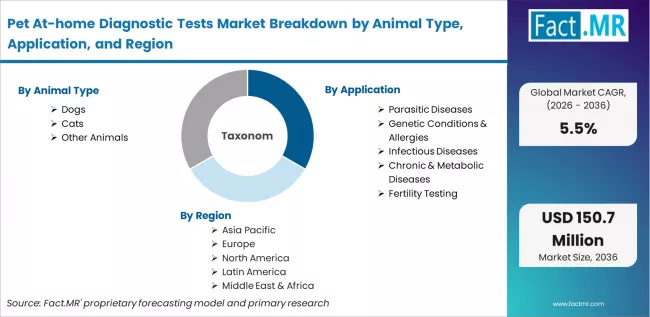
Pet At Home Diagnostic Tests Market Breakdown By Animal Type, Application, And Region | Source: Fact.MR
| Metric | Value |
|---|---|
| Quantitative Units | USD 88.20 million to USD 150.65 million, at a CAGR of 5.50% |
| Market Definition | Pet at-home diagnostic tests encompass rapid immunoassay kits, mail-in sample collection kits, and portable biosensor devices enabling pet owners to screen companion animals for parasitic, infectious, genetic, metabolic, and fertility-related conditions outside veterinary clinic settings. |
| Animal Type Segmentation | Dogs, Cats, Other Animals |
| Application Segmentation | Parasitic Diseases, Genetic Conditions & Allergies, Infectious Diseases, Chronic & Metabolic Diseases, Fertility Testing |
| Sample Type Segmentation | Blood, Urine, Fecal, Others |
| Distribution Channel Segmentation | E-commerce, Veterinary Hospitals/Clinics, Retail Pharmacies |
| Regions Covered | India, USA, China, Germany, UK, Brazil, South Africa |
| Key Companies Profiled | Affordable Pet Labs, Ring Biotechnology Co., Ltd., Forte Healthcare Ltd., Diagnostic Depot, Wondfo USA Co., Ltd., Vitrosens Biotechnology, Hangzhou Evegen Biotech Co., Ltd., Targetvet, TouchBio Australia Pty Ltd, Flashtest Technology Co., Ltd. |
| Forecast Period | 2026 to 2036 |
| Approach | Forecasting models apply a bottom-up methodology starting with companion animal population metrics and pet healthcare spending indices, cross-validated against diagnostic kit shipment records and e-commerce platform sales data. |
Source: Fact.MR analysis. Updated Apr 2, 2026
Pet At-home Diagnostic Tests Market by Segments
-
Animal Type :
- Dogs
- Cats
- Other Animals
-
Application :
- Parasitic Diseases
- Genetic Conditions & Allergies
- Infectious Diseases
- Chronic & Metabolic Diseases
- Fertility Testing
-
Sample Type :
- Blood
- Urine
- Fecal
- Others
-
Distribution Channel :
- E-commerce
- Veterinary Hospitals/Clinics
- Retail Pharmacies
-
Region :
- Asia Pacific
- China
- Japan
- South Korea
- India
- Australia
- Thailand
- Rest of Asia Pacific
- Europe
- Germany
- UK
- France
- Italy
- Spain
- Denmark
- Sweden
- Norway
- Rest of Europe
- North America
- USA
- Canada
- Mexico
- Latin America
- Brazil
- Argentina
- Rest of Latin America
- Middle East & Africa
- South Africa
- Saudi Arabia
- UAE
- Kuwait
- Rest of Middle East & Africa
- Asia Pacific
Frequently Asked Questions
How large is the pet at-home diagnostic tests market in 2026?
What will be the market size of pet at-home diagnostic tests by 2036?
What is the expected demand growth between 2026 and 2036?
Which Animal Type is poised to lead sales by 2026?
How significant is the role of E-commerce in distribution?
Which country is the fastest-growing market?
What is included in the scope of this report?
What is excluded from the scope of this report?
Who worked on this report


Preview the report firsthand - request a free sample
Free SampleGet the brochure for pricing and purchase details
Download PDF