Plant Protein Sachets Market
Plant Protein Sachets Market Size and Share Forecast Outlook 2026 to 2036
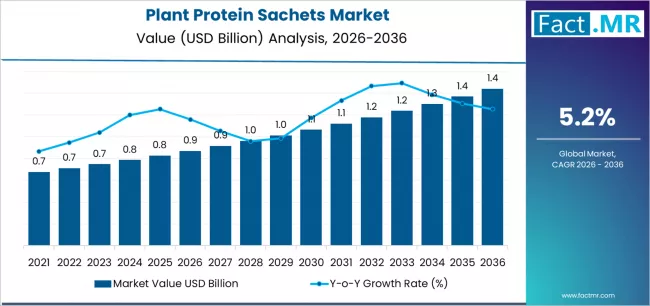
Plant protein sachets market is projected to grow from USD 0.9 billion in 2026 to USD 1.4 billion by 2036, at a CAGR of 5.2%. Supplements & Nutraceuticals will dominate with a 40.0% market share, while single-serve sachets will lead the packaging format/type segment with a 60.0% share.
Plant Protein Sachets Market Forecast and Outlook 2026 to 2036
The global plant protein sachets market is valued at USD 0.87 billion in 2026. The market is forecast to reach USD 1.44 billion by 2036, an increase of USD 0.57 billion. This represents total growth of 65.5%, expanding at a compound annual growth rate (CAGR) of 5.2% between 2026 and 2036.
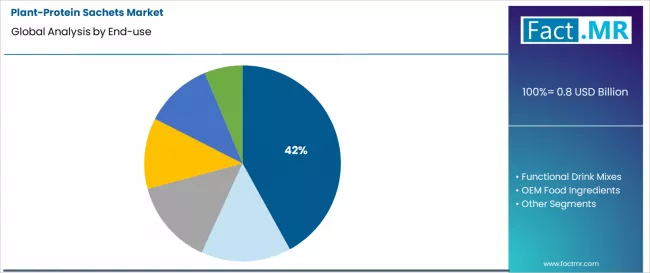
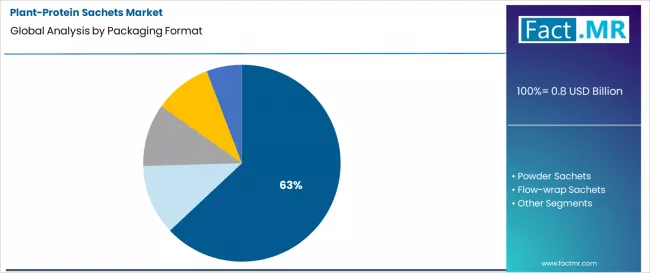
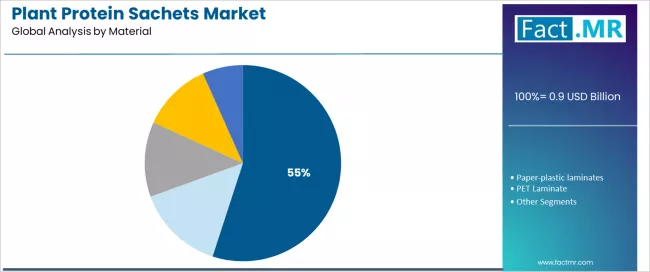
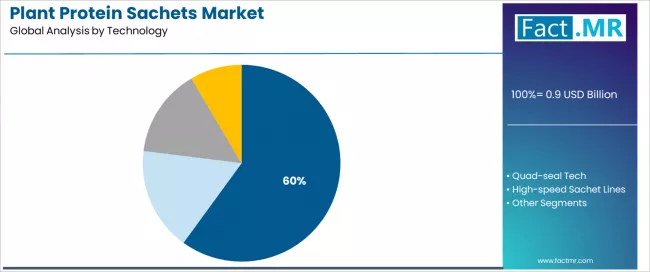
Segmentation data reveals a market driven by convenience and precision. By end-use, the supplements and nutraceuticals sector commands a leading 40.0% share in 2026. Single-serve sachets dominate the packaging format segment with a 60.0% share. Multi-layer barrier pouches hold a 55.0% material share, while sachet filling and sealing is the core technology with a 60.0% share. This configuration highlights the critical role of portability and product protection in delivering measured doses of protein.
Key Takeaways from the Plant Protein Sachets Market Study
- Market Value (2026): USD 0.87 Billion
- Market Forecast Value (2036): USD 1.44 Billion
- Market Forecast CAGR: 5.2%
- Leading End-Use: Supplements & Nutraceuticals (40.0%)
- Key Growth Regions: Asia Pacific, North America, Europe
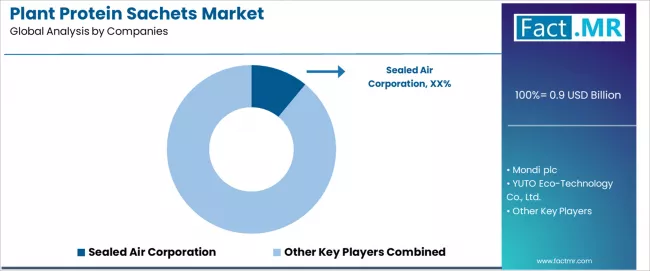
- Key Players: Sealed Air Corporation, Mondi plc, YUTO Eco-Technology Co., Ltd., Uflex Limited, Toppan Inc.

A primary macro trend fueling this market is the global shift towards personalized nutrition and on-the-go consumption. Consumers seek convenient, portion-controlled formats that fit active lifestyles, moving beyond large tubs of powder to single-use sachets for shakes, meal replacements, and drink mixes. This demand for convenience directly intersects with the growing popularity of plant-based diets, creating a specific need for packaging tailored to plant protein powders, which can be more hygroscopic and require robust moisture barriers than some other ingredients.
The industry faces intense pressure to reconcile the functionality of sachets with packaging sustainability. The high-performance, multi-material laminates traditionally used for long shelf life pose significant recycling challenges. This conflict is driving rapid innovation in material science. Development efforts are concentrated on creating high-barrier, recyclable mono-material structures and water-soluble or compostable sachet options that can meet both the stringent protection requirements of sensitive protein powders and the environmental expectations of consumers and regulators.
Plant Protein Sachets Market
| Metric | Value |
|---|---|
| Estimated Value in (2026E) | USD 0.87 Billion |
| Forecast Value in (2036F) | USD 1.44 Billion |
| Forecast CAGR (2026 to 2036) | 5.2% |
Category
| Category | Segment |
|---|---|
| End-use/Application | Supplements & Nutraceuticals, Functional Drink Mixes, OEM Food Ingredients, Retail Protein Snacks, Sports Nutrition, Others |
| Packaging Format/Type | Single-serve Sachets, Powder Sachets, Flow-wrap Sachets, Heat-seal Sachets, Others |
| Material | Multi-layer Pouches (barrier), Paper-plastic Laminates, PET Laminate, Recyclable Mono-PE, Others |
| Technology | Sachet Filling & Sealing, Quad-seal Tech, High-speed Sachet Lines, Sachet Barrier Coating, Others |
| Region | North America, Europe, Asia Pacific, Latin America, MEA |
Segment Analysis
How is the Supplements Sector Driving Demand for Precision-Dosed Portability?
The supplements and nutraceuticals segment holds a 40.0% market share in 2026. This dominance is rooted in the need for accurate, mess-free delivery of active ingredients. Plant protein sachets in this sector provide guaranteed dosage, eliminate the need for measuring scoops, and enhance product stability by limiting air exposure after opening.
Development focuses on creating sachets that are exceptionally easy to tear and pour, even with viscous blends, and that maintain a complete moisture barrier to prevent clumping. The format also allows for blended product offerings, where a single sachet contains protein plus vitamins, creatine, or flavors, simplifying the consumer experience and enabling sophisticated product formulations.
What Makes Single-Serve Sachets the Universal Format for Modern Consumption?

Single-serve sachets lead the packaging format segment with a 60.0% share. Their overwhelming preference is due to unparalleled convenience and versatility. This format caters to trial sizes, daily portions, and on-the-go usage across all end-use sectors, from gym bags to travel kits. For manufacturers, sachets offer flexible branding space and reduce product waste by consumers.
The critical development challenge lies in balancing this convenience with environmental concerns, pushing innovation toward sustainable material structures that do not compromise the leak-proof and barrier integrity required for fine, moisture-sensitive powders.
Why are Multi-Layer Barrier Pouches Essential for Protecting Sensitive Protein Powders?

Multi-layer barrier pouches account for a 55.0% material share. Their continued use is non-negotiable for maintaining the quality, flavor, and nutritional integrity of plant protein over a typical shelf life. These laminates combine layers for strength, moisture barrier, and oxygen barrier, specifically preventing the oxidation and moisture absorption that can degrade protein.
Development within this category is focused on using recyclable polymer combinations or designing structures that are compatible with emerging chemical recycling streams. The goal is to deliver the same robust protection while designing for a circular economy, a complex but essential evolution for the market.
Is Sachet Filling and Sealing Technology the Linchpin of Production Efficiency?
Sachet filling and sealing technology commands a 60.0% share. This process is the cornerstone of commercial viability, determining production speed, cost, and packaging integrity. High-speed vertical form-fill-seal (VFFS) machines must handle fine, often electrostatic plant protein powders without dust, ensure accurate fill weight, and create a perfect seal that withstands distribution.
Development focuses on enhancing line efficiency, integrating advanced nitrogen flushing to displace oxygen, and adapting machinery to run newer, more sustainable film materials that may have different thermal or tensile properties than traditional laminates.
What are the Drivers, Restraints, and Key Trends of the Plant Protein Sachets Market?
Market growth is propelled by rising health consciousness, the expansion of plant-based diets, and demand for convenient, portion-controlled nutrition. The growth of functional drink mixes and ready-to-mix formats is a significant driver. Strong headwinds include criticism over single-use packaging waste, higher per-unit cost compared to bulk packaging, and the technical difficulty of developing sustainable materials that match the barrier performance of multi-layer plastics.
Regulatory pressure on plastic waste is a powerful restraint influencing material innovation. Development concentrates on high-barrier mono-polyethylene and compostable paper-based structures. Another focus is smart packaging, with sachets incorporating QR codes for sourcing transparency or augmented reality for mixing instructions.
Analysis of the Plant Protein Sachets Market by Key Countries
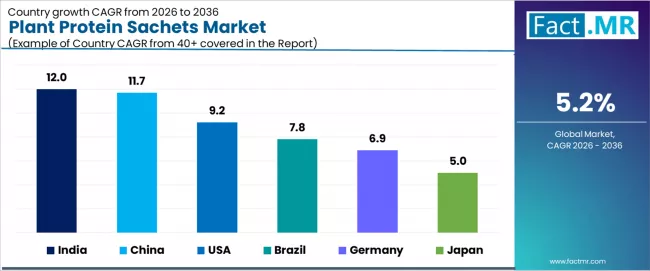
| Country | CAGR (2026 to 2036) |
|---|---|
| USA | 9.2% |
| Germany | 6.9% |
| China | 11.7% |
| India | 12.0% |
| Brazil | 7.8% |
| Japan | 5.0% |
How are USA’s Market Dynamics Shaped by Sports Nutrition and Lifestyle Brands?

The USA’s market grows at a 9.2% CAGR, driven by a deeply entrenched sports nutrition culture and the rapid growth of lifestyle-oriented wellness brands. Sachets are ubiquitous for pre-workout samples, collagen peptides, and plant-based meal replacements sold online and in supermarkets.
Development focuses on bold, eye-catching graphics for digital shelf appeal and creating recyclable formats that meet the sustainability pledges of major brands. The market also sees growth in functional beverage mixes positioned for mental focus or sleep, often launched first in sachet format.
- Direct-to-consumer brands utilize sachets as low-commitment trial sizes to acquire new customers and in subscription boxes for monthly variety.
- Investment in advanced barrier coatings for paper-based sachets aims to meet both performance needs and consumer demand for plastic-free options.
How does Germany’s Market Prioritize Organic Certification and Advanced Recycling?
Germany’s market advances at a 6.9% CAGR, where demand is closely tied to the organic supplements sector and stringent packaging sustainability laws. Plant protein sachets for organic products often require certified compostable packaging. For conventional products, design for recycling in the Yellow Bin system is mandatory.
Growth is methodical, with a focus on reducing material complexity. Development prioritizes mono-material sachets or easily separable structures that align with Germany’s efficient waste sorting infrastructure and satisfy environmentally conscious consumers.
- There is high demand for sachets made with a high percentage of post-consumer recycled (PCR) content, even in barrier layers.
- Collaboration with waste management companies to verify the recyclability classification of new sachet materials is a standard part of the development process.
Is China’s Explosive Growth Fueled by E-commerce and Functional Food Innovation?
China’s market is projected to grow at an 11.7% CAGR, powered by the world's largest e-commerce market for health products and a booming functional food industry. Single-serve sachets are ideal for online sampling and flash sales.
Development emphasizes ultra-high-speed, cost-effective production to serve massive volume demand. Innovations often appear first in drink mix sachets for protein-fortified beverages, a hugely popular category. The domestic supply chain for flexible packaging materials allows for rapid iteration of new laminate structures.
- Integration of sachet packaging lines with live commerce and social media sales platforms is a unique driver of fast-turnaround, small-batch production.
- Government support for the health food industry indirectly fuels demand for convenient, packaged nutrient delivery formats like sachets.
Can India’s Market Leverage Affordability and a Growing Fitness Culture?
India demonstrates the highest growth potential at a 12.0% CAGR. The market is fueled by rising disposable income, a growing gym culture, and the need for affordable nutrition. Sachets make premium plant proteins accessible to a wider audience through small-unit, low-cost purchases.
Growth is particularly strong in retail protein snacks and OEM ingredients for the food service industry. Development focuses on achieving the lowest possible cost per sachet through efficient material use and high-speed indigenous packaging machinery, while still providing adequate barrier protection in a humid climate.
- The practice of selling sachets as single-use units in small kirana stores and pharmacies drives volume penetration in both urban and semi-urban areas.
- Local production of packaging films and sachet conversion is key to controlling costs and ensuring supply for domestic brands.
How is Brazil’s Market Focused on Sports Nutrition and Retail Convenience?
Brazil’s market is set to grow at a 7.8% CAGR, with strong demand from the sports nutrition and active lifestyle segments. Sachets are popular for whey and plant protein alternatives sold at gyms and health food stores.
The retail environment also favors small-format, heat-sealed sachets for powdered beverage mixes and protein-added snacks. Development focuses on creating visually vibrant packaging that stands out in crowded retail displays and on ensuring material durability in varied climatic conditions across the country.
- The strong social media influence of fitness personalities drives trial and adoption of new products launched in sachet format.
- There is growing exploration of plant proteins derived from local crops like beans and lentils, packaged in sachets for the domestic market.
How do Ultra-Premium Presentation and Functional Purity Endeavors Sustain Demand for Plant Protein Sachets in Japan?
Japan’s market grows at a 5.0% CAGR, characterized by demand for exceptionally high-quality presentation and functional efficacy. Sachets for premium sports nutrition or specific health needs must have flawless seals, ultra-clear graphics, and often incorporate portioning for specific use cases, like a single serving with a specific meal.
The market values minimalist design that conveys purity and advanced functionality. Development focuses on precision filling with minimal headspace and the use of high-grade, odorless films that prevent any taint to the sensitive flavor profile of the protein powder.
Integration of sachets into subscription services for personalized nutrition is a growing niche.
Research into dissolvable or edible film sachets for ultimate convenience and zero waste aligns with Japan’s focus on innovation and minimal environmental impact.
Competitive Landscape of the Plant Protein Sachets Market

Global flexible packaging converters and material science companies dominate the competitive landscape. Competition centers on providing integrated solutions that combine high-barrier film expertise with high-speed sachet manufacturing capabilities. Key players differentiate through proprietary coating technologies for sustainable barriers, advanced sealing techniques for product integrity, and partnerships with filler brands to co-develop customized sachet formats.
Success requires navigating the tension between performance and sustainability, offering clients a portfolio that ranges from traditional high-barrier laminates to next-generation recyclable or compostable options. Companies with strong R&D in mono-material structures and the ability to ensure supply chain reliability for novel films are positioned to lead as market expectations evolve.
Key Players in the Plant Protein Sachets Market
- Sealed Air Corporation
- Mondi plc
- YUTO Eco-Technology Co., Ltd.
- Uflex Limited
- Toppan Inc.
Scope of the Report
| Items | Values |
|---|---|
| Quantitative Units (2026) | USD 0.87 Billion |
| End-use/Application | Supplements & Nutraceuticals, Functional Drink Mixes, OEM Food Ingredients, Retail Protein Snacks, Sports Nutrition, Others |
| Packaging Format/Type | Single-serve Sachets, Powder Sachets, Flow-wrap Sachets, Heat-seal Sachets, Others |
| Material | Multi-layer Pouches (barrier), Paper-plastic Laminates, PET Laminate, Recyclable Mono-PE, Others |
| Technology | Sachet Filling & Sealing, Quad-seal Tech, High-speed Sachet Lines, Sachet Barrier Coating, Others |
| Regions Covered | North America, Europe, Asia Pacific, Latin America, MEA |
| Key Companies Profiled | Sealed Air Corporation, Mondi plc, YUTO Eco-Technology Co., Ltd., Uflex Limited, Toppan Inc. |
Plant Protein Sachets Market by Segments
-
End-use/Application :
- Supplements & Nutraceuticals
- Functional Drink Mixes
- OEM Food Ingredients
- Retail Protein Snacks
- Sports Nutrition
- Others
-
Packaging Format/Type :
- Single-serve Sachets
- Powder Sachets
- Flow-wrap Sachets
- Heat-seal Sachets
- Others
-
Material :
- Multi-layer Pouches (barrier)
- Paper-plastic Laminates
- PET Laminate
- Recyclable Mono-PE
- Others
-
Technology :
- Sachet Filling & Sealing
- Quad-seal Tech
- High-speed Sachet Lines
- Sachet Barrier Coating
- Others
-
Region :
- North America
- USA
- Canada
- Mexico
- Europe
- Germany
- UK
- France
- Italy
- Spain
- Rest of Europe
- Asia Pacific
- China
- India
- Japan
- South Korea
- Australia
- Rest of Asia Pacific
- Latin America
- Brazil
- Argentina
- Rest of Latin America
- MEA
- Saudi Arabia
- UAE
- South Africa
- Rest of MEA
- North America
Table of Content
- Executive Summary
- Global Market Outlook
- Demand to side Trends
- Supply to side Trends
- Technology Roadmap Analysis
- Analysis and Recommendations
- Market Overview
- Market Coverage / Taxonomy
- Market Definition / Scope / Limitations
- Market Background
- Market Dynamics
- Drivers
- Restraints
- Opportunity
- Trends
- Scenario Forecast
- Demand in Optimistic Scenario
- Demand in Likely Scenario
- Demand in Conservative Scenario
- Opportunity Map Analysis
- Product Life Cycle Analysis
- Supply Chain Analysis
- Investment Feasibility Matrix
- Value Chain Analysis
- PESTLE and Porter’s Analysis
- Regulatory Landscape
- Regional Parent Market Outlook
- Production and Consumption Statistics
- Import and Export Statistics
- Market Dynamics
- Global Market Analysis 2021 to 2025 and Forecast, 2026 to 2036
- Historical Market Size Value (USD Million) Analysis, 2021 to 2025
- Current and Future Market Size Value (USD Million) Projections, 2026 to 2036
- Y to o to Y Growth Trend Analysis
- Absolute $ Opportunity Analysis
- Global Market Pricing Analysis 2021 to 2025 and Forecast 2026 to 2036
- Global Market Analysis 2021 to 2025 and Forecast 2026 to 2036, By End-use/Application
- Introduction / Key Findings
- Historical Market Size Value (USD Million) Analysis By End-use/Application, 2021 to 2025
- Current and Future Market Size Value (USD Million) Analysis and Forecast By End-use/Application, 2026 to 2036
- Supplements & Nutraceuticals
- Functional Drink Mixes
- OEM Food Ingredients
- Retail Protein Snacks
- Sports Nutrition
- Others
- Y to o to Y Growth Trend Analysis By End-use/Application, 2021 to 2025
- Absolute $ Opportunity Analysis By End-use/Application, 2026 to 2036
- Global Market Analysis 2021 to 2025 and Forecast 2026 to 2036, By Packaging Format/Type
- Introduction / Key Findings
- Historical Market Size Value (USD Million) Analysis By Packaging Format/Type, 2021 to 2025
- Current and Future Market Size Value (USD Million) Analysis and Forecast By Packaging Format/Type, 2026 to 2036
- Single-serve Sachets
- Powder Sachets
- Flow-wrap Sachets
- Heat-seal Sachets
- Y to o to Y Growth Trend Analysis By Packaging Format/Type, 2021 to 2025
- Absolute $ Opportunity Analysis By Packaging Format/Type, 2026 to 2036
- Global Market Analysis 2021 to 2025 and Forecast 2026 to 2036, By Material
- Introduction / Key Findings
- Historical Market Size Value (USD Million) Analysis By Material, 2021 to 2025
- Current and Future Market Size Value (USD Million) Analysis and Forecast By Material, 2026 to 2036
- Multi-layer Pouches (barrier)
- Paper-plastic laminates
- PET Laminate
- Recyclable Mono-PE
- Others
- Y to o to Y Growth Trend Analysis By Material, 2021 to 2025
- Absolute $ Opportunity Analysis By Material, 2026 to 2036
- Global Market Analysis 2021 to 2025 and Forecast 2026 to 2036, By Technology
- Introduction / Key Findings
- Historical Market Size Value (USD Million) Analysis By Technology, 2021 to 2025
- Current and Future Market Size Value (USD Million) Analysis and Forecast By Technology, 2026 to 2036
- Sachet Filling & Sealing
- Quad-seal Tech
- High-speed Sachet Lines
- Sachet Barrier Coating
- Y to o to Y Growth Trend Analysis By Technology, 2021 to 2025
- Absolute $ Opportunity Analysis By Technology, 2026 to 2036
- Global Market Analysis 2021 to 2025 and Forecast 2026 to 2036, By Region
- Introduction
- Historical Market Size Value (USD Million) Analysis By Region, 2021 to 2025
- Current Market Size Value (USD Million) Analysis and Forecast By Region, 2026 to 2036
- North America
- Latin America
- Western Europe
- Eastern Europe
- East Asia
- South Asia and Pacific
- Middle East & Africa
- Market Attractiveness Analysis By Region
- North America Market Analysis 2021 to 2025 and Forecast 2026 to 2036, By Country
- Historical Market Size Value (USD Million) Trend Analysis By Market Taxonomy, 2021 to 2025
- Market Size Value (USD Million) Forecast By Market Taxonomy, 2026 to 2036
- By Country
- USA
- Canada
- Mexico
- By End-use/Application
- By Packaging Format/Type
- By Material
- By Technology
- By Country
- Market Attractiveness Analysis
- By Country
- By End-use/Application
- By Packaging Format/Type
- By Material
- By Technology
- Key Takeaways
- Latin America Market Analysis 2021 to 2025 and Forecast 2026 to 2036, By Country
- Historical Market Size Value (USD Million) Trend Analysis By Market Taxonomy, 2021 to 2025
- Market Size Value (USD Million) Forecast By Market Taxonomy, 2026 to 2036
- By Country
- Brazil
- Chile
- Rest of Latin America
- By End-use/Application
- By Packaging Format/Type
- By Material
- By Technology
- By Country
- Market Attractiveness Analysis
- By Country
- By End-use/Application
- By Packaging Format/Type
- By Material
- By Technology
- Key Takeaways
- Western Europe Market Analysis 2021 to 2025 and Forecast 2026 to 2036, By Country
- Historical Market Size Value (USD Million) Trend Analysis By Market Taxonomy, 2021 to 2025
- Market Size Value (USD Million) Forecast By Market Taxonomy, 2026 to 2036
- By Country
- Germany
- UK
- Italy
- Spain
- France
- Nordic
- BENELUX
- Rest of Western Europe
- By End-use/Application
- By Packaging Format/Type
- By Material
- By Technology
- By Country
- Market Attractiveness Analysis
- By Country
- By End-use/Application
- By Packaging Format/Type
- By Material
- By Technology
- Key Takeaways
- Eastern Europe Market Analysis 2021 to 2025 and Forecast 2026 to 2036, By Country
- Historical Market Size Value (USD Million) Trend Analysis By Market Taxonomy, 2021 to 2025
- Market Size Value (USD Million) Forecast By Market Taxonomy, 2026 to 2036
- By Country
- Russia
- Poland
- Hungary
- Balkan & Baltic
- Rest of Eastern Europe
- By End-use/Application
- By Packaging Format/Type
- By Material
- By Technology
- By Country
- Market Attractiveness Analysis
- By Country
- By End-use/Application
- By Packaging Format/Type
- By Material
- By Technology
- Key Takeaways
- East Asia Market Analysis 2021 to 2025 and Forecast 2026 to 2036, By Country
- Historical Market Size Value (USD Million) Trend Analysis By Market Taxonomy, 2021 to 2025
- Market Size Value (USD Million) Forecast By Market Taxonomy, 2026 to 2036
- By Country
- China
- Japan
- South Korea
- By End-use/Application
- By Packaging Format/Type
- By Material
- By Technology
- By Country
- Market Attractiveness Analysis
- By Country
- By End-use/Application
- By Packaging Format/Type
- By Material
- By Technology
- Key Takeaways
- South Asia and Pacific Market Analysis 2021 to 2025 and Forecast 2026 to 2036, By Country
- Historical Market Size Value (USD Million) Trend Analysis By Market Taxonomy, 2021 to 2025
- Market Size Value (USD Million) Forecast By Market Taxonomy, 2026 to 2036
- By Country
- India
- ASEAN
- Australia & New Zealand
- Rest of South Asia and Pacific
- By End-use/Application
- By Packaging Format/Type
- By Material
- By Technology
- By Country
- Market Attractiveness Analysis
- By Country
- By End-use/Application
- By Packaging Format/Type
- By Material
- By Technology
- Key Takeaways
- Middle East & Africa Market Analysis 2021 to 2025 and Forecast 2026 to 2036, By Country
- Historical Market Size Value (USD Million) Trend Analysis By Market Taxonomy, 2021 to 2025
- Market Size Value (USD Million) Forecast By Market Taxonomy, 2026 to 2036
- By Country
- Kingdom of Saudi Arabia
- Other GCC Countries
- Turkiye
- South Africa
- Other African Union
- Rest of Middle East & Africa
- By End-use/Application
- By Packaging Format/Type
- By Material
- By Technology
- By Country
- Market Attractiveness Analysis
- By Country
- By End-use/Application
- By Packaging Format/Type
- By Material
- By Technology
- Key Takeaways
- Key Countries Market Analysis
- USA
- Pricing Analysis
- Market Share Analysis, 2025
- By End-use/Application
- By Packaging Format/Type
- By Material
- By Technology
- Canada
- Pricing Analysis
- Market Share Analysis, 2025
- By End-use/Application
- By Packaging Format/Type
- By Material
- By Technology
- Mexico
- Pricing Analysis
- Market Share Analysis, 2025
- By End-use/Application
- By Packaging Format/Type
- By Material
- By Technology
- Brazil
- Pricing Analysis
- Market Share Analysis, 2025
- By End-use/Application
- By Packaging Format/Type
- By Material
- By Technology
- Chile
- Pricing Analysis
- Market Share Analysis, 2025
- By End-use/Application
- By Packaging Format/Type
- By Material
- By Technology
- Germany
- Pricing Analysis
- Market Share Analysis, 2025
- By End-use/Application
- By Packaging Format/Type
- By Material
- By Technology
- UK
- Pricing Analysis
- Market Share Analysis, 2025
- By End-use/Application
- By Packaging Format/Type
- By Material
- By Technology
- Italy
- Pricing Analysis
- Market Share Analysis, 2025
- By End-use/Application
- By Packaging Format/Type
- By Material
- By Technology
- Spain
- Pricing Analysis
- Market Share Analysis, 2025
- By End-use/Application
- By Packaging Format/Type
- By Material
- By Technology
- France
- Pricing Analysis
- Market Share Analysis, 2025
- By End-use/Application
- By Packaging Format/Type
- By Material
- By Technology
- India
- Pricing Analysis
- Market Share Analysis, 2025
- By End-use/Application
- By Packaging Format/Type
- By Material
- By Technology
- ASEAN
- Pricing Analysis
- Market Share Analysis, 2025
- By End-use/Application
- By Packaging Format/Type
- By Material
- By Technology
- Australia & New Zealand
- Pricing Analysis
- Market Share Analysis, 2025
- By End-use/Application
- By Packaging Format/Type
- By Material
- By Technology
- China
- Pricing Analysis
- Market Share Analysis, 2025
- By End-use/Application
- By Packaging Format/Type
- By Material
- By Technology
- Japan
- Pricing Analysis
- Market Share Analysis, 2025
- By End-use/Application
- By Packaging Format/Type
- By Material
- By Technology
- South Korea
- Pricing Analysis
- Market Share Analysis, 2025
- By End-use/Application
- By Packaging Format/Type
- By Material
- By Technology
- Russia
- Pricing Analysis
- Market Share Analysis, 2025
- By End-use/Application
- By Packaging Format/Type
- By Material
- By Technology
- Poland
- Pricing Analysis
- Market Share Analysis, 2025
- By End-use/Application
- By Packaging Format/Type
- By Material
- By Technology
- Hungary
- Pricing Analysis
- Market Share Analysis, 2025
- By End-use/Application
- By Packaging Format/Type
- By Material
- By Technology
- Kingdom of Saudi Arabia
- Pricing Analysis
- Market Share Analysis, 2025
- By End-use/Application
- By Packaging Format/Type
- By Material
- By Technology
- Turkiye
- Pricing Analysis
- Market Share Analysis, 2025
- By End-use/Application
- By Packaging Format/Type
- By Material
- By Technology
- South Africa
- Pricing Analysis
- Market Share Analysis, 2025
- By End-use/Application
- By Packaging Format/Type
- By Material
- By Technology
- USA
- Market Structure Analysis
- Competition Dashboard
- Competition Benchmarking
- Market Share Analysis of Top Players
- By Regional
- By End-use/Application
- By Packaging Format/Type
- By Material
- By Technology
- Competition Analysis
- Competition Deep Dive
- Sealed Air Corporation
- Overview
- Product Portfolio
- Profitability by Market Segments (Product/Age /Sales Channel/Region)
- Sales Footprint
- Strategy Overview
- Marketing Strategy
- Product Strategy
- Channel Strategy
- Mondi plc
- YUTO Eco-Technology Co., Ltd.
- Uflex Limited
- Toppan Inc.
- Sealed Air Corporation
- Competition Deep Dive
- Assumptions & Acronyms Used
- Research Methodology
List Of Table
- Table 1: Global Market Value (USD Million) Forecast by Region, 2021 to 2036
- Table 2: Global Market Value (USD Million) Forecast by End-use/Application, 2021 to 2036
- Table 3: Global Market Value (USD Million) Forecast by Packaging Format/Type, 2021 to 2036
- Table 4: Global Market Value (USD Million) Forecast by Material, 2021 to 2036
- Table 5: Global Market Value (USD Million) Forecast by Technology, 2021 to 2036
- Table 6: North America Market Value (USD Million) Forecast by Country, 2021 to 2036
- Table 7: North America Market Value (USD Million) Forecast by End-use/Application, 2021 to 2036
- Table 8: North America Market Value (USD Million) Forecast by Packaging Format/Type, 2021 to 2036
- Table 9: North America Market Value (USD Million) Forecast by Material, 2021 to 2036
- Table 10: North America Market Value (USD Million) Forecast by Technology, 2021 to 2036
- Table 11: Latin America Market Value (USD Million) Forecast by Country, 2021 to 2036
- Table 12: Latin America Market Value (USD Million) Forecast by End-use/Application, 2021 to 2036
- Table 13: Latin America Market Value (USD Million) Forecast by Packaging Format/Type, 2021 to 2036
- Table 14: Latin America Market Value (USD Million) Forecast by Material, 2021 to 2036
- Table 15: Latin America Market Value (USD Million) Forecast by Technology, 2021 to 2036
- Table 16: Western Europe Market Value (USD Million) Forecast by Country, 2021 to 2036
- Table 17: Western Europe Market Value (USD Million) Forecast by End-use/Application, 2021 to 2036
- Table 18: Western Europe Market Value (USD Million) Forecast by Packaging Format/Type, 2021 to 2036
- Table 19: Western Europe Market Value (USD Million) Forecast by Material, 2021 to 2036
- Table 20: Western Europe Market Value (USD Million) Forecast by Technology, 2021 to 2036
- Table 21: Eastern Europe Market Value (USD Million) Forecast by Country, 2021 to 2036
- Table 22: Eastern Europe Market Value (USD Million) Forecast by End-use/Application, 2021 to 2036
- Table 23: Eastern Europe Market Value (USD Million) Forecast by Packaging Format/Type, 2021 to 2036
- Table 24: Eastern Europe Market Value (USD Million) Forecast by Material, 2021 to 2036
- Table 25: Eastern Europe Market Value (USD Million) Forecast by Technology, 2021 to 2036
- Table 26: East Asia Market Value (USD Million) Forecast by Country, 2021 to 2036
- Table 27: East Asia Market Value (USD Million) Forecast by End-use/Application, 2021 to 2036
- Table 28: East Asia Market Value (USD Million) Forecast by Packaging Format/Type, 2021 to 2036
- Table 29: East Asia Market Value (USD Million) Forecast by Material, 2021 to 2036
- Table 30: East Asia Market Value (USD Million) Forecast by Technology, 2021 to 2036
- Table 31: South Asia and Pacific Market Value (USD Million) Forecast by Country, 2021 to 2036
- Table 32: South Asia and Pacific Market Value (USD Million) Forecast by End-use/Application, 2021 to 2036
- Table 33: South Asia and Pacific Market Value (USD Million) Forecast by Packaging Format/Type, 2021 to 2036
- Table 34: South Asia and Pacific Market Value (USD Million) Forecast by Material, 2021 to 2036
- Table 35: South Asia and Pacific Market Value (USD Million) Forecast by Technology, 2021 to 2036
- Table 36: Middle East & Africa Market Value (USD Million) Forecast by Country, 2021 to 2036
- Table 37: Middle East & Africa Market Value (USD Million) Forecast by End-use/Application, 2021 to 2036
- Table 38: Middle East & Africa Market Value (USD Million) Forecast by Packaging Format/Type, 2021 to 2036
- Table 39: Middle East & Africa Market Value (USD Million) Forecast by Material, 2021 to 2036
- Table 40: Middle East & Africa Market Value (USD Million) Forecast by Technology, 2021 to 2036
List Of Figures
- Figure 1: Global Market Pricing Analysis
- Figure 2: Global Market Value (USD Million) Forecast 2021 to 2036
- Figure 3: Global Market Value Share and BPS Analysis by End-use/Application, 2026 and 2036
- Figure 4: Global Market Y to o to Y Growth Comparison by End-use/Application, 2026 to 2036
- Figure 5: Global Market Attractiveness Analysis by End-use/Application
- Figure 6: Global Market Value Share and BPS Analysis by Packaging Format/Type, 2026 and 2036
- Figure 7: Global Market Y to o to Y Growth Comparison by Packaging Format/Type, 2026 to 2036
- Figure 8: Global Market Attractiveness Analysis by Packaging Format/Type
- Figure 9: Global Market Value Share and BPS Analysis by Material, 2026 and 2036
- Figure 10: Global Market Y to o to Y Growth Comparison by Material, 2026 to 2036
- Figure 11: Global Market Attractiveness Analysis by Material
- Figure 12: Global Market Value Share and BPS Analysis by Technology, 2026 and 2036
- Figure 13: Global Market Y to o to Y Growth Comparison by Technology, 2026 to 2036
- Figure 14: Global Market Attractiveness Analysis by Technology
- Figure 15: Global Market Value (USD Million) Share and BPS Analysis by Region, 2026 and 2036
- Figure 16: Global Market Y to o to Y Growth Comparison by Region, 2026 to 2036
- Figure 17: Global Market Attractiveness Analysis by Region
- Figure 18: North America Market Incremental Dollar Opportunity, 2026 to 2036
- Figure 19: Latin America Market Incremental Dollar Opportunity, 2026 to 2036
- Figure 20: Western Europe Market Incremental Dollar Opportunity, 2026 to 2036
- Figure 21: Eastern Europe Market Incremental Dollar Opportunity, 2026 to 2036
- Figure 22: East Asia Market Incremental Dollar Opportunity, 2026 to 2036
- Figure 23: South Asia and Pacific Market Incremental Dollar Opportunity, 2026 to 2036
- Figure 24: Middle East & Africa Market Incremental Dollar Opportunity, 2026 to 2036
- Figure 25: North America Market Value Share and BPS Analysis by Country, 2026 and 2036
- Figure 26: North America Market Value Share and BPS Analysis by End-use/Application, 2026 and 2036
- Figure 27: North America Market Y to o to Y Growth Comparison by End-use/Application, 2026 to 2036
- Figure 28: North America Market Attractiveness Analysis by End-use/Application
- Figure 29: North America Market Value Share and BPS Analysis by Packaging Format/Type, 2026 and 2036
- Figure 30: North America Market Y to o to Y Growth Comparison by Packaging Format/Type, 2026 to 2036
- Figure 31: North America Market Attractiveness Analysis by Packaging Format/Type
- Figure 32: North America Market Value Share and BPS Analysis by Material, 2026 and 2036
- Figure 33: North America Market Y to o to Y Growth Comparison by Material, 2026 to 2036
- Figure 34: North America Market Attractiveness Analysis by Material
- Figure 35: North America Market Value Share and BPS Analysis by Technology, 2026 and 2036
- Figure 36: North America Market Y to o to Y Growth Comparison by Technology, 2026 to 2036
- Figure 37: North America Market Attractiveness Analysis by Technology
- Figure 38: Latin America Market Value Share and BPS Analysis by Country, 2026 and 2036
- Figure 39: Latin America Market Value Share and BPS Analysis by End-use/Application, 2026 and 2036
- Figure 40: Latin America Market Y to o to Y Growth Comparison by End-use/Application, 2026 to 2036
- Figure 41: Latin America Market Attractiveness Analysis by End-use/Application
- Figure 42: Latin America Market Value Share and BPS Analysis by Packaging Format/Type, 2026 and 2036
- Figure 43: Latin America Market Y to o to Y Growth Comparison by Packaging Format/Type, 2026 to 2036
- Figure 44: Latin America Market Attractiveness Analysis by Packaging Format/Type
- Figure 45: Latin America Market Value Share and BPS Analysis by Material, 2026 and 2036
- Figure 46: Latin America Market Y to o to Y Growth Comparison by Material, 2026 to 2036
- Figure 47: Latin America Market Attractiveness Analysis by Material
- Figure 48: Latin America Market Value Share and BPS Analysis by Technology, 2026 and 2036
- Figure 49: Latin America Market Y to o to Y Growth Comparison by Technology, 2026 to 2036
- Figure 50: Latin America Market Attractiveness Analysis by Technology
- Figure 51: Western Europe Market Value Share and BPS Analysis by Country, 2026 and 2036
- Figure 52: Western Europe Market Value Share and BPS Analysis by End-use/Application, 2026 and 2036
- Figure 53: Western Europe Market Y to o to Y Growth Comparison by End-use/Application, 2026 to 2036
- Figure 54: Western Europe Market Attractiveness Analysis by End-use/Application
- Figure 55: Western Europe Market Value Share and BPS Analysis by Packaging Format/Type, 2026 and 2036
- Figure 56: Western Europe Market Y to o to Y Growth Comparison by Packaging Format/Type, 2026 to 2036
- Figure 57: Western Europe Market Attractiveness Analysis by Packaging Format/Type
- Figure 58: Western Europe Market Value Share and BPS Analysis by Material, 2026 and 2036
- Figure 59: Western Europe Market Y to o to Y Growth Comparison by Material, 2026 to 2036
- Figure 60: Western Europe Market Attractiveness Analysis by Material
- Figure 61: Western Europe Market Value Share and BPS Analysis by Technology, 2026 and 2036
- Figure 62: Western Europe Market Y to o to Y Growth Comparison by Technology, 2026 to 2036
- Figure 63: Western Europe Market Attractiveness Analysis by Technology
- Figure 64: Eastern Europe Market Value Share and BPS Analysis by Country, 2026 and 2036
- Figure 65: Eastern Europe Market Value Share and BPS Analysis by End-use/Application, 2026 and 2036
- Figure 66: Eastern Europe Market Y to o to Y Growth Comparison by End-use/Application, 2026 to 2036
- Figure 67: Eastern Europe Market Attractiveness Analysis by End-use/Application
- Figure 68: Eastern Europe Market Value Share and BPS Analysis by Packaging Format/Type, 2026 and 2036
- Figure 69: Eastern Europe Market Y to o to Y Growth Comparison by Packaging Format/Type, 2026 to 2036
- Figure 70: Eastern Europe Market Attractiveness Analysis by Packaging Format/Type
- Figure 71: Eastern Europe Market Value Share and BPS Analysis by Material, 2026 and 2036
- Figure 72: Eastern Europe Market Y to o to Y Growth Comparison by Material, 2026 to 2036
- Figure 73: Eastern Europe Market Attractiveness Analysis by Material
- Figure 74: Eastern Europe Market Value Share and BPS Analysis by Technology, 2026 and 2036
- Figure 75: Eastern Europe Market Y to o to Y Growth Comparison by Technology, 2026 to 2036
- Figure 76: Eastern Europe Market Attractiveness Analysis by Technology
- Figure 77: East Asia Market Value Share and BPS Analysis by Country, 2026 and 2036
- Figure 78: East Asia Market Value Share and BPS Analysis by End-use/Application, 2026 and 2036
- Figure 79: East Asia Market Y to o to Y Growth Comparison by End-use/Application, 2026 to 2036
- Figure 80: East Asia Market Attractiveness Analysis by End-use/Application
- Figure 81: East Asia Market Value Share and BPS Analysis by Packaging Format/Type, 2026 and 2036
- Figure 82: East Asia Market Y to o to Y Growth Comparison by Packaging Format/Type, 2026 to 2036
- Figure 83: East Asia Market Attractiveness Analysis by Packaging Format/Type
- Figure 84: East Asia Market Value Share and BPS Analysis by Material, 2026 and 2036
- Figure 85: East Asia Market Y to o to Y Growth Comparison by Material, 2026 to 2036
- Figure 86: East Asia Market Attractiveness Analysis by Material
- Figure 87: East Asia Market Value Share and BPS Analysis by Technology, 2026 and 2036
- Figure 88: East Asia Market Y to o to Y Growth Comparison by Technology, 2026 to 2036
- Figure 89: East Asia Market Attractiveness Analysis by Technology
- Figure 90: South Asia and Pacific Market Value Share and BPS Analysis by Country, 2026 and 2036
- Figure 91: South Asia and Pacific Market Value Share and BPS Analysis by End-use/Application, 2026 and 2036
- Figure 92: South Asia and Pacific Market Y to o to Y Growth Comparison by End-use/Application, 2026 to 2036
- Figure 93: South Asia and Pacific Market Attractiveness Analysis by End-use/Application
- Figure 94: South Asia and Pacific Market Value Share and BPS Analysis by Packaging Format/Type, 2026 and 2036
- Figure 95: South Asia and Pacific Market Y to o to Y Growth Comparison by Packaging Format/Type, 2026 to 2036
- Figure 96: South Asia and Pacific Market Attractiveness Analysis by Packaging Format/Type
- Figure 97: South Asia and Pacific Market Value Share and BPS Analysis by Material, 2026 and 2036
- Figure 98: South Asia and Pacific Market Y to o to Y Growth Comparison by Material, 2026 to 2036
- Figure 99: South Asia and Pacific Market Attractiveness Analysis by Material
- Figure 100: South Asia and Pacific Market Value Share and BPS Analysis by Technology, 2026 and 2036
- Figure 101: South Asia and Pacific Market Y to o to Y Growth Comparison by Technology, 2026 to 2036
- Figure 102: South Asia and Pacific Market Attractiveness Analysis by Technology
- Figure 103: Middle East & Africa Market Value Share and BPS Analysis by Country, 2026 and 2036
- Figure 104: Middle East & Africa Market Value Share and BPS Analysis by End-use/Application, 2026 and 2036
- Figure 105: Middle East & Africa Market Y to o to Y Growth Comparison by End-use/Application, 2026 to 2036
- Figure 106: Middle East & Africa Market Attractiveness Analysis by End-use/Application
- Figure 107: Middle East & Africa Market Value Share and BPS Analysis by Packaging Format/Type, 2026 and 2036
- Figure 108: Middle East & Africa Market Y to o to Y Growth Comparison by Packaging Format/Type, 2026 to 2036
- Figure 109: Middle East & Africa Market Attractiveness Analysis by Packaging Format/Type
- Figure 110: Middle East & Africa Market Value Share and BPS Analysis by Material, 2026 and 2036
- Figure 111: Middle East & Africa Market Y to o to Y Growth Comparison by Material, 2026 to 2036
- Figure 112: Middle East & Africa Market Attractiveness Analysis by Material
- Figure 113: Middle East & Africa Market Value Share and BPS Analysis by Technology, 2026 and 2036
- Figure 114: Middle East & Africa Market Y to o to Y Growth Comparison by Technology, 2026 to 2036
- Figure 115: Middle East & Africa Market Attractiveness Analysis by Technology
- Figure 116: Global Market - Tier Structure Analysis
- Figure 117: Global Market - Company Share Analysis
- FAQs -
How big is the plant protein sachets market in 2026?
The global plant protein sachets market is estimated to be valued at USD 0.9 billion in 2026.
What will be the size of plant protein sachets market in 2036?
The market size for the plant protein sachets market is projected to reach USD 1.4 billion by 2036.
How much will be the plant protein sachets market growth between 2026 and 2036?
The plant protein sachets market is expected to grow at a 5.2% CAGR between 2026 and 2036.
What are the key product types in the plant protein sachets market?
The key product types in plant protein sachets market are supplements & nutraceuticals, functional drink mixes, oem food ingredients, retail protein snacks, sports nutrition and others.
Which packaging format/type segment to contribute significant share in the plant protein sachets market in 2026?
In terms of packaging format/type, single-serve sachets segment to command 60.0% share in the plant protein sachets market in 2026.