Protein Matrix Lining Market

Protein Matrix Lining Market Size and Share Forecast Outlook 2026 to 2036

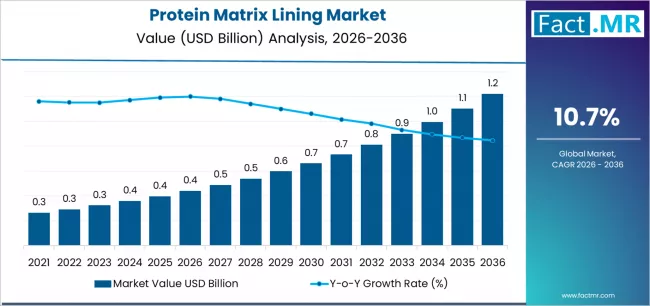
Protein matrix lining market is projected to grow from USD 0.4 billion in 2026 to USD 1.2 billion by 2036, at a CAGR of 10.7%. Active Food Packaging (antimicrobial) will dominate with a 35.0% market share, while laminated liners will lead the packaging format/type segment with a 40.0% share.

Protein Matrix Lining Market Forecast and Outlook 2026 to 2036

The global protein matrix lining market is valued at USD 0.44 billion in 2026. The market is forecast to reach USD 1.22 billion by 2036, an increase of USD 0.78 billion. This represents total growth of 177.3%, expanding at a compound annual growth rate (CAGR) of 10.7% between 2026 and 2036.

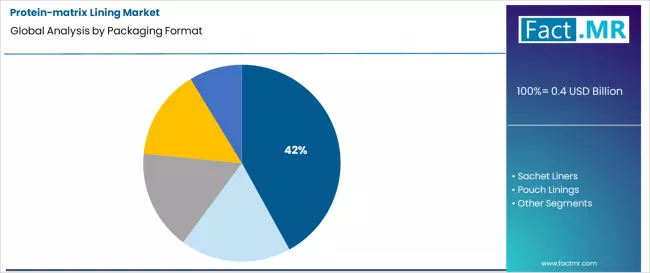
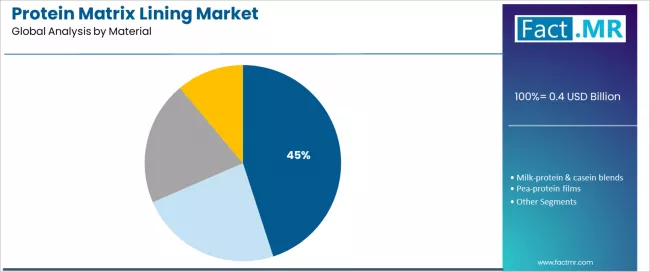
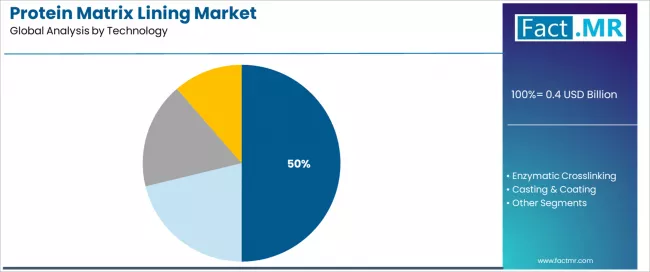
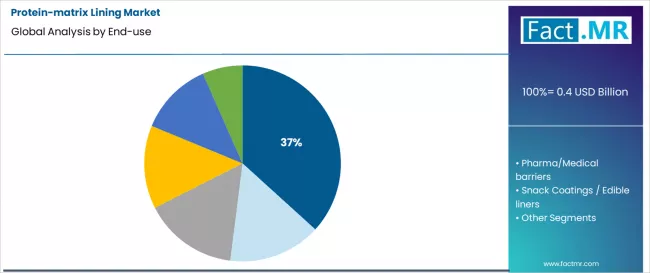
Segmentation data indicates a market focused on functional, active barriers. By end-use, active food packaging for antimicrobial purposes commands a leading 35.0% share in 2026. Laminated liners dominate the packaging format segment with a 40.0% share. Protein-derived films from soy and pea hold a 45.0% material share, with cross-linked protein film being a key technology. This configuration points to a sophisticated market where packaging materials are engineered to interact directly with the product for preservation and safety.

Quick Stats for Protein Matrix Lining Market

  • Market Value (2026): USD 0.44 Billion
  • Market Forecast Value (2036): USD 1.22 Billion
  • Market Forecast CAGR: 10.7%
  • Leading End-Use: Active Food Packaging (35.0%)
  • Key Growth Regions: Asia Pacific, North America, Europe
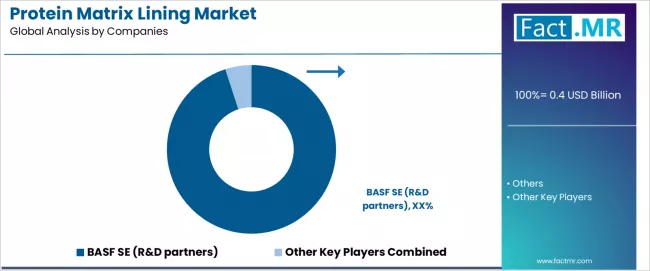
  • Leading Players in the Protein Matrix Lining Market: BASF SE

Protein Matrix Lining Market Market Value Analysis

A primary force shaping the market is the powerful consumer and regulatory push to replace synthetic preservatives and chemical barriers in food and pharmaceutical packaging. Protein-based linings offer a natural, label-friendly solution. These materials can provide inherent oxygen barrier properties and, when formulated with certain bioactive peptides, can actively inhibit microbial growth on the product surface. This allows brands to reduce or eliminate added preservatives while simultaneously addressing plastic waste, meeting dual demands for clean labels and sustainable packaging.

Breakthroughs in protein polymer science are enabling performance once thought impossible for bio-based materials. Historically, protein films were brittle and sensitive to moisture. Advanced cross-linking and enzymatic modification techniques now create linings with improved flexibility, water resistance, and mechanical strength. This technical evolution allows protein matrices to move beyond simple sachets into demanding applications like laminated pouch linings for snacks and pharmaceutical blister pack barriers, competing directly with synthetic polymers on a functional level.

Key Takeaways from the Protein Matrix Lining Market

Metric Value
Estimated Value in (2026E) USD 0.44 Billion
Forecast Value in (2036F) USD 1.22 Billion
Forecast CAGR (2026 to 2036) 10.7%

Category

Category Segment
End-use/Application Active Food Packaging (antimicrobial), Pharma/Medical Barriers, Snack Coatings / Edible Liners, Functional Foods, Animal Feed Sachets, Others
Packaging Format/Type Laminated Liners, Sachet Liners, Pouch Linings, Tubes/Liners, Others
Material Protein-derived Films (soy/pea), Milk-protein & Casein Blends, Pea-protein Films, Lentil/Soy Blends, Others
Technology Cross-linked Protein Films, Enzymatic Crosslinking, Casting & Coating, Bio-based Stabilization, Others
Region North America, Europe, Asia Pacific, Latin America, MEA

Segment Analysis

How is Active Food Packaging Redefining Preservation with Protein-Based Barriers?

The active food packaging segment holds a 35.0% market share in 2026. This leadership stems from the direct value proposition of extending shelf life naturally. Protein matrix linings in this application do more than provide a passive barrier; they are engineered to release antimicrobial peptides or antioxidants directly onto the food surface.

This is particularly valuable for fresh meats, cheeses, and prepared meals, where spoilage organisms originate at the surface. The development focus is on creating linings with a controlled release mechanism, ensuring the active compounds function throughout the product's shelf life without migrating excessively into the food, maintaining both efficacy and regulatory compliance for direct food contact.

Why are Laminated Liners the Critical Format for Integrating Protein Films?

Laminated liners lead the packaging format segment with a 40.0% share. Their importance lies in their role as a functional component within a larger packaging structure. A thin protein matrix layer can be laminated between layers of paper or other bio-polymers, combining the excellent oxygen barrier of protein with the structural strength and printability of other materials.

This format allows protein technology to be incorporated into stand-up pouches, cartons, and trays without compromising the package's durability. The lamination process itself is a key area of development, requiring techniques that bond layers effectively without damaging the sensitive protein film or using unsustainable adhesives.

What Makes Protein-derived Films the Preferred Material for Clean-Label Innovation?

Protein Matrix Lining Market Analysis By Material

Protein-derived films from soy and pea account for a 45.0% material share. The clean-label narrative and their status drive their dominance as abundant, renewable byproducts of the food industry. These films offer a compelling alternative to synthetic polymers derived from fossil fuels. Beyond sustainability, they provide inherently good gas barrier properties, crucial for preventing oxidation in sensitive products.

The development challenge is enhancing their moisture barrier and mechanical properties through modifications like cross-linking. Their compatibility with the circular bio-economy, where they can be composted or even degrade safely, solidifies their position as a material for the future.

Is Cross-Linking Technology Unlocking the Functional Potential of Protein Films?

Protein Matrix Lining Market Analysis By Technology

Cross-linked protein film technology is a foundational method for enhancing performance. This process creates stronger chemical bonds within the protein polymer network, directly addressing the traditional weaknesses of bio-based films: brittleness and water sensitivity. Cross-linking improves tensile strength, elasticity, and resistance to humidity, allowing protein linings to withstand the rigors of packaging machinery and distribution.

Development in this area explores both chemical and enzymatic cross-linking agents, with a preference for food-grade and natural options. This technology is the key enabler, transforming fragile protein layers into robust, functional components suitable for commercial packaging applications.

What are the Drivers, Restraints, and Key Trends of the Protein Matrix Lining Market?

Market growth is propelled by demand for clean-label, preservative-free food, stringent pharmaceutical packaging safety standards, and the global mandate to develop biodegradable alternatives to plastic films. The functional benefits of active preservation and high oxygen barriers are significant value drivers. Higher production costs compared to conventional plastic liners, complex and variable regulatory pathways for novel food contact materials, and limited large-scale production infrastructure for purified protein polymers serve as key restraints.

Achieving consistent film quality from biological feedstocks with natural variability is an ongoing technical challenge. Development concentrates on creating multi-functional linings that combine barrier, antimicrobial, and nutraceutical delivery properties. Another focus is on standardizing protein isolation and processing methods to improve cost-effectiveness and supply chain reliability.

Analysis of the Protein Matrix Lining Market by Key Countries

Protein Matrix Lining Market Cagr Analysis By Country

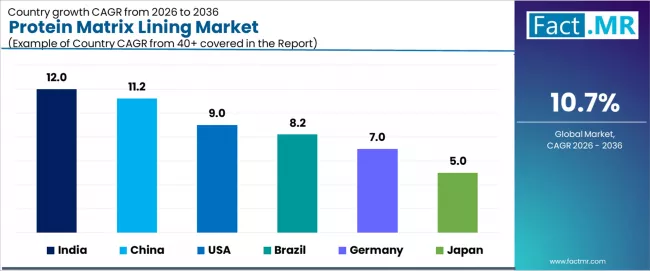
Country CAGR (2026 to 2036)
USA 9.0%
Germany 7.0%
China 11.2%
India 12.0%
Brazil 8.2%
Japan 5.0%

How are Market Dynamics Shaped by Clean-Label Food and Advanced Pharma in USA?

Protein Matrix Lining Market Country Value Analysis

The market for protein matrix lining in USA grows at a 9.0% CAGR, driven by powerful trends in clean-label food consumption and innovation in pharmaceutical delivery systems. In food, protein linings appeal to brands targeting health-conscious consumers seeking to avoid chemical preservatives.

In the pharmaceuticals industry, they are investigated for their potential in sensitive drug packaging and edible dissolvable films. Development focuses on gaining FDA Generally Recognized as Safe (GRAS) status for specific protein isolates and their modification processes, a critical step for commercialization in these regulated sectors.

  • Investment is flowing into startups and research collaborations focused on upcycling plant proteins from the large-scale US food processing industry into high-value packaging materials.
  • The functional food and supplement sector is an early adopter, using edible protein linings for single-dose nutrient sachets.

How does Germany’s Market Prioritize Scientific Validation and Circular Economy Fit?

Germany’s market advances at a 7.0% CAGR, characterized by a demand for robust scientific data on efficacy, migration, and end-of-life behavior. Applications in premium active food packaging and medical device barriers require thorough validation.

The market strongly favors materials that integrate into existing organic waste and composting streams without complication. Growth is methodical, with an emphasis on partnerships between material scientists, packaging converters, and end-user brands in the organic food and pharmaceutical sectors to co-develop certified solutions.

  • There is significant research into casein-based films from dairy side streams, aligning with bio-economy principles.
  • Certification under EU food contact material regulations and compostability standards is a non-negotiable requirement for market entry.

How is Growth in China Fueled by Food Safety Priorities and Agri-Processing Scale?

China’s market is projected to grow at an 11.2% CAGR, closely linked to national food safety initiatives and the massive scale of its agricultural processing, which generates enormous volumes of potential protein feedstock like soy and pea.

The government’s support for green and functional materials accelerates R&D. Growth is seen in applications for extending the shelf life of fresh and prepared foods for domestic consumption and export, where added safety assurances are valuable.

  • Large state-owned and private agri-businesses are investing in vertical integration to transform protein byproducts into packaging, adding value to waste streams.
  • The scale of manufacturing allows for rapid prototyping and cost optimization of production processes like continuous casting.

How can India’s Market Leverage Local Pulses and Address Food Waste Challenges?

India demonstrates the highest growth potential at a 12.0% CAGR. The country's status as a major producer of pulses like lentils and peas provides a unique feedstock advantage. The primary driver is the need for affordable, functional packaging to reduce immense post-harvest food losses. Development focuses on creating simple, effective edible coatings or sachet liners from locally sourced proteins to protect grains, spices, and snacks in challenging climatic conditions.

  • The affordable nutrition and functional food sector presents an opportunity for edible protein linings used in fortified food sachets.
  • Decentralized, small-scale production models utilizing local crop surpluses are being explored to serve regional markets.

How is Brazil’s Market Exploring Unique Feedstocks from its Agri-Industry?

Brazil’s market is set to grow at an 8.2% CAGR, with research exploring protein sources from its diverse agricultural base, such as soy and other oilseed meals. The functional food and animal feed sectors are key interest areas.

For animal feed, protein-based liner sachets could protect premium additives or probiotics from moisture and oxidation. Development work is often conducted in partnership with the country’s strong agricultural research institutions, focusing on maximizing performance from locally available raw materials.

  • The export-oriented meat and poultry industry could adopt protein-based oxygen scavenging liners to maintain product quality in transit.
  • Blending plant proteins with natural antimicrobials from local botanicals is an area of innovative research.

Does Japan’s Market Focus on Precision Pharma and Premium Functional Foods?

Japan’s market grows at a 5.0% CAGR, with demand centered on ultra-high-value applications. In pharmaceuticals, protein films are researched for their biocompatibility in advanced drug delivery systems.

In food, the focus is on edible, dissolvable linings for single-serving portions of premium instant soups, sauces, or nutraceuticals, aligning with convenience and minimal waste. The market demands extreme purity, consistency, and technical documentation, valuing the advanced functionality protein matrices can provide in meticulously engineered products.

  • Development of flavorless, odorless, and ultra-thin edible films for precise dosing is a key technical focus.
  • Partnerships between packaging material companies and major food or pharma corporations are essential for developing tailored, application-specific solutions.

Competitive Landscape of the Protein Matrix Lining Market

Protein Matrix Lining Market Analysis By Company

The competitive landscape is currently fragmented, featuring specialized biotechnology startups, academic spin-offs, and established packaging material companies investing in R&D. Competition centers on proprietary protein modification and film-forming technologies, securing intellectual property around specific formulations and processing methods.

Key players differentiate through partnerships with protein ingredient suppliers and by targeting specific high-value application niches first, such as active meat packaging or dissolvable pharmaceutical films. Success requires navigating complex interdisciplinary challenges that span food science, polymer chemistry, and packaging engineering. Companies that can not only develop a functional material but also demonstrate a scalable, cost-effective production process and clear regulatory pathway are poised to capture leadership as the market matures.

Key Players in the Protein Matrix Lining Market

  • BASF SE
  • Others

Scope of the Report

Items Values
Quantitative Units (2026) USD 0.44 Billion
End-use/Application Active Food Packaging, Pharma/Medical Barriers, Snack Coatings / Edible Liners, Functional Foods, Animal Feed Sachets, Others
Packaging Format/Type Laminated Liners, Sachet Liners, Pouch Linings, Tubes/Liners, Others
Material Protein-derived Films (soy/pea), Milk-protein & Casein Blends, Pea-protein Films, Lentil/Soy Blends, Others
Technology Cross-linked Protein Films, Enzymatic Crosslinking, Casting & Coating, Bio-based Stabilization, Others
Regions Covered North America, Europe, Asia Pacific, Latin America, MEA

Protein Matrix Lining Market by Segments

  • End-use/Application :

    • Active Food Packaging (antimicrobial)
    • Pharma/Medical Barriers
    • Snack Coatings/Edible Liners
    • Functional Foods
    • Animal Feed Sachets
    • Others
  • Packaging Format/Type :

    • Laminated Liners
    • Sachet Liners
    • Pouch Linings
    • Tubes/Liners
    • Others
  • Material :

    • Protein-derived Films (soy/pea)
    • Milk-protein & Casein Blends
    • Pea-protein Films
    • Lentil/Soy Blends
    • Others
  • Technology :

    • Cross-linked Protein Films
    • Enzymatic Crosslinking
    • Casting & Coating
    • Bio-based Stabilization
    • Others
  • Region :

    • North America
      • USA
      • Canada
      • Mexico
    • Europe
      • Germany
      • UK
      • France
      • Italy
      • Spain
      • Rest of Europe
    • Asia Pacific
      • China
      • India
      • Japan
      • South Korea
      • Australia
      • Rest of Asia Pacific
    • Latin America
      • Brazil
      • Argentina
      • Rest of Latin America
    • MEA
      • Saudi Arabia
      • UAE
      • South Africa
      • Rest of MEA

Table of Content

  1. Executive Summary
    • Global Market Outlook
    • Demand to side Trends
    • Supply to side Trends
    • Technology Roadmap Analysis
    • Analysis and Recommendations
  2. Market Overview
    • Market Coverage / Taxonomy
    • Market Definition / Scope / Limitations
  3. Market Background
    • Market Dynamics
      • Drivers
      • Restraints
      • Opportunity
      • Trends
    • Scenario Forecast
      • Demand in Optimistic Scenario
      • Demand in Likely Scenario
      • Demand in Conservative Scenario
    • Opportunity Map Analysis
    • Product Life Cycle Analysis
    • Supply Chain Analysis
    • Investment Feasibility Matrix
    • Value Chain Analysis
    • PESTLE and Porter’s Analysis
    • Regulatory Landscape
    • Regional Parent Market Outlook
    • Production and Consumption Statistics
    • Import and Export Statistics
  4. Global Market Analysis 2021 to 2025 and Forecast, 2026 to 2036
    • Historical Market Size Value (USD Million) Analysis, 2021 to 2025
    • Current and Future Market Size Value (USD Million) Projections, 2026 to 2036
      • Y to o to Y Growth Trend Analysis
      • Absolute $ Opportunity Analysis
  5. Global Market Pricing Analysis 2021 to 2025 and Forecast 2026 to 2036
  6. Global Market Analysis 2021 to 2025 and Forecast 2026 to 2036, By End-use/Application
    • Introduction / Key Findings
    • Historical Market Size Value (USD Million) Analysis By End-use/Application, 2021 to 2025
    • Current and Future Market Size Value (USD Million) Analysis and Forecast By End-use/Application, 2026 to 2036
      • Active Food Packaging (antimicrobial)
      • Pharma/Medical barriers
      • Snack Coatings / Edible liners
      • Functional Foods
      • Animal feed sachets
      • Others
    • Y to o to Y Growth Trend Analysis By End-use/Application, 2021 to 2025
    • Absolute $ Opportunity Analysis By End-use/Application, 2026 to 2036
  7. Global Market Analysis 2021 to 2025 and Forecast 2026 to 2036, By Packaging Format/Type
    • Introduction / Key Findings
    • Historical Market Size Value (USD Million) Analysis By Packaging Format/Type, 2021 to 2025
    • Current and Future Market Size Value (USD Million) Analysis and Forecast By Packaging Format/Type, 2026 to 2036
      • Laminated Liners
      • Sachet Liners
      • Pouch Linings
      • Tubes/liners
    • Y to o to Y Growth Trend Analysis By Packaging Format/Type, 2021 to 2025
    • Absolute $ Opportunity Analysis By Packaging Format/Type, 2026 to 2036
  8. Global Market Analysis 2021 to 2025 and Forecast 2026 to 2036, By Material
    • Introduction / Key Findings
    • Historical Market Size Value (USD Million) Analysis By Material, 2021 to 2025
    • Current and Future Market Size Value (USD Million) Analysis and Forecast By Material, 2026 to 2036
      • Protein-derived Films (soy/pea)
      • Milk-protein & casein blends
      • Pea-protein films
      • Lentil/soy blends
    • Y to o to Y Growth Trend Analysis By Material, 2021 to 2025
    • Absolute $ Opportunity Analysis By Material, 2026 to 2036
  9. Global Market Analysis 2021 to 2025 and Forecast 2026 to 2036, By Technology
    • Introduction / Key Findings
    • Historical Market Size Value (USD Million) Analysis By Technology, 2021 to 2025
    • Current and Future Market Size Value (USD Million) Analysis and Forecast By Technology, 2026 to 2036
      • Cross-linked Protein Films
      • Enzymatic Crosslinking
      • Casting & Coating
      • Bio-based Stabilization
    • Y to o to Y Growth Trend Analysis By Technology, 2021 to 2025
    • Absolute $ Opportunity Analysis By Technology, 2026 to 2036
  10. Global Market Analysis 2021 to 2025 and Forecast 2026 to 2036, By Region
    • Introduction
    • Historical Market Size Value (USD Million) Analysis By Region, 2021 to 2025
    • Current Market Size Value (USD Million) Analysis and Forecast By Region, 2026 to 2036
      • North America
      • Latin America
      • Western Europe
      • Eastern Europe
      • East Asia
      • South Asia and Pacific
      • Middle East & Africa
    • Market Attractiveness Analysis By Region
  11. North America Market Analysis 2021 to 2025 and Forecast 2026 to 2036, By Country
    • Historical Market Size Value (USD Million) Trend Analysis By Market Taxonomy, 2021 to 2025
    • Market Size Value (USD Million) Forecast By Market Taxonomy, 2026 to 2036
      • By Country
        • USA
        • Canada
        • Mexico
      • By End-use/Application
      • By Packaging Format/Type
      • By Material
      • By Technology
    • Market Attractiveness Analysis
      • By Country
      • By End-use/Application
      • By Packaging Format/Type
      • By Material
      • By Technology
    • Key Takeaways
  12. Latin America Market Analysis 2021 to 2025 and Forecast 2026 to 2036, By Country
    • Historical Market Size Value (USD Million) Trend Analysis By Market Taxonomy, 2021 to 2025
    • Market Size Value (USD Million) Forecast By Market Taxonomy, 2026 to 2036
      • By Country
        • Brazil
        • Chile
        • Rest of Latin America
      • By End-use/Application
      • By Packaging Format/Type
      • By Material
      • By Technology
    • Market Attractiveness Analysis
      • By Country
      • By End-use/Application
      • By Packaging Format/Type
      • By Material
      • By Technology
    • Key Takeaways
  13. Western Europe Market Analysis 2021 to 2025 and Forecast 2026 to 2036, By Country
    • Historical Market Size Value (USD Million) Trend Analysis By Market Taxonomy, 2021 to 2025
    • Market Size Value (USD Million) Forecast By Market Taxonomy, 2026 to 2036
      • By Country
        • Germany
        • UK
        • Italy
        • Spain
        • France
        • Nordic
        • BENELUX
        • Rest of Western Europe
      • By End-use/Application
      • By Packaging Format/Type
      • By Material
      • By Technology
    • Market Attractiveness Analysis
      • By Country
      • By End-use/Application
      • By Packaging Format/Type
      • By Material
      • By Technology
    • Key Takeaways
  14. Eastern Europe Market Analysis 2021 to 2025 and Forecast 2026 to 2036, By Country
    • Historical Market Size Value (USD Million) Trend Analysis By Market Taxonomy, 2021 to 2025
    • Market Size Value (USD Million) Forecast By Market Taxonomy, 2026 to 2036
      • By Country
        • Russia
        • Poland
        • Hungary
        • Balkan & Baltic
        • Rest of Eastern Europe
      • By End-use/Application
      • By Packaging Format/Type
      • By Material
      • By Technology
    • Market Attractiveness Analysis
      • By Country
      • By End-use/Application
      • By Packaging Format/Type
      • By Material
      • By Technology
    • Key Takeaways
  15. East Asia Market Analysis 2021 to 2025 and Forecast 2026 to 2036, By Country
    • Historical Market Size Value (USD Million) Trend Analysis By Market Taxonomy, 2021 to 2025
    • Market Size Value (USD Million) Forecast By Market Taxonomy, 2026 to 2036
      • By Country
        • China
        • Japan
        • South Korea
      • By End-use/Application
      • By Packaging Format/Type
      • By Material
      • By Technology
    • Market Attractiveness Analysis
      • By Country
      • By End-use/Application
      • By Packaging Format/Type
      • By Material
      • By Technology
    • Key Takeaways
  16. South Asia and Pacific Market Analysis 2021 to 2025 and Forecast 2026 to 2036, By Country
    • Historical Market Size Value (USD Million) Trend Analysis By Market Taxonomy, 2021 to 2025
    • Market Size Value (USD Million) Forecast By Market Taxonomy, 2026 to 2036
      • By Country
        • India
        • ASEAN
        • Australia & New Zealand
        • Rest of South Asia and Pacific
      • By End-use/Application
      • By Packaging Format/Type
      • By Material
      • By Technology
    • Market Attractiveness Analysis
      • By Country
      • By End-use/Application
      • By Packaging Format/Type
      • By Material
      • By Technology
    • Key Takeaways
  17. Middle East & Africa Market Analysis 2021 to 2025 and Forecast 2026 to 2036, By Country
    • Historical Market Size Value (USD Million) Trend Analysis By Market Taxonomy, 2021 to 2025
    • Market Size Value (USD Million) Forecast By Market Taxonomy, 2026 to 2036
      • By Country
        • Kingdom of Saudi Arabia
        • Other GCC Countries
        • Turkiye
        • South Africa
        • Other African Union
        • Rest of Middle East & Africa
      • By End-use/Application
      • By Packaging Format/Type
      • By Material
      • By Technology
    • Market Attractiveness Analysis
      • By Country
      • By End-use/Application
      • By Packaging Format/Type
      • By Material
      • By Technology
    • Key Takeaways
  18. Key Countries Market Analysis
    • USA
      • Pricing Analysis
      • Market Share Analysis, 2025
        • By End-use/Application
        • By Packaging Format/Type
        • By Material
        • By Technology
    • Canada
      • Pricing Analysis
      • Market Share Analysis, 2025
        • By End-use/Application
        • By Packaging Format/Type
        • By Material
        • By Technology
    • Mexico
      • Pricing Analysis
      • Market Share Analysis, 2025
        • By End-use/Application
        • By Packaging Format/Type
        • By Material
        • By Technology
    • Brazil
      • Pricing Analysis
      • Market Share Analysis, 2025
        • By End-use/Application
        • By Packaging Format/Type
        • By Material
        • By Technology
    • Chile
      • Pricing Analysis
      • Market Share Analysis, 2025
        • By End-use/Application
        • By Packaging Format/Type
        • By Material
        • By Technology
    • Germany
      • Pricing Analysis
      • Market Share Analysis, 2025
        • By End-use/Application
        • By Packaging Format/Type
        • By Material
        • By Technology
    • UK
      • Pricing Analysis
      • Market Share Analysis, 2025
        • By End-use/Application
        • By Packaging Format/Type
        • By Material
        • By Technology
    • Italy
      • Pricing Analysis
      • Market Share Analysis, 2025
        • By End-use/Application
        • By Packaging Format/Type
        • By Material
        • By Technology
    • Spain
      • Pricing Analysis
      • Market Share Analysis, 2025
        • By End-use/Application
        • By Packaging Format/Type
        • By Material
        • By Technology
    • France
      • Pricing Analysis
      • Market Share Analysis, 2025
        • By End-use/Application
        • By Packaging Format/Type
        • By Material
        • By Technology
    • India
      • Pricing Analysis
      • Market Share Analysis, 2025
        • By End-use/Application
        • By Packaging Format/Type
        • By Material
        • By Technology
    • ASEAN
      • Pricing Analysis
      • Market Share Analysis, 2025
        • By End-use/Application
        • By Packaging Format/Type
        • By Material
        • By Technology
    • Australia & New Zealand
      • Pricing Analysis
      • Market Share Analysis, 2025
        • By End-use/Application
        • By Packaging Format/Type
        • By Material
        • By Technology
    • China
      • Pricing Analysis
      • Market Share Analysis, 2025
        • By End-use/Application
        • By Packaging Format/Type
        • By Material
        • By Technology
    • Japan
      • Pricing Analysis
      • Market Share Analysis, 2025
        • By End-use/Application
        • By Packaging Format/Type
        • By Material
        • By Technology
    • South Korea
      • Pricing Analysis
      • Market Share Analysis, 2025
        • By End-use/Application
        • By Packaging Format/Type
        • By Material
        • By Technology
    • Russia
      • Pricing Analysis
      • Market Share Analysis, 2025
        • By End-use/Application
        • By Packaging Format/Type
        • By Material
        • By Technology
    • Poland
      • Pricing Analysis
      • Market Share Analysis, 2025
        • By End-use/Application
        • By Packaging Format/Type
        • By Material
        • By Technology
    • Hungary
      • Pricing Analysis
      • Market Share Analysis, 2025
        • By End-use/Application
        • By Packaging Format/Type
        • By Material
        • By Technology
    • Kingdom of Saudi Arabia
      • Pricing Analysis
      • Market Share Analysis, 2025
        • By End-use/Application
        • By Packaging Format/Type
        • By Material
        • By Technology
    • Turkiye
      • Pricing Analysis
      • Market Share Analysis, 2025
        • By End-use/Application
        • By Packaging Format/Type
        • By Material
        • By Technology
    • South Africa
      • Pricing Analysis
      • Market Share Analysis, 2025
        • By End-use/Application
        • By Packaging Format/Type
        • By Material
        • By Technology
  19. Market Structure Analysis
    • Competition Dashboard
    • Competition Benchmarking
    • Market Share Analysis of Top Players
      • By Regional
      • By End-use/Application
      • By Packaging Format/Type
      • By Material
      • By Technology
  20. Competition Analysis
    • Competition Deep Dive
      • BASF SE (R&D partners)
        • Overview
        • Product Portfolio
        • Profitability by Market Segments (Product/Age /Sales Channel/Region)
        • Sales Footprint
        • Strategy Overview
          • Marketing Strategy
          • Product Strategy
          • Channel Strategy
      • Others
  21. Assumptions & Acronyms Used
  22. Research Methodology

List Of Table

  • Table 1: Global Market Value (USD Million) Forecast by Region, 2021 to 2036
  • Table 2: Global Market Value (USD Million) Forecast by End-use/Application, 2021 to 2036
  • Table 3: Global Market Value (USD Million) Forecast by Packaging Format/Type, 2021 to 2036
  • Table 4: Global Market Value (USD Million) Forecast by Material, 2021 to 2036
  • Table 5: Global Market Value (USD Million) Forecast by Technology, 2021 to 2036
  • Table 6: North America Market Value (USD Million) Forecast by Country, 2021 to 2036
  • Table 7: North America Market Value (USD Million) Forecast by End-use/Application, 2021 to 2036
  • Table 8: North America Market Value (USD Million) Forecast by Packaging Format/Type, 2021 to 2036
  • Table 9: North America Market Value (USD Million) Forecast by Material, 2021 to 2036
  • Table 10: North America Market Value (USD Million) Forecast by Technology, 2021 to 2036
  • Table 11: Latin America Market Value (USD Million) Forecast by Country, 2021 to 2036
  • Table 12: Latin America Market Value (USD Million) Forecast by End-use/Application, 2021 to 2036
  • Table 13: Latin America Market Value (USD Million) Forecast by Packaging Format/Type, 2021 to 2036
  • Table 14: Latin America Market Value (USD Million) Forecast by Material, 2021 to 2036
  • Table 15: Latin America Market Value (USD Million) Forecast by Technology, 2021 to 2036
  • Table 16: Western Europe Market Value (USD Million) Forecast by Country, 2021 to 2036
  • Table 17: Western Europe Market Value (USD Million) Forecast by End-use/Application, 2021 to 2036
  • Table 18: Western Europe Market Value (USD Million) Forecast by Packaging Format/Type, 2021 to 2036
  • Table 19: Western Europe Market Value (USD Million) Forecast by Material, 2021 to 2036
  • Table 20: Western Europe Market Value (USD Million) Forecast by Technology, 2021 to 2036
  • Table 21: Eastern Europe Market Value (USD Million) Forecast by Country, 2021 to 2036
  • Table 22: Eastern Europe Market Value (USD Million) Forecast by End-use/Application, 2021 to 2036
  • Table 23: Eastern Europe Market Value (USD Million) Forecast by Packaging Format/Type, 2021 to 2036
  • Table 24: Eastern Europe Market Value (USD Million) Forecast by Material, 2021 to 2036
  • Table 25: Eastern Europe Market Value (USD Million) Forecast by Technology, 2021 to 2036
  • Table 26: East Asia Market Value (USD Million) Forecast by Country, 2021 to 2036
  • Table 27: East Asia Market Value (USD Million) Forecast by End-use/Application, 2021 to 2036
  • Table 28: East Asia Market Value (USD Million) Forecast by Packaging Format/Type, 2021 to 2036
  • Table 29: East Asia Market Value (USD Million) Forecast by Material, 2021 to 2036
  • Table 30: East Asia Market Value (USD Million) Forecast by Technology, 2021 to 2036
  • Table 31: South Asia and Pacific Market Value (USD Million) Forecast by Country, 2021 to 2036
  • Table 32: South Asia and Pacific Market Value (USD Million) Forecast by End-use/Application, 2021 to 2036
  • Table 33: South Asia and Pacific Market Value (USD Million) Forecast by Packaging Format/Type, 2021 to 2036
  • Table 34: South Asia and Pacific Market Value (USD Million) Forecast by Material, 2021 to 2036
  • Table 35: South Asia and Pacific Market Value (USD Million) Forecast by Technology, 2021 to 2036
  • Table 36: Middle East & Africa Market Value (USD Million) Forecast by Country, 2021 to 2036
  • Table 37: Middle East & Africa Market Value (USD Million) Forecast by End-use/Application, 2021 to 2036
  • Table 38: Middle East & Africa Market Value (USD Million) Forecast by Packaging Format/Type, 2021 to 2036
  • Table 39: Middle East & Africa Market Value (USD Million) Forecast by Material, 2021 to 2036
  • Table 40: Middle East & Africa Market Value (USD Million) Forecast by Technology, 2021 to 2036

List Of Figures

  • Figure 1: Global Market Pricing Analysis
  • Figure 2: Global Market Value (USD Million) Forecast 2021 to 2036
  • Figure 3: Global Market Value Share and BPS Analysis by End-use/Application, 2026 and 2036
  • Figure 4: Global Market Y to o to Y Growth Comparison by End-use/Application, 2026 to 2036
  • Figure 5: Global Market Attractiveness Analysis by End-use/Application
  • Figure 6: Global Market Value Share and BPS Analysis by Packaging Format/Type, 2026 and 2036
  • Figure 7: Global Market Y to o to Y Growth Comparison by Packaging Format/Type, 2026 to 2036
  • Figure 8: Global Market Attractiveness Analysis by Packaging Format/Type
  • Figure 9: Global Market Value Share and BPS Analysis by Material, 2026 and 2036
  • Figure 10: Global Market Y to o to Y Growth Comparison by Material, 2026 to 2036
  • Figure 11: Global Market Attractiveness Analysis by Material
  • Figure 12: Global Market Value Share and BPS Analysis by Technology, 2026 and 2036
  • Figure 13: Global Market Y to o to Y Growth Comparison by Technology, 2026 to 2036
  • Figure 14: Global Market Attractiveness Analysis by Technology
  • Figure 15: Global Market Value (USD Million) Share and BPS Analysis by Region, 2026 and 2036
  • Figure 16: Global Market Y to o to Y Growth Comparison by Region, 2026 to 2036
  • Figure 17: Global Market Attractiveness Analysis by Region
  • Figure 18: North America Market Incremental Dollar Opportunity, 2026 to 2036
  • Figure 19: Latin America Market Incremental Dollar Opportunity, 2026 to 2036
  • Figure 20: Western Europe Market Incremental Dollar Opportunity, 2026 to 2036
  • Figure 21: Eastern Europe Market Incremental Dollar Opportunity, 2026 to 2036
  • Figure 22: East Asia Market Incremental Dollar Opportunity, 2026 to 2036
  • Figure 23: South Asia and Pacific Market Incremental Dollar Opportunity, 2026 to 2036
  • Figure 24: Middle East & Africa Market Incremental Dollar Opportunity, 2026 to 2036
  • Figure 25: North America Market Value Share and BPS Analysis by Country, 2026 and 2036
  • Figure 26: North America Market Value Share and BPS Analysis by End-use/Application, 2026 and 2036
  • Figure 27: North America Market Y to o to Y Growth Comparison by End-use/Application, 2026 to 2036
  • Figure 28: North America Market Attractiveness Analysis by End-use/Application
  • Figure 29: North America Market Value Share and BPS Analysis by Packaging Format/Type, 2026 and 2036
  • Figure 30: North America Market Y to o to Y Growth Comparison by Packaging Format/Type, 2026 to 2036
  • Figure 31: North America Market Attractiveness Analysis by Packaging Format/Type
  • Figure 32: North America Market Value Share and BPS Analysis by Material, 2026 and 2036
  • Figure 33: North America Market Y to o to Y Growth Comparison by Material, 2026 to 2036
  • Figure 34: North America Market Attractiveness Analysis by Material
  • Figure 35: North America Market Value Share and BPS Analysis by Technology, 2026 and 2036
  • Figure 36: North America Market Y to o to Y Growth Comparison by Technology, 2026 to 2036
  • Figure 37: North America Market Attractiveness Analysis by Technology
  • Figure 38: Latin America Market Value Share and BPS Analysis by Country, 2026 and 2036
  • Figure 39: Latin America Market Value Share and BPS Analysis by End-use/Application, 2026 and 2036
  • Figure 40: Latin America Market Y to o to Y Growth Comparison by End-use/Application, 2026 to 2036
  • Figure 41: Latin America Market Attractiveness Analysis by End-use/Application
  • Figure 42: Latin America Market Value Share and BPS Analysis by Packaging Format/Type, 2026 and 2036
  • Figure 43: Latin America Market Y to o to Y Growth Comparison by Packaging Format/Type, 2026 to 2036
  • Figure 44: Latin America Market Attractiveness Analysis by Packaging Format/Type
  • Figure 45: Latin America Market Value Share and BPS Analysis by Material, 2026 and 2036
  • Figure 46: Latin America Market Y to o to Y Growth Comparison by Material, 2026 to 2036
  • Figure 47: Latin America Market Attractiveness Analysis by Material
  • Figure 48: Latin America Market Value Share and BPS Analysis by Technology, 2026 and 2036
  • Figure 49: Latin America Market Y to o to Y Growth Comparison by Technology, 2026 to 2036
  • Figure 50: Latin America Market Attractiveness Analysis by Technology
  • Figure 51: Western Europe Market Value Share and BPS Analysis by Country, 2026 and 2036
  • Figure 52: Western Europe Market Value Share and BPS Analysis by End-use/Application, 2026 and 2036
  • Figure 53: Western Europe Market Y to o to Y Growth Comparison by End-use/Application, 2026 to 2036
  • Figure 54: Western Europe Market Attractiveness Analysis by End-use/Application
  • Figure 55: Western Europe Market Value Share and BPS Analysis by Packaging Format/Type, 2026 and 2036
  • Figure 56: Western Europe Market Y to o to Y Growth Comparison by Packaging Format/Type, 2026 to 2036
  • Figure 57: Western Europe Market Attractiveness Analysis by Packaging Format/Type
  • Figure 58: Western Europe Market Value Share and BPS Analysis by Material, 2026 and 2036
  • Figure 59: Western Europe Market Y to o to Y Growth Comparison by Material, 2026 to 2036
  • Figure 60: Western Europe Market Attractiveness Analysis by Material
  • Figure 61: Western Europe Market Value Share and BPS Analysis by Technology, 2026 and 2036
  • Figure 62: Western Europe Market Y to o to Y Growth Comparison by Technology, 2026 to 2036
  • Figure 63: Western Europe Market Attractiveness Analysis by Technology
  • Figure 64: Eastern Europe Market Value Share and BPS Analysis by Country, 2026 and 2036
  • Figure 65: Eastern Europe Market Value Share and BPS Analysis by End-use/Application, 2026 and 2036
  • Figure 66: Eastern Europe Market Y to o to Y Growth Comparison by End-use/Application, 2026 to 2036
  • Figure 67: Eastern Europe Market Attractiveness Analysis by End-use/Application
  • Figure 68: Eastern Europe Market Value Share and BPS Analysis by Packaging Format/Type, 2026 and 2036
  • Figure 69: Eastern Europe Market Y to o to Y Growth Comparison by Packaging Format/Type, 2026 to 2036
  • Figure 70: Eastern Europe Market Attractiveness Analysis by Packaging Format/Type
  • Figure 71: Eastern Europe Market Value Share and BPS Analysis by Material, 2026 and 2036
  • Figure 72: Eastern Europe Market Y to o to Y Growth Comparison by Material, 2026 to 2036
  • Figure 73: Eastern Europe Market Attractiveness Analysis by Material
  • Figure 74: Eastern Europe Market Value Share and BPS Analysis by Technology, 2026 and 2036
  • Figure 75: Eastern Europe Market Y to o to Y Growth Comparison by Technology, 2026 to 2036
  • Figure 76: Eastern Europe Market Attractiveness Analysis by Technology
  • Figure 77: East Asia Market Value Share and BPS Analysis by Country, 2026 and 2036
  • Figure 78: East Asia Market Value Share and BPS Analysis by End-use/Application, 2026 and 2036
  • Figure 79: East Asia Market Y to o to Y Growth Comparison by End-use/Application, 2026 to 2036
  • Figure 80: East Asia Market Attractiveness Analysis by End-use/Application
  • Figure 81: East Asia Market Value Share and BPS Analysis by Packaging Format/Type, 2026 and 2036
  • Figure 82: East Asia Market Y to o to Y Growth Comparison by Packaging Format/Type, 2026 to 2036
  • Figure 83: East Asia Market Attractiveness Analysis by Packaging Format/Type
  • Figure 84: East Asia Market Value Share and BPS Analysis by Material, 2026 and 2036
  • Figure 85: East Asia Market Y to o to Y Growth Comparison by Material, 2026 to 2036
  • Figure 86: East Asia Market Attractiveness Analysis by Material
  • Figure 87: East Asia Market Value Share and BPS Analysis by Technology, 2026 and 2036
  • Figure 88: East Asia Market Y to o to Y Growth Comparison by Technology, 2026 to 2036
  • Figure 89: East Asia Market Attractiveness Analysis by Technology
  • Figure 90: South Asia and Pacific Market Value Share and BPS Analysis by Country, 2026 and 2036
  • Figure 91: South Asia and Pacific Market Value Share and BPS Analysis by End-use/Application, 2026 and 2036
  • Figure 92: South Asia and Pacific Market Y to o to Y Growth Comparison by End-use/Application, 2026 to 2036
  • Figure 93: South Asia and Pacific Market Attractiveness Analysis by End-use/Application
  • Figure 94: South Asia and Pacific Market Value Share and BPS Analysis by Packaging Format/Type, 2026 and 2036
  • Figure 95: South Asia and Pacific Market Y to o to Y Growth Comparison by Packaging Format/Type, 2026 to 2036
  • Figure 96: South Asia and Pacific Market Attractiveness Analysis by Packaging Format/Type
  • Figure 97: South Asia and Pacific Market Value Share and BPS Analysis by Material, 2026 and 2036
  • Figure 98: South Asia and Pacific Market Y to o to Y Growth Comparison by Material, 2026 to 2036
  • Figure 99: South Asia and Pacific Market Attractiveness Analysis by Material
  • Figure 100: South Asia and Pacific Market Value Share and BPS Analysis by Technology, 2026 and 2036
  • Figure 101: South Asia and Pacific Market Y to o to Y Growth Comparison by Technology, 2026 to 2036
  • Figure 102: South Asia and Pacific Market Attractiveness Analysis by Technology
  • Figure 103: Middle East & Africa Market Value Share and BPS Analysis by Country, 2026 and 2036
  • Figure 104: Middle East & Africa Market Value Share and BPS Analysis by End-use/Application, 2026 and 2036
  • Figure 105: Middle East & Africa Market Y to o to Y Growth Comparison by End-use/Application, 2026 to 2036
  • Figure 106: Middle East & Africa Market Attractiveness Analysis by End-use/Application
  • Figure 107: Middle East & Africa Market Value Share and BPS Analysis by Packaging Format/Type, 2026 and 2036
  • Figure 108: Middle East & Africa Market Y to o to Y Growth Comparison by Packaging Format/Type, 2026 to 2036
  • Figure 109: Middle East & Africa Market Attractiveness Analysis by Packaging Format/Type
  • Figure 110: Middle East & Africa Market Value Share and BPS Analysis by Material, 2026 and 2036
  • Figure 111: Middle East & Africa Market Y to o to Y Growth Comparison by Material, 2026 to 2036
  • Figure 112: Middle East & Africa Market Attractiveness Analysis by Material
  • Figure 113: Middle East & Africa Market Value Share and BPS Analysis by Technology, 2026 and 2036
  • Figure 114: Middle East & Africa Market Y to o to Y Growth Comparison by Technology, 2026 to 2036
  • Figure 115: Middle East & Africa Market Attractiveness Analysis by Technology
  • Figure 116: Global Market - Tier Structure Analysis
  • Figure 117: Global Market - Company Share Analysis

- FAQs -

How big is the protein matrix lining market in 2026?

The global protein matrix lining market is estimated to be valued at USD 0.4 billion in 2026.

What will be the size of protein matrix lining market in 2036?

The market size for the protein matrix lining market is projected to reach USD 1.2 billion by 2036.

How much will be the protein matrix lining market growth between 2026 and 2036?

The protein matrix lining market is expected to grow at a 10.7% CAGR between 2026 and 2036.

What are the key product types in the protein matrix lining market?

The key product types in protein matrix lining market are active food packaging (antimicrobial), pharma/medical barriers, snack coatings / edible liners, functional foods, animal feed sachets and others.

Which packaging format/type segment to contribute significant share in the protein matrix lining market in 2026?

In terms of packaging format/type, laminated liners segment to command 40.0% share in the protein matrix lining market in 2026.
Protein Matrix Lining Market