Readily Biodegradable Corrosion Inhibitors Market
Readily Biodegradable Corrosion Inhibitors Market Size and Share Forecast Outlook 2026 to 2036
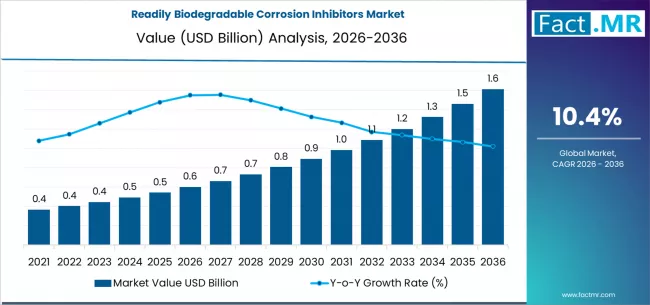
Readily biodegradable corrosion inhibitors market is projected to grow from USD 0.6 billion in 2026 to USD 1.6 billion by 2036, at a CAGR of 10.4%. Bio-Polymer / Plant-Based Inhibitors will dominate with a 36.0% market share, while water treatment & utilities will lead the end-use industry segment with a 34.0% share.
Readily Biodegradable Corrosion Inhibitors Market Forecast and Outlook 2026 to 2036
The global market for readily biodegradable corrosion inhibitors is projected to reach USD 1.61 billion by 2036. The market is valued at USD 0.60 billion in 2026 and is set to rise at a CAGR of 10.4% during the assessment period.
Key Takeaways from the Readily Biodegradable Corrosion Inhibitors Market
- Market Value for 2026: USD 0.60 Billion
- Market Value for 2036: USD 1.61 Billion
- Forecast CAGR (2026-2036): 10.4%
- Leading Inhibitor Chemistry Share (2026): Bio-Polymer / Plant-Based Inhibitors (36%)
- Leading End-Use Industry Share (2026): Water Treatment & Utilities (34%)
- Leading Formulation Type Share (2026): Water-Based Liquid Inhibitors (46%)
- Key Players in the Market: BASF SE, Ecolab Inc., Solenis, Nouryon, Kemira Oyj.
By inhibitor chemistry, bio-polymer and plant-based inhibitors hold a leading 36% share. The end-use industry for water treatment and utilities represents the dominant application at 34%. Water-based liquid inhibitors constitute the foremost formulation type, accounting for a 46% share.
This accelerated growth is propelled by a global regulatory pivot toward environmentally acceptable chemicals, particularly in sectors like water treatment and offshore operations where chemical discharge is strictly controlled. Industries are mandated to replace persistent, toxic inhibitors with high-performance alternatives that break down naturally without accumulating in ecosystems.
Readily biodegradable corrosion inhibitors are engineered to protect metal assets from degradation while meeting stringent ecological criteria. Their role is critical for extending infrastructure lifespan and ensuring operational integrity in environmentally sensitive applications, aligning technical performance with sustainability mandates.
Readily Biodegradable Corrosion Inhibitors Market
| Metric | Value |
|---|---|
| Market Value (2026) | USD 0.60 Billion |
| Market Forecast Value (2036) | USD 1.61 Billion |
| Forecast CAGR (2026-2036) | 10.4% |
Category
| Category | Segments |
|---|---|
| Inhibitor Chemistry | Bio-Polymer/Plant-Based Inhibitors, Biodegradable Synthetic Organic Inhibitors, Water-Based Green Inhibitor Formulations, Hybrid/Mixed Bio-Inhibitors, Other Natural & Eco-Friendly Inhibitors |
| End-Use Industry | Water Treatment & Utilities, Oil & Gas/Petrochemical, Mining & Metallurgical, Marine & Offshore, Industrial Manufacturing |
| Formulation Type | Water-Based Liquid Inhibitors, Powder/Solid Green Inhibitor Blends, Concentrated Bio-Inhibitor Solutions, Ready-to-Use Eco Packs/Tablets, Other Specialty Delivery Systems |
| Region | North America, Latin America, Western Europe, Eastern Europe, East Asia, South Asia & Pacific, MEA |
Segmental Analysis
By Inhibitor Chemistry, Which Segment is at the Forefront of Green Innovation?
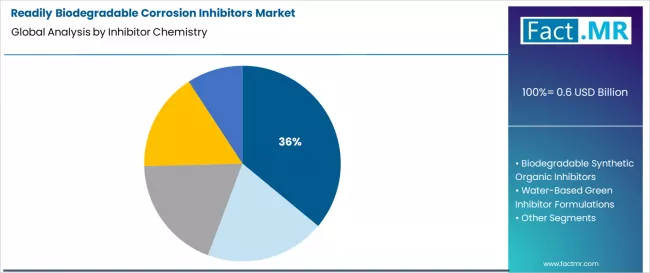
Bio-polymer and plant-based inhibitors lead the segment with a 36% share. This dominance stems from their foundation in renewable, non-toxic feedstocks such as tannins, amino acids, and polysaccharides. These inhibitors form protective films on metal surfaces through natural adsorption and chelation mechanisms.
Their inherent biodegradability and low aquatic toxicity make them particularly suitable for open-loop cooling systems, municipal water networks, and applications with direct environmental discharge, where regulatory acceptance is paramount.
By End-Use Industry, Which Sector Faces the Most Direct Environmental Compliance Pressure?
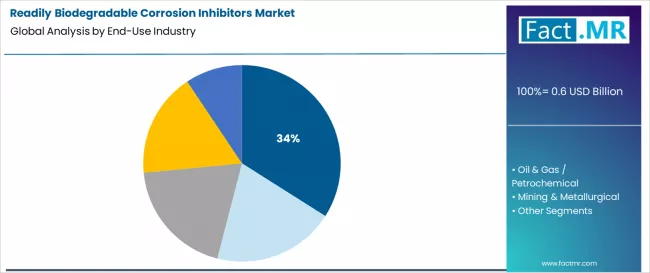
Water treatment and utilities represent the largest end-use industry with a 34% share. This sector operates under strict discharge permits that limit the concentration of persistent chemicals in effluent. Corrosion control in drinking water distribution, cooling towers, and wastewater systems must not compromise water quality or ecological health.
The mandatory shift toward environmentally acceptable lubricants and inhibitors in many regions creates a compliance-driven, high-volume demand for readily biodegradable solutions.
By Formulation Type, Which Delivery System Offers the Greatest Ease of Adoption?
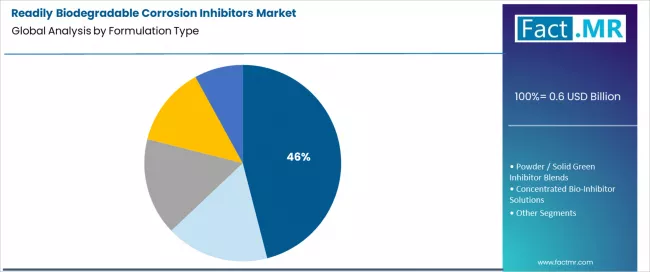
Water-based liquid inhibitors are the leading formulation type with a 46% share. Their dominance is due to ease of handling, accurate dosing, and compatibility with existing chemical feed systems in industrial plants.
These ready-to-disperse liquids integrate seamlessly into water streams without requiring additional dissolution steps, reducing operational complexity. The formulation also allows for the stable blending of different biodegradable actives, providing a versatile and user-friendly platform for formulators and end-users.
What are the Drivers, Restraints, and Key Trends of the Readily Biodegradable Corrosion Inhibitors Market?
The fundamental market driver is the stringent and expanding regulatory framework governing the environmental fate of industrial chemicals. Regulations like the European Union’s REACH and the U.S. Environmental Protection Agency’s Clean Water Act standards push for substitution with safer alternatives. Additionally, certification schemes like the OECD 301 biodegradability series and the Blue Angel label create definitive procurement criteria for green chemicals in public and private sectors.
A primary restraint is the challenge of matching the long-term protective performance and cost-effectiveness of traditional, persistent inhibitors like chromates and phosphonates. Some biodegradable inhibitors may have a shorter active life or require more frequent dosing. The higher initial cost of advanced bio-based raw materials can also impede adoption in highly cost-competitive industries, despite lower environmental liability and treatment costs.
Key trends include the development of multifunctional inhibitors that combine corrosion protection with scale and microbiological control in a single, biodegradable package. There is significant research into stimuli-responsive smart inhibitors that release protective agents only when corrosion initiation is detected.
The market is moving toward digital monitoring and dosing systems that optimize inhibitor feed rates based on real-time corrosion probes, minimizing chemical use. Furthermore, circular economy approaches, such as deriving inhibitors from food processing or agricultural waste streams, are gaining traction.
Analysis of the Readily Biodegradable Corrosion Inhibitors Market by Key Countries
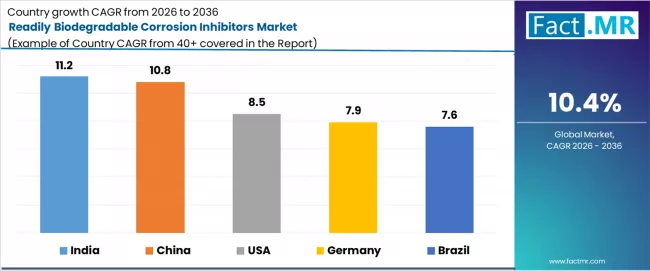
| Country | CAGR (2026-2036) |
|---|---|
| India | 11.20% |
| China | 10.80% |
| USA | 8.50% |
| Germany | 7.90% |
| Brazil | 7.60% |
How is India's Infrastructure Expansion and Green Policy Drive Accelerating Demand?
India's leading CAGR of 11.20% is driven by massive investments in water infrastructure, including the Jal Jeevan Mission, and rapid growth in power, refining, and manufacturing. New projects are increasingly mandated to use green chemicals, while existing plants face pressure to reduce their environmental footprint. This combination of new capacity and regulatory modernization creates a high-growth environment for compliant, biodegradable corrosion control solutions.
What is the Impact of China's Ecological Civilization Goals on Industrial Chemical Use?
China's 10.80% growth is supported by its "Beautiful China" and "dual carbon" policies, which explicitly promote green and low-carbon technologies across industries. Stricter enforcement of water pollution prevention laws compels sectors like power generation, chemicals, and marine to adopt environmentally acceptable alternatives. China's domestic production capacity for green chemicals further supports widespread adoption and cost reduction.
How does the USA's Regulatory Framework and Liability Awareness Shape the Market?
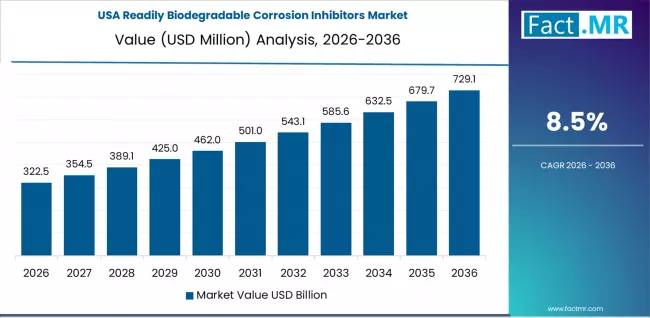
A mature regulatory environment, including EPA VGP (Vessel General Permit) rules for marine discharges and state-level regulations on cooling water chemicals, underpins the USA’s 8.50% growth. High awareness of potential Superfund liability from chemical contamination drives industries, especially oil & gas and utilities, to proactively switch to biodegradable inhibitors to mitigate long-term environmental risk and compliance costs.
Why is Germany a Benchmark for High-Performance Green Engineering Solutions?
Germany's 7.90% CAGR reflects its rigorous implementation of EU chemical and water directives, combined with leading engineering standards. German industries demand inhibitors that deliver proven, long-lasting protection while fully meeting the highest biodegradability and toxicity standards. This focus on technical excellence within a strict regulatory box makes Germany a key market for advanced, high-efficiency bio-inhibitor formulations.
What Role does Brazil's Offshore and Industrial Sector Play in Market Development?
Brazil's 7.60% growth is anchored in its extensive offshore oil & gas operations and growing industrial base. Environmental licensing for offshore projects and operations in sensitive biomes like the Amazon requires the use of certified biodegradable chemicals. This specific regulatory demand, coupled with general industrial growth, stimulates the market for high-performance green inhibitors suitable for challenging saline and high-temperature environments.
Competitive Landscape of the Readily Biodegradable Corrosion Inhibitors Market
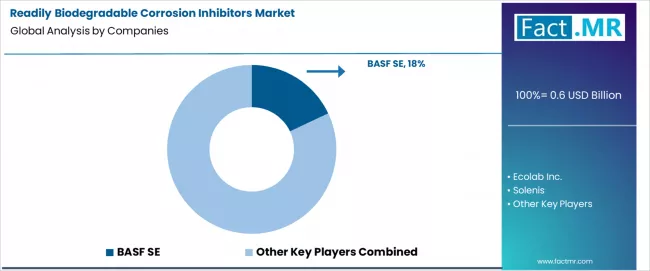
Global water treatment and specialty chemical companies transitioning their portfolios from traditional to green chemistry define the competitive landscape. Leaders like BASF and Solenis compete through intensive R&D in bio-based molecule design and robust testing programs to demonstrate performance parity.
Competition intensifies around securing credible third-party biodegradability certifications, building case studies in flagship environmental projects, and providing comprehensive technical support to help customers navigate formulation changes and regulatory reporting.
Key Players in the Readily Biodegradable Corrosion Inhibitors Market
- BASF SE
- Ecolab Inc.
- Solenis
- Nouryon
- Kemira Oyj.
Scope of Report
| Items | Values |
|---|---|
| Quantitative Units | USD Billion |
| Inhibitor Chemistry | Bio-Polymer/Plant-Based, Biodegradable Synthetic, Water-Based Green, Hybrid, Other |
| End-Use Industry | Water Treatment, Oil & Gas, Mining, Marine, Industrial Manufacturing |
| Formulation Type | Water-Based Liquid, Powder/Solid, Concentrates, Ready-to-Use Packs, Other |
| Key Countries | India, China, USA, Germany, Brazil |
| Key Companies | BASF SE, Ecolab Inc., Solenis, Nouryon, Kemira Oyj. |
| Additional Analysis | Analysis of standardized biodegradability test protocols (OECD, ISO); corrosion inhibition efficiency testing (electrochemical methods); environmental toxicity profiling; regulatory landscape for offshore and discharge permits; supply chain analysis for key bio-derived feedstocks. |
Market by Segments
-
Inhibitor Chemistry :
- Bio-Polymer/Plant-Based Inhibitors
- Biodegradable Synthetic Organic Inhibitors
- Water-Based Green Inhibitor Formulations
- Hybrid/Mixed Bio-Inhibitors
- Other Natural & Eco-Friendly Inhibitors
-
End-Use Industry :
- Water Treatment & Utilities
- Oil & Gas/Petrochemical
- Mining & Metallurgical
- Marine & Offshore
- Industrial Manufacturing
-
Formulation Type :
- Water-Based Liquid Inhibitors
- Powder/Solid Green Inhibitor Blends
- Concentrated Bio-Inhibitor Solutions
- Ready-to-Use Eco Packs/Tablets
- Other Specialty Delivery Systems
-
Region :
- North America
- USA
- Canada
- Latin America
- Brazil
- Mexico
- Argentina
- Rest of Latin America
- Western Europe
- Germany
- UK
- France
- Spain
- Italy
- BENELUX
- Rest of Western Europe
- Eastern Europe
- Russia
- Poland
- Czech Republic
- Rest of Eastern Europe
- East Asia
- China
- Japan
- South Korea
- Rest of East Asia
- South Asia & Pacific
- India
- ASEAN
- Australia
- Rest of South Asia & Pacific
- MEA
- Saudi Arabia
- UAE
- Turkiye
- Rest of MEA
- North America
Table of Content
- Executive Summary
- Global Market Outlook
- Demand to side Trends
- Supply to side Trends
- Technology Roadmap Analysis
- Analysis and Recommendations
- Market Overview
- Market Coverage / Taxonomy
- Market Definition / Scope / Limitations
- Market Background
- Market Dynamics
- Drivers
- Restraints
- Opportunity
- Trends
- Scenario Forecast
- Demand in Optimistic Scenario
- Demand in Likely Scenario
- Demand in Conservative Scenario
- Opportunity Map Analysis
- Product Life Cycle Analysis
- Supply Chain Analysis
- Investment Feasibility Matrix
- Value Chain Analysis
- PESTLE and Porter’s Analysis
- Regulatory Landscape
- Regional Parent Market Outlook
- Production and Consumption Statistics
- Import and Export Statistics
- Market Dynamics
- Global Market Analysis 2021 to 2025 and Forecast, 2026 to 2036
- Historical Market Size Value (USD Million) Analysis, 2021 to 2025
- Current and Future Market Size Value (USD Million) Projections, 2026 to 2036
- Y to o to Y Growth Trend Analysis
- Absolute $ Opportunity Analysis
- Global Market Pricing Analysis 2021 to 2025 and Forecast 2026 to 2036
- Global Market Analysis 2021 to 2025 and Forecast 2026 to 2036, By Inhibitor Chemistry
- Introduction / Key Findings
- Historical Market Size Value (USD Million) Analysis By Inhibitor Chemistry, 2021 to 2025
- Current and Future Market Size Value (USD Million) Analysis and Forecast By Inhibitor Chemistry, 2026 to 2036
- Bio-Polymer / Plant-Based Inhibitors
- Biodegradable Synthetic Organic Inhibitors
- Water-Based Green Inhibitor Formulations
- Hybrid / Mixed Bio-Inhibitors
- Other Natural & Eco-Friendly Inhibitors
- Bio-Polymer / Plant-Based Inhibitors
- Y to o to Y Growth Trend Analysis By Inhibitor Chemistry, 2021 to 2025
- Absolute $ Opportunity Analysis By Inhibitor Chemistry, 2026 to 2036
- Global Market Analysis 2021 to 2025 and Forecast 2026 to 2036, By End-Use Industry
- Introduction / Key Findings
- Historical Market Size Value (USD Million) Analysis By End-Use Industry, 2021 to 2025
- Current and Future Market Size Value (USD Million) Analysis and Forecast By End-Use Industry, 2026 to 2036
- Water Treatment & Utilities
- Oil & Gas / Petrochemical
- Mining & Metallurgical
- Marine & Offshore
- Industrial Manufacturing
- Water Treatment & Utilities
- Y to o to Y Growth Trend Analysis By End-Use Industry, 2021 to 2025
- Absolute $ Opportunity Analysis By End-Use Industry, 2026 to 2036
- Global Market Analysis 2021 to 2025 and Forecast 2026 to 2036, By Formulation Type
- Introduction / Key Findings
- Historical Market Size Value (USD Million) Analysis By Formulation Type, 2021 to 2025
- Current and Future Market Size Value (USD Million) Analysis and Forecast By Formulation Type, 2026 to 2036
- Water-Based Liquid Inhibitors
- Powder / Solid Green Inhibitor Blends
- Concentrated Bio-Inhibitor Solutions
- Ready-to-Use Eco Packs / Tablets
- Other Specialty Delivery Systems
- Water-Based Liquid Inhibitors
- Y to o to Y Growth Trend Analysis By Formulation Type, 2021 to 2025
- Absolute $ Opportunity Analysis By Formulation Type, 2026 to 2036
- Global Market Analysis 2021 to 2025 and Forecast 2026 to 2036, By Region
- Introduction
- Historical Market Size Value (USD Million) Analysis By Region, 2021 to 2025
- Current Market Size Value (USD Million) Analysis and Forecast By Region, 2026 to 2036
- North America
- Latin America
- Western Europe
- Eastern Europe
- East Asia
- South Asia and Pacific
- Middle East & Africa
- Market Attractiveness Analysis By Region
- North America Market Analysis 2021 to 2025 and Forecast 2026 to 2036, By Country
- Historical Market Size Value (USD Million) Trend Analysis By Market Taxonomy, 2021 to 2025
- Market Size Value (USD Million) Forecast By Market Taxonomy, 2026 to 2036
- By Country
- USA
- Canada
- Mexico
- By Inhibitor Chemistry
- By End-Use Industry
- By Formulation Type
- By Country
- Market Attractiveness Analysis
- By Country
- By Inhibitor Chemistry
- By End-Use Industry
- By Formulation Type
- Key Takeaways
- Latin America Market Analysis 2021 to 2025 and Forecast 2026 to 2036, By Country
- Historical Market Size Value (USD Million) Trend Analysis By Market Taxonomy, 2021 to 2025
- Market Size Value (USD Million) Forecast By Market Taxonomy, 2026 to 2036
- By Country
- Brazil
- Chile
- Rest of Latin America
- By Inhibitor Chemistry
- By End-Use Industry
- By Formulation Type
- By Country
- Market Attractiveness Analysis
- By Country
- By Inhibitor Chemistry
- By End-Use Industry
- By Formulation Type
- Key Takeaways
- Western Europe Market Analysis 2021 to 2025 and Forecast 2026 to 2036, By Country
- Historical Market Size Value (USD Million) Trend Analysis By Market Taxonomy, 2021 to 2025
- Market Size Value (USD Million) Forecast By Market Taxonomy, 2026 to 2036
- By Country
- Germany
- UK
- Italy
- Spain
- France
- Nordic
- BENELUX
- Rest of Western Europe
- By Inhibitor Chemistry
- By End-Use Industry
- By Formulation Type
- By Country
- Market Attractiveness Analysis
- By Country
- By Inhibitor Chemistry
- By End-Use Industry
- By Formulation Type
- Key Takeaways
- Eastern Europe Market Analysis 2021 to 2025 and Forecast 2026 to 2036, By Country
- Historical Market Size Value (USD Million) Trend Analysis By Market Taxonomy, 2021 to 2025
- Market Size Value (USD Million) Forecast By Market Taxonomy, 2026 to 2036
- By Country
- Russia
- Poland
- Hungary
- Balkan & Baltic
- Rest of Eastern Europe
- By Inhibitor Chemistry
- By End-Use Industry
- By Formulation Type
- By Country
- Market Attractiveness Analysis
- By Country
- By Inhibitor Chemistry
- By End-Use Industry
- By Formulation Type
- Key Takeaways
- East Asia Market Analysis 2021 to 2025 and Forecast 2026 to 2036, By Country
- Historical Market Size Value (USD Million) Trend Analysis By Market Taxonomy, 2021 to 2025
- Market Size Value (USD Million) Forecast By Market Taxonomy, 2026 to 2036
- By Country
- China
- Japan
- South Korea
- By Inhibitor Chemistry
- By End-Use Industry
- By Formulation Type
- By Country
- Market Attractiveness Analysis
- By Country
- By Inhibitor Chemistry
- By End-Use Industry
- By Formulation Type
- Key Takeaways
- South Asia and Pacific Market Analysis 2021 to 2025 and Forecast 2026 to 2036, By Country
- Historical Market Size Value (USD Million) Trend Analysis By Market Taxonomy, 2021 to 2025
- Market Size Value (USD Million) Forecast By Market Taxonomy, 2026 to 2036
- By Country
- India
- ASEAN
- Australia & New Zealand
- Rest of South Asia and Pacific
- By Inhibitor Chemistry
- By End-Use Industry
- By Formulation Type
- By Country
- Market Attractiveness Analysis
- By Country
- By Inhibitor Chemistry
- By End-Use Industry
- By Formulation Type
- Key Takeaways
- Middle East & Africa Market Analysis 2021 to 2025 and Forecast 2026 to 2036, By Country
- Historical Market Size Value (USD Million) Trend Analysis By Market Taxonomy, 2021 to 2025
- Market Size Value (USD Million) Forecast By Market Taxonomy, 2026 to 2036
- By Country
- Kingdom of Saudi Arabia
- Other GCC Countries
- Turkiye
- South Africa
- Other African Union
- Rest of Middle East & Africa
- By Inhibitor Chemistry
- By End-Use Industry
- By Formulation Type
- By Country
- Market Attractiveness Analysis
- By Country
- By Inhibitor Chemistry
- By End-Use Industry
- By Formulation Type
- Key Takeaways
- Key Countries Market Analysis
- USA
- Pricing Analysis
- Market Share Analysis, 2025
- By Inhibitor Chemistry
- By End-Use Industry
- By Formulation Type
- Canada
- Pricing Analysis
- Market Share Analysis, 2025
- By Inhibitor Chemistry
- By End-Use Industry
- By Formulation Type
- Mexico
- Pricing Analysis
- Market Share Analysis, 2025
- By Inhibitor Chemistry
- By End-Use Industry
- By Formulation Type
- Brazil
- Pricing Analysis
- Market Share Analysis, 2025
- By Inhibitor Chemistry
- By End-Use Industry
- By Formulation Type
- Chile
- Pricing Analysis
- Market Share Analysis, 2025
- By Inhibitor Chemistry
- By End-Use Industry
- By Formulation Type
- Germany
- Pricing Analysis
- Market Share Analysis, 2025
- By Inhibitor Chemistry
- By End-Use Industry
- By Formulation Type
- UK
- Pricing Analysis
- Market Share Analysis, 2025
- By Inhibitor Chemistry
- By End-Use Industry
- By Formulation Type
- Italy
- Pricing Analysis
- Market Share Analysis, 2025
- By Inhibitor Chemistry
- By End-Use Industry
- By Formulation Type
- Spain
- Pricing Analysis
- Market Share Analysis, 2025
- By Inhibitor Chemistry
- By End-Use Industry
- By Formulation Type
- France
- Pricing Analysis
- Market Share Analysis, 2025
- By Inhibitor Chemistry
- By End-Use Industry
- By Formulation Type
- India
- Pricing Analysis
- Market Share Analysis, 2025
- By Inhibitor Chemistry
- By End-Use Industry
- By Formulation Type
- ASEAN
- Pricing Analysis
- Market Share Analysis, 2025
- By Inhibitor Chemistry
- By End-Use Industry
- By Formulation Type
- Australia & New Zealand
- Pricing Analysis
- Market Share Analysis, 2025
- By Inhibitor Chemistry
- By End-Use Industry
- By Formulation Type
- China
- Pricing Analysis
- Market Share Analysis, 2025
- By Inhibitor Chemistry
- By End-Use Industry
- By Formulation Type
- Japan
- Pricing Analysis
- Market Share Analysis, 2025
- By Inhibitor Chemistry
- By End-Use Industry
- By Formulation Type
- South Korea
- Pricing Analysis
- Market Share Analysis, 2025
- By Inhibitor Chemistry
- By End-Use Industry
- By Formulation Type
- Russia
- Pricing Analysis
- Market Share Analysis, 2025
- By Inhibitor Chemistry
- By End-Use Industry
- By Formulation Type
- Poland
- Pricing Analysis
- Market Share Analysis, 2025
- By Inhibitor Chemistry
- By End-Use Industry
- By Formulation Type
- Hungary
- Pricing Analysis
- Market Share Analysis, 2025
- By Inhibitor Chemistry
- By End-Use Industry
- By Formulation Type
- Kingdom of Saudi Arabia
- Pricing Analysis
- Market Share Analysis, 2025
- By Inhibitor Chemistry
- By End-Use Industry
- By Formulation Type
- Turkiye
- Pricing Analysis
- Market Share Analysis, 2025
- By Inhibitor Chemistry
- By End-Use Industry
- By Formulation Type
- South Africa
- Pricing Analysis
- Market Share Analysis, 2025
- By Inhibitor Chemistry
- By End-Use Industry
- By Formulation Type
- USA
- Market Structure Analysis
- Competition Dashboard
- Competition Benchmarking
- Market Share Analysis of Top Players
- By Regional
- By Inhibitor Chemistry
- By End-Use Industry
- By Formulation Type
- Competition Analysis
- Competition Deep Dive
- BASF SE
- Overview
- Product Portfolio
- Profitability by Market Segments (Product/Age /Sales Channel/Region)
- Sales Footprint
- Strategy Overview
- Marketing Strategy
- Product Strategy
- Channel Strategy
- Ecolab Inc.
- Solenis
- Nouryon
- Kemira Oyj.
- BASF SE
- Competition Deep Dive
- Assumptions & Acronyms Used
- Research Methodology
List Of Table
- Table 1: Global Market Value (USD Million) Forecast by Region, 2021 to 2036
- Table 2: Global Market Value (USD Million) Forecast by Inhibitor Chemistry, 2021 to 2036
- Table 3: Global Market Value (USD Million) Forecast by End-Use Industry, 2021 to 2036
- Table 4: Global Market Value (USD Million) Forecast by Formulation Type, 2021 to 2036
- Table 5: North America Market Value (USD Million) Forecast by Country, 2021 to 2036
- Table 6: North America Market Value (USD Million) Forecast by Inhibitor Chemistry, 2021 to 2036
- Table 7: North America Market Value (USD Million) Forecast by End-Use Industry, 2021 to 2036
- Table 8: North America Market Value (USD Million) Forecast by Formulation Type, 2021 to 2036
- Table 9: Latin America Market Value (USD Million) Forecast by Country, 2021 to 2036
- Table 10: Latin America Market Value (USD Million) Forecast by Inhibitor Chemistry, 2021 to 2036
- Table 11: Latin America Market Value (USD Million) Forecast by End-Use Industry, 2021 to 2036
- Table 12: Latin America Market Value (USD Million) Forecast by Formulation Type, 2021 to 2036
- Table 13: Western Europe Market Value (USD Million) Forecast by Country, 2021 to 2036
- Table 14: Western Europe Market Value (USD Million) Forecast by Inhibitor Chemistry, 2021 to 2036
- Table 15: Western Europe Market Value (USD Million) Forecast by End-Use Industry, 2021 to 2036
- Table 16: Western Europe Market Value (USD Million) Forecast by Formulation Type, 2021 to 2036
- Table 17: Eastern Europe Market Value (USD Million) Forecast by Country, 2021 to 2036
- Table 18: Eastern Europe Market Value (USD Million) Forecast by Inhibitor Chemistry, 2021 to 2036
- Table 19: Eastern Europe Market Value (USD Million) Forecast by End-Use Industry, 2021 to 2036
- Table 20: Eastern Europe Market Value (USD Million) Forecast by Formulation Type, 2021 to 2036
- Table 21: East Asia Market Value (USD Million) Forecast by Country, 2021 to 2036
- Table 22: East Asia Market Value (USD Million) Forecast by Inhibitor Chemistry, 2021 to 2036
- Table 23: East Asia Market Value (USD Million) Forecast by End-Use Industry, 2021 to 2036
- Table 24: East Asia Market Value (USD Million) Forecast by Formulation Type, 2021 to 2036
- Table 25: South Asia and Pacific Market Value (USD Million) Forecast by Country, 2021 to 2036
- Table 26: South Asia and Pacific Market Value (USD Million) Forecast by Inhibitor Chemistry, 2021 to 2036
- Table 27: South Asia and Pacific Market Value (USD Million) Forecast by End-Use Industry, 2021 to 2036
- Table 28: South Asia and Pacific Market Value (USD Million) Forecast by Formulation Type, 2021 to 2036
- Table 29: Middle East & Africa Market Value (USD Million) Forecast by Country, 2021 to 2036
- Table 30: Middle East & Africa Market Value (USD Million) Forecast by Inhibitor Chemistry, 2021 to 2036
- Table 31: Middle East & Africa Market Value (USD Million) Forecast by End-Use Industry, 2021 to 2036
- Table 32: Middle East & Africa Market Value (USD Million) Forecast by Formulation Type, 2021 to 2036
List Of Figures
- Figure 1: Global Market Pricing Analysis
- Figure 2: Global Market Value (USD Million) Forecast 2021 to 2036
- Figure 3: Global Market Value Share and BPS Analysis by Inhibitor Chemistry, 2026 and 2036
- Figure 4: Global Market Y to o to Y Growth Comparison by Inhibitor Chemistry, 2026 to 2036
- Figure 5: Global Market Attractiveness Analysis by Inhibitor Chemistry
- Figure 6: Global Market Value Share and BPS Analysis by End-Use Industry, 2026 and 2036
- Figure 7: Global Market Y to o to Y Growth Comparison by End-Use Industry, 2026 to 2036
- Figure 8: Global Market Attractiveness Analysis by End-Use Industry
- Figure 9: Global Market Value Share and BPS Analysis by Formulation Type, 2026 and 2036
- Figure 10: Global Market Y to o to Y Growth Comparison by Formulation Type, 2026 to 2036
- Figure 11: Global Market Attractiveness Analysis by Formulation Type
- Figure 12: Global Market Value (USD Million) Share and BPS Analysis by Region, 2026 and 2036
- Figure 13: Global Market Y to o to Y Growth Comparison by Region, 2026 to 2036
- Figure 14: Global Market Attractiveness Analysis by Region
- Figure 15: North America Market Incremental Dollar Opportunity, 2026 to 2036
- Figure 16: Latin America Market Incremental Dollar Opportunity, 2026 to 2036
- Figure 17: Western Europe Market Incremental Dollar Opportunity, 2026 to 2036
- Figure 18: Eastern Europe Market Incremental Dollar Opportunity, 2026 to 2036
- Figure 19: East Asia Market Incremental Dollar Opportunity, 2026 to 2036
- Figure 20: South Asia and Pacific Market Incremental Dollar Opportunity, 2026 to 2036
- Figure 21: Middle East & Africa Market Incremental Dollar Opportunity, 2026 to 2036
- Figure 22: North America Market Value Share and BPS Analysis by Country, 2026 and 2036
- Figure 23: North America Market Value Share and BPS Analysis by Inhibitor Chemistry, 2026 and 2036
- Figure 24: North America Market Y to o to Y Growth Comparison by Inhibitor Chemistry, 2026 to 2036
- Figure 25: North America Market Attractiveness Analysis by Inhibitor Chemistry
- Figure 26: North America Market Value Share and BPS Analysis by End-Use Industry, 2026 and 2036
- Figure 27: North America Market Y to o to Y Growth Comparison by End-Use Industry, 2026 to 2036
- Figure 28: North America Market Attractiveness Analysis by End-Use Industry
- Figure 29: North America Market Value Share and BPS Analysis by Formulation Type, 2026 and 2036
- Figure 30: North America Market Y to o to Y Growth Comparison by Formulation Type, 2026 to 2036
- Figure 31: North America Market Attractiveness Analysis by Formulation Type
- Figure 32: Latin America Market Value Share and BPS Analysis by Country, 2026 and 2036
- Figure 33: Latin America Market Value Share and BPS Analysis by Inhibitor Chemistry, 2026 and 2036
- Figure 34: Latin America Market Y to o to Y Growth Comparison by Inhibitor Chemistry, 2026 to 2036
- Figure 35: Latin America Market Attractiveness Analysis by Inhibitor Chemistry
- Figure 36: Latin America Market Value Share and BPS Analysis by End-Use Industry, 2026 and 2036
- Figure 37: Latin America Market Y to o to Y Growth Comparison by End-Use Industry, 2026 to 2036
- Figure 38: Latin America Market Attractiveness Analysis by End-Use Industry
- Figure 39: Latin America Market Value Share and BPS Analysis by Formulation Type, 2026 and 2036
- Figure 40: Latin America Market Y to o to Y Growth Comparison by Formulation Type, 2026 to 2036
- Figure 41: Latin America Market Attractiveness Analysis by Formulation Type
- Figure 42: Western Europe Market Value Share and BPS Analysis by Country, 2026 and 2036
- Figure 43: Western Europe Market Value Share and BPS Analysis by Inhibitor Chemistry, 2026 and 2036
- Figure 44: Western Europe Market Y to o to Y Growth Comparison by Inhibitor Chemistry, 2026 to 2036
- Figure 45: Western Europe Market Attractiveness Analysis by Inhibitor Chemistry
- Figure 46: Western Europe Market Value Share and BPS Analysis by End-Use Industry, 2026 and 2036
- Figure 47: Western Europe Market Y to o to Y Growth Comparison by End-Use Industry, 2026 to 2036
- Figure 48: Western Europe Market Attractiveness Analysis by End-Use Industry
- Figure 49: Western Europe Market Value Share and BPS Analysis by Formulation Type, 2026 and 2036
- Figure 50: Western Europe Market Y to o to Y Growth Comparison by Formulation Type, 2026 to 2036
- Figure 51: Western Europe Market Attractiveness Analysis by Formulation Type
- Figure 52: Eastern Europe Market Value Share and BPS Analysis by Country, 2026 and 2036
- Figure 53: Eastern Europe Market Value Share and BPS Analysis by Inhibitor Chemistry, 2026 and 2036
- Figure 54: Eastern Europe Market Y to o to Y Growth Comparison by Inhibitor Chemistry, 2026 to 2036
- Figure 55: Eastern Europe Market Attractiveness Analysis by Inhibitor Chemistry
- Figure 56: Eastern Europe Market Value Share and BPS Analysis by End-Use Industry, 2026 and 2036
- Figure 57: Eastern Europe Market Y to o to Y Growth Comparison by End-Use Industry, 2026 to 2036
- Figure 58: Eastern Europe Market Attractiveness Analysis by End-Use Industry
- Figure 59: Eastern Europe Market Value Share and BPS Analysis by Formulation Type, 2026 and 2036
- Figure 60: Eastern Europe Market Y to o to Y Growth Comparison by Formulation Type, 2026 to 2036
- Figure 61: Eastern Europe Market Attractiveness Analysis by Formulation Type
- Figure 62: East Asia Market Value Share and BPS Analysis by Country, 2026 and 2036
- Figure 63: East Asia Market Value Share and BPS Analysis by Inhibitor Chemistry, 2026 and 2036
- Figure 64: East Asia Market Y to o to Y Growth Comparison by Inhibitor Chemistry, 2026 to 2036
- Figure 65: East Asia Market Attractiveness Analysis by Inhibitor Chemistry
- Figure 66: East Asia Market Value Share and BPS Analysis by End-Use Industry, 2026 and 2036
- Figure 67: East Asia Market Y to o to Y Growth Comparison by End-Use Industry, 2026 to 2036
- Figure 68: East Asia Market Attractiveness Analysis by End-Use Industry
- Figure 69: East Asia Market Value Share and BPS Analysis by Formulation Type, 2026 and 2036
- Figure 70: East Asia Market Y to o to Y Growth Comparison by Formulation Type, 2026 to 2036
- Figure 71: East Asia Market Attractiveness Analysis by Formulation Type
- Figure 72: South Asia and Pacific Market Value Share and BPS Analysis by Country, 2026 and 2036
- Figure 73: South Asia and Pacific Market Value Share and BPS Analysis by Inhibitor Chemistry, 2026 and 2036
- Figure 74: South Asia and Pacific Market Y to o to Y Growth Comparison by Inhibitor Chemistry, 2026 to 2036
- Figure 75: South Asia and Pacific Market Attractiveness Analysis by Inhibitor Chemistry
- Figure 76: South Asia and Pacific Market Value Share and BPS Analysis by End-Use Industry, 2026 and 2036
- Figure 77: South Asia and Pacific Market Y to o to Y Growth Comparison by End-Use Industry, 2026 to 2036
- Figure 78: South Asia and Pacific Market Attractiveness Analysis by End-Use Industry
- Figure 79: South Asia and Pacific Market Value Share and BPS Analysis by Formulation Type, 2026 and 2036
- Figure 80: South Asia and Pacific Market Y to o to Y Growth Comparison by Formulation Type, 2026 to 2036
- Figure 81: South Asia and Pacific Market Attractiveness Analysis by Formulation Type
- Figure 82: Middle East & Africa Market Value Share and BPS Analysis by Country, 2026 and 2036
- Figure 83: Middle East & Africa Market Value Share and BPS Analysis by Inhibitor Chemistry, 2026 and 2036
- Figure 84: Middle East & Africa Market Y to o to Y Growth Comparison by Inhibitor Chemistry, 2026 to 2036
- Figure 85: Middle East & Africa Market Attractiveness Analysis by Inhibitor Chemistry
- Figure 86: Middle East & Africa Market Value Share and BPS Analysis by End-Use Industry, 2026 and 2036
- Figure 87: Middle East & Africa Market Y to o to Y Growth Comparison by End-Use Industry, 2026 to 2036
- Figure 88: Middle East & Africa Market Attractiveness Analysis by End-Use Industry
- Figure 89: Middle East & Africa Market Value Share and BPS Analysis by Formulation Type, 2026 and 2036
- Figure 90: Middle East & Africa Market Y to o to Y Growth Comparison by Formulation Type, 2026 to 2036
- Figure 91: Middle East & Africa Market Attractiveness Analysis by Formulation Type
- Figure 92: Global Market - Tier Structure Analysis
- Figure 93: Global Market - Company Share Analysis
- FAQs -
How big is the readily biodegradable corrosion inhibitors market in 2026?
The global readily biodegradable corrosion inhibitors market is estimated to be valued at USD 0.6 billion in 2026.
What will be the size of readily biodegradable corrosion inhibitors market in 2036?
The market size for the readily biodegradable corrosion inhibitors market is projected to reach USD 1.6 billion by 2036.
How much will be the readily biodegradable corrosion inhibitors market growth between 2026 and 2036?
The readily biodegradable corrosion inhibitors market is expected to grow at a 10.4% CAGR between 2026 and 2036.
What are the key product types in the readily biodegradable corrosion inhibitors market?
The key product types in readily biodegradable corrosion inhibitors market are bio-polymer / plant-based inhibitors, biodegradable synthetic organic inhibitors, water-based green inhibitor formulations, hybrid / mixed bio-inhibitors and other natural & eco-friendly inhibitors.
Which end-use industry segment to contribute significant share in the readily biodegradable corrosion inhibitors market in 2026?
In terms of end-use industry, water treatment & utilities segment to command 34.0% share in the readily biodegradable corrosion inhibitors market in 2026.