Slime Control Biocides Market
Slime Control Biocides Market Size and Share Forecast Outlook 2026 to 2036
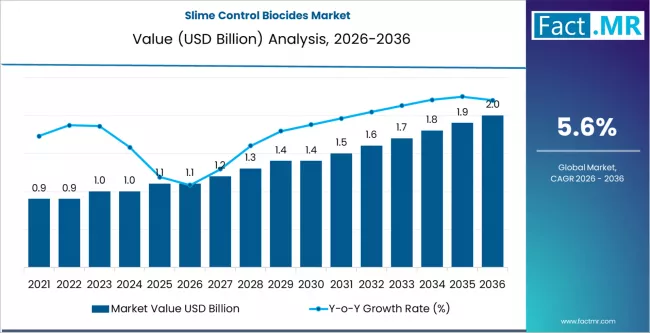
Slime control biocides market is projected to grow from USD 1.1 billion in 2026 to USD 2.0 billion by 2036, at a CAGR of 5.6%. Isothiazolinones will dominate with a 34.0% market share, while pulp and paper will lead the application segment with a 46.0% share.
Slime Control Biocides Market Forecast and Outlook 2026 to 2036
The slime control biocides market is expected to reach USD 1.1 billion in 2026, growing to USD 2 billion by 2036, with a CAGR of 5.6%.
Key Takeaways from Slime Control Biocides Market
- Slime Control Biocides Market Value (2026): USD 1.1 billion
- Slime Control Biocides Market Forecast Value (2036): USD 2 billion
- Slime Control Biocides Market Forecast CAGR (2026-2036): 5.6%
- Leading Segment in Slime Control Biocides Market: On-site Dosing Programs (52%)
- Key Growth Region in Slime Control Biocides Market: Asia Pacific
- Key Players in Slime Control Biocides Market: Ecolab (Nalco Water), Solenis, Arxada, LANXESS, Buckman, BASF, Kemira, Nouryon, Dow, Italmatch Chemicals

Positioned at the intersection of industrial hygiene and environmental management, slime control biocides are integral to industries such as water treatment, oil and gas, and manufacturing, where microbial growth can hinder operational efficiency. This market holds considerable influence due to the increasing need for effective antimicrobial solutions in preventing biofilm formation and maintaining system integrity.
Competitive weight in this space is driven by both product performance and regulatory compliance, with key players focusing on developing biocides that meet environmental standards while ensuring efficacy. The market remains moderately fragmented, with strong demand for customized formulations. As the focus on sustainability and eco-friendly chemicals grows, companies that can offer both cost-effective and compliant solutions are poised to secure long-term positions in this niche yet critical sector.
Slime Control Biocides Market
| Metric | Value |
|---|---|
| Estimated Value in (2026E) | USD 1.1 billion |
| Forecast Value in (2036F) | USD 2 billion |
| Forecast CAGR (2026 to 2036) | 5.6% |
Category
| Category | Segments |
|---|---|
| Biocide Chemistry | Isothiazolinones; Glutaraldehyde-Based; DBNPA; Quats; Oxidizing Programs |
| Application | Pulp and Paper; Cooling Water Systems; Industrial Process Water; Wastewater Treatment; Other |
| Delivery Model | On-site Dosing Programs; Packaged Biocide Products; Service & Monitoring; Other |
| Region | North America; Europe; Asia Pacific; Latin America; Middle East & Africa |
Segmental Analysis
What Is the Impact of Application on the Slime Control Biocides Market?

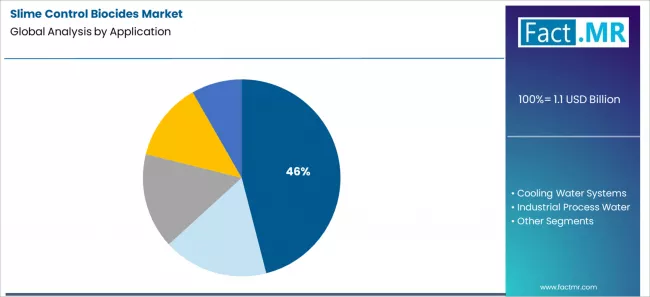
In the slime control biocides market, application significantly influences the demand and effectiveness of biocide products. Pulp and paper lead the market with a 46% share, as slime control is critical in preventing microbial growth that can negatively impact paper production and quality. Biocides are widely used to maintain system hygiene, prevent contamination, and ensure smooth operation in pulp and paper mills. As industries continue to focus on maintaining operational efficiency and product quality, the use of slime control biocides in pulp and paper applications will remain a key driver for market growth.
How Does Delivery Model Influence the Slime Control Biocides Market?

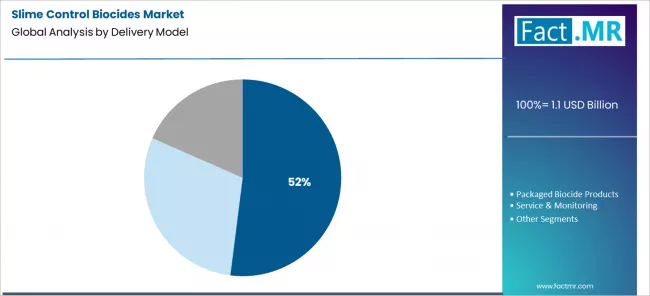
The delivery model plays an essential role in how slime control biocides are administered and managed, with on-site dosing programs holding a 52% share. On-site dosing programs provide precise, customized treatment, ensuring that biocides are applied efficiently and safely within industrial systems. This model allows for real-time adjustments based on system needs, improving performance and cost-effectiveness. As industries demand more tailored solutions for slime control, the use of on-site dosing programs will continue to dominate, offering flexibility and ensuring optimal biocide application for various industrial processes.
What are the Principal Drivers, Constraints, and Evolving Dynamics of the Slime Control Biocides Market?
Demand for slime control biocides has been shaped by requirements to manage microbial growth on wetted surfaces in industrial water systems. Cooling towers, pulp and paper systems, and oilfield operations specify biocides to inhibit slime forming bacteria that impede heat transfer and promote corrosion. Regulatory monitoring of effluent quality influences choice of active chemistries that achieve microbial control while meeting discharge limits.
Variability in water chemistry affects biocide performance, leading some operators to adjust dosing strategies. Cost pressures in process industries influence selection of biocides with acceptable efficacy per unit cost. Environmental and worker safety considerations affect acceptance of specific chemistries where by products require additional handling. Work to refine application protocols and evaluate residual effectiveness under varied operating conditions is under way. Collaboration among biocide manufacturers, industrial operators, and water treatment consultants aims to align product selection with system characteristics and compliance obligations.
Analysis of the Slime Control Biocides Market by Key Country

| Country | CAGR 2026 to 2036 |
|---|---|
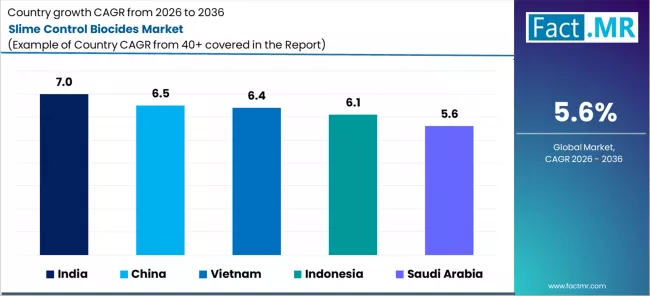
| India | 7% |
| China | 6.5% |
| Vietnam | 6.4% |
| Indonesia | 6.1% |
| Saudi Arabia | 5.6% |
The report covers an in-depth analysis of 40+ countries; top-performing countries are highlighted below.
What is the Growth Outlook for Slime Control Biocides Market in India?
India’s slime control biocides market is projected to grow at a CAGR of 7% from 2026 to 2036. With India’s expanding industrial base and increasing focus on water treatment and maintenance, the demand for biocides that prevent microbial growth and slime formation is rising. Industries such as oil and gas, paper and pulp, and water treatment rely heavily on slime control to maintain system efficiency and prevent contamination. As India modernizes its infrastructure and implements more stringent environmental and regulatory policies, the market for slime control biocides is expected to grow steadily, with a rise in both industrial applications and consumer demand for cleaner, more efficient systems.
How is the Slime Control Biocides Market Performing in China?
China’s slime control biocides market is expected to grow at a CAGR of 6.5% from 2026 to 2036. As China continues to expand its industrial sectors, including water treatment, oil and gas, and paper production, the demand for biocides to prevent slime and biofilm formation in these processes is increasing. The country’s efforts to improve water quality and industrial efficiency are key drivers for this market. Additionally, with growing environmental regulations and the increasing demand for sustainable, efficient solutions, China’s market for slime control biocides is expected to continue its growth trajectory over the next decade.
What is the Market Outlook for Slime Control Biocides Market in Vietnam?
Vietnam’s slime control biocides market is projected to grow at a CAGR of 6.4% from 2026 to 2036. As the country’s industrial and manufacturing sectors continue to expand, particularly in water-intensive industries like paper and pulp, textile production, and oil extraction, the need for slime control biocides is growing. These biocides are critical for preventing microbial contamination and ensuring efficient operation in industrial processes. With increased attention on environmental sustainability and waste reduction, Vietnam’s market for slime control biocides is expected to grow steadily, driven by both industrial growth and regulatory pressures for cleaner, more efficient processes.
What is the Growth Potential for Slime Control Biocides Market in Indonesia?
Indonesia’s slime control biocides market is forecast to grow at a CAGR of 6.1% from 2026 to 2036. As Indonesia’s industrial sectors, particularly in water treatment, oil, and gas, continue to develop, the demand for slime control biocides is on the rise. These biocides help prevent microbial growth, which is essential for maintaining efficiency and product quality in industrial operations. The growing focus on improving water management practices and reducing environmental impact will further fuel the demand for slime control biocides in Indonesia. The market is expected to continue expanding as the country strengthens its industrial infrastructure and enforces more sustainable practices.
What is the Demand for Slime Control Biocides Market in Saudi Arabia?
Saudi Arabia’s slime control biocides market is set to grow at a CAGR of 5.6% from 2026 to 2036. As Saudi Arabia continues to invest in industrial diversification and improving water treatment infrastructure, the demand for biocides to control slime and biofilm formation is increasing. The oil and gas industry, which is a significant part of the country’s economy, relies on slime control biocides for maintaining system efficiency and preventing microbial contamination. With a strong focus on improving industrial processes and reducing environmental risks, Saudi Arabia’s market for slime control biocides will continue to expand steadily, supported by regulatory and sustainability initiatives.
How is Competition Structured in the Slime Control Biocides Market?
Competition in the slime control biocides market is shaped by efficacy, spectrum of microbial activity, and regulatory compliance. Ecolab (Nalco Water) and Solenis compete with broad treatment portfolios and technical support services tailored to industrial water systems. Buckman and Arxada focus on specialist chemistries designed for specific microbial profiles in pulp, paper, and cooling applications.
BASF, Kemira, and Nouryon offer engineered biocide blends that balance control with environmental standards. LANXESS and Dow position offerings with global supply networks. Italmatch Chemicals emphasizes niche formulations. Competitive differentiation arises from product performance data, service responsiveness, and documented reduction in fouling and maintenance downtime. Buyers assess suppliers on proven control outcomes and ease of integration with existing treatment regimes.
Key Players of the Slime Control Biocides Market
- Ecolab (Nalco Water)
- Solenis
- Arxada
- LANXESS
- Buckman
- BASF
- Kemira
- Nouryon
- Dow
- Italmatch Chemicals
Scope of the Report
| Items | Values |
|---|---|
| Quantitative Units (2026) | USD Billion |
| Biocide Chemistry | Isothiazolinones, Glutaraldehyde-Based, DBNPA, Quats, Oxidizing Programs |
| Application | Pulp and Paper, Cooling Water Systems, Industrial Process Water, Wastewater Treatment, Other |
| Delivery Model | On-site Dosing Programs, Packaged Biocide Products, Service & Monitoring, Other |
| Regions Covered | North America, Europe, Asia Pacific, Latin America, Middle East & Africa |
| Countries Covered | United States, Canada, Mexico, Brazil, Germany, United Kingdom, France, Italy, Spain, China, Japan, South Korea, India, Australia & New Zealand |
| Key Companies Profiled | Ecolab (Nalco Water), Solenis, Arxada, LANXESS, Buckman, BASF, Kemira, Nouryon, Dow, Italmatch Chemicals |
| Additional Attributes | Dollar revenue by biocide chemistry, application, and delivery model; regional demand trends, competitive landscape, technological advancements in slime control biocides, and innovations in biocide formulations and dosing techniques |
Slime Control Biocides Market Key Segments
-
Biocide Chemistry :
- Isothiazolinones
- Glutaraldehyde-Based
- DBNPA
- Quats
- Oxidizing Programs
-
Application :
- Pulp and Paper
- Cooling Water Systems
- Industrial Process Water
- Wastewater Treatment
- Other
-
Delivery Model :
- On-site Dosing Programs
- Packaged Biocide Products
- Service & Monitoring
- Other
-
Region :
- North America
- USA
- Canada
- Mexico
- Europe
- Germany
- UK
- France
- Italy
- Spain
- Nordic Countries
- BENELUX
- Rest of Europe
- Asia Pacific
- China
- Japan
- South Korea
- India
- Australia
- Rest of Asia Pacific
- Latin America
- Brazil
- Argentina
- Rest of Latin America
- Middle East and Africa
- Kingdom of Saudi Arabia
- United Arab Emirates
- South Africa
- Rest of Middle East and Africa
- Other Regions
- Oceania
- Central Asia
- Other Markets
- North America
Bibliographies
- European Chemicals Agency. (2023).Biocidal products regulation (EU) No 528/2012: Active substances used in industrial water treatment. ECHA.
- U.S. Environmental Protection Agency. (2023).Industrial water treatment biocides: Regulatory status, environmental fate, and use patterns. EPA, Office of Pesticide Programs.
- Organisation for Economic Co-operation and Development. (2023).Biocides in industrial systems: Risk assessment, resistance management, and environmental exposure. OECD Environment Working Papers.
- Food and Agriculture Organization of the United Nations. (2024).Water treatment chemicals and biofouling control in industrial systems. FAO Water Reports.
Table of Content
- Executive Summary
- Global Market Outlook
- Demand to side Trends
- Supply to side Trends
- Technology Roadmap Analysis
- Analysis and Recommendations
- Market Overview
- Market Coverage / Taxonomy
- Market Definition / Scope / Limitations
- Market Background
- Market Dynamics
- Drivers
- Restraints
- Opportunity
- Trends
- Scenario Forecast
- Demand in Optimistic Scenario
- Demand in Likely Scenario
- Demand in Conservative Scenario
- Opportunity Map Analysis
- Product Life Cycle Analysis
- Supply Chain Analysis
- Investment Feasibility Matrix
- Value Chain Analysis
- PESTLE and Porter’s Analysis
- Regulatory Landscape
- Regional Parent Market Outlook
- Production and Consumption Statistics
- Import and Export Statistics
- Market Dynamics
- Global Market Analysis 2021 to 2025 and Forecast, 2026 to 2036
- Historical Market Size Value (USD Million) Analysis, 2021 to 2025
- Current and Future Market Size Value (USD Million) Projections, 2026 to 2036
- Y to o to Y Growth Trend Analysis
- Absolute $ Opportunity Analysis
- Global Market Pricing Analysis 2021 to 2025 and Forecast 2026 to 2036
- Global Market Analysis 2021 to 2025 and Forecast 2026 to 2036, By Biocide Chemistry
- Introduction / Key Findings
- Historical Market Size Value (USD Million) Analysis By Biocide Chemistry, 2021 to 2025
- Current and Future Market Size Value (USD Million) Analysis and Forecast By Biocide Chemistry, 2026 to 2036
- Isothiazolinones
- Glutaraldehyde-Based
- DBNPA
- Quats
- Oxidizing Programs
- Isothiazolinones
- Y to o to Y Growth Trend Analysis By Biocide Chemistry, 2021 to 2025
- Absolute $ Opportunity Analysis By Biocide Chemistry, 2026 to 2036
- Global Market Analysis 2021 to 2025 and Forecast 2026 to 2036, By Application
- Introduction / Key Findings
- Historical Market Size Value (USD Million) Analysis By Application, 2021 to 2025
- Current and Future Market Size Value (USD Million) Analysis and Forecast By Application, 2026 to 2036
- Pulp and Paper
- Cooling Water Systems
- Industrial Process Water
- Wastewater Treatment
- Other
- Pulp and Paper
- Y to o to Y Growth Trend Analysis By Application, 2021 to 2025
- Absolute $ Opportunity Analysis By Application, 2026 to 2036
- Global Market Analysis 2021 to 2025 and Forecast 2026 to 2036, By Delivery Model
- Introduction / Key Findings
- Historical Market Size Value (USD Million) Analysis By Delivery Model, 2021 to 2025
- Current and Future Market Size Value (USD Million) Analysis and Forecast By Delivery Model, 2026 to 2036
- On-site Dosing Programs
- Packaged Biocide Products
- Service & Monitoring
- On-site Dosing Programs
- Y to o to Y Growth Trend Analysis By Delivery Model, 2021 to 2025
- Absolute $ Opportunity Analysis By Delivery Model, 2026 to 2036
- Global Market Analysis 2021 to 2025 and Forecast 2026 to 2036, By Region
- Introduction
- Historical Market Size Value (USD Million) Analysis By Region, 2021 to 2025
- Current Market Size Value (USD Million) Analysis and Forecast By Region, 2026 to 2036
- North America
- Latin America
- Western Europe
- Eastern Europe
- East Asia
- South Asia and Pacific
- Middle East & Africa
- Market Attractiveness Analysis By Region
- North America Market Analysis 2021 to 2025 and Forecast 2026 to 2036, By Country
- Historical Market Size Value (USD Million) Trend Analysis By Market Taxonomy, 2021 to 2025
- Market Size Value (USD Million) Forecast By Market Taxonomy, 2026 to 2036
- By Country
- USA
- Canada
- Mexico
- By Biocide Chemistry
- By Application
- By Delivery Model
- By Country
- Market Attractiveness Analysis
- By Country
- By Biocide Chemistry
- By Application
- By Delivery Model
- Key Takeaways
- Latin America Market Analysis 2021 to 2025 and Forecast 2026 to 2036, By Country
- Historical Market Size Value (USD Million) Trend Analysis By Market Taxonomy, 2021 to 2025
- Market Size Value (USD Million) Forecast By Market Taxonomy, 2026 to 2036
- By Country
- Brazil
- Chile
- Rest of Latin America
- By Biocide Chemistry
- By Application
- By Delivery Model
- By Country
- Market Attractiveness Analysis
- By Country
- By Biocide Chemistry
- By Application
- By Delivery Model
- Key Takeaways
- Western Europe Market Analysis 2021 to 2025 and Forecast 2026 to 2036, By Country
- Historical Market Size Value (USD Million) Trend Analysis By Market Taxonomy, 2021 to 2025
- Market Size Value (USD Million) Forecast By Market Taxonomy, 2026 to 2036
- By Country
- Germany
- UK
- Italy
- Spain
- France
- Nordic
- BENELUX
- Rest of Western Europe
- By Biocide Chemistry
- By Application
- By Delivery Model
- By Country
- Market Attractiveness Analysis
- By Country
- By Biocide Chemistry
- By Application
- By Delivery Model
- Key Takeaways
- Eastern Europe Market Analysis 2021 to 2025 and Forecast 2026 to 2036, By Country
- Historical Market Size Value (USD Million) Trend Analysis By Market Taxonomy, 2021 to 2025
- Market Size Value (USD Million) Forecast By Market Taxonomy, 2026 to 2036
- By Country
- Russia
- Poland
- Hungary
- Balkan & Baltic
- Rest of Eastern Europe
- By Biocide Chemistry
- By Application
- By Delivery Model
- By Country
- Market Attractiveness Analysis
- By Country
- By Biocide Chemistry
- By Application
- By Delivery Model
- Key Takeaways
- East Asia Market Analysis 2021 to 2025 and Forecast 2026 to 2036, By Country
- Historical Market Size Value (USD Million) Trend Analysis By Market Taxonomy, 2021 to 2025
- Market Size Value (USD Million) Forecast By Market Taxonomy, 2026 to 2036
- By Country
- China
- Japan
- South Korea
- By Biocide Chemistry
- By Application
- By Delivery Model
- By Country
- Market Attractiveness Analysis
- By Country
- By Biocide Chemistry
- By Application
- By Delivery Model
- Key Takeaways
- South Asia and Pacific Market Analysis 2021 to 2025 and Forecast 2026 to 2036, By Country
- Historical Market Size Value (USD Million) Trend Analysis By Market Taxonomy, 2021 to 2025
- Market Size Value (USD Million) Forecast By Market Taxonomy, 2026 to 2036
- By Country
- India
- ASEAN
- Australia & New Zealand
- Rest of South Asia and Pacific
- By Biocide Chemistry
- By Application
- By Delivery Model
- By Country
- Market Attractiveness Analysis
- By Country
- By Biocide Chemistry
- By Application
- By Delivery Model
- Key Takeaways
- Middle East & Africa Market Analysis 2021 to 2025 and Forecast 2026 to 2036, By Country
- Historical Market Size Value (USD Million) Trend Analysis By Market Taxonomy, 2021 to 2025
- Market Size Value (USD Million) Forecast By Market Taxonomy, 2026 to 2036
- By Country
- Kingdom of Saudi Arabia
- Other GCC Countries
- Turkiye
- South Africa
- Other African Union
- Rest of Middle East & Africa
- By Biocide Chemistry
- By Application
- By Delivery Model
- By Country
- Market Attractiveness Analysis
- By Country
- By Biocide Chemistry
- By Application
- By Delivery Model
- Key Takeaways
- Key Countries Market Analysis
- USA
- Pricing Analysis
- Market Share Analysis, 2025
- By Biocide Chemistry
- By Application
- By Delivery Model
- Canada
- Pricing Analysis
- Market Share Analysis, 2025
- By Biocide Chemistry
- By Application
- By Delivery Model
- Mexico
- Pricing Analysis
- Market Share Analysis, 2025
- By Biocide Chemistry
- By Application
- By Delivery Model
- Brazil
- Pricing Analysis
- Market Share Analysis, 2025
- By Biocide Chemistry
- By Application
- By Delivery Model
- Chile
- Pricing Analysis
- Market Share Analysis, 2025
- By Biocide Chemistry
- By Application
- By Delivery Model
- Germany
- Pricing Analysis
- Market Share Analysis, 2025
- By Biocide Chemistry
- By Application
- By Delivery Model
- UK
- Pricing Analysis
- Market Share Analysis, 2025
- By Biocide Chemistry
- By Application
- By Delivery Model
- Italy
- Pricing Analysis
- Market Share Analysis, 2025
- By Biocide Chemistry
- By Application
- By Delivery Model
- Spain
- Pricing Analysis
- Market Share Analysis, 2025
- By Biocide Chemistry
- By Application
- By Delivery Model
- France
- Pricing Analysis
- Market Share Analysis, 2025
- By Biocide Chemistry
- By Application
- By Delivery Model
- India
- Pricing Analysis
- Market Share Analysis, 2025
- By Biocide Chemistry
- By Application
- By Delivery Model
- ASEAN
- Pricing Analysis
- Market Share Analysis, 2025
- By Biocide Chemistry
- By Application
- By Delivery Model
- Australia & New Zealand
- Pricing Analysis
- Market Share Analysis, 2025
- By Biocide Chemistry
- By Application
- By Delivery Model
- China
- Pricing Analysis
- Market Share Analysis, 2025
- By Biocide Chemistry
- By Application
- By Delivery Model
- Japan
- Pricing Analysis
- Market Share Analysis, 2025
- By Biocide Chemistry
- By Application
- By Delivery Model
- South Korea
- Pricing Analysis
- Market Share Analysis, 2025
- By Biocide Chemistry
- By Application
- By Delivery Model
- Russia
- Pricing Analysis
- Market Share Analysis, 2025
- By Biocide Chemistry
- By Application
- By Delivery Model
- Poland
- Pricing Analysis
- Market Share Analysis, 2025
- By Biocide Chemistry
- By Application
- By Delivery Model
- Hungary
- Pricing Analysis
- Market Share Analysis, 2025
- By Biocide Chemistry
- By Application
- By Delivery Model
- Kingdom of Saudi Arabia
- Pricing Analysis
- Market Share Analysis, 2025
- By Biocide Chemistry
- By Application
- By Delivery Model
- Turkiye
- Pricing Analysis
- Market Share Analysis, 2025
- By Biocide Chemistry
- By Application
- By Delivery Model
- South Africa
- Pricing Analysis
- Market Share Analysis, 2025
- By Biocide Chemistry
- By Application
- By Delivery Model
- USA
- Market Structure Analysis
- Competition Dashboard
- Competition Benchmarking
- Market Share Analysis of Top Players
- By Regional
- By Biocide Chemistry
- By Application
- By Delivery Model
- Competition Analysis
- Competition Deep Dive
- Ecolab (Nalco Water)
- Overview
- Product Portfolio
- Profitability by Market Segments (Product/Age /Sales Channel/Region)
- Sales Footprint
- Strategy Overview
- Marketing Strategy
- Product Strategy
- Channel Strategy
- Solenis
- Arxada
- LANXESS
- Buckman
- BASF
- Kemira
- Nouryon
- Dow
- Italmatch Chemicals
- Ecolab (Nalco Water)
- Competition Deep Dive
- Assumptions & Acronyms Used
- Research Methodology
List Of Table
- Table 1: Global Market Value (USD Million) Forecast by Region, 2021 to 2036
- Table 2: Global Market Value (USD Million) Forecast by Biocide Chemistry, 2021 to 2036
- Table 3: Global Market Value (USD Million) Forecast by Application, 2021 to 2036
- Table 4: Global Market Value (USD Million) Forecast by Delivery Model, 2021 to 2036
- Table 5: North America Market Value (USD Million) Forecast by Country, 2021 to 2036
- Table 6: North America Market Value (USD Million) Forecast by Biocide Chemistry, 2021 to 2036
- Table 7: North America Market Value (USD Million) Forecast by Application, 2021 to 2036
- Table 8: North America Market Value (USD Million) Forecast by Delivery Model, 2021 to 2036
- Table 9: Latin America Market Value (USD Million) Forecast by Country, 2021 to 2036
- Table 10: Latin America Market Value (USD Million) Forecast by Biocide Chemistry, 2021 to 2036
- Table 11: Latin America Market Value (USD Million) Forecast by Application, 2021 to 2036
- Table 12: Latin America Market Value (USD Million) Forecast by Delivery Model, 2021 to 2036
- Table 13: Western Europe Market Value (USD Million) Forecast by Country, 2021 to 2036
- Table 14: Western Europe Market Value (USD Million) Forecast by Biocide Chemistry, 2021 to 2036
- Table 15: Western Europe Market Value (USD Million) Forecast by Application, 2021 to 2036
- Table 16: Western Europe Market Value (USD Million) Forecast by Delivery Model, 2021 to 2036
- Table 17: Eastern Europe Market Value (USD Million) Forecast by Country, 2021 to 2036
- Table 18: Eastern Europe Market Value (USD Million) Forecast by Biocide Chemistry, 2021 to 2036
- Table 19: Eastern Europe Market Value (USD Million) Forecast by Application, 2021 to 2036
- Table 20: Eastern Europe Market Value (USD Million) Forecast by Delivery Model, 2021 to 2036
- Table 21: East Asia Market Value (USD Million) Forecast by Country, 2021 to 2036
- Table 22: East Asia Market Value (USD Million) Forecast by Biocide Chemistry, 2021 to 2036
- Table 23: East Asia Market Value (USD Million) Forecast by Application, 2021 to 2036
- Table 24: East Asia Market Value (USD Million) Forecast by Delivery Model, 2021 to 2036
- Table 25: South Asia and Pacific Market Value (USD Million) Forecast by Country, 2021 to 2036
- Table 26: South Asia and Pacific Market Value (USD Million) Forecast by Biocide Chemistry, 2021 to 2036
- Table 27: South Asia and Pacific Market Value (USD Million) Forecast by Application, 2021 to 2036
- Table 28: South Asia and Pacific Market Value (USD Million) Forecast by Delivery Model, 2021 to 2036
- Table 29: Middle East & Africa Market Value (USD Million) Forecast by Country, 2021 to 2036
- Table 30: Middle East & Africa Market Value (USD Million) Forecast by Biocide Chemistry, 2021 to 2036
- Table 31: Middle East & Africa Market Value (USD Million) Forecast by Application, 2021 to 2036
- Table 32: Middle East & Africa Market Value (USD Million) Forecast by Delivery Model, 2021 to 2036
List Of Figures
- Figure 1: Global Market Pricing Analysis
- Figure 2: Global Market Value (USD Million) Forecast 2021 to 2036
- Figure 3: Global Market Value Share and BPS Analysis by Biocide Chemistry, 2026 and 2036
- Figure 4: Global Market Y to o to Y Growth Comparison by Biocide Chemistry, 2026 to 2036
- Figure 5: Global Market Attractiveness Analysis by Biocide Chemistry
- Figure 6: Global Market Value Share and BPS Analysis by Application, 2026 and 2036
- Figure 7: Global Market Y to o to Y Growth Comparison by Application, 2026 to 2036
- Figure 8: Global Market Attractiveness Analysis by Application
- Figure 9: Global Market Value Share and BPS Analysis by Delivery Model, 2026 and 2036
- Figure 10: Global Market Y to o to Y Growth Comparison by Delivery Model, 2026 to 2036
- Figure 11: Global Market Attractiveness Analysis by Delivery Model
- Figure 12: Global Market Value (USD Million) Share and BPS Analysis by Region, 2026 and 2036
- Figure 13: Global Market Y to o to Y Growth Comparison by Region, 2026 to 2036
- Figure 14: Global Market Attractiveness Analysis by Region
- Figure 15: North America Market Incremental Dollar Opportunity, 2026 to 2036
- Figure 16: Latin America Market Incremental Dollar Opportunity, 2026 to 2036
- Figure 17: Western Europe Market Incremental Dollar Opportunity, 2026 to 2036
- Figure 18: Eastern Europe Market Incremental Dollar Opportunity, 2026 to 2036
- Figure 19: East Asia Market Incremental Dollar Opportunity, 2026 to 2036
- Figure 20: South Asia and Pacific Market Incremental Dollar Opportunity, 2026 to 2036
- Figure 21: Middle East & Africa Market Incremental Dollar Opportunity, 2026 to 2036
- Figure 22: North America Market Value Share and BPS Analysis by Country, 2026 and 2036
- Figure 23: North America Market Value Share and BPS Analysis by Biocide Chemistry, 2026 and 2036
- Figure 24: North America Market Y to o to Y Growth Comparison by Biocide Chemistry, 2026 to 2036
- Figure 25: North America Market Attractiveness Analysis by Biocide Chemistry
- Figure 26: North America Market Value Share and BPS Analysis by Application, 2026 and 2036
- Figure 27: North America Market Y to o to Y Growth Comparison by Application, 2026 to 2036
- Figure 28: North America Market Attractiveness Analysis by Application
- Figure 29: North America Market Value Share and BPS Analysis by Delivery Model, 2026 and 2036
- Figure 30: North America Market Y to o to Y Growth Comparison by Delivery Model, 2026 to 2036
- Figure 31: North America Market Attractiveness Analysis by Delivery Model
- Figure 32: Latin America Market Value Share and BPS Analysis by Country, 2026 and 2036
- Figure 33: Latin America Market Value Share and BPS Analysis by Biocide Chemistry, 2026 and 2036
- Figure 34: Latin America Market Y to o to Y Growth Comparison by Biocide Chemistry, 2026 to 2036
- Figure 35: Latin America Market Attractiveness Analysis by Biocide Chemistry
- Figure 36: Latin America Market Value Share and BPS Analysis by Application, 2026 and 2036
- Figure 37: Latin America Market Y to o to Y Growth Comparison by Application, 2026 to 2036
- Figure 38: Latin America Market Attractiveness Analysis by Application
- Figure 39: Latin America Market Value Share and BPS Analysis by Delivery Model, 2026 and 2036
- Figure 40: Latin America Market Y to o to Y Growth Comparison by Delivery Model, 2026 to 2036
- Figure 41: Latin America Market Attractiveness Analysis by Delivery Model
- Figure 42: Western Europe Market Value Share and BPS Analysis by Country, 2026 and 2036
- Figure 43: Western Europe Market Value Share and BPS Analysis by Biocide Chemistry, 2026 and 2036
- Figure 44: Western Europe Market Y to o to Y Growth Comparison by Biocide Chemistry, 2026 to 2036
- Figure 45: Western Europe Market Attractiveness Analysis by Biocide Chemistry
- Figure 46: Western Europe Market Value Share and BPS Analysis by Application, 2026 and 2036
- Figure 47: Western Europe Market Y to o to Y Growth Comparison by Application, 2026 to 2036
- Figure 48: Western Europe Market Attractiveness Analysis by Application
- Figure 49: Western Europe Market Value Share and BPS Analysis by Delivery Model, 2026 and 2036
- Figure 50: Western Europe Market Y to o to Y Growth Comparison by Delivery Model, 2026 to 2036
- Figure 51: Western Europe Market Attractiveness Analysis by Delivery Model
- Figure 52: Eastern Europe Market Value Share and BPS Analysis by Country, 2026 and 2036
- Figure 53: Eastern Europe Market Value Share and BPS Analysis by Biocide Chemistry, 2026 and 2036
- Figure 54: Eastern Europe Market Y to o to Y Growth Comparison by Biocide Chemistry, 2026 to 2036
- Figure 55: Eastern Europe Market Attractiveness Analysis by Biocide Chemistry
- Figure 56: Eastern Europe Market Value Share and BPS Analysis by Application, 2026 and 2036
- Figure 57: Eastern Europe Market Y to o to Y Growth Comparison by Application, 2026 to 2036
- Figure 58: Eastern Europe Market Attractiveness Analysis by Application
- Figure 59: Eastern Europe Market Value Share and BPS Analysis by Delivery Model, 2026 and 2036
- Figure 60: Eastern Europe Market Y to o to Y Growth Comparison by Delivery Model, 2026 to 2036
- Figure 61: Eastern Europe Market Attractiveness Analysis by Delivery Model
- Figure 62: East Asia Market Value Share and BPS Analysis by Country, 2026 and 2036
- Figure 63: East Asia Market Value Share and BPS Analysis by Biocide Chemistry, 2026 and 2036
- Figure 64: East Asia Market Y to o to Y Growth Comparison by Biocide Chemistry, 2026 to 2036
- Figure 65: East Asia Market Attractiveness Analysis by Biocide Chemistry
- Figure 66: East Asia Market Value Share and BPS Analysis by Application, 2026 and 2036
- Figure 67: East Asia Market Y to o to Y Growth Comparison by Application, 2026 to 2036
- Figure 68: East Asia Market Attractiveness Analysis by Application
- Figure 69: East Asia Market Value Share and BPS Analysis by Delivery Model, 2026 and 2036
- Figure 70: East Asia Market Y to o to Y Growth Comparison by Delivery Model, 2026 to 2036
- Figure 71: East Asia Market Attractiveness Analysis by Delivery Model
- Figure 72: South Asia and Pacific Market Value Share and BPS Analysis by Country, 2026 and 2036
- Figure 73: South Asia and Pacific Market Value Share and BPS Analysis by Biocide Chemistry, 2026 and 2036
- Figure 74: South Asia and Pacific Market Y to o to Y Growth Comparison by Biocide Chemistry, 2026 to 2036
- Figure 75: South Asia and Pacific Market Attractiveness Analysis by Biocide Chemistry
- Figure 76: South Asia and Pacific Market Value Share and BPS Analysis by Application, 2026 and 2036
- Figure 77: South Asia and Pacific Market Y to o to Y Growth Comparison by Application, 2026 to 2036
- Figure 78: South Asia and Pacific Market Attractiveness Analysis by Application
- Figure 79: South Asia and Pacific Market Value Share and BPS Analysis by Delivery Model, 2026 and 2036
- Figure 80: South Asia and Pacific Market Y to o to Y Growth Comparison by Delivery Model, 2026 to 2036
- Figure 81: South Asia and Pacific Market Attractiveness Analysis by Delivery Model
- Figure 82: Middle East & Africa Market Value Share and BPS Analysis by Country, 2026 and 2036
- Figure 83: Middle East & Africa Market Value Share and BPS Analysis by Biocide Chemistry, 2026 and 2036
- Figure 84: Middle East & Africa Market Y to o to Y Growth Comparison by Biocide Chemistry, 2026 to 2036
- Figure 85: Middle East & Africa Market Attractiveness Analysis by Biocide Chemistry
- Figure 86: Middle East & Africa Market Value Share and BPS Analysis by Application, 2026 and 2036
- Figure 87: Middle East & Africa Market Y to o to Y Growth Comparison by Application, 2026 to 2036
- Figure 88: Middle East & Africa Market Attractiveness Analysis by Application
- Figure 89: Middle East & Africa Market Value Share and BPS Analysis by Delivery Model, 2026 and 2036
- Figure 90: Middle East & Africa Market Y to o to Y Growth Comparison by Delivery Model, 2026 to 2036
- Figure 91: Middle East & Africa Market Attractiveness Analysis by Delivery Model
- Figure 92: Global Market - Tier Structure Analysis
- Figure 93: Global Market - Company Share Analysis
- FAQs -
How big is the slime control biocides market in 2026?
The global slime control biocides market is estimated to be valued at USD 1.1 billion in 2026.
What will be the size of slime control biocides market in 2036?
The market size for the slime control biocides market is projected to reach USD 2.0 billion by 2036.
How much will be the slime control biocides market growth between 2026 and 2036?
The slime control biocides market is expected to grow at a 5.6% CAGR between 2026 and 2036.
What are the key product types in the slime control biocides market?
The key product types in slime control biocides market are isothiazolinones, glutaraldehyde-based, dbnpa, quats and oxidizing programs.
Which application segment to contribute significant share in the slime control biocides market in 2026?
In terms of application, pulp and paper segment to command 46.0% share in the slime control biocides market in 2026.