Hybrid PCR and Bio-Resin Polymer Market

Hybrid PCR and Bio-Resin Polymer Market Size and Share Forecast Outlook 2026 to 2036

Hybrid pcr and bio-resin polymer market is projected to grow from USD 1.9 billion in 2026 to USD 6.7 billion by 2036, at a CAGR of 13.4%. FMCG and food packaging will dominate with a 45.0% market share, while pcr + bio-based blends will lead the polymer system segment with a 50.0% share.

Hybrid PCR and Bio-Resin Polymer Market Forecast and Outlook 2026 to 2036

The hybrid PCR and bio-resin polymer market is likely to be valued at USD 1.9 billion in 2026 and is projected to reach USD 6.7 billion by 2036, growing at a CAGR of 13.4%. This category holds strategic importance within the broader materials and sustainability ecosystem, as it combines the benefits of PCR and bio-resins to meet growing environmental and performance demands.

Key Takeaways from Hybrid PCR and Bio-Resin Polymer Market

  • Hybrid PCR and Bio-Resin Polymer Market Value (2026): USD 1.9 billion
  • Hybrid PCR and Bio-Resin Polymer Market Forecast Value (2036): USD 6.7 billion
  • Hybrid PCR and Bio-Resin Polymer Market Forecast CAGR 2026 to 2036: 13.4%
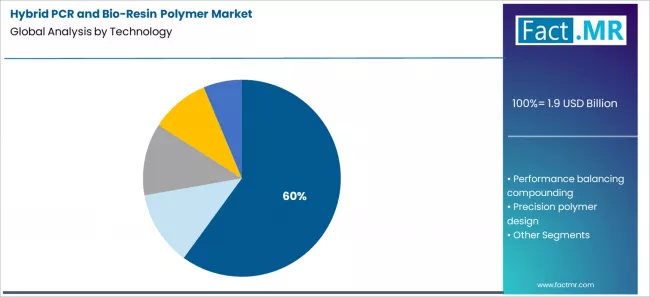
  • Leading Segment in Hybrid PCR and Bio-Resin Polymer Market: Compatibilisation or reactive extrusion (60%)
  • Key Growth Region in Hybrid PCR and Bio-Resin Polymer Market: Asia Pacific
  • Key Players in Hybrid PCR and Bio-Resin Polymer Market: BASF, Dow, Mitsubishi Chemical, Kingfa, Mondi (materials programs), Danimer Scientific, Toray

Hybrid Pcr And Bio Resin Polymer Market Market Value Analysis

Control points in production processes, such as the sourcing of raw materials and technology for polymer blending, are pivotal for maintaining product quality and cost-effectiveness. Dependency on regulatory frameworks and consumer demand for sustainable alternatives further drives market dynamics. Strategic trade-offs, including balancing performance with environmental impact, will shape decision-making, particularly in sectors like automotive and packaging. Companies will need to navigate these factors to position themselves effectively, leveraging innovation in polymer technology while addressing increasing pressure for eco-friendly solutions. This market's growth is tied to its ability to meet both economic and sustainability goals.

Hybrid PCR and Bio-Resin Polymer Market

Metric Value
Estimated Value in (2026E) USD 1.9 billion
Forecast Value in (2036F) USD 6.7 billion
Forecast CAGR (2026 to 2036) 13.4%

Category

Category Segments
End-Use FMCG and food packaging; Consumer goods & durables; Premium and electronics; Mass packaging; FMCG and agriculture; Bio-circular packaging
Polymer System PCR + bio-based blends; Hybrid engineering polymers; Bio-modified PCR resins; Cost-optimised hybrid polymers; Others
Material Mix PCR-PE or PCR-PP + bio-PE or PLA; PCR-PET + bio-polyesters; PCR-PC or PCR-PA + bio-additives; PCR polyolefins + bio-fillers; Others
Technology Compatibilisation or reactive extrusion; Performance balancing compounding; Precision polymer design; Scale compounding; Others
Region North America; Europe; Asia Pacific; Latin America; Middle East & Africa

Segmental Analysis

What Is the Impact of Material Mix on the Hybrid PCR and Bio-Resin Polymer Market?

Hybrid Pcr And Bio Resin Polymer Market Analysis By Material Mix

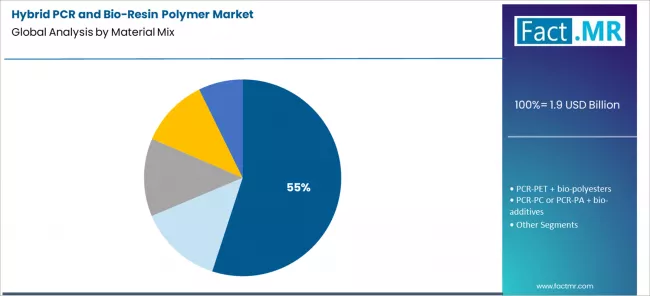
In the hybrid PCR and bio-resin polymer market, the material mix significantly influences the performance and sustainability of polymer products. The combination of PCR-PE or PCR-PP with bio-PE or PLA leads the market, holding a 55% share. This material mix provides an optimal balance between the recyclability of PCR-based polymers and the sustainable attributes of bio-resins, making it an attractive option for various industries seeking environmentally friendly solutions. As manufacturers aim to meet increasing environmental regulations and consumer demand for sustainable products, the hybrid combination of PCR and bio-resins will continue to be a preferred choice, driving growth in the market.

How Does Technology Influence the Hybrid PCR and Bio-Resin Polymer Market?

Hybrid Pcr And Bio Resin Polymer Market Analysis By Technology

Technology plays a crucial role in enhancing the properties and scalability of hybrid PCR and bio-resin polymers. Compatibilisation or reactive extrusion is the leading technology in this market, commanding a 60% share. This technology allows for the effective blending of PCR materials with bio-resins, improving the compatibility between the two components and enhancing their performance. By optimizing the interaction between different polymers, compatibilisation ensures the final product maintains desirable properties such as strength, flexibility, and processability. As the demand for eco-friendly and high-performance materials rises, the continued use of these advanced technologies will drive innovation and growth in the hybrid PCR and bio-resin polymer market.

What are the Principal Drivers, Constraints, and Evolving Dynamics of the Hybrid PCR and BioResin Polymer Market?

Demand for hybrid formulations that combine postconsumer recycled (PCR) polymers with bioresin components has been shaped by interest in reducing reliance on virgin petrochemical feedstocks. Product developers in packaging, consumer goods, and durable goods have evaluated hybrid materials for balanced performance, cost, and renewable content. Regulatory frameworks in some regions require reporting of recycled and bio based content, which has influenced specification development.

Constraints arise from variability in PCR feedstock quality and limited availability of bio resins with consistent processing characteristics. Compatibility issues between PCR polymers and certain bio resins have affected mechanical properties in some blends. Work on characterizing hybrid material performance and optimizing compounding processes is under way. Partnerships between recyclers, bio resin producers, and converters aim to broaden material options and inform application specific guidelines.

Analysis of the Hybrid PCR and Bio-Resin Polymer Market by Key Country

Hybrid Pcr And Bio Resin Polymer Market Cagr Analysis By Country

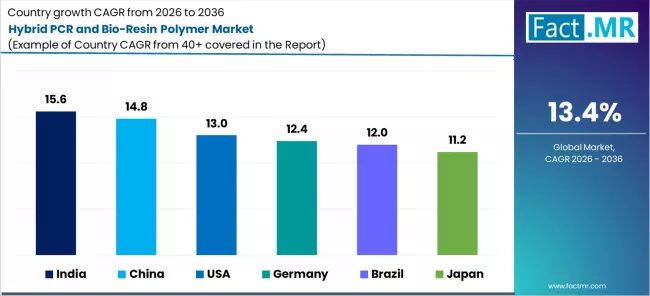
Country CAGR (2026–2036)
Germany 12.4%
USA 13%
Japan 11.2%
China 14.8%
India 15.6%
Brazil 12%

The report covers an in-depth analysis of 40+ countries; top-performing countries are highlighted below.

What is the Growth Outlook for Hybrid PCR and Bio-Resin Polymer in Germany?

Germany’s hybrid PCR and bio-resin polymer market is projected to grow at a CAGR of 12.4% from 2026 to 2036. The country’s commitment to sustainability and innovation in manufacturing plays a crucial role in the adoption of hybrid PCR and bio-resin polymers. These materials are gaining popularity across sectors such as automotive, packaging, and consumer goods due to their eco-friendly properties and performance advantages. As Germany continues to focus on circular economy initiatives and reducing carbon footprints, the demand for hybrid PCR and bio-resin polymers will see sustained growth.

How is the Hybrid PCR and Bio-Resin Polymer Market Performing in the USA?

The USA’s hybrid PCR and bio-resin polymer market is expected to grow at a CAGR of 13% from 2026 to 2036. As industries in the USA increasingly shift toward more sustainable manufacturing practices, hybrid PCR and bio-resin polymers are becoming key materials in various applications. The automotive, packaging, and electronics industries are driving the demand for these polymers due to their reduced environmental impact and superior performance. With regulatory pressures and growing consumer demand for eco-friendly products, the market for hybrid PCR and bio-resin polymers in the USA is set to expand rapidly.

What is the Market Outlook for Hybrid PCR and Bio-Resin Polymer in Japan?

Japan’s hybrid PCR and bio-resin polymer market is forecast to grow at a CAGR of 11.2% from 2026 to 2036. Japan’s manufacturing sector, known for its technological advancements, is increasingly turning to sustainable materials like hybrid PCR and bio-resin polymers. These materials align with Japan’s focus on reducing environmental impact and improving the recyclability of products. Although the growth rate is slightly lower compared to other regions, Japan’s strong commitment to sustainability in industries such as automotive and electronics will continue to drive steady demand for hybrid PCR and bio-resin polymers.

What is the Growth Potential for Hybrid PCR and Bio-Resin Polymer in China?

China is expected to experience significant growth in the hybrid PCR and bio-resin polymer market, with a projected CAGR of 14.8% from 2026 to 2036. China’s rapid industrialization and growing emphasis on environmental sustainability are key drivers of the market. As the country continues to scale its manufacturing sector, hybrid PCR and bio-resin polymers provide an ideal solution for reducing waste and promoting recyclability. The government’s focus on green manufacturing practices and eco-friendly materials will further boost the adoption of these polymers, fueling the market’s growth in China.

What is the Demand for Hybrid PCR and Bio-Resin Polymer in India?

India’s hybrid PCR and bio-resin polymer market is set to grow at a strong CAGR of 15.6% from 2026 to 2036. With India’s increasing focus on sustainable manufacturing practices, the demand for hybrid PCR and bio-resin polymers is on the rise. These materials offer a solution to the country’s growing need for eco-friendly alternatives in industries such as automotive, packaging, and electronics. India’s expanding manufacturing sector and government initiatives supporting green technologies will contribute to the rapid growth of hybrid PCR and bio-resin polymers, positioning it as a key market in the coming years.

What is the Market Expansion Outlook for Hybrid PCR and Bio-Resin Polymer in Brazil?

Brazil’s hybrid PCR and bio-resin polymer market is projected to grow at a CAGR of 12% from 2026 to 2036. As Brazil continues to develop its industrial base and adopt sustainable manufacturing practices, the demand for hybrid PCR and bio-resin polymers is expected to rise. With a growing focus on reducing environmental impact, Brazil is embracing these materials across various sectors, including automotive and packaging. The government’s commitment to eco-friendly initiatives and Brazil’s evolving manufacturing infrastructure will drive steady growth in the hybrid PCR and bio-resin polymer market.

How is Competition Structured in the Hybrid PCR and BioResin Polymer Market?

Competition in the hybrid PCR and bio resin polymer market is shaped by material innovation, sustainability metrics, and application performance. BASF and Dow leverage extensive polymer research to develop hybrid formulations that blend post consumer recycled content with bio based monomers. These products aim to meet mechanical and thermal criteria for packaging and industrial uses. Mitsubishi Chemical and Toray focus on advanced resin systems with tailored property profiles that suit automotive, consumer goods, and engineered components.

Kingfa and Danimer Scientific emphasize biopolymer integration with recycled feedstocks to achieve targeted biodegradability and reduced carbon footprint. Mondi, through its materials programs, aligns hybrid resin solutions with paper and packaging systems, prioritizing recyclable design. Competitive differentiation arises from the ability to balance PCR and bio resin content while maintaining processability, regulatory compliance, and end use performance. Buyers evaluate suppliers on technical documentation, supply consistency, and alignment with circular economy frameworks.

Key Players in the Hybrid PCR and BioResin Polymer Market

  • BASF
  • Dow
  • Mitsubishi Chemical
  • Kingfa
  • Mondi (materials programs)
  • Danimer Scientific
  • Toray

Scope of the Report

Items Values
Quantitative Units (2026) USD Billion
End-use FMCG and food packaging, Consumer goods & durables, Premium and electronics, Mass packaging, FMCG and agriculture
Polymer System PCR + bio-based blends, Hybrid engineering polymers, Bio-modified PCR resins, Cost-optimised hybrid polymers, Others
Material Mix PCR-PE or PCR-PP + bio-PE or PLA, PCR-PET + bio-polyesters, PCR-PC or PCR-PA + bio-additives, PCR polyolefins + bio-fillers, Others
Technology Compatibilisation or reactive extrusion, Performance balancing compounding, Precision polymer design, Scale compounding, Others
Regions Covered North America, Europe, Asia Pacific, Latin America, Middle East & Africa
Countries Covered United States, Canada, Mexico, Brazil, Germany, United Kingdom, France, Italy, Spain, China, Japan, South Korea, India, Australia & New Zealand
Key Companies Profiled BASF, Dow, Mitsubishi Chemical, Kingfa, Mondi (materials programs), Danimer Scientific, Toray
Additional Attributes Dollar revenue by end-use, polymer system, material mix, and technology; regional demand trends, competitive landscape, technological advancements in hybrid PCR and bio-resin polymers, and innovations in performance balancing compounding

Hybrid PCR and Bio-Resin Polymer Market Key Segments

  • End-use :

    • FMCG and food packaging
    • Consumer goods & durables
    • Premium and electronics
    • Mass packaging
    • FMCG and agriculture
    • Bio-circular packaging
  • Polymer System :

    • PCR + bio-based blends
    • Hybrid engineering polymers
    • Bio-modified PCR resins
    • Cost-optimised hybrid polymers
    • Others
  • Material Mix :

    • PCR-PE or PCR-PP + bio-PE or PLA
    • PCR-PET + bio-polyesters
    • PCR-PC or PCR-PA + bio-additives
    • PCR polyolefins + bio-fillers
    • Others
  • Technology :

    • Compatibilisation or reactive extrusion
    • Performance balancing compounding
    • Precision polymer design
    • Scale compounding
    • Others
  • Region :

    • North America

      • U.S.
      • Canada
      • Mexico
    • Europe

      • Germany
      • UK
      • France
      • Italy
      • Spain
      • Nordic Countries
      • BENELUX
      • Rest of Europe
    • Asia Pacific

      • China
      • Japan
      • South Korea
      • India
      • Australia
      • Rest of Asia Pacific
    • Latin America

      • Brazil
      • Argentina
      • Rest of Latin America
    • Middle East and Africa

      • Kingdom of Saudi Arabia
      • United Arab Emirates
      • South Africa
      • Rest of Middle East and Africa
    • Other Regions

      • Oceania
      • Central Asia
      • Other Markets

Bibliographies

  • International Organization for Standardization. (2023). ISO 14021: Environmental labels and declarations-Self-declared environmental claims (including recycled and bio-based content). ISO.
  • Organisation for Economic Co-operation and Development. (2023). Bio-based and recycled polymers in the circular economy: Policy drivers and material innovation pathways. OECD Publishing.
  • Journal of Cleaner Production. (2024). Environmental and lifecycle performance of hybrid bio-based and post-consumer recycled polymer materials. Journal of Cleaner Production.
  • Polymers. (2023). Mechanical and processing performance of hybrid PCR–bio-resin polymer blends for packaging and industrial applications. Polymers.
  • Resources, Conservation & Recycling. (2024). Material substitution and carbon-reduction potential of hybrid recycled and bio-based polymer systems. Resources, Conservation & Recycling.

Table of Content

  1. Executive Summary
    • Global Market Outlook
    • Demand to side Trends
    • Supply to side Trends
    • Technology Roadmap Analysis
    • Analysis and Recommendations
  2. Market Overview
    • Market Coverage / Taxonomy
    • Market Definition / Scope / Limitations
  3. Market Background
    • Market Dynamics
      • Drivers
      • Restraints
      • Opportunity
      • Trends
    • Scenario Forecast
      • Demand in Optimistic Scenario
      • Demand in Likely Scenario
      • Demand in Conservative Scenario
    • Opportunity Map Analysis
    • Product Life Cycle Analysis
    • Supply Chain Analysis
    • Investment Feasibility Matrix
    • Value Chain Analysis
    • PESTLE and Porter’s Analysis
    • Regulatory Landscape
    • Regional Parent Market Outlook
    • Production and Consumption Statistics
    • Import and Export Statistics
  4. Global Market Analysis 2021 to 2025 and Forecast, 2026 to 2036
    • Historical Market Size Value (USD Million) Analysis, 2021 to 2025
    • Current and Future Market Size Value (USD Million) Projections, 2026 to 2036
      • Y to o to Y Growth Trend Analysis
      • Absolute $ Opportunity Analysis
  5. Global Market Pricing Analysis 2021 to 2025 and Forecast 2026 to 2036
  6. Global Market Analysis 2021 to 2025 and Forecast 2026 to 2036, By End-use
    • Introduction / Key Findings
    • Historical Market Size Value (USD Million) Analysis By End-use, 2021 to 2025
    • Current and Future Market Size Value (USD Million) Analysis and Forecast By End-use, 2026 to 2036
      • FMCG and food packaging
      • Consumer goods and durables
      • Premium and electronics
      • Mass packaging
      • FMCG and agriculture
      • Bio-circular packaging
    • Y to o to Y Growth Trend Analysis By End-use, 2021 to 2025
    • Absolute $ Opportunity Analysis By End-use, 2026 to 2036
  7. Global Market Analysis 2021 to 2025 and Forecast 2026 to 2036, By Polymer System
    • Introduction / Key Findings
    • Historical Market Size Value (USD Million) Analysis By Polymer System, 2021 to 2025
    • Current and Future Market Size Value (USD Million) Analysis and Forecast By Polymer System, 2026 to 2036
      • PCR + bio-based blends
      • Hybrid engineering polymers
      • Bio-modified PCR resins
      • Cost-optimised hybrid polymers
      • Others
    • Y to o to Y Growth Trend Analysis By Polymer System, 2021 to 2025
    • Absolute $ Opportunity Analysis By Polymer System, 2026 to 2036
  8. Global Market Analysis 2021 to 2025 and Forecast 2026 to 2036, By Material Mix
    • Introduction / Key Findings
    • Historical Market Size Value (USD Million) Analysis By Material Mix, 2021 to 2025
    • Current and Future Market Size Value (USD Million) Analysis and Forecast By Material Mix, 2026 to 2036
      • PCR-PE or PCR-PP + bio-PE or PLA
      • PCR-PET + bio-polyesters
      • PCR-PC or PCR-PA + bio-additives
      • PCR polyolefins + bio-fillers
      • Others
    • Y to o to Y Growth Trend Analysis By Material Mix, 2021 to 2025
    • Absolute $ Opportunity Analysis By Material Mix, 2026 to 2036
  9. Global Market Analysis 2021 to 2025 and Forecast 2026 to 2036, By Technology
    • Introduction / Key Findings
    • Historical Market Size Value (USD Million) Analysis By Technology, 2021 to 2025
    • Current and Future Market Size Value (USD Million) Analysis and Forecast By Technology, 2026 to 2036
      • Compatibilisation or reactive extrusion
      • Performance balancing compounding
      • Precision polymer design
      • Scale compounding
      • Others
    • Y to o to Y Growth Trend Analysis By Technology, 2021 to 2025
    • Absolute $ Opportunity Analysis By Technology, 2026 to 2036
  10. Global Market Analysis 2021 to 2025 and Forecast 2026 to 2036, By Region
    • Introduction
    • Historical Market Size Value (USD Million) Analysis By Region, 2021 to 2025
    • Current Market Size Value (USD Million) Analysis and Forecast By Region, 2026 to 2036
      • North America
      • Latin America
      • Western Europe
      • Eastern Europe
      • East Asia
      • South Asia and Pacific
      • Middle East & Africa
    • Market Attractiveness Analysis By Region
  11. North America Market Analysis 2021 to 2025 and Forecast 2026 to 2036, By Country
    • Historical Market Size Value (USD Million) Trend Analysis By Market Taxonomy, 2021 to 2025
    • Market Size Value (USD Million) Forecast By Market Taxonomy, 2026 to 2036
      • By Country
        • USA
        • Canada
        • Mexico
      • By End-use
      • By Polymer System
      • By Material Mix
      • By Technology
    • Market Attractiveness Analysis
      • By Country
      • By End-use
      • By Polymer System
      • By Material Mix
      • By Technology
    • Key Takeaways
  12. Latin America Market Analysis 2021 to 2025 and Forecast 2026 to 2036, By Country
    • Historical Market Size Value (USD Million) Trend Analysis By Market Taxonomy, 2021 to 2025
    • Market Size Value (USD Million) Forecast By Market Taxonomy, 2026 to 2036
      • By Country
        • Brazil
        • Chile
        • Rest of Latin America
      • By End-use
      • By Polymer System
      • By Material Mix
      • By Technology
    • Market Attractiveness Analysis
      • By Country
      • By End-use
      • By Polymer System
      • By Material Mix
      • By Technology
    • Key Takeaways
  13. Western Europe Market Analysis 2021 to 2025 and Forecast 2026 to 2036, By Country
    • Historical Market Size Value (USD Million) Trend Analysis By Market Taxonomy, 2021 to 2025
    • Market Size Value (USD Million) Forecast By Market Taxonomy, 2026 to 2036
      • By Country
        • Germany
        • UK
        • Italy
        • Spain
        • France
        • Nordic
        • BENELUX
        • Rest of Western Europe
      • By End-use
      • By Polymer System
      • By Material Mix
      • By Technology
    • Market Attractiveness Analysis
      • By Country
      • By End-use
      • By Polymer System
      • By Material Mix
      • By Technology
    • Key Takeaways
  14. Eastern Europe Market Analysis 2021 to 2025 and Forecast 2026 to 2036, By Country
    • Historical Market Size Value (USD Million) Trend Analysis By Market Taxonomy, 2021 to 2025
    • Market Size Value (USD Million) Forecast By Market Taxonomy, 2026 to 2036
      • By Country
        • Russia
        • Poland
        • Hungary
        • Balkan & Baltic
        • Rest of Eastern Europe
      • By End-use
      • By Polymer System
      • By Material Mix
      • By Technology
    • Market Attractiveness Analysis
      • By Country
      • By End-use
      • By Polymer System
      • By Material Mix
      • By Technology
    • Key Takeaways
  15. East Asia Market Analysis 2021 to 2025 and Forecast 2026 to 2036, By Country
    • Historical Market Size Value (USD Million) Trend Analysis By Market Taxonomy, 2021 to 2025
    • Market Size Value (USD Million) Forecast By Market Taxonomy, 2026 to 2036
      • By Country
        • China
        • Japan
        • South Korea
      • By End-use
      • By Polymer System
      • By Material Mix
      • By Technology
    • Market Attractiveness Analysis
      • By Country
      • By End-use
      • By Polymer System
      • By Material Mix
      • By Technology
    • Key Takeaways
  16. South Asia and Pacific Market Analysis 2021 to 2025 and Forecast 2026 to 2036, By Country
    • Historical Market Size Value (USD Million) Trend Analysis By Market Taxonomy, 2021 to 2025
    • Market Size Value (USD Million) Forecast By Market Taxonomy, 2026 to 2036
      • By Country
        • India
        • ASEAN
        • Australia & New Zealand
        • Rest of South Asia and Pacific
      • By End-use
      • By Polymer System
      • By Material Mix
      • By Technology
    • Market Attractiveness Analysis
      • By Country
      • By End-use
      • By Polymer System
      • By Material Mix
      • By Technology
    • Key Takeaways
  17. Middle East & Africa Market Analysis 2021 to 2025 and Forecast 2026 to 2036, By Country
    • Historical Market Size Value (USD Million) Trend Analysis By Market Taxonomy, 2021 to 2025
    • Market Size Value (USD Million) Forecast By Market Taxonomy, 2026 to 2036
      • By Country
        • Kingdom of Saudi Arabia
        • Other GCC Countries
        • Turkiye
        • South Africa
        • Other African Union
        • Rest of Middle East & Africa
      • By End-use
      • By Polymer System
      • By Material Mix
      • By Technology
    • Market Attractiveness Analysis
      • By Country
      • By End-use
      • By Polymer System
      • By Material Mix
      • By Technology
    • Key Takeaways
  18. Key Countries Market Analysis
    • USA
      • Pricing Analysis
      • Market Share Analysis, 2025
        • By End-use
        • By Polymer System
        • By Material Mix
        • By Technology
    • Canada
      • Pricing Analysis
      • Market Share Analysis, 2025
        • By End-use
        • By Polymer System
        • By Material Mix
        • By Technology
    • Mexico
      • Pricing Analysis
      • Market Share Analysis, 2025
        • By End-use
        • By Polymer System
        • By Material Mix
        • By Technology
    • Brazil
      • Pricing Analysis
      • Market Share Analysis, 2025
        • By End-use
        • By Polymer System
        • By Material Mix
        • By Technology
    • Chile
      • Pricing Analysis
      • Market Share Analysis, 2025
        • By End-use
        • By Polymer System
        • By Material Mix
        • By Technology
    • Germany
      • Pricing Analysis
      • Market Share Analysis, 2025
        • By End-use
        • By Polymer System
        • By Material Mix
        • By Technology
    • UK
      • Pricing Analysis
      • Market Share Analysis, 2025
        • By End-use
        • By Polymer System
        • By Material Mix
        • By Technology
    • Italy
      • Pricing Analysis
      • Market Share Analysis, 2025
        • By End-use
        • By Polymer System
        • By Material Mix
        • By Technology
    • Spain
      • Pricing Analysis
      • Market Share Analysis, 2025
        • By End-use
        • By Polymer System
        • By Material Mix
        • By Technology
    • France
      • Pricing Analysis
      • Market Share Analysis, 2025
        • By End-use
        • By Polymer System
        • By Material Mix
        • By Technology
    • India
      • Pricing Analysis
      • Market Share Analysis, 2025
        • By End-use
        • By Polymer System
        • By Material Mix
        • By Technology
    • ASEAN
      • Pricing Analysis
      • Market Share Analysis, 2025
        • By End-use
        • By Polymer System
        • By Material Mix
        • By Technology
    • Australia & New Zealand
      • Pricing Analysis
      • Market Share Analysis, 2025
        • By End-use
        • By Polymer System
        • By Material Mix
        • By Technology
    • China
      • Pricing Analysis
      • Market Share Analysis, 2025
        • By End-use
        • By Polymer System
        • By Material Mix
        • By Technology
    • Japan
      • Pricing Analysis
      • Market Share Analysis, 2025
        • By End-use
        • By Polymer System
        • By Material Mix
        • By Technology
    • South Korea
      • Pricing Analysis
      • Market Share Analysis, 2025
        • By End-use
        • By Polymer System
        • By Material Mix
        • By Technology
    • Russia
      • Pricing Analysis
      • Market Share Analysis, 2025
        • By End-use
        • By Polymer System
        • By Material Mix
        • By Technology
    • Poland
      • Pricing Analysis
      • Market Share Analysis, 2025
        • By End-use
        • By Polymer System
        • By Material Mix
        • By Technology
    • Hungary
      • Pricing Analysis
      • Market Share Analysis, 2025
        • By End-use
        • By Polymer System
        • By Material Mix
        • By Technology
    • Kingdom of Saudi Arabia
      • Pricing Analysis
      • Market Share Analysis, 2025
        • By End-use
        • By Polymer System
        • By Material Mix
        • By Technology
    • Turkiye
      • Pricing Analysis
      • Market Share Analysis, 2025
        • By End-use
        • By Polymer System
        • By Material Mix
        • By Technology
    • South Africa
      • Pricing Analysis
      • Market Share Analysis, 2025
        • By End-use
        • By Polymer System
        • By Material Mix
        • By Technology
  19. Market Structure Analysis
    • Competition Dashboard
    • Competition Benchmarking
    • Market Share Analysis of Top Players
      • By Regional
      • By End-use
      • By Polymer System
      • By Material Mix
      • By Technology
  20. Competition Analysis
    • Competition Deep Dive
      • BASF
        • Overview
        • Product Portfolio
        • Profitability by Market Segments (Product/Age /Sales Channel/Region)
        • Sales Footprint
        • Strategy Overview
          • Marketing Strategy
          • Product Strategy
          • Channel Strategy
      • Dow
      • Mitsubishi Chemical
      • Kingfa
      • Mondi (materials programs)
      • Danimer Scientific
      • Toray
  21. Assumptions & Acronyms Used
  22. Research Methodology

List Of Table

  • Table 1: Global Market Value (USD Million) Forecast by Region, 2021 to 2036
  • Table 2: Global Market Value (USD Million) Forecast by End-use, 2021 to 2036
  • Table 3: Global Market Value (USD Million) Forecast by Polymer System, 2021 to 2036
  • Table 4: Global Market Value (USD Million) Forecast by Material Mix, 2021 to 2036
  • Table 5: Global Market Value (USD Million) Forecast by Technology, 2021 to 2036
  • Table 6: North America Market Value (USD Million) Forecast by Country, 2021 to 2036
  • Table 7: North America Market Value (USD Million) Forecast by End-use, 2021 to 2036
  • Table 8: North America Market Value (USD Million) Forecast by Polymer System, 2021 to 2036
  • Table 9: North America Market Value (USD Million) Forecast by Material Mix, 2021 to 2036
  • Table 10: North America Market Value (USD Million) Forecast by Technology, 2021 to 2036
  • Table 11: Latin America Market Value (USD Million) Forecast by Country, 2021 to 2036
  • Table 12: Latin America Market Value (USD Million) Forecast by End-use, 2021 to 2036
  • Table 13: Latin America Market Value (USD Million) Forecast by Polymer System, 2021 to 2036
  • Table 14: Latin America Market Value (USD Million) Forecast by Material Mix, 2021 to 2036
  • Table 15: Latin America Market Value (USD Million) Forecast by Technology, 2021 to 2036
  • Table 16: Western Europe Market Value (USD Million) Forecast by Country, 2021 to 2036
  • Table 17: Western Europe Market Value (USD Million) Forecast by End-use, 2021 to 2036
  • Table 18: Western Europe Market Value (USD Million) Forecast by Polymer System, 2021 to 2036
  • Table 19: Western Europe Market Value (USD Million) Forecast by Material Mix, 2021 to 2036
  • Table 20: Western Europe Market Value (USD Million) Forecast by Technology, 2021 to 2036
  • Table 21: Eastern Europe Market Value (USD Million) Forecast by Country, 2021 to 2036
  • Table 22: Eastern Europe Market Value (USD Million) Forecast by End-use, 2021 to 2036
  • Table 23: Eastern Europe Market Value (USD Million) Forecast by Polymer System, 2021 to 2036
  • Table 24: Eastern Europe Market Value (USD Million) Forecast by Material Mix, 2021 to 2036
  • Table 25: Eastern Europe Market Value (USD Million) Forecast by Technology, 2021 to 2036
  • Table 26: East Asia Market Value (USD Million) Forecast by Country, 2021 to 2036
  • Table 27: East Asia Market Value (USD Million) Forecast by End-use, 2021 to 2036
  • Table 28: East Asia Market Value (USD Million) Forecast by Polymer System, 2021 to 2036
  • Table 29: East Asia Market Value (USD Million) Forecast by Material Mix, 2021 to 2036
  • Table 30: East Asia Market Value (USD Million) Forecast by Technology, 2021 to 2036
  • Table 31: South Asia and Pacific Market Value (USD Million) Forecast by Country, 2021 to 2036
  • Table 32: South Asia and Pacific Market Value (USD Million) Forecast by End-use, 2021 to 2036
  • Table 33: South Asia and Pacific Market Value (USD Million) Forecast by Polymer System, 2021 to 2036
  • Table 34: South Asia and Pacific Market Value (USD Million) Forecast by Material Mix, 2021 to 2036
  • Table 35: South Asia and Pacific Market Value (USD Million) Forecast by Technology, 2021 to 2036
  • Table 36: Middle East & Africa Market Value (USD Million) Forecast by Country, 2021 to 2036
  • Table 37: Middle East & Africa Market Value (USD Million) Forecast by End-use, 2021 to 2036
  • Table 38: Middle East & Africa Market Value (USD Million) Forecast by Polymer System, 2021 to 2036
  • Table 39: Middle East & Africa Market Value (USD Million) Forecast by Material Mix, 2021 to 2036
  • Table 40: Middle East & Africa Market Value (USD Million) Forecast by Technology, 2021 to 2036

List Of Figures

  • Figure 1: Global Market Pricing Analysis
  • Figure 2: Global Market Value (USD Million) Forecast 2021 to 2036
  • Figure 3: Global Market Value Share and BPS Analysis by End-use, 2026 and 2036
  • Figure 4: Global Market Y to o to Y Growth Comparison by End-use, 2026 to 2036
  • Figure 5: Global Market Attractiveness Analysis by End-use
  • Figure 6: Global Market Value Share and BPS Analysis by Polymer System, 2026 and 2036
  • Figure 7: Global Market Y to o to Y Growth Comparison by Polymer System, 2026 to 2036
  • Figure 8: Global Market Attractiveness Analysis by Polymer System
  • Figure 9: Global Market Value Share and BPS Analysis by Material Mix, 2026 and 2036
  • Figure 10: Global Market Y to o to Y Growth Comparison by Material Mix, 2026 to 2036
  • Figure 11: Global Market Attractiveness Analysis by Material Mix
  • Figure 12: Global Market Value Share and BPS Analysis by Technology, 2026 and 2036
  • Figure 13: Global Market Y to o to Y Growth Comparison by Technology, 2026 to 2036
  • Figure 14: Global Market Attractiveness Analysis by Technology
  • Figure 15: Global Market Value (USD Million) Share and BPS Analysis by Region, 2026 and 2036
  • Figure 16: Global Market Y to o to Y Growth Comparison by Region, 2026 to 2036
  • Figure 17: Global Market Attractiveness Analysis by Region
  • Figure 18: North America Market Incremental Dollar Opportunity, 2026 to 2036
  • Figure 19: Latin America Market Incremental Dollar Opportunity, 2026 to 2036
  • Figure 20: Western Europe Market Incremental Dollar Opportunity, 2026 to 2036
  • Figure 21: Eastern Europe Market Incremental Dollar Opportunity, 2026 to 2036
  • Figure 22: East Asia Market Incremental Dollar Opportunity, 2026 to 2036
  • Figure 23: South Asia and Pacific Market Incremental Dollar Opportunity, 2026 to 2036
  • Figure 24: Middle East & Africa Market Incremental Dollar Opportunity, 2026 to 2036
  • Figure 25: North America Market Value Share and BPS Analysis by Country, 2026 and 2036
  • Figure 26: North America Market Value Share and BPS Analysis by End-use, 2026 and 2036
  • Figure 27: North America Market Y to o to Y Growth Comparison by End-use, 2026 to 2036
  • Figure 28: North America Market Attractiveness Analysis by End-use
  • Figure 29: North America Market Value Share and BPS Analysis by Polymer System, 2026 and 2036
  • Figure 30: North America Market Y to o to Y Growth Comparison by Polymer System, 2026 to 2036
  • Figure 31: North America Market Attractiveness Analysis by Polymer System
  • Figure 32: North America Market Value Share and BPS Analysis by Material Mix, 2026 and 2036
  • Figure 33: North America Market Y to o to Y Growth Comparison by Material Mix, 2026 to 2036
  • Figure 34: North America Market Attractiveness Analysis by Material Mix
  • Figure 35: North America Market Value Share and BPS Analysis by Technology, 2026 and 2036
  • Figure 36: North America Market Y to o to Y Growth Comparison by Technology, 2026 to 2036
  • Figure 37: North America Market Attractiveness Analysis by Technology
  • Figure 38: Latin America Market Value Share and BPS Analysis by Country, 2026 and 2036
  • Figure 39: Latin America Market Value Share and BPS Analysis by End-use, 2026 and 2036
  • Figure 40: Latin America Market Y to o to Y Growth Comparison by End-use, 2026 to 2036
  • Figure 41: Latin America Market Attractiveness Analysis by End-use
  • Figure 42: Latin America Market Value Share and BPS Analysis by Polymer System, 2026 and 2036
  • Figure 43: Latin America Market Y to o to Y Growth Comparison by Polymer System, 2026 to 2036
  • Figure 44: Latin America Market Attractiveness Analysis by Polymer System
  • Figure 45: Latin America Market Value Share and BPS Analysis by Material Mix, 2026 and 2036
  • Figure 46: Latin America Market Y to o to Y Growth Comparison by Material Mix, 2026 to 2036
  • Figure 47: Latin America Market Attractiveness Analysis by Material Mix
  • Figure 48: Latin America Market Value Share and BPS Analysis by Technology, 2026 and 2036
  • Figure 49: Latin America Market Y to o to Y Growth Comparison by Technology, 2026 to 2036
  • Figure 50: Latin America Market Attractiveness Analysis by Technology
  • Figure 51: Western Europe Market Value Share and BPS Analysis by Country, 2026 and 2036
  • Figure 52: Western Europe Market Value Share and BPS Analysis by End-use, 2026 and 2036
  • Figure 53: Western Europe Market Y to o to Y Growth Comparison by End-use, 2026 to 2036
  • Figure 54: Western Europe Market Attractiveness Analysis by End-use
  • Figure 55: Western Europe Market Value Share and BPS Analysis by Polymer System, 2026 and 2036
  • Figure 56: Western Europe Market Y to o to Y Growth Comparison by Polymer System, 2026 to 2036
  • Figure 57: Western Europe Market Attractiveness Analysis by Polymer System
  • Figure 58: Western Europe Market Value Share and BPS Analysis by Material Mix, 2026 and 2036
  • Figure 59: Western Europe Market Y to o to Y Growth Comparison by Material Mix, 2026 to 2036
  • Figure 60: Western Europe Market Attractiveness Analysis by Material Mix
  • Figure 61: Western Europe Market Value Share and BPS Analysis by Technology, 2026 and 2036
  • Figure 62: Western Europe Market Y to o to Y Growth Comparison by Technology, 2026 to 2036
  • Figure 63: Western Europe Market Attractiveness Analysis by Technology
  • Figure 64: Eastern Europe Market Value Share and BPS Analysis by Country, 2026 and 2036
  • Figure 65: Eastern Europe Market Value Share and BPS Analysis by End-use, 2026 and 2036
  • Figure 66: Eastern Europe Market Y to o to Y Growth Comparison by End-use, 2026 to 2036
  • Figure 67: Eastern Europe Market Attractiveness Analysis by End-use
  • Figure 68: Eastern Europe Market Value Share and BPS Analysis by Polymer System, 2026 and 2036
  • Figure 69: Eastern Europe Market Y to o to Y Growth Comparison by Polymer System, 2026 to 2036
  • Figure 70: Eastern Europe Market Attractiveness Analysis by Polymer System
  • Figure 71: Eastern Europe Market Value Share and BPS Analysis by Material Mix, 2026 and 2036
  • Figure 72: Eastern Europe Market Y to o to Y Growth Comparison by Material Mix, 2026 to 2036
  • Figure 73: Eastern Europe Market Attractiveness Analysis by Material Mix
  • Figure 74: Eastern Europe Market Value Share and BPS Analysis by Technology, 2026 and 2036
  • Figure 75: Eastern Europe Market Y to o to Y Growth Comparison by Technology, 2026 to 2036
  • Figure 76: Eastern Europe Market Attractiveness Analysis by Technology
  • Figure 77: East Asia Market Value Share and BPS Analysis by Country, 2026 and 2036
  • Figure 78: East Asia Market Value Share and BPS Analysis by End-use, 2026 and 2036
  • Figure 79: East Asia Market Y to o to Y Growth Comparison by End-use, 2026 to 2036
  • Figure 80: East Asia Market Attractiveness Analysis by End-use
  • Figure 81: East Asia Market Value Share and BPS Analysis by Polymer System, 2026 and 2036
  • Figure 82: East Asia Market Y to o to Y Growth Comparison by Polymer System, 2026 to 2036
  • Figure 83: East Asia Market Attractiveness Analysis by Polymer System
  • Figure 84: East Asia Market Value Share and BPS Analysis by Material Mix, 2026 and 2036
  • Figure 85: East Asia Market Y to o to Y Growth Comparison by Material Mix, 2026 to 2036
  • Figure 86: East Asia Market Attractiveness Analysis by Material Mix
  • Figure 87: East Asia Market Value Share and BPS Analysis by Technology, 2026 and 2036
  • Figure 88: East Asia Market Y to o to Y Growth Comparison by Technology, 2026 to 2036
  • Figure 89: East Asia Market Attractiveness Analysis by Technology
  • Figure 90: South Asia and Pacific Market Value Share and BPS Analysis by Country, 2026 and 2036
  • Figure 91: South Asia and Pacific Market Value Share and BPS Analysis by End-use, 2026 and 2036
  • Figure 92: South Asia and Pacific Market Y to o to Y Growth Comparison by End-use, 2026 to 2036
  • Figure 93: South Asia and Pacific Market Attractiveness Analysis by End-use
  • Figure 94: South Asia and Pacific Market Value Share and BPS Analysis by Polymer System, 2026 and 2036
  • Figure 95: South Asia and Pacific Market Y to o to Y Growth Comparison by Polymer System, 2026 to 2036
  • Figure 96: South Asia and Pacific Market Attractiveness Analysis by Polymer System
  • Figure 97: South Asia and Pacific Market Value Share and BPS Analysis by Material Mix, 2026 and 2036
  • Figure 98: South Asia and Pacific Market Y to o to Y Growth Comparison by Material Mix, 2026 to 2036
  • Figure 99: South Asia and Pacific Market Attractiveness Analysis by Material Mix
  • Figure 100: South Asia and Pacific Market Value Share and BPS Analysis by Technology, 2026 and 2036
  • Figure 101: South Asia and Pacific Market Y to o to Y Growth Comparison by Technology, 2026 to 2036
  • Figure 102: South Asia and Pacific Market Attractiveness Analysis by Technology
  • Figure 103: Middle East & Africa Market Value Share and BPS Analysis by Country, 2026 and 2036
  • Figure 104: Middle East & Africa Market Value Share and BPS Analysis by End-use, 2026 and 2036
  • Figure 105: Middle East & Africa Market Y to o to Y Growth Comparison by End-use, 2026 to 2036
  • Figure 106: Middle East & Africa Market Attractiveness Analysis by End-use
  • Figure 107: Middle East & Africa Market Value Share and BPS Analysis by Polymer System, 2026 and 2036
  • Figure 108: Middle East & Africa Market Y to o to Y Growth Comparison by Polymer System, 2026 to 2036
  • Figure 109: Middle East & Africa Market Attractiveness Analysis by Polymer System
  • Figure 110: Middle East & Africa Market Value Share and BPS Analysis by Material Mix, 2026 and 2036
  • Figure 111: Middle East & Africa Market Y to o to Y Growth Comparison by Material Mix, 2026 to 2036
  • Figure 112: Middle East & Africa Market Attractiveness Analysis by Material Mix
  • Figure 113: Middle East & Africa Market Value Share and BPS Analysis by Technology, 2026 and 2036
  • Figure 114: Middle East & Africa Market Y to o to Y Growth Comparison by Technology, 2026 to 2036
  • Figure 115: Middle East & Africa Market Attractiveness Analysis by Technology
  • Figure 116: Global Market - Tier Structure Analysis
  • Figure 117: Global Market - Company Share Analysis

- FAQs -

How big is the hybrid pcr and bio-resin polymer market in 2026?

The global hybrid pcr and bio-resin polymer market is estimated to be valued at USD 1.9 billion in 2026.

What will be the size of hybrid pcr and bio-resin polymer market in 2036?

The market size for the hybrid pcr and bio-resin polymer market is projected to reach USD 6.7 billion by 2036.

How much will be the hybrid pcr and bio-resin polymer market growth between 2026 and 2036?

The hybrid pcr and bio-resin polymer market is expected to grow at a 13.4% CAGR between 2026 and 2036.

What are the key product types in the hybrid pcr and bio-resin polymer market?

The key product types in hybrid pcr and bio-resin polymer market are fmcg and food packaging, consumer goods and durables, premium and electronics, mass packaging, fmcg and agriculture and bio-circular packaging.

Which polymer system segment to contribute significant share in the hybrid pcr and bio-resin polymer market in 2026?

In terms of polymer system, pcr + bio-based blends segment to command 50.0% share in the hybrid pcr and bio-resin polymer market in 2026.

Hybrid PCR and Bio-Resin Polymer Market