Salt Perception Enhancing Flavor Modulators Market

Salt Perception Enhancing Flavor Modulators Market Size and Share Forecast Outlook 2026 to 2036

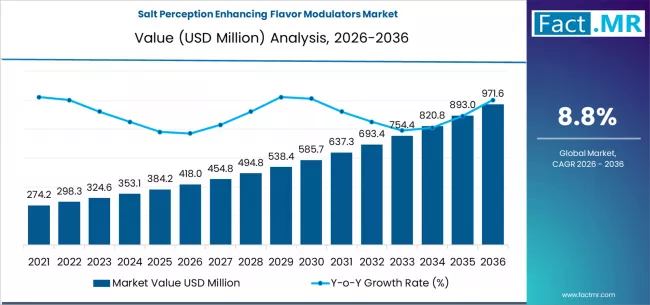
Salt perception enhancing flavor modulators market is projected to grow from USD 418.0 million in 2026 to USD 971.6 million by 2036, at a CAGR of 8.8%. Dairy/Alt-Dairy will dominate with a 47.6% market share, while yeast extract will lead the ingredient segment with a 48.4% share.

Salt Perception Enhancing Flavor Modulators Market Forecast and Outlook 2026 to 2036

The global market for salt perception enhancing flavor modulators is entering a period of accelerated evolution, projected to grow from USD 418.01 million in 2026 to USD 971.57 million by 2036, at a CAGR of 8.8%.

Key Takeaways from the Salt Perception Enhancing Flavor Modulators Market

  • Market Value for 2026: USD 418.01 Million
  • Market Value for 2036: USD 971.57 Million
  • Forecast CAGR (2026-2036): 8.8%
  • Leading Application Segment (2026): Dairy/Alt-Dairy (48%)
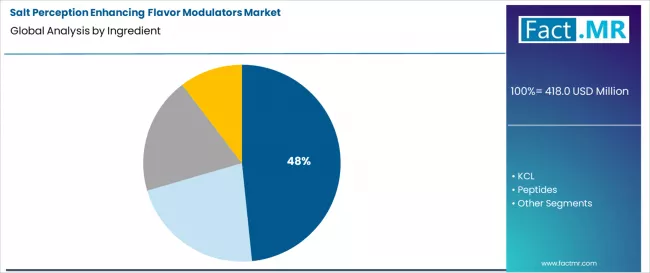
  • Leading Ingredient Segment (2026): Yeast Extract (48%)
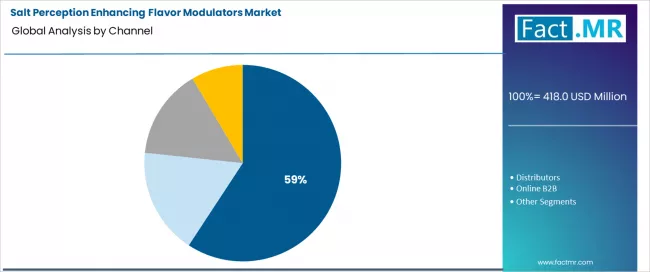
  • Leading Channel Segment (2026): Direct-to-B2B (59%)
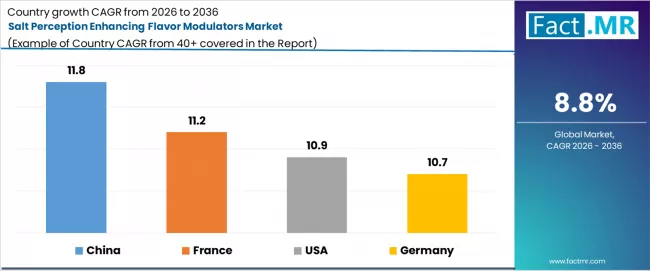
  • Key Growth Countries: China (11.8% CAGR), France (11.2% CAGR), Germany (10.7% CAGR), USA (10.9% CAGR)
  • Key Players in the Market: Givaudan S.A., International Flavors & Fragrances (IFF), Kerry Group plc., DSM-Firmenich, Symrise AG, T. Hasegawa

Salt Perception Enhancing Flavor Modulators Market Market Value Analysis

This growth is fundamentally tied to the transformative shifts in global food culture and public health policy. The relentless consumer push for cleaner labels and reduced sodium intake, juxtaposed with an unwavering demand for full, savory taste, has moved these modulators from niche ingredients to essential components in product formulation.

The market's expansion reflects a deeper industry transition where taste enhancement is no longer about masking but about precision, engineering specific flavor notes and mouthfeel sensations to compensate for sodium reduction without compromising sensory appeal.

Success in this space is increasingly defined by a modulator's ability to deliver multifunctionality, such as simultaneously enhancing kokumi, improving mouthfulness, and suppressing off-notes, all while aligning with clean-label and natural sourcing trends.

Metric

Metric Value
Market Value (2026) USD 418.01 Million
Market Forecast Value (2036) USD 971.57 Million
Forecast CAGR (2026-2036) 8.8%

Category

Category Segments
Application Dairy/Alt-Dairy, Beverages, Bakery/Snacks, Meat/Alt-Meat
Ingredient Yeast Extract, KCL, Peptides, Spices
Channel Direct-to-B2B, Distributors, Online B2B, Contract Manufacturing
Region North America, Latin America, Western Europe, Eastern Europe, East Asia, South Asia & Pacific, MEA

Segmental Analysis

By Application, Which Segment Demonstrates the Broadest Adoption?

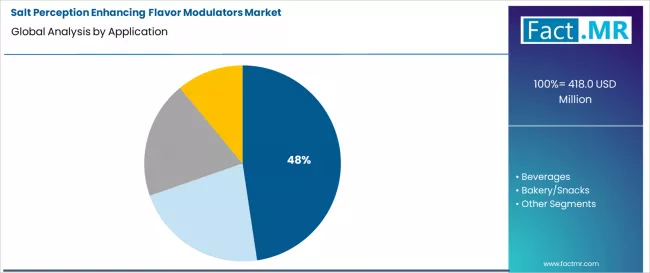
Salt Perception Enhancing Flavor Modulators Market Analysis By Application

The dairy and alternative-dairy segment commands a leading 48% market share. This dominance is rooted in the sector's intense focus on texture and flavor complexity, where sodium reduction can significantly dull taste and impact mouthfeel.

Modulators are critical in plant-based cheese, yogurt, and milk alternatives to build savory, umami, and creamy notes that mimic their dairy counterparts. The segment's growth is further propelled by high consumer expectations for both health and indulgence in dairy products.

By Ingredient, Which Type is Most Central to Formulations?

Salt Perception Enhancing Flavor Modulators Market Analysis By Ingredient

Yeast extract leads the ingredient segment with a 48% share, favored for its natural label status and potent umami-enhancing properties. Its versatility allows it to function not just as a salt replacer but as a fundamental flavor builder, contributing to the overall savory profile and richness of a product.

While potassium chloride remains a tool for direct salt replacement, its potential metallic aftertaste often necessitates its use in blends with yeast extracts or masking agents, cementing yeast extract's role as a foundational component.

By Channel, How are Products Primarily Reaching End-Users?

Salt Perception Enhancing Flavor Modulators Market Analysis By Channel

Direct-to-B2B sales are the predominant channel, holding a 59% share. This reflects the highly technical and collaborative nature of flavor development. Food and beverage manufacturers work closely with flavor houses and ingredient suppliers to co-create custom solutions tailored to specific product matrices, processing conditions, and target consumer profiles. These direct relationships are essential for iterative testing, technical support, and ensuring the modulator performs seamlessly in the final application.

What are the Drivers, Restraints, and Key Trends of the Salt Perception Enhancing Flavor Modulators Market?

The primary market driver is the global wave of mandatory and voluntary sodium reduction targets enacted by governments and health organizations. Consumer health consciousness continues to rise, creating strong demand for reduced-sodium or no-salt-added products that do not sacrifice taste. The rapid growth of plant-based meat and dairy alternatives, which often rely heavily on flavor building from the ground up, provides a major new application arena.

A significant market restraint is the challenge of cost-in-use for natural, high-performance modulators compared to simple salt. Formulating with these ingredients often requires rebalancing entire flavor systems, adding complexity and R&D time. Regulatory heterogeneity across regions regarding label claims like "natural flavor" or the use of specific ingredients like potassium chloride can also complicate global product launches.

Key trends include the shift toward label-friendly, non-GMO, and organic-certified modulators to meet clean-label demands. There is growing innovation in precision-fermented peptides and plant-based extracts designed to target specific taste receptors for saltiness and umami. The integration of modulators with texture-enhancing systems is becoming standard, acknowledging that mouthfeel is inextricably linked to salt perception. Finally, digital flavor profiling and AI-assisted formulation tools are emerging to predict modulator efficacy and accelerate development cycles.

Analysis of the Salt Perception Enhancing Flavor Modulators Market by Key Countries

Salt Perception Enhancing Flavor Modulators Market Cagr Analysis By Country

Country CAGR (2026-2036)
China 11.8%
France 11.2%
Germany 10.7%
USA 10.9%

How is China's Evolving Palate and Health Awareness Driving Growth?

China's leading CAGR of 11.8% stems from a unique confluence of a deep-rooted culinary tradition valuing umami and a rapidly growing middle class concerned about dietary health. Government initiatives promoting healthy eating are pushing food manufacturers to reduce sodium in everything from sauces and snacks to instant noodles. The demand for modulators that can preserve the complex, savory depth of Chinese cuisine while lowering sodium content is creating a vast and dynamic market for tailored solutions.

What Role does France's Culinary Leadership and Regulatory Environment Play?

France's growth at 11.2% is driven by its dual identity as a global gastronomic leader and a nation with strict public health policies. French consumers have exceptionally high sensory standards but are also responsive to health narratives.

National sodium reduction plans pressure manufacturers, particularly in the dairy, bakery, and prepared meals sectors, to innovate. French food companies are therefore at the forefront of developing sophisticated, natural modulator blends that meet both gourmet and health-conscious expectations.

Why is Germany a Center for Technical Application and Plant-Based Innovation?

Germany's 10.7% CAGR reflects its methodical approach to food technology and its status as a European hub for plant-based food development. German food engineers prioritize precise, science-backed formulations.

The robust market for vegetarian and vegan meat and dairy alternatives demands advanced modulators to achieve authentic flavors. This environment fosters demand for high-purity, functionally reliable ingredients and encourages deep R&D collaboration between German manufacturers and flavor companies.

How is the USA's Market-Driven Health Trend Influencing Adoption?

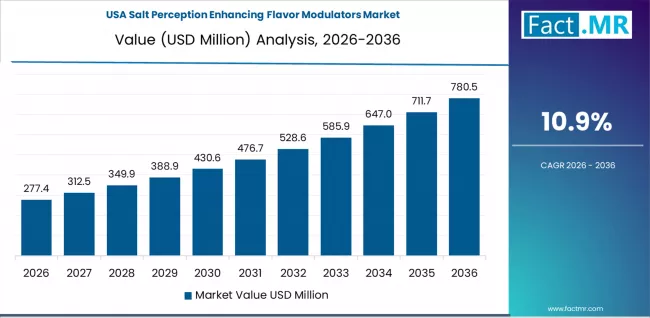
Salt Perception Enhancing Flavor Modulators Market Country Value Analysis

The USA's 10.9% growth is fueled by a powerful consumer-led demand for healthier options and widespread corporate commitments to sodium reduction. The market is characterized by activity across all segments, from snacks and condiments to processed meats and soups.

American manufacturers often seek magic bullet solutions that can be easily integrated into existing mass-production lines, driving demand for potent, versatile, and cost-effective modulator systems that deliver immediate taste impact.

Competitive Landscape of the Salt Perception Enhancing Flavor Modulators Market

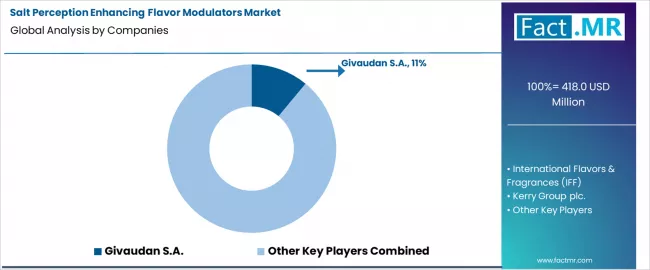
Salt Perception Enhancing Flavor Modulators Market Analysis By Company

Global flavor and fragrance giants, complemented by specialized ingredient suppliers, dominate the competitive landscape. Competition extends beyond product portfolios to encompass deep application expertise, proprietary technologies in fermentation and extraction, and the capacity for rapid customization.

A key differentiator is the ability to provide holistic taste solutions, such as combining modulators with other flavor notes, masking agents, and texture modifiers. Building strong, collaborative partnerships with leading food and beverage brands through joint development projects is a critical strategy for securing long-term contracts and driving market share.

Key Players in the Salt Perception Enhancing Flavor Modulators Market

  • Givaudan S.A.
  • International Flavors & Fragrances (IFF)
  • Kerry Group plc.
  • DSM-Firmenich
  • Symrise AG
  • T. Hasegawa

Scope of Report

Items Values
Quantitative Units USD Million
Application Dairy/Alt-Dairy, Beverages, Bakery/Snacks, Meat/Alt-Meat
Ingredient Yeast Extract, KCL, Peptides, Spices
Channel Direct-to-B2B, Distributors, Online B2B, Contract Manufacturing
Key Countries China, France, Germany, USA
Key Companies Givaudan S.A., International Flavors & Fragrances (IFF), Kerry Group plc., DSM-Firmenich, Symrise AG, T. Hasegawa
Additional Analysis Sensory science of salt perception mechanisms; analysis of modulator synergy with other ingredients; regulatory landscape for salt replacers and flavor claims; cost-benefit analysis for manufacturers; impact on shelf-life and product stability; exploration of novel sources (e.g., algae, mushroom extracts).

Market by Segments

  • Application :

    • Dairy/Alt-Dairy
    • Beverages
    • Bakery/Snacks
    • Meat/Alt-Meat
  • Ingredient :

    • Yeast Extract
    • Potassium Chloride (KCl)
    • Peptides
    • Spices
  • Channel :

    • Direct-to-B2B
    • Distributors
    • Online B2B
    • Contract Manufacturing
  • Region :

    • North America

      • USA
      • Canada
    • Latin America

      • Brazil
      • Mexico
      • Argentina
      • Rest of Latin America
    • Western Europe

      • Germany
      • UK
      • France
      • Spain
      • Italy
      • BENELUX
      • Rest of Western Europe
    • Eastern Europe

      • Russia
      • Poland
      • Czech Republic
      • Rest of Eastern Europe
    • East Asia

      • China
      • Japan
      • South Korea
      • Rest of East Asia
    • South Asia & Pacific

      • India
      • ASEAN
      • Australia
      • Rest of South Asia & Pacific
    • MEA

      • Saudi Arabia
      • UAE
      • Turkiye
      • Rest of MEA

References

  • Desmond, E. (2023). Reducing salt: A challenge for the food industry. Trends in Food Science & Technology, 132, 1-9.
  • Kemp, S. E., & Beauchamp, G. K. (2022). Flavor modification and the sodium reduction challenge. Annual Review of Food Science and Technology, 13, 257-278.
  • Li, Q., Wang, Z., & Zhang, Y. (2024). Novel yeast-derived peptides as saltiness enhancers in low-sodium soups: A sensory and physicochemical study. Journal of Food Science, 89(3), 1456-1468.
  • Mojet, J., Heidema, J., & Christ-Hazelhof, E. (2023). Taste perception of sodium chloride and potassium chloride in thickened systems. Food Quality and Preference, 104, 104721.
  • National Academies of Sciences, Engineering, and Medicine. (2024). Strategies to reduce sodium intake in the United States. The National Academies Press.
  • Salles, C., & Guichard, E. (2022). Salt reduction in food and the role of flavor enhancers. In Flavor, Taste and Texture in Food Formulation (pp. 89-112). Wiley-Blackwell.
  • Sun, C., Zhou, X., & Liu, J. (2023). Application of flavor modulators in plant-based meat analogs: A review. Food Research International, 173(Part 1), 113259.
  • World Health Organization. (2023). WHO global report on sodium intake reduction. WHO Press.
  • Yamamoto, T., & Inoue, K. (2022). Mechanisms of kokumi taste perception and the search for new kokumi substances. Chemical Senses, 47, bjac023.
  • Zhao, L., Wang, Y., & Feng, Y. (2024). Consumer attitudes and acceptance toward foods with reduced sodium and added flavor modulators: A cross-cultural study. Appetite, 195, 107232.

Table of Content

  1. Executive Summary
    • Global Market Outlook
    • Demand to side Trends
    • Supply to side Trends
    • Technology Roadmap Analysis
    • Analysis and Recommendations
  2. Market Overview
    • Market Coverage / Taxonomy
    • Market Definition / Scope / Limitations
  3. Market Background
    • Market Dynamics
      • Drivers
      • Restraints
      • Opportunity
      • Trends
    • Scenario Forecast
      • Demand in Optimistic Scenario
      • Demand in Likely Scenario
      • Demand in Conservative Scenario
    • Opportunity Map Analysis
    • Product Life Cycle Analysis
    • Supply Chain Analysis
    • Investment Feasibility Matrix
    • Value Chain Analysis
    • PESTLE and Porter’s Analysis
    • Regulatory Landscape
    • Regional Parent Market Outlook
    • Production and Consumption Statistics
    • Import and Export Statistics
  4. Global Market Analysis 2021 to 2025 and Forecast, 2026 to 2036
    • Historical Market Size Value (USD Million) Analysis, 2021 to 2025
    • Current and Future Market Size Value (USD Million) Projections, 2026 to 2036
      • Y to o to Y Growth Trend Analysis
      • Absolute $ Opportunity Analysis
  5. Global Market Pricing Analysis 2021 to 2025 and Forecast 2026 to 2036
  6. Global Market Analysis 2021 to 2025 and Forecast 2026 to 2036, By Application
    • Introduction / Key Findings
    • Historical Market Size Value (USD Million) Analysis By Application, 2021 to 2025
    • Current and Future Market Size Value (USD Million) Analysis and Forecast By Application, 2026 to 2036
      • Dairy/Alt-Dairy
      • Beverages
      • Bakery/Snacks
      • Meat/Alt-Meat
    • Y to o to Y Growth Trend Analysis By Application, 2021 to 2025
    • Absolute $ Opportunity Analysis By Application, 2026 to 2036
  7. Global Market Analysis 2021 to 2025 and Forecast 2026 to 2036, By Ingredient
    • Introduction / Key Findings
    • Historical Market Size Value (USD Million) Analysis By Ingredient, 2021 to 2025
    • Current and Future Market Size Value (USD Million) Analysis and Forecast By Ingredient, 2026 to 2036
      • Yeast Extract
      • KCL
      • Peptides
      • Spices
    • Y to o to Y Growth Trend Analysis By Ingredient, 2021 to 2025
    • Absolute $ Opportunity Analysis By Ingredient, 2026 to 2036
  8. Global Market Analysis 2021 to 2025 and Forecast 2026 to 2036, By Channel
    • Introduction / Key Findings
    • Historical Market Size Value (USD Million) Analysis By Channel, 2021 to 2025
    • Current and Future Market Size Value (USD Million) Analysis and Forecast By Channel, 2026 to 2036
      • Direct-to-B2B
      • Distributors
      • Online B2B
      • Contract Mfg
    • Y to o to Y Growth Trend Analysis By Channel, 2021 to 2025
    • Absolute $ Opportunity Analysis By Channel, 2026 to 2036
  9. Global Market Analysis 2021 to 2025 and Forecast 2026 to 2036, By Region
    • Introduction
    • Historical Market Size Value (USD Million) Analysis By Region, 2021 to 2025
    • Current Market Size Value (USD Million) Analysis and Forecast By Region, 2026 to 2036
      • North America
      • Latin America
      • Western Europe
      • Eastern Europe
      • East Asia
      • South Asia and Pacific
      • Middle East & Africa
    • Market Attractiveness Analysis By Region
  10. North America Market Analysis 2021 to 2025 and Forecast 2026 to 2036, By Country
    • Historical Market Size Value (USD Million) Trend Analysis By Market Taxonomy, 2021 to 2025
    • Market Size Value (USD Million) Forecast By Market Taxonomy, 2026 to 2036
      • By Country
        • USA
        • Canada
        • Mexico
      • By Application
      • By Ingredient
      • By Channel
    • Market Attractiveness Analysis
      • By Country
      • By Application
      • By Ingredient
      • By Channel
    • Key Takeaways
  11. Latin America Market Analysis 2021 to 2025 and Forecast 2026 to 2036, By Country
    • Historical Market Size Value (USD Million) Trend Analysis By Market Taxonomy, 2021 to 2025
    • Market Size Value (USD Million) Forecast By Market Taxonomy, 2026 to 2036
      • By Country
        • Brazil
        • Chile
        • Rest of Latin America
      • By Application
      • By Ingredient
      • By Channel
    • Market Attractiveness Analysis
      • By Country
      • By Application
      • By Ingredient
      • By Channel
    • Key Takeaways
  12. Western Europe Market Analysis 2021 to 2025 and Forecast 2026 to 2036, By Country
    • Historical Market Size Value (USD Million) Trend Analysis By Market Taxonomy, 2021 to 2025
    • Market Size Value (USD Million) Forecast By Market Taxonomy, 2026 to 2036
      • By Country
        • Germany
        • UK
        • Italy
        • Spain
        • France
        • Nordic
        • BENELUX
        • Rest of Western Europe
      • By Application
      • By Ingredient
      • By Channel
    • Market Attractiveness Analysis
      • By Country
      • By Application
      • By Ingredient
      • By Channel
    • Key Takeaways
  13. Eastern Europe Market Analysis 2021 to 2025 and Forecast 2026 to 2036, By Country
    • Historical Market Size Value (USD Million) Trend Analysis By Market Taxonomy, 2021 to 2025
    • Market Size Value (USD Million) Forecast By Market Taxonomy, 2026 to 2036
      • By Country
        • Russia
        • Poland
        • Hungary
        • Balkan & Baltic
        • Rest of Eastern Europe
      • By Application
      • By Ingredient
      • By Channel
    • Market Attractiveness Analysis
      • By Country
      • By Application
      • By Ingredient
      • By Channel
    • Key Takeaways
  14. East Asia Market Analysis 2021 to 2025 and Forecast 2026 to 2036, By Country
    • Historical Market Size Value (USD Million) Trend Analysis By Market Taxonomy, 2021 to 2025
    • Market Size Value (USD Million) Forecast By Market Taxonomy, 2026 to 2036
      • By Country
        • China
        • Japan
        • South Korea
      • By Application
      • By Ingredient
      • By Channel
    • Market Attractiveness Analysis
      • By Country
      • By Application
      • By Ingredient
      • By Channel
    • Key Takeaways
  15. South Asia and Pacific Market Analysis 2021 to 2025 and Forecast 2026 to 2036, By Country
    • Historical Market Size Value (USD Million) Trend Analysis By Market Taxonomy, 2021 to 2025
    • Market Size Value (USD Million) Forecast By Market Taxonomy, 2026 to 2036
      • By Country
        • India
        • ASEAN
        • Australia & New Zealand
        • Rest of South Asia and Pacific
      • By Application
      • By Ingredient
      • By Channel
    • Market Attractiveness Analysis
      • By Country
      • By Application
      • By Ingredient
      • By Channel
    • Key Takeaways
  16. Middle East & Africa Market Analysis 2021 to 2025 and Forecast 2026 to 2036, By Country
    • Historical Market Size Value (USD Million) Trend Analysis By Market Taxonomy, 2021 to 2025
    • Market Size Value (USD Million) Forecast By Market Taxonomy, 2026 to 2036
      • By Country
        • Kingdom of Saudi Arabia
        • Other GCC Countries
        • Turkiye
        • South Africa
        • Other African Union
        • Rest of Middle East & Africa
      • By Application
      • By Ingredient
      • By Channel
    • Market Attractiveness Analysis
      • By Country
      • By Application
      • By Ingredient
      • By Channel
    • Key Takeaways
  17. Key Countries Market Analysis
    • USA
      • Pricing Analysis
      • Market Share Analysis, 2025
        • By Application
        • By Ingredient
        • By Channel
    • Canada
      • Pricing Analysis
      • Market Share Analysis, 2025
        • By Application
        • By Ingredient
        • By Channel
    • Mexico
      • Pricing Analysis
      • Market Share Analysis, 2025
        • By Application
        • By Ingredient
        • By Channel
    • Brazil
      • Pricing Analysis
      • Market Share Analysis, 2025
        • By Application
        • By Ingredient
        • By Channel
    • Chile
      • Pricing Analysis
      • Market Share Analysis, 2025
        • By Application
        • By Ingredient
        • By Channel
    • Germany
      • Pricing Analysis
      • Market Share Analysis, 2025
        • By Application
        • By Ingredient
        • By Channel
    • UK
      • Pricing Analysis
      • Market Share Analysis, 2025
        • By Application
        • By Ingredient
        • By Channel
    • Italy
      • Pricing Analysis
      • Market Share Analysis, 2025
        • By Application
        • By Ingredient
        • By Channel
    • Spain
      • Pricing Analysis
      • Market Share Analysis, 2025
        • By Application
        • By Ingredient
        • By Channel
    • France
      • Pricing Analysis
      • Market Share Analysis, 2025
        • By Application
        • By Ingredient
        • By Channel
    • India
      • Pricing Analysis
      • Market Share Analysis, 2025
        • By Application
        • By Ingredient
        • By Channel
    • ASEAN
      • Pricing Analysis
      • Market Share Analysis, 2025
        • By Application
        • By Ingredient
        • By Channel
    • Australia & New Zealand
      • Pricing Analysis
      • Market Share Analysis, 2025
        • By Application
        • By Ingredient
        • By Channel
    • China
      • Pricing Analysis
      • Market Share Analysis, 2025
        • By Application
        • By Ingredient
        • By Channel
    • Japan
      • Pricing Analysis
      • Market Share Analysis, 2025
        • By Application
        • By Ingredient
        • By Channel
    • South Korea
      • Pricing Analysis
      • Market Share Analysis, 2025
        • By Application
        • By Ingredient
        • By Channel
    • Russia
      • Pricing Analysis
      • Market Share Analysis, 2025
        • By Application
        • By Ingredient
        • By Channel
    • Poland
      • Pricing Analysis
      • Market Share Analysis, 2025
        • By Application
        • By Ingredient
        • By Channel
    • Hungary
      • Pricing Analysis
      • Market Share Analysis, 2025
        • By Application
        • By Ingredient
        • By Channel
    • Kingdom of Saudi Arabia
      • Pricing Analysis
      • Market Share Analysis, 2025
        • By Application
        • By Ingredient
        • By Channel
    • Turkiye
      • Pricing Analysis
      • Market Share Analysis, 2025
        • By Application
        • By Ingredient
        • By Channel
    • South Africa
      • Pricing Analysis
      • Market Share Analysis, 2025
        • By Application
        • By Ingredient
        • By Channel
  18. Market Structure Analysis
    • Competition Dashboard
    • Competition Benchmarking
    • Market Share Analysis of Top Players
      • By Regional
      • By Application
      • By Ingredient
      • By Channel
  19. Competition Analysis
    • Competition Deep Dive
      • Givaudan S.A.
        • Overview
        • Product Portfolio
        • Profitability by Market Segments (Product/Age /Sales Channel/Region)
        • Sales Footprint
        • Strategy Overview
          • Marketing Strategy
          • Product Strategy
          • Channel Strategy
      • International Flavors & Fragrances (IFF)
      • Kerry Group plc.
      • DSM-Firmenich
      • Symrise AG
      • T. Hasegawa
  20. Assumptions & Acronyms Used
  21. Research Methodology

List Of Table

  • Table 1: Global Market Value (USD Million) Forecast by Region, 2021 to 2036
  • Table 2: Global Market Value (USD Million) Forecast by Application, 2021 to 2036
  • Table 3: Global Market Value (USD Million) Forecast by Ingredient, 2021 to 2036
  • Table 4: Global Market Value (USD Million) Forecast by Channel, 2021 to 2036
  • Table 5: North America Market Value (USD Million) Forecast by Country, 2021 to 2036
  • Table 6: North America Market Value (USD Million) Forecast by Application, 2021 to 2036
  • Table 7: North America Market Value (USD Million) Forecast by Ingredient, 2021 to 2036
  • Table 8: North America Market Value (USD Million) Forecast by Channel, 2021 to 2036
  • Table 9: Latin America Market Value (USD Million) Forecast by Country, 2021 to 2036
  • Table 10: Latin America Market Value (USD Million) Forecast by Application, 2021 to 2036
  • Table 11: Latin America Market Value (USD Million) Forecast by Ingredient, 2021 to 2036
  • Table 12: Latin America Market Value (USD Million) Forecast by Channel, 2021 to 2036
  • Table 13: Western Europe Market Value (USD Million) Forecast by Country, 2021 to 2036
  • Table 14: Western Europe Market Value (USD Million) Forecast by Application, 2021 to 2036
  • Table 15: Western Europe Market Value (USD Million) Forecast by Ingredient, 2021 to 2036
  • Table 16: Western Europe Market Value (USD Million) Forecast by Channel, 2021 to 2036
  • Table 17: Eastern Europe Market Value (USD Million) Forecast by Country, 2021 to 2036
  • Table 18: Eastern Europe Market Value (USD Million) Forecast by Application, 2021 to 2036
  • Table 19: Eastern Europe Market Value (USD Million) Forecast by Ingredient, 2021 to 2036
  • Table 20: Eastern Europe Market Value (USD Million) Forecast by Channel, 2021 to 2036
  • Table 21: East Asia Market Value (USD Million) Forecast by Country, 2021 to 2036
  • Table 22: East Asia Market Value (USD Million) Forecast by Application, 2021 to 2036
  • Table 23: East Asia Market Value (USD Million) Forecast by Ingredient, 2021 to 2036
  • Table 24: East Asia Market Value (USD Million) Forecast by Channel, 2021 to 2036
  • Table 25: South Asia and Pacific Market Value (USD Million) Forecast by Country, 2021 to 2036
  • Table 26: South Asia and Pacific Market Value (USD Million) Forecast by Application, 2021 to 2036
  • Table 27: South Asia and Pacific Market Value (USD Million) Forecast by Ingredient, 2021 to 2036
  • Table 28: South Asia and Pacific Market Value (USD Million) Forecast by Channel, 2021 to 2036
  • Table 29: Middle East & Africa Market Value (USD Million) Forecast by Country, 2021 to 2036
  • Table 30: Middle East & Africa Market Value (USD Million) Forecast by Application, 2021 to 2036
  • Table 31: Middle East & Africa Market Value (USD Million) Forecast by Ingredient, 2021 to 2036
  • Table 32: Middle East & Africa Market Value (USD Million) Forecast by Channel, 2021 to 2036

List Of Figures

  • Figure 1: Global Market Pricing Analysis
  • Figure 2: Global Market Value (USD Million) Forecast 2021 to 2036
  • Figure 3: Global Market Value Share and BPS Analysis by Application, 2026 and 2036
  • Figure 4: Global Market Y to o to Y Growth Comparison by Application, 2026 to 2036
  • Figure 5: Global Market Attractiveness Analysis by Application
  • Figure 6: Global Market Value Share and BPS Analysis by Ingredient, 2026 and 2036
  • Figure 7: Global Market Y to o to Y Growth Comparison by Ingredient, 2026 to 2036
  • Figure 8: Global Market Attractiveness Analysis by Ingredient
  • Figure 9: Global Market Value Share and BPS Analysis by Channel, 2026 and 2036
  • Figure 10: Global Market Y to o to Y Growth Comparison by Channel, 2026 to 2036
  • Figure 11: Global Market Attractiveness Analysis by Channel
  • Figure 12: Global Market Value (USD Million) Share and BPS Analysis by Region, 2026 and 2036
  • Figure 13: Global Market Y to o to Y Growth Comparison by Region, 2026 to 2036
  • Figure 14: Global Market Attractiveness Analysis by Region
  • Figure 15: North America Market Incremental Dollar Opportunity, 2026 to 2036
  • Figure 16: Latin America Market Incremental Dollar Opportunity, 2026 to 2036
  • Figure 17: Western Europe Market Incremental Dollar Opportunity, 2026 to 2036
  • Figure 18: Eastern Europe Market Incremental Dollar Opportunity, 2026 to 2036
  • Figure 19: East Asia Market Incremental Dollar Opportunity, 2026 to 2036
  • Figure 20: South Asia and Pacific Market Incremental Dollar Opportunity, 2026 to 2036
  • Figure 21: Middle East & Africa Market Incremental Dollar Opportunity, 2026 to 2036
  • Figure 22: North America Market Value Share and BPS Analysis by Country, 2026 and 2036
  • Figure 23: North America Market Value Share and BPS Analysis by Application, 2026 and 2036
  • Figure 24: North America Market Y to o to Y Growth Comparison by Application, 2026 to 2036
  • Figure 25: North America Market Attractiveness Analysis by Application
  • Figure 26: North America Market Value Share and BPS Analysis by Ingredient, 2026 and 2036
  • Figure 27: North America Market Y to o to Y Growth Comparison by Ingredient, 2026 to 2036
  • Figure 28: North America Market Attractiveness Analysis by Ingredient
  • Figure 29: North America Market Value Share and BPS Analysis by Channel, 2026 and 2036
  • Figure 30: North America Market Y to o to Y Growth Comparison by Channel, 2026 to 2036
  • Figure 31: North America Market Attractiveness Analysis by Channel
  • Figure 32: Latin America Market Value Share and BPS Analysis by Country, 2026 and 2036
  • Figure 33: Latin America Market Value Share and BPS Analysis by Application, 2026 and 2036
  • Figure 34: Latin America Market Y to o to Y Growth Comparison by Application, 2026 to 2036
  • Figure 35: Latin America Market Attractiveness Analysis by Application
  • Figure 36: Latin America Market Value Share and BPS Analysis by Ingredient, 2026 and 2036
  • Figure 37: Latin America Market Y to o to Y Growth Comparison by Ingredient, 2026 to 2036
  • Figure 38: Latin America Market Attractiveness Analysis by Ingredient
  • Figure 39: Latin America Market Value Share and BPS Analysis by Channel, 2026 and 2036
  • Figure 40: Latin America Market Y to o to Y Growth Comparison by Channel, 2026 to 2036
  • Figure 41: Latin America Market Attractiveness Analysis by Channel
  • Figure 42: Western Europe Market Value Share and BPS Analysis by Country, 2026 and 2036
  • Figure 43: Western Europe Market Value Share and BPS Analysis by Application, 2026 and 2036
  • Figure 44: Western Europe Market Y to o to Y Growth Comparison by Application, 2026 to 2036
  • Figure 45: Western Europe Market Attractiveness Analysis by Application
  • Figure 46: Western Europe Market Value Share and BPS Analysis by Ingredient, 2026 and 2036
  • Figure 47: Western Europe Market Y to o to Y Growth Comparison by Ingredient, 2026 to 2036
  • Figure 48: Western Europe Market Attractiveness Analysis by Ingredient
  • Figure 49: Western Europe Market Value Share and BPS Analysis by Channel, 2026 and 2036
  • Figure 50: Western Europe Market Y to o to Y Growth Comparison by Channel, 2026 to 2036
  • Figure 51: Western Europe Market Attractiveness Analysis by Channel
  • Figure 52: Eastern Europe Market Value Share and BPS Analysis by Country, 2026 and 2036
  • Figure 53: Eastern Europe Market Value Share and BPS Analysis by Application, 2026 and 2036
  • Figure 54: Eastern Europe Market Y to o to Y Growth Comparison by Application, 2026 to 2036
  • Figure 55: Eastern Europe Market Attractiveness Analysis by Application
  • Figure 56: Eastern Europe Market Value Share and BPS Analysis by Ingredient, 2026 and 2036
  • Figure 57: Eastern Europe Market Y to o to Y Growth Comparison by Ingredient, 2026 to 2036
  • Figure 58: Eastern Europe Market Attractiveness Analysis by Ingredient
  • Figure 59: Eastern Europe Market Value Share and BPS Analysis by Channel, 2026 and 2036
  • Figure 60: Eastern Europe Market Y to o to Y Growth Comparison by Channel, 2026 to 2036
  • Figure 61: Eastern Europe Market Attractiveness Analysis by Channel
  • Figure 62: East Asia Market Value Share and BPS Analysis by Country, 2026 and 2036
  • Figure 63: East Asia Market Value Share and BPS Analysis by Application, 2026 and 2036
  • Figure 64: East Asia Market Y to o to Y Growth Comparison by Application, 2026 to 2036
  • Figure 65: East Asia Market Attractiveness Analysis by Application
  • Figure 66: East Asia Market Value Share and BPS Analysis by Ingredient, 2026 and 2036
  • Figure 67: East Asia Market Y to o to Y Growth Comparison by Ingredient, 2026 to 2036
  • Figure 68: East Asia Market Attractiveness Analysis by Ingredient
  • Figure 69: East Asia Market Value Share and BPS Analysis by Channel, 2026 and 2036
  • Figure 70: East Asia Market Y to o to Y Growth Comparison by Channel, 2026 to 2036
  • Figure 71: East Asia Market Attractiveness Analysis by Channel
  • Figure 72: South Asia and Pacific Market Value Share and BPS Analysis by Country, 2026 and 2036
  • Figure 73: South Asia and Pacific Market Value Share and BPS Analysis by Application, 2026 and 2036
  • Figure 74: South Asia and Pacific Market Y to o to Y Growth Comparison by Application, 2026 to 2036
  • Figure 75: South Asia and Pacific Market Attractiveness Analysis by Application
  • Figure 76: South Asia and Pacific Market Value Share and BPS Analysis by Ingredient, 2026 and 2036
  • Figure 77: South Asia and Pacific Market Y to o to Y Growth Comparison by Ingredient, 2026 to 2036
  • Figure 78: South Asia and Pacific Market Attractiveness Analysis by Ingredient
  • Figure 79: South Asia and Pacific Market Value Share and BPS Analysis by Channel, 2026 and 2036
  • Figure 80: South Asia and Pacific Market Y to o to Y Growth Comparison by Channel, 2026 to 2036
  • Figure 81: South Asia and Pacific Market Attractiveness Analysis by Channel
  • Figure 82: Middle East & Africa Market Value Share and BPS Analysis by Country, 2026 and 2036
  • Figure 83: Middle East & Africa Market Value Share and BPS Analysis by Application, 2026 and 2036
  • Figure 84: Middle East & Africa Market Y to o to Y Growth Comparison by Application, 2026 to 2036
  • Figure 85: Middle East & Africa Market Attractiveness Analysis by Application
  • Figure 86: Middle East & Africa Market Value Share and BPS Analysis by Ingredient, 2026 and 2036
  • Figure 87: Middle East & Africa Market Y to o to Y Growth Comparison by Ingredient, 2026 to 2036
  • Figure 88: Middle East & Africa Market Attractiveness Analysis by Ingredient
  • Figure 89: Middle East & Africa Market Value Share and BPS Analysis by Channel, 2026 and 2036
  • Figure 90: Middle East & Africa Market Y to o to Y Growth Comparison by Channel, 2026 to 2036
  • Figure 91: Middle East & Africa Market Attractiveness Analysis by Channel
  • Figure 92: Global Market - Tier Structure Analysis
  • Figure 93: Global Market - Company Share Analysis

- FAQs -

How big is the salt perception enhancing flavor modulators market in 2026?

The global salt perception enhancing flavor modulators market is estimated to be valued at USD 418.0 million in 2026.

What will be the size of salt perception enhancing flavor modulators market in 2036?

The market size for the salt perception enhancing flavor modulators market is projected to reach USD 971.6 million by 2036.

How much will be the salt perception enhancing flavor modulators market growth between 2026 and 2036?

The salt perception enhancing flavor modulators market is expected to grow at a 8.8% CAGR between 2026 and 2036.

What are the key product types in the salt perception enhancing flavor modulators market?

The key product types in salt perception enhancing flavor modulators market are dairy/alt-dairy, beverages, bakery/snacks and meat/alt-meat.

Which ingredient segment to contribute significant share in the salt perception enhancing flavor modulators market in 2026?

In terms of ingredient, yeast extract segment to command 48.4% share in the salt perception enhancing flavor modulators market in 2026.
Salt Perception Enhancing Flavor Modulators Market