- Market Value (2025): USD 96.3 Mn
- Estimated Value (2026): USD 107.0 Mn
- Forecast Value (2036): USD 306.6 Mn
- CAGR (2026-2036): 11.1%
Sustained-Release Ocular Systems Market Forecast and Outlook 2026 to 2036
The sustained-release ocular systems market is projected to grow from USD 107.0 million in 2026 to USD 306.6 million by 2036. Demand for sustained-release ocular systems is likely to grow at a CAGR of 11.1% over the forecast period.
Buyers of sustained-release ocular systems respond to eye drops are often missed or used incorrectly, especially in glaucoma and after surgery. Implants, inserts, hydrogel depots and microparticle suspensions release drugs steadily for weeks to months. For example, in December 2023, the US FDA approved Glaukos' iDose TR, a travoprost implant for glaucoma, following AbbVie's Durysta bimatoprost implant approved in 2020. Eye clinics will assess implant duration, administration requirements and monitoring before selecting a delivery system.
Market Snapshot: Sustained-Release Ocular Systems Market
- Sales of sustained-release ocular systems stood at USD 96.3 million in 2025
- Sustained-Release Ocular Systems Market Value (2026): USD 107.0 million
- Sustained-Release Ocular Systems Market Forecast Value (2036): USD 306.6 million
- Sustained-Release Ocular Systems Market Forecast CAGR (2026-2036): 11.1%
- Leading Ocular release technology: Biodegradable implant (32.0%)
- Key Market Participants: Roche, EyePoint Pharmaceuticals, Bayer, Bausch + Lomb, AbbVie, Ocular Therapeutix
- Key Growth Regions: United States, Switzerland, France, Germany, Japan
Ocular Therapeutix markets Dextenza, a dexamethasone insert placed in the tear duct after eye surgery, and is developing an axitinib implant for retinal disease. Interest in sustained-release ocular systems is strengthening as surgeons reduce drop burdens after cataract and glaucoma procedures. Suppliers such as AbbVie, Bausch + Lomb and Roche are investing in long-acting ocular delivery. Eye clinics will assess implant duration, administration requirements and monitoring before selecting a delivery system.
Sustained-Release Ocular Systems Market
| Metric | Value |
|---|---|
| Estimated Value in (2026) | USD 107.0 million |
| Forecast Value in (2036) | USD 306.6 million |
| Forecast CAGR (2026 to 2036) | 11.1% |
Source: Fact.MR analysis. Updated Nov 20, 2026
Source: Fact.MR analysis.
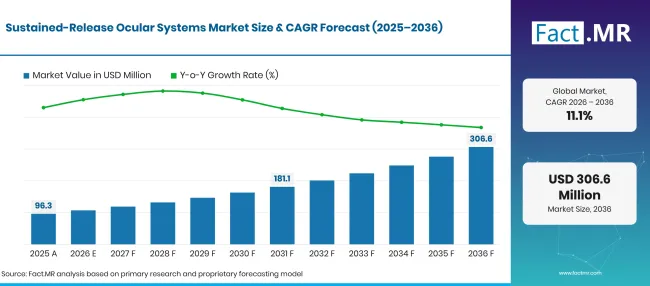
Sustained Release Ocular Systems Forecast Global | Source: Fact.MR
Category
| Category | Segments |
|---|---|
| Ocular release technology | Biodegradable implant, Non-biodegradable implant, Hydrogel depot, Microparticle suspension, Refillable reservoir |
| Development / delivery route | Small molecule, Biologic, Gene therapy, Cell therapy, Combination / other |
| Care setting | Hospital inpatient, Specialist outpatient, Ambulatory center, Home-supported care, Research / clinical trial |
| Patient population | Pediatric, Adult, Older adult, Mixed age, Rare genotype-defined |
| Region | United States; Switzerland; France; Germany; Japan |
Source: Fact.MR analysis. Updated Nov 20, 2026
Source: Fact.MR analysis.
Segmental Analysis
Why do biodegradable implants lead release-technology demand in the Sustained-Release Ocular Systems Market?
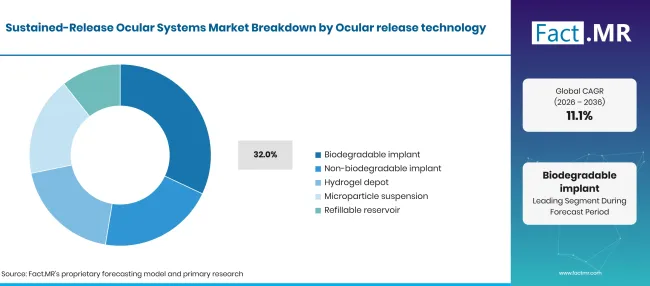
Sustained Release Ocular Systems Breakdown Ocular Release Technology | Source: Fact.MR
Biodegradable implants account for 32.0% of revenue in 2026, approximately USD 34.2 million, supported by their ability to release medication gradually without requiring device removal. Ozurdex and Durysta use biodegradable materials, while iDose TR contains a non-biodegradable titanium reservoir. Microparticle suspensions and refillable systems provide alternative approaches. Manufacturers are developing polymers that improve drug release consistency and extend treatment duration.
Why does combination / other lead delivery-route demand in the Sustained-Release Ocular Systems Market?
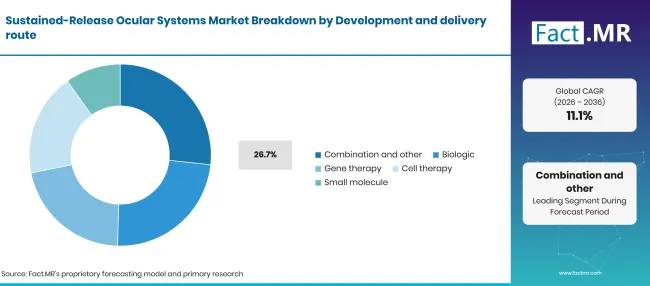
Sustained Release Ocular Systems Breakdown Development And Delivery Route | Source: Fact.MR
Combination and other approaches represent 26.7% of revenue in 2026, valued at approximately USD 28.6 million, reflecting the use of integrated drug-device systems for sustained ocular treatment. Steroid and prostaglandin implants deliver medication directly to targeted eye tissues. Small-molecule delivery technologies provide additional treatment options. Manufacturers are refining implant designs to improve drug release control, treatment durability and procedural compatibility.
Why do ambulatory centers lead care-setting demand in the Sustained-Release Ocular Systems Market?
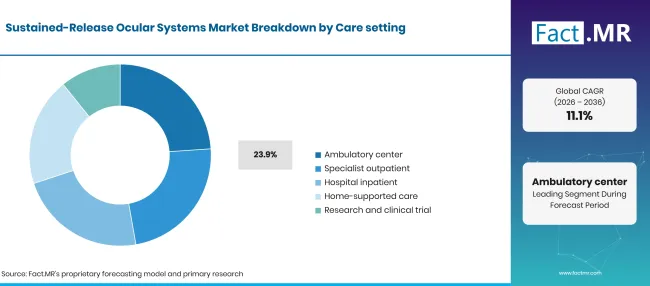
Sustained Release Ocular Systems Breakdown Care Setting | Source: Fact.MR
Ambulatory centers hold 23.9% of revenue in 2026, equivalent to approximately USD 25.6 million, as sustained-release ocular implants are commonly administered during outpatient procedures. These facilities support specialist eye treatments, including implant placement and procedures associated with cataract surgery. Other outpatient settings provide follow-up care. Suppliers are developing delivery systems that simplify clinical workflows, improve procedural efficiency and reduce treatment visits.
Why does the pediatric population lead patient demand in the Sustained-Release Ocular Systems Market?
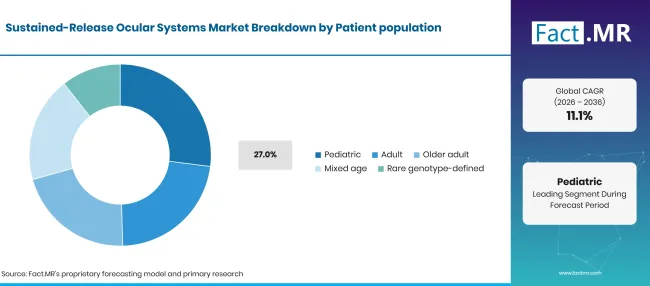
Sustained Release Ocular Systems Breakdown Patient Population | Source: Fact.MR
The pediatric population represents 27.0% of revenue in 2026, approximately USD 28.9 million, reflecting the potential value of sustained ocular drug delivery for children requiring prolonged treatment. Conditions such as pediatric uveitis and postoperative inflammation can involve frequent medication administration. Adult populations also require extended-release therapies. Manufacturers are investigating pediatric applications, with safety, appropriate dosing and long-term treatment outcomes remaining important considerations.
Sustained-Release Ocular Systems Market-Drivers, Restraints & Trends
Drivers:
Demand for sustained-release ocular systems is increasing as poor adherence to daily glaucoma medications affects treatment effectiveness and raises the risk of vision loss. Pharmaceutical manufacturers are developing implants that provide controlled drug delivery over extended periods, reducing dependence on frequent eye drop administration.
Restraints:
High procedure costs, reimbursement limitations and implant-related safety concerns restrict wider adoption of sustained-release ocular systems. Certain implants may cause corneal complications, requiring careful patient selection and monitoring. Manufacturers must demonstrate long-term safety, sustained effectiveness and clinical benefits that justify procedural expenses and follow-up examinations.
Trend: Glaucoma Drug Implants:
Interest in sustained-release glaucoma implants is increasing as ophthalmologists seek alternatives to daily eye drops. Companies such as Glaukos and AbbVie offer implant-based treatment technologies that deliver medication over extended periods. Manufacturers are improving drug release control, procedural safety and treatment durability to support clinical adoption.
Trend: Post-Surgical Inserts:
Demand for post-surgical ocular inserts is increasing as ophthalmologists seek alternatives to repeated anti-inflammatory eye drops following surgery. Ocular Therapeutix offers Dextenza, a sustained-release dexamethasone insert for eligible patients. These products simplify postoperative medication administration while supporting controlled drug delivery and recovery management.
Sustained-Release Ocular Systems Market by Analysis by Key Country
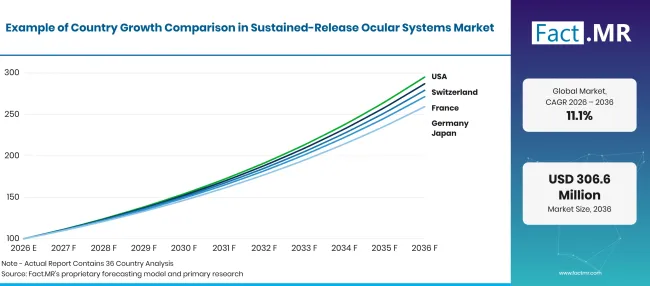
Sustained Release Ocular Systems Growth Index | Source: Fact.MR
| Country | CAGR (2026-2036) |
|---|---|
| United States | 11.2% |
| Switzerland | 10.7% |
| France | 10.6% |
| Germany | 10.5% |
| Japan | 10.0% |
Source: Fact.MR analysis. Updated Nov 20, 2026
Source: Fact.MR analysis.
Why is the United States the fastest-growing market for sustained-release ocular systems?
Demand for sustained-release ocular systems in the United States is forecast to increase at an 11.2% CAGR through 2036, the fastest among the five countries.
Products such as iDose TR, Durysta and Dextenza provide alternatives to frequent eye drop administration for eligible patients. Reimbursement arrangements and growing clinical experience are supporting their use in ophthalmology practices. Manufacturers are developing implants that offer controlled drug release and longer treatment intervals. Further adoption will depend on insurance coverage, procedural safety, clinical effectiveness and patient access to specialized eye care.
What is driving sustained-release ocular system demand in Switzerland?
Demand for sustained-release ocular systems in Switzerland is set to rise at a 10.7% CAGR through 2036, supported by the country's established ophthalmic pharmaceutical industry and research capabilities.
Bausch + Lomb, Roche and Geneva-based Alcon maintain activities in eye care treatment development and commercialization. Roche's Susvimo port delivery system, marketed in the United States, demonstrates continued interest in sustained ocular drug delivery. Swiss pharmaceutical companies are examining technologies that reduce repeated medication administration. Commercial opportunities will reflect clinical development progress, regulatory authorization, treatment durability and partnerships with specialized ophthalmology providers.
What is shaping sustained-release ocular system demand in France?
Demand for sustained-release ocular systems in France is likely to advance at a 10.6% CAGR through 2036, reflecting interest in ophthalmic treatments that reduce frequent medication administration.
Clermont-Ferrand-based Laboratoires Théa maintains an established portfolio of eye care products and supplies ophthalmic treatments across international markets. French ophthalmology specialists are examining sustained-delivery technologies for chronic eye conditions and postoperative care. Pharmaceutical developers are refining implant formulations and drug release characteristics. Wider adoption will depend on clinical evidence, reimbursement arrangements, procedural requirements and long-term treatment safety.
What is shaping sustained-release ocular system demand in Germany?
Demand for sustained-release ocular systems in Germany is forecast to expand at a 10.5% CAGR through 2036 as retina and glaucoma specialists examine longer-acting treatment options.
Established outpatient ophthalmology centers provide infrastructure for administering injections and implant-based therapies. Statutory health insurance coverage for eligible outpatient procedures supports access to specialist eye care. Manufacturers are developing drug delivery systems that reduce treatment frequency while maintaining therapeutic effectiveness. Purchasing and prescribing decisions will reflect reimbursement eligibility, implant safety, clinical outcomes and the availability of trained ophthalmology professionals.
Why is sustained-release ocular system growth slower in Japan?
Demand for sustained-release ocular systems in Japan is expected to increase at a 10.0% CAGR through 2036, the slowest among the five countries.
Regulatory evaluation and approval timelines influence the introduction of newer ocular implant technologies. Osaka-based Santen Pharmaceutical maintains an established presence in domestic ophthalmology treatments and drug development. Healthcare providers continue to assess sustained-release options for glaucoma and other chronic eye conditions. Future adoption will depend on regulatory clearance, reimbursement pricing, clinical safety and evidence demonstrating advantages over conventional eye drop treatment.
Competitive Landscape for Sustained-Release Ocular Systems Market
Competition in the sustained-release ocular systems market is divided between large ophthalmology drug makers and delivery specialists. AbbVie, Roche, Bausch + Lomb, EyePoint Pharmaceuticals and Bayer compete on ophthalmic portfolios, while Ocular Therapeutix competes on hydrogel inserts and implants. Buyers select systems on duration, safety, procedure ease and reimbursement.
From 2025 onward, competition shifted toward glaucoma implants and post-surgical inserts. An advantage may accrue to suppliers with approved, reimbursed products as they seek to grow.
Recent Developments
- In June 2026, Bayer completed its acquisition of Perfuse Therapeutics, adding sustained-release ocular drug delivery technology and the investigational PER-001 implant to strengthen its treatment pipeline for diabetic retinopathy and glaucoma.
Key Players in Sustained-Release Ocular Systems Market
Key companies operating in the market include Roche, EyePoint Pharmaceuticals, Bayer, Bausch + Lomb, AbbVie, and Ocular Therapeutix.
- Roche
- EyePoint Pharmaceuticals
- Bayer
- Bausch + Lomb
- AbbVie
- Ocular Therapeutix
Bibliography
- AbbVie Inc. (2025, February 14). Annual report on Form 10-K for the fiscal year ended December 31, 2024.
- American Academy of Ophthalmology. (2026). Primary open-angle glaucoma Preferred Practice Pattern®.
- Bayer AG. (2026, June 17). Bayer completes acquisition of Perfuse Therapeutics. Official acquisition announcement
- Genentech. (2025, February 4). FDA approves Genentech’s Susvimo as the first and only continuous delivery treatment for the leading cause of diabetes-related blindness.
- Genentech. (2025, May 22). FDA approves Genentech’s Susvimo for diabetic retinopathy.
- Glaukos Corporation. (2026, January 28). Glaukos announces U.S. FDA approval of NDA supplement allowing for re-administration of iDose® TR.
- Glaukos Corporation. (2026, October 9). Glaukos announces positive topline results from Phase 4 prospective randomized controlled clinical trial evaluating iDose® TR in combination with cataract surgery.
- Ocular Therapeutix, Inc. (2025, February 27). Annual report on Form 10-K for the fiscal year ended December 31, 2024. U.S. Securities and Exchange Commission.
- Ocular Therapeutix, Inc. (2026, February 17). Ocular Therapeutix reports positive results from landmark SOL-1 Phase 3 superiority trial in wet AMD.
- Roche Holding AG. (2025, August 1). Roche’s Susvimo maintains vision over five years with two refills per year in people with neovascular age-related macular degeneration (nAMD).
- U.S. Food and Drug Administration. (2025). DEXTENZA (dexamethasone ophthalmic insert), 0.4 mg: Prescribing information.
Segmentation
Scope of Report
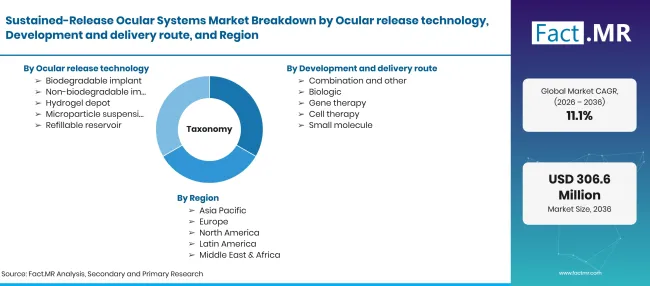
Sustained Release Ocular Systems Taxonomy | Source: Fact.MR
| Items | Values |
|---|---|
| Quantitative Units (2026) | USD 107.0 Million |
| Ocular release technology | Biodegradable implant, Non-biodegradable implant, Hydrogel depot, Microparticle suspension, Refillable reservoir |
| Development / delivery route | Small molecule, Biologic, Gene therapy, Cell therapy, Combination / other |
| Care setting | Hospital inpatient, Specialist outpatient, Ambulatory center, Home-supported care, Research / clinical trial |
| Patient population | Pediatric, Adult, Older adult, Mixed age, Rare genotype-defined |
| Regions Covered | North America, Latin America, Europe, East Asia, South Asia and Pacific, Middle East & Africa |
| Countries Covered | United States, Switzerland, France, Germany, Japan, and other countries |
| Key Companies Profiled | Roche, EyePoint Pharmaceuticals, Bayer, Bausch + Lomb, AbbVie, Ocular Therapeutix |
| Additional Attributes | Dollar revenue in the Sustained-Release Ocular Systems Market is segmented by ocular release technology (biodegradable implant, non-biodegradable implant, hydrogel depot, microparticle suspension, refillable reservoir); development / delivery route (small molecule, biologic, gene therapy, cell therapy, combination / other); care setting (hospital inpatient, specialist outpatient, ambulatory center, home-supported care, research / clinical trial); patient population (pediatric, adult, older adult, mixed age, rare genotype-defined) and region. |
Source: Fact.MR analysis. Updated Nov 20, 2026
Source: Fact.MR analysis.
Sustained-Release Ocular Systems Market by Segments
-
Ocular release technology
- Biodegradable implant
- Non-biodegradable implant
- Hydrogel depot
- Microparticle suspension
- Refillable reservoir
-
Development / delivery route
- Small molecule
- Biologic
- Gene therapy
- Cell therapy
- Combination / other
-
Care setting
- Hospital inpatient
- Specialist outpatient
- Ambulatory center
- Home-supported care
- Research / clinical trial
-
Patient population
- Pediatric
- Adult
- Older adult
- Mixed age
- Rare genotype-defined
-
Region:
- North America
- United States
- Canada
- Mexico
- Europe
- Germany
- United Kingdom
- France
- Italy
- Spain
- Rest of Europe
- Asia Pacific
- China
- India
- Japan
- South Korea
- Australia
- Rest of Asia Pacific
- Latin America
- Brazil
- Mexico
- Argentina
- Rest of Latin America
- Middle East & Africa
- GCC Countries
- South Africa
- Rest of Middle East & Africa
- North America
Frequently Asked Questions
How big is the global Sustained-Release Ocular Systems Market in 2026?
What will be the size of the Sustained-Release Ocular Systems Market by 2036?
How fast will the Sustained-Release Ocular Systems Market grow during the forecast period?
Which ocular release technology segment holds the largest share of the Sustained-Release Ocular Systems Market?
Who worked on this report


Preview the report firsthand - request a free sample
Free SampleGet the brochure for pricing and purchase details
Download PDF