Three Screw Pump Market
Three Screw Pump Market Size and Share Forecast Outlook 2026 to 2036
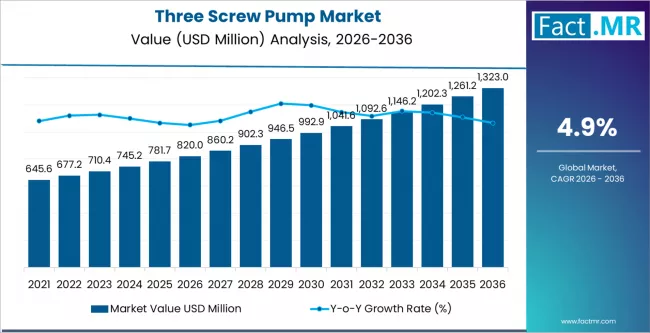
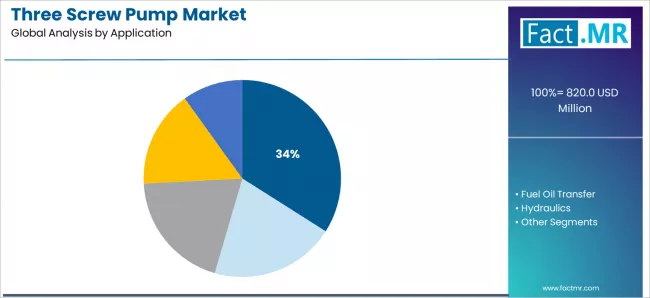
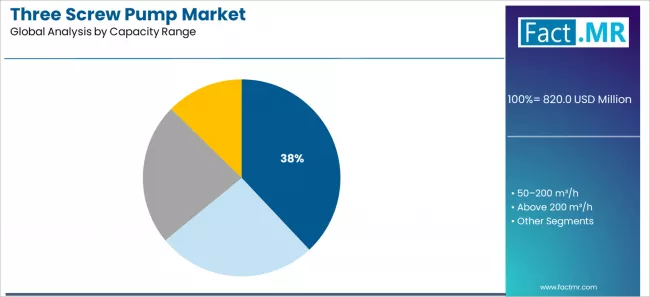
Three screw pump market is projected to grow from USD 820.0 million in 2026 to USD 1,323.0 million by 2036, at a CAGR of 4.9%. Lubrication Systems will dominate with a 34.0% market share, while up to 50 m³/h will lead the capacity range segment with a 38.0% share.
Three Screw Pump Market Competitive Power and Market Control Forecast Outlook 2026 to 2036
The three screw pump market is projected to reach USD 820 million in 2026 and grow to USD 1,323 million by 2036, with a CAGR of 4.9%. Dominant players in the market defend pricing power through extensive product portfolios, strong brand reputation, and long-term customer relationships.
Key Takeaways from Three Screw Pump Market
- Three Screw Pump Market Value (2026): USD 820 million
- Three Screw Pump Market Forecast Value (2036): USD 1,323 million
- Three Screw Pump Market Forecast CAGR (2026 to 2036): 4.9%
- Leading Segment in Three Screw Pump Market: Up to 50 m³/h (38%)
- Key Growth Region in Three Screw Pump Market: Asia Pacific
- Key Players in Three Screw Pump Market: CIRCOR (IMO/Allweiler), Leistritz Pumpen, KRAL, Settima, SPX FLOW (Johnson Pump), DESMI, Flowserve, Colfax Fluid Handling (legacy brands), Tianjin Pump Machinery Group, Houttuin

Their ability to offer tailored solutions allows for premium pricing, despite competition. Entry barriers are maintained by high capital requirements, advanced technology needs, and regulatory compliance, which make it challenging for new entrants to gain traction. While the market remains moderately fragmented, the concentration of major players narrows over time due to strategic mergers, acquisitions, and partnerships. This trend is particularly evident in regions with high demand, where larger firms can leverage economies of scale to reinforce their market position. Smaller players, while still active, struggle to compete on price and service level, further contributing to the ongoing consolidation in the market.
Three Screw Pump Market
| Metric | Value |
|---|---|
| Estimated Value in (2026E) | USD 820 million |
| Forecast Value in (2036F) | USD 1,323 million |
| Forecast CAGR (2026 to 2036) | 4.9% |
Category
| Category | Segments |
|---|---|
| Application | Lubrication Systems; Fuel Oil Transfer; Hydraulics; Marine and Offshore; Chemical Processing |
| Capacity Range | Up to 50 m³/h; 50–200 m³/h; Above 200 m³/h; Other |
| End Use | Marine; Oil and Gas; Power Generation; Industrial Machinery; Chemicals |
| Region | North America; Europe; Asia Pacific; Latin America; Middle East & Africa |
Segmental Analysis
What Is the Impact of Application on the Three Screw Pump Market?

In the three screw pump market, application is a key factor influencing demand, with lubrication systems leading the market at 34%. These pumps are widely used in lubrication systems across industries such as automotive, manufacturing, and energy, where consistent and precise fluid transfer is crucial for equipment performance. The demand for three screw pumps in lubrication systems will continue to grow as industries prioritize reliability and efficiency in their operations, ensuring smooth performance of machinery and extending the lifespan of equipment.
How Does Capacity Range Influence the Three Screw Pump Market?

Capacity range plays a significant role in determining the suitability of pumps for various applications, with pumps in the "up to 50 m³/h" category holding a 38% share. This range is commonly used in smaller to medium-scale operations where precise fluid handling is required, such as lubrication systems and fuel oil transfer in various industries. As industries focus on operational efficiency and scalability, the demand for three screw pumps with this capacity range will continue to grow, offering solutions for applications requiring moderate flow rates and high precision.
What are the Drivers, Restraints, and Key Trends of the Three Screw Pump Market?
- Drivers: Demand for three screw pumps is shaped by requirements for efficient, low pulsation fluid transfer in oil and gas, petrochemical, and lubricant handling applications. End users specify three screw designs for high viscosity liquids and continuous, steady flow where positive displacement performance improves process reliability. Specifications tied to leak free operation and tolerances for abrasive and shear sensitive fluids influence procurement decisions.
- Restraints: High initial purchase and maintenance costs constrain uptake where capital budgets are limited. Some operators face challenges integrating three screw designs with legacy systems that rely on alternative pump types. Variability in fluid properties can require customization that increases lead times and procurement complexity.
- Trend 1: Adoption of advanced coatings and materials that improve wear resistance and extend service intervals.
- Trend 2: Integration of condition monitoring sensors to track vibration and temperature for predictive maintenance.
Analysis of the Three Screw Pump Market by Key Country

| Country | CAGR (2026–2036) |
|---|---|
| India | 5.8% |
| China | 5.4% |
| Vietnam | 5.3% |
| Saudi Arabia | 4.8% |
| USA | 3.2% |
The report covers an in-depth analysis of 40+ countries; top-performing countries are highlighted below.
What is the Growth Outlook for Three Screw Pump Market in India?
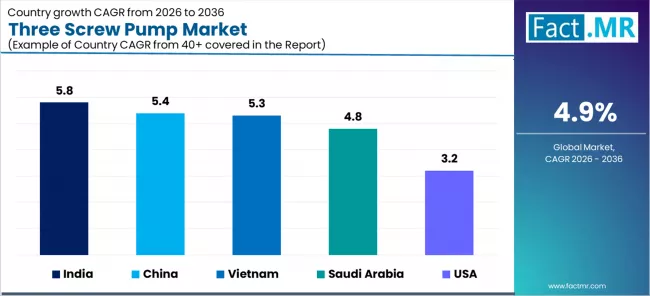
India’s three screw pump market is projected to grow at a CAGR of 5.8% from 2026 to 2036. As India continues to expand its industrial base, particularly in the oil and gas, chemical, and water treatment industries, the demand for three screw pumps is increasing. These pumps are essential for handling high-viscosity fluids and providing efficient, smooth flow in various applications. India’s growing industrial demand, coupled with government initiatives aimed at enhancing industrial efficiency and sustainability, will drive steady growth in the three screw pump market. As industries continue to modernize and improve their operational efficiency, demand for these pumps is expected to rise.
How is the Three Screw Pump Market Performing in China?
China’s three screw pump market is expected to grow at a CAGR of 5.4% from 2026 to 2036. With China’s ongoing industrialization and focus on upgrading its oil and gas, chemical, and water management sectors, the demand for three screw pumps is steadily increasing. These pumps are particularly valued for their ability to efficiently transport high-viscosity fluids and maintain stable performance. As China strengthens its manufacturing capabilities and shifts toward more energy-efficient, high-performance technologies, the market for three screw pumps will continue to grow, driven by both domestic and export demand.
What is the Market Outlook for Three Screw Pump Market in Vietnam?
Vietnam’s three screw pump market is projected to grow at a CAGR of 5.3% from 2026 to 2036. As Vietnam’s industrial sector continues to develop, particularly in oil and gas, water treatment, and chemicals, the demand for three screw pumps is rising. These pumps are essential for high-efficiency fluid transfer in industries where precise flow control is critical. Vietnam’s increasing focus on modernizing its industrial infrastructure, along with growing demand for sustainable and efficient solutions, will drive market growth. As the country focuses on improving its industrial output and sustainability, the three screw pump market will continue to expand steadily.
What is the Growth Potential for Three Screw Pump Market in Saudi Arabia?
Saudi Arabia’s three screw pump market is forecast to grow at a CAGR of 4.8% from 2026 to 2036. As a major player in the global oil and gas industry, Saudi Arabia’s demand for reliable and efficient pumping solutions, including three screw pumps, remains strong. These pumps are essential for handling high-viscosity fluids in the oil and gas sector, making them crucial for maintaining operational efficiency. As Saudi Arabia continues to invest in industrial infrastructure and diversifies its economy, the market for three screw pumps will grow steadily, supported by the ongoing need for high-performance fluid transfer systems in its key industries.
What is the Demand for Three Screw Pump Market in the USA?
The USA’s three screw pump market is set to grow at a CAGR of 3.2% from 2026 to 2036. Despite a slower growth rate compared to other regions, the demand for three screw pumps in the USA remains steady due to their essential role in industries like oil and gas, water treatment, and chemicals. These pumps are valued for their ability to provide precise flow control and efficiently transfer high-viscosity fluids. As the USA continues to focus on improving the efficiency and sustainability of its industrial systems, the market for three screw pumps will grow at a moderate pace, driven by the need for high-quality and reliable fluid transfer solutions.
How is Competition Structured in the Three Screw Pump Market?
Competition in the three screw pump market is defined by engineering precision, flow stability, and suitability for viscous and shear sensitive fluids. CIRCOR (IMO/Allweiler) and Leistritz Pumpen are positioned with robust designs that support continuous duty in refining and chemical transfer applications. KRAL and Settima emphasize low pulsation performance and tight clearances for metering and lubrication systems. SPX FLOW (Johnson Pump) and DESMI compete with integrated package solutions that include service support and aftermarket kits.
Flowserve and Colfax Fluid Handling (legacy brands) leverage broad industrial portfolios and global service networks. Tianjin Pump Machinery Group and Houttuin position offerings with cost competitive units for regional markets. Differentiation is shaped by efficiency, ease of maintenance, and documented reliability under varied operating conditions. Buyers assess suppliers on performance data, parts availability, and lifecycle support.
Key Players of the Three Screw Pump Market
- CIRCOR (IMO/Allweiler)
- Leistritz Pumpen
- KRAL
- Settima
- SPX FLOW (Johnson Pump)
- DESMI
- Flowserve
- Colfax Fluid Handling (legacy brands)
- Tianjin Pump Machinery Group
- Houttuin
Scope of the Report
| Items | Values |
|---|---|
| Quantitative Units (2026) | USD Million |
| Application | Lubrication Systems, Fuel Oil Transfer, Hydraulics, Marine and Offshore, Chemical Processing |
| Capacity Range | Up to 50 m³/h, 50–200 m³/h, Above 200 m³/h, Other |
| End Use | Marine, Oil and Gas, Power Generation, Industrial Machinery, Chemicals |
| Regions Covered | North America, Europe, Asia Pacific, Latin America, Middle East & Africa |
| Countries Covered | United States, Canada, Mexico, Brazil, Germany, United Kingdom, France, Italy, Spain, China, Japan, South Korea, India, Australia & New Zealand |
| Key Companies Profiled | CIRCOR (IMO/Allweiler), Leistritz Pumpen, KRAL, Settima, SPX FLOW (Johnson Pump), DESMI, Flowserve, Colfax Fluid Handling (legacy brands), Tianjin Pump Machinery Group, Houttuin |
| Additional Attributes | Dollar revenue by application, capacity range, and end use; regional demand trends, competitive landscape, technological advancements in three screw pump technology, and innovations in pumping systems for various industries |
Three Screw Pump Market Key Segments
-
Application :
- Lubrication Systems
- Fuel Oil Transfer
- Hydraulics
- Marine and Offshore
- Chemical Processing
-
Capacity Range :
- Up to 50 m³/h
- 50–200 m³/h
- Above 200 m³/h
- Other
-
End Use :
- Marine
- Oil and Gas
- Power Generation
- Industrial Machinery
- Chemicals
-
Region :
-
North America
- USA
- Canada
- Mexico
-
Europe
- Germany
- UK
- France
- Italy
- Spain
- Nordic Countries
- BENELUX
- Rest of Europe
-
Asia Pacific
- China
- Japan
- South Korea
- India
- Australia
- Rest of Asia Pacific
-
Latin America
- Brazil
- Argentina
- Rest of Latin America
-
Middle East and Africa
- Kingdom of Saudi Arabia
- United Arab Emirates
- South Africa
- Rest of Middle East and Africa
-
Other Regions
- Oceania
- Central Asia
- Other Markets
-
Bibliographies
- Kemai Pumps. (n.d.). Three screw pumps for industrial fluid transfer.
- DESMI. (n.d.). Triple screw pumps (K Series) technical overview.
- European Commission. (2024). Energy efficiency and equipment reliability requirements in industrial fluid handling systems. EU Publications.
- American Petroleum Institute. (2024). API 676: Positive displacement pumps. Rotary. API Publishing.
Table of Content
- Executive Summary
- Global Market Outlook
- Demand to side Trends
- Supply to side Trends
- Technology Roadmap Analysis
- Analysis and Recommendations
- Market Overview
- Market Coverage / Taxonomy
- Market Definition / Scope / Limitations
- Market Background
- Market Dynamics
- Drivers
- Restraints
- Opportunity
- Trends
- Scenario Forecast
- Demand in Optimistic Scenario
- Demand in Likely Scenario
- Demand in Conservative Scenario
- Opportunity Map Analysis
- Product Life Cycle Analysis
- Supply Chain Analysis
- Investment Feasibility Matrix
- Value Chain Analysis
- PESTLE and Porter’s Analysis
- Regulatory Landscape
- Regional Parent Market Outlook
- Production and Consumption Statistics
- Import and Export Statistics
- Market Dynamics
- Global Market Analysis 2021 to 2025 and Forecast, 2026 to 2036
- Historical Market Size Value (USD Million) Analysis, 2021 to 2025
- Current and Future Market Size Value (USD Million) Projections, 2026 to 2036
- Y to o to Y Growth Trend Analysis
- Absolute $ Opportunity Analysis
- Global Market Pricing Analysis 2021 to 2025 and Forecast 2026 to 2036
- Global Market Analysis 2021 to 2025 and Forecast 2026 to 2036, By Application
- Introduction / Key Findings
- Historical Market Size Value (USD Million) Analysis By Application, 2021 to 2025
- Current and Future Market Size Value (USD Million) Analysis and Forecast By Application, 2026 to 2036
- Lubrication Systems
- Fuel Oil Transfer
- Hydraulics
- Marine and Offshore
- Chemical Processing
- Lubrication Systems
- Y to o to Y Growth Trend Analysis By Application, 2021 to 2025
- Absolute $ Opportunity Analysis By Application, 2026 to 2036
- Global Market Analysis 2021 to 2025 and Forecast 2026 to 2036, By Capacity Range
- Introduction / Key Findings
- Historical Market Size Value (USD Million) Analysis By Capacity Range, 2021 to 2025
- Current and Future Market Size Value (USD Million) Analysis and Forecast By Capacity Range, 2026 to 2036
- Up to 50 m³/h
- 50–200 m³/h
- Above 200 m³/h
- Other
- Up to 50 m³/h
- Y to o to Y Growth Trend Analysis By Capacity Range, 2021 to 2025
- Absolute $ Opportunity Analysis By Capacity Range, 2026 to 2036
- Global Market Analysis 2021 to 2025 and Forecast 2026 to 2036, By End Use
- Introduction / Key Findings
- Historical Market Size Value (USD Million) Analysis By End Use, 2021 to 2025
- Current and Future Market Size Value (USD Million) Analysis and Forecast By End Use, 2026 to 2036
- Marine
- Oil and Gas
- Power Generation
- Industrial Machinery
- Chemicals
- Marine
- Y to o to Y Growth Trend Analysis By End Use, 2021 to 2025
- Absolute $ Opportunity Analysis By End Use, 2026 to 2036
- Global Market Analysis 2021 to 2025 and Forecast 2026 to 2036, By Region
- Introduction
- Historical Market Size Value (USD Million) Analysis By Region, 2021 to 2025
- Current Market Size Value (USD Million) Analysis and Forecast By Region, 2026 to 2036
- North America
- Latin America
- Western Europe
- Eastern Europe
- East Asia
- South Asia and Pacific
- Middle East & Africa
- Market Attractiveness Analysis By Region
- North America Market Analysis 2021 to 2025 and Forecast 2026 to 2036, By Country
- Historical Market Size Value (USD Million) Trend Analysis By Market Taxonomy, 2021 to 2025
- Market Size Value (USD Million) Forecast By Market Taxonomy, 2026 to 2036
- By Country
- USA
- Canada
- Mexico
- By Application
- By Capacity Range
- By End Use
- By Country
- Market Attractiveness Analysis
- By Country
- By Application
- By Capacity Range
- By End Use
- Key Takeaways
- Latin America Market Analysis 2021 to 2025 and Forecast 2026 to 2036, By Country
- Historical Market Size Value (USD Million) Trend Analysis By Market Taxonomy, 2021 to 2025
- Market Size Value (USD Million) Forecast By Market Taxonomy, 2026 to 2036
- By Country
- Brazil
- Chile
- Rest of Latin America
- By Application
- By Capacity Range
- By End Use
- By Country
- Market Attractiveness Analysis
- By Country
- By Application
- By Capacity Range
- By End Use
- Key Takeaways
- Western Europe Market Analysis 2021 to 2025 and Forecast 2026 to 2036, By Country
- Historical Market Size Value (USD Million) Trend Analysis By Market Taxonomy, 2021 to 2025
- Market Size Value (USD Million) Forecast By Market Taxonomy, 2026 to 2036
- By Country
- Germany
- UK
- Italy
- Spain
- France
- Nordic
- BENELUX
- Rest of Western Europe
- By Application
- By Capacity Range
- By End Use
- By Country
- Market Attractiveness Analysis
- By Country
- By Application
- By Capacity Range
- By End Use
- Key Takeaways
- Eastern Europe Market Analysis 2021 to 2025 and Forecast 2026 to 2036, By Country
- Historical Market Size Value (USD Million) Trend Analysis By Market Taxonomy, 2021 to 2025
- Market Size Value (USD Million) Forecast By Market Taxonomy, 2026 to 2036
- By Country
- Russia
- Poland
- Hungary
- Balkan & Baltic
- Rest of Eastern Europe
- By Application
- By Capacity Range
- By End Use
- By Country
- Market Attractiveness Analysis
- By Country
- By Application
- By Capacity Range
- By End Use
- Key Takeaways
- East Asia Market Analysis 2021 to 2025 and Forecast 2026 to 2036, By Country
- Historical Market Size Value (USD Million) Trend Analysis By Market Taxonomy, 2021 to 2025
- Market Size Value (USD Million) Forecast By Market Taxonomy, 2026 to 2036
- By Country
- China
- Japan
- South Korea
- By Application
- By Capacity Range
- By End Use
- By Country
- Market Attractiveness Analysis
- By Country
- By Application
- By Capacity Range
- By End Use
- Key Takeaways
- South Asia and Pacific Market Analysis 2021 to 2025 and Forecast 2026 to 2036, By Country
- Historical Market Size Value (USD Million) Trend Analysis By Market Taxonomy, 2021 to 2025
- Market Size Value (USD Million) Forecast By Market Taxonomy, 2026 to 2036
- By Country
- India
- ASEAN
- Australia & New Zealand
- Rest of South Asia and Pacific
- By Application
- By Capacity Range
- By End Use
- By Country
- Market Attractiveness Analysis
- By Country
- By Application
- By Capacity Range
- By End Use
- Key Takeaways
- Middle East & Africa Market Analysis 2021 to 2025 and Forecast 2026 to 2036, By Country
- Historical Market Size Value (USD Million) Trend Analysis By Market Taxonomy, 2021 to 2025
- Market Size Value (USD Million) Forecast By Market Taxonomy, 2026 to 2036
- By Country
- Kingdom of Saudi Arabia
- Other GCC Countries
- Turkiye
- South Africa
- Other African Union
- Rest of Middle East & Africa
- By Application
- By Capacity Range
- By End Use
- By Country
- Market Attractiveness Analysis
- By Country
- By Application
- By Capacity Range
- By End Use
- Key Takeaways
- Key Countries Market Analysis
- USA
- Pricing Analysis
- Market Share Analysis, 2025
- By Application
- By Capacity Range
- By End Use
- Canada
- Pricing Analysis
- Market Share Analysis, 2025
- By Application
- By Capacity Range
- By End Use
- Mexico
- Pricing Analysis
- Market Share Analysis, 2025
- By Application
- By Capacity Range
- By End Use
- Brazil
- Pricing Analysis
- Market Share Analysis, 2025
- By Application
- By Capacity Range
- By End Use
- Chile
- Pricing Analysis
- Market Share Analysis, 2025
- By Application
- By Capacity Range
- By End Use
- Germany
- Pricing Analysis
- Market Share Analysis, 2025
- By Application
- By Capacity Range
- By End Use
- UK
- Pricing Analysis
- Market Share Analysis, 2025
- By Application
- By Capacity Range
- By End Use
- Italy
- Pricing Analysis
- Market Share Analysis, 2025
- By Application
- By Capacity Range
- By End Use
- Spain
- Pricing Analysis
- Market Share Analysis, 2025
- By Application
- By Capacity Range
- By End Use
- France
- Pricing Analysis
- Market Share Analysis, 2025
- By Application
- By Capacity Range
- By End Use
- India
- Pricing Analysis
- Market Share Analysis, 2025
- By Application
- By Capacity Range
- By End Use
- ASEAN
- Pricing Analysis
- Market Share Analysis, 2025
- By Application
- By Capacity Range
- By End Use
- Australia & New Zealand
- Pricing Analysis
- Market Share Analysis, 2025
- By Application
- By Capacity Range
- By End Use
- China
- Pricing Analysis
- Market Share Analysis, 2025
- By Application
- By Capacity Range
- By End Use
- Japan
- Pricing Analysis
- Market Share Analysis, 2025
- By Application
- By Capacity Range
- By End Use
- South Korea
- Pricing Analysis
- Market Share Analysis, 2025
- By Application
- By Capacity Range
- By End Use
- Russia
- Pricing Analysis
- Market Share Analysis, 2025
- By Application
- By Capacity Range
- By End Use
- Poland
- Pricing Analysis
- Market Share Analysis, 2025
- By Application
- By Capacity Range
- By End Use
- Hungary
- Pricing Analysis
- Market Share Analysis, 2025
- By Application
- By Capacity Range
- By End Use
- Kingdom of Saudi Arabia
- Pricing Analysis
- Market Share Analysis, 2025
- By Application
- By Capacity Range
- By End Use
- Turkiye
- Pricing Analysis
- Market Share Analysis, 2025
- By Application
- By Capacity Range
- By End Use
- South Africa
- Pricing Analysis
- Market Share Analysis, 2025
- By Application
- By Capacity Range
- By End Use
- USA
- Market Structure Analysis
- Competition Dashboard
- Competition Benchmarking
- Market Share Analysis of Top Players
- By Regional
- By Application
- By Capacity Range
- By End Use
- Competition Analysis
- Competition Deep Dive
- CIRCOR (IMO/Allweiler)
- Overview
- Product Portfolio
- Profitability by Market Segments (Product/Age /Sales Channel/Region)
- Sales Footprint
- Strategy Overview
- Marketing Strategy
- Product Strategy
- Channel Strategy
- Leistritz Pumpen
- KRAL
- Settima
- SPX FLOW (Johnson Pump)
- DESMI
- Flowserve
- Colfax Fluid Handling (legacy brands)
- Tianjin Pump Machinery Group
- Houttuin
- CIRCOR (IMO/Allweiler)
- Competition Deep Dive
- Assumptions & Acronyms Used
- Research Methodology
List Of Table
- Table 1: Global Market Value (USD Million) Forecast by Region, 2021 to 2036
- Table 2: Global Market Value (USD Million) Forecast by Application, 2021 to 2036
- Table 3: Global Market Value (USD Million) Forecast by Capacity Range, 2021 to 2036
- Table 4: Global Market Value (USD Million) Forecast by End Use, 2021 to 2036
- Table 5: North America Market Value (USD Million) Forecast by Country, 2021 to 2036
- Table 6: North America Market Value (USD Million) Forecast by Application, 2021 to 2036
- Table 7: North America Market Value (USD Million) Forecast by Capacity Range, 2021 to 2036
- Table 8: North America Market Value (USD Million) Forecast by End Use, 2021 to 2036
- Table 9: Latin America Market Value (USD Million) Forecast by Country, 2021 to 2036
- Table 10: Latin America Market Value (USD Million) Forecast by Application, 2021 to 2036
- Table 11: Latin America Market Value (USD Million) Forecast by Capacity Range, 2021 to 2036
- Table 12: Latin America Market Value (USD Million) Forecast by End Use, 2021 to 2036
- Table 13: Western Europe Market Value (USD Million) Forecast by Country, 2021 to 2036
- Table 14: Western Europe Market Value (USD Million) Forecast by Application, 2021 to 2036
- Table 15: Western Europe Market Value (USD Million) Forecast by Capacity Range, 2021 to 2036
- Table 16: Western Europe Market Value (USD Million) Forecast by End Use, 2021 to 2036
- Table 17: Eastern Europe Market Value (USD Million) Forecast by Country, 2021 to 2036
- Table 18: Eastern Europe Market Value (USD Million) Forecast by Application, 2021 to 2036
- Table 19: Eastern Europe Market Value (USD Million) Forecast by Capacity Range, 2021 to 2036
- Table 20: Eastern Europe Market Value (USD Million) Forecast by End Use, 2021 to 2036
- Table 21: East Asia Market Value (USD Million) Forecast by Country, 2021 to 2036
- Table 22: East Asia Market Value (USD Million) Forecast by Application, 2021 to 2036
- Table 23: East Asia Market Value (USD Million) Forecast by Capacity Range, 2021 to 2036
- Table 24: East Asia Market Value (USD Million) Forecast by End Use, 2021 to 2036
- Table 25: South Asia and Pacific Market Value (USD Million) Forecast by Country, 2021 to 2036
- Table 26: South Asia and Pacific Market Value (USD Million) Forecast by Application, 2021 to 2036
- Table 27: South Asia and Pacific Market Value (USD Million) Forecast by Capacity Range, 2021 to 2036
- Table 28: South Asia and Pacific Market Value (USD Million) Forecast by End Use, 2021 to 2036
- Table 29: Middle East & Africa Market Value (USD Million) Forecast by Country, 2021 to 2036
- Table 30: Middle East & Africa Market Value (USD Million) Forecast by Application, 2021 to 2036
- Table 31: Middle East & Africa Market Value (USD Million) Forecast by Capacity Range, 2021 to 2036
- Table 32: Middle East & Africa Market Value (USD Million) Forecast by End Use, 2021 to 2036
List Of Figures
- Figure 1: Global Market Pricing Analysis
- Figure 2: Global Market Value (USD Million) Forecast 2021 to 2036
- Figure 3: Global Market Value Share and BPS Analysis by Application, 2026 and 2036
- Figure 4: Global Market Y to o to Y Growth Comparison by Application, 2026 to 2036
- Figure 5: Global Market Attractiveness Analysis by Application
- Figure 6: Global Market Value Share and BPS Analysis by Capacity Range, 2026 and 2036
- Figure 7: Global Market Y to o to Y Growth Comparison by Capacity Range, 2026 to 2036
- Figure 8: Global Market Attractiveness Analysis by Capacity Range
- Figure 9: Global Market Value Share and BPS Analysis by End Use, 2026 and 2036
- Figure 10: Global Market Y to o to Y Growth Comparison by End Use, 2026 to 2036
- Figure 11: Global Market Attractiveness Analysis by End Use
- Figure 12: Global Market Value (USD Million) Share and BPS Analysis by Region, 2026 and 2036
- Figure 13: Global Market Y to o to Y Growth Comparison by Region, 2026 to 2036
- Figure 14: Global Market Attractiveness Analysis by Region
- Figure 15: North America Market Incremental Dollar Opportunity, 2026 to 2036
- Figure 16: Latin America Market Incremental Dollar Opportunity, 2026 to 2036
- Figure 17: Western Europe Market Incremental Dollar Opportunity, 2026 to 2036
- Figure 18: Eastern Europe Market Incremental Dollar Opportunity, 2026 to 2036
- Figure 19: East Asia Market Incremental Dollar Opportunity, 2026 to 2036
- Figure 20: South Asia and Pacific Market Incremental Dollar Opportunity, 2026 to 2036
- Figure 21: Middle East & Africa Market Incremental Dollar Opportunity, 2026 to 2036
- Figure 22: North America Market Value Share and BPS Analysis by Country, 2026 and 2036
- Figure 23: North America Market Value Share and BPS Analysis by Application, 2026 and 2036
- Figure 24: North America Market Y to o to Y Growth Comparison by Application, 2026 to 2036
- Figure 25: North America Market Attractiveness Analysis by Application
- Figure 26: North America Market Value Share and BPS Analysis by Capacity Range, 2026 and 2036
- Figure 27: North America Market Y to o to Y Growth Comparison by Capacity Range, 2026 to 2036
- Figure 28: North America Market Attractiveness Analysis by Capacity Range
- Figure 29: North America Market Value Share and BPS Analysis by End Use, 2026 and 2036
- Figure 30: North America Market Y to o to Y Growth Comparison by End Use, 2026 to 2036
- Figure 31: North America Market Attractiveness Analysis by End Use
- Figure 32: Latin America Market Value Share and BPS Analysis by Country, 2026 and 2036
- Figure 33: Latin America Market Value Share and BPS Analysis by Application, 2026 and 2036
- Figure 34: Latin America Market Y to o to Y Growth Comparison by Application, 2026 to 2036
- Figure 35: Latin America Market Attractiveness Analysis by Application
- Figure 36: Latin America Market Value Share and BPS Analysis by Capacity Range, 2026 and 2036
- Figure 37: Latin America Market Y to o to Y Growth Comparison by Capacity Range, 2026 to 2036
- Figure 38: Latin America Market Attractiveness Analysis by Capacity Range
- Figure 39: Latin America Market Value Share and BPS Analysis by End Use, 2026 and 2036
- Figure 40: Latin America Market Y to o to Y Growth Comparison by End Use, 2026 to 2036
- Figure 41: Latin America Market Attractiveness Analysis by End Use
- Figure 42: Western Europe Market Value Share and BPS Analysis by Country, 2026 and 2036
- Figure 43: Western Europe Market Value Share and BPS Analysis by Application, 2026 and 2036
- Figure 44: Western Europe Market Y to o to Y Growth Comparison by Application, 2026 to 2036
- Figure 45: Western Europe Market Attractiveness Analysis by Application
- Figure 46: Western Europe Market Value Share and BPS Analysis by Capacity Range, 2026 and 2036
- Figure 47: Western Europe Market Y to o to Y Growth Comparison by Capacity Range, 2026 to 2036
- Figure 48: Western Europe Market Attractiveness Analysis by Capacity Range
- Figure 49: Western Europe Market Value Share and BPS Analysis by End Use, 2026 and 2036
- Figure 50: Western Europe Market Y to o to Y Growth Comparison by End Use, 2026 to 2036
- Figure 51: Western Europe Market Attractiveness Analysis by End Use
- Figure 52: Eastern Europe Market Value Share and BPS Analysis by Country, 2026 and 2036
- Figure 53: Eastern Europe Market Value Share and BPS Analysis by Application, 2026 and 2036
- Figure 54: Eastern Europe Market Y to o to Y Growth Comparison by Application, 2026 to 2036
- Figure 55: Eastern Europe Market Attractiveness Analysis by Application
- Figure 56: Eastern Europe Market Value Share and BPS Analysis by Capacity Range, 2026 and 2036
- Figure 57: Eastern Europe Market Y to o to Y Growth Comparison by Capacity Range, 2026 to 2036
- Figure 58: Eastern Europe Market Attractiveness Analysis by Capacity Range
- Figure 59: Eastern Europe Market Value Share and BPS Analysis by End Use, 2026 and 2036
- Figure 60: Eastern Europe Market Y to o to Y Growth Comparison by End Use, 2026 to 2036
- Figure 61: Eastern Europe Market Attractiveness Analysis by End Use
- Figure 62: East Asia Market Value Share and BPS Analysis by Country, 2026 and 2036
- Figure 63: East Asia Market Value Share and BPS Analysis by Application, 2026 and 2036
- Figure 64: East Asia Market Y to o to Y Growth Comparison by Application, 2026 to 2036
- Figure 65: East Asia Market Attractiveness Analysis by Application
- Figure 66: East Asia Market Value Share and BPS Analysis by Capacity Range, 2026 and 2036
- Figure 67: East Asia Market Y to o to Y Growth Comparison by Capacity Range, 2026 to 2036
- Figure 68: East Asia Market Attractiveness Analysis by Capacity Range
- Figure 69: East Asia Market Value Share and BPS Analysis by End Use, 2026 and 2036
- Figure 70: East Asia Market Y to o to Y Growth Comparison by End Use, 2026 to 2036
- Figure 71: East Asia Market Attractiveness Analysis by End Use
- Figure 72: South Asia and Pacific Market Value Share and BPS Analysis by Country, 2026 and 2036
- Figure 73: South Asia and Pacific Market Value Share and BPS Analysis by Application, 2026 and 2036
- Figure 74: South Asia and Pacific Market Y to o to Y Growth Comparison by Application, 2026 to 2036
- Figure 75: South Asia and Pacific Market Attractiveness Analysis by Application
- Figure 76: South Asia and Pacific Market Value Share and BPS Analysis by Capacity Range, 2026 and 2036
- Figure 77: South Asia and Pacific Market Y to o to Y Growth Comparison by Capacity Range, 2026 to 2036
- Figure 78: South Asia and Pacific Market Attractiveness Analysis by Capacity Range
- Figure 79: South Asia and Pacific Market Value Share and BPS Analysis by End Use, 2026 and 2036
- Figure 80: South Asia and Pacific Market Y to o to Y Growth Comparison by End Use, 2026 to 2036
- Figure 81: South Asia and Pacific Market Attractiveness Analysis by End Use
- Figure 82: Middle East & Africa Market Value Share and BPS Analysis by Country, 2026 and 2036
- Figure 83: Middle East & Africa Market Value Share and BPS Analysis by Application, 2026 and 2036
- Figure 84: Middle East & Africa Market Y to o to Y Growth Comparison by Application, 2026 to 2036
- Figure 85: Middle East & Africa Market Attractiveness Analysis by Application
- Figure 86: Middle East & Africa Market Value Share and BPS Analysis by Capacity Range, 2026 and 2036
- Figure 87: Middle East & Africa Market Y to o to Y Growth Comparison by Capacity Range, 2026 to 2036
- Figure 88: Middle East & Africa Market Attractiveness Analysis by Capacity Range
- Figure 89: Middle East & Africa Market Value Share and BPS Analysis by End Use, 2026 and 2036
- Figure 90: Middle East & Africa Market Y to o to Y Growth Comparison by End Use, 2026 to 2036
- Figure 91: Middle East & Africa Market Attractiveness Analysis by End Use
- Figure 92: Global Market - Tier Structure Analysis
- Figure 93: Global Market - Company Share Analysis
- FAQs -
How big is the three screw pump market in 2026?
The global three screw pump market is estimated to be valued at USD 820.0 million in 2026.
What will be the size of three screw pump market in 2036?
The market size for the three screw pump market is projected to reach USD 1,323.0 million by 2036.
How much will be the three screw pump market growth between 2026 and 2036?
The three screw pump market is expected to grow at a 4.9% CAGR between 2026 and 2036.
What are the key product types in the three screw pump market?
The key product types in three screw pump market are lubrication systems, fuel oil transfer, hydraulics, marine and offshore and chemical processing.
Which capacity range segment to contribute significant share in the three screw pump market in 2026?
In terms of capacity range, up to 50 m³/h segment to command 38.0% share in the three screw pump market in 2026.