- Base Value(2025): 115.0 Mn
- Estimated Value(2026): 118.8 Mn
- Forecast Value (2036): 164.4 Mn
- CAGR (2026 - 2036): 3.30%
Demand for Automotive Injector Nozzle in UK Size, Market Forecast and Outlook By Fact.MR
The demand for automotive injector nozzle in uk was valued at USD 115.0 million in 2025, projected to reach USD 118.8 million in 2026, and is forecast to expand to USD 164.4 million by 2036 at a 3.30% CAGR. Tightening Euro 7 emission standards requiring precise fuel metering for real-driving emission compliance sustain OEM demand for high-precision piezo-electric injector nozzles capable of multiple injection events per combustion cycle. The aging UK ICE vehicle parc generates aftermarket replacement demand as injector nozzles degrade from deposit buildup and wear after 80,000 to 150,000 miles of operation.
The absolute dollar opportunity between 2026 and 2036 amounts to approximately USD 45.56 million. Growth is moderate, reflecting the mature ICE vehicle segment where demand is sustained by replacement cycles rather than fleet expansion. Piezo-electric nozzles lead because their faster response times enable the precise multi-pulse injection strategies required for Euro 7 gasoline and diesel emission compliance. As per Fact.MR analysis, the OEM channel commands the majority share because each new ICE vehicle requires 3 to 8 injector nozzles depending on cylinder count, creating a baseline demand floor tied to UK vehicle production volumes.
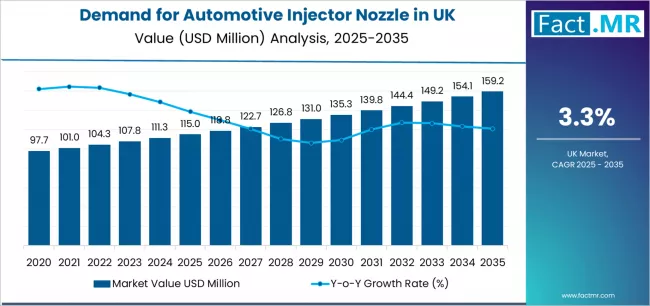
Demand For Automotive Injector Nozzle In Uk Market Value Analysis | Source: Fact.MR
Demand for Automotive Injector Nozzle in UK Key Takeaways
| Metric | Details |
|---|---|
| Industry Size (2026) | USD 118.8 million |
| Industry Value (2036) | USD 164.4 million |
| CAGR (2026 to 2036) | 3.30% |
Source: Fact.MR analysis. Updated Mar 26, 2026
The UK market is projected to grow at a 3.3% CAGR during 2026 to 2036, sustained by Euro 7 compliance-driven injector specification upgrades and aftermarket replacement demand from the existing ICE vehicle fleet.
Summary of Demand for Automotive Injector Nozzle in UK
- Demand for Automotive Injector Nozzle in UK Definition
- Automotive injector nozzles in the UK are precision fuel atomization components using piezo-electric or solenoid actuation to deliver metered fuel into combustion chambers, with demand sustained by emission compliance specifications and fleet replacement cycles.
- Demand Drivers
- Euro 7 emission standards requiring precise multi-pulse fuel injection for real-driving emission compliance drive OEM specification upgrades toward piezo-electric nozzles with sub-millisecond response times.
- The aging UK ICE vehicle fleet generates aftermarket injector nozzle replacement demand as deposit buildup and mechanical wear degrade spray pattern quality after 80,000 to 150,000 miles.
- Gasoline direct injection adoption across the UK new vehicle fleet increases the per-vehicle injector nozzle content and specification complexity compared to older port injection systems.
- Key Segments Analyzed in the Fact.MR Report
- Piezo-electric Injector Nozzles: 58.5% share in 2026.
- Gasoline Vehicles: 62.3% share in 2026.
- UK: 3.3% compound growth.
- Analyst Opinion at Fact.MR
- The UK automotive injector nozzle market is a precision component category where demand is split between OEM new vehicle production and aftermarket replacement of degraded nozzles in the existing fleet. Piezo-electric technology dominates new vehicle specifications because its faster actuation speed enables the multiple injection events per cycle that Euro 7 calibration strategies require for simultaneous NOx and particulate reduction. The OEM channel retains the majority share, but the aftermarket segment provides higher per-unit margins because replacement nozzles are sold at retail pricing rather than OEM contract pricing. The long-term demand trajectory will decline as EV penetration reduces UK ICE vehicle production, but the large installed ICE fleet will sustain aftermarket replacement demand for at least 15 to 20 years.
- Strategic Implications / Executive Takeaways
- Injector nozzle suppliers must maintain Euro 7 compliant piezo-electric product lines to retain OEM specification authority as UK manufacturers calibrate new engines to the tighter emission standards.
- Aftermarket distributors should stock both piezo-electric and solenoid nozzle variants to serve the full range of UK vehicles from modern GDI platforms to older port and common rail diesel systems.
- Manufacturers must plan for gradual OEM volume decline as UK EV adoption reduces ICE production, while investing in aftermarket channel development to capture the extended replacement demand tail.
Why is the UK Automotive Injector Nozzle Industry Growing?
Modern vehicle manufacturers and engine system integrators rely on precision automotive injector nozzles to ensure emissions compliance competitiveness, fuel economy improvement, and optimal performance achievement within stringent regulatory frameworks. Advanced propulsion requirements necessitate comprehensive fuel delivery solutions including specialized atomization capabilities, high-pressure tolerance, and deposit-resistant infrastructure to address diverse engine designs and environmental specifications.
Automotive OEMs and tier-1 suppliers are emphasizing advanced sourcing and integrated fuel system solutions to enhance vehicle performance profiles, access efficiency trends, and demonstrate engineering leadership in competitive global markets. Evolving emissions policies and corporate average fuel economy (CAFE) targets are establishing standardized technological pathways that require professional component engineering and performance assurance, with UK engineering centres and manufacturing plants pioneering implementation of next-generation injection technologies for hybrid and high-efficiency ICE platforms.
The UK automotive injector nozzle industry is shaped by Euro 7 emissions standards and UKCA marking regulations, which define stringent thresholds for particulate matter (PN), nitrogen oxides (NOx), and hydrocarbon (HC) emissions appropriate for the UK’s vehicle mix and testing cycles.
The Vehicle Certification Agency (VCA) oversight and Department for Transport (DfT) regulations reinforce manufacturer duties for system durability, emissions conformity, and on-road performance, ensuring alignment with real-world driving emissions (RDE) requirements and the operational profiles of UK passenger and commercial fleets.
Independent laboratory data published through UKAS-accredited testing facilities verifies nozzle flow rates, spray pattern consistency, and long-term durability against deposit formation, confirming the precision and reliability required for lifetime emissions compliance and efficient combustion across diverse fuel grades.
Segmental Analysis
The UK automotive injector nozzle industry is segmented by technology, application, and supply channel to provide a detailed understanding of demand drivers and market dynamics. By technology, the industry is divided into piezo-electric and solenoid injector nozzles, reflecting the core engineering approaches to fuel metering. In terms of application, the industry is segmented into gasoline and diesel vehicles, the two primary fuel pathways for internal combustion engines. By supply channel, the industry is divided into original equipment (OE) manufacturers and the independent aftermarket. Regionally, the market demand is distributed across England, Scotland, Wales, and Northern Ireland, each with distinct automotive sector characteristics.
This granular segmentation is critical for analyzing the complex interplay between regulatory pressure, technological advancement, and evolving vehicle parc composition. The shift towards high-efficiency, low-emission powertrains disproportionately benefits certain segments, while the enduring need to service millions of existing vehicles sustains others. Understanding these segments reveals the strategic focus of component manufacturers and the specific growth pockets within the broader market transition.
Why Does Piezo-Electric Technology Dominate the Technology Segment?
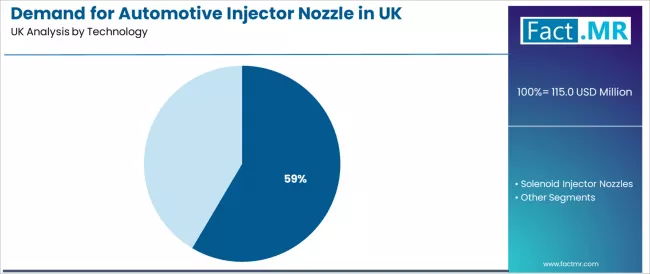
Demand For Automotive Injector Nozzle In Uk Analysis By Technology | Source: Fact.MR
The piezo-electric injector nozzle segment is projected to account for 58.5% of total demand by value in 2025, solidifying its position as the unequivocal leader in advanced fuel injection technology. This dominance is directly attributable to its superior technical capability to meet the exacting requirements of Euro 7 and future emissions standards. Unlike traditional solenoid valves, piezo-electric actuators offer exceptionally fast response times and the ability to execute multiple, precisely timed injection events per combustion cycle. This enables unparalleled control over the fuel-air mixture, optimizing combustion to minimize particulate matter and nitrogen oxide formation while extracting maximum energy from each drop of fuel.
The segment's leadership is further reinforced by its integral role in the latest generation of high-pressure direct injection systems for both diesel and gasoline engines, particularly in performance-oriented and premium vehicle segments. For diesel applications, piezo technology is essential for achieving the ultra-high injection pressures required for clean combustion. In gasoline direct injection (GDI) engines, it helps mitigate issues like particulate emissions and injector coking. The technology's higher initial cost is justified by its performance benefits and its necessity for OEMs to achieve fleet-wide emissions compliance, making it the preferred choice for new engine platforms designed for longevity under stringent regulations.
Growth in this segment is concentrated in England, home to the R&D and manufacturing centres of major OEMs and their supply chains. The demand is driven by the integration of piezo-electric nozzles in new hybrid electric vehicle (HEV) and plug-in hybrid electric vehicle (PHEV) models, where maximizing the efficiency of the ICE component is paramount to achieving overall vehicle emissions targets. Continuous innovation focuses on enhancing durability against fuel-borne contaminants, improving hydraulic efficiency, and refining the miniaturization of components to fit increasingly compact engine designs.
Why is the Gasoline Vehicle Application Segment the Largest?
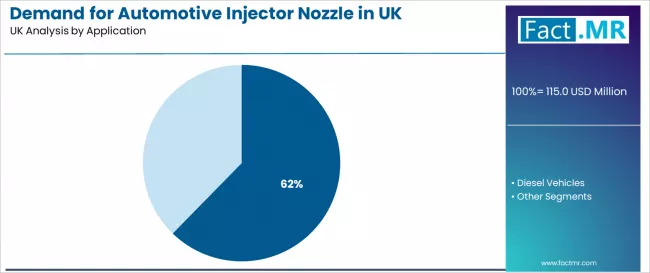
Demand For Automotive Injector Nozzle In Uk Analysis By Application | Source: Fact.MR
The gasoline vehicle application segment is expected to hold a commanding 62.3% share of total demand in 2025, reflecting the fundamental composition of the UK's passenger car fleet and ongoing technological trends. The high volume of gasoline-powered vehicles, both in new registrations and in the existing parc, creates a substantial baseline demand for replacement and service parts. Crucially, the widespread industry shift from port fuel injection to gasoline direct injection (GDI) has been a primary market accelerant, as GDI systems utilize more complex, high-pressure injector nozzles that are central to their efficiency and performance benefits.
This segment's strength is further underpinned by the strategic pivot of manufacturers towards gasoline-engine hybridization as a core transitional technology on the path to electrification. Mild-hybrid (MHEV) and full-hybrid (HEV) powertrains overwhelmingly use optimized gasoline engines as their internal combustion component. These engines demand injector nozzles capable of ultra-precise fuel delivery to manage frequent stop-start cycles and ensure seamless transitions between electric and ICE operation, driving demand for the latest nozzle technologies. The consumer preference for gasoline hybrids over diesel alternatives reinforces this trend.
Demand is strongest in England and Scotland, which have the highest concentrations of passenger vehicles and major dealership networks. The aftermarket component of this segment is exceptionally robust, as the growing population of aging GDI vehicles, prone to issues like injector clogging and carbon deposit buildup, generates continuous demand for cleaning, servicing, and replacement nozzles. This creates a dual-stream revenue flow: high-value, low-volume sales to OEMs for new models, and high-volume, competitive sales through the independent aftermarket for vehicle maintenance.
Why do OEMs Constitute the Leading Supply Channel?
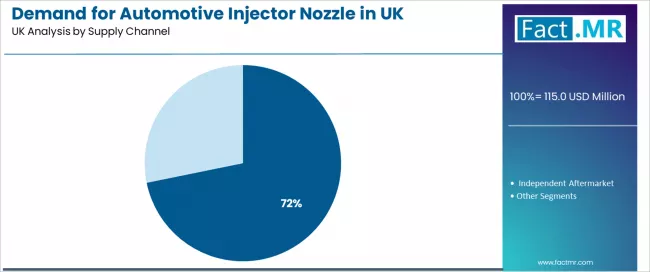
Demand For Automotive Injector Nozzle In Uk Analysis By Supply Channel | Source: Fact.MR
The original equipment manufacturer (OEM) supply channel constitutes the dominant route with a 71.8% share, a reflection of the highly technical, specification-driven nature of modern injector nozzles. The design, calibration, and manufacturing of injector nozzles are deeply integrated into the engine development process from its earliest stages. OE contracts are awarded based on rigorous performance, durability, and emissions testing over millions of cycles, creating formidable barriers to entry and establishing long-term, symbiotic relationships between automakers and a select group of tier-1 suppliers like Bosch, Denso, and Continental.
This channel's preeminence is fueled by the escalating value and complexity of each unit. The shift to piezo-electric technology and pressures exceeding 350 bar has transformed the injector nozzle from a simple mechanical component into a mechatronic precision instrument. The proprietary intellectual property, exacting manufacturing tolerances, and need for complete electronic integration with the engine control unit (ECU) ensure that most nozzles for new vehicles are sourced directly through these integrated OE supply chains. The commercial imperative for OEMs to guarantee emissions compliance for the legal lifetime of the vehicle further locks in this direct sourcing model.
The channel's dominance is most pronounced in England, where the manufacturing plants of major global automakers are located. These facilities operate on just-in-time principles, requiring reliable, high-volume supply of components that meet exact factory specifications. While the aftermarket channel is vital for the service sector, its share is constrained by the technical complexity of newer nozzles, which often require specialist coding and calibration equipment when replaced, a factor that still drives significant business back to OEM-approved networks and dealerships.
What are the Drivers, Restraints, and Key Trends in the UK Automotive Injector Nozzle Industry?
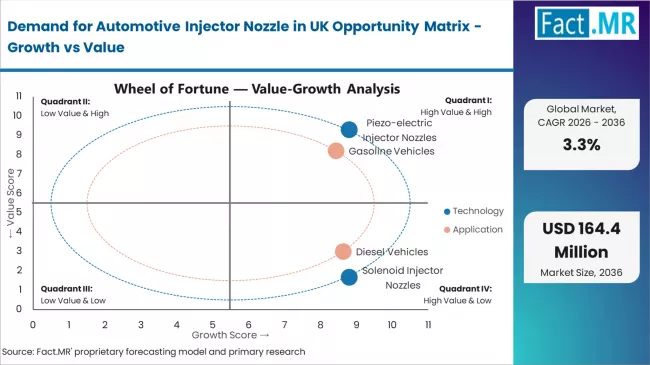
Demand For Automotive Injector Nozzle In Uk Opportunity Matrix Growth Vs Value | Source: Fact.MR
UK’s automotive injector nozzle demand is advancing steadily due to stringent emissions regulations and growing recognition of precision fuel delivery necessity for hybrid and high-efficiency engine development, with England serving as a key driver of innovation and advanced manufacturing.
The sector faces challenges including competition from full battery electric vehicles (BEVs), need for specialized R&D investment, and ongoing concerns regarding high unit costs and supply chain complexity. National emissions guidelines and regional-level automotive initiatives, particularly manufacturing and engineering programs in England and Scotland, continue to influence injector nozzle technology selection and adoption timelines.
Proliferation of Hybrid Electric Vehicle (HEV) Platforms
The sustained growth of hybrid electric vehicles, which maintain an internal combustion engine, provides a critical medium-term driver for the high-precision injector nozzle market. As the UK market transitions, hybrids represent a dominant transitional technology, requiring their ICE components to operate at peak efficiency to maximize electric range and reduce tailpipe emissions.
This necessitates injector nozzles capable of exceptional fuel atomization and rapid, precise response to manage frequent engine starts and stops. The engineering focus on optimizing the ICE within a hybrid powertrain creates a premium market for advanced nozzle technologies that contribute directly to the vehicle's overall environmental rating and performance, sustaining R&D and production investment despite the broader shift towards electrification.
Robust Aftermarket Demand from an Aging Vehicle Parc
The significant and growing population of vehicles aged over 10 years in the UK generates consistent, counter-cyclical demand for injector nozzles through the independent aftermarket. Older gasoline direct injection (GDI) and diesel common rail systems are prone to issues such as nozzle coking, clogging from fuel deposits, and general wear, which degrade performance and increase emissions.
This creates a substantial market for replacement, refurbishment, and cleaning services. The technical complexity of modern nozzles ensures that this demand supports a network of specialist suppliers and repair facilities, providing market stability that is partially insulated from the volatility of new vehicle production cycles and driven by vehicle Usage patterns and maintenance requirements.
Evolution in Fuel Quality and Biofuel Blends
Changing fuel specifications, including higher concentrations of bioethanol in gasoline (E10) and fatty acid methyl ester (FAME) in diesel, impose new material compatibility and performance demands on injector nozzles. These alternative fuel blends can have different lubricity, solvent properties, and combustion characteristics that may accelerate wear or deposit formation.
This evolution drives continuous innovation in nozzle materials, such as advanced steels and diamond-like carbon (DLC) coatings, and in design geometries that resist new forms of degradation. Compliance with evolving fuel standards therefore acts as a persistent driver for component upgrades and replacements, both in OEM designs for new vehicles and in the aftermarket for ensuring the longevity of existing fleets operating on modern fuel blends.
Incorporation of Precision Manufacturing and Advanced Material Science
Modern injector nozzle suppliers and automotive component companies are establishing advanced manufacturing networks and centralized quality management facilities that improve production consistency and performance validation through technical standardization. Integration of performance optimization systems, high-precision machining technologies, and coordinated supply chain management enables more efficient injector nozzle production across multiple OEM platforms.
Advanced manufacturing concepts also support next-generation engine applications including specialized coating integration, thermal management optimization, and regional just-in-time supply networks that optimize system-level economics while enabling comprehensive quality assurance across automotive regions, with UK engineering centres increasingly adopting collaborative research models with material science partners to reduce individual supplier development costs and accelerate product validation.
Analysis of UK Automotive Injector Nozzle Industry by Key Countries
.webp "Top Country Growth Comparison Demand For Automotive Injector Nozzle In Uk Cagr (2026 2036)")
Top Country Growth Comparison Demand For Automotive Injector Nozzle In Uk Cagr (2026 2036) | Source: Fact.MR
| Region | CAGR (2026 to 2036) |
|---|---|
| England | 3.5% |
| Scotland | 3.2% |
| Wales | 2.9% |
| Northern Ireland | 2.7% |
Source: Fact.MR analysis. Updated Mar 26, 2026
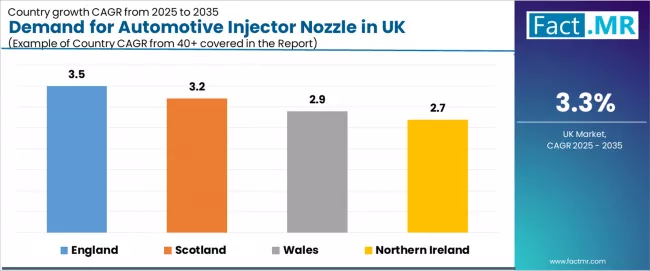
Demand For Automotive Injector Nozzle In Uk Cagr Analysis By Country | Source: Fact.MR
The UK automotive injector nozzle industry exhibits distinct regional growth patterns, shaped by the geographic concentration of OEM manufacturing, the density of the vehicle parc, and the presence of specialized engineering and aftermarket hubs. England leads the nation with a projected CAGR of 3.5%, reflecting its dominance in high-value manufacturing, R&D investment, and its central role in the hybrid vehicle production strategy of major automakers.
Scotland follows with a 3.2% CAGR, supported by a strong performance engineering sector and a robust independent aftermarket network. Wales grows at 2.9%, driven by key manufacturing sites and logistics hubs, while Northern Ireland demonstrates steady growth at 2.7%, anchored in its commercial vehicle sector and cross-border trade dynamics.
What Strategic Advantages Position England as the Dominant Growth Engine?
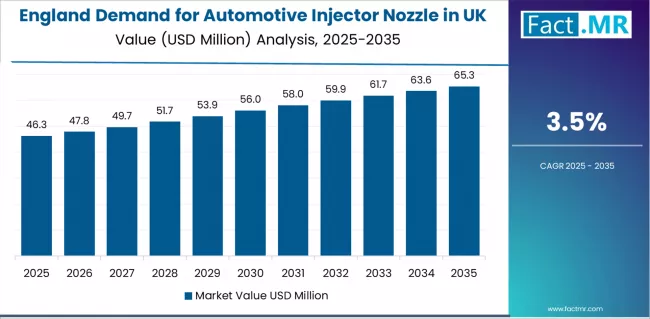
Demand For Automotive Injector Nozzle In Uk Country Value Analysis | Source: Fact.MR
Demand for automotive injector nozzles in England is projected to grow at a leading CAGR of 3.5% through 2036, driven by its unparalleled concentration of original equipment manufacturer (OEM) plants, tier-one supplier technical centres, and advanced engineering consultancies. The region hosts the majority of the UK's automotive manufacturing footprint, including key facilities for engines and powertrains that directly integrate the latest piezo-electric and high-pressure solenoid nozzle technologies. This proximity to point-of-installation creates a streamlined, just-in-time supply chain for OE components and fosters a competitive ecosystem for innovation, particularly in developing injectors for the next generation of hybridized petrol engines that will dominate the market until the 2036 ban.
England's growth is further underpinned by its status as the primary hub for the UK's automotive research and development landscape. Specialist clusters, such as the Midlands Engine and the Oxford-Cambridge Arc, facilitate collaborative projects between manufacturers, material scientists, and universities focused on injector durability, advanced atomization, and compatibility with sustainable fuels. This R&D intensity ensures that the region captures the highest-value segment of the market, the development and initial production of cutting-edge nozzle systems, which commands premium pricing and fosters long-term supply agreements. The density of vehicle ownership and a sophisticated network of franchised dealerships and specialist independents also guarantee that the aftermarket segment remains the largest and most technically advanced in the country.
The region's economic scale and infrastructure also support the most mature market for injector nozzle reconditioning and performance calibration services. High-performance vehicle specialists and emission-compliance testing centres, predominantly located in England, drive demand for both OE-specification replacements and bespoke, high-flow nozzle sets. This creates a diversified demand base that is resilient to fluctuations in new vehicle production, as the service and tuning sector thrives on the existing vehicle parc.
- OEM and Tier-1 Cluster: The concentration of vehicle and engine manufacturing plants creates direct, high-volume OE demand and drives local innovation cycles.
- R&D Leadership: Dominance in automotive research secures a leading role in developing high-margin, next-generation nozzle technologies for hybrid and efficiency-focused applications.
- Diversified Aftermarket: The largest and most technically sophisticated service network ensures robus, stable demand for replacement, recalibration, and performance components.
How does Scotland's Specialized Engineering Sector Fuel its Growth?
The automotive injector nozzle market in Scotland is forecast to grow at a CAGR of 3.2%, propelled by its significant niche in performance engineering, motorsport applications, and a strong independent aftermarket serving a dispersed vehicle population. Scotland's automotive strength lies not in volume manufacturing but in high-value, low-volume precision engineering and a thriving community of vehicle tuning specialists. This sector demands injector nozzles that are either precision-matched for high-performance applications or reliably service the diverse mix of vehicles in the national fleet, creating a demand profile oriented towards technical expertise and customization.
Key economic drivers include the presence of specialist engineering firms and motorsport teams that require custom-fueled solutions, often pushing the boundaries of injector flow rates and durability. This environment fosters a knowledgeable aftermarket that can service complex direct-injection systems, supporting demand for both new and refurbished premium components. Furthermore, major urban centres like Glasgow and Edinburgh host significant concentrations of modern vehicles, including company car fleets that are typically newer and equipped with advanced GDI or diesel systems, ensuring a steady stream of warranty and post-warranty service work requiring genuine or high-quality equivalent parts.
Scotland's growth is also supported by strategic logistics advantages, with major ports facilitating the import and distribution of aftermarket components. This infrastructure enables efficient service to both local demand and, in some cases, niche export markets for specialist components. The region's focus on a just-transition for engineering sectors also presents opportunities for injector nozzle applications in hybrid commercial vehicles and legacy fleet optimization, areas where precision fuel management is critical for reducing operational costs and emissions.
- Performance & Niche Engineering: A strong motorsport and tuning culture drives demand for custom and high-performance injector solutions, supporting a premium market segment.
- Technically Proficient Aftermarket: A network of skilled independents capable of servicing advanced injection systems sustains demand for quality replacement nozzles and calibration services.
- Strategic Logistics Hub: Port infrastructure supports efficient aftermarket parts distribution, catering to regional needs and niche export opportunities for specialized components.
What Factors Underpin the Steady Growth of the Industry in Wales?
Wales demonstrates steady growth for automotive injector nozzles at a CAGR of 2.9%, anchored by key manufacturing investments, a vital role in UK automotive logistics, and a balanced mix of commercial and passenger vehicle demand. The region's automotive profile is defined by several major OEM engine and component manufacturing plants, which anchor local supply chains and generate steady OE demand for injector nozzles integrated into engines destined for both UK and international vehicle assembly. This manufacturing base provides a stable core of technical demand and fosters localized expertise in precision componentry.
Beyond manufacturing, Wales' extensive logistics corridors and port facilities, such as those in South Wales, position it as a critical hub for the distribution of aftermarket parts. This makes it a key location for the warehouses and distribution centres of national motor factors and parts suppliers, ensuring ready availability of injector nozzles for the regional repair market. The vehicle parc in Wales includes a significant proportion of diesel vehicles, particularly in rural and commercial sectors, which sustains demand for common-rail diesel injector servicing and replacement—a technically complex and stable aftermarket niche.
Growth is further supported by Welsh government initiatives focused on preserving skilled engineering jobs and transitioning existing industrial expertise towards low-carbon vehicle technologies. This includes support for businesses involved in remanufacturing and refurbishing advanced components like injectors, promoting a circular economy model that aligns with the long-term need to maintain the existing vehicle fleet efficiently. The demand is therefore bifurcated between supporting high-tech manufacturing and servicing a diverse, aging vehicle population.
- Strategic Manufacturing Presence: Hosting major engine plants provides a foundation of OE demand and sustains a skilled engineering base relevant to precision fuel systems.
- Logistics and Distribution Hub: Critical infrastructure for aftermarket parts distribution ensures efficient supply to local garages and national networks, supporting service demand.
- Diverse Vehicle Parc Focus: A significant commercial and diesel vehicle population creates consistent demand for specialized servicing and replacement of durable common-rail injector systems.
How does Northern Ireland's Unique Dynamics Support its Progressive Adoption?
The automotive injector nozzle market in Northern Ireland is expected to grow at a CAGR of 2.7%, shaped by its distinct commercial vehicle sector, cross-border trade dynamics with the Republic of Ireland, and a resilient independent garage network. As a region with no large-scale vehicle manufacturing, demand is almost entirely driven by the aftermarket, making it highly sensitive to vehicle usage patterns, fuel prices, and the economic lifecycle of the vehicle parc. The commercial vehicle sector is a particularly strong driver, with a high density of light and heavy goods vehicles requiring regular maintenance and overhaul of their fuel injection systems, which are critical for operational cost control and emissions compliance.
The market is uniquely influenced by all-island supply chains, with many distributors serving both Northern Ireland and the Republic of Ireland. This creates a competitive landscape where price sensitivity is high, but it also ensures access to a wide range of component brands and alternatives. The independent garage sector is robust and serves as the primary channel for repair and maintenance, fostering demand for a broad spectrum of injector nozzles, from cost-competitive replacements to premium OE-quality parts. Furthermore, the age of the vehicle fleet in Northern Ireland tends to be slightly higher than the UK average, which increases the incidence of injector-related failures and drives demand for replacement units and refurbishment services.
Growth is sustained by the essential nature of vehicle maintenance and the lack of viable alternatives for transport in many areas, ensuring a consistent baseline of demand. Economic development initiatives aimed at improving transport and logistics infrastructure also indirectly support the market by increasing commercial vehicle activity and the associated maintenance requirements. The focus is on practicality, durability, and value, rather than cutting-edge innovation.
- Commercial Vehicle Emphasis: A strong goods vehicle sector generates consistent, high-value demand for durable diesel injector servicing and replacement.
- All-Island Aftermarket: Integration with Republic of Ireland supply chains creates a competitive, price-sensitive market with diverse product availability.
- Aging Vehicle Parc & Independent Garages: An older fleet and a dominant independent repair sector drive steady demand for replacement and refurbishment services, ensuring market stability.
Competitive Landscape of UK Automotive Injector Nozzle Industry
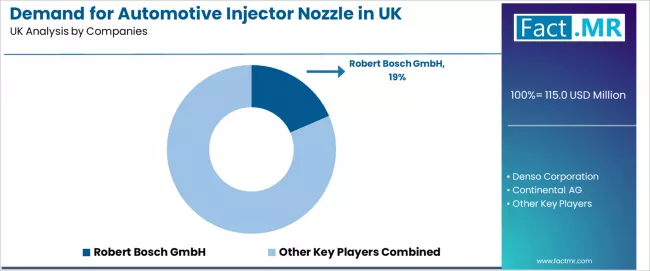
Demand For Automotive Injector Nozzle In Uk Analysis By Company | Source: Fact.MR
The UK automotive injector nozzle industry is characterized by intense competition among globally integrated tier-1 suppliers, specialized component manufacturers, and a network of independent aftermarket distributors and remanufacturers. The market is highly consolidated at the OEM level, where long-term engineering partnerships and stringent qualification processes create significant barriers to entry.
Companies are competing through R&D investment in precision mechatronics, advanced material science for durability, and the development of integrated diagnostic and calibration software to lock in aftermarket service revenue. Strategic positioning hinges on securing design wins for next-generation hybrid engines, expanding certified remanufacturing programs, and providing technical support to the independent garage network across all UK regions.
Robert Bosch GmbH leads the market with an 18.5% share, offering a comprehensive portfolio of piezo-electric and solenoid injector nozzles for both gasoline and diesel applications. Its dominance is built on deep systems integration expertise, direct partnerships with every major OEM operating in the UK, and a vast aftermarket presence through its robust service parts division. Bosch leverages its proprietary manufacturing capabilities and extensive field data to continuously refine nozzle design for enhanced durability against deposit formation and compatibility with evolving fuel blends, maintaining its position as the benchmark for performance and reliability.
Denso Corporation and Continental AG represent other primary tier-1 contenders, each holding significant market influence. Denso competes through exceptional quality control and thermal efficiency in its designs, often serving Japanese OEMs with UK manufacturing plants. Continental leverages its broader powertrain and sensor portfolio to offer integrated solutions, where the injector nozzle is optimized in concert with the fuel rail, pressure sensor, and engine control unit, providing a compelling value proposition for OEMs seeking modular, pre-validated systems.
Delphi Technologies (now part of BorgWarner Inc.) and Hitachi Astemo Ltd. hold strong positions in specific niches. BorgWarner leverages its heritage in fuel systems and turbocharging to provide optimized air-fuel mixing solutions, while Hitachi Astemo focuses on cost-competitive, high-volume solenoid technology and has made strides in components for hybrid-specific engine applications. Their strategies involve capturing specific platform contracts and expanding in the value-oriented segments of the aftermarket.
Beyond the top-tier global players, the competitive landscape includes important aftermarket-focused and remanufacturing specialists. Companies like Stanadyne LLC and TJ Fuel Systems compete on agility, offering high-quality replacement lines and specialist components for performance or commercial vehicle applications. Their success relies on strong distributor relationships, competitive pricing, and the ability to service older vehicle models that may be phased out of OEM parts catalogues.
The remanufacturing sector, comprising both certified programs from the tier-1 suppliers (e.g., Bosch Exchange) and independent specialists, forms a crucial and competitive layer. These players compete on core exchange logistics, warranty offerings, and the quality of their reconditioning processes, which often include re-machining, ultrasonic cleaning, and rigorous flow testing. This segment is critical for cost-conscious repair outlets and is growing in importance as the vehicle parc ages.
Competition is increasingly shaped by non-product factors, including digital service tools and technical training. Leading suppliers invest heavily in proprietary diagnostic software and technician certification programs to foster brand loyalty within the garage network. The ability to provide accurate, vehicle-specific calibration data and efficient troubleshooting support is a key differentiator that drives repeat business and solidifies market position across England, Scotland, Wales, and Northern Ireland.
Future competitive dynamics will be influenced by the transition to electrification. While reducing long-term volume for ICE components, this transition is forcing suppliers to double down on maximizing the value extracted from the remaining ICE and hybrid lifecycle. The winners will be those who can simultaneously deliver the cutting-edge precision required for Euro 7 hybrids while building a dominant, service-oriented footprint in the sustained aftermarket for legacy vehicles.
Automotive Injector Nozzle Industry in UK- Stakeholders' Contribution Framework
The growth and stability of the UK automotive injector nozzle ecosystem are orchestrated by the interdependent contributions of several key stakeholder groups. Original Equipment Manufacturers (OEMs) are the primary demand drivers and innovation specifiers, setting the exacting performance, durability, and emissions standards that tier-1 suppliers must meet. Their factory production schedules dictate OE volume, while their warranty and service policies significantly influence the early aftermarket channel.
- Tier-1 Suppliers (e.g., Bosch, Denso, Continental) are the central innovators and manufacturers. They translate OEM specifications into producible component designs, invest in the capital-intensive manufacturing technology, and manage the global supply chains for raw materials like specialized steels and piezoceramics. Their contribution extends beyond production to include vital R&D, comprehensive technical documentation, and the provision of master calibration data for vehicle ECUs.
- The Independent Aftermarket Network, including factors, distributors, and repair garages, constitutes the essential service and distribution layer. This stakeholder group makes the product accessible across the entire UK, provides the installation and calibration service, and generates the demand feedback loop regarding common failure modes and product performance in the field. Their technical competency directly impacts vehicle emissions compliance post-warranty.
- Regulatory and Standards Bodies, notably the Vehicle Certification Agency (VCA) and adherence to UKCA marking requirements, provide the enforced framework that creates market demand. Their evolving emissions and type-approval regulations are not constraints but fundamental market drivers, compelling the continuous technological advancement that defines the industry.
- Research Institutions and Industry Associations contribute through materials science research, skilled technician training programs, and collective advocacy, ensuring the UK maintains the engineering expertise required to support this high-precision market throughout its evolution.
Key Players in UK Automotive Injector Nozzle Industry
- Robert Bosch GmbH
- Denso Corporation
- Continental AG
- Delphi Technologies (BorgWarner Inc.)
- Hitachi Astemo Ltd.
- Stanadyne LLC
- Keihin Corporation
- Magneti Marelli S.p.A.
- UCAL Fuel Systems Ltd.
- TJ Fuel Systems
Bibliography
- Society of Motor Manufacturers and Traders. (2024). SMMT motor industry facts: UK vehicle production and powertrain mix data 2024. SMMT.
- Robert Bosch GmbH. (2024). Gasoline direct injection system technical reference: Injector nozzle specifications and maintenance intervals. Bosch.
- British Standards Institution. (2024). BS AU 252: Motor vehicle fuel injection systems, injector nozzle performance and durability requirements. BSI.
- Driver and Vehicle Standards Agency. (2024). DVSA MOT emissions testing: Fuel injection system inspection and pass/fail criteria. DVSA.
- European Commission. (2024). Euro 7 regulation: Real driving emission requirements and fuel injection precision specifications. EC.
- International Organization for Standardization. (2024). ISO 4010: Diesel engines, calibration nozzle, type S, functional characteristics. ISO.
This bibliography is provided for reader reference. The full Fact.MR report contains the complete reference list with primary research documentation.
This Report Addresses
- Market sizing and forecast metrics for demand for automotive injector nozzle in uk through 2036.
- Segmentation analysis across technology, application, supply channel categories.
- Regulatory compliance assessment shaping procurement specifications.
- Competitive landscape evaluation of leading participants.
- Strategic guidance for market positioning through the forecast period.
- Supply chain risk analysis identifying sourcing constraints.
- Custom data delivery formats including dashboards, Excel, and PDF reports.
Demand for Automotive Injector Nozzle in UK Definition
Automotive injector nozzles in the UK market are precision fuel delivery components that atomize and meter fuel into internal combustion engine combustion chambers at pressures ranging from 200 to 2,500 bar. The market covers piezo-electric and solenoid-actuated injector nozzles for gasoline direct injection and diesel common rail applications supplied through OEM and independent aftermarket channels.
Demand for Automotive Injector Nozzle in UK Inclusions
The report covers piezo-electric and solenoid injector nozzle technologies for gasoline and diesel vehicle applications. Supply channel analysis spans OEM and independent aftermarket distribution within the UK market for 2026 to 2036.
Demand for Automotive Injector Nozzle in UK Exclusions
Complete fuel injection systems, fuel pumps, fuel rails, and engine management ECUs are excluded as separate component categories. Electric vehicle powertrain components and hydrogen fuel cell injectors fall outside the analytical scope.
Demand for Automotive Injector Nozzle in UK Research Methodology
- Primary Research: Analysts engaged with procurement directors and operations leads across the demand for automotive injector nozzle in uk value chain.
- Desk Research: Regulatory filings, standards records, and corporate reports from allowed sources were aggregated.
- Market-Sizing and Forecasting: Hybrid top-down and bottom-up approach with region-specific curves projects demand through 2036.
- Data Validation and Update Cycle: Projections cross-validated against public financial guidance and industry benchmarks.
Segmentation
Scope of the Report
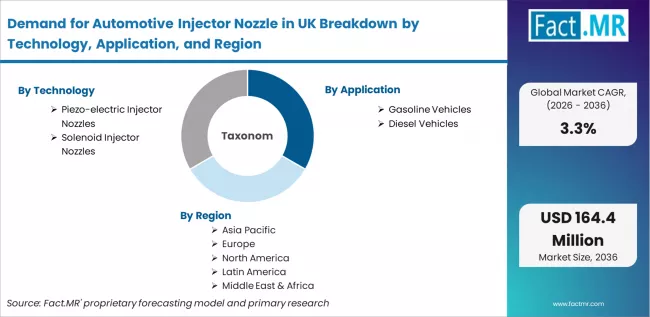
Demand For Automotive Injector Nozzle In Uk Breakdown By Technology, Application, And Region | Source: Fact.MR
| Metric | Value |
|---|---|
| Quantitative Units | USD 118.8 million to USD 164.4 million, at a CAGR of 3.30% |
| Market Definition | Automotive injector nozzles in the UK are precision fuel atomization components using piezo-electric or solenoid actuation to deliver metered fuel into combustion chambers, with demand sustained by emission compliance specifications and fleet replacement cycles. |
| Technology Segmentation | Piezo-electric Injector Nozzles, Solenoid Injector Nozzles |
| Application Segmentation | Gasoline Vehicles, Diesel Vehicles |
| Supply Channel Segmentation | Original Equipment Manufacturers, Independent Aftermarket |
| Key Companies Profiled | Robert Bosch GmbH, Denso Corporation, Continental AG, Delphi Technologies (BorgWarner Inc.), Hitachi Astemo Ltd., Stanadyne LLC, Keihin Corporation, Magneti Marelli S.p.A., UCAL Fuel Systems Ltd., TJ Fuel Systems |
| Forecast Period | 2026 to 2036 |
| Approach | Hybrid top-down and bottom-up methodology, cross-validated against primary research and public industry filings. |
Source: Fact.MR analysis. Updated Mar 26, 2026
UK Automotive Injector Nozzle Industry by Segments
-
Technology :
- Piezo-electric Injector Nozzles
- Solenoid Injector Nozzles
-
Application :
- Gasoline Vehicles
- Diesel Vehicles
-
Supply Channel :
- Original Equipment Manufacturers (OEM)
- Independent Aftermarket
-
Region :
- England
- Scotland
- Wales
- Northern Ireland
Frequently Asked Questions
How large is the demand for automotive injector nozzle in uk in 2026?
What will the size be by 2036?
What is the expected CAGR?
Which technology segment leads in 2026?
What methodology does Fact.MR use?
Which companies are profiled?
Who worked on this report


Preview the report firsthand - request a free sample
Free SampleGet the brochure for pricing and purchase details
Download PDF