- Base Value(2025): 485.0 Mn
- Estimated Value(2026): 505.4 Mn
- Forecast Value (2036): 762.6 Mn
- CAGR (2026 - 2036): 4.20%
Demand for Vehicle Anti-theft System in UK Size, Market Forecast and Outlook By Fact.MR
The demand for vehicle anti-theft system in uk was valued at USD 485.0 million in 2025, projected to reach USD 505.4 million in 2026, and is forecast to expand to USD 762.6 million by 2036 at a 4.20% CAGR. Rising vehicle theft rates in UK metropolitan areas, combined with insurance industry requirements linking premium calculations to vehicle security ratings, sustain demand for anti-theft systems across both OEM and aftermarket channels. Thatcham Research security ratings directly influence insurance group classifications, creating a financial incentive for both manufacturers and vehicle owners to specify advanced anti-theft technologies.
The absolute dollar opportunity between 2026 and 2036 amounts to approximately USD 257.21 million. Growth is steady, reflecting the mandatory nature of electronic immobilizers on all new UK vehicles and the expanding aftermarket for GPS tracking devices on high-theft-risk models. Immobilizers lead the technology segment because they are a mandatory OEM fitment requirement under UK and EU type approval regulations. Fact.MR analysts note that GPS tracking devices are the fastest-growing sub-segment because insurance companies increasingly offer premium discounts for vehicles equipped with approved tracking systems that improve stolen vehicle recovery rates.
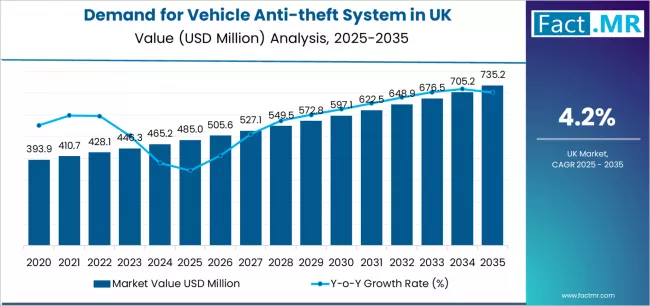
Demand For Vehicle Anti Theft System In Uk Market Value Analysis | Source: Fact.MR
Summary of Demand for Vehicle Anti-theft System in UK
- Demand for Vehicle Anti-theft System in UK Definition
- Vehicle anti-theft systems in the UK comprise electronic immobilizers, alarm systems, and GPS tracking devices that prevent unauthorized vehicle access, deter theft, and enable recovery, with demand driven by insurance rating requirements and urban theft rate trends.
- Demand Drivers
- Thatcham Research security ratings directly influence insurance group classifications in the UK, creating a financial incentive for manufacturers to specify advanced immobilizer and alarm technologies that achieve favorable ratings and lower customer insurance premiums.
- Rising keyless vehicle theft (relay attack) incidents in UK cities compel both OEMs and aftermarket suppliers to develop signal-blocking and motion-sensing countermeasures that address this specific vulnerability in modern keyless entry systems.
- Insurance premium discounts of 10 to 25% offered for vehicles equipped with Thatcham-approved GPS tracking devices incentivize aftermarket installation, particularly on high-value and high-theft-risk vehicle models.
- Key Segments Analyzed in the Fact.MR Report
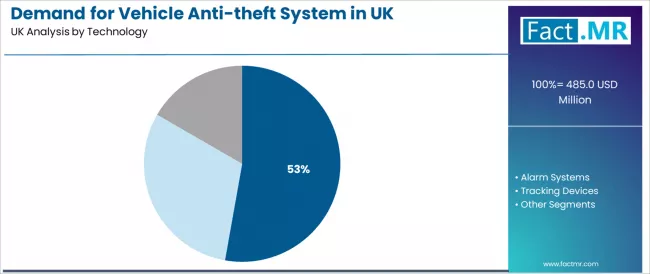
- Immobilizers: 52.8% share in 2026.
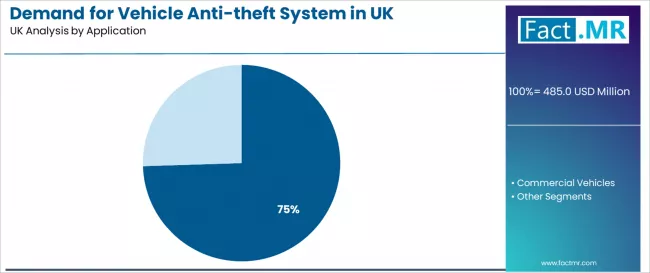
- Passenger Vehicles: 74.5% share in 2026.
- UK: 4.2% compound growth.
- Analyst Opinion at Fact.MR
- The UK vehicle anti-theft system market is shaped by the unique interaction between Thatcham Research security ratings and insurance premium calculations that creates a compliance-driven demand floor independent of voluntary consumer purchasing decisions. Every new vehicle sold in the UK must achieve a minimum Thatcham security rating to qualify for standard insurance, making electronic immobilizers a mandatory specification rather than an optional feature. The relay attack vulnerability in keyless entry systems has created a secondary demand wave for aftermarket signal-blocking pouches, motion-detecting immobilizers, and OEM firmware updates that address this specific threat vector. GPS tracking devices represent the highest-growth aftermarket category because their installation directly reduces insurance premiums by enough to recover the device cost within 12 to 18 months, creating a clear consumer return on investment.
- Strategic Implications / Executive Takeaways
- OEM security engineers must develop relay attack countermeasures for keyless entry systems to maintain Thatcham security ratings as the rating methodology evolves to penalize vehicles vulnerable to this theft method.
- Aftermarket tracking device manufacturers should pursue Thatcham category approval to qualify for the insurance premium discounts that drive consumer purchase decisions in the UK market.
- Fleet managers operating high-value commercial vehicles in urban areas must evaluate combined immobilizer and GPS tracking solutions that address both theft prevention and stolen vehicle recovery requirements.
Demand for Vehicle Anti-theft System in UK Key Takeaways
| Metric | Details |
|---|---|
| Industry Size (2026) | USD 505.4 million |
| Industry Value (2036) | USD 762.6 million |
| CAGR (2026 to 2036) | 4.20% |
Source: Fact.MR analysis. Updated Mar 26, 2026
The UK market is projected to grow at a 4.2% CAGR during 2026 to 2036, sustained by rising vehicle theft rates, insurance-driven security specification requirements, and expanding connected vehicle capabilities that integrate anti-theft functions into telematics platforms.
Why is the UK Vehicle Anti-Theft System Industry Growing?
Modern vehicle manufacturers and security system integrators rely on advanced anti-theft technologies to ensure vehicle integrity, comply with insurance industry requirements, and protect brand reputation in an era of sophisticated digital and physical theft techniques. Evolving security requirements necessitate comprehensive protection solutions including robust immobilization, real-time tracking capabilities, and cybersecurity infrastructure to address diverse vehicle architectures and criminal methodologies.
Automotive OEMs and tier-1 suppliers are emphasizing integrated security-by-design and over-the-air update capabilities to enhance vehicle resilience, access telematics service trends, and demonstrate duty of care in competitive markets. Evolving insurance group ratings, shaped by Thatcham Research assessments, and pending regulations concerning connected vehicle cybersecurity are establishing standardized security pathways that require professional system engineering and lifelong threat management, with UK security testing facilities pioneering the certification of next-generation anti-theft and cyber-physical protection systems.
The UK vehicle anti-theft system industry is shaped by the Thatcham Research New Vehicle Security Assessment (NVSA) protocols and the UK’s implementation of UN Regulation No. 155 on cybersecurity. These define stringent tests for mechanical and electronic lock systems, resistance to relay attacks, and requirements for a certified Cybersecurity Management System (CSMS) appropriate for the UK’s vehicle mix and prevalent crime patterns. The Association of British Insurers (ABI) and police initiatives like Tracker Network UK reinforce the link between certified security systems, reduced risk, and lower insurance premiums, ensuring alignment with real-world theft data and the operational models of organised crime groups targeting high-value vehicles.
Segmental Analysis
The UK vehicle anti-theft system industry is segmented by technology, application, and sales channel to provide a detailed understanding of demand drivers and market dynamics. By technology, the industry is divided into immobilizers, alarm systems, and tracking systems, reflecting the core layers of vehicle protection. In terms of application, the industry is segmented into passenger and commercial vehicles. By sales channel, the industry is divided into OEM-fitted and aftermarket installations. Regionally, market demand is distributed across England, Scotland, Wales, and Northern Ireland, each with distinct vehicle crime profiles and insurance landscapes.
This granular segmentation is critical for analyzing the complex interplay between mandatory fitment, retrofitting demand, and the technological arms race against thieves. The shift towards connected, software-defined vehicles disproportionately benefits integrated telematics and tracking segments, while the enduring need to secure millions of existing vehicles sustains the aftermarket for alarms and immobilizers. Understanding these segments reveals the strategic focus of security providers and the specific growth pockets within the broader risk mitigation market.
Why do Immobilizers Dominate the Technology Segment?
Demand For Vehicle Anti Theft System In Uk Analysis By Technology | Source: Fact.MR
The immobilizer segment is projected to account for 52.8% of total demand by value in 2025, solidifying its position as the indispensable foundation of modern vehicle security. This dominance is rooted in its legislative mandate for all new vehicles and its proven efficacy as a primary theft deterrent. Unlike audible alarms, an immobilizer directly prevents the engine from starting unless the correct digitally coded key or token is present, addressing the most critical point of theft attempt. Its deep integration with the vehicle's CAN bus and ECU makes it a complex system to defeat, providing a robust first line of defence that is universally recognized by insurers.
The segment's leadership is further reinforced by its evolution from a fixed-code system to a rolling-code or cryptographic solution, specifically designed to counter code-grabbing and relay attacks prevalent in keyless entry thefts. For the vast aftermarket, immobilizers represent the most cost-effective and insurance-friendly upgrade for vehicles lacking this fundamental protection. The technology's reliability, relatively low cost of integration for OEMs, and its status as a minimum requirement for favourable insurance group ratings ensure its continued dominance in the security stack, even as more advanced layers are added.
Growth in this segment is concentrated in the independent aftermarket channel, particularly in urban areas across England and Scotland with higher theft rates. Demand is driven by owners of older vehicles (pre-1998) seeking basic compliance and owners of newer vehicles seeking secondary, covert immobilizers to complement factory-fitted systems. Continuous innovation focuses on enhancing encryption, developing smartphone-based digital keys that function as virtual immobilizers, and creating systems that are invisible and inaccessible to thieves.
Why is the Passenger Vehicle Application Segment the Largest?
Demand For Vehicle Anti Theft System In Uk Analysis By Application | Source: Fact.MR
Passenger vehicles are expected to hold a commanding 74.5% share of total demand in 2025, reflecting the fundamental composition of the UK's vehicle parc and the high perceived personal and financial risk associated with car theft. The immense volume of passenger cars, coupled with their concentration in high-density urban and suburban areas, creates a substantial and continuous target for theft, fuelling demand for protective solutions. Crucially, the emotional and practical impact of losing a personal vehicle, a repository of personal data, essential for daily mobility, drives a strong willingness to invest in security beyond the factory minimum.
This segment's strength is further underpinned by the proliferation of high-value premium, luxury, and performance vehicles, which are disproportionately targeted by organised crime groups for export or dismantling. These vehicles often come with sophisticated OEM security suites but become targets for equally sophisticated theft methods, creating a cyclical market for security upgrades and countermeasures. The rise of keyless entry-equipped vehicles, which now constitute most new sales, has inadvertently created a new vulnerability, spurring a multi-million-pound market for Faraday pouches, signal-blocking lockboxes, and aftermarket systems that disable the keyless entry function when stationary.
Demand is strongest in England, particularly in the Greater London area, the West Midlands, and Greater Manchester, which consistently report the highest volumes of vehicle theft. The aftermarket component of this segment is exceptionally robust, as the security features of a five-year-old vehicle can often be circumvented with new tools available to thieves, generating continuous demand for retrofitted tracking devices, aftermarket alarms with tilt/motion sensors, and steering wheel locks that provide a visual deterrent. This creates a dual-stream revenue flow: high-value, low-volume sales to OEMs for integrated system design, and high-volume, competitive sales through installers and retailers for vehicle hardening.
Why do OEM-Fitted Systems Constitute the Leading Sales Channel?
Demand For Vehicle Anti Theft System In Uk Analysis By Sales Channel | Source: Fact.MR
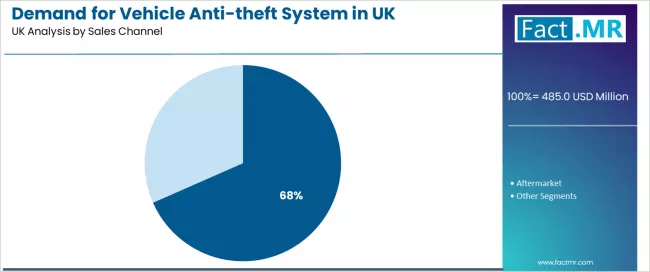
The OEM-fitted sales channel constitutes the dominant route to market with a 68.4% share, a reflection of security becoming a fundamental, non-negotiable attribute of vehicle design and manufacturing. The integration of immobilizers, alarm systems, and basic tracking functionalities is now a standard part of the vehicle development process, mandated by regulation and consumer expectation. OEMs partner with a select group of tier-1 security specialists to design systems that are seamlessly woven into the vehicle's electronic architecture, offering reliability and a clean user experience that aftermarket solutions can struggle to match.
This channel's preeminence is fuelled by the escalating value of the vehicle as a connected data hub. Modern OEM security is no longer just about theft prevention but about providing connected services: stolen vehicle tracking, remote immobilisation via telematics, geofencing alerts, and driver behaviour monitoring. These features, offered through subscription services, create a high-margin recurring revenue stream for OEMs, deeply embedding the security function within the brand's ecosystem. The commercial imperative for OEMs to achieve best-in-class ratings from Thatcham Research, directly influencing insurance costs and buyer appeal, further locks in substantial investment in this channel.
The channel's dominance is most pronounced for new vehicle sales across all UK regions. However, its share of the total market revenue is sustained by the growing complexity and software-defined nature of security, which makes retrofitting equivalent systems increasingly difficult. While the aftermarket channel is vital for the service and upgrade sector, its scope is increasingly focused on supplementary physical deterrents (e.g., steering locks, pedal boxes) and independent tracking systems that operate outside the OEM's telematics network, ensuring functionality even if the factory system is compromised.
What are the Drivers, Restraints, and Key Trends in the UK Vehicle Anti-Theft System Industry?
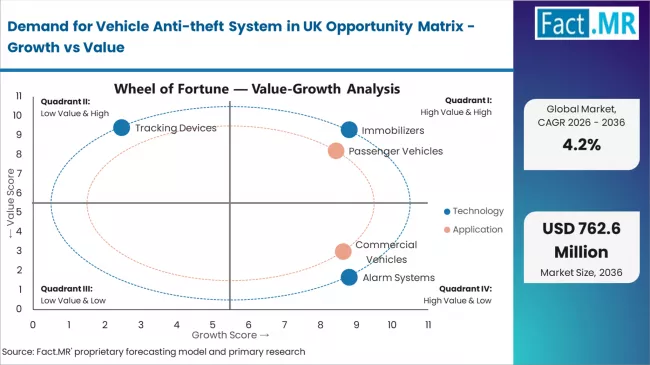
Demand For Vehicle Anti Theft System In Uk Opportunity Matrix Growth Vs Value | Source: Fact.MR
The UK's vehicle anti-theft system demand is advancing steadily due to persistently high vehicle theft rates and growing recognition of cybersecurity threats to connected cars, with England serving as a key driver of innovation and early adoption.
The sector faces challenges including the high cost of advanced systems, rapid evolution of theft techniques requiring constant updates, and consumer complacency leading to underinvestment in supplementary protection.
National insurance mandates and police-recommended security initiatives, particularly targeted hardening programs in high-crime regions of England and Scotland, continue to influence anti-theft system selection and adoption timelines.
Proliferation of Connected Car Telematics and OEM Services
The exponential growth of embedded vehicle telematics provides a critical medium-term driver for the advanced anti-theft system market. As the UK vehicle parc becomes increasingly connected, OEMs and third-party providers are leveraging this always-on data link to offer proactive security services.
This includes real-time location tracking, geofencing alerts, remote immobilization on police request, and driver authentication via smartphone apps. The integration of security into broader subscription service packages (e.g., emergency assistance, remote diagnostics) makes it a more attractive and sticky offering for consumers, sustaining R&D and network investment despite the costs involved.
Escalating Sophistication of Vehicle Crime and Organised Theft
The technical proficiency of organised crime groups, particularly in executing relay attacks, CAN bus injection, and key programming, creates a relentless driver for security innovation. Each new countermeasure developed by manufacturers is met with a refined criminal methodology, fuelling a continuous cycle of product development.
This environment not only drives demand for the latest OEM-fitted systems but also creates a vast aftermarket for secondary, independent systems designed to protect against specific, known vulnerabilities. The public reporting of these theft methods in media further raises consumer awareness and demand for solutions, from simple Faraday bags to sophisticated signal-jamming garage systems.
Insurance Industry Pressure and Thatcham Certification
The UK insurance industry, through its close partnership with Thatcham Research, exerts unparalleled influence on the anti-theft market. Vehicles that achieve a superior Thatcham Security Rating benefit from significantly lower insurance premiums, directly impacting total cost of ownership and buyer choice.
This financial lever drives OEMs to exceed minimum security standards and pushes consumers of older vehicles to seek Thatcham-certified aftermarket products. The insurance framework effectively monetizes security investment, transforming it from an optional extra into a financially rational necessity, thereby structuring and stabilizing long-term market demand.
Integration of Biometrics and Artificial Intelligence
Modern anti-theft system suppliers are establishing advanced development pathways in biometric vehicle access and AI-driven behavioural monitoring. Integration of fingerprint scanners, facial recognition, and iris detection within the cabin moves security beyond the key fob to the individual driver. Concurrently, AI algorithms are being deployed to analyse driving patterns, typical routes, and in-cabin sound to detect anomalies indicative of theft or unauthorized use.
These concepts support next-generation vehicle applications including personalised driver profiles, enhanced child safety features, and predictive threat assessment, with UK technology firms increasingly collaborating with automotive cyber-security experts to reduce development cycles and validate system resilience against novel attacks.
Analysis of UK Vehicle Anti-Theft System Industry by Key Countries
.webp "Top Country Growth Comparison Demand For Vehicle Anti Theft System In Uk Cagr (2026 2036)")
Top Country Growth Comparison Demand For Vehicle Anti Theft System In Uk Cagr (2026 2036) | Source: Fact.MR
| Region | CAGR (2026 to 2036) |
|---|---|
| England | 4.50% |
| Scotland | 4.10% |
| Wales | 3.80% |
| Northern Ireland | 3.50% |
Source: Fact.MR analysis. Updated Mar 26, 2026
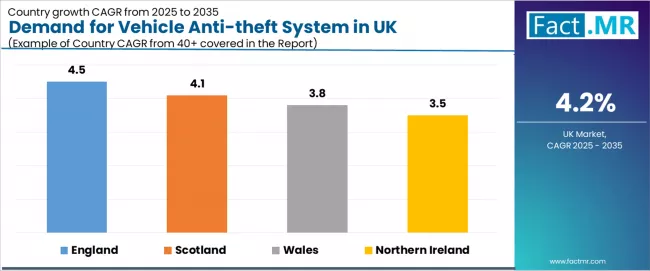
Demand For Vehicle Anti Theft System In Uk Cagr Analysis By Country | Source: Fact.MR
The UK vehicle anti-theft system industry exhibits distinct regional growth patterns, shaped by geographic variations in crime rates, vehicle density, and the penetration of high-value and connected vehicles. England leads the nation with a projected CAGR of 4.5%, reflecting its acute exposure to sophisticated organised vehicle crime, highest concentration of premium car ownership, and the rapid adoption of OEM telematics services.
Scotland follows with a 4.1% CAGR, driven by proactive police-security industry partnerships and a strong aftermarket sector in its central belt. Wales grows at 3.8%, supported by targeted vehicle hardening initiatives, while Northern Ireland demonstrates growth at 3.5%, anchored in a stable commercial vehicle sector and cross-border insurance dynamics.
What Strategic Advantages Position England as the Dominant Growth Engine?
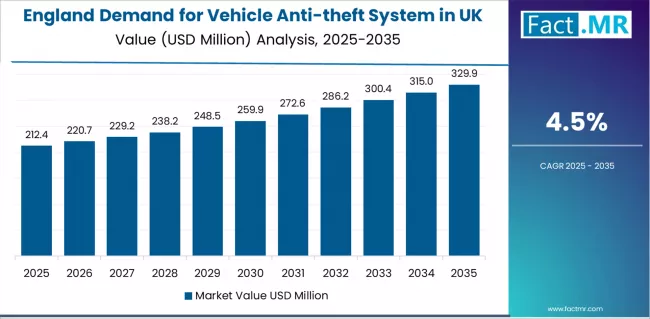
Demand For Vehicle Anti Theft System In Uk Country Value Analysis | Source: Fact.MR
Demand for vehicle anti-theft systems in England is projected to grow at a leading CAGR of 4.5% through 2036, driven by its unrivalled concentration of vehicle theft hotspots, premier automotive retailers, and specialist security engineering firms. The region, particularly major metropolitan areas like London, Manchester, and Birmingham, experiences the highest volume and most technologically advanced vehicle crime in the UK. This direct threat proximity creates an urgent and continuous demand for the latest protective technologies, from aftermarket deterrents for older models to the most integrated OEM solutions for new vehicles. The presence of Thatcham Research itself within England creates a centre of gravity for security testing, certification, and innovation.
England's growth is further underpinned by its status as the primary hub for the UK's luxury and performance vehicle market. The density of high-value targets attracts organised crime, which in turn forces rapid innovation cycles among security providers. The region's advanced digital infrastructure also supports the fastest rollout and most reliable operation of connected tracking and telematics-based security services, which require robust cellular networks. The economic scale supports a dense network of accredited installers, insurers with specialised underwriting teams, and police units dedicated to vehicle crime, creating a mature ecosystem that validates and sustains investment in advanced security.
The region's consumer base is also the most informed and responsive to security trends. High media coverage of theft techniques fosters a proactive security culture among owners. This drives not only OEM system uptake but also a thriving market for secondary measures, creating a layered security approach unique to the region. The demand is therefore multi-faceted: cutting-edge integration for new cars, comprehensive retrofits for nearly-new models, and robust physical deterrents for the aging parc, ensuring growth across all market segments and price points.
- Epicentre of Vehicle Crime: High theft rates in urban centres create immediate, sustained demand for both preventative and reactive security solutions across all vehicle types.
- Luxury Vehicle Concentration: A high density of premium targets drives demand for the most sophisticated (and high-margin) integrated security suites and tracking services.
- Mature Security Ecosystem: The co-location of certifiers (Thatcham), insurers, specialist police units, and installers creates a self-reinforcing loop of innovation, validation, and adoption.
How Does Scotland's Collaborative Security Approach Fuel its Market Growth?
The vehicle anti-theft system market in Scotland is forecast to grow at a CAGR of 4.1%, propelled by a strong culture of partnership between Police Scotland, security companies, and community safety groups. Scotland's automotive security strategy has increasingly focused on prevention and rapid recovery, with initiatives promoting the use of tracking devices and visible deterrents. This collaborative environment, particularly active in the Central Belt where vehicle density is highest, legitimises security spending and directs consumers towards approved, effective products, creating a structured and informed demand profile.
Key economic drivers include the significant commercial vehicle sector, especially around Aberdeen and the freight corridors, which invests heavily in fleet management and asset recovery systems that incorporate robust anti-theft functions. Scotland's varied geography, including remote highland areas, provides a unique use-case for long-range, resilient tracking technologies that can operate in areas of poor cellular coverage, a niche that several specialist UK-based tracking firms have successfully exploited. The aftermarket sector is technically proficient, with many installers certified by multiple tracking and security product manufacturers.
Scotland's growth is also supported by a proactive insurance industry approach that strongly advocates for the use of tracking devices on high-risk vehicles. The success of recovery schemes like "Tracker Police Active" in Scotland, which involves direct police access to tracking data, serves as a powerful marketing tool for these systems. This demonstrates a tangible return on investment for consumers, not just potential insurance savings, but a significantly higher probability of vehicle recovery, which is a more compelling driver than prevention alone.
- Police-Industry Collaboration: Formal partnerships promote certified products and create trusted channels for security advice, elevating the entire market.
- Niche Geographic Demands: Requirements for off-grid and long-range tracking in remote areas support a specialised, high-value segment of the market.
- Fleet and Commercial Focus: A strong commercial vehicle base drives demand for robust, fleet-manager-oriented security and telematics solutions.
What Factors Underpin the Steady Growth of the Industry in Wales?
Wales demonstrates steady growth for vehicle anti-theft systems at a CAGR of 3.8%, anchored by targeted vehicle crime prevention initiatives, key logistics routes vulnerable to cargo theft, and a growing awareness of the export of stolen vehicles through Welsh ports. The region's security profile has been shaped by its role as a transit corridor between England and Ireland, making vehicles in transit and at service stations potential targets. This has led to specific police and local authority projects aimed at "hardening" vehicles in high-risk locations, often involving discounted installation of aftermarket devices.
Beyond prevention programs, the presence of major ports like Holyhead and Cardiff creates a dual dynamic: they are points of vulnerability for export theft, but also locations where port authorities and police have implemented advanced scanning and detection technologies to identify stolen vehicles. This downstream enforcement indirectly stimulates the market for more sophisticated tracking and tagging systems that can survive attempts at disposal or disguise. The vehicle parc in Wales includes a higher-than-average proportion of older vehicles and light commercial vehicles, which sustains demand for cost-effective, durable aftermarket immobilizers and alarm systems.
Growth is further supported by the Welsh government's integration of vehicle security into broader community safety and economic well-being agendas. Funding and awareness campaigns often link vehicle crime to wider social issues, broadening the stakeholder base interested in solutions. The demand is therefore driven by a mix of reactive measures (theft risk in transit areas) and proactive, community-based schemes, leading to steady, policy-supported growth across both the consumer and commercial sectors.
- Transit Corridor Vulnerability: The risk to vehicles on major highways and at transport hubs drives targeted hardening initiatives and fuels demand for portable or quick-install security solutions.
- Port Security Integration: The need to combat export theft via ports raises the value proposition for covert tracking and tagging systems that aid in interdiction.
- Community Safety Alignment: Government and police frameworks that link vehicle security to community resilience provide a stable platform for awareness and adoption campaigns.
How Does Northern Ireland's Unique Insurance and Cross-Border Context Shape its Market?
The vehicle anti-theft system market in Northern Ireland is expected to grow at a CAGR of 3.5%, shaped by its distinct all-island insurance market, cross-border theft patterns, and a traditional preference for robust physical security. The insurance industry operates on an all-Ireland basis, meaning security ratings and premiums are influenced by theft data from both jurisdictions. This creates a specific demand for systems that are certified and effective across the entire island, with a particular emphasis on tracking devices that can operate seamlessly on both UK and Irish mobile networks.
The market is uniquely influenced by the land border with the Republic of Ireland, which can be exploited for the quick movement of stolen vehicles. This reality sustains a consistent demand for tracking systems with European coverage and for physical deterrents that slow down theft attempts, giving authorities more time to react. The independent garage and installer sector is highly attuned to these cross-border dynamics, often stocking products specifically marketed for their all-Ireland efficacy. Furthermore, the commercial vehicle sector, particularly in agriculture and transport, is a strong driver for immobilizers and fuel-cutoff devices, reflecting a practical, theft-aware culture.
Growth is sustained by the fundamental economic need to control insurance costs in a region where premiums are sensitive to cross-border crime statistics. Consumer demand is often pragmatic, favouring proven, mechanical solutions like hardened locks and immobilizers alongside established tracking brands with proven recovery records. The focus is on resilience, interoperability across jurisdictions, and tangible value, supporting a stable market less driven by cutting-edge connectivity and more by proven, physical and radio-frequency-based technologies.
- All-Island Insurance Market: Security product selection is heavily influenced by the need to meet certification standards that impact premiums across both Northern Ireland and the Republic.
- Cross-Border Theft Dynamics: The proximity of an open land border elevates the importance of tracking systems with seamless cross-border functionality and rapid alerting.
- Pragmatic, Proven Solutions: Strong demand for durable physical deterrents and radio-tracking systems reflects a risk-averse, value-oriented consumer and commercial base.
Competitive Landscape of UK Vehicle Anti-Theft System Industry
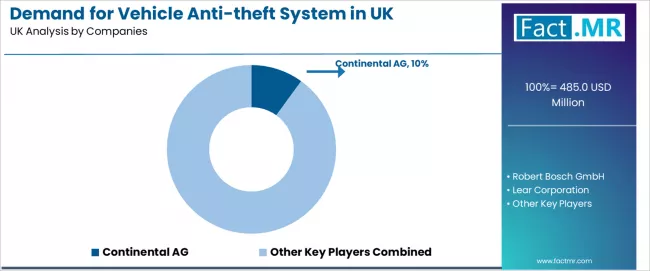
Demand For Vehicle Anti Theft System In Uk Analysis By Company | Source: Fact.MR
The UK vehicle anti-theft system industry is defined by competition between global automotive electronics suppliers, specialist security manufacturers, and a fragmented network of aftermarket installers and distributors. The market structure is bifurcated: the OEM-fitted channel is highly consolidated, dominated by a few tier-1 giants with direct engineering partnerships with carmakers, while the aftermarket channel is more diverse, featuring both branded technology providers and local fitting specialists. Companies are competing through technological integration, cybersecurity expertise, compliance with Thatcham Research certifications, and the development of hybrid product-service models that combine hardware with recurring revenue from tracking subscriptions.
Continental AG and Robert Bosch GmbH lead the OEM-integrated segment, leveraging their deep relationships with vehicle manufacturers and their expertise in developing security as an integral part of the vehicle's electronic architecture. Their competitive strength lies in offering holistic security-by-design solutions that combine immobilizers, access systems, and connected services like eCall and stolen vehicle tracking into a single, validated module. This seamless integration is difficult for aftermarket players to replicate, creating a significant barrier to entry at the point of vehicle manufacture and allowing these players to capture the high-value, long-term service revenue from telematics subscriptions.
In the aftermarket domain, Valeo and Tokai Rika Co., Ltd. hold strong positions as suppliers of high-quality replacement components, such as locksets and ignition systems, to the independent repair sector. Their competition is based on OE-equivalent quality, brand trust, and extensive distribution networks that ensure availability. Meanwhile, companies like Scorpion Automotive Ltd. and Tracker Network (part of Vodafone Automotive) are pure-play security specialists, competing almost entirely in the aftermarket. Their success hinges on brand recognition for effectiveness, direct partnerships with insurers, and continuously evolving products to counter new theft methodologies, such as CAN bus intrusion devices.
The competitive landscape is uniquely shaped by the quasi-regulatory influence of Thatcham Research. Its certification protocols act as a critical market filter; products that fail to achieve a desired security rating (e.g., S5 or S7 for tracking systems) are effectively excluded from insurance recommendations, crippling their commercial potential. Consequently, a significant portion of competitive strategy revolves around designing products specifically to pass Thatcham tests and maintaining close working relationships with its assessment teams, making compliance a core competitive competency rather than just a regulatory hurdle.
The rise of connected vehicles is fostering new competition from technology and telecom companies venturing into the automotive space. These players compete on the strength of their cloud platforms, data analytics for anomaly detection, and user experience for smartphone-based security apps. They often partner with hardware manufacturers or aftermarket brands to offer white-label solutions, increasing pressure on traditional players to either develop similar software capabilities or risk becoming mere hardware suppliers in a software-defined ecosystem.
Competition is also intensifying around cybersecurity services. As the threat vector shifts from physical break-ins to digital exploits, companies are racing to develop and market intrusion detection and prevention systems (IDPS) for vehicles. This has drawn in cybersecurity firms with no traditional automotive background, competing on their expertise in ethical hacking and penetration testing. Traditional anti-theft companies must either acquire this expertise or form strategic alliances to offer comprehensive cyber-physical security solutions, adding a new dimension to market rivalry.
The aftermarket installation network itself is a key competitive battleground. Brands compete to sign up accredited installers, who act as their primary sales and service channel. Winning installer loyalty involves providing superior technical training, reliable supply, attractive margin structures, and efficient warranty support. The density and quality of an installer network directly correlate with national market share, making channel management a top strategic priority for all aftermarket-focused players.
Looking ahead, competitive dynamics will be increasingly influenced by data ownership and monetisation. The entity that controls the vehicle security data, location, access logs, attempted breach alerts, holds significant power. OEMs are seeking to retain this data within their branded ecosystems, while independent tracking companies argue for an open, interoperable model. The outcome of this struggle will determine whether the aftermarket security sector continues to thrive or becomes subsumed into OEM subscription packages, fundamentally reshaping the competitive hierarchy in the latter half of the forecast period.
Stakeholders' Contribution Framework
The growth and efficacy of the UK vehicle anti-theft system market are orchestrated through the critical, interconnected roles of several stakeholder groups.
- Original Equipment Manufacturers (OEMs) are the foundational specifiers, determining the baseline security architecture of every new vehicle. Their decisions on which tier-1 supplier to partner with and what level of security to integrate set the technological benchmark for the entire industry. Their contribution extends to defining the connected services platform, which can either enable or limit third-party security integrations.
- Tier-1 Security Integrators (e.g., Continental, Bosch) are the primary innovators and manufacturers for the OEM channel. They translate automotive security standards into reliable, mass-producible electronic components and software modules. Their contribution is critical in pre-empting emerging theft techniques through advanced R&D, ensuring that new vehicles are equipped with countermeasures that stay ahead of criminal methodologies for a reasonable period.
- The Insurance Industry and Thatcham Research form the essential validation and incentive framework. Insurers, guided by Thatcham's independent testing, directly link the cost of motor insurance to the efficacy of a vehicle's security. This financial lever is arguably the most powerful market driver, creating demand by monetising risk reduction. Their contribution is in structuring the market, directing consumer and manufacturer investment towards proven, certified solutions that demonstrably reduce claims.
- The Aftermarket Supply Chain, including distributors, accredited installers, and retailers, constitutes the essential delivery and service layer. This network makes advanced security accessible and practical for the entire in-service vehicle parc, not just new cars. Their contribution lies in providing expert advice, professional installation, and localised service, ensuring that security products perform as intended and adapting global solutions to meet specific regional crime patterns and consumer needs across the UK.
- Law Enforcement Agencies, particularly dedicated vehicle crime units, provide the enforcement and recovery context that gives security systems their ultimate purpose. Their collaboration with tracking companies, use of ANPR (Automatic Number Plate Recognition), and public awareness campaigns on security harden the environment for criminals. Their contribution validates the effectiveness of tracking and identification technologies, turning security investments from theoretical deterrents into tools with a proven return in asset recovery and prosecution.
Key Players in UK Vehicle Anti-Theft System Industry
- Continental AG
- Robert Bosch GmbH
- Lear Corporation
- Valeo
- Tokai Rika Co., Ltd.
- Mitsubishi Electric Corporation
- VOXX International Corporation
- Marquardt GmbH
- U-Shin Ltd.
- Scorpion Automotive Ltd.
- Tracker Network (Vodafone Automotive)
- Meta System S.p.A.
- Autowatch ( UK) Ltd.
Bibliography
- Office for National Statistics. (2024). Crime in England and Wales: Vehicle theft offence data and trend analysis 2023 to 2024. ONS.
- Society of Motor Manufacturers and Traders. (2024). SMMT new car registrations: Standard security equipment fitment rates by manufacturer. SMMT.
- Thatcham Research. (2024). New vehicle security assessment: Electronic immobilizer and alarm system rating methodology 2024. Thatcham.
- Driver and Vehicle Standards Agency. (2024). DVSA MOT testing guide: Vehicle security system inspection requirements. DVSA.
- British Standards Institution. (2024). BS AU 209: Vehicle security, electronic immobilizers, alarm systems, and tracking devices. BSI.
- Home Office. (2024). Police recorded crime statistics: Motor vehicle theft by region and recovery rates. Home Office.
This bibliography is provided for reader reference. The full Fact.MR report contains the complete reference list with primary research documentation.
This Report Addresses
- Market sizing and forecast metrics for demand for vehicle anti-theft system in uk through 2036.
- Segmentation analysis across technology, application, sales channel categories.
- Regulatory compliance assessment shaping procurement specifications.
- Competitive landscape evaluation of leading participants.
- Strategic guidance for market positioning through the forecast period.
- Supply chain risk analysis identifying sourcing constraints.
- Custom data delivery formats including dashboards, Excel, and PDF reports.
Demand for Vehicle Anti-theft System in UK Definition
Vehicle anti-theft systems in the UK market encompass electronic immobilizers, alarm systems, and GPS-based tracking devices installed in passenger and commercial vehicles to prevent unauthorized access, deter theft, and enable stolen vehicle recovery. The market covers OEM-fitted systems integrated during vehicle manufacturing and aftermarket devices installed post-sale by vehicle owners and fleet operators.
Demand for Vehicle Anti-theft System in UK Inclusions
The report covers immobilizer, alarm, and tracking device technologies for passenger and commercial vehicles. Sales channel segmentation spans OEM-fitted and aftermarket installation across the UK market for 2026 to 2036.
Demand for Vehicle Anti-theft System in UK Exclusions
Mechanical steering locks, gear locks, and wheel clamps are excluded. Vehicle insurance products, CCTV surveillance systems for parking facilities, and general home security systems fall outside the analytical scope.
Demand for Vehicle Anti-theft System in UK Research Methodology
- Primary Research: Analysts engaged with procurement directors and operations leads across the demand for vehicle anti-theft system in uk value chain.
- Desk Research: Regulatory filings, standards records, and corporate reports from allowed sources were aggregated.
- Market-Sizing and Forecasting: Hybrid top-down and bottom-up approach with region-specific curves projects demand through 2036.
- Data Validation and Update Cycle: Projections cross-validated against public financial guidance and industry benchmarks.
Segmentation
Scope of the Report
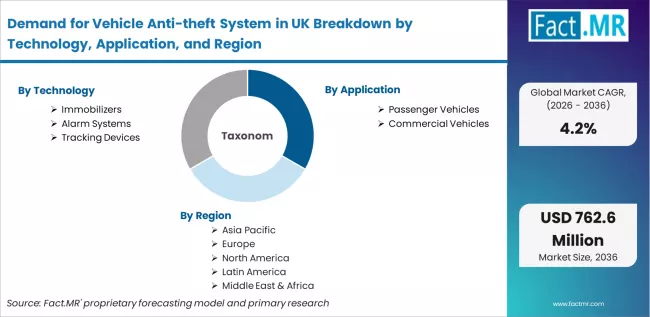
Demand For Vehicle Anti Theft System In Uk Breakdown By Technology, Application, And Region | Source: Fact.MR
| Metric | Value |
|---|---|
| Quantitative Units | USD 505.4 million to USD 762.6 million, at a CAGR of 4.20% |
| Market Definition | Vehicle anti-theft systems in the UK comprise electronic immobilizers, alarm systems, and GPS tracking devices that prevent unauthorized vehicle access, deter theft, and enable recovery, with demand driven by insurance rating requirements and urban theft rate trends. |
| Technology Segmentation | Immobilizers, Alarm Systems, Tracking Devices |
| Application Segmentation | Passenger Vehicles, Commercial Vehicles |
| Sales Channel Segmentation | OEM-fitted, Aftermarket |
| Key Companies Profiled | Continental AG, Robert Bosch GmbH, Lear Corporation, Valeo, Tokai Rika Co., Ltd., Mitsubishi Electric Corporation, VOXX International Corporation, Marquardt GmbH, U-Shin Ltd., Scorpion Automotive Ltd., Tracker Network (Vodafone Automotive), Meta System S.p.A., Autowatch UK Ltd. |
| Forecast Period | 2026 to 2036 |
| Approach | Hybrid top-down and bottom-up methodology, cross-validated against primary research and public industry filings. |
Source: Fact.MR analysis. Updated Mar 26, 2026
UK Vehicle Anti-Theft System Industry by Segments
-
Technology :
- Immobilizers
- Alarm Systems
- Tracking Devices
-
Application :
- Passenger Vehicles
- Commercial Vehicles
-
Sales Channel :
- OEM-fitted
- Aftermarket
-
Country :
- England
- Scotland
- Wales
- Northern Ireland
Frequently Asked Questions
How large is the demand for vehicle anti-theft system in uk in 2026?
What will the size be by 2036?
What is the expected CAGR?
Which technology segment leads in 2026?
What methodology does Fact.MR use?
Which companies are profiled?
Who worked on this report


Preview the report firsthand - request a free sample
Free SampleGet the brochure for pricing and purchase details
Download PDF