Waste Fibre Trays Market
Waste Fibre Trays Market Size and Share Forecast Outlook 2026 to 2036
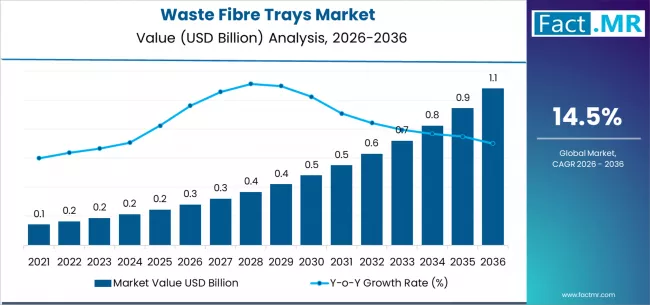
The waste fibre trays market is projected to grow from USD 0.3 billion in 2026 to USD 1.1 billion by 2036, at a CAGR of 14.5%. Fresh Produce & Ready Meals will dominate with a 42.0% market share, while molded fiber trays will lead the packaging format/type segment with a 55.0% share.
Waste Fibre Trays Market Forecast and Outlook 2026 to 2036
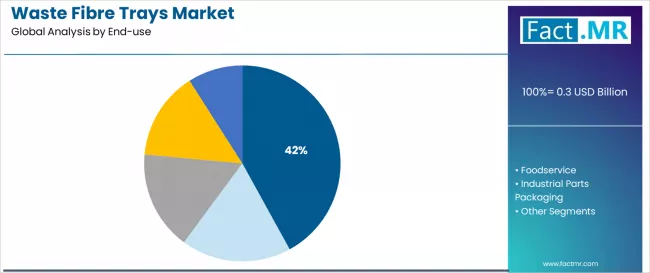
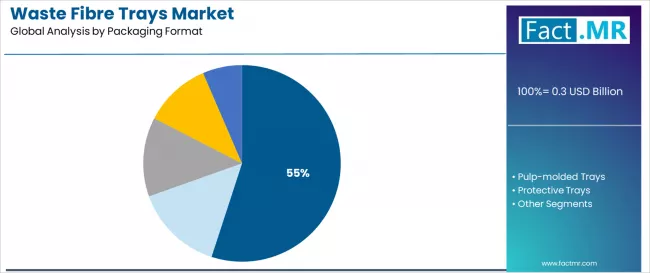
The global waste fibre trays market is valued at USD 0.28 billion in 2026 and is set to reach USD 1.08 billion by 2036, recording a compound annual growth rate (CAGR) of 14.5% between 2026 and 2036. In 2026, the fresh produce & ready meals application segment is projected to hold a 42% share, while molded fibre trays account for 55% by packaging format.
Key Takeaways from the Waste Fibre Trays Market Report
- Market Value of the Waste Fiber Trays Market (2026): USD 0.28 Billion
- Market Forecast Value of the Waste Fiber Trays Market (2036): USD 1.08 Billion
- Forecast CAGR of the Waste Fiber Trays Market (2026-2036): 14.5%
- Leading Application Segment of the Waste Fiber Trays Market: Fresh Produce & Ready Meals (42%)
- Leading Packaging Format of the Waste Fiber Trays Market: Molded Fibre Trays (55%)
- Key Growth Regions of the Waste Fiber Trays Market: North America, Europe, Asia Pacific
- Key Players in the Waste Fiber Trays Market: DS Smith, Huhtamaki, UFlex partners, Toppan

Market expansion is supported by a global regulatory push against single-use plastics and escalating consumer demand for sustainable packaging. Brands across foodservice, retail, and industrial sectors are actively seeking circular economy solutions, with waste fibre trays offering a compelling combination of biodegradability, protective functionality, and cost-effectiveness. This shift is accelerating investment in material innovation and production capacity.
Growth from 2026 to 2036 will be shaped by advancements in fibre sourcing and tray manufacturing technology. The increasing utilization of agricultural waste streams and post-consumer fibre blends enhances material sustainability and supply chain resilience. Concurrently, developments in high-speed molding technologies improve production efficiency and product consistency, making waste fibre trays more competitive against traditional materials. The market's evolution reflects a broader transition towards packaging systems that align with environmental goals without compromising on performance.
Waste Fibre Trays Market
| Metric | Value |
|---|---|
| Estimated Value in (2026E) | USD 0.28 Billion |
| Forecast Value in (2036F) | USD 1.08 Billion |
| Forecast CAGR (2026 to 2036) | 14.5% |
Category
| Category | Segments |
|---|---|
| End-use/Application | Fresh Produce & Ready Meals, Foodservice, Industrial Parts Packaging, Catering/Civil Use |
| Packaging Format/Type | Molded Fibre Trays, Pulp-molded Trays, Protective Trays, Biodegradable Trays |
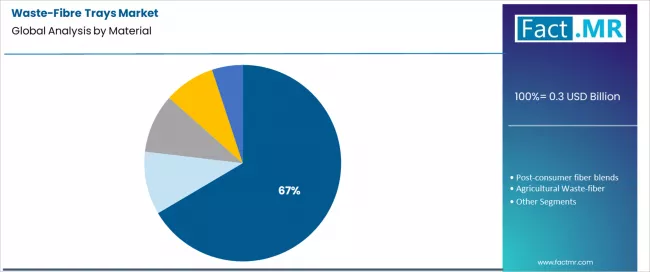
| Material | Reclaimed Paper & Waste-fibre, Post-consumer fibre blends, Agricultural Waste-fibre, Mixed Waste-fibre |
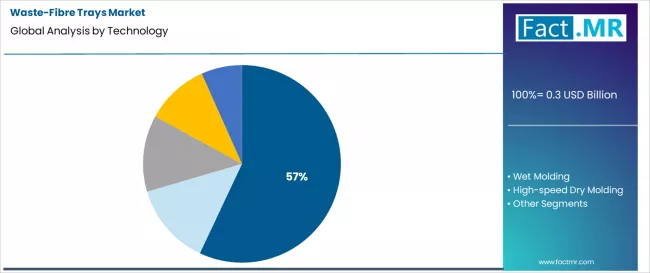
| Technology | Compression & Press Molding, Wet Molding, High-speed Dry Molding, Low-energy Pressing |
| Region | North America, Europe, Asia Pacific, Latin America, MEA |
Segmental Analysis
Why does the Fresh Produce & Ready Meals Segment Command a Leading Share?

The fresh produce and ready meals application segment is projected to account for 42% of the waste fibre trays market in 2026, establishing it as the primary demand driver. This dominance stems from the critical need for packaging that offers robust protection during transit, effective moisture management, and clear sustainability credentials that resonate with end consumers.
Retailers and food brands prioritize these trays for their ability to reduce food waste through superior cushioning and breathability, while simultaneously meeting corporate environmental targets and responding to legislative bans on plastic packaging for fresh items. The segment benefits from continuous design innovations enhancing tray functionality, including improved grease resistance for ready meals and venting patterns for fresh produce. This alignment of performance with sustainability creates a strong value proposition for suppliers and brands alike.
- Brand commitments to plastic-free packaging across major retail chains directly translate into escalated orders for waste fibre tray solutions in produce and meal categories.
- The segment’s growth is further secured by the development of tailored tray designs that accommodate specific products, from berries to prepared salads, ensuring optimal protection and shelf appeal.
What Drives the Dominance of Molded Fibre Trays?

Molded fibre trays are set to hold a 55% share of the market by packaging format in 2026, reaffirming their status as the industry’s preferred solution. This format’s dominance is rooted in its manufacturing versatility, which allows for the creation of complex, custom-shaped trays that provide a secure fit for a vast array of products. The molding process efficiently utilizes recycled and waste fibre streams, delivering a high-strength, lightweight end product that is inherently biodegradable and compostable, meeting core market demands.
Their structural integrity makes them ideal for stacking and logistics, reducing damage rates in supply chains for fragile items like eggs, fruits, and electronic components. The ability to produce trays with consistent quality at scale solidifies their position as the foundational format for the waste fibre packaging industry.
- Manufacturing advancements enable faster cycle times and finer finish details, expanding the application range of molded fibre trays into premium packaging segments previously dominated by plastics.
- The format’s compatibility with high-speed automated filling and sealing lines in food packaging facilities makes it a logistically efficient choice for large-volume users.
What are the Drivers, Restraints, and Trends in the Waste Fibre Trays Market?
The waste fibre trays market is propelled by stringent global legislation phasing out single-use plastics, particularly in food contact packaging. This regulatory pressure creates a direct replacement demand across industries. Simultaneously, heightened consumer environmental consciousness drives brand owners to adopt packaging with clear end-of-life benefits, such as compostability.
The market is concurrently evolving through material and technological innovation. Developments in hydrophobic coatings extend tray applicability to wetter food items, while advancements in molding technologies enhance production speed and energy efficiency, improving cost structures and making sustainable packaging more accessible.
Analysis of the Waste Fibre Trays Market by Key Countries

| Country | CAGR (2026-2036) |
|---|---|
| China | 12.3% |
| India | 11.8% |
| Germany | 9.8% |
| Brazil | 9.4% |
| USA | 9.1% |
| UK | 8.5% |
| South Korea | 7.9% |
How are National Plastic Bans and E-commerce Fueling China's Market Leadership?
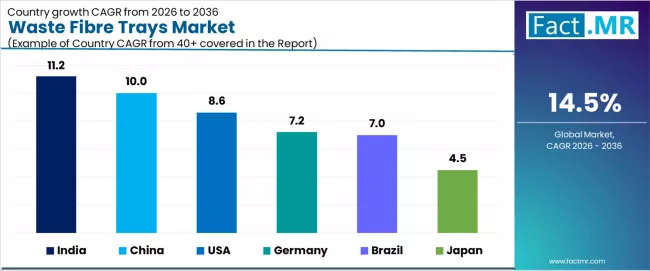
Revenue from waste fibre tray consumption in China is projected to grow at a CAGR of 12.3% through 2036. This growth is propelled by the country’s ambitious Plastic Ban policy, which aggressively phases out single-use plastics in food service and retail. China’s massive food delivery and fresh produce e-commerce markets are rapidly adopting fibre-based solutions as compliant, cost-effective alternatives. The presence of a strong domestic pulp-molding manufacturing base allows for rapid scaling to meet this surging demand, positioning China as both a leading consumer and producer.
- National sustainability targets and urban waste management challenges are creating unprecedented demand for biodegradable packaging solutions across metropolitan areas and tier-1 cities.
- Investments in advanced, high-speed molding technology within Chinese manufacturing facilities are improving product quality and export potential, catering to both domestic and international brand requirements.
Why do Government Policies and Agricultural Waste Availability Drive High Growth in India?
Revenue from waste fibre trays in India is expanding at a CAGR of 11.8%. Growth is fueled by increasing governmental pressure to manage plastic waste, exemplified by the ban on specific single-use plastic items. A growing middle class and the expansion of organized retail and online grocery delivery are critical demand drivers. The market benefits from the local availability of key raw materials, like sugarcane bagasse and wheat straw, enabling cost-competitive production and fostering a circular agricultural economy.
- Initiatives under the Swachh Bharat Mission and extended producer responsibility (EPR) frameworks are pushing brands towards sustainable packaging alternatives.
- The emergence of local manufacturers specializing in agricultural waste-based trays is reducing import dependency and creating tailored solutions for the price-sensitive domestic market.
How do EU Directives and Consumer Awareness Shape the German Market?
Revenue in Germany is projected to grow at a CAGR of 9.8% through 2036. The EU’s Single-Use Plastics Directive underpins the market and Germany’s own stringent packaging laws (VerpackG), which mandate high recycling rates and promote reusable/compostable systems. German consumers and retailers exhibit a strong preference for certified biodegradable packaging, driving demand for high-quality, performance-oriented fibre trays, particularly in fresh produce and ready meals.
- The country’s well-established waste collection and industrial composting infrastructure ensures the effective end-of-life processing of compostable fibre trays, validating their environmental claim.
- Leadership in engineering and packaging design fosters innovation in tray functionality, such as enhanced barrier properties for liquid-containing foods.
What role do Agro-Industrial Materials and Regional Bans Play in Brazil's Expansion?
Revenue in Brazil is projected to grow at a CAGR of 9.4%. Growth is driven by the national Solid Waste Policy and increasing regional bans on plastic bags and straws, which are expanding to include other foodservice items. Brazil’s vast agro-industry provides abundant, low-cost raw materials like bagasse, making local production of waste fibre trays economically attractive. The foodservice sector, including large events and catering, is a significant early adopter.
- The circular bio-economy model, turning agricultural residue into valuable packaging, aligns with both environmental goals and economic development in agricultural regions.
- Growing environmental awareness among consumers is pressuring major fast-food chains and supermarkets to explore sustainable packaging alternatives.
How do State-Level Legislation and Corporate Commitments Underpin US Market Growth?

Revenue in the USA is projected to grow at a CAGR of 9.1% through 2036. Growth is supported by a patchwork of state-level legislation banning expanded polystyrene foam containers and local ordinances targeting single-use plastics. Corporate sustainability pledges from major food brands and retailers are a primary driver, creating consistent demand for fibre-based alternatives in clamshells, meal trays, and protective packaging.
- The strong focus on supply chain efficiency and brand image leads companies to adopt fibre trays that are both functional and communicators of environmental commitment.
- Investments in domestic manufacturing capacity for molded pulp are increasing, reducing lead times and improving the customization options available to US-based brands.
Competitive Landscape of the Waste Fibre Trays Market

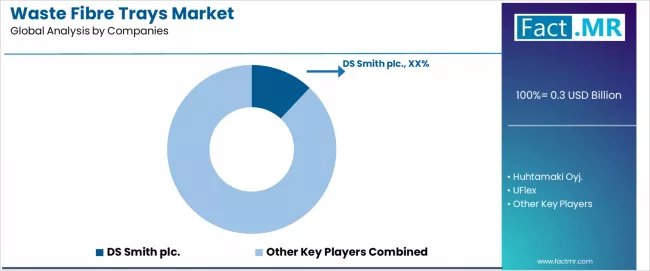
The competitive landscape features established packaging conglomerates and specialized molded fibre producers. Companies are competing through vertical integration, securing sustainable fibre sources, and investing in advanced manufacturing technologies to improve product quality and margins. Innovation focuses on developing proprietary material blends for enhanced functionality like water resistance or improved barrier properties and on designing trays that optimize material use without sacrificing strength.
Strategic partnerships with food brands and retailers for customized solutions are common, as is expansion into high-growth geographic markets to capture early demand driven by local plastic regulations. Key players are also emphasizing the lifecycle analysis and compostability certifications of their products to strengthen their value proposition in tender processes.
Key Players in the Waste Fibre Trays Market
- DS Smith plc.
- Huhtamaki Oyj.
- UFlex
- Toppan Inc.
Scope of the Report
| Items | Values |
|---|---|
| Quantitative Units (2026) | USD 0.28 Billion |
| End-use/Application | Fresh Produce & Ready Meals, Foodservice, Industrial Parts Packaging, Catering/Civil Use |
| Packaging Format/Type | Molded Fibre Trays, Pulp-molded Trays, Protective Trays, Biodegradable Trays |
| Material | Reclaimed Paper & Waste-fibre, Post-consumer fibre blends, Agricultural Waste-fibre, Mixed Waste-fibre |
| Technology | Compression & Press Molding, Wet Molding, High-speed Dry Molding, Low-energy Pressing |
| Regions Covered | North America, Europe, Asia Pacific, Latin America, MEA |
| Key Companies Profiled | DS Smith, Huhtamaki, UFlex partners, Toppan, and other leading waste fibre tray manufacturers |
| Additional Attributes | Market share analysis, production capacity evaluation, demand trends by application and region, analysis of sustainability certifications and regulatory impact, insights into R&D and material innovation. |
Waste Fibre Trays Market by Segments
-
By End-use/Application :
- Fresh Produce & Ready Meals
- Foodservice
- Industrial Parts Packaging
- Catering/Civil Use
-
By Packaging Format/Type :
- Molded Fibre Trays
- Pulp-molded Trays
- Protective Trays
- Biodegradable Trays
-
By Material :
- Reclaimed Paper & Waste-fibre
- Post-consumer fibre blends
- Agricultural Waste-fibre
- Mixed Waste-fibre
-
By Technology :
- Compression & Press Molding
- Wet Molding
- High-speed Dry Molding
- Low-energy Pressing
-
By Region :
-
North America
- USA
- Canada
- Mexico
-
Europe
- Germany
- UK
- France
- Italy
- Spain
- Nordic Countries
- BENELUX
- Rest of Europe
-
Asia Pacific
- China
- India
- Japan
- South Korea
- Australia
- Rest of Asia Pacific
-
Latin America
- Brazil
- Argentina
- Rest of Latin America
-
MEA
- Saudi Arabia
- UAE
- South Africa
- Rest of MEA
-
Table of Content
- Executive Summary
- Global Market Outlook
- Demand to side Trends
- Supply to side Trends
- Technology Roadmap Analysis
- Analysis and Recommendations
- Market Overview
- Market Coverage / Taxonomy
- Market Definition / Scope / Limitations
- Market Background
- Market Dynamics
- Drivers
- Restraints
- Opportunity
- Trends
- Scenario Forecast
- Demand in Optimistic Scenario
- Demand in Likely Scenario
- Demand in Conservative Scenario
- Opportunity Map Analysis
- Product Life Cycle Analysis
- Supply Chain Analysis
- Investment Feasibility Matrix
- Value Chain Analysis
- PESTLE and Porter’s Analysis
- Regulatory Landscape
- Regional Parent Market Outlook
- Production and Consumption Statistics
- Import and Export Statistics
- Market Dynamics
- Global Market Analysis 2021 to 2025 and Forecast, 2026 to 2036
- Historical Market Size Value (USD Million) Analysis, 2021 to 2025
- Current and Future Market Size Value (USD Million) Projections, 2026 to 2036
- Y to o to Y Growth Trend Analysis
- Absolute $ Opportunity Analysis
- Global Market Pricing Analysis 2021 to 2025 and Forecast 2026 to 2036
- Global Market Analysis 2021 to 2025 and Forecast 2026 to 2036, By End-use/Application
- Introduction / Key Findings
- Historical Market Size Value (USD Million) Analysis By End-use/Application, 2021 to 2025
- Current and Future Market Size Value (USD Million) Analysis and Forecast By End-use/Application, 2026 to 2036
- Fresh Produce & Ready Meals
- Foodservice
- Industrial Parts Packaging
- Catering/Civil Use
- Others
- Y to o to Y Growth Trend Analysis By End-use/Application, 2021 to 2025
- Absolute $ Opportunity Analysis By End-use/Application, 2026 to 2036
- Global Market Analysis 2021 to 2025 and Forecast 2026 to 2036, By Packaging Format/Type
- Introduction / Key Findings
- Historical Market Size Value (USD Million) Analysis By Packaging Format/Type, 2021 to 2025
- Current and Future Market Size Value (USD Million) Analysis and Forecast By Packaging Format/Type, 2026 to 2036
- Molded Fiber Trays
- Pulp-molded Trays
- Protective Trays
- Biodegradable Trays
- Others
- Y to o to Y Growth Trend Analysis By Packaging Format/Type, 2021 to 2025
- Absolute $ Opportunity Analysis By Packaging Format/Type, 2026 to 2036
- Global Market Analysis 2021 to 2025 and Forecast 2026 to 2036, By Material
- Introduction / Key Findings
- Historical Market Size Value (USD Million) Analysis By Material, 2021 to 2025
- Current and Future Market Size Value (USD Million) Analysis and Forecast By Material, 2026 to 2036
- Reclaimed Paper & Waste-fiber
- Post-consumer fiber blends
- Agricultural Waste-fiber
- Mixed Waste-fiber
- Others
- Y to o to Y Growth Trend Analysis By Material, 2021 to 2025
- Absolute $ Opportunity Analysis By Material, 2026 to 2036
- Global Market Analysis 2021 to 2025 and Forecast 2026 to 2036, By Technology
- Introduction / Key Findings
- Historical Market Size Value (USD Million) Analysis By Technology, 2021 to 2025
- Current and Future Market Size Value (USD Million) Analysis and Forecast By Technology, 2026 to 2036
- Compression & Press Molding
- Wet Molding
- High-speed Dry Molding
- Low-energy Pressing
- Others
- Y to o to Y Growth Trend Analysis By Technology, 2021 to 2025
- Absolute $ Opportunity Analysis By Technology, 2026 to 2036
- Global Market Analysis 2021 to 2025 and Forecast 2026 to 2036, By Region
- Introduction
- Historical Market Size Value (USD Million) Analysis By Region, 2021 to 2025
- Current Market Size Value (USD Million) Analysis and Forecast By Region, 2026 to 2036
- North America
- Latin America
- Western Europe
- Eastern Europe
- East Asia
- South Asia and Pacific
- Middle East & Africa
- Market Attractiveness Analysis By Region
- North America Market Analysis 2021 to 2025 and Forecast 2026 to 2036, By Country
- Historical Market Size Value (USD Million) Trend Analysis By Market Taxonomy, 2021 to 2025
- Market Size Value (USD Million) Forecast By Market Taxonomy, 2026 to 2036
- By Country
- USA
- Canada
- Mexico
- By End-use/Application
- By Packaging Format/Type
- By Material
- By Technology
- By Country
- Market Attractiveness Analysis
- By Country
- By End-use/Application
- By Packaging Format/Type
- By Material
- By Technology
- Key Takeaways
- Latin America Market Analysis 2021 to 2025 and Forecast 2026 to 2036, By Country
- Historical Market Size Value (USD Million) Trend Analysis By Market Taxonomy, 2021 to 2025
- Market Size Value (USD Million) Forecast By Market Taxonomy, 2026 to 2036
- By Country
- Brazil
- Chile
- Rest of Latin America
- By End-use/Application
- By Packaging Format/Type
- By Material
- By Technology
- By Country
- Market Attractiveness Analysis
- By Country
- By End-use/Application
- By Packaging Format/Type
- By Material
- By Technology
- Key Takeaways
- Western Europe Market Analysis 2021 to 2025 and Forecast 2026 to 2036, By Country
- Historical Market Size Value (USD Million) Trend Analysis By Market Taxonomy, 2021 to 2025
- Market Size Value (USD Million) Forecast By Market Taxonomy, 2026 to 2036
- By Country
- Germany
- UK
- Italy
- Spain
- France
- Nordic
- BENELUX
- Rest of Western Europe
- By End-use/Application
- By Packaging Format/Type
- By Material
- By Technology
- By Country
- Market Attractiveness Analysis
- By Country
- By End-use/Application
- By Packaging Format/Type
- By Material
- By Technology
- Key Takeaways
- Eastern Europe Market Analysis 2021 to 2025 and Forecast 2026 to 2036, By Country
- Historical Market Size Value (USD Million) Trend Analysis By Market Taxonomy, 2021 to 2025
- Market Size Value (USD Million) Forecast By Market Taxonomy, 2026 to 2036
- By Country
- Russia
- Poland
- Hungary
- Balkan & Baltic
- Rest of Eastern Europe
- By End-use/Application
- By Packaging Format/Type
- By Material
- By Technology
- By Country
- Market Attractiveness Analysis
- By Country
- By End-use/Application
- By Packaging Format/Type
- By Material
- By Technology
- Key Takeaways
- East Asia Market Analysis 2021 to 2025 and Forecast 2026 to 2036, By Country
- Historical Market Size Value (USD Million) Trend Analysis By Market Taxonomy, 2021 to 2025
- Market Size Value (USD Million) Forecast By Market Taxonomy, 2026 to 2036
- By Country
- China
- Japan
- South Korea
- By End-use/Application
- By Packaging Format/Type
- By Material
- By Technology
- By Country
- Market Attractiveness Analysis
- By Country
- By End-use/Application
- By Packaging Format/Type
- By Material
- By Technology
- Key Takeaways
- South Asia and Pacific Market Analysis 2021 to 2025 and Forecast 2026 to 2036, By Country
- Historical Market Size Value (USD Million) Trend Analysis By Market Taxonomy, 2021 to 2025
- Market Size Value (USD Million) Forecast By Market Taxonomy, 2026 to 2036
- By Country
- India
- ASEAN
- Australia & New Zealand
- Rest of South Asia and Pacific
- By End-use/Application
- By Packaging Format/Type
- By Material
- By Technology
- By Country
- Market Attractiveness Analysis
- By Country
- By End-use/Application
- By Packaging Format/Type
- By Material
- By Technology
- Key Takeaways
- Middle East & Africa Market Analysis 2021 to 2025 and Forecast 2026 to 2036, By Country
- Historical Market Size Value (USD Million) Trend Analysis By Market Taxonomy, 2021 to 2025
- Market Size Value (USD Million) Forecast By Market Taxonomy, 2026 to 2036
- By Country
- Kingdom of Saudi Arabia
- Other GCC Countries
- Turkiye
- South Africa
- Other African Union
- Rest of Middle East & Africa
- By End-use/Application
- By Packaging Format/Type
- By Material
- By Technology
- By Country
- Market Attractiveness Analysis
- By Country
- By End-use/Application
- By Packaging Format/Type
- By Material
- By Technology
- Key Takeaways
- Key Countries Market Analysis
- USA
- Pricing Analysis
- Market Share Analysis, 2025
- By End-use/Application
- By Packaging Format/Type
- By Material
- By Technology
- Canada
- Pricing Analysis
- Market Share Analysis, 2025
- By End-use/Application
- By Packaging Format/Type
- By Material
- By Technology
- Mexico
- Pricing Analysis
- Market Share Analysis, 2025
- By End-use/Application
- By Packaging Format/Type
- By Material
- By Technology
- Brazil
- Pricing Analysis
- Market Share Analysis, 2025
- By End-use/Application
- By Packaging Format/Type
- By Material
- By Technology
- Chile
- Pricing Analysis
- Market Share Analysis, 2025
- By End-use/Application
- By Packaging Format/Type
- By Material
- By Technology
- Germany
- Pricing Analysis
- Market Share Analysis, 2025
- By End-use/Application
- By Packaging Format/Type
- By Material
- By Technology
- UK
- Pricing Analysis
- Market Share Analysis, 2025
- By End-use/Application
- By Packaging Format/Type
- By Material
- By Technology
- Italy
- Pricing Analysis
- Market Share Analysis, 2025
- By End-use/Application
- By Packaging Format/Type
- By Material
- By Technology
- Spain
- Pricing Analysis
- Market Share Analysis, 2025
- By End-use/Application
- By Packaging Format/Type
- By Material
- By Technology
- France
- Pricing Analysis
- Market Share Analysis, 2025
- By End-use/Application
- By Packaging Format/Type
- By Material
- By Technology
- India
- Pricing Analysis
- Market Share Analysis, 2025
- By End-use/Application
- By Packaging Format/Type
- By Material
- By Technology
- ASEAN
- Pricing Analysis
- Market Share Analysis, 2025
- By End-use/Application
- By Packaging Format/Type
- By Material
- By Technology
- Australia & New Zealand
- Pricing Analysis
- Market Share Analysis, 2025
- By End-use/Application
- By Packaging Format/Type
- By Material
- By Technology
- China
- Pricing Analysis
- Market Share Analysis, 2025
- By End-use/Application
- By Packaging Format/Type
- By Material
- By Technology
- Japan
- Pricing Analysis
- Market Share Analysis, 2025
- By End-use/Application
- By Packaging Format/Type
- By Material
- By Technology
- South Korea
- Pricing Analysis
- Market Share Analysis, 2025
- By End-use/Application
- By Packaging Format/Type
- By Material
- By Technology
- Russia
- Pricing Analysis
- Market Share Analysis, 2025
- By End-use/Application
- By Packaging Format/Type
- By Material
- By Technology
- Poland
- Pricing Analysis
- Market Share Analysis, 2025
- By End-use/Application
- By Packaging Format/Type
- By Material
- By Technology
- Hungary
- Pricing Analysis
- Market Share Analysis, 2025
- By End-use/Application
- By Packaging Format/Type
- By Material
- By Technology
- Kingdom of Saudi Arabia
- Pricing Analysis
- Market Share Analysis, 2025
- By End-use/Application
- By Packaging Format/Type
- By Material
- By Technology
- Turkiye
- Pricing Analysis
- Market Share Analysis, 2025
- By End-use/Application
- By Packaging Format/Type
- By Material
- By Technology
- South Africa
- Pricing Analysis
- Market Share Analysis, 2025
- By End-use/Application
- By Packaging Format/Type
- By Material
- By Technology
- USA
- Market Structure Analysis
- Competition Dashboard
- Competition Benchmarking
- Market Share Analysis of Top Players
- By Regional
- By End-use/Application
- By Packaging Format/Type
- By Material
- By Technology
- Competition Analysis
- Competition Deep Dive
- DS Smith plc.
- Overview
- Product Portfolio
- Profitability by Market Segments (Product/Age /Sales Channel/Region)
- Sales Footprint
- Strategy Overview
- Marketing Strategy
- Product Strategy
- Channel Strategy
- Huhtamaki Oyj.
- UFlex
- Toppan Inc.
- DS Smith plc.
- Competition Deep Dive
- Assumptions & Acronyms Used
- Research Methodology
List Of Table
- Table 1: Global Market Value (USD Million) Forecast by Region, 2021 to 2036
- Table 2: Global Market Value (USD Million) Forecast by End-use/Application, 2021 to 2036
- Table 3: Global Market Value (USD Million) Forecast by Packaging Format/Type, 2021 to 2036
- Table 4: Global Market Value (USD Million) Forecast by Material, 2021 to 2036
- Table 5: Global Market Value (USD Million) Forecast by Technology, 2021 to 2036
- Table 6: North America Market Value (USD Million) Forecast by Country, 2021 to 2036
- Table 7: North America Market Value (USD Million) Forecast by End-use/Application, 2021 to 2036
- Table 8: North America Market Value (USD Million) Forecast by Packaging Format/Type, 2021 to 2036
- Table 9: North America Market Value (USD Million) Forecast by Material, 2021 to 2036
- Table 10: North America Market Value (USD Million) Forecast by Technology, 2021 to 2036
- Table 11: Latin America Market Value (USD Million) Forecast by Country, 2021 to 2036
- Table 12: Latin America Market Value (USD Million) Forecast by End-use/Application, 2021 to 2036
- Table 13: Latin America Market Value (USD Million) Forecast by Packaging Format/Type, 2021 to 2036
- Table 14: Latin America Market Value (USD Million) Forecast by Material, 2021 to 2036
- Table 15: Latin America Market Value (USD Million) Forecast by Technology, 2021 to 2036
- Table 16: Western Europe Market Value (USD Million) Forecast by Country, 2021 to 2036
- Table 17: Western Europe Market Value (USD Million) Forecast by End-use/Application, 2021 to 2036
- Table 18: Western Europe Market Value (USD Million) Forecast by Packaging Format/Type, 2021 to 2036
- Table 19: Western Europe Market Value (USD Million) Forecast by Material, 2021 to 2036
- Table 20: Western Europe Market Value (USD Million) Forecast by Technology, 2021 to 2036
- Table 21: Eastern Europe Market Value (USD Million) Forecast by Country, 2021 to 2036
- Table 22: Eastern Europe Market Value (USD Million) Forecast by End-use/Application, 2021 to 2036
- Table 23: Eastern Europe Market Value (USD Million) Forecast by Packaging Format/Type, 2021 to 2036
- Table 24: Eastern Europe Market Value (USD Million) Forecast by Material, 2021 to 2036
- Table 25: Eastern Europe Market Value (USD Million) Forecast by Technology, 2021 to 2036
- Table 26: East Asia Market Value (USD Million) Forecast by Country, 2021 to 2036
- Table 27: East Asia Market Value (USD Million) Forecast by End-use/Application, 2021 to 2036
- Table 28: East Asia Market Value (USD Million) Forecast by Packaging Format/Type, 2021 to 2036
- Table 29: East Asia Market Value (USD Million) Forecast by Material, 2021 to 2036
- Table 30: East Asia Market Value (USD Million) Forecast by Technology, 2021 to 2036
- Table 31: South Asia and Pacific Market Value (USD Million) Forecast by Country, 2021 to 2036
- Table 32: South Asia and Pacific Market Value (USD Million) Forecast by End-use/Application, 2021 to 2036
- Table 33: South Asia and Pacific Market Value (USD Million) Forecast by Packaging Format/Type, 2021 to 2036
- Table 34: South Asia and Pacific Market Value (USD Million) Forecast by Material, 2021 to 2036
- Table 35: South Asia and Pacific Market Value (USD Million) Forecast by Technology, 2021 to 2036
- Table 36: Middle East & Africa Market Value (USD Million) Forecast by Country, 2021 to 2036
- Table 37: Middle East & Africa Market Value (USD Million) Forecast by End-use/Application, 2021 to 2036
- Table 38: Middle East & Africa Market Value (USD Million) Forecast by Packaging Format/Type, 2021 to 2036
- Table 39: Middle East & Africa Market Value (USD Million) Forecast by Material, 2021 to 2036
- Table 40: Middle East & Africa Market Value (USD Million) Forecast by Technology, 2021 to 2036
List Of Figures
- Figure 1: Global Market Pricing Analysis
- Figure 2: Global Market Value (USD Million) Forecast 2021 to 2036
- Figure 3: Global Market Value Share and BPS Analysis by End-use/Application, 2026 and 2036
- Figure 4: Global Market Y to o to Y Growth Comparison by End-use/Application, 2026 to 2036
- Figure 5: Global Market Attractiveness Analysis by End-use/Application
- Figure 6: Global Market Value Share and BPS Analysis by Packaging Format/Type, 2026 and 2036
- Figure 7: Global Market Y to o to Y Growth Comparison by Packaging Format/Type, 2026 to 2036
- Figure 8: Global Market Attractiveness Analysis by Packaging Format/Type
- Figure 9: Global Market Value Share and BPS Analysis by Material, 2026 and 2036
- Figure 10: Global Market Y to o to Y Growth Comparison by Material, 2026 to 2036
- Figure 11: Global Market Attractiveness Analysis by Material
- Figure 12: Global Market Value Share and BPS Analysis by Technology, 2026 and 2036
- Figure 13: Global Market Y to o to Y Growth Comparison by Technology, 2026 to 2036
- Figure 14: Global Market Attractiveness Analysis by Technology
- Figure 15: Global Market Value (USD Million) Share and BPS Analysis by Region, 2026 and 2036
- Figure 16: Global Market Y to o to Y Growth Comparison by Region, 2026 to 2036
- Figure 17: Global Market Attractiveness Analysis by Region
- Figure 18: North America Market Incremental Dollar Opportunity, 2026 to 2036
- Figure 19: Latin America Market Incremental Dollar Opportunity, 2026 to 2036
- Figure 20: Western Europe Market Incremental Dollar Opportunity, 2026 to 2036
- Figure 21: Eastern Europe Market Incremental Dollar Opportunity, 2026 to 2036
- Figure 22: East Asia Market Incremental Dollar Opportunity, 2026 to 2036
- Figure 23: South Asia and Pacific Market Incremental Dollar Opportunity, 2026 to 2036
- Figure 24: Middle East & Africa Market Incremental Dollar Opportunity, 2026 to 2036
- Figure 25: North America Market Value Share and BPS Analysis by Country, 2026 and 2036
- Figure 26: North America Market Value Share and BPS Analysis by End-use/Application, 2026 and 2036
- Figure 27: North America Market Y to o to Y Growth Comparison by End-use/Application, 2026 to 2036
- Figure 28: North America Market Attractiveness Analysis by End-use/Application
- Figure 29: North America Market Value Share and BPS Analysis by Packaging Format/Type, 2026 and 2036
- Figure 30: North America Market Y to o to Y Growth Comparison by Packaging Format/Type, 2026 to 2036
- Figure 31: North America Market Attractiveness Analysis by Packaging Format/Type
- Figure 32: North America Market Value Share and BPS Analysis by Material, 2026 and 2036
- Figure 33: North America Market Y to o to Y Growth Comparison by Material, 2026 to 2036
- Figure 34: North America Market Attractiveness Analysis by Material
- Figure 35: North America Market Value Share and BPS Analysis by Technology, 2026 and 2036
- Figure 36: North America Market Y to o to Y Growth Comparison by Technology, 2026 to 2036
- Figure 37: North America Market Attractiveness Analysis by Technology
- Figure 38: Latin America Market Value Share and BPS Analysis by Country, 2026 and 2036
- Figure 39: Latin America Market Value Share and BPS Analysis by End-use/Application, 2026 and 2036
- Figure 40: Latin America Market Y to o to Y Growth Comparison by End-use/Application, 2026 to 2036
- Figure 41: Latin America Market Attractiveness Analysis by End-use/Application
- Figure 42: Latin America Market Value Share and BPS Analysis by Packaging Format/Type, 2026 and 2036
- Figure 43: Latin America Market Y to o to Y Growth Comparison by Packaging Format/Type, 2026 to 2036
- Figure 44: Latin America Market Attractiveness Analysis by Packaging Format/Type
- Figure 45: Latin America Market Value Share and BPS Analysis by Material, 2026 and 2036
- Figure 46: Latin America Market Y to o to Y Growth Comparison by Material, 2026 to 2036
- Figure 47: Latin America Market Attractiveness Analysis by Material
- Figure 48: Latin America Market Value Share and BPS Analysis by Technology, 2026 and 2036
- Figure 49: Latin America Market Y to o to Y Growth Comparison by Technology, 2026 to 2036
- Figure 50: Latin America Market Attractiveness Analysis by Technology
- Figure 51: Western Europe Market Value Share and BPS Analysis by Country, 2026 and 2036
- Figure 52: Western Europe Market Value Share and BPS Analysis by End-use/Application, 2026 and 2036
- Figure 53: Western Europe Market Y to o to Y Growth Comparison by End-use/Application, 2026 to 2036
- Figure 54: Western Europe Market Attractiveness Analysis by End-use/Application
- Figure 55: Western Europe Market Value Share and BPS Analysis by Packaging Format/Type, 2026 and 2036
- Figure 56: Western Europe Market Y to o to Y Growth Comparison by Packaging Format/Type, 2026 to 2036
- Figure 57: Western Europe Market Attractiveness Analysis by Packaging Format/Type
- Figure 58: Western Europe Market Value Share and BPS Analysis by Material, 2026 and 2036
- Figure 59: Western Europe Market Y to o to Y Growth Comparison by Material, 2026 to 2036
- Figure 60: Western Europe Market Attractiveness Analysis by Material
- Figure 61: Western Europe Market Value Share and BPS Analysis by Technology, 2026 and 2036
- Figure 62: Western Europe Market Y to o to Y Growth Comparison by Technology, 2026 to 2036
- Figure 63: Western Europe Market Attractiveness Analysis by Technology
- Figure 64: Eastern Europe Market Value Share and BPS Analysis by Country, 2026 and 2036
- Figure 65: Eastern Europe Market Value Share and BPS Analysis by End-use/Application, 2026 and 2036
- Figure 66: Eastern Europe Market Y to o to Y Growth Comparison by End-use/Application, 2026 to 2036
- Figure 67: Eastern Europe Market Attractiveness Analysis by End-use/Application
- Figure 68: Eastern Europe Market Value Share and BPS Analysis by Packaging Format/Type, 2026 and 2036
- Figure 69: Eastern Europe Market Y to o to Y Growth Comparison by Packaging Format/Type, 2026 to 2036
- Figure 70: Eastern Europe Market Attractiveness Analysis by Packaging Format/Type
- Figure 71: Eastern Europe Market Value Share and BPS Analysis by Material, 2026 and 2036
- Figure 72: Eastern Europe Market Y to o to Y Growth Comparison by Material, 2026 to 2036
- Figure 73: Eastern Europe Market Attractiveness Analysis by Material
- Figure 74: Eastern Europe Market Value Share and BPS Analysis by Technology, 2026 and 2036
- Figure 75: Eastern Europe Market Y to o to Y Growth Comparison by Technology, 2026 to 2036
- Figure 76: Eastern Europe Market Attractiveness Analysis by Technology
- Figure 77: East Asia Market Value Share and BPS Analysis by Country, 2026 and 2036
- Figure 78: East Asia Market Value Share and BPS Analysis by End-use/Application, 2026 and 2036
- Figure 79: East Asia Market Y to o to Y Growth Comparison by End-use/Application, 2026 to 2036
- Figure 80: East Asia Market Attractiveness Analysis by End-use/Application
- Figure 81: East Asia Market Value Share and BPS Analysis by Packaging Format/Type, 2026 and 2036
- Figure 82: East Asia Market Y to o to Y Growth Comparison by Packaging Format/Type, 2026 to 2036
- Figure 83: East Asia Market Attractiveness Analysis by Packaging Format/Type
- Figure 84: East Asia Market Value Share and BPS Analysis by Material, 2026 and 2036
- Figure 85: East Asia Market Y to o to Y Growth Comparison by Material, 2026 to 2036
- Figure 86: East Asia Market Attractiveness Analysis by Material
- Figure 87: East Asia Market Value Share and BPS Analysis by Technology, 2026 and 2036
- Figure 88: East Asia Market Y to o to Y Growth Comparison by Technology, 2026 to 2036
- Figure 89: East Asia Market Attractiveness Analysis by Technology
- Figure 90: South Asia and Pacific Market Value Share and BPS Analysis by Country, 2026 and 2036
- Figure 91: South Asia and Pacific Market Value Share and BPS Analysis by End-use/Application, 2026 and 2036
- Figure 92: South Asia and Pacific Market Y to o to Y Growth Comparison by End-use/Application, 2026 to 2036
- Figure 93: South Asia and Pacific Market Attractiveness Analysis by End-use/Application
- Figure 94: South Asia and Pacific Market Value Share and BPS Analysis by Packaging Format/Type, 2026 and 2036
- Figure 95: South Asia and Pacific Market Y to o to Y Growth Comparison by Packaging Format/Type, 2026 to 2036
- Figure 96: South Asia and Pacific Market Attractiveness Analysis by Packaging Format/Type
- Figure 97: South Asia and Pacific Market Value Share and BPS Analysis by Material, 2026 and 2036
- Figure 98: South Asia and Pacific Market Y to o to Y Growth Comparison by Material, 2026 to 2036
- Figure 99: South Asia and Pacific Market Attractiveness Analysis by Material
- Figure 100: South Asia and Pacific Market Value Share and BPS Analysis by Technology, 2026 and 2036
- Figure 101: South Asia and Pacific Market Y to o to Y Growth Comparison by Technology, 2026 to 2036
- Figure 102: South Asia and Pacific Market Attractiveness Analysis by Technology
- Figure 103: Middle East & Africa Market Value Share and BPS Analysis by Country, 2026 and 2036
- Figure 104: Middle East & Africa Market Value Share and BPS Analysis by End-use/Application, 2026 and 2036
- Figure 105: Middle East & Africa Market Y to o to Y Growth Comparison by End-use/Application, 2026 to 2036
- Figure 106: Middle East & Africa Market Attractiveness Analysis by End-use/Application
- Figure 107: Middle East & Africa Market Value Share and BPS Analysis by Packaging Format/Type, 2026 and 2036
- Figure 108: Middle East & Africa Market Y to o to Y Growth Comparison by Packaging Format/Type, 2026 to 2036
- Figure 109: Middle East & Africa Market Attractiveness Analysis by Packaging Format/Type
- Figure 110: Middle East & Africa Market Value Share and BPS Analysis by Material, 2026 and 2036
- Figure 111: Middle East & Africa Market Y to o to Y Growth Comparison by Material, 2026 to 2036
- Figure 112: Middle East & Africa Market Attractiveness Analysis by Material
- Figure 113: Middle East & Africa Market Value Share and BPS Analysis by Technology, 2026 and 2036
- Figure 114: Middle East & Africa Market Y to o to Y Growth Comparison by Technology, 2026 to 2036
- Figure 115: Middle East & Africa Market Attractiveness Analysis by Technology
- Figure 116: Global Market - Tier Structure Analysis
- Figure 117: Global Market - Company Share Analysis
- FAQs -
How big is the waste fibre trays market in 2026?
The global waste fibre trays market is estimated to be valued at USD 0.3 billion in 2026.
What will be the size of waste fibre trays market in 2036?
The market size for the waste fibre trays market is projected to reach USD 1.1 billion by 2036.
How much will be the waste fibre trays market growth between 2026 and 2036?
The waste fibre trays market is expected to grow at a 14.5% CAGR between 2026 and 2036.
What are the key product types in the waste fibre trays market?
The key product types in waste fibre trays market are fresh produce & ready meals, foodservice, industrial parts packaging, catering/civil use and others.
Which packaging format/type segment to contribute significant share in the waste fibre trays market in 2026?
In terms of packaging format/type, molded fiber trays segment to command 55.0% share in the waste fibre trays market in 2026.