Zero-Gravity Packaging Market

Zero-Gravity Packaging Market Size and Share Forecast Outlook 2026 to 2036

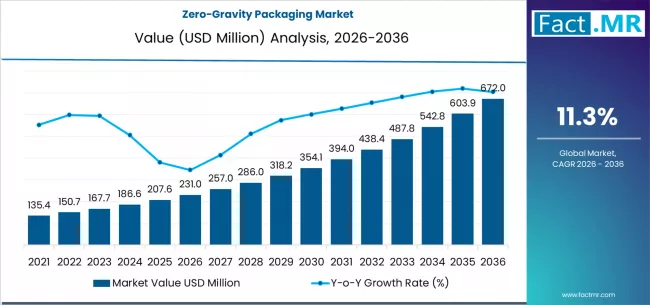
Zero-gravity packaging market is projected to grow from USD 231.0 million in 2026 to USD 672.0 million by 2036, at a CAGR of 11.3%. Space food & aerospace R&D will dominate with a 47.3% market share, while flexible pouches & sachets will lead the packaging format segment with a 52.5% share.

Zero-Gravity Packaging Market Forecast and Outlook 2026 to 2036

The global market for zero-gravity packaging is projected to total USD 231.00 million in 2026, and reach USD 672.00 million by 2036, progressing at an 11.3% CAGR. This growth is propelled by the accelerating pace of global space exploration, the expansion of commercial spaceflight, and sustained research in microgravity environments.

Key Takeaways from the Zero-Gravity Packaging Market

  • Market Value for 2026: USD 231.00 Million
  • Market Value for 2036: USD 672.00 Million
  • Forecast CAGR 2026 to 2036: 11.3%
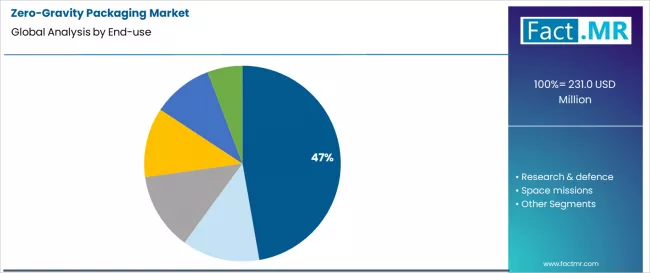
  • Leading End-Use Segment (2026): Space Food & Aerospace R&D (47.3%)
  • Leading Packaging Format Segment (2026): Flexible Pouches & Sachets (52.5%)
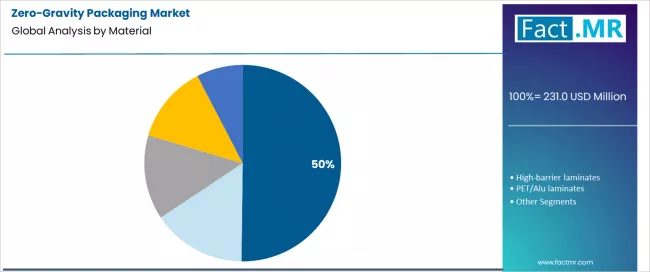
  • Leading Material Segment (2026): Multilayer Barrier Films (50.2%)
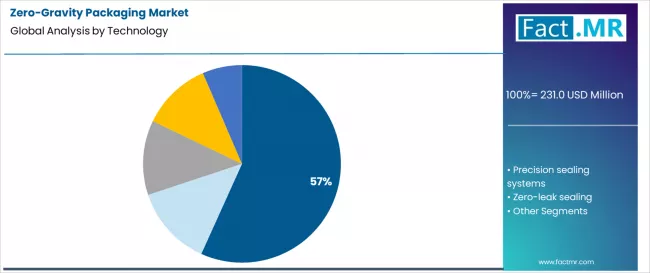
  • Leading Technology Segment (2026): Anti-Float, Controlled-Dispense Valves (56.8%)
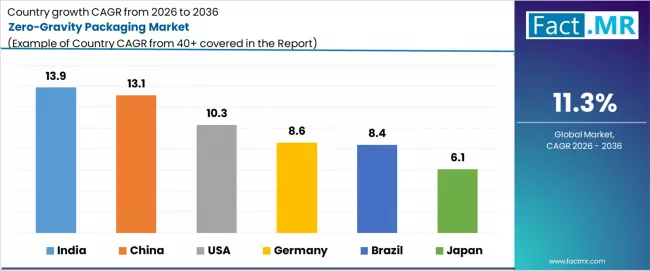
  • Key Growth Countries: India (13.9% CAGR), China (13.1% CAGR), USA (10.3% CAGR), Brazil (8.4% CAGR), Germany (8.6% CAGR), Japan (6.1% CAGR)
  • Key Players: Amcor plc, CASI Packaging, ISRO Vendor Ecosystem, Mitsubishi Heavy Industries, Ltd., Lockheed Martin Packaging

Zero Gravity Packaging Market Market Value Analysis

The fundamental requirement to safely contain and dispense liquids, semi-solids, and powders in the absence of gravity creates a specialized and high-value niche within advanced materials and packaging engineering.

Beyond government space agencies, the emergence of private aerospace companies and increased international microgravity research missions are broadening the customer base. This packaging is critical for mission success, ensuring astronaut nutrition, safeguarding sensitive scientific samples, and protecting vital equipment from contamination.

Performance imperatives around absolute leak prevention, material off-gassing, and reliable one-handed operation under variable pressure dictate rigorous design and validation protocols, establishing high barriers to entry and justifying premium solutions.

Zero-Gravity Packaging Market

Metric Value
Market Value (2026) USD 231.00 Million
Market Forecast Value (2036) USD 672.00 Million
Forecast CAGR 2026 to 2036 11.3%

Category

Category Segments
End-Use Space Food & Aerospace R&D, Research & Defence, Space Missions, ISRO & Defence Research, Academic Research, JAXA Programs
Packaging Format Flexible Pouches & Sachets, Specialized Pouches, Space-Grade Food Packs, Sachets & Pouches, Others
Material Multilayer Barrier Films, High-Barrier Laminates, PET/Alu Laminates, Barrier Films, Others
Technology Anti-Float, Controlled-Dispense Valves, Precision Sealing Systems, Zero-Leak Sealing, Indigenous Sealing Tech, Others
Region North America, Latin America, Western Europe, Eastern Europe, East Asia, South Asia & Pacific, Middle East & Africa

How will Stringent Certification and Geopolitical Complexities Shape Expansion?

The production ecosystem is defined by extreme specialization and stringent qualification processes. Supply-side dynamics are not merely about material availability but navigating a labyrinth of agency-specific certifications from NASA, ESA, ISRO, and CNSA. Each agency maintains approved materials lists and vendor qualifications, creating fragmented, parallel supply chains.

This fosters close-knit, long-term partnerships between packaging developers and aerospace prime contractors but limits market entry for new suppliers. Geopolitical factors further complicate the landscape, as export controls and international collaboration frameworks directly influence which suppliers can participate in specific national or consortium-led space programs, making the supply chain as much a function of diplomacy as of technical capability.

Segmental Analysis

By Technology, Which Segment Directly Addresses the Core Challenge of Fluid Management in Microgravity?

Zero Gravity Packaging Market Analysis By Technology

Anti-float, controlled-dispense valve technology holds a leading 56.8% share. This segment is critical because it solves the fundamental problem of containing fluids until intentional expulsion, preventing accidental leakage and bubble ingestion.

These specialized valves use principles of surface tension, pressure differentials, and mechanical shut-offs to allow astronauts to dispense food, water, or hygiene products cleanly and reliably without gravity to assist flow. Their performance is non-negotiable for both crew safety and the integrity of spacecraft environments.

  • Mission-Critical Function: Enables safe, predictable consumption and use of liquids and semi-solids in microgravity.
  • Reliability Imperative: Valve failure can lead to contamination, equipment damage, and compromised missions, demanding flawless performance.

By End-Use, Which Segment Imposes the Most Stringent Human-Factors and Safety Requirements?

Zero Gravity Packaging Market Analysis By End Use

Space food and aerospace R&D constitutes the primary end-use segment at 47.3%. Packaging for astronaut sustenance must not only prevent leakage and preserve nutrition but also consider human factors like ease of one-handed use, bite-off adaptability, and palatability over long durations.

This segment drives innovation in materials that are lightweight, resistant to sterilization methods, and capable of maintaining barrier properties against oxygen and moisture for years, all while being absolutely safe for human contact in enclosed environments.

  • Human-Centric Design: Packaging must integrate seamlessly with astronaut ergonomics and consumption habits.
  • Long-Term Stability: Requires multi-year shelf life without degradation in barrier properties or material integrity.

By Material, Which Configuration is the Benchmark for Maximum Protection and Lightweighting?

Zero Gravity Packaging Market Analysis By Material

Multilayer barrier films command a dominant 50.2% share. These sophisticated laminates, often combining layers of polymers, metallized films, or aluminum foil, provide the essential barriers against moisture, oxygen, and light while minimizing mass.

They form the foundational substrate for most pouch and sachet formats, engineered to withstand the stresses of launch vibration and space vacuum without delaminating or developing pinhole leaks.

  • Mass Efficiency: Achieves maximum protective performance with minimal weight penalty, directly impacting launch economics.
  • Stress Resilience: Engineered to maintain integrity under extreme vibration, pressure changes, and radiation exposure.

What are the Drivers, Restraints, and Evolving Dynamics of the Zero-Gravity Packaging Market?

Growth is principally driven by increased investment in national and commercial space exploration programs, which directly fund the development and procurement of specialized consumables. A major constraint is the exceptionally high cost of development, testing, and certification, which restricts the supplier base and limits technology transfer to terrestrial applications.

A significant opportunity arises from the nascent but growing sector of commercial space stations and lunar base logistics, which will require scalable, next-generation packaging solutions. The key trend is the shift toward modular and reusable packaging concepts designed for longer-duration missions beyond low-Earth orbit, focusing on in-situ resource utilization compatibility and advanced life support system integration.

Analysis of the Zero-Gravity Packaging Market by Key Countries

Zero Gravity Packaging Market Cagr Analysis By Country

Country CAGR 2026 to 2036
USA 10.3%
Germany 8.6%
China 13.1%
India 13.9%
Brazil 8.4%
Japan 6.1%

How do NASA Programs and Commercial Crew Initiatives define the Landscape in USA?

The USA’s 10.3% CAGR is underpinned by NASA’s Artemis program and the robust activity of commercial space partners. Demand centers on packaging for lunar mission simulations, extended International Space Station resupply, and next-generation crew vehicle interiors.

The ecosystem involves traditional aerospace defense contractors collaborating with specialized material science firms to develop solutions that meet NASA’s stringent safety and performance standards, with a growing emphasis on sustainable material choices for long-duration habitats.

  • Program-Led Demand: Specific mission timelines and goals (e.g., Artemis, commercial LEO destinations) dictate technical requirements and procurement cycles.
  • Public-Private Collaboration: Innovation is driven by partnerships between NASA centers and its network of commercial cargo and crew providers.

What characterizes Germany's Role within the European Space Agency's Ecosystem?

An 8.6% CAGR reflects Germany’s central role in ESA programs, particularly in life support systems and microgravity research. German research institutions and aerospace firms are pivotal in developing packaging for ESA’s Columbus laboratory and future lunar gateway contributions. The focus is on high-precision engineering, recyclability within closed-loop life support systems, and packaging that interfaces flawlessly with European-designed spacecraft and habitat modules.

  • ESA Integration: Development is closely aligned with the European Space Agency’s roadmaps and international station commitments.
  • System Interfacing: Emphasis on compatibility with ESA’s standardized life support and waste management systems.

What underpins China's Ambitions for a Self-Reliant Space Station and Lunar Exploration?

China’s 13.1% CAGR is fueled by the operational needs of the Tiangong space station and the ambitions of the Chinese Lunar Exploration Program. This drive for self-reliance extends to packaging, spurring domestic development of high-barrier films and dispensing technologies. Demand is for high-volume, reliable solutions for taikonaut sustenance and scientific payloads, with a strong mandate for indigenous innovation and supply chain security.

  • National Program Support: Direct correlation with the provisioning needs of Tiangong station and crewed lunar mission planning.
  • Indigenous Innovation Push: A strategic priority to develop and qualify domestic materials and components.

How is India's Cost-Effective Space Program Catalyzing Specialized Domestic Supply?

India’s leading 13.9% CAGR is propelled by the Indian Space Research Organisation’s expanding human spaceflight ambitions under the Gaganyaan program. The philosophy of high-reliability at minimized cost drives innovation within the domestic vendor ecosystem. This fosters development of simplified, robust packaging solutions that meet critical safety margins while optimizing for weight and cost, creating a unique design and manufacturing paradigm.

  • Gaganyaan Program Driver: Human-rated mission requirements are creating and qualifying a new domestic supplier base.
  • Frugal Engineering: A focus on achieving mission-critical reliability through cost-optimized design and material selection.

Why is Brazil's Emerging Space Research Creating Niche Demand?

An 8.4% CAGR is linked to Brazil’s growing involvement in space research through its National Institute for Space Research and international collaborations. Demand stems from packaging for microgravity experiments launched on suborbital vehicles or deployed on the ISS through partnership agreements. The focus is on small-batch, highly customized solutions for scientific payloads rather than large-scale crew provisioning.

  • Research Payload Focus: Primary demand driver is packaging for microgravity experiment samples and instruments.
  • Collaboration-Dependent: Access and requirements are often shaped by partnerships with larger space agencies.

What defines Japan's Contribution to Precision Life Science and JAXA's Flagship Programs?

Japan’s 6.1% CAGR represents a mature segment focused on ultra-high precision for life science research and JAXA’s Kibo module operations. Japanese expertise lies in miniaturized, automated packaging for biological and crystal growth experiments, requiring absolute sterility and contamination control. Developments also support JAXA’s contributions to lunar exploration, emphasizing lightweight, high-performance materials.

  • Science-Mission Precision: Leadership in packaging for sensitive microgravity experiments requiring impeccable containment.
  • International Contribution: Development supports JAXA’s role in the ISS and future lunar gateway logistics.

Competitive Landscape of the Zero-Gravity Packaging Market

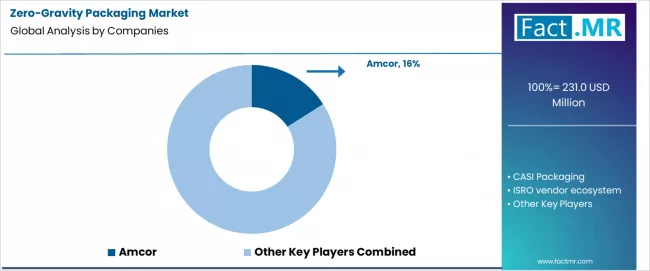
Zero Gravity Packaging Market Analysis By Company

The competitive landscape is oligopolistic and relationship-driven, dominated by a small group of aerospace specialists and large material science firms with dedicated space divisions. Established players like Mitsubishi Heavy Industries leverage their deep systems integration expertise for launch vehicles and habitats to develop compatible packaging solutions. Material giants like Amcor participate through specialty films divisions that meet outgassing and barrier standards.

The market also features agency-nurtured domestic ecosystems, such as the network of vendors supplying ISRO, which operate under strict qualification protocols. Success is less about broad commercialization and more about deep technical collaboration with prime aerospace contractors, long-term investment in materials testing and space qualification, and the ability to navigate the complex procurement and safety certification processes of major space agencies.

Key Players in the Zero-Gravity Packaging Market

  • Amcor plc
  • CASI Packaging
  • ISRO Vendor Ecosystem
  • Mitsubishi Heavy Industries, Ltd.
  • Lockheed Martin Packaging

Scope of Report

Items Metrics
Quantitative Units USD Million
Technology Anti-Float, Controlled-Dispense Valves, Precision Sealing Systems, Zero-Leak Sealing, Indigenous Sealing Tech, Others
Packaging Format Flexible Pouches & Sachets, Specialized Pouches, Space-Grade Food Packs, Sachets & Pouches, Others
End-Use Space Food & Aerospace R&D, Research & Defence, Space Missions, ISRO & Defence Research, Academic Research, JAXA Programs
Material Multilayer Barrier Films, High-Barrier Laminates, PET/Alu Laminates, Barrier Films, Others
Key Countries India, China, USA, Brazil, Germany, Japan
Key Companies Amcor, CASI Packaging, ISRO Vendor Ecosystem, Mitsubishi Heavy Industries, Lockheed Martin Packaging
Additional Analysis Comparative analysis of material off-gassing profiles; cost breakdown of space qualification vs. terrestrial packaging; study of long-duration shelf-life testing protocols; impact of modular packaging on deep-space mission logistics; analysis of waste management and recycling in microgravity.

Market by Segments

  • End-Use :

    • Space Food & Aerospace R&D
    • Research & Defence
    • Space Missions
    • ISRO & Defence Research
    • Academic Research
    • JAXA Programs
  • Packaging Format :

    • Flexible Pouches & Sachets
    • Specialized Pouches
    • Space-Grade Food Packs
    • Sachets & Pouches
    • Others
  • Material :

    • Multilayer Barrier Films
    • High-Barrier Laminates
    • PET/Aluminum Laminates
    • Barrier Films
    • Others
  • Technology :

    • Anti-Float, Controlled-Dispense Valves
    • Precision Sealing Systems
    • Zero-Leak Sealing
    • Indigenous Sealing Tech
    • Others
  • Region :

    • North America
      • USA
      • Canada
    • Latin America
      • Brazil
      • Mexico
      • Argentina
      • Rest of Latin America
    • Western Europe
      • Germany
      • France
      • Italy
      • Spain
      • UK
      • BENELUX
      • Rest of Western Europe
    • Eastern Europe
      • Russia
      • Poland
      • Czech Republic
      • Rest of Eastern Europe
    • East Asia
      • China
      • Japan
      • South Korea
      • Rest of East Asia
    • South Asia & Pacific
      • India
      • ASEAN
      • Australia
      • Rest of South Asia & Pacific
    • MEA
      • GCC Countries
      • South Africa
      • Turkiye
      • Rest of MEA

References

  • Committee on Space Research (COSPAR). (2024). Planetary Protection Policy and Practices for Human Missions. COSPAR Panel Report.
  • European Space Agency (ESA). (2025). Materials and Processes Requirements for Space Applications. ESA Standards.
  • National Aeronautics and Space Administration (NASA). (2024). NASA Space Flight Human-System Standard: Volume 2, Human Factors, Habitability, and Environmental Health. NASA-STD-3001.
  • Pettit, D. (2023). The Logistics of Long-Duration Spaceflight: From ISS to Mars. Space Science Reviews.
  • The Journal of Aerospace Engineering. (2024). Advanced Materials for Containment and Dispensing in Microgravity Environments.
  • World Space Agency Consortium. (2025). Interagency Standards for Crew Consumables Packaging. WSAC Technical Memorandum.

Table of Content

  1. Executive Summary
    • Global Market Outlook
    • Demand to side Trends
    • Supply to side Trends
    • Technology Roadmap Analysis
    • Analysis and Recommendations
  2. Market Overview
    • Market Coverage / Taxonomy
    • Market Definition / Scope / Limitations
  3. Market Background
    • Market Dynamics
      • Drivers
      • Restraints
      • Opportunity
      • Trends
    • Scenario Forecast
      • Demand in Optimistic Scenario
      • Demand in Likely Scenario
      • Demand in Conservative Scenario
    • Opportunity Map Analysis
    • Product Life Cycle Analysis
    • Supply Chain Analysis
    • Investment Feasibility Matrix
    • Value Chain Analysis
    • PESTLE and Porter’s Analysis
    • Regulatory Landscape
    • Regional Parent Market Outlook
    • Production and Consumption Statistics
    • Import and Export Statistics
  4. Global Market Analysis 2021 to 2025 and Forecast, 2026 to 2036
    • Historical Market Size Value (USD Million) Analysis, 2021 to 2025
    • Current and Future Market Size Value (USD Million) Projections, 2026 to 2036
      • Y to o to Y Growth Trend Analysis
      • Absolute $ Opportunity Analysis
  5. Global Market Pricing Analysis 2021 to 2025 and Forecast 2026 to 2036
  6. Global Market Analysis 2021 to 2025 and Forecast 2026 to 2036, By End-use
    • Introduction / Key Findings
    • Historical Market Size Value (USD Million) Analysis By End-use, 2021 to 2025
    • Current and Future Market Size Value (USD Million) Analysis and Forecast By End-use, 2026 to 2036
      • Space food & aerospace R&D
      • Research & defence
      • Space missions
      • ISRO & defence research
      • Academic research
      • JAXA programs
    • Y to o to Y Growth Trend Analysis By End-use, 2021 to 2025
    • Absolute $ Opportunity Analysis By End-use, 2026 to 2036
  7. Global Market Analysis 2021 to 2025 and Forecast 2026 to 2036, By Packaging Format
    • Introduction / Key Findings
    • Historical Market Size Value (USD Million) Analysis By Packaging Format, 2021 to 2025
    • Current and Future Market Size Value (USD Million) Analysis and Forecast By Packaging Format, 2026 to 2036
      • Flexible pouches & sachets
      • Specialized pouches
      • Space-grade food packs
      • Sachets & pouches
      • Others
    • Y to o to Y Growth Trend Analysis By Packaging Format, 2021 to 2025
    • Absolute $ Opportunity Analysis By Packaging Format, 2026 to 2036
  8. Global Market Analysis 2021 to 2025 and Forecast 2026 to 2036, By Material
    • Introduction / Key Findings
    • Historical Market Size Value (USD Million) Analysis By Material, 2021 to 2025
    • Current and Future Market Size Value (USD Million) Analysis and Forecast By Material, 2026 to 2036
      • Multilayer barrier films
      • High-barrier laminates
      • PET/Alu laminates
      • Barrier films
      • Others
    • Y to o to Y Growth Trend Analysis By Material, 2021 to 2025
    • Absolute $ Opportunity Analysis By Material, 2026 to 2036
  9. Global Market Analysis 2021 to 2025 and Forecast 2026 to 2036, By Technology
    • Introduction / Key Findings
    • Historical Market Size Value (USD Million) Analysis By Technology, 2021 to 2025
    • Current and Future Market Size Value (USD Million) Analysis and Forecast By Technology, 2026 to 2036
      • Anti-float, controlled-dispense valves
      • Precision sealing systems
      • Zero-leak sealing
      • Indigenous sealing tech
      • Others
    • Y to o to Y Growth Trend Analysis By Technology, 2021 to 2025
    • Absolute $ Opportunity Analysis By Technology, 2026 to 2036
  10. Global Market Analysis 2021 to 2025 and Forecast 2026 to 2036, By Region
    • Introduction
    • Historical Market Size Value (USD Million) Analysis By Region, 2021 to 2025
    • Current Market Size Value (USD Million) Analysis and Forecast By Region, 2026 to 2036
      • North America
      • Latin America
      • Western Europe
      • Eastern Europe
      • East Asia
      • South Asia and Pacific
      • Middle East & Africa
    • Market Attractiveness Analysis By Region
  11. North America Market Analysis 2021 to 2025 and Forecast 2026 to 2036, By Country
    • Historical Market Size Value (USD Million) Trend Analysis By Market Taxonomy, 2021 to 2025
    • Market Size Value (USD Million) Forecast By Market Taxonomy, 2026 to 2036
      • By Country
        • USA
        • Canada
        • Mexico
      • By End-use
      • By Packaging Format
      • By Material
      • By Technology
    • Market Attractiveness Analysis
      • By Country
      • By End-use
      • By Packaging Format
      • By Material
      • By Technology
    • Key Takeaways
  12. Latin America Market Analysis 2021 to 2025 and Forecast 2026 to 2036, By Country
    • Historical Market Size Value (USD Million) Trend Analysis By Market Taxonomy, 2021 to 2025
    • Market Size Value (USD Million) Forecast By Market Taxonomy, 2026 to 2036
      • By Country
        • Brazil
        • Chile
        • Rest of Latin America
      • By End-use
      • By Packaging Format
      • By Material
      • By Technology
    • Market Attractiveness Analysis
      • By Country
      • By End-use
      • By Packaging Format
      • By Material
      • By Technology
    • Key Takeaways
  13. Western Europe Market Analysis 2021 to 2025 and Forecast 2026 to 2036, By Country
    • Historical Market Size Value (USD Million) Trend Analysis By Market Taxonomy, 2021 to 2025
    • Market Size Value (USD Million) Forecast By Market Taxonomy, 2026 to 2036
      • By Country
        • Germany
        • UK
        • Italy
        • Spain
        • France
        • Nordic
        • BENELUX
        • Rest of Western Europe
      • By End-use
      • By Packaging Format
      • By Material
      • By Technology
    • Market Attractiveness Analysis
      • By Country
      • By End-use
      • By Packaging Format
      • By Material
      • By Technology
    • Key Takeaways
  14. Eastern Europe Market Analysis 2021 to 2025 and Forecast 2026 to 2036, By Country
    • Historical Market Size Value (USD Million) Trend Analysis By Market Taxonomy, 2021 to 2025
    • Market Size Value (USD Million) Forecast By Market Taxonomy, 2026 to 2036
      • By Country
        • Russia
        • Poland
        • Hungary
        • Balkan & Baltic
        • Rest of Eastern Europe
      • By End-use
      • By Packaging Format
      • By Material
      • By Technology
    • Market Attractiveness Analysis
      • By Country
      • By End-use
      • By Packaging Format
      • By Material
      • By Technology
    • Key Takeaways
  15. East Asia Market Analysis 2021 to 2025 and Forecast 2026 to 2036, By Country
    • Historical Market Size Value (USD Million) Trend Analysis By Market Taxonomy, 2021 to 2025
    • Market Size Value (USD Million) Forecast By Market Taxonomy, 2026 to 2036
      • By Country
        • China
        • Japan
        • South Korea
      • By End-use
      • By Packaging Format
      • By Material
      • By Technology
    • Market Attractiveness Analysis
      • By Country
      • By End-use
      • By Packaging Format
      • By Material
      • By Technology
    • Key Takeaways
  16. South Asia and Pacific Market Analysis 2021 to 2025 and Forecast 2026 to 2036, By Country
    • Historical Market Size Value (USD Million) Trend Analysis By Market Taxonomy, 2021 to 2025
    • Market Size Value (USD Million) Forecast By Market Taxonomy, 2026 to 2036
      • By Country
        • India
        • ASEAN
        • Australia & New Zealand
        • Rest of South Asia and Pacific
      • By End-use
      • By Packaging Format
      • By Material
      • By Technology
    • Market Attractiveness Analysis
      • By Country
      • By End-use
      • By Packaging Format
      • By Material
      • By Technology
    • Key Takeaways
  17. Middle East & Africa Market Analysis 2021 to 2025 and Forecast 2026 to 2036, By Country
    • Historical Market Size Value (USD Million) Trend Analysis By Market Taxonomy, 2021 to 2025
    • Market Size Value (USD Million) Forecast By Market Taxonomy, 2026 to 2036
      • By Country
        • Kingdom of Saudi Arabia
        • Other GCC Countries
        • Turkiye
        • South Africa
        • Other African Union
        • Rest of Middle East & Africa
      • By End-use
      • By Packaging Format
      • By Material
      • By Technology
    • Market Attractiveness Analysis
      • By Country
      • By End-use
      • By Packaging Format
      • By Material
      • By Technology
    • Key Takeaways
  18. Key Countries Market Analysis
    • USA
      • Pricing Analysis
      • Market Share Analysis, 2025
        • By End-use
        • By Packaging Format
        • By Material
        • By Technology
    • Canada
      • Pricing Analysis
      • Market Share Analysis, 2025
        • By End-use
        • By Packaging Format
        • By Material
        • By Technology
    • Mexico
      • Pricing Analysis
      • Market Share Analysis, 2025
        • By End-use
        • By Packaging Format
        • By Material
        • By Technology
    • Brazil
      • Pricing Analysis
      • Market Share Analysis, 2025
        • By End-use
        • By Packaging Format
        • By Material
        • By Technology
    • Chile
      • Pricing Analysis
      • Market Share Analysis, 2025
        • By End-use
        • By Packaging Format
        • By Material
        • By Technology
    • Germany
      • Pricing Analysis
      • Market Share Analysis, 2025
        • By End-use
        • By Packaging Format
        • By Material
        • By Technology
    • UK
      • Pricing Analysis
      • Market Share Analysis, 2025
        • By End-use
        • By Packaging Format
        • By Material
        • By Technology
    • Italy
      • Pricing Analysis
      • Market Share Analysis, 2025
        • By End-use
        • By Packaging Format
        • By Material
        • By Technology
    • Spain
      • Pricing Analysis
      • Market Share Analysis, 2025
        • By End-use
        • By Packaging Format
        • By Material
        • By Technology
    • France
      • Pricing Analysis
      • Market Share Analysis, 2025
        • By End-use
        • By Packaging Format
        • By Material
        • By Technology
    • India
      • Pricing Analysis
      • Market Share Analysis, 2025
        • By End-use
        • By Packaging Format
        • By Material
        • By Technology
    • ASEAN
      • Pricing Analysis
      • Market Share Analysis, 2025
        • By End-use
        • By Packaging Format
        • By Material
        • By Technology
    • Australia & New Zealand
      • Pricing Analysis
      • Market Share Analysis, 2025
        • By End-use
        • By Packaging Format
        • By Material
        • By Technology
    • China
      • Pricing Analysis
      • Market Share Analysis, 2025
        • By End-use
        • By Packaging Format
        • By Material
        • By Technology
    • Japan
      • Pricing Analysis
      • Market Share Analysis, 2025
        • By End-use
        • By Packaging Format
        • By Material
        • By Technology
    • South Korea
      • Pricing Analysis
      • Market Share Analysis, 2025
        • By End-use
        • By Packaging Format
        • By Material
        • By Technology
    • Russia
      • Pricing Analysis
      • Market Share Analysis, 2025
        • By End-use
        • By Packaging Format
        • By Material
        • By Technology
    • Poland
      • Pricing Analysis
      • Market Share Analysis, 2025
        • By End-use
        • By Packaging Format
        • By Material
        • By Technology
    • Hungary
      • Pricing Analysis
      • Market Share Analysis, 2025
        • By End-use
        • By Packaging Format
        • By Material
        • By Technology
    • Kingdom of Saudi Arabia
      • Pricing Analysis
      • Market Share Analysis, 2025
        • By End-use
        • By Packaging Format
        • By Material
        • By Technology
    • Turkiye
      • Pricing Analysis
      • Market Share Analysis, 2025
        • By End-use
        • By Packaging Format
        • By Material
        • By Technology
    • South Africa
      • Pricing Analysis
      • Market Share Analysis, 2025
        • By End-use
        • By Packaging Format
        • By Material
        • By Technology
  19. Market Structure Analysis
    • Competition Dashboard
    • Competition Benchmarking
    • Market Share Analysis of Top Players
      • By Regional
      • By End-use
      • By Packaging Format
      • By Material
      • By Technology
  20. Competition Analysis
    • Competition Deep Dive
      • Amcor
        • Overview
        • Product Portfolio
        • Profitability by Market Segments (Product/Age /Sales Channel/Region)
        • Sales Footprint
        • Strategy Overview
          • Marketing Strategy
          • Product Strategy
          • Channel Strategy
      • CASI Packaging
      • ISRO vendor ecosystem
      • Mitsubishi Heavy Industries
      • Lockheed Martin Packaging
  21. Assumptions & Acronyms Used
  22. Research Methodology

List Of Table

  • Table 1: Global Market Value (USD Million) Forecast by Region, 2021 to 2036
  • Table 2: Global Market Value (USD Million) Forecast by End-use, 2021 to 2036
  • Table 3: Global Market Value (USD Million) Forecast by Packaging Format, 2021 to 2036
  • Table 4: Global Market Value (USD Million) Forecast by Material, 2021 to 2036
  • Table 5: Global Market Value (USD Million) Forecast by Technology, 2021 to 2036
  • Table 6: North America Market Value (USD Million) Forecast by Country, 2021 to 2036
  • Table 7: North America Market Value (USD Million) Forecast by End-use, 2021 to 2036
  • Table 8: North America Market Value (USD Million) Forecast by Packaging Format, 2021 to 2036
  • Table 9: North America Market Value (USD Million) Forecast by Material, 2021 to 2036
  • Table 10: North America Market Value (USD Million) Forecast by Technology, 2021 to 2036
  • Table 11: Latin America Market Value (USD Million) Forecast by Country, 2021 to 2036
  • Table 12: Latin America Market Value (USD Million) Forecast by End-use, 2021 to 2036
  • Table 13: Latin America Market Value (USD Million) Forecast by Packaging Format, 2021 to 2036
  • Table 14: Latin America Market Value (USD Million) Forecast by Material, 2021 to 2036
  • Table 15: Latin America Market Value (USD Million) Forecast by Technology, 2021 to 2036
  • Table 16: Western Europe Market Value (USD Million) Forecast by Country, 2021 to 2036
  • Table 17: Western Europe Market Value (USD Million) Forecast by End-use, 2021 to 2036
  • Table 18: Western Europe Market Value (USD Million) Forecast by Packaging Format, 2021 to 2036
  • Table 19: Western Europe Market Value (USD Million) Forecast by Material, 2021 to 2036
  • Table 20: Western Europe Market Value (USD Million) Forecast by Technology, 2021 to 2036
  • Table 21: Eastern Europe Market Value (USD Million) Forecast by Country, 2021 to 2036
  • Table 22: Eastern Europe Market Value (USD Million) Forecast by End-use, 2021 to 2036
  • Table 23: Eastern Europe Market Value (USD Million) Forecast by Packaging Format, 2021 to 2036
  • Table 24: Eastern Europe Market Value (USD Million) Forecast by Material, 2021 to 2036
  • Table 25: Eastern Europe Market Value (USD Million) Forecast by Technology, 2021 to 2036
  • Table 26: East Asia Market Value (USD Million) Forecast by Country, 2021 to 2036
  • Table 27: East Asia Market Value (USD Million) Forecast by End-use, 2021 to 2036
  • Table 28: East Asia Market Value (USD Million) Forecast by Packaging Format, 2021 to 2036
  • Table 29: East Asia Market Value (USD Million) Forecast by Material, 2021 to 2036
  • Table 30: East Asia Market Value (USD Million) Forecast by Technology, 2021 to 2036
  • Table 31: South Asia and Pacific Market Value (USD Million) Forecast by Country, 2021 to 2036
  • Table 32: South Asia and Pacific Market Value (USD Million) Forecast by End-use, 2021 to 2036
  • Table 33: South Asia and Pacific Market Value (USD Million) Forecast by Packaging Format, 2021 to 2036
  • Table 34: South Asia and Pacific Market Value (USD Million) Forecast by Material, 2021 to 2036
  • Table 35: South Asia and Pacific Market Value (USD Million) Forecast by Technology, 2021 to 2036
  • Table 36: Middle East & Africa Market Value (USD Million) Forecast by Country, 2021 to 2036
  • Table 37: Middle East & Africa Market Value (USD Million) Forecast by End-use, 2021 to 2036
  • Table 38: Middle East & Africa Market Value (USD Million) Forecast by Packaging Format, 2021 to 2036
  • Table 39: Middle East & Africa Market Value (USD Million) Forecast by Material, 2021 to 2036
  • Table 40: Middle East & Africa Market Value (USD Million) Forecast by Technology, 2021 to 2036

List Of Figures

  • Figure 1: Global Market Pricing Analysis
  • Figure 2: Global Market Value (USD Million) Forecast 2021 to 2036
  • Figure 3: Global Market Value Share and BPS Analysis by End-use, 2026 and 2036
  • Figure 4: Global Market Y to o to Y Growth Comparison by End-use, 2026 to 2036
  • Figure 5: Global Market Attractiveness Analysis by End-use
  • Figure 6: Global Market Value Share and BPS Analysis by Packaging Format, 2026 and 2036
  • Figure 7: Global Market Y to o to Y Growth Comparison by Packaging Format, 2026 to 2036
  • Figure 8: Global Market Attractiveness Analysis by Packaging Format
  • Figure 9: Global Market Value Share and BPS Analysis by Material, 2026 and 2036
  • Figure 10: Global Market Y to o to Y Growth Comparison by Material, 2026 to 2036
  • Figure 11: Global Market Attractiveness Analysis by Material
  • Figure 12: Global Market Value Share and BPS Analysis by Technology, 2026 and 2036
  • Figure 13: Global Market Y to o to Y Growth Comparison by Technology, 2026 to 2036
  • Figure 14: Global Market Attractiveness Analysis by Technology
  • Figure 15: Global Market Value (USD Million) Share and BPS Analysis by Region, 2026 and 2036
  • Figure 16: Global Market Y to o to Y Growth Comparison by Region, 2026 to 2036
  • Figure 17: Global Market Attractiveness Analysis by Region
  • Figure 18: North America Market Incremental Dollar Opportunity, 2026 to 2036
  • Figure 19: Latin America Market Incremental Dollar Opportunity, 2026 to 2036
  • Figure 20: Western Europe Market Incremental Dollar Opportunity, 2026 to 2036
  • Figure 21: Eastern Europe Market Incremental Dollar Opportunity, 2026 to 2036
  • Figure 22: East Asia Market Incremental Dollar Opportunity, 2026 to 2036
  • Figure 23: South Asia and Pacific Market Incremental Dollar Opportunity, 2026 to 2036
  • Figure 24: Middle East & Africa Market Incremental Dollar Opportunity, 2026 to 2036
  • Figure 25: North America Market Value Share and BPS Analysis by Country, 2026 and 2036
  • Figure 26: North America Market Value Share and BPS Analysis by End-use, 2026 and 2036
  • Figure 27: North America Market Y to o to Y Growth Comparison by End-use, 2026 to 2036
  • Figure 28: North America Market Attractiveness Analysis by End-use
  • Figure 29: North America Market Value Share and BPS Analysis by Packaging Format, 2026 and 2036
  • Figure 30: North America Market Y to o to Y Growth Comparison by Packaging Format, 2026 to 2036
  • Figure 31: North America Market Attractiveness Analysis by Packaging Format
  • Figure 32: North America Market Value Share and BPS Analysis by Material, 2026 and 2036
  • Figure 33: North America Market Y to o to Y Growth Comparison by Material, 2026 to 2036
  • Figure 34: North America Market Attractiveness Analysis by Material
  • Figure 35: North America Market Value Share and BPS Analysis by Technology, 2026 and 2036
  • Figure 36: North America Market Y to o to Y Growth Comparison by Technology, 2026 to 2036
  • Figure 37: North America Market Attractiveness Analysis by Technology
  • Figure 38: Latin America Market Value Share and BPS Analysis by Country, 2026 and 2036
  • Figure 39: Latin America Market Value Share and BPS Analysis by End-use, 2026 and 2036
  • Figure 40: Latin America Market Y to o to Y Growth Comparison by End-use, 2026 to 2036
  • Figure 41: Latin America Market Attractiveness Analysis by End-use
  • Figure 42: Latin America Market Value Share and BPS Analysis by Packaging Format, 2026 and 2036
  • Figure 43: Latin America Market Y to o to Y Growth Comparison by Packaging Format, 2026 to 2036
  • Figure 44: Latin America Market Attractiveness Analysis by Packaging Format
  • Figure 45: Latin America Market Value Share and BPS Analysis by Material, 2026 and 2036
  • Figure 46: Latin America Market Y to o to Y Growth Comparison by Material, 2026 to 2036
  • Figure 47: Latin America Market Attractiveness Analysis by Material
  • Figure 48: Latin America Market Value Share and BPS Analysis by Technology, 2026 and 2036
  • Figure 49: Latin America Market Y to o to Y Growth Comparison by Technology, 2026 to 2036
  • Figure 50: Latin America Market Attractiveness Analysis by Technology
  • Figure 51: Western Europe Market Value Share and BPS Analysis by Country, 2026 and 2036
  • Figure 52: Western Europe Market Value Share and BPS Analysis by End-use, 2026 and 2036
  • Figure 53: Western Europe Market Y to o to Y Growth Comparison by End-use, 2026 to 2036
  • Figure 54: Western Europe Market Attractiveness Analysis by End-use
  • Figure 55: Western Europe Market Value Share and BPS Analysis by Packaging Format, 2026 and 2036
  • Figure 56: Western Europe Market Y to o to Y Growth Comparison by Packaging Format, 2026 to 2036
  • Figure 57: Western Europe Market Attractiveness Analysis by Packaging Format
  • Figure 58: Western Europe Market Value Share and BPS Analysis by Material, 2026 and 2036
  • Figure 59: Western Europe Market Y to o to Y Growth Comparison by Material, 2026 to 2036
  • Figure 60: Western Europe Market Attractiveness Analysis by Material
  • Figure 61: Western Europe Market Value Share and BPS Analysis by Technology, 2026 and 2036
  • Figure 62: Western Europe Market Y to o to Y Growth Comparison by Technology, 2026 to 2036
  • Figure 63: Western Europe Market Attractiveness Analysis by Technology
  • Figure 64: Eastern Europe Market Value Share and BPS Analysis by Country, 2026 and 2036
  • Figure 65: Eastern Europe Market Value Share and BPS Analysis by End-use, 2026 and 2036
  • Figure 66: Eastern Europe Market Y to o to Y Growth Comparison by End-use, 2026 to 2036
  • Figure 67: Eastern Europe Market Attractiveness Analysis by End-use
  • Figure 68: Eastern Europe Market Value Share and BPS Analysis by Packaging Format, 2026 and 2036
  • Figure 69: Eastern Europe Market Y to o to Y Growth Comparison by Packaging Format, 2026 to 2036
  • Figure 70: Eastern Europe Market Attractiveness Analysis by Packaging Format
  • Figure 71: Eastern Europe Market Value Share and BPS Analysis by Material, 2026 and 2036
  • Figure 72: Eastern Europe Market Y to o to Y Growth Comparison by Material, 2026 to 2036
  • Figure 73: Eastern Europe Market Attractiveness Analysis by Material
  • Figure 74: Eastern Europe Market Value Share and BPS Analysis by Technology, 2026 and 2036
  • Figure 75: Eastern Europe Market Y to o to Y Growth Comparison by Technology, 2026 to 2036
  • Figure 76: Eastern Europe Market Attractiveness Analysis by Technology
  • Figure 77: East Asia Market Value Share and BPS Analysis by Country, 2026 and 2036
  • Figure 78: East Asia Market Value Share and BPS Analysis by End-use, 2026 and 2036
  • Figure 79: East Asia Market Y to o to Y Growth Comparison by End-use, 2026 to 2036
  • Figure 80: East Asia Market Attractiveness Analysis by End-use
  • Figure 81: East Asia Market Value Share and BPS Analysis by Packaging Format, 2026 and 2036
  • Figure 82: East Asia Market Y to o to Y Growth Comparison by Packaging Format, 2026 to 2036
  • Figure 83: East Asia Market Attractiveness Analysis by Packaging Format
  • Figure 84: East Asia Market Value Share and BPS Analysis by Material, 2026 and 2036
  • Figure 85: East Asia Market Y to o to Y Growth Comparison by Material, 2026 to 2036
  • Figure 86: East Asia Market Attractiveness Analysis by Material
  • Figure 87: East Asia Market Value Share and BPS Analysis by Technology, 2026 and 2036
  • Figure 88: East Asia Market Y to o to Y Growth Comparison by Technology, 2026 to 2036
  • Figure 89: East Asia Market Attractiveness Analysis by Technology
  • Figure 90: South Asia and Pacific Market Value Share and BPS Analysis by Country, 2026 and 2036
  • Figure 91: South Asia and Pacific Market Value Share and BPS Analysis by End-use, 2026 and 2036
  • Figure 92: South Asia and Pacific Market Y to o to Y Growth Comparison by End-use, 2026 to 2036
  • Figure 93: South Asia and Pacific Market Attractiveness Analysis by End-use
  • Figure 94: South Asia and Pacific Market Value Share and BPS Analysis by Packaging Format, 2026 and 2036
  • Figure 95: South Asia and Pacific Market Y to o to Y Growth Comparison by Packaging Format, 2026 to 2036
  • Figure 96: South Asia and Pacific Market Attractiveness Analysis by Packaging Format
  • Figure 97: South Asia and Pacific Market Value Share and BPS Analysis by Material, 2026 and 2036
  • Figure 98: South Asia and Pacific Market Y to o to Y Growth Comparison by Material, 2026 to 2036
  • Figure 99: South Asia and Pacific Market Attractiveness Analysis by Material
  • Figure 100: South Asia and Pacific Market Value Share and BPS Analysis by Technology, 2026 and 2036
  • Figure 101: South Asia and Pacific Market Y to o to Y Growth Comparison by Technology, 2026 to 2036
  • Figure 102: South Asia and Pacific Market Attractiveness Analysis by Technology
  • Figure 103: Middle East & Africa Market Value Share and BPS Analysis by Country, 2026 and 2036
  • Figure 104: Middle East & Africa Market Value Share and BPS Analysis by End-use, 2026 and 2036
  • Figure 105: Middle East & Africa Market Y to o to Y Growth Comparison by End-use, 2026 to 2036
  • Figure 106: Middle East & Africa Market Attractiveness Analysis by End-use
  • Figure 107: Middle East & Africa Market Value Share and BPS Analysis by Packaging Format, 2026 and 2036
  • Figure 108: Middle East & Africa Market Y to o to Y Growth Comparison by Packaging Format, 2026 to 2036
  • Figure 109: Middle East & Africa Market Attractiveness Analysis by Packaging Format
  • Figure 110: Middle East & Africa Market Value Share and BPS Analysis by Material, 2026 and 2036
  • Figure 111: Middle East & Africa Market Y to o to Y Growth Comparison by Material, 2026 to 2036
  • Figure 112: Middle East & Africa Market Attractiveness Analysis by Material
  • Figure 113: Middle East & Africa Market Value Share and BPS Analysis by Technology, 2026 and 2036
  • Figure 114: Middle East & Africa Market Y to o to Y Growth Comparison by Technology, 2026 to 2036
  • Figure 115: Middle East & Africa Market Attractiveness Analysis by Technology
  • Figure 116: Global Market - Tier Structure Analysis
  • Figure 117: Global Market - Company Share Analysis

- FAQs -

How big is the zero-gravity packaging market in 2026?

The global zero-gravity packaging market is estimated to be valued at USD 231.0 million in 2026.

What will be the size of zero-gravity packaging market in 2036?

The market size for the zero-gravity packaging market is projected to reach USD 672.0 million by 2036.

How much will be the zero-gravity packaging market growth between 2026 and 2036?

The zero-gravity packaging market is expected to grow at a 11.3% CAGR between 2026 and 2036.

What are the key product types in the zero-gravity packaging market?

The key product types in zero-gravity packaging market are space food & aerospace r&d, research & defence, space missions, isro & defence research, academic research and jaxa programs.

Which packaging format segment to contribute significant share in the zero-gravity packaging market in 2026?

In terms of packaging format, flexible pouches & sachets segment to command 52.5% share in the zero-gravity packaging market in 2026.
Zero-Gravity Packaging Market